Ryobi sells two blowers on the exact same 18V ONE+ battery platform, and their own spec sheets contradict each other: one claims 315 km/h of air speed and 5.9 newtons of blowing force, the other claims a slower 209 km/h and more than double the force at 15 newtons. Air speed alone tells you almost nothing about how hard a leaf blower actually pushes. A leaf blower is a handheld or backpack-worn tool that uses a motor-driven fan to force air through a nozzle, clearing leaves, grass clippings and light debris off a lawn, path or gutter line without raking by hand. Finding the best leaf blower in Australia starts with knowing which number on the box to trust – and it usually is not the one printed biggest.
Blowers sold in Australia split into five real types: cordless handheld (18V to 36V battery packs), corded electric (plugged in, no battery to manage), petrol handheld (2-stroke or 4-stroke engines), petrol backpack (the heaviest and most powerful format, built for a properly large block), and blower-vac combos that add a mulching bag to any of the above. None of the ten products in this guide is a petrol backpack unit – that format barely surfaces as an in-stock, buyable item through any Australian retail partner or marketplace checked for this guide, and the closest thing here is a corded electric backpack blower vac instead.
Stihl’s own Australian product pages carry a footnote most shoppers never read: “Force in Newtons (N) to compare the performance of blowers.” Newtons measure actual pushing force, and it is the one number Ryobi’s self-contradicting spec sheets above expose as more honest than air speed alone. The trouble is availability: not one product recommended here publishes a Newton figure, because Australian retailers overwhelmingly market on km/h or mph instead. Where a listing publishes air volume (in CFM or cubic metres per hour) alongside speed, that combination is the next best honest signal – and five of the ten products here publish no volume figure at all.
This guide compares ten leaf blowers sold in Australia, spanning cordless, corded and petrol formats across three approved retail partners, from a budget entry-level cordless unit through to a 4-stroke petrol blower vac, with an honest read on which published numbers can actually be trusted.
Quick Picks
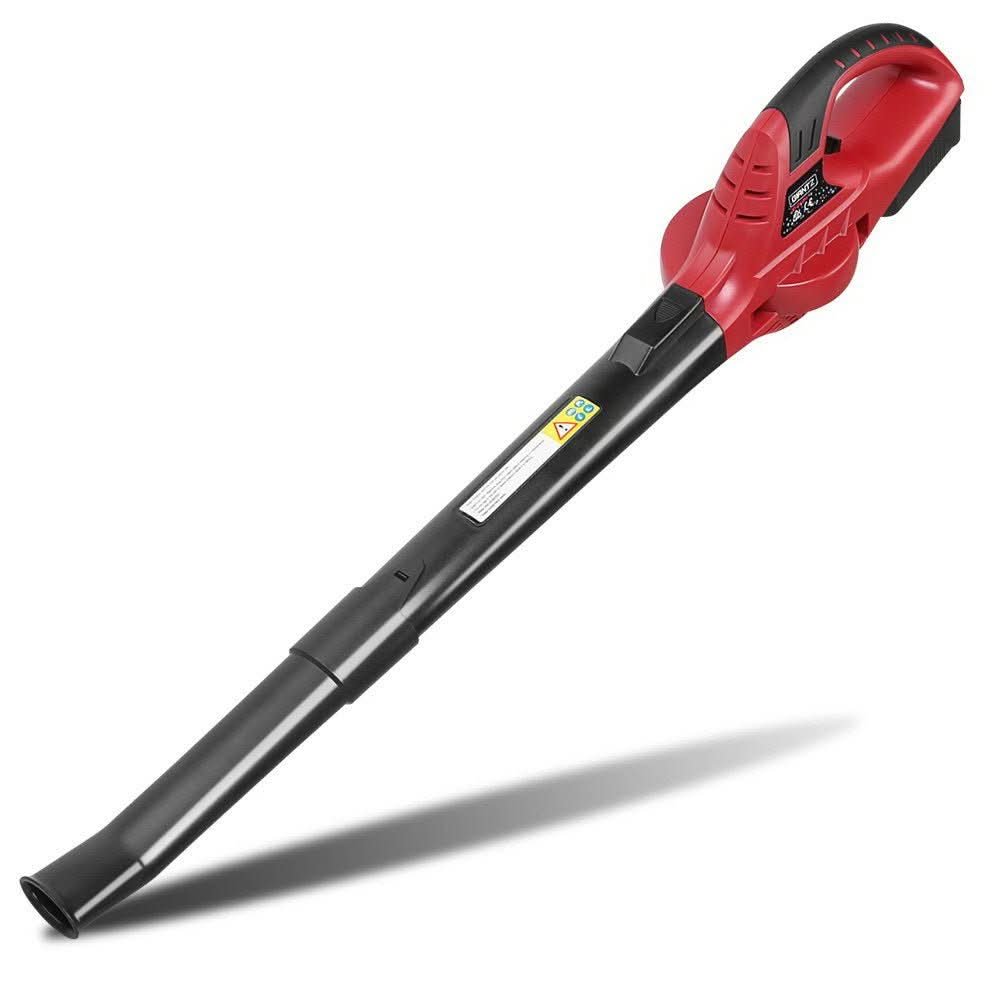
Giantz 20V Cordless Leaf Blower
The cheapest leaf blower in this lineup, two-speed and light enough for one-handed use.
CHECK CURRENT PRICE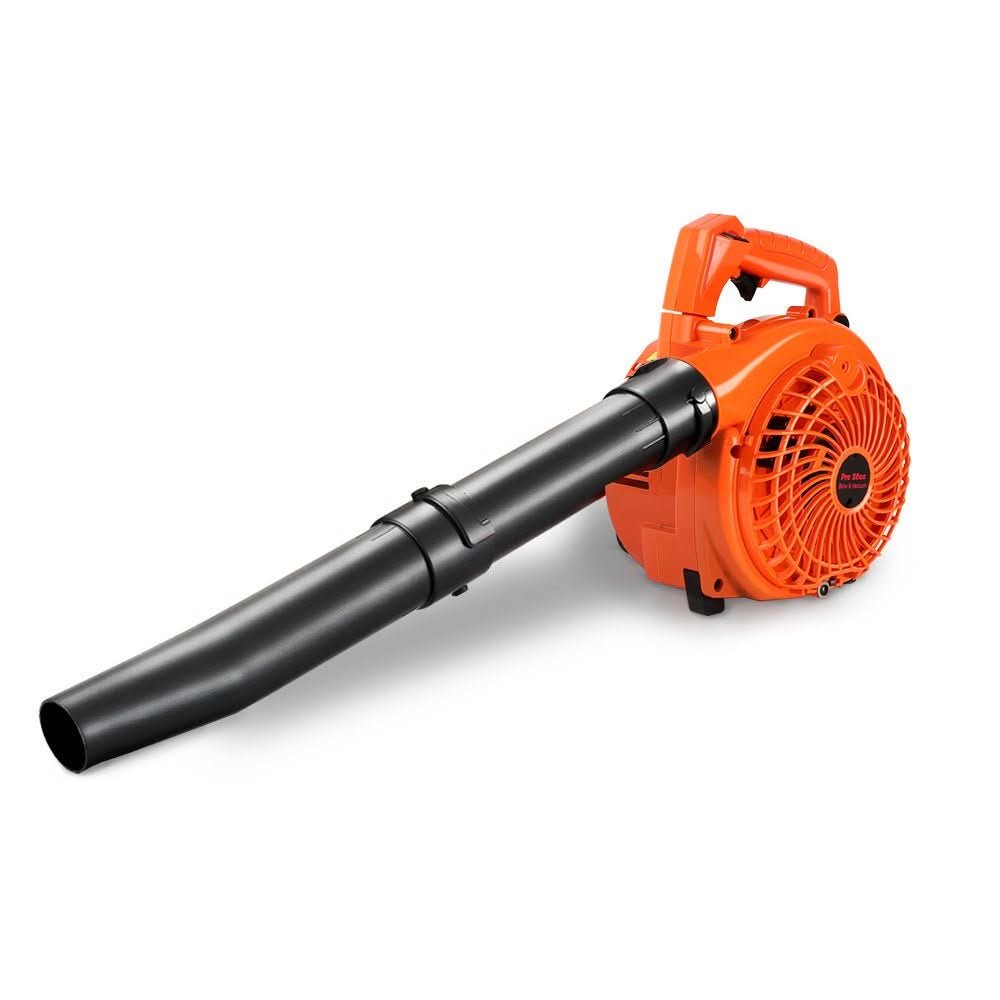
Giantz 25.4cc Petrol Blower Vacuum
A 2-in-1 blower and vacuum with no battery to run flat, at the lowest petrol price here.
CHECK CURRENT PRICE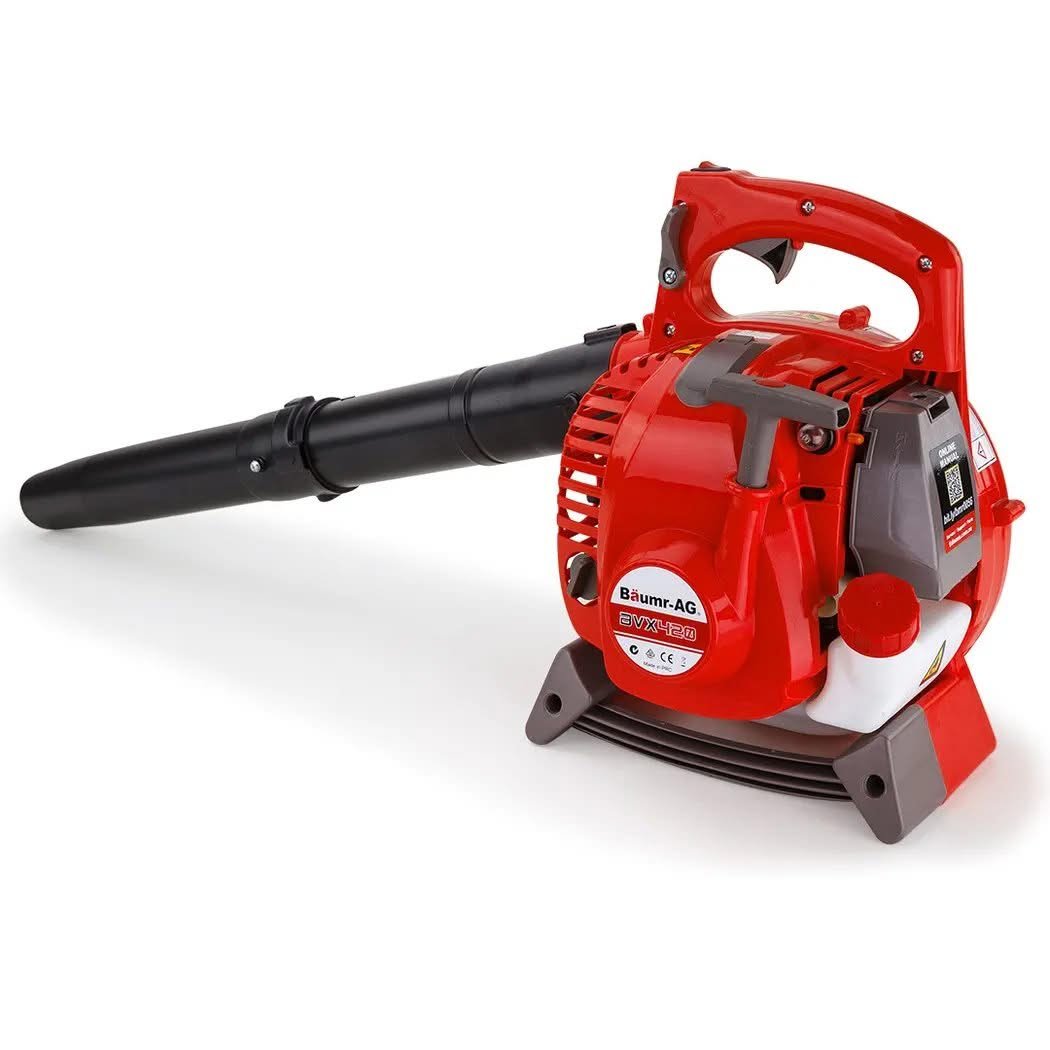
Baumr-AG BVX420 25cc Blower Vacuum
Straight unleaded, no oil-mixing, plus the strongest published air-speed and volume figures in this lineup.
CHECK CURRENT PRICEBest Leaf Blower Australia Compared
1. Giantz 20V Cordless Leaf Blower – Best Budget Cordless Blower
The 20V is the cheapest genuine leaf blower in this guide, and its own spec sheet shows exactly what that buys: two air-speed settings, 80 km/h low and 190 km/h high, but not a single air-volume figure anywhere in the listing. That gap is common at this end of the market – entry cordless blowers in Australia typically publish speed and stay quiet on volume, which makes a fast-sounding number harder to judge than it first looks.
It runs on a 1500mAh battery that recharges in 3 to 5 hours and ships at just over 2 kilograms, light enough for one-handed clearing of a paved path or a car. The same physical tool is sold on Amazon AU under its own listing and carries 4.3 stars from 37 ratings there – the only usable review evidence for this exact tool, since the direct listing itself has barely been reviewed at all.
Pros
- Cheapest leaf blower in this lineup
- Two-speed setting for low-noise or full-power use
- Light at just over 2kg, easy for one-handed use
Cons
- No air-volume figure published anywhere, so real-world clearing power is hard to judge before buying
- 1500mAh battery needs 3-5 hours to recharge, with no fast-charge option mentioned
Key specs: 20V, 1500mAh Li-ion, 80/190km/h two-speed, no air-volume figure published, approx. 2.1kg, 1-yr warranty
CHECK CURRENT PRICE2. Giantz 25.4cc Petrol Leaf Blower Vacuum 2-in-1 – Best Budget Petrol Blower Vac
A 25.4cc 2-stroke engine at this price is not unique to Giantz – Bunnings alone stocks five brands at the identical displacement, and their ratings swing wildly: from 1.8 stars on one badge to 4.9 on another, for what one ProductReview reviewer describes, on a similarly-priced 25.4cc unit, as the same imported engine wearing a different name. That is worth knowing before paying for a brand promise this specific engine class rarely delivers on.
This one runs a claimed 7000 RPM and comes with a 2-in-1 vacuum/mulch bag and two nozzles, but the listing publishes neither an air-speed figure nor a volume figure – only the RPM number, which measures engine speed, not how much air actually moves. At 7.4 kilograms and needing a 95+ RON unleaded and 2-stroke oil mix instead of a straight tank fill, it asks more from an owner than the cordless option above, in exchange for the endurance a battery cannot match on a big yard.
Pros
- 2-in-1 blower and vacuum with mulch bag and two nozzles included
- No battery to run flat mid-job; the tank refuels in seconds
- Cheapest petrol option in this lineup
Cons
- Publishes no air-speed or air-volume figure at all, only an RPM number that does not measure airflow
- 2-stroke engine needs a mixed fuel ratio, not a straight petrol fill
- At 7.4kg it is noticeably heavier than every cordless pick here
Key specs: 25.4cc 2-stroke, 0.75kW, max 7000 RPM, 1250mL tank, 7.4kg, no air-speed/volume figure published
CHECK CURRENT PRICE3. Baumr-AG BVX420 25cc 4-Stroke Petrol Blower Vacuum – Best 4-Stroke Petrol Blower Vac
Where the Giantz above is a 2-stroke that needs a mixed fuel ratio, the BVX420 is a 4-stroke: straight unleaded goes in the tank, no oil-mixing, which is the main reason to pay more here. It is also CE and RCM certified, worth naming plainly given the ACCC recalled a cheap cordless blower charger in February 2026 for exactly the opposite problem – uninsulated plug pins and no Regulatory Compliance Mark at all.
The published numbers back up the price step: 370 km/h air speed and 330 CFM of volume, both higher than anything else in this lineup bar the corded Kozyard further along this list on volume specifically. At 5.4 kilograms it sits between the lightest cordless picks and a full backpack unit, and interchangeable nozzles cover a blow-only or vacuum-and-mulch job with the same engine.
The catch is the returns policy, not the tool: change of mind inside 14 days costs shipping both ways plus a 10 percent restocking fee, worse than the standard 30-day change-of-mind most other picks here carry. Read the spec sheet as confirmation this is a real step up in build, and read the returns terms before assuming you can send it back on a whim.
Pros
- 4-stroke engine runs straight unleaded, no 2-stroke oil mixing
- CE and RCM certified, a checkable safety mark
- 370km/h air speed and 330 CFM volume, both the strongest published figures in this lineup
Cons
- Change-of-mind returns cost shipping both ways plus a 10% restocking fee, worse than the standard policy
- At 5.4kg it is heavier than any cordless pick, though lighter than a full backpack unit
Key specs: 25cc 4-stroke, 0.6kW, 370km/h, 330 CFM, 5.4kg, CE+RCM certified
CHECK CURRENT PRICE4. Bosch UniversalGardenTidy3000 – Best Corded Blower Vac
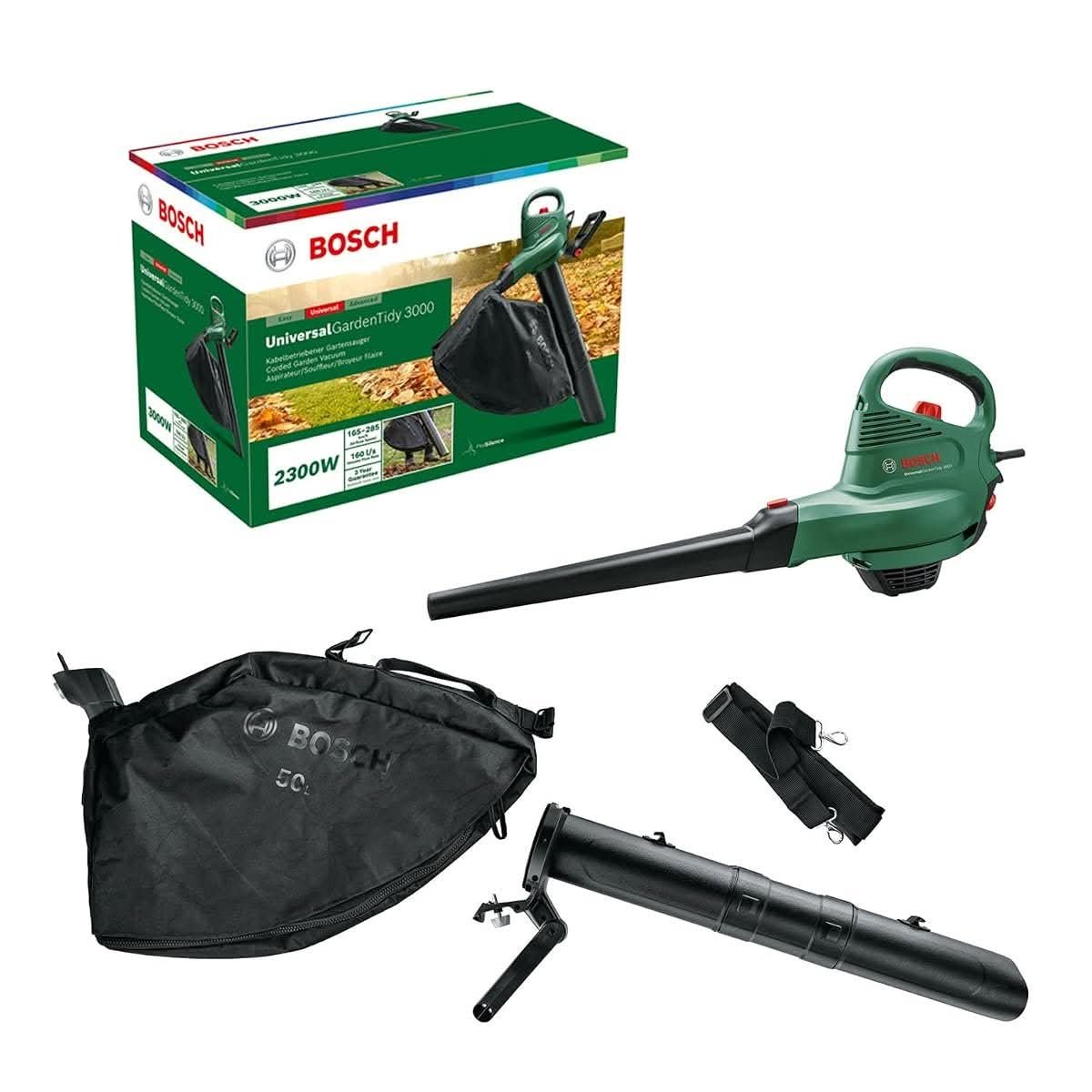
1,789 ratings at 4.4 stars is not just the best review base here, it is an order of magnitude ahead of every other product here – the kind of sample size that actually means something. Being corded is a real part of why it holds up: CHOICE’s own testing found vacuuming performance on cordless blower-vacs consistently trails petrol and corded electric models, and this is a corded electric model with a 50 litre collection bag to match.
Bosch publishes a 99 dB(A) sound-power figure together with a ProSilence claim of up to 75 percent reduced sound power against a comparable conventional motor – a named engineering approach, not a vague quiet claim, though 99 dB(A) is still measured at the machine, not softened by distance. A cord is the trade-off: no battery to run flat and no fuel to buy, but a lead to manage around the garden and a power point to work near.
Pros
- By far the deepest Australian review base in this lineup, 1,789 ratings at 4.4 stars
- Corded design avoids the cordless-vacuum weak spot CHOICE’s own testing found
- 50 litre collection bag, one of the largest here
Cons
- A cord limits reach to how far the lead stretches and needs a nearby power point
- 99 dB(A) is still a loud machine at the source, corded or not
Key specs: 2300W corded, 50L bag, 99dB(A), ProSilence reduced-noise motor
CHECK ON AMAZON5. Makita DUB185Z 18V Blower (Skin Only) – Best-Rated Blower (Skin Only)
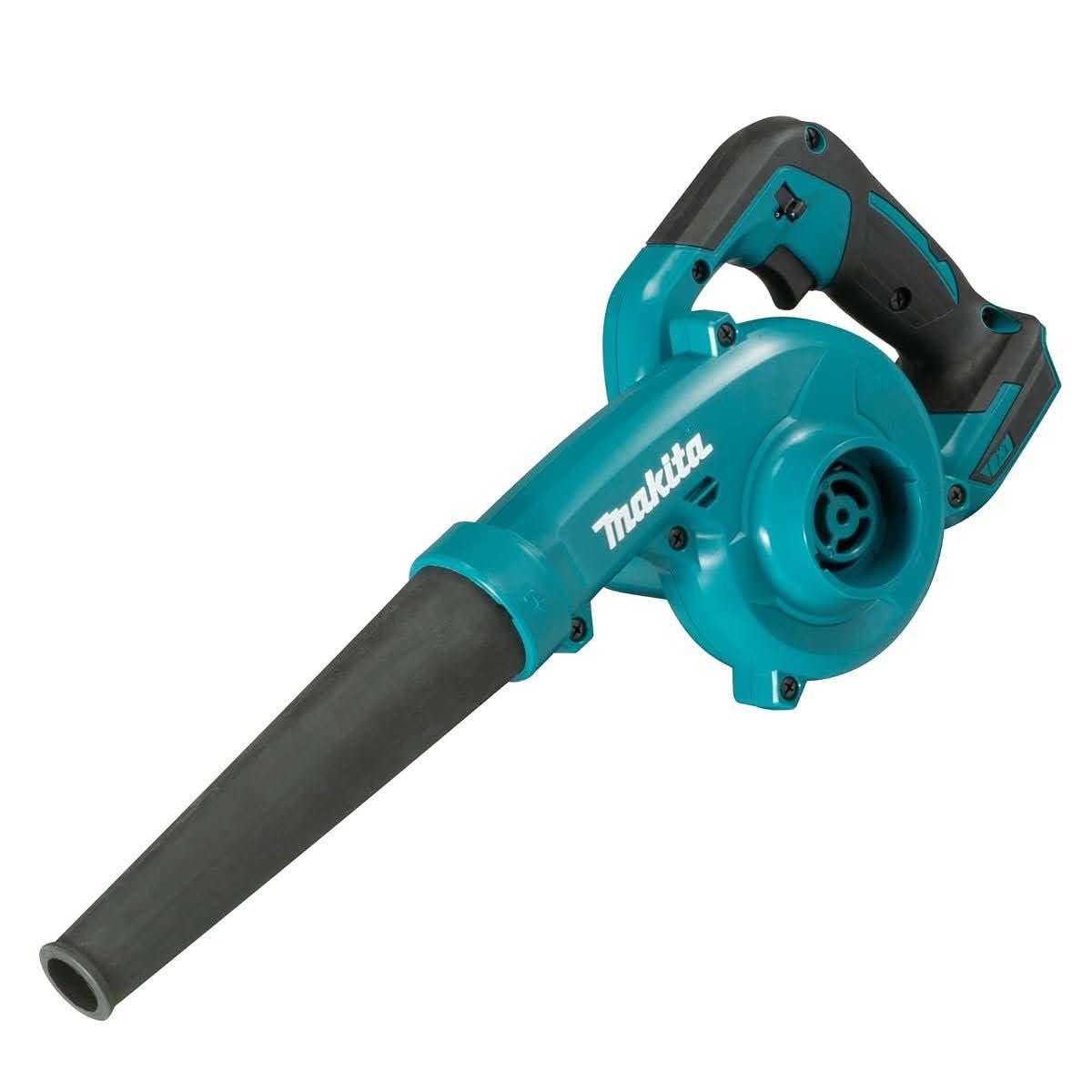
Read the fine print before anything else: this is the tool only, with no battery or charger in the box. Makita’s own LXT battery system is what you are buying into, and it only makes sense if you already own one of those batteries or are prepared to add one to the cart.
Everything else about it is close to as good as this category gets. It is the highest-rated leaf blower on Amazon AU by a wide margin – 4.6 stars from 5,630 ratings – and Makita took out Canstar Blue’s 2024 Most Satisfied Customers award for leaf blowers, rated five stars across performance, design, ease of use, maintenance, battery life and overall satisfaction from a survey of 723 Australians. A claimed 98 metres per second (353 km/h) air speed backs up the reputation, and Makita is properly stocked at Bunnings, not just sold through third parties online.
Pros
- Highest-rated leaf blower on Amazon AU, 4.6 stars from 5,630 ratings
- Canstar Blue’s 2024 Most Satisfied Customers award winner for leaf blowers
- Properly stocked at Bunnings, not a marketplace-only brand
Cons
- Skin only – no battery or charger included, a real added cost if you do not already own Makita’s 18V LXT system
- No air-volume figure published, only the air-speed claim
Key specs: 18V LXT (skin only, battery/charger not included), 98m/s (353km/h) claimed air speed, Canstar Blue 2024 award winner
CHECK ON AMAZON6. Black+Decker 18V Power Command Blower Kit – Best Cordless Kit With Battery Included
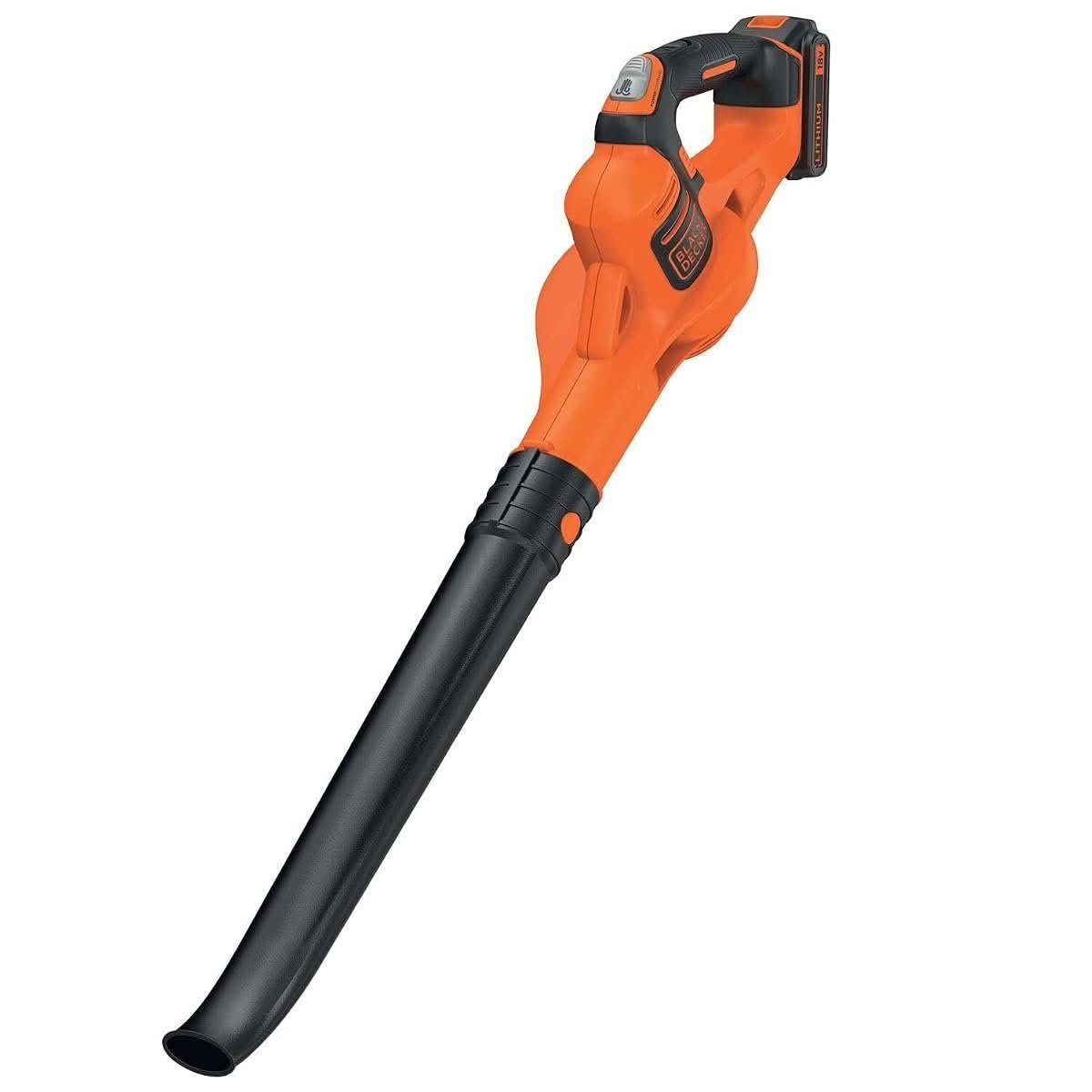
Where the Makita above is a bare tool, this is a complete kit – battery and charger included, so the price on the tag is the price you actually pay to start blowing leaves. A Boost mode pushes air speed to 209 km/h when needed, dropping back to a quieter setting for everyday clearing.
At 1.7 kilograms it is one of the lightest cordless picks here, and its 4.1-star rating from 152 Australian ratings sits solidly mid-pack – not the standout the Makita is, but a properly complete, nothing-else-to-buy starting point for a first cordless blower.
Pros
- Battery and charger included, nothing extra to buy to get started
- Boost mode reaches 209km/h when full power is needed
- Light at 1.7kg for extended one-handed use
Cons
- Rated 4.1 from 152, solid but not standout against the Makita above
- Locks you into Black+Decker’s own battery platform for any future cordless additions
Key specs: 18V, 209km/h with Boost, 1.7kg, battery and charger included
CHECK ON AMAZON7. Black+Decker 3-in-1 Backpack Blower Vac – Best Backpack Blower Vac
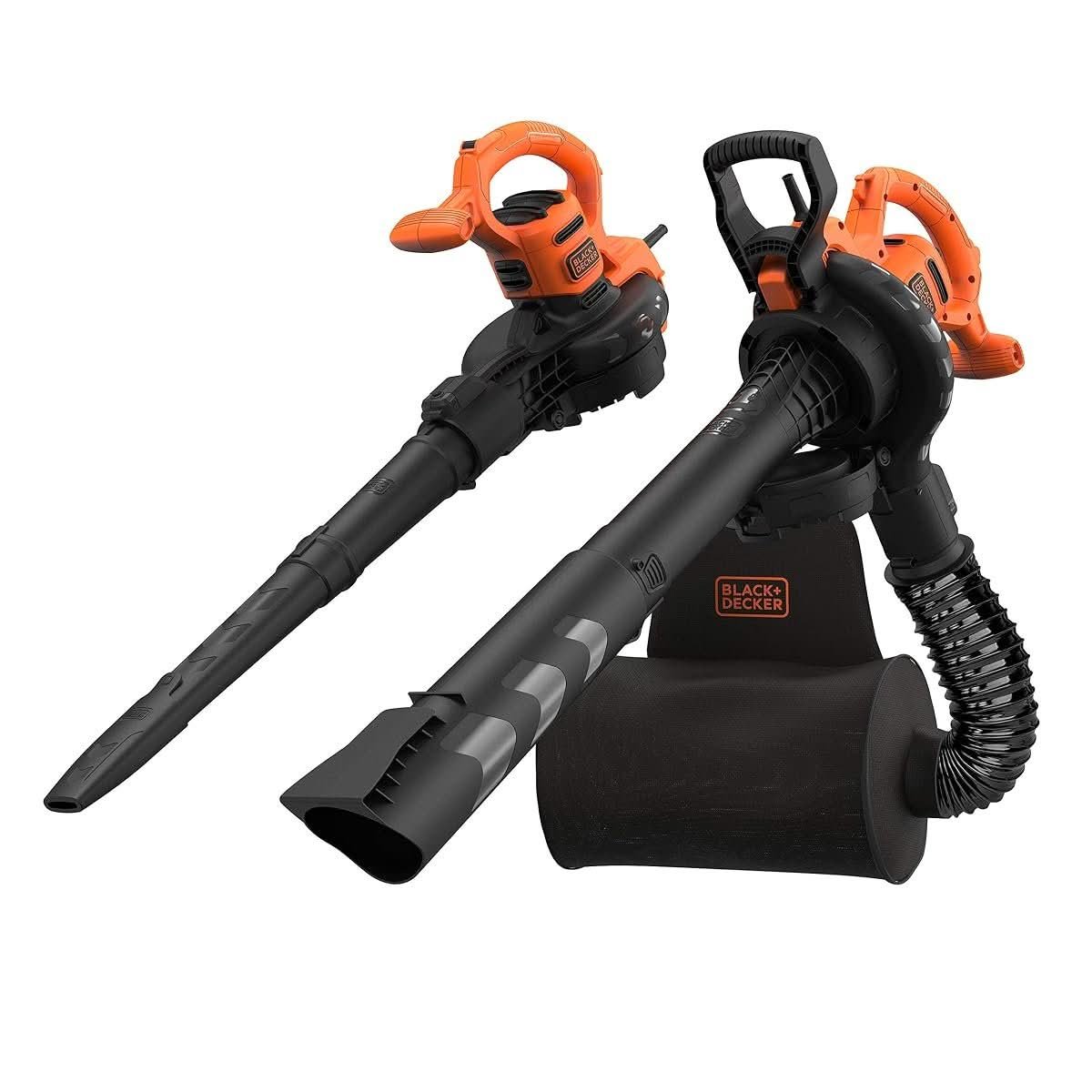
The only backpack-format blower vac in stock anywhere across this sweep, and its 3.0-star rating from 58 Australian buyers deserves to be said plainly rather than buried under the spec sheet. A backpack shifts the weight of a corded 2300W motor off your arm and onto your shoulders and back, which matters over a long session, but it is not a rating that suggests an easy fix for whatever sits behind the average score.
Black+Decker claims a 12:1 mulching ratio through the flexi tube. No independent Australian test of this specific model exists, but CHOICE has tested a comparable manufacturer mulch-ratio claim elsewhere and found the real result closer to 4:1 – worth remembering before treating any blower-vac’s stated ratio as a promise, not a marketing number.
Pros
- Only backpack-format blower vac in stock anywhere in this account
- Spreads a 2300W motor’s weight off your arm and onto your back
- 315km/h corded air speed, no battery to run flat mid-session
Cons
- Rated only 3.0 from 58 Australian ratings, the softest score in this lineup
- Mulch-ratio claims of this kind have been independently tested elsewhere and found closer to 4:1 than 10:1 or 12:1
Key specs: 2300W corded, 315km/h, 12:1 claimed mulch ratio (untested), backpack format
CHECK ON AMAZON8. Ryobi ONE+ 18V Brushless Blow-Vacuum – Best for Bunnings Battery Owners
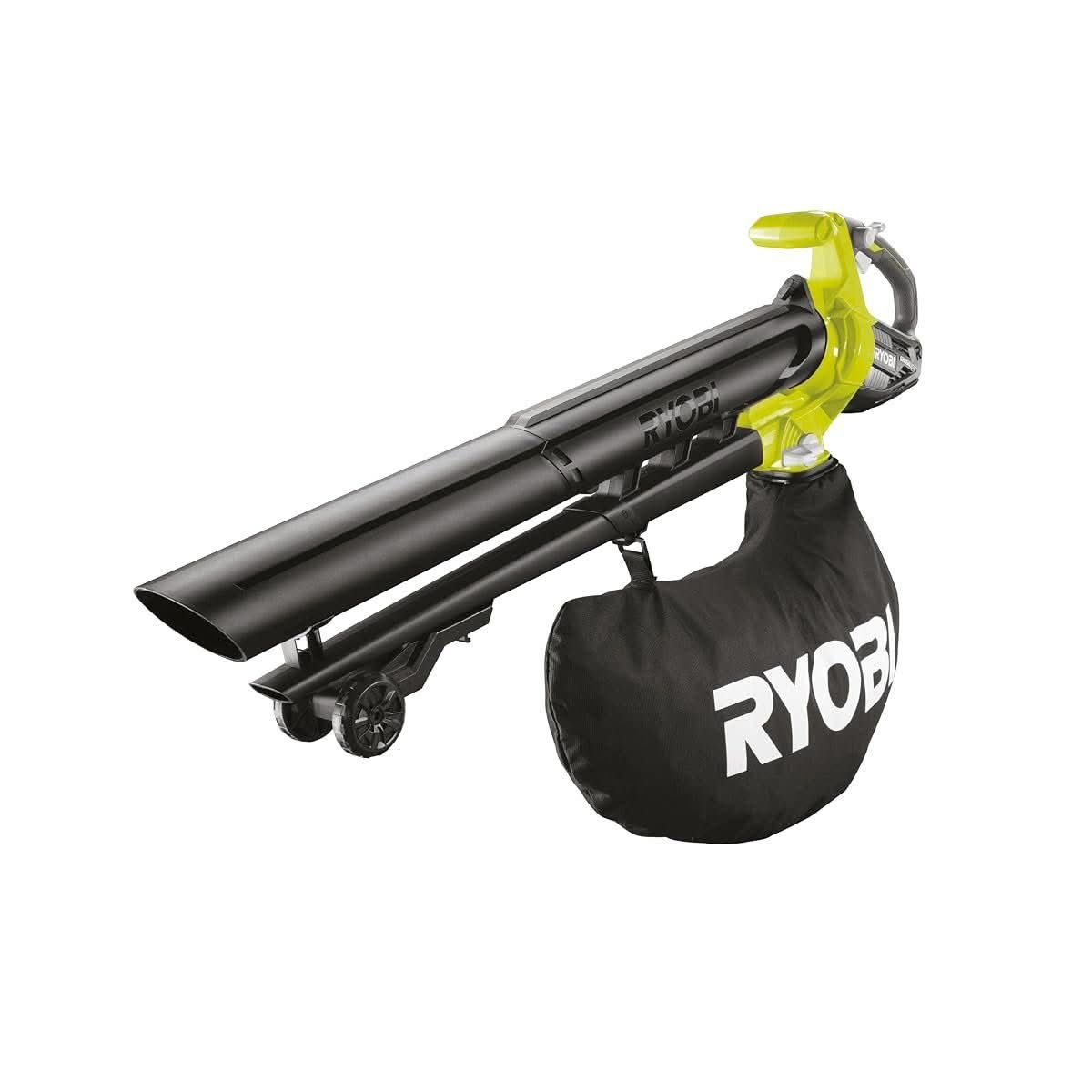
This is Ryobi’s own 18V ONE+ platform, the ecosystem alongside Ozito’s PXC system that dominates the Bunnings battery aisle – and unlike Ozito, Ryobi’s own words are blunt about compatibility: an 18V battery will not run in a 36V Ryobi tool, and the reverse does not work either. Check exactly which Ryobi voltage this is (18V ONE+) against any batteries already on a charger at home before assuming it fits.
It carries the largest single review sample of any product in this lineup – 3.8 stars from 1,252 ratings – a score that is honest, not glowing, and the mulch ratio Ryobi claims (10:1) sits in exactly the range CHOICE’s own testing has found overstated elsewhere, typically closer to 4:1 in practice. Sold as a bare tool, the price on the tag assumes you already own a ONE+ battery and charger, which is the whole point of buying into a platform rather than a single blower.
Pros
- Largest review sample of any product in this lineup, 1,252 Australian ratings
- Real Bunnings-aisle battery platform (18V ONE+)
- 35 litre collection bag with turbo mode and variable speed
Cons
- Sold as a bare tool – a battery and charger are a real added cost if you are not already on Ryobi’s ONE+ platform
- Ryobi’s own 18V and 36V tools are NOT cross-compatible, unlike Ozito’s shared-battery system
- 3.8 stars is an honest score, not a strong one, for the sample size
Key specs: 18V ONE+ (bare tool), 10:1 claimed mulch ratio, 35L bag, turbo mode
CHECK ON AMAZON9. KOZYARD 3-in-1 Electric Blower Vac Mulcher – Best High-Volume Corded Blower Vac
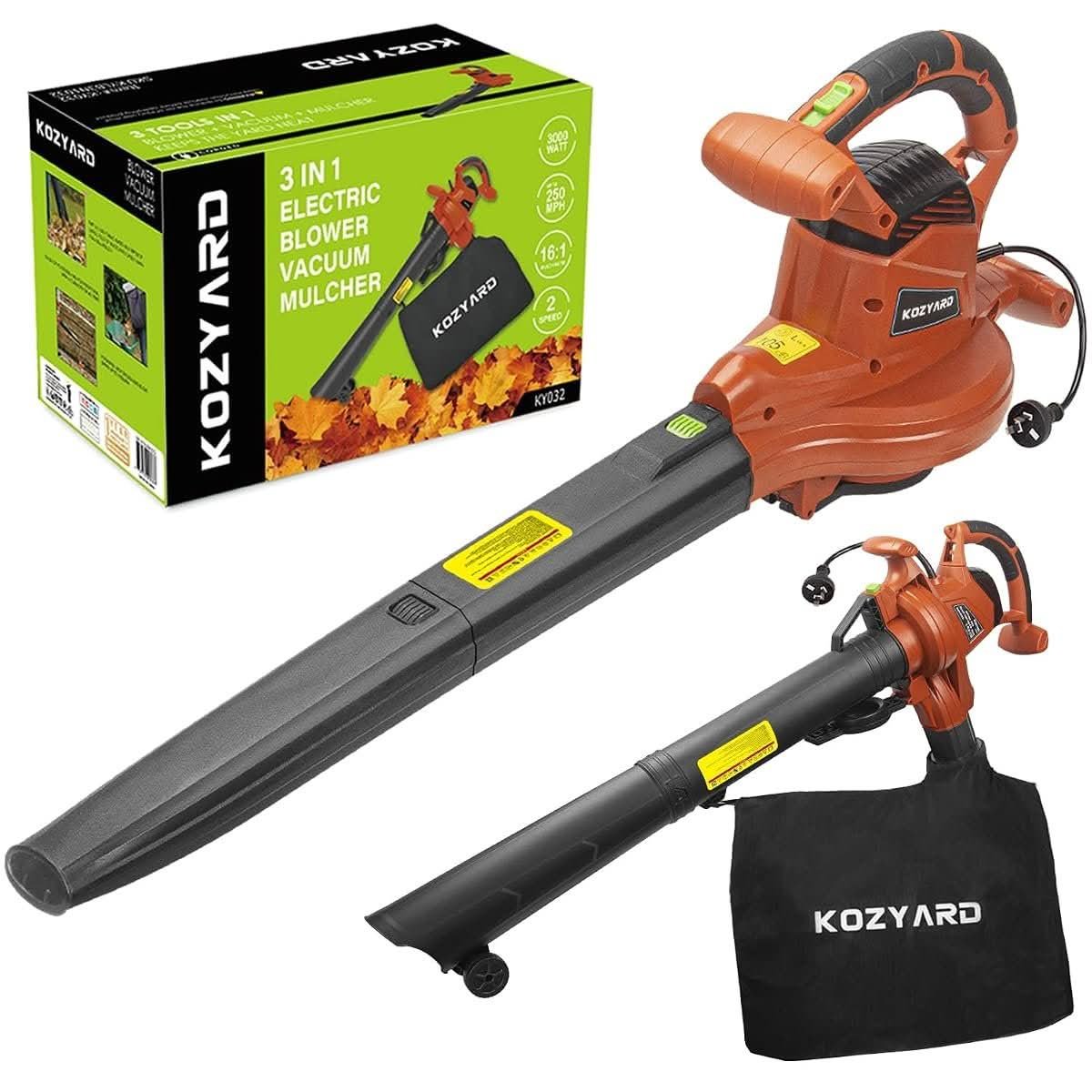
This is the volume argument made concrete: Kozyard’s corded 3000W motor claims 365 CFM of air volume, more than the Baumr-AG petrol unit above despite that petrol engine hitting a faster 370 km/h. Speed and volume are different numbers measuring different things, and this pairing is the cleanest real example in this whole lineup of why leading on one over the other can mislead.
Two variable speeds and a 45 litre bag are properly useful for a session moving a lot of leaf litter, not a quick tidy-up, and at 4.2 stars from 40 Australian ratings it holds a respectable, if modestly sampled, review base. Corded like the Bosch above, it trades cord management for never running out of charge mid-yard.
Pros
- 365 CFM air volume, the highest published figure in this entire lineup
- 45 litre collection bag, one of the largest here
- Two variable speeds, corded so it never runs out of charge
Cons
- Only 40 Australian ratings behind its 4.2-star score, a smaller sample than the Bosch or Makita above
- Corded, so reach is limited to the lead length
Key specs: 3000W corded, 365 CFM, 155/250 MPH, 45L bag, 2 variable speeds
CHECK ON AMAZON10. TOPEX 20V Cordless Blower + Grass Trimmer Combo – Best 2-in-1 Blower and Trimmer Combo
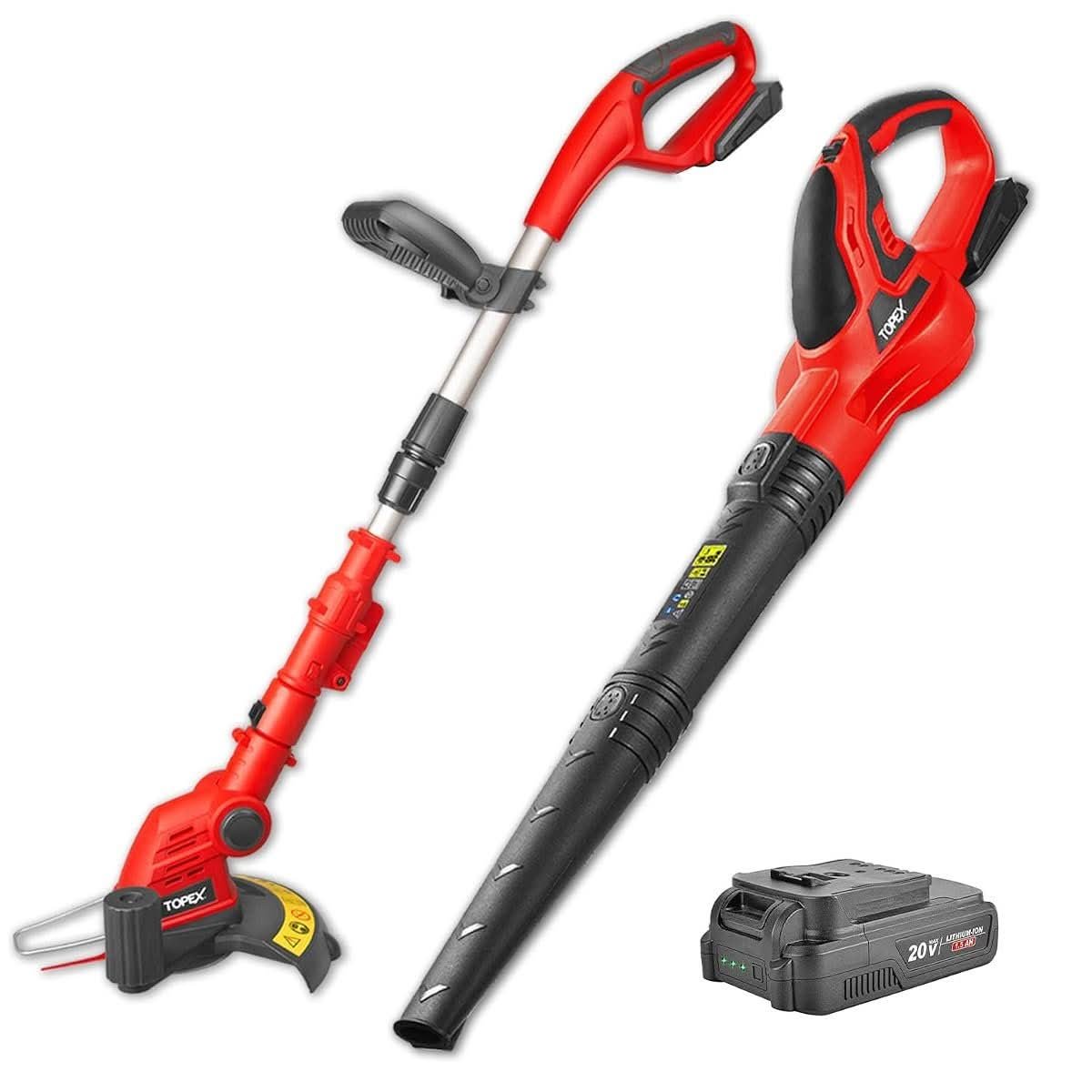
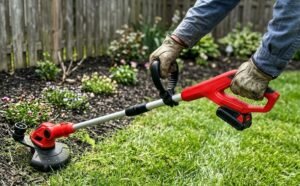
The honest starting point here is the review data: 3.2 stars from 16 ratings is thin and middling, not a score to oversell. What the combo buys, on paper, is two tools sharing one 20V battery – a blower at up to 200 km/h and a separate grass trimmer head with an 8,500 RPM motor and a 230mm cutting width – with the battery and charger included in the kit price.
Neither head publishes an air-volume figure, so the blower’s real clearing power is unverifiable against anything with a CFM rating, and the small review sample means this pick carries more uncertainty than any other product in this lineup. It is included for the real 2-in-1 value case, not as the strongest single recommendation here – and stock has been tight, so check availability before assuming it will still be there next week.
Pros
- Blower and grass trimmer share one 20V battery, included in the kit
- No extra battery to buy, everything is in the box
- Assembles in under a minute per the listing
Cons
- Only 3.2 stars from 16 ratings, the thinnest and weakest review evidence in this lineup
- No air-volume figure published for either the blower or trimmer head
- Stock has run low at times – confirm availability before counting on it
Key specs: 20V (kit, battery included), 200km/h blower, 8,500 RPM / 230mm trimmer head, no air-volume figure published
CHECK ON AMAZONHow to Choose a Leaf Blower in Australia
Air speed alone is close to a marketing number. Would you trust a car’s top speed over its towing capacity for hauling a trailer? A blower’s air-speed claim deserves the same second look. Stihl’s own Australian product pages footnote it directly: “Force in Newtons (N) to compare the performance of blowers.” Ryobi’s own 18V ONE+ range proves the point – one model claims 315 km/h and only 5.9 newtons of force, another claims a slower 209 km/h and more than double the force at 15 newtons. The Baumr-AG and Kozyard entries above show the same pattern from opposite directions: the petrol Baumr-AG is faster (370 km/h) but moves less air (330 CFM) than the corded Kozyard’s 365 CFM. Check air volume (CFM or m3/h) next to speed wherever both are published, and treat a speed-only claim as the less trustworthy half of the story.
Check the noise rating against how long you will actually be exposed to it, not just whether the ad copy calls it quiet. Safe Work Australia’s Model Code of Practice sets clear exposure limits: 85 dB is safe for a full 8-hour workday, 94 dB drops that to 1 hour, and 100 dB drops it to 15 minutes. Husqvarna’s own published figures show why the sticker alone cannot be trusted: a 4.26kg handheld petrol blower and an 11.8kg commercial backpack unit both carry an identical 112 dB(A) guaranteed sound-power rating, yet the two differ by 6 dB at the operator’s actual ear – sound-power (LWA) figures, which is what most brands print, are not the same as what a user standing behind the machine actually hears.
Check your state’s permitted hours before the first weekend use – and do not trust an article citing the old NSW rule. The regulation almost every competing guide cites, the Protection of the Environment Operations (Noise Control) Regulation 2017, was repealed and replaced on 28 August 2026. Under the new instrument, NSW permits residential power tools (blowers are named explicitly) 7am-8pm weekdays and 8am-8pm on weekends and public holidays, and treats a breach as a two-strike offence, not an instant fine. Queensland’s cutoff is the earliest in the country at 7pm, and Western Australia adds a genuine standout rule: even within permitted hours, a blower cannot legally run for more than 2 hours in a single day before the state’s decibel limits apply in full.
A cordless blower only ever runs on the battery platform it was built for, and the two big Bunnings-aisle systems answer that question completely differently. Ozito says one battery powers its entire 18V and 36V PXC range; Ryobi says plainly that an 18V battery will not run in a 36V Ryobi tool and vice versa, and the Ryobi entry above explains why that matters for this specific pick. The same lock-in applies to a whipper snipper bought on the same battery platform, so it is worth deciding the ecosystem once, not per tool.
Treat any mulching ratio on the box as a claim, not a measurement. CHOICE’s own testing found a manufacturer-claimed mulching ratio of “around 10:1” was, in practice, “more like 4:1” – directly relevant to the 10:1 and 12:1 claims on two of the entries above. CHOICE’s testing also found cordless blower-vacs consistently weaker on the vacuum function specifically than petrol or corded electric models, which is why every corded pick here is a distinctly stronger vacuum option than a cordless equivalent, not just a lifestyle preference.
On an actual Total Fire Ban day in WA, the battery-vs-petrol choice stops being a preference and becomes the law. WA’s Department of Fire and Emergency Services states plainly that petrol equipment cannot be used on residential lawns on a Total Fire Ban day, while electric and battery-powered equipment is explicitly allowed. Every state fire agency checked for this guide tells residents to keep gutters clear of leaves ahead of fire season, without ever naming what tool to do it with – and autumn leaf drop itself runs on a real regional clock, from Tasmania’s fagus turning around Anzac Day through to the Adelaide Hills’ colour change running from mid-March into June.
You’ll Also Want
Safe Work Australia rates several blowers in this guide loud enough to cut safe unprotected exposure to an hour or less, so a real pair of rated earmuffs is not optional gear. PROHEAR 016 ear protection earmuffs, NRR 26dB.
Dust, bark chips and grit come back at you off any blower, cordless or petrol, and safety glasses are the cheapest injury prevention in this whole list. TR Industrial ANSI Z87.1 safety goggles.
A spare battery removes the single biggest complaint about cordless blowers – running flat mid-yard – for anyone who picked the Ryobi ONE+ platform above. 18V 5000mAh battery compatible with Ryobi ONE+. Pairs naturally with a hedge trimmer on the same battery platform if the yard needs more than one cordless tool.
Frequently Asked Questions
Is there a legal time limit on using a leaf blower in Australia?
Yes, and it varies by state. NSW permits residential power tools including blowers 7am-8pm weekdays and 8am-8pm on weekends, under a regulation updated in August 2026. Queensland’s cutoff is 7pm, the earliest in the country. Western Australia adds a 2-hour daily limit on top of its permitted hours before stricter decibel rules apply. Always check your own state and council, since local rules can add further restrictions.
Does air speed (km/h) or air volume (CFM) matter more for clearing leaves?
Neither figure alone tells the full story, but volume is generally the better single signal when only one is published. Manufacturers like Stihl publish blowing force in newtons specifically because speed can be high while force stays low, as Ryobi’s own range demonstrates. Check volume (CFM or m3/h) next to speed wherever both are listed, and treat a speed-only claim with some caution.
Can I use a leaf blower during a Total Fire Ban?
In Western Australia, no, if it is petrol-powered – DFES states plainly that petrol equipment cannot be used on residential lawns on a Total Fire Ban day, while electric and battery-powered equipment is explicitly allowed. Other states’ fire services do not name leaf blowers specifically in their Total Fire Ban rules, so check your own state’s current restrictions before assuming a petrol blower is covered.
Do blower-vac mulchers really reduce leaf volume 10:1?
Usually not in practice. CHOICE tested a manufacturer-claimed mulching ratio of around 10:1 and found the real-world result closer to 4:1. Treat any mulching ratio printed on a box as a marketing claim, not a measurement, and expect a blower-vac’s collection bag to fill roughly two to three times faster than the headline ratio suggests.
Is a petrol or battery leaf blower better?
It depends on the block size and how long you need to run it. Petrol blowers generally move more air for longer without recharging, and are the only practical option for a large yard, but need fuel and more maintenance. Battery blowers are quieter at the operator’s ear, need no fuel, but typically run out well before the manufacturer’s stated time on a single charge, especially at full power.
How loud are leaf blowers, and do I need ear protection?
Often loud enough to need it. Safe Work Australia’s exposure guidance allows a full 8-hour workday at 85 dB, but only 1 hour at 94 dB and 15 minutes at 100 dB – and several petrol blowers run at 91-100 dB at the operator’s ear. Rated earmuffs are worth using for any extended petrol blower session, and are a sensible precaution with a loud corded or cordless unit too.
Verdict
For a small paved yard or a quick weekly tidy, the Giantz 20V costs the least and asks the least in return; for a properly big block with wet leaf litter, the Baumr-AG’s 4-stroke engine and published 330 CFM volume do more real work than any cordless pick here; and for anyone already standing in the Bunnings battery aisle, matching the Makita or Ryobi entry to a battery platform already on the charger beats buying on spec sheet alone.