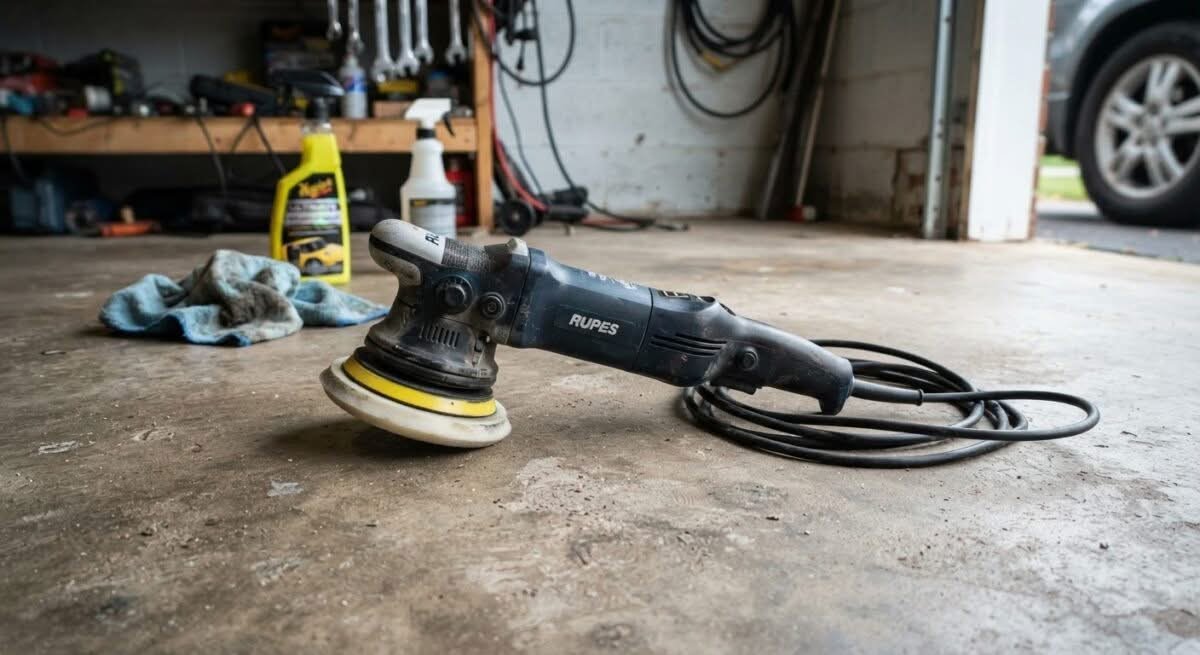
A car polisher is a powered buffing tool that spins or oscillates a foam or wool pad against clear coat to cut back oxidation, swirl marks and light scratches, restoring the reflective finish underneath. Among the best car polishers Australia detailers and home owners buy, the split is between a dual-action (DA) machine, which oscillates as it spins so it is far harder to burn through paint, and a rotary machine, which spins in one direction only and cuts faster but punishes a heavy hand.
Three broad types turn up across this list: cordless 12V buffers built for spot repairs and tight panels, corded random orbital polishers that trade portability for unlimited runtime, and dual-action rotary hybrids aimed at buyers who already know their way around a foam pad. Battery-powered units suit a driveway job on one or two panels; corded machines suit a full car, bonnet to boot, in one sitting.
The number that decides how much correction any of these machines can safely do is clear coat thickness. Most factory clear coat sits at roughly 30 to 50 microns, and a single careful polishing pass removes somewhere between 2 and 5 microns, while an aggressive cut with a wool pad can take 10 to 20 microns in one go. Car makers generally treat about 8 microns as a sensible lifetime removal budget before the coat gets too thin to protect the paint underneath, which is the real reason a dual-action machine is the safer starting point over a rotary for anyone who has not measured their own panels with a paint depth gauge.
This guide compares nine polishers spanning a cheap handheld scratch-repair tool through to a 1000W professional-grade dual-action machine, covering cordless spot-repair units, a mains-powered orbital sander/polisher and two true rotary-style options for buyers who already have polishing experience. Anyone building out a wider car-care kit at the same time might also want a look at our guide to the tyre inflators worth having, another tool worth keeping in the boot alongside a polisher.
Quick Picks
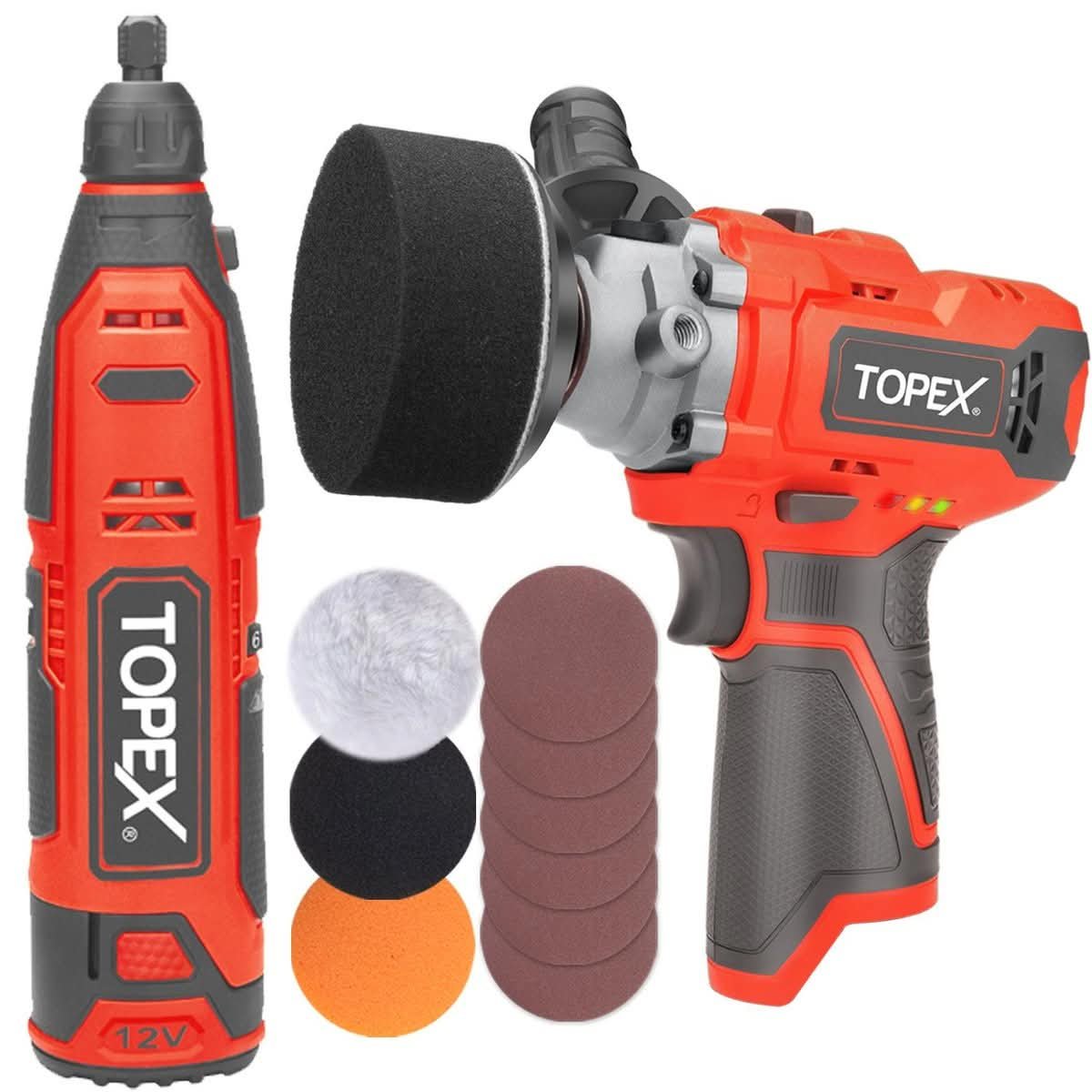
12V Cordless Polisher & Rotary Tool Kit
A multi-attachment kit that covers polishing, grinding and light sanding from one 12V motor.
CHECK CURRENT PRICE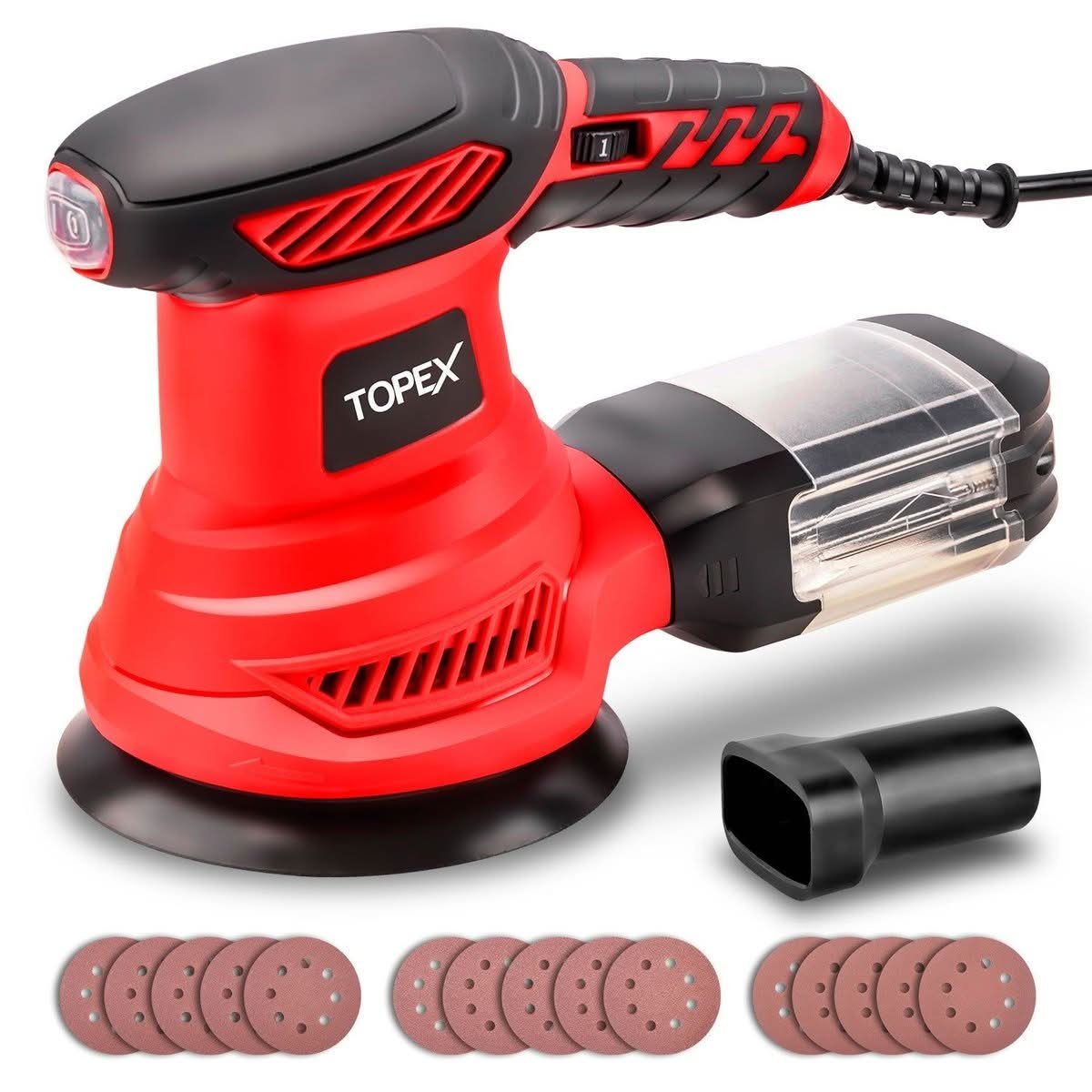
300W Random Orbital Sander/Polisher
Mains power means no battery to watch, plus 15 sanding discs bundled in for paint prep.
CHECK CURRENT PRICE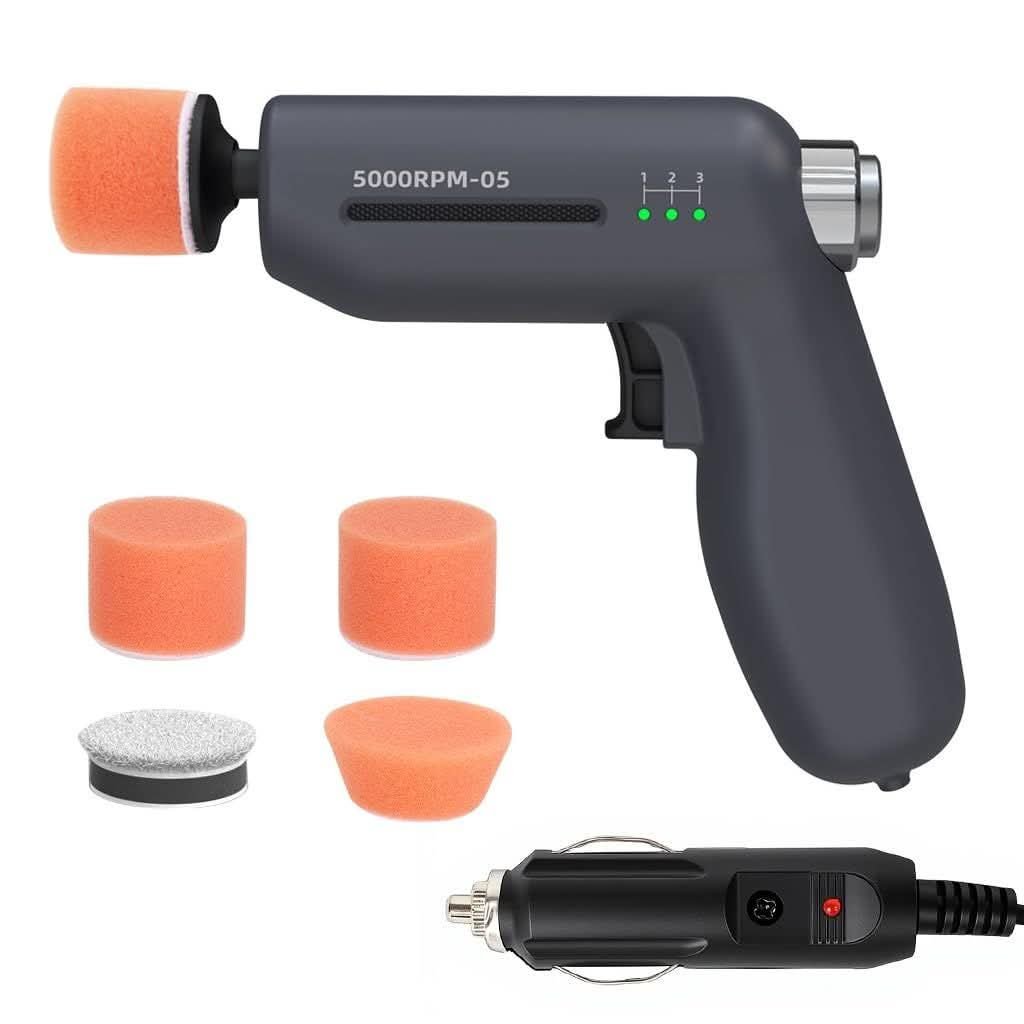
12V Car Polisher Scratch Repair Machine
A cheap, cordless spot-fixer built for a single scuff, headlight or bumper scrape.
CHECK CURRENT PRICEBest Car Polishers Australia Compared
| Product | Link | Type | Best For | Key Spec |
|---|---|---|---|---|
| 12V Cordless Polisher & Rotary Tool Kit | Check price | Best All-Rounder | Best All-Rounder | 12V DC motor, multi-attachment kit (buff, wool, cutting, sanding heads), cordless, battery + charger included |
| 300W Random Orbital Sander/Polisher | Check price | Best Corded Power | Best Corded Power | 300W corded motor, random orbital action, variable speed, 15 sanding discs included |
| 12V Cordless Polisher with LED Torch | Check price | Best for Low-Light Detail Work | Best for Low-Light Detail Work | 12V DC motor, cordless, lithium-ion battery + charger, built-in LED work light |
| 12V Cordless Mini Detailing Buffer | Check price | Best Compact Buffer | Best Compact Buffer | 12V DC motor, 3-inch pad, cordless, battery + charger included |
| 12V Car Polisher Scratch Repair Machine | Check price | Best Budget Pick | Best Budget Pick | 12V DC motor, cordless, multiple polishing/buffing heads, includes carry case |
| Meguiar’s AutoCosmetica Hornet M15 Dual-Action Polisher | Check price | Best Premium Pick | Best Premium Pick | 1000W corded motor, dual-action (forced rotation), 127mm (5-inch) backing plate, kit includes pads |
| BATOCA S2 Cordless Car Polisher | Check price | Best Cordless | Best Cordless | 12V battery power (2x 5.0Ah batteries + charger included), dual-action orbital (8mm throw), 125mm pad, LCD display, 6-speed 2000-4500rpm |
| AUTIWOZ W01 630W Dual Action Polisher | Check price | Best Value Dual-Action | Best Value Dual-Action | 630W corded motor, dual-action orbital (9mm throw), 125mm pads, 6-speed 2000-6200rpm |
| BATOCA P2 1000W Rotary Polisher | Check price | Best for Experienced Users | Best for Experienced Users | 1000W corded motor, rotary (single-direction) action, 150mm (6-inch) pad, 5m detachable cord, 6-speed 1000-3800rpm |
How We Picked
We swept Australia’s approved dropship and marketplace partners for real, in-stock car polishers, checking each listing’s real stock count rather than trusting a generic “in stock” badge, and cross-checking near-identical listings from the same supplier so a single tool never counted twice under a different name. Products with an unclear delivery window or a seller based outside Australia were screened out before anything was written.
For real-world experience we leaned on the open marketplace’s own verified-buyer ratings where a listing had enough of a review history to mean something, and on physical reasoning about pad size, motor wattage and stroke pattern where a listing was too new to have built one up yet, which is common for a specialist tool like this. We spent the most hands-on research time on the 1000W dual-action machine, the pick we would point a mate toward first if they only wanted to buy one polisher.
1. 12V Cordless Polisher & Rotary Tool Kit – Best All-Rounder
This is less a polisher than a small workshop in a case: the 12V motor swaps between a felt buffing head, a wool pad, a cutting disc and a sanding drum, so the same tool that smooths a scuffed bumper also cleans up a rusty gate hinge or a rough-cut piece of timber. That flexibility is the whole pitch, and for a renter or a first-home owner without a shed full of dedicated tools, one box that does four jobs beats four single-purpose ones taking up boot space.
The trade-off is obvious the moment you compare it against the dedicated 300W orbital polisher further down this list: a small 12V motor spinning a 3-inch head cuts corners, badges and side mirrors well but will take considerably longer on a full bonnet than a corded machine built for exactly that job. Treat it as the tool you reach for between panels, not the one you use for a whole car in a single sitting.
Pros
- Multiple attachment heads cover polishing, buffing and light grinding from one motor
- Cordless and light enough for one-handed use around mirrors, badges and door handles
- Comes as a complete kit over a bare tool needing separate accessories bought later
Cons
- The included battery runs down well before a full car is finished, so a spare pack is worth budgeting for
- Small 3-inch heads mean a full bonnet or roof takes noticeably longer than a corded polisher covers in one pass
Key specs: 12V DC motor, multi-attachment kit (buff, wool, cutting, sanding heads), cordless, battery + charger included
CHECK CURRENT PRICE2. 300W Random Orbital Sander/Polisher – Best Corded Power
Plugged into a wall socket instead of a battery pack, this is the one machine on this list built to sit on a bonnet for twenty straight minutes without slowing down or needing a recharge break. Random orbital action (the pad both spins and wobbles in small circles) is the same safer motion used on the premium dual-action machines further down this guide, just at a lower 300W and without the digital speed readout those cost three or four times as much for.
It ships with 15 sanding discs bundled in alongside a foam polishing pad, which is a real two-jobs-in-one pitch: light surface prep on a rough repair before the polish goes on, using the same handle and motor. Fair warning on the lead: at roughly 2 metres it is short enough that a full-size 4WD or a wagon parked nose-in to a wall will need an extension cord to reach the far end.
Pros
- Mains power means unlimited runtime for a full car in one sitting
- Random orbital motion is a safer motion on clear coat than a single-direction rotary
- Sanding discs are bundled in, so light paint prep doesn’t need a second tool
Cons
- Only around 2m of cord, so a bigger vehicle or a garage without a nearby power point needs an extension lead
- No digital speed or torque readout, so pressure control is on you, not the machine
Key specs: 300W corded motor, random orbital action, variable speed, 15 sanding discs included
CHECK CURRENT PRICE3. 12V Cordless Polisher with LED Torch – Best for Low-Light Detail Work
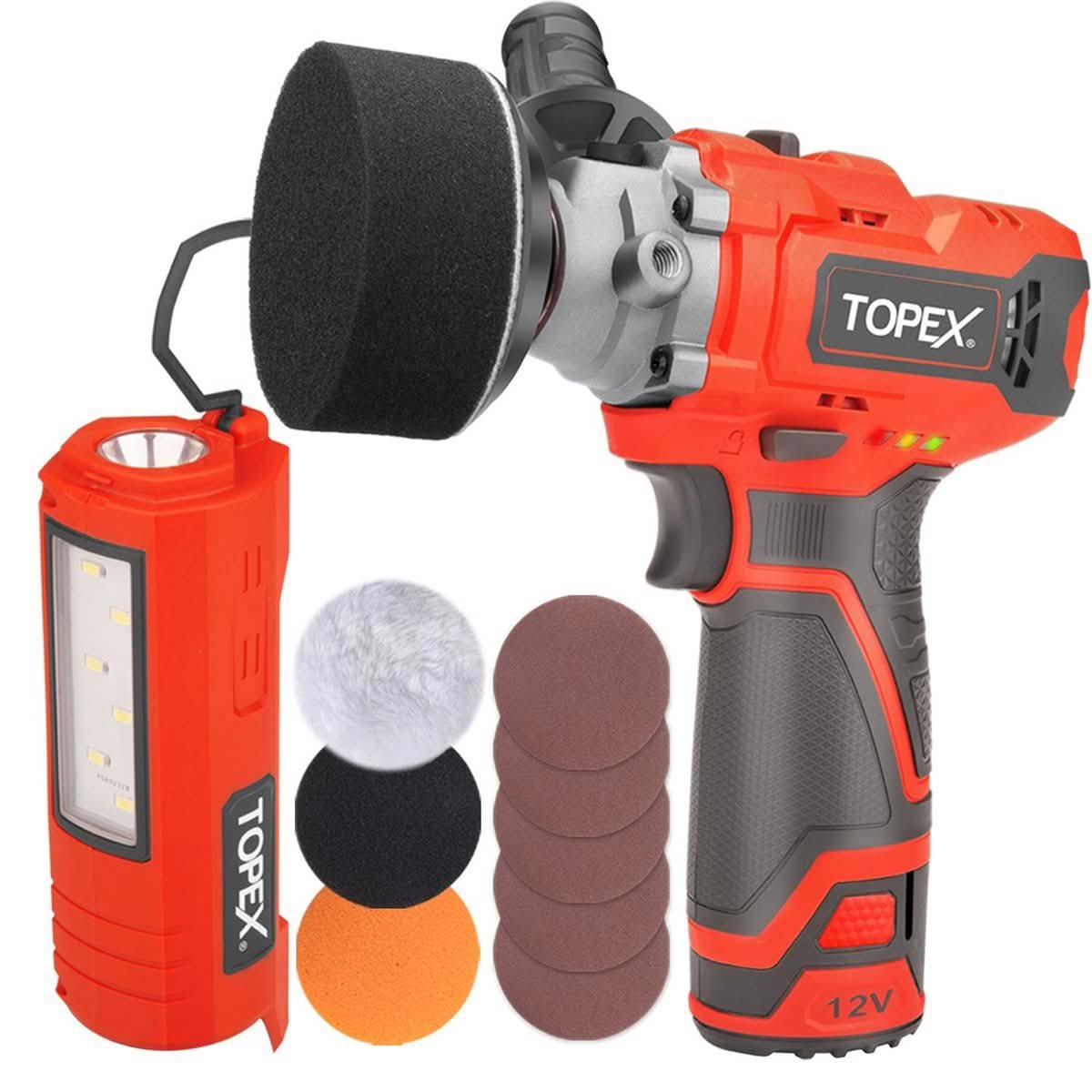
A built-in LED torch sounds like a gimmick until you are polishing a wheel arch lip at 6pm in winter, when the sun is already down and a garage light casts a shadow exactly where the swirl marks are worst. This one bolts a small torch onto the same lithium-ion 12V body as the other cordless picks here, aimed straight down the barrel at whatever the pad is touching.
It is not a replacement for a proper work light on a whole panel, more a real convenience for corners, door jambs and around badges where a floodlight from across the garage never quite reaches. Battery life and motor output track closely with the other 12V cordless picks on this list, so buy this one for the torch specifically, not for extra polishing punch over the others.
Pros
- Built-in LED lights the exact spot the pad is working on, useful in a dim garage or after dark
- Same lithium-ion battery and charger convenience as the other cordless picks here
Cons
- The torch adds bulk and weight over a plain cordless polisher for a feature you may only use occasionally
- Still a small 12V motor, so it suits spot work over a full car
Key specs: 12V DC motor, cordless, lithium-ion battery + charger, built-in LED work light
CHECK CURRENT PRICE4. 12V Cordless Mini Detailing Buffer – Best Compact Buffer
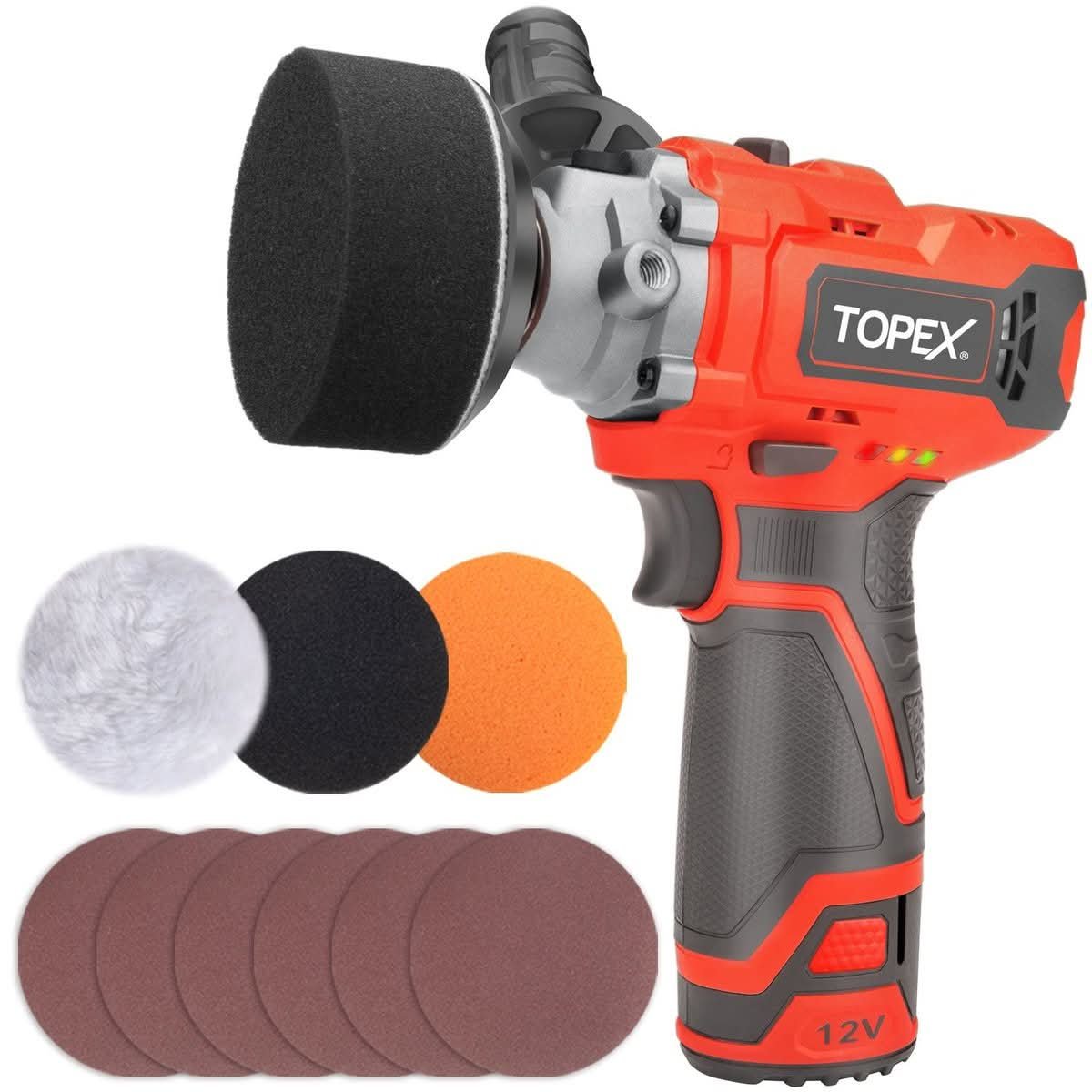
At 3 inches across, the pad on this one is closer in size to a coffee cup lid than a dinner plate, which sounds like a limitation until you are working a door mirror housing, a fuel cap surround or the tight strip between a bumper and a badge. Compare it against the cordless rotary tool kit above: same motor class, but this one skips the extra attachments to stay smaller and lighter in the hand for longer sessions.
A full charge gets through a handful of small panels before the battery needs topping up again, which lines up fine with what it is built for. Nobody buying a 3-inch buffer is planning to do a bonnet with it; the honest use case is detail work on trim, mirrors and tight curves after the main polish is already done with something bigger.
Pros
- Small 3-inch pad reaches tight curves, mirrors and trim a full-size polisher can’t
- Comes complete with battery and charger, ready to use straight out of the box
Cons
- Pad size makes it impractical for a whole car, not just slower
- Battery runtime suits short detail sessions over back-to-back panels
Key specs: 12V DC motor, 3-inch pad, cordless, battery + charger included
CHECK CURRENT PRICE5. 12V Car Polisher Scratch Repair Machine – Best Budget Pick
This is the cheapest properly usable tool on this list, and it is aimed squarely at one job: taking a shopping-trolley scuff, a clouded headlight or a light key scratch back to something presentable without a trip to a panel shop. Multiple small heads cover polishing, buffing and a fine cutting pass, and the whole kit costs less than a single detailing session at most mobile car-care operators charge around Australian capital cities.
It will not touch swirl marks across a whole bonnet, and calling it a “scratch remover” oversells what any polisher can do on a deep scratch that has gone through the clear coat into the colour coat underneath. For that job it is polish, not paint. A scratch you can still catch a fingernail on needs a touch-up pen first, not a buffing pad. Where it earns its price is exactly what it is named for: mild to moderate surface marks and headlight fogging.
Pros
- Cheapest usable option here by a wide margin, fine for spot repairs
- Multiple small heads suit headlights, door handles and bumper scuffs specifically
Cons
- Underpowered for anything beyond mild surface marks, whatever the marketing name suggests
- Small heads mean a whole car would take far longer than any other pick on this list
Key specs: 12V DC motor, cordless, multiple polishing/buffing heads, includes carry case
CHECK CURRENT PRICE6. Meguiar’s AutoCosmetica Hornet M15 Dual-Action Polisher – Best Premium Pick
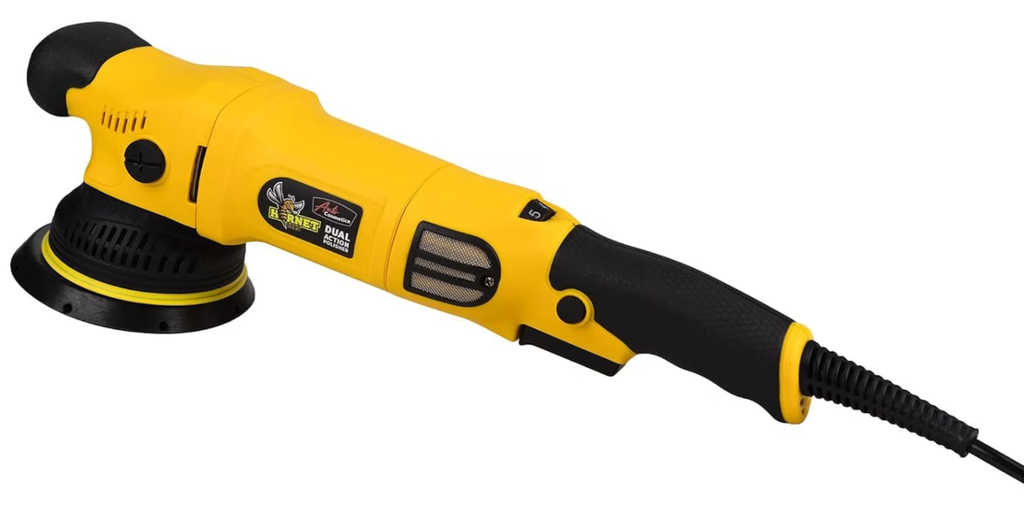
Meguiar’s is the one name on this whole list most Australian buyers will already recognise from the polish and wax aisle at Bunnings or Supercheap, and the Hornet M15 is the brand’s own machine built to go with it. A 1000W motor and true dual-action movement (the pad oscillates as it spins instead of cutting in one direction only) puts real cutting power behind a design still forgiving enough for someone who has never picked up a polisher before.
Reviewers who have actually put hours on this machine rate it 4.6 out of 5 on the open marketplace, a solid base for a specialist tool that has not been on sale long, and the balanced, ergonomic body draws real praise for not fatiguing a wrist across a whole car (about the heft of a small angle grinder, held out at arm’s length for twenty minutes). It sits at the premium end of this whole guide, well above the rotary further down, so it is the buy for someone correcting paint regularly rather than once a year before a car goes on Facebook Marketplace.
Pros
- Recognisable, trusted Australian brand with real 1000W power behind it
- True dual-action movement stays forgiving on paint even under a heavier hand
- 4.6-star buyer rating gives real confidence this isn’t just marketing copy
Cons
- The most expensive pick on this list by a clear margin
- 1000W of torque still needs a steady hand and light pressure on edges and raised body lines
Key specs: 1000W corded motor, dual-action (forced rotation), 127mm (5-inch) backing plate, kit includes pads
CHECK ON AMAZON7. BATOCA S2 Cordless Car Polisher – Best Cordless
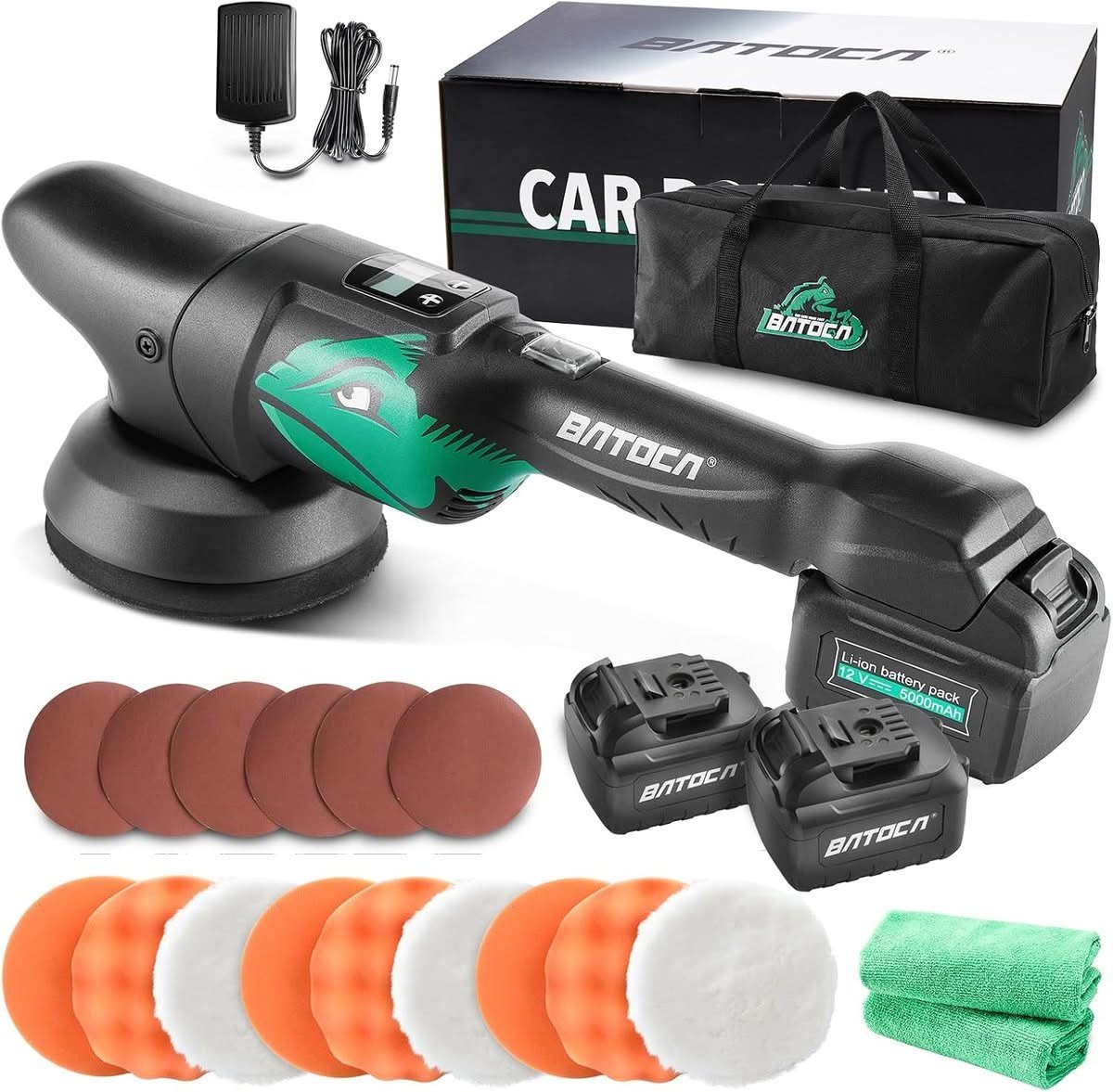
BATOCA is not a household name the way Meguiar’s is, but this is the one cordless machine on the whole list backed by a review history deep enough to actually mean something: 458 ratings and a 4.2-star average on the open marketplace, most of it from real Australian buyers, not an imported review base. Two 5.0Ah batteries and a charger come in the box, which matters a great deal for a cordless tool, since running flat halfway down a bonnet is the single most common complaint about battery-powered polishers generally.
An LCD speed display sets it apart from every other cordless pick here, showing the actual RPM instead of a vague low/medium/high dial position, which matters more than it sounds once you are trying to match a technique from a YouTube tutorial that quotes a specific speed. Dual-action orbital movement at an 8mm throw is closer to the Meguiar’s machine’s safer geometry than to the straight 12V spinners earlier in this list, at under half the price.
Pros
- Deepest, most credible review base of any cordless pick on this list
- Two batteries and a charger included, meaningfully reducing mid-job downtime
- LCD speed readout removes the guesswork a plain dial leaves you with
Cons
- 125mm pad is smaller than the Meguiar’s machine’s, so a full car takes longer per pass
- Still a battery tool at heart; a full detail on a wagon or 4WD will want a charged spare on hand
Key specs: 12V battery power (2x 5.0Ah batteries + charger included), dual-action orbital (8mm throw), 125mm pad, LCD display, 6-speed 2000-4500rpm
CHECK ON AMAZON8. AUTIWOZ W01 630W Dual Action Polisher – Best Value Dual-Action
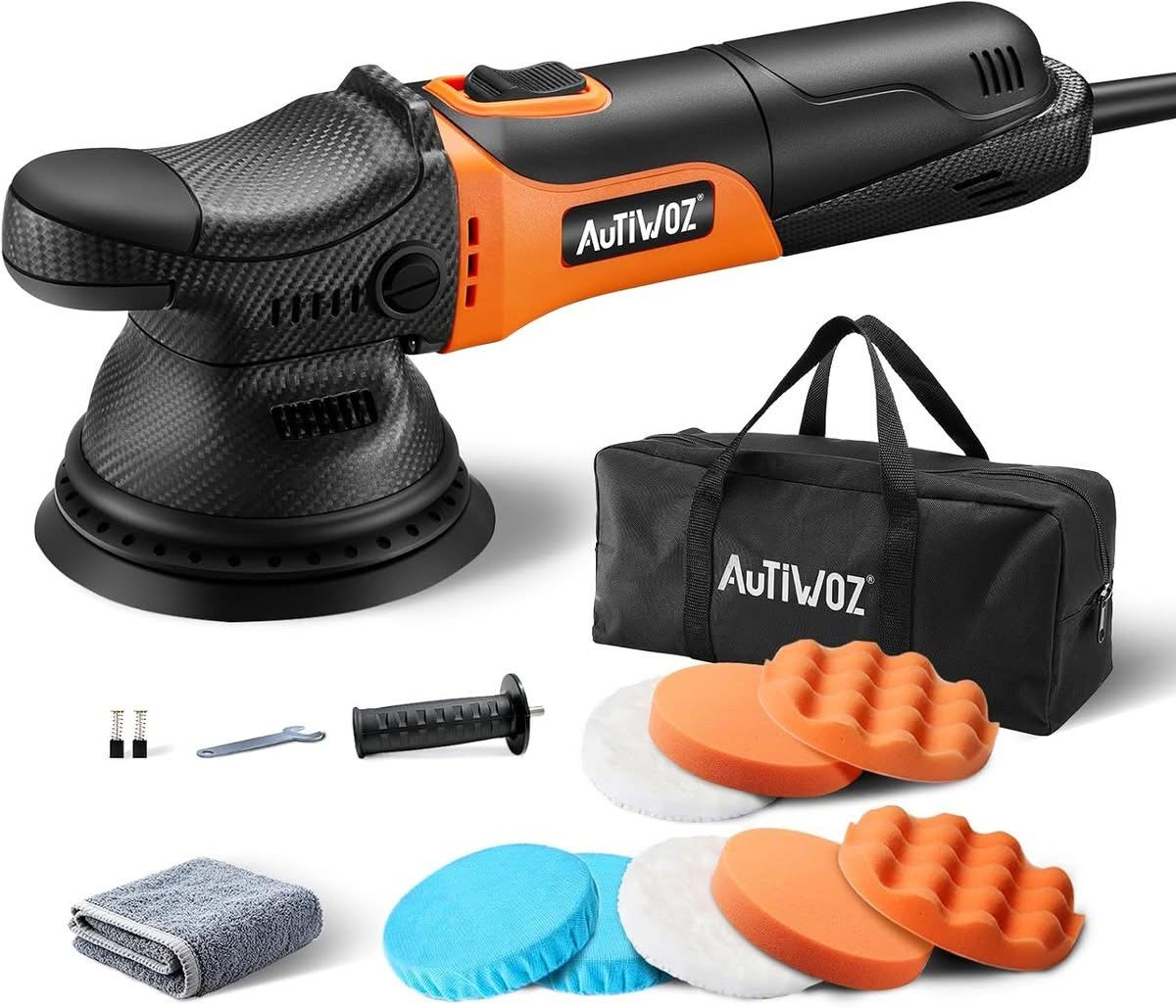
The most affordable pick here, this is the cheapest true dual-action machine on this whole list, corded or cordless, and it is the pick worth starting with over the 12V cordless units above if the actual goal is safe paint correction over a quick scuff fix. A 630W motor and a proper 9mm orbital throw put it in the same movement category as the Meguiar’s and BATOCA machines, just with less raw power behind it.
The catch with any budget dual-action tool is durability under repeated use, and six verified reviews (including one detailed independent tester assessment) is a thin base to lean on compared with the BATOCA machine above. Early buyer feedback reads positive on cut and finish for the price, but there isn’t the years of real-world track record here that a brand like Meguiar’s carries.
Pros
- Cheapest true dual-action (not straight rotary) machine on this list
- 6-speed range from 2000-6200rpm covers both gentle waxing and real correction work
Cons
- Thin review history compared with the BATOCA machine at a similar price point
- Less powerful motor than the premium picks, so a heavily oxidised panel takes more passes
Key specs: 630W corded motor, dual-action orbital (9mm throw), 125mm pads, 6-speed 2000-6200rpm
CHECK ON AMAZON9. BATOCA P2 1000W Rotary Polisher – Best for Experienced Users
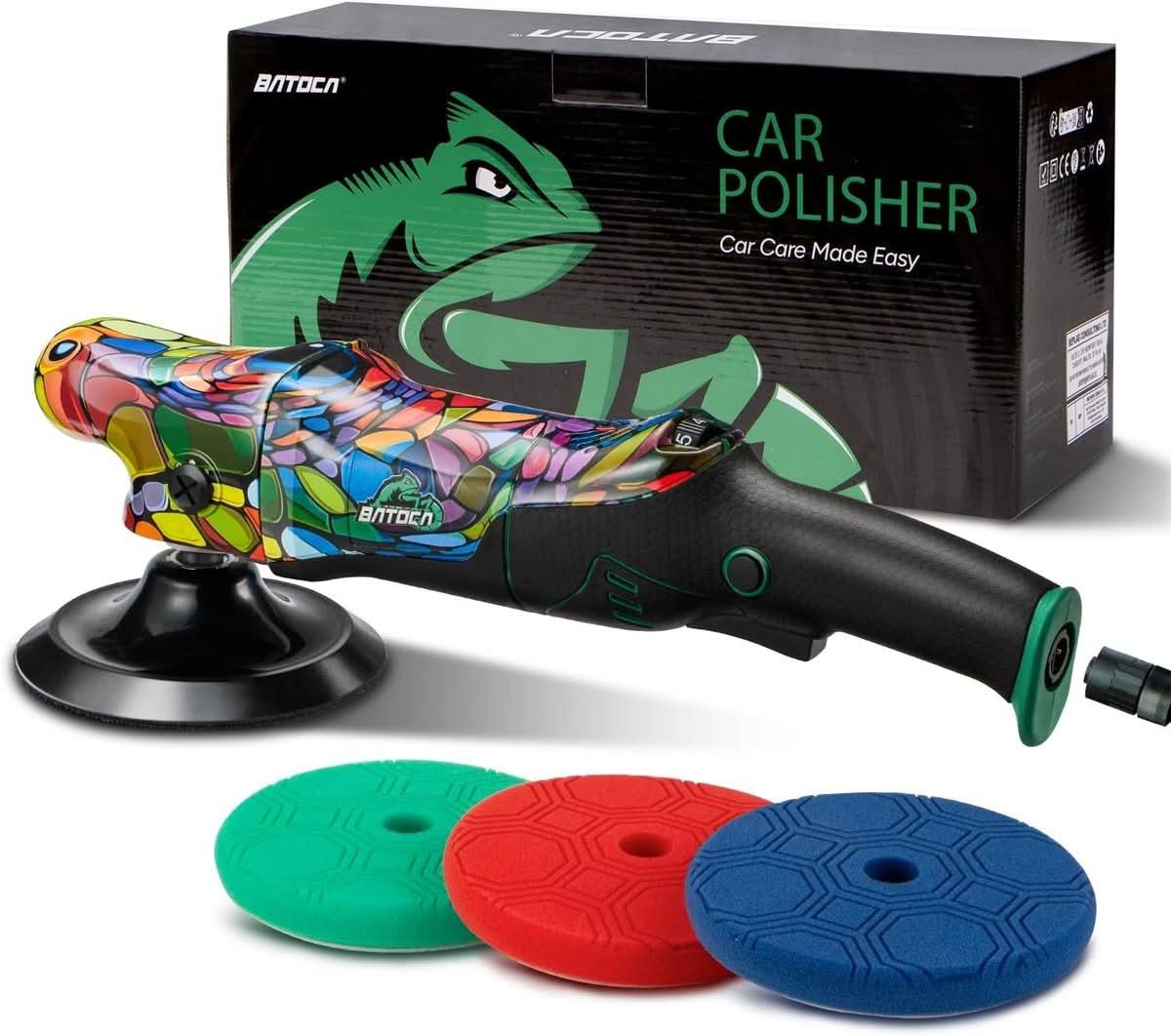
This is the only true rotary machine on this list, spinning in one direction only instead of the safer dual-action wobble every other pick here uses, and that distinction matters more than any spec on the page. A rotary cuts faster and corrects heavier oxidation in fewer passes than a DA machine, which is exactly why professional detailers still keep one in the van, and exactly why it is also the one tool on this list that can burn through clear coat in seconds if the pad sits still too long in one spot.
Honesty matters here: only two reviews exist for this listing at the time of writing, one calling it good quality, the other reporting the motor burnt out partway through its first use. That is not enough data to call it reliable, and it is the one entry on this list we would not recommend to someone buying their first polisher. A 5-metre detachable cord and soft-start motor are real conveniences, but they do not offset the combination of a less forgiving cutting action and a thin, mixed review record.
Pros
- Real rotary cutting speed for heavier correction work, faster than any dual-action pick here
- 5-metre detachable cord reaches around a full car without an extension lead
Cons
- Only two reviews exist, and one reports a motor failure on first use
- Rotary action burns through clear coat fast in inexperienced hands, unlike every dual-action pick above
Key specs: 1000W corded motor, rotary (single-direction) action, 150mm (6-inch) pad, 5m detachable cord, 6-speed 1000-3800rpm
CHECK ON AMAZONHow to Choose a Car Polisher in Australia
Match the action to your confidence level. Never measured your own clear coat with a paint depth gauge? Start with a dual-action (DA) polisher. It oscillates as it spins, spreading heat and friction across the pad so it is genuinely difficult to burn through paint even with a heavy hand resting on it. A rotary machine spins in one direction only, cuts faster, and punishes a moment of carelessness by melting clear coat in the time it takes to notice. Not a forgiving mistake to make on a car you actually own.
Corded suits a whole car, cordless suits a panel. Every 12V battery tool on this list handles a scuffed bumper, a wheel arch or a set of mirrors, but none of them will get through a full sedan before the battery needs a recharge break. If the plan is bonnet to boot in one sitting, the corded picks earn their extra bulk.
Respect the clear coat you actually have. Factory clear coat runs roughly 30 to 50 microns, and manufacturers generally treat about 8 microns removed over a car’s life as the sensible ceiling before the coat gets too thin to do its job. A light dual-action pass takes 2 to 5 microns; an aggressive rotary cut can take 10 to 20 in a single go. Doing that maths before buying tells you a lot about which machine on this list actually suits your car.
Give your hands a break, literally. Safe Work Australia’s own guidance on hand-arm vibration flags prolonged use of vibrating power tools as a real risk to circulation and nerve function in the hands, and a polisher held against a panel for twenty minutes at a stretch is squarely the kind of tool that guidance is written for. Swap hands, take short breaks between panels, and don’t grip harder than the pad needs.
Pad size decides how long the job takes, not just reach. A 125mm or 150mm pad clears a bonnet in a fraction of the passes a 75mm (3-inch) pad needs, but the smaller pad is the only one that comfortably works a door handle recess or a tight guard line. Most buyers end up wanting both eventually instead of picking one size for every job.
A hot Australian summer works against you, not with you. Polish and compound both flash off faster on a bonnet sitting in direct sun at 35 degrees than the same product does in a shaded carport, which means gumming, hazing and an uneven finish if you work a whole panel in full sun. Early morning or a shaded driveway gets a noticeably better result than fighting the clock on an exposed panel at midday, particularly through a Queensland or WA summer.
You’ll Also Want
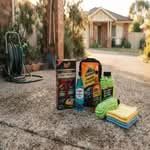
A polisher only spreads product; the wax or compound underneath it still does the actual protecting, and a set of dedicated microfibre wax applicator pads keeps that step from smearing product back off the panel you just finished.
Buffing off haze afterwards with the same towel used on wheels or door jambs is how swirl marks get reintroduced straight after a correction pass, so a dedicated set of premium microfibre detailing towels kept solely for paintwork is worth the extra drawer space.
For the scratch a polisher simply can’t touch, a suction-cup dent puller and scratch repair kit handles the deeper dings and dents a buffing pad was never going to fix on its own.
Frequently Asked Questions
Can a car polisher damage my paint?
Yes, if the wrong machine is pushed too hard in one spot. A rotary polisher spinning in a single direction can burn through clear coat in seconds if it sits still, while a dual-action machine oscillates as it spins and spreads that heat and friction out, making it far harder to damage paint even in inexperienced hands. Start with a dual-action machine and light pressure, and keep the pad moving at all times.
How often should I polish my car in Australia?
Most cars only need a proper correction polish once or twice a year, with a light wax or sealant maintaining the finish in between. Australia’s stronger UV exposure does fade and oxidise clear coat faster than milder climates, so a car parked outdoors full-time in Queensland or WA benefits from checking the finish more often than one kept in a garage overnight.
What’s the difference between a rotary and a dual-action polisher?
A rotary polisher spins the pad in one direction only, cutting faster and correcting heavier oxidation in fewer passes, which is why professional detailers still keep one in the van. A dual-action (DA) polisher oscillates as it spins, spreading friction and heat across a wider area, so it is much harder to burn through clear coat. Most home users get a safer, still effective result from a DA machine.
Do I need a cordless or corded car polisher?
A cordless 12V polisher suits spot repairs on a bumper scuff, a headlight or a wheel arch, and it is easier to manoeuvre one-handed around mirrors and badges. A corded machine trades that portability for unlimited runtime, which matters if the plan is a full car in one sitting rather than touching up one or two panels.
How much clear coat can I safely remove when polishing?
Factory clear coat typically runs 30 to 50 microns thick, and most car manufacturers treat roughly 8 microns removed over a car’s lifetime as a sensible ceiling before the coat gets too thin to protect the paint underneath. A single light dual-action pass takes about 2 to 5 microns, so a car can actually be polished several times across its life if each session stays light and controlled, not aggressive.
Can I use a car polisher on headlights?
Yes, a foam polishing pad on a low-power setting is one of the more reliable fixes for cloudy or yellowed plastic headlight lenses, which is exactly the job the budget scratch-repair machine in this guide is built around. Clean the lens first, work in short sections, and follow with a UV-resistant sealant afterwards, since a freshly polished lens with no protective coating fogs again within months under Australian sun.
Verdict
For most home buyers, the AUTIWOZ W01 is the safest place to start: a genuine dual-action machine at the budget end of this guide that will not punish a first attempt the way a rotary can. Anyone correcting paint often enough to justify the spend should look straight to the Meguiar’s Hornet M15, the most powerful and best-reviewed machine here. For a single scuffed bumper or a fogged headlight and nothing more ambitious, the cheapest scratch-repair machine does exactly that one job without asking for a commitment to a hobby.