A bunk bed for kids is a bed frame that stacks two sleeping platforms on top of each other, or pairs a single raised sleep deck with a desk, drawers or a play area underneath. The best bunk beds for kids in Australia combine full-height guardrails, a fixed ladder and a frame rated to carry a genuine child’s weight on both levels, since a wobbly frame or a gap wide enough for a small body is the difference between a bed a parent trusts and one that gets returned.
Three configurations cover most Australian bedrooms. Classic bunk beds stack two full sleeping platforms, single over single, for two children sharing a room. Loft beds raise a single mattress deck and leave the space underneath free for a desk, drawers or a reading nook, suiting one child who still wants the floor space saving. L-shaped bunks set a raised bed and a lower bed at right angles rather than directly underneath, opening up extra room for play or a shared desk.
A frame built for two children typically carries a combined static load rating of around 300kg (roughly 660lb) across both levels, and Australian guidance generally expects the gap between the mattress deck and the top guardrail to sit under 15cm so a child cannot slip through. Weight capacity per bunk, guardrail height and total assembled height against your ceiling matter more than finish or colour when comparing frames.
This guide compares six bunk and loft beds sold to Australian addresses, weighing frame material, guardrail height, storage and desk inclusions, and genuine stock availability rather than a spec sheet alone. If a single bed suits the room better than a stacked or loft frame, our guide to the best bed frames in Australia covers standard single, king single and double options instead.
Quick Picks
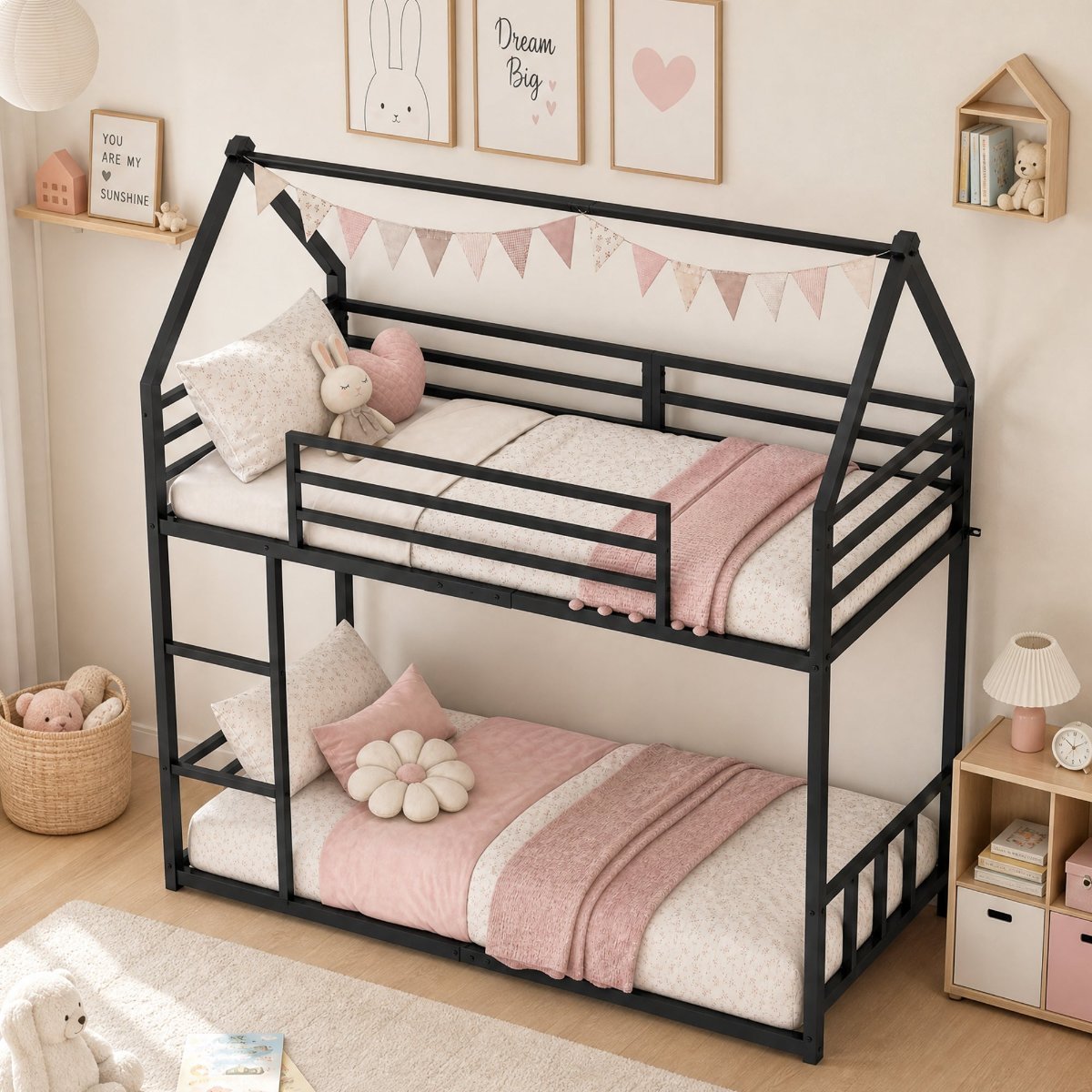
Metal House Bunk Bed Single Over Single with Guardrails
A classic single-over-single steel bunk with a house-shaped frame and full guardrails on the top bunk.
CHECK CURRENT PRICE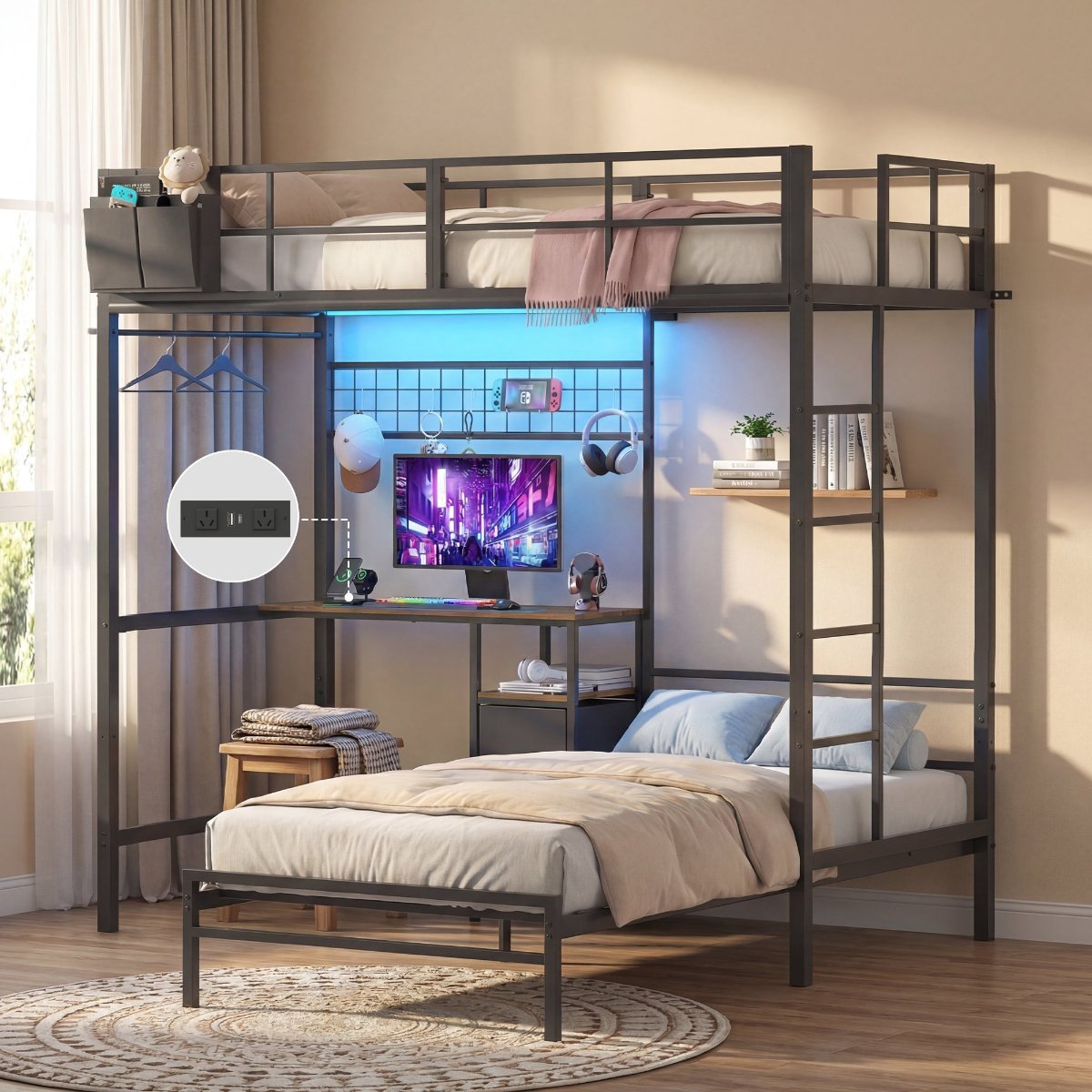
L-Shaped Bunk Bed with Desk and Charging Station
Sets the lower bed at a right angle with a built-in desk, freeing up floor space for two children sharing a room.
CHECK CURRENT PRICE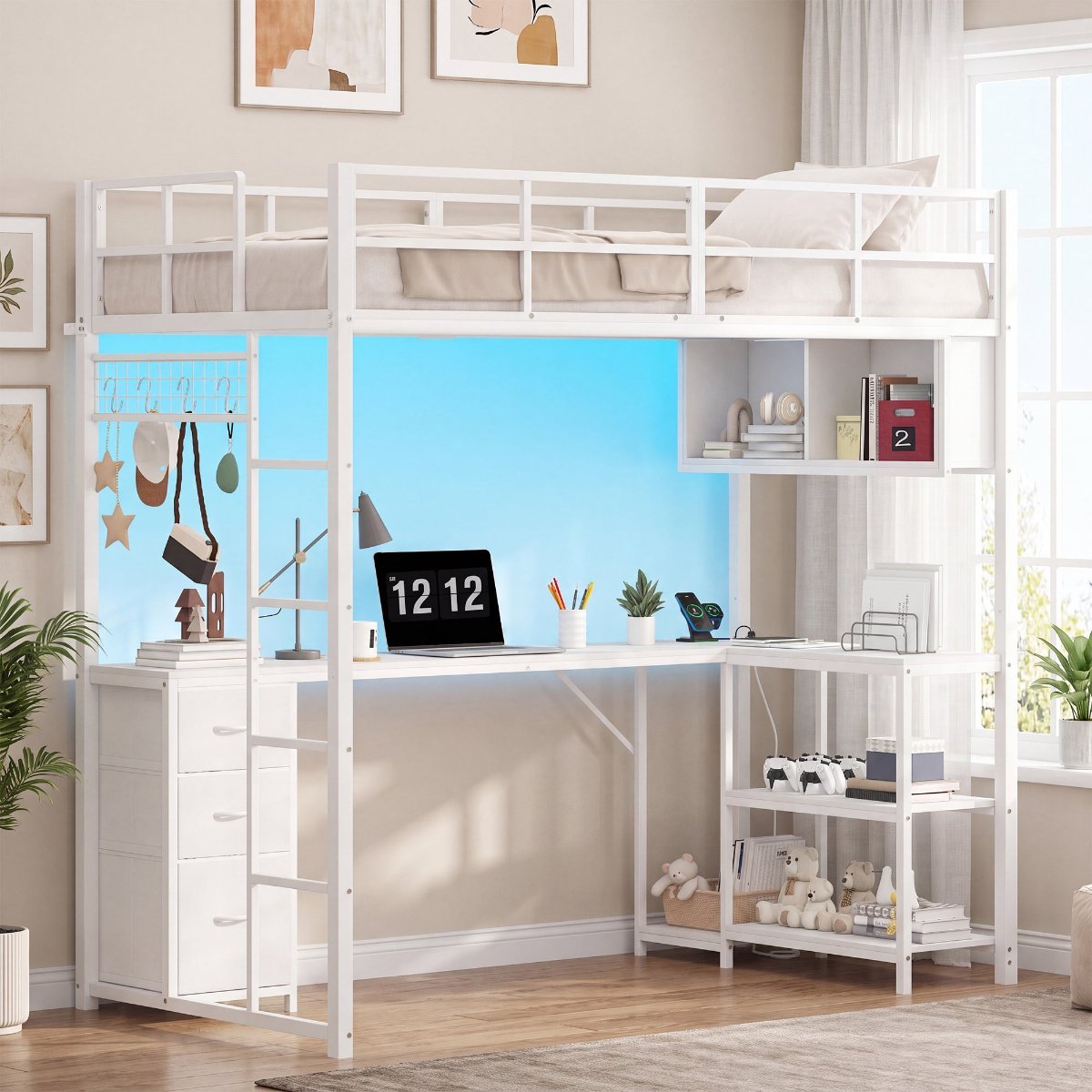
LED Loft Bed Frame with L-Shaped Desk and Charging Station
A premium single loft bed with an integrated L-shaped desk, LED strip and charging ports underneath.
CHECK CURRENT PRICEBunk Beds for Kids Australia Compared
| Product | Link | Type | Best For | Key Spec |
|---|---|---|---|---|
| Metal House Bunk Bed Single Over Single with Guardrails | Check price | Bunk Bed | Classic Bunk Bed | Single over single |
| L-Shaped Bunk Bed with Desk and Charging Station | Check price | Bunk Bed | for Shared Kids Rooms | L-shaped single over single |
| LED Loft Bed Frame with L-Shaped Desk and Charging Station | Check price | Loft Bed | Premium Pick | Single loft bed |
| King Single Low Loft Bed with 7 Drawers and Bookcase | Check price | Loft Bed | Low-Height Design | King single low loft |
| Loft Bed with Desk and Charging Station | Check price | Loft Bed | Budget Pick | Single loft bed |
| Loft Bed Frame with Ladder and High Guard Rails | Check price | Loft Bed | for Safety-Conscious Parents | Single loft bed |
1. Metal House Bunk Bed Single Over Single with Guardrails – Best Classic Bunk Bed
This frame keeps to the shape most people picture when they hear “bunk bed”: two full single platforms stacked directly on top of each other, wrapped in a powder-coated steel frame with a house-shaped gable at each end. The top bunk carries guardrails on every open side, not just the two that face away from the wall, which closes off the gap that catches people out on cheaper imported frames.
The ladder sits flush against the end of the frame at a shallow angle rather than a vertical climb, with wide flat rungs that give a small foot more surface to land on than a round-tube ladder. Both mattress decks use closely spaced steel slats rather than a mesh base, so a standard single mattress sits flat without sagging in the middle after a few months.
Where this frame gives something up is flexibility: it is a fixed single-over-single configuration with no loft or desk option, and the footprint needs a genuine single-bed-sized floor area on both levels since nothing separates for standalone use later. For two children who are happy sharing a room long-term, that trade-off is a non-issue; for a family expecting to split the bunk into two single beds within a couple of years, it is worth checking the frame’s split-bed instructions before buying.
Pros
- Full guardrails on every open side of the top bunk
- Wide, shallow-angle ladder rungs
- Steel slat base needs no separate bed base
- Powder-coated steel resists dents better than laminate
Cons
- Fixed single-over-single only, no loft configuration
- No integrated storage or desk
- Requires a genuine single-bed floor footprint on both levels
Key specs: Single over single, steel frame, powder-coated finish, wide-rung fixed ladder, full-height top guardrails.
CHECK CURRENT PRICE2. L-Shaped Bunk Bed with Desk and Charging Station – Best for Shared Kids Rooms
Instead of stacking the lower bed directly beneath the top bunk, this frame sets it at a right angle, which turns a rectangular bunk footprint into an L-shape and opens up a corner of the room that a straight stack would otherwise seal off. A built-in desk fills part of that freed-up space under the raised bed, with a small shelf and a charging station built into the frame itself.
In use, the desk placement makes this the more practical pick for two children who both need somewhere to do homework without dragging a separate desk into an already tight room. The charging station is a low-voltage USB port wired into the frame rather than a powerboard sitting loose on the desk, which matters more than it sounds once cables start running near a child’s bed.
The trade-off against a straight stacked bunk is total floor footprint: an L-shaped frame needs a roughly square corner of the room rather than fitting flush against one wall, so it suits a bigger bedroom better than a narrow one. Anyone measuring a small room should check the frame’s full footprint, including the desk overhang, before assuming it will fit where a straight bunk would have.
Pros
- Built-in desk and shelf use the space a straight bunk wastes
- Wired charging station, not a loose powerboard
- L-shaped layout frees up a room corner for play
- Full guardrails on the top bunk
Cons
- Needs a square corner footprint, not just one wall
- Larger overall footprint than a straight single-over-single bunk
- Desk height is fixed to the frame, not adjustable
Key specs: L-shaped single over single, built-in desk and shelf, wired USB charging station, steel frame.
CHECK CURRENT PRICE3. LED Loft Bed Frame with L-Shaped Desk and Charging Station – Best Premium Pick
This is a single loft bed rather than a two-child bunk, so only the top level sleeps anyone; everything underneath is given over to an L-shaped desk with a built-in shelf, a small LED strip along the frame’s underside, and the same wired charging station as the sibling model above. It suits an only child, or the older sibling in a shared room, who wants the vertical space saving without a second bed underneath.
The LED strip is a genuinely useful bit of ambient lighting for a desk tucked under a bed frame rather than a novelty add-on, since that corner of a room is otherwise one of the darker spots to study in. Guardrail coverage on the top bunk matches the bunk-bed models in this guide, running the full open perimeter rather than just the outer edge.
At this price point it sits at the top of what a loft-with-desk frame costs from this range, and a family that just wants basic loft storage without the desk, lighting or charging extras will find a plainer frame elsewhere in this list for less outlay. For the child who will actually use the desk daily, the extras justify the gap.
Pros
- Full guardrails on the top bunk
- Built-in LED strip lights the desk area
- Wired charging station included
- L-shaped desk maximises usable floor space
Cons
- Single loft only, no second sleeping platform
- Priced above the plainer loft frames in this guide
- LED strip is a fixed feature, not independently controllable via app
Key specs: Single loft bed, L-shaped desk with shelf, built-in LED strip, wired USB charging station, steel frame.
CHECK CURRENT PRICE4. King Single Low Loft Bed with 7 Drawers and Bookcase – Best Low-Height Design
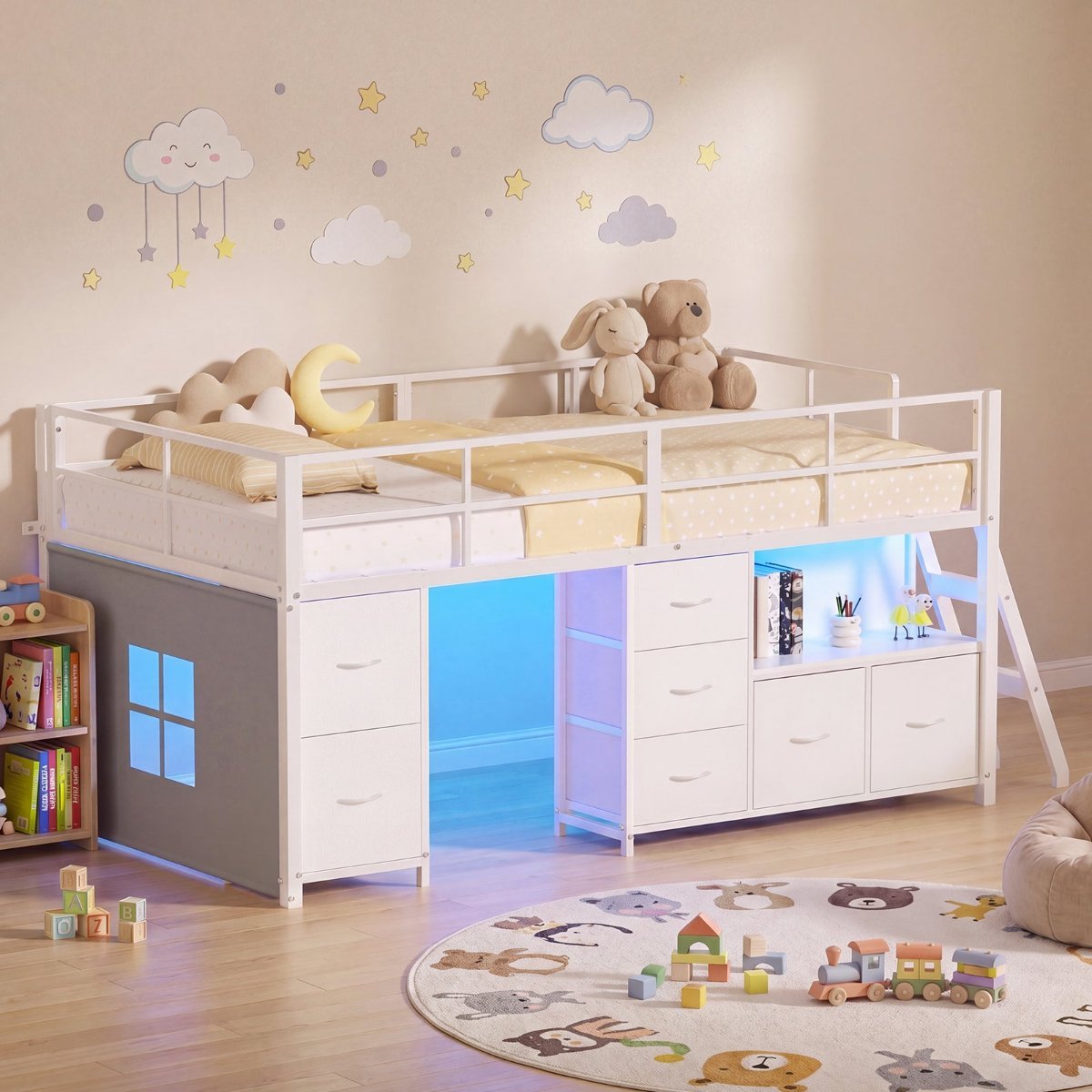
Rather than raising the mattress to full bunk height, this frame sits noticeably lower, closer to a raised platform bed than a true loft, while still leaving room underneath for seven drawers and a small bookcase. It is also sized as a king single rather than a standard single, giving a growing child more sleeping width without needing a wider room footprint for a second bed.
The lower deck height is the main point of difference in daily use: a child climbing in and out has a shorter drop if they slip, and the ladder covers fewer steps than the full-height loft models in this guide. Seven drawers is a genuinely large amount of enclosed storage for a bedroom, more than most freestanding dressers offer in the same floor footprint.
The obvious trade-off is that a low loft frees up less under-bed floor space than a full-height one, since the drawers and bookcase already occupy most of that gap rather than leaving it open for a desk or play area. It suits a family prioritising storage and a gentler climb over maximising open floor space underneath.
Pros
- Lower deck height than full loft models, shorter fall distance
- Seven built-in drawers plus a bookcase
- King single width sleeps a growing child comfortably
- Storage doubles as a step up to the mattress
Cons
- Less open floor space underneath than a full-height loft
- King single sheets cost more than standard single
- Bulkier overall footprint due to the drawer bank
Key specs: King single low loft, 7 storage drawers, integrated bookcase, steel frame, reduced deck height.
CHECK CURRENT PRICE5. Loft Bed with Desk and Charging Station – Best Budget Pick
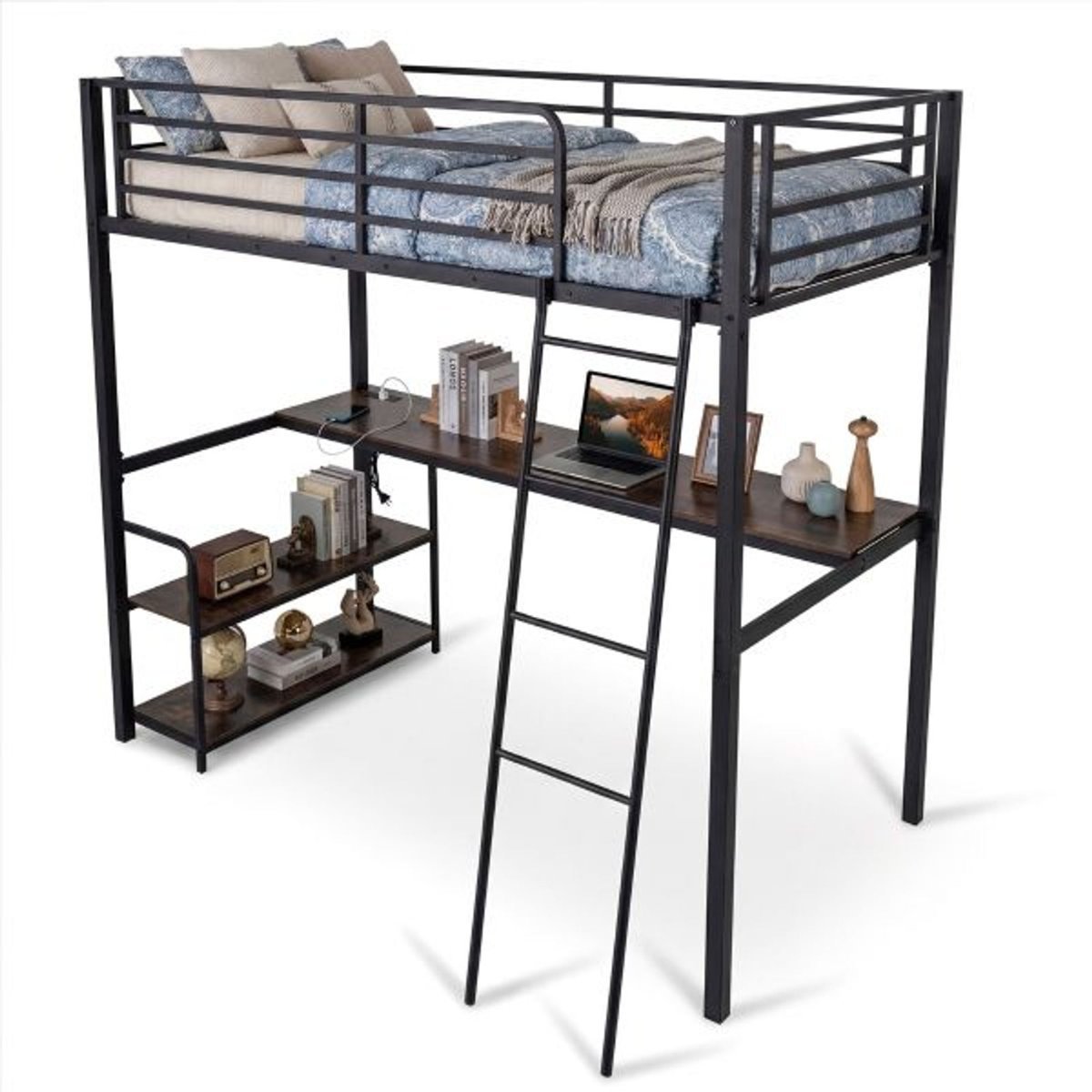
This is the simplest loft-with-desk layout in this guide: a single metal loft frame with a desk and shelving unit built into the space underneath, plus a charging station on the desk itself, without the LED lighting or L-shaped desk extras of the pricier pick above. It is the most affordable way into a loft-and-desk combination on this list.
Build quality centres on a straightforward welded steel frame rather than anything decorative, which keeps assembly relatively simple and the finished frame light enough for two people to move without a trade. The desk sits at a fixed height directly under the mattress deck, sized for a laptop and a lamp rather than a full study setup.
Set against the L-shaped desk model earlier in this list, the desk surface here is noticeably smaller and the shelving more basic, so a child doing a lot of desk-based homework may outgrow it faster. For a first loft bed on a tighter budget, or a spare room that just needs basic under-bed function, it covers the essentials without the premium price.
Pros
- Most affordable loft-with-desk combination in this guide
- Straightforward welded steel frame, simple assembly
- Desk includes a built-in charging station
- Lightweight enough to move without a trade
Cons
- Smaller desk surface than the L-shaped desk models
- Basic shelving, no bookcase-style storage
- Shorter cookie-tracked return window than the other merchant in this guide
Key specs: Single loft bed, built-in desk and shelving, charging station, welded steel frame.
CHECK CURRENT PRICE6. Loft Bed Frame with Ladder and High Guard Rails – Best for Safety-Conscious Parents
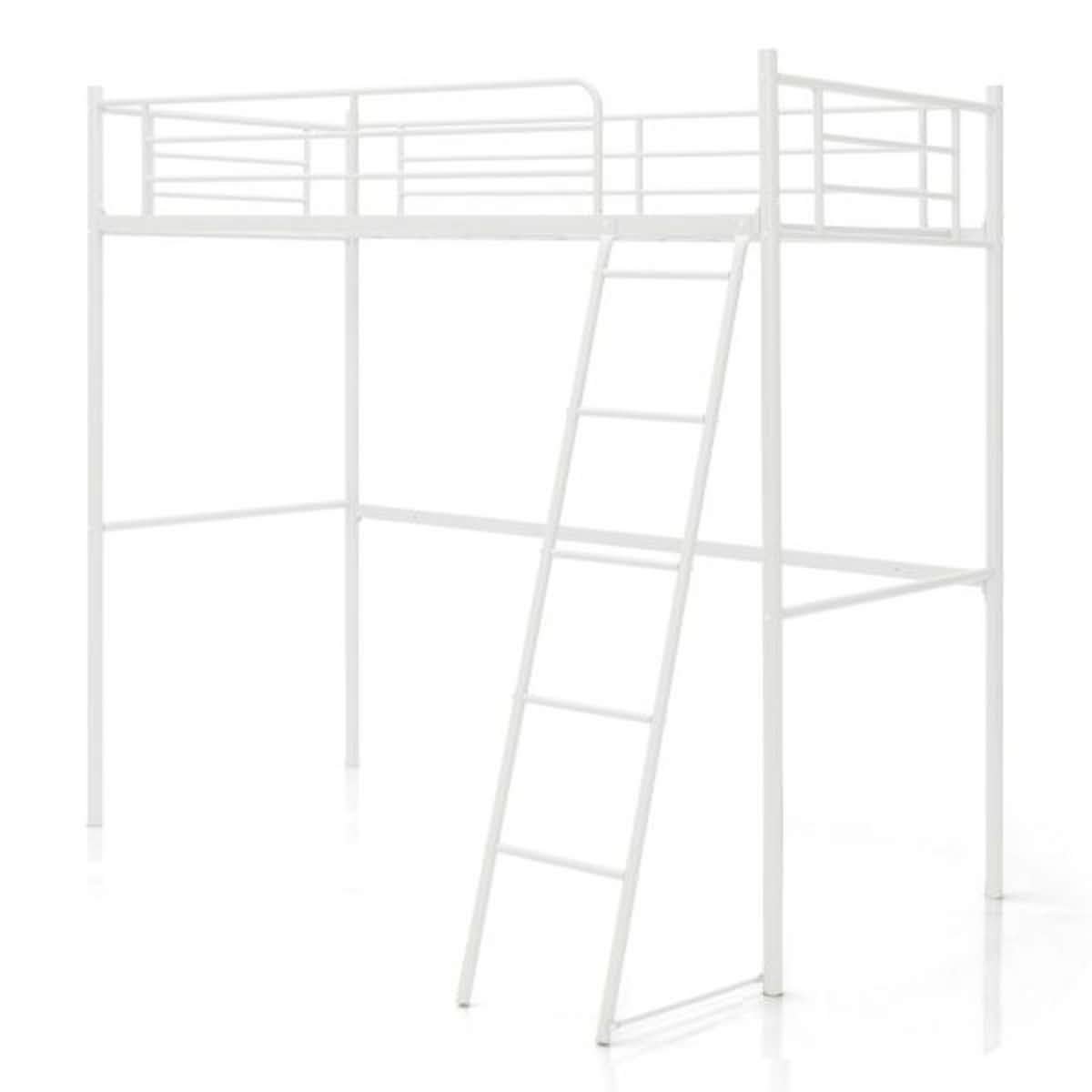
This frame drops the desk and storage extras entirely and puts the focus on the top bunk itself: guardrails run noticeably higher than the other loft frames in this guide, and the ladder is angled and wide-runged rather than a narrow vertical climb. It reads as the pick built for a parent who wants the plainest, safest possible frame rather than the most feature-packed one.
Underneath, the space is left genuinely open rather than filled with a fixed desk or drawer bank, so it can take a reading nook, a play tent or simply stay clear depending on what the room needs. The heavy-duty steel construction is rated for a higher top-bunk load than the lighter-gauge frames typically used on loft-only beds.
The trade-off is that this frame does the least for the room’s storage or study needs of anything on this list, since the open space underneath is unstructured rather than built out. For a younger child where guardrail height and ladder security matter more than a desk, it is the more conservative choice; an older child who needs a study space is better served by one of the desk-equipped models earlier in this guide.
Pros
- Taller guardrails than other loft frames in this guide
- Wide, angled ladder rungs
- Heavy-duty steel rated for a higher top-bunk load
- Open under-bed space adapts to any use
Cons
- No built-in desk or storage
- Under-bed space needs its own furniture to be useful
- Shorter cookie-tracked return window than the other merchant in this guide
Key specs: Single loft bed, high guardrails, wide-rung angled ladder, heavy-duty steel frame, open under-bed space.
CHECK CURRENT PRICEHow to Choose Bunk Bed For Kids
Check the guardrail height on the top bunk first. A rail that only reaches mattress height does very little once a doona adds another few centimetres of loft. Look for a rail that sits well above the mattress surface on all open sides of the top bunk, not just the wall side.
Match the ladder to how the bed will actually be climbed at 6am. A fixed, wide-runged ladder bolted to the frame is safer than a narrow clip-on ladder that can be kicked loose, and an angled ladder is generally easier for a smaller child to manage than a vertical one.
Weight rating applies per bunk, not to the frame as a whole. A frame advertised with a high combined rating can still carry less on the top bunk than the bottom, since the lower frame legs take most of the structural load. Check the top-bunk figure specifically if an older, heavier child will sleep up top.
Measure the ceiling clearance before you measure the room’s floor space. A loft or bunk frame with a low guardrail on paper can still leave less than 90cm between the top mattress and a sloped ceiling in an upstairs bedroom, which rules out sitting up in bed. If the room has already been fitted with a fold-away frame instead, our guide to the best wall beds in Australia covers the alternative for genuinely tight floor plans.
Decide whether storage or a desk matters more than a second sleeping platform. A loft bed frees up the most usable floor area since only one child sleeps in the structure, while a classic bunk sleeps two in the same footprint but gives up the space underneath entirely.
Confirm the frame ships assembled to size, not as a kit needing a trade to install. Most bunk and loft frames arrive flat-packed with a multi-hour build; a frame with pre-drilled holes and a printed torque guide for the guardrail bolts is worth the small premium over one that leaves fastener tightness to guesswork.
Frequently Asked Questions
What age is a bunk bed safe for?
Most Australian and international guidance recommends the top bunk only for children aged 6 and over, since younger children are more likely to fall or misjudge the ladder in the dark. A loft bed with a low profile, or the bottom bunk of a stacked frame, suits younger siblings instead.
How much weight can a kids bunk bed hold?
Combined ratings across both bunks commonly sit around 300kg, but the top bunk alone usually carries less than the bottom, since the lower frame legs bear most of the structural load. Check the manufacturer’s per-bunk figure rather than the combined total if an older or heavier child will use the top.
Is a loft bed safer than a bunk bed?
A loft bed removes the fall risk of a second child sleeping directly underneath, but the top mattress still sits at bunk height, so guardrail height and ladder security matter just as much. A low-loft frame, sitting closer to the floor, is the safer option for a younger child specifically.
What is the standard gap allowed between a bunk mattress and the guardrail?
Australian guidance generally expects the gap between the top of the mattress and the guardrail to stay under 15cm, so a child cannot slip an arm, leg or their body through the opening. A thicker mattress than the frame was designed for can push this gap smaller than intended, so check the manufacturer’s recommended mattress depth.
Can adults sleep on the bottom bunk of a kids bunk bed?
Most kids bunk and loft frames rate the lower level for a higher weight than the top, often enough for an adult on the bottom bunk only, but always check the specific frame’s lower-bunk rating rather than assuming it applies across brands.
Do bunk beds need to be fixed to the wall?
It is not a legal requirement in Australia the way it is for tall furniture like bookcases and dressers under the voluntary furniture tip-over standards, but anchoring a bunk or loft frame to a wall stud removes any risk of the frame rocking during climbing, and is worth doing regardless.
Verdict
For most families sharing a room between two children, the Metal House Bunk Bed Single Over Single with Guardrails is the safest, most straightforward classic bunk on this list. Where floor space or a desk matters more than a second sleeping platform, the L-Shaped Bunk Bed with Desk and Charging Station makes better use of a shared room’s corners, and the Loft Bed with Desk and Charging Station covers the same idea for less outlay when only one child needs the setup.