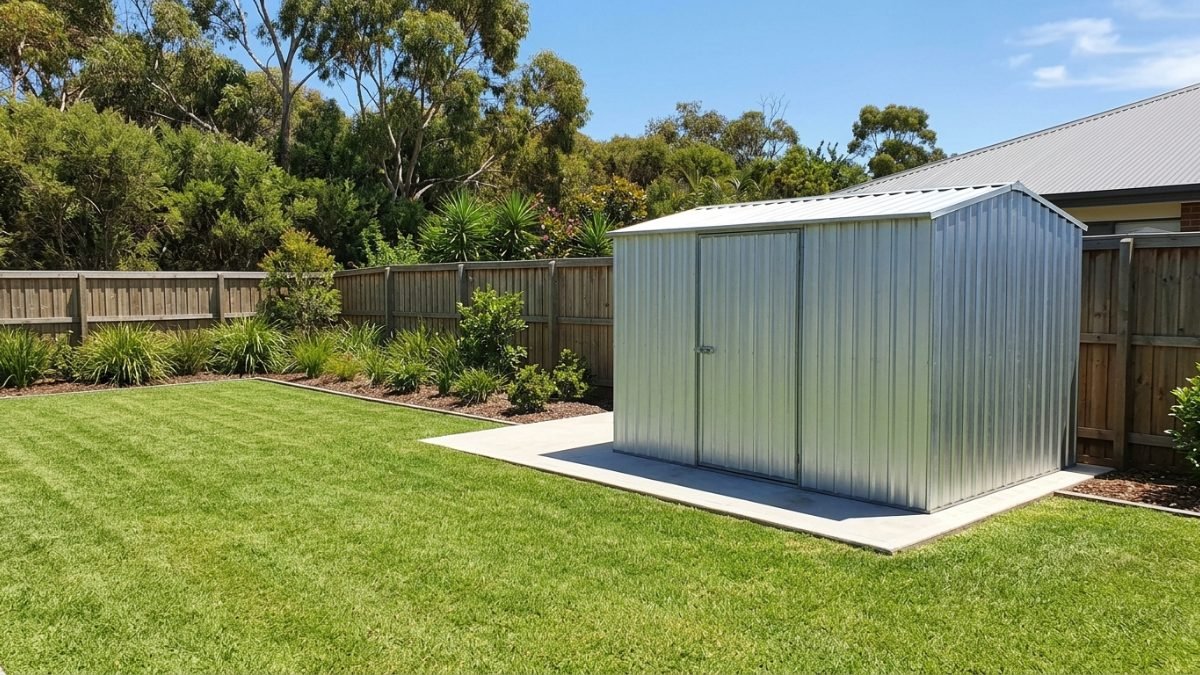
A garden shed is a self-supporting outdoor structure, usually galvanised steel or moulded resin, that stores tools, mowers and garden gear outside the house. The best garden sheds in Australia are judged less on floor area than on how they cope with the climate, because a sloped roof, corrosion-resistant panels and a sealed base decide whether the contents stay dry through a wet summer.
Four types dominate the market here. Galvanised steel sheds are the standard, resisting rust through a zinc coating on the panels. Resin sheds trade some strength for materials that cannot corrode at all. Flat-roof compact sheds tuck against a fence where a pitched roof will not fit. Wheelie bin and utility enclosures hide specific items rather than storing tools generally.
Panel thickness is the specification worth finding and the one most often left out. The galvanised model here quotes a 0.6mm steel frame with 0.25mm colour-coated panels, and thinner panels than that flex in wind and dent easily. A sloped roof matters just as much, since water pooling on a flat roof is the most common cause of a shed failing early.
This guide compares ten sheds sold in Australia, from a compact 0.99 by 1.04 metre unit up to a 3 by 3 metre steel building, and records dimensions, material and door type for each. Anyone fitting out a shed as a working space should read it with our guide to portable power stations in Australia, since most sheds have no mains supply.
Quick Picks
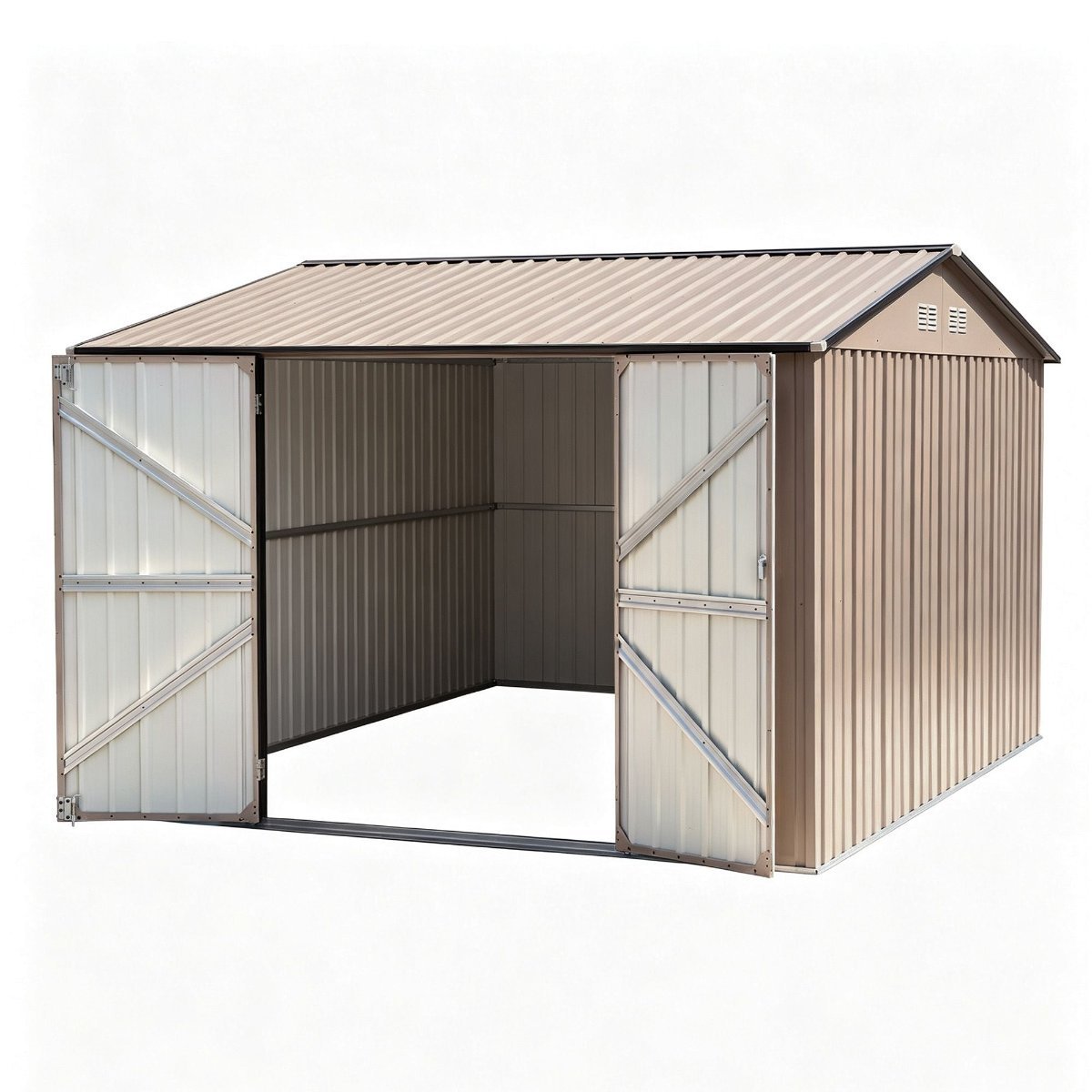
Giantz 3x3M Garden Shed
Nine square metres of corrosion-repellent galvanised steel with a sloped roof against pooling.
CHECK CURRENT PRICE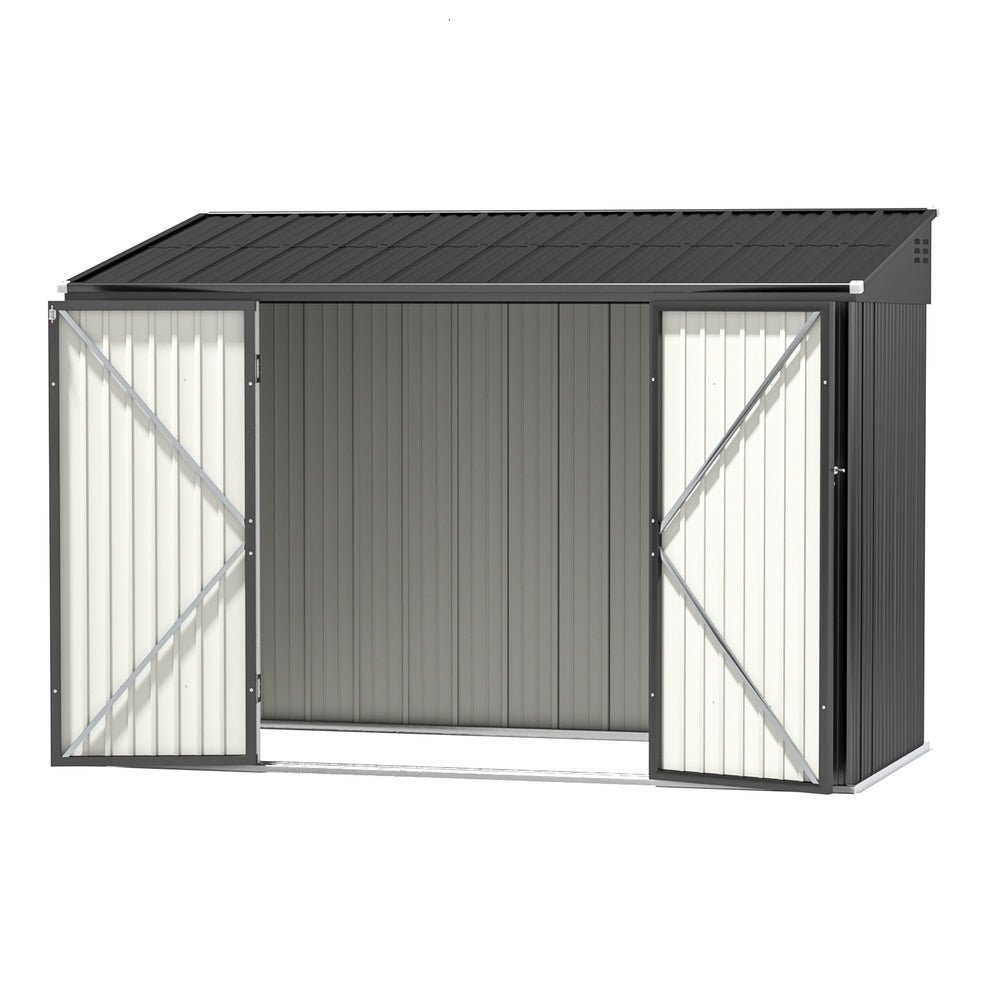
Giantz Garden Shed 3.05×1.5M
A 0.6mm galvanised frame and 0.25mm coated panels in a shape that fits along a fence line.
CHECK CURRENT PRICE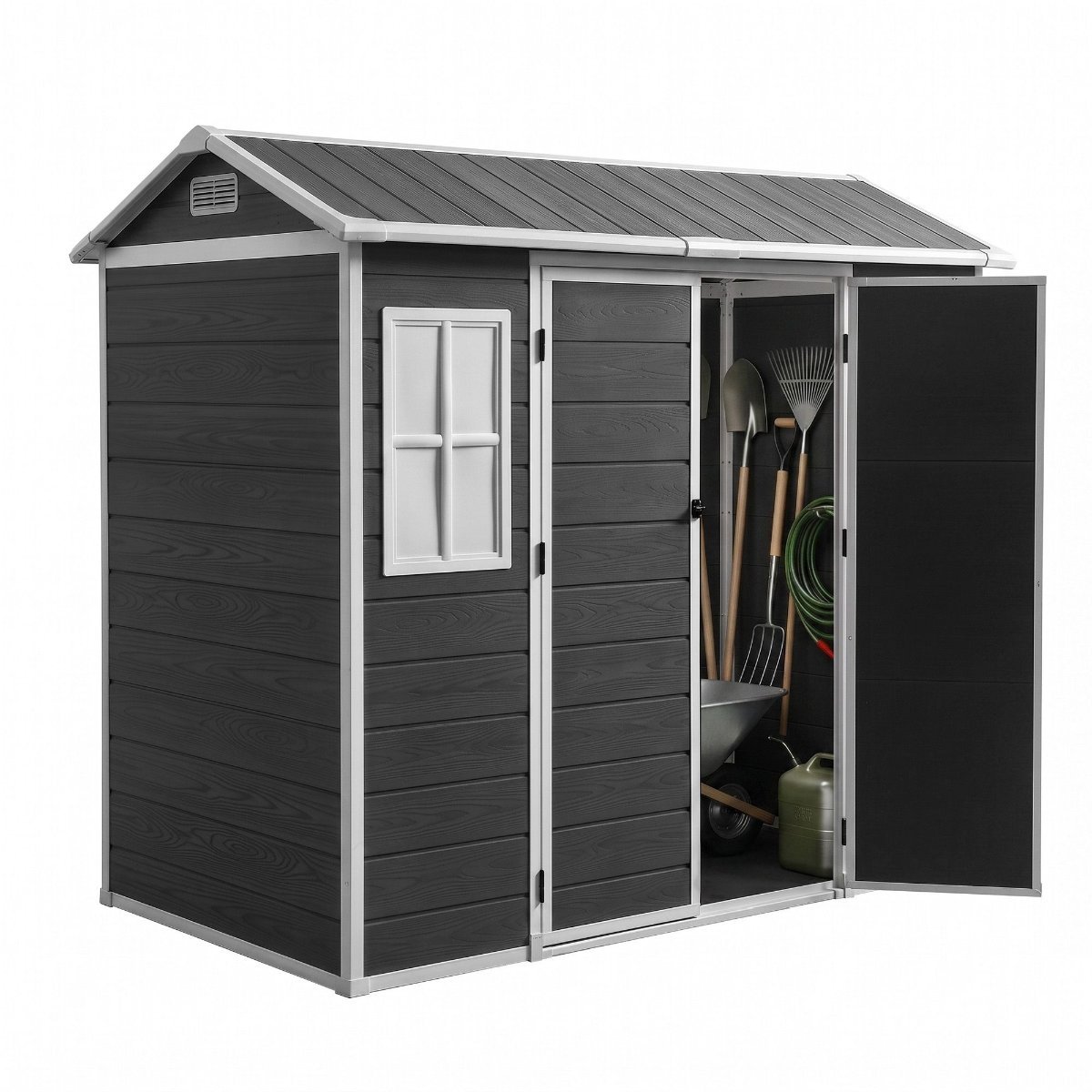
Giantz Resin Garden Shed 2.44×1.31M
Resin panels that cannot rust at all, at 244 by 131 by 202 centimetres.
CHECK CURRENT PRICEGarden Sheds Compared
| Product | Link | Type | Best For | Key Spec |
|---|---|---|---|---|
| Giantz 3x3M Garden Shed | Check price | Galvanised steel | Large yards | 3 x 3M, sloped roof |
| Giantz Garden Shed 3×2.18M | Check price | Steel and polypropylene | Workshop space | 3 x 2.18M, sloped roof |
| Giantz Garden Shed 2.58×2.07M Sliding Door | Check price | Galvanised steel | Sliding access | 2.58 x 2.07M, sliding door |
| Giantz Garden Shed Galvanised Steel 3.05×1.5M | Check price | Galvanised steel | Narrow footprint | 3.05 x 1.5M, 0.6mm frame |
| Giantz Resin Garden Shed 2.44×1.31M | Check price | Resin | Rust-free build | 244 x 131 x 202cm |
| Giantz Garden Shed 1.94×1.21M with Metal Base | Check price | Galvanised steel | Included floor base | 1.94 x 1.21M, metal base |
| Giantz Garden Shed 0.99×1.04M | Check price | Galvanised steel | Compact storage | 0.99 x 1.04M, 148cm high |
| Giantz Garden Shed 2.38×1.31M Double Door | Check price | Galvanised steel | Double door access | 2.38 x 1.31M, double door |
| Advwin Garden Shed Outdoor Storage 131x195x186cm | Check price | Galvanised steel | Walk-in height | 131 x 195 x 186cm |
| Advwin Galvanised Steel Garden Shed | Check price | Galvanised steel | Multi-purpose use | Galvanised, rust-treated |
1. Giantz 3x3M Garden Shed – Best for Large Yards
Nine square metres of floor makes this the largest structure in the guide, built from corrosion-repellent galvanised steel in a brown finish. The roof slopes rather than sitting flat, which is what stops water pooling and eventually finding a seam. Double doors open the full width of one end.
Three metres square is the point where a shed stops being storage and starts being a workspace, with room for a bench along one wall and a mower still parked inside. Galvanising is the practical answer to Australian humidity, since a painted panel will show rust at every scratch within a season. The sloped roof matters more in a wet summer than any other single feature.
A structure this size usually needs a prepared slab or compacted base, and in many councils it approaches the threshold where a permit applies. Households with the yard and the intention to use it as a workshop get the value. Check local planning rules before ordering rather than after it arrives.
Pros
- Nine square metres of usable floor
- Corrosion-repellent galvanised steel
- Sloped roof prevents water pooling
- Wide double-door access
Cons
- Needs a prepared slab or level base
- May approach council permit thresholds
Key specs: 3 x 3 metres; galvanised steel construction; sloped roof; double doors; brown finish.
CHECK CURRENT PRICE2. Giantz Garden Shed 3×2.18M – Best Workshop Space
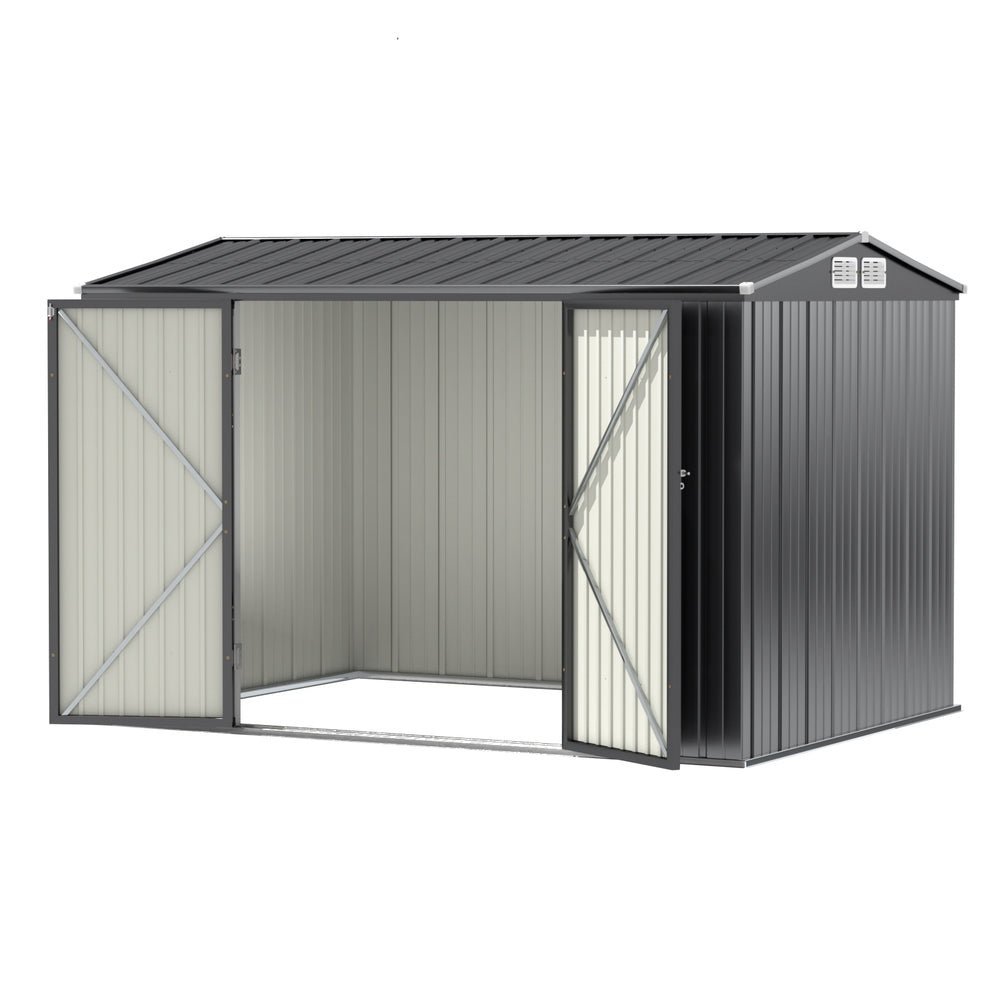
Corrosion-resistant galvanised steel is paired with polypropylene panels here across a 3 by 2.18 metre footprint. The roof slopes to shed rainwater. It is the second-largest shed in this guide and noticeably easier to site than the 3 by 3.
Mixing steel with polypropylene keeps the weight down without giving up much strength, which shows during assembly when panels have to be held in place. Six and a half square metres takes a workbench, a mower and wall storage without the floor disappearing. It fits down the side of many suburban blocks where a square shed will not.
Polypropylene sections are more prone to ultraviolet fade than coated steel over a long period. As a compromise between capacity and siting flexibility it is the most practical large option here. Position it out of full afternoon sun where the block allows.
Pros
- 6.5 square metres of floor space
- Steel and polypropylene keeps weight manageable
- Sloped roof for rain runoff
- Fits down the side of a suburban block
Cons
- Polypropylene fades faster than coated steel
- Still needs a level prepared base
Key specs: 3 x 2.18 metres; galvanised steel and polypropylene construction; sloped roof.
CHECK CURRENT PRICE3. Giantz Garden Shed 2.58×2.07M with Sliding Door – Best Sliding Door
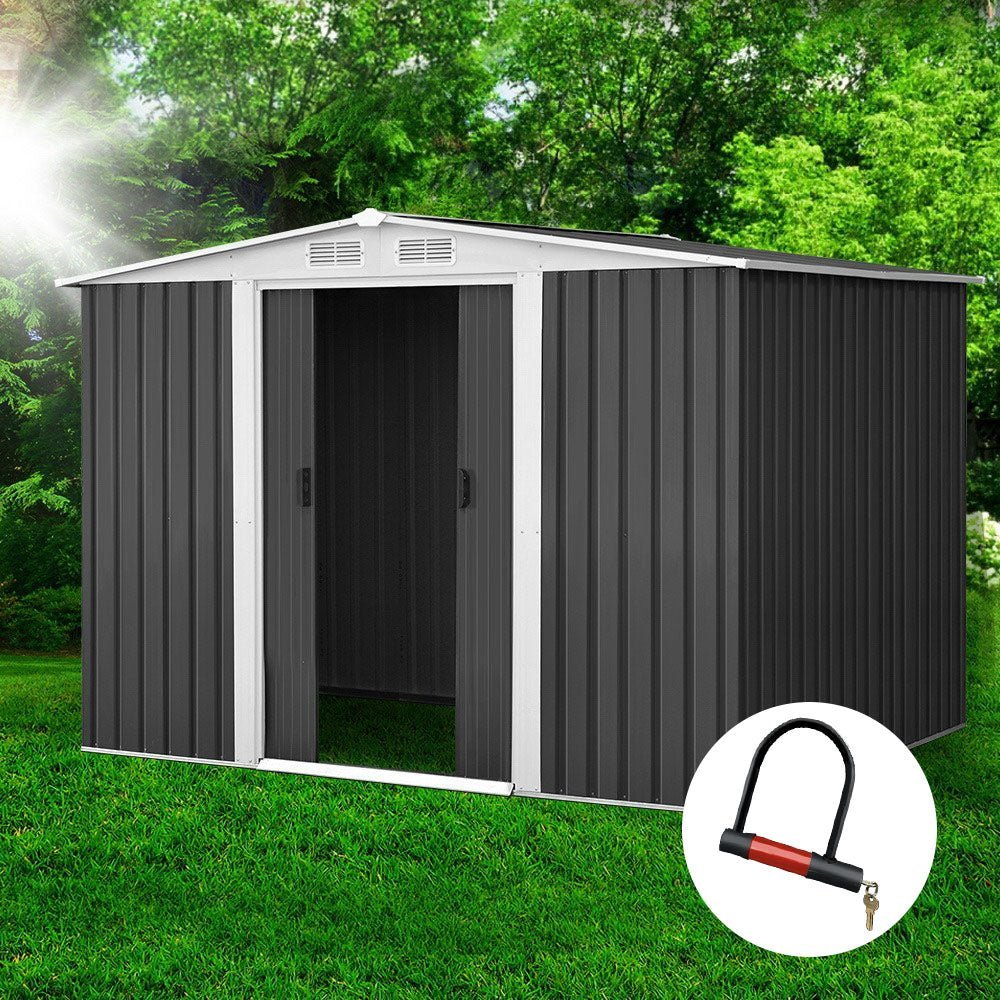
A sliding door is the distinguishing feature on this 2.58 by 2.07 metre shed, built from strengthened galvanised steel and polypropylene. Nothing swings outward when it opens. The footprint is close to square.
Sliding doors solve a problem hinged doors create, which is that a shed tucked against a fence or a path needs clear swing room in front of it. That reclaims usable ground in a tight yard. Access is still wide enough to walk a mower through.
Sliding tracks collect grit and need occasional clearing, and a bent track is harder to fix than a sagging hinge. Where the shed must sit close to a boundary or a walkway, the door type matters more than the extra floor area. Keep the track clear and it stays smooth.
Pros
- Sliding door needs no clearance in front
- Strengthened galvanised steel and polypropylene
- Near-square footprint uses corners well
- Wide enough to walk a mower through
Cons
- Sliding track needs clearing of grit
- Track damage is harder to repair than a hinge
Key specs: 2.58 x 2.07 metres; strengthened galvanised steel and polypropylene; sliding door.
CHECK CURRENT PRICE4. Giantz Garden Shed Galvanised Steel 3.05×1.5M – Best Narrow Footprint
This is the only shed here quoting its steel thicknesses: a 0.6mm galvanised frame carrying 0.25mm colour-coated panels. The shape is long and narrow at 3.05 by 1.5 metres. A sloped roof runs the length of it.
Published panel thickness is worth more than any marketing line, because it is the number that predicts whether panels flex in wind or dent when something leans on them. The narrow proportions suit a run along a fence or between a house and a boundary, where a square shed would not fit at all. Three metres of length still swallows long-handled tools.
One and a half metres of depth means storage is essentially single-file, so anything at the back needs the front moved first. For side-of-house siting that is the accepted trade. It is the best documented shed in this guide on materials.
Pros
- Published 0.6mm frame and 0.25mm panel thicknesses
- Narrow shape fits along a fence line
- Three metres of length takes long tools
- Colour-coated corrosion-resistant panels
Cons
- 1.5 metre depth makes storage single-file
- Rear items need front items moved first
Key specs: 3.05 x 1.5 metres; 0.6mm galvanised steel frame; 0.25mm colour-coated steel panels; sloped roof.
CHECK CURRENT PRICE5. Giantz Resin Garden Shed 2.44×1.31M – Best Resin Build
Resin replaces steel entirely on this one, measuring 244 by 131 by 202 centimetres. There is no metal panel to corrode. The height clears two metres, so most adults can stand inside it.
Resin cannot rust, which removes the failure mode that ends most steel sheds in coastal or high-rainfall areas. It also stays quieter in rain and does not conduct heat the way a steel panel does in full sun. Mowers, fuel cans and garden gear are the intended contents.
Resin panels are more prone to flexing under load than steel and will not take heavy fixings on the walls. Coastal households and anyone who has already replaced a rusted shed should look here first. Wall-mounted storage plans need rethinking.
Pros
- Resin cannot corrode in coastal or wet conditions
- Over two metres high inside
- Quieter in rain than steel
- Does not heat up like a steel panel
Cons
- Walls will not take heavy fixings
- Flexes more under load than steel
Key specs: 244 x 131 x 202cm; resin construction; corrosion-proof; black finish.
CHECK CURRENT PRICE6. Giantz Garden Shed 1.94×1.21M with Metal Base – Best With Floor Base
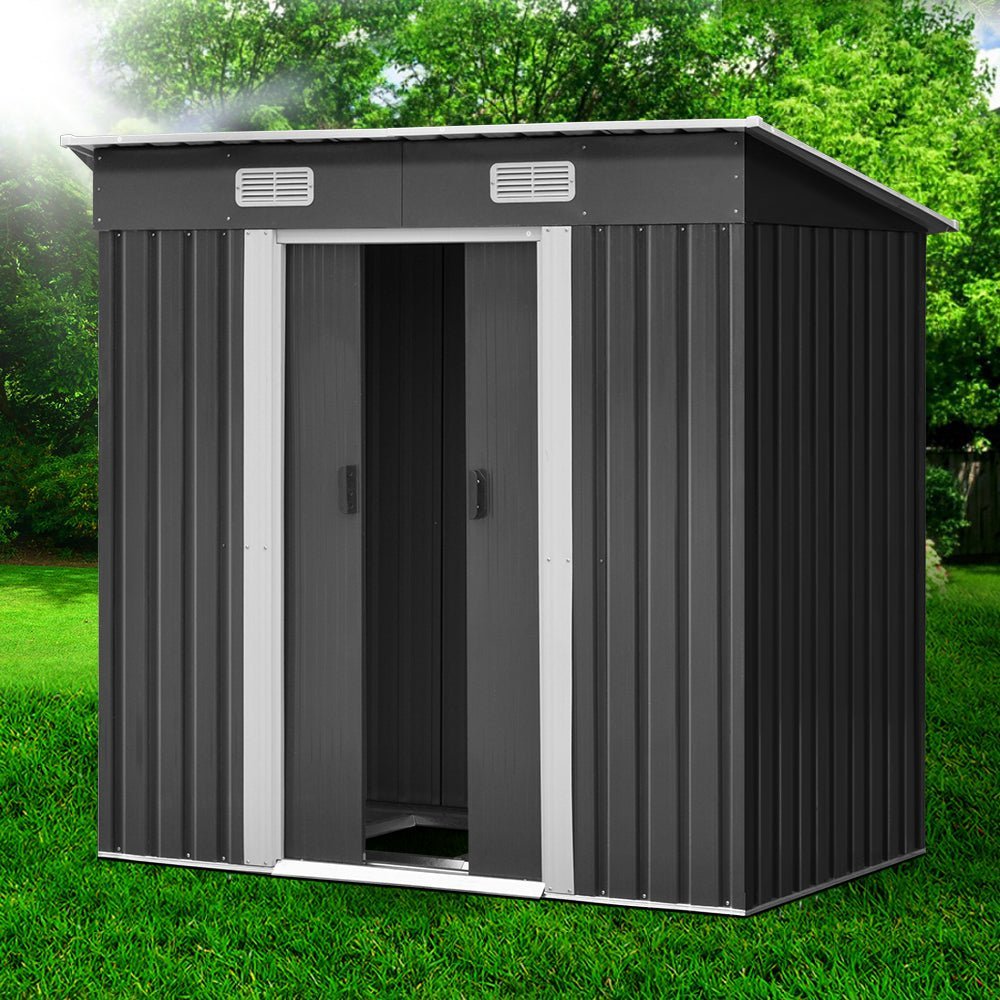
A metal base ships with this 1.94 by 1.21 metre shed, which is unusual at any size. Construction is strengthened galvanised steel and polypropylene. A sliding door handles access.
Most sheds are sold without a floor and expect a slab, pavers or timber to be laid first, so an included base removes a cost and a weekend of work. It also lifts the contents clear of ground moisture, which is the quiet killer of anything stored in cardboard. The base gives the walls something square to bolt to.
At just over two square metres this is storage rather than workspace, and a mower plus tools will fill it. Anyone without an existing slab should weigh the included base heavily. It is the easiest shed here to put up on bare ground.
Pros
- Metal floor base included
- Lifts contents clear of ground moisture
- Sliding door needs no swing clearance
- Easiest here to install on bare ground
Cons
- Just over two square metres of floor
- Storage size rather than workspace
Key specs: 1.94 x 1.21 metres; strengthened galvanised steel and polypropylene; metal base included; sliding door.
CHECK CURRENT PRICE7. Giantz Garden Shed 0.99×1.04M – Best Compact
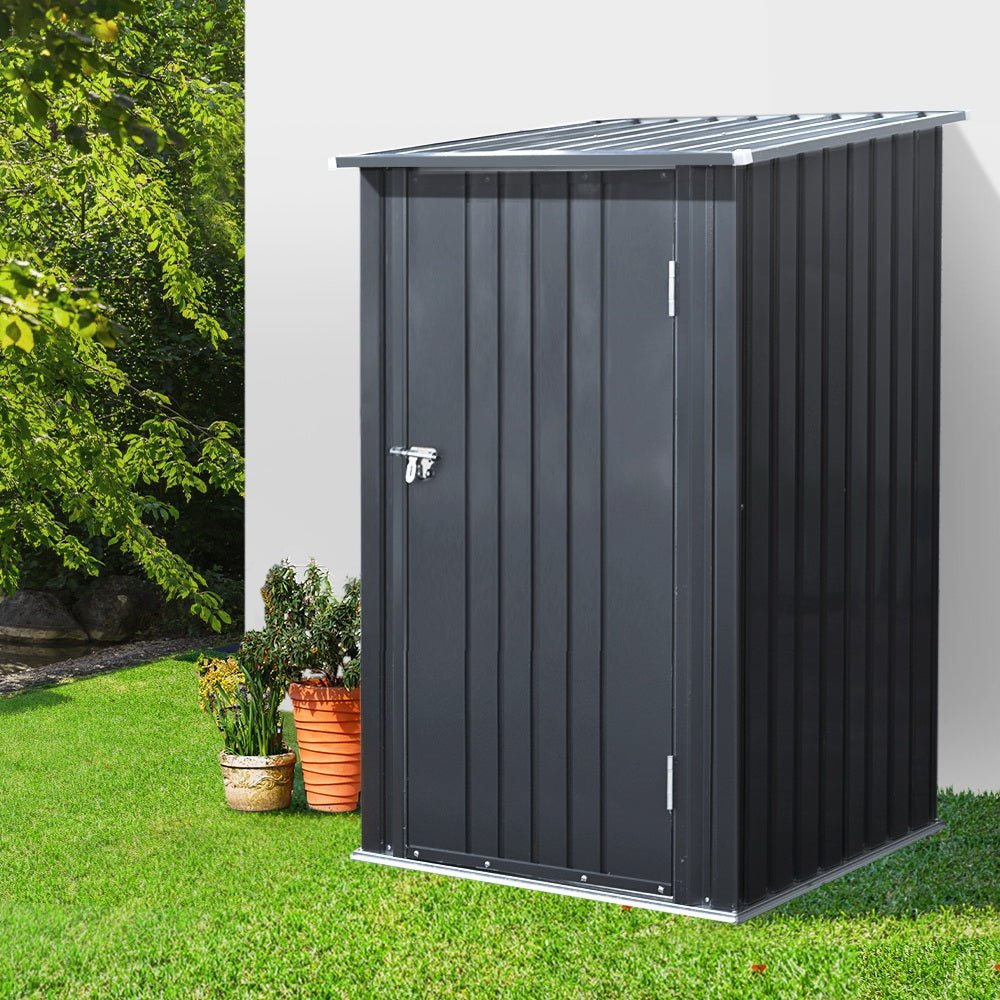
Just under a metre square and 148 centimetres tall, this is the smallest structure in the guide. Construction matches the larger models in strengthened galvanised steel and polypropylene. It is a locker rather than a building.
Something this size fits on a balcony corner, a courtyard or beside a carport where nothing larger has a chance. It takes garden hand tools, fertiliser, hoses and a folded chair or two without pretending to hold a mower. Nothing about the material specification is compromised to reach the size.
At 148 centimetres nobody stands up inside it, and access means reaching in rather than walking in. Apartments, townhouses and courtyards are where it earns a place. Treat it as secure outdoor storage rather than a shed in the usual sense.
Pros
- Fits a courtyard, balcony corner or carport side
- Same steel and polypropylene as the larger models
- Secure lockable storage in a tiny footprint
- No base preparation needed
Cons
- 148cm tall means reaching in rather than walking in
- Too small for a mower
Key specs: 0.99 x 1.04 metres, 148cm high; strengthened galvanised steel and polypropylene.
CHECK CURRENT PRICE8. Giantz Garden Shed 2.38×1.31M Double Door – Best Double Door Access
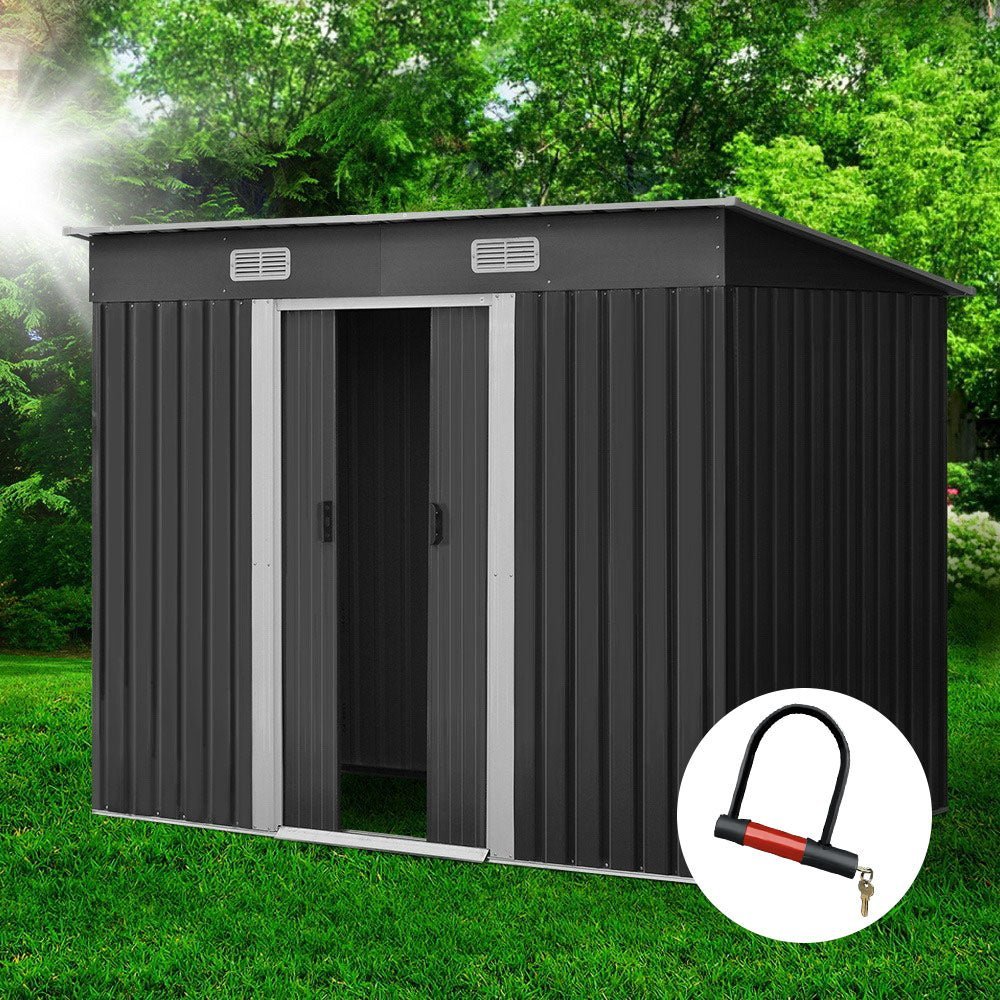
Double doors across the narrow end open this 2.38 by 1.31 metre shed to its full width. The build follows the same strengthened galvanised steel and polypropylene pattern. The roof slopes for runoff.
Opening both doors turns a narrow shed into one you can see the whole way into, which matters when the mower lives at the back. Two and a half metres of length is enough for long-handled tools stored upright along a side wall. The proportions still fit a side passage.
Double doors need clearance to swing, so this cannot sit hard against a path the way the sliding-door models can. Where there is room in front, the wider opening beats a sliding track for getting bulky items in and out. Check the swing arc before siting it.
Pros
- Double doors open the full width
- Length suits long-handled tools
- Sloped roof for runoff
- Fits a side passage
Cons
- Doors need clearance to swing open
- No floor base included
Key specs: 2.38 x 1.31 metres; strengthened galvanised steel and polypropylene; double doors; sloped roof.
CHECK CURRENT PRICE9. Advwin Garden Shed Outdoor Storage 131x195x186cm – Best Walk-In Height
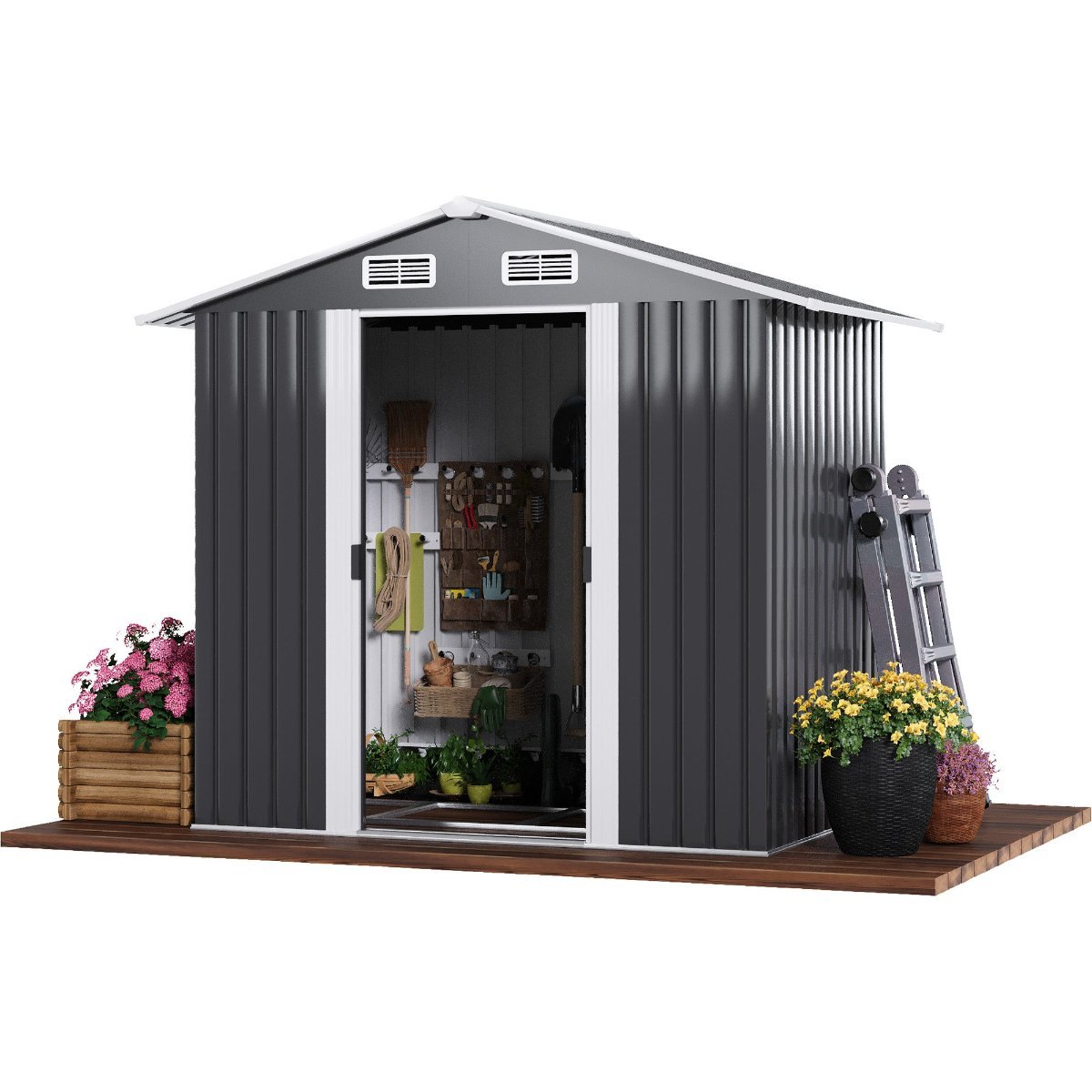
At 186 centimetres tall this comes closest to walk-in height of any shed here, over a 131 by 195 centimetre footprint. Galvanised steel goes through a rust-prevention process during manufacture. The frame is described as thickened for wind resistance.
Height changes how a shed is used, because standing upright inside means shelving on the walls and items stored above waist level rather than stacked on the floor. A thickened frame matters in exposed positions where a flimsy shed racks in wind. The roof tilts to prevent water accumulating.
Its footprint is modest against that height, so it is tall rather than large overall. Households wanting vertical storage in a small area gain most. Anyone over about 185 centimetres will still be ducking slightly.
Pros
- 186cm height allows near-upright access
- Rust-prevention treated galvanised steel
- Thickened frame resists wind
- Tilted roof prevents water accumulating
Cons
- Modest floor area for its height
- Tall users will still duck slightly
Key specs: 131 x 195 x 186cm; galvanised steel with rust-prevention treatment; thickened metal frame; tilted roof.
CHECK CURRENT PRICE10. Advwin Galvanised Steel Garden Shed – Best Multi-Purpose Pick
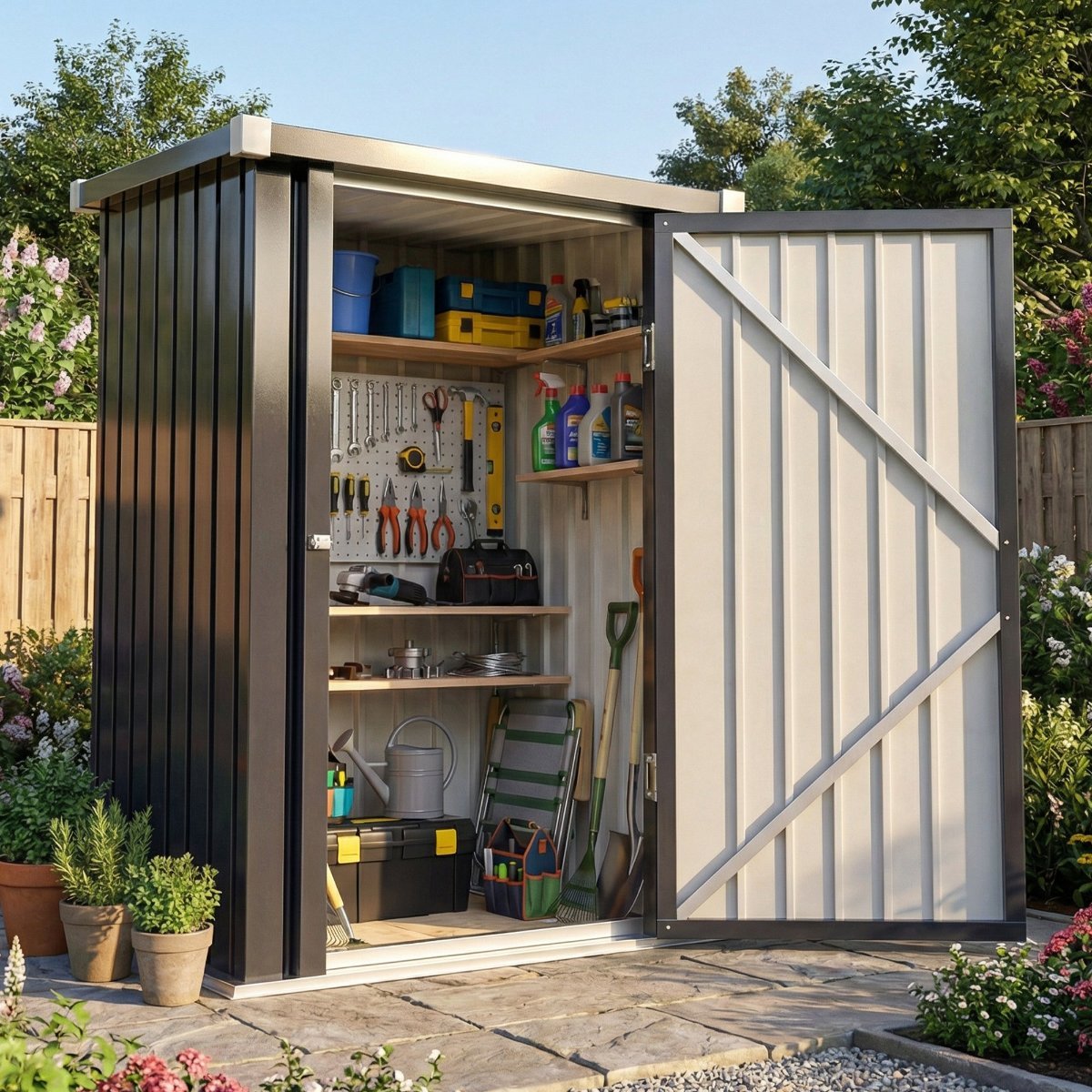
Galvanised steel throughout, this one is presented for uses beyond tool storage, including as a pet shelter, a bike garage or a general utility store. Weather protection is the stated priority. It carries the same rust treatment as its stablemate above.
Framing a shed as multi-purpose is more useful than it sounds, because bike storage and pet shelter both need ventilation and door access that a sealed tool locker handles badly. Galvanising covers the durability side in either role. It suits a household that has not settled on one job for it.
Being a generalist means it is not optimised for any single use, and a dedicated bike store would secure frames better. As flexible outdoor storage that will not rust through, it does the job. Consider what it will actually hold before choosing between this and a dedicated design.
Pros
- Galvanised steel with rust-prevention treatment
- Works as tool store, bike garage or pet shelter
- Year-round weather protection
- Flexible if the intended use is undecided
Cons
- Not optimised for any single purpose
- No dedicated bike or tool fixings
Key specs: Galvanised steel construction; rust-prevention treated; suitable for tools, bikes, pet shelter or utility storage.
CHECK CURRENT PRICEHow to Choose the Best Garden Sheds in Australia
Find the panel thickness before the floor area. Steel sheds are quoted in millimetres, and the difference between a 0.25mm panel and something thinner shows the first time a strong wind hits or somebody leans a ladder against it. Only one shed in this guide publishes its figures, which tells you how often the number is left out. Ask for it if the listing is silent.
A sloped roof is not a styling choice. Water sitting on a flat roof works into seams and fixings and ends a shed years early, and Australian summer storms deliver a lot of it at once. Every shed here slopes for that reason. Check which way it drains before siting, so runoff does not go straight into a doorway or against a house wall.
Budget for a base unless one is included. Most sheds ship without a floor and expect a concrete slab, pavers or a treated timber platform underneath. Erecting one straight onto soil invites moisture, rust and an unlevel frame that fights every panel during assembly. One model here includes a metal base, which removes both the cost and the weekend of preparation.
Match the material to the local climate. Galvanised steel handles most of the country well, but coastal salt air eventually finds any scratch in a coated panel. Resin cannot corrode at all, which makes it the safer choice within a few kilometres of surf, at the cost of walls that will not take heavy fixings. Humid northern climates favour ventilation over sealing.
Choose the door type around where the shed will sit. Hinged double doors give the widest opening but need clear ground in front to swing, while sliding doors reclaim that space and suit a shed tucked against a fence or path. Measure the swing arc before committing to double doors in a narrow spot. Sliding tracks need occasional clearing of grit in return.
Check council rules before buying anything large. Many Australian councils exempt small garden sheds from approval but set thresholds on floor area, height and boundary setbacks, and a 3 by 3 metre shed can cross them. Rules vary by council rather than by state, so the answer for one suburb does not apply to the next. Anyone fitting a shed out as a workshop should also read our guide to budget 3D printers in Australia, since the power and bench requirements are decided at the same time. Confirm the setback distance from your boundary before ordering, because that is the rule most often breached.
Frequently Asked Questions
Do I need council approval for a garden shed in Australia?
Often not for a small shed, but the thresholds vary by council rather than by state. Typical exemptions cover sheds under about 10 square metres and below a set height, provided minimum boundary setbacks are met. Larger structures, anything close to a boundary, and sheds in heritage or bushfire overlay areas usually need approval, so check with your local council first.
What is the best material for a garden shed in Australia?
Galvanised steel suits most inland and suburban locations, resisting rust through its zinc coating while staying strong enough for wall fixings. Resin is the better choice near the coast, since it cannot corrode at all, though it will not take heavy shelving. In both cases a sloped roof and a dry base matter more than the panel material.
Does a garden shed need a concrete slab?
It needs a level, dry base of some kind, though not necessarily concrete. Pavers or a treated timber platform work well and are cheaper to lay. Erecting a shed directly onto soil causes rust at the base, moisture inside and a frame that will not square up, so the base is not a step to skip.
How do I stop condensation in a metal shed?
Ventilation is the main answer, so keep any factory vents clear and consider leaving a small gap at the eaves. Condensation forms when warm humid air meets cold steel overnight, which is why it is worse in coastal and northern areas. Raising stored items off the floor and avoiding sealing the shed completely both help.
How long does a garden shed last?
A galvanised steel shed on a proper base commonly lasts ten to twenty years, with the base and the roof seams failing before the panels. Coastal salt air shortens that considerably, and a shed erected on bare soil shortens it further. Resin sheds avoid rust entirely but can become brittle after long ultraviolet exposure.
Should a garden shed be anchored down?
Yes. Empty or lightly loaded sheds lift in strong wind, and Australian storm events regularly demonstrate it. Anchor the frame to the slab or base with the fixings supplied, or use ground anchors on a timber platform. This matters most in exposed, coastal and cyclone-prone locations.
Verdict
Yard space and intent decide this one. Where there is room and the shed will double as a workshop, the Giantz 3x3M gives nine square metres of galvanised steel and a sloped roof that handles a wet summer. Narrow blocks and side passages are far better served by the 3.05×1.5M, the only shed here publishing its 0.6mm frame and 0.25mm panel thicknesses. Within reach of salt air, skip both and take the resin 2.44×1.31M, because rust is what ends most sheds on the Australian coast and resin removes the problem rather than delaying it.