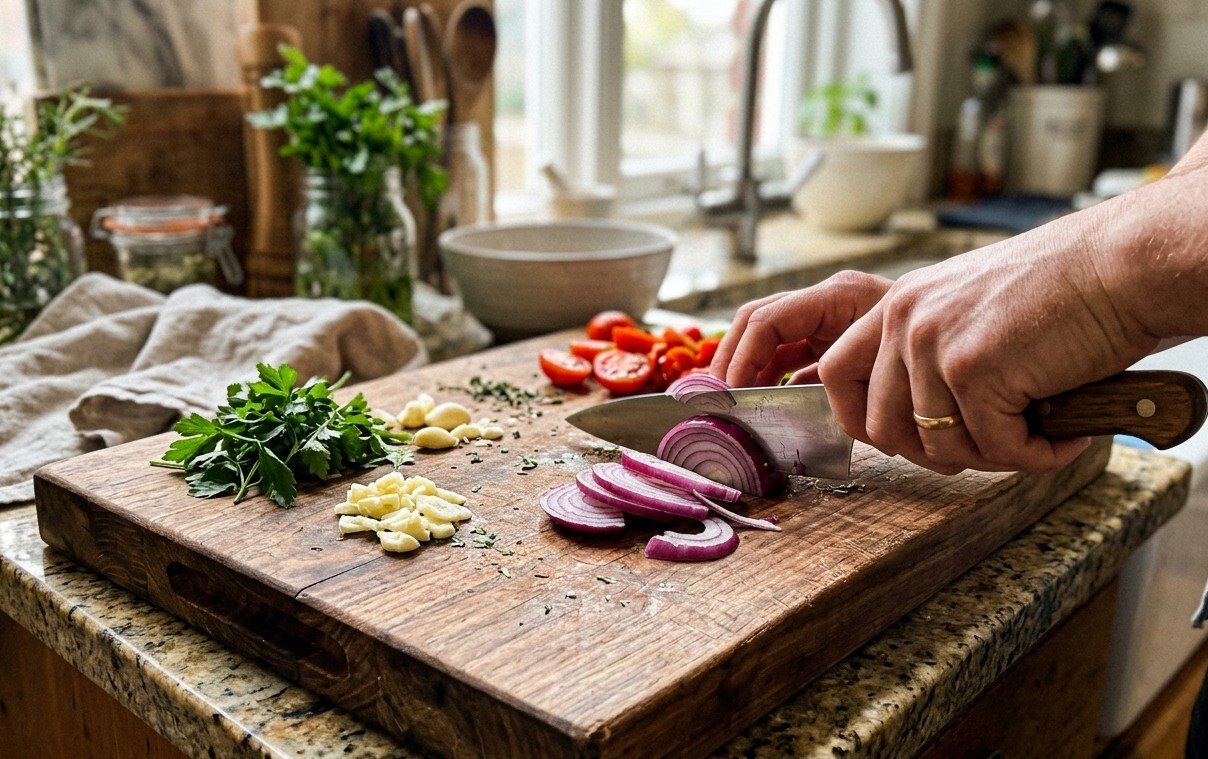
A chopping board is a flat food-prep surface, usually timber, bamboo or plastic, designed to protect both the bench underneath and the knife edge above during cutting. The best chopping boards in Australia balance genuine durability against knife edges, practical storage in a kitchen that rarely has enough drawer space, and a construction suited to how often and how hard they actually get used.
Three material categories cover most kitchens. End grain timber boards, cut so the wood fibres face upward, are the most knife-friendly and durable but also the heaviest and priciest. Long grain timber and bamboo boards are still knife-safe, but show wear faster than end grain construction. Plastic boards, often sold as nesting or colour-coded sets, are dishwasher-safe and the easiest to store, without the traditional timber look and feel.
A genuinely durable board needs at least 2.5cm of thickness to resist warping over repeated wetting and drying, and end grain construction specifically reduces visible knife marks because the blade separates wood fibres rather than slicing across them. Storage footprint and how many boards a kitchen actually needs at once matter as much as the material itself.
This guide compares eight chopping boards available to Australian addresses, weighing construction quality, storage practicality and genuine stock availability rather than a spec sheet alone.
Quick Picks
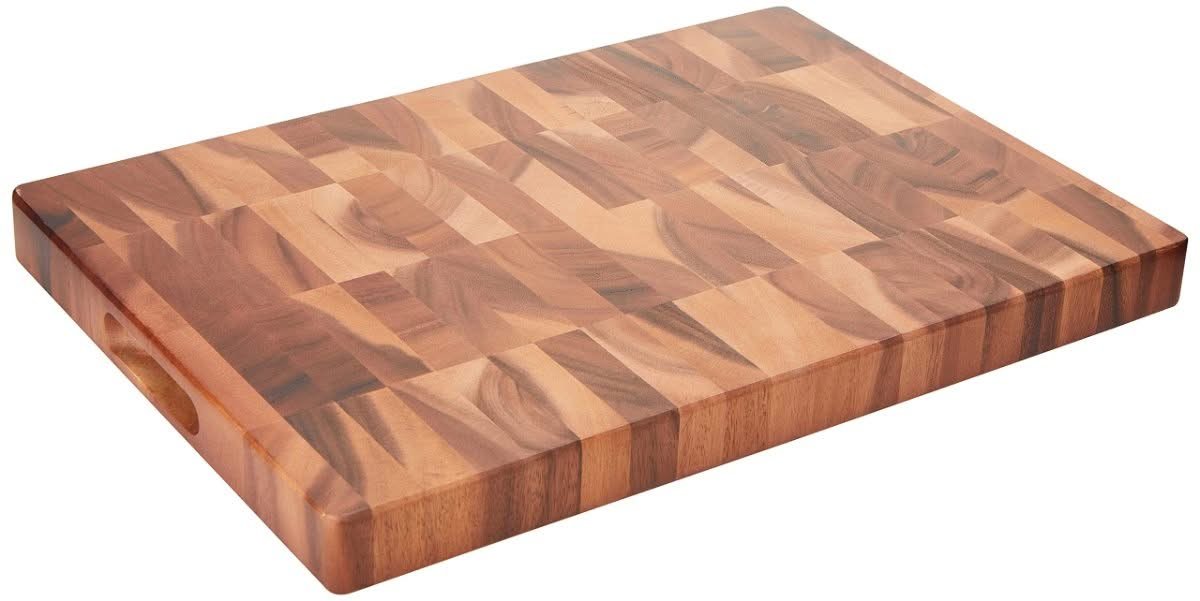
Davis & Waddell Acacia End Grain Cutting Board
End grain acacia that is gentle on knife blades, at 50 x 35cm and a stable 4cm thick.
CHECK ON AMAZON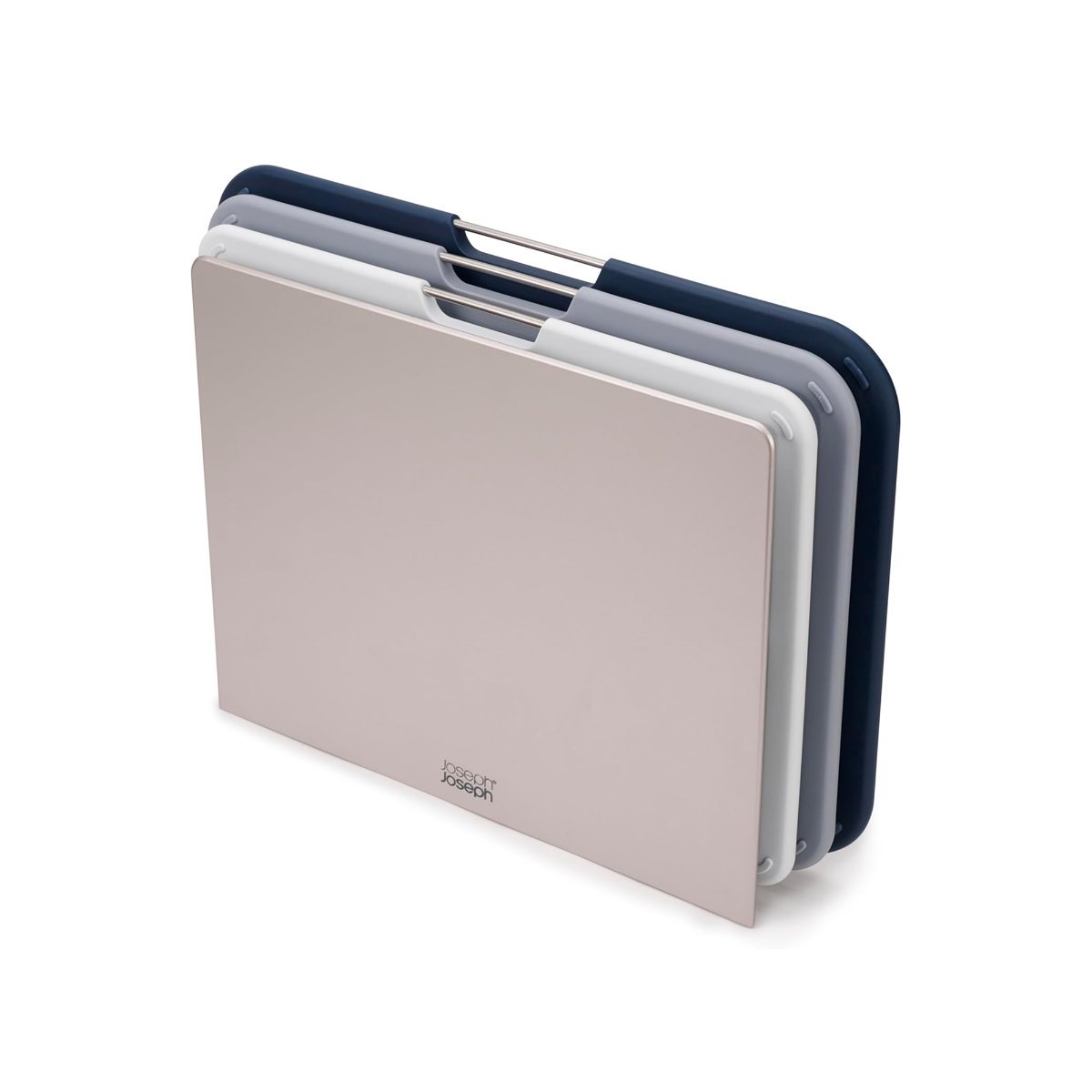
Joseph Joseph Nest Boards Regular 3 Piece Set
Three graduated boards that nest together for compact drawer storage, dishwasher-safe.
CHECK ON AMAZON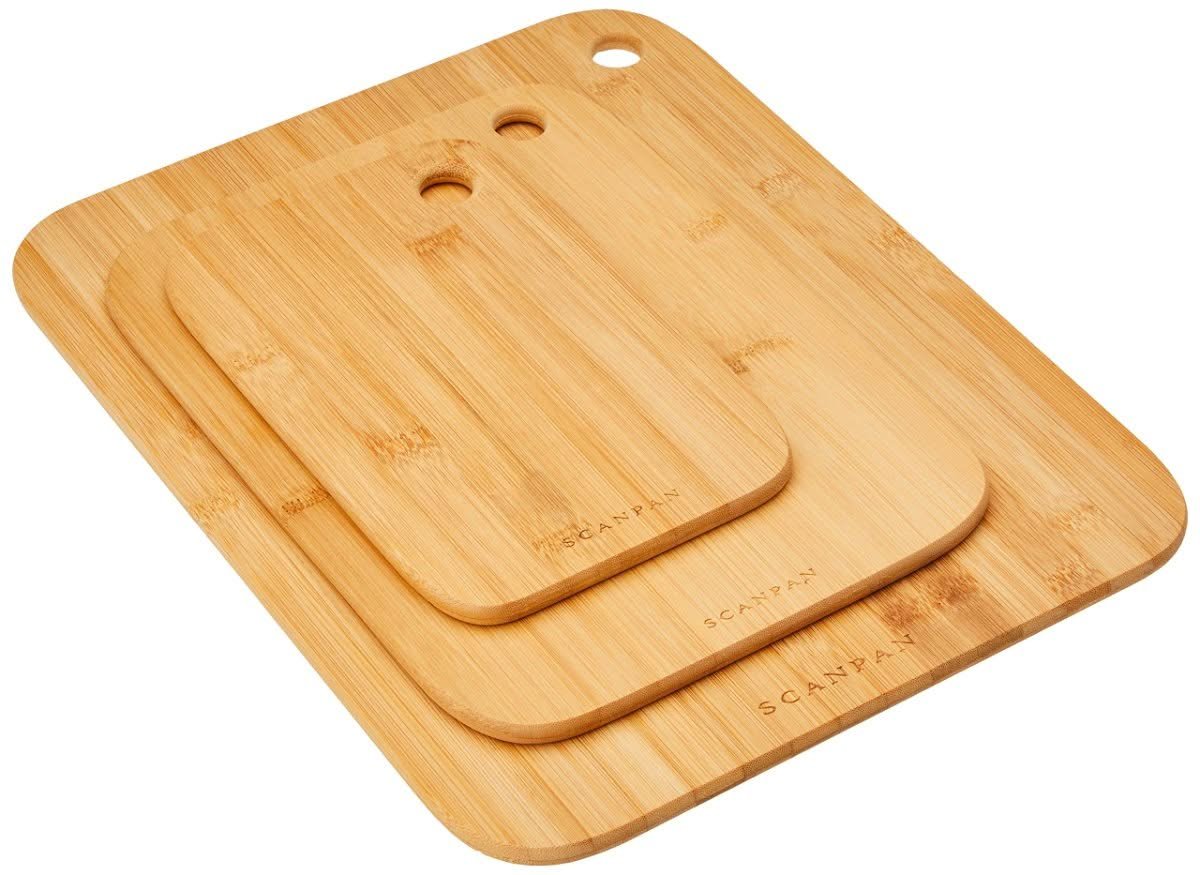
Scanpan Natural Bamboo 3-Piece Board Set
Three graduated reversible bamboo boards in one set, each 1cm thick, with hanging loops.
CHECK ON AMAZONChopping Boards Australia Compared
| Product | Link | Type | Best For | Key Spec |
|---|---|---|---|---|
| Davis & Waddell Acacia End Grain Cutting Board | Check price | Single Board | End Grain / Most Durable | End grain acacia, 50 x 35 x 4cm |
| Peer Sorensen Square Acacia Cutting Board | Check price | Single Board | Compact Pick | Acacia, 25.5 x 25.5cm |
| ORANA Butcher’s Block | Check price | Single Board | Australian-Made Board | Camphor laurel, 50 x 30 x 5.7cm |
| Joseph Joseph Nest Boards Regular 3 Piece Set | Check price | Board Set | Space-Saving Set | 3-piece nesting set |
| Joseph Joseph Folio Icon 4-Piece Board Set | Check price | Board Set | Colour-Coded Multi-Board Set | 4 boards + case, colour-coded |
| Joseph Joseph Nest Chop Opal | Check price | Single Board | with Built-in Chute | Single board with folding chute |
| Scanpan Natural Bamboo 3-Piece Board Set | Check price | Board Set | Bamboo Set | 3-piece bamboo set, 1cm thick |
| 5-Star Chef Acacia Wooden Cutting Board End Grain | Check price | Single Board | for Entertaining | Acacia wood |
1. Davis & Waddell Acacia End Grain Cutting Board – Best End Grain / Most Durable
At 3.73kg this board weighs close to four 1kg bags of sugar, and that weight is the point. A 4cm slab of acacia sits dead still on the bench while you go through a pile of onions, which a thinner board never manages.
The listing describes an end grain build that is gentle on knife blades, and at 50 x 35cm there is room to portion a roast or break down a whole chook without anything sliding off the edge. It is also big enough to carry to the table as a cheese board, and the listing calls out serving cheese as a use.
Timber needs looking after: hand wash, dry it promptly and oil it every few weeks, and keep an eye on it through a humid Queensland summer when wood moves more. For a household that cooks most nights and wants one board that lasts, that routine is a fair trade. If bench space is tight, the Nest set further down takes a fraction of the room.
Pros
- End grain acacia build that is gentle on knife blades
- 4cm thickness keeps it planted on the bench
- 50 x 35cm surface suits roasts and whole chooks
- Works as a serving board for cheese
Cons
- Close to four kilos of timber is a lot to lift to the sink
- Hand wash only, which is a bit of a pain on a board this size
- The listing gives few details beyond size, grain and weight
Key specs: Acacia wood; end grain; 50 x 35 x 4cm; 3.73kg; hand wash
CHECK ON AMAZON2. Peer Sorensen Square Acacia Cutting Board – Best Compact Pick
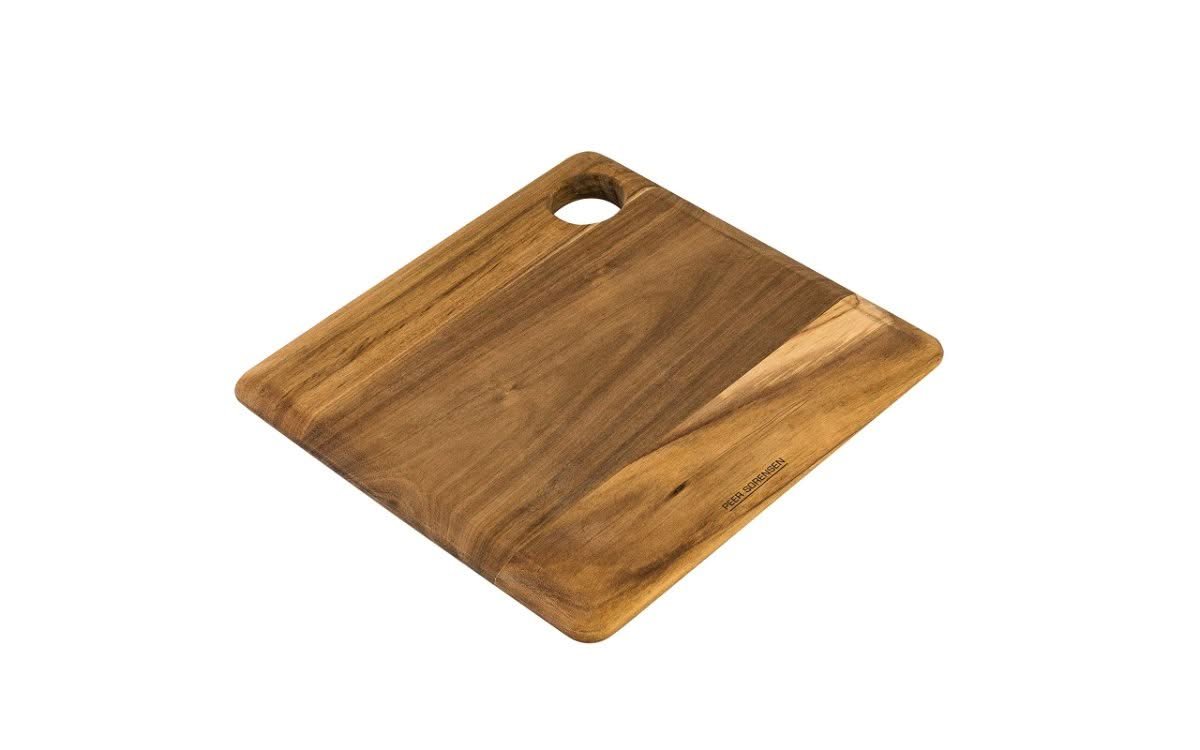
This is the board that gets cut from most lists, so the admission up front: at 1.8cm thick it sits below the 2.5cm guide the How to Choose section recommends, and it will slide and flex under firm chopping more than the 4cm board above it. What it earns its place for is size. At 25.5 x 25.5cm and 0.86kg it fits a caravan bench, a studio kitchen or a share-house counter where a full-size rectangle simply will not go.
It is solid acacia with a long grain surface and a hanging loop, so it lives on a hook instead of taking up cupboard space. The square shape also works for a couple of sandwiches or a small cheese spread once the chopping is done (the kind of board you leave out on the bench all day).
Treat it as the second board that handles garlic, limes and the odd herb, and keep the Davis & Waddell for bigger jobs. Like any acacia board it wants hand washing and a rub of oil now and then.
Pros
- Square 25.5 x 25.5cm footprint suits small benches and caravans
- Hanging loop for hook storage
- Light at 0.86kg and easy to wash at the sink
- Solid acacia surface
Cons
- Only 1.8cm thick, so it slides and flexes under firm chopping
- Too small for a roast or a whole chook
- Hand wash recommended, so no dishwasher shortcut
Key specs: Acacia wood; long grain; 25.5 x 25.5 x 1.8cm; 0.86kg; hanging loop; hand wash
CHECK ON AMAZON3. ORANA Butcher’s Block – Best Australian-Made Board

Camphor laurel is a tree that many councils in Queensland and northern NSW treat as a weed, so a board made from it is a decent use of the timber. The listing says this block is made in Australia from sustainably sourced Australian camphor laurel, at 50 x 30cm and a hefty 5.7cm thick.
The thickness is the headline. A block this deep will not shift on the bench, and the listing adds a carved juice groove for carving a roast and hand grips on each side, so lifting it to the table is less of a wrestle. The listing also says camphor laurel is naturally anti-bacterial, which is a claim from the seller, so keep up the usual habit of washing it well after raw meat.
Hand washing only, with regular oiling, and the listing quotes a six-month warranty against defects, which is short for a board at this size. Against the Davis & Waddell end grain board above, it is the thicker and local option, and against the Peer Sorensen square it is a different tool altogether: a fixture on the bench, not something you hang on a hook.
Pros
- Made in Australia from camphor laurel
- 5.7cm thickness stays put through heavy chopping
- Juice groove and side hand grips included
- 50 x 30cm surface handles roasts and bulk prep
Cons
- Six-month warranty per the listing, which is short for a board this size
- Hand wash only, and it needs regular oiling
- A thick block takes real bench space and is awkward to store
Key specs: Camphor laurel; 50 x 30 x 5.7cm; made in Australia; juice groove; hand grips; hand wash only; 6-month warranty (listing)
CHECK ON AMAZON4. Joseph Joseph Nest Boards Regular 3 Piece Set – Best Space-Saving Set
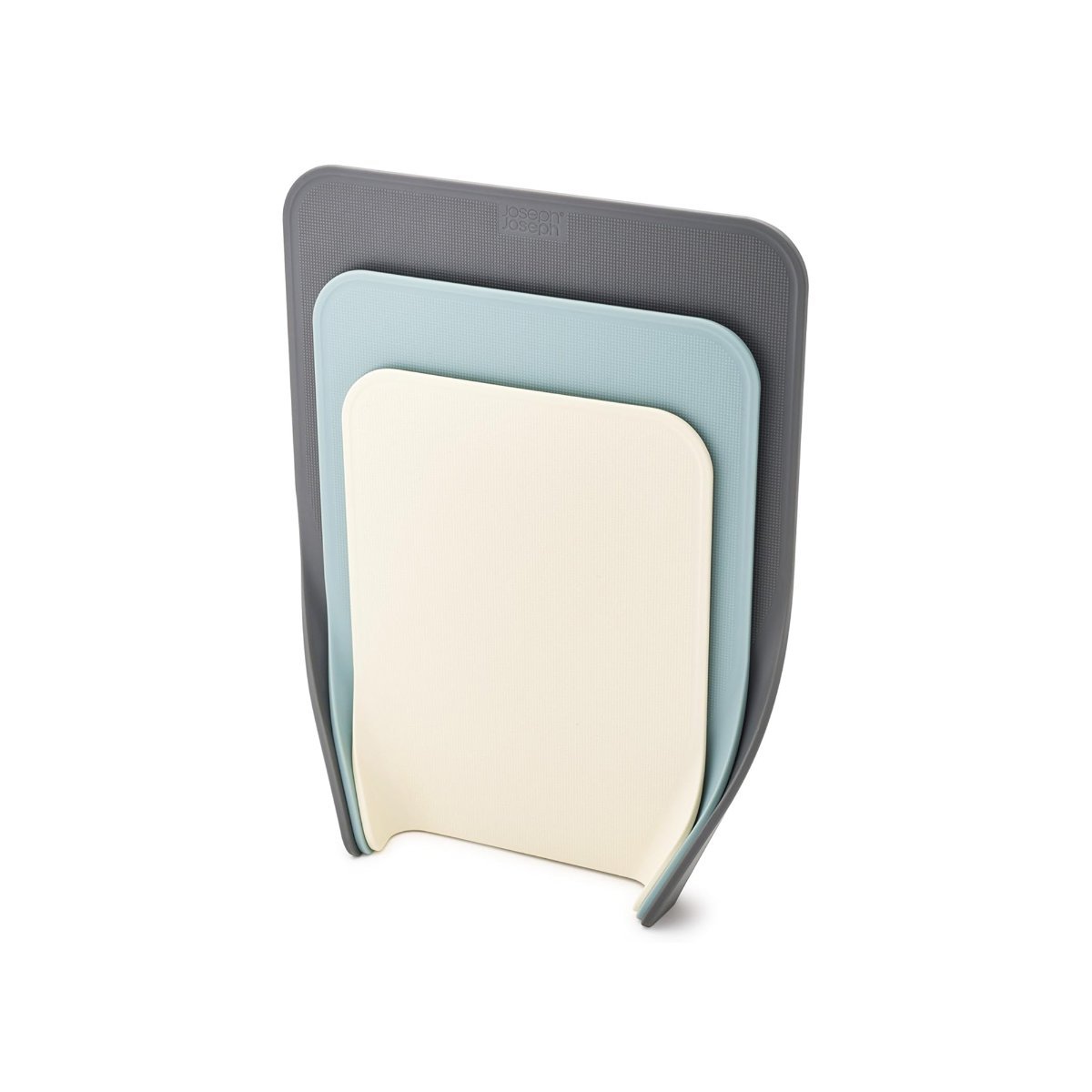
Joseph Joseph’s Nest range is built around a single problem every kitchen with multiple boards has: storage. The three boards in this set nest inside each other in graduated sizes, taking up a fraction of the drawer or cupboard space that three separate flat boards would need.
Each board in the set is a different size, which naturally suits separating tasks, a smaller board for garlic and herbs, a mid-size for everyday vegetables, and a larger one for bigger jobs, without needing to buy three boards individually. Colour-matched grey styling keeps the set visually consistent.
Being plastic rather than timber, these boards are dishwasher-safe and lighter than any wooden board in this guide, which suits a household prioritising easy cleanup over the traditional look and knife-feel of a wooden board.
Pros
- Three graduated sizes nest together for compact storage
- Dishwasher-safe, unlike the wooden boards in this guide
- Lighter weight than any timber board here
- Colour-matched set looks visually consistent
Cons
- Plastic construction lacks the look and feel of timber
- Smaller total capacity than a single large end grain board
- Can show knife marks more visibly than end grain wood over time
Key specs: 3-piece nesting set, plastic construction, dishwasher-safe, graduated sizes.
CHECK ON AMAZON5. Joseph Joseph Folio Icon 4-Piece Board Set – Best Colour-Coded Multi-Board Set
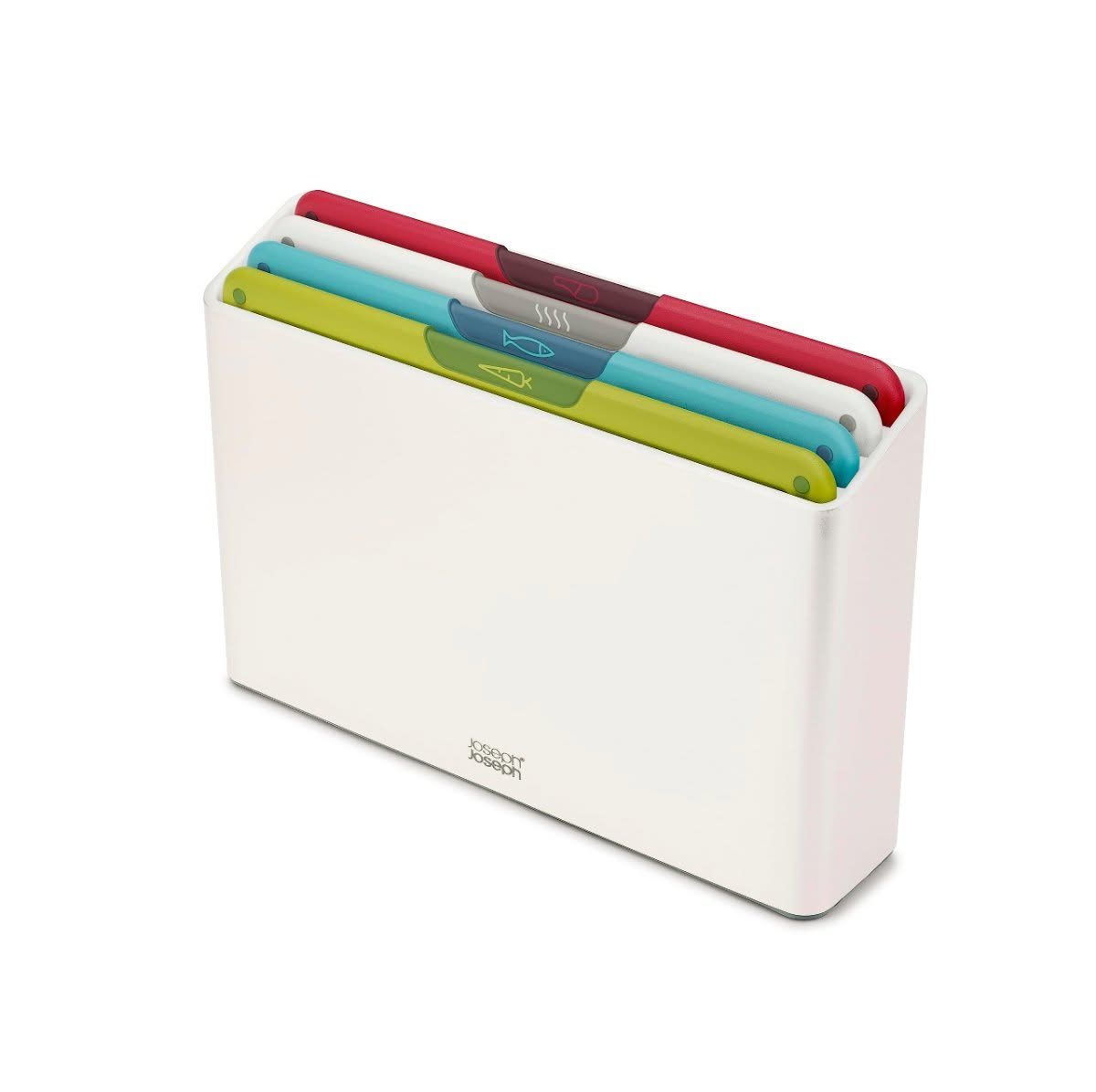
Raw chicken and salad do not belong on the same board, and this set makes that rule hard to forget. Four colour-coded boards carry icons for raw meat, raw fish, vegetables and cooked food, and they slide into a slimline case that holds each one separately so air can circulate between them.
The boards are polypropylene with a non-slip finish and a knife-friendly surface, and the case stands on the bench at about 22 x 32cm with a depth of 7.5cm, which is a small footprint for four boards. A busy household or a share house with strict fridge rules gets the most from the icons, because the system only works if everyone follows it.
Compared with the Nest set above, the Folio takes more bench room and does not nest in a drawer, so a single cook who does not need the separation is better off with that simpler storage. And since it is plastic, it gives up the look and feel of timber that the acacia boards at the top of the list offer.
Pros
- Colour-coded boards with icons for raw meat, raw fish, vegetables and cooked food
- Slimline case holds boards separately with air circulation
- Non-slip, knife-friendly surfaces
- Compact case footprint for four boards
Cons
- The case does not fold away or nest in a drawer
- The colour system only helps if everyone in the house follows it
- Plastic surfaces show knife grooves over time
Key specs: 4 boards plus slimline case; colour-coded with food icons; polypropylene; non-slip; case about 22 x 32 x 7.5cm
CHECK ON AMAZON6. Joseph Joseph Nest Chop Opal – Best with Built-in Chute
This single board adds a folding, angled chute along one edge, designed to scrape chopped vegetables or offcuts directly into a bowl or bin rather than lifting and tipping the whole board. It is a genuinely different single-board design to every other pick in this guide.
In daily use the chute folds flat against the board for storage and flips up when needed, so it does not add bulk when the feature isn’t in use. It suits a cook who does a lot of chopping-and-transferring in one motion, like prepping vegetables for a stir-fry or soup.
As a single board rather than a set, it does not solve the multi-task separation that the Folio Icon set addresses, and the moving hinge on the chute is one more part that could wear out over years of use compared to the simpler boards elsewhere in this guide.
Pros
- Folding chute scrapes chopped food directly into a bowl or bin
- Chute folds flat when not in use, no added bulk
- Speeds up repetitive chopping-and-transferring tasks
- Distinctive design not matched elsewhere in this guide
Cons
- Single board, not part of a set
- Moving hinge is a potential long-term wear point
- Niche feature that not every cook will use regularly
Key specs: Single board with folding chute, plastic construction.
CHECK ON AMAZON7. Scanpan Natural Bamboo 3-Piece Board Set – Best Bamboo Set
Three boards in one set: a large 38 x 30cm, a medium 30 x 22cm and a small 23 x 15cm, all reversible and each 1cm thick. The Danish-designed Scanpan set suits a first kitchen, a holiday house or the rotation of boards you keep so one can dry while another is in use.
Bamboo is a fast-growing material, and the boards have hanging loops, so they live on hooks and not in a drawer. Long grain bamboo is the standard build on most everyday wooden boards, so the knife-feel is similar to the Peer Sorensen square above, and a step down from the end grain Davis & Waddell for edge friendliness.
At 1cm thick these boards are light and will not stay planted under heavy chopping, so leave the big roast jobs to the thick boards at the top of the list. Hand wash them, give them an occasional rub of oil, and they will do fine for everyday vegetables and bread.
Pros
- Three graduated sizes for different jobs
- Reversible with hanging loops for hook storage
- Light and easy to rinse at the sink
- Bamboo is a fast-growing material
Cons
- Only 1cm thick, so the boards slide and flex under firm chopping
- Hand wash and regular oiling only
- Bamboo is hard on knife edges over time
Key specs: 3-piece set; bamboo; 38 x 30cm, 30 x 22cm and 23 x 15cm; 1cm thick; reversible; hanging loops; hand wash
CHECK ON AMAZON8. 5-Star Chef Acacia Wooden Cutting Board End Grain – Best for Entertaining
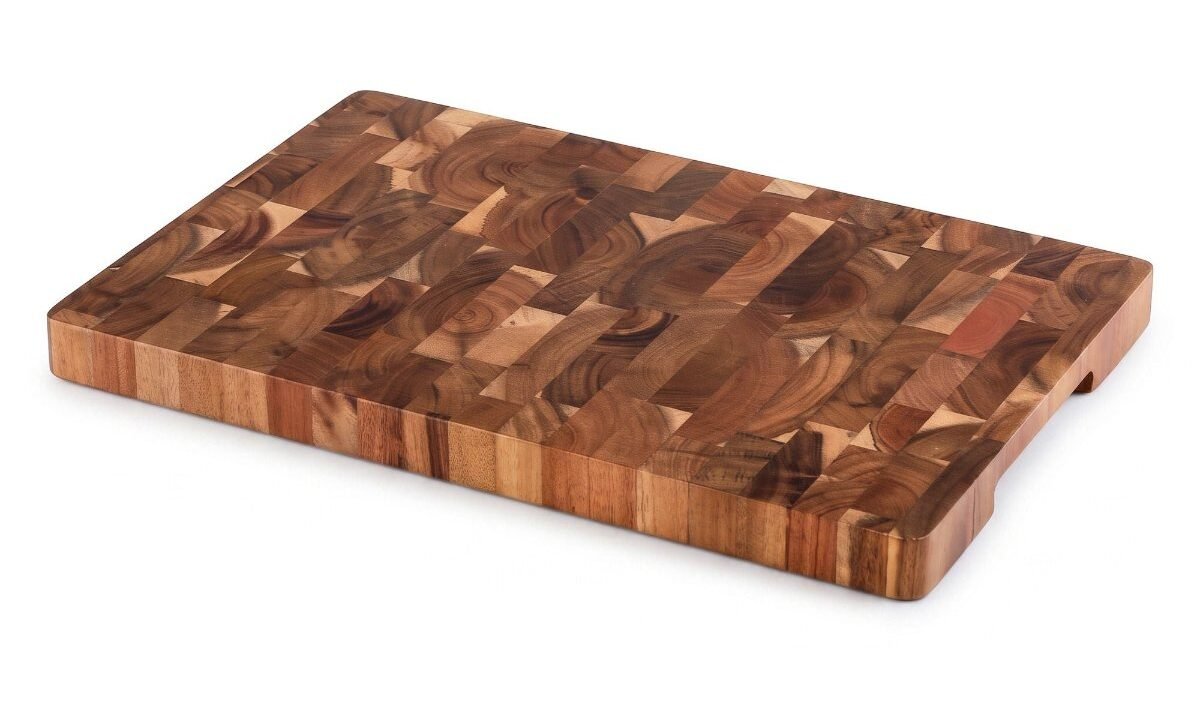
Like the Davis & Waddell pick earlier in this guide, this is genuine end grain acacia construction at a 2.5cm profile, but it is specifically positioned to double as a grazing platter for entertaining rather than purely as a heavy-duty prep board. The styling leans more toward presentation.
In practice that means it moves easily from chopping duty during meal prep to going straight onto the table loaded with cheese, charcuterie or a grazing spread, without needing a separate dedicated serving board for that purpose.
At a slightly slimmer 2.5cm profile than the Davis & Waddell end grain board’s 4cm, it is a little lighter and easier to carry to the table, though it also carries marginally less mass to resist sliding during heavy chopping than the thicker board earlier in this guide.
Pros
- Genuine end grain construction, gentle on knife edges
- Doubles as a grazing platter for entertaining
- Easier to carry to the table than a thicker board
- Distinct Australian-style presentation
Cons
- Slimmer 2.5cm profile has less mass than the thicker Davis & Waddell end grain board
- Similar core construction to another pick in this guide
- Needs the same regular oiling as any end grain timber
Key specs: Acacia wood, end grain construction, 2.5cm profile.
CHECK ON AMAZONHow to Choose Chopping Board
Match the construction to how hard the board actually gets used. End grain timber is worth the extra weight for daily heavy chopping; a long grain or bamboo board covers lighter, occasional use just as well.
Consider storage before buying a large single board. A big end grain board needs real bench or drawer space; a nesting or stacking set solves the same prep needs in a fraction of the storage footprint if kitchen space is tight. Kitchen shears save time on herbs, poultry and packaging.
Separate boards for raw meat and other food reduces cross-contamination risk. A colour-coded set or simply keeping a dedicated board for raw protein is a genuinely useful food-safety habit, not just a marketing feature.
Timber boards need oiling; plastic boards don’t, but wear differently. A wooden board needs periodic food-safe mineral oil to prevent drying and cracking; a plastic board skips that maintenance but can develop deep knife grooves that harbour bacteria if not replaced when heavily scored.
Thickness affects stability more than most buyers expect. A thin board slides and flexes under firm chopping; at least 2.5cm of thickness keeps a board planted on the bench and resists warping over its lifespan.
A board that also works as a serving piece adds genuine value if you entertain. Several boards in this guide double as a grazing or presentation platter, which is worth factoring in if a separate serving board would otherwise sit unused most of the time. For fast, even slices of vegetables, a mandoline slicer saves time on the board.
After washing up, a dish drying mat keeps the water off the bench while boards and dishes dry.
Frequently Asked Questions
What is the difference between end grain and long grain chopping boards?
End grain boards are constructed so the wood fibres face upward, letting a knife blade separate the fibres rather than cut across them, which is gentler on knife edges and shows fewer visible marks over time. Long grain boards have fibres running horizontally and wear faster under heavy use.
How often should a wooden chopping board be oiled?
Most timber boards benefit from a food-safe mineral oil application every few weeks to a month with regular use, or whenever the surface starts looking dry. Regular oiling prevents the wood from drying out, cracking or warping over time.
Should you use separate chopping boards for meat and vegetables?
Using a dedicated board for raw meat and a separate one for vegetables and ready-to-eat food is a widely recommended food-safety practice to reduce cross-contamination risk, which is why several boards in this guide use colour-coding or icon systems to make that separation easy to follow.
Are plastic chopping boards better than wooden ones?
Neither is universally better; plastic boards are dishwasher-safe and easier to sanitise thoroughly, while wooden boards, particularly end grain construction, are gentler on knife edges and often preferred for feel and durability. The right choice depends on maintenance habits and how the board will be used.
How thick should a good chopping board be?
At least 2.5cm of thickness is generally recommended for stability and warp resistance under regular use. Thinner boards are lighter and easier to store but tend to flex and slide more during firm chopping.
Can a chopping board go in the dishwasher?
Plastic boards are generally dishwasher-safe, but timber boards, including end grain and bamboo construction, should be hand washed and dried promptly rather than dishwasher-cleaned, since the heat and prolonged moisture of a dishwasher cycle can warp or crack wood over time.
Verdict
For most kitchens that cook regularly, the Davis & Waddell end grain board delivers the durability and knife-friendly surface that justifies its size and weight. Where storage space is the priority, the Joseph Joseph Nest Boards Regular 3 Piece Set solves the same prep needs in a fraction of the footprint, and the Scanpan Bamboo Set is the easy pick for a first kitchen or backup boards.