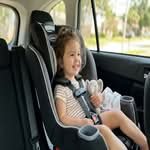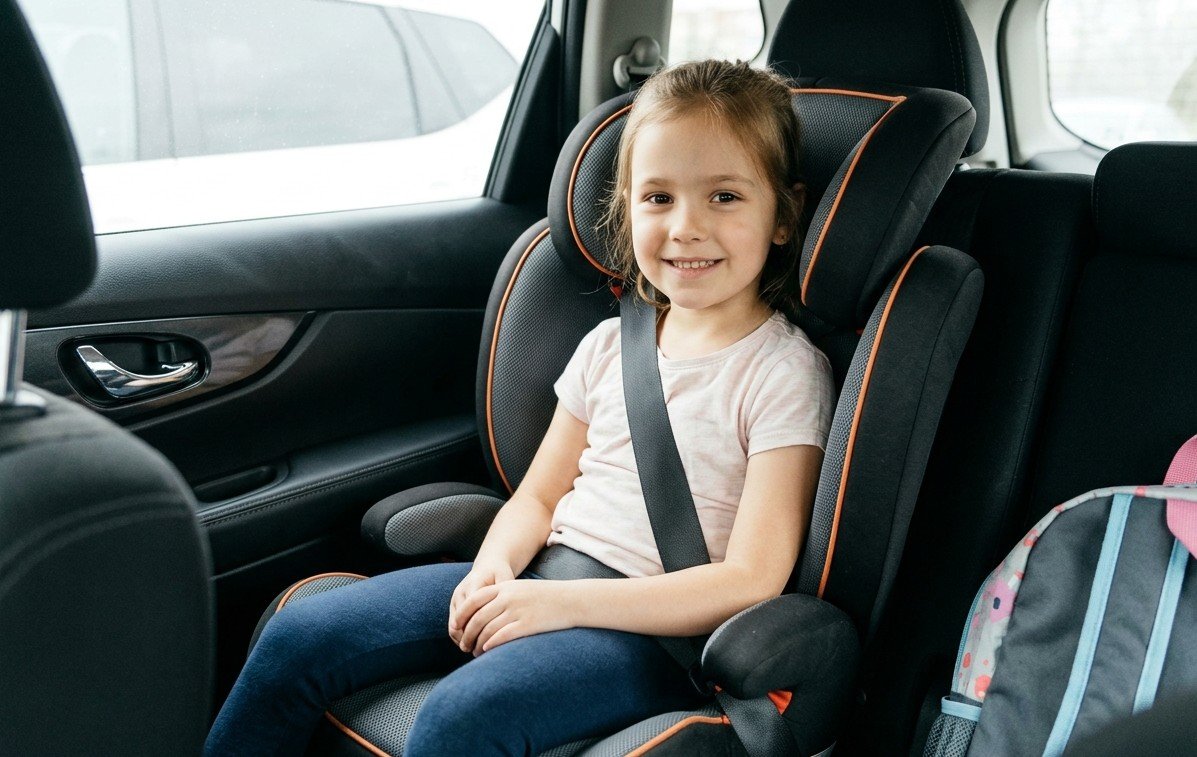
A booster seat raises a child high enough for an adult lap-sash seatbelt to sit correctly across their hips and shoulder, rather than across the stomach or neck, and every one of the best booster seats in Australia is built and sold to meet the AS/NZS 1754 safety standard that governs child restraints here. It is the restraint stage between a harnessed car seat and using the adult seatbelt alone, and it does the safety job a normal seat cushion cannot: keeping the belt path correct in a crash.
Booster seats sold in Australia fall into three broad types. A backless booster is a raised base only, relying on the vehicle’s own head rest for side support and suiting an older child in a smaller car. A high-back booster adds its own side wings and headrest for side-impact protection and works in any seating position. A harnessed combination seat starts with its own built-in harness for a younger child and converts to a beltless booster once they outgrow the harness weight and height limits.
Most Australian children do not reach the 145cm (about four foot nine) height needed for an adult seatbelt to fit safely on its own until somewhere between 10 and 12 years old, well past the age most parents expect to retire a booster. The criteria that separate a good booster from a mediocre one are side-impact protection, how many positions the headrest adjusts through as a child grows, how the seat installs (seatbelt, ISOFIX or LATCH), and whether it is light enough to move between cars without a fight.
This guide compares eight booster seats sold in Australia across backless, high-back and harnessed combination designs, so you can match the type to your child’s age, weight and your car.
Quick Picks
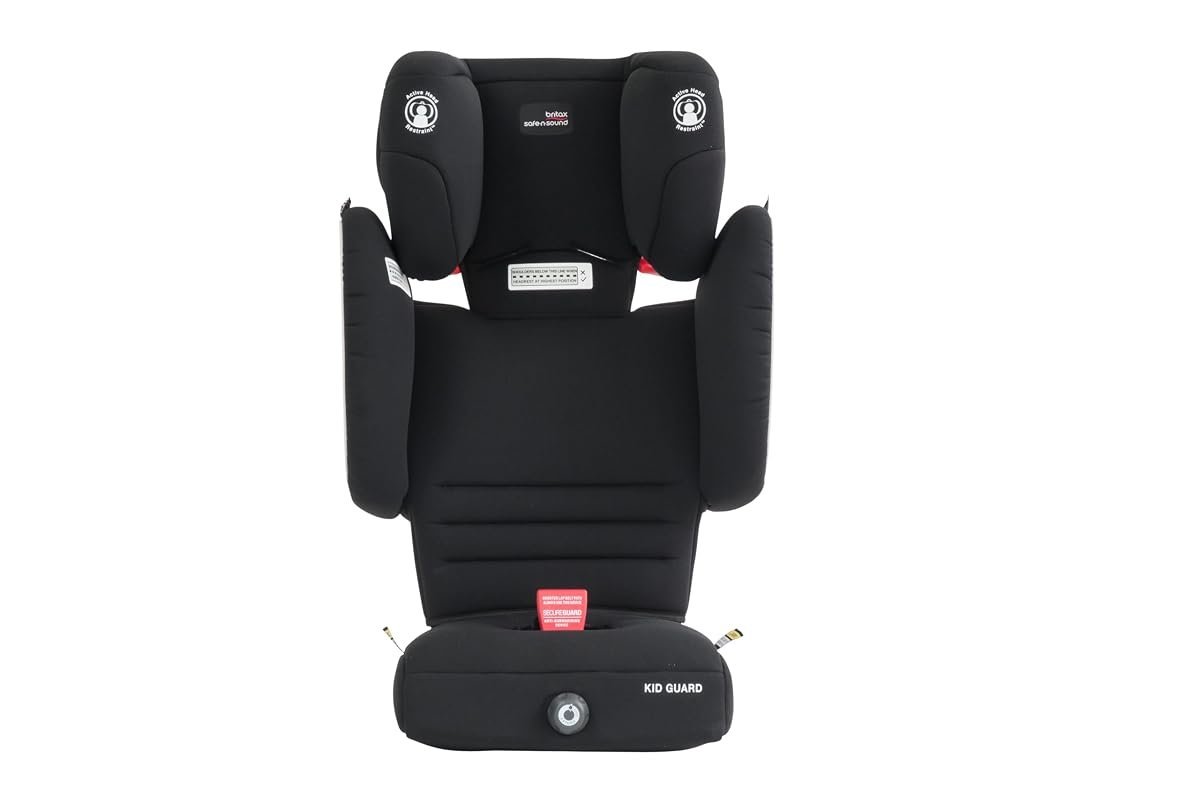
Britax Safe-n-Sound Kid Guard Booster Seat
Australia’s top-selling booster seat, with anti-submarining protection and a ten-year warranty.
CHECK ON AMAZON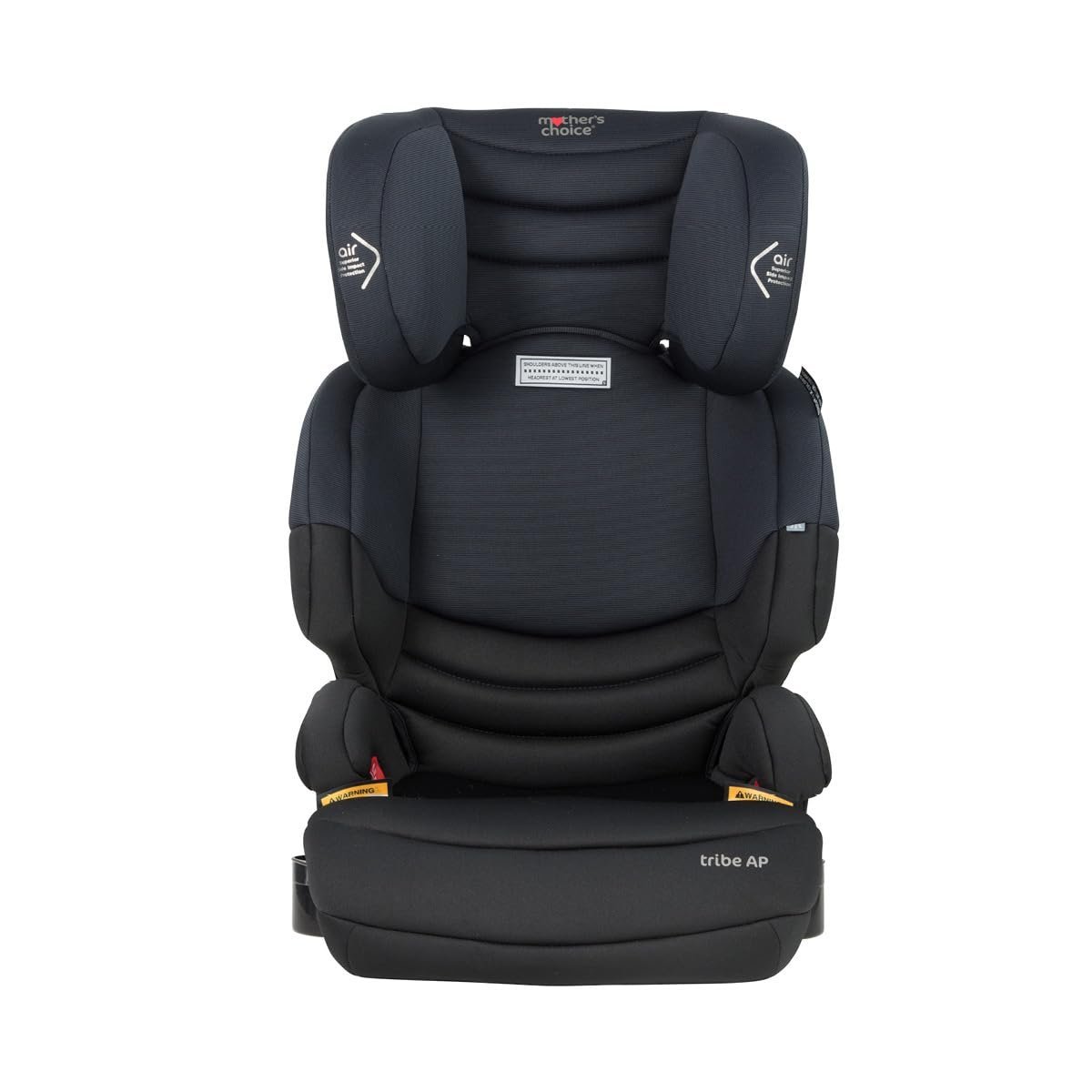
Mother’s Choice Tribe AP Booster Unharnessed
Amazon’s Choice, with Air Protect side-impact technology and a five-position headrest.
CHECK ON AMAZON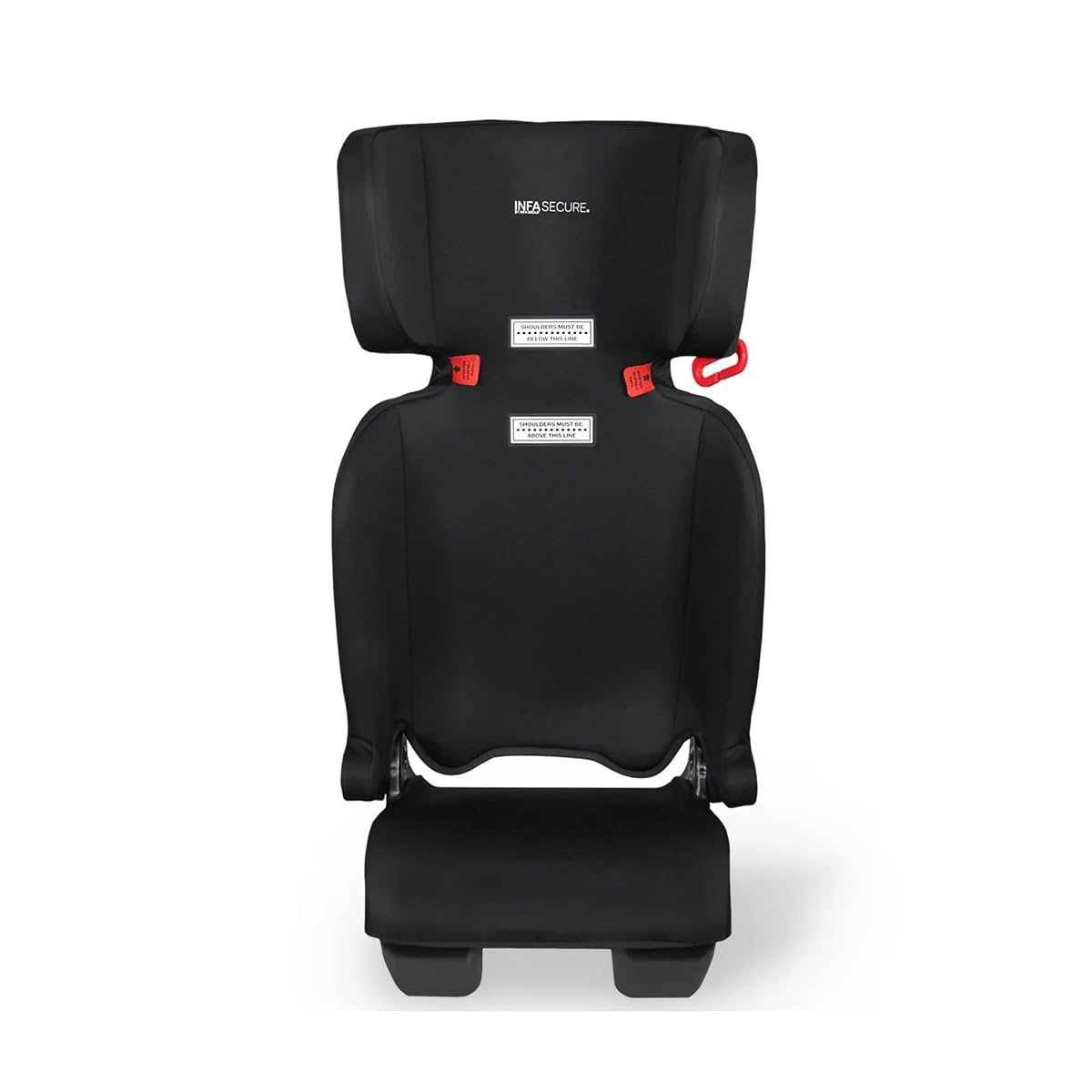
InfaSecure Versatile Folding Booster Seat
Folds flat and weighs under two kilograms, so it travels easily between cars, carpools and grandparents’ houses.
CHECK ON AMAZONThe 8 Best Booster Seats in Australia Compared
| Product | Link | Type | Best For | Key Spec |
|---|---|---|---|---|
| Britax Safe-n-Sound Kid Guard Booster Seat | Check price | High-back | Best High-Back Booster | Anti-submarining, 4 to 10 years |
| Mother’s Choice Tribe AP Booster Unharnessed | Check price | High-back | Best Budget Pick | Air Protect side impact, 5-position headrest |
| InfaSecure Vario II Go Booster Seat | Check price | High-back | Best for Side-Impact Protection | Air Cocoon shell, 43cm three-across fit |
| Mother’s Choice Convertible Booster Kin AP | Check price | Combination | Best Convertible Booster | Toddler and booster mode, 6 months to 8 years |
| Maxi-Cosi Luna Pro Booster Car Seat | Check price | Combination | Best Harnessed Combination Seat | 6-point harness to 8 years |
| InfaSecure Versatile Folding Booster Seat | Check price | High-back | Best for Travel | Under 2kg, folds flat |
| Maxi-Cosi Rodi AP Booster | Check price | High-back | Best for Multiple Cars | ISOFIX install, lightweight |
| Bright by Joie Narra Booster Car Seat | Check price | High-back | Best Compact Design | 7-position headrest, side impact protection |
1. Britax Safe-n-Sound Kid Guard Booster Seat – Best High-Back Booster
Britax builds the Kid Guard around a narrow seat base, so the vehicle’s own buckle stays easy to reach even in a crowded back row. Deep side wings wrap around the head and shoulders, and the height-adjustable headrest tracks a child’s growth from four years old through to about ten. The shell itself carries a four-point anti-submarining device, a detail most budget boosters skip entirely.
In practice, the seat’s Active Head Restraint keeps the sash belt sitting across the shoulder rather than the neck, even as a child slouches on a long drive. It has sold well enough on the Australian market to carry a genuine sales track record, and Britax backs it with a ten-year warranty, longer than most rivals in this list offer.
The trade-off is size: this is a full high-back shell, so it needs proper legroom in the back seat and will not suit a compact hatchback with three restraints across the row. Families with one or two children and a mid-size or larger car get the most out of it.
Pros
- Anti-submarining safety device
- Adjustable Active Head Restraint
- Ten-year warranty
Cons
- Bulkier than a folding or backless design
- Not ideal for fitting three seats across a row
Key specs: 4 to 10 years (approx), seatbelt installation, forward-facing, polyester blend cover
CHECK ON AMAZON2. Mother’s Choice Tribe AP Booster Unharnessed – Best Budget Pick
The Tribe AP relies on a simple mechanism: a moulded plastic shell, a five-position headrest that adjusts with one hand, and a seatbelt-only installation that works in almost any car. Mother’s Choice fits its Air Protect side-impact technology into this lower price point rather than reserving it for the premium end of the range.
Buyers consistently rate the fit and the headrest adjustment highly, and the seat has become one of the more frequently bought boosters in this category on the Australian market. The recline built into the installation helps it sit properly even in cars where the back seat is angled sharply.
It skips the extras some pricier seats add, like cup holders or a reclining backrest for napping. Compared with the convertible seats later in this list, it costs less while matching their core side-impact technology, which is the trade-off worth knowing before paying more elsewhere.
Pros
- Air Protect side-impact technology
- Five-position one-hand headrest
- Strong track record of genuine buyer reviews
Cons
- No cup holders included
- Fewer comfort extras than the premium seats in this list
Key specs: Seatbelt installation, forward-facing, plastic shell, Air Protect side-impact technology
CHECK ON AMAZON3. InfaSecure Vario II Go Booster Seat – Best for Side-Impact Protection
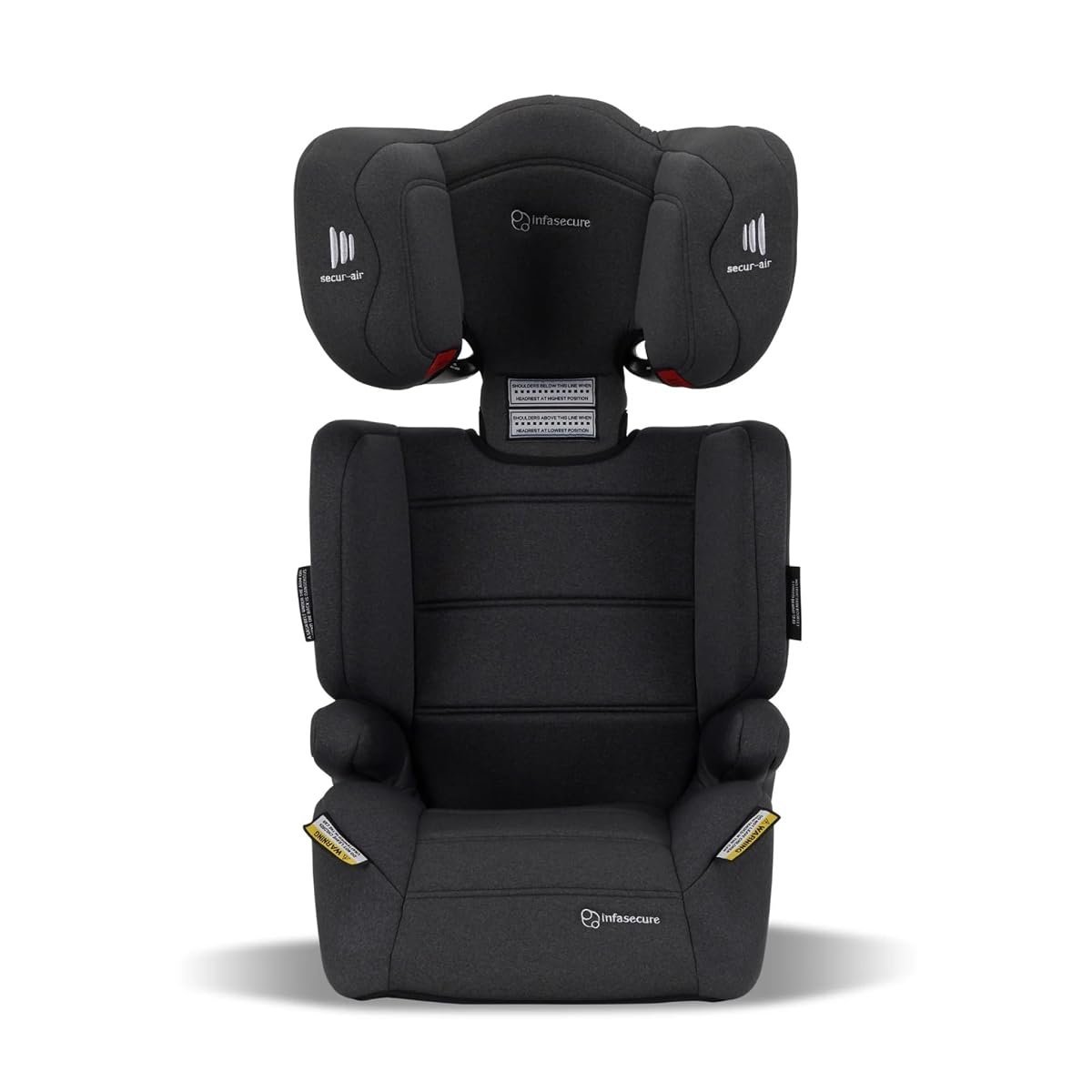
InfaSecure shapes the Vario II Go’s shell from blow-moulded plastic filled with a layer of air, called Air Cocoon, so a side impact compresses that air pocket before it reaches the child. At just 43cm wide, it is one of the narrower high-back boosters on the market, built specifically so three restraints can sit across the back seat of most Australian cars.
The anti-submarining base keeps the lap belt sitting across the hips instead of letting a child slide forward underneath it in a crash, and the height-adjustable headrest keeps the sash belt aligned across the shoulder as they grow. The fabric covers press-stud off for washing, which matters more than it sounds once snacks are involved.
It installs using the vehicle’s own child-restraint anchor point (LATCH) rather than the seatbelt alone, so check your car has that fitting before buying. Families who regularly fit three children across one row, or who simply want the narrowest seat available, are the ones this design is built for.
Pros
- Air Cocoon side-impact protection
- Anti-submarining base
- Narrow 43cm width for three-across seating
Cons
- Requires a LATCH-equipped restraint anchor point
- Limited review history so far
Key specs: 4 to 8 years, LATCH installation, forward-facing, washable fabric covers
CHECK ON AMAZON4. Mother’s Choice Convertible Booster Kin AP – Best Convertible Booster
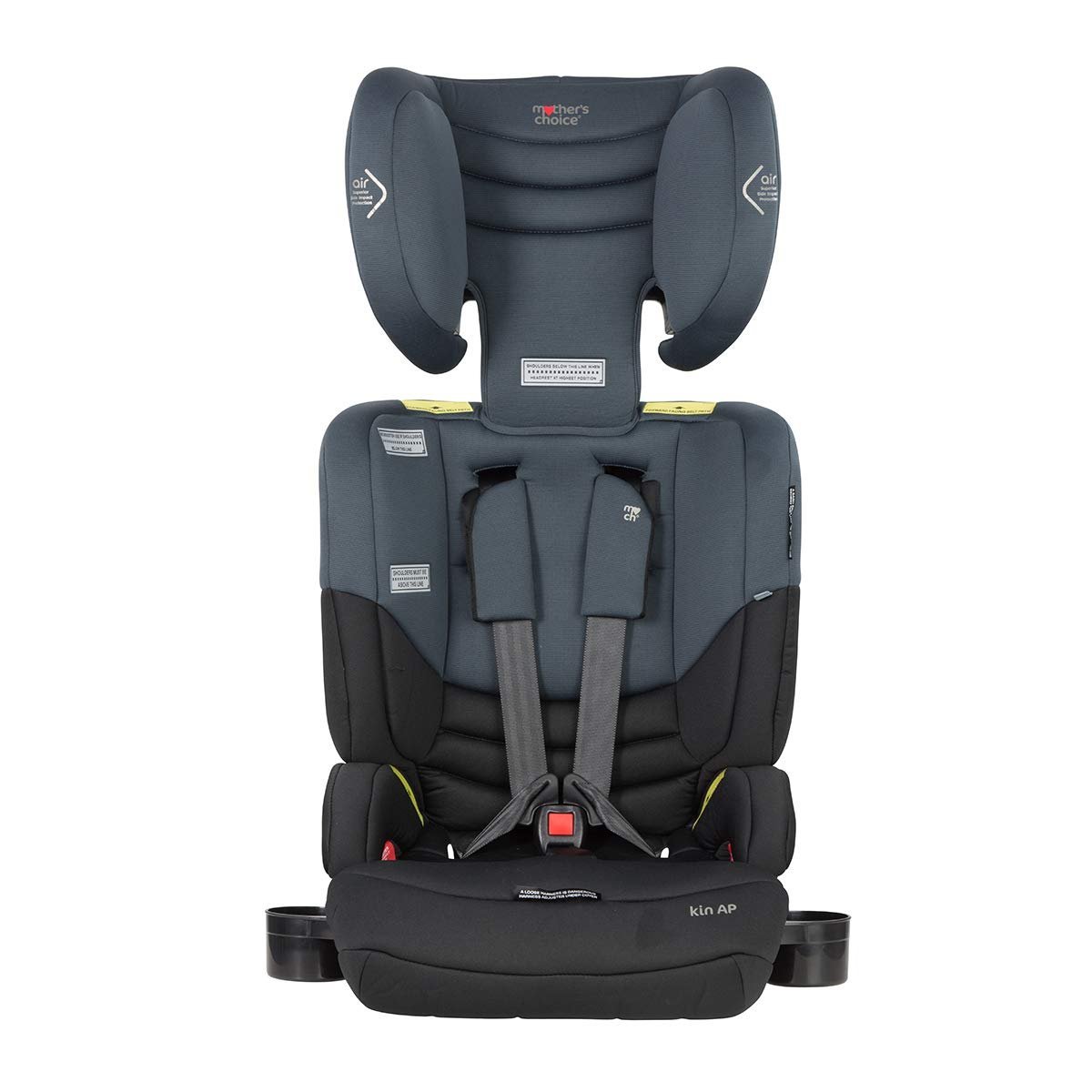
The Kin AP starts life as a harnessed toddler seat and converts to an unharnessed booster once a child outgrows the harness, so one seat covers six months through to roughly eight years. Air Protect side-impact technology runs through both modes, and Mother’s Choice states it reduces impact force by 35 percent.
A one-handed, five-position headrest adjustment and a reclining install make it easier to get a snug fit than seats that only recline the child rather than the base. At 5.8 kilograms it is noticeably heavier than the backless and folding options in this list, which is the cost of building two restraint stages into one shell.
Buying one seat that lasts from toddler to booster age works out cheaper than buying two separate seats over time. Where the Versatile Folding further down this list trades bulk for portability, the Kin AP trades portability for years of use from a single purchase.
Pros
- Converts from harnessed toddler seat to booster
- Air Protect side-impact technology
- One seat covers six months to eight years
Cons
- Heavier than single-stage boosters at 5.8 kilograms
- Premium price for the extended age range
Key specs: 6 months to approximately 8 years, seatbelt installation, forward-facing, 5.8kg
CHECK ON AMAZON5. Maxi-Cosi Luna Pro Booster Car Seat – Best Harnessed Combination Seat
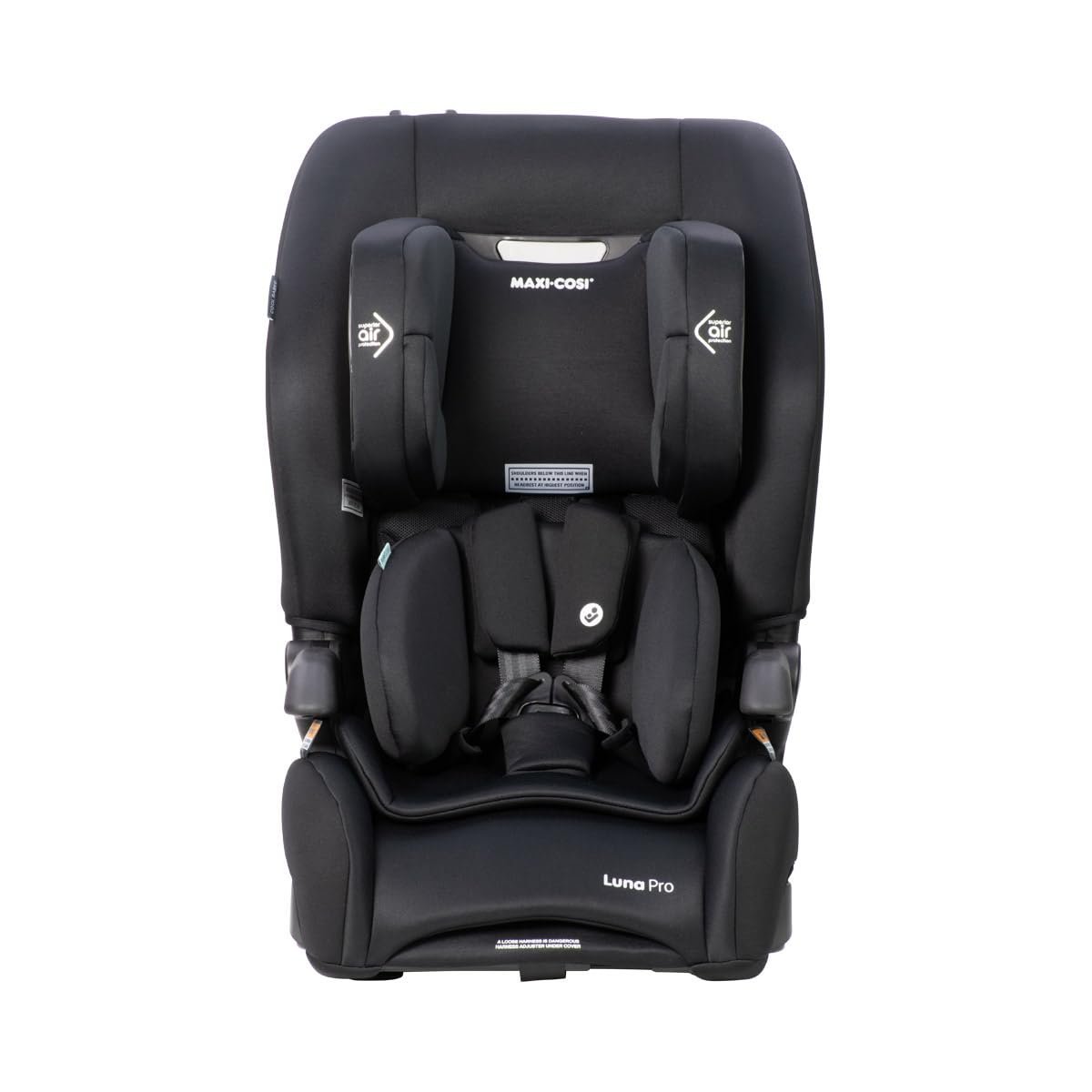
Maxi-Cosi carries a full six-point harness on the Luna Pro right up to eight years of age, later than most combination seats switch a child over to the belt alone. A chin support cushions the head during sleep, and the recline positions give a younger child somewhere comfortable to nap on longer trips.
The dual-action buckle and crotch strap adjust together, which speeds up getting the fit right compared with seats that require separate adjustments for each. Air Protect side-impact technology cushions the head through the release of air on impact, the same principle behind the side protection on several other seats in this list.
This is the most expensive seat in the list, and its review average currently sits below every other pick here, so the six-point harness needs to be the deciding factor rather than the price or the ratings.
Pros
- Six-point harness usable to eight years
- Air Protect side-impact technology
- Dual-action buckle and crotch adjustment
Cons
- Highest price in this list
- Current review average is lower than most other picks here
Key specs: 6 months to 8 years, seatbelt installation, forward-facing, alloy steel frame
CHECK ON AMAZON6. InfaSecure Versatile Folding Booster Seat – Best for Travel
InfaSecure built the Versatile Folding around one goal: getting a compliant booster in and out of a car with minimal effort. It weighs under two kilograms, folds flat for the boot, and carries its own handle, closer to hand luggage than a typical child seat.
Despite the light build, it keeps the same anti-submarining structure found in InfaSecure’s heavier seats, and a slim 40cm profile means it still fits alongside two other restraints across a back seat. The reclining backrest and armrests are a genuine addition rather than a marketing line, useful on the longer trips this seat is designed for.
The trade-off for the light weight is less structural bulk than a full high-back shell. A carpool roster, a grandparent’s car, or a holiday drive is where this seat earns its keep rather than daily use in the family car.
Pros
- Under 2kg with an integrated carry handle
- Folds flat for storage
- Anti-submarining design retained despite the lighter build
Cons
- Less structural bulk than a full high-back seat
- Limited review history so far
Key specs: 4 to 8 years, LATCH installation, forward-facing, under 2kg
CHECK ON AMAZON7. Maxi-Cosi Rodi AP Booster – Best for Multiple Cars
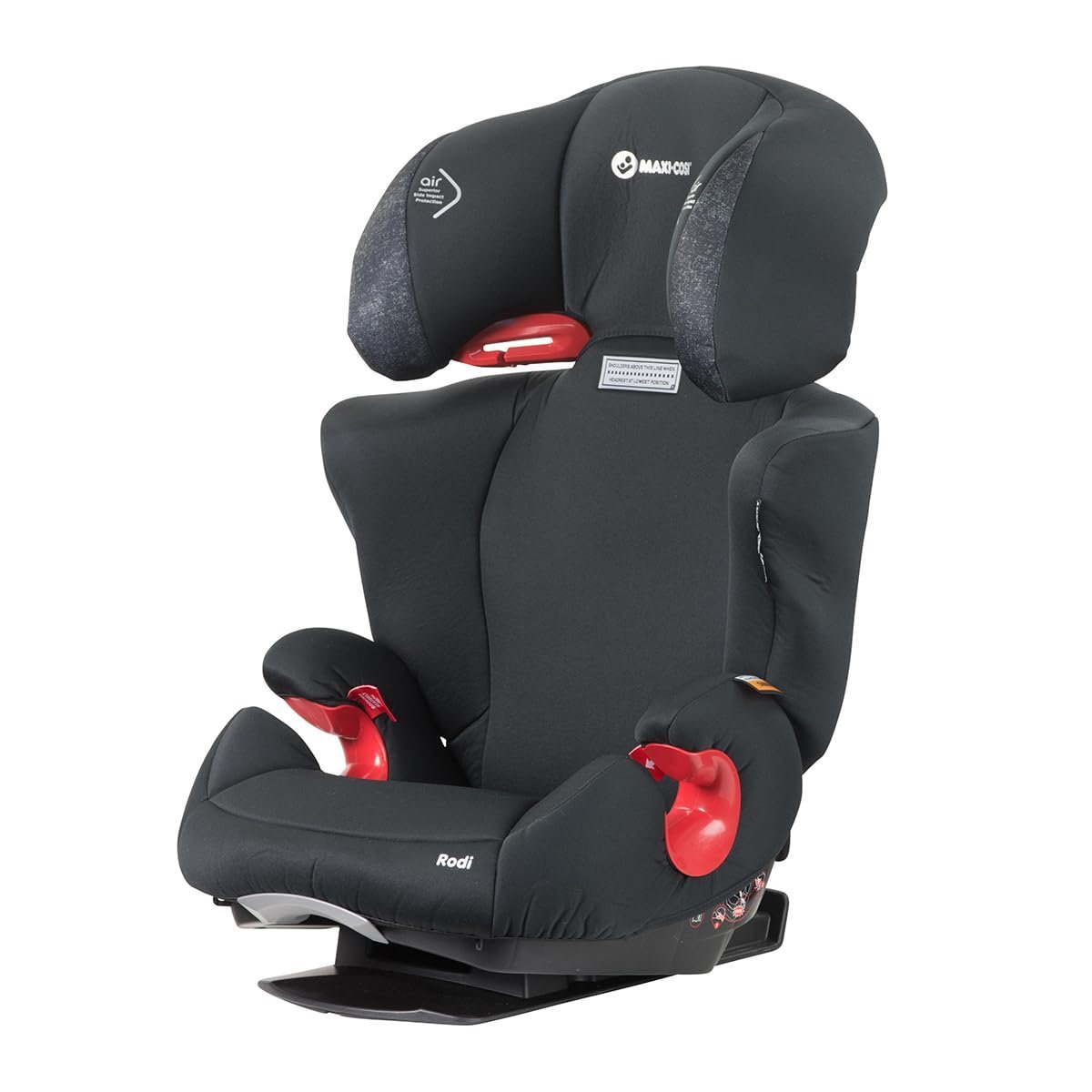
The Rodi AP installs using ISOFIX rather than the seatbelt alone, locking the base to the car’s own anchor points before the child ever sits in it. Maxi-Cosi states its Air Protect side-impact technology cuts the risk of head injury by 20 percent, a specific figure the brand publishes rather than a vague safety claim.
It has sold well enough in Australia to rank among the more frequently bought seats in this category, and the lightweight shell is built to move between cars without much fuss, useful for shared custody arrangements or a two-car household.
ISOFIX depends on your car actually having the anchor points, so check for them before ordering rather than after delivery arrives. Two-car households and shared custody arrangements are where a seat this easy to move actually gets used that way in practice.
Pros
- ISOFIX installation
- Published 20 percent head-injury risk reduction figure
- Lightweight and easy to move between cars
Cons
- Requires ISOFIX anchor points in the vehicle
- Fewer comfort extras than the convertible seats in this list
Key specs: ISOFIX installation, forward-facing, 44 x 47 x 70cm
CHECK ON AMAZON8. Bright by Joie Narra Booster Car Seat – Best Compact Design
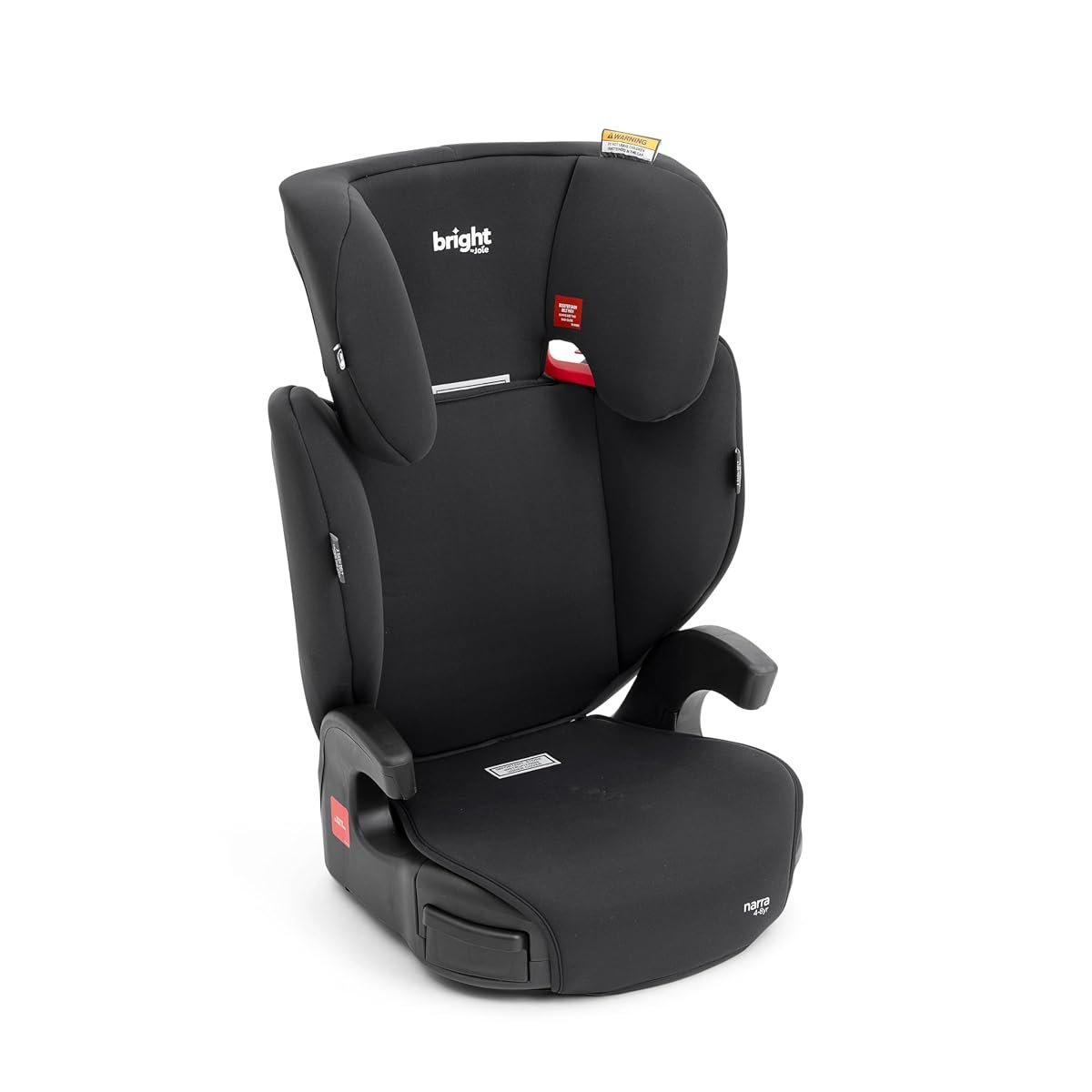
Joie’s Narra sticks to the essentials: a plush padded seat, a seven-position headrest, and colour-coded installation paths that take the guesswork out of threading the seatbelt correctly. Two tuck-away cup holders and two recline positions round out the comfort features.
Side-impact protection covers the head, body and hips rather than just one area, and the seven headrest positions give it one of the widest adjustment ranges in this list, useful for a child who will use the same seat for several years. Covers remove and machine wash, a detail that matters once road-trip snacks are involved.
It is the newest seat to this market of the eight here, so the review history is still thin next to the Tribe AP’s ninety-plus ratings. What it lacks in track record it makes up for with the widest headrest adjustment range in this list and a seatbelt-only install that works in any car.
Pros
- Seven-position headrest, one of the widest ranges here
- Side-impact protection across head, body and hips
- Works with seatbelt installation in any car
Cons
- Newer to market with a thinner review history
- No ISOFIX or LATCH option for those who prefer it
Key specs: Seatbelt installation, forward-facing, 2 recline positions, machine-washable covers
CHECK ON AMAZONHow to Choose a Booster Seat in Australia
Check the seat carries genuine AS/NZS 1754 certification. Every seat in this guide is designed and sold to meet the Australian and New Zealand standard for child restraints, which covers everything from the anchor points to how the shell behaves in a crash test. A seat imported privately from an overseas retailer without this certification is not legal to use in an Australian car, no matter how well reviewed it is elsewhere.
Match the seat type to your child’s age and size, not just their birthday. A booster seat generally replaces a harnessed car seat from around four years of age, but the number that matters more than age is height: most Australian children do not reach the 145cm needed for an adult seatbelt to fit safely on its own until somewhere between 10 and 12 years old. A harnessed combination seat suits a younger child who still needs the extra security of a harness, while a high-back or backless booster suits one who has outgrown it.
Side-impact protection is not an optional extra. Look for a seat that names its side-impact technology specifically, whether that is an air-filled shell, a foam-lined wing, or a similar system, rather than one that only advertises a soft headrest. This is also where setting up the rest of the car for family trips is worth thinking about: a well-placed car phone holder up front keeps navigation out of a driver’s hands without needing to glance down at a phone on the seat.
Installation method affects how snug the fit is. Seatbelt-only boosters work in virtually any car, while ISOFIX and LATCH-compatible seats lock to the vehicle’s own anchor points for a tighter, more consistent fit, but only if your car actually has that fitting. Check your vehicle’s manual before choosing a seat that assumes an anchor point you might not have.
Think about how often the seat moves between cars. A single family car with one regular driver can accommodate a heavier, bulkier high-back seat without much thought. Shared custody arrangements, carpooling, grandparents’ cars and regular travel all favour a lighter, folding design instead, even if it trades away some of the bulk of a full high-back shell. Many parents fitting out the back seat for regular trips also add a dash cam at the same time, for its own kind of peace of mind on the school run.
Run the five-step test before deciding a child is ready for the seatbelt alone. Kidsafe’s test checks whether a child sits with their back against the seat, whether their knees bend at the edge of the cushion, whether the lap belt sits low across the hips, whether the sash sits across the middle of the shoulder rather than the neck, and whether they can hold that position for the whole trip without slumping. If the answer to any of those is no, the booster stays in the car regardless of age.
Frequently Asked Questions
What age does a child need a booster seat in Australia?
Australian road rules generally require a booster seat or harnessed restraint from around four years of age, and it is recommended a child stays in a booster until they reach 145cm tall, which most children do not reach until somewhere between 10 and 12 years old.
Is a backless booster seat legal in Australia?
A backless booster is legal provided it is certified to the AS/NZS 1754 standard and includes a proper seatbelt guide and structural design. A plain cushion with no back or side structure at all does not meet current requirements.
What is the five-step test for moving a child out of a booster seat?
Kidsafe’s five-step test checks that a child’s back sits against the seat, their knees bend at the edge of the cushion, the lap belt sits low across the hips, the sash belt crosses the middle of the shoulder, and they can hold that position for the entire trip. A child who fails any step still needs a booster.
Do booster seats expire?
Yes. Most booster seats carry an expiry date, usually somewhere between six and ten years from manufacture, because the plastic shell and foam padding degrade over time and lose some of their crash protection.
Can I use a booster seat with a lap-only seatbelt?
Most booster seats are designed for a lap-and-sash seatbelt and will not fit correctly with a lap-only belt, which is still found in the centre rear seat of some older cars. Check the seating position before buying if this applies to your car.
What is anti-submarining and why does it matter?
Anti-submarining is a structural feature that keeps the lap belt sitting across a child’s hips in a crash, rather than letting them slide forward underneath it. Several seats in this guide, including the Britax Safe-n-Sound Kid Guard and both InfaSecure models, build this in as a named safety feature rather than relying on the seatbelt alone.
Verdict
Across this list, the Britax Safe-n-Sound Kid Guard is the strongest all-round pick for a family with a mid-size car and no need to move the seat between vehicles, backed by its ten-year warranty and anti-submarining design. Budget-conscious buyers get a genuinely well-reviewed seat in the Mother’s Choice Tribe AP without paying for features they will not use, and anyone who regularly shuffles a booster between cars, carpools or grandparents’ houses should look at the InfaSecure Versatile Folding first. All eight seats here meet the AS/NZS 1754 standard, so the right choice comes down to your car and how the seat is actually used rather than chasing the single best specification sheet.