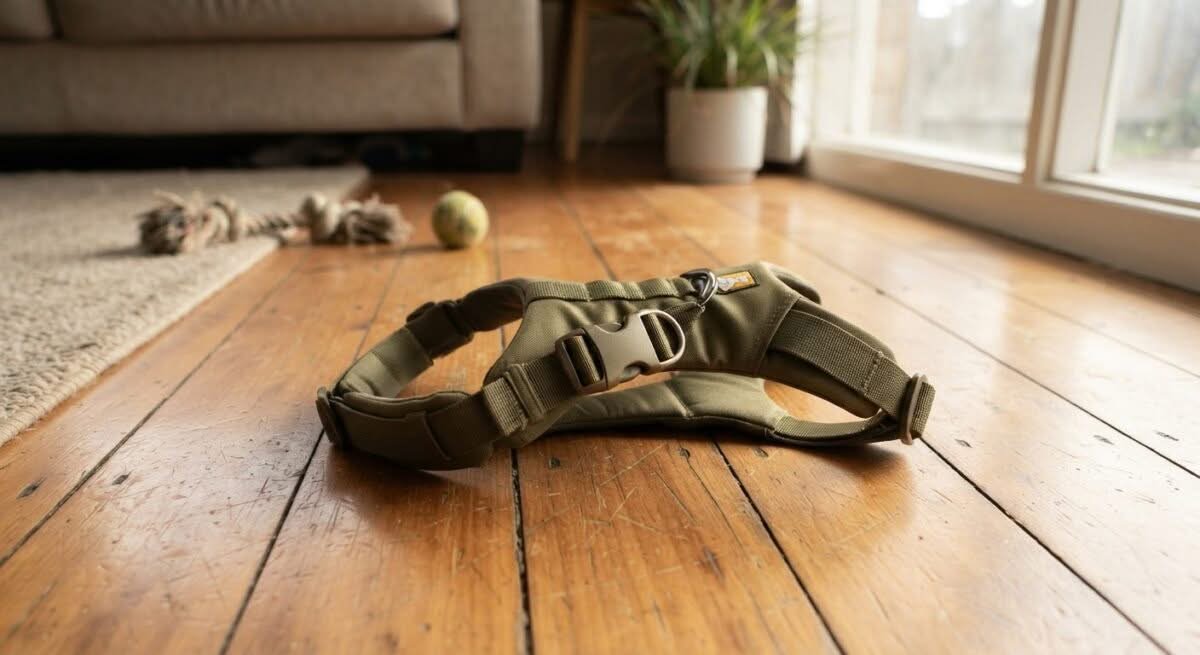
A dog harness is a lead attachment that wraps around a dog’s chest and shoulders instead of sitting on the throat, so the pull of a walk lands on the ribcage instead of the windpipe. A lead clips to a ring on the back or the front of the chest, and depending on where that ring sits, the harness can steer a dog away from lunging, hold it steady on a car trip, or stop a nervous dog backing straight out of its collar at the vet. Anyone hunting for the best dog harness in Australia this season will find it has mostly replaced the flat collar as the default walking tool, especially for breeds with sensitive necks or a habit of hauling toward every magpie on the nature strip.
Four styles cover most of what’s sold here. Front-clip no-pull harnesses put the lead ring on the chest, so a dog that lunges gets swung sideways instead of dragging its handler forward in a straight line. Back-clip everyday harnesses sit higher, between the shoulder blades, and suit a dog that already walks reasonably well. Step-in harnesses skip the over-the-head fitting entirely – the dog steps into two leg holes and the sides clip up over the back, which matters for a dog that panics at anything going near its face. Car and travel harnesses work differently again: instead of a lead ring, they carry a strap loop that threads onto a seatbelt buckle, trading walking control for restraint on the drive.
The spec that actually separates one harness from another is the adjustable chest girth range – measured in centimetres around the ribcage just behind the front legs – because a harness that’s a size out either pinches or lets a dog wriggle free. Across the six harnesses in this list, adjustable ranges run from about 36 cm for a toy-breed puppy harness up past 120 cm for an XL vest built for a Malinois or a Rottweiler. The spec most buyers skip past is the number of leash attachment points: a single back ring is fine for a dog that already walks well, but two clips – one front, one back – give you a training option if pulling shows up later, without buying a second harness.
This list runs to six harnesses: a padded no-pull design for a dog still learning lead manners, a dedicated car harness, a reflective everyday pick, a heavy-duty vest rated for large working breeds, an escape-proof design for a dog that’s bolted out of gear before, and a lightweight step-in harness sized for puppies and small breeds. Three come from Commission Factory-listed Australian retailers; the rest are well-reviewed Amazon AU picks filling sizes and styles the local stockists actually don’t carry this year – a gap in local range, not padding to hit a round number.
Quick Picks
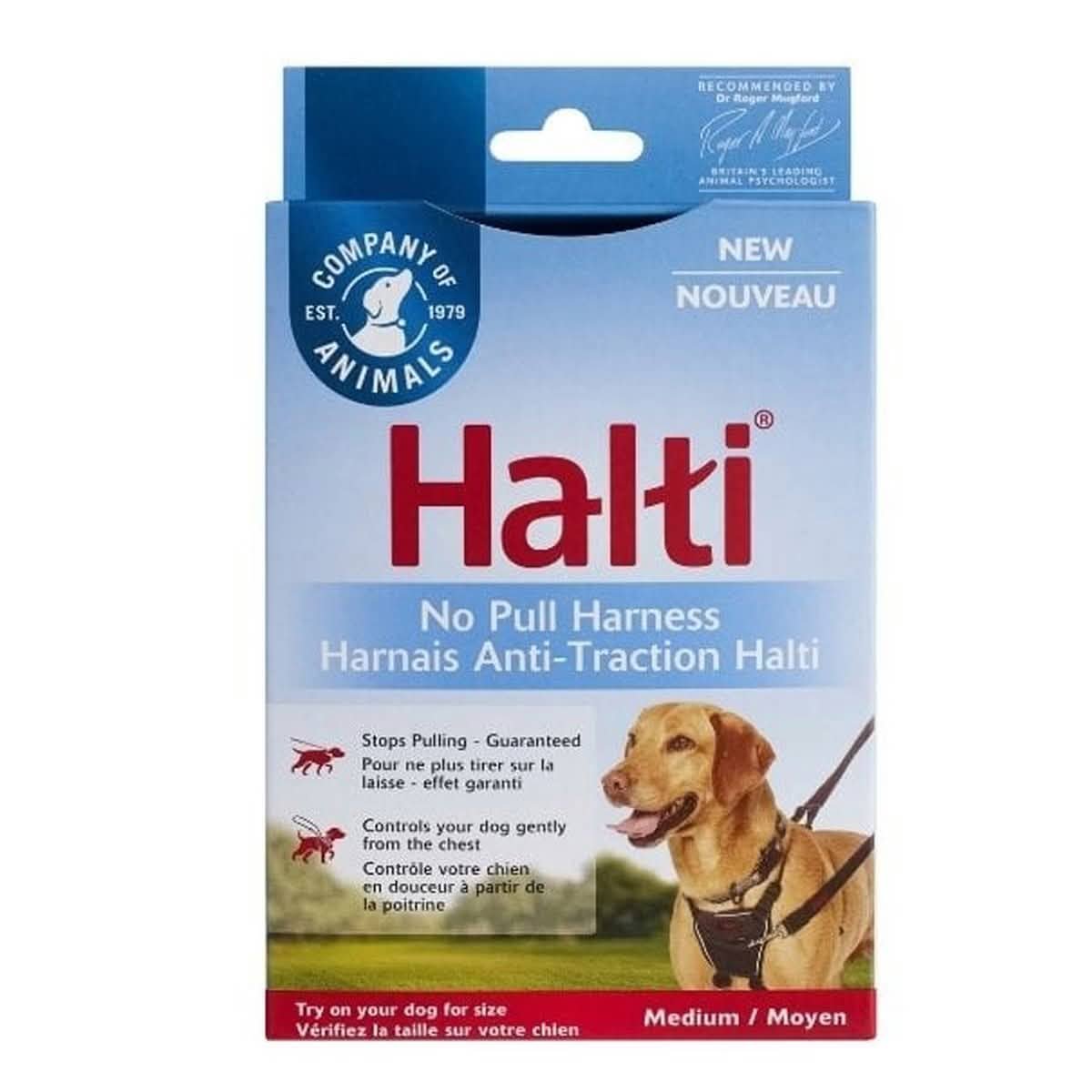
Halti No-Pull Harness
Turns a lunge sideways instead of letting your dog drag you into the next driveway.
CHECK CURRENT PRICE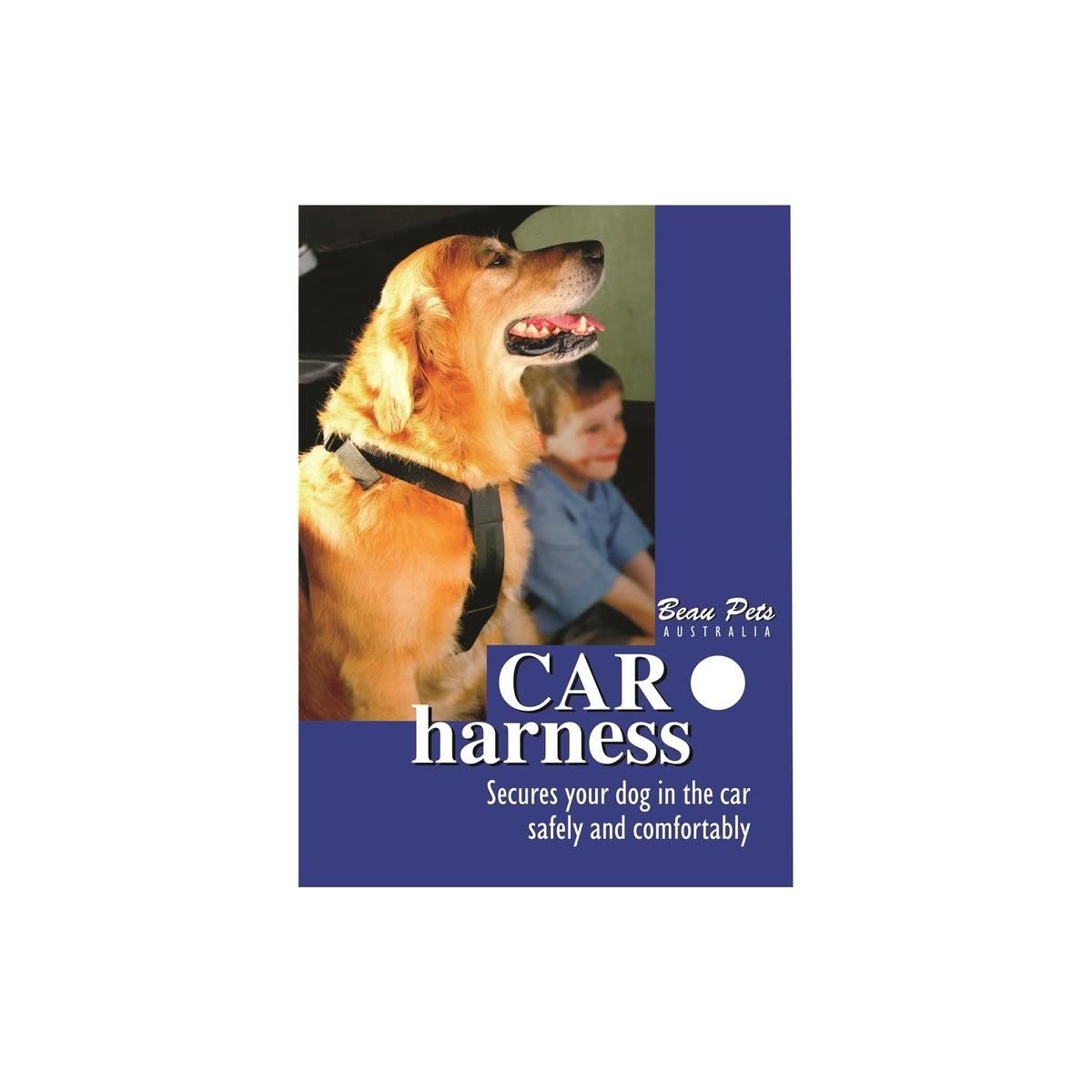
Beau Pets Dog Car Harness
Clips straight into the seatbelt buckle so your dog can’t bounce around the back seat on the drive to the vet.
CHECK CURRENT PRICE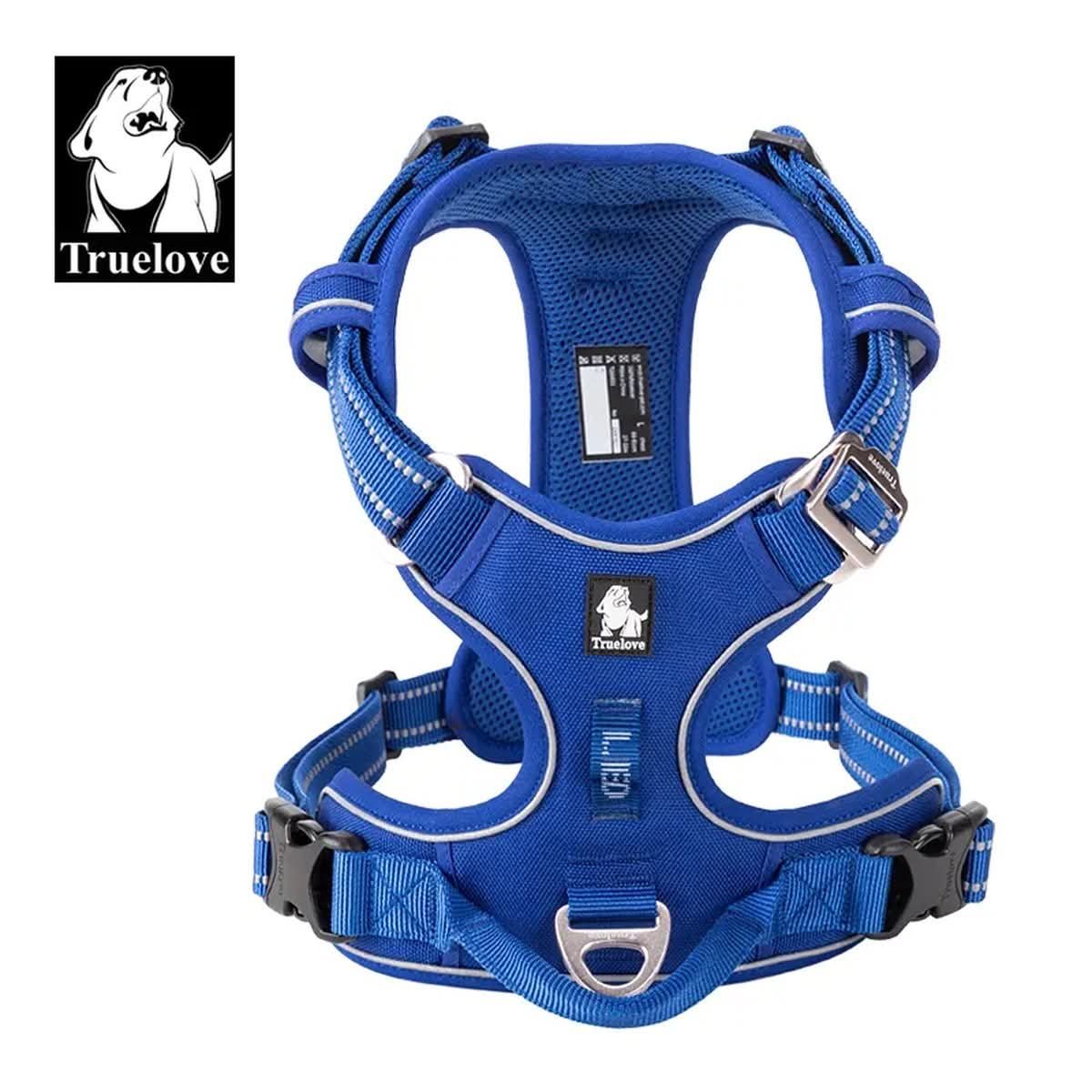
True Love No-Pull Harness
Reflective piping and two leash clips for walks that start before the sun’s properly up.
CHECK CURRENT PRICEBest Dog Harness Australia Compared
| Product | Link | Type | Best For | Key Spec |
|---|---|---|---|---|
| Halti No-Pull Harness | Check price | Front-clip no-pull | Loose-leash training | Adjustable 58-86 cm (M) |
| Beau Pets Dog Car Harness | Check price | Car / travel harness | Car travel | Seatbelt-clip, 5 sizes 45-110 cm |
| True Love No-Pull Harness | Check price | Front-clip no-pull | Reflective visibility | Dual leash clips, reflective piping |
| Rabbitgoo Tactical Dog Harness | Check price | Heavy-duty vest | Large and working breeds | Molle panels, padded handle, size L |
| Huntboo Escape-Proof Harness | Check price | Escape-proof vest | Reactive and anxious dogs | Reinforced double strap, padded handle |
| Rabbitgoo No-Pull Harness (Puppy) | Check price | Step-in / no-pull | Puppies and small dogs | Dual clips, XS-S range |
1. Halti No-Pull Harness – Best for Loose-Leash Training
The Halti No-Pull Harness comes from Company of Animals, the UK outfit behind the head-collar that’s been recommended by trainers since the 1980s, and this harness follows the same one-job-done-properly approach. The webbing is nylon, the chest panel is padded and reflective, and it comes in three sizes running from a 36 cm whippet-sized chest up to a 120 cm build (think Rottweiler).
The mechanism is simple: the lead clips to a ring on the chest, so lunging swings a dog sideways instead of letting it drag its handler forward in a straight line. It’s not a head halter – it doesn’t touch the muzzle – so a dog that’s never worn one won’t fight it the way some dogs fight an actual Halti head-collar. Fit it right, and a young dog that hauls you down the driveway most mornings settles into something closer to a loose lead within a couple of weeks. That reflective chest panel earns its keep on the 6am loop before an Adelaide summer sun turns the footpath too hot for paws by nine.
It costs more than the True Love harness below, and the sizing runs slightly generous – if your dog sits right on the boundary between two sizes, size down instead of up. Think of it as gear for a dog still learning lead manners, not one that already walks nicely on a flat collar.
Pros
- Quick on-and-off design once you’ve fitted it once
- Reflective chest panel for early starts or late walks
- Padded panel reduces rubbing on longer walks
Cons
- The chest buckle is stiff out of the box – expect to wrestle it on for the first few walks before the webbing loosens up
- Only one lead attachment point, so there’s no back-clip option once your dog stops pulling and you want a lighter everyday fit
Key specs: Sizes S-L (36-120 cm chest), nylon webbing with reflective and padded chest panel, single front-clip lead ring, machine washable.
CHECK CURRENT PRICE2. Beau Pets Dog Car Harness – Best for Car Travel
Beau Pets Australia makes this one specifically for the car, not the footpath. Instead of a lead ring, it carries a heavy-duty strap loop that threads onto your seatbelt buckle in seconds – no threading the actual belt through the harness, which is the fiddly step that puts most owners off car restraints entirely. Chrome clips and padded chest webbing come in five sizes from a 45 cm small dog up to a 110 cm Rottweiler-sized chest, and unclipping the car strap turns it straight back into a walking harness for the vet car park. It’s roughly what you’d pay at a Bunnings pet aisle for a basic car restraint, and mid-range for this category in Australia – worth it for anyone who currently drives with a dog loose on the back seat.
CHOICE’s own crash testing of dog car harnesses found that only two of the several models tested would keep a dog secure and unharmed in an actual collision – most brands tested only restrained the dog well enough to stop it becoming a projectile, without meaningfully protecting it from injury. That’s the honest context here: a harness like this stops your dog climbing into your lap at speed on the freeway, which matters for driver safety alone, but treat any ‘crash-tested’ claim on a budget car harness with healthy skepticism unless the brand can point to independent results. Nobody’s claiming it’s a crash cage.
Pros
- Clips straight into any factory seatbelt buckle
- Doubles as a walking harness in a pinch
- Padded chest strap and chrome hardware
Cons
- Built for the car, not long walks – the loose strap loop can catch on things if you use it as your only everyday harness
- No reflective stitching, so pair it with a light if you’re loading the dog in after dark
Key specs: 5 sizes XS-XL (45-110 cm chest), nylon webbing with chrome clips, seatbelt-buckle attachment, doubles as a walking harness.
CHECK CURRENT PRICE3. True Love No-Pull Harness – Best Reflective Design
True Love has quietly become one of the most-reviewed harness brands in the category worldwide, and this royal-blue No-Pull Harness in this list is the mesh-lined, dual-clip version of its signature design. Padded mesh sits across the chest and belly, reflective piping runs the full length of both side straps, and two metal D-rings (one on the back, one on the front) let you start with back-clip walking and switch to front-clip if pulling becomes a problem later.
ProductReview.com.au’s own TrueLove Dog Harness listing sits at a modest average from a small handful of local reviews, which is worth knowing before you buy – it’s not a universally five-star product, and the reviews there flag the kind of nitpicks you’d expect at this price: stiff initial adjustment, a slightly bulky fit on a narrow-chested breed like a whippet or greyhound. Compared with the Halti above, it’s the cheaper way to get a dual-clip harness, and the reflective piping covers more of the harness body, which matters if your dog’s early walk happens before a Melbourne winter sunrise actually shows up.
It sits at the premium end of this guide price-wise, despite the generic-sounding name suggesting a budget buy – it’s pricier than the Halti above, though it still undercuts a dedicated specialist brand while covering nearly the same feature set. Buckle plastic feels a notch below the Halti’s metal hardware, so it suits a medium dog with settled lead manners better than a determined 30 kg puller testing every seam.
Pros
- Dual leash clips for flexible training
- Reflective piping wraps the full harness, not just a strip
- Mesh lining breathes better than solid nylon through a Queensland summer
Cons
- Plastic side-release buckles feel less premium than metal hardware, and reviewers have flagged them loosening on an active dog
- Sizing runs by chest girth only, so measure first – the size chart isn’t forgiving of a guess
Key specs: Sizes XS-XL, padded mesh with reflective piping, dual metal D-ring leash clips, adjustable chest and belly straps.
CHECK CURRENT PRICE4. Rabbitgoo Tactical Dog Harness – Best for Large and Working Breeds
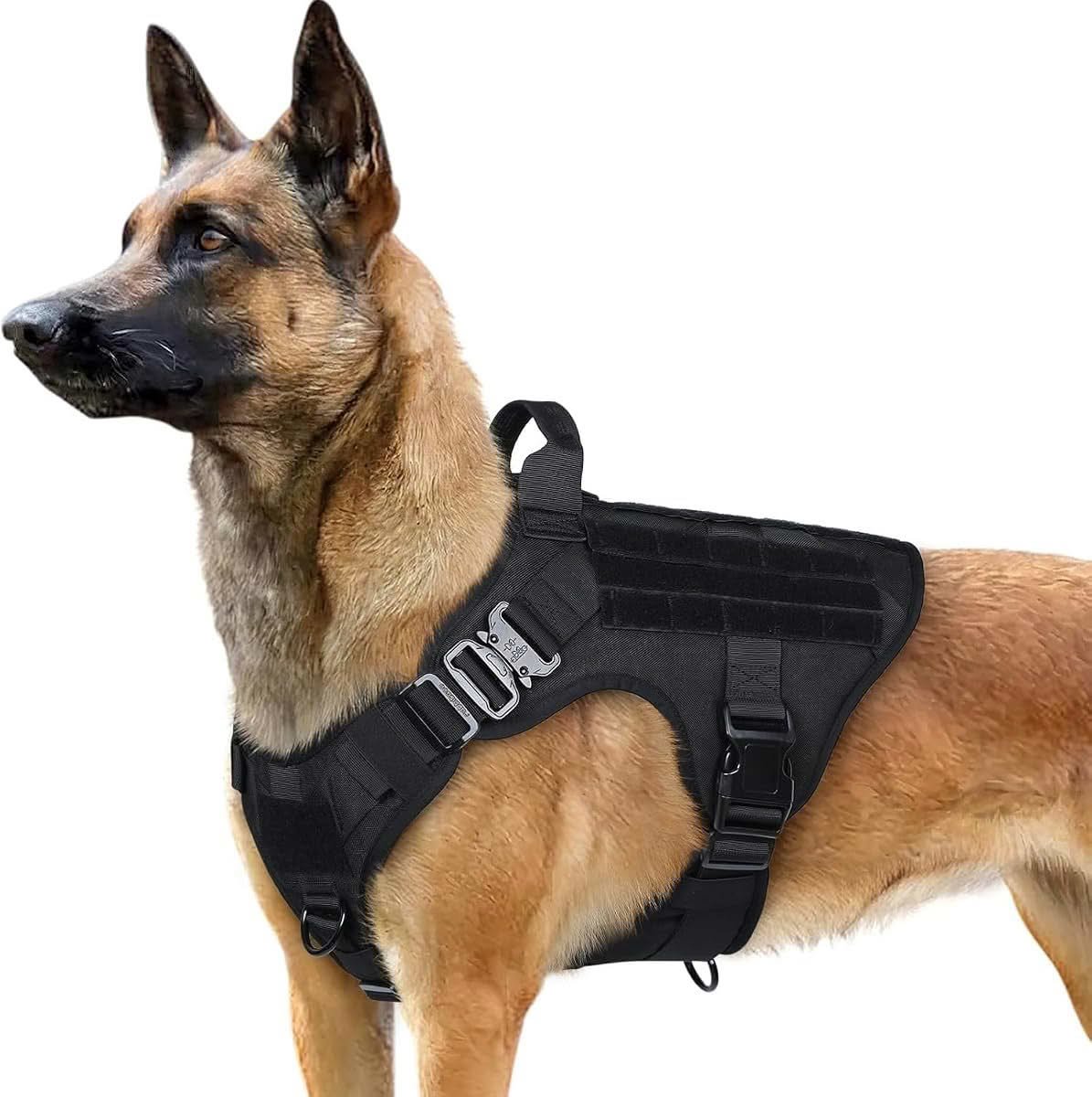
Rabbitgoo’s Tactical harness is the one to reach for once a dog outgrows the polite end of this list. Heavy nylon, Velcro-and-buckle Molle panels down both sides for attaching a patch or a small pouch, and a padded top handle for lifting a dog up a step or into a ute tray – this is built for a working dog, not a toy breed.
It’s rated 4.2 stars from close to 20,000 Amazon buyers – a properly large sample for this category – and the recurring theme in the lower-starred reviews is sizing: buy by chest girth, not by breed name, because a lean Kelpie and a stocky Staffy of the same weight need different sizes. The front-clip D-ring doubles as light no-pull training for a dog that’s otherwise well behaved but drags on the way home from the dog park.
Compared with the Halti at the top of this list, it’s a heavier, bulkier build that trades everyday comfort for real durability – the kind of harness that survives a farm dog jumping in and out of a ute tray twice a day, not just a small dog’s evening stroll. It runs a size below its stated range in some buyer reports, so cross-check the chest measurement instead of trusting the size label alone.
Pros
- Molle panels for patches or a small pouch
- Padded handle for lifting into a car or ute
- Handles a strong 25-40 kg dog without stretching out of shape
Cons
- Heavier and bulkier than every other harness here, so it’s overkill for a dog under 20 kg
- The metal front buckle can get warm sitting on a dark-coated dog’s chest in direct summer sun
Key specs: Sizes M-XL (approx. 66-120 cm chest), heavy-duty nylon with Molle webbing, front and back D-ring clips, padded top handle.
CHECK CURRENT PRICE5. Huntboo Escape-Proof Dog Harness – Best for Reactive and Anxious Dogs
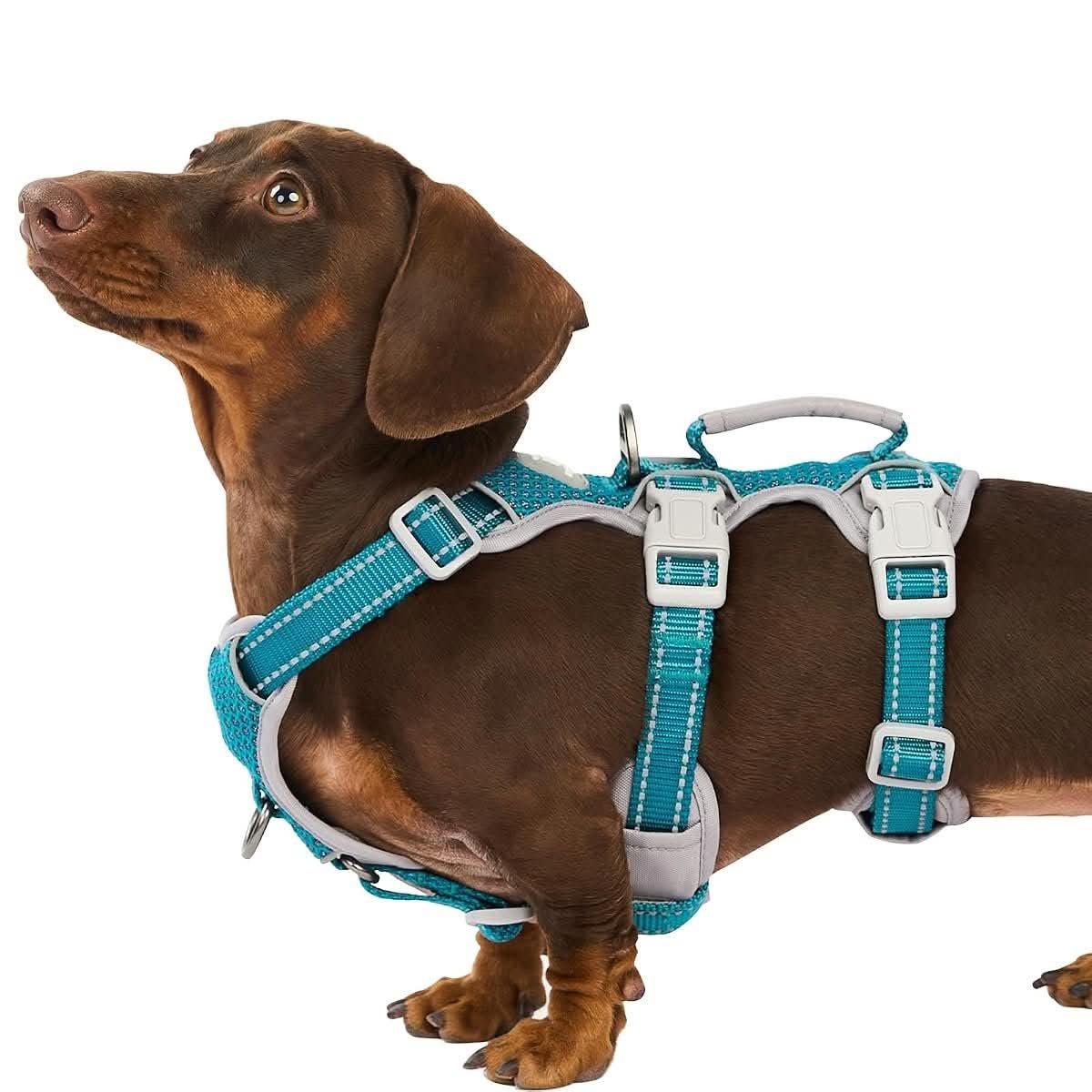
This is the pick that almost didn’t make the list. ‘Escape-proof’ is a claim every harness brand makes and almost none of them earn. Huntboo’s version backs it up with a genuinely different design: instead of one chest strap that a frightened dog can back out of by flattening its ears and reversing, it uses two reinforced straps plus a martingale-style loop that snugs slightly under backward pressure instead of loosening. Two straps. One tightening loop. Actually resistant to backing out, not just on the label.
It’s rated 4.5 stars across roughly 5,400 Amazon reviews – well, reviews on the international listing, since the AU-specific count is smaller but tracks the same pattern – and the text reviews read as specific, not generic: people describing a whippet, a rescue greyhound or an anxious shelter dog that had backed out of two other harnesses (a skateboard rattling past was usually the trigger) before this one held. That’s the exact use case: a dog that’s spooked by something sudden and tries to bolt out of its gear mid-walk.
It’s not a harness for a dog that just needs a comfortable everyday fit – the extra strapping means more buckles to do up each time, a proper faff on a quick toilet-lap walk. Reflective stitching is basic next to the True Love harness above, so treat this as a training and safety tool first, comfort feature second.
Pros
- Reinforced double-strap design actually resists backing out
- Padded handle for quick control in a dog-park scuffle
- Sized to properly fit a whippet or greyhound, not just barrel-chested breeds
Cons
- More buckles to fasten than any other harness here, so it’s slower to put on for a two-minute toilet break
- Colour range is limited next to the True Love harness, mostly practical blues and blacks
Key specs: Sizes XS-L, reinforced double-strap with martingale-style tightening loop, padded top handle, reflective stitching.
CHECK CURRENT PRICE6. Rabbitgoo No-Pull Harness – Best for Puppies and Small Dogs
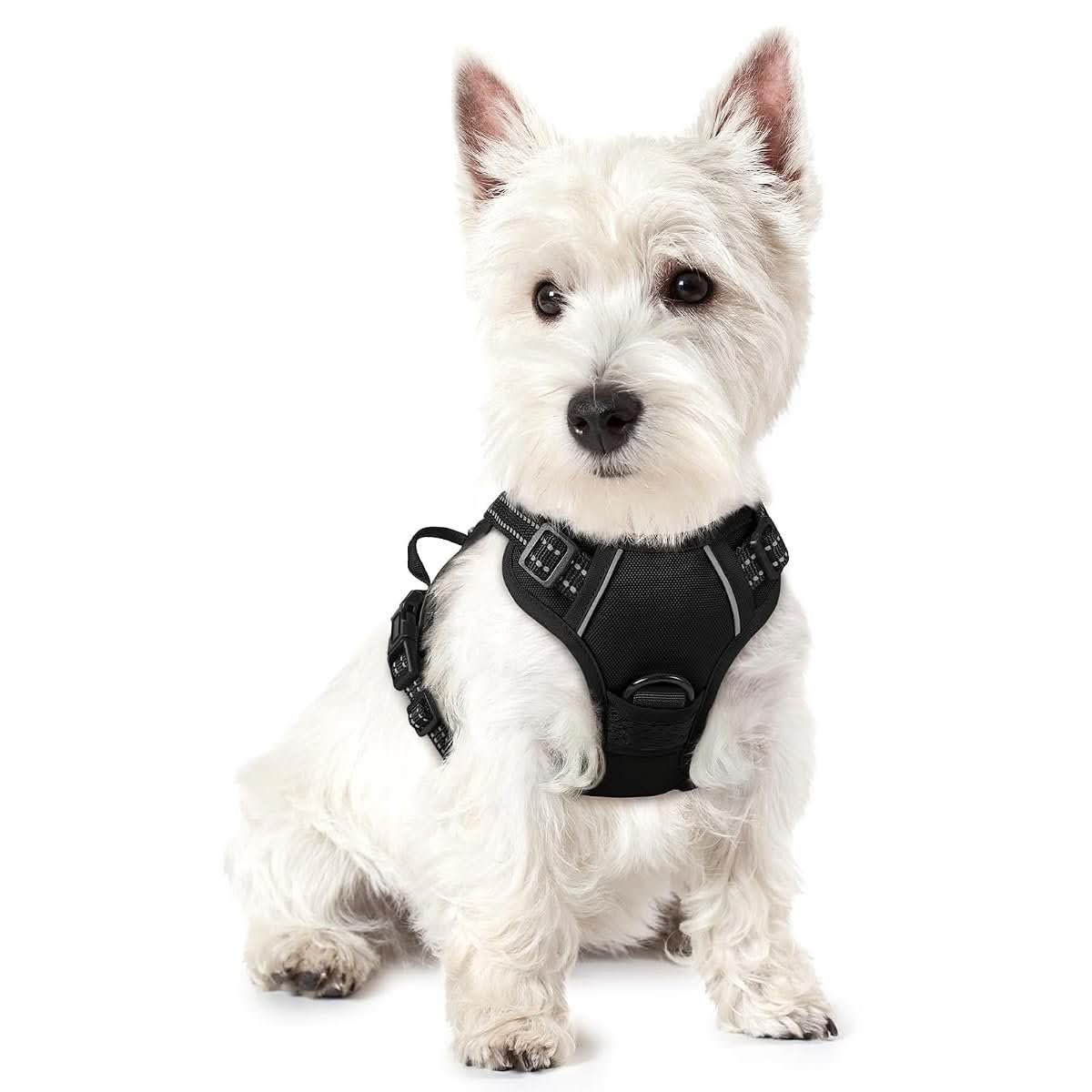
Scale everything about the Tactical harness two entries up down to teacup size and swap the Molle webbing for soft mesh, and you land close to this one – the small-breed, dual-clip version of Rabbitgoo’s no-pull design, sized from XS up to a small-medium dog rather than a Malinois.
With well over 190,000 ratings on Amazon AU and averaging 4.6 stars, it’s the most-reviewed single product in this entire list by a wide margin – rare social proof for a harness under thirty dollars. The mesh lining breathes better than nylon in a hot unit or apartment through a Brisbane summer, which matters for a small dog that spends more time indoors than a farm dog ever would. The whole harness folds down small enough to stuff in a jacket pocket for a spontaneous trip to the dog park.
It’s the most affordable pick in this list, and the trade-off shows in the hardware: plastic buckles instead of metal, and stitching that a determined chewer-puppy can work loose faster than the pricier options above. Fine for a settled small breed or a puppy still growing through three collar sizes a year. Less fine for a dog that treats its own harness as a chew toy.
Pros
- Two leash clips for training flexibility even at puppy size
- Breathable mesh suits small dogs that overheat easily
- Exceptionally large review base for buyer confidence
Cons
- Plastic hardware won’t survive a determined chewer
- Runs small – size up if your dog measures right on the boundary between the XS and S charts
Key specs: Sizes XS-S (approx. 33-48 cm chest), soft mesh with dual leash clips, adjustable neck and chest straps, machine washable.
CHECK CURRENT PRICEHow to Choose a Dog Harness
Measure the chest, not the breed. A harness sized by “small/medium/large” on the box is a guess; the number that matters is the girth measurement around the ribcage just behind the front legs, in centimetres. Two dogs of the same breed can differ by 10 cm depending on build, so measure with a soft tape before you order, not after the harness arrives too tight.
Match the gear to the actual problem. A no-pull harness fixes pulling. It does nothing for a dog that is actually barking at the postie, jumping the fence, or panicking at thunder. Got a dog that is more bark than pull? An anti-bark collar solves a different problem than any harness on this list, and buying the wrong gear just means returning it later.
Front-clip vs back-clip is a training decision, not a comfort one. RSPCA’s own advice on leash-training equipment recommends a front-attach harness over a check chain or prong collar for a dog that pulls, because the clip position turns a lunge sideways instead of letting the dog drive straight into the lead. A dog that already walks nicely doesn’t need the front clip at all – back-clip is lighter and less fuss for a daily walk.
Check the buckles before you check the price. Plastic side-release buckles are fine for a settled dog under 20 kg. A determined 30 kg puller will eventually crack one, so metal hardware is worth the extra cost on anything above medium size, particularly for a strong or reactive breed.
Car harnesses are restraint, not crash protection. Don’t assume a seatbelt-clip harness will protect your dog in an accident the way a dedicated crash-tested product would – CHOICE has already tested this exact category and found most models fall well short of real crash protection. It still beats a loose dog bouncing around the back seat, which is a real driver-distraction risk on any Australian highway.
Reflective detail matters more than most buyers think. Daylight saving ends in April across most of the country, and a walk that started in daylight in March can finish in the dark by May – particularly if it ends outside a dark weatherboard with no streetlight on your side of the road. A harness with real reflective coverage, not just a single strip, is the cheap insurance most owners skip until a near-miss with a car changes their mind.
You’ll Also Want
A no-pull harness only helps if the lead clipped to it is trustworthy too – a reflective lead with a padded handle that matches the reflective detail on the True Love or Halti harness above rounds out the low-light safety case.
For walks that start after dark once daylight saving ends, a rechargeable clip-on dog light adds a second point of visibility beyond whatever reflective stitching the harness itself carries.
Anyone doing serious no-pull training gets more out of a harness paired with a treat pouch that also carries poop bags clipped to a belt, since fumbling in a pocket for a treat is exactly the moment a dog decides to lunge.
Frequently Asked Questions
Does my dog need a harness, or is a collar enough for daily walks?
A flat collar is fine for a dog that already walks well and never pulls, but a harness is the safer default for most dogs because it spreads any sudden pull across the chest instead of the throat. It matters most for small breeds, brachycephalic dogs like pugs and French bulldogs, and any dog still learning lead manners. Keep the collar for ID tags either way.
How do I measure my dog for the right harness size?
Wrap a soft tape measure around your dog’s ribcage, just behind the front legs, while they’re standing normally, not sitting. That chest girth measurement, in centimetres, is what every size chart in this guide is built around – not your dog’s breed or weight, which can vary a lot even within the same breed. When a dog sits between two sizes, size down for a snugger, safer fit.
Are front-clip or back-clip harnesses better for a dog that pulls?
Front-clip harnesses work better for a dog still learning not to pull, because the lead ring on the chest turns a lunge sideways instead of letting the dog drive forward in a straight line. Back-clip harnesses suit a dog that already walks nicely, since the ring sits higher and out of the way. Some harnesses, like the True Love and Rabbitgoo picks here, include both clips.
Will a car harness actually protect my dog in a crash?
Not reliably, according to CHOICE’s own independent testing of the category, which found only a couple of brands actually kept a dog safe through a real impact – most just stopped it flying forward into the front seats. A seatbelt-clip harness like the Beau Pets pick is still worth using; it lowers the driving risk of a loose dog and holds them in place at the lights, but treat any crash-tested claim on a budget harness with caution.
How do I stop my dog escaping or backing out of its harness?
Most escapes happen because the chest strap is too loose or sits too high, giving a dog room to duck its head down and step backward out of the loop. Check the fit with two fingers under every strap, not just the neck, and consider a design like the Huntboo pick with a martingale-style loop that tightens slightly under backward pressure instead of staying static.
How often should I replace a dog harness?
Check the stitching, buckles and D-rings every few months, and replace the harness as soon as any webbing frays near a stress point or a buckle stops clicking firmly shut – a harness is only as strong as its weakest seam. A harness used daily on a strong puller wears faster than one used on an occasional walker, so inspect more often if your dog leans hard into the lead.
Verdict
For most Australian dog owners still working on lead manners, the Halti No-Pull Harness is the safest starting point – it’s the most established brand here, backed by decades of trainer recommendations, and the front-clip design does the actual job of stopping a pull without fighting a dog’s natural gait. Anyone driving with a dog loose in the back seat should treat the Beau Pets Dog Car Harness as a near-essential upgrade regardless of which walking harness they choose, and an owner whose dog has slipped out of gear before will get the most reassurance from the Huntboo Escape-Proof design. None of the three costs anywhere near what a vet visit for a dog that’s bolted onto a road will run you.