A dog brush is a handheld grooming tool built to lift loose and dead fur from a dog’s coat, work through tangles and matting before they set in, and spread natural skin oils down each strand for a healthier shine. Picking the right dog brush Australia’s climate and coat types actually call for matters more than most owners realise, because a brush built for a short, single coat does very little for a double-coated Kelpie shedding through a Queensland summer.
Australian pet owners are shopping across several distinctly different tool types, not one generic brush. Slicker brushes use fine, slightly angled wire pins to lift loose fur and break up light tangles, and they’re the closest thing to an everyday default. Pin brushes use rounder metal or rubber-tipped pins spaced further apart, gentler on the skin and better suited to longer, silkier coats. Deshedding tools and undercoat rakes dig past the topcoat to pull loose undercoat fur out at the root, the tool of choice for double-coated breeds dropping fur by the handful each spring. Bathing brushes and grooming gloves work shampoo into wet fur instead of detangling a dry coat, and a couple of combo kits bundle two or three of these into one handle.
Pin length and spacing is the spec that actually separates these products, not price. The lineup below runs from an 11mm firm-pin slicker built for short-to-medium coats up to a 25mm supersoft pin brush built to glide through longer fur without snagging, with undercoat rakes pulling double duty on the heaviest sheds. The detail most owners skip past is grip comfort and bristle angle — a brush that’s technically the right pin length but sits awkwardly in your hand gets used less often, and a brush that only comes out once a fortnight isn’t doing its job. It’s worth a look at ProductReview’s pet grooming category, where bent pins and sticky self-cleaning mechanisms are the most common complaints against cheaper brushes — a pattern that shows up again and again regardless of which storefront sells them.
This guide compares ten dog brushes, deshedding tools and grooming gloves actually in stock for Australian buyers, from a self-cleaning slicker brush that costs less than a round of coffees through to a dedicated undercoat rake for the heaviest shedders. Brushing handles the coat side of grooming; pair whichever pick you land on with a dog nail grinder to round out an at-home routine between vet and groomer visits.
Quick Picks


Dog Brush Australia Compared: Key Specs at a Glance
| Product | Link | Type | Best For | Key Spec |
|---|---|---|---|---|
| Zasel Self-Cleaning Fur Brush | Check price | Self-cleaning slicker | Quick coat clean-ups | Retractable fine wire pins |
| Rooster Farms Deshedding Massage Glove | Check price | Grooming glove | Nervous or fidgety dogs | Rubber nub bristles, ambidextrous |
| Rufus & Coco Self-Cleaning Slicker Brush | Check price | Slicker brush | Budget everyday brushing | Retractable pins, push-button release |
| FURminator Bathing Brush | Check price | Bathing brush | Bath-time shampoo work | Refillable shampoo reservoir |
| Artero Universal Firm Pin Slicker Brush | Check price | Slicker brush (11mm pin) | Short to medium coats | Firm 11mm pins, S/M sizes |
| FURminator Undercoat Deshedding Tool | Check price | Deshedding tool | Double-coated breeds | Stainless steel edge, FURejector button |
| Artero Supersoft Metal Pin Brush | Check price | Pin brush (25mm pin) | Long-haired coats | 25mm supersoft metal pins |
| Extra-Large Firm Slicker Brush | Check price | Slicker brush (XL) | Large dogs | 50% wider head than standard slicker |
| 3-in-1 Self-Cleaning Slicker Brush Kit | Check price | Slicker + comb + bath brush kit | All-in-one value | 3 tools in one kit |
| Two-Sided Undercoat Rake | Check price | Undercoat rake | Heavy matting removal | Two-sided dual tooth spacing |
How We Picked
We started by sweeping pet-supply retailers and general homeware marketplaces operating in Australia, focusing specifically on grooming tools, not general pet accessories, and checked every listing for real current stock instead of a discontinued line still showing up in search results. Products that turned out to be the same item resold under a different name or photo were merged into a single entry instead of being counted twice.
From there we weighted real-world experience over spec sheets: verified buyer reviews, recurring complaint patterns such as bent pins or sticky release mechanisms, and consensus praise points across multiple listings for the same product. Where a brush had a track record of problems significant enough to affect everyday use, it was marked down or left off the list entirely, regardless of how it looked on paper.
1. Zasel Self-Cleaning Fur Brush – Best for Quick Coat Clean-Ups
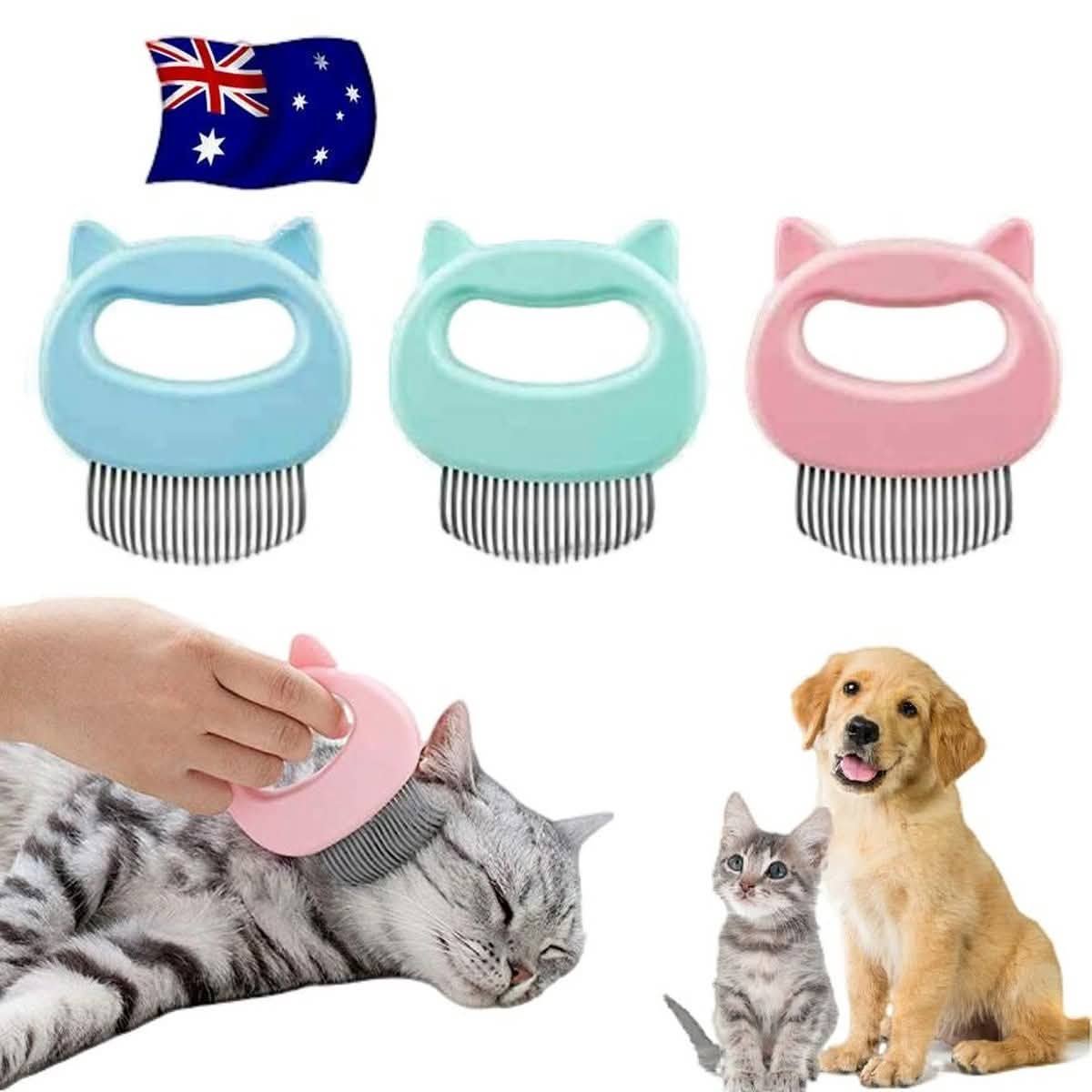
The cat-ear-shaped handle looks like a novelty item — about the size of a bar of soap — but the retractable fine wire teeth underneath do the actual work: pull the handle back and the loose fur collected between sessions drops straight into the bin, no picking hair out of the bristles by hand. It comes in three colourways, blue, pink and green, purely cosmetic, all identical underneath. Simple, and it works.
Run it over a Cavoodle or Kelpie coat and it lifts surface fur fast, though it suits a quick daily pass better than a deep undercoat session — the pins don’t reach far enough to shift a matted undercoat the way a proper rake does. On the laundry floor of a Brisbane fibro rental, that’s still a fair trade for something that empties itself in one motion.
This is the most affordable useful pick in the whole lineup, and a sensible first brush for anyone who’s never owned one. The mechanism can start sticking after a few months of regular use, a complaint that shows up repeatedly in verified buyer reviews online — if yours does, pair it with the FURminator deshedding tool below for anything past light shedding.
Pros:
- Empties in one motion — no picking loose fur out of the bristles by hand
- Most affordable useful pick in this lineup
- Compact enough to keep in a kitchen drawer or the car
Cons:
- The retractable mechanism can start sticking after a few months of regular use
- The novelty cat-ear handle feels a bit precious for something that ends up living in a drawer with nail clippers and old leads
Key specs: Retractable fine wire teeth, one-button hair release, universal size, available in three colours.
CHECK CURRENT PRICE2. Rooster Farms Deshedding Massage Glove – Best Grooming Glove
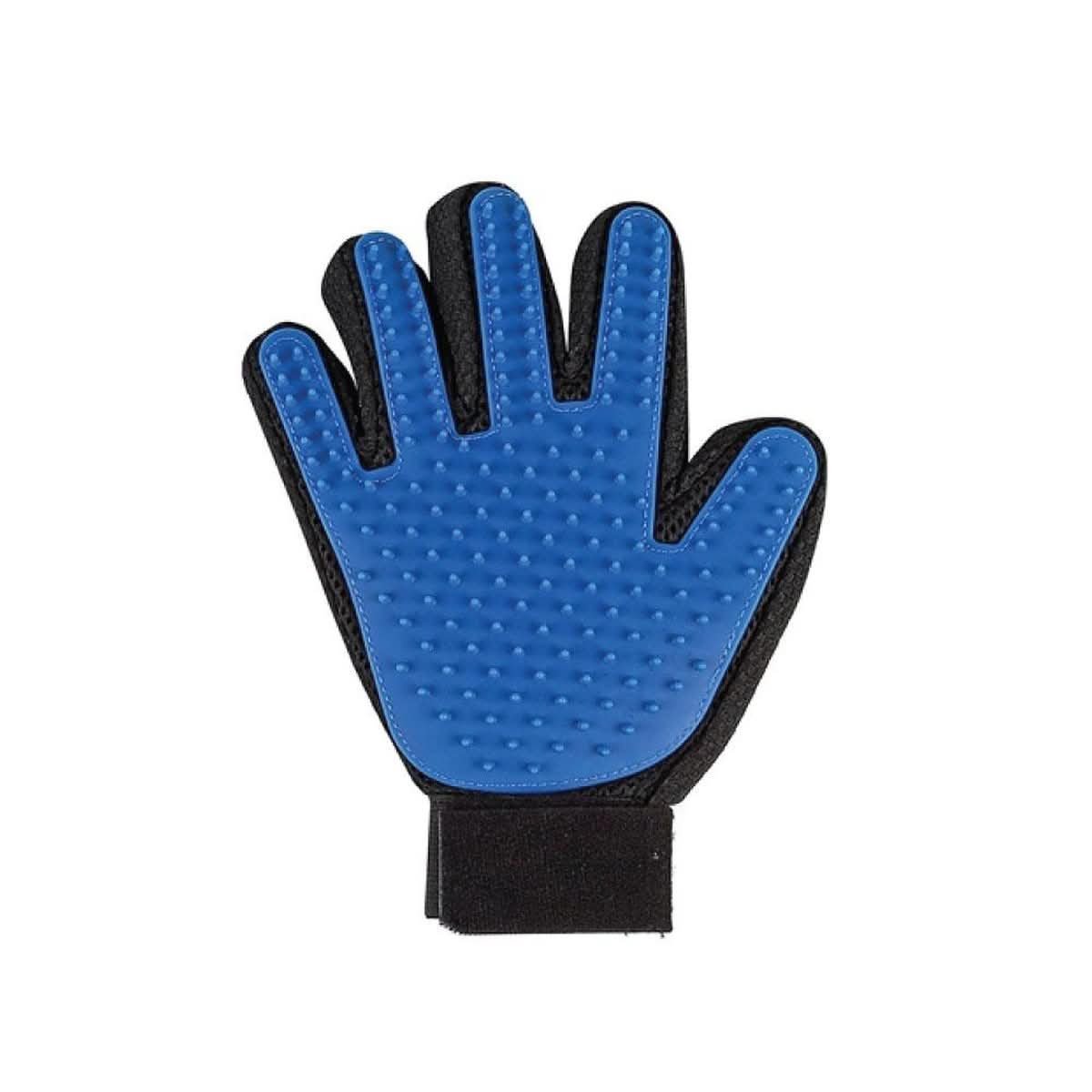
Some dogs treat a slicker brush like an accusation. If yours flinches at the sight of pins, this rubber-nubbed glove does the same basic job — lifting loose fur with a light massage — while feeling like a pat rather than a grooming session. It’s ambidextrous, so it doesn’t matter which hand you favour, and the elastic wrist strap keeps it from sliding off mid-brush.
It won’t touch a matted undercoat and it’s slower than a slicker brush for a dog that actually needs a proper detangle, but for short-haired breeds or anxious dogs it’s often the only brush that gets used consistently — and a brush sitting in a drawer does nothing for shedding. Reviewers commonly flag that the rubber nubs trap fur instead of releasing it, which tracks with how the design works structurally: you’re peeling clumps off by hand instead of shaking them free. Handy for a share-house laundry where you don’t want stray wire pins scattering across the tiles. At around the same price as the Zasel brush above, this is the pick for temperament over technique.
Pros:
- Feels like patting the dog, not brushing it — useful for nervous dogs
- Ambidextrous fit, doesn’t matter which hand you use
Cons:
- Rubber nubs trap fur instead of releasing it, so you’re peeling clumps off by hand after each session
- Next to useless on an already-matted coat — it massages more than it detangles
Key specs: Rubber nub bristles, adjustable elastic strap, one size fits most hands, works for dogs and cats.
CHECK CURRENT PRICE3. Rufus & Coco Self-Cleaning Slicker Brush – Best Budget Slicker Brush

This is the most affordable genuine slicker brush in the whole lineup, and it doesn’t feel like it. The retractable pins pull back into the head at the push of a button, so the fur you’ve just brushed off drops away instead of staying tangled in the bristles — the same self-cleaning mechanism as the Zasel brush at position one, just built into a more conventional handle shape.
The head is a reasonable size for a Staffy or a Cattle Dog, and the firm pins get through a moderately tangled coat without much drama. It struggles on a properly thick double coat the way a dedicated undercoat rake would, and daily use on a fine-haired breed can feel a little firm against the skin — go gently around the ears and belly. ProductReview’s pet grooming category shows a pattern worth knowing before you buy: self-cleaning slicker brushes in this price range tend to lose pin tension after six months or so of regular use, making this more of a reliable two-year brush than a lifetime one.
Rufus & Coco’s range leans budget-friendly across the board, and this brush is a fair example — it does the core job without charging extra for a padded grip or a travel case. It’s a solid pick for a quick pass before a Sunday Bunnings run with the dog in tow; a Border Collie or Golden Retriever owner will likely want the extra reach of the Artero pin brush below instead.
Pros:
- Most affordable slicker brush in this lineup, and it still self-cleans
- Firm pins handle moderate tangles without much fuss
Cons:
- Pins feel a bit firm against bare skin around the ears and belly — go gently there
- The push-button release mechanism feels slightly loose out of the box, though it doesn’t affect brushing
Key specs: Retractable self-cleaning pins, push-button release, single size, works for dogs and cats.
CHECK CURRENT PRICE4. FURminator Bathing Brush – Best Bathing Brush

This isn’t a detangling brush — it’s built for the shower or the tub. Soft rubber bristles sit over a hollow reservoir you fill with shampoo or conditioner; press the button on top and it doses product straight into the coat as you scrub (the kind of thing you can do one-handed while the other arm pins a squirming Labrador against the tub wall).
It works best in small circles against the direction of the coat, lifting loose fur while the bristles spread shampoo evenly — useful for a Labrador or a Staffy shedding through a Perth summer where a bath every couple of weeks is standard practice. The reservoir holds enough for one full-size dog per fill, maybe one and a half for a smaller breed.
It won’t replace a slicker brush for dry-coat detangling, and the refill cap is fiddly to line up one-handed while the other hand’s holding a wriggling dog in the tub. Buy it together with the Rufus & Coco slicker above or the Artero pin brush below instead of using it alone — this is a bath-time tool, not an everyday brush.
Pros:
- Doses shampoo straight into the coat, so you’re not fumbling a slippery bottle one-handed
- Soft bristles are gentle enough for a dog with sensitive, easily-irritated skin
Cons:
- The refill cap is fiddly to line up one-handed while you’re holding a wet, wriggling dog
- Reservoir needs a proper clean every few uses or the nozzle starts clogging with dried shampoo residue
Key specs: Refillable shampoo/conditioner reservoir, soft rubber bristles, one-button dispensing, built for bath-time use only.
CHECK CURRENT PRICE5. Artero Universal Firm Pin Slicker Brush – Best for Short-Haired Breeds
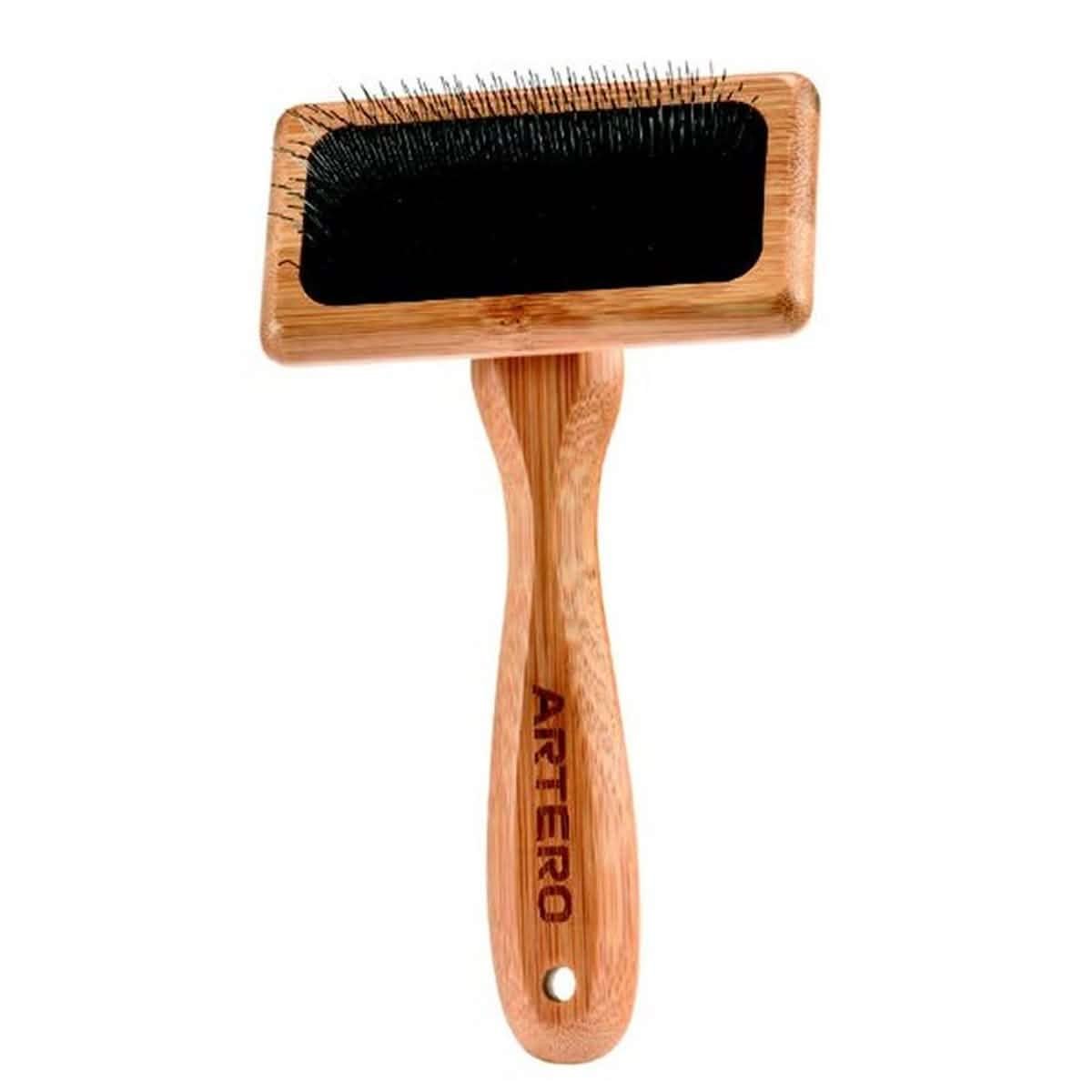
The 11mm pins on this one are shorter and firmer than most slicker brushes in this lineup, which sounds like a downside until you realise that’s exactly what a short-haired breed needs — longer pins on a Staffy or a Beagle just skim the surface without making contact with the skin.
It comes in a small size for toy and small breeds; step up to the medium if you’re brushing anything bigger than a Cavoodle, since the smaller head takes longer to cover a full coat. Spanish grooming brand Artero built its reputation on professional-groomer tools, not pet-store impulse buys, and the firm pin quality shows in how evenly it tracks across the coat without catching.
It’s not the brush for a properly long-haired dog — the pins are too short to reach through a thick double coat, and you’ll want the Artero pin brush two entries down for that job instead. For a Frenchie, a Beagle or anything with a short, dense coat shedding through a Melbourne winter indoors near the heater, this is one of the more precise picks here.
Pros:
- Firm, short pins make real contact with the skin on short coats instead of skimming over the top
- Small and medium size options actually fit the dog, not just the marketing photo
Cons:
- The medium size is still fairly compact — a bigger dog means more passes to cover the whole coat
- No self-cleaning mechanism, so you’re pulling fur out of the pins by hand after each session
Key specs: 11mm firm pins, small and medium sizes, wooden-look handle, built for short-to-medium coats.
CHECK CURRENT PRICE6. FURminator Undercoat Deshedding Tool for Long-Haired Dogs – Best for Double-Coated Breeds

A slicker brush lifts surface fur. This tool is built to go further, pulling loose fur out of the undercoat itself — the fluffy layer underneath a double coat responsible for most of the hair on your floor between baths. The stainless steel edge reaches through the topcoat without cutting it, at least when it’s used correctly.
That last qualifier matters. FURminator’s own usage guidance — and a fair few complaints buried in verified reviews — point to the same mistake: pressing too hard or brushing against the grain can irritate the skin, especially on a dog already prone to hot spots. Used properly, in the direction the coat grows, it pulls the loose undercoat out effectively — exactly what a Kelpie, Husky or German Shepherd needs through a Canberra spring coat-blow. Technically it works on any dog with a topcoat and undercoat, though in practice that means double-coated breeds specifically — a Labrador’s coat is often thin enough that a slicker brush does most of the same job.
There’s a FURejector button on the back that pushes the collected fur off the blade in one press, which sounds like a small thing until you’ve spent five minutes picking wet undercoat fluff out of a normal brush’s teeth by hand. It comes in medium and large sizes — size up if you’re working on anything bigger than a Kelpie, since the smaller head takes considerably longer on a full-grown Malamute or Husky coat.
This is a twice-weekly tool during shedding season, not a daily brush — overusing it can thin the coat more than intended, and general grooming advice caps it at two or three sessions a week even during peak shed. Skip it entirely on a single-coated breed like a Greyhound or a Poodle. Not glamorous. Just effective, used the right way.
Pros:
- FURejector button clears the blade in one press — no picking fur out by hand
- Reaches the undercoat a standard slicker brush skims straight over
Cons:
- Easy to overdo — pressing too hard or brushing against the grain can irritate the skin
- The edge guard clip is stiff to pop open one-handed, so you end up wedging it against a bench or your knee first
Key specs: Stainless steel undercoat edge, one-button FURejector release, medium/large sizes, works only on double-coated breeds.
CHECK CURRENT PRICE7. Artero Supersoft Metal Pin Brush – Best for Long-Haired Breeds
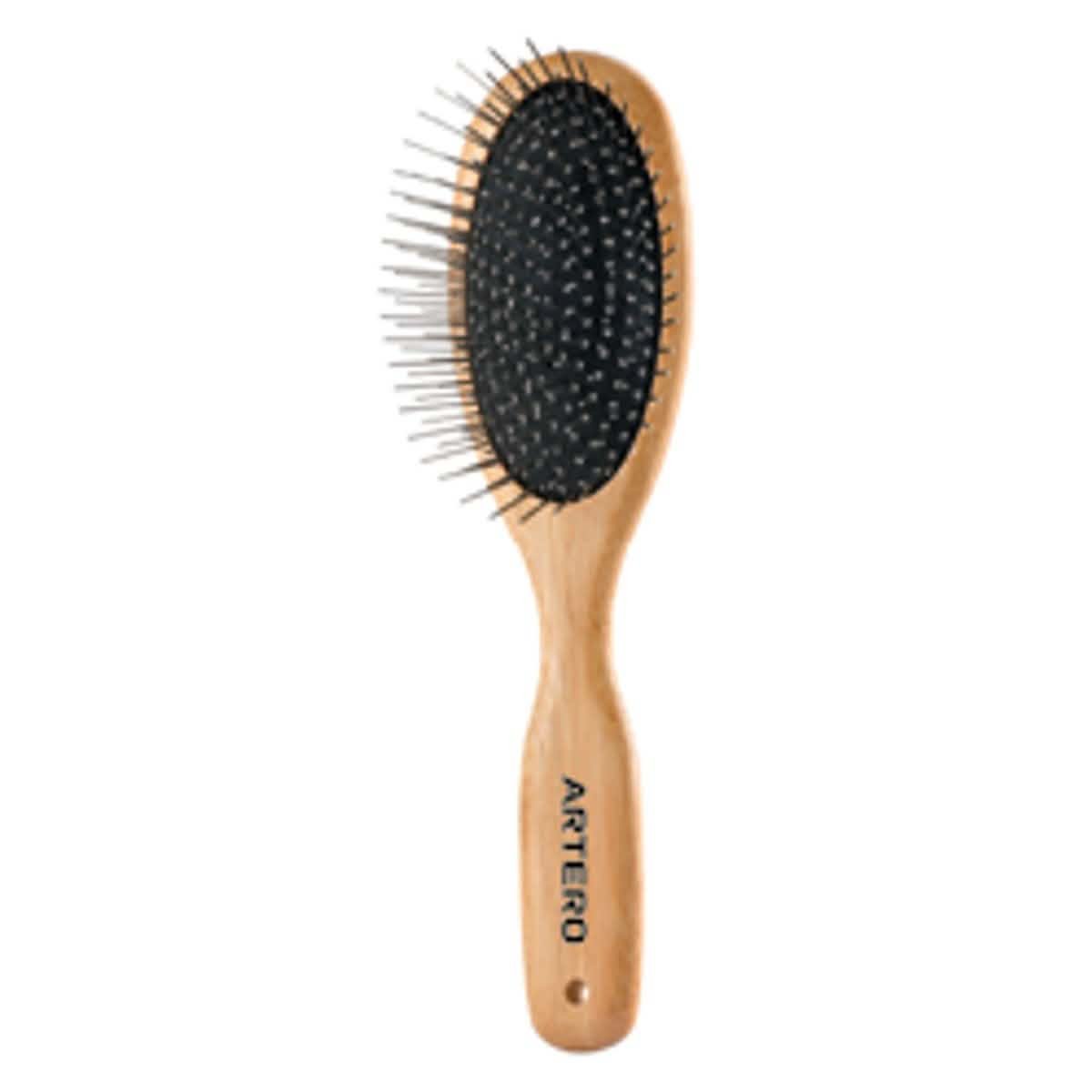
Where the Artero slicker brush above uses short firm pins, this one goes long — 25mm supersoft metal pins built to glide through a longer coat without snagging on knots the way a firm-pinned brush would.
It’s the pick for a Border Collie, Golden Retriever or Cavalier King Charles with a coat long enough to actually tangle, working best as a daily maintenance brush, not a once-a-week detangling session — leave it too long between brushes on a longer coat and mats set in fast.
The trade-off for that softness is less bite on a properly matted patch — for anything past light tangling you’ll want fingers or a dematting comb first, then this brush to finish. A step up in price from the budget picks earlier in this list, though still solidly mid-range for this category in Australia.
Pros:
- Glides through a long coat without the snagging you get from firmer pins
- Comfortable enough for daily use without irritating the skin
Cons:
- Not enough bite to work through an already-matted patch on its own
- The handle’s a little slim for anyone with larger hands doing a full-coat brush most days
Key specs: 25mm supersoft metal pins, ergonomic handle, built for long or silky coats, daily maintenance use.
CHECK CURRENT PRICE8. Extra-Large Firm Slicker Brush – Best for Large Dogs
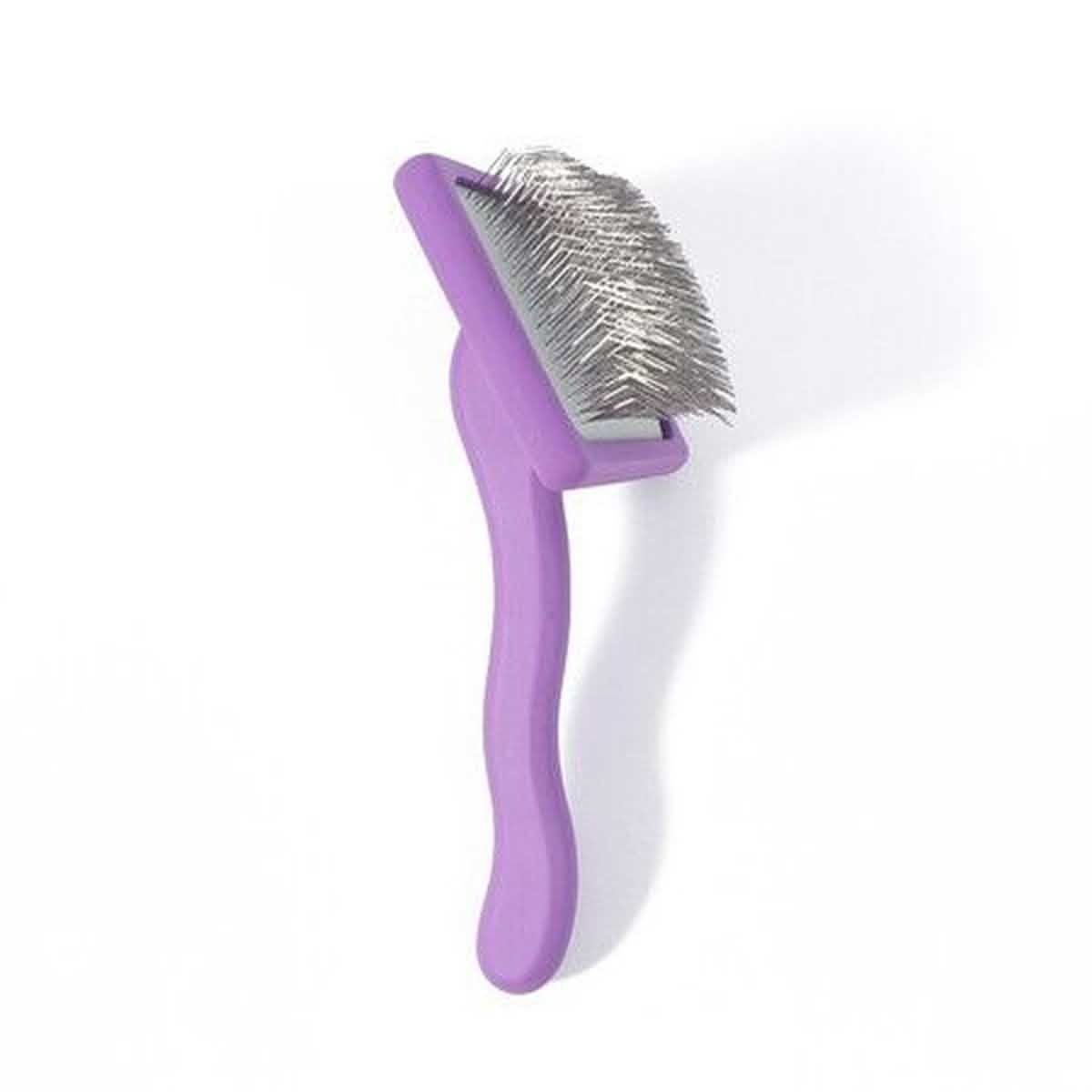
Most slicker brushes are sized for an average-to-small dog, which becomes obvious the first time you try to cover a Rottweiler or a Bernese Mountain Dog’s full coat with one — three times the passes for the same result. This one runs fifty percent wider than a standard slicker head, which actually matters once you’re working on a properly large breed.
The wider head covers more ground per stroke without sacrificing pin firmness, and the extra size doesn’t make it noticeably heavier in hand — still light enough for a ten-minute full-body brush without your wrist complaining halfway through. It suits a Kelpie-cross or bigger working through a heavy shed in a hot Adelaide summer, where daily brushing actually keeps loose fur out of the aircon vents.
It’s overkill for a small or toy breed — the wide head doesn’t manoeuvre well around a Chihuahua’s legs and ears — and it’s the cheapest brush in this lineup after the two self-cleaning picks at the top, which tells you something about where the general dropship listings sit on price against the specialist brands above.
Pros:
- Wider head means fewer passes to cover a large dog’s full coat
- Doesn’t feel noticeably heavier despite the bigger head
Cons:
- No self-cleaning mechanism — loose fur builds up in the pins and needs picking out by hand
- The extra width makes it awkward around a dog’s legs, ears or tail on anything smaller than medium-sized
Key specs: 50% wider head than standard slicker, firm pins, no self-cleaning mechanism, built for medium-to-large breeds.
CHECK CURRENT PRICE9. 3-in-1 Self-Cleaning Slicker Brush Kit – Best Value Grooming Kit

A first-time puppy owner buying separate tools for detangling, deshedding and bath-brushing can end up with three drawers of grooming gear before the puppy’s even a year old (more kit than any one dog really needs). This set bundles a self-cleaning slicker brush, a double-sided dematting comb and a bath massage brush into one three-piece kit, covering most of what a young dog with a normal coat actually needs.
None of the three pieces are quite as refined as the dedicated single-purpose brushes elsewhere in this guide — the slicker’s pins are a touch softer than the Rufus & Coco brush, and the dematting comb’s teeth are more widely spaced than the Two-Sided Undercoat Rake below. What it trades in precision it makes up for in not having to think about which tool to grab before a Sunday grooming session.
Good for a puppy, a short-haired adult dog, or anyone who wants one kit that does an acceptable job at everything rather than three tools that each do one thing brilliantly. If you’ve already got a dedicated slicker or deshedding tool, there’s not much reason to add this one — it’s built for the grooming-gear beginner, not the collector.
Pros:
- Three tools in one kit covers detangling, dematting and bath brushing without buying separately
- Good starter set for a new puppy owner who doesn’t yet know which brush style suits their dog
Cons:
- Each individual piece is a step down in build quality from the dedicated single-purpose brushes in this guide
- The storage case that holds the three pieces together is flimsy, and a small number of buyers report a cracked clip on arrival
Key specs: 3-piece set (slicker brush, dematting comb, bath brush), self-cleaning slicker, compact storage case, best for puppies and short coats.
CHECK CURRENT PRICE10. Two-Sided Undercoat Rake – Best Undercoat Rake

This is the blunt instrument of the lineup — two rows of curved teeth, one closer-set than the other, built to rip through a heavily matted undercoat that a slicker brush would just skate over. It’s the tool you reach for after a few weeks of skipped brushing, not the one you use every day.
The wider-set side handles a first pass through a badly tangled patch, and the closer-set side finishes the job, pulling loose undercoat out from underneath without shaving the topcoat down. It works on a Malamute, Husky or Border Collie coat that’s gone past what the FURminator deshedding tool above can manage in one sitting, though it takes more elbow grease and more time.
It’s not a gentle tool — go slowly on a dog with sensitive skin, and never force it through a mat pulled tight against the skin itself; cut the mat out with scissors first if it won’t budge. It’s the most affordable pick here for rescuing a coat that’s properly gotten away from you, and a sensible backup for shedding season, not an everyday brush. Keep it in the laundry cupboard through a Victorian or Tasmanian winter coat-blow, and it earns its keep a few times a year even if it’s not a daily tool.
Pros:
- Cuts through a properly matted undercoat that a slicker brush can’t touch
- Two tooth spacings in one tool — first pass and finishing pass without switching brushes
Cons:
- Not gentle — easy to catch and pull skin if you rush it on a nervous or wriggly dog
- Teeth need an occasional wipe-down or they start pulling instead of gliding after a few uses
Key specs: Two-sided design (wide and close tooth spacing), stainless steel teeth, ergonomic handle, best for heavy matting and shedding season.
CHECK CURRENT PRICEHow to Choose the Right Dog Brush
Match pin type to coat length, not just to the dog’s size. A short-haired Staffy and a short-haired Chihuahua both need a firm, close-pinned brush regardless of how different they look standing side by side, while a long-haired Border Collie needs a longer, softer pin no matter how big the dog gets. Buying by breed size alone is the single most common mistake — coat length and density matter more.
Consider how the coat actually sheds, not just how it looks. A double-coated dog — Kelpie, Husky, German Shepherd, Labrador — blows its undercoat seasonally, usually spring and autumn, and needs a deshedding tool or undercoat rake during those windows even if a slicker brush handles the rest of the year fine. A single-coated dog like a Greyhound or Whippet never needs that heavier tool at all.
Think about who’s actually doing the brushing. Got a dog that hates the sight of a slicker brush? A grooming glove gets used far more consistently than a proper brush left in a drawer, and a brush that never comes out doesn’t help with shedding no matter how good it is on paper. Match the tool to your actual routine, not the routine you wish you had.
Pair your brush with the rest of an at-home grooming routine. Brushing does one job — coat and shedding — while nail length is a separate problem entirely. A dog clippers setup and a nail grinder round out the rest of an at-home routine without a trip to the groomer every few weeks, and it’s worth budgeting for all three pieces instead of one at a time.
Expect a decent brush to survive normal use, and know your rights if it doesn’t. A slicker brush with pins that snap or bend within a few weeks of ordinary brushing — not misuse, just normal use — can still qualify for a free repair, replacement or refund under Australian Consumer Law guarantees, regardless of whether the retailer’s own warranty period has technically run out. Keep the order confirmation email either way, just in case you need it.
Budget to replace it eventually, not just to buy it once. Self-cleaning mechanisms and retractable pins are moving parts, and moving parts wear out over time — treat the more affordable slicker brushes as two-year tools, not lifetime ones, and put the extra budget toward the undercoat rake or deshedding tool instead, since those get used less often but have to work properly every single time.
You’ll Also Want
A detangling spray makes any brush’s job easier, especially between full grooming sessions — a quick spritz on a knot before you brush it out means less pulling and a less stressed dog. Petway Petcare’s anti-static detangler is a straightforward option that also cuts down on the static that makes fine coats fly everywhere in dry winter air.
Brushing works better on a clean coat, and the shampoo you use matters more than most owners realise — the wrong one strips natural oils and can make shedding worse over time. Melanie Newman’s Purify shampoo is a solid pairing for regular brushing routines, formulated for everyday washing, not an occasional bath.
Once you’ve actually brushed a shedding season’s worth of fur off two or three dogs, a proper hair collection tool stops feeling optional. FURminator’s hair collection tool picks loose fur up off furniture, car seats and carpet without the static cling of a normal vacuum attachment, and it’s a lot more washable than a lint roller.
Frequently Asked Questions
What’s the difference between a slicker brush and a pin brush?
A slicker brush uses fine, slightly angled wire pins packed closely together to lift loose fur and break up light tangles, working well on most coat types. A pin brush uses rounder, more widely spaced pins that are gentler on the skin, better suited to longer or silkier coats that tangle rather than mat. Most Australian owners are better served starting with a slicker brush and adding a pin brush only if their dog’s coat actually needs it.
How often should I brush a double-coated dog in Australia?
Double-coated breeds like Kelpies, Labradors, Huskies and German Shepherds need brushing two to three times a week most of the year, increasing to daily during seasonal coat-blow in spring and autumn when the undercoat sheds heavily. A deshedding tool or undercoat rake handles that heavier undercoat load better than a standard slicker brush. Skipping brushing during coat-blow is the most common reason owners end up vacuuming loose fur off floors and furniture daily instead.
Can I use a dog brush on a cat too?
Most slicker brushes, pin brushes and deshedding tools sold for dogs work well on cats with a similar coat type and length. The main thing to adjust is pressure — cat skin is generally more sensitive than dog skin, so go gently, especially around the belly and legs. If your cat tolerates brushing poorly, shorter and more frequent sessions usually work better than one long one.
Why does my dog’s brush keep bending or breaking?
Pins on cheaper slicker brushes are usually thinner wire that bends out of shape with repeated pressure, especially on a badly matted coat instead of during regular maintenance. Brushing against the grain of the coat, instead of the direction it grows, also strains the pins more than they’re built for. If a brush fails within a few weeks of normal use, Australian Consumer Law guarantees may still cover a replacement regardless of the retailer’s stated warranty period.
Do I need a separate brush for shedding season?
A standard slicker or pin brush handles surface fur fine most of the year, but a dedicated deshedding tool or undercoat rake reaches the loose undercoat that builds up during seasonal coat-blow, usually spring and autumn for double-coated breeds. Using only a slicker brush through a heavy shed generally means more fur on the floor and a longer grooming session. Most owners find two to three deshedding sessions a week during peak shedding keeps things manageable.
How do I stop my dog’s coat from matting between grooming sessions?
Regular brushing two to three times a week is the main defence against matting, since most mats start as a small tangle that gets worse every day it’s left alone. A detangling spray before brushing softens the coat and helps pins glide through knots instead of catching on them, especially behind the ears and under the legs where coats tangle first. Once a mat has pulled tight against the skin, cutting it out is often safer than brushing it out.
Verdict
For most Australian dogs, the Rufus & Coco self-cleaning slicker brush covers the bulk of what regular brushing actually needs, at the most accessible price in this lineup. Owners dealing with a properly double-coated breed through shedding season are better served by the FURminator undercoat deshedding tool, which reaches fur the slicker brushes here simply can’t touch. For the simplest possible option that actually gets used every day without complaint, the Zasel self-cleaning fur brush is hard to beat.