Australia and New Zealand are the only two countries in the world where a bicycle helmet is a legal requirement for every rider, on every road, footpath and bike lane, regardless of age. The best bike helmets in Australia are ones built to the mandatory AS/NZS 2063:2020 standard, which sets the minimum bar for impact absorption, strap strength and head coverage that every helmet sold here has to clear, whether it is worn for a daily commute, a Saturday bunch ride, or the ten-minute trip to school.
Shoppers here are really choosing between five distinct types: **commuter and multi-sport helmets** built for everyday riding and doubling as skate or scooter protection, **road helmets** shaped for aerodynamics and long distances, **mountain bike helmets** with deeper rear coverage for trail falls, **kids’ helmets** sized and certified separately from adult shells, and **smart helmets** that add lights, Bluetooth intercoms or crash alerts on top of the same basic EPS foam core every other type relies on.
The number that actually separates a good helmet from a mediocre one is not the price tag, it is whether the shell carries genuine MIPS (Multi-directional Impact Protection System) or an equivalent rotational-impact layer, since a straight-on drop test only tells half the story of a real crash. Weight matters too: helmets in this guide range from a featherweight 209 grams up to a full-face-adjacent smart helmet closer to 400 grams, and the gap is noticeable after two hours in the saddle on a hot day.
This comparison runs from an entry sourced through an Australian retail partner right through to specialist road, MTB and smart picks sourced on the open marketplace, covering budget commuter helmets through to premium aero road lids.
Quick Picks
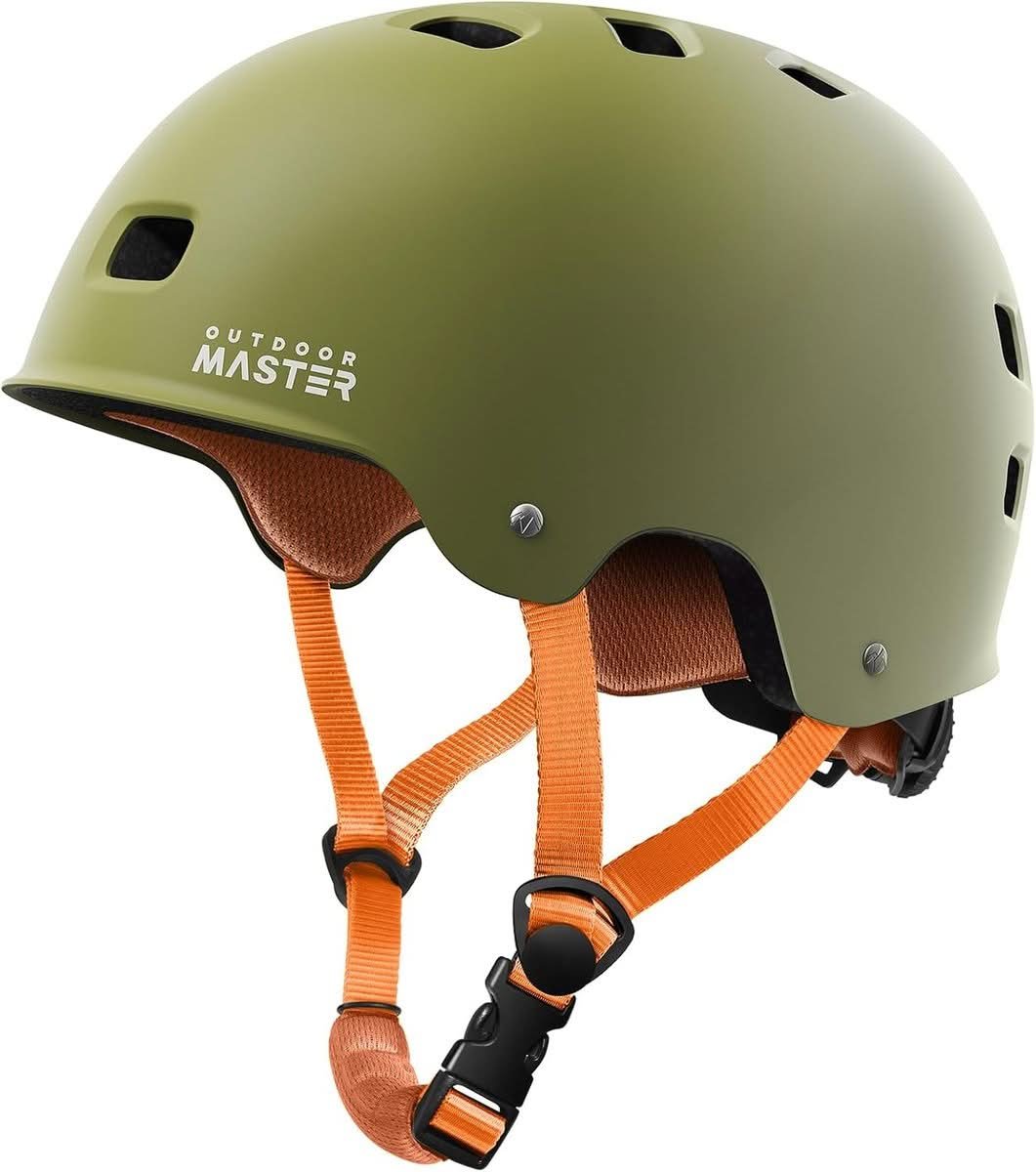
OutdoorMaster Multi-Sport Bike Helmet
A dual-liner shell that swaps between the bike and the skate ramp without a second purchase.
CHECK CURRENT PRICE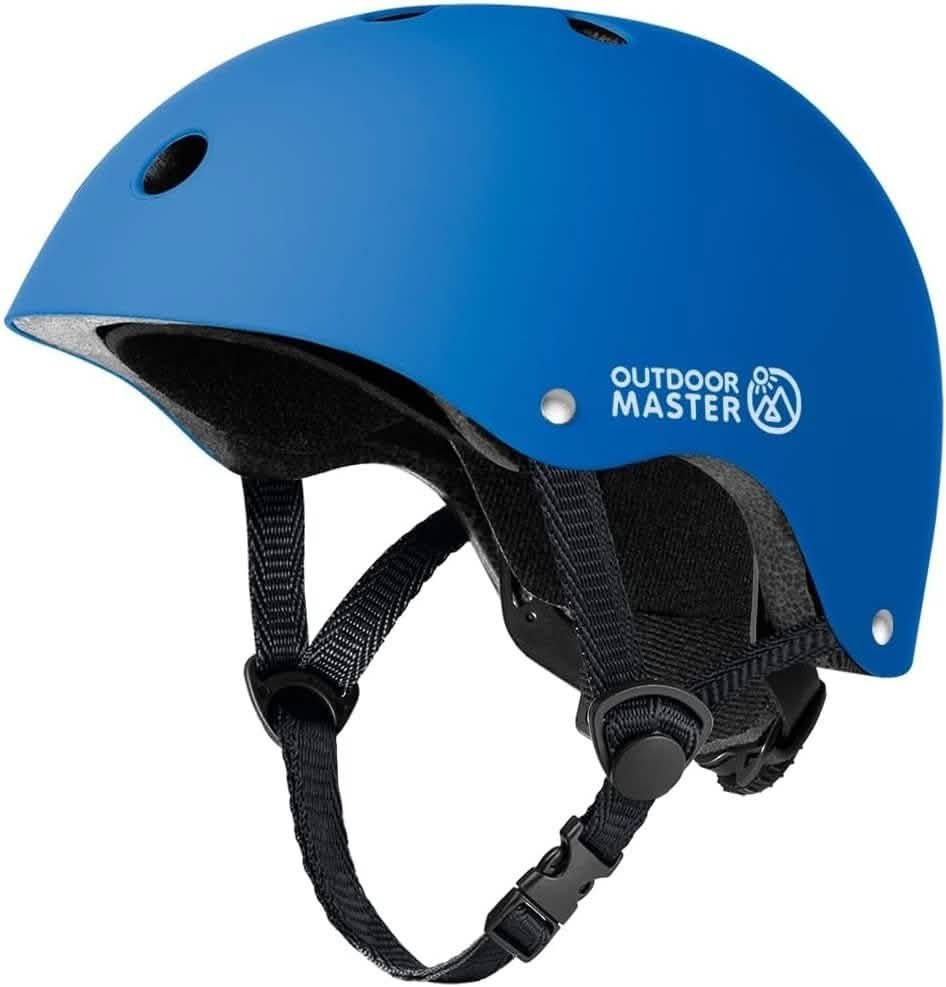
OutdoorMaster Kids Bike Helmet
A properly sized shell for balance bikes and scooters, not a shrunk adult helmet.
CHECK CURRENT PRICEThe Best Bike Helmets in Australia Compared
| Product | Link | Type | Best For | Key Spec |
|---|---|---|---|---|
| OutdoorMaster Multi-Sport Bike Helmet | Check price | OutdoorMaster | Best for Commuting and Everyday Riding | ABS shell + EPS foam |
| OutdoorMaster Kids Bike Helmet | Check price | OutdoorMaster | Best for Kids | ABS shell + EPS foam |
| POC Ventral Air MIPS | Check price | POC | Best for Road and Gravel Riding | MIPS Air Node |
| Lumos Ultra Aero GT | Check price | Lumos | Best for Night Commuting | MIPS protection |
| Bell Nomad 2 MTB Helmet | Check price | Bell | Best for Mountain Biking | Fusion in-mould polycarbonate shell |
| Sena S Smart Road Bike Helmet | Check price | Sena | Best for Group Rides and Communication | Mesh intercom |
| Triple Eight Certified Sweatsaver | Check price | Triple Eight | Best for BMX and Skatepark Riding | Dual-certified skate and bicycle helmet |
| ROCKBROS Bike Helmet with Goggles | Check price | ROCKBROS | Best Value with Included Eyewear | High-density EPS foam |
| Shinmax Bike Helmet with Rear Light | Check price | Shinmax | Best Budget Pick | Aerodynamic shell |
| AHATECH Youth and Adult Helmet | Check price | AHATECH | Best for Teens and Casual Riders | ABS outer shell |
1. OutdoorMaster Multi-Sport Bike Helmet – Best for Commuting and Everyday Riding
This is the one helmet in this lineup that honestly does not care whether you are riding to the shops, dropping in at the local skate park, or pushing a kid’s scooter around the block. The ABS shell and dense EPS foam core are certified across multiple wheeled-sport standards at once, and the two swap-in liners mean summer ventilation on a 35 degree Perth afternoon and a snugger fit once you add a beanie underneath for a cold Melbourne morning ride.
Twelve vents is modest next to the road-specific picks further down this list, and you will feel it on a long climb. What you get instead is a shell that shrugs off the scrapes of being tossed in the back of a ute tray (the kind of knock a bike helmet is actually built to survive, not a showroom drop test) or left leaning against a brick veneer garage wall, which is exactly how most commuter helmets actually get treated day to day.
Buyers on the open marketplace consistently flag the sizing as running slightly large, so measure your head circumference before ordering instead of trusting the printed size chart alone. Sits at the more affordable end of this comparison for what is a properly certified, dual-purpose shell.
Pros
- Certified across multiple wheeled-sport standards, so one helmet covers cycling, skating and scootering
- Two removable liners let you tune the fit for a hot day or a jumper underneath
- Sits at the more affordable end of this comparison for a properly certified shell
Cons
- Only 12 vents, noticeably warmer than the road-specific helmets further down this list on a long ride
- Runs slightly large according to buyer reports, so check the head measurement before ordering
Key specs: ABS shell + EPS foam, 12 vents, two removable liners, multi-sport wheeled-device certification
CHECK CURRENT PRICE2. OutdoorMaster Kids Bike Helmet – Best for Kids
A five-year-old’s skull is not just a smaller version of an adult’s, and this is one of the few kids’ helmets in this price range built on its own last rather than a downsized adult shell. The dial-adjustable fit means it grows with the kid across a school year without needing a resize the moment their head measurement moves up.
It covers balance bikes, toddler scooters and the one-wheel hoverboard phase most Australian kids seem to go through at some point, so it earns its keep well past the training-wheels stage. Reviewers on the open marketplace note the chin strap buckle can pinch a young rider’s skin if it is not adjusted carefully, worth a quick check the first few times they wear it.
Pros
- Built on a kid-specific last, not a shrunk adult shell
- Dial adjustment covers a school year of growth without needing a resize
- Covers balance bikes, scooters and hoverboards, not just a pedal bike
Cons
- The chin strap buckle can pinch if not adjusted carefully on the first few wears
- Ventilation is modest for a hot Queensland afternoon, so a light-coloured shell suits the climate better than a dark one
Key specs: ABS shell + EPS foam, dial-adjustable fit, multi-sport certification, removable liners
CHECK CURRENT PRICE3. POC Ventral Air MIPS – Best for Road and Gravel Riding
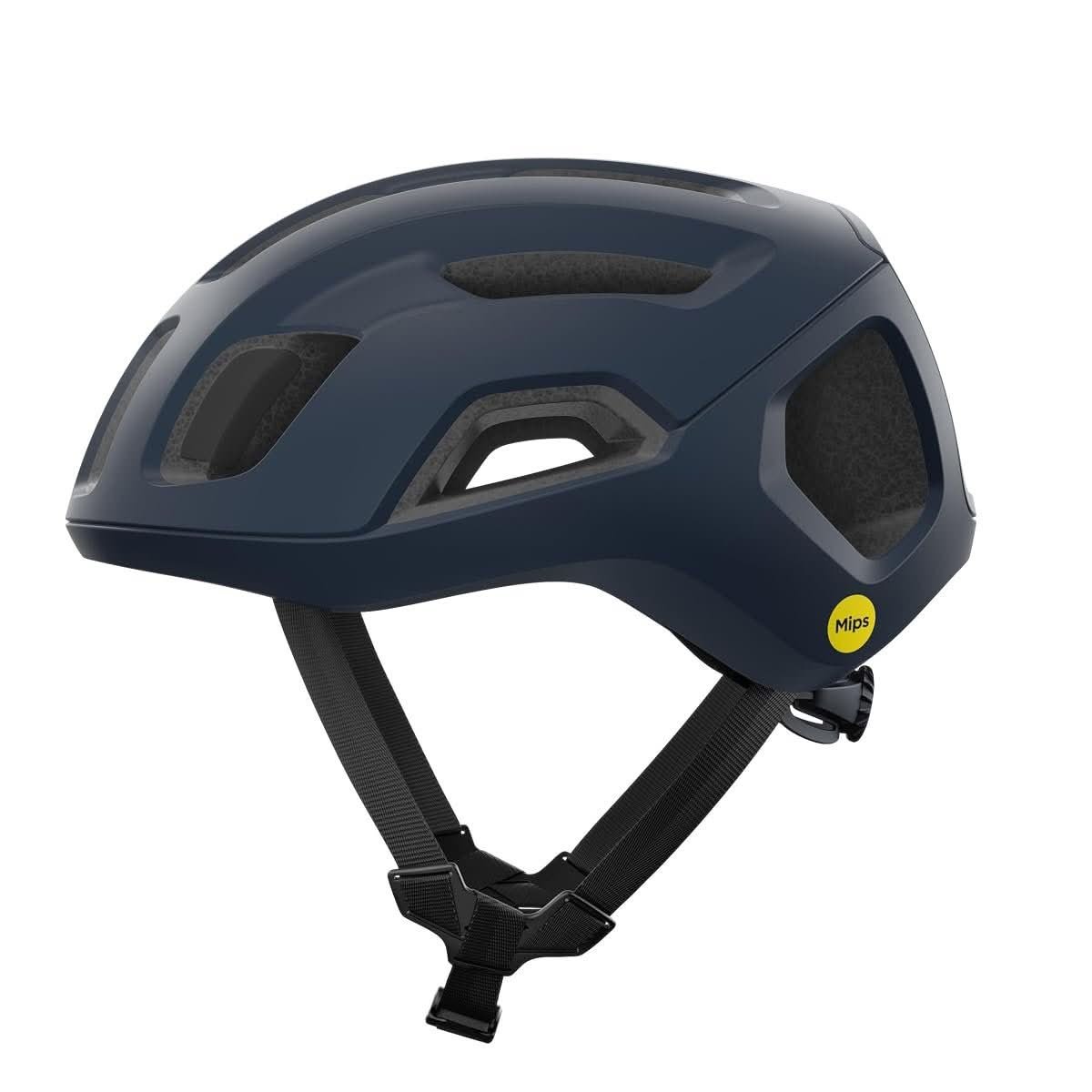
POC built its whole brand around crash physics, not marketing, and the Ventral Air shows it. The outflow-edge shaping is built to cut drag on a fast bunch ride, while the Integrated MIPS Air Node sits between the foam and your scalp to absorb the rotational force of an angled fall, the kind a straight-down drop test never replicates.
The built-in eye garage grips a pair of sunglasses at the front so they do not end up jammed in a jersey pocket on a climb, a small detail that matters more than it sounds once you are actually riding. Ventilation is properly excellent at speed. Below about 20 km/h, on a stop-start commute through traffic lights, it runs noticeably warmer, since the airflow channels are tuned for a moving bike, not a standing one.
Not cheap. Worth it for the kilometres most road riders actually put in each week. Sits at the premium end of this comparison, and the fit dial takes a little patience to get exactly right the first time. Once set, riders on the open marketplace consistently describe the retention system as staying put through a full gravel ride without re-tightening.
Pros
- Real Integrated MIPS Air Node, not a marketing label on a standard foam liner
- Outflow-edge aero shaping and a sunglasses eye garage most road riders will actually use
- Retention system reported to stay put through a full ride without re-tightening
Cons
- Warmer at low speed in stop-start traffic than the airflow is tuned for a moving bike, not a standing one
- Sits at the premium end of this comparison, and the dial fit takes a bit of patience to set correctly the first time
Key specs: MIPS Air Node, aerodynamic outflow-edge shell, integrated eyewear dock, 360-degree fit dial
CHECK ON AMAZON4. Lumos Ultra Aero GT – Best for Night Commuting
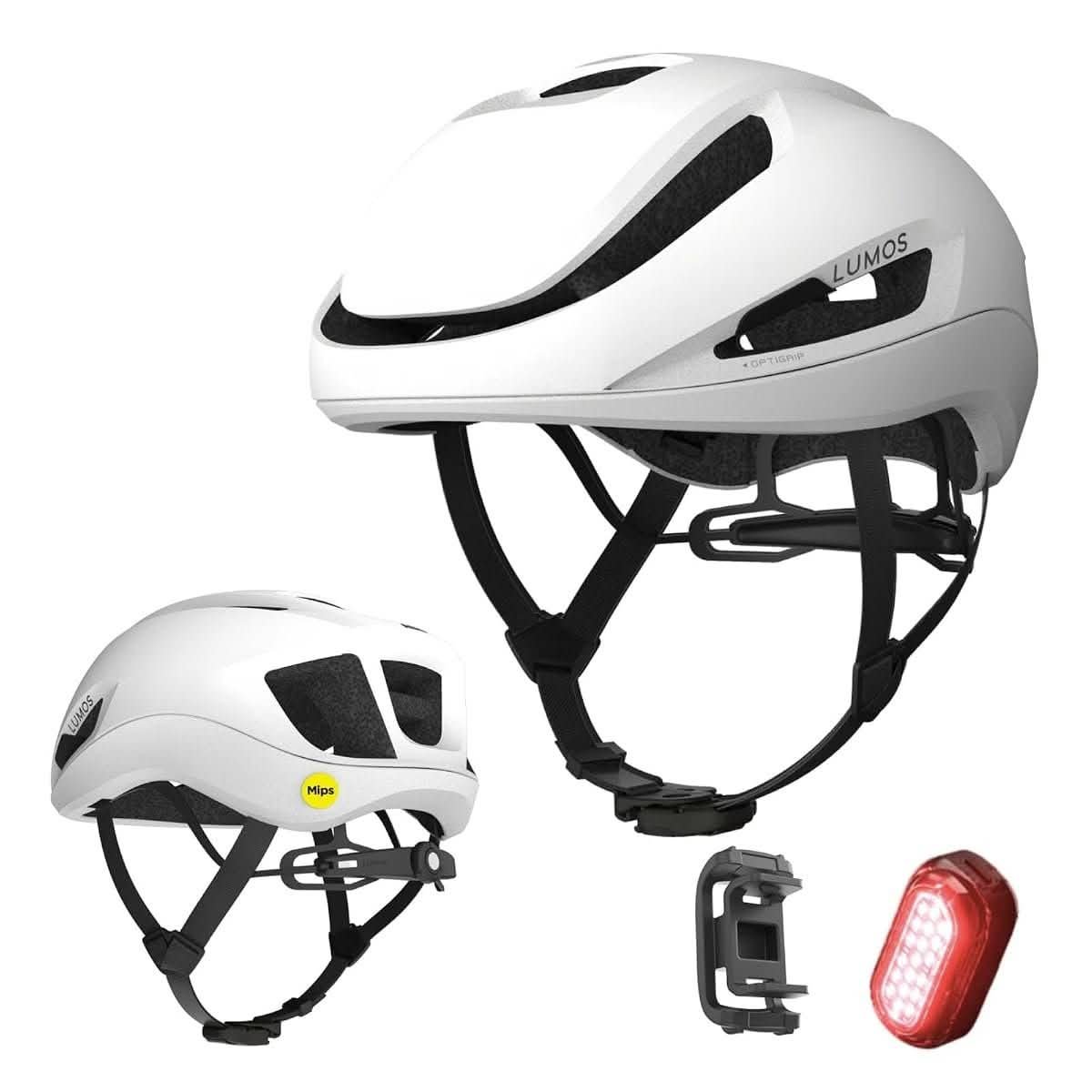
Riding home after 6pm through a Melbourne winter means most of the commute happens in the dark, and this is the one helmet here designed specifically around that problem. It carries true MIPS protection under a lightweight 350-gram shell, and the magnetic click mount on the back accepts Lumos’s own Firefly mini light for hands-free visibility, no zip ties or velcro straps required.
The eyewear dock and 14-channel ventilation are aimed squarely at the daily commuter, not the weekend racer, and it shows: this is a helmet made to be worn every single workday, not just on a Sunday bunch ride. Buyers on the open marketplace note the light itself is sold separately, so factor that into the actual cost of running this the way it is built to be used.
Pros
- Real MIPS protection in a 350 gram everyday-commuter shell
- Magnetic dock accepts a dedicated rear light with no straps or zip ties
- Sunglasses dock and 14 vents built for daily use, not weekend racing
Cons
- The compatible rear light is sold as a separate accessory, not included in the box
- Sizing runs to a mid-range fit; check the circumference chart if you are between sizes
Key specs: MIPS protection, approx 350g, 14 ventilation channels, magnetic light-mount dock, eyewear dock
CHECK ON AMAZON5. Bell Nomad 2 MTB Helmet – Best for Mountain Biking
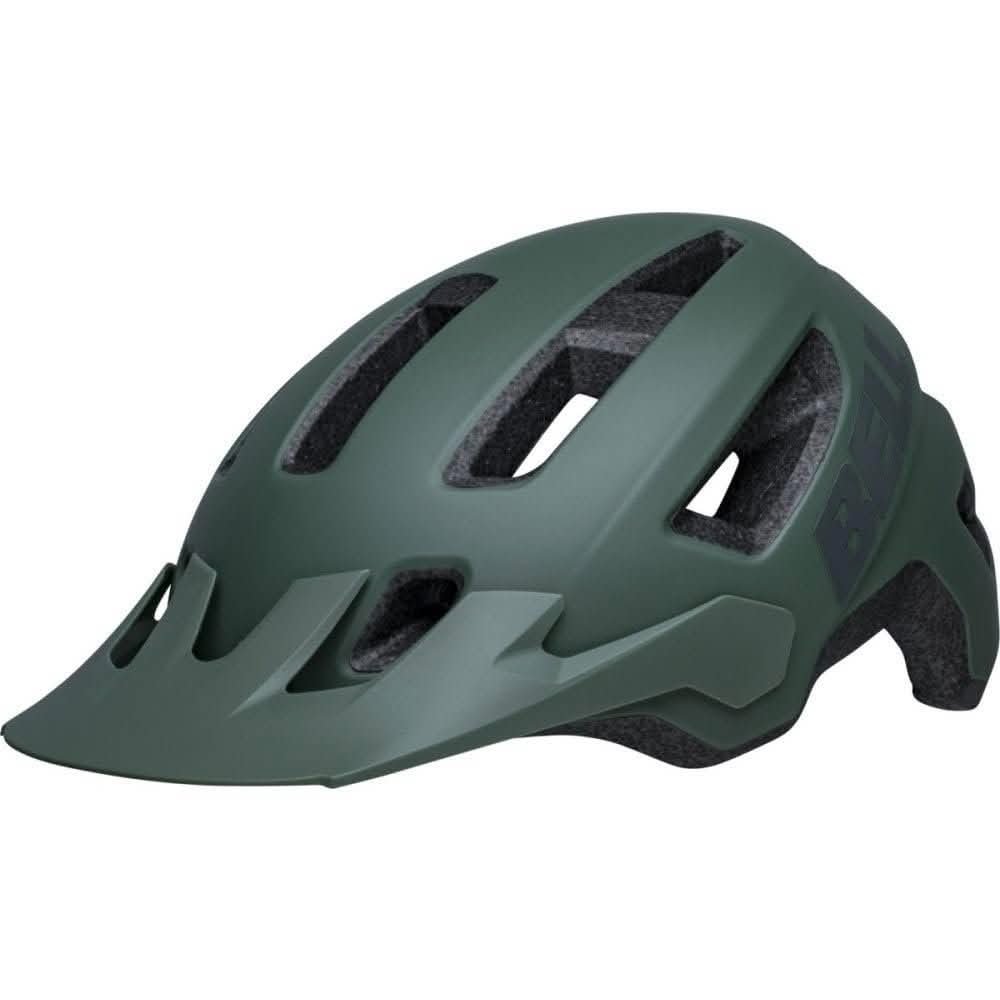
Bell has been building bike helmets since long before most of the marketplace brands in this comparison existed, and the Nomad 2 is a straightforward trail helmet, not a road-racer shape squeezed into a different category. The Fusion in-mould polycarbonate shell wraps further down the back of the skull than the road picks here, which is where a mountain bike fall usually connects first.
Fifteen vents keep it from turning into a sauna on a Dandenong Ranges climb, and at 295 grams it sits mid-pack for weight among these ten (heavier than it looks on the shelf, though most of that is the deeper rear-of-skull foam, not wasted material), noticeably lighter than the smart helmets but heavier than the road-specific aero shells. It comes in a single oval fit profile, so riders with a rounder head shape should try one on, or check a local bike shop’s return policy, before committing.
Pros
- Deeper rear-of-skull coverage than the road-shaped helmets in this comparison, built for trail falls specifically
- 15 vents keep it from overheating on a sustained climb
- A long-established cycling brand, not a generic marketplace label
Cons
- Single oval fit profile; a rounder head shape may need to try before buying
- Only two colourways available, both fairly muted for anyone wanting a brighter trail helmet
Key specs: Fusion in-mould polycarbonate shell, 15 vents, approx 295g, oval fit profile
CHECK ON AMAZON6. Sena S Smart Road Bike Helmet – Best for Group Rides and Communication
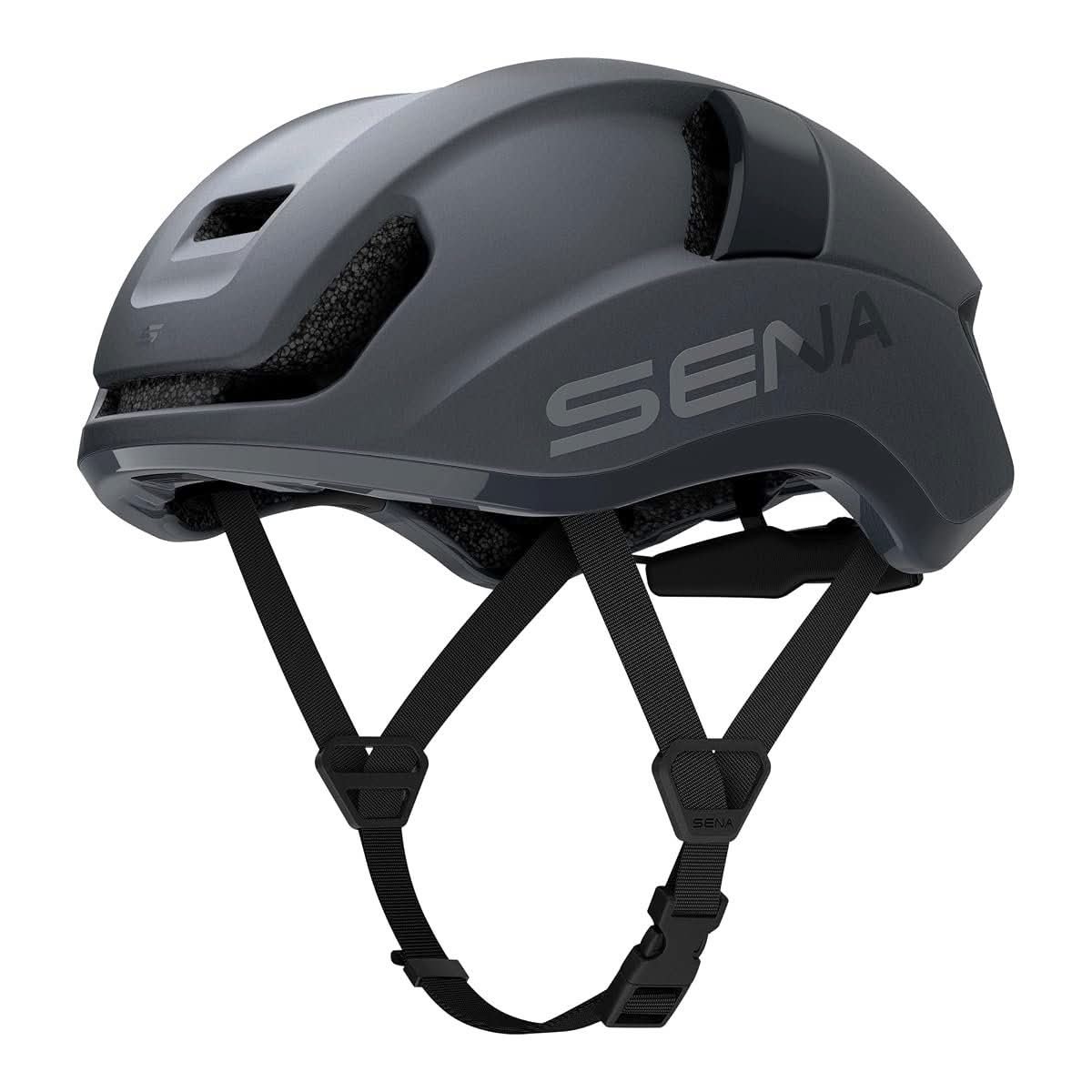
Sena made its name in motorcycle Bluetooth intercoms before bringing the same mesh-network technology to a road bike helmet, and it is the only helmet here built specifically for talking to your riding group, not just listening to music. The mesh intercom connects multiple riders in a chain without needing a direct pairing to each one individually, useful for calling out a pothole or a car turning without shouting over 40km/h of wind noise.
A rear LED adds visibility on the ride home once the group splits up. Niche. But it solves a real problem for anyone who has ever reached for a phone mid-ride to text someone behind them, which is precisely the situation it fixes.
Pros
- Mesh intercom links multiple riders without individually pairing each one
- Built-in speaker and microphone means no separate headset clipped to the strap
- Rear LED adds visibility once a group ride splits apart
Cons
- A properly niche, premium price point that only pays off for regular group riders
- Only a handful of units listed in stock at a time on the open marketplace
Key specs: Mesh intercom, Bluetooth smartphone connectivity, built-in speaker and mic, rear LED
CHECK ON AMAZON7. Triple Eight Certified Sweatsaver – Best for BMX and Skatepark Riding
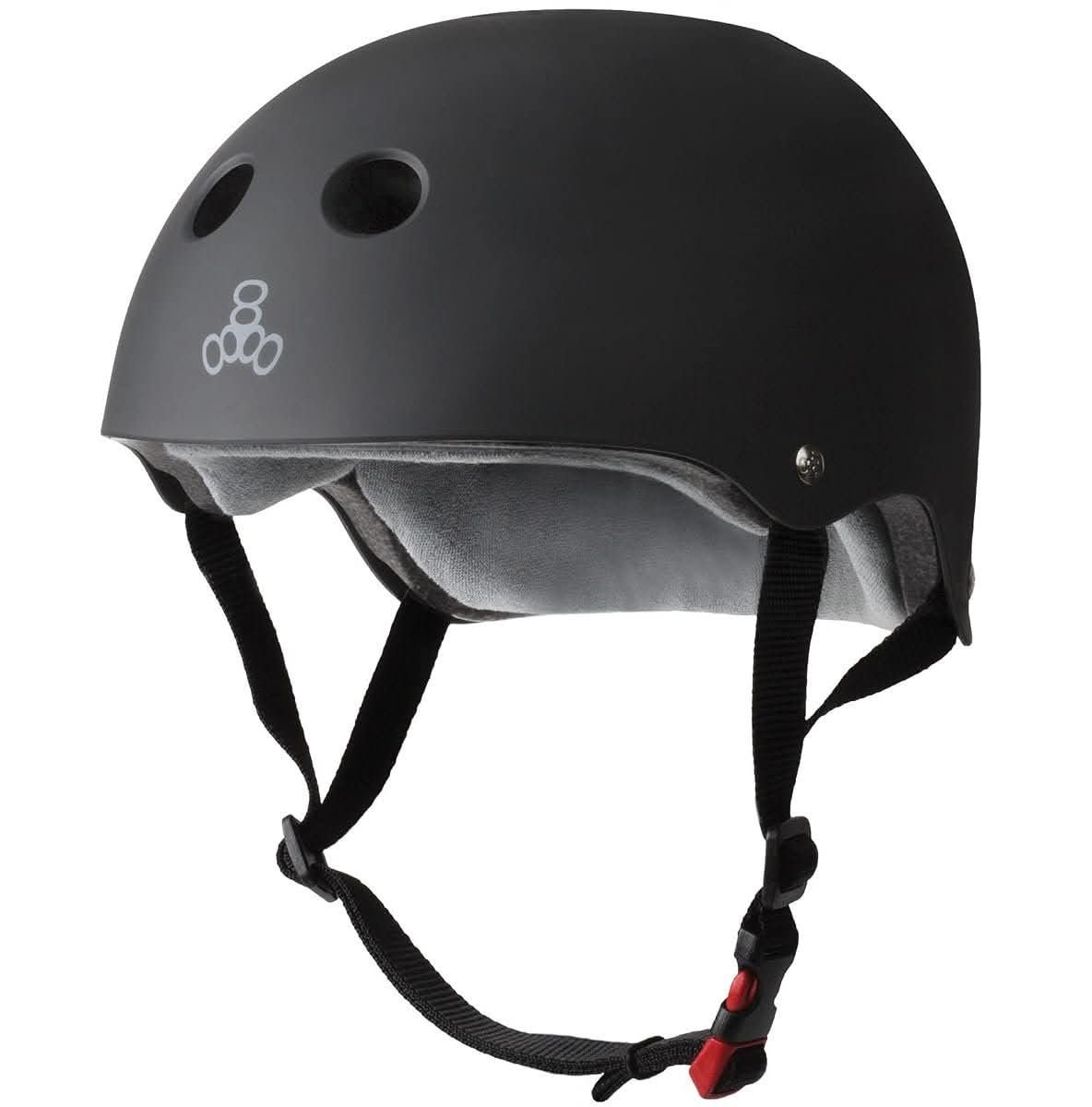
Triple Eight built its name in skateboarding, not cycling, and the Sweatsaver’s rounder, lower-profile shell is exactly what a BMX or skatepark rider is after, not the elongated road shape everything else here leans on.
It is worth explaining exactly why a skate-shaped shell counts as a legitimate bike helmet choice here, since it looks nothing like the other nine picks in this list. AS/NZS 2063 covers bicycles and wheeled recreational devices under one certification, and this model is dual-certified to that bicycle standard alongside its skate rating, not just badged as bike-compatible after the fact. That is the difference between an actually legal cycling helmet and a skate helmet with a bike sticker slapped on the box.
The dual-density soft foam liner is noticeably plusher against the head than the harder EPS-only shells further up this list, and it is cut for a different riding style, not a lesser one: a BMX rider taking a low, sideways spill off a ramp needs different coverage to a road rider going over the bars at speed.
Pros
- Rounder, lower-profile shape built for BMX and skatepark riding specifically
- Dual-density soft foam liner feels noticeably plusher than a hard EPS-only shell
Cons
- Fewer vents than the road and MTB picks, so it runs warmer on a long straight ride
- The skate-style shape sits lower over the ears than some road riders will be used to
Key specs: Dual-certified skate and bicycle helmet, dual-density foam, adjustable side-release strap
CHECK ON AMAZON8. ROCKBROS Bike Helmet with Goggles – Best Value with Included Eyewear
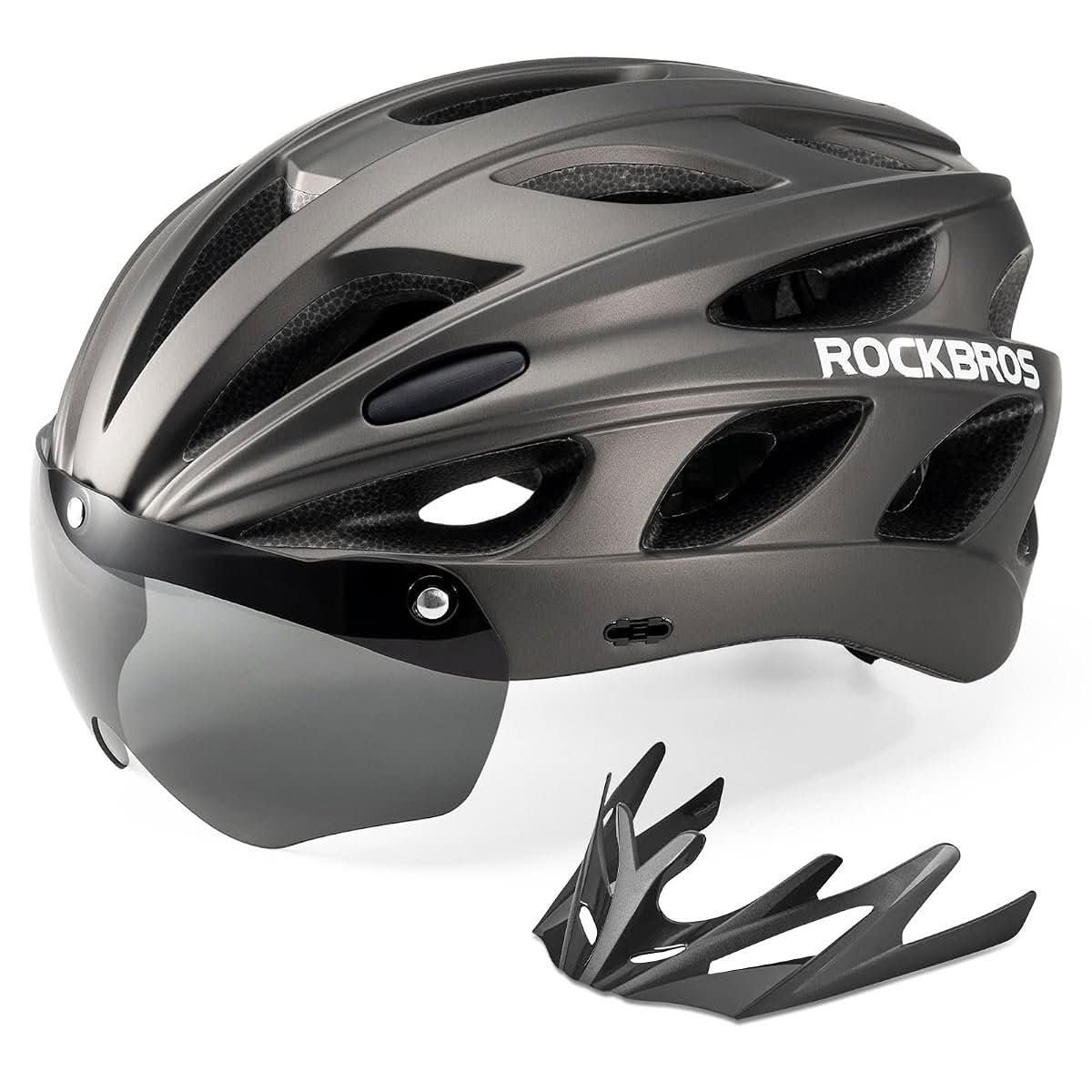
At 209 grams (roughly the weight of a can of soft drink) this is the lightest shell in the whole comparison, and it comes with a detachable sun visor and magnetic goggles included, which would otherwise be a separate buy on top of most of the other helmets here. Twenty-four vents keep it cool on a Brisbane summer commute, and the one-handed dial adjustment is properly quick to use one-handed while still rolling.
It sits well below the mid-range price point of this comparison for what is included. The goggles are a real bonus, not a gimmick, for anyone riding into low winter sun without sunglasses.
Pros
- Lightest helmet in this comparison at 209 grams
- Detachable magnetic goggles and sun visor included at no extra cost
- 24 vents and a one-handed dial adjustment usable while still riding
Cons
- The included goggles fog up on a humid morning ride without an anti-fog wipe first
- Fewer standout safety features than the road-specific picks, it is a value-focused shell
Key specs: High-density EPS foam, 24 vents, approx 209g, magnetic goggles and sun visor included
CHECK ON AMAZON9. Shinmax Bike Helmet with Rear Light – Best Budget Pick
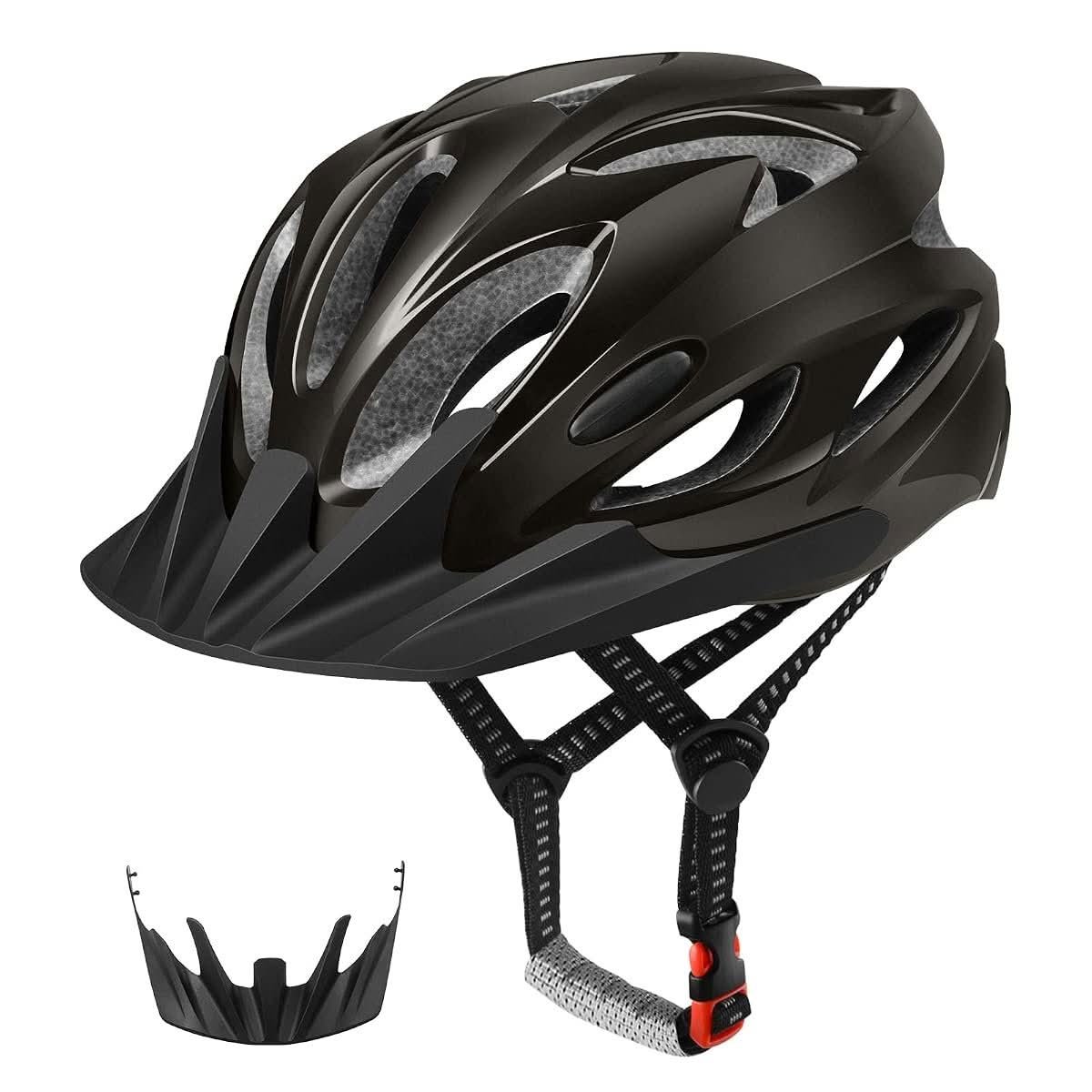
This is the cheapest properly certified helmet in this comparison, and it does not feel like it once you have it on. Twenty-five vents in a streamlined shape keep airflow moving, and a detachable sun visor handles glare on a low-sun ride home without needing sunglasses. A built-in rear LED adds a bit of extra visibility for anyone riding home after work through winter.
It sits at the cheapest tier in this whole comparison.
Pros
- The cheapest properly certified helmet in this comparison
- Built-in rear LED adds visibility with no separate light to buy
- Over two thousand verified buyer ratings back it as a proven, popular choice
Cons
- Fewer premium touches like a fit dial retention system than the pricier picks elsewhere in this comparison
- The detachable visor clips can loosen over time and need the occasional re-tighten
Key specs: Aerodynamic shell, 25 vents, detachable sun visor, built-in rear LED
CHECK ON AMAZON10. AHATECH Youth and Adult Helmet – Best for Teens and Casual Riders
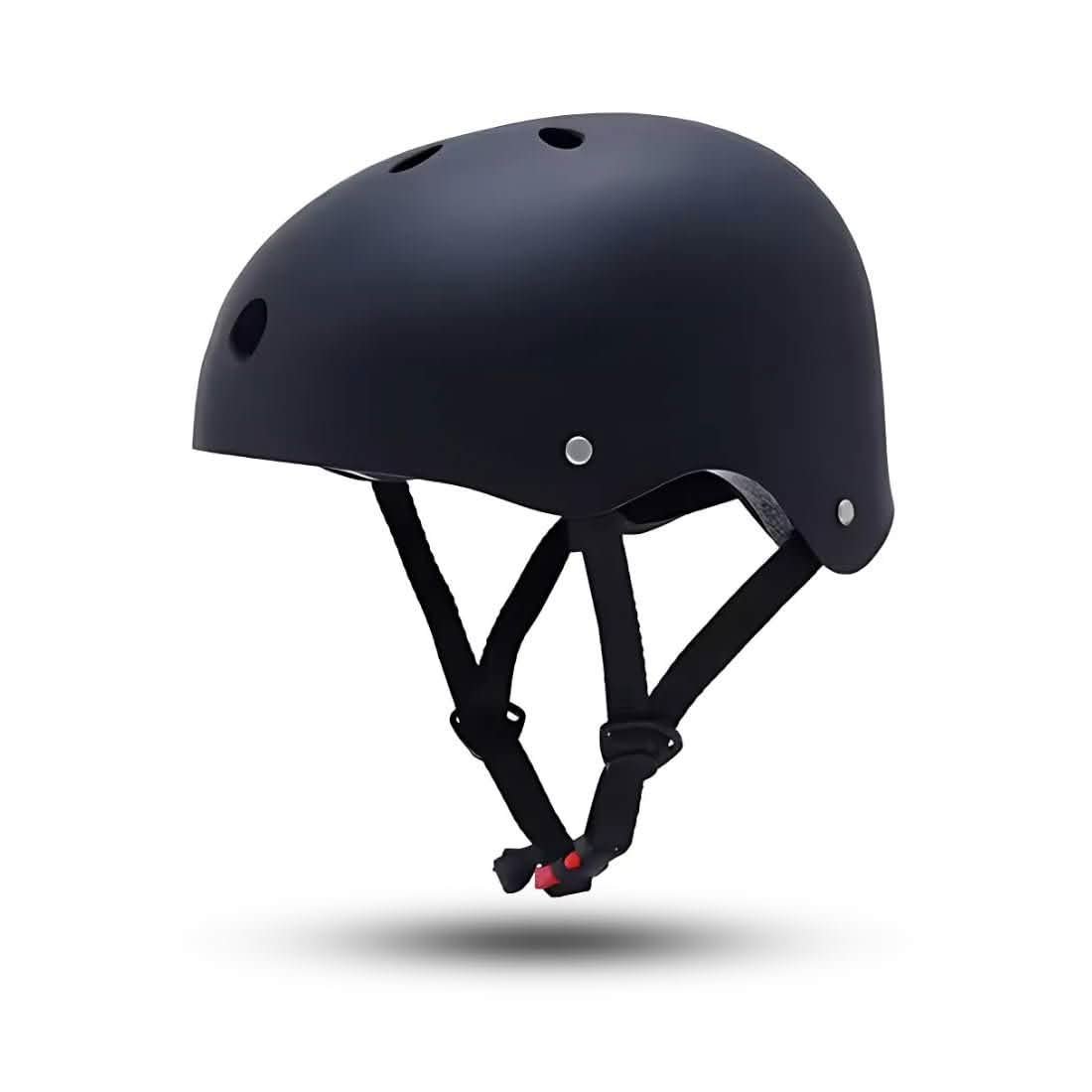
Somewhere between a kids’ helmet and a full adult shell sits a gap most teenagers fall into, too big for the kids’ range but not always keen on a serious-looking commuter helmet either. This one is deliberately plain: an ABS outer shell over foam, an adjustable nylon chin strap, and a size run that actually covers a teenager’s head circumference instead of jumping straight from kids’ small to adult medium.
It is rated for skateboarding and roller skating as well as riding, which matches how most teenagers actually use one helmet across three different activities instead of owning a separate lid for each. Water-resistant construction means it survives being left on the back step after a wet-weather ride, which, realistically, is where most teenage riders leave their gear.
Pros
- Sized for the gap between kids’ and adult helmets that most teenagers fall into
- Rated across skateboarding and roller skating as well as cycling
- Water-resistant shell survives being left outside after a wet ride
Cons
- Ventilation holes are more decorative than functional on a hot ride, this is a budget shell first
- No retention dial, just a strap adjustment, so the fit is less precise than the pricier picks
Key specs: ABS outer shell, adjustable nylon chin strap, sizes 50-61cm, water-resistant construction
CHECK ON AMAZONHow to Choose a Bike Helmet in Australia
Check the compliance sticker before anything else. Every helmet sold in Australia legally has to meet AS/NZS 2063:2020, and it should carry a visible compliance sticker inside the shell. If you are buying second-hand or from an unfamiliar seller, look for that sticker instead of assuming a helmet-shaped object is automatically legal to ride in.
Fit beats features every time. Ever tried on a helmet that felt fine standing still in the shop mirror, then rocked forward the moment you leaned hard into a corner? A helmet should sit level, two finger-widths above your eyebrows, not tipped back to show off a fringe. The chin strap should let you fit one finger underneath when buckled, snug enough that the helmet cannot rock forward off your forehead in a fall. A helmet with every feature on this list is worthless if it sits loose enough to spin sideways on impact.
Weigh ventilation against the climate you actually ride in. A dense, low-vent shell that is fine for a Hobart winter commute turns into a real discomfort problem riding through Cairns or Darwin humidity, where airflow across the scalp matters more than a few extra grams of foam. Coastal riders dealing with salt air should also rinse the straps and pads occasionally, since salt residue breaks down foam and webbing faster than fresh water ever does.
MIPS or an equivalent rotational layer is worth paying for if you ride in traffic. A straight vertical drop test does not replicate most real crashes, which usually involve the head hitting at an angle and twisting. It matters more for road and commuter riding in mixed traffic than it does for a slow-speed ride around a quiet cul-de-sac.
Match the helmet type to how you actually ride, not how you would like to ride. A road-shaped aero helmet looks the part but leaves the back of the skull under-covered for a mountain bike trail fall, and a bulky MTB helmet is overkill and needlessly hot for a flat commute. Riders on a fat tyre electric bike should also check their state’s e-bike helmet requirements specifically, since some higher-powered setups fall outside the standard bicycle rules.
**Replace it after any real impact, not on a fixed calendar date alone.** EPS foam crushes on the first hard hit and does not spring back, even if the shell looks undamaged from the outside. UV exposure also breaks the foam down over years of sun, so a helmet that has sat on a car parcel shelf through several Australian summers is worth replacing even if it has never been dropped.
You’ll Also Want
A helmet is only half the theft-and-safety picture: a proper combination cable lock stops your bike disappearing from the bike rack while you are inside getting a coffee.
Anyone commuting with a phone for navigation or Strava tracking will get more use from a dedicated handlebar phone mount than trying to check directions one-handed at the lights.
A compact multi-tool and puncture repair kit that fits in a jersey pocket turns a roadside flat from a phone call home into a five-minute fix.
If most of your riding happens after work in the darker months, pair any helmet on this list with a proper front and rear light set, since Australian road rules require a working light after dark regardless of how visible your helmet is.
Frequently Asked Questions
Is it actually illegal to ride a bike without a helmet in Australia?
Yes. Australia has mandatory helmet laws for all cyclists, of any age, on any road, footpath, bike lane or shared path, and this has applied nationally since the early 1990s. Police can issue an on-the-spot fine for riding without one. The only practical exemption most states allow is for a religious head covering that cannot fit under a helmet, and even that varies by state, so check your local road authority if it applies to you.
How do I know a bike helmet is legal to use in Australia?
A legally compliant helmet carries a visible compliance sticker on the inside of the shell confirming it meets AS/NZS 2063:2020, the mandatory Australian and New Zealand standard covering impact protection, strap strength and coverage. Since September 2025 this standard has fully replaced the older 2001 regulation, so an older helmet without this specific labelling should be checked or replaced, not assumed to still be compliant.
What does MIPS actually do, and do I need it?
MIPS is a low-friction layer fitted between the foam and your head that lets the helmet shift slightly on an angled impact, reducing the rotational force transmitted to the brain. A standard drop test only measures a straight vertical hit, which most real crashes are not. It is most worth paying for in mixed traffic or on technical trails where an angled fall is realistic, less critical for a slow ride around a flat, quiet neighbourhood.
Can I use a skate or multi-sport helmet for actual cycling in Australia?
Yes, as long as it is certified to AS/NZS 2063, which explicitly covers helmets for bicycles and other wheeled recreational devices like scooters and skateboards in the same standard. A true multi-sport helmet is a legitimate, legal choice for cycling, not a workaround, and several picks in this guide are built and certified exactly this way for riders who use one helmet across more than one activity.
How often should a bike helmet actually be replaced?
Replace a helmet immediately after any real impact, even a low-speed one, since the EPS foam crushes permanently on first hit and will not protect you the same way twice, regardless of how undamaged the outer shell looks. Beyond that, most manufacturers recommend replacing a helmet every three to five years even with no crash, since UV exposure and sweat gradually break down the foam and straps over years of Australian sun.
How should a bike helmet actually fit?
It should sit level on the head, roughly two finger-widths above the eyebrows, not tipped back off the forehead. The side straps should form a V shape just under each ear, and the buckled chin strap should allow only one finger underneath while still feeling snug. If the helmet rocks forward, backward or side to side when you shake your head, it is either the wrong size or not adjusted tightly enough to protect you in a fall.
A commuter riding to an office, an XC mountain biker, and a parent buying for a ten-year-old are not shopping for the same helmet, which is exactly why this list runs ten deep instead of naming one overall winner. Riders wanting a single everyday shell that is properly certified and does not cost a fortune should start with the OutdoorMaster multi-sport pick at the top of this list. Anyone riding fast bunch rides or long gravel routes gets more from the POC Ventral Air’s genuine MIPS Air Node and aero shaping, and a rider commuting home after dark through winter should look straight to the Lumos Ultra Aero GT for the integrated light mount alone.