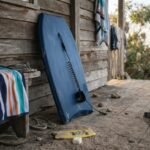
A bodyboard is a short, flat foam board you ride lying on your stomach, or occasionally on one knee (called drop-knee), to catch whitewater and green waves close to shore. There’s no paddling out past the break and no popping to your feet, which is why it’s usually the fastest way for a first-timer to actually stand up in the water, minus the standing up. This guide to the best bodyboards in Australia lines up ten boards on the things that decide whether one lasts a season or dies in the boot of the car by February: core material, deck grip, and whether the included leash is one you’d trust in a decent shore break.
Three constructions turn up across Australian beaches and Amazon AU listings. EPS-core foam boards use expanded polystyrene wrapped in an XPE or IXPE deck skin over an HDPE or PP slick bottom, and they make up most of what’s sold here. Stringer-reinforced boards add a thin fibreglass or plastic rod through the core, which stops the board going soft and banana-shaped after a summer left half-inflated with sun. Inflatable bodyboards skip the foam core altogether, running an air chamber inside puncture-resistant PVC instead, trading a little glide for something that packs down into a carry-on bag.
Length is the number that actually separates these ten boards, running from a 33-inch board suited to a kid under 40kg up to a 48-inch inflatable rated to carry a 102kg adult. The spec most buyers skip past is weight capacity: on a foam board it’s a soft buoyancy estimate, but on an inflatable it’s a hard number tied to the air chamber’s volume, worth checking properly if you’re buying for a bigger rider instead of a grommet.
This lineup compares ten bodyboards available through Amazon AU, from the most affordable full-size foam board on offer through to the pricier pick that ships with a coiled leash and swim fin tethers already in the box. It covers standard EPS-core boards, one stringer-reinforced build, and one inflatable design, and skips soft-top surfboards and hard-shell surf skis entirely, since those solve a different problem for a different budget.
Best Bodyboards in Australia Compared
| Product | Link | Type | Best For | Key Spec |
|---|---|---|---|---|
| BPS Storm Bodyboard | Check price | Foam EPS-core | Serious Wave Riders | Coiled leash and fin tethers included |
| Wavestorm 36in Bodyboard | Check price | Foam EPS-core | Recognised Surf Brand | 36in, soft IXL top deck |
| Bo-Toys Body Board | Check price | Foam EPS-core | Most Reviewed Track Record | 33in, HDPE slick, 2,520 ratings |
| Body Glove Divert 37″ Bodyboard | Check price | Foam EPS-core | Budget Full-Size Board | 37in, PP slick bottom |
| Body Glove Velocity 42″ Bodyboard | Check price | Foam EPS-core | Taller Riders | 42in, built for taller riders |
| Contour Surf Reed Body Board | Check price | Foam EPS-core (stringer) | Grommets | 33in, FRP stringer, coiled leash |
| Nalu Bodyboard with Leash | Check price | Foam EPS-core | First-Timers | 33in/41in, ages 6 plus |
| Aquarm XPE Bodyboard | Check price | Foam EPS-core | Multi-Size Fit | 33/36/41in, 1-year warranty |
| Manta Sonic EPS Bodyboard | Check price | Foam EPS-core (stringer) | Stringer-Reinforced Build | Internal stringer, Manta plug |
| iBoard Portable Inflatable Bodyboard | Check price | Inflatable PVC | Inflatable and Most Packable | Rolls to 23.6 x 7.8 x 3.1in |
1. BPS Storm Bodyboard – Best for Serious Wave Riders
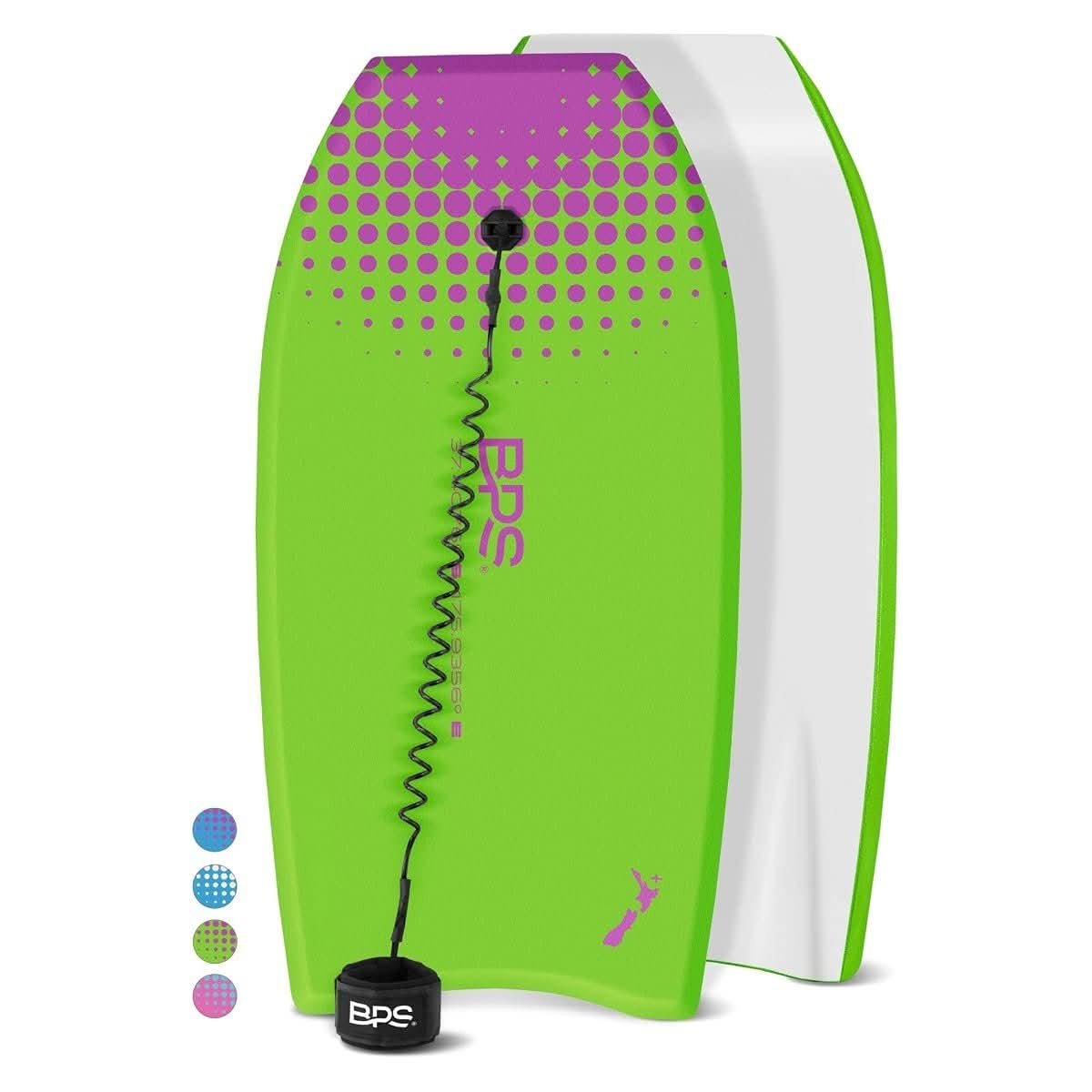
Picture a family of four splitting one board between two kids on a Sunshine Coast sandbar all school holidays, and you’ve got the buyer this board is built for. The Storm’s size chart runs from junior to adult, and the coiled leash with a neoprene cuff and fin tethers already in the box means nobody’s improvising with a bit of old rope by day two.
The EPS core and crescent tail behave the way most boards on this list do, but the leash hardware is a real step up: a tight coil that doesn’t drag or snag on a submerged rock the way a straight cord does. At 635 ratings on Amazon AU, it’s the second-deepest review sample here after the Bo-Toys board below, and the founder-run seller backs it with a straightforward replace-or-refund guarantee instead of a maze of terms.
One thing worth knowing: the coiled leash’s neoprene cuff runs snug, and a couple of buyers mention loosening the Velcro before a longer session, especially if you’re wearing a wetsuit sleeve underneath in cooler Victorian water. It’s also the priciest board here, comparable to what you’d pay at a JB Hi-Fi checkout counter for a decent pair of headphones, and worth it mainly if you actually want the fin tethers instead of buying them separately later.
Pros
- Coiled leash with neoprene cuff and fin tethers included
- Size chart spans kids through adults
- 635 ratings, one of the deepest review samples on this list
- Straightforward replace-or-refund guarantee from the seller
Cons
- Neoprene cuff runs snug over a wetsuit sleeve until you loosen the Velcro
- The most expensive board on this list
- Fin tethers only pay off if you already own bodyboard fins
Key specs: EPS core, crescent tail, rear channels, coiled leash and fin tethers included, size chart junior to adult.
CHECK ON AMAZON2. Wavestorm 36in Bodyboard – Best Recognised Surf Brand
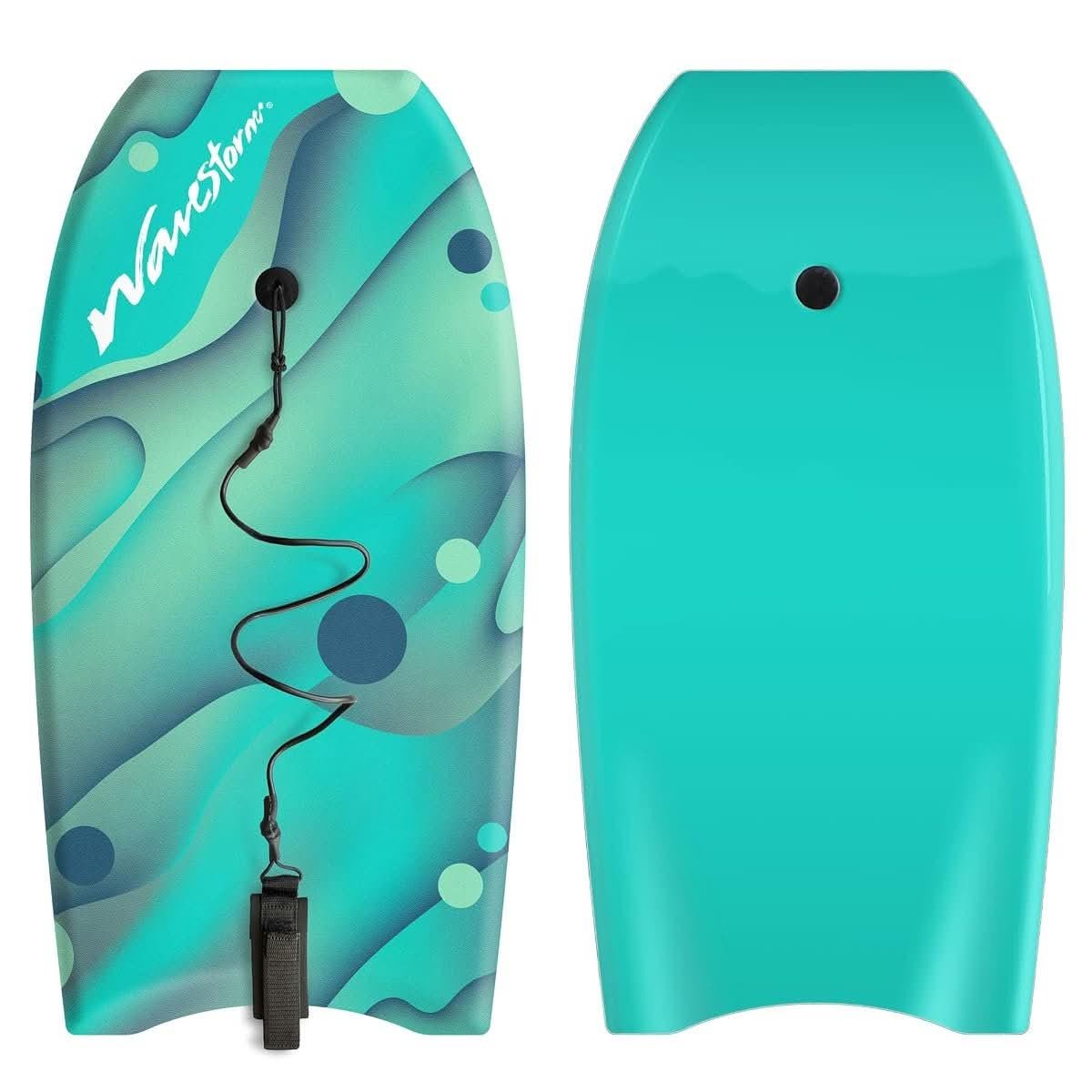
Wavestorm is the board most Australians can picture without looking it up, thanks to the surf-shop wall of colour it fills every summer. The 36-inch size here sits in the same sweet spot the brand is known for: soft enough on the top deck to grip bare skin, stiff enough on the slick bottom to pick up real speed dropping into a wave instead of just floating on top of it.
The molded foam core keeps the whole board light, and at 4.6 stars it rates higher than every other board here bar the Body Glove pair below. Where the BPS Storm above leans on included accessories, this one leans purely on shaping and materials, with no leash upgrades or fin tethers bundled in.
The honest catch is depth of review data. Twenty-three ratings is a real number but a thin one next to the Bo-Toys board’s 2,520, so treat the 4.6 as promising, not proven. It sits in the mid-range for this category, pricier than the Body Glove pair below but well short of the BPS Storm at the top of this list, and it’s a decent unit for anyone chasing brand recognition without hunting through a specialist surf shop.
Pros
- 4.6 stars, the highest rating of any board here
- Soft top deck comfortable on bare skin
- Molded foam core keeps the whole board light
- Recognisable, widely stocked brand
Cons
- Bright single-colour deck shows sand scuffs more visibly than a patterned top
- No leash upgrade or fin tethers bundled in
- Colour options are limited compared to some rivals
Key specs: 36in, molded foam core, IXL graphic soft top deck, high-density slick bottom.
CHECK ON AMAZON3. Bo-Toys Body Board – Most Reviewed Track Record
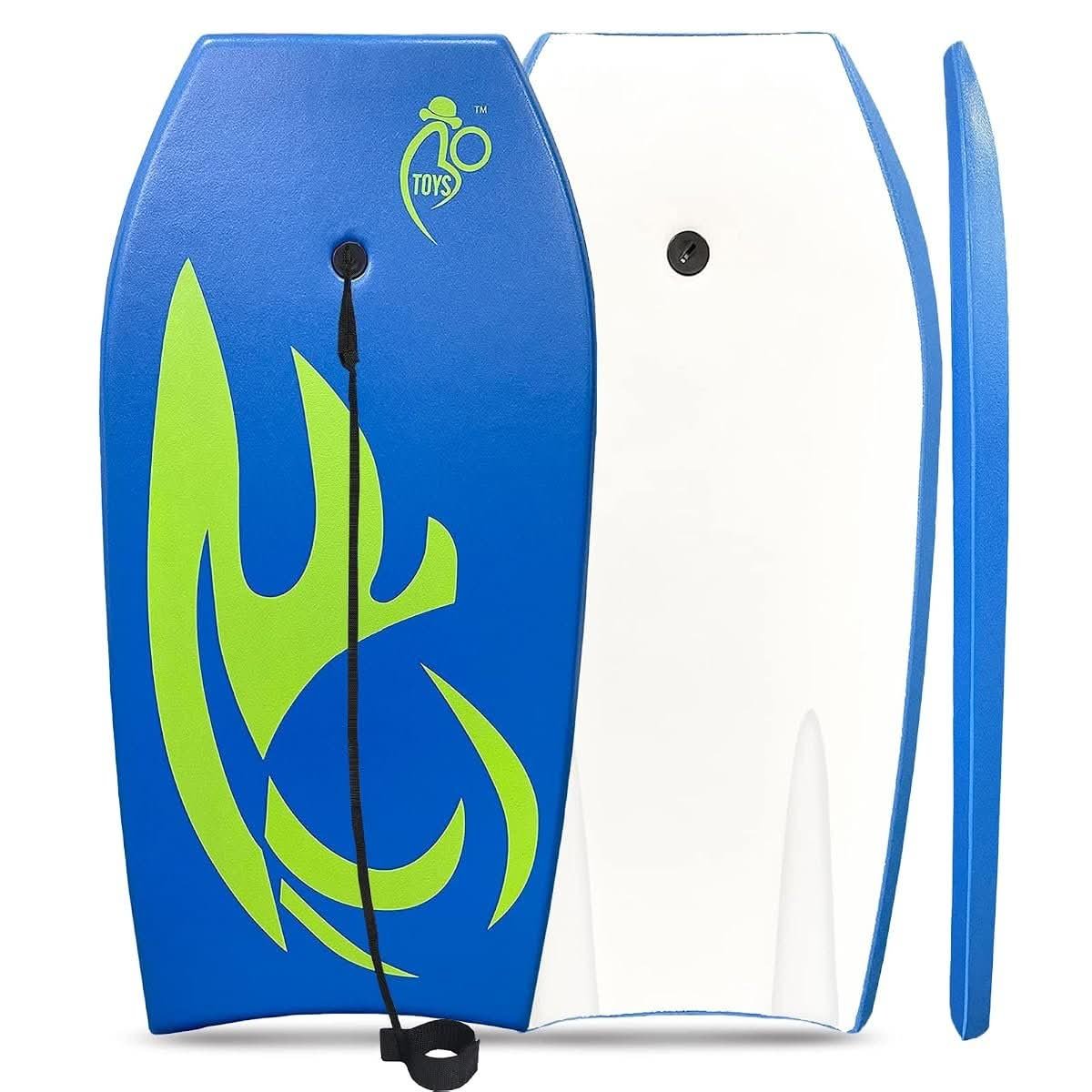
2,520 ratings. That’s not a typo, and it’s roughly twenty times deeper than most of the other review samples here, which makes this the closest thing to a real consensus pick on this list instead of a punt on a handful of five-star reviews.
At 4.3 stars across that sample, the pattern holds up: heat-laminated construction, a crescent tail, and an HDPE slick bottom with channels for a 33-inch board priced about the same as two rounds of fish and chips for the family. A small number of 1-star ratings flag the deck panels feeling flimsy straight out of the box, which tracks with a board built to a budget instead of a surf shop’s premium shelf, so a plasticky first impression is a fair trade for the price.
Pros
- 2,520 ratings, by far the deepest review sample on this list
- 4.3 stars holds up at real scale, not just a handful of reviews
- Heat-laminated construction with a crescent tail
- One of the more affordable full-size boards here
Cons
- A handful of 1-star ratings mention the deck panels feeling flimsy out of the box
- 33in only, no larger size offered
- Comes in red, blue or pink only
Key specs: 33in, EPS core, HDPE slick bottom with channels, heat-laminated construction, crescent tail.
CHECK ON AMAZON4. Body Glove Divert 37″ Bodyboard – Best Budget Full-Size Board
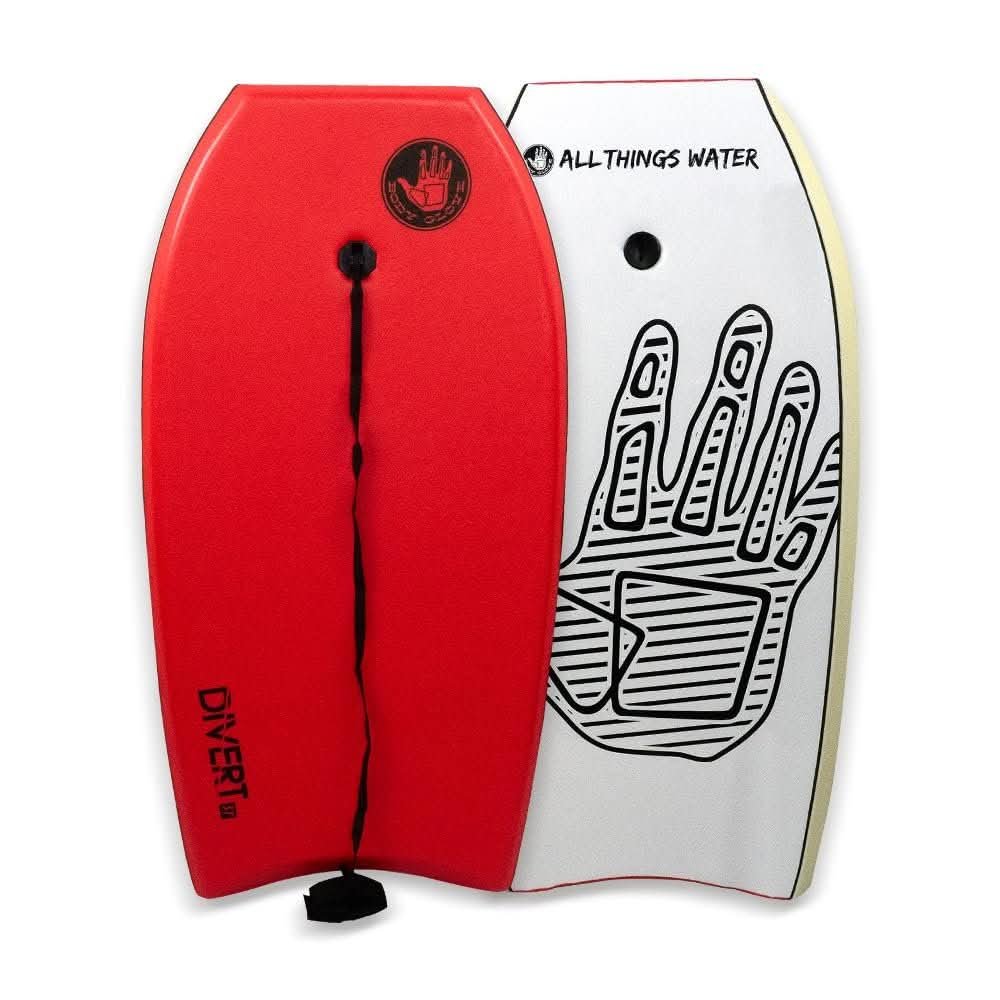
Forty-nine dollars gets you a full 37-inch board here, not a cut-down kids’ size, which makes this the cheapest genuinely full-size pick in the lineup. Body Glove’s glued-layer construction and PP slick bottom suit a rider stepping up from a pool noodle to something that actually catches green water.
At 4.9 stars it edges out every other board here except its own 42-inch sibling below, though the sample is a modest 20 ratings instead of the hundreds behind the Bo-Toys or Contour Surf boards. The crescent tail and fabric leash match the format most boards here use, so the real differentiator is simply price relative to size: nothing else this long costs less.
One detail worth knowing before you buy: the PP slick bottom is stiffer and faster than the HDPE finish on some rivals, but that stiffness makes it a little less forgiving if you accidentally step on the rail getting out of the water. Not a dealbreaker for most buyers, just something to know before the first car park ding.
Pros
- Cheapest full-size (37in) board on this list
- 4.9 stars
- PP slick bottom is fast and stiff
- Glued-layer construction built for repeated use
Cons
- PP slick bottom marks up if you set the board face-down on a boat ramp or gravel car park
- Fabric leash cuff isn’t as forgiving on the wrist as a neoprene one over a long session
- Only one length offered under this listing
Key specs: 37in, XPE top deck, EPS core, PP slick bottom, glued construction, crescent tail, fabric leash.
CHECK ON AMAZON5. Body Glove Velocity 42″ Bodyboard – Best for Taller Riders
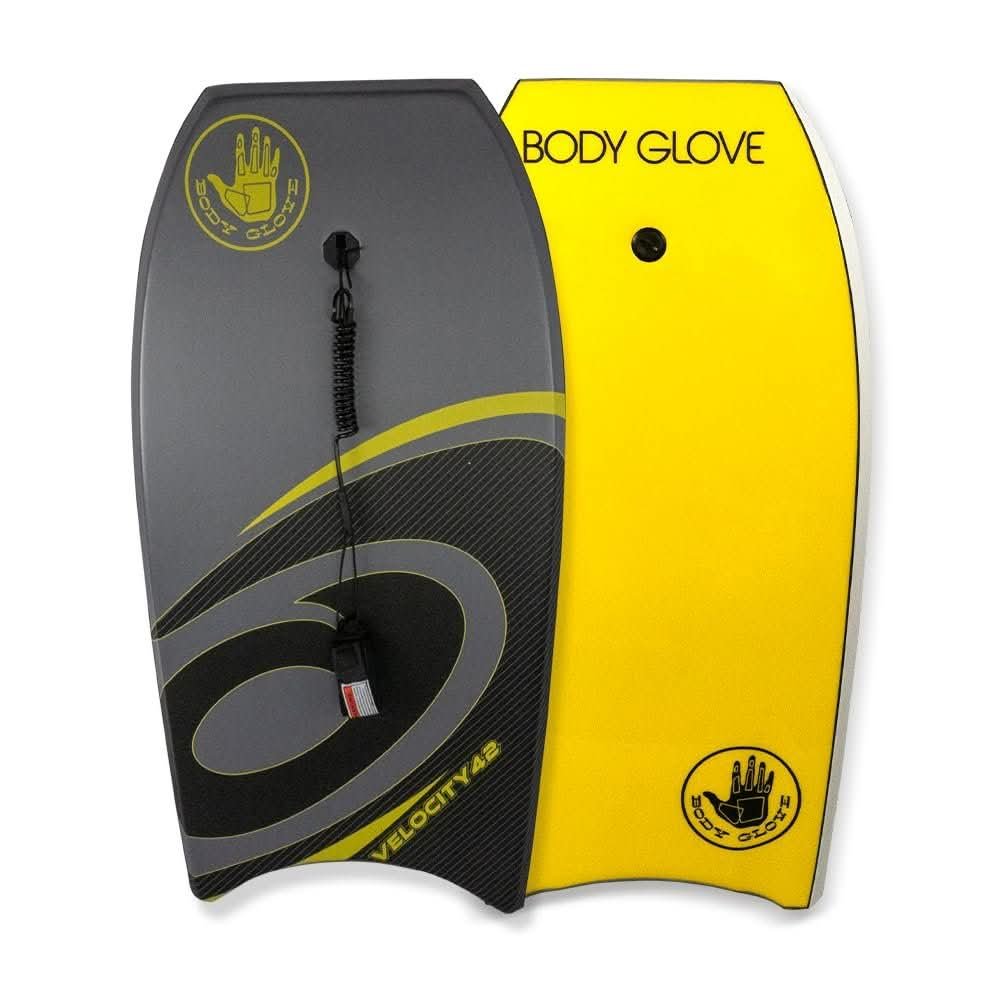
Six centimetres longer than most boards here sounds trivial until you’re the rider whose knees hang off the tail of a 33-inch board. The Velocity’s 42-inch length targets adults and taller teens specifically, which the Divert above doesn’t.
The IXPE top deck is softer underfoot than the Divert’s XPE, and the heat-laminated build is meant to resist delamination longer than a simple glued layer does, at least on paper. At 4.8 stars across 12 ratings it’s a smaller sample than most boards here, so weigh the rating as a good early sign instead of a settled verdict.
Pros
- 42in length suits taller riders the shorter boards here don’t
- Heat-laminated construction
- IXPE deck softer underfoot than the Divert’s XPE
- 4.8 stars
Cons
- 42in doesn’t fit in a standard car boot without folding a seat down
- Extra length means extra weight paddling back out through whitewater
- Same brand as the Divert above, so no real style differentiation
Key specs: 42in, IXPE top deck, EPS core, HDPE slick bottom, heat-laminated construction, crescent tail.
CHECK ON AMAZON6. Contour Surf Reed Body Board – Best for Grommets
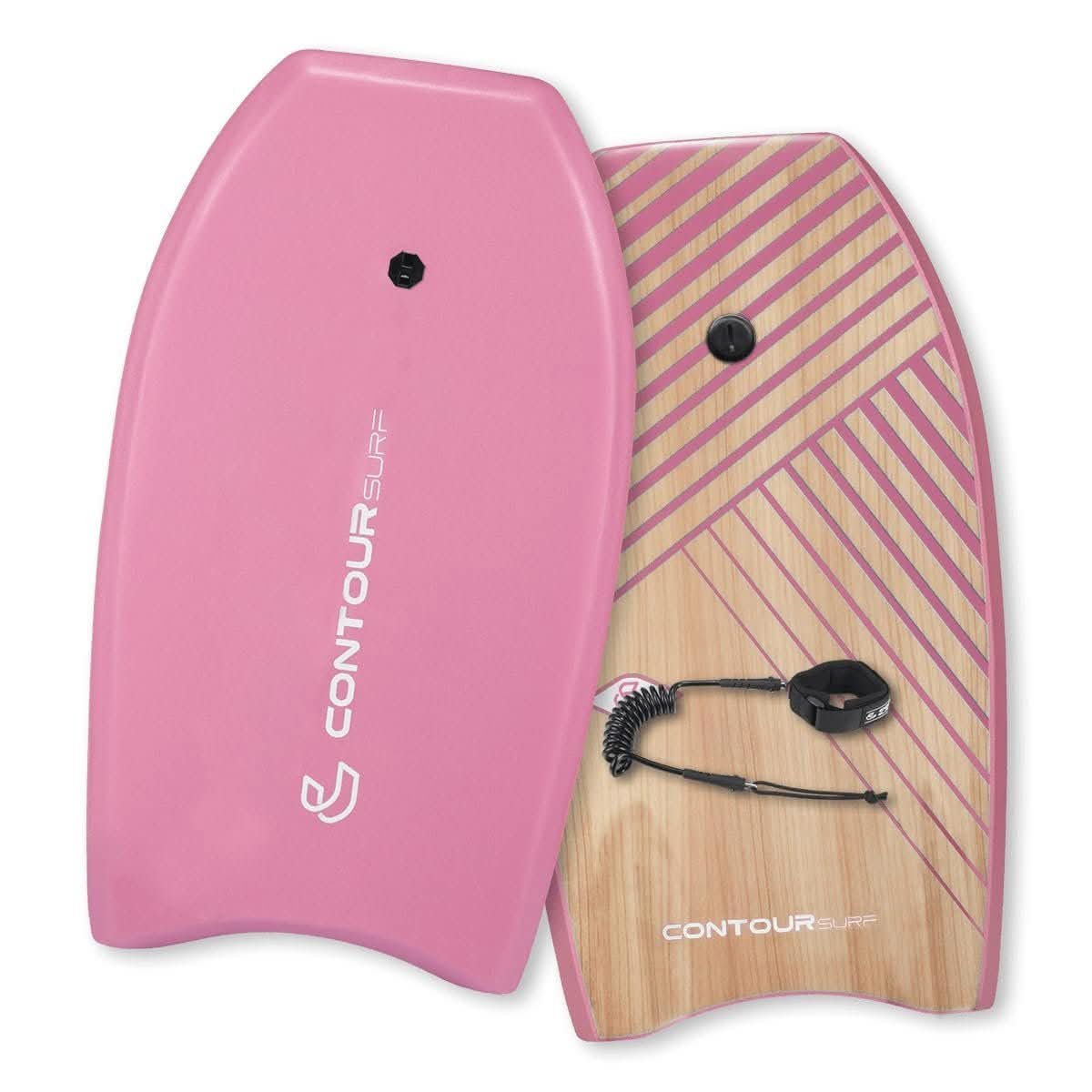
A kid’s first proper board needs two things: small enough to actually control, and tough enough to survive being dragged up the sand by one arm. The Reed’s 33-inch frame and internal FRP stringer both point at exactly that rider, the grommet still working out how to angle a board into a wave instead of just floating over it.
The stringer is the detail worth pausing on. Most budget boards here skip a stringer entirely and lean on the EPS core alone, but Contour Surf runs a weather-resistant FRP rod through the middle, the same reinforcement idea CHOICE’s buying guide flags as typical of polyethylene-core boards. At 124 ratings and 4.7 stars, it’s the second-deepest sample here after the Bo-Toys board and comfortably the best-reviewed of the boards priced under it.
The stainless double-swivel coiled leash is a real upgrade over a plain wrist strap; it doesn’t twist into knots the way a straight leash does after an hour of duck-diving under whitewater. It also sits in the mid-range for this category, a step up in price from the Body Glove Divert above but well short of the BPS Storm, and it’s worth a look if you’re outfitting a kid who’s outgrown the pool noodle stage but isn’t ready for anything bigger.
Pros
- FRP stringer most budget boards here skip
- 124 ratings at 4.7 stars, a properly deep sample
- Stainless double-swivel coiled leash resists tangling
- Compact 33in size suits younger riders
Cons
- 33in only, nothing bigger if a rider grows out of it
- Dual channel bottom adds a little drag compared to a plain slick
- Magenta colourway won’t suit every kid’s taste
Key specs: 33in, FRP stringer inside EPS core, IXPE deck, HDPE slick with mesh reinforcement, dual channels, stainless coiled leash.
CHECK ON AMAZON7. Nalu Bodyboard with Leash – Best for First-Timers
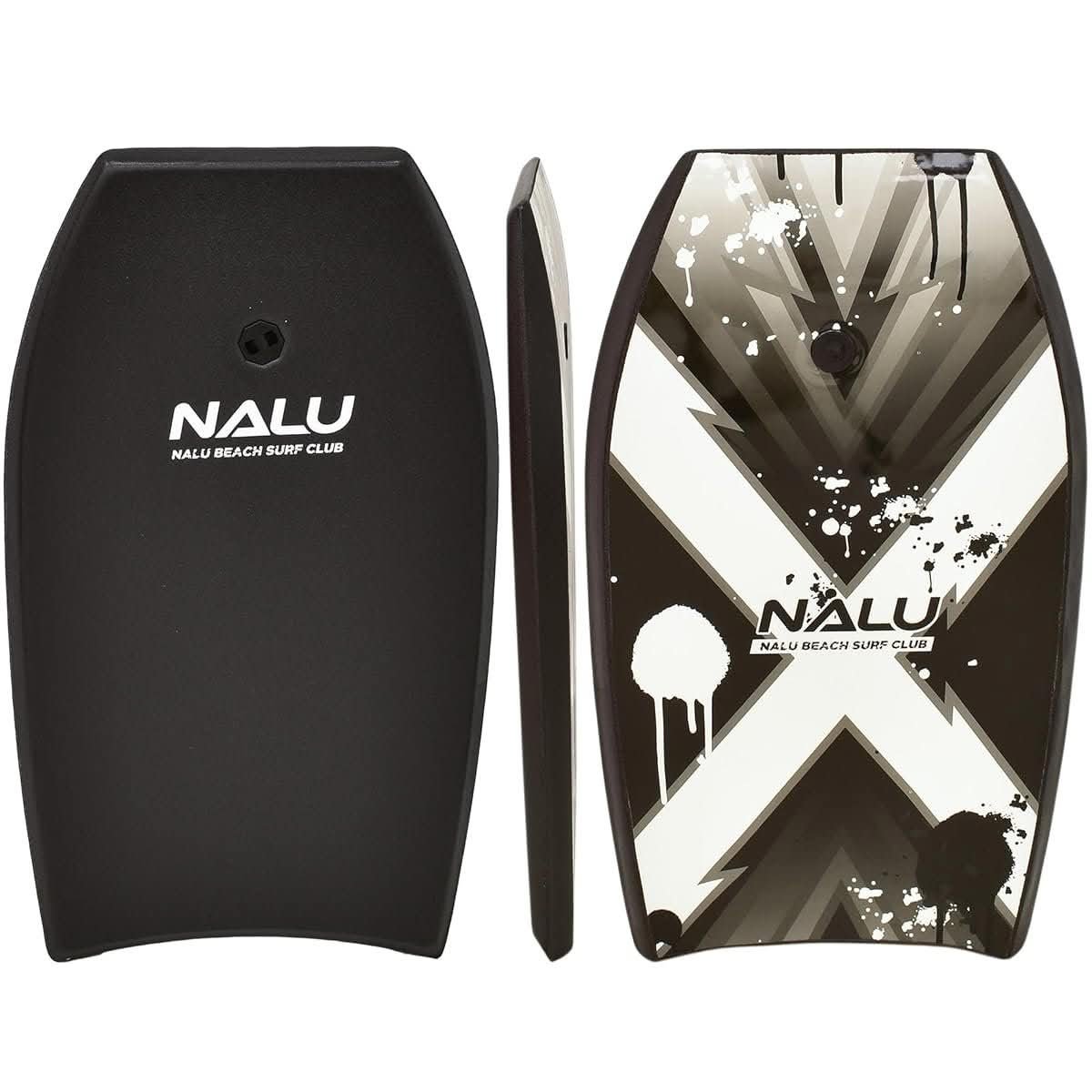
Nalu says outright this board is built with beginners in mind, and the spec sheet backs it up: rated from age six, available in 33 or 41 inches depending on the rider, and a crescent tail shaped specifically to keep a first-timer steady instead of fast. That’s a different design goal to the Contour Surf board above, which is compact for kids but still built around stringer stiffness instead of beginner forgiveness.
The XPE textured deck adds a layer that resists dings and stops the board waterlogging, useful in the sort of choppy, crowded shore break you get on a patrolled Gold Coast beach in January. At 92 ratings and 4.4 stars, it sits in the middle of the pack for review depth, deep enough to trust but not the outlier the Bo-Toys board is.
A short one: does the job. The leash plug and wrist strap are included and match the pattern of most boards here, nothing special, nothing missing either.
Pros
- Explicitly designed and rated for beginners from age six
- Available in 33in or 41in
- XPE textured deck resists dings and waterlogging
- 92 ratings at 4.4 stars
Cons
- Crescent tail is shaped for stability over speed, so it’s not the pick for an experienced rider chasing pace
- Colour options limited to black in the smaller size
- No fin tethers included
Key specs: 33in/41in, EPS core, HDPE slick base, crescent tail, XPE textured deck, ages 6 plus.
CHECK ON AMAZON8. Aquarm XPE Bodyboard – Best Multi-Size Fit
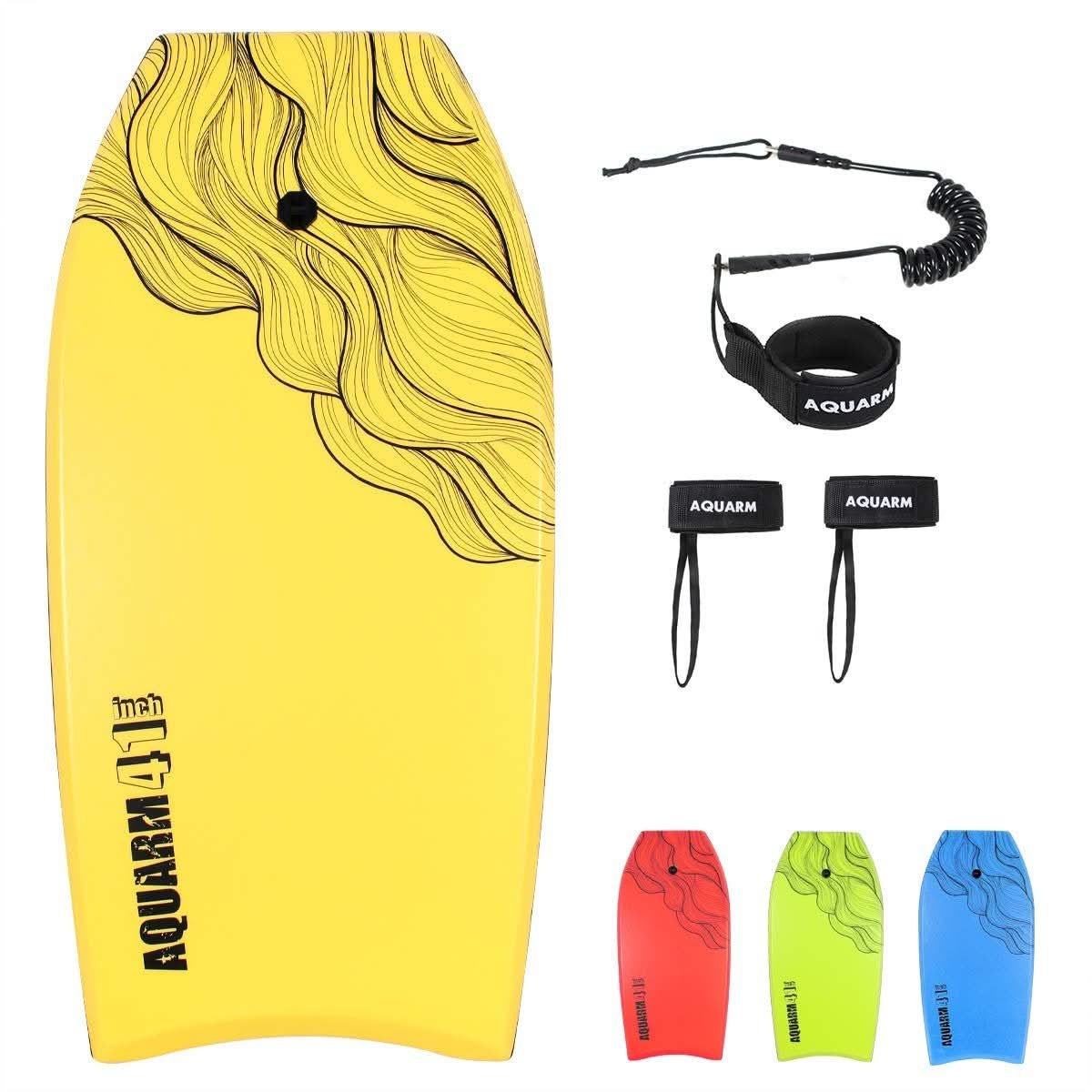
Three sizes under one listing, 33, 36 and 41 inches, means this is the pick for a household where one kid is still small and the other’s shot up over summer. The XPE deck and EPS core match most of the field, but the fin tethers included alongside the wrist leash put it closer to the BPS Storm above than the bare-bones boards in the middle of the pack.
What actually stands out is the warranty: a stated one-year replacement guarantee if the board gets damaged, backed by customer service that asks for a photo instead of a receipt and a fight. At 120 ratings and 4.3 stars, it’s a solid middle-of-the-pack result, not the standout the Contour Surf board manages at a similar price, but close.
The neoprene wrist cuff is comfortable enough for a full day at the beach, though a couple of reviewers note the leash cord itself feels thinner than the boards above it here. Fair complaint, minor in practice.
Pros
- Three sizes (33/36/41in) under one listing
- Fin tethers included alongside the wrist leash
- 1-year replacement warranty stated upfront
- 120 ratings at 4.3 stars
Cons
- Leash cord feels thinner than the coiled leashes on the BPS Storm or Contour Surf boards
- 4.3 stars trails the Contour Surf board at a similar price
- XPE deck shows scuffs faster than the IXPE decks on the Body Glove pair
Key specs: 33/36/41in, XPE deck, EPS core, fin tethers and wrist leash included, 1-year replacement warranty.
CHECK ON AMAZON9. Manta Sonic EPS Bodyboard – Best Stringer-Reinforced Build
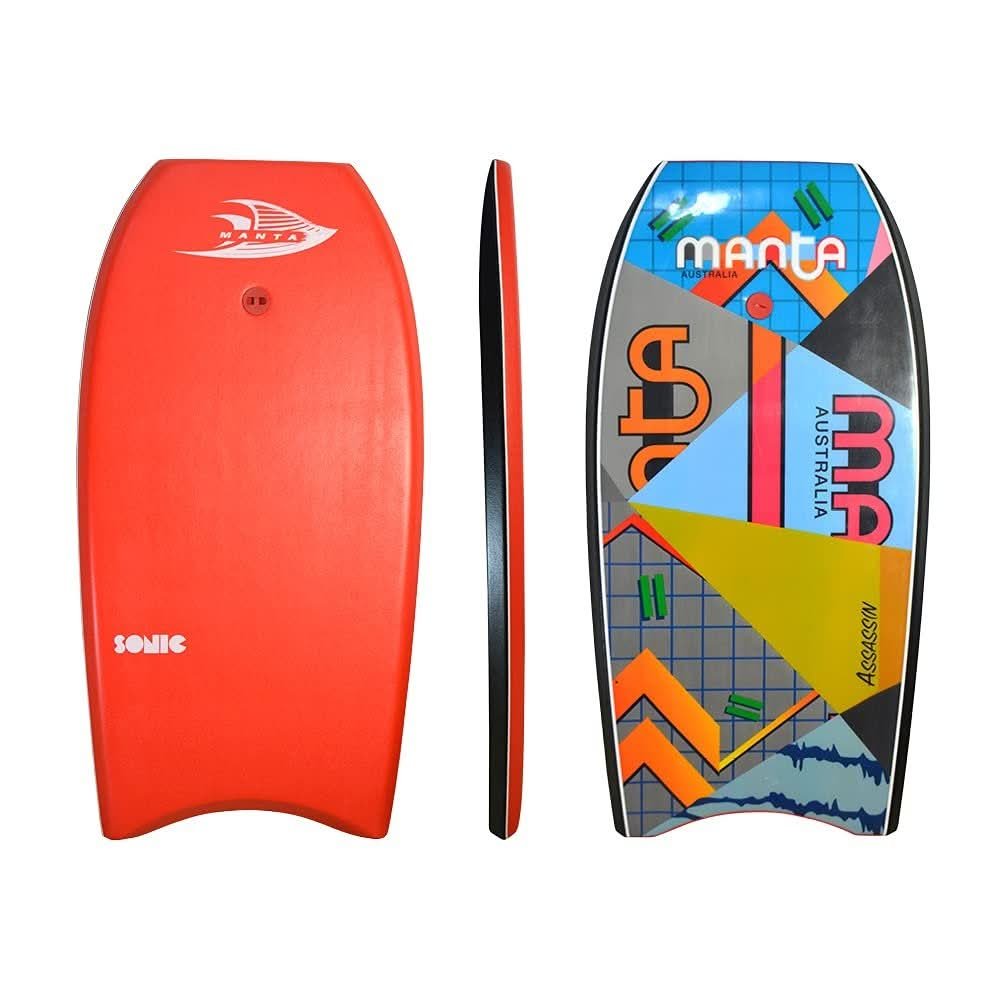
Where the Contour Surf board above uses a stringer to hold a compact 33-inch board steady for a beginner, the Manta Sonic uses one for the opposite reason: to stop a bigger board flexing too much once an experienced rider starts pushing it through a proper bottom turn.
The Manta plug and internal stringer are the two features called out on the listing, and they’re the sort of build detail a more serious rider looks for instead of a beach-day-only buyer. It’s also the thinnest review sample among the foam boards here at just 12 ratings and 4.2 stars. Fair to flag that as a weakness, though the stringer-and-plug combination is otherwise missing from every board on this list bar the Contour Surf, which is why it earns a spot anyway for anyone chasing that build style specifically.
Pros
- Internal stringer for a stiffer, more responsive ride
- Manta plug is a proper leash attachment point, not just a hole in the foam
- One of only two stringer-reinforced boards on this list
Cons
- Stiffer stringer-reinforced flex is less forgiving for a beginner still learning to angle the board
- 4.2 stars, the lowest rating of any board on this list
- Listing is light on size and dimension detail compared to rivals
Key specs: EPS core with internal stringer, Manta plug, wrist web leash.
CHECK ON AMAZON10. iBoard Portable Inflatable Bodyboard – Best Inflatable and Most Packable
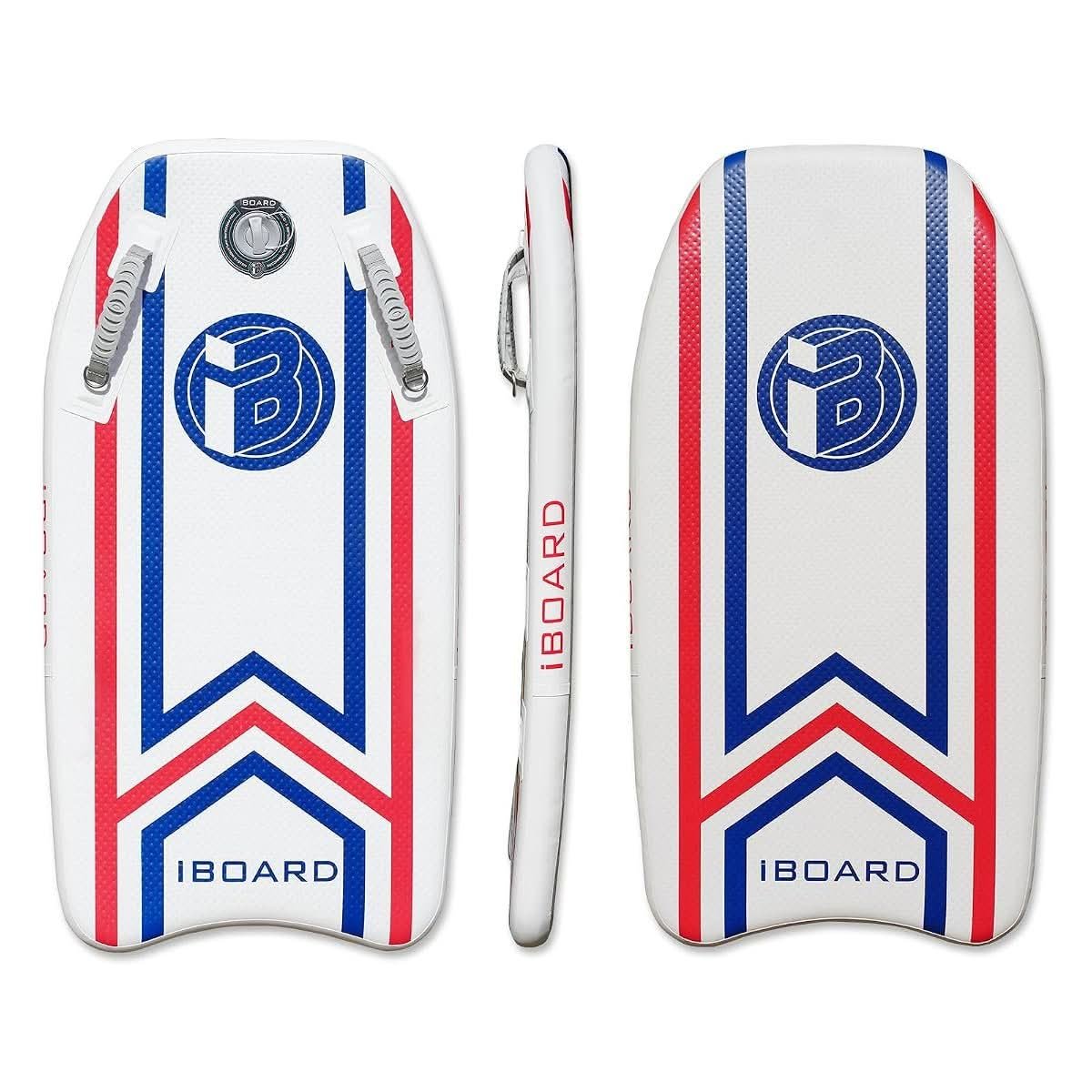
This is the one we nearly cut from the list. An inflatable board is a different product to the other nine here, and with only 8 ratings behind it, the evidence base is thin by any measure. It survived the cut because it answers a real question none of the foam boards can: what do you do if you’re flying to the coast instead of driving, or if the hallway cupboard simply doesn’t have room for a 42-inch foam slab all year.
Rolled up, it packs down to roughly the footprint of a rolled beach towel, about 23.6 by 7.8 by 3.1 inches in the included storage bag, and the military-grade PVC shell carries a rider up to 102kg, a hard figure backed by the air chamber’s volume instead of a soft foam-board estimate. Inflate it to 8-12 PSI with the included adapter and it holds a flat, stable platform close to what a foam board offers, though nobody’s claiming it matches a stringer-reinforced board like the Manta above for stiffness in bigger surf.
Two honest trade-offs: it ships as an international order, so budget closer to two or three weeks instead of the few days most other boards here take, and a punctured inflatable is a dead board in a way a foam one simply isn’t. Worth it specifically for packability, not for anyone chasing performance in a decent Torquay swell.
Pros
- Rolls down to fit a carry-on bag, unlike every foam board on this list
- Carries a 102kg adult, a hard figure not a soft estimate
- Multiple handles for two people to use it together
- Comes with a pump adapter and storage bag
Cons
- The safety valve leaves a small bulge on the underside instead of a perfectly flat deck
- Ships as an international order, so allow two to three weeks instead of a few days
- A puncture takes it out of action entirely, unlike a dinged foam board
Key specs: 42in x 21in x 2in inflated, rolls to 23.6 x 7.8 x 3.1in, military-grade PVC, holds up to 102kg, 8-12 PSI.
CHECK ON AMAZONHow to Choose a Bodyboard
Match the board to the rider’s height, not their age. CHOICE’s own bodyboard buying guide puts it simply: the board should reach roughly the rider’s navel when stood on its end. A board that’s too long is hard for a lighter rider to control through a turn, and one that’s too short won’t have enough surface area to plane properly once the rider puts any real weight on it.
Decide whether you actually need a stringer. A stringer-reinforced board, like the Contour Surf or Manta boards here, holds its shape better under load and resists the slow banana-curve most foam boards develop after a season in a hot car boot. Riding mostly whitewater on a patrolled beach? Skip it and save the money. Chasing green waves and bottom turns most weekends? It’s worth the extra.
Check what’s actually included before you compare on price alone. A board with a coiled leash and fin tethers in the box, like the BPS Storm or Aquarm picks, can work out cheaper overall than a bare board plus separately bought accessories, even if the sticker price looks higher at first glance.
Think about where you’re actually going to use it. A Bass Strait or Tasmanian break runs cold enough that a wetsuit changes how a leash cuff needs to fit, while a Sunshine Coast or northern NSW sandbar in summer means UV exposure and box jellyfish stinger season (typically November to May in tropical waters) matter more than water temperature. None of the boards here are safety equipment, so read the ACCC’s swimming and flotation aids guide before assuming a bodyboard doubles as a flotation device for a weak swimmer.
Don’t ignore the leash hardware. A cheap straight cord tangles and drags; a coiled leash with a proper cuff, like the ones on the BPS Storm and Contour Surf boards above, stays out of the way until you actually need it. It’s a small part of the total cost but the part most likely to annoy you every single session if it’s poorly made.
Buy for the worst day, not the best one. If you’re picking a board for a family with mixed ages and skill levels, it’s worth pairing it with a proper setup for the rest of the group. Sort the beach seating out first with a set of the best beach chairs in Australia, and the bodyboard choice gets a lot less stressful once everyone else on the sand has somewhere to sit.
You’ll Also Want
A pair of proper bodyboard swim fins makes more difference to how many waves you actually catch than upgrading the board itself, since fins are what let you kick into a wave instead of just floating and hoping.
If the leash that ships with your board feels thin or tangles constantly, a premium coiled replacement leash is a cheap fix that outlasts the stock cord on most budget boards.
A trimmable EVA traction pad stuck to the tail end of the deck stops your back foot slipping when you’re pushing off the sand, especially once the factory deck texture wears smooth after a season of use.
Long days in the sun add up fast on a bodyboarding trip, so a UPF 50+ long-sleeve rash vest is worth adding to the cart with the board instead of an afterthought once you’re already sunburnt.
Frequently Asked Questions
What size bodyboard should I buy?
CHOICE’s bodyboard buying guide recommends a simple test: stood on its end, the board should reach roughly the rider’s navel, give or take a few centimetres. A board that’s noticeably longer than that is harder for a lighter rider to control through a turn, while a shorter board won’t plane properly once real weight goes on it. Measure the rider instead of guessing from age alone, since a tall ten-year-old and a short adult need very different lengths.
What is the difference between a bodyboard and a boogie board?
There’s no real difference. Boogie Board is simply the brand name Wham-O used for its original design, and the term stuck the way Esky or Ute did for products that have nothing to do with the original trademark holder. Any board in this lineup, whatever it’s called on the listing, works the same way: ridden lying on your stomach or one knee, without paddling out or standing up the way a surfboard requires.
Do I need fins to bodyboard?
You don’t need fins to start, but they make a real difference to how many waves you actually catch. Fins let you kick into a wave from a stationary position instead of relying purely on the wave’s own push, which matters most in smaller or slower-breaking surf. Beginners in bigger whitewater can skip them at first and add a pair once they’re comfortable positioning the board, since fins take some getting used to on the sand before they help in the water.
Are inflatable bodyboards any good?
Inflatable bodyboards trade some rigidity for real portability, rolling down small enough for a suitcase or a hallway cupboard instead of needing a full-length foam slab stored flat. They hold up fine for casual whitewater riding and carry a stated adult weight limit backed by the air chamber’s volume, but they can’t match a stringer-reinforced foam board for stiffness in bigger, more powerful surf. A slow leak or puncture also takes an inflatable out of action entirely, unlike a dinged foam board that still floats.
Is a bodyboard safe for a child to use unsupervised?
No. The ACCC is explicit that swimming and flotation aids, and by extension recreational items like bodyboards, are not a substitute for active adult supervision, and a mandatory safety standard exists specifically because inflatable water toys and boards are sometimes mistaken for genuine flotation devices. A bodyboard helps a child catch small waves; it doesn’t keep a non-swimmer’s head above water if they lose the board or get caught in a rip. Always supervise kids at the beach and swim between the flags on patrolled beaches.
How long does a bodyboard leash last?
A stock leash on a budget board typically lasts a season or two of regular use before the cord stretches, the cuff Velcro wears out, or the plug attachment starts to feel loose, though a coiled leash with a neoprene cuff generally outlasts a plain straight cord. Rinse it in fresh water after every beach session and let it dry out of direct sun, since UV exposure is what actually breaks down the rubber and stitching fastest. A replacement coiled leash costs a fraction of a new board, so it’s worth swapping out at the first sign of fraying instead of waiting for it to snap mid-session.
Verdict
Most buyers land on the BPS Storm Bodyboard or the Bo-Toys Body Board here, and for opposite reasons: the Storm for the coiled leash and fin tethers already in the box, the Bo-Toys for a 2,520-rating track record that’s simply deeper than anything else in this lineup at a similar size. Anyone kitting out a younger rider is better served by the Contour Surf Reed board’s compact 33-inch frame and stringer-backed durability, while the iBoard inflatable earns its spot only if packability matters more to you than outright performance in bigger surf.