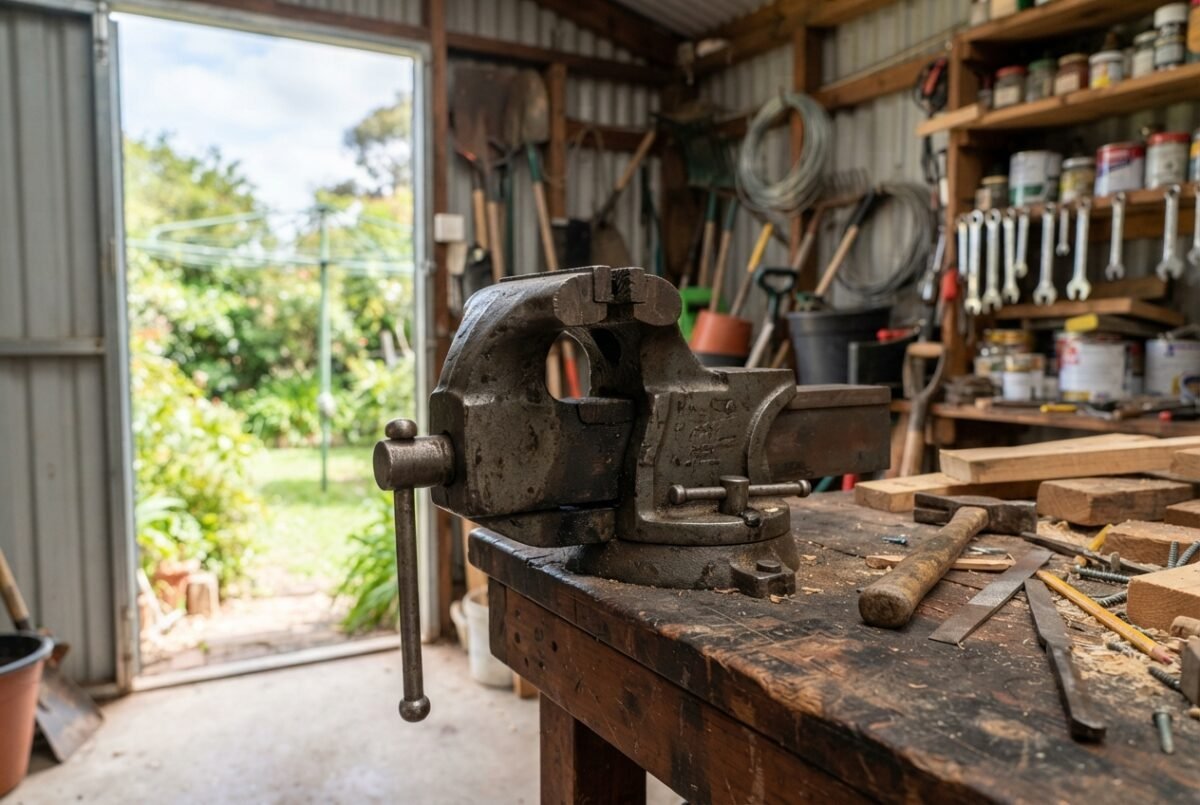
A bench vice is a clamping tool that bolts to a workbench and uses a screw-driven jaw to hold a workpiece rigid with both your hands free for cutting, filing, drilling or hammering. It’s the difference between a spanner slipping off a rusted bolt while you wrestle it with one hand, and the same job taking thirty seconds because the part isn’t going anywhere. Picking the best bench vice in Australia comes down to jaw width, swivel range and how the base actually mounts to your bench, not just how heavy the casting looks in a product photo.
Bench vices sold here split into a few real categories: tradesman or mechanic’s vices with a cast anvil top for hammering, a swivel base and wide jaws for general metalwork; precision or milling vices with ground, parallel jaws built for a drill press or milling machine table rather than everyday bench use; and multipurpose vices that add a second swivel point at the head as well as the base, letting the jaws angle toward you instead of just spinning flat.
Jaw width across the six vices in this guide runs from 4.5 inches (114mm) up to 8 inches (200mm), and the number most buyers skip past is clamping force rather than jaw size – a wider jaw looks more capable in a listing photo, but a vice rated in kilonewtons tells you how hard it can actually squeeze before something gives. Material matters too: ductile iron flexes slightly under shock load, where cheaper grey cast iron can crack outright.
Six bench vices make up this comparison, all actually in stock from a single Australian retailer after a full sweep of every approved partner this site works with turned up nothing else – worth knowing upfront if you’re also weighing up a drill press for the same corner of the workshop, since that category has the opposite problem: plenty of brands, thin local stock on some of the best ones.
Quick Picks
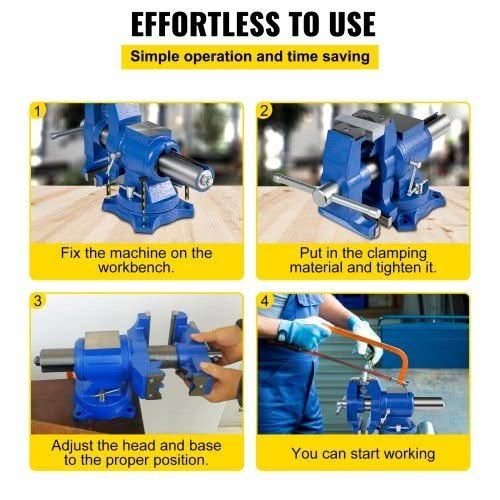
Multipurpose Bench Vise 5 Inch 30kN
Dual swivel at base and head plus the highest clamping force rating here.
CHECK CURRENT PRICE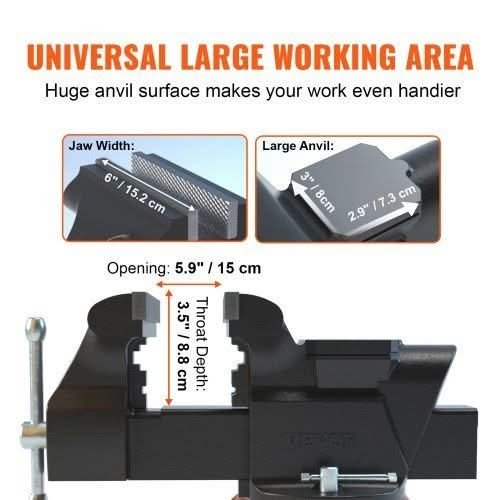
6 Inch Bench Vise with Anvil
A 6 inch ductile iron jaw that covers most home workshop jobs.
CHECK CURRENT PRICE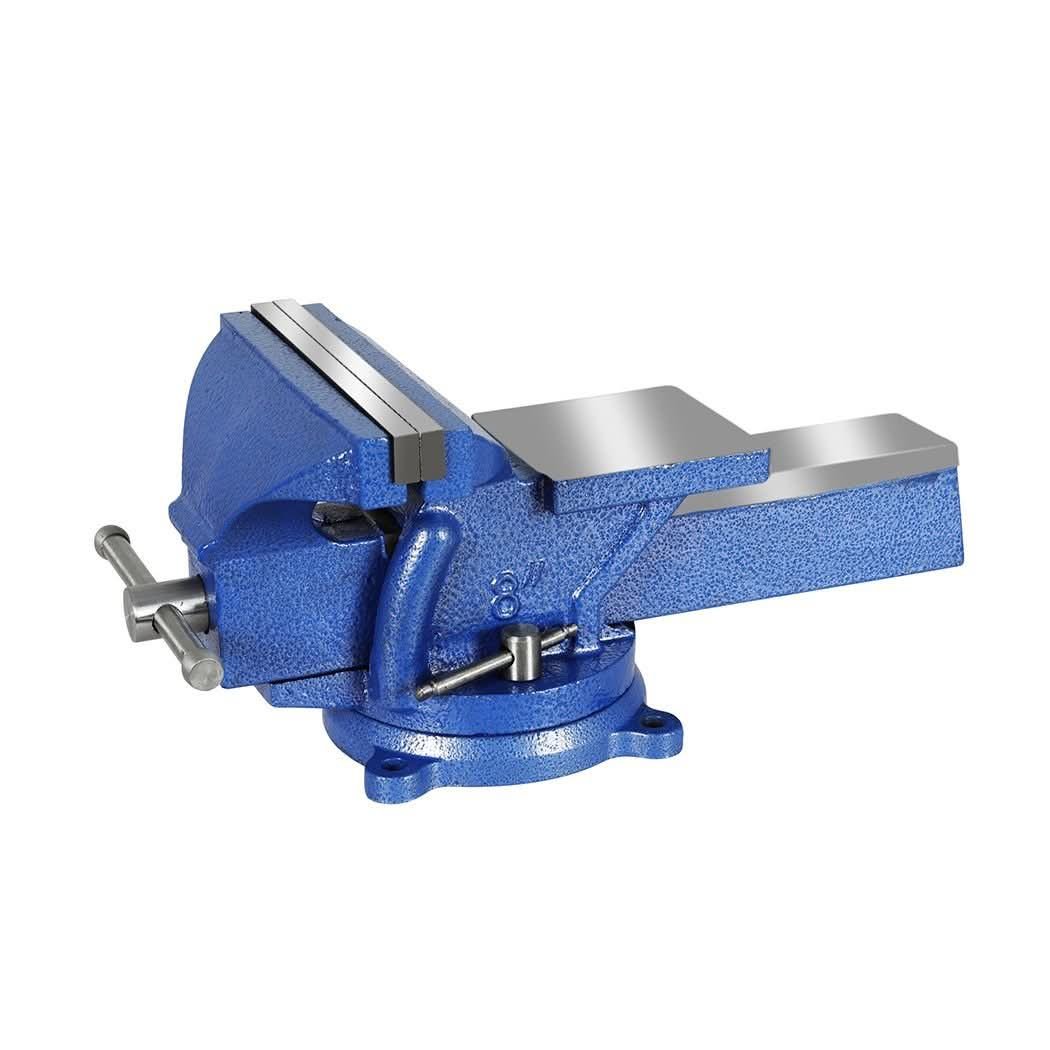
8 Inch Bench Vice with Anvil
The widest jaw in this comparison for wider stock.
CHECK CURRENT PRICEBest Bench Vice Australia Compared
| Product | Link | Type | Best For | Key Spec |
|---|---|---|---|---|
| Multipurpose Bench Vise 5 Inch 30kN | Check price | Multipurpose Vice | Angled clamping, bending and straightening | 127mm (5in) jaw, 30kN rated, swivels at base and head |
| 6 Inch Bench Vise with Anvil | Check price | Tradesman Vice | General home workshop use | 152mm (6in) jaw, ductile iron, anvil top, 360-degree swivel base |
| 8 Inch Bench Vice with Anvil | Check price | Tradesman Vice | Wider stock and heavier bench work | 200mm (8in) jaw, anvil top, swivel base |
| Heavy-Duty Bench Vise with Anvil | Check price | Tradesman Vice | Repeated heavy use | 167mm (6.6in) jaw, ductile iron, anvil top, swivel locking base |
| 4.5 Inch Bench Vise with Anvil | Check price | Tradesman Vice | First workshop, occasional use | 114mm (4.5in) jaw, anvil top, 240-degree swivel base |
| 3 Inch Precision Milling Vise | Check price | Precision/Milling Vice | Drill press and milling machine tables | 76mm (3in) jaw, precision ground jaws, 360-degree swivel base, flat mounting base |
1. Multipurpose Bench Vise 5 Inch 30kN – Best Multipurpose Vice
Every other vice here swivels at the base only, spinning flat like a lazy Susan. This one adds a second pivot at the head, so the jaws themselves tilt toward you at an angle instead of staying locked flat – properly useful the first time you need to clamp something for an angled cut or a hard-to-reach weld, and mostly irrelevant if you only ever hold things dead flat.
The 30kN clamping force rating is the highest stated figure of the six vices here, translating to roughly three tonnes of squeezing pressure at full wind. That number matters for bending and straightening stock, not for everyday holding, where you’ll rarely wind the screw anywhere near its limit – it’s headroom for the occasional hard job, not a spec you’ll use weekly.
It’s also the most expensive pick here, priced well above the plain 6 inch vice below it for the extra swivel point and higher force rating. Worth it for a home mechanic doing real straightening work on bent panels or brackets; overkill for someone who mostly just needs something to hold a pipe steady while drilling.
Pros
- Only vice in this comparison that swivels at the head as well as the base
- Highest stated clamping force rating at 30kN, useful for bending and straightening
- Anvil top included for light hammering work without a second tool
Cons
- No verified buyer reviews exist yet for this specific listing to confirm long-term durability
- Sits at the premium end of this comparison for a feature most casual users won’t lean on often
- Heavier and bulkier than the plain single-swivel vices here, needing a sturdier bench to bolt to
Key specs: 127mm (5in) jaw, 30kN rated, swivels at base and head
CHECK CURRENT PRICE2. 6 Inch Bench Vise with Anvil – Best All-Around Size
A 6 inch jaw sits right in the middle of what most Australian garages actually need – wide enough for real metalwork, small enough that it doesn’t dominate a bench built for a weekend hobbyist, not a tradie. Ductile iron construction is the detail worth knowing about: it flexes slightly under a hard knock instead of cracking the way cheaper grey cast iron can.
A full 360-degree swivel base means the jaws can face any direction on the bench, handy in a single-car garage where the workbench doubles as storage most of the week and there’s no fixed “front” to work from. The anvil top handles light straightening jobs without reaching for a separate tool.
Compared with the 4.5 inch budget pick further down this list, the extra jaw width and the anvil top are the real upgrade – not raw clamping force, which neither listing states. Compared with the 8 inch pick above it, this one takes up less bench space for the size of job most home users actually bring to it.
Pros
- 6 inch jaw covers most general home workshop tasks without oversized bulk
- Ductile iron body handles shock load better than plain cast iron
- Full 360-degree swivel base works from any angle on the bench
Cons
- No verified buyer reviews exist yet for this specific listing
- No stated clamping force figure, unlike the multipurpose vice above
- Jaw liners aren’t included – bare steel jaws will mark soft or finished stock
Key specs: 152mm (6in) jaw, ductile iron, anvil top, 360-degree swivel base
CHECK CURRENT PRICE3. 8 Inch Bench Vice with Anvil – Best for Bigger Workpieces
The widest jaw in this whole lineup at 200mm, and the obvious pick for anyone regularly clamping stock the smaller vices here simply can’t open wide enough for – box section, wider timber, larger brackets. It’s the one vice here built around capacity first, everything else second, and it’s priced in the middle of this comparison – well below the multipurpose vice above but a step up from the budget pick further down this list.
That extra width comes with real trade-offs, not just extra bench space. A bigger vice is a heavier vice, and mounting one to anything short of a solid workbench top risks the bench flexing before the vice does. It’s also the wrong pick for small, fiddly work, where the jaws’ own bulk gets in the way more than it helps.
Pros
- Widest jaw opening in this comparison at 200mm
- Swivel base and anvil top match the feature set of the smaller vices here
- Real capacity upgrade for anyone working wider stock regularly
Cons
- No verified buyer reviews exist yet for this specific listing
- Needs a properly solid bench underneath it – a flimsy benchtop will flex before this vice does
- Overkill in both size and likely weight for small, fiddly repair jobs
Key specs: 200mm (8in) jaw, anvil top, swivel base
CHECK CURRENT PRICE4. Heavy-Duty Bench Vise with Anvil – Best Heavy-Duty Build
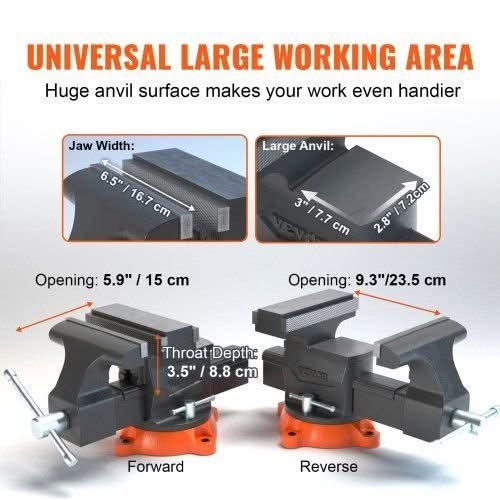
Sitting between the 6 inch and 8 inch picks above at 167mm, this one is priced and built like the step-up option, not the entry point – a swivel locking base (not just a swivel base) holds the set angle firmly once you’ve picked it, instead of creeping back under load the way a plain friction swivel can over years of use.
Ductile iron construction again, same reasoning as the 6 inch pick above: better shock resistance than cheap grey cast iron, which matters more the harder and more often this vice actually gets used. Think of this one as the “buy it once” option in the middle of the range – a reasonable step up from the budget pick if this is going to be a proper daily-use tool instead of an occasional one.
Pros
- Swivel locking base holds a set angle firmly instead of creeping under load
- Ductile iron construction for better shock resistance than plain cast iron
- Jaw width sits usefully between the 6 inch and 8 inch picks in this comparison
Cons
- No verified buyer reviews exist yet for this specific listing
- Priced above the plain 6 inch vice above for a locking feature casual users may not need
- No stated clamping force figure to compare against the multipurpose vice at the top of this list
Key specs: 167mm (6.6in) jaw, ductile iron, anvil top, swivel locking base
CHECK CURRENT PRICE5. 4.5 Inch Bench Vise with Anvil – Best Budget Pick
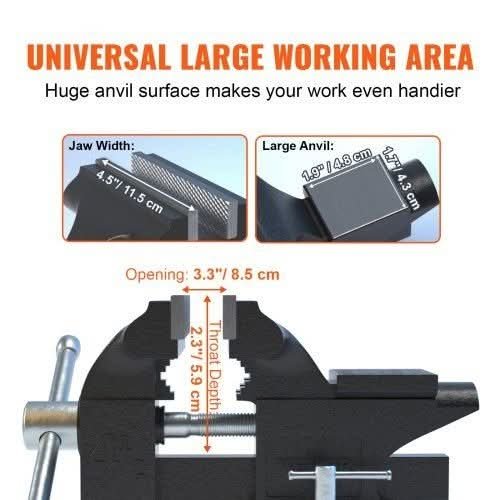
The cheapest and smallest vice in this comparison, and honestly fine for what most home users actually ask a vice to do – hold a pipe fitting steady, grip a bracket for drilling, steady a bike part for a quick repair. A 240 degree swivel (not the full 360 degrees on the pricier picks here) covers most working angles without the extra cost of a full-rotation base.
This is the sensible starting point for a first home workshop or a renter setting up a garage bench that doesn’t need to survive a tradie’s daily workload. Anyone planning truly heavy, frequent use should look at the 6 inch or 8 inch picks above instead – the jump in jaw width and build weight is real, not just marketing.
Pros
- Cheapest vice in this comparison, a sensible entry point for a first workshop
- 240-degree swivel base covers most practical working angles
- Anvil top included at this price point, matching the pricier picks here
Cons
- No verified buyer reviews exist yet for this specific listing
- Smaller 114mm jaw won’t handle wider stock the 6 or 8 inch picks here manage easily
- 240-degree swivel is more limited than the full-rotation base on every other vice here
Key specs: 114mm (4.5in) jaw, anvil top, 240-degree swivel base
CHECK CURRENT PRICE6. 3 Inch Precision Milling Vise – Best for Precision Work
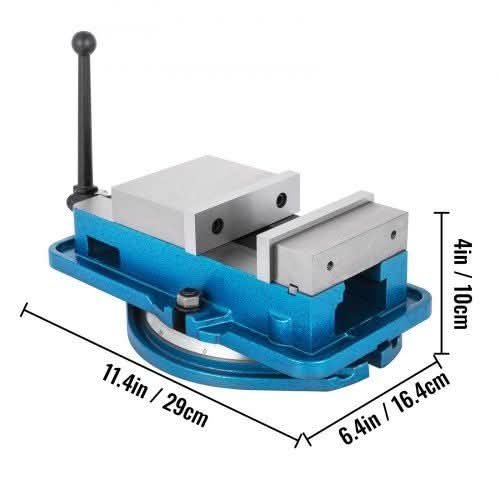
Every other pick here is a general bench vice. This one isn’t, and mixing the two up is the single most common mistake in this category. Ground, parallel jaws and a flat mounting base are built for bolting to a drill press table or a small milling machine, where the workpiece needs to sit dead square to the spindle, not swivel loosely on a benchtop.
A 3 inch jaw is deliberately narrow – precision work rarely involves wide stock, and a smaller vice keeps more of the table clear around the workpiece. The 360-degree swivel base still lets you square it up to the machine table before locking it down, which is where the accuracy actually comes from.
Don’t buy this expecting a general workbench vice. It has no anvil top, no real capacity for wider stock, and it’s honestly the wrong tool for holding a pipe steady while you drill a hole by hand on an ordinary bench. Pair it with a drill press specifically, or skip it for one of the tradesman-style picks earlier in this comparison.
Pros
- Ground, parallel jaws built for real alignment accuracy on a drill press or mill
- Compact 76mm jaw keeps more of a small machine table clear
- 360-degree swivel base for squaring the workpiece before locking down
Cons
- No verified buyer reviews exist yet for this specific listing
- No anvil top and limited capacity for anything other than precision work
- The wrong choice entirely for general bench clamping – buyers wanting an all-rounder should look elsewhere in this comparison
Key specs: 76mm (3in) jaw, precision ground jaws, 360-degree swivel base, flat mounting base
CHECK CURRENT PRICEHow to Choose a Bench Vice in Australia
Jaw width sets your ceiling, not your everyday job. A 4.5 or 5 inch vice handles most home workshop tasks – holding a pipe steady, gripping a bracket for drilling, clamping a bike part for repair. Step up to 6 or 8 inches only if you’re regularly working stock wide enough to need it; a bigger vice also eats more bench space and needs a heavier bench to bolt to safely.
Ductile iron is a real upgrade over plain cast iron, not marketing. ProductReview.com.au’s own listing for a budget swivelling vice logs a genuine complaint about brittle, thin-walled cast iron snapping under real work, to the point reviewers say it only reliably holds soft materials rather than actual metalwork. Ductile iron flexes slightly under shock load instead of cracking outright, which matters the first time a hammer blow lands off-centre.
Swivel range decides how often you fight the vice instead of the job. A base that swivels lets you angle the workpiece toward good light or a comfortable arm position instead of walking around the bench. The multipurpose pick in this guide swivels at the head as well as the base – properly useful for angled cuts, less so if you only ever clamp things dead flat.
An anvil top isn’t decoration. Most of the vices here include a flat cast anvil section behind the jaws, meant for light hammering and straightening work without needing a separate anvil block. It won’t replace a real blacksmith’s anvil for heavy forge work, but for straightening a bent bracket it saves buying a second tool.
Mount it properly or the spec sheet doesn’t matter. SafeWork SA’s own hand tools guidance is specific on this point: the workpiece should be held in a secure, stable mounting device such as a vice bolted to a bench, not held in your hand, before cutting or drilling starts. See SafeWork SA’s hand tools guidance for the full picture – a vice sitting loose on a bench edge is a genuine pinch and crush hazard, not just an inconvenience.
A milling vice is a different tool wearing a similar name. Ground, parallel jaws and a flat mounting base are built for a drill press or milling machine table, where alignment accuracy actually matters to the job. Buying one expecting a general workbench vice, or the reverse, is the most common mismatch in this category.
You’ll Also Want
A Olympia Tools Magnetic Vise Jaw Pads protects soft or finished stock (a bike frame, a painted panel, a chrome fitting) from the bare steel jaws leaving permanent marks.
Swapping in a HimaPro Steel Bench Block gives a dedicated flat surface for light straightening and stamping work without relying on the vice’s own anvil top, which is smaller and not always positioned for a comfortable swing.
A Supercraft 50mm G-Clamp handles the smaller, quicker jobs a full bench vice is overkill for – holding a moulding for glue-up, steadying a workpiece for a five-second cut – without walking over to the main bench.
If the vice is going on a new bench build rather than an existing one, a tool box keeps the mounting bolts, spare jaw pads and everything else from disappearing into a general shed drawer.
Frequently Asked Questions
What size bench vice do I need for a home workshop?
Most home workshops are well covered by a 4.5 to 5 inch jaw width, the size used on two of the six vices in this guide. It handles pipes, brackets, bike parts and general repair jobs without eating excessive bench space. Step up to 6 or 8 inches only if you’re regularly clamping wider stock, since a bigger vice also needs a heavier bench underneath it to stay stable.
What’s the difference between a bench vice and a machinist’s or milling vice?
A standard bench vice has a swivel base and an anvil top, built for general clamping, hammering and metalwork on an ordinary workbench. A milling or machinist’s vice has ground, parallel jaws and mounts flat to a drill press or milling table, where precise alignment actually affects the accuracy of the cut. Using one in place of the other usually means fighting the tool instead of the job.
Does a bench vice need to be bolted down, or is clamping enough?
Bolting is the real fix. A vice held on with a clamp can shift under a hard hammer blow or heavy leverage exactly when you need it most stable, and SafeWork SA’s own hand tools guidance treats a secure, stable mounting as part of using the tool safely, not an optional extra. If your bench top can take four bolt holes, use them instead of relying on a portable clamp-on base.
What does clamping force in kilonewtons actually mean?
It’s the maximum squeezing pressure the jaws can apply before the mechanism is stressed past its rating, not a measure of jaw width. The multipurpose vice here is rated to 30kN, roughly three tonnes of clamping pressure – more relevant to bending and straightening work than everyday holding, where you’ll rarely wind the screw anywhere near its limit.
Is ductile iron actually better than cast iron for a bench vice?
Yes, for anything beyond light hobby use. Ductile iron has a different internal grain structure that lets it flex slightly under shock load, where plain grey cast iron tends to crack. ProductReview.com.au’s listing for a budget cast iron vice logs exactly this complaint – a body reviewers describe as brittle enough to snap under real metalwork, reliable only for soft materials.
Can a bench vice damage the workpiece it’s holding?
Yes, if the bare serrated jaws grip anything softer than raw steel. Chrome fittings, painted panels, bike frames and finished timber all mark or crush under full clamping pressure from steel jaws. A set of magnetic or bolt-on soft jaw liners solves this cheaply and comes off in seconds when you go back to gripping raw metal stock.
Verdict
For most home workshops, the 6 inch vice with an anvil top covers everyday clamping, light hammering and general metalwork without asking for more bench space than a typical garage can spare. Anyone doing truly heavy straightening or bending work should look at the 30kN multipurpose vice instead, since the dual swivel and higher rated clamping force earn their keep on tougher jobs. Skip both if a drill press or milling machine is the actual destination – the precision vice built for that table is a different tool entirely.