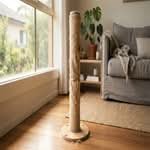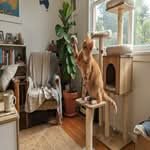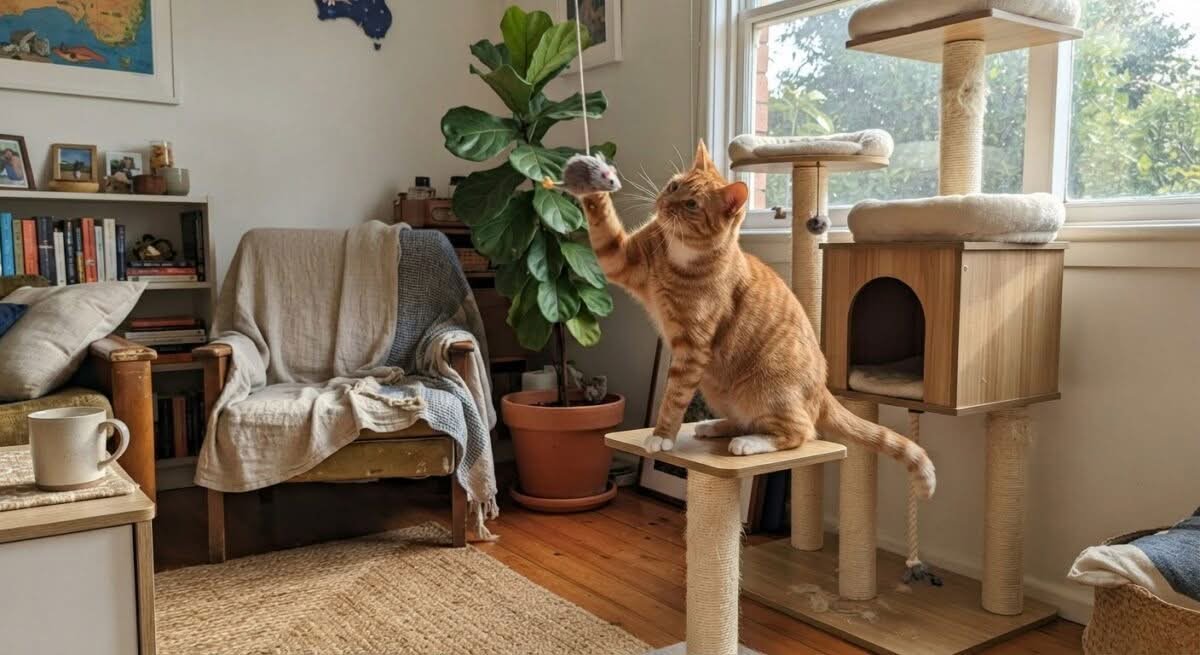
A cat tree is a freestanding, multi-level piece of furniture built from carpeted or sisal-wrapped posts, platforms and enclosed dens that gives a cat somewhere to climb, perch, hide and scratch all in one structure. Under South Australia’s Dog and Cat Management Act, cats must be confined between sunset and sunrise statewide, and Victorian councils including Knox, Wellington and Bass Coast run full 24-hour containment orders, which turns a cat tree from a nice-to-have into the substitute for the outdoor territory a contained cat no longer gets.
The 8 best cat trees in Australia this year split into a handful of distinct types: compact single-post towers under a metre tall for a small apartment, floor-to-ceiling adjustable designs that brace between the carpet and the ceiling, multi-platform towers with hammocks and cave beds built for lounging as much as climbing, and furniture-hybrid designs that hide a litter box or storage cabinet inside the base. A kitten in a one-bedroom rental needs a different tree to a household running three cats through a hallway.
Height, platform count and base footprint are the specs that actually decide whether a tree gets used daily or ignored after a week. RSPCA NSW’s own guidance on recreating the outdoors indoors specifically calls out vertical space as something that lets a cat survey its territory and feel safe, and a cat that can’t get high enough or land somewhere stable will go back to the top of the fridge instead. The trees in this guide run from a compact single-post tower to a 275cm floor-to-ceiling design, with base weight and platform width doing most of the real work in between.
This guide compares eight cat trees available to Australian buyers, compact towers, an adjustable floor-to-ceiling design, hammock-and-cave lounging towers and a litter-box-hiding cabinet hybrid, chosen for different apartments, budgets and cat households instead of eight versions of the same shape.
Quick Picks
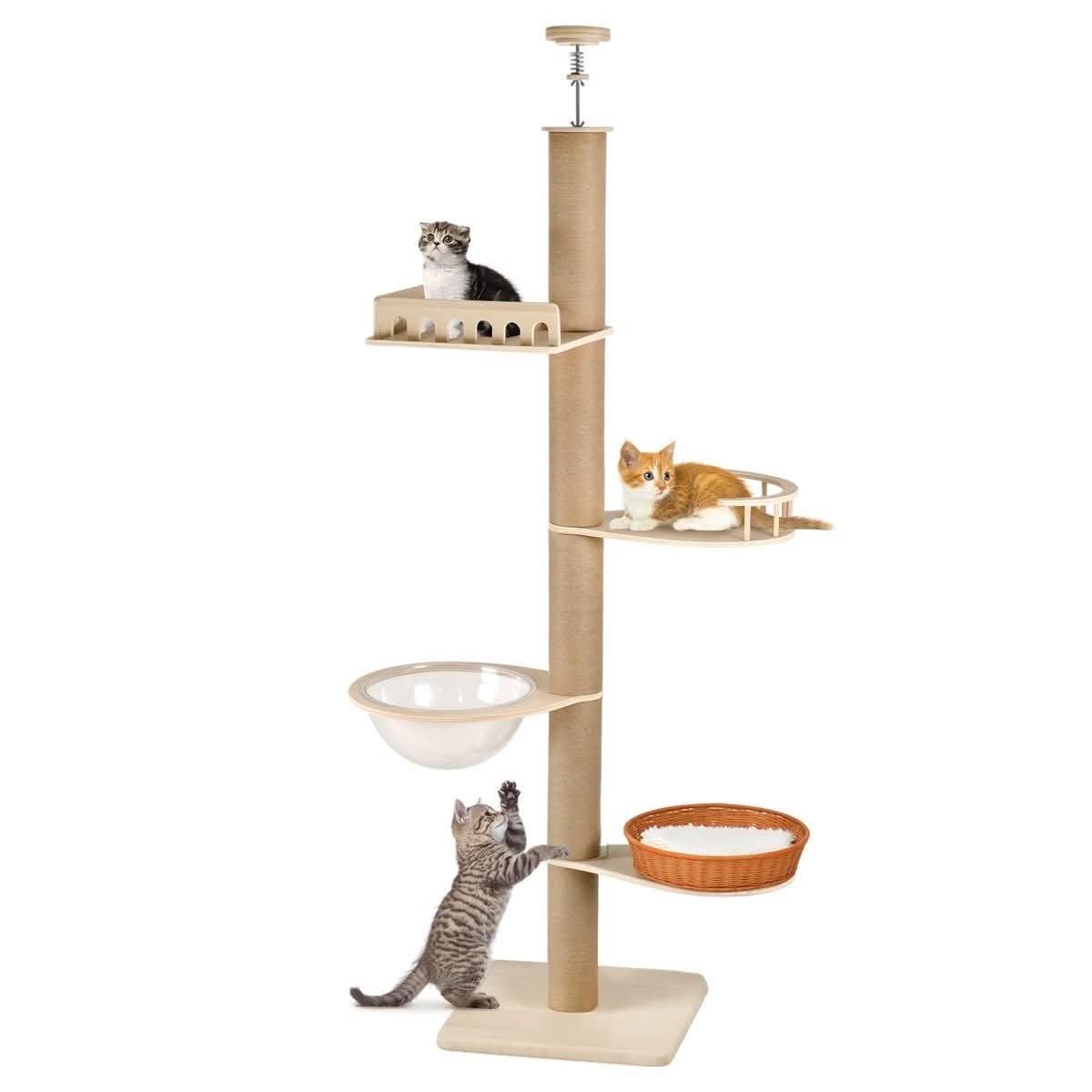
Adjustable Floor-to-Ceiling Cat Tower
This one braces between the floor and the ceiling with a tension spring at the top, adjustable across a 255-280cm range, so it fits most sta
CHECK CURRENT PRICE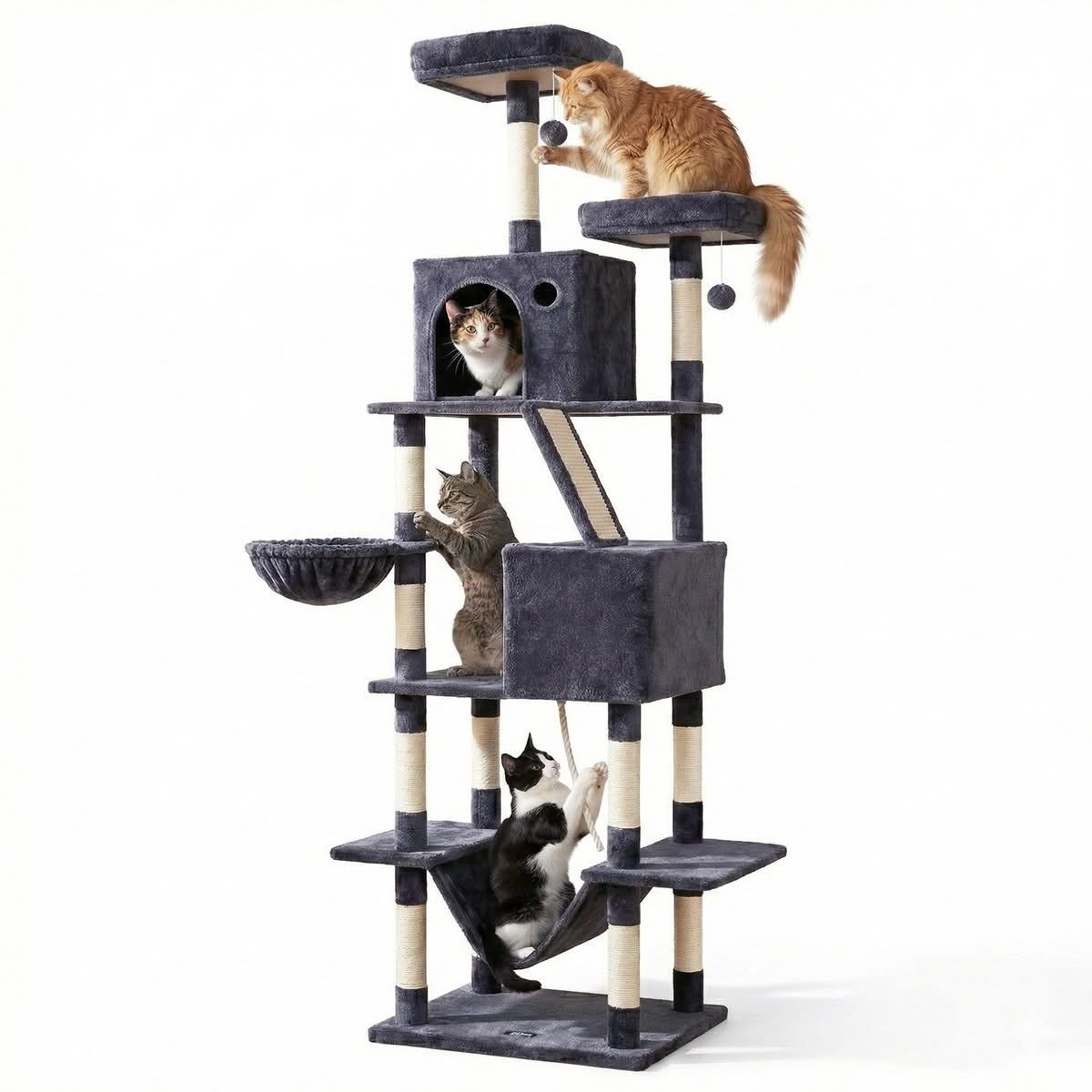
206cm Large Freestanding Cat Tower
At 206cm this is the tallest freestanding (non-ceiling-braced) tower in this guide, with multiple wide platforms stacked up a thick sisal-wr
CHECK CURRENT PRICE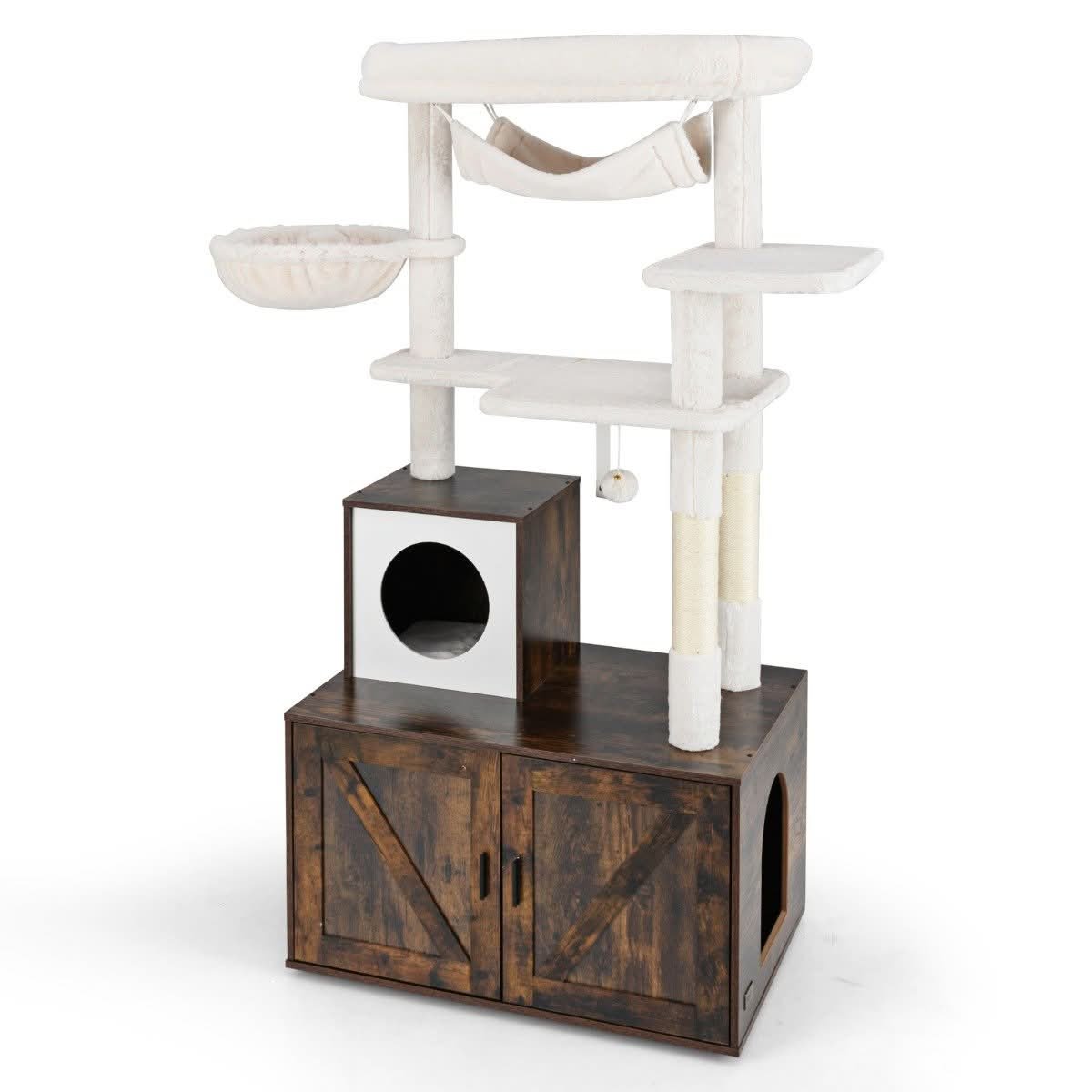
150cm Cat Tower with Hidden Litter Cabinet
This is furniture first, cat tree second: a rustic barn-door cabinet base that hides a litter tray completely from view, with a hammock, cav
CHECK CURRENT PRICEBest Cat Tree Australia Compared
| Product | Link | Type | Best For | Key Spec |
|---|---|---|---|---|
| 82cm Compact Cat Tower | Check price | Compact Tower | Kittens and small apartments | 82cm height, single sisal post, one perch, enclosed base house |
| 152cm Jungle Canopy Cat Tower | Check price | Multi-Level Tower | Households wanting a distinctive design | 152cm height, multi-level platforms, leafy canopy top perch, sisal-wrapped posts |
| 206cm Large Freestanding Cat Tower | Check price | Tall Freestanding Tower | Multi-cat households with floor space to spare | 206cm height, multiple wide platforms, sisal-wrapped posts, heavy weighted base |
| Adjustable Floor-to-Ceiling Cat Tower | Check price | Floor-to-Ceiling Adjustable Tower | Renters wanting maximum height with no ceiling damage | Adjustable 255-280cm, floor-to-ceiling tension mount, 5 platforms including a pod and basket bed |
| Multi-Level Condo Cat Tower | Check price | Multi-Level Condo Tower | A single cat wanting a proper den | 184cm height, enclosed condo box, multi-level platforms, dark finish |
| 122cm Cat Tower with Self-Groomer | Check price | Budget Tower with Groomer | Long-haired cats and tight budgets | 122cm height, built-in self-groomer brush, sisal scratching posts, multi-level |
| 150cm Cat Tower with Hidden Litter Cabinet | Check price | Litter-Hiding Furniture Hybrid | Open-plan living rooms wanting a hidden litter box | 150cm height, enclosed litter cabinet base, hammock, cave bed, multiple platforms |
| 147cm Cat Tower with Cave Bed and Hammock | Check price | Lounging Tower | Older or less active cats | 147cm height, cave bed, hammock, 3 plush-finished platforms |
How We Picked
We looked across a wide spread of pet retailers, general marketplaces and dedicated cat-furniture catalogues, checking each candidate for current Australian stock, a distinctly different height or feature set instead of the same design relisted under a new name, and enough structural detail in the listing (post diameter, base dimensions, weight rating) to judge real stability instead of trusting a product photo’s angle.
Where a listing had enough of a track record, we cross-referenced it against ProductReview.com.au’s cat-furniture and cat-tree brand pages to see whether real owners backed up the stability and sisal-durability claims, not just the marketing copy. We spent the most hands-on research time on the floor-to-ceiling adjustable design, and it’s the one we’d point a friend to first if their cat is a serious climber in a small footprint.
1. 82cm Compact Cat Tower – Best Compact Tower
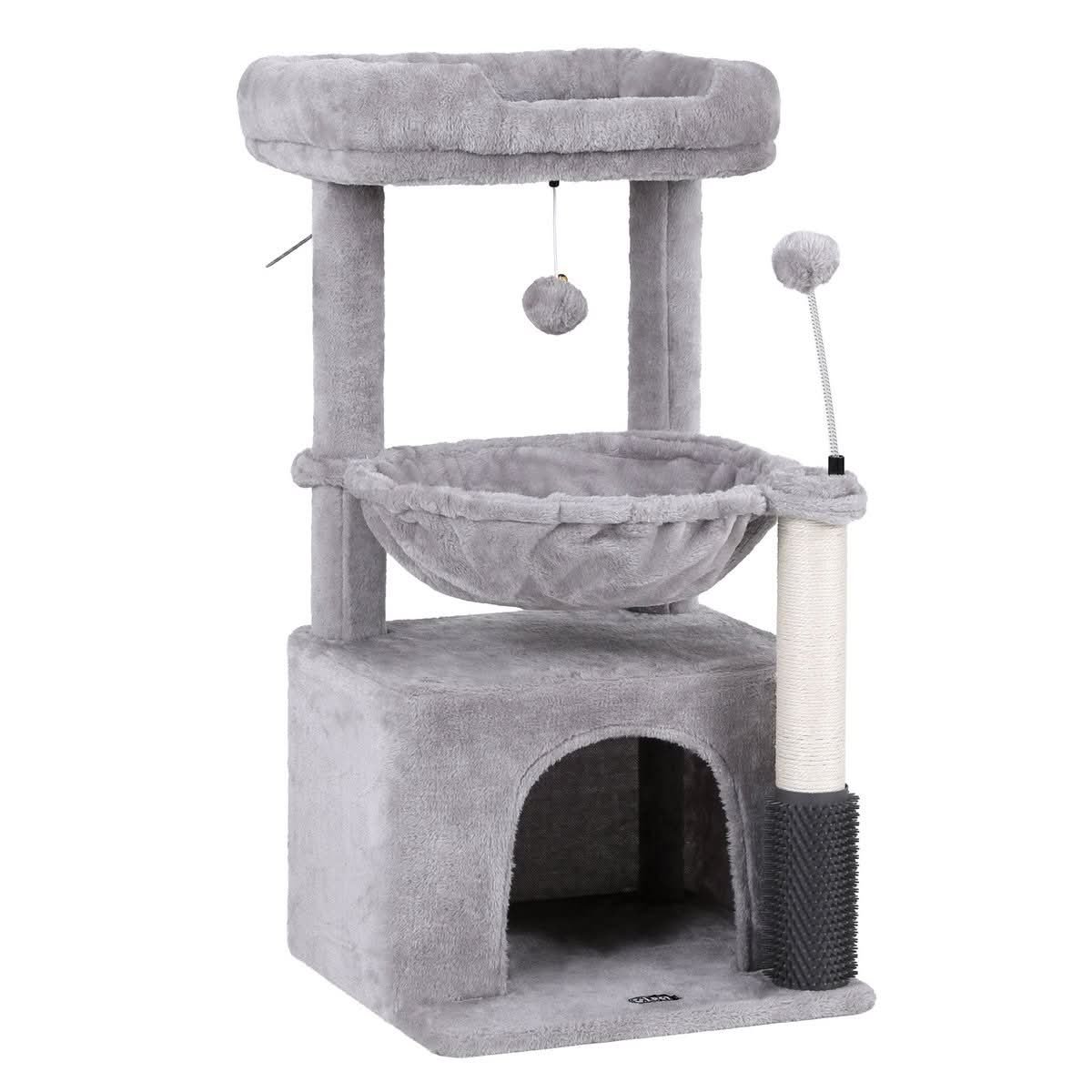
At 82cm tall with a single scratching post, one perch and a small enclosed house at the base, this is the tree for a studio apartment or a kitten still growing into a bigger household. It’s also the cheapest tree of the eight by a decent margin.
The footprint is small enough to tuck into a corner without eating a chunk of a small living room, which matters more in a one-bedroom rental than the platform count does. A single cat gets real use out of it; a second cat in the household will be looking for its own spot within a week.
Don’t expect it to still be the only climbing structure once a kitten reaches full adult size. It’s a starter tree, not a lifetime one.
Pros
- Cheapest tree of the eight
- Small footprint suits a studio or small living room
- Enclosed base house doubles as a hide spot
Cons
- Too short for a large adult cat’s full climbing range
- Single post means one cat scratches, claims and blocks it easily
- Will likely need replacing or supplementing once a kitten grows up
Key specs: 82cm height, single sisal post, one perch, enclosed base house
CHECK CURRENT PRICE2. 152cm Jungle Canopy Cat Tower – Most Distinctive Design
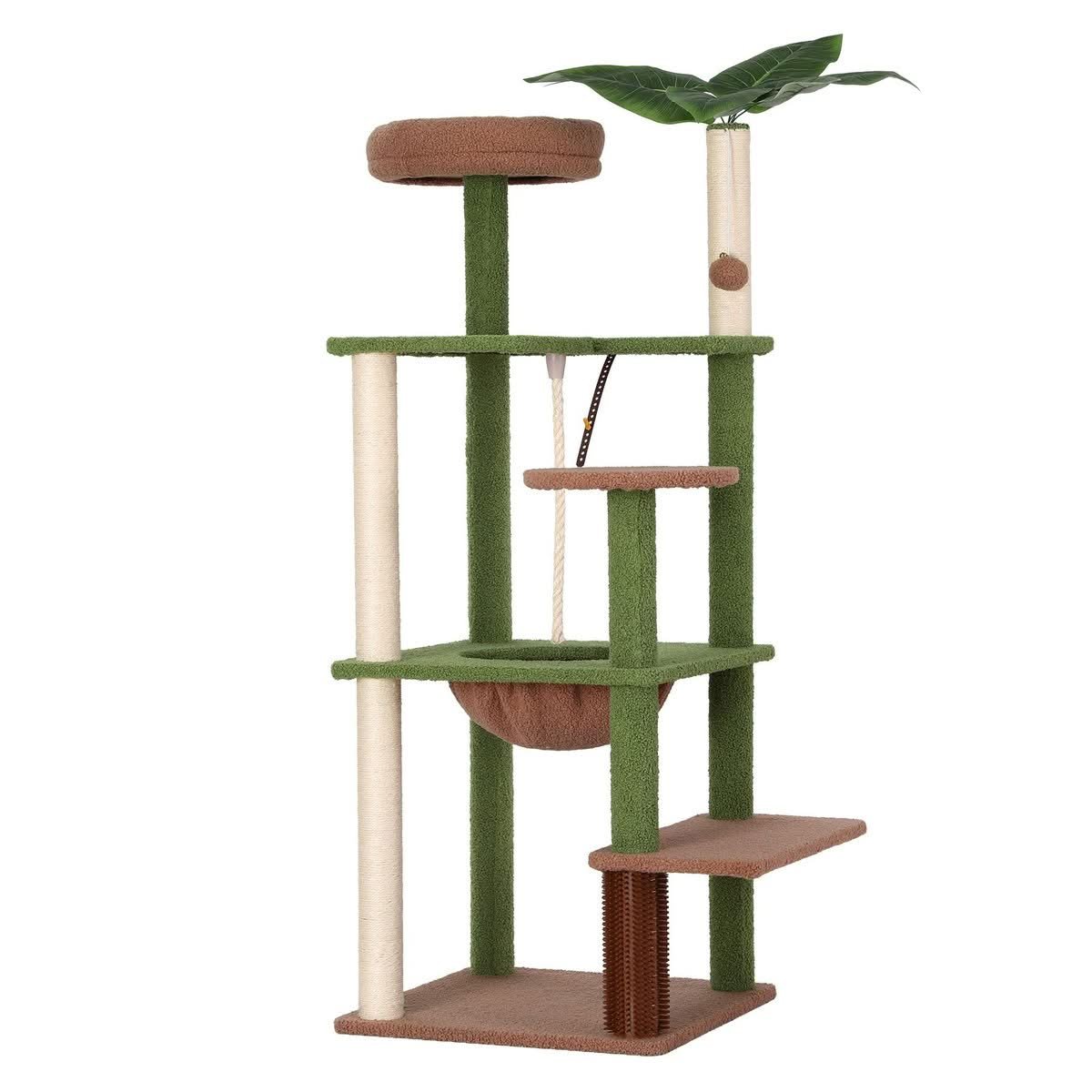
A multi-level tower dressed up with a leafy canopy top and jungle-green styling, distinctly different from the plain grey and beige towers most of this list runs. It’s a mid-height pick at 152cm, tall enough for a proper climb without needing ceiling clearance.
The canopy platform at the top gives a cat an enclosed, shaded perch instead of an exposed flat shelf, closer to how a cat would choose a hiding spot outdoors. Households with a jungle or plant-themed room will get more visual payoff from this than the plainer designs here.
Multiple mid-level platforms mean two cats can use this at once without direct competition for the top spot, unlike the compact tower above.
Pros
- Distinctive canopy design, not another plain grey tower
- Multiple platforms suit two cats at once
- Mid-range height needs no special ceiling clearance
Cons
- The canopy fabric will show wear and fading faster than a plain carpeted platform
- Still not tall enough for a determined climber wanting full-height range
- Bulkier footprint than the compact tower above
Key specs: 152cm height, multi-level platforms, leafy canopy top perch, sisal-wrapped posts
CHECK CURRENT PRICE3. 206cm Large Freestanding Cat Tower – Best Tall Freestanding Tower
At 206cm this is the tallest freestanding (non-ceiling-braced) tower in this guide, with multiple wide platforms stacked up a thick sisal-wrapped frame. A multi-cat household gets real value here: enough separate perches that a dominant cat claiming the top platform doesn’t shut everyone else out entirely.
Freestanding at this height means the base has to carry real weight to stay stable, and it does, but it also means the tree needs floor space a smaller unit wouldn’t: measure the room before ordering, not just the ceiling height.
A step up in price from the compact tower above, and worth it specifically for the platform count, not the height alone.
Pros
- Tallest freestanding option, no ceiling bracing needed
- Multiple wide platforms properly help in a multi-cat household
- Solid, heavy base for its height
Cons
- Large floor footprint, not suited to a small room
- Heaviest to move once assembled
- Top platform still needs a metre-plus of clearance above it
Key specs: 206cm height, multiple wide platforms, sisal-wrapped posts, heavy weighted base
CHECK CURRENT PRICE4. Adjustable Floor-to-Ceiling Cat Tower – Best Adjustable Floor-to-Ceiling
This one braces between the floor and the ceiling with a tension spring at the top, adjustable across a 255-280cm range, so it fits most standard Australian ceiling heights without needing to drill into anything. No screws into a rental’s ceiling, which matters if a bond inspection is on the horizon.
Five distinct platforms run the length of the pole, including an enclosed bowl-shaped pod and a small woven-look basket bed, real variety instead of five copies of the same flat shelf. That variety is worth more than raw height once you’re past the point where a cat can reach the top at all.
Ceiling-braced designs need a properly flat, solid ceiling to tension against. A textured or very high ceiling can make this harder to set up securely than the listing photos suggest.
Pros
- No drilling into a rental’s ceiling required
- Five distinctly different platform shapes, not repeated flat shelves
- Adjustable range covers most standard Australian ceiling heights
Cons
- Needs a flat, solid ceiling to tension against properly
- Tallest, most involved assembly of any tree here
- Not suited to a very high or sloped ceiling
Key specs: Adjustable 255-280cm, floor-to-ceiling tension mount, 5 platforms including a pod and basket bed
CHECK CURRENT PRICE5. Multi-Level Condo Cat Tower – Best for a Single Dominant Cat
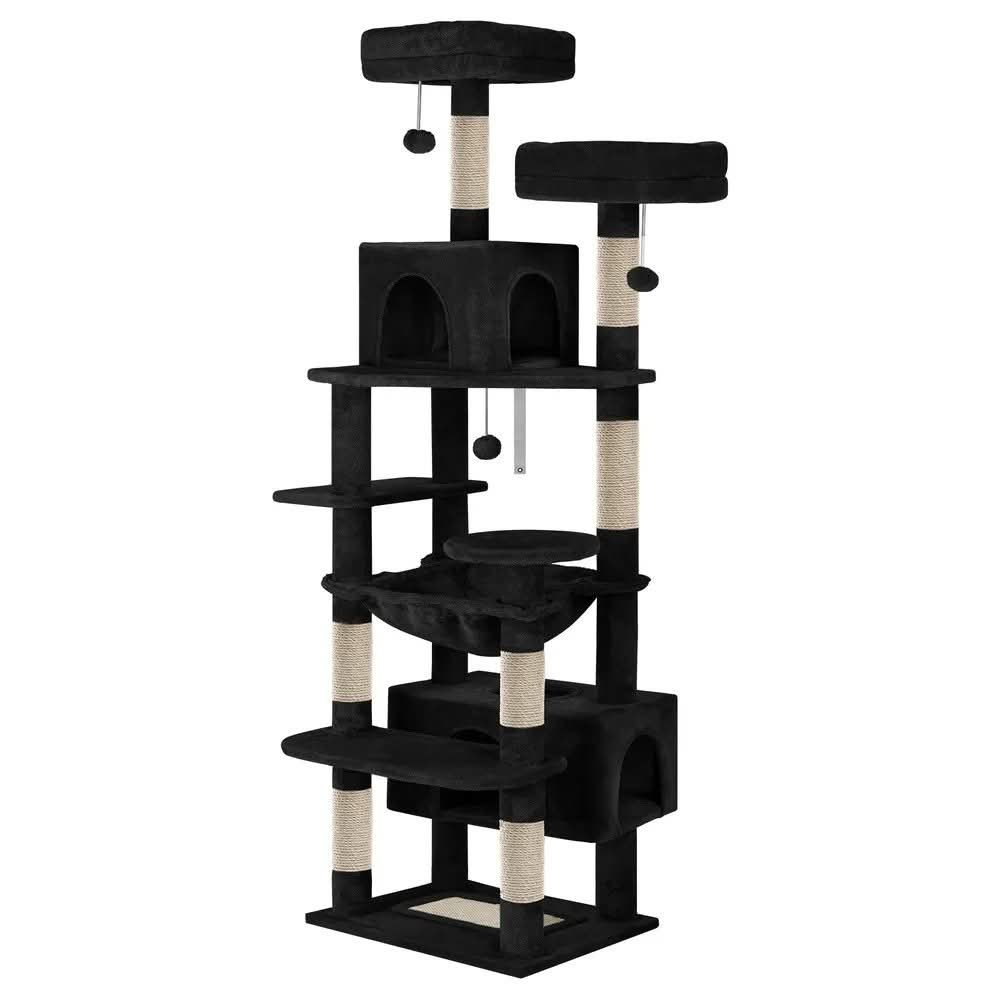
A dark-toned, 184cm multi-level tower built with a fully enclosed condo box partway up instead of an open platform, giving a cat somewhere to properly hide, not just perch. Good fit for a single, more territorial cat that wants a den more than a lookout spot.
The darker finish suits a household that doesn’t want the usual beige-and-grey cat-tower look dominating a living room corner, a real styling point of difference from every other tree here.
One condo box means one cat really owns the best spot; a second cat in the household will be looking elsewhere for its own hideaway.
Pros
- Enclosed condo box gives a real hide-and-den spot, not just a perch
- Darker finish stands out from the usual beige cat-tower look
- Solid multi-level design at a mid-range height
Cons
- Only one enclosed den, so a multi-cat household will still need a second option
- Darker fabric shows shed fur more visibly than lighter tones
- No ceiling-bracing option if floor space is tight
Key specs: 184cm height, enclosed condo box, multi-level platforms, dark finish
CHECK CURRENT PRICE6. 122cm Cat Tower with Self-Groomer – Best Budget Pick
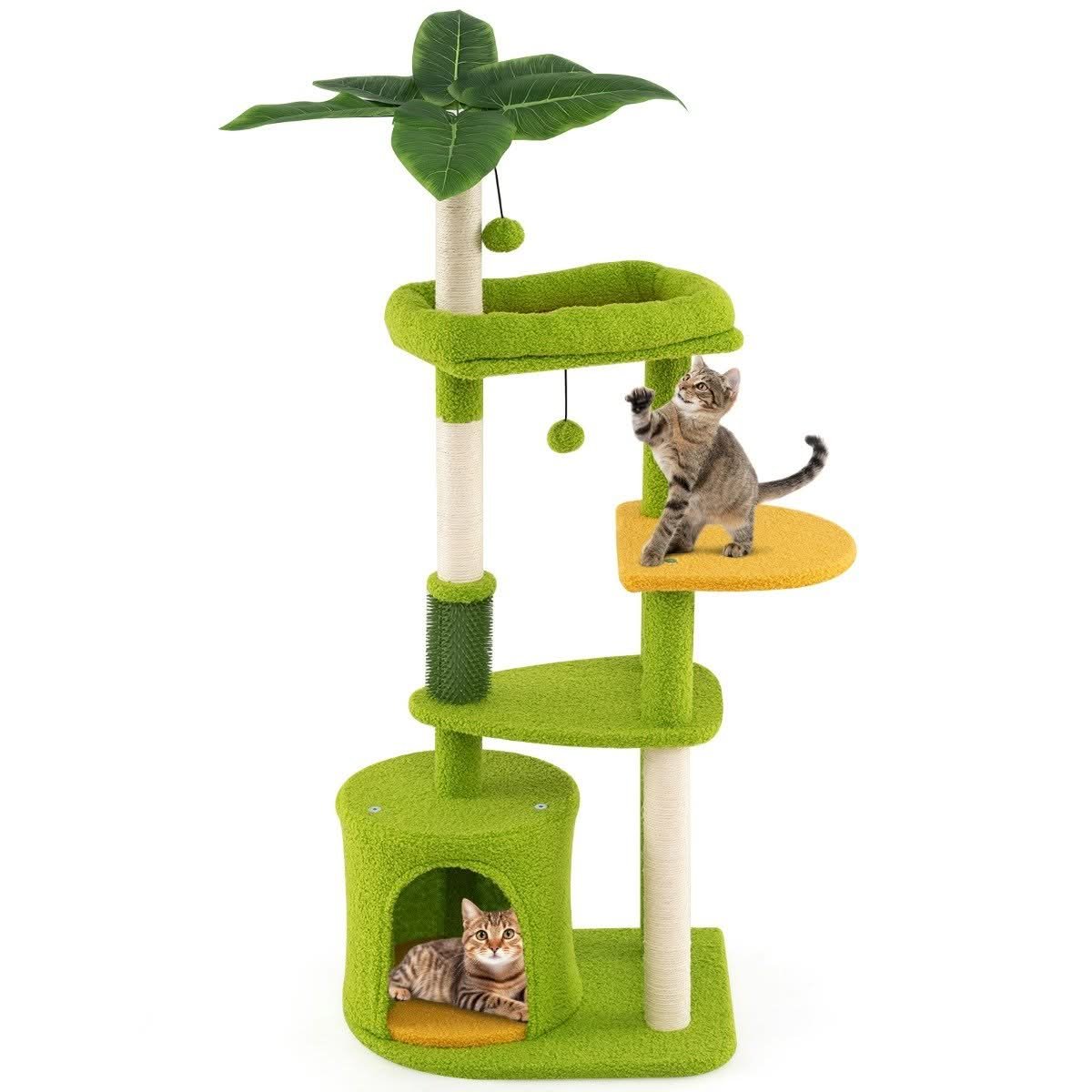
The cheapest tree here after the compact 82cm tower, but the standout feature is a built-in self-groomer brush mounted at cat-shoulder height, a function none of the other seven trees here offer at all.
A cat that rubs past the brush gets a light grooming pass for loose fur every time it walks past, which is a real point of difference for a household with a long-haired breed that mats easily. It won’t replace an actual brushing session, but it’s a passive extra most trees don’t bother with.
At 122cm it’s mid-height, taller than the compact tower but well short of the freestanding or ceiling-braced options here, a solid middle ground for a small-to-medium living room.
Pros
- Cheapest tree here after the compact 82cm option
- Built-in self-groomer brush is a real, uncommon extra
- Mid-height footprint suits a small-to-medium room
Cons
- Self-groomer brush is a passive extra, not a substitute for actual grooming
- Fewer platforms than the taller options here
- Not tall enough for a cat wanting maximum climbing height
Key specs: 122cm height, built-in self-groomer brush, sisal scratching posts, multi-level
CHECK CURRENT PRICE7. 150cm Cat Tower with Hidden Litter Cabinet – Best for Hiding a Litter Box
This is furniture first, cat tree second: a rustic barn-door cabinet base that hides a litter tray completely from view, with a hammock, cave bed and climbing platforms built on top. A living room or open-plan apartment where a visible litter box is an actual dealbreaker is exactly who this solves the problem for.
The cabinet base means it takes up more visual and floor space than a plain tower at the same height, and the barn-door styling won’t suit every room’s look, but the trade-off is a litter box that guests never actually see.
Worth checking your own litter tray’s dimensions against the cabinet’s internal measurements before ordering: not every standard tray fits every enclosure comfortably.
Pros
- Properly hides a litter box from view, not just a decorative screen
- Hammock and cave bed add real lounging space on top
- Doubles as a piece of furniture, not just a cat tree
Cons
- Bulkier and more furniture-like than a plain tower at the same price tier
- Rustic barn-door styling won’t suit every room
- Check tray dimensions fit the cabinet before ordering
Key specs: 150cm height, enclosed litter cabinet base, hammock, cave bed, multiple platforms
CHECK CURRENT PRICE8. 147cm Cat Tower with Cave Bed and Hammock – Best for Lounging
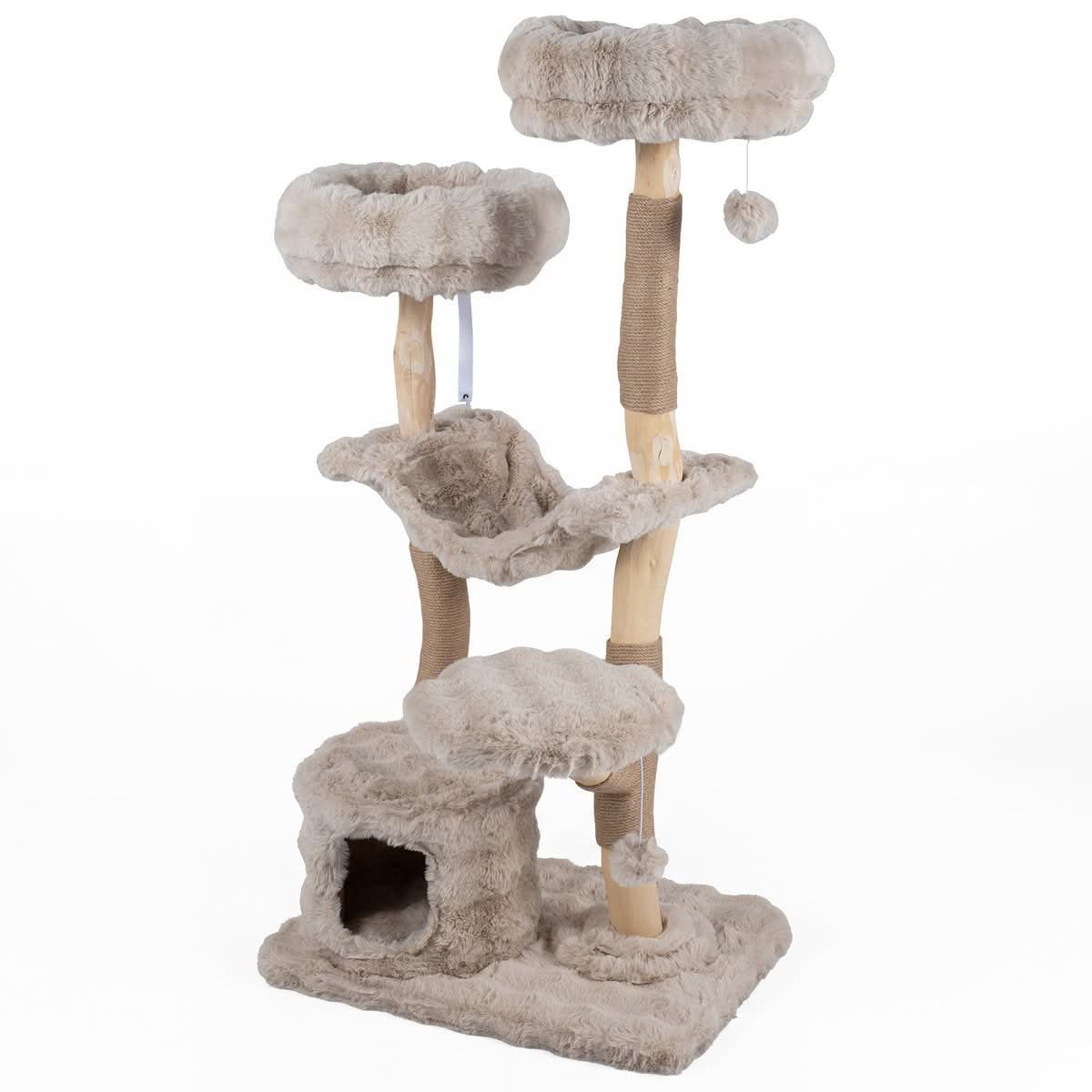
Built for lounging over climbing: a soft cave bed, a stretched hammock and three wide platforms, all finished in a plush fabric instead of the usual bare carpet. An older cat, or one that naps more than it climbs, gets more genuine use out of this than a tall, sparse tower.
It’s the most expensive tree here, and the price reflects the fabric quality and the number of distinct rest spots, not sheer height alone, at 147cm it’s shorter than several cheaper options among the eight.
If climbing height is the priority over lounging spots, the freestanding tower or the floor-to-ceiling design above make more sense for the same money.
Pros
- Real variety of soft rest spots: cave, hammock and open platforms
- Plush fabric finish, not bare carpet
- Good fit for an older or less active cat
Cons
- Most expensive tree of the eight
- Shorter than several cheaper options if climbing height matters more
- Plush fabric will need more frequent cleaning than carpet or sisal
Key specs: 147cm height, cave bed, hammock, 3 plush-finished platforms
CHECK CURRENT PRICEHow to Choose Best Car Tree
Measure the room before the cat’s needs. A freestanding tower over 180cm needs real floor space around its base to stay stable, while a floor-to-ceiling design needs an accurate ceiling height and a flat surface to brace against, not a raked or textured ceiling. Get both numbers with a tape measure before ordering, not by eye.
One cat rarely needs more than one good perch; three cats need three. RSPCA guidance on vertical space notes that height helps a cat feel safe and in control of its territory, and in a multi-cat household that means enough separate platforms that a dominant cat claiming the best spot doesn’t leave the others with nowhere to go.
Check the base weight, not just the height. A tall tree with a light base tips the first time a cat launches off the top platform at speed. Heavier, wider bases cost more for a reason, and a tipped tree that’s scared a cat once often gets avoided for good afterwards.
Decide whether you want a climbing tower or a lounging tower before you shop on price alone.** A tree built around hammocks and cave beds suits an older or calmer cat; a tall, platform-heavy freestanding tower suits an active climber. Buying the wrong type for your cat’s actual temperament wastes the biggest part of the budget.
Renters should default to a floor-to-ceiling tension mount over anything that needs wall or ceiling screws.** A tension-braced pole leaves no holes to patch before a bond inspection, provided the ceiling itself is flat and solid enough to brace against properly.
If your cat is still mostly scratching furniture rather than climbing, start smaller. A full multi-level tower is wasted on a cat that hasn’t built climbing confidence yet. Trying a standalone scratching post or pad first, before committing to a full tower, is the cheaper way to confirm your cat actually wants to climb before it gets the option.
You’ll Also Want
A tree with exposed sisal posts will need **replacement sisal rope** eventually to re-wrap a worn section without replacing the whole structure.
A hand-held pet hair vacuum attachment earns its keep fast once a tree’s platforms start collecting shed fur, especially on the plush-finished lounging designs in this guide.
The other major setup decision most new cat owners tackle around the same time is litter, and our guide to the best automatic cat litter boxes covers that side properly.
Frequently Asked Questions
How tall should a cat tree be?
There’s no single right height, it depends on the room and the cat. A compact 80-100cm tower suits a kitten or a small apartment, while an active adult cat in a household with floor space to spare benefits from a freestanding tower of 180cm or more, or a floor-to-ceiling design that uses vertical space a shorter tree can’t. Measure the room and the ceiling before choosing height over floor footprint.
Do I need more than one cat tree if I have multiple cats?
In most multi-cat households, yes, or at minimum a single tree with several properly separate platforms. RSPCA guidance on vertical space notes that height helps cats feel safe and in control of territory, and a dominant cat will often claim the best single perch and block others from it, the same territorial pattern seen with scratching posts. A tree with multiple distinct platforms, not just multiple shelves at the same level, spreads that out better.
Will a cat tree stop my cat scratching the couch?
Only if it’s placed near where the scratching is already happening and includes an actual sisal-wrapped scratching surface, not just carpeted platforms. A cat tree in a spare room a cat never visits won’t compete with a couch in the main living area. Position matters more than the tree’s size or feature count for this specific problem.
Is it legal to keep a cat indoors full-time in Australia?
Yes, and in parts of the country it’s required. South Australia’s Dog and Cat Management Act confines cats statewide between sunset and sunrise, several Victorian councils run full 24-hour containment orders, and the ACT has declared cat containment areas in every suburb established since 2022. A cat tree is one of the more practical ways to replace the climbing, perching and territory-surveying a contained cat would otherwise get outdoors.
Do floor-to-ceiling cat trees damage the ceiling?
A properly tension-mounted design shouldn’t, provided the ceiling is flat and structurally solid at the bracing point; it holds in place through spring pressure, not screws or adhesive. A textured, very high, or sloped ceiling can make it harder to get a secure brace, and in those cases a freestanding tower is the safer choice regardless of the extra floor space it needs.
How do I get a nervous or older cat to actually use a new cat tree?
Place it near a window or a spot the cat already spends time in, not an unfamiliar corner, and add a light dusting of catnip or a pheromone spray to the lower platforms first. Cats often build confidence from the bottom platform up rather than being placed straight onto the top perch, so resist lifting a hesitant cat onto the highest spot before it’s chosen to climb there itself.
Verdict
For most Australian households, the floor-to-ceiling adjustable tower earns the top spot for properly using vertical space without a single screw into a rental’s ceiling, while a multi-cat home gets more real value from the tall freestanding tower’s separate platforms. Anyone whose main complaint is a visible litter tray in an open-plan living room is better served by the hidden-cabinet hybrid than by any of the plainer towers here.