Whether an automatic litter box uses a rake, a rotating sifting drum or a disposable crystal tray decides how much it costs to keep running long after the upfront price, and that mechanism matters more than app features for whether it actually saves work day to day. An automatic cat litter box in Australia is a self-cleaning litter tray that detects when a cat has used it and automatically separates waste from clean litter, either raking it into a sealed compartment, rotating it through a sifting drum, or replacing a disposable tray, so a household needs to scoop far less often, or not at all.
Automatic litter boxes split into three broad mechanisms. Rake self-cleaning boxes drag a comb through the litter after each use and deposit waste into a sealed bin, the most common and typically most affordable mechanism. Sifting drum boxes rotate the entire litter chamber to sift clean litter from waste through a mesh, a gentler mechanism that tends to suit multi-cat households. Crystal litter tray systems skip mechanical sifting entirely, using a disposable absorbent tray that is simply swapped out every few weeks.
A typical rake or sifting box holds a waste bin of around 4 to 9 litres, or roughly 1 to 2.4 gallons, which for a single cat translates to one to two weeks between empties. Beyond bin size, the criteria that matter are cat weight compatibility, how the box handles multiple cats using it within the same cleaning cycle, and whether the mechanism is safe for a cat that startles easily.
This guide compares rake, sifting and crystal-tray automatic litter boxes from Australian retailers and Amazon, weighing cleaning mechanism and safety sensors against bin capacity and app control rather than picking on brand name alone. A household managing an automatic litter box alongside other pet routines may also want to check our guide to the best automatic pet feeders in Australia for keeping mealtimes as hands-off as the litter tray.
Quick Picks

i.Pet Automatic Cat Litter Box 5L White
A compact 5L automatic box sized right for a single cat.
CHECK CURRENT PRICE
Rooster Farms Automatic Cat Litter Box 68L
A 68L drum built to keep up with two, three or more cats.
CHECK CURRENT PRICE
Self-Cleaning Open-Top Cat Litter Box
An open-top, low-noise design at the most affordable price in this guide.
CHECK CURRENT PRICE2. YSOAE Automatic Self-Cleaning Cat Litter Box – Best Large-Capacity App Control
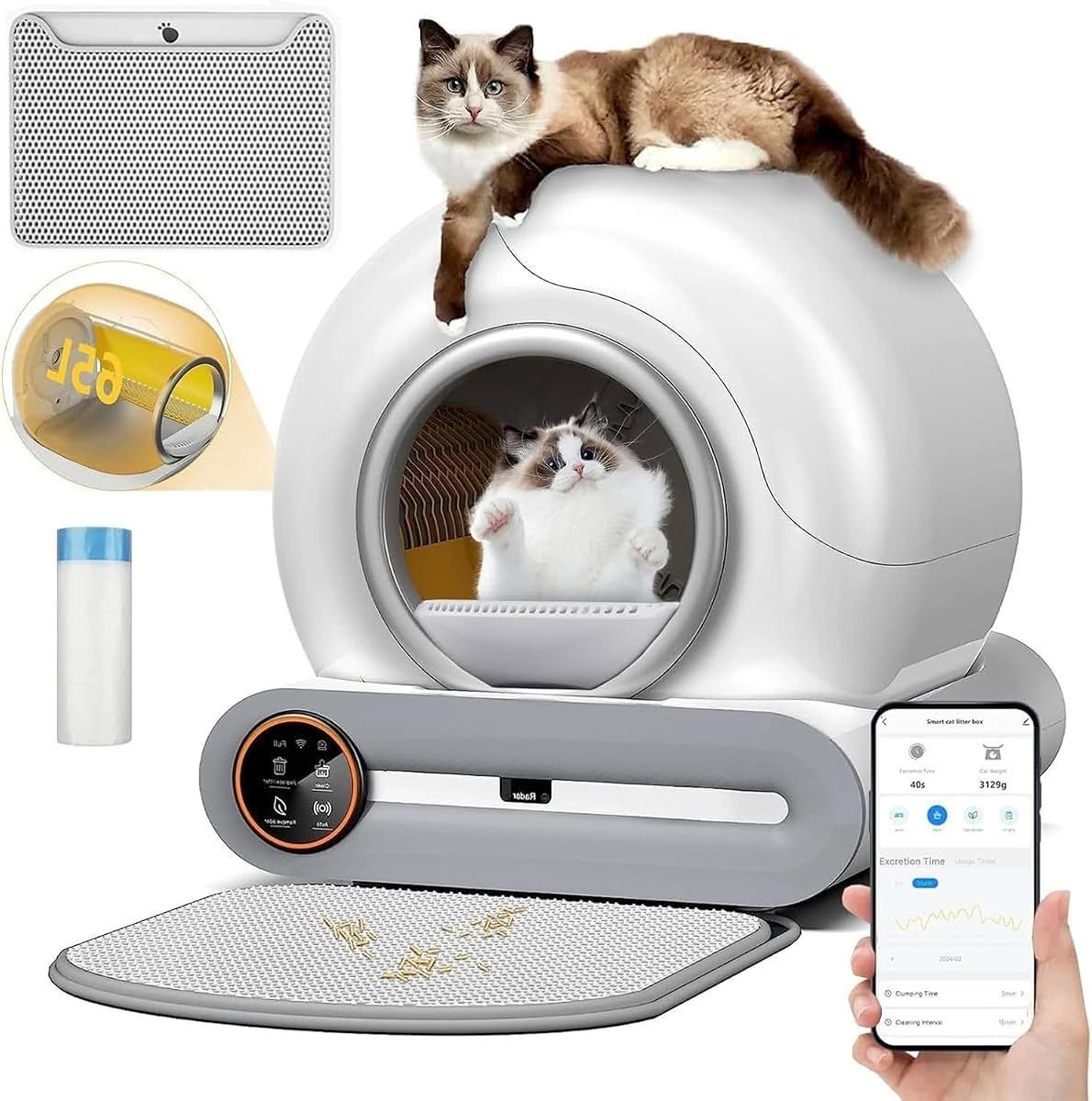
A round self-cleaning litter robot with a 65L interior and a 9L waste drawer, controlled from a phone app. Built-in sensors notice when the cat has used the box and start the clean cycle.
The round shape gives more room than most boxes at 48 x 52.5 x 50.5cm.
Pros
- 65L interior with a 9L waste drawer
- App control
- Sensors trigger the clean cycle
- Round shape gives cats more room
Cons
- Takes up 48 x 52.5cm of floor
- Cats need time to accept an automatic box
Key specs: 65L interior, 9L waste capacity, app control, sensor-triggered cleaning, 48 x 52.5 x 50.5cm
CHECK CURRENT PRICEHow to Choose an Automatic Cat Litter Box
Cleaning mechanism decides both running cost and how gently the process treats a nervous cat. A rake is the most common and usually the most affordable, a sifting drum is generally gentler and less prone to jamming on clumps, and a crystal tray system trades mechanical complexity for an ongoing consumable cost.
Bin capacity and cat weight range determine how often the unit actually needs emptying and whether it is rated to handle a larger cat safely. A compact 5 litre bin suits one cat; a 60 to 80 litre drum is built for a multi-cat household that would otherwise overwhelm a smaller unit within days.
Safety sensors prevent the cleaning cycle from starting while a cat is still inside or approaching the box, and are worth checking for specifically if a household includes a kitten or a cat that likes to double back mid-visit. Infrared and weight sensors are the two most common types across the units in this guide.
App control and multi-cat tracking matters most for a household running more than one cat through the same box, since some apps log usage per estimated cat weight and can flag a change in visit frequency worth watching. A single-cat household gets far less value from this feature than the notification simply telling you when to empty the bin.
Noise level is worth checking before buying if the unit will sit near a living room or bedroom rather than a laundry or garage. Ratings in the low 30 decibel range are noticeably less startling to a nearby cat, or a light sleeper, than a louder motor cycling several times a day.
Ongoing cost and litter compatibility rounds out the real cost of ownership beyond the sticker price, since a crystal tray system carries a recurring replacement cost that a rake or sifting box running standard clumping litter does not. For anyone also fighting a losing battle against shed fur around the house, our guide to the best vacuum for pet hair in Australia covers what actually lifts it off carpet and upholstery.
Frequently Asked Questions
How does an automatic cat litter box actually work?
A sensor detects when a cat has left the box after using it, then a timer counts down before the cleaning cycle starts. Depending on the mechanism, a rake drags waste into a sealed bin, a drum rotates to sift it through a mesh floor, or a disposable crystal tray simply absorbs it until the tray is replaced.
Is an automatic litter box safe for cats?
Models with infrared or weight sensors are built to pause or cancel the cleaning cycle if a cat is detected nearby or inside the box, which is the main safety feature to check for. A nervous or elderly cat may still take longer to adjust to the motor noise, so a longer cleaning delay setting can help during the first few weeks.
How often does the waste bin need emptying?
A single cat using a 5 to 9 litre bin typically needs it emptied every one to two weeks, while a larger drum around 60 to 80 litres can stretch several weeks even with multiple cats. A disposable crystal tray system is rated separately, often up to around 30 days per tray for one cat.
Can multiple cats share one automatic litter box?
Yes, though a larger bin and a mechanism rated for multi-cat use handles it better than a compact single-cat model. Vets generally still recommend at least one litter box per cat plus one extra, even with an automatic unit, since some cats prefer not to share regardless of how quickly it self-cleans.
What litter type works in an automatic litter box?
Rake and sifting mechanisms need a clumping litter that holds together well enough to be dragged or sifted without crumbling. Crystal tray systems use their own absorbent crystal litter rather than standard clumping litter, so the two mechanisms are not interchangeable on litter type.
Are automatic litter boxes noisy?
Most run a short motor cycle lasting under a minute, and noise levels vary meaningfully between models, with some rated in the low 30 decibel range for near-silent operation. Placing the unit away from a bedroom wall, or checking the manufacturer’s noise rating before buying, avoids most complaints.
Verdict
For most single-cat Australian households, the i.Pet Automatic Cat Litter Box 5L White covers the essentials without paying for capacity nobody needs. Multi-cat homes get more genuine value from the Rooster Farms Automatic Cat Litter Box 68L, whose drum capacity stretches the interval between empties across several cats at once. Anyone who wants to skip mechanical sifting entirely, and does not mind the ongoing cost of disposable trays, should look at the PetSafe ScoopFree Crystal Classic instead.