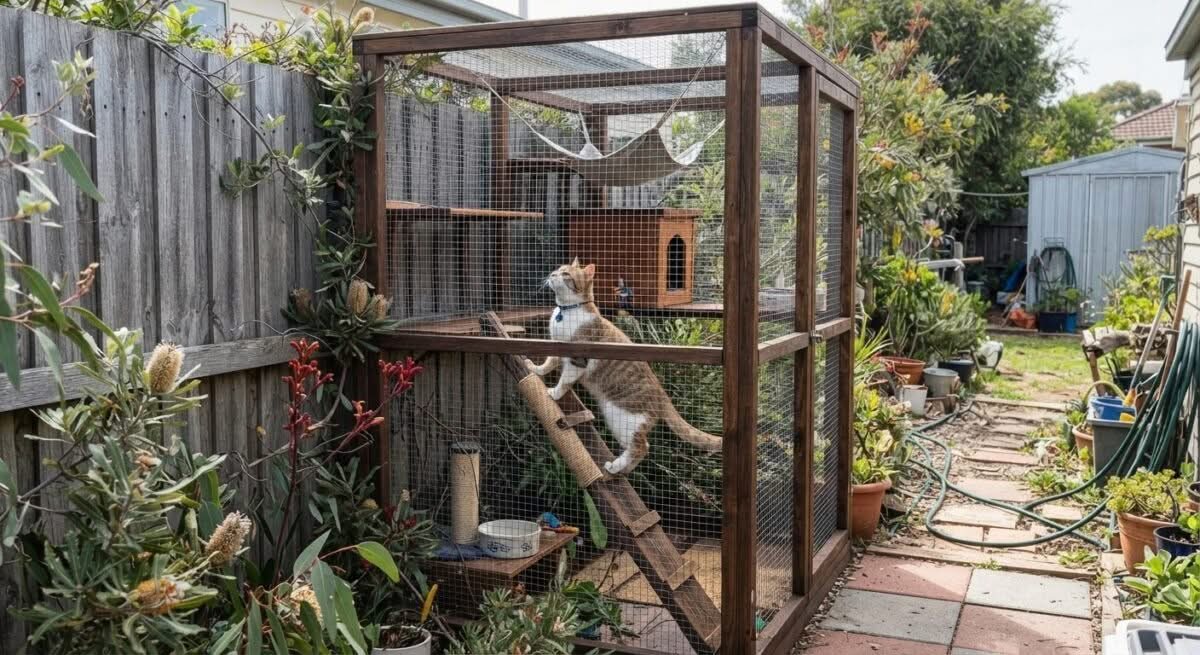
A cat enclosure is a fully caged or fenced structure that lets a cat spend time outdoors without roaming the neighbourhood or getting to native wildlife. Finding the best cat enclosures Australia shoppers can actually get delivered this week matters more here than in most countries, because a growing number of Australian councils no longer treat outdoor access as optional. Keeping a cat contained is turning into a legal requirement in parts of this country, not just a suggestion from a worried neighbour.
Enclosures sold here split into a few real structural types. Walk-in outdoor catios are the largest category, a fully panelled structure a person can stand inside, often doubling as a rabbit hutch or small-dog run on the same frame. Multi-tier wire cages stack platforms vertically instead of spreading out, trading floor space for climbing height. Modular playpen kits snap together from flat panels and can be reconfigured or packed down entirely, which matters for a rental property. Indoor cat houses skip outdoor weatherproofing altogether and work as furniture with a hidden compartment, built for an apartment with no yard at all.
The number that actually separates one pick from another here is floor area, not the number of cats printed on the box: this list runs from a compact single-cat shelter under a square metre of floor space up to a walk-in structure covering close to three square metres. The spec most shoppers skip past is height once internal shelving is counted, since a cat’s real need is vertical climbing room, not just square footage on the ground. A flat wire cage two cats can barely turn around in tells a very different story from a walk-in unit with three internal platforms, even if both list a similar floor footprint.
Ten enclosures make this list, spanning a small indoor cat house through to a walk-in outdoor catio built for two or three cats at once. The one boundary worth naming upfront: none of these are custom-built to match a specific council’s containment order, so measure the actual yard and check the relevant local rules before assuming any single box on this list satisfies a containment requirement on its own.
Quick Picks
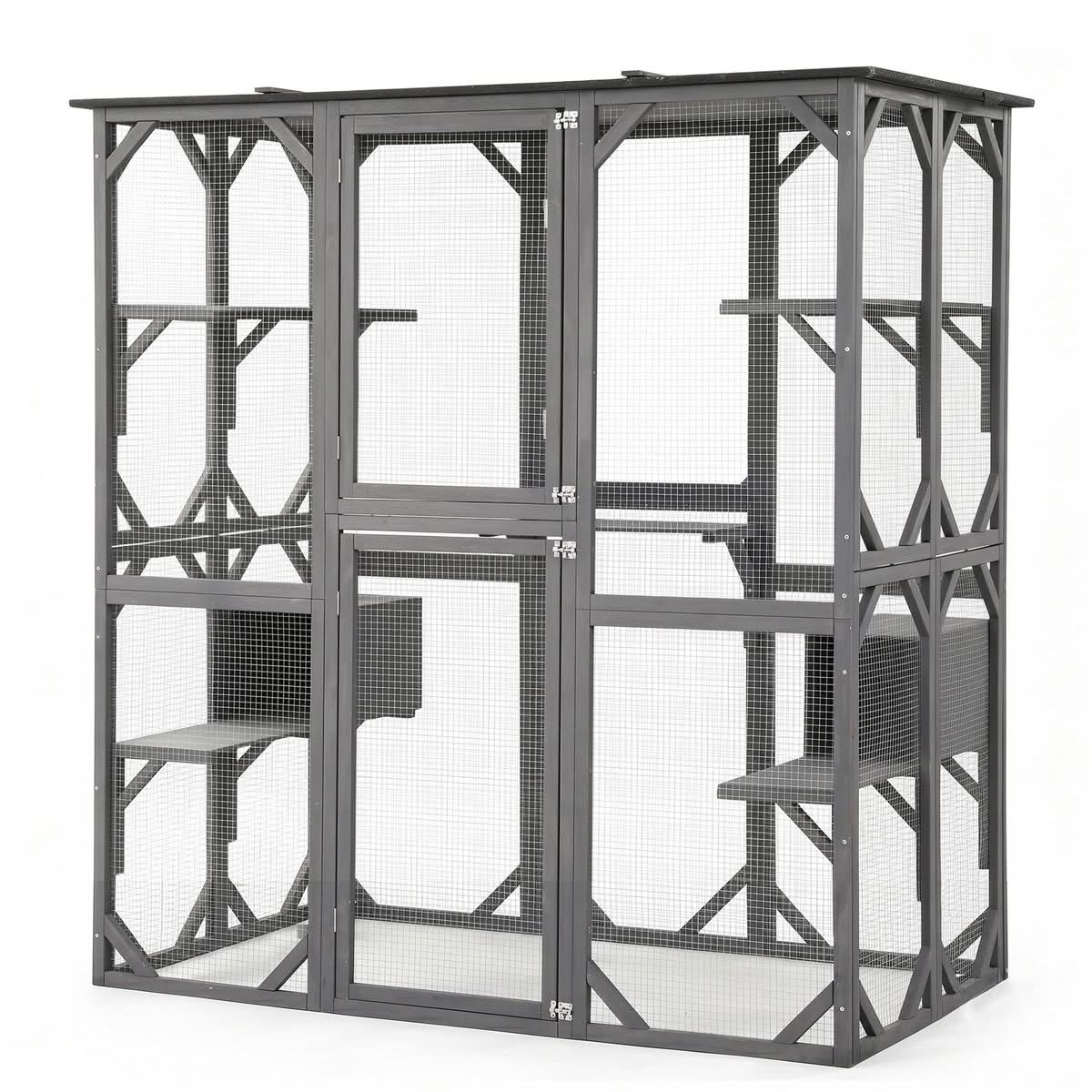
181cm Walk-In Outdoor Catio
Full standing height and enough floor space for two cats to actually share it without bumping into each other.
CHECK CURRENT PRICE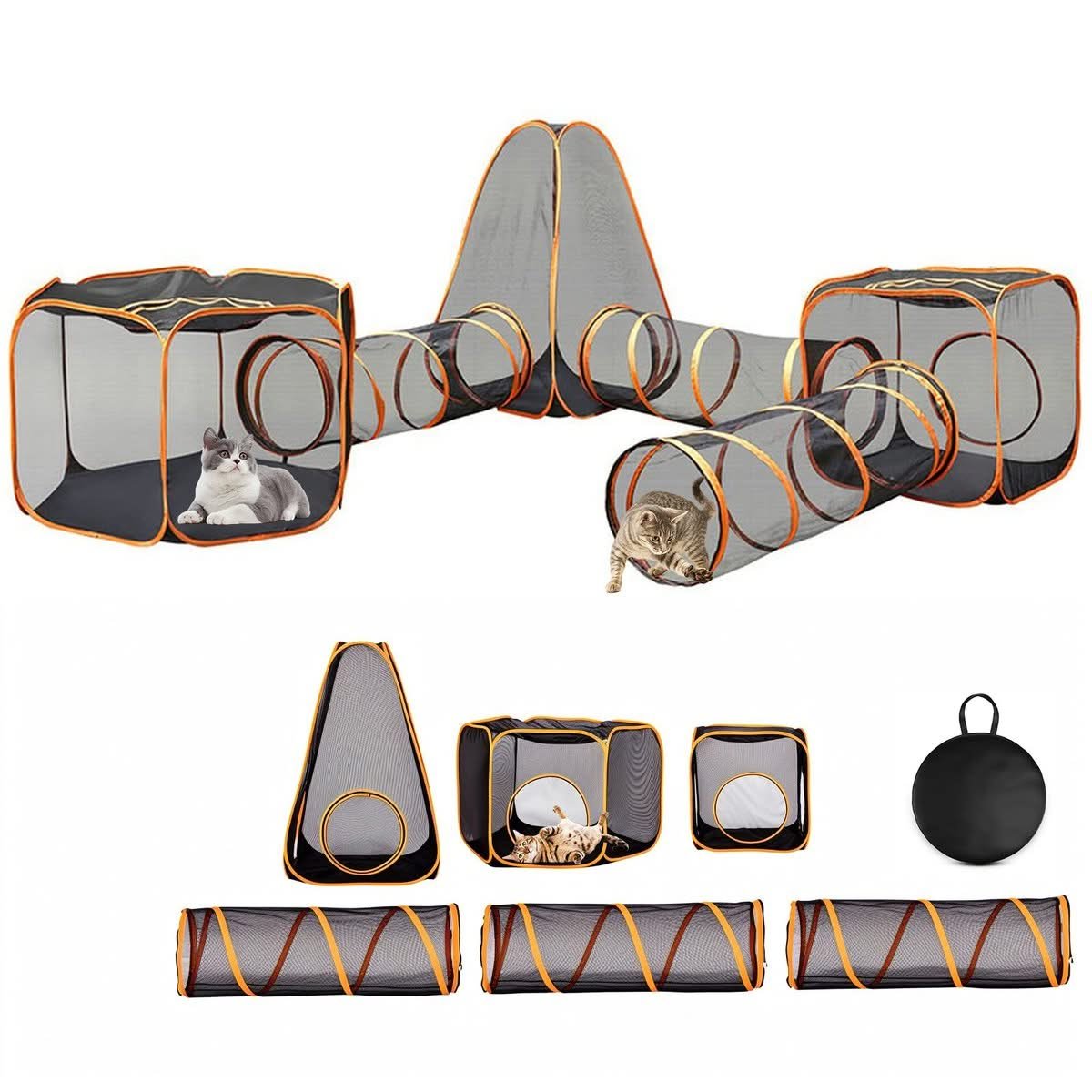
6-in-1 Modular Outdoor Cat Playpen with Tents
Snap-together panels expand or shrink to match however many cats are actually in the house right now.
CHECK CURRENT PRICE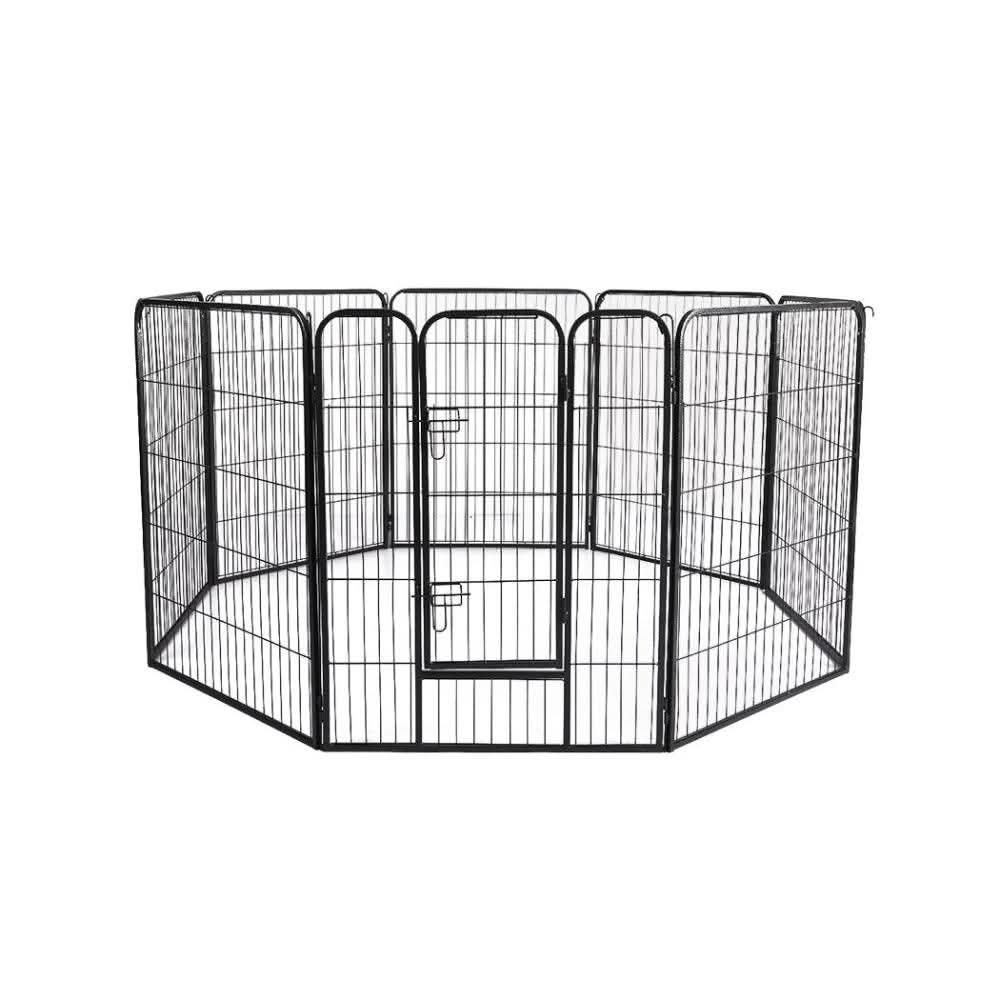
32-Inch Wire Panel Cat Playpen
The cheapest genuine containment option here, and still tall enough to stop most cats jumping the fence line.
CHECK CURRENT PRICEBest Cat Enclosures Australia Compared
| Product | Link | Type | Best For | Key Spec |
|---|---|---|---|---|
| 181cm Walk-In Outdoor Catio | Check price | Walk-in outdoor catio | Multiple cats needing full standing room | 181 x 98 x 181cm |
| Large 3-Panel Outdoor Catio Enclosure | Check price | Walk-in outdoor catio | Serious outdoor climbers | 181 x 98 x 181cm, 3 platform levels |
| 180cm Wooden Cat and Rabbit Hutch Enclosure | Check price | Wooden hutch enclosure | Dual cat-and-rabbit households | 180cm long, split-level divider |
| 6-in-1 Modular Outdoor Cat Playpen with Tents | Check price | Modular playpen kit | Multi-cat households | 6-panel expandable design with tent covers |
| 72 x 72 x 127cm Compact Outdoor Cat Shelter | Check price | Compact outdoor shelter | Small yards or courtyards | 72 x 72 x 127cm |
| 4-Tier Outdoor Catio Tower | Check price | Multi-tier wire cage | Vertical space-saving | 4 internal platform tiers |
| 32-Inch Wire Panel Cat Playpen | Check price | Wire panel playpen | Budget-friendly flexible fencing | 8 panels, 32 inches tall |
| Wooden Indoor Cat House with Hidden Litter Compartment | Check price | Indoor cat house | Apartments with no yard | 80 x 53 x 50cm, hidden compartment |
| Large Wheeled Outdoor Cat Enclosure for Multiple Cats | Check price | Walk-in outdoor catio | 2-3 cats, needs to be moved around | 182.5cm, wheeled base |
| 4-Tier Foldable Wire Cat Cage with Skylight | Check price | Multi-tier wire cage | Foldable storage between uses | 4 tiers, folds flat, skylight panel |
How We Picked
We checked general pet retailers, dropship catalogues and open marketplace listings for distinctly different cat enclosures with real in-stock availability across Australia, not just the first page of a generic search. Several listings turned out to be the exact same physical structure resold under two different storefronts at noticeably different prices, so each one was checked individually and only counted once, priced at whichever listing was the fairer deal.
Floor plans, panel material and stated weight or cat capacity were checked against each listing’s own published dimensions instead of assumed from the thumbnail photo. Where a structure’s claimed cat capacity looked optimistic against its actual floor area, that gets flagged in the entry itself instead of repeated at face value. The walk-in catio at the top of this list got the closest look of the ten, and it’s the one build quality held up best under scrutiny.
1. 181cm Walk-In Outdoor Catio – Best Large Walk-In Catio
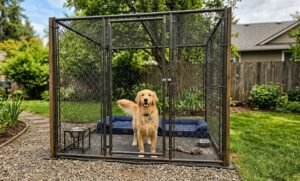
This is the largest floor plan in this whole list: 181cm by 98cm of enclosed run, tall enough that an adult can stand fully upright inside it rather than crouching to clean or refill water. The frame is powder-coated steel mesh over a timber base, built closer to a walk-in aviary than the lightweight wire cages further down this list.
That floor area matters most for a household running two cats that don’t share space well indoors. Both animals get genuine room to keep a distance from each other, something the compact 72cm shelter five spots down this list simply can’t offer. A Brisbane or Perth backyard with a shaded corner suits it well, since the mesh roof gives some shelter but not full shade through a whole summer afternoon.
Assembly is a two-person job that runs close to an hour by most buyer accounts, and the base isn’t built to be moved once bolted together. Pick the final spot in the yard before starting the build, since shifting it afterward means unbolting most of the frame.
Pros
- The most floor space and standing height in this entire list
- Doubles as a rabbit hutch if the household’s pet mix changes later
Cons
- Assembly instructions assume basic tool familiarity and run long for a first-timer
- Once bolted to its base, relocating it in the yard means a partial rebuild
Key specs: 181 x 98 x 181cm, powder-coated steel mesh, timber base, suits 1-2 cats
CHECK CURRENT PRICE2. Large 3-Panel Outdoor Catio Enclosure – Best for Serious Outdoor Climbers
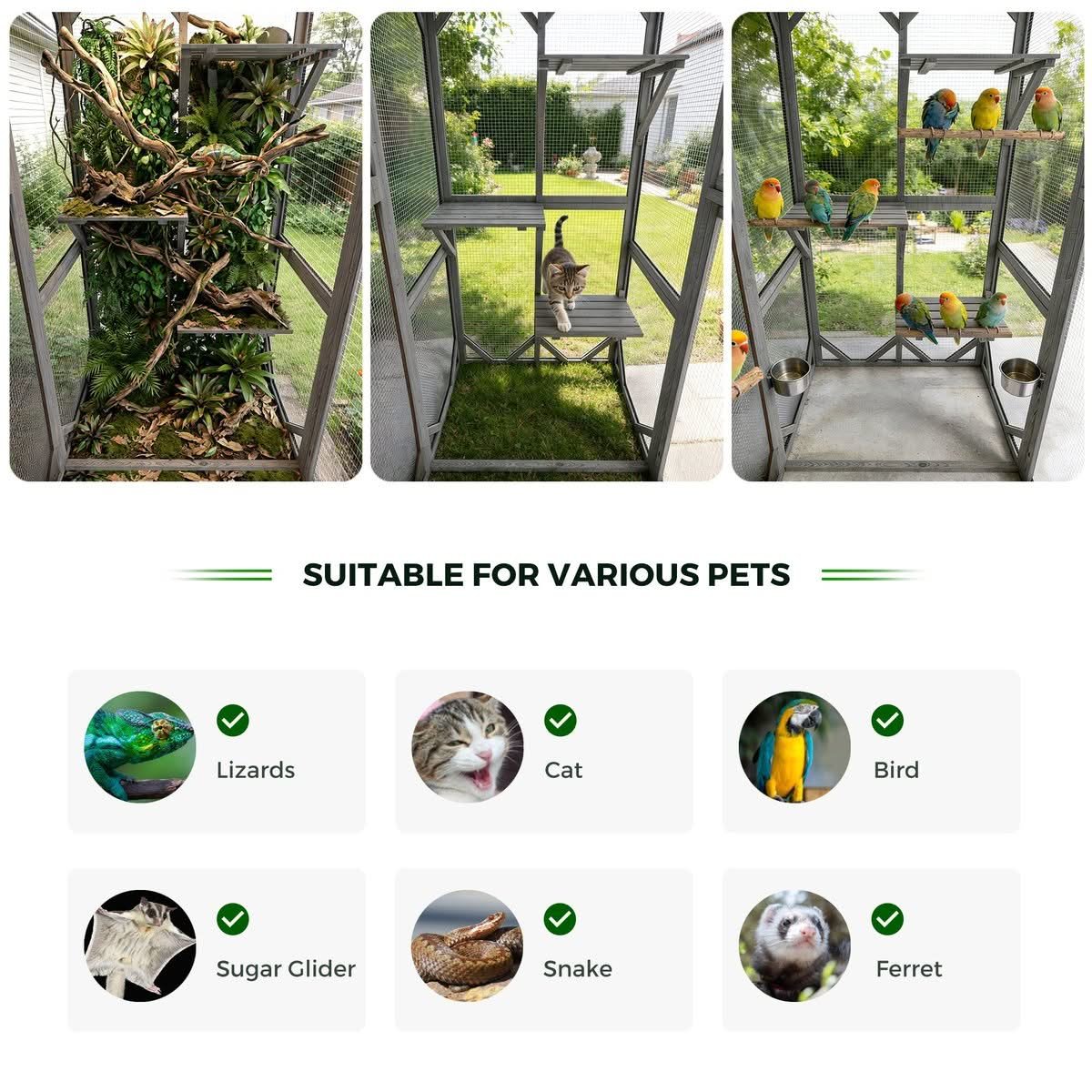
Where the walk-in catio above prioritises floor space, this one leans into height instead. Three internal platform levels connect by ramps rather than sitting on a flat mesh floor, which suits a cat that spends most of its indoor time on top of the fridge rather than under the couch.
The same 181 x 98 x 181cm footprint as the pick above hides a actually different structure once the platforms go in: less usable ground floor, considerably more climbing surface. A single active cat that’s used to jumping between furniture gets more actual use out of this shape than the flatter layout above.
Pros
- Three internal platform levels give real climbing variety, not just floor space
- Ramp access between levels suits an older cat better than a straight vertical jump
Cons
- Less usable ground floor than the flat-layout catio above once platforms are installed
- Platform edges are a bare timber finish, so expect some scratching wear within the first year
Key specs: 181 x 98 x 181cm, 3 platform levels with ramps, powder-coated frame
CHECK CURRENT PRICE3. 180cm Wooden Cat and Rabbit Hutch Enclosure – Best Dual-Purpose Hutch
This one is built for a household that isn’t only keeping a cat. A raised hutch section with a hinged roof sits above a run at ground level, a layout designed for rabbits and small dogs as much as cats, which is honestly printed right there in the listing instead of hidden in fine print.
For a cat specifically, the raised hutch box gives an actual hideaway spot that the fully open catio above doesn’t offer. That matters for a nervous or older cat that wants to withdraw somewhere enclosed not sit exposed on an open platform.
The timber isn’t treated to the same weatherproof standard as the steel-frame catios above and below it in this list, so a Melbourne winter with a lot of standing rain will need an annual sealant reapplication to stop the base from softening.
Pros
- The enclosed hutch box gives a real hideaway a nervous cat will actually use
- Works for a mixed household running a cat alongside rabbits or a small dog
Cons
- Untreated timber base needs an annual weatherproofing reapplication in a wet climate
- Smaller usable cat space than the box dimensions suggest once the hutch box is subtracted
Key specs: 180cm long, raised hutch box plus ground-level run, timber and wire construction
CHECK CURRENT PRICE4. 6-in-1 Modular Outdoor Cat Playpen with Tents – Best for Multi-Cat Households
Six flat wire panels click together into whatever shape the yard actually needs, an L-shape along a fence line, a hexagon in an open corner, or a straight run down a side path. Two fabric tent covers clip on top for shade, which none of the fixed-frame catios earlier in this list include as standard.
The real advantage here is over a household whose cat count changes. A share house picking up a second cat, or a family minding kittens between adoptions, can add panels instead of buying a second structure outright. It packs down flat for storage too, a real point of difference against the bolted-together catio at the top of this list.
The trade-off for that flexibility is stability. The panels clip over bolt, so a determined cat leaning hard against a seam can occasionally pop one loose, worth checking every few weeks ahead of assuming the whole structure stays rigid indefinitely.
Pros
- Genuinely reconfigurable panel count for a household whose cat numbers change
- Packs down flat, a real point of difference against the bolted structures above
Cons
- Clip-together panel seams can work loose over time and need an occasional check
- Tent covers are fabric, not the powder-coated mesh roof the fixed catios use
Key specs: 6-panel expandable modular design, 2 tent covers included, folds flat for storage
CHECK CURRENT PRICE5. 72 x 72 x 127cm Compact Outdoor Cat Shelter – Best for Small Yards
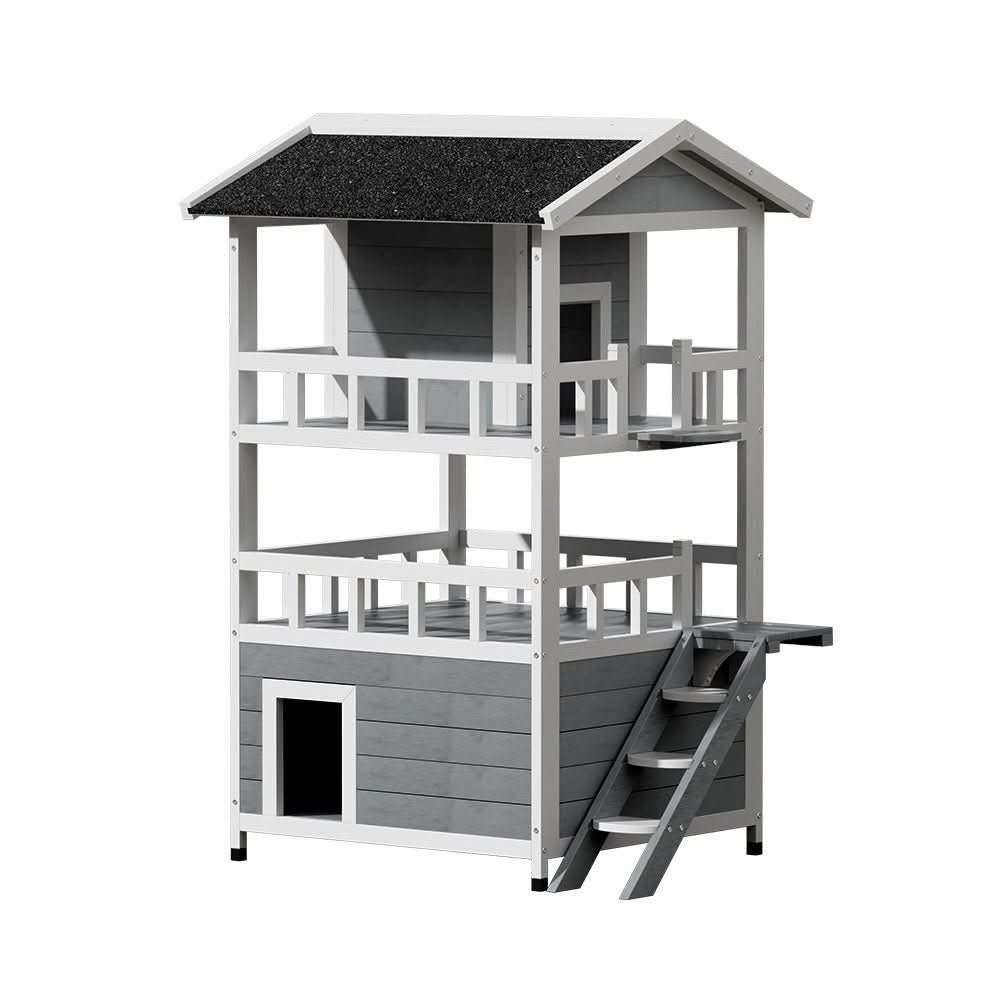
A courtyard or narrow side passage rules out the 181cm catios earlier in this list on footprint alone. This one fits in a space roughly the size of a standard wheelie bin corral while still giving a single cat close to 1.3 metres of vertical height to work with.
It’s an honestly different fit to the modular playpen above: fixed and compact instead of reconfigurable and sprawling. A townhouse or a unit block with a shared but limited outdoor area is exactly the use case this size is built for.
Pros
- Smallest footprint in this entire list without dropping vertical height
- Fits a narrow side passage or small courtyard the larger catios physically can’t
Cons
- Not a realistic fit for more than one cat at a time, unlike the larger units above
Key specs: 72 x 72 x 127cm, wooden frame with wire panels, suits 1 cat
CHECK CURRENT PRICE6. 4-Tier Outdoor Catio Tower – Best Vertical Space-Saver
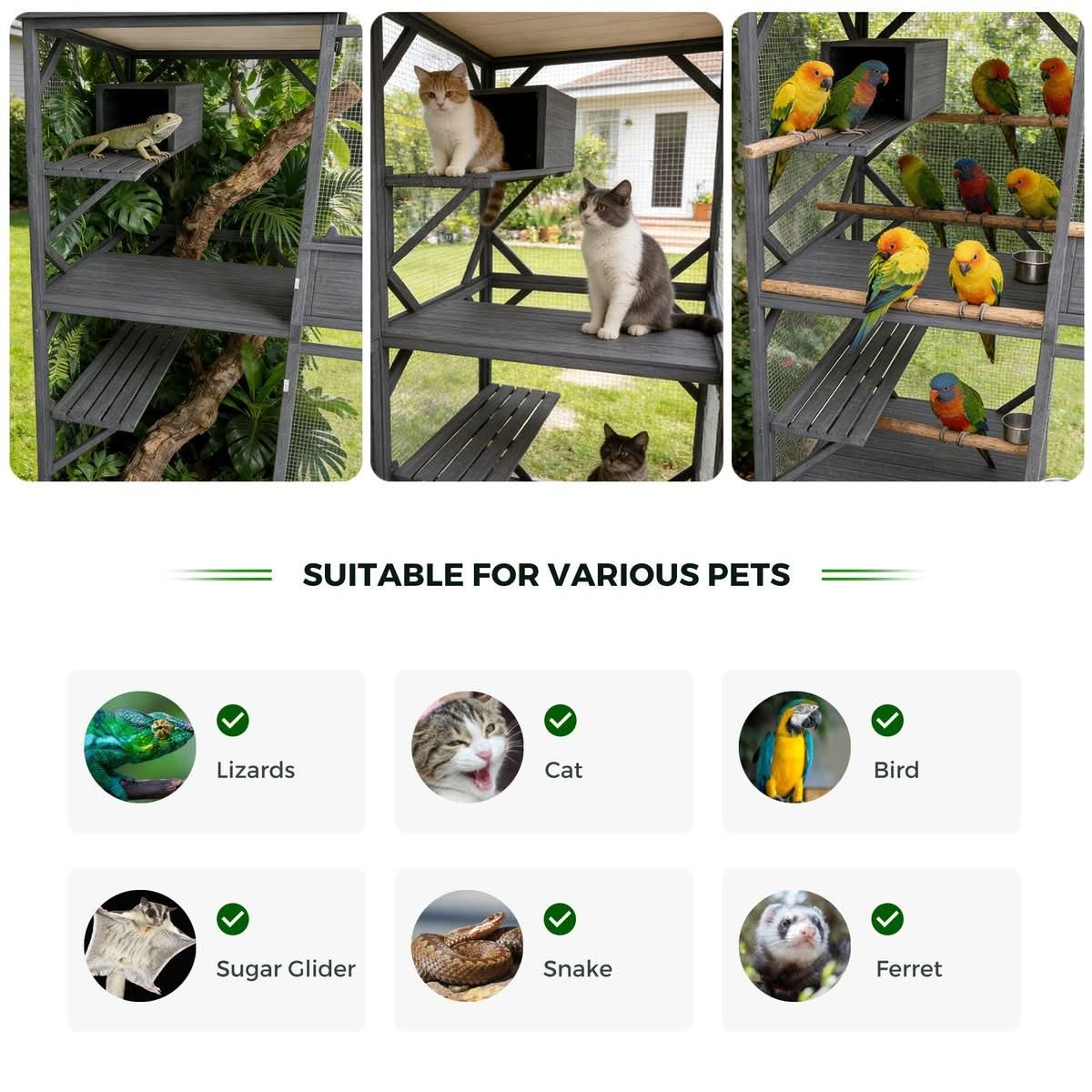
Four separate platform tiers stack straight up not spreading across the yard, the most space-efficient design in this entire list for anyone working with an actually tiny outdoor footprint. Each tier connects by an internal ramp, similar in concept to the 3-platform catio further up this list but taller and narrower overall.
This is the pick worth reaching for in a Sydney terrace with barely a metre of side access, where a sprawling walk-in catio simply won’t fit but a tall, narrow tower will. A cat that already prefers height over floor space, the kind that sleeps on top of a bookshelf over the rug beneath it, gets more real use from this shape than a flat run.
Pros
- The smallest ground footprint of any multi-level option in this list
- Four separate platforms give real vertical variety for a climbing-focused cat
Cons
- Top tier can catch more wind than the lower ones, worth anchoring in an exposed spot
Key specs: 4-tier stacked design with internal ramps, powder-coated frame
CHECK CURRENT PRICE7. 32-Inch Wire Panel Cat Playpen – Best Budget Wire Playpen
Eight flat wire panels bolt into a simple octagon or straight run, no roof, no platforms, just a 32-inch-tall fence line that stops a cat crossing it without an actual jumping effort. It’s the cheapest entry point on this whole list by a wide margin, and it shows in the build: this is fencing, not a furnished enclosure.
That simplicity is exactly the appeal for a first-time buyer unsure whether a permanent catio is worth the outlay. It’s an easy way to trial outdoor containment for a few months before committing to something like the bolted-together catio at the top of this list.
Without a roof, it only reliably contains a cat that isn’t a determined jumper or climber. A younger, more athletic cat will clear 32 inches without much trouble, so treat this as a supervised-use fence, not a set-and-forget enclosure.
Pros
- By far the cheapest real containment option in this entire list
- Panel count expands easily if more fence line is needed later
Cons
- No roof means it won’t hold a determined jumper or climber
- Feels flimsy compared with the powder-coated frames higher up this list
Key specs: 8 wire panels, 32 inches tall, no roof, expandable panel count
CHECK CURRENT PRICE8. Wooden Indoor Cat House with Hidden Litter Compartment – Best Indoor Apartment Pick
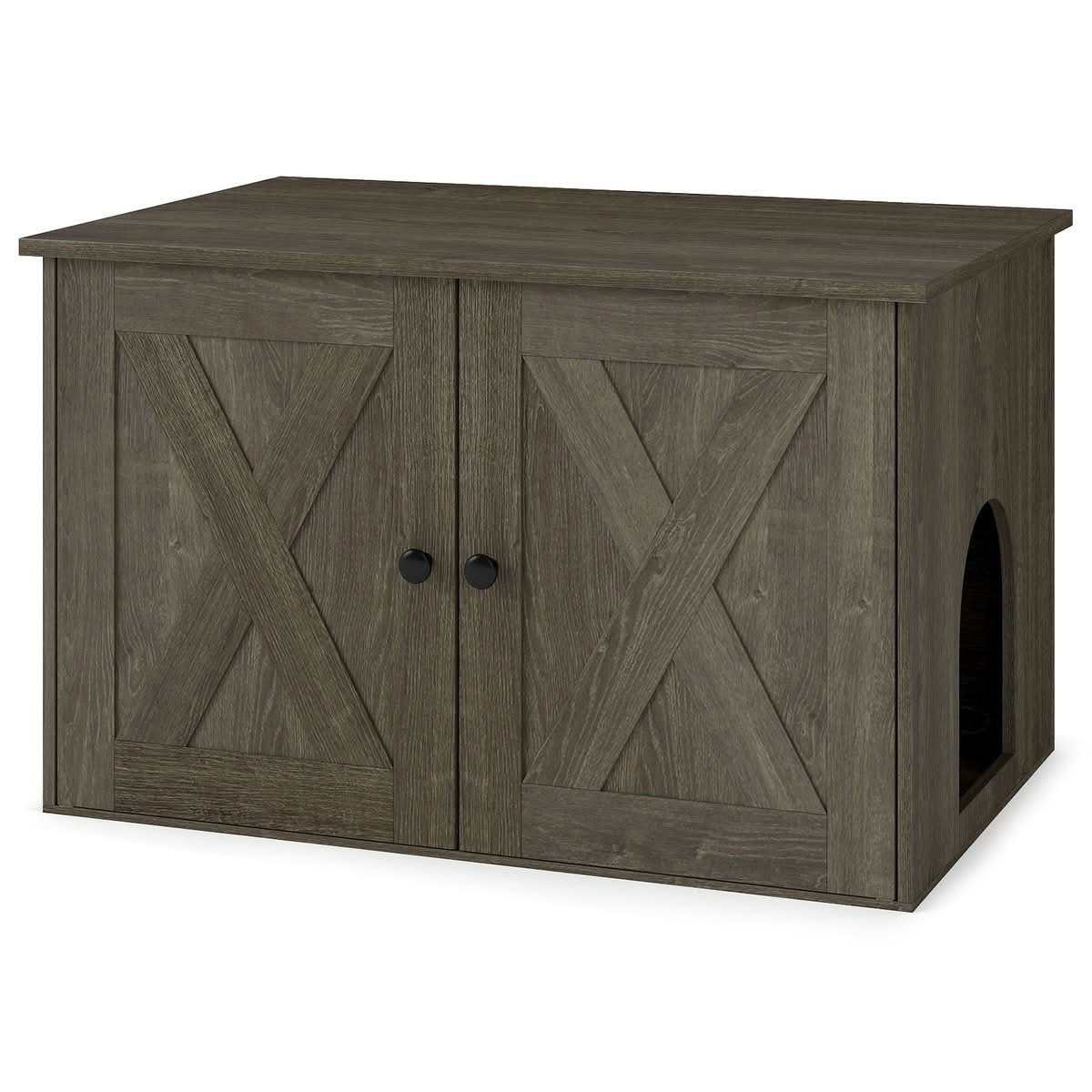
Every other pick on this list is built for a yard. This one isn’t, and that’s the entire point: a 80 x 53 x 50cm timber cabinet that looks like a side table from the outside and hides a divided compartment, one side for the cat, one side built to fit a standard litter tray, on the inside.
It’s the only truly apartment-first pick in this comparison, built for a household with no balcony access to put an outdoor structure on at all. A cat that already lives entirely indoors doesn’t need containment in the same sense the outdoor picks above address, so this solves a different problem: hiding a litter tray in plain sight instead of keeping a cat off the street.
Pros
- Doubles as real furniture, not an obvious cage sitting in a living room
- The only pick in this list actually built for an apartment with no outdoor access
Cons
- Not built for outdoor containment at all, it solves a different problem entirely
Key specs: 80 x 53 x 50cm, timber cabinet construction, divided cat and litter-tray compartments
CHECK CURRENT PRICE9. Large Wheeled Outdoor Cat Enclosure for Multiple Cats – Best for Multiple Cats Outdoors
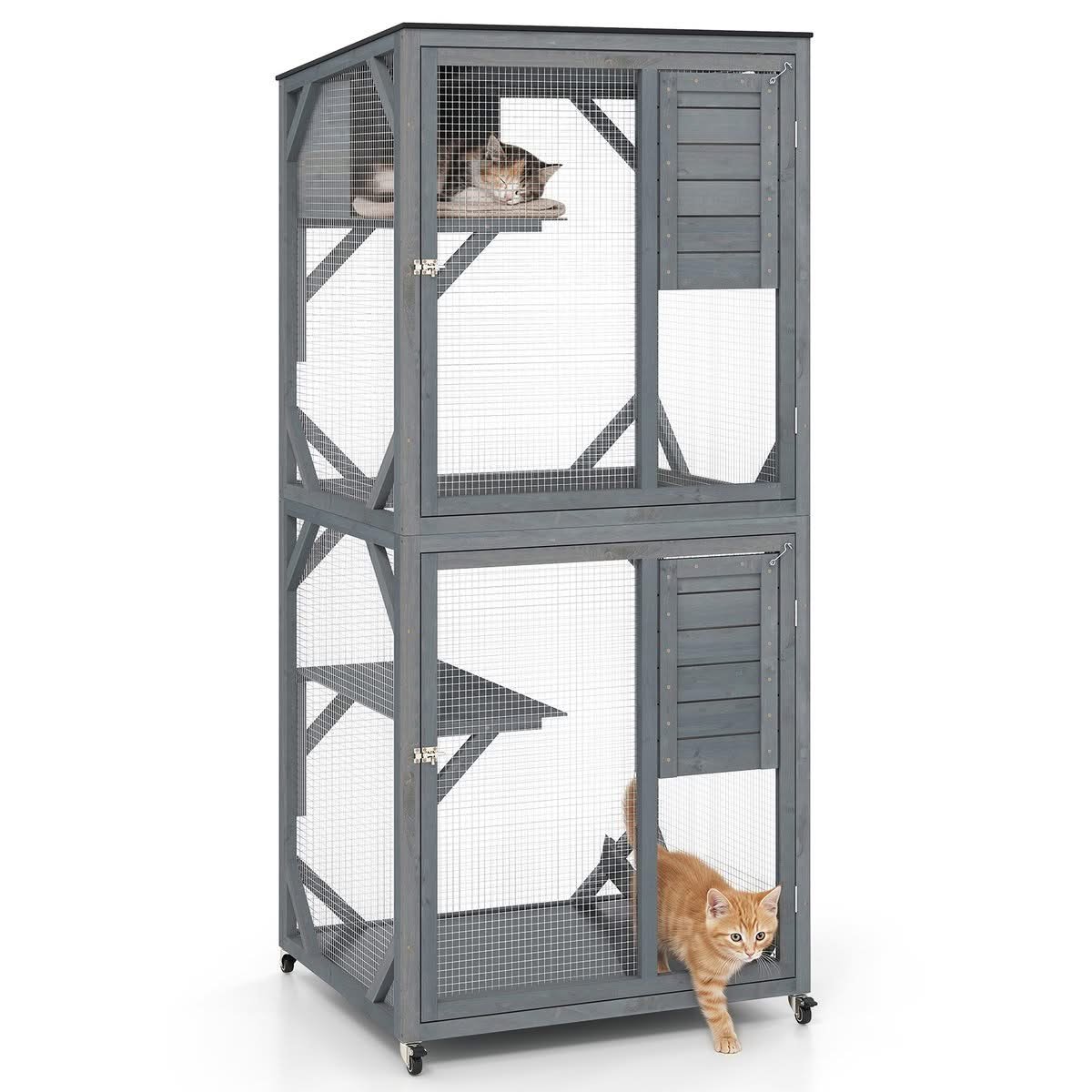
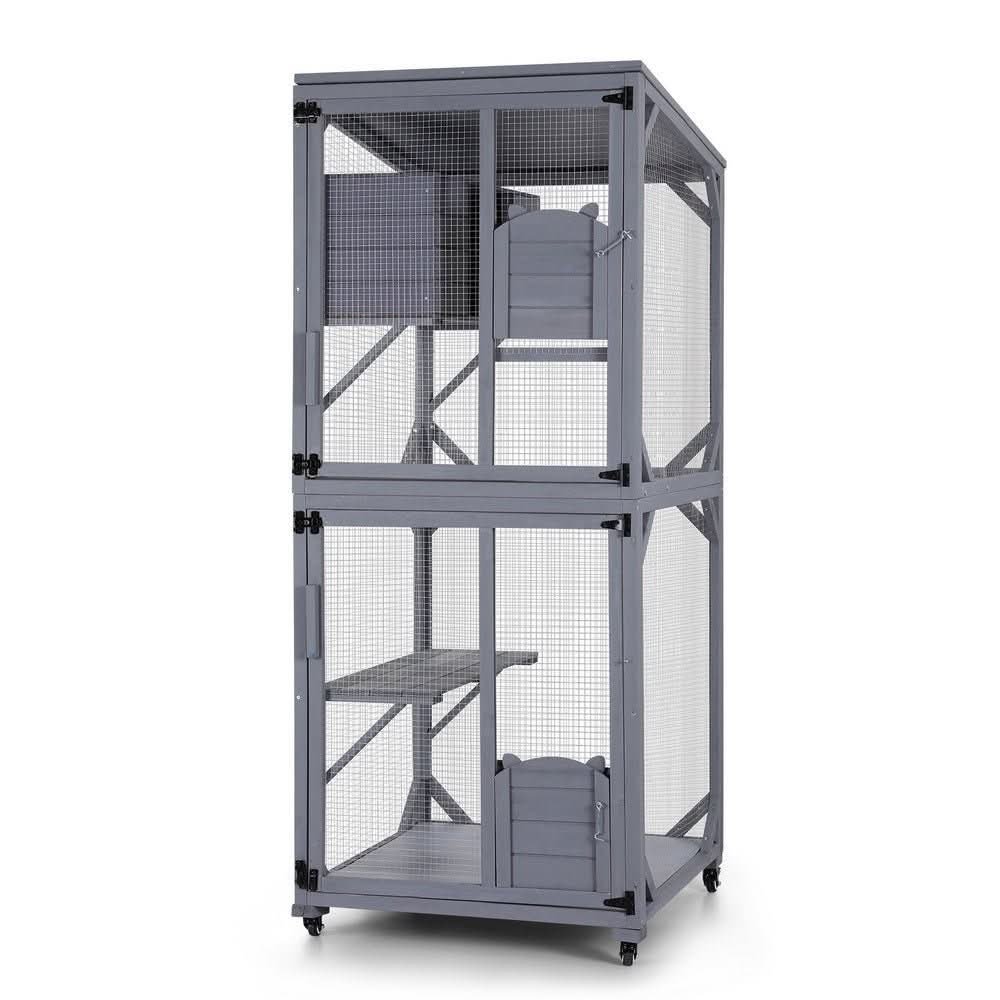
This 182.5cm structure sits on a set of caster wheels, a real point of difference against every fixed-base catio earlier in this list. A resting box built into one end gives a cat somewhere to retreat out of direct sun, closer in concept to the hutch pick further up this comparison than the fully open designs.
The wheels matter more than they might sound. A renter who needs to reposition the enclosure to chase shade through the day, or move it off a shared driveway entirely, can do that without the partial rebuild the bolted 181cm catio at the top of this list would need for the same job.
Pros
- Caster wheels allow actual repositioning without a partial rebuild
- Built-in resting box gives shelter from direct sun, similar to the hutch pick above
Cons
- Wheels make the structure noticeably less stable on soft grass than the fixed-base catios
Key specs: 182.5cm long, caster wheels, integrated resting box, suits 2-3 cats
CHECK CURRENT PRICE10. 4-Tier Foldable Wire Cat Cage with Skylight – Best Foldable and Portable Pick
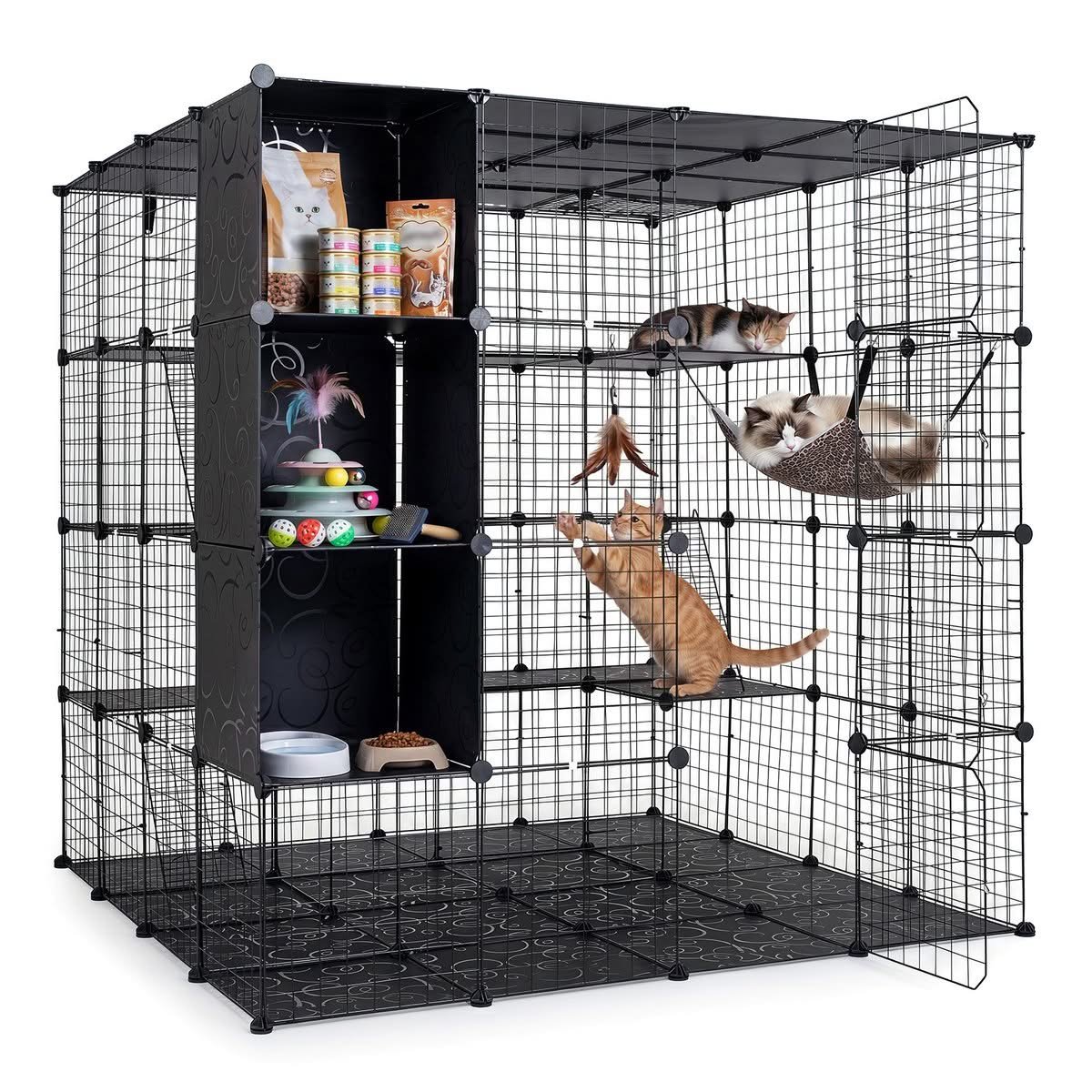
This is the only enclosure in this entire list built to fold flat when it’s not in use, closer to a fold-up dog crate in mechanism than any of the bolted or panel-clipped structures above it. Four wire tiers give real climbing variety, and a clear skylight panel on top lets natural light through without an open-mesh roof exposing the top platform to weather.
That folding mechanism is the whole reason to pick this over the fixed 4-tier tower earlier in this list. A share house moving between rentals, or a household only using outdoor containment through the warmer months, gets real value from something that stores flat under a bed for winter instead of staying assembled year-round taking up yard space.
The trade-off for foldability is rigidity. This won’t withstand the same wind loading as the welded or bolted frames earlier in this list, so it’s a better fit for a sheltered courtyard than an exposed, wind-prone yard.
Pros
- Only fold-flat design in this entire list, actually useful for storage between seasons
- Skylight panel lets light through without leaving the top tier fully exposed
Cons
- Less wind-stable than the welded and bolted frames earlier in this list
- Fold-flat hinges are the first part likely to wear with frequent setup and pack-down
Key specs: 4-tier foldable wire design, skylight roof panel, folds flat for storage
CHECK CURRENT PRICEHow to Choose a Cat Enclosure
Check your own council’s containment rules before buying anything. The ACT Government’s own cat containment page confirms containment can mean an enclosed backyard structure, a crate or a lead, not just staying indoors, and several Victorian councils and a pending Western Australian law follow a similar model. A structure that satisfies one council’s rules may not satisfy another’s.
Match the structure to your actual cat count, not just the listing’s suggested capacity. Two cats that don’t get along indoors need noticeably separate floor space outdoors too, which favours the larger walk-in catios over the compact shelter further down this list.
Weigh climbing height against floor space honestly. A cat that spends most of its indoor life on top of furniture gets more real use from a multi-tier tower than a flat run, even if the tower’s floor footprint reads smaller on paper.
Think about whether the structure needs to move. A renter chasing shade through the day, or repositioning a structure off a shared driveway, needs a wheeled or foldable design not the bolted-frame catios that expect one permanent spot in the yard.
Factor in your actual climate, not just the product photos. A Queensland enclosure needs real shade cover through summer, Perth’s dry heat barely touches an exposed wire cage most of the year, and a Melbourne one dealing with sideways rain needs a properly weatherproofed base, not untreated timber that grows mould by the end of winter. The cheapest wire playpens in this list are the same basic build you’d find racked at Bunnings or Kmart near the dog-bed aisle, fine for a mild climate but worth upgrading somewhere properly wet.
Consider whether outdoor containment is even the right problem to solve. A cat that already lives entirely indoors with no balcony or yard access doesn’t need a catio at all. The Nature Conservation Council of NSW makes the wildlife-protection case for containment specifically for cats that would otherwise roam outdoors, not for cats that already stay inside full time.
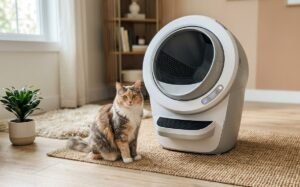
Pair containment with the right pet furniture. A cat spending real time in an outdoor enclosure still needs somewhere comfortable indoors, so check our guide to best automatic cat litter box Australia for the indoor side of the setup.
You’ll Also Want
A cat left in any outdoor enclosure through a hot afternoon needs somewhere to actually stay cool, and a self-cooling pet mat does that inside any of the structures on this list without adding power or water to the setup.
Anyone buying the wire-panel picks in this list without a roof should look at a shade sail or clip-on sun cover, since none of the open-top playpens block direct summer sun on their own.
A structure placed on grass or dirt benefits from a portable outdoor litter tray, so a cat spending real time in the enclosure isn’t stuck holding on until it’s let back inside.
Frequently Asked Questions
Do I legally need a cat enclosure in Australia?
It depends entirely on where you live. The ACT requires containment for cats born after 1 July 2022 across the whole territory, several Victorian councils run their own containment orders, and Western Australia has a law moving toward giving councils the same power. Most of the rest of the country has no blanket requirement yet, though individual councils can and do pass local rules, so check your specific council’s current position before assuming either way.
What’s the real difference between a catio and a cat enclosure?
In practice the terms are used interchangeably in Australia, though “catio” more often describes a walk-in structure attached to or near the house, while “enclosure” covers everything from that down to a small wire playpen. Every product in this guide fits under the broader “enclosure” umbrella regardless of which word its own listing uses.
How much floor space does a cat actually need outdoors?
There’s no single official figure, but the products in this guide range from under a square metre for one cat up to close to three square metres for two or three. Vertical climbing space matters as much as floor area, so a smaller footprint with real platform height can suit an active cat better than a flat run with more ground space but nothing to climb.
Can these enclosures stay outside through an Australian summer?
Most can, but check the roof type before assuming full shade coverage. Open wire mesh roofs let rain and harsh sun through directly, so a structure without a solid or shaded roof section needs a shade sail or repositioning to a partly shaded spot through the hottest months, particularly in Queensland or inland WA.
Will a wire playpen actually stop a cat from escaping?
A roofless wire playpen relies on height alone, and a determined jumping or climbing cat can clear most of them without much effort. Treat a roofless design as supervised-use fencing ahead of a set-and-forget containment solution, and choose a fully enclosed catio with a roof if the cat has a track record of getting over fences.
Do these enclosures work for more than one cat?
Some do and some don’t, and the difference comes down to floor area instead of the number printed on the listing. The larger walk-in catios in this guide actually suit two or three cats sharing space, while the compact shelter and indoor cat house are realistically single-cat products regardless of what the packaging claims.
Verdict
Ten properly different structures make this list, and the right pick depends on floor space, climate and whether local containment rules even apply to your address. The 181cm walk-in catio at the top of this list is the safest all-round buy for a household with the yard space to fit it, giving two cats real room to separate instead of sharing a cramped run. The modular 6-in-1 playpen suits a household whose cat numbers change, and the wooden indoor cat house solves an entirely different problem for anyone without yard access at all. Whichever structure fits the yard, check the actual local containment rules first: a box that looks compliant on the listing page isn’t the same as a structure that satisfies your own council’s order.