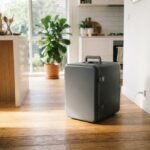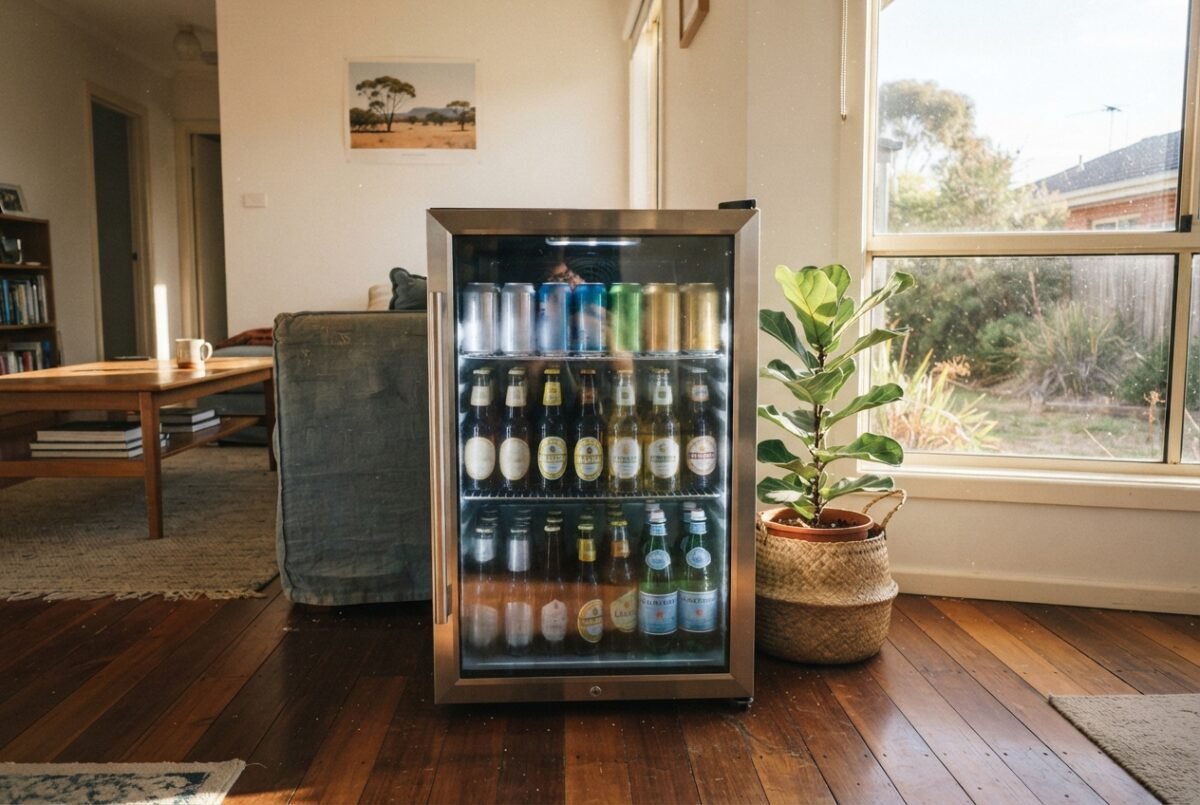
Most Australian rental leases and share-house agreements say nothing about owning a second fridge, which is exactly why a bar fridge ends up doing more full-time work in this country than its name suggests: a share-house grocery overflow, a garage drinks fridge for footy season, a nursery bottle-warming backup, or a 12V unit that lives permanently in the back of a ute. A bar fridge is a small, freestanding refrigerator, usually 20 to 200 litres, built around the same compressor cooling as a full-size fridge just scaled down, with a portable multi-voltage subtype swapping the wall socket for a car battery. The best bar fridge in Australia for a granny flat kitchenette looks nothing like the one built for a weekend at Fraser Island, and mixing the two up is the easiest buying mistake to make in this category.
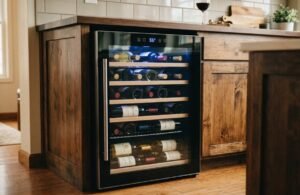
Three distinct sub-types get sold under the same bar fridge banner. Glass-door bar fridges are the classic mains-powered countertop unit, usually 20-98L with a see-through front so you can grab a can without opening the door – the mainstream pick for a rumpus room or a home bar. Two-door bar fridges with a separate freezer compartment step up past 100L and add real, if small, frozen storage, at the cost of being noticeably taller and heavier. Portable multi-voltage fridges run on 12V, 24V or 240V from a car battery or a cigarette-lighter plug and skip the glass door and cabinetry entirely – built for camping, caravanning and tradie utes rather than a fixed spot in the house.
The number that actually separates these ten is the star rating on the yellow Energy Rating Label every mains-powered unit here carries by law under the federal GEMS scheme – it runs from 1 star on the smallest glass-door models up to 2 stars on the larger two-door ones, and a genuine 1-star gap on a fridge that runs 24 hours a day, 365 days a year adds up. A 46L bar fridge drawing around 85W with a realistic 40-45% compressor duty cycle sits somewhere near 300-330kWh a year; at a typical Australian household rate of roughly 30 cents per kilowatt hour, that lands well short of a full-size fridge’s running cost but is still real money over twelve months, not a rounding error on the power bill. Capacity is the second number worth tracking, and it spans 20L (about 24 cans) up to 122L with a 31L freezer built in.
Ten bar fridges sit in this line-up, spanning a 20L bedroom unit right through to a two-door 122L model with a genuine freezer compartment, plus three portable 12V/24V/240V fridges for a ute tray, a caravan annexe, or a Perth garage in the middle of a dry summer.
Quick Picks
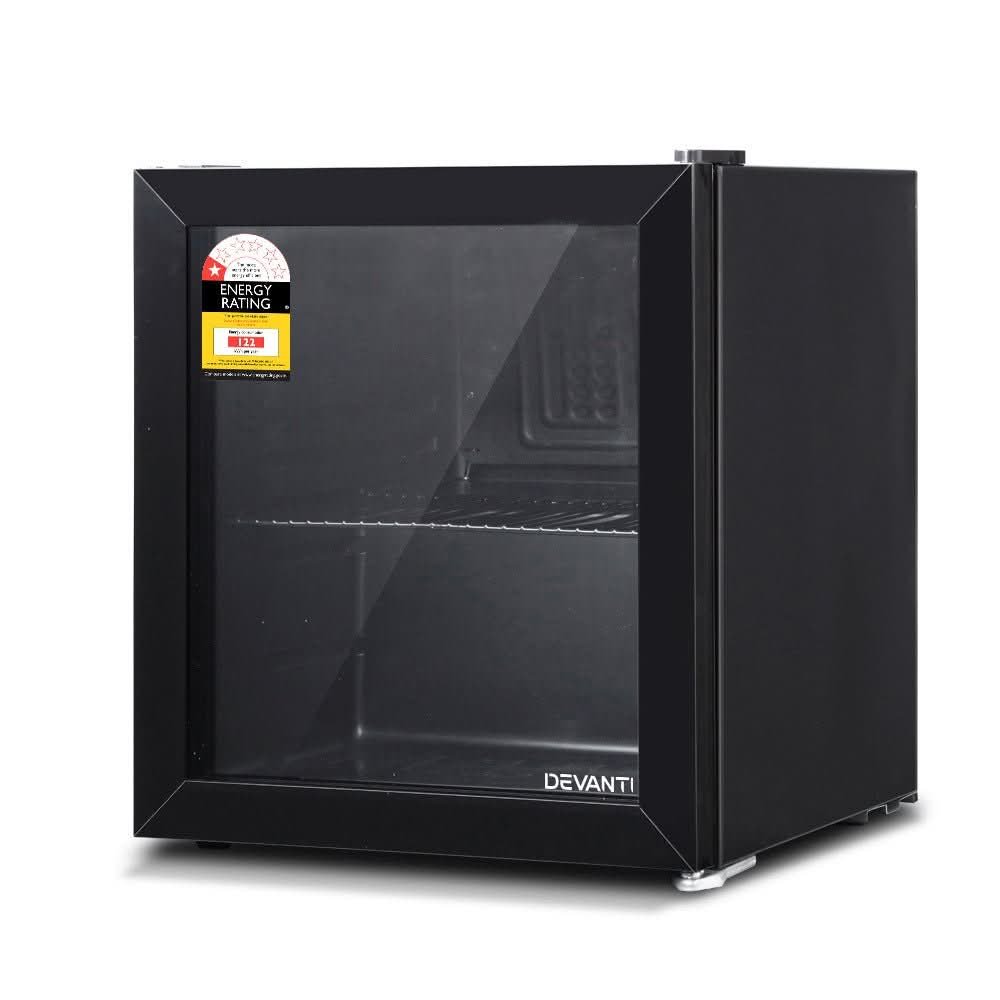
46L Glass-Door Bar Fridge
The safest default for a rumpus room or home bar: compact enough for a tight corner, with a see-through glass door and five temperature settings.
CHECK CURRENT PRICE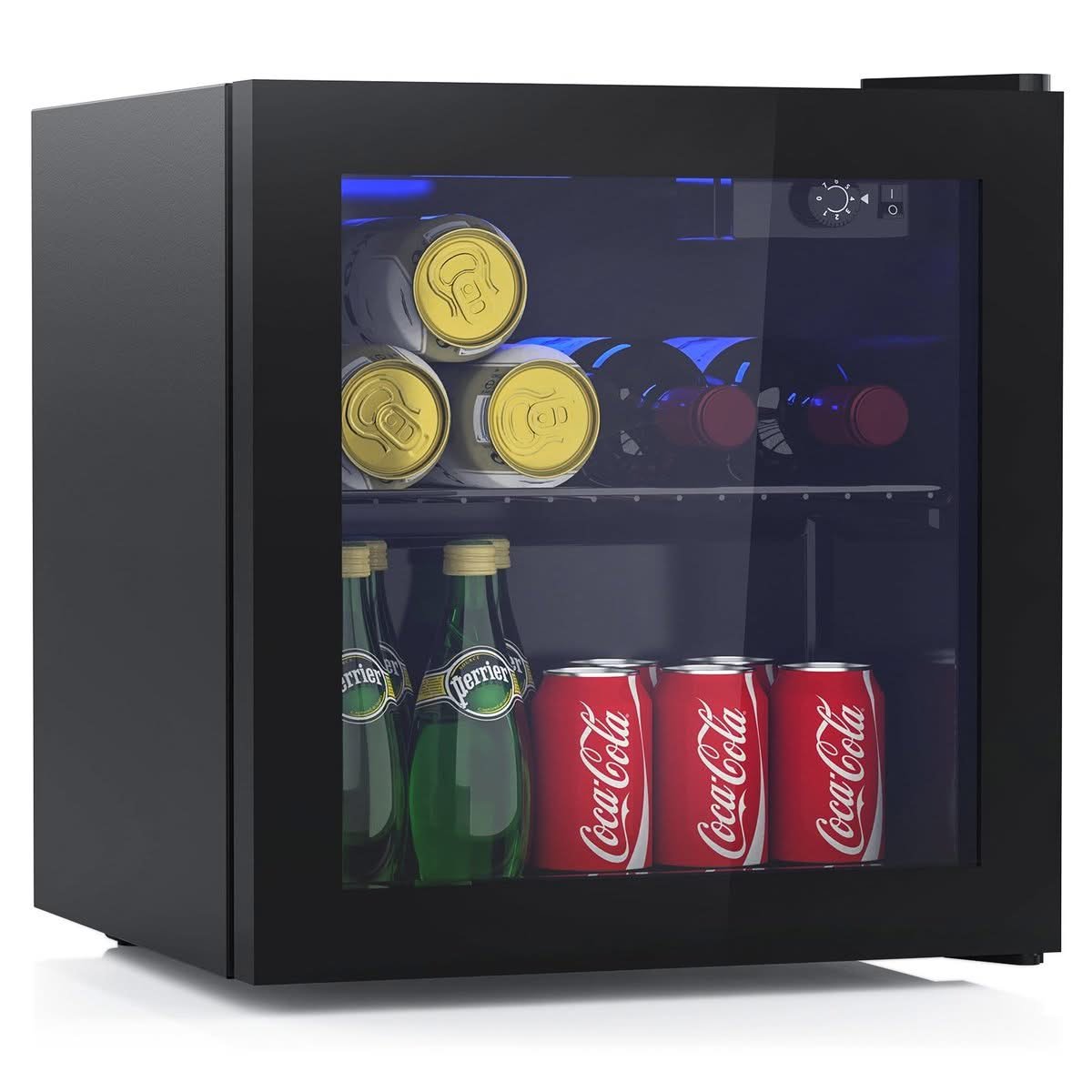
36L Glass-Door Mini Bar Fridge
A 36L glass-door fridge holding 55 cans or 12 bottles at the lowest entry price in this line-up.
CHECK CURRENT PRICE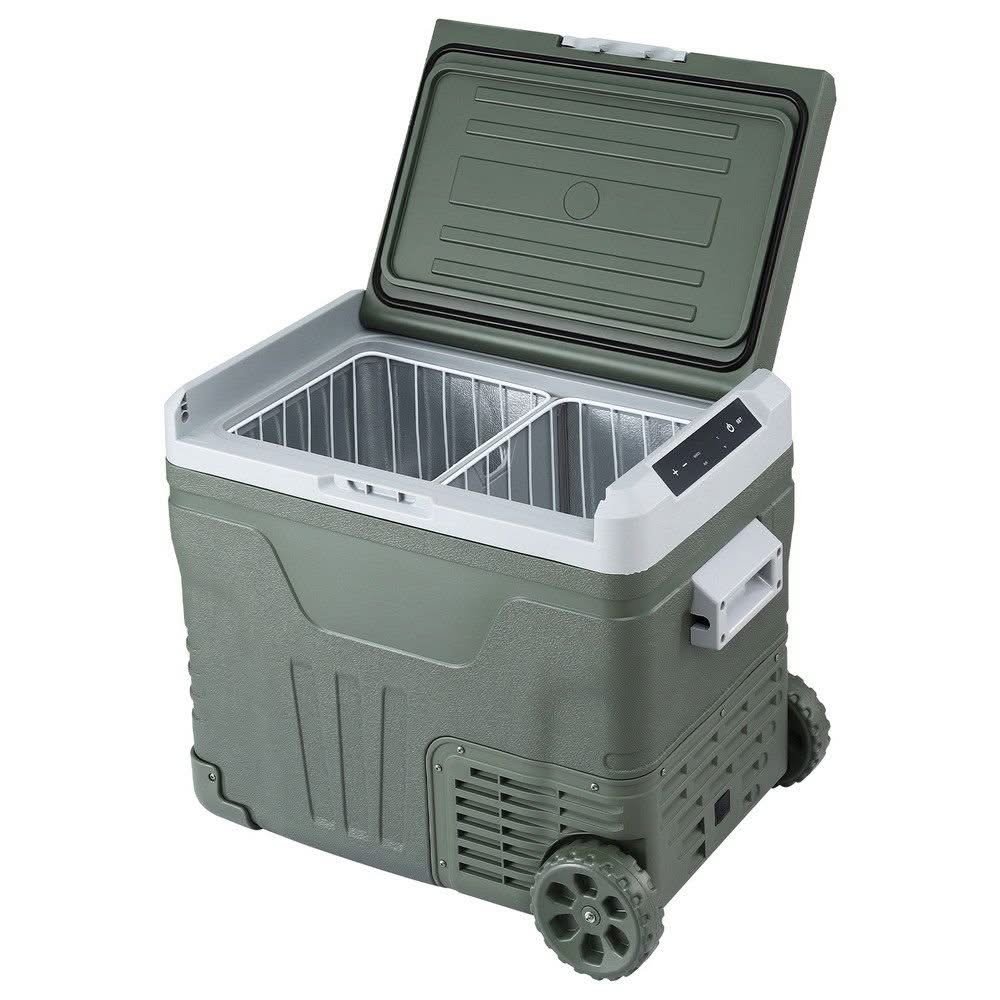
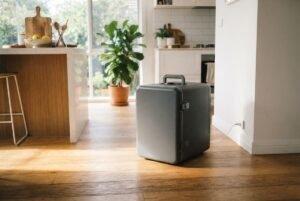
50L Portable Multi-Voltage Fridge
Runs on 12V, 24V or 240V, so the same fridge works off a car battery at a campsite and off mains power at home.
CHECK CURRENT PRICEBest Bar Fridge Australia Compared
| Product | Link | Type | Best For | Key Spec |
|---|---|---|---|---|
| 46L Glass-Door Bar Fridge | Check price | Glass-door | Small spaces | 46L, 1-star, 5 temp settings |
| 70L Glass-Door Bar Fridge with LED Light | Check price | Glass-door | Entertaining | 70L, 1-star, built-in LED lamp |
| 98L Glass-Door Bar Fridge with Lock | Check price | Glass-door | Mid-size use | 98L, 7 temp settings, built-in lock |
| 122L Two-Door Bar Fridge with Freezer | Check price | Two-door + freezer | Families | 91L fridge + 31L freezer, 2-star |
| 20L Mini Bar Fridge with Digital Display | Check price | Glass-front | Bedroom or desk | 20L, digital display, 4-16C |
| 36L Glass-Door Mini Bar Fridge | Check price | Glass-door | Tight budgets | 36L, 55 cans, LED interior light |
| 46L Tinted Glass-Door Mini Fridge | Check price | Glass-door | Value mid-size | 46L, 65 cans, R600a refrigerant |
| 30L Portable Multi-Voltage Fridge | Check price | Portable | Ute tray | 30L, 12V/24V/240V |
| 50L Portable Multi-Voltage Fridge | Check price | Portable | Camping/caravan | 50L, 12V/24V/240V |
| 80L Portable Multi-Voltage Fridge | Check price | Portable | Dual-purpose | 80L, 12V/24V/240V |
How We Picked
This comparison came from checking bar fridge stock across local retailers and marketplace filtering for units really available to Australian buyers with local stock rather than a multi-week dispatch window. Two glass-door product families with identical specifications turned up on more than one storefront; where that happened, we linked whichever storefront had the lower price for the same physical fridge, not the one paying the highest commission.
Selections span three sub-types (mains glass-door, two-door with freezer, and portable multi-voltage) across three brands, with actual reported user complaints cross-referenced from ProductReview.com.au rather than invented.
1. 46L Glass-Door Bar Fridge – Best Compact
A 46L bar fridge is about as small as this category gets before it stops being useful for anything beyond a handful of cans and a couple of sauce bottles, and this one leans into that with a double-glazed glass door, five mechanical temperature settings and a reversible door hinge so it can open whichever way suits the corner it’s going into. There’s no dedicated freezer box here, which is the trade-off for the compact footprint. Drinks and snacks only. Nothing that needs to stay frozen.
The mechanical dial keeps things simple: turn it, wait, check. That’s the whole interface. Owners on ProductReview.com.au consistently flag the compressor kicking in louder than expected for a fridge this size, which matters if it’s going in a bedroom or a small home office instead of a garage or a rumpus room where the noise gets absorbed.
This suits a share-house lounge room, a granny flat kitchenette or a desk-side setup better than a family garage, since the reversible hinge and small footprint count for more than raw capacity in those spots. Anyone who wants a small chiller compartment for ice or frozen peas should look at the 98L pick below instead – this one doesn’t have one.
Pros:
- Reversible door hinge fits either side of a tight corner
- Five temperature settings on a simple mechanical dial
- R600a refrigerant, the eco-friendlier gas most new fridges use now
Cons:
- Compressor kick-in is noticeably louder than the fridge’s size suggests, per repeated owner reports
- No chiller or freezer compartment at all, not even a small ice-tray box
Key specs: Capacity: 46L (about 24-30 cans) | Energy rating: 1 star | Power: 85W, 220-240V | Refrigerant: R600a | Warranty: 1 year
CHECK CURRENT PRICE2. 70L Glass-Door Bar Fridge with LED Light – Best for Entertaining
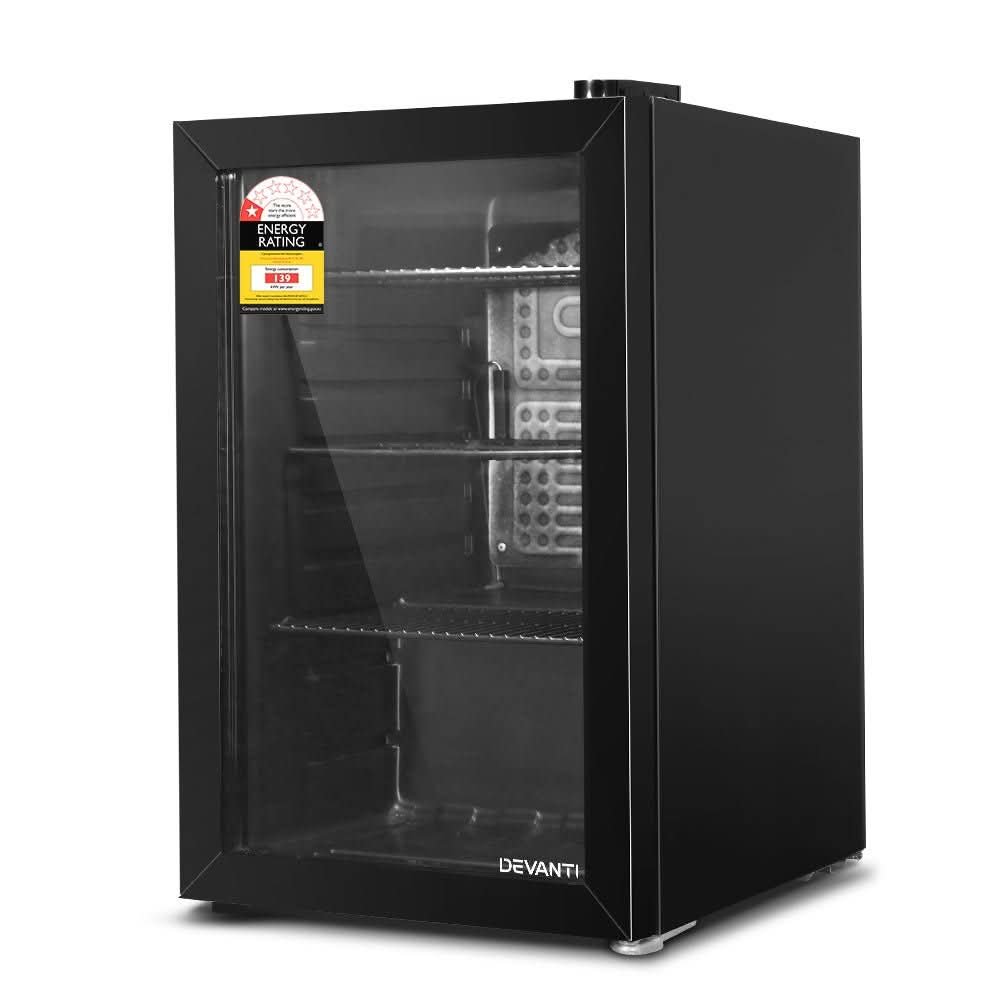
Roughly half as much again in capacity as the 46L above, for not much more footprint, and it adds one truly useful thing the smaller model skips: a built-in LED lamp inside the cabinet. Devanti’s own product listing notes the light is specific to the 70L size in this range, not carried across the whole line-up, which is worth knowing if a lit interior is actually the reason someone’s picking this over the 46L.
Five temperature settings and the same double-glazed glass door as the smaller model, so anyone stepping up from the 46L already knows how to run this one. Where it earns its keep is entertaining – a lit display of drinks reads better at a barbecue or a birthday than a dark cabinet you have to lean into.
The door racks are the one recurring complaint worth flagging: several owners report standard wine and soft-drink bottles not fitting the door holders properly, which pushes more bottles onto the shelves than the design intends. Worth planning shelf space for bottles not assuming the door will take them.
A step up in price from the 46L above, and worth it specifically for the interior light and the extra 24L – skip it if neither of those matters and save the difference on the smaller unit instead.
Pros:
- Built-in LED lamp lights the whole cabinet, not just a bulb behind the door
- 70L holds a honest slab plus mixers, not just a six-pack
- Same simple mechanical dial as the smaller model
Cons:
- Door bottle holders are too narrow for some standard wine and soft-drink bottles, per owner reports
- No freezer or ice-tray space, same as the 46L
Key specs: Capacity: 70L | Energy rating: 1 star | Power: 85W, 220-240V | Feature: built-in LED interior light | Warranty: 1 year
CHECK CURRENT PRICE3. 98L Glass-Door Bar Fridge with Lock – Best Mid-Size
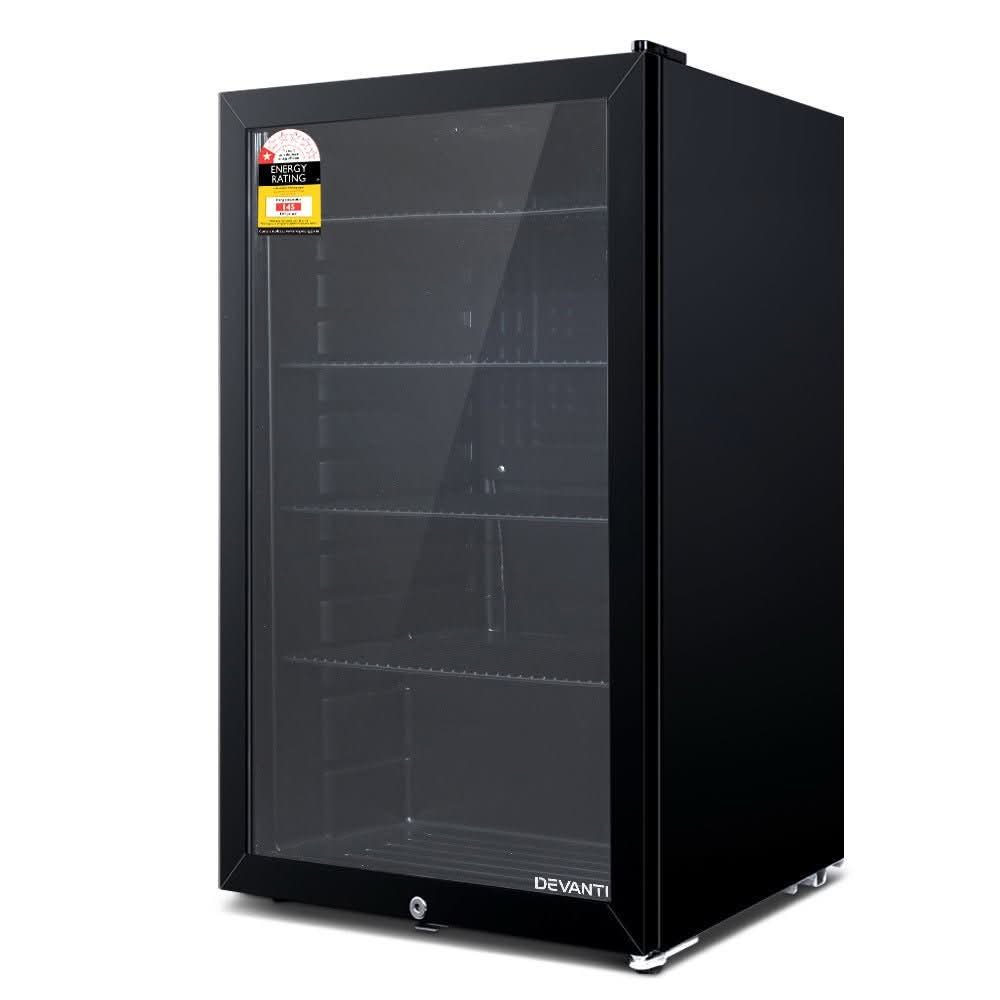
This is where the range starts adding real functionality instead of just more litres: seven temperature settings instead of five, a built-in lock, and enough depth that Devanti markets it for light commercial use as well as home. The lock matters more than it sounds – a fridge behind a bar or in a share-house common area that anyone can raid is a different proposition to one with a key.
Owners report two recurring issues worth planning around. First, the small chiller/freezer flap is a plastic hinge that a few reviewers describe as flimsy once it’s opened and closed repeatedly for defrosting – not a dealbreaker, but not built for heavy daily use either. Second, some units ice up on the back interior wall enough to freeze anything stored too close to it, which is a mechanical design quirk of small fridges generally, not unique to this one.
Works best in a household or a small office that actually wants the lock and the extra capacity, less so a simple drinks fridge where 46L or 70L would do the same job for less outlay.
Pros:
- Built-in lock, actually useful in a shared or commercial space
- Seven temperature settings, more control than the smaller models
- Deep enough for two-litre bottles standing upright
Cons:
- The small chiller flap is plastic and reportedly fragile with regular defrosting
- Back-wall icing on some units can freeze items stored flush against it
Key specs: Capacity: 98L | Temperature settings: 7 | Feature: built-in lock | Power: 85W, 220-240V | Warranty: 1 year
CHECK CURRENT PRICE4. 122L Two-Door Bar Fridge with Freezer – Best Large Capacity
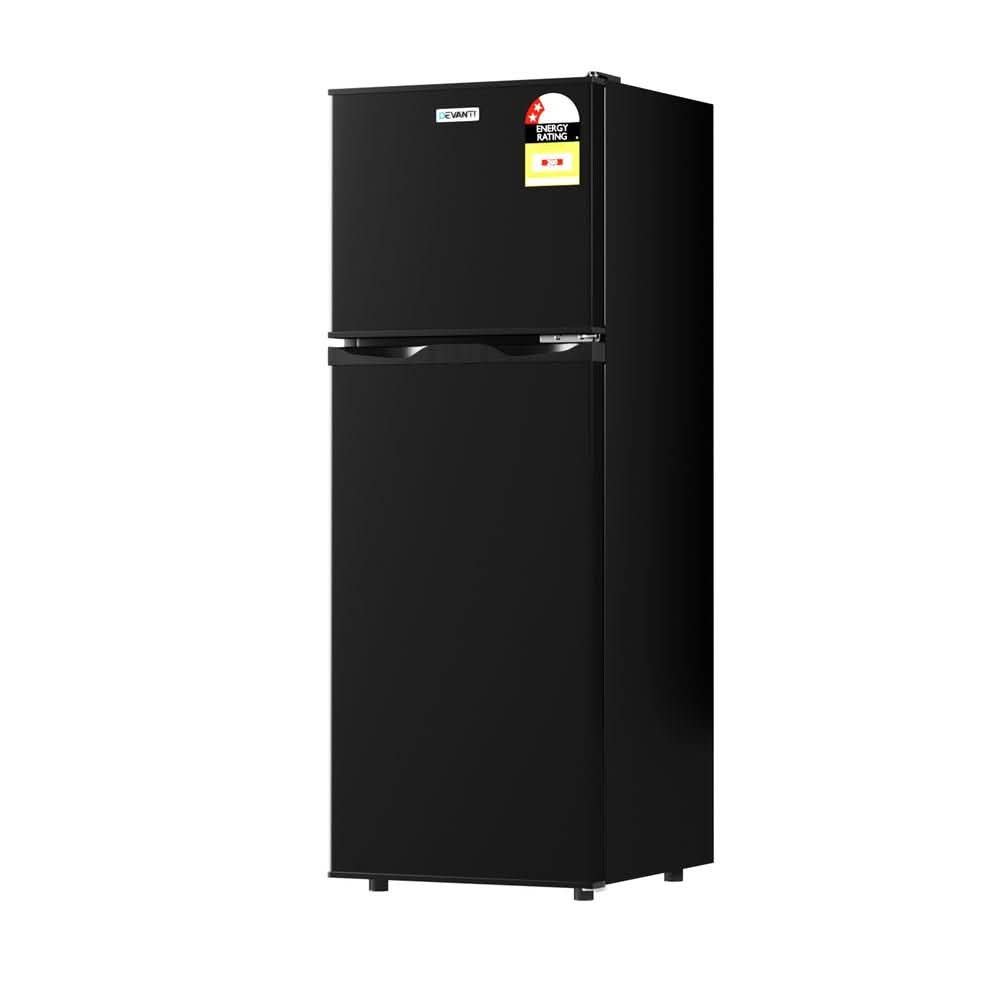
The only two-door model in this line-up, splitting 122L into a 91L fridge and a 31L freezer rated down to about -18C – truly useful frozen storage over the small ice-box flap on the 98L above. CHOICE’s own bar fridge testing has found that freezer sections on bar fridges generally aren’t very useful, running as little more than a chiller in some models tested, so a real, separately-rated freezer compartment here is worth more than the number alone suggests. This one ships with an ice scraper, which says something about how much frost these small freezer compartments can build up without a proper defrost cycle.
At 45cm wide by 125cm tall it stands notably taller than every other pick here, closer to an upright bar fridge than a countertop unit (about chest height on an average adult), and it’s rated 2 stars against the 1-star rating on the smaller Devanti models – an actual efficiency step up, not just a bigger number on the same label.
The premium end of this guide, and the pick for a family that actually wants frozen storage as well as drinks, not a second drinks-only fridge. One reported complaint worth flagging bluntly: at least one buyer described their unit arriving with cosmetic damage and some advertised specifications not matching reality, a reminder to photograph the unit on delivery before signing for it, same as any large appliance shipped flat-packed.
Pros:
- A true separately-rated freezer, not just a chiller flap
- 2-star energy rating, the best in this line-up
- Tall, upright format suits a laundry or garage corner better than a countertop
Cons:
- Noticeably taller and heavier than every other pick here – check the doorway and delivery access first
- At least one reported delivery-damage complaint – photograph the unit before signing for it
Key specs: Capacity: 91L fridge + 31L freezer | Energy rating: 2 star | Dimensions: 45cm x 48cm x 125cm | Refrigerant: R600a | Warranty: 1 year
CHECK CURRENT PRICE5. 20L Mini Bar Fridge with Digital Display – Best Ultra-Compact
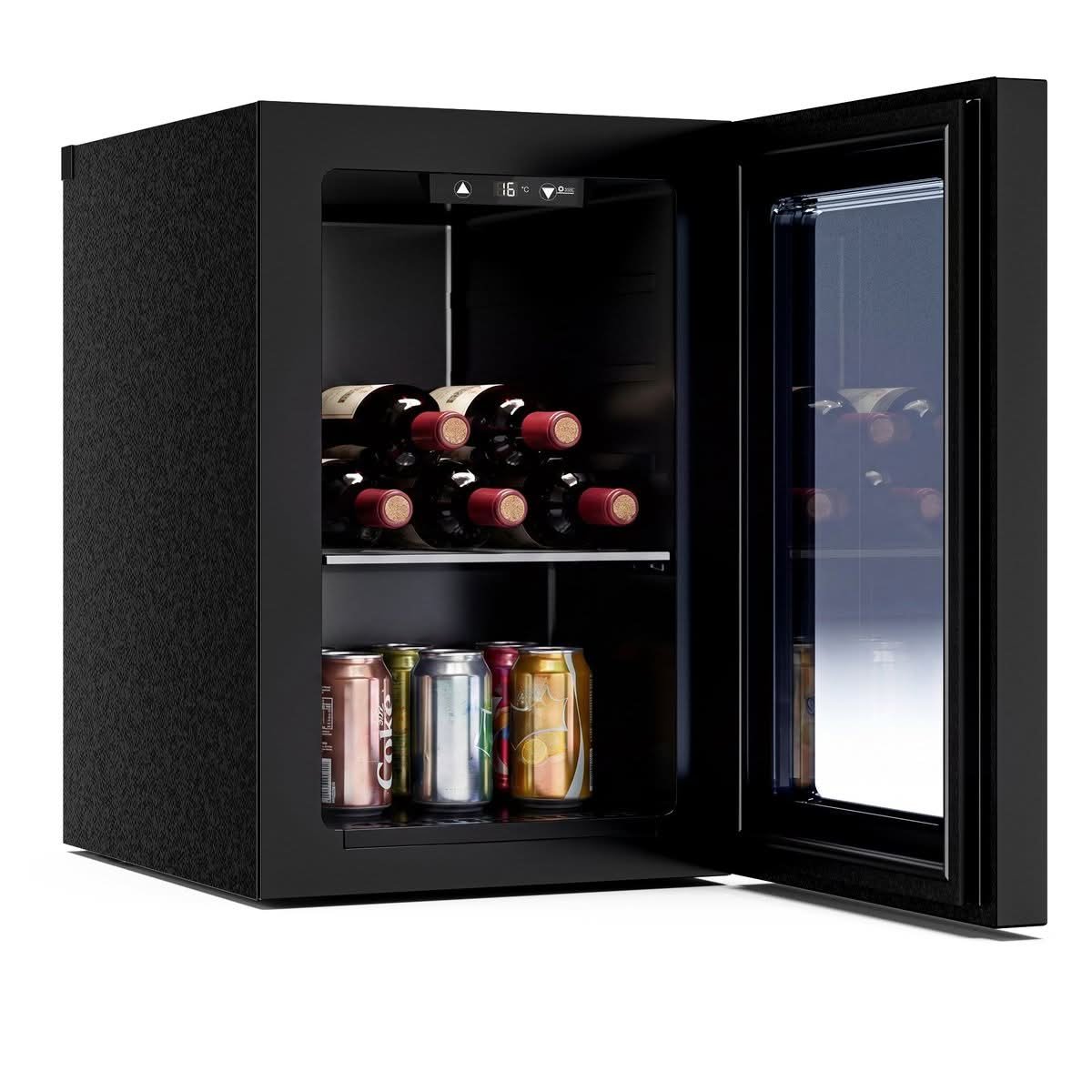
Smaller again than the 46L Devanti above, and centred on a digital display not a dial – the temperature (4-16C) shows in real time on the front, which suits someone who actually wants to fine-tune between an almost-frozen soft drink and a barely-chilled red wine over guessing where a dial’s midpoint sits.
Twenty-four cans or a mix of bottles and cans is truly all this holds. That’s the point: a desk, a bedroom, or a studio apartment kitchenette where a 46L unit would eat too much floor space. Not a fridge for stocking a party.
Reported complaints about this brand skew toward paperwork instead of the fridge itself – instruction manuals translated poorly enough that the control panel diagrams don’t match the actual unit, which is an annoyance not a functional problem once the display’s four buttons are worked out by trial and error.
Pros:
- Digital display shows exact internal temperature, not just a dial position
- A footprint that actually fits on a desk
- Adjustable 4-16C range covers both a cold soft drink and a cellar-temperature red
Cons:
- Instruction manual translation quality is a recurring brand-wide complaint
- Only realistically holds a single six-pack plus a few bottles – check the litre figure twice before buying as a main drinks fridge
Key specs: Capacity: 20L (about 24 cans) | Temperature range: 4-16C | Control: digital display | Install: freestanding countertop
CHECK CURRENT PRICE6. 36L Glass-Door Mini Bar Fridge – Best Budget Pick
The cheapest fridge in this guide, and it still manages a stainless-steel-look frame, a double-glazed reversible door and seven temperature settings over feeling like a stripped-down budget unit. Fifty-five cans or twelve bottles is a solid step up from the 20L pick above for not much more outlay.
An interior LED light illuminates the cabinet at night, a small but real convenience over the plain mechanical Devanti units at this size. Reported reliability across the brand is mixed instead of uniformly bad – some owners report years of trouble-free use, others report early failures – which is worth weighing against the price not expecting Devanti-level consistency at this end of the market.
The pick for someone who wants the lowest possible outlay and can live with a shorter warranty runway than the Devanti range above.
Pros:
- Cheapest fridge in this line-up
- Seven temperature settings and an interior LED light at this price point
- Reversible door, same flexibility as the pricier Devanti models
Cons:
- Brand-wide reliability reports are mixed – some early failures reported alongside long trouble-free runs
- Stainless-look frame is a finish, not real stainless steel
Key specs: Capacity: 36L (about 55 cans / 12 bottles) | Temperature range: 4-16C | Feature: interior LED light | Door: reversible, double-glazed
CHECK CURRENT PRICE7. 46L Tinted Glass-Door Mini Fridge – Best Value Mid-Size
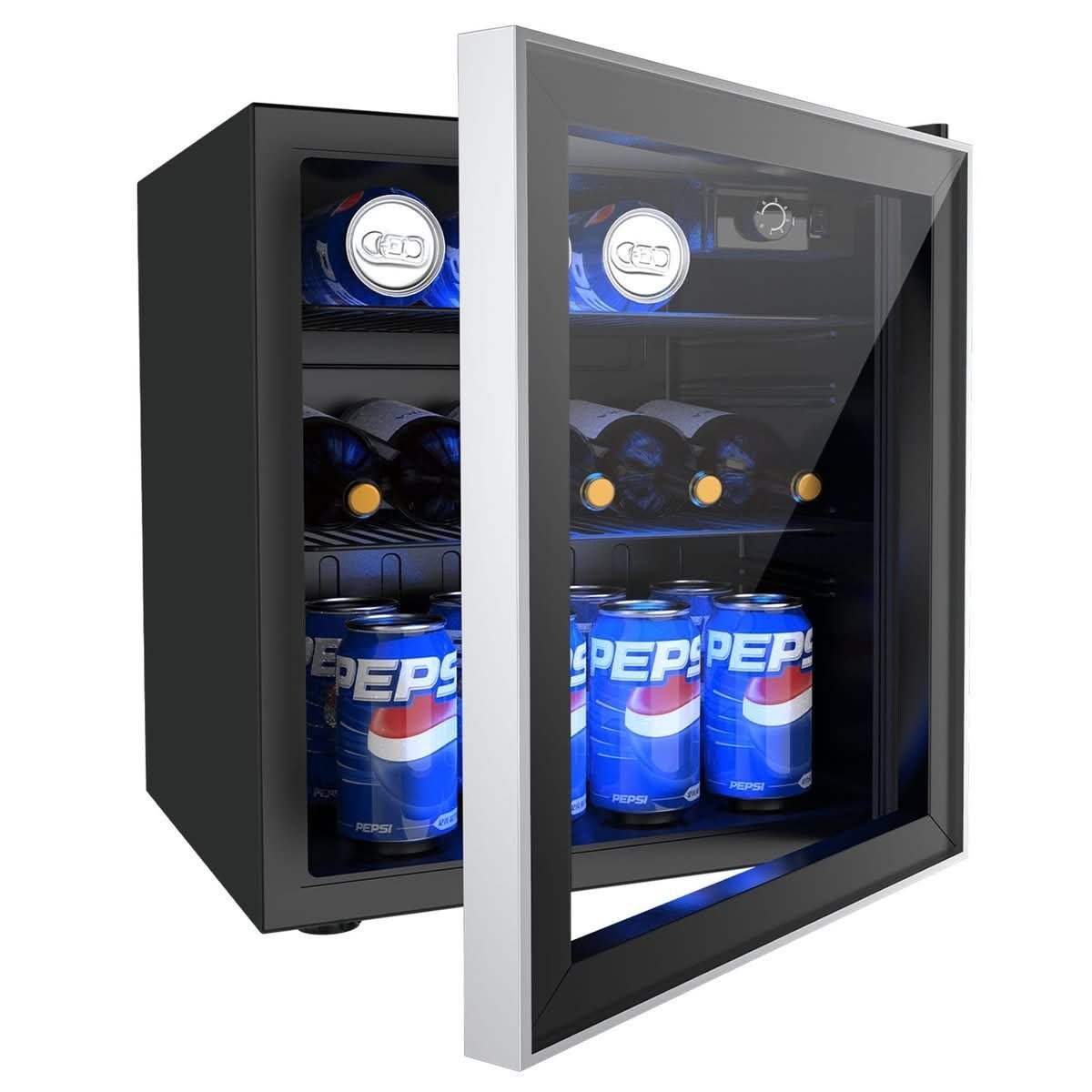
Splits the difference between the 36L pick above and the Devanti 46L at the top of this guide: tinted double-pane glass over clear, a compressor-cooling system instead of the more basic thermoelectric units sold at this size elsewhere, and enough depth to stand 14 wine bottles up inside. Power draw sits at 80W, close enough to the Devanti 46L’s 85W that running cost is a wash between the two.
Same brand-wide caveat applies here as the two mini fridge picks above: documentation and control-panel labelling are the recurring complaint, not the compressor or the cooling performance itself. Budget five minutes to work out the dial without the manual not expecting it to be self-explanatory out of the box.
A sensible pick specifically for someone who wants tinted glass over clear – for privacy in a shared house, or just to keep drinks out of direct light – and is happy to trade the Devanti name for a lower outlay at the same capacity.
Pros:
- Tinted glass door, unlike every clear-glass fridge above it in this guide
- Compressor cooling, not a weaker thermoelectric unit
- Holds 14 wine bottles standing upright
Cons:
- Same documentation-quality complaints as the rest of this brand’s range
- Compressor needs clearance space at the back – don’t push it flush against a wall
Key specs: Capacity: 46L (65 cans / 14 bottles) | Power: 80W, 220-240V | Cooling: compressor, R600a refrigerant | Net weight: 16.5kg
CHECK CURRENT PRICE8. 30L Portable Multi-Voltage Fridge – Best Compact Portable
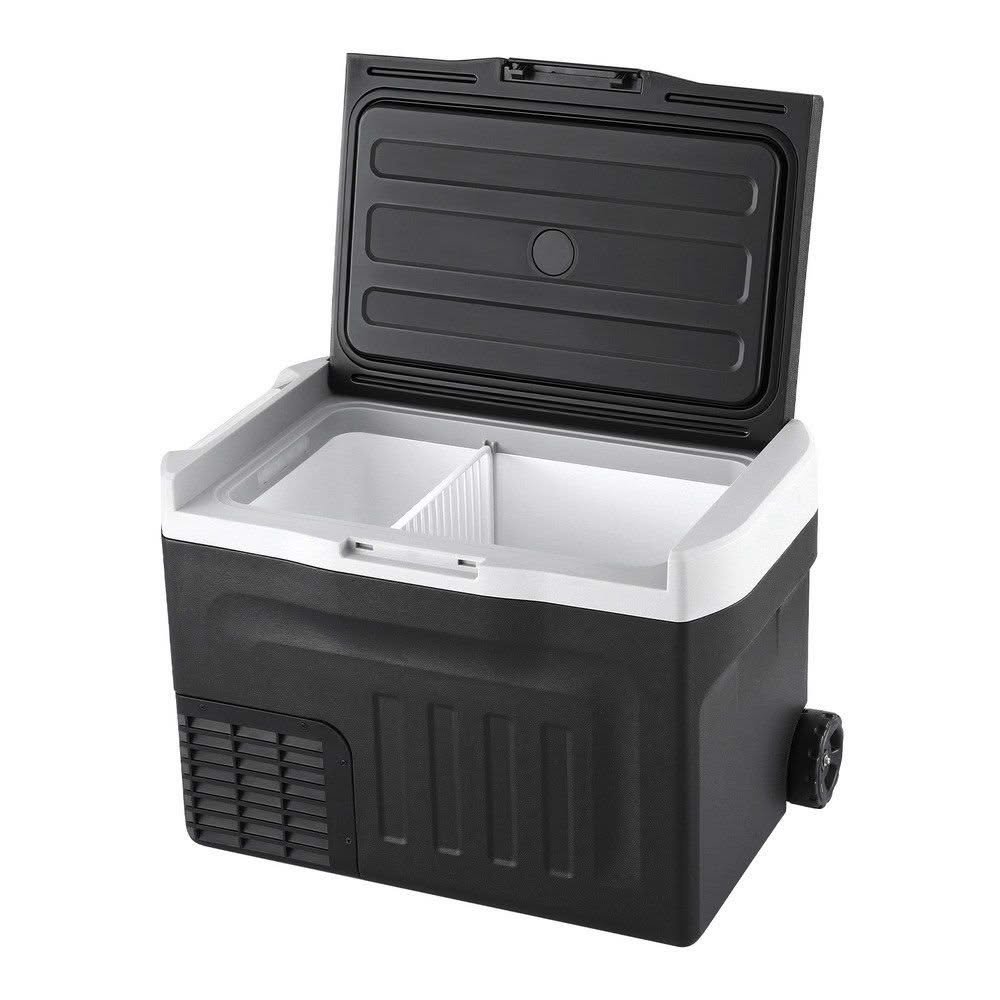
The first of three portable fridges here, and the smallest: it runs on 12V, 24V or 240V, which means the same unit works off a car battery through a cigarette-lighter socket, off a caravan’s house battery, or off a normal wall socket at home. That flexibility is the entire reason to pick a portable fridge over a mains-only glass-door unit – it’s the difference between one fridge that does everything and owning two.
Thirty litres is enough for a day trip or a ute tray on a tradie’s round, not a week-long camping trip for a family. Reported compressor reliability across this style of portable fridge is inconsistent industry-wide – some owners get years of quiet, reliable running, others report an early compressor failure within the first couple of months – so registering the warranty and testing it thoroughly in the first fortnight is worth the ten minutes it takes.
Best suited to a tradie’s ute, a day-trip esky replacement, or a second small fridge for a caravan’s outdoor annexe over a family’s main camping fridge – the 50L and 80L picks below cover that better.
Pros:
- Runs on 12V, 24V or 240V – one fridge for the car, the caravan and the house
- No ice needed, unlike an esky – actually frees up boot space on a long trip
- Small enough to fit behind a ute’s seats or on a caravan floor
Cons:
- Compressor reliability is inconsistent across this style of portable fridge generally – test it hard in the first fortnight
- 30L is tight for more than a couple of days away
Key specs: Capacity: 30L | Power: 12V / 24V / 240V | Use case: ute, day trips, caravan annexe
CHECK CURRENT PRICE9. 50L Portable Multi-Voltage Fridge – Best for Camping and Caravanning
Fifty litres is the size most Australian weekend campers actually settle on – well, closer to a long weekend than a full week, but still the size that comes up most often: enough for a long weekend’s meat, milk and drinks without needing a second esky, still light enough for one person to lift into a wagon boot instead of needing a slide and two sets of hands. Same tri-voltage flexibility as the 30L above – 12V, 24V or 240V.
Where this earns its place over the smaller pick is truly simple: more families cook and drink for a full long weekend out of 50L than out of 30L, and the jump in size doesn’t cost much more to run since both sit on the same compressor technology. A step up in price from the 30L above, but the more sensible size for anyone planning an actual camping trip not a day out.
The same compressor-reliability caveat applies as the 30L pick – this style of portable fridge has a really mixed reliability record across owner reviews industry-wide, alongside reports of some units running near-continuously over cycling on and off as expected. Neither issue is unique to this specific listing, but it’s worth knowing before relying on one for a remote trip with no backup cooling.
Pros:
- 50L covers a long weekend for a small family without a second esky
- Same 12V/24V/240V flexibility as the smaller pick
- Light enough for one person to lift, unlike the 80L below
Cons:
- Reported compressor cycling issues on some units – runs near-continuously instead of switching off cleanly
- No built-in battery protection cut-off confirmed – check your own vehicle wiring if running it off a car battery for extended periods
Key specs: Capacity: 50L | Power: 12V / 24V / 240V | Use case: weekend camping, caravanning
CHECK CURRENT PRICE10. 80L Portable Multi-Voltage Fridge – Best Large Portable
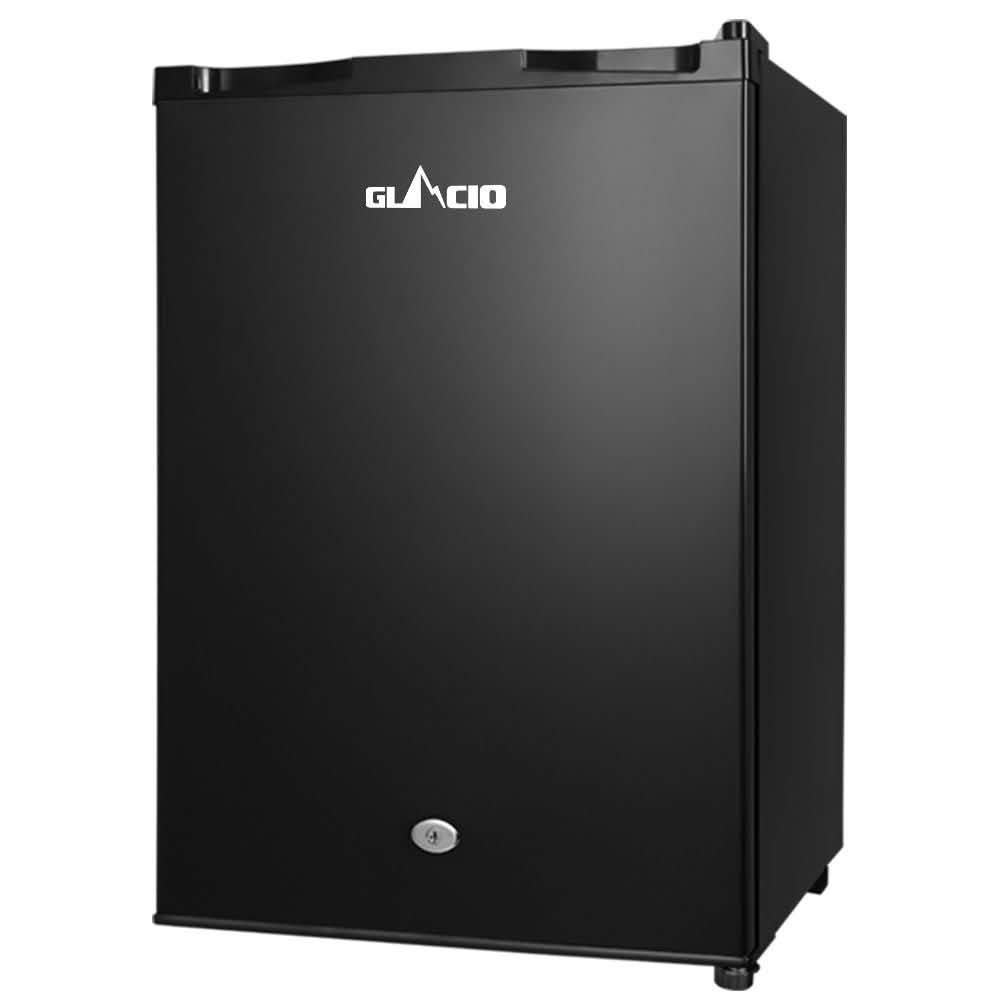
The largest portable fridge in this guide, and the one that starts overlapping with the mains-powered picks above – 80L is close to the 70L Devanti’s capacity, just built for a tailgate instead of a kitchen bench. A step up in price from the 50L above, and the extra litres matter most for a honest multi-day trip or feeding more than two or three people.
Weight is the real trade-off at this size: expect to need both hands, or a slide, to get it in and out of a vehicle once it’s loaded (about the weight of two full slabs and an esky combined). That’s true of every 80L-class portable fridge, not a flaw specific to this one, but worth planning for before assuming it’ll lift like the 30L pick does.
Doubles as a second garage fridge between camping trips – plug it into a wall socket at home on the 240V setting and it runs like any other bar fridge until the next trip needs it back in the car. That dual-purpose use is arguably the strongest case for choosing this over a dedicated mains-only unit if storage space at home is tight.
Pros:
- Largest capacity of the three portable picks – solid multi-day trip territory
- Doubles as a spare garage fridge on 240V between trips
- Same tri-voltage flexibility as the smaller two
Cons:
- Heavy once loaded – budget for a slide or a second set of hands
- Same industry-wide compressor reliability caveat as the smaller two portable picks
Key specs: Capacity: 80L | Power: 12V / 24V / 240V | Use case: multi-day camping, dual-purpose garage fridge
CHECK CURRENT PRICEHow to Choose a Bar Fridge in Australia
Match capacity to what actually gets stored, not the biggest number available. A 20-36L fridge holds a six-pack and a bottle or two – fine for a desk or a bedroom, useless for hosting. A 70-98L unit covers a real slab plus mixers. Anything over 100L starts asking whether a second full-size fridge would suit better. Got a spare corner in a Brisbane granny flat or a Queenslander’s back sunroom that’s smaller than it looks on the tape measure? Measure the actual gap, door swing included, before ordering.
Check the energy star rating before the price. A 1-star bar fridge left running 24/7 in a Melbourne garage all winter and all summer racks up real electricity use over a year, even at a small size. The Energy Rating Label shows the estimated annual kWh figure on every unit sold in Australia by law – two fridges that look identical on capacity and price can differ meaningfully on that number.
Decide between glass-door and portable before comparing anything else. A mains-only glass-door fridge is cheaper for the same litre count and looks better sitting under a bar, but it’s dead weight the day you want to take it camping. A 12V/24V/240V portable fridge costs a bit more for the same capacity and trades the glass door for actual flexibility – one fridge that works at home, in the car, and at a campsite.
A freezer compartment sounds like a bonus, but check what CHOICE has actually found before paying extra for one. CHOICE’s own bar fridge testing has repeatedly found the small freezer or chiller sections on this category of fridge perform inconsistently – some barely reach proper freezing temperatures. A two-door model with a truly separately-rated freezer, like the 122L pick here, is a different proposition to a small ice-box flap bolted onto an otherwise ordinary bar fridge.
Ventilation clearance matters more on a bar fridge than people expect. The compressor sits at the back or underneath on nearly every model here, and pushing it flush against a wall or into a built-in cupboard with no airflow shortens its working life and makes it run louder and less efficiently. Leave a honest handspan of clearance behind and above, more in a hot Darwin wet season laundry than a cool Hobart spare room.
Read the warranty terms, not just the length. A 1-year warranty is standard across this category, but Australian Consumer Law guarantees still apply on top of whatever the seller’s paperwork says – a fridge that dies well within a reasonable expected lifespan has consumer-law protection regardless of what the box states. Keep the order confirmation the way you would for anything bought at Officeworks or Harvey Norman, and photograph the unit on arrival, since delivery-damage disputes are the single most common complaint pattern across every brand covered here.
You’ll Also Want
Running one of the portable fridges off a car battery for more than a day or two needs real capacity behind it – a 100Ah lithium deep-cycle battery keeps the 50L or 80L pick above running through a weekend without draining the vehicle’s starter battery.
Fitting a portable fridge into a 4WD canopy or a ute tray properly usually means a slide, not a lift-and-carry – a set of heavy-duty drawer slides rated to handle the loaded weight of the 80L pick makes it a one-person job.
A dial on the front of a bar fridge is a setting, not a proof of what’s actually happening inside – a cheap indoor thermometer placed on the middle shelf for a day confirms the real temperature against the label, which matters most on the two-door pick’s separate freezer zone.
Wine specifically, not general drinks and snacks, is better served by a dedicated temperature-zoned unit than any bar fridge here – our guide to the best wine fridges in Australia covers units built to hold 12-18C over a bar fridge’s much colder range.
Frequently Asked Questions
What size bar fridge do I actually need in an Australian share house?
For a shared drinks fridge holding a slab plus mixers, 70-98L covers most share houses without eating too much floor space. Anything from 20-46L suits one person’s bedroom or desk instead of a household. If frozen storage matters too, a two-door model around 100-130L with an actually separate freezer section is the better fit than relying on a small ice-box flap.
Is it expensive to run a bar fridge 24 hours a day in Australia?
A small 1-star bar fridge costs meaningfully less to run than a full-size kitchen fridge, but it still adds up over a full year of continuous use, unlike an appliance only switched on occasionally. Check the annual kWh figure on the Energy Rating Label before buying, since two similarly priced bar fridges of the same capacity can carry noticeably different running costs.
Will a standard 750ml wine bottle stand upright in a bar fridge?
Most glass-door bar fridges over 40L will fit a standard 750ml bottle standing upright on the shelf, though door racks are frequently too narrow for bottles and better suited to cans. Two-door models advertising a specific bottle count, such as 12 or 14 bottles, have been designed with shelf spacing for that purpose specifically – check the listed bottle capacity not assuming from litres alone.
What is the real difference between a bar fridge and a portable 12V camping fridge?
A standard bar fridge runs on 240V mains power only and is built to sit permanently in one spot, usually with a glass door for display. A portable 12V/24V/240V fridge uses a different, more robust compressor built to handle vehicle vibration and can run off a car or caravan battery as well as a wall socket, trading the glass door and cabinetry for real portability between home, car and campsite.
Do bar fridges need ventilation clearance the way a full-size fridge does?
Yes. The compressor on nearly every bar fridge sits at the back or underneath the cabinet, and building it into a cupboard or pushing it flush against a wall with no airflow both shortens its working life and makes it run hotter and louder than it should. A handspan of clearance on the back and top is a reasonable minimum, more in a hot, poorly ventilated laundry or garage.
Is a two-door bar fridge with a freezer worth paying more for?
CHOICE’s own testing has found freezer compartments on many bar fridges perform inconsistently, with some barely reaching proper freezing temperatures at all, so a small ice-box flap advertised as a freezer is often not worth chasing on its own. A really separately-rated freezer section, capable of holding a stated sub-zero temperature like -18C, is a different and more useful proposition if frozen storage is actually the goal over just drinks.
For most Australian households wanting a straightforward drinks fridge, the 46L or 70L glass-door pick at the top of this guide covers a rumpus room or home bar without asking for a big outlay or a big footprint. Anyone who actually needs frozen storage on top of drinks should look at the 122L two-door model instead of chasing a bigger glass-door unit that only ever chills. For a ute tray, a caravan trip or a garage that needs to double as a camping setup, the 50L portable fridge is the size most people actually settle on – big enough for a long weekend, light enough to still lift with one person.