Every home blood pressure monitor legally sold in Australia has to sit on the Therapeutic Goods Administration’s own register before it can be supplied at all, a step most buyers never think to check before adding one to the cart. The best blood pressure monitor in Australia is a self-contained electronic device that inflates a cuff around the upper arm (or, less reliably, the wrist) and reads systolic and diastolic pressure without a clinician in the room.
Two real types turn up across Australian retailers. Upper-arm monitors wrap a cuff above the elbow and are the format actually recommended by Australian cardiology guidance for at-home use. Wrist monitors are smaller and often cheaper, but read less consistently because wrist position relative to the heart affects the result far more than an upper-arm cuff does.
Cuff size is the number that actually matters here, more than any feature list — a cuff sized for a 22-32cm arm reads inaccurately on a 38cm arm regardless of how many memory slots or Bluetooth features the unit has. The Heart Foundation’s own home monitoring guidance is blunt about the format question too: wrist and finger devices are not recommended for anyone tracking blood pressure seriously.
Ten blood pressure monitors make up this comparison, from an affordable single-button basic unit through to a premium model with irregular heartbeat and AFIB detection. All ten are upper-arm monitors — the format Australian health guidance actually recommends — confirmed in stock through the open marketplace after a full sweep of the site’s approved health and wellness partners found none with real stock.
Best Blood Pressure Monitor Australia Compared
| Product | Link | Type | Best For | Key Spec |
|---|---|---|---|---|
| OMRON HEM7120 Blood Pressure Monitor Basic | Check price | Blood pressure monitor | Widely Reviewed Pick | Upper arm |
| A&D Medical UA-611 Upper Arm Blood Pressure Monitor | Check price | Blood pressure monitor | Budget Pick | Upper arm |
| Paramed Blood Pressure Monitor | Check price | Blood pressure monitor | Mid-Range Value | Upper arm |
| OMRON HEM7144T1 Blood Pressure Monitor | Check price | Blood pressure monitor | with Bluetooth Tracking | Upper arm |
| Z.ONE Arm Blood Pressure Monitor | Check price | Blood pressure monitor | Dual-User Budget Pick | Upper arm |
| OMRON HEM 7361T Blood Pressure Monitor Elite + AFIB | Check price | Blood pressure monitor | for Irregular Heartbeat Detection | Upper arm |
| Origin Medical Digital Blood Pressure Monitor | Check price | Blood pressure monitor | All-Round Mid-Budget Pick | Upper arm |
| RA8 Automatic Arm Blood Pressure Monitor | Check price | Blood pressure monitor | Newer Budget Pick | Upper arm |
| Blood Pressure Monitor with Adjustable Large Cuff | Check price | Blood pressure monitor | for a Larger Arm | Upper arm |
| OMRON HEM7143T1 Blood Pressure Monitor Standard | Check price | Blood pressure monitor | Standard Bluetooth Pick | Upper arm |
1. OMRON HEM7120 Blood Pressure Monitor Basic – Best Widely Reviewed Pick
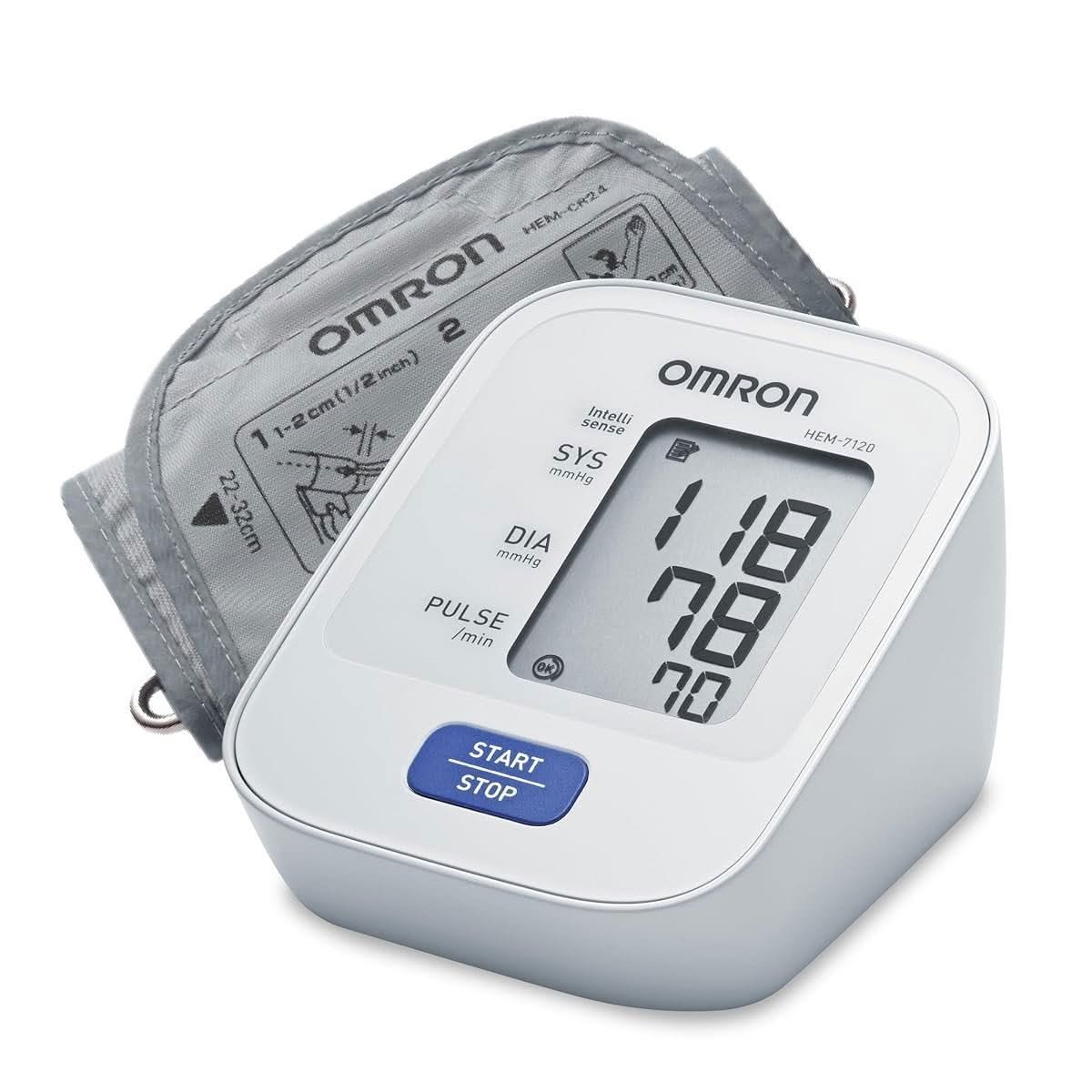
It’s the entry point into a brand clinicians actually use in GP waiting rooms from Perth to Brisbane. One-touch operation and last-memory recall keep the interface deliberately simple — no app pairing, no Bluetooth setup, just a cuff and a button.
That simplicity is the actual selling point for a first-time buyer or an older relative who won’t touch a companion app. Buyers consistently report the readings tracking closely with a GP clinic’s own manual cuff over repeated checks, which is the real test for any home unit.
Pros
- Simple one-button operation suits anyone who won’t use a companion app
- From a brand clinicians use professionally, not just at-home marketing
Cons
- Only stores the last single reading, unlike the multi-memory picks below
- No Bluetooth or app connectivity, a real limitation for tracking trends over time
Key specs: Upper arm – Last memory recall – No Bluetooth – Standard cuff
CHECK ON AMAZON2. A&D Medical UA-611 Upper Arm Blood Pressure Monitor – Best Budget Pick
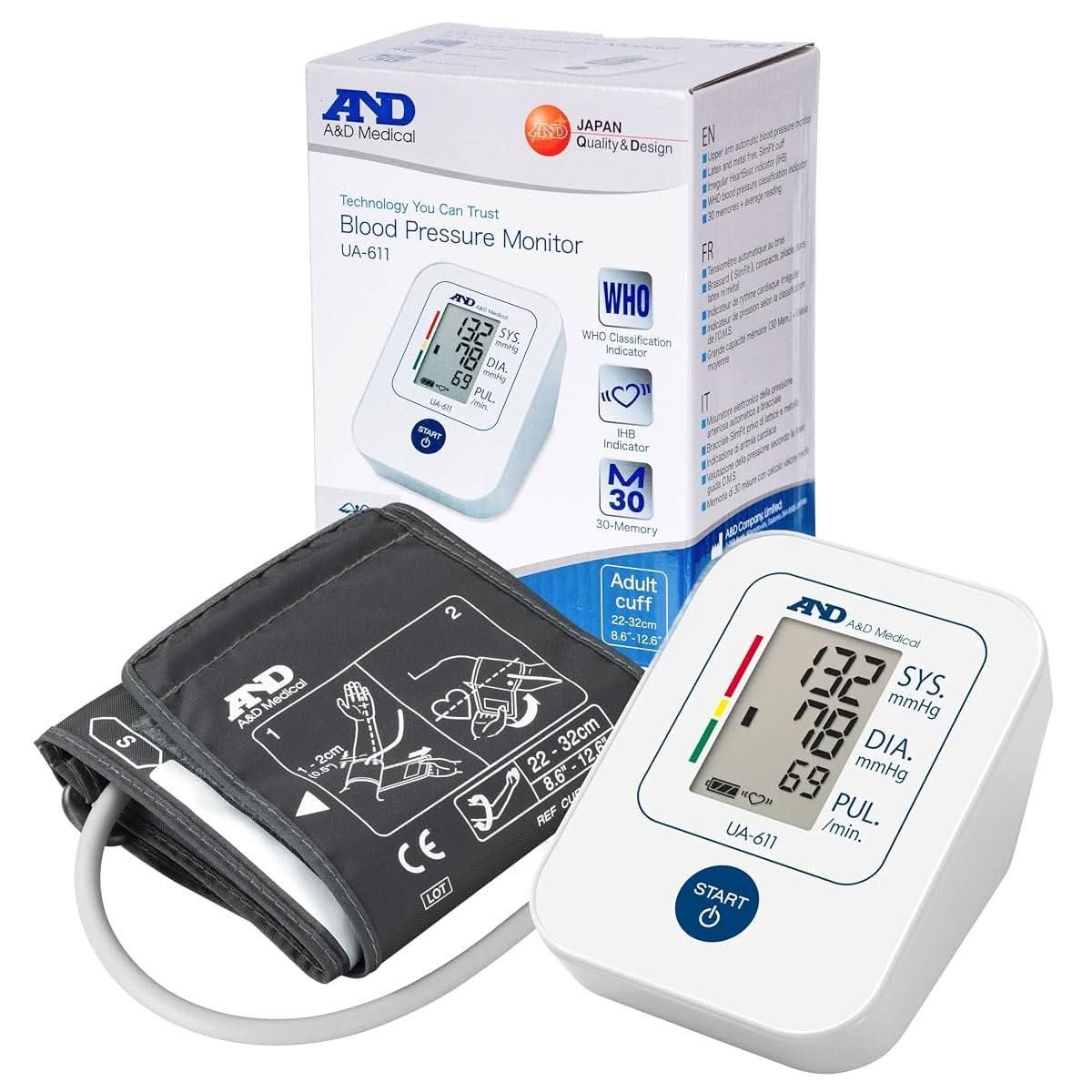
It is the cheapest pick in this whole comparison, closer to what a Chemist Warehouse own-brand unit costs than the pricier picks further down this list, from a second recognised clinical-grade brand, not a generic dropship listing. The SlimFit cuff (22-32cm) and irregular heartbeat detector cover the same core features as monitors costing twice as much.
Fits a standard adult arm well but not a noticeably larger one — check the cuff size against an actual arm measurement before assuming this one fits, since the SlimFit range tops out well short of the large-cuff pick further down this list.
Pros
- Cheapest pick in this comparison from a recognised medical brand
- Irregular heartbeat detection included at this price point
Cons
- SlimFit cuff (22-32cm) won’t suit a noticeably larger arm
- No Bluetooth or multi-user memory, similar to the OMRON basic pick above
Key specs: Upper arm – 22-32cm cuff – Irregular heartbeat detector – No app
CHECK ON AMAZON3. Paramed Blood Pressure Monitor – Best Mid-Range Value
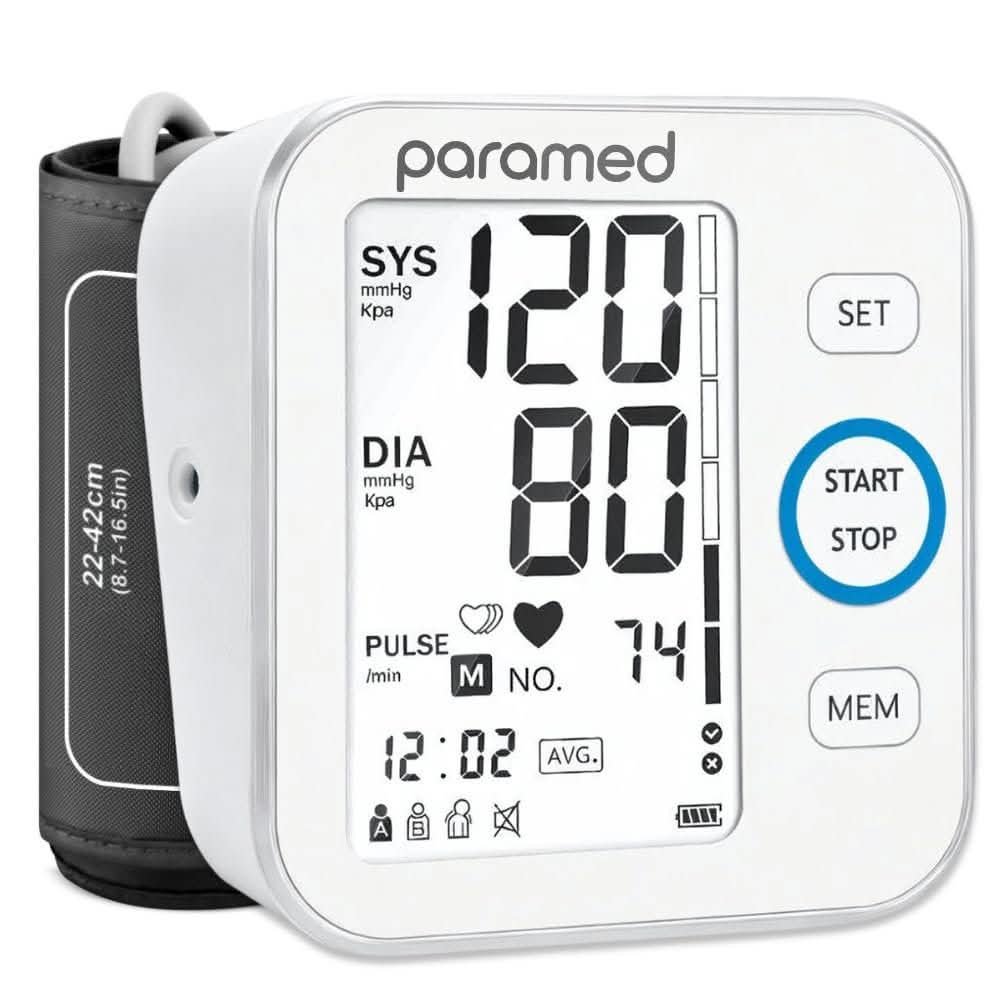
A mid-priced monitor that fits a wider 22-40cm cuff range than the two budget picks above, useful for a household where more than one person’s arm size varies. 120 sets of memory is well ahead of the single-reading OMRON basic pick at the top of this list.
A carry case and batteries are included, a small but real convenience next to listings that quietly expect buyers to source their own AAAs on day one.
Pros
- Wider 22-40cm cuff range than the two budget picks above
- 120-reading memory, well ahead of the single-reading OMRON basic pick
- Carry case and batteries included in the box
Cons
- No Bluetooth or app sync, despite the deeper on-device memory
- Plainer LCD display than the colour-screen picks in this comparison
Key specs: Upper arm – 22-40cm cuff – 120-reading memory – Carry case included
CHECK ON AMAZON4. OMRON HEM7144T1 Blood Pressure Monitor – Best with Bluetooth Tracking
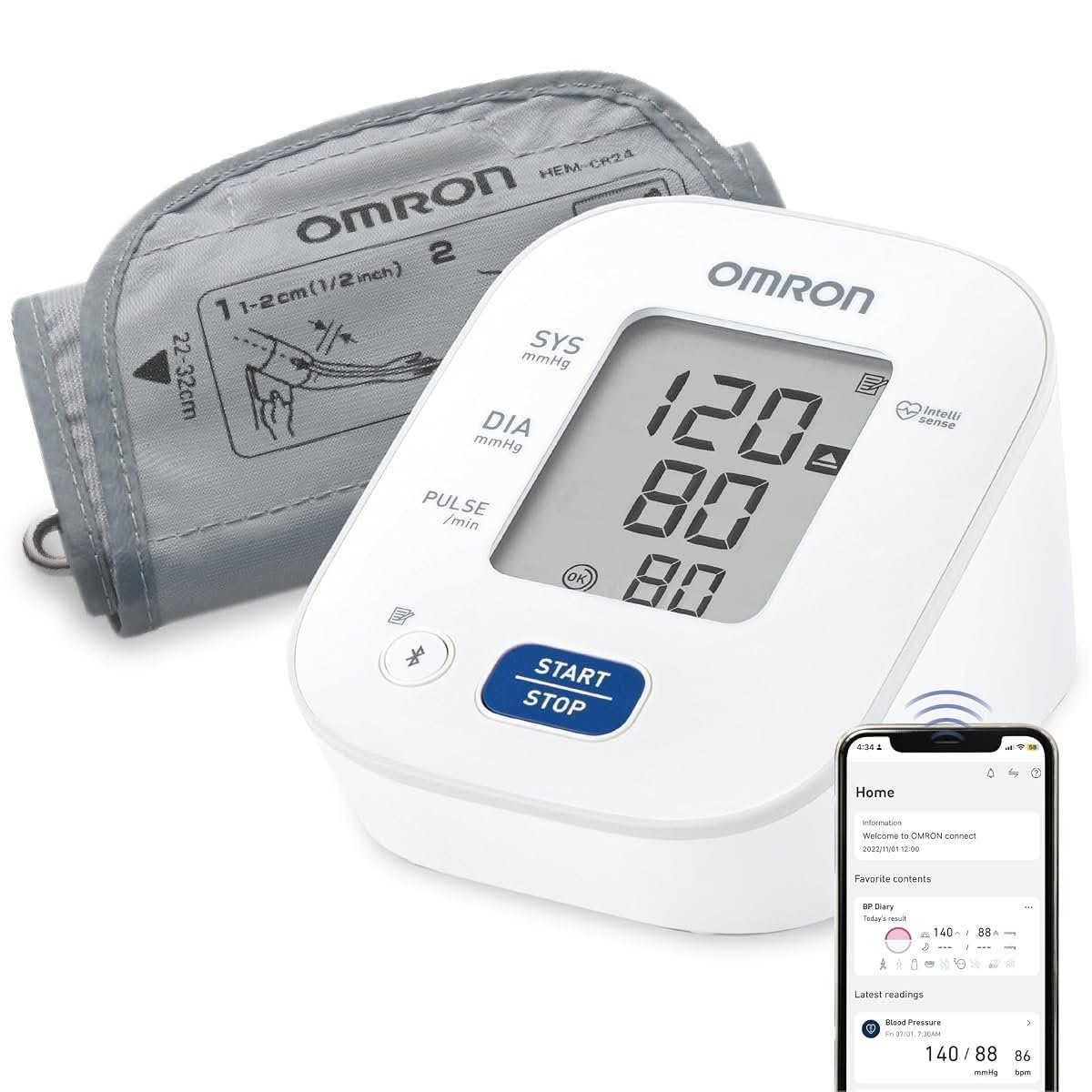
Bluetooth connectivity to a companion app is the real differentiator here, syncing readings automatically instead of a household member copying numbers into a notebook by hand. The 22-42cm wide-range cuff covers more arm sizes out of the box than the budget picks earlier in this list.
Buyers consistently praise the app’s trend graphs for anyone tracking blood pressure over weeks instead of a single reading at a time.
Pros
- Bluetooth app sync tracks trends automatically over time
- Wide-range 22-42cm cuff fits more arm sizes than the budget picks above
- 3+3 year warranty, longer than most picks in this comparison state upfront
Cons
- Costs roughly 1.5x the OMRON basic pick above for the app feature alone
- Needs a phone and app setup, a real step some buyers won’t want to do
Key specs: Upper arm – 22-42cm cuff – Bluetooth app sync – 3+3 warranty
CHECK ON AMAZON5. Z.ONE Arm Blood Pressure Monitor – Best Dual-User Budget Pick
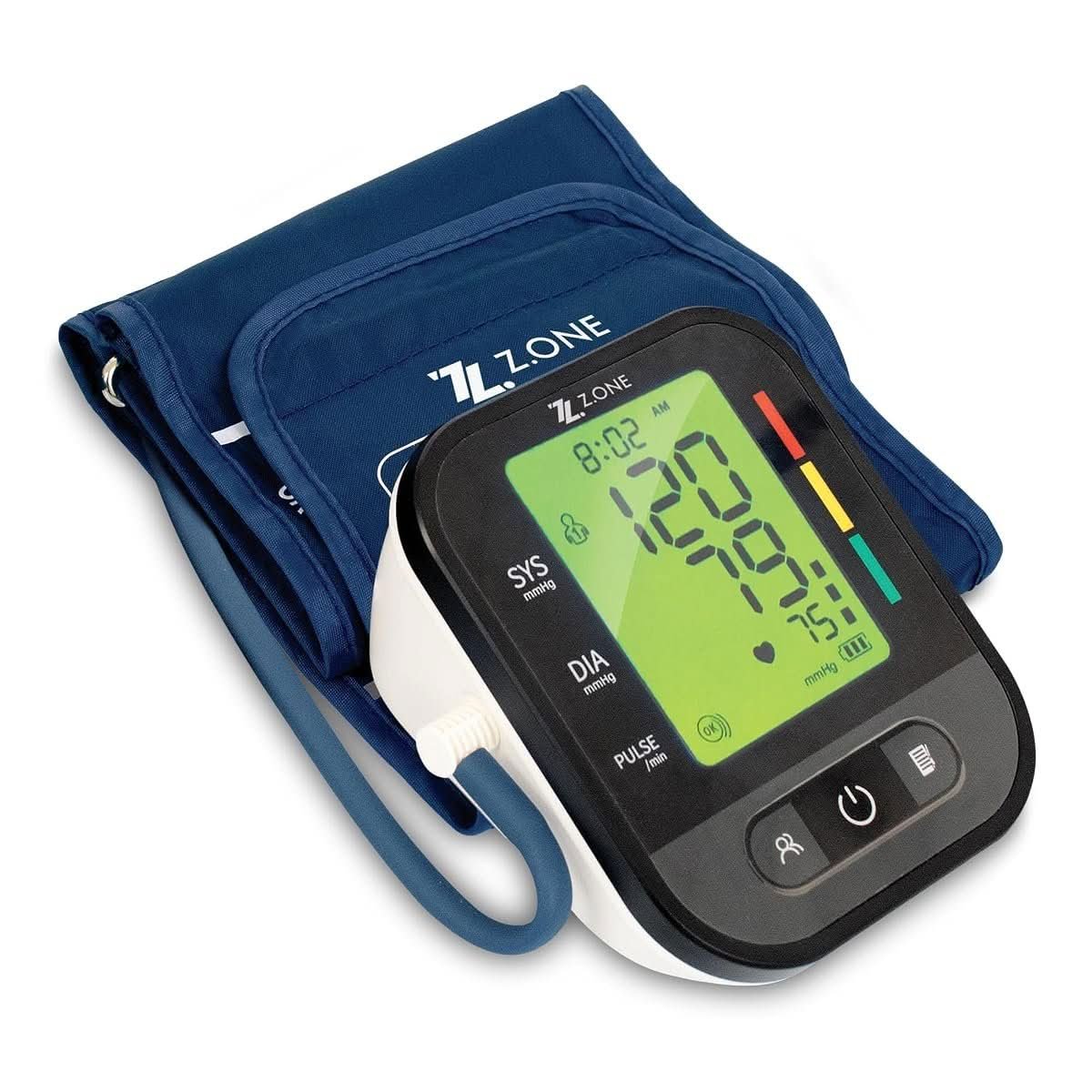
Dual-user memory is the standout at this price — two separate reading histories on one unit, useful for a couple sharing a single monitor instead of each person’s readings getting mixed into one log. The large four-colour LCD makes the reading legible at a glance, which matters more than it sounds for anyone checking numbers without reading glasses handy.
The listing also states approval against a UK NHS standard, worth noting as a real, checkable claim, not a vague ‘clinically tested’ line with nothing behind it.
Pros
- Dual-user memory separates two people’s reading histories on one unit
- Large four-colour LCD reads clearly without reading glasses
Cons
- No Bluetooth sync, unlike the OMRON app-connected pick above
- Standard cuff range only, not the large-cuff option covered later in this comparison
Key specs: Upper arm – Dual-user memory – 4-colour LCD – Standard cuff
CHECK ON AMAZON6. OMRON HEM 7361T Blood Pressure Monitor Elite + AFIB – Best for Irregular Heartbeat Detection
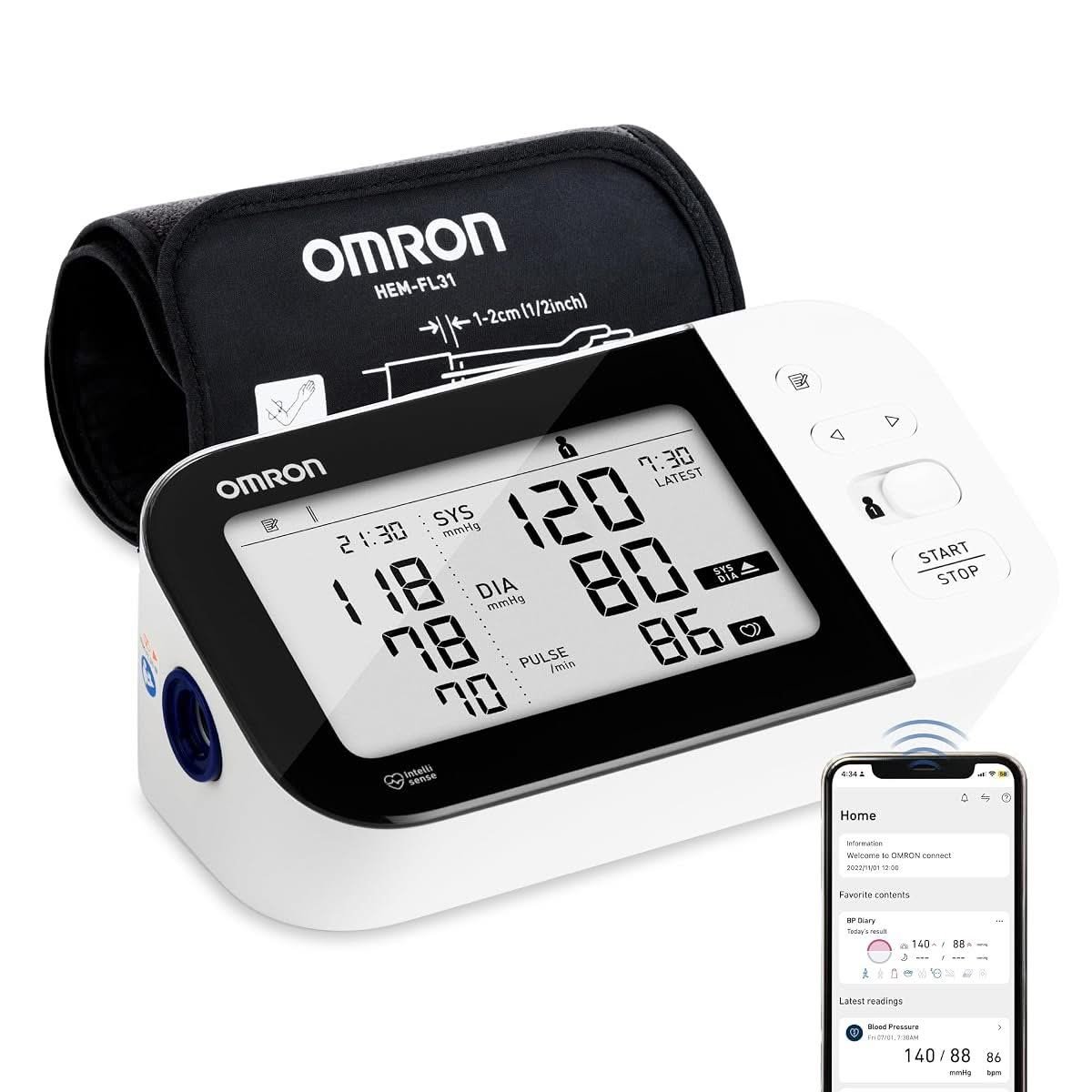
AFIB (atrial fibrillation) detection is the genuine premium feature here, flagging an irregular rhythm pattern alongside the standard systolic and diastolic reading — a real point of difference from every other pick in this comparison, not a marketing label on the same basic hardware. Dual user memory and Bluetooth sync are included on top.
Priciest pick in this whole comparison by a wide margin, and worth treating the AFIB flag as a prompt to see a GP rather than a diagnosis in itself — a home unit is a monitoring tool, not a substitute for actual cardiac assessment.
Pros
- Only pick in this comparison with AFIB (irregular heartbeat) detection
- Dual-user memory plus Bluetooth app sync included
- From the same clinically established brand as the two OMRON picks above
Cons
- Priciest pick in this entire comparison
- Stock on this specific listing runs low at times – check availability before counting on it
Key specs: Upper arm – AFIB detection – Dual-user – Bluetooth
CHECK ON AMAZON7. Origin Medical Digital Blood Pressure Monitor – Best All-Round Mid-Budget Pick
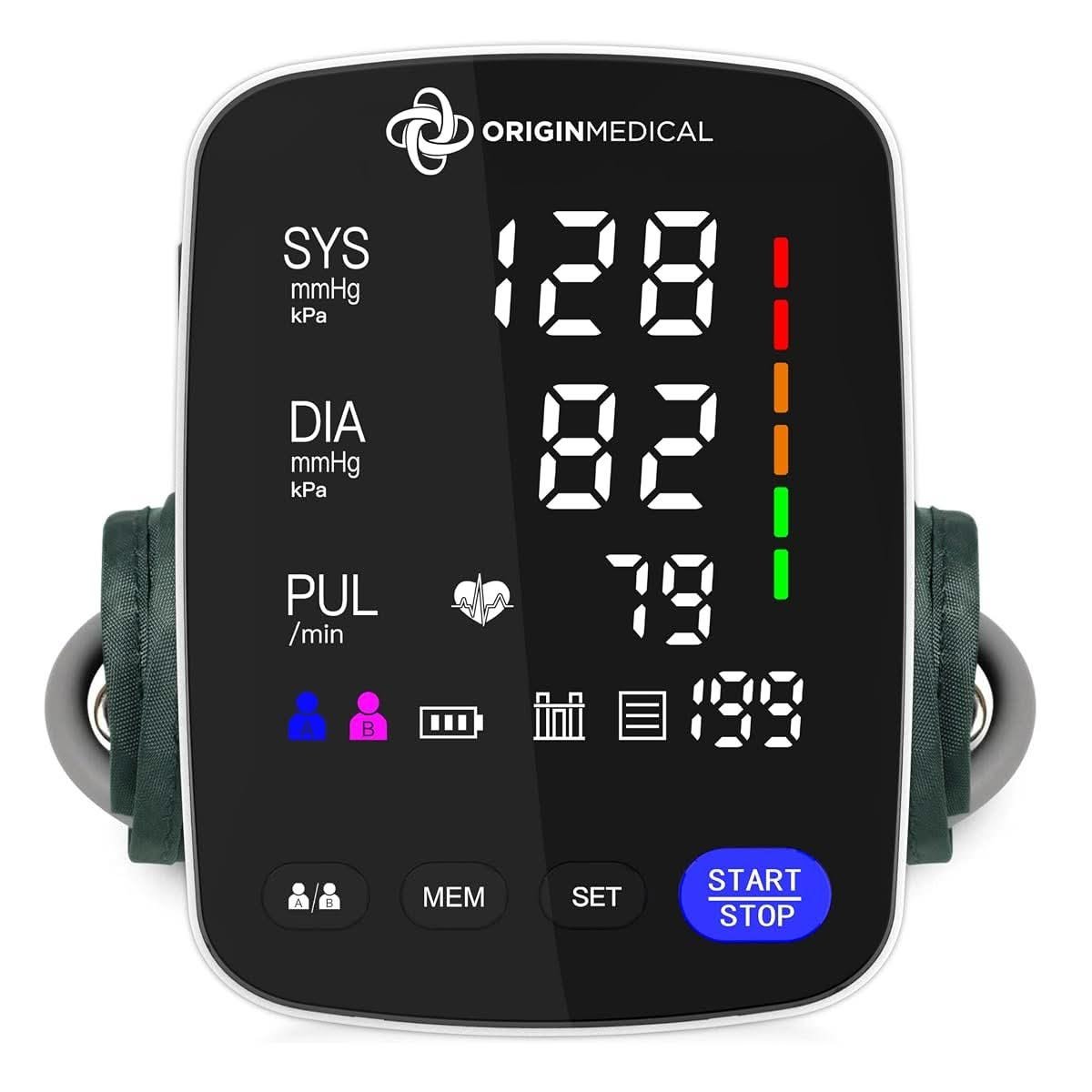
A mid-budget monitor that includes a universal cuff, a carry case and batteries in the box, sitting in the same practical bracket as the Paramed pick earlier in this list. The large colour screen is easier to read at a glance than the plainer LCD units among the budget picks.
A properly solid all-rounder, not a standout on any single feature — no Bluetooth, no AFIB detection, but it does have a colour screen.
Pros
- Colour screen reads more clearly than the plainer LCD budget units above
- Universal cuff, carry case and batteries included
Cons
- No Bluetooth or app sync at this price point
- No standout feature versus the Paramed or Z.ONE picks at a similar price
Key specs: Upper arm – Universal cuff – Colour screen – Carry case included
CHECK ON AMAZON8. RA8 Automatic Arm Blood Pressure Monitor – Best Newer Budget Pick
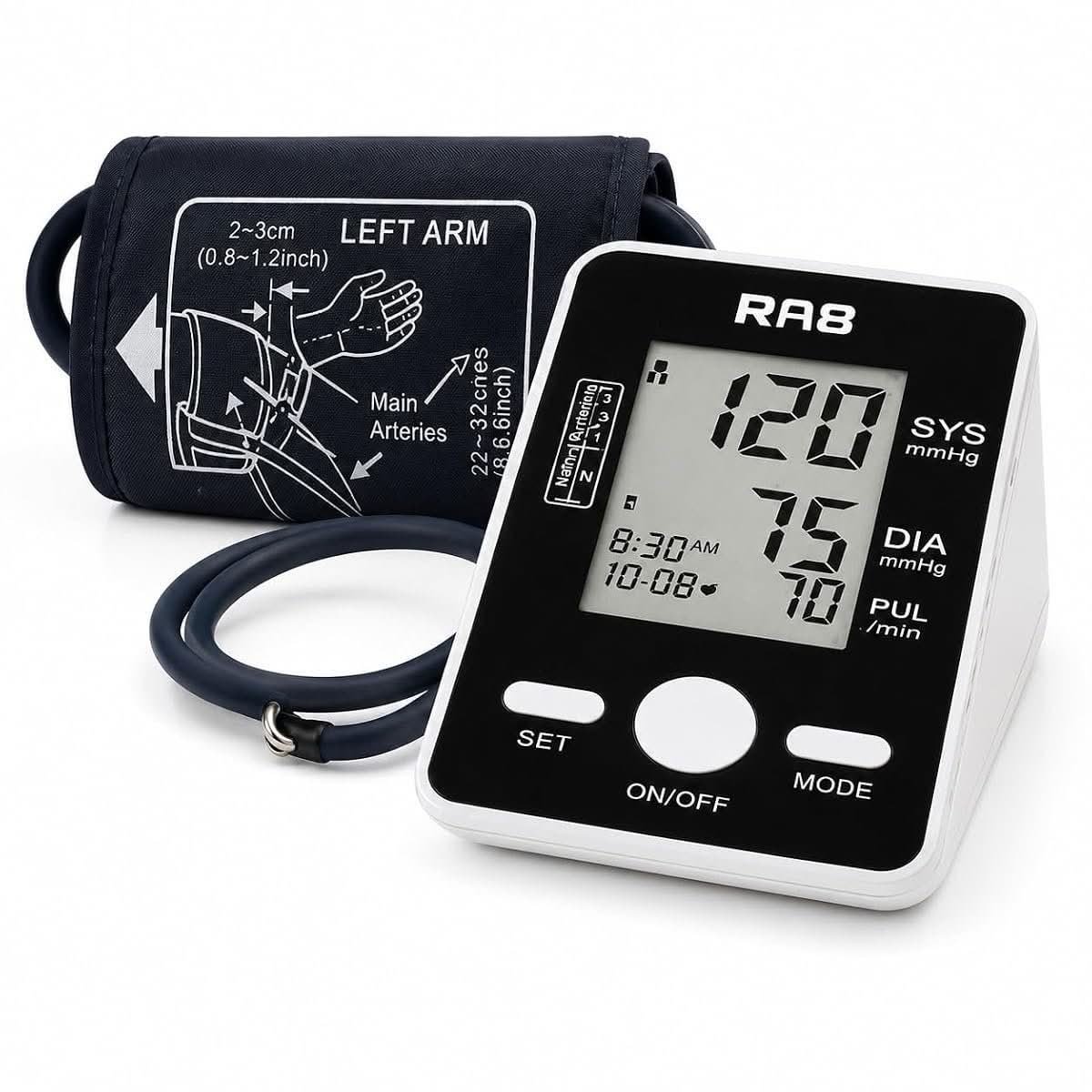
A newer listing than most of this comparison, and an Australian-sold one instead of an overseas dropship one. Two-user memory across 150 readings each is a properly deep log for the price bracket.
An adjustable cuff and large LCD keep the feature set close to the pricier Origin Medical and Paramed picks above, at a noticeably lower price.
Pros
- 150-reading, two-user memory is deep for this price point
- Adjustable cuff and large LCD match pricier picks above at a lower cost
Cons
- Newer listing with less long-term track record to draw on
Key specs: Upper arm – Adjustable cuff – 2×150-reading memory – Large LCD
CHECK ON AMAZON9. Blood Pressure Monitor with Adjustable Large Cuff – Best for a Larger Arm
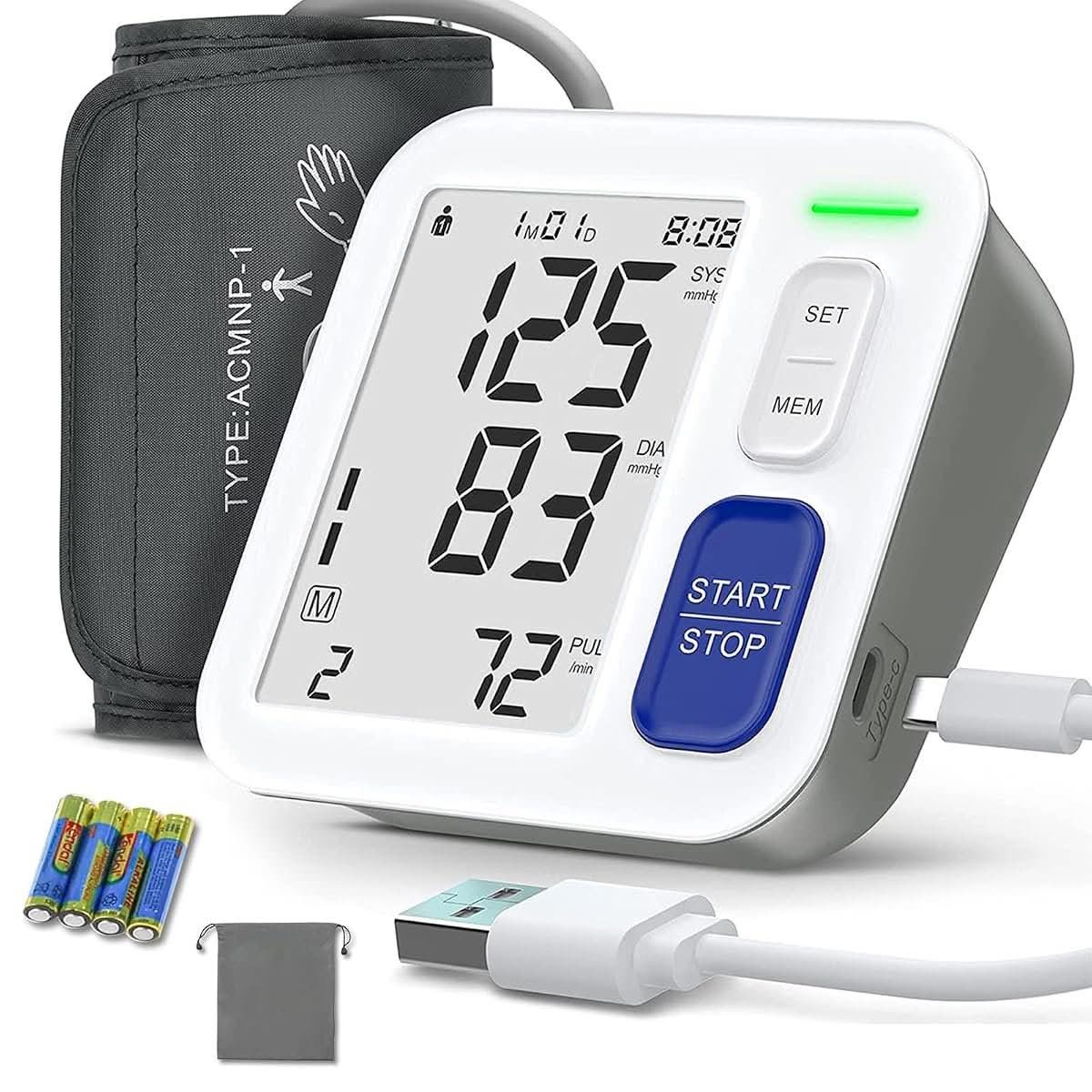
Cuff size is the number that actually decides accuracy, covered in How to Choose, and this is the pick built specifically for an arm the SlimFit and standard cuffs earlier in this list weren’t sized for. Stores up to 200 readings, ahead of every other pick in this comparison on raw memory depth.
The price sits in the same budget bracket as the A&D Medical pick above despite the wider cuff.
Pros
- Adjustable large cuff fits an arm the standard-size picks above won’t
- 200-reading memory, the deepest storage in this comparison
- Same budget price bracket as the A&D Medical pick despite the wider cuff
Cons
- No Bluetooth or AFIB detection at this price point
Key specs: Upper arm – Adjustable large cuff – 200-reading memory – No app
CHECK ON AMAZON10. OMRON HEM7143T1 Blood Pressure Monitor Standard – Best Standard Bluetooth Pick
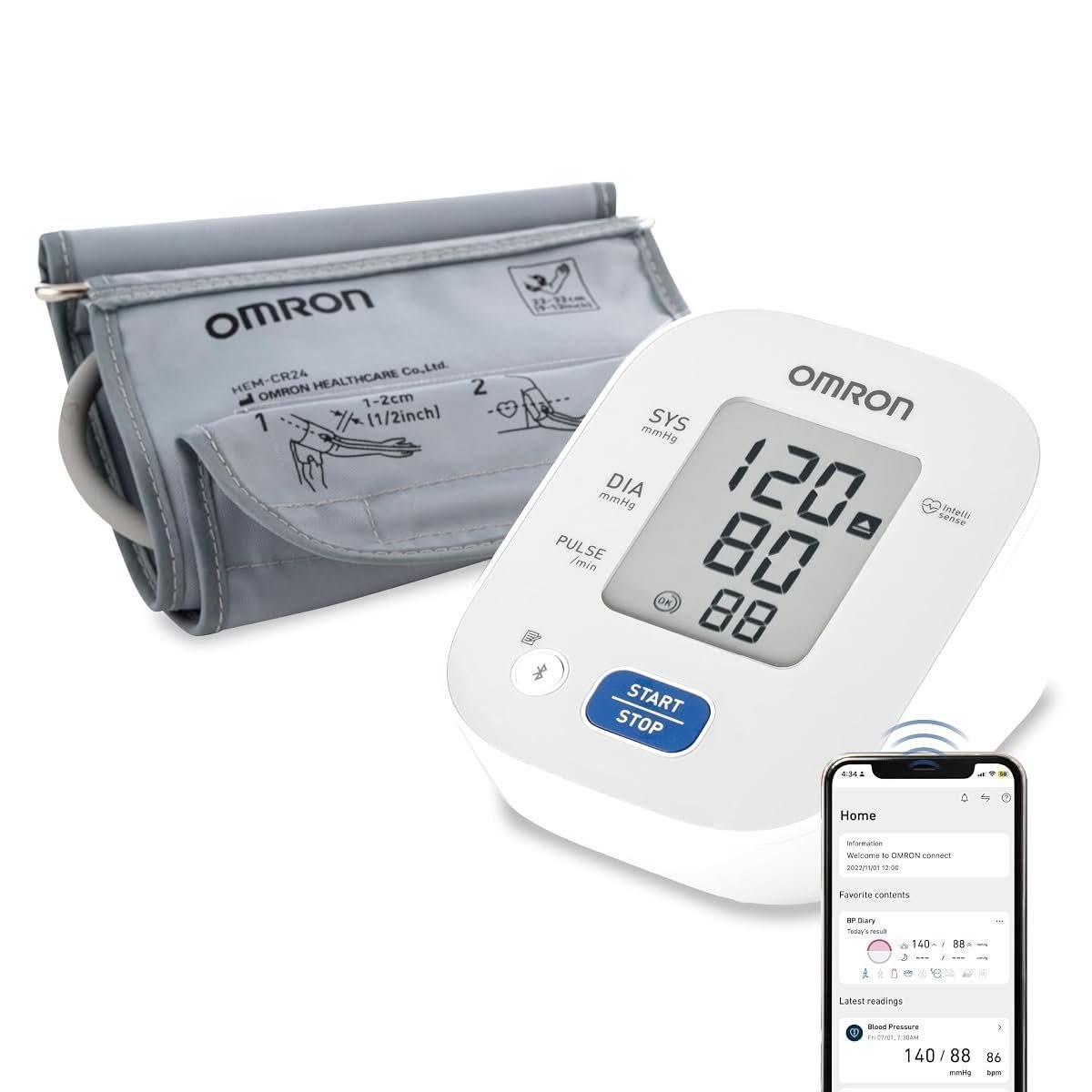
A step between the entry-level OMRON basic pick and the AFIB-detecting premium unit at the top price bracket, this one adds Bluetooth sync to the same clinically established brand without the AFIB feature or its price tag.
Worth weighing for the brand consistency across all three OMRON picks in this comparison.
Pros
- Bluetooth sync from the same trusted brand as two other picks here
- Sits at a real mid-point between the basic and AFIB OMRON picks
Cons
- No AFIB detection, unlike the premium OMRON pick further up this comparison
Key specs: Upper arm – Bluetooth sync – Standard cuff – No AFIB detection
CHECK ON AMAZONHow to Choose a Blood Pressure Monitor in Australia
Cuff size decides accuracy, not the brand. A cuff sized for a 22-32cm arm reads inaccurately on a noticeably larger arm regardless of how reputable the monitor’s brand is. Measure the actual upper arm circumference before ordering and check the specific listing’s cuff range, not just the product photo.
Upper arm over wrist, every time. The Heart Foundation’s own home blood pressure monitoring guidance is explicit that finger and wrist devices are not recommended, since wrist position relative to the heart affects the reading far more than an upper-arm cuff’s position does. Every pick in this comparison is an upper-arm monitor for this reason.
Check the TGA registration, not just the star rating. Every legitimate blood pressure monitor sold in Australia must sit on the Therapeutic Goods Administration’s Australian Register of Therapeutic Goods before it can be lawfully supplied — a real, checkable fact worth confirming for any listing that seems too cheap for what it claims to do.
Bluetooth and app sync suit trend-tracking, not one-off checks. If the goal is a single occasional reading, a basic one-button monitor does the job. Tracking blood pressure over weeks for a GP appointment is where an app-connected monitor’s trend graphs properly earn their higher price.
A home reading is a monitoring tool, not a diagnosis. A consistently high or irregular reading belongs in front of a GP — in a regional town in NSW or Tasmania as much as a capital-city clinic — and our guide to the best fitness trackers in Australia covers the wearable side of ongoing heart-rate monitoring for anyone tracking cardiovascular health more broadly.
Tracking blood pressure alongside weight for overall cardiovascular health? Our guide to the best bathroom scales in Australia covers the same at-home health-monitoring territory this comparison does.
You’ll Also Want
Spare AAA or AA batteries are worth keeping on hand — a cuff mid-inflate with a dying battery is a truly frustrating way to lose a reading, and most monitors in this comparison don’t ship with rechargeable cells. Storing the spares in a bathroom cabinet through a tropical wet season isn’t ideal either, since humidity corrodes battery contacts faster than a dry linen cupboard would.
A dedicated blood pressure log book or app subscription pairs naturally with any non-Bluetooth pick in this list, covering the trend-tracking the app-connected OMRON picks handle automatically.
For anyone tracking heart rate day-to-day instead of just at a single sitting, our guide to the best fitness trackers in Australia covers wearables built for continuous monitoring instead of a single cuff reading.
A simple bathroom scale rounds out an at-home cardiovascular monitoring routine — covered in our guide to the best bathroom scales in Australia for the weight side of the same tracking habit.
Frequently Asked Questions
Are wrist blood pressure monitors accurate?
Wrist monitors are generally less accurate than upper-arm monitors because wrist position relative to the heart affects the reading more than an upper-arm cuff’s position does. The Heart Foundation’s own home monitoring guidance explicitly advises against finger and wrist devices for anyone tracking blood pressure seriously. Every pick in this comparison is an upper-arm monitor for this reason.
Do home blood pressure monitors need to be registered with the TGA?
Yes. Every blood pressure monitor legally supplied in Australia must first be included in the Therapeutic Goods Administration’s Australian Register of Therapeutic Goods, which classifies most home units as Class IIa medical devices. This registration is a real, checkable fact, not a marketing claim, and it’s worth treating an unusually cheap listing with caution if this isn’t clear.
What cuff size do I need?
Measure the upper arm’s actual circumference at the midpoint between the shoulder and elbow, then check that figure against the specific listing’s stated cuff range. A standard cuff generally covers roughly 22-32cm, a wide-range cuff extends to about 42cm, and a large or bariatric cuff extends further again. A cuff that’s too small for the arm reads falsely high; too large reads falsely low.
How often should I check my blood pressure at home?
This depends on individual health circumstances and is a question for a GP, not a product guide, but general home monitoring guidance suggests checking at consistent times of day (commonly morning and evening) over a defined period rather than a single one-off reading, since blood pressure naturally varies through the day.
Why do two readings taken minutes apart sometimes differ?
Blood pressure genuinely fluctuates minute to minute based on posture, recent activity, talking during the reading, and even a full bladder. Sitting quietly for several minutes beforehand, keeping the arm supported at heart level and staying silent during the reading all reduce this variation. A single outlier reading matters far less than a consistent pattern across several days.
Do I need a Bluetooth-connected monitor?
Only if tracking trends over time is the actual goal, such as building a log to bring to a GP appointment. A basic one-button monitor with last-reading memory does the same core job for anyone checking blood pressure occasionally instead of tracking a pattern, at a meaningfully lower price than the app-connected picks in this comparison.
Verdict
The OMRON basic pick at the top of this list is the safest starting point: a brand used professionally in Australian clinics, at a price that doesn’t assume trend-tracking is the goal. Anyone wanting to log readings over weeks for a GP appointment should look at the Bluetooth-connected OMRON picks instead. A larger arm calls for the adjustable large-cuff pick over any of the standard-size options, and irregular heartbeat detection specifically points to the premium AFIB pick — treated as a prompt to see a GP, not a diagnosis in itself.