A camping mattress is a portable sleeping surface that insulates a camper from the ground as much as it cushions them from it. Choosing the best camping mattress in Australia turns on that second job far more than most buyers expect, because a thick mat with poor insulation still produces a cold night.
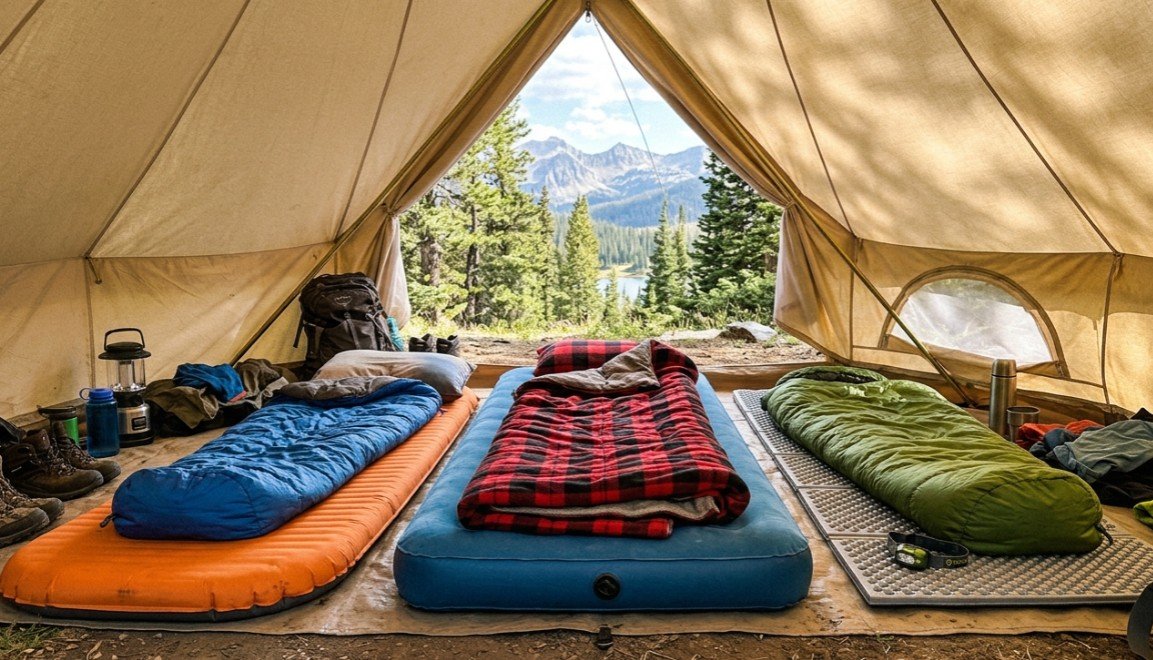
The mattress is not competing with a bed. It is competing with the ground, and on any night the insulation is wrong the ground wins. Five formats cover the market: self inflating foam mats draw air into open cell foam, air mats inflate by pump and pack down smallest, closed cell foam mats never puncture and never pack small, stretcher beds lift a sleeper off the ground entirely, and swag mattresses come built into the swag itself.
Ground conducts heat away from a body roughly twenty times faster than still air does, which is why a warm sleeping bag on a thin mat still ends in a cold night. Insulation is measured as an R-value, running from about 1 for a summer pad to 9 for the alpine mats here. Depth, pack size and how the mat inflates are the other three things worth comparing.
Four of the ten below carry the same brand, which is simply what the Australian market holds at this end of the range, and the entries say so rather than dressing four variants up as four separate discoveries. The remaining six cover the insulated, memory foam and lightweight ends that brand does not reach.
Quick Picks
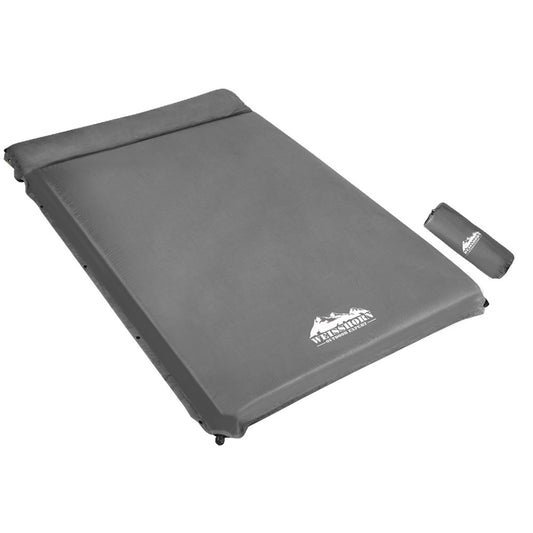
Weisshorn 10cm Self Inflating Double Mattress
Ten centimetres of foam, which is what hard ground actually asks for.
CHECK CURRENT PRICE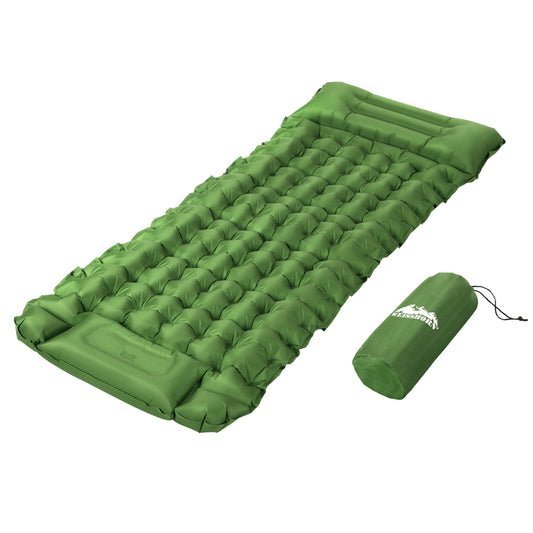
Weisshorn Self Inflating Single Mat with Pillow
Mat and pillow in one item, so there is one thing to pack.
CHECK CURRENT PRICE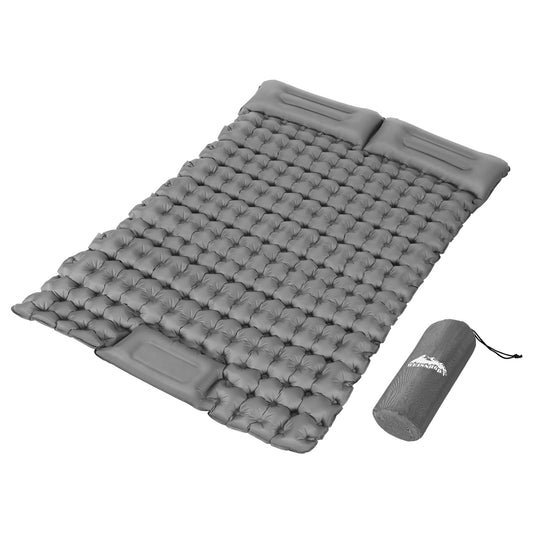
Weisshorn Self Inflating Double Mat with Pillow Bag
A single double mat with no cold gap down the middle.
CHECK CURRENT PRICEBest Camping Mattress in Australia Compared
| Product | Link | Type | Best For | Key Spec |
|---|---|---|---|---|
| Weisshorn 10cm Self Inflating Double Mattress | Check price | Self inflating foam | Car camping couples | 10 cm thickness, double width |
| Weisshorn Self Inflating Single Mat with Pillow | Check price | Self inflating with pillow | Simple setups | Integrated pillow, single width |
| Weisshorn Self Inflating Double Mat with Pillow Bag | Check price | Self inflating double with pillows | Couples in a tent | Double width, two pillows, carry bag |
| Weisshorn Self Inflating Single Camping Mat | Check price | Self inflating foam | General camping | Single width, standard depth |
| Lost Horizon Option3 Self Inflating Foam Mattress | Check price | Self inflating foam | Long trips | 190x96x11 cm, air and foam construction |
| Elegear 4 Inch Insulated Self Inflating Pad | Check price | Insulated self inflating | Alpine and winter | 9 R-value, 4 inch thickness |
| Elegear 4 Season Memory Foam Sleeping Pad | Check price | Memory foam self inflating | Side sleepers | 3.1 inch memory foam, built in pillow |
| Minthouz 5 Inch Thick Camping Sleeping Pad | Check price | Inflatable with foot pump | Hard ground | 5 inch thickness, integrated foot pump |
| Naturehike D Series Self Inflating Sleeping Pad | Check price | Lightweight self inflating | Hiking and backpacking | 6 cm thickness, compact pack size |
| TOBTOS Self Inflating Pad with Pillow | Check price | Self inflating with pillow | First time campers | 6 inch thickness, attached pillow |
1. Weisshorn 10cm Self Inflating Double Mattress – Best Thickest Double
Ten centimetres of open cell foam is about as thick as a self inflating mat gets before it stops packing down to a usable size. That depth is what keeps a hip off the ground on hard clay or river stones. The trade is bulk, and this rolls up considerably larger than a thin pad.
Depth also buys insulation, because the foam traps a layer of still air between the sleeper and ground that draws heat away all night. On a cold inland night the ground steals more warmth than the air does, and a thicker mat is the cheapest fix for it. Inflation is passive once the valve opens, with a few breaths topping it off at the end.
Car camping is the right context, where pack size costs nothing because the mat travels in a boot. Anyone carrying gear on their back should drop to the thinner pads further down this list.
Pros
- 10 cm of foam clears hips off hard ground
- Thickness doubles as insulation on cold nights
- Passive inflation, no pump required
- Double width suits two sleepers
Cons
- Bulky rolled up, needs boot space
- Heavier than any pad here
- Slow to fully re-inflate in cold weather
Key specs: Self inflating open cell foam, 10 cm thick, double width, passive valve inflation
CHECK CURRENT PRICE2. Weisshorn Self Inflating Single Mat with Pillow – Best All in One Single
An attached pillow removes the one item most people forget and then improvise badly with a rolled jumper. It inflates with the mat rather than separately. The whole thing becomes a single item to unroll and a single item to pack.
Integration has a real cost in adjustability, since the pillow sits at a fixed height that suits back sleepers better than side sleepers. Anyone who props a pillow into a particular shape at home will find this less accommodating. The mat section itself matches the standard single in this range.
Weekend campers who want the fewest possible pieces to lose get the most from it. Fussier sleepers should take the plain mat and bring a pillow they already like.
Pros
- Pillow inflates with the mat
- One item to unroll and one to pack
- Nothing extra to forget at home
- Same mat section as the standard single
Cons
- Fixed pillow height suits back sleepers
- Cannot swap in a preferred pillow
- Slightly larger packed size than a plain mat
Key specs: Self inflating foam, single width, integrated inflatable pillow
CHECK CURRENT PRICE3. Weisshorn Self Inflating Double Mat with Pillow Bag – Best for Two Sleepers
One double mat beats two singles pushed together for a simple reason: there is no gap in the middle to roll into at three in the morning. Two pillows are built in. A carry bag comes with it, which sounds trivial until the first attempt at re-rolling a mat without one.
A shared mat does transmit movement, so a restless sleeper will be felt by the other person in a way two separate pads avoid. That is the honest cost of losing the gap. Width is generous enough that two adults are not touching shoulders all night.
Couples sharing a two or three person tent are the clear audience. Two people who sleep badly together should buy two singles instead and accept the gap.
Pros
- No cold gap between two sleepers
- Two pillows built in
- Carry bag included
- Generous width for two adults
Cons
- Movement transfers between sleepers
- Heavy and bulky to move once inflated
- Harder to re-roll than two singles
Key specs: Self inflating foam, double width, two integrated pillows, carry bag
CHECK CURRENT PRICE4. Weisshorn Self Inflating Single Camping Mat – Best Simple Single
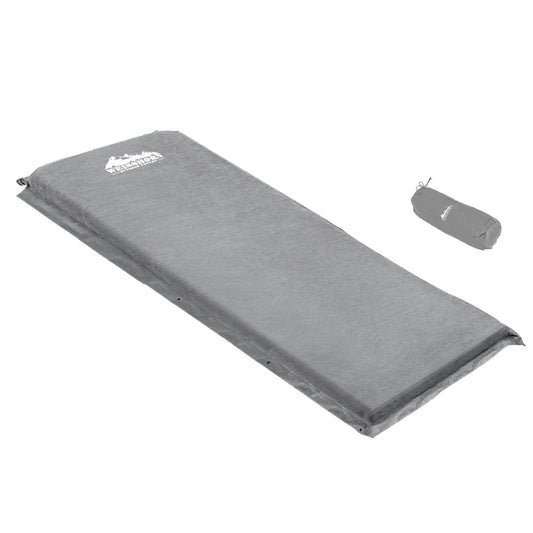
Stripped of pillows and extra depth, this is the version most campers actually need. Open the valve, let the foam draw air in, close it. Nothing about the design invites failure.
Fewer features also means fewer seams and fewer valves, which are the two things that fail on a camping mat. A simple mat that still holds air in year five is worth more than a feature-rich one that does not. Comfort sits a clear step below the ten centimetre version on hard ground and is perfectly adequate on grass or sand.
Buy this as the default and spend the difference on a decent sleeping bag, which does more for a cold night than extra mat depth. Rocky ground or a bad back both argue for the thicker mat instead.
Pros
- Fewest seams and valves, so fewest failure points
- Straightforward passive inflation
- Cheapest way into a real self inflating mat
- Adequate on grass, sand and soft ground
Cons
- Noticeably thinner than the 10 cm version
- Little insulation on genuinely cold ground
- No pillow included
Key specs: Self inflating open cell foam, single width, standard depth, passive valve
CHECK CURRENT PRICE5. Lost Horizon Option3 Self Inflating Foam Mattress – Best Premium Build
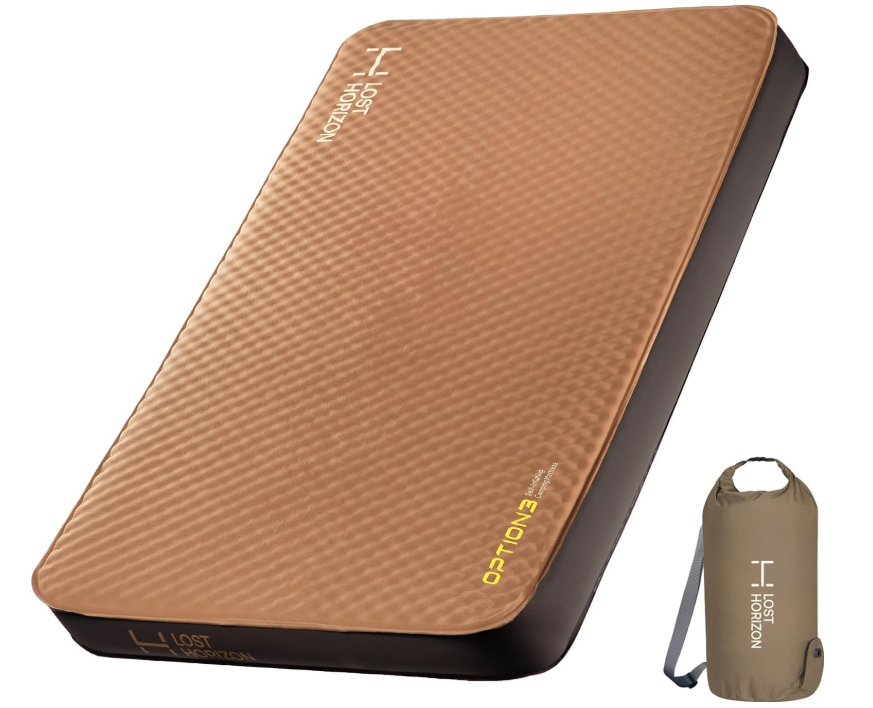
Eleven centimetres of foam across a 96 centimetre width puts this closer to a proper bed than a camping mat. The construction combines foam with an air chamber rather than relying on one or the other. Build quality is the reason it sits at the top of this list.
Combining foam and air lets the sleeper adjust firmness by venting a little rather than accepting whatever the foam decides. Foam alone gives consistent support and no adjustment; air alone gives adjustment and poor insulation. Having both is why extended trips justify the outlay, since a mat used forty nights a year is a different purchase to one used four.
Anyone camping regularly enough to care about sleep quality should start here and stop. A family needing four mats for one trip a year will find the value argument goes the other way entirely.
Pros
- Foam and air together allow firmness adjustment
- 96 cm width is close to a single bed
- Best build quality in this guide
- Made for repeated long-trip use
Cons
- The most expensive mat here
- Large packed size
- Overspecified for occasional camping
Key specs: 190 x 96 x 11 cm, combined foam and air construction, self inflating
CHECK ON AMAZON6. Elegear 4 Inch Insulated Self Inflating Pad – Best Cold Weather Insulation
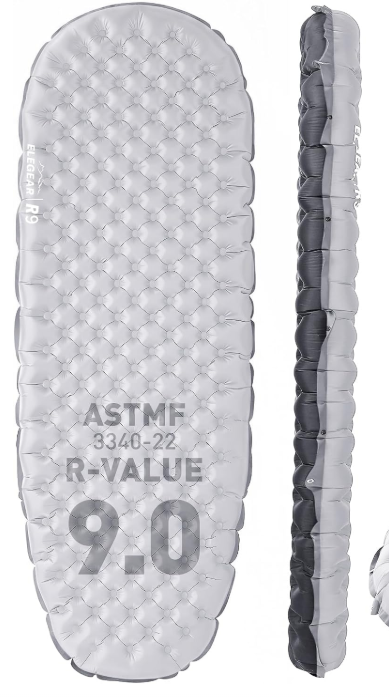
R-value is the specification that decides whether a mat keeps a sleeper warm, and this one publishes a figure of 9 where most competitors publish nothing at all. Four inches of thickness carries that insulation. Publishing the number is itself a signal.
An R-value near 9 is genuinely alpine territory, well beyond what a Victorian winter or a Snowy Mountains spring demands. Ground conducts heat away roughly twenty times faster than still air, which is why a warm sleeping bag on a thin mat still produces a cold night. Overspecifying insulation costs pack size and little else.
High country camping, winter trips and anyone who has been cold on a previous trip should read that number carefully. Summer coastal campers are paying for warmth they will spend the night trying to escape.
Pros
- Publishes a 9 R-value where rivals publish nothing
- Genuine cold weather insulation
- 4 inch thickness
- Suits high country and winter trips
Cons
- Too warm for summer coastal camping
- Bulky packed
- Paying for insulation many trips will not need
Key specs: Self inflating insulated pad, 9 R-value, 4 inch thickness, single width
CHECK ON AMAZON7. Elegear 4 Season Memory Foam Sleeping Pad – Best Memory Foam Comfort
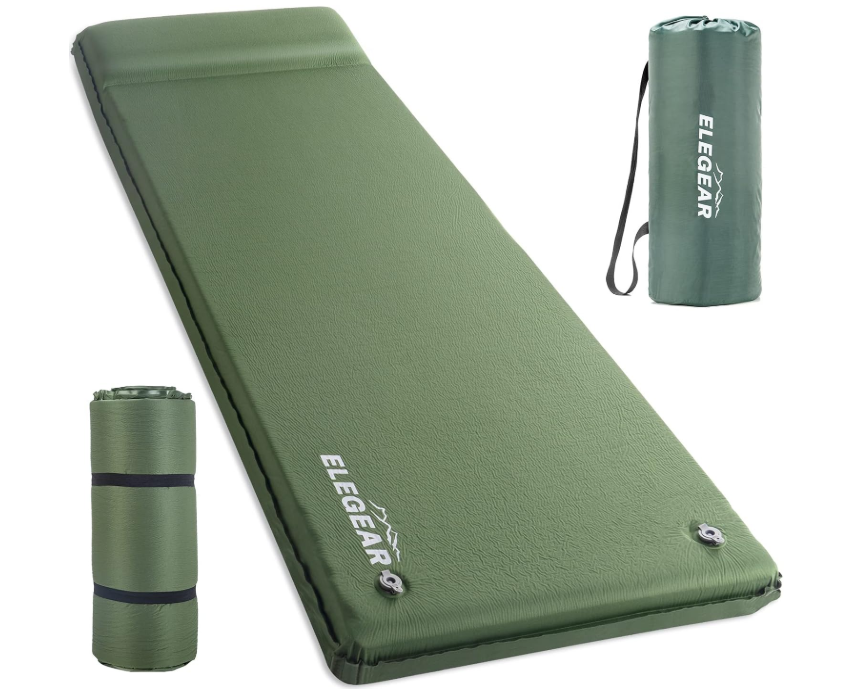
Memory foam behaves differently to the open cell foam in most self inflating mats, moulding around a hip or shoulder instead of pushing back against it. Side sleepers feel that difference immediately. A pillow is built into the head end.
The catch with memory foam outdoors is temperature, since it firms up noticeably as the mercury drops and can feel like a plank on a cold morning. Rated as four season, it handles Australian conditions across most of the year without that becoming a problem. Pack size is larger than an equivalent open cell mat because memory foam compresses less willingly.
Anyone who sleeps on their side and has given up on camping comfort should try this before concluding the problem is camping itself. Back sleepers gain much less from it.
Pros
- Memory foam moulds around hips and shoulders
- Clear gain for side sleepers
- Built in pillow
- Rated across four seasons
Cons
- Memory foam firms up in the cold
- Larger packed size than open cell foam
- Less benefit for back sleepers
Key specs: Self inflating memory foam, 3.1 inch thickness, integrated pillow, four season rating
CHECK ON AMAZON8. Minthouz 5 Inch Thick Camping Sleeping Pad – Best Depth for the Money
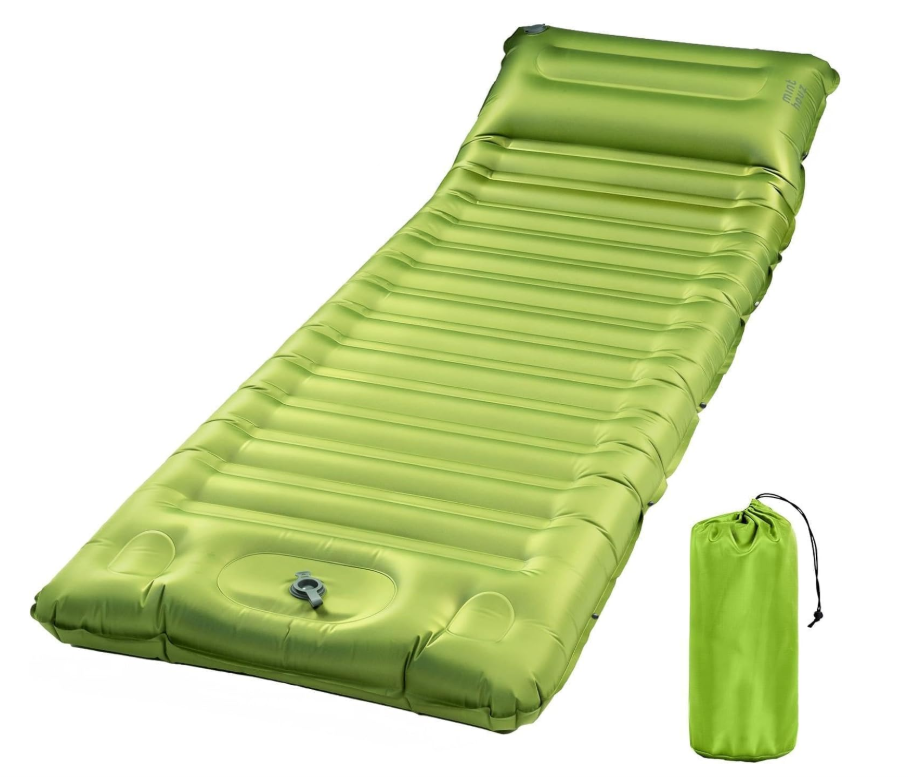
Five inches is more depth than anything else in this guide, and it comes with an integrated foot pump so nobody has to inflate it by mouth. Depth like this changes what ground is acceptable. Sharp gravel and tree roots stop registering.
A foot pump matters more than it sounds, because moisture from breath is what rots the inside of an air mat over a few seasons. Pumping with a foot keeps the inside dry and adds years to it. Being air rather than foam, insulation is weaker than the R-rated pads above, so this suits warm nights better than cold ones.
Rocky or root-covered sites are where the depth pays. On a cold night a thinner insulated mat will keep a sleeper warmer despite feeling harder.
Pros
- 5 inch depth, the thickest here
- Integrated foot pump keeps breath moisture out
- Handles gravel and tree roots
- Fast to inflate
Cons
- Air construction insulates poorly on cold ground
- More puncture-prone than foam
- Bulkier than a foam mat of similar comfort
Key specs: Inflatable sleeping pad, 5 inch thickness, integrated foot pump
CHECK ON AMAZON9. Naturehike D Series Self Inflating Sleeping Pad – Best for Carrying In
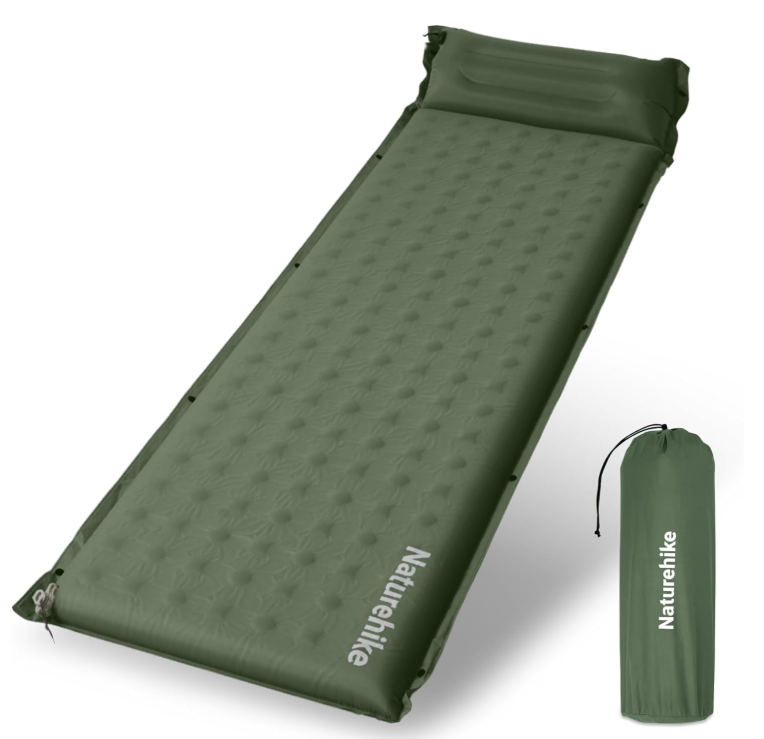
Six centimetres and a small pack size put this in a different category to everything above, which are all mats that travel by vehicle. Weight and packed volume drive every decision in the design. Comfort is traded deliberately.
Carrying a mat on your back changes the arithmetic completely, since every extra centimetre of thickness is volume that has to fit in a pack already holding a tent and food. Six centimetres is around the point where most hikers stop noticing the ground without carrying an unreasonable bundle. Weather resistant fabric handles a damp tent floor.
Multi-day walks and anywhere the car cannot reach are the use case. Car campers gain nothing from the compromises and should take the thicker mats instead.
Pros
- Small packed size for a self inflating mat
- Light enough to carry multi-day
- Weather resistant fabric
- Enough depth for most hikers
Cons
- Thin compared with every car camping mat here
- Less insulation than the R-rated pads
- No pillow
Key specs: Self inflating pad, 6 cm thickness, compact pack size, weather resistant fabric
CHECK ON AMAZON10. TOBTOS Self Inflating Pad with Pillow – Best Starter Mat
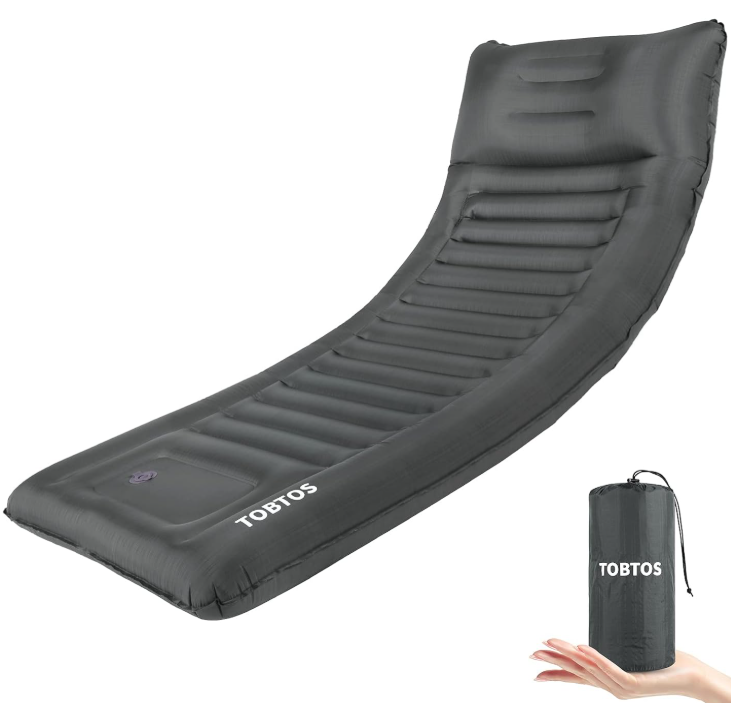
Six inches of claimed thickness with an attached pillow, at the bottom of this guide on price, is aimed squarely at someone buying a first camping mat. Everything needed is in one item. Nothing about it demands prior knowledge.
Thickness claims at this end of the market tend to describe the mat fully inflated and unweighted, which is not the number that matters once someone lies on it. Treat the figure as optimistic rather than false. Held against the Weisshorn mats higher up, build quality is the difference rather than comfort on the first few nights.
A first trip, an occasional guest mat or a spare for the shed all make sense. Anyone certain they will camp regularly should spend more once and skip the upgrade later.
Pros
- Cheapest entry into a self inflating mat
- Pillow attached
- Fine for occasional or guest use
- Nothing to learn before first use
Cons
- Thickness claim is measured unweighted
- Build quality below the Weisshorn mats
- Not built for regular use
Key specs: Self inflating pad, 6 inch claimed thickness, attached pillow, single width
CHECK ON AMAZONHow to Choose a Camping Mattress
Read the R-value before the thickness. Thickness sells mats and insulation decides whether the night is comfortable. A five inch air mat can be colder than a two inch insulated foam pad, because air circulates inside the chamber and carries heat away. Where no R-value is published, assume it is low.
Match the format to how the mat travels. A mat going in a boot can be as thick and bulky as comfort demands. A mat going on a back has to justify every centimetre against the tent and food already in the pack. Buying a car camping mat for a hiking trip is the most common and most expensive mistake in this category.
Inflate with a pump, not your mouth. Breath carries moisture, and moisture inside a sealed air chamber grows mould and degrades the internal coating over a few seasons. A foot pump, hand pump or self inflating valve all avoid it. This single habit adds years to an air mat.
Let sleeping position choose the surface. Side sleepers load a mat at the hip and shoulder and need either depth or memory foam to avoid pressure points. Back sleepers spread the load and can go thinner without discomfort. A couple who sleep differently are usually better served by two singles than one double.
Think about the ground you actually camp on. Coastal sand and grassy sites forgive a thin mat. Inland clay, gravel and granite do not, and neither does a site chosen in the dark. Campers who set up a base camp for several nights carry comfort generally, from thicker mats through to portable projectors for the evening, while anyone moving camp daily is counting grams instead. Australian conditions also swing hard overnight, and a site that was thirty degrees at sunset can be near freezing by dawn in the high country.
Buy the sleeping bag and the mat as a pair. A warm bag on a cold mat wastes the bag, because compressed insulation underneath a sleeper does almost nothing. Where the budget is fixed, moving money from the bag to the mat usually buys a warmer night. Australian Consumer Law guarantees apply to both regardless of the written warranty.
Campfires are off-limits under a Total Fire Ban, but a gas camping stove with a proper shut-off valve is still allowed in most states, which makes it worth packing too.
Frequently Asked Questions
What R-value do I need for camping in Australia?
Around 2 to 3 covers summer and coastal camping across most of the country. For inland winter nights, the high country or anywhere frost is likely, look for 4 or higher. The alpine-rated pad in this guide publishes a 9, which is more than most Australian conditions ever demand.
Is a self inflating mattress better than an air mattress?
For warmth, generally yes, because the foam inside restricts air movement that would otherwise carry heat away. Air mattresses pack smaller and inflate thicker for the same bulk. Self inflating mats also fail more gracefully, since a puncture leaves usable foam rather than a flat sheet.
How do I stop a camping mattress going flat overnight?
Most overnight softening is temperature rather than a leak, since air contracts as the night cools and the mat feels firmer at dusk than at dawn. Inflate to slightly firmer than comfortable before bed. A genuine leak will empty the mat within an hour or two rather than gradually.
Can two singles replace a double camping mattress?
They can, and for couples who sleep restlessly they are often better, because movement does not transfer between two separate mats. The cost is a cold gap in the middle that a fitted sheet or a connecting strap only partly solves. A double avoids the gap and shares every movement.
How thick should a camping mattress be?
On grass or sand, five to six centimetres is enough for most sleepers. On gravel, clay or rocky ground, ten centimetres or more keeps hips and shoulders clear. Side sleepers should add depth over what a back sleeper would find adequate.
Do camping mattresses fit inside a swag?
Many swags include a foam mattress already, and adding a second mat on top often makes the swag difficult to roll. Where extra comfort is needed, a thin self inflating pad inside the swag works better than a thick one. Check the rolled diameter before buying.
Verdict
Ground temperature, not mattress thickness, is what wakes people up at two in the morning. That is why the Elegear insulated pad is the one to take anywhere frost is possible, publishing a real R-value where most of this category publishes nothing at all. For car camping in ordinary conditions the Weisshorn 10 cm double gives the most comfort per dollar, and anyone carrying a mat on their back rather than in a boot should take the Naturehike and accept the thinner surface.