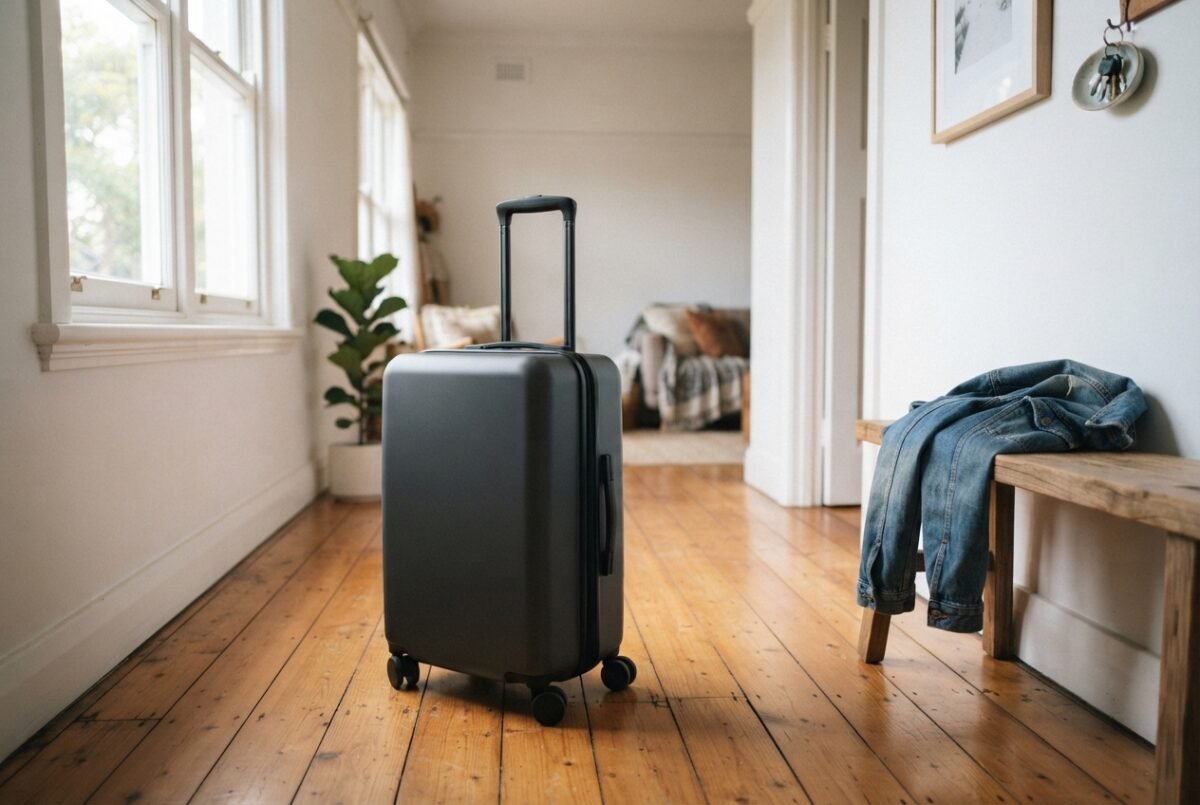
Carry-on luggage is the bag you take into the aircraft cabin instead of checking it into the hold, sized to fit an overhead locker or slide under the seat in front of you. The best carry on luggage australia travellers can buy clears the cabin baggage rules our major carriers actually enforce: Qantas, Jetstar and Virgin Australia all cap a single cabin bag at 7kg, with dimensions around 56 x 36 x 23 cm. The empty case counts towards that 7kg, so the weight of the luggage itself decides how much you get to pack.
Four formats dominate the Australian market. Hardshell spinner cases in polycarbonate or ABS give you impact protection and four-wheel manoeuvrability, and they are what most people picture when they think cabin luggage. Front-opening hardshells add a separate lid compartment so you can reach a laptop without unpacking the main case. Softside cases in polyester or nylon weigh less and squash into tight lockers. Carry-on backpacks drop the wheels and the trolley mechanism entirely, which is where the real weight savings live. Two-piece nesting sets pair a cabin case with a smaller bag that stores inside it between trips.
The number that decides everything is the empty weight of the case, and across these ten picks it runs from just over 1kg to a little past 5kg for a two-piece set. On a 7kg cabin allowance that is the difference between packing roughly 6kg of clothes and packing barely 3kg. The spec most people skip is the handle. Choice advises buyers to look for handles firmly riveted to the body of the case, because those are the ones least likely to develop weak points and break, and handle failure is the most repeated complaint in Australian reviews of budget cabin cases.
This guide compares ten cabin bags sold in Australia, from an expandable hardshell that stretches to 48 litres down to a backpack weighing about as much as a two-litre milk bottle, across the budget and premium ends of the category. One honest boundary: several of these cases measure a centimetre or two over the strictest published cabin dimensions, and that is flagged in the entry where it applies. If you are packing for a longer trip and need to check a bag as well, the guide to luggage for international travel covers the larger sizes.
Quick Picks
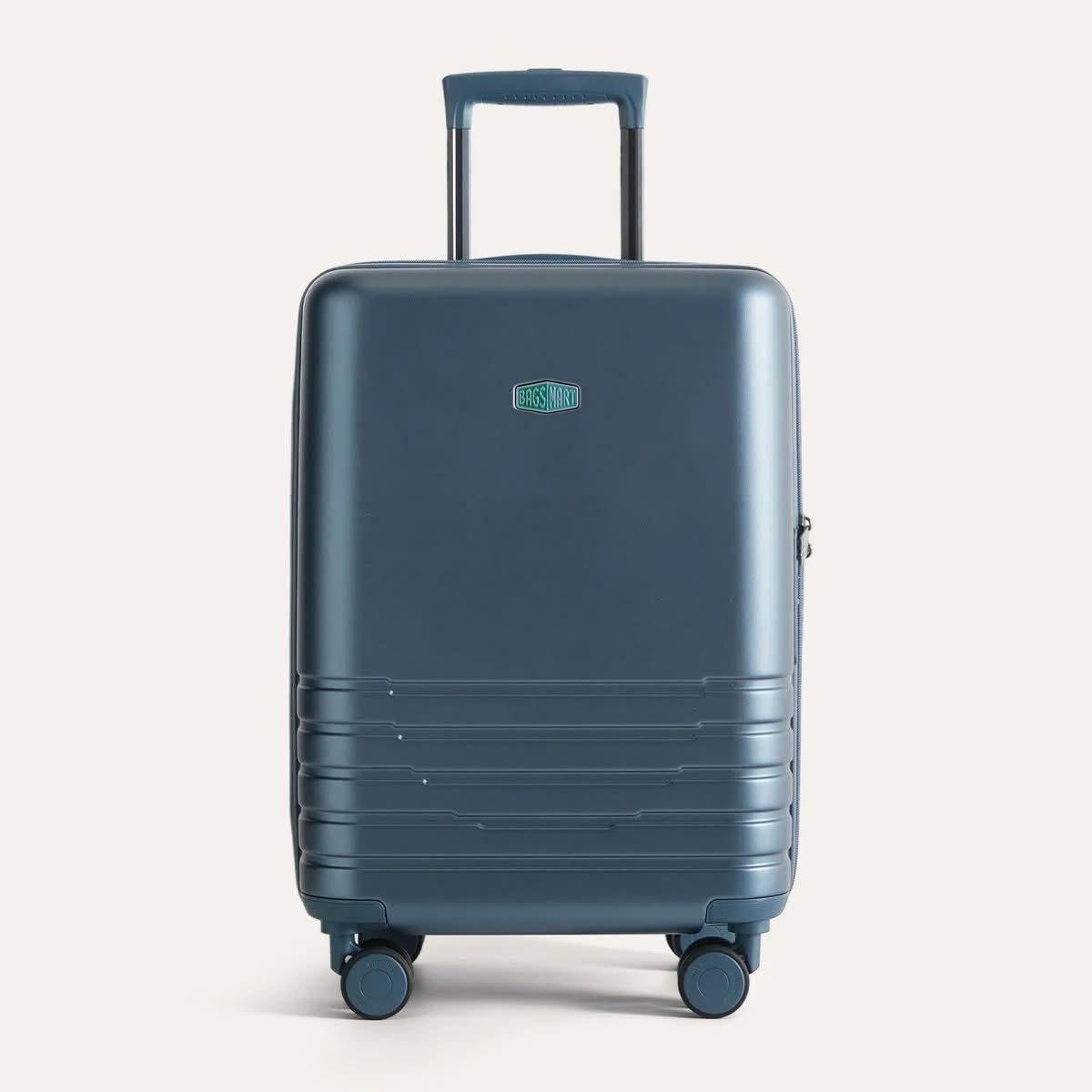
Getaway 20-Inch Expandable Carry-On
Expands from 40 to 48 litres, so the case that flew out flat still closes on the way home.
CHECK CURRENT PRICE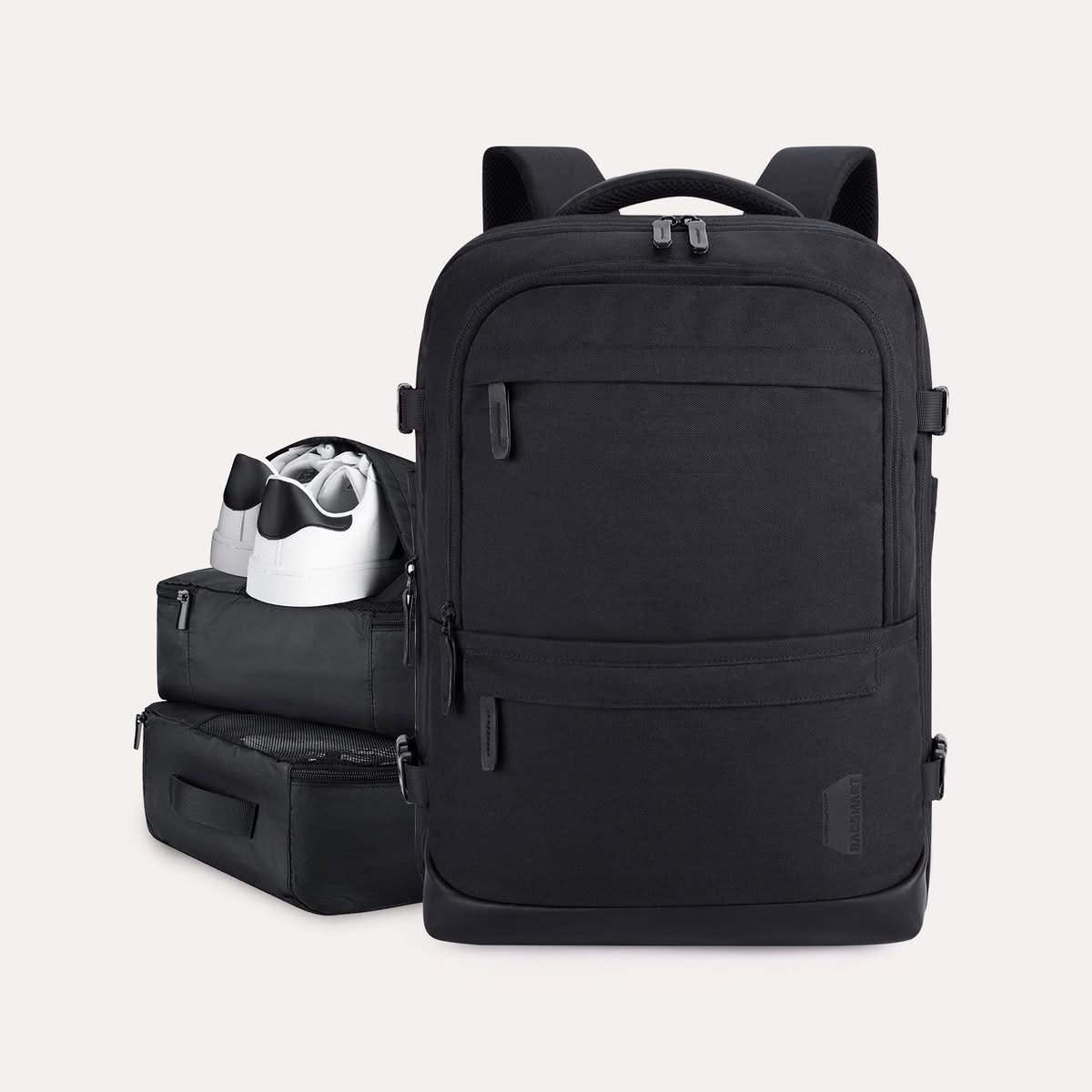
Falco 40L Expandable Carry-On Backpack
Just over a kilogram empty, which hands back nearly 3kg of packing against a wheeled hardshell.
CHECK CURRENT PRICE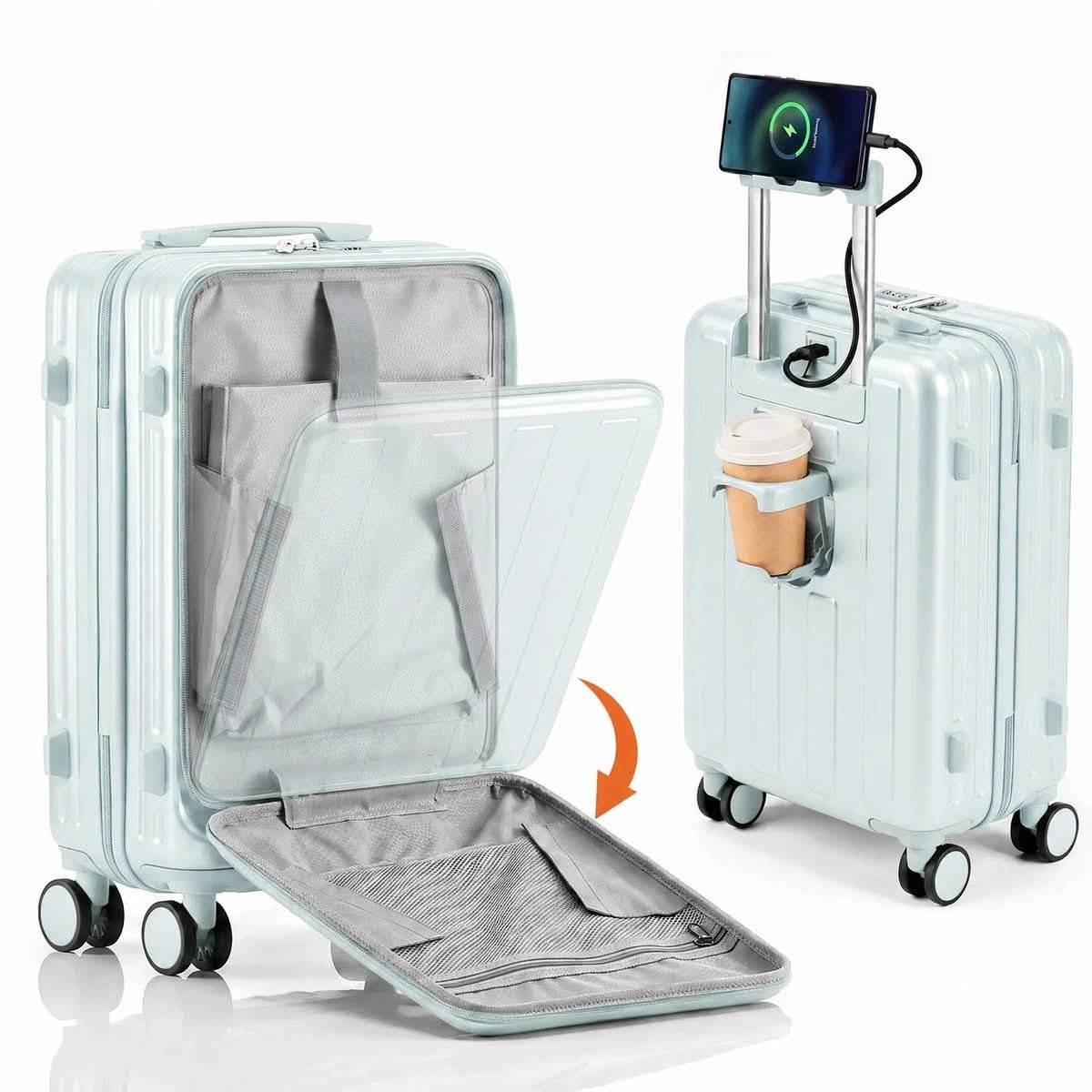
20-Inch Hardshell Carry-On with Packing Set
A seven-piece packing organiser set comes in the box, which is most of the reason to pick it.
CHECK CURRENT PRICEBest Carry-On Luggage Australia Compared
| Product | Link | Type | Best For | Key Spec |
|---|---|---|---|---|
| Getaway 20-Inch Expandable Carry-On | Check price | Hardshell spinner | Expandable capacity | 3.7 kg, 40-48 L |
| Getaway 20-Inch Front-Opening Carry-On | Check price | Front-opening hardshell | Working travellers | 3.75 kg, laptop lid |
| Roamer Expandable 20-Inch Carry-On | Check price | Hardshell spinner | Occasional flyers | 3.7 kg, 20% expansion |
| Falco 40L Expandable Carry-On Backpack | Check price | Carry-on backpack | Cabin-only travel | 1.02 kg, 25-40 L |
| 2-Piece Attachable Hardshell Set, 14 and 20 Inch | Check price | Two-piece nesting set | Families | 5.15 kg pair, nests |
| 20-Inch Hardshell Carry-On with Packing Set | Check price | Hardshell with organisers | Category packers | 3.4 kg, 7-piece set |
| Samsonite Oc2Lite 55cm | Check price | Hardshell spinner | Weight-critical trips | 2.6 kg, 55 cm |
| American Tourister Airconic 55cm | Check price | Hardshell spinner | Locker clearance | 55 cm, ribbed shell |
| Amazon Basics Hardside Expandable Spinner 55cm | Check price | Hardshell spinner | Infrequent flyers | About 3 kg, expandable |
| KROSER Hardside Expandable Carry-On 20-Inch | Check price | Hardshell spinner | Split packing | 36 x 22 x 53 cm, TSA lock |
How We Picked
We swept the Australian catalogues of five affiliate retailers plus Amazon AU for cabin-sized luggage, filtering roughly 130 candidate listings down to true carry-on products by measured size, then discarding check-in cases, luggage covers, packing accessories and duplicate dropship SKUs sold under more than one storefront. Ten unique products from six brands survived, all in stock at the time of writing and shipping domestically instead of arriving as multi-week overseas imports.
Picks were cross-referenced against Choice’s suitcase buying guide, Canstar Blue’s luggage brand ratings, and verified Australian buyer reviews on ProductReview and Amazon AU, with recurring complaint patterns used to write the drawbacks in each entry.
1. Getaway 20-Inch Expandable Carry-On – Best for Expandable Packing Space
The Getaway sits at the premium end of this lineup and looks it: a glossy polycarbonate shell, double spinner wheels set in shock-absorbing housings, and a leather boarding tag that survives more than one trip. Compressed it measures 55 x 35 x 25 cm. Unzip the expansion gusset and the depth grows to 29 cm, taking capacity from 40 up to 48 litres.
That expansion is the reason to buy it. Pack it flat on the way out, then unzip it for the trip home when you have picked up more than you meant to. The four wheels track straight on airport tile and cope with the brick paving around Melbourne’s laneways without the shudder that cheaper double castors send up the handle.
Here is the catch, and it is a real one: the empty case weighs 3.7 kg. On a 7kg domestic allowance that leaves a little over 3kg of actual packing, well short of what the Falco backpack below hands you. Expanded to its full 29 cm depth it also sits over the 23 cm most Australian carriers publish. Fine on a Qantas domestic run where cabin bags are rarely measured; a gamble on a full Jetstar flight. Someone flying interstate three or four times a year who also checks a bag will never notice that 3.7 kg. A cabin-only traveller notices it every trip.
Pros
- Expansion gusset lifts capacity from 40 to 48 litres
- Shock-absorbing wheel housings stay quiet on rough paving
- TSA-approved lock and a three-section pull bar
- Polycarbonate shell resists cracking better than ABS
Cons
- At 3.7 kg empty it takes more than half a 7kg cabin allowance before you pack a shirt
- Expanded to 29 cm deep it exceeds the published depth limit on most Australian carriers
- The gloss finish picks up scuff marks from conveyor rubber and shows every one
- No exterior pocket, so reaching a passport or charger means opening the whole case
Key specs: 55 x 35 x 25 cm compressed, 55 x 35 x 29 cm expanded; 40-48 L; 3.7 kg; 100% polycarbonate shell; TSA-approved lock; three-section pull bar; double spinner wheels.
CHECK CURRENT PRICE2. Getaway 20-Inch Front-Opening Carry-On – Best for Laptop Access
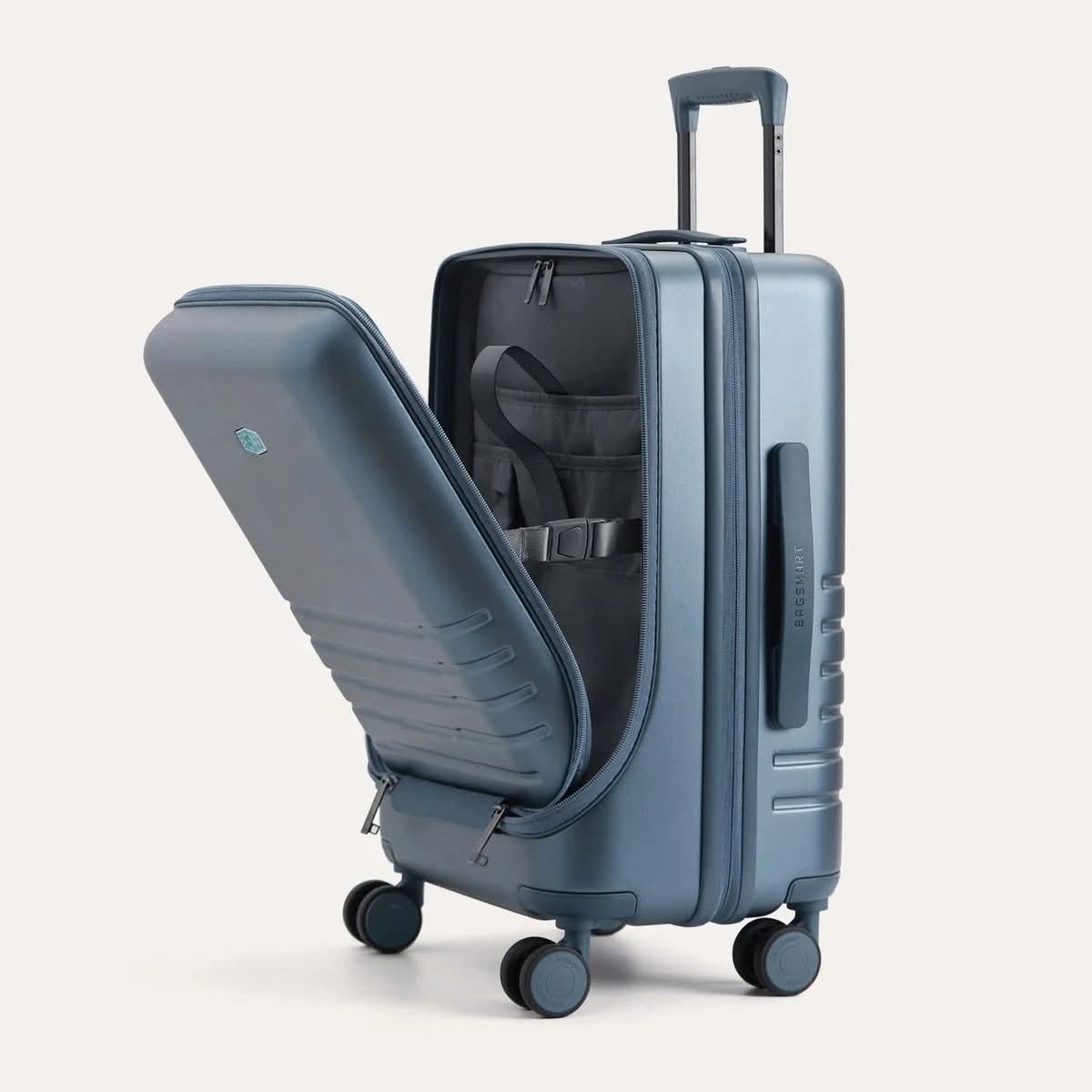
Same shell family as the case above, with one structural change: the top lid opens on its own hinge into a padded laptop and tablet section. That sounds minor. In a security queue it is not.
The lid lies flat, so the laptop comes out without the main compartment ever being unzipped and nothing you packed shifts or spills onto the tray table. Below it, a deep compartment takes bulky clothes, and a removable wet/dry pouch keeps damp swimmers off everything else. The pull bar adjusts to four heights instead of three, which counts for more than it sounds if you are tall or short enough that a fixed bar catches your knuckles.
It is the most expensive pick here, and the money buys a mechanism instead of more room: capacity is the same 40 to 48 litres as the standard Getaway, and the empty weight is fractionally higher at 3.75 kg. So you pay more and carry slightly less.
Worth it for a Monday-morning Melbourne to Sydney run where you clear security twice in a day and open the laptop in the air. Less compelling for a two-week holiday, where that lid compartment is dead volume you have paid a premium for.
Pros
- Padded laptop and tablet section in a separate lie-flat lid
- Laptop clears security without opening the main compartment
- Four-height aluminium pull bar suits a wider range of heights
- Removable wet/dry pouch for damp swimmers
Cons
- The lid compartment steals depth from the main compartment, so a full pack has less usable room than the plain Getaway
- Most expensive pick in this lineup, and the extra outlay buys access instead of capacity
- A second set of zips on the lid is a second thing that can fail
- Still 3.75 kg empty, so the 7kg maths is no kinder than the case above
Key specs: 54 x 35 x 24 cm compressed, 54 x 35 x 29 cm expanded; 40-48 L; 3.75 kg; polycarbonate shell; padded laptop and tablet lid; TSA-approved lock; four-height aluminium pull bar.
CHECK CURRENT PRICE3. Roamer Expandable 20-Inch Carry-On – Best Value Hard Shell
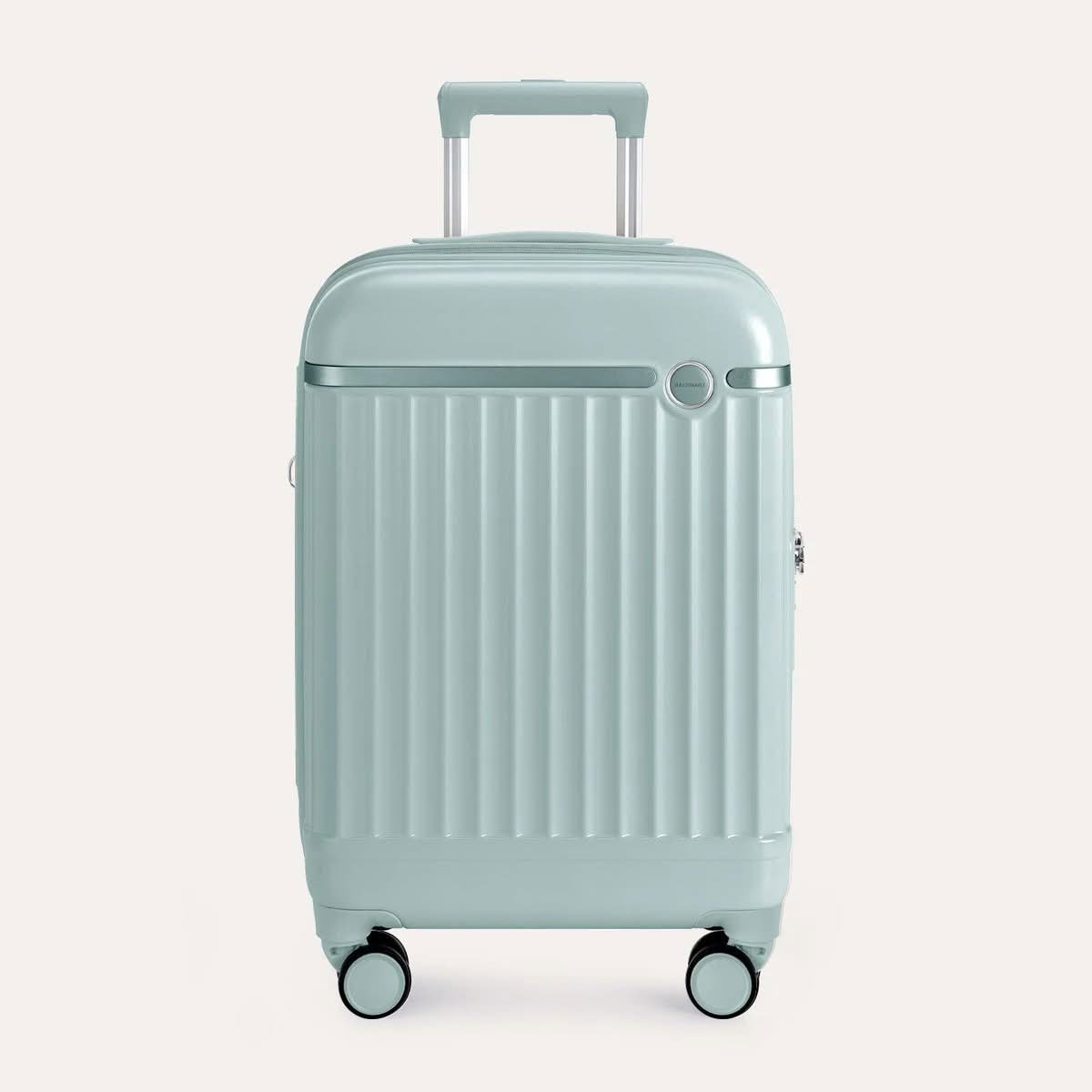
Strip the front-opening mechanism and the leather trim off the two cases above and you land close to the Roamer: same 55 x 35 x 25 cm footprint, same polycarbonate shell, same 20% expansion, same 3.7 kg on the scales, noticeably less money. It comes in muted colourways instead of gloss finishes, which has a practical upside because matte hides conveyor scuffs better than gloss does.
There is no clever compartment and no laptop lid. It rolls, it locks, it expands, and it costs less than either case above. If you fly two or three times a year and the case spends the rest of its life on top of a wardrobe, this is the sensible one of the three hardshells here. Good, not exciting.
Pros
- Costs less than either Getaway while matching the shell, size and expansion
- Matte finish hides scuffs that a gloss shell displays
- TSA-approved locks fitted as standard
- Polycarbonate keeps the weight identical to the dearer cases
Cons
- No laptop or quick-access compartment, so the whole case opens every time you want a charger
- Muted colours make it harder to spot on a crowded carousel if you do end up checking it
- Expansion pushes depth past the published cabin limit, the same trap as the other expandable cases
- Fewer colourways in stock than the standard Getaway
Key specs: 55 x 35 x 25 cm compressed, 55 x 35 x 29 cm expanded; 40-48 L; 3.7 kg; polycarbonate shell; TSA-approved locks; 360-degree spinner wheels.
CHECK CURRENT PRICE4. Falco 40L Expandable Carry-On Backpack – Best for Strict Weight Limits
This is the pick that changes the arithmetic. At 1,025 grams the Falco weighs roughly a quarter of what the hardshell cases above do, so on a 7kg cabin allowance you get close to 6kg of clothes instead of 3kg. It expands from 25 to 40 litres, opens lie-flat for security, and ships with two clothes bags and a shoe bag.
No wheels, no trolley handle. That is where the weight went. You carry it on your back, which is fine through a terminal and less fine with a dodgy shoulder or a long walk at the far end. The padded airflow back panel and chest buckle make a loaded 40 litres manageable (not pleasant, manageable).
It is also the most affordable pick here, which makes the value equation next to the cases above look slightly absurd. On a Jetstar or Rex fare where you have paid nothing for checked baggage and the 7kg limit is the whole game, a sub-kilo bag is the single biggest advantage on offer. Cabin-only travellers should start here.
Pros
- 1,025 grams empty, roughly a quarter the weight of the wheeled cases here
- Expands from 25 to 40 litres and opens lie-flat for security
- Two clothes bags and a shoe bag included in the box
- Takes a 17-inch laptop, and the padded back panel handles a full load
Cons
- Carrying 40 litres on your back beats wheeling it only until the walk gets long
- Water-resistant polyester creases and scuffs where a hard shell would not, and it protects nothing fragile
- Fully expanded to 40 litres it stops being a tidy underseat bag and needs the overhead locker
- No lock, so it is not the bag for anything valuable left unattended
Key specs: 31 x 26 x 47 cm; 25-40 L expandable; 1,025 g; water-resistant polyester; lie-flat opening; fits a 17-inch laptop; two clothes bags and one shoe bag included.
CHECK CURRENT PRICE5. 2-Piece Attachable Hardshell Set, 14 and 20 Inch – Best Two-Piece Set
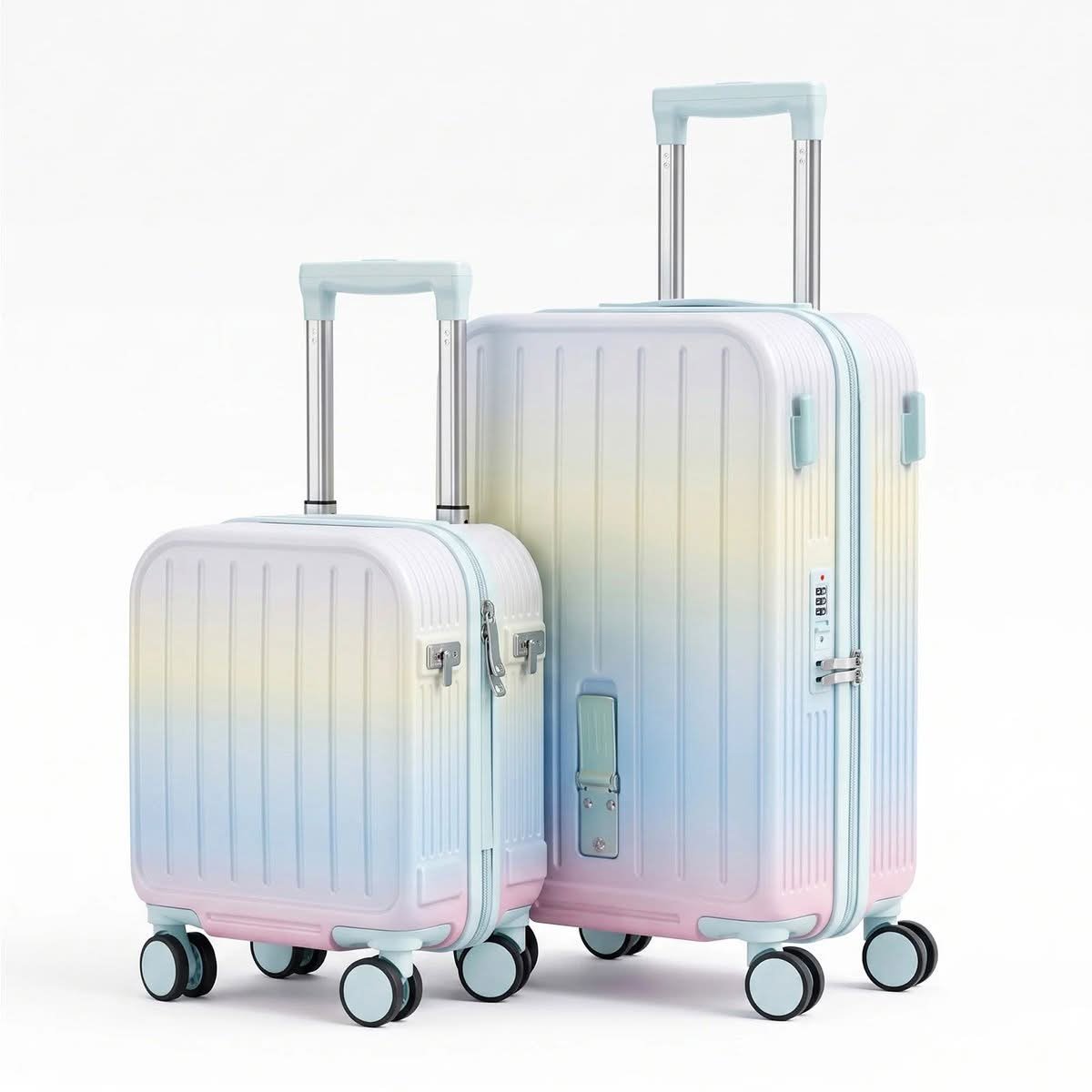
Two cases that clip together and travel as one unit: a 20-inch cabin case at 32 x 21.5 x 55 cm and a 14-inch underseat case at 26 x 19.5 x 38.5 cm. The small one stores inside the big one between trips, which matters if you live in an apartment where luggage storage means a hallway cupboard and nothing else.
Both shells are ABS, the cheaper hardshell plastic. It resists cracking better than people assume, but it flexes and scuffs more readily than the polycarbonate cases higher up this list. The larger case adds a cup holder and a folding footrest, and the lock is a plain combination unit instead of a TSA-keyed one.
Combined the pair weighs 5.15 kg, so both cases cannot fly as cabin baggage on a single 7kg allowance. Read the set as one cabin case plus one personal item, or as a case for you and a case for a kid. A family flying Melbourne to the Gold Coast with a toddler gets far more from this than a solo traveller does.
Pros
- Cases clip together and roll as one unit, then nest for storage
- Rated to a 50 kg load, well beyond anything a 7kg allowance permits
- Includes a luggage tag and a detachable safety strap
- The 14-inch case is truly underseat sized at 38.5 cm tall
Cons
- A plain combination lock, not a TSA-approved one, so US-bound travellers risk having it cut off at inspection
- The ABS shell picks up scuff marks and hairline scratches faster than polycarbonate
- 5.15 kg for the pair means you cannot fly both cases on one 7kg cabin allowance
- A cup holder bolted to a suitcase sounds handy and is the first thing to snap off
Key specs: 20-inch case 32 x 21.5 x 55 cm, 14-inch case 26 x 19.5 x 38.5 cm; 5.15 kg combined; ABS shell; 50 kg maximum load; combination lock; cup holder and folding footrest; nesting storage.
CHECK CURRENT PRICE6. 20-Inch Hardshell Carry-On with Packing Set – Best for Organised Packers
Start with the thing the listing buries: the USB port on the side does nothing on its own. You supply a power bank, sit it inside the case, and connect it to an internal cable. It is a pass-through, not a battery. Worth knowing before you count it as a feature.
Past that it is a well-equipped cabin case. 36 x 23.9 x 56.4 cm with the wheels counted, 3.4 kg empty, an ABS and polycarbonate blend shell, a three-level aluminium handle, a front laptop pocket and a seven-piece packing organiser set in the box. That last inclusion is why it earns its slot, because compression cubes bought on their own cost a fair chunk of what this whole case does.
It undercuts the two-piece set above by more than a kilo and costs less than every hardshell in the top half of this list. The 56.4 cm height with wheels is a whisker over the 56 cm most carriers publish, though nobody has been stopped over four millimetres. Someone who packs by category and wants the cubes thrown in should look here first.
Pros
- Seven-piece packing organiser set included instead of sold separately
- 3.4 kg empty, lighter than the two-piece set and both entry-level Getaways
- Front laptop pocket reachable without opening the main compartment
- Three-level aluminium handle and a drop-tested shipping carton
Cons
- The USB port is a pass-through only and needs your own power bank sitting inside the case
- The front laptop pocket eats main-compartment space when the case is fully packed, which the listing itself admits
- 56.4 cm tall with the wheels, marginally over the published limit on most Australian carriers
- A combination lock instead of a TSA one, so US routes are a risk
Key specs: 36 x 23.9 x 56.4 cm including wheels, 98.5 cm with the handle extended; 3.4 kg; ABS and polycarbonate shell; three-level aluminium handle; USB pass-through port; front laptop pocket; seven-piece organiser set.
CHECK CURRENT PRICE7. Samsonite Oc2Lite 55cm – Best Lightweight Hard Case
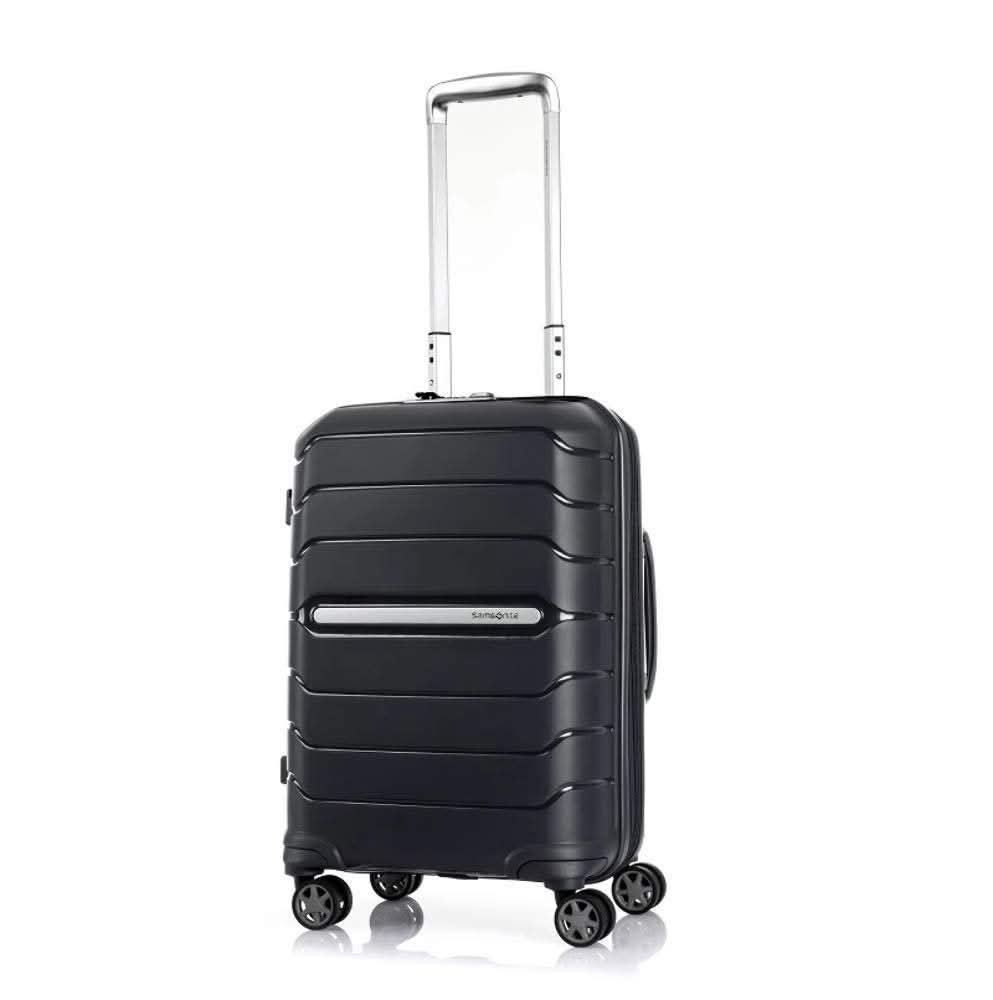
2.6 kg. That is the number, and it is the lowest of any wheeled hard case here by a full kilogram. On a 7kg allowance it hands you well over 4kg of packing, which is the gap between a long weekend and a week away.
Amazon AU reviewers rate it 4.7 out of 5 across more than 340 ratings, and the two things they mention most are sturdiness and weight, in that order. The recurring note is how easily it lifts into an overhead locker, which is exactly the moment a heavy case punishes you. Durability draws more mixed comment: most buyers report it holding up, a minority report otherwise.
Australian sentiment on the brand is less flattering than that score suggests. On ProductReview, Australian buyers rate several Samsonite cabin lines below 3 out of 5, and the complaints cluster on repairs and warranty handling instead of the case falling apart in week one. Weigh that if you buy luggage expecting to claim on it. Fliers who want a light shell more than long-run support are the right buyers.
Pros
- 2.6 kg, the lightest wheeled case in this lineup
- Rated 4.7 out of 5 across more than 340 Amazon AU ratings
- Sturdiness and low weight are the two most-mentioned attributes in reviews
- Lifts into an overhead locker one-handed
Cons
- Australian ProductReview buyers rate several Samsonite cabin lines below 3 out of 5, with repairs and warranty handling the common thread
- Durability draws mixed comment while sturdiness draws praise, which points to inconsistency between units
- No expansion gusset, so the capacity you see is the capacity you get
- Sits at the premium end for a case with no expansion
Key specs: 55 cm cabin size; 2.6 kg; hardshell spinner; four 360-degree wheels; divided interior with zippered pockets; integrated lock; rated 4.7 out of 5 from 343 Amazon AU ratings.
CHECK ON AMAZON8. American Tourister Airconic 55cm – Best for Overhead Bin Fit
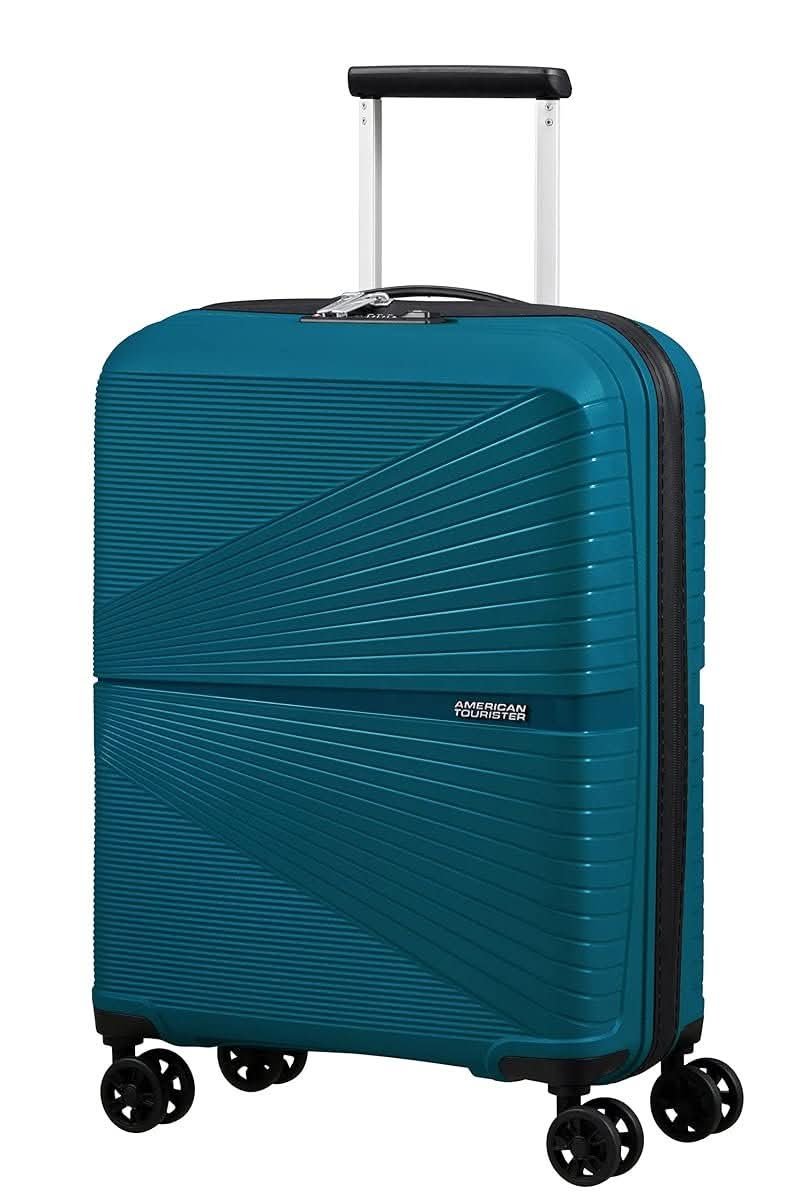
The Airconic’s ribbed shell is the visual signature, but the reason it is here is fit: a true 55 cm case that slides into an overhead locker without the shove a 56 cm case sometimes needs. Amazon AU reviewers put lightweight as the single most-mentioned attribute, ahead of quality.
One Australian reviewer’s framing sticks better than any spec line: it does not take up half the cabin bag weight limit. That is the whole pitch for a light polypropylene shell, and buyers flying Australia to Japan and back report it arriving undamaged. It wheels easily, and the internal dividers zip shut so a pack stays where you put it.
Zipper durability is the soft spot. It is the one attribute in the review data that splits, including a report of a zip failing after five uses. Zips are the standard failure point across this whole category, so it is not a brand-specific flaw, but it is the part to inspect the day it arrives while a return is still easy. Sits a step down in price from the Samsonite above with much the same weight story.
Pros
- A true 55 cm case that clears overhead lockers without forcing
- Lightweight is the most-mentioned attribute across 199 Amazon AU ratings
- Zip-closed internal dividers keep a pack from shifting
- Australian buyers report undamaged returns from long-haul Asian routes
Cons
- Zipper durability is the one attribute that splits Amazon AU reviewers, including a report of failure after five uses
- The ribbed shell traps grime in the channels and needs a cloth run through them
- No expansion, so a souvenir-heavy return leg means repacking or posting things home
- Fewer cabin-size colourways in stock than in the larger check-in sizes
Key specs: 55 cm cabin size; polypropylene ribbed shell; four-wheel spinner; zip-closed internal dividers; integrated lock; rated 4.5 out of 5 from 199 Amazon AU ratings.
CHECK ON AMAZON9. Amazon Basics Hardside Expandable Spinner 55cm – Best Budget Hard Case
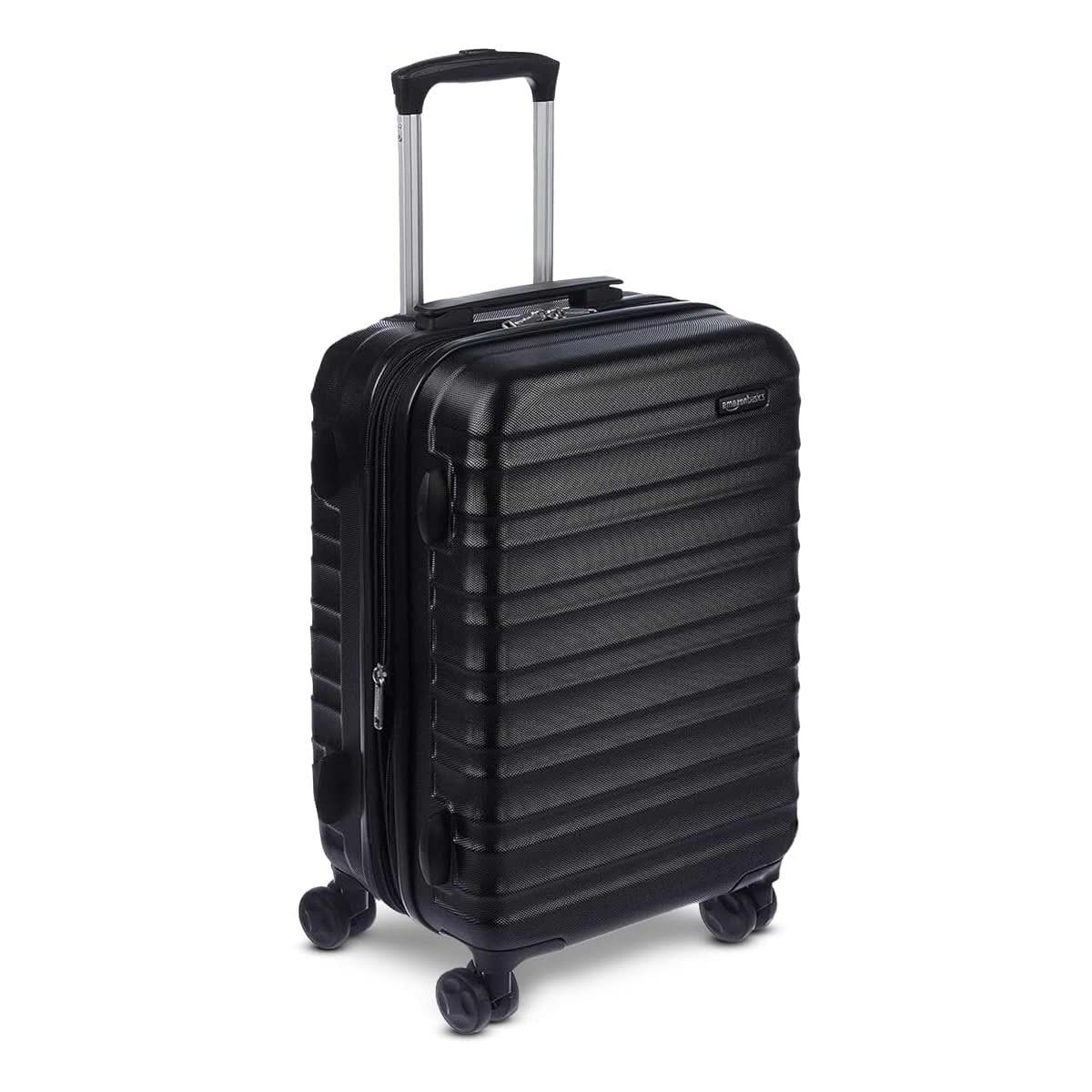
With more than 26,000 ratings this is the most-reviewed case here by an enormous margin, and the aggregate sits at 4.5 out of 5. It is also the pick with the most clearly documented faults, because that many reviews leave nowhere to hide. Both things are true.
The good part first. It is the cheapest hard case in this lineup, it expands, and Australian buyers report it swallowing three weeks of clothes plus scuba gear on a Thailand trip. One AU reviewer flew it on Qantas, Singapore Airlines and Thai Airways without being pulled up, despite it running a shade over the published cabin dimensions.
Now the faults, because Amazon AU’s own review summary names them: the telescopic handle does not always extend the whole way, and there are repeated reports of the zip failing on first use. Handle and zipper quality are the two attributes reviewers flag most often. Choice’s advice about checking that handles are firmly riveted to the case body is aimed squarely at cases like this one.
At roughly 3 kg empty it leaves about 4kg of packing on a domestic allowance, which beats every other hardshell here except the Samsonite. Buy it if you fly rarely and want a case that will probably last several years for very little outlay. Don’t buy it if a handle failure mid-trip would wreck your week.
Pros
- Cheapest hard case in this lineup and it still expands
- 4.5 out of 5 from more than 26,000 ratings, with 74% at five stars
- Australian buyers report it clearing Qantas, Singapore Airlines and Thai Airways gates
- Around 3 kg empty, lighter than every other expandable hardshell here
Cons
- Amazon AU’s review summary flags a telescopic handle that does not always extend all the way
- Repeated reports of the zip failing on the very first use
- Runs slightly over the published cabin dimensions on most carriers, so it depends on staff not measuring
- Handle and zipper quality are the two most-flagged attributes in its own review data
Key specs: 55 cm cabin size; about 3 kg; hardside expandable shell; four-wheel spinner; internal divider and zip pocket; rated 4.5 out of 5 from 26,433 Amazon AU ratings.
CHECK ON AMAZON10. KROSER Hardside Expandable Carry-On 20-Inch – Best for Two-Compartment Packing
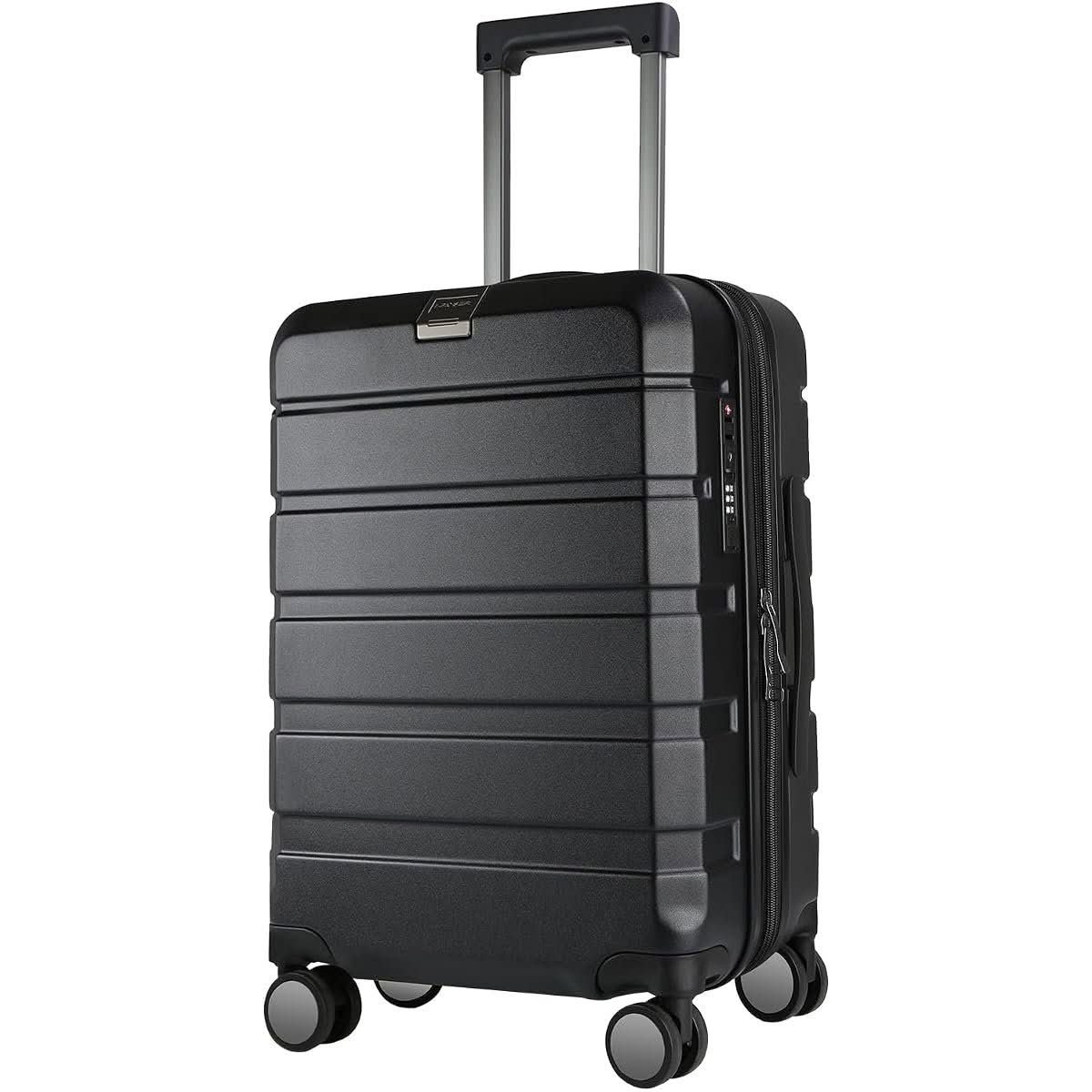
The split interior is what buyers keep coming back to: a two-compartment layout that keeps worn clothes away from clean ones without a separate bag. At 36 x 22 x 53 cm it is the most compact case in this lineup and the only one comfortably inside the 56 x 36 x 23 cm envelope on all three axes. It also carries a built-in TSA lock, which neither of the two budget hardshell picks above manages.
It rates 4.4 out of 5 across roughly 2,300 Amazon AU ratings, with capacity and smooth rolling the most-praised attributes. Australian buyers have taken it on repeat international trips, Japan included, without complaint about the shell itself.
The review data is blunt about where it fails, though. Durability, zipper quality and handle function are the three most-flagged attributes, with reports of handles breaking and not retracting reliably. One Australian buyer received it damaged in transit because the retail packaging is thin. Run the handle through its full travel and both zips end to end the day it lands, while a return still costs you nothing under Australian Consumer Law.
Pros
- Two-compartment interior separates worn clothes without a packing bag
- The only case here inside 56 x 36 x 23 cm on all three axes
- Built-in TSA lock, unlike the cheaper hardshell picks above
- 4.4 out of 5 from roughly 2,300 Amazon AU ratings
Cons
- Handles breaking and failing to retract reliably are among the most-flagged issues in its Amazon AU reviews
- Zipper quality and durability draw as many flags as the capacity draws praise
- Thin retail packaging makes transit damage a real risk, reported by at least one Australian buyer
- The compact footprint means less capacity than the expandable cases higher up
Key specs: 36 x 22 x 53 cm; hardside expandable shell; two-compartment interior; built-in TSA lock; four-wheel spinner; rated 4.4 out of 5 from 2,293 Amazon AU ratings.
CHECK ON AMAZONHow to Choose Carry-On Luggage
Weigh the empty case first. Flying cabin-only on a 7kg limit? Then the empty weight of the case is the only spec worth checking before any other. Across these ten picks it runs from just over a kilogram to more than five for a two-piece set, and every gram of case is a gram of clothes you cannot bring. Weigh it on bathroom scales the day it arrives, because published figures and actual figures do not always agree.
Measure all three dimensions, not the total. Most Australian carriers publish 56 x 36 x 23 cm and cap the bag at 7kg. Choice points out that some airlines assess luggage by adding length, height and depth together, so a case that fails on one axis can still pass on the sum. Depth is where expandable cases come unstuck: unzip the gusset and a 25 cm case becomes a 29 cm one.
Decide whether wheels are worth the weight. A trolley mechanism and four castors cost you two to three kilograms. That is the entire trade. Wheels win in a terminal and on smooth pavement; they lose on the walk from a regional airport carpark in the wet season, and they lose badly on cobbles. A carry-on backpack at around a kilogram gives you nearly double the packing allowance of a wheeled hardshell.
Check the handle before you check the shell. Handle failure is the complaint that comes up most across Australian reviews of cabin cases. Extend the bar to full height, lean on it, and retract it a dozen times on day one. A handle that sticks in week one will fail in year one, and it is the one fault that makes a case useless instead of merely shabby.
Treat brand awards and buyer ratings as separate questions. Canstar Blue’s latest luggage ratings named Guess the top brand for customer satisfaction, with five stars for durability, design and ease of use. None of the picks here is that brand, and that is not a contradiction: a brand satisfaction survey measures a whole range, while a cabin shortlist has to answer a narrower question about 7kg and 56 centimetres. The cases on the floor at Harvey Norman during an EOFY sale are competing on those same two numbers.
Plan for what cannot go in the hold. Lithium batteries have to travel in the cabin, never in checked baggage, which means your power banks ride with you and eat part of the allowance you just calculated. Same goes for anything fragile. Pack knowing that a couple of hundred grams of battery is already committed before you start on clothes.
You’ll Also Want
Cabin-only travel is a compression problem more than a capacity one, and a six-piece set of compression packing cubes buys back more usable space in a 40-litre case than any expansion gusset does.
Liquids have to come out at the security gate in a clear bag, and a hanging toiletry bag means lifting out one thing instead of digging through a packed case on a bench.
Since the empty case counts towards your 7kg, a hanging digital luggage scale settles the argument at home instead of at the check-in desk where it costs money.
A memory foam neck pillow is the one bulky item worth clipping to the outside of a bag, and the guide to travel pillows compares the compact options that pack down.
Frequently Asked Questions
What size is carry-on luggage in Australia?
Most Australian carriers, including Qantas, Jetstar and Virgin Australia, cap a single cabin bag at around 56 x 36 x 23 cm and 7kg. Some airlines assess the bag by adding length, height and depth together instead of checking each axis, so a case that is marginally over on one dimension can still pass. Check your specific carrier’s published limits before you fly, because allowances differ between domestic and international fares.
How much does carry-on luggage weigh when empty?
Empty cabin bags range from about one kilogram for a carry-on backpack to over five kilograms for a two-piece hardshell set, with a typical wheeled hardshell landing between 2.6 and 3.7 kilograms. Because the empty case counts towards a 7kg cabin allowance, a 3.7 kg case leaves only a little over three kilograms for clothes while a one kilogram backpack leaves close to six. Weigh yours on bathroom scales before packing.
Is a hardshell or softside case better for carry-on?
Hardshell cases in polycarbonate or ABS protect fragile contents and hold their shape in an overhead locker, while softside cases and backpacks weigh less and compress into tight spaces. Polycarbonate resists cracking better than the cheaper ABS and shows scuffs less readily. Choose hard if you carry electronics or breakables, and soft if your cabin allowance is tight and you need every gram available for clothes.
Do I need a TSA lock on carry-on luggage?
A TSA-approved lock can be opened by security staff with a master key, so it only matters if your itinerary includes the United States. On a purely Australian or Asian route a standard three-digit combination lock does the same job. If your case has a non-TSA lock and you later fly to the US, security may cut it off during inspection instead of opening it, so check the lock type before you book.
Can I take a power bank in carry-on luggage?
Lithium battery power banks must travel in the aircraft cabin and cannot go in checked baggage, because crew cannot reach a fire in the hold. Australian carriers generally allow power banks up to 100 watt-hours without prior approval, with larger capacities needing airline permission. Keep the power bank in your cabin bag with its terminals protected, and remember that its weight counts towards your 7kg allowance.
Why do carry-on suitcase handles break so often?
The telescopic handle carries the whole load of a packed case through two thin aluminium tubes and a small locking mechanism, which makes it the highest-stress part of the design. Choice advises buyers to look for handles firmly riveted to the body of the case, because those develop fewer weak points. Test the handle through its full travel on the day your case arrives, while a return is still straightforward.
For most Australian cabin-only travellers the Falco 40L backpack is the pick that changes what you can actually bring, because a bag weighing just over a kilogram instead of three and a half hands back more than two kilograms of packing on a 7kg allowance. If you want wheels, the Getaway 20-Inch Expandable is the best-built hardshell here and its expansion gusset earns its keep on the return leg, while the Samsonite Oc2Lite is the lightest wheeled case in the lineup at 2.6 kg and the one to choose when every gram counts but a backpack will not do.