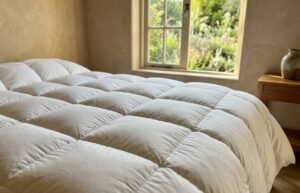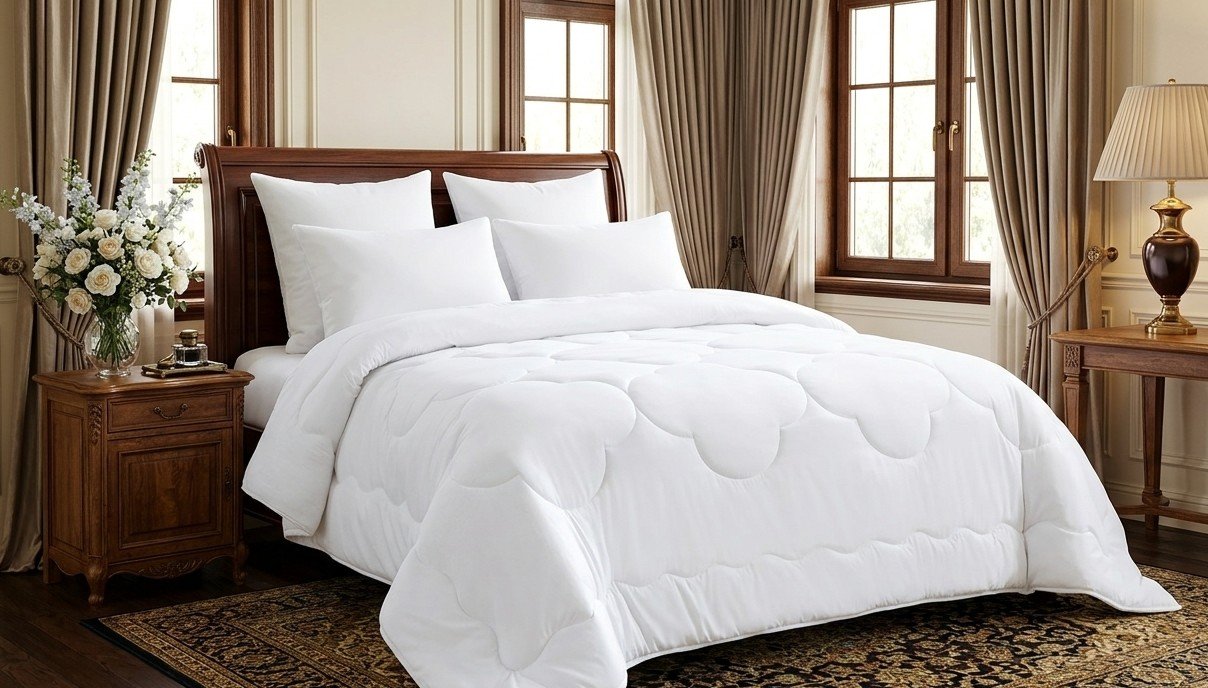
The best doonas and quilts in Australia are filled bedding inserts, sometimes called duvets, that sit inside a removable cover and provide the main layer of warmth on a bed rather than an extra blanket on top. What separates one from another is fill material, fill weight and cover fabric, since those three factors decide whether a quilt suits a humid Queensland summer or a cold Victorian winter. A quilt rated for one climate can leave a sleeper too hot or too cold in another, which is why weight and fill matter more than brand name.
Quilts fall into a handful of distinct types. Wool quilts trap warmth efficiently and regulate temperature well across seasons. Bamboo and microfibre quilts are lighter, hypoallergenic and suited to warmer months or hot sleepers. Down alternative duvets mimic the loft of natural down using synthetic fill and machine wash more easily than wool. All season quilts use a mid-range GSM designed to work across most of the year without swapping doonas twice.
Quilt weight is measured in grams per square metre (GSM), and the difference is significant: a lightweight 150 GSM (about 4.4 oz per square yard) quilt suits a Queensland summer, while a heavier 500 GSM (about 14.7 oz per square yard) wool quilt suits a Victorian or Tasmanian winter. The criteria that matter most are GSM rating, fill type, cover fabric and whether the quilt is machine washable, since a doona that cannot be washed at home becomes an ongoing cleaning cost.
This guide compares doonas and quilts from Australian bedding retailers and marketplace listings across price tiers, ranking each by fill type, warmth rating and value, with wool, bamboo, microfibre and down alternative options included so different climates and budgets are covered.
Quick Picks
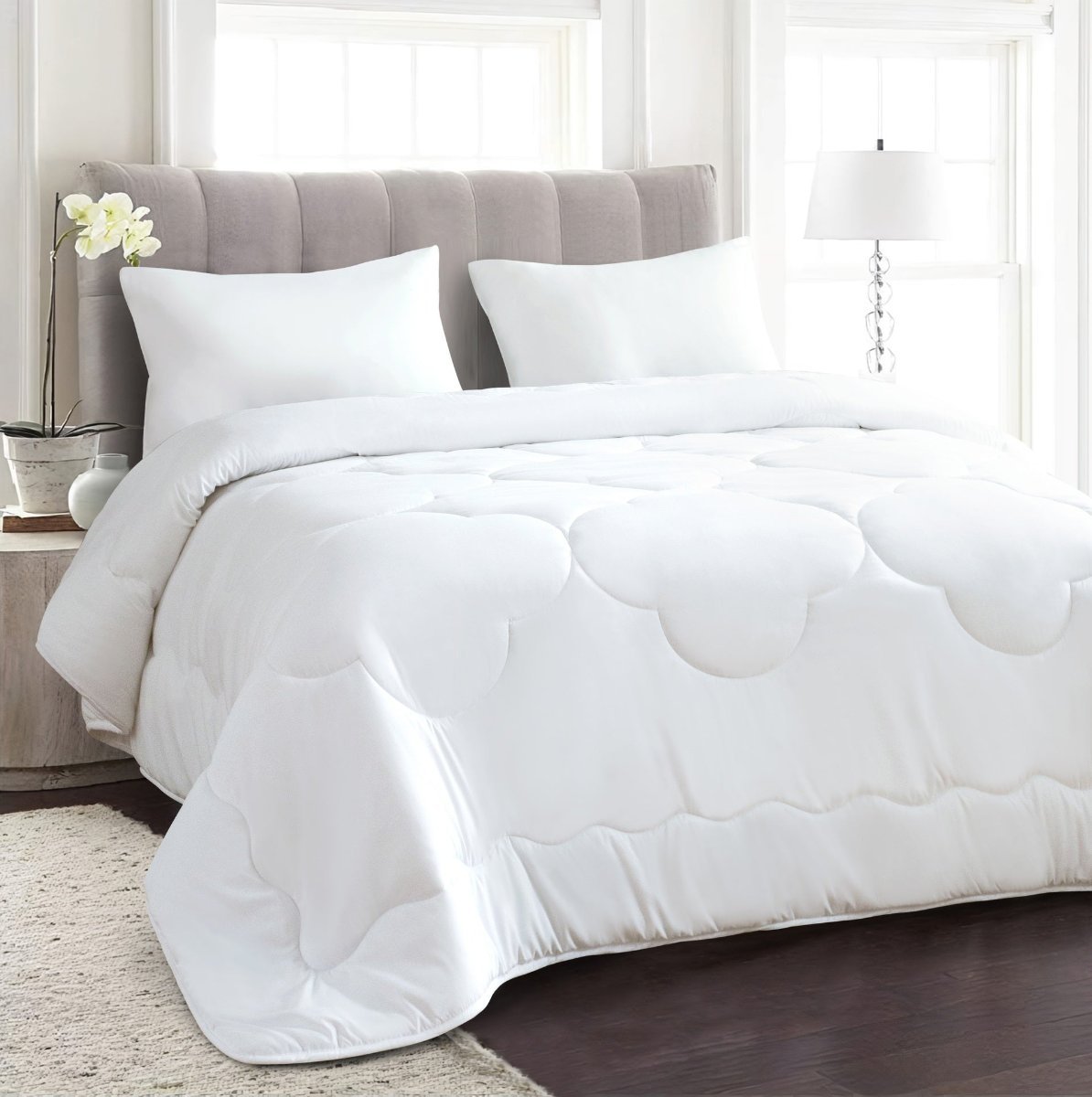
Gioia Casa Bamboo All Seasons Quilt
A lightweight 250 GSM bamboo blend quilt that suits warmer nights and sensitive skin without the weight of a wool fill.
CHECK CURRENT PRICE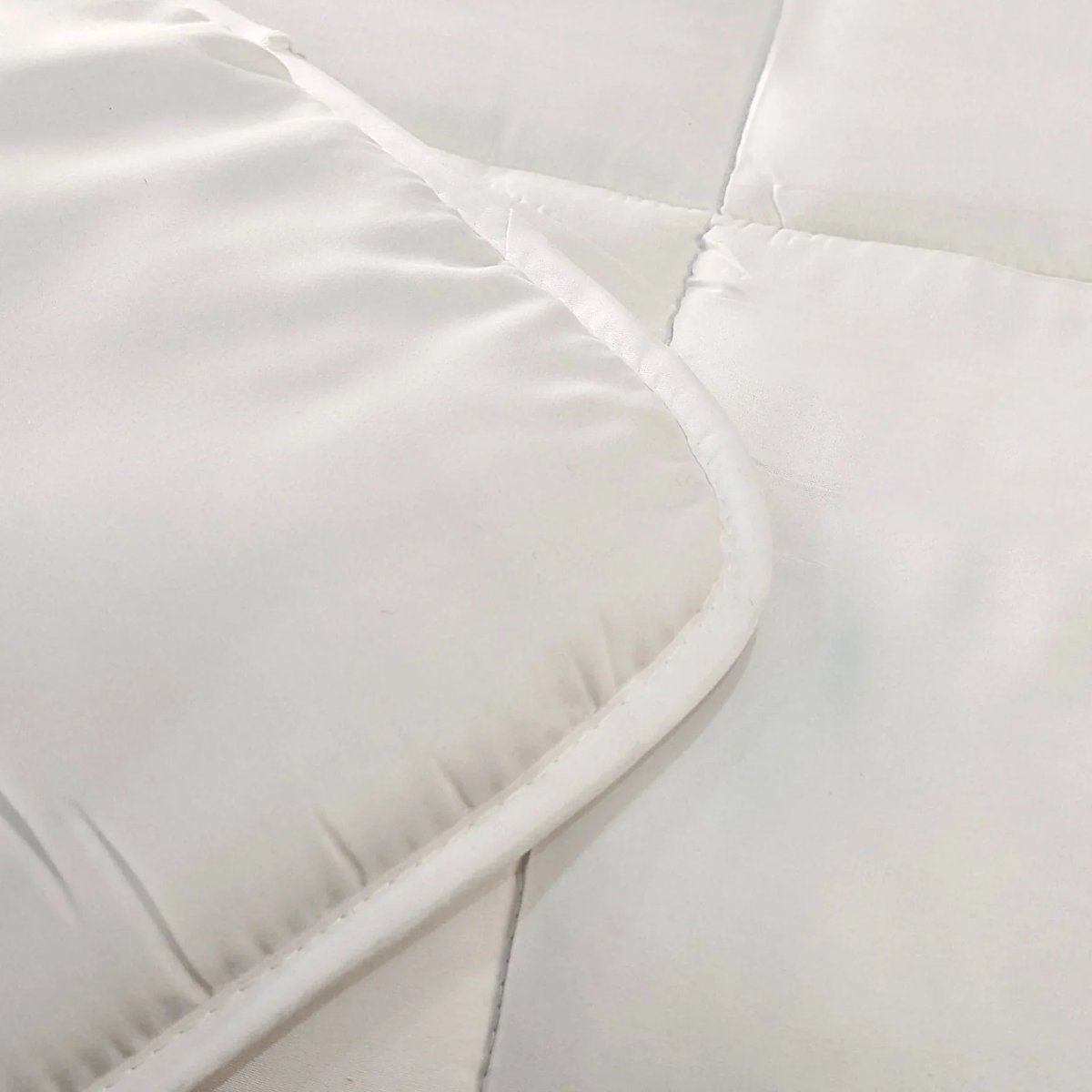
ARDOR Doona Medium Weight 300gm
A 300 gram microfibre fill doona pitched at medium warmth, built to cover most of the year without a second quilt.
CHECK CURRENT PRICE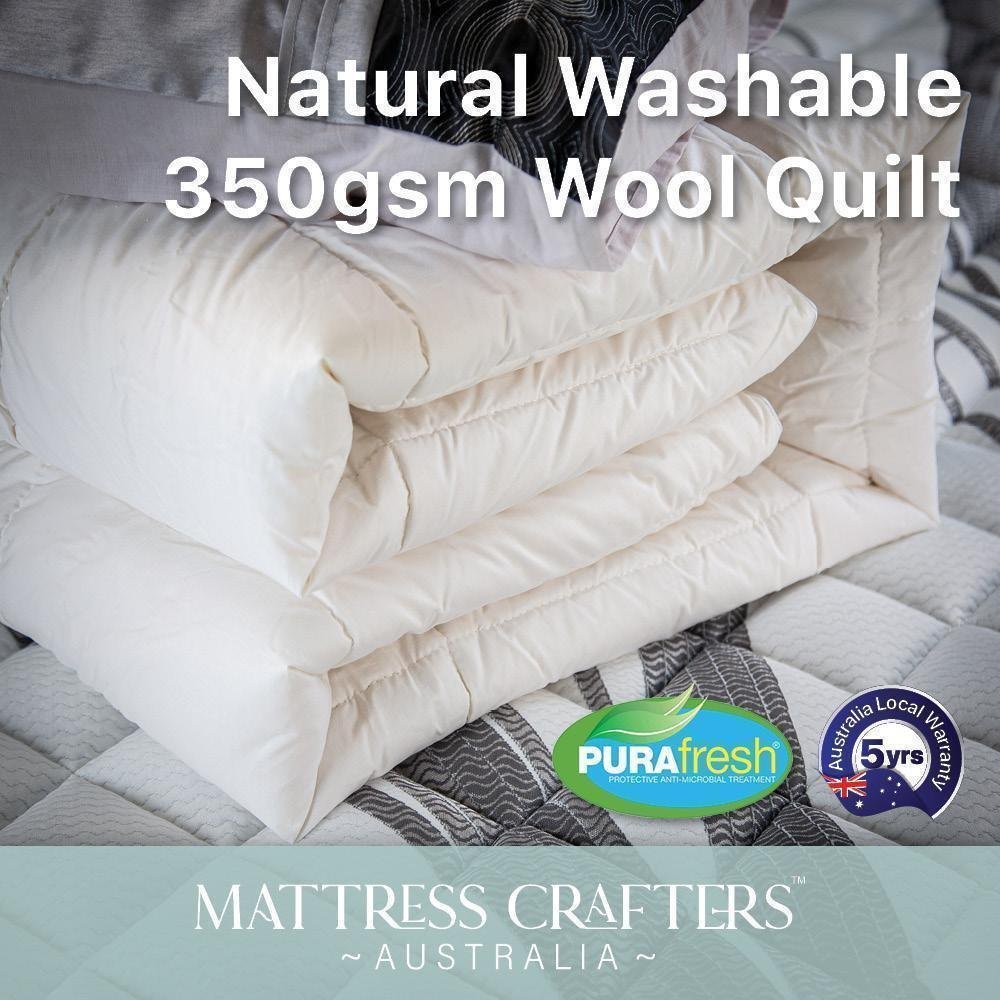
Quilt Wool 350g
A 350 gram quilt that sits between a summer weight and a full winter doona for milder climates.
CHECK CURRENT PRICEBest Doonas and Quilts in Australia Compared
| Product | Link | Type | Best For | Key Spec |
|---|---|---|---|---|
| Gioia Casa Bamboo All Seasons Quilt | Check price | Bamboo/Microfibre | Hypoallergenic, budget | 250 GSM |
| ARDOR Doona Medium Weight | Check price | Microfibre | All-season | 300 GSM |
| Quilt Wool 350g | Check price | Wool-style | Medium weight | 350 GSM |
| Microfiber Quilt Doona Duvet | Check price | Microfibre | Budget all-season | King single |
| Comfort Sleep Tencel Quilt | Check price | Tencel/Microfibre | Australian made | 300 GSM |
| Zenger Wool Quilt | Check price | Pure Wool | Winter warmth | 500 GSM |
| Concierge Hotel Linen Quilt | Check price | Microfibre (cassette) | Hotel-style | 350 GSM |
| Woolcomfort Merino Wool Quilt | Check price | Merino Wool | Coldest climates | 700 GSM |
| Moonrite Down Alternative Duvet | Check price | Down-alternative | Year-round, easy care | 350 GSM |
1. Gioia Casa 250GSM Bamboo All Seasons Quilt – Best Hypoallergenic
This quilt pairs a bamboo-blend outer with a 250 GSM microfibre fill, landing on the lighter end of the all-season range. The cover uses a plain weave that feels smooth against skin, part of why bamboo bedding is marketed toward people with sensitive skin or mild allergies. Box stitching keeps the fill from bunching into one corner after repeated washing.
At 250 GSM it runs warmer than a pure summer quilt but noticeably lighter than a winter wool doona, so it suits a bedroom that does not drop much below the mid-teens overnight. Machine washing is straightforward, since microfibre fill dries faster than natural down or wool. It packs down small in storage between seasons, which matters in smaller apartments.
The trade-off is warmth ceiling: anyone in a consistently cold climate will find this too light through the depths of winter and will want an extra blanket layered on top. It suits hot sleepers, apartment dwellers short on storage space and anyone wanting a hypoallergenic option without a wool fill.
Pros
- Lightweight bamboo blend suits warmer climates
- Hypoallergenic fill for sensitive skin
- Machine washable and quick to dry
- Packs down small for off-season storage
Cons
- Too light for cold winter climates on its own
- Lacks the loft of a heavier wool quilt
Key specs: 250 GSM bamboo-blend microfibre fill, single size, machine washable, box-stitch construction.
CHECK CURRENT PRICE2. ARDOR Doona Medium Weight 300gm – Best All-Season
ARDOR’s medium weight doona uses a 300 gram microfibre fill inside a cotton-blend cover, positioned as a genuine all-season option rather than a summer or winter specialist. The stitching runs in a box pattern across the whole quilt, the usual method for keeping synthetic fill evenly distributed. It has a straightforward look that suits most cover styles.
300 GSM sits in the middle of the warmth scale, so it performs reasonably in a mild winter and does not feel oppressive on a warmer spring or autumn night. Microfibre fill launders at home without the shrinkage risk that comes with natural down, and it recovers its loft after a tumble dry on low heat. It is built to be used every night of the year rather than swapped seasonally.
The trade-off with any true all-season quilt is that it will not match a dedicated winter wool doona on the coldest nights, nor a lightweight bamboo quilt on the hottest ones. It suits anyone who wants one doona for the whole year and does not want to store a second between seasons.
Pros
- Genuine all-season 300 GSM weight
- Machine washable cotton-blend cover
- Even fill distribution from box stitching
- One doona covers most of the year
Cons
- Not as warm as a dedicated winter wool quilt
- Not as light as a dedicated summer quilt
Key specs: 300 gram microfibre fill, cotton-blend cover, box-stitched, machine washable.
CHECK CURRENT PRICE3. Quilt Wool 350g – Best Medium-Weight
This 350 gram quilt sits one notch warmer than a standard all-season doona without stepping up to a full winter weight. The listing name points to a wool-style fill, and buyers who want that confirmed before purchase should check the current product description on the retailer’s own site, since fill details can be updated between batches. Construction follows the same box-stitch pattern used across this range.
At 350 GSM it holds a little more warmth than the 300 gram ARDOR doona above, making it a reasonable step up for anyone who runs cold overnight but does not want to commit to a heavier winter-only quilt. It is built for year-round use in cooler climates rather than as a dedicated summer option.
The trade-off is the same one that applies to any mid-weight quilt: it will not match a dedicated 500 GSM winter doona in the coldest months. It suits shoppers who found the ARDOR doona above slightly too light and want one step warmer from the same range.
Pros
- 350 GSM sits a step warmer than standard all-season fill
- Box-stitched for even fill distribution
- Machine washable
Cons
- Fill details should be confirmed on the product listing before buying
- Not intended as a dedicated winter-only quilt
Key specs: 350 gram fill, box-stitched construction, machine washable.
CHECK CURRENT PRICE4. Microfiber Quilt Doona Duvet King Single – Best Budget All-Season
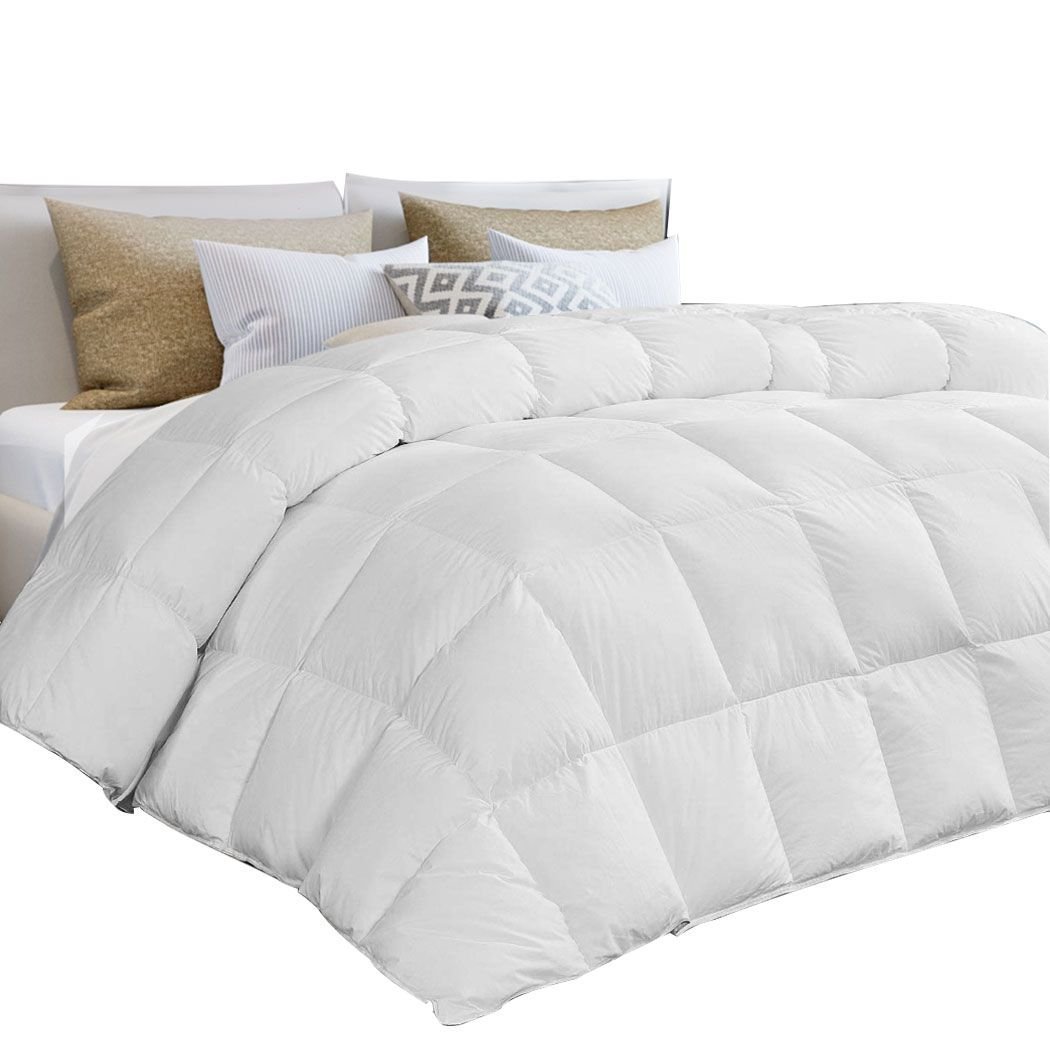
This microfibre quilt is built around a straightforward all-season fill with a cotton-blend cover, aimed at buyers who want a functional doona without paying for wool or down. The construction is simple box-stitching, which keeps the fill in place through regular washing. It is sized for a king single bed.
As an all-season microfibre option, it performs adequately across most of the year in a moderate climate, though it will not hold heat the way a dedicated winter wool quilt does. Machine washing is straightforward and the fill dries faster than natural alternatives. It is a practical choice for a spare room, a share house or a child moving up from a cot-sized quilt.
The trade-off is the same as any budget microfibre fill: it lacks the loft and long-term resilience of a heavier natural fill and will likely need replacing sooner than a wool or down quilt. It suits anyone furnishing a spare bed or replacing bedding on a tight budget rather than someone chasing years of daily use from one doona.
Pros
- Affordable all-season microfibre fill
- Machine washable cotton-blend cover
- Suits king single beds
- Good for spare rooms or share houses
Cons
- Lacks the loft of a wool or down quilt
- Shorter expected lifespan than a premium fill
Key specs: Microfibre fill, cotton-blend cover, king single size, machine washable.
CHECK CURRENT PRICE5. Comfort Sleep 300GSM Tencel All Season Quilt – Best Australian-Made
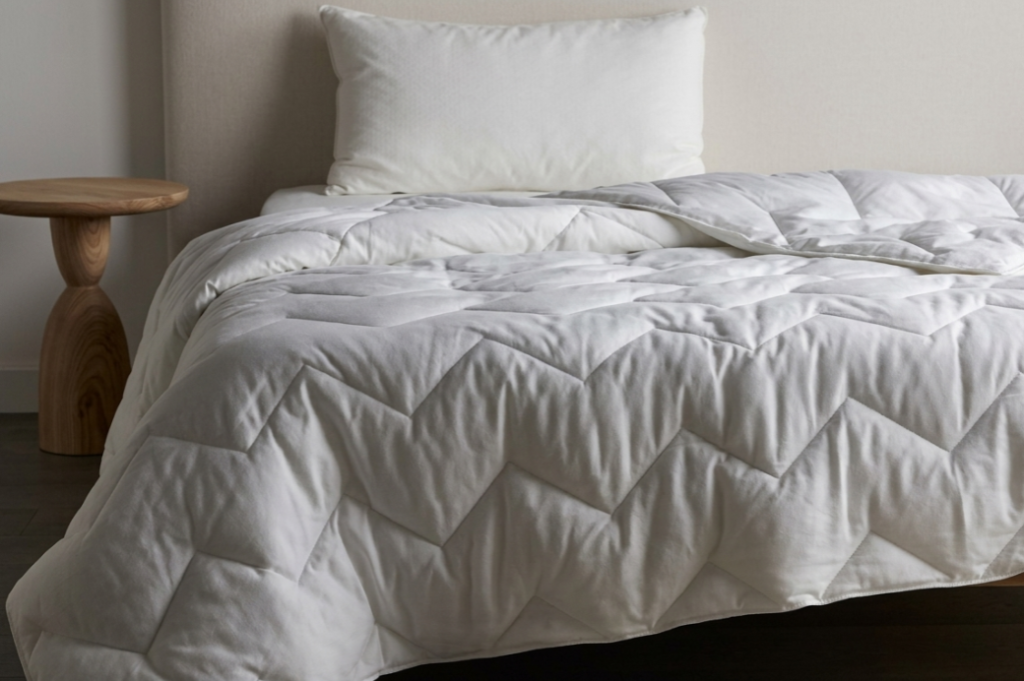
This quilt is manufactured in Australia with a Tencel cover over a 300 GSM fill, positioning it as an all-season option with a point of difference in fabric choice rather than fill weight alone. Tencel is a lyocell fibre known for moisture-wicking properties, which changes how the quilt feels against skin compared with a standard cotton-blend cover. It follows the same box-stitch construction as the rest of this range.
The Tencel cover helps regulate temperature and moisture through the night, which matters in humid climates where a standard cotton cover can feel clammy. At 300 GSM it sits in the same warmth bracket as the ARDOR doona above, but the fabric choice is what sets it apart rather than the fill weight. Being Australian made also means a shorter supply chain for warranty claims and returns.
The trade-off is that Tencel covers typically cost more to manufacture than plain cotton-blend alternatives, and this quilt sits at the premium end of this guide as a result. It suits buyers who prioritise fabric feel and local manufacturing over chasing the cheapest all-season option.
Pros
- Tencel cover regulates temperature and moisture well
- Made in Australia
- 300 GSM all-season fill
- Box-stitched for even fill distribution
Cons
- Sits at the premium end of this guide
- Not a specialist winter-weight quilt
Key specs: 300 GSM fill, Tencel cover, Australian made, machine washable.
CHECK CURRENT PRICE6. Zenger Golden Sovereign Pure Australian Wool – Best Wool / Winter Warmth
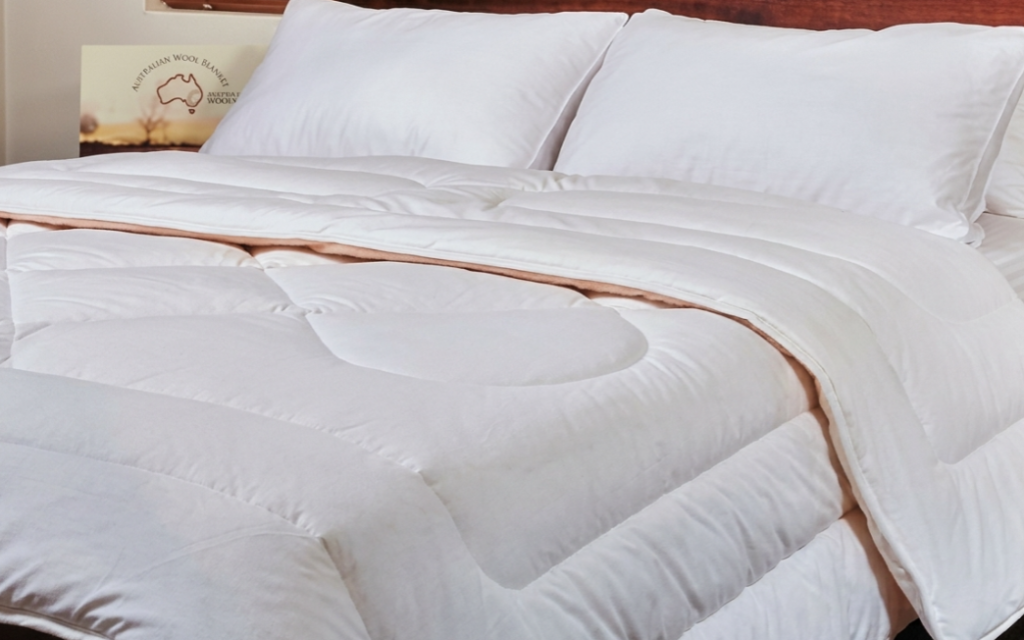
This is a 500 GSM pure Australian wool quilt, hand packed rather than machine filled, the traditional method used for premium wool bedding. Wool fill regulates temperature more effectively than synthetic alternatives, drawing moisture away from the body overnight rather than trapping it. At 500 GSM it sits at the heaviest end of the quilts covered in this guide.
In use, wool’s natural crimp structure keeps loft over years in a way synthetic microfibre fill tends not to, and it performs well through a genuine winter in southern Australian climates. Wool is also naturally flame resistant and manages humidity better than synthetic fill, so it feels less damp on a muggy night despite the heavier weight. Hand packing tends to distribute the fill more evenly than machine filling over the quilt’s lifespan.
The trade-off is weight and cost: at 500 GSM this is too warm for anything but a genuine winter climate, and pure wool quilts generally sit at the upper end of this guide. It suits anyone in Victoria, Tasmania, the ACT or similar climates who wants a dedicated winter doona and is prepared to pay for a natural fill over synthetic.
Pros
- Pure Australian wool regulates temperature naturally
- 500 GSM suits genuine winter climates
- Hand packed for even, long-lasting loft
- Naturally moisture-wicking and flame resistant
Cons
- Too warm for spring, summer or mild climates
- Sits at the premium end of this guide
Key specs: 500 GSM pure Australian wool fill, hand packed, machine washable cover.
CHECK CURRENT PRICE7. Concierge Hotel Linen Luxury Microfibre Quilt 350gsm – Best Hotel-Style
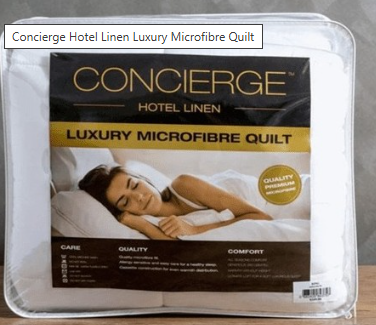
This quilt uses a cassette construction, meaning the fill sits in individually stitched pockets rather than one continuous box-stitch pattern, the method most hotel-grade bedding uses to stop fill from shifting. At 350 GSM it sits in the same medium-weight bracket as the Quilt Wool 350g above, but the cassette build is the point of difference.
Cassette construction keeps the microfibre fill evenly distributed across the whole surface rather than settling toward the edges over time, the main advantage over simpler box-stitched quilts in this guide. At 350 GSM it works as a year-round option in a moderate climate. The hypoallergenic microfibre fill also machine washes more easily than the wool options above.
The trade-off is that cassette-constructed quilts generally cost more to manufacture than box-stitched ones, reflected in where this sits within the range. It suits anyone who wants a hotel-style sleep experience at home and values even fill distribution over the cheapest possible all-season option.
Pros
- Cassette construction keeps fill evenly distributed
- 350 GSM suits year-round use in moderate climates
- Hypoallergenic microfibre fill
- Machine washable
Cons
- Costs more than a simple box-stitched quilt
- Not a dedicated winter-weight option
Key specs: 350 GSM microfibre fill, cassette construction, machine washable.
CHECK CURRENT PRICE8. Woolcomfort Australian Made Merino Wool Quilt 700GSM Queen – Best Merino Wool
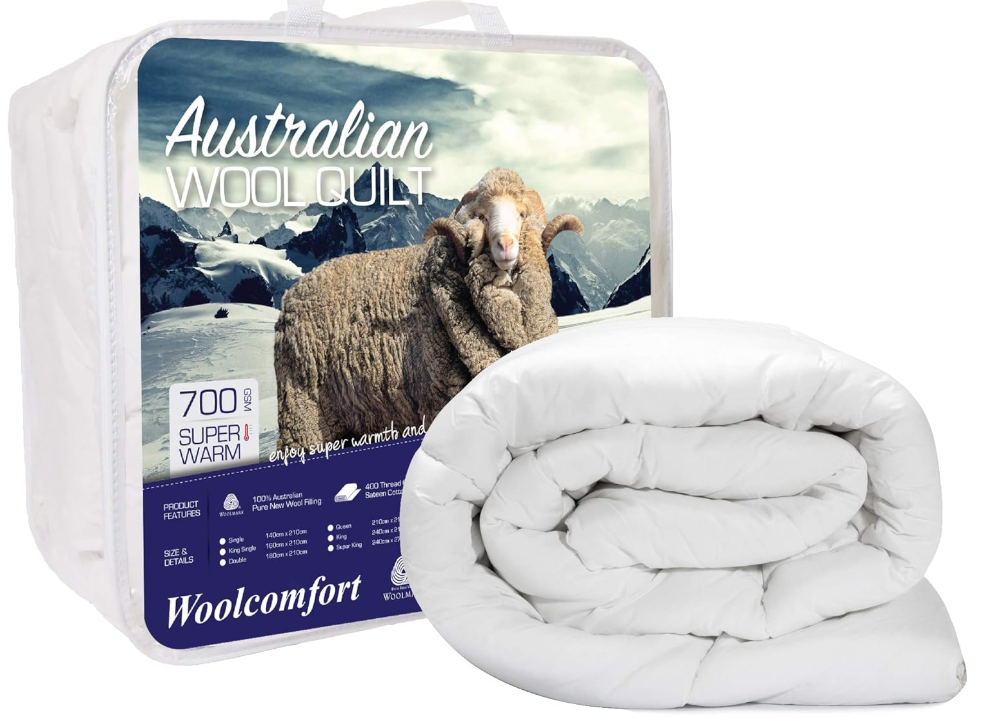
This quilt uses a 700 GSM pure Australian merino wool fill, the heaviest weight in this guide, and carries Woolmark certification confirming the wool content. Merino wool has a finer fibre than standard wool, which generally means it feels softer against skin at the same warmth level. It is manufactured in Australia, keeping the fill sourced from local wool growers.
At 700 GSM this is built for the coldest nights, drawing on wool’s natural ability to regulate temperature and manage moisture better than any synthetic fill in this guide. The Woolmark certification is a genuine third-party verification of wool content and quality, which matters when buying a quilt online without seeing or feeling it first. It holds its loft over repeated winters better than a synthetic equivalent at the same weight.
The trade-off is that 700 GSM is too warm for anything but a genuine cold-climate winter, and pure merino wool sits at the top of this guide. It suits buyers in the coldest parts of the country who want a dedicated winter doona and are prepared to pay for certified merino wool.
Pros
- 700 GSM pure merino wool, the warmest option in this guide
- Woolmark certified
- Made in Australia
- Naturally moisture-wicking
Cons
- Too warm for anything but genuine winter climates
- Among the more expensive options in this guide
Key specs: 700 GSM merino wool fill, Woolmark certified, Australian made, Queen size.
CHECK CURRENT PRICE9. Moonrite Queen Quilt 350GSM Down Alternative Duvet – Best Down-Alternative
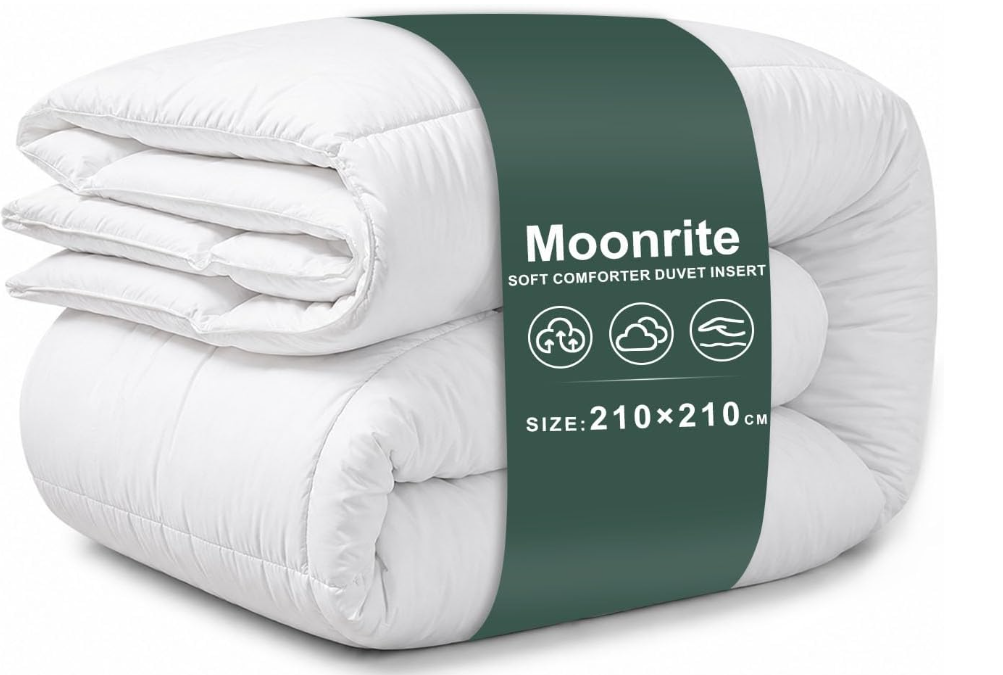
Moonrite’s 350 GSM duvet uses a synthetic down-alternative fill designed to mimic the loft of natural down without the cost or the washing restrictions that come with it. The quilt uses an eight-tab corner design, the standard method for keeping a duvet cover anchored to the quilt inside it rather than bunching up overnight. At 350 GSM it sits in the same medium-warmth bracket as several quilts earlier in this guide.
Down-alternative fill machine washes more easily than natural down, which tends to require specialist cleaning or a large-capacity machine to avoid clumping. In use it performs as a year-round option in a moderate climate, similar in warmth to the Tencel and cassette-construction quilts covered above. The box-stitch construction keeps the synthetic fill evenly spread.
The trade-off against natural down or wool is that synthetic fill typically loses loft faster over repeated washing and years of use. It suits buyers who want the look and feel of a hotel-style duvet with easier care than natural down, and who do not need a dedicated winter or summer specialist quilt.
Pros
- 350 GSM suits year-round use in a moderate climate
- Down-alternative fill machine washes easily
- Eight-tab corner design keeps a duvet cover anchored
- More affordable than natural down
Cons
- Loses loft faster than natural down or wool over time
- Not a dedicated winter or summer specialist
Key specs: 350 GSM down-alternative fill, eight corner tabs, Queen size, machine washable.
CHECK CURRENT PRICEHow to Choose a Doona or Quilt
Match GSM to your climate. Grams per square metre is the single most useful number on any quilt listing, since it predicts warmth more reliably than marketing terms like winter weight or all season, which are not standardised between brands. A quilt anywhere from 150 to 250 GSM suits a warm Queensland or northern WA bedroom, 300 to 400 GSM covers most of the country for most of the year, and 500 GSM or above is built for a genuine southern winter.
Consider the fill type. Wool regulates temperature and moisture more effectively than synthetic fill and holds its loft for longer, but it costs more and some wool quilts need more careful washing. Microfibre and down-alternative fills are cheaper, machine wash easily and suit anyone who wants low-maintenance bedding, though they tend to flatten sooner than natural fill. Bamboo blends sit closer to microfibre in practical terms but are marketed on breathability and a smoother feel against skin.
Check cover fabric and construction. A cotton-blend cover is the standard, affordable option, while Tencel adds moisture-wicking properties that suit humid climates at a higher price. Construction matters as much as fabric: box-stitching is standard and functional, while cassette construction keeps fill from shifting over years of washing at a higher price point.
Think about washing. Most microfibre and down-alternative quilts are fully machine washable at home, while heavier wool quilts sometimes call for a large-capacity machine or professional cleaning to avoid clumping. Check the specific care instructions before buying if home washing matters to you, since this varies between the wool options in this guide.
Size matters as much as warmth. A quilt sized for a king single or queen bed should sit close to the mattress dimensions rather than swamping a smaller bed or leaving a larger one under-covered. Check the exact centimetre measurements on the listing rather than relying on the size name alone, since conventions can vary slightly between manufacturers.
Budget realistically across the fill types. Wool and merino wool quilts sit at the premium end of this guide, reflecting the cost of natural fibre and, in several cases, hand packing. Microfibre, bamboo blend and down-alternative options make up the more affordable end without leaving climates uncovered, so a tight budget does not mean going without a quilt suited to the season.
Tying the bed linen into the rest of the room is easier with removable cushion covers you can swap each season.
Frequently Asked Questions
What is the difference between a doona and a quilt?
In Australia, doona and quilt are generally used interchangeably to describe the filled bedding insert that sits inside a cover, though quilt is sometimes used specifically for the insert. Duvet is the equivalent term used in other English-speaking countries.
What GSM is best for an Australian winter?
A quilt around 500 GSM or higher suits a genuine southern Australian winter in states like Victoria, Tasmania and the ACT, while 300 to 400 GSM is usually enough for a milder winter in New South Wales or South Australia.
Is wool or microfibre better for a quilt?
Wool regulates temperature and moisture more effectively and holds its loft for longer, but costs more and can need more careful washing. Microfibre is more affordable, washes easily at home and suits anyone who wants low-maintenance bedding over the natural performance of wool.
Can I machine wash a doona at home?
Most microfibre and down-alternative doonas are fully machine washable at home, though a large-capacity machine helps prevent clumping. Heavier wool quilts sometimes need a large machine or professional cleaning, so check the specific care label before washing.
How often should I replace a doona?
A well-made wool quilt can last a decade or more with proper care, while a budget microfibre quilt typically loses loft and needs replacing sooner, often within a few years of regular use.
What size doona do I need for my bed?
Doona sizes should closely match your mattress dimensions in centimetres rather than the size name alone, since a doona sized for a queen bed will not adequately cover a king bed, and one sized for a king will overhang a queen or double.
Verdict
For most Australian climates, the ARDOR Doona Medium Weight and the Comfort Sleep Tencel quilt cover the bulk of the year without needing a seasonal swap, while the Zenger pure wool quilt is the clearer pick for anyone facing a genuine southern winter. Buyers on a tighter budget are well served by the Gioia Casa bamboo quilt, which trades some warmth ceiling for a lower cost and hypoallergenic fill. Whichever weight suits your climate, check the GSM rating first and the brand name second.