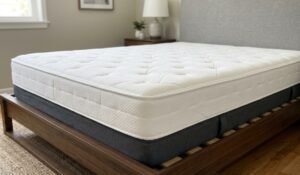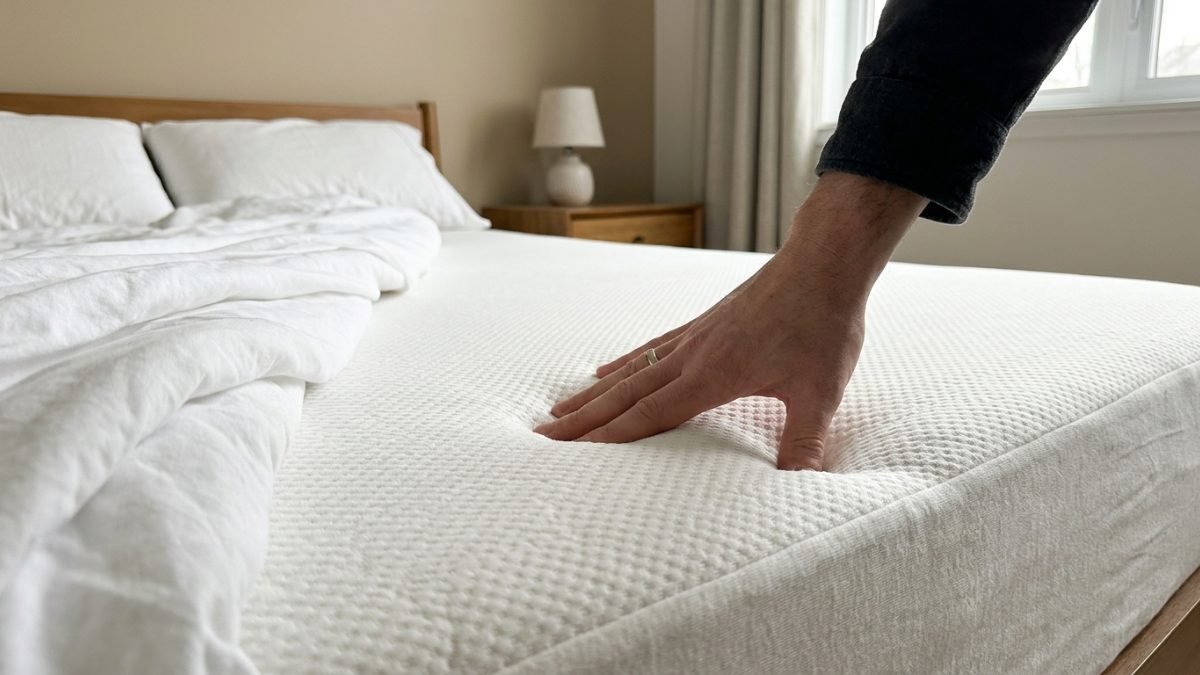
The best mattress for back pain in Australia is a medium-firm bed with a zoned support core, one that holds the hips level while letting the shoulders sink far enough to keep the spine in a straight line. A mattress that is uniformly hard does the opposite: it props up the pelvis and leaves a gap under the lower back.
Firmness is the wrong place to start. What sits under the comfort layer decides whether a sore back is supported or merely cushioned, and four support cores account for almost everything sold here: zoned pocket spring, latex hybrid, gel memory foam over springs, and high-density all-foam.
Depth is the quickest sorting tool. The beds built for back support here run from 22 cm to 35 cm, roughly 9 to 14 inches, and the deeper ones are deeper because they stack a comfort layer over a full spring core rather than thickening the foam. Zone count, edge reinforcement and the firmness rating the merchant publishes matter more than the name on the label.
Nothing plush made this list. The ten beds below all hold the lower back in a neutral line under load, and they are ordered by the support core that does it.
Quick Picks
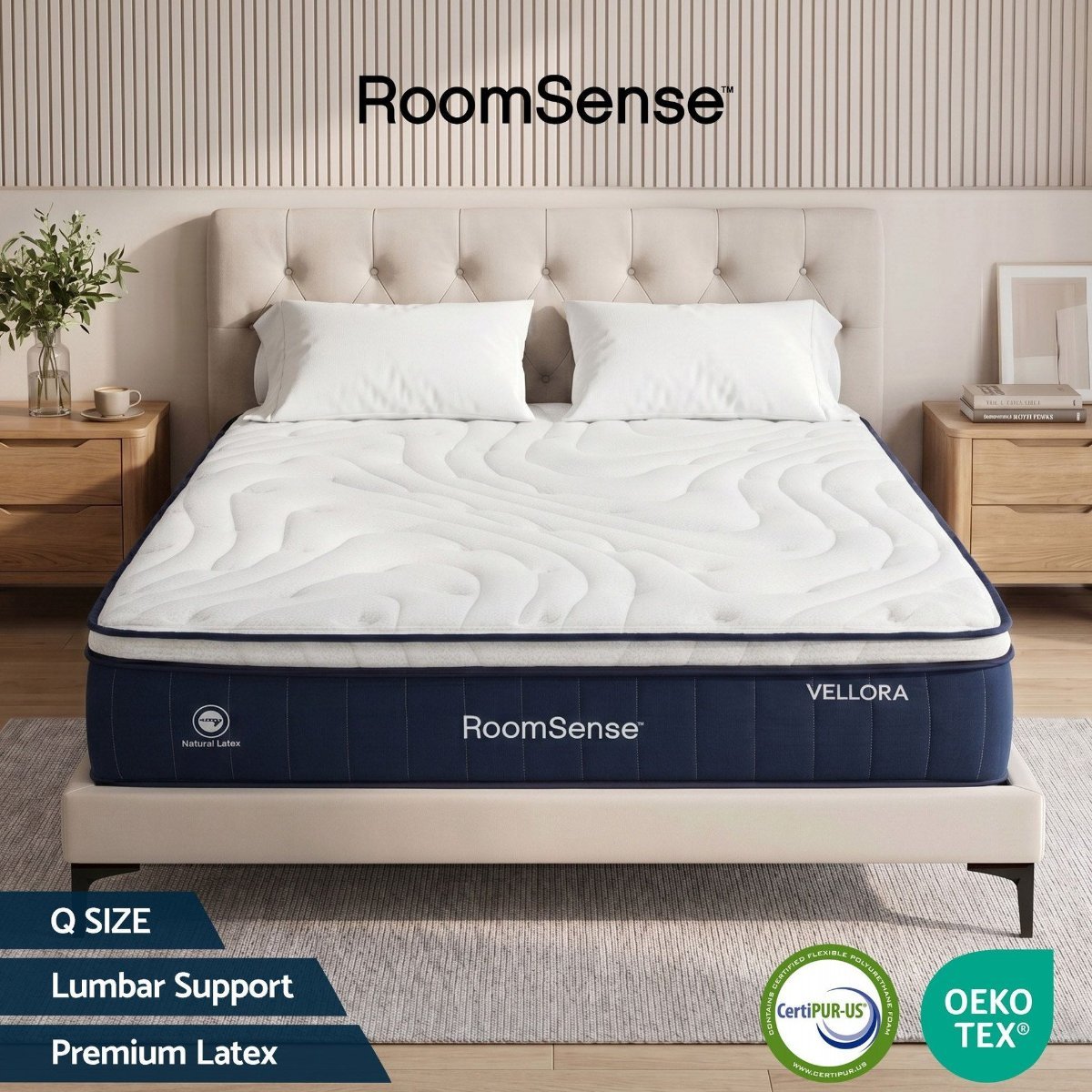
RoomSense Latex Lumbar Support Hybrid
A 70D latex layer over five-zone pocket springs, placed where the load actually concentrates.
CHECK CURRENT PRICE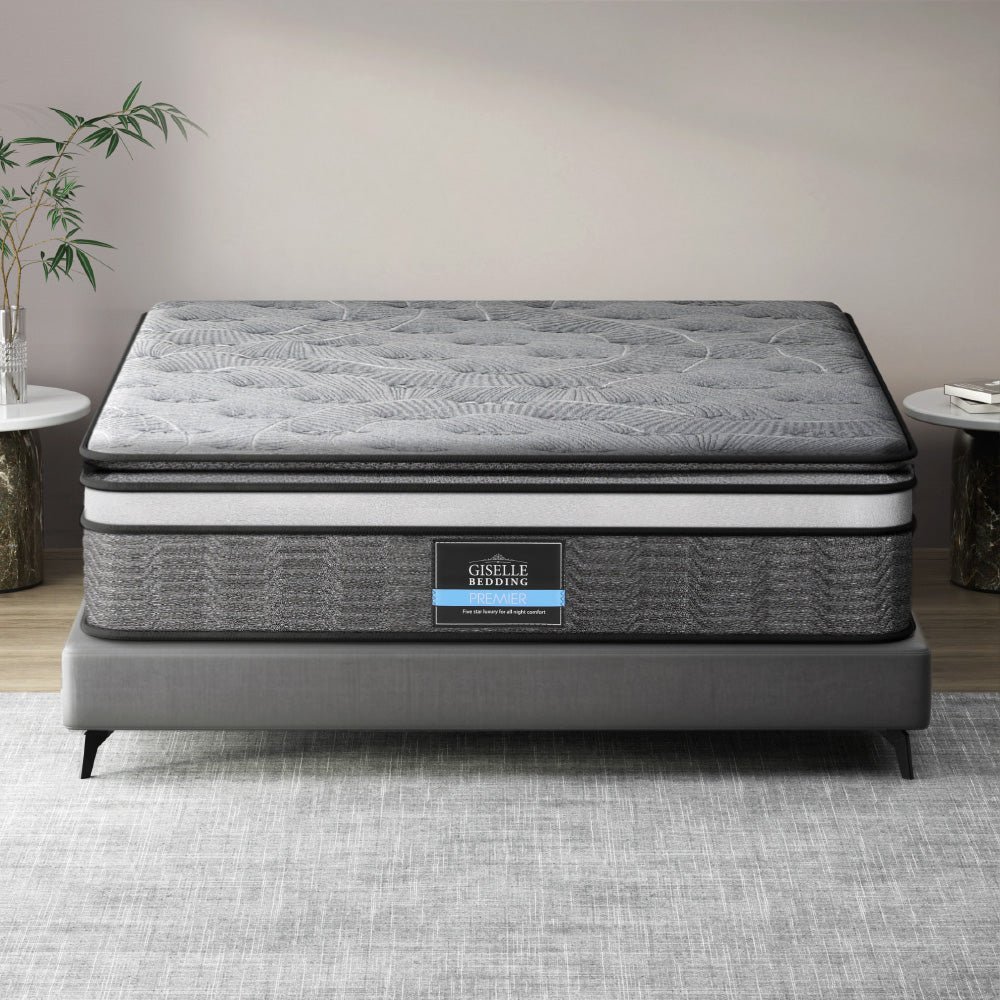
Giselle Bedding Double Layer Pocket Spring
Two spring banks stop the mid-body sag that wakes heavier sleepers with a sore back.
CHECK CURRENT PRICE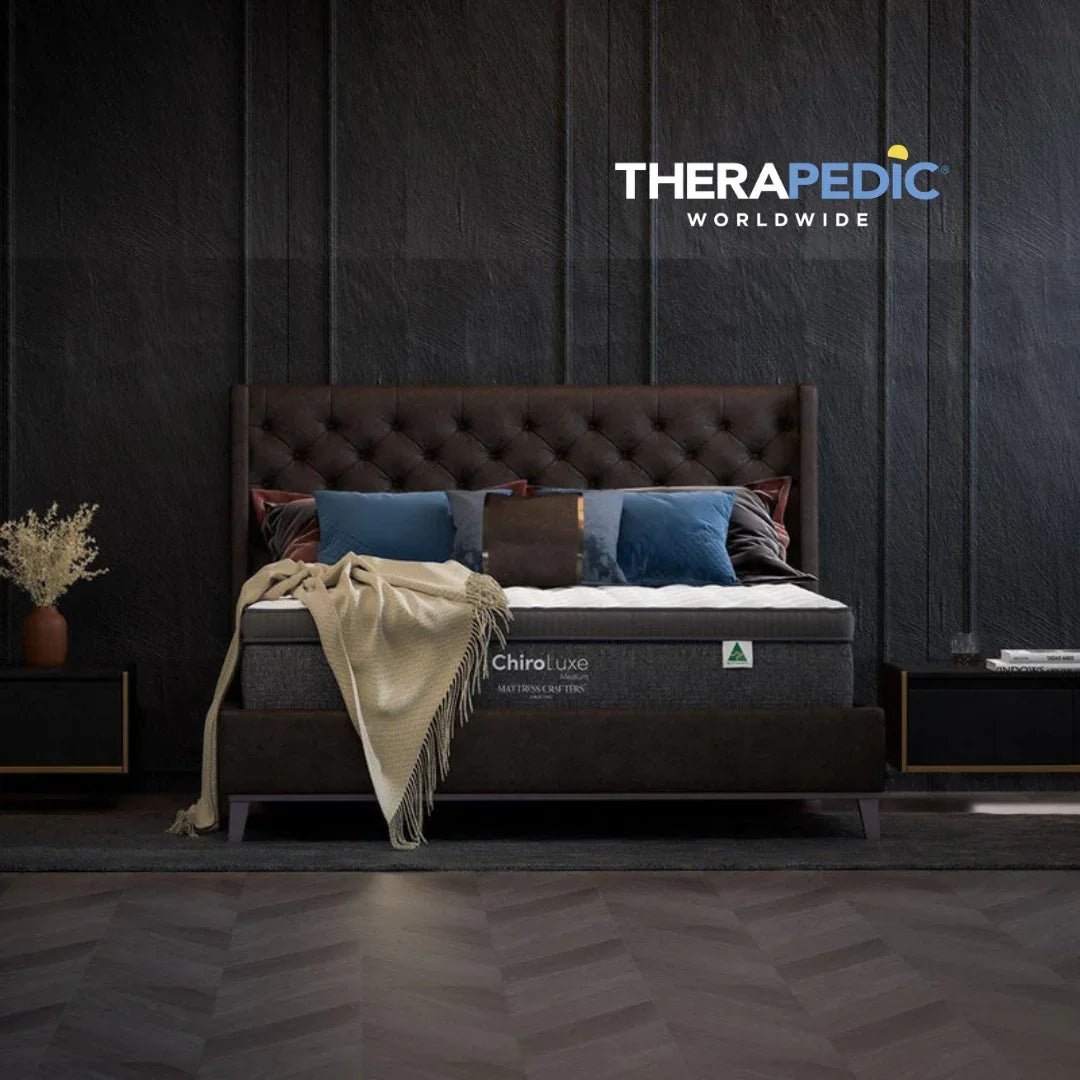
Therapedic Chiro Luxe
Zoned micro barrel coils, Australian made, with a 15 year warranty and a 120 night trial.
CHECK CURRENT PRICEBest Mattress for Back Pain in Australia Compared
| Product | Link | Type | Best For | Key Spec |
|---|---|---|---|---|
| Giselle Bedding Double Layer Pocket Spring | Check price | Double-layer pocket spring | Heavier sleepers and couples | 34 cm, 7 zones, 6.5 firmness |
| Giselle Bedding Extra Firm Pocket Spring | Check price | Pocket spring | Back and stomach sleepers | 32 cm, 5 zones, 8.0 firmness |
| Giselle Bedding Dual Layer Memory Foam | Check price | All-foam, 7-zone | Contouring without a spring feel | 25 cm, 7 zones, 7.0 firmness |
| RoomSense Orthopedic Firm Hybrid | Check price | Pocket spring hybrid | Firm support with low motion transfer | 26 cm, firm, boxed |
| RoomSense Latex Lumbar Support Hybrid | Check price | Latex hybrid, 5-zone | Lower back pain specifically | 30 cm, 5 zones, medium firm |
| Therapedic Chiro Luxe | Check price | Zoned micro-coil hybrid | Close-following spinal support | Micro barrel coils, 15 yr warranty |
| Therapedic Elevate Essential | Check price | Zoned pocket spring | Choosing an exact firmness level | 7 zones, 4 firmness options |
| Advwin Hybrid Memory Foam and Pocket Spring | Check price | Pocket spring hybrid | Spare rooms and first hybrids | 32 cm, medium-firm, edge support |
| Levitex Aether 7-Zone Extra Firm | Check price | Pocket spring, 7-zone | Getting in and out of bed | 33 cm, 7 zones, 8.0 firmness |
| Macoda Mattress | Check price | Hybrid, 5-zone | Readers unsure of their firmness | 31 cm, adjustable soft to firm |
1. Giselle Bedding Double Layer Pocket Spring – Best Double-Layer Spring Support
Two separate spring layers sit inside this 34 cm build, which is unusual at this level. The lower bank acts as a foundation while the upper 7-zone bank does the contouring, and both use 6-turn coils rather than the 4-turn coils common in single-layer beds. A bamboo knitted cover and a soft quilted top finish it.
The effect under load is a bed that resists mid-body sag rather than simply feeling hard. Weight concentrated at the hips meets the second spring bank before the first has fully compressed, so the pelvis stays level with the shoulders. Rated 6.5 out of 10 by the merchant, it lands in the medium-firm band without the board-like feel of the firmer models here.
The double layer adds depth and weight, so shifting it alone is awkward and it needs a base that can carry it. Couples of different weights get the most from this construction, since the foundation layer stops one sleeper rolling into the other’s dip.
Pros
- Two spring banks resist mid-body sag
- 7-zone upper layer with 6-turn coils
- Medium-firm at 6.5, usable for side sleepers
- Hypoallergenic and dust mite resistant
Cons
- Heavy and awkward to move alone
- Needs a base rated for the weight
Key specs: 34 cm depth, double-layer pocket spring, 7 zones, 6-turn coils, bamboo knitted cover, 5 year warranty
CHECK CURRENT PRICE2. Giselle Bedding Extra Firm Pocket Spring – Best Firm Pocket Spring
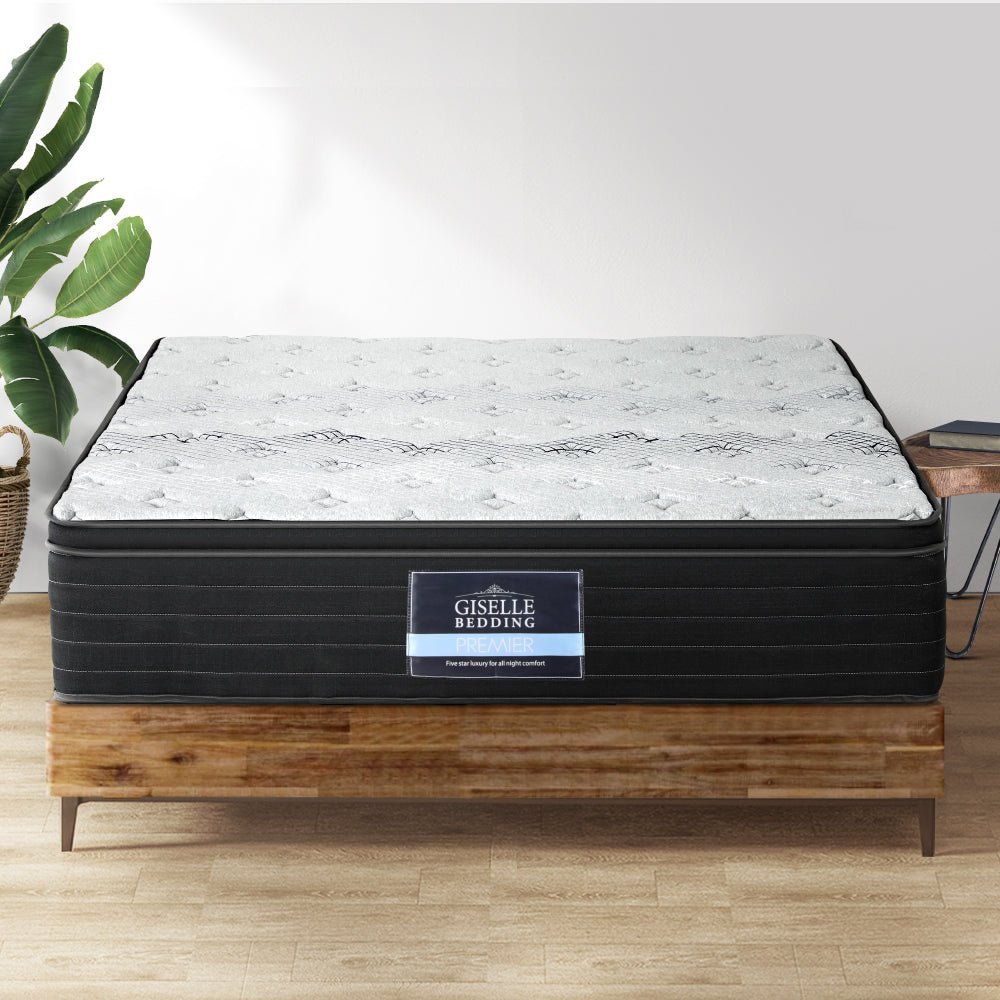
Rated 8.0 out of 10, this is one of the two firmest beds in the guide. A 5-zone pocket spring system with 6-turn coils sits under high-density foam and a Belgium knitted cover, across a 32 cm profile. There is no plush top layer to speak of.
Firmness here comes from the spring gauge rather than from thin padding over a hard slab, and that distinction is what separates a supportive firm bed from an uncomfortable one. The pelvis is held high, the lumbar curve keeps its shape, and the five zones still vary resistance down the body instead of presenting one uniform plane.
Lighter side sleepers will find it punishing at the shoulder and hip, where a hard surface creates pressure rather than relieving it. Back and stomach sleepers who wake stiff on a softer bed are the readers this is built for.
Pros
- Genuine 8.0 firmness from spring gauge, not padding
- 5-zone layout still varies support
- Holds the pelvis high for back sleepers
- Dust mite resistant knitted cover
Cons
- Too firm for lighter side sleepers
- Minimal comfort layer over the springs
Key specs: 32 cm depth, 5-zone pocket spring, 6-turn coils, high-density foam, Belgium knitted cover, 5 year warranty
CHECK CURRENT PRICE3. Giselle Bedding Dual Layer Memory Foam – Best Firm Memory Foam
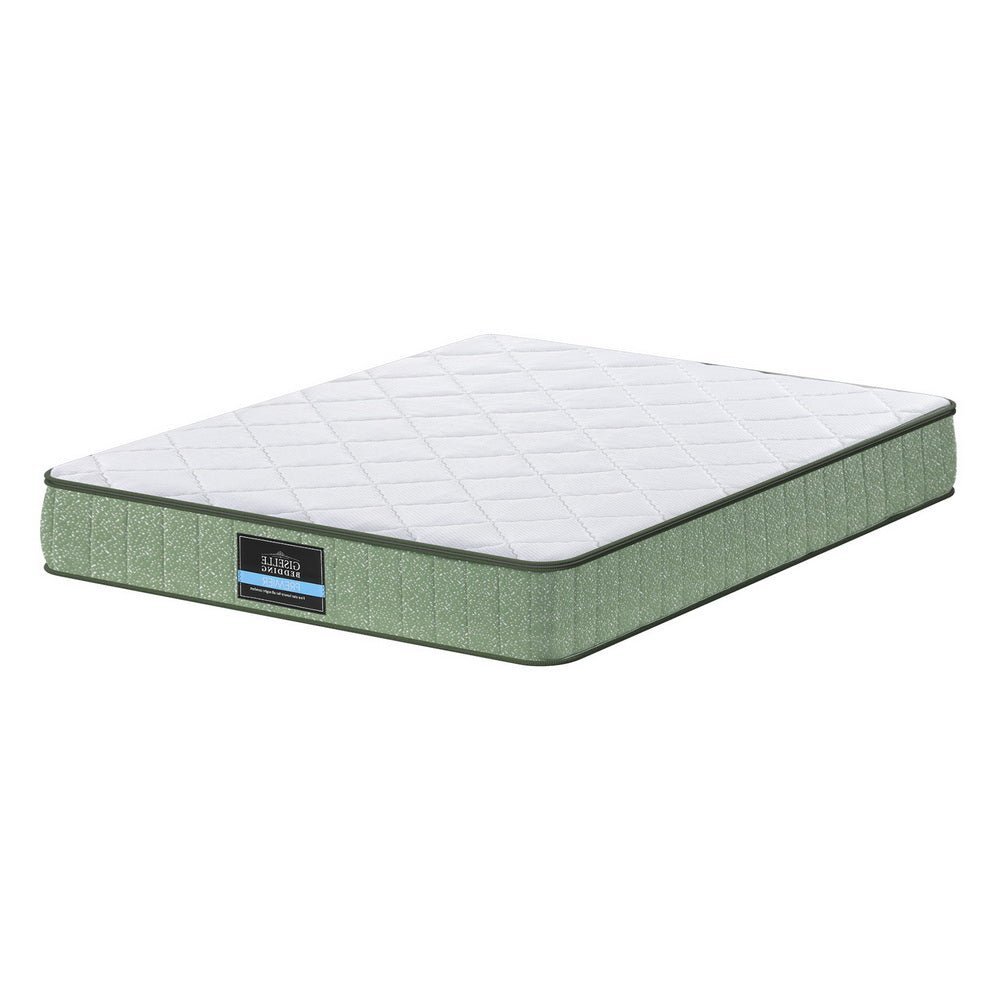
All-foam beds usually fail back sufferers by letting the hips sink, and this one answers that with a 7-zone CNC-cut charcoal core beneath a gel-infused memory foam layer. It runs 25 cm deep, has no springs at all, and the bamboo cover unzips for washing.
Rated 7.0 and genuinely firm for foam, it contours at the shoulders while the zoned base holds the middle of the body up. Certification is the strongest here, carrying CertiPUR, CertiPUR-US, OEKO-Tex and SGS marks, which matters if foam odour has put you off this construction before.
Foam traps more heat than any spring bed in this guide and the cooling gel only partly offsets it. Pick it if you want contouring without a spring feel, or if your bed base cannot take the weight of a deep hybrid.
Pros
- 7-zone cut core resists hip sink
- Four separate foam certifications
- Zip-off washable bamboo cover
- Lighter than the hybrid builds here
Cons
- Runs warmer than every spring bed listed
- Only listed in one size
Key specs: 25 cm depth, gel memory foam over 7-zone charcoal core, no springs, CertiPUR-US and OEKO-Tex certified, 5 year warranty
CHECK CURRENT PRICE4. RoomSense Orthopedic Firm Hybrid – Best Orthopaedic Build
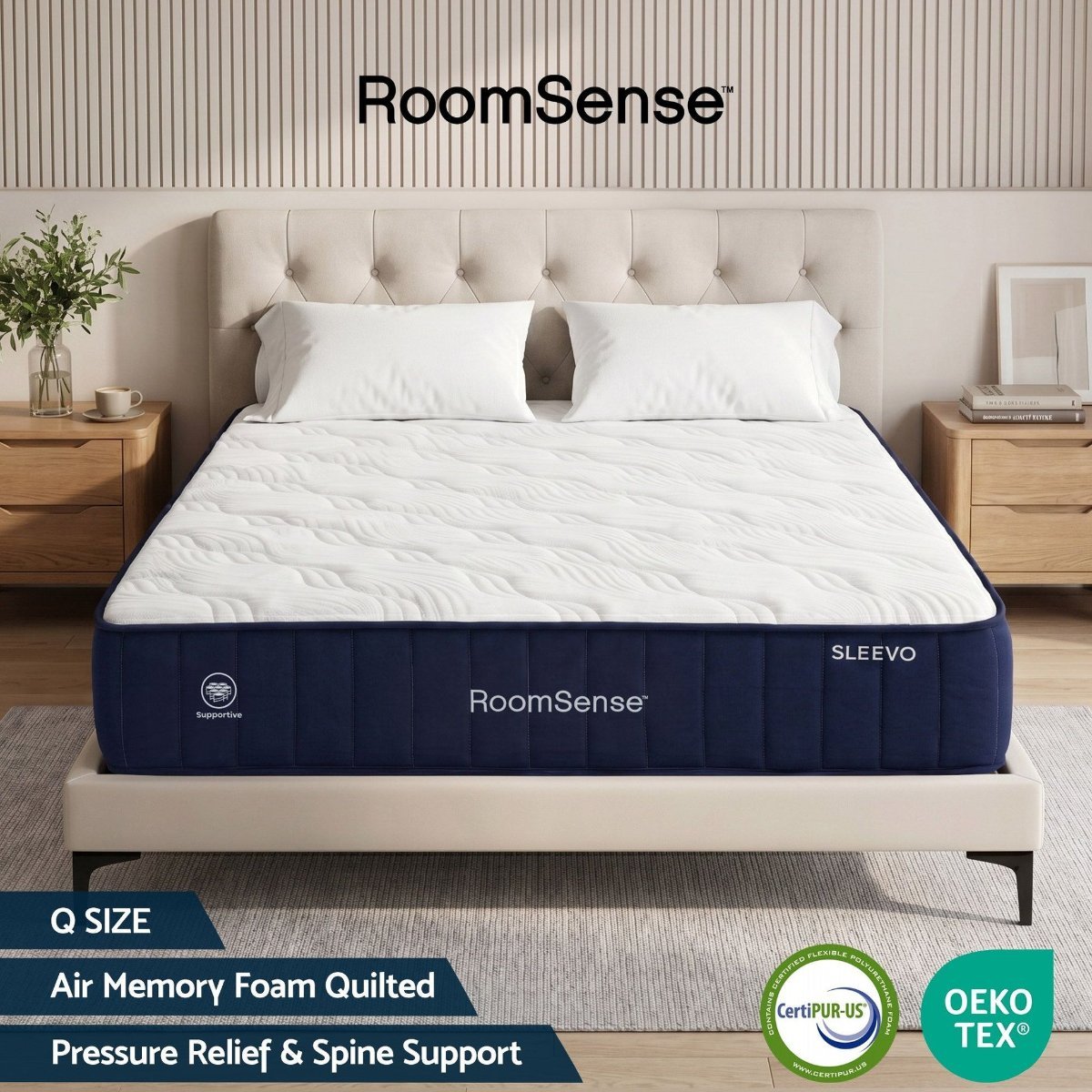
The name states the brief plainly, and the build behind it is a firm independent pocket spring core with an air memory foam comfort layer, 26 cm deep under a soft knit cover. It arrives roll-packed and needs no assembly.
Resistance to hip sink is the entire design intent and it delivers that without complication. Motion transfer is close to nil, so a partner turning over does not translate into a jolt through the lower back, and the thin foam layer takes the edge off shoulder pressure without introducing sink.
No zoning is stated, so support runs even along the body rather than varied, making this a simpler bed than the 30 cm model below. Rental properties and guest rooms suit it well, as does a reader who wants firm support without paying for a zoned system.
Pros
- Firm pocket spring core resists hip sink
- Near-zero motion transfer
- CertiPUR-US certified foam
- Roll-packed, no assembly needed
Cons
- No stated zoning
- One year warranty is short for this list
Key specs: 26 cm depth, independent pocket springs, air memory foam layer, CertiPUR-US certified, 1 year warranty, 30 day guarantee
CHECK CURRENT PRICE5. RoomSense Latex Lumbar Support Hybrid – Best Lumbar Zoning
A dedicated 70D latex layer sits over 5-zone pocket springs here, with air memory foam above it, across a 30 cm profile. The latex is the point of the design rather than a line on the label, and it is the component doing the lumbar work.
Latex pushes back where memory foam gives way, so the firmer middle zones lift the pelvis instead of slowly yielding under it through the night. Medium firm is the band most often recommended for chronic lower back pain, and this sits squarely in it while keeping enough surface give for side sleeping.
One year of warranty is short next to the 10 and 15 year terms further down this list. Anyone whose pain concentrates in the lower back rather than between the shoulders should start here.
Pros
- Dedicated latex layer at the lumbar zone
- 5-zone spring core underneath
- Medium firm, the band most recommended
- Zero motion transfer, boxed delivery
Cons
- One year warranty
- No long comfort trial
Key specs: 30 cm depth, 5-zone pocket springs, 70D latex layer, air memory foam, CertiPUR-US certified, 1 year warranty
CHECK CURRENT PRICE6. Therapedic Chiro Luxe – Best Chiropractic Micro-Coil
Honeycomb zoned micro barrel coils replace conventional pocket springs in this one, packed far more densely so support varies in smaller increments down the body. Pressure-redistribution and airflow layers sit above, with box-style edge reinforcement around the perimeter. It is made in Australia.
Denser coil spacing shows up as support that follows the body outline closely rather than in five or seven broad bands. Shoulders drop, hips hold, and the transition between the two is gradual instead of stepped. The range carries an endorsement from the Australian Spinal Research Foundation.
Three firmness variants are offered and only the firm one belongs in this context. A 15 year warranty and 120 night comfort trial back it, the longest terms in this guide, which takes most of the risk out of choosing firmness wrong.
Pros
- Micro barrel coils follow the body closely
- 15 year warranty, 120 night trial
- Australian made
- Reinforced box edge support
Cons
- Depth not published by the merchant
- Firmness must be selected correctly at order
Key specs: Honeycomb zoned micro barrel coil unit, pressure-redistribution and airflow layers, box edge support, Australian made, 15 year warranty, 120 night trial
CHECK CURRENT PRICE7. Therapedic Elevate Essential – Best Firmness Choice
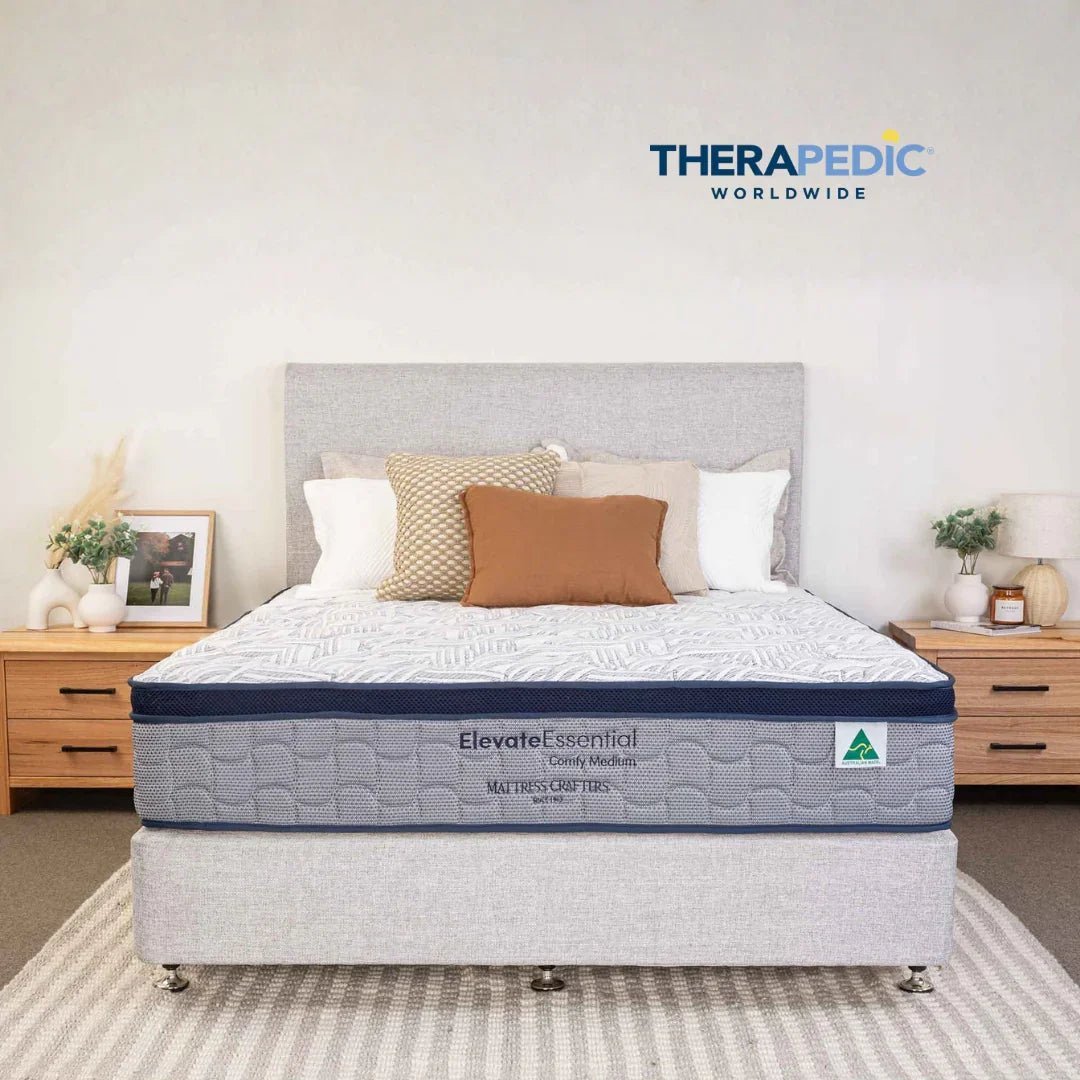
Four firmness levels are available on the same bed, running from Super Firm through to Cushion Plush, built on a seven-zone support system with high-density comfort layers. It is the entry point to the Australian-made Therapedic range.
Seven zones mean support steps down the body rather than holding one line, and high-density foam is what keeps that behaviour intact after a few years. Cheaper comfort layers compress out and take the zoning with them, which is why a bed that felt supportive at purchase quietly stops being so.
Depth is not published, so it cannot be compared like for like against the 30 cm and 34 cm builds above. This suits a reader who already knows which firmness they need and wants that exact level rather than a compromise.
Pros
- Four firmness levels including Super Firm
- Seven-zone support system
- High-density comfort layers resist compression
- Australian made
Cons
- Depth not published
- Fewer comfort layers than the dearer models
Key specs: Seven-zone support system, high-density comfort layers, breathable construction, 7 sizes and 4 firmness options, Australian made
CHECK CURRENT PRICE8. Advwin Hybrid Memory Foam and Pocket Spring – Best Budget Hybrid
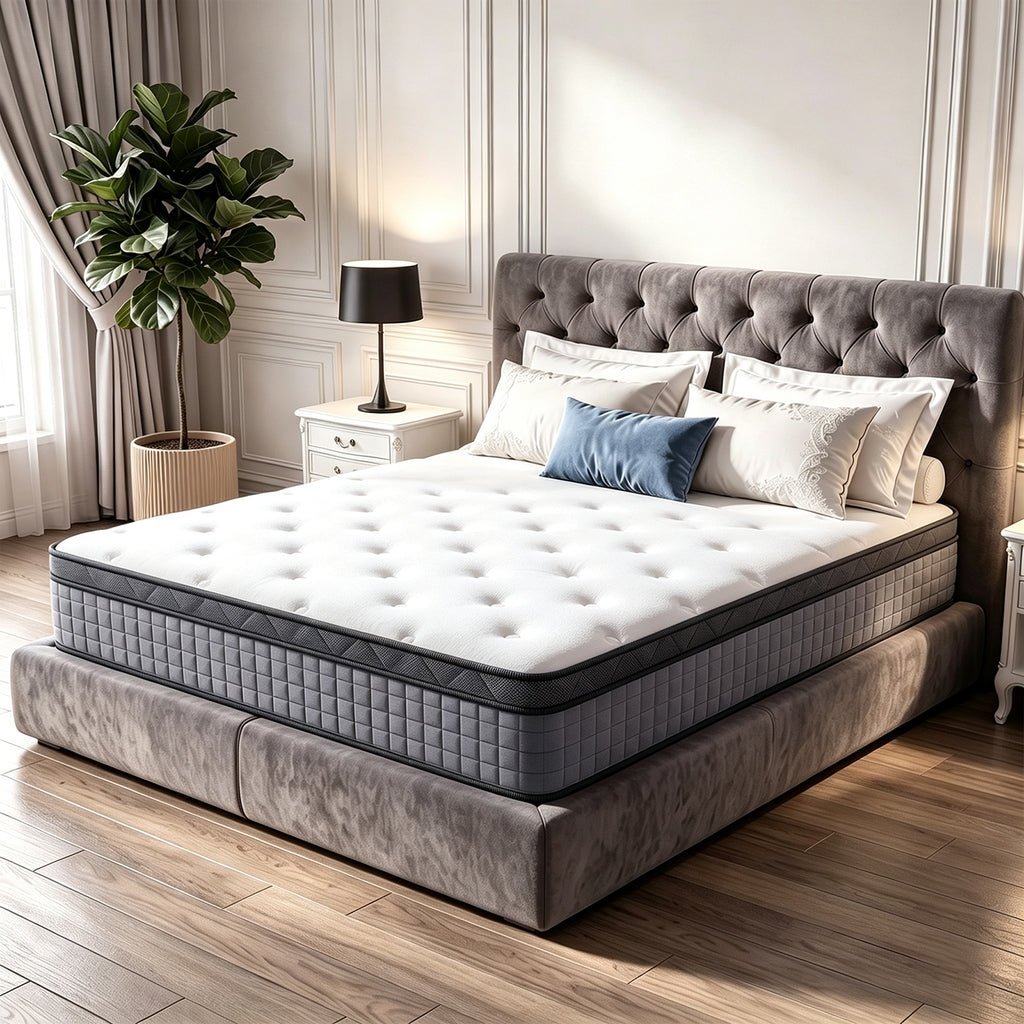
Pocket springs, memory foam and a high-resilience foam layer stack into 32 cm here, with reinforced edges, temperature-regulating cotton and a breathable side mesh. OEKO-TEX certification covers the fabrics.
Point-specific spring support keeps the lumbar region from dropping while the foam above cushions hips and shoulders, which is the standard medium-firm recipe executed at the lowest outlay in this guide. Reinforced edges hold shape under a seated load, so getting up does not involve rolling off a collapsing perimeter.
A one year warranty and a 30 day return window are the trade-off for that outlay. Consider it for a spare room, a first share-house bed, or as a way to test whether a firmer hybrid actually helps your back before committing to a long-warranty model.
Pros
- Reinforced edge support at this level
- 32 cm hybrid build
- OEKO-TEX certified fabrics
- Motion isolation between sleepers
Cons
- One year warranty
- 30 day return window is short for a mattress
Key specs: 32 cm depth, pocket springs with memory foam and high-resilience foam, reinforced edges, OEKO-TEX certified, 1 year warranty, 30 day returns
CHECK CURRENT PRICE9. Levitex Aether 7-Zone Extra Firm – Best Edge Support
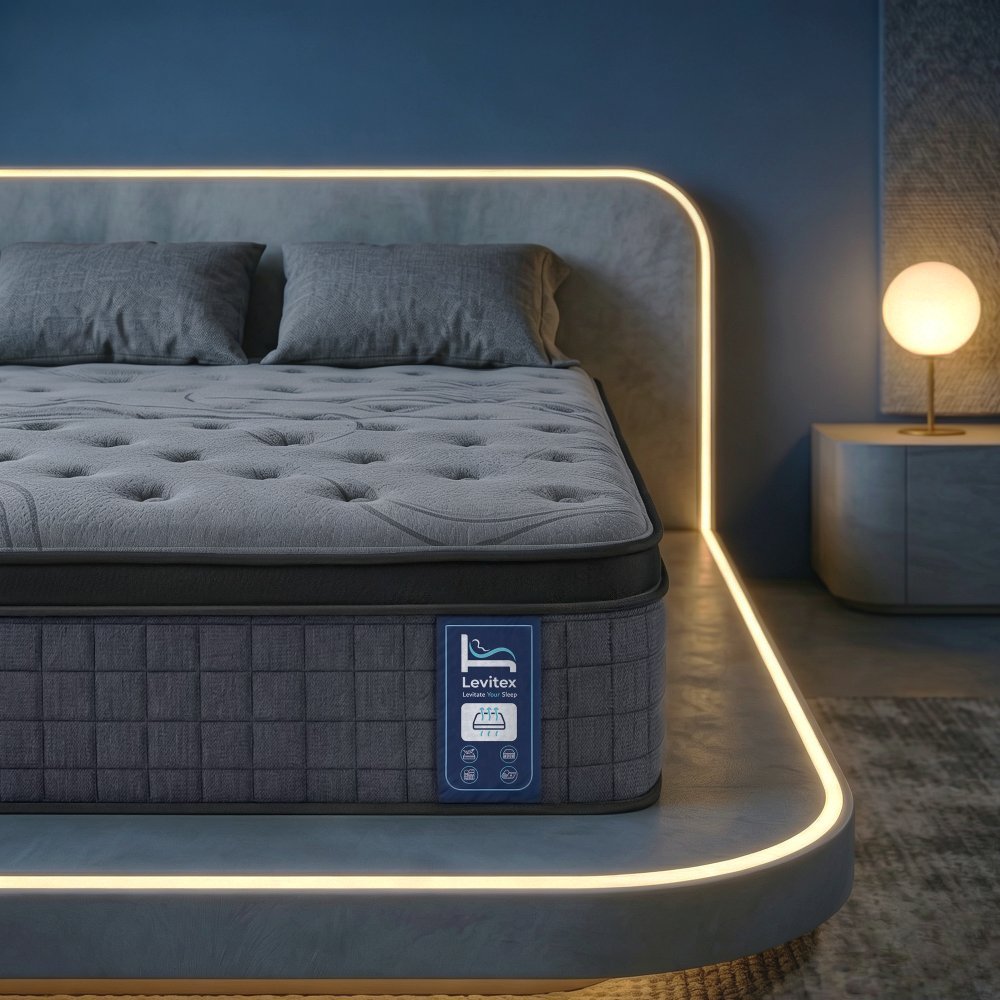
Hardened springs run in two rows down each long side of this 33 cm bed, which is what separates it from everything else here. Inside, 27 cm of high-compress-rate pocket springs sit in a seven-zone layout beneath a 3 cm egg-crate foam layer.
That thin comfort layer means almost no sink, and at a rated 8.0 the bed is firmly in extra-firm territory. The dual-row edge does real work for anyone in acute pain: sitting on the side to dress does not tip you into a collapsing perimeter, and the usable sleeping surface extends much closer to the edge.
Three centimetres of foam is not much cushioning and side sleepers will feel the springs at the shoulder. Back sleepers who want the firmest support available, and anyone who dreads the moment of getting out of bed, are the fit.
Pros
- Dual-row hardened edge springs
- 27 cm spring core in seven zones
- Fiberglass-free, CertiPUR-US certified
- Usable surface extends to the edge
Cons
- Only 3 cm of comfort foam
- Too firm for most side sleepers
Key specs: 33 cm depth, 27 cm 7-zone pocket springs, 3 cm egg-crate foam, dual-row edge support, CertiPUR-US certified, 5 year warranty
CHECK CURRENT PRICE10. Macoda Mattress – Best Adjustable Firmness
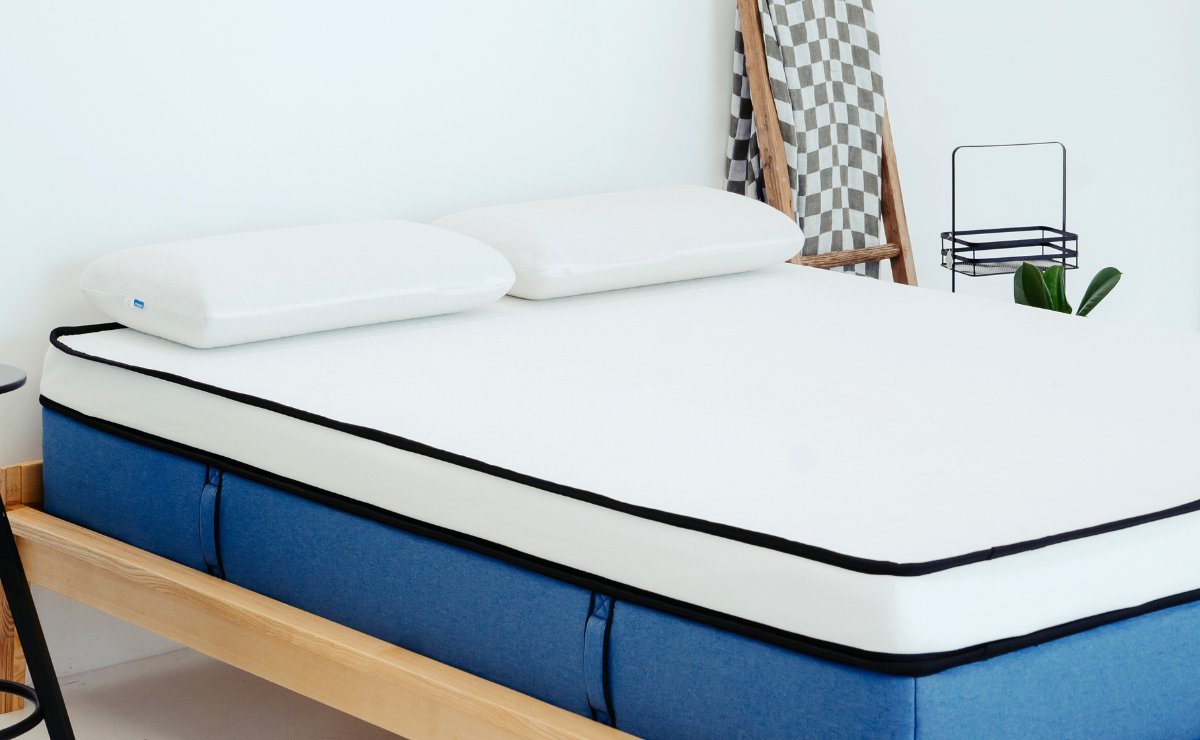
An unzip-and-flip comfort layer lets this one be reconfigured between soft, medium and firm after it arrives. Six layers make up the 31 cm profile, including graphene-infused memory foam, a high-density transition foam and a five-zone pocket spring unit with reinforced solid edges.
Placing transition foam between the memory foam and the springs is what stops the hips falling through, the usual failure of foam-over-spring beds. Sleepers who guess wrong can change the firmness rather than return the bed, which is the practical advantage when pain makes firmness hard to judge in a showroom.
Only one model exists in the range, so there is no firmer or softer alternative to move to if adjustment is not enough. A 10 year warranty and 100 night trial apply, making it the pick for readers who genuinely cannot tell whether medium or firm will suit them.
Pros
- Firmness adjustable after delivery
- Transition foam stops hip sink
- 10 year warranty and 100 night trial
- Five-zone spring core with solid edges
Cons
- Single model, no alternative in the range
- Graphene foam runs warmer than latex
Key specs: 31 cm depth, six layers, graphene-infused memory foam, high-density transition foam, five-zone pocket springs, 10 year warranty, 100 night trial
CHECK CURRENT PRICEHow to Choose a Mattress for Back Pain
Start with the support core, not the surface feel. A showroom lie-down tells you about the top few centimetres and almost nothing about what happens at hour six. The spring or foam structure underneath decides whether your hips stay level, so read the core description before the comfort layer.
Medium-firm is the default for a reason. Guidance for chronic lower back pain points to the medium-firm band rather than the hardest bed available, because a surface that is too rigid creates pressure at the shoulder and hip and pushes the spine out of line in the other direction. The merchants here publish firmness on a ten-point scale, and 6.5 to 7.5 covers most back sufferers.
Count the zones and check where they fall. Five and seven zone systems both work, but the useful question is whether the firmer band sits under the pelvis, which is where most of the body weight concentrates. A bed described as zoned with no detail on the layout is worth less than a plain firm bed with a good spring gauge.
Edge support matters more than it sounds. If getting out of bed is the worst moment of the day, a reinforced perimeter changes that specific moment. Dual-row and box-style edges hold their shape under a seated load rather than folding, and they widen the part of the bed you can actually sleep on.
A mattress only covers one part of the day. Eight supported hours can be undone by eight unsupported ones at a desk, and the guide to ergonomic office chairs applies the same alignment reasoning to seating. Where the problem is muscular rather than postural, massage chairs work on tension directly instead.
Read the trial and the warranty as one thing. A long warranty covers manufacturing faults, not a bed that simply does not suit your back, and only a comfort trial covers that. The terms here range from 30 days to 120 nights. Separately, Australian Consumer Law guarantees apply to every mattress sold here regardless of what the warranty document says, and a bed that sags well before a reasonable lifespan is a fault under that law.
Frequently Asked Questions
What firmness is best for a mattress for back pain?
Medium-firm suits most people with chronic lower back pain. On the ten-point scales the merchants in this guide publish, that means roughly 6.5 to 7.5. Firmer than that tends to create shoulder and hip pressure, and softer than that lets the pelvis drop out of alignment.
Is memory foam or a spring mattress better for back pain?
A zoned spring core is the safer default because it resists hip sink over a full night. Memory foam works when it sits over a firm zoned base rather than directly on a soft one, which is what separates the foam bed in this guide from cheaper all-foam models.
Can a new mattress make back pain worse at first?
It can for the first few weeks. Moving from a sagging bed to a supportive one changes the position your spine holds overnight, and the muscles adapting to that can ache. This is why a comfort trial measured in weeks is more useful than a return window measured in days.
How long does a mattress take to help back pain?
Most people notice a difference within two to four weeks. If pain is unchanged or worse after a full trial period, the firmness is likely wrong rather than the mattress being faulty, which is where an adjustable comfort layer or a multi-firmness range helps.
Does mattress depth matter for back support?
Depth matters only for what it contains. A 34 cm bed that stacks comfort foam over a full spring core supports differently to a 34 cm bed that is mostly foam. Read the layer breakdown rather than the total measurement.
Should a mattress for back pain be replaced more often?
Support fails before the mattress looks worn, so judge it by feel rather than appearance. If you wake stiff and the surface shows a visible dip, the comfort layer has compressed and the zoning underneath is no longer doing its job.
The Verdict
Three different problems produce three different answers here. For pain concentrated in the lower back, the RoomSense Latex Lumbar Support Hybrid puts a resilient latex layer exactly where the load sits and keeps it there rather than yielding overnight. For a shared bed with mismatched weights, the Giselle Bedding Double Layer Pocket Spring is the one that stops one sleeper’s dip becoming the other’s problem. And where firmness itself is the open question, the Macoda Mattress lets the answer be changed after delivery instead of guessed at the point of order.