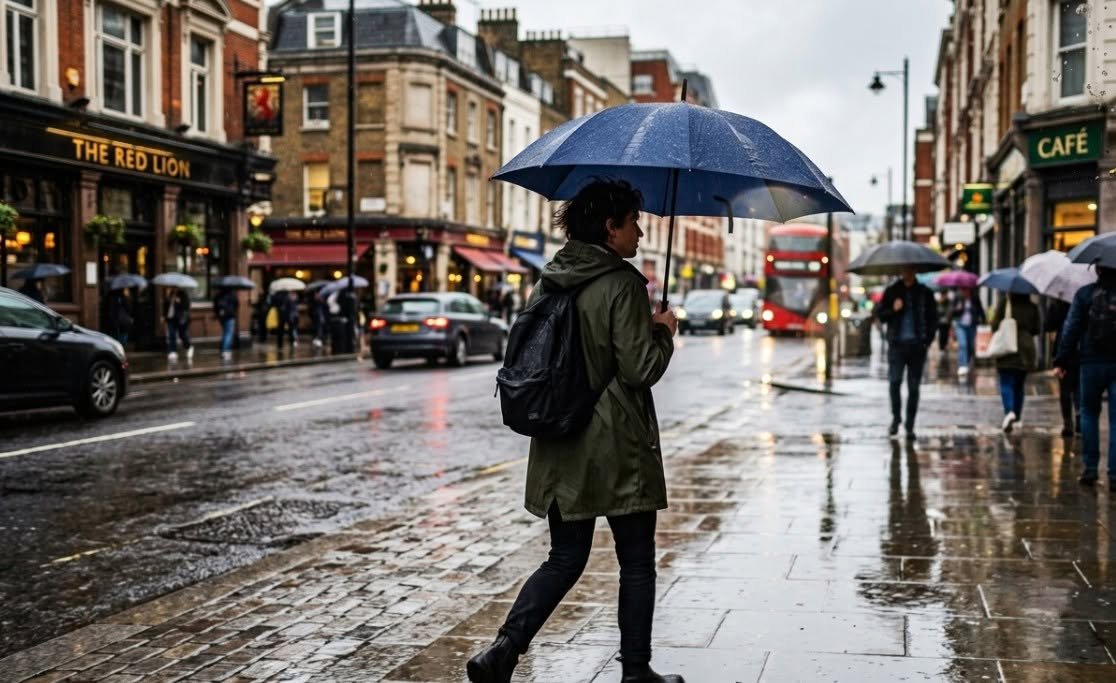
An umbrella is a portable canopy on a folding frame that you carry to block rain or sun, opening from a compact folded shaft into a domed cover held up by ribs radiating out from a central pole. Every umbrella does this one job; what changes between models is how many ribs it has, how the canopy vents wind instead of catching it, and whether it opens with a manual push or a single button. For anyone chasing the best umbrella in Australia this year, the honest starting point is that a cheap servo umbrella and a premium imported one solve the same basic problem – the difference shows up the first time a real gust hits it.
Three designs cover almost everything worth buying. Compact folding umbrellas collapse down to about 25-30 cm and fit in a bag or glovebox, trading canopy size for portability. Full-size stick and golf umbrellas open wider – sometimes wide enough for two people – at the cost of taking up a full hand and not fitting in most bags. Reinforced windproof designs add a vented double canopy or extra ribs specifically so a gust flows through the fabric instead of turning the whole thing inside out.
The spec that actually separates a good umbrella from a bin-bound one after one storm is rib count and rated wind resistance, because that’s what decides whether it survives a real gust or comes back from the car park looking like a dead spider. Across the six umbrellas in this list, rib counts run from 8 up to 10, and wind ratings run from a vague “windproof” claim up to a specific, lab-tested 115 km/h – worth checking for, because most budget umbrellas don’t actually publish a number. The spec most buyers ignore until it’s too late is UPF rating, which matters as much for an Australian summer as the rain rating does for winter.
This list runs to six umbrellas: three windproof designs sourced from an Australian general retailer, a dedicated UV-blocking pick for the months rain isn’t the main problem, a premium imported design engineered specifically not to turn inside out, and a compact pick built for a school bag instead of a briefcase. Budget to premium, with one clear splurge for anyone who’s honestly tired of buying a new umbrella every winter.
Quick Picks
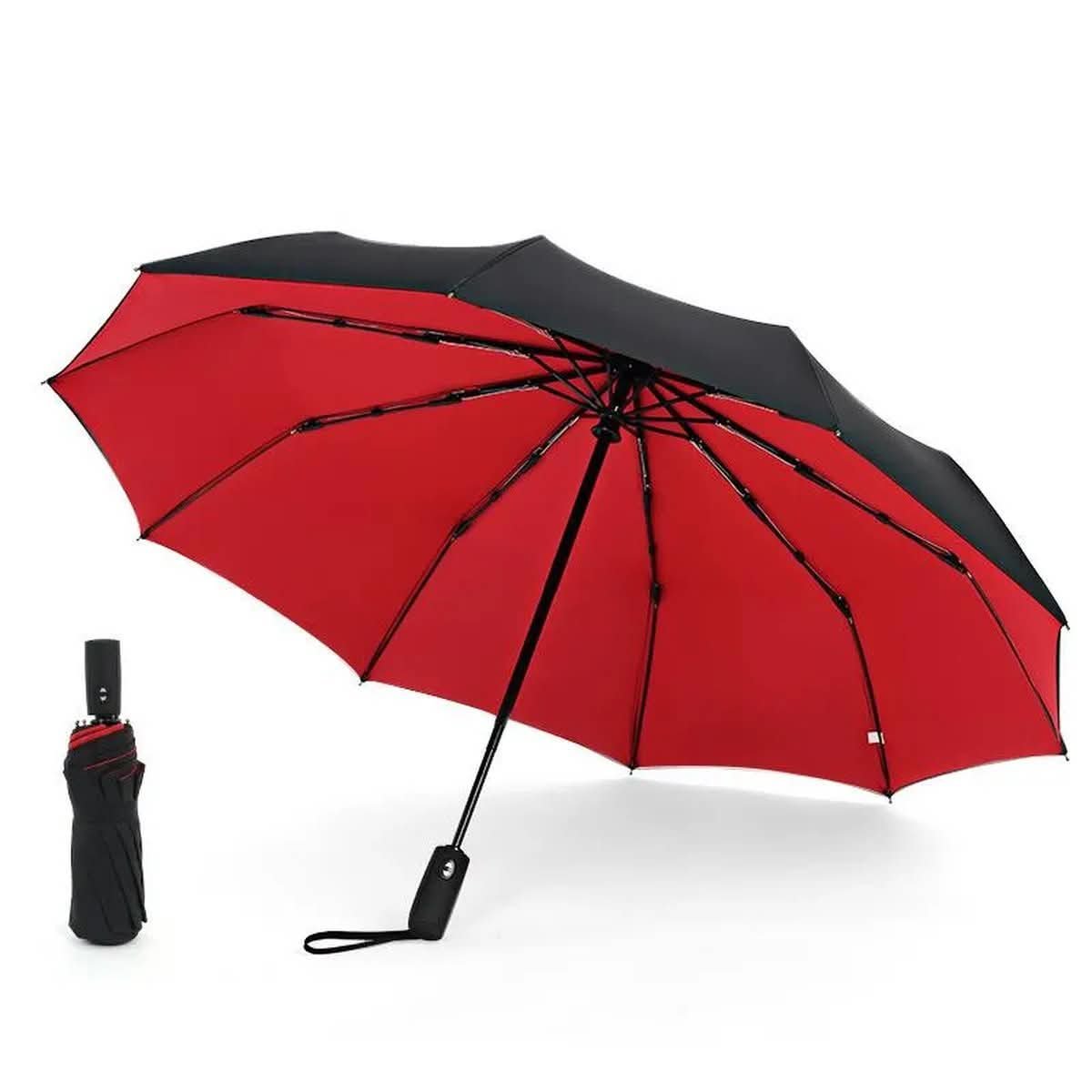
Double Layer Windproof Umbrella
A vented double canopy and a 42-inch spread wide enough to share on the walk from the car.
CHECK CURRENT PRICE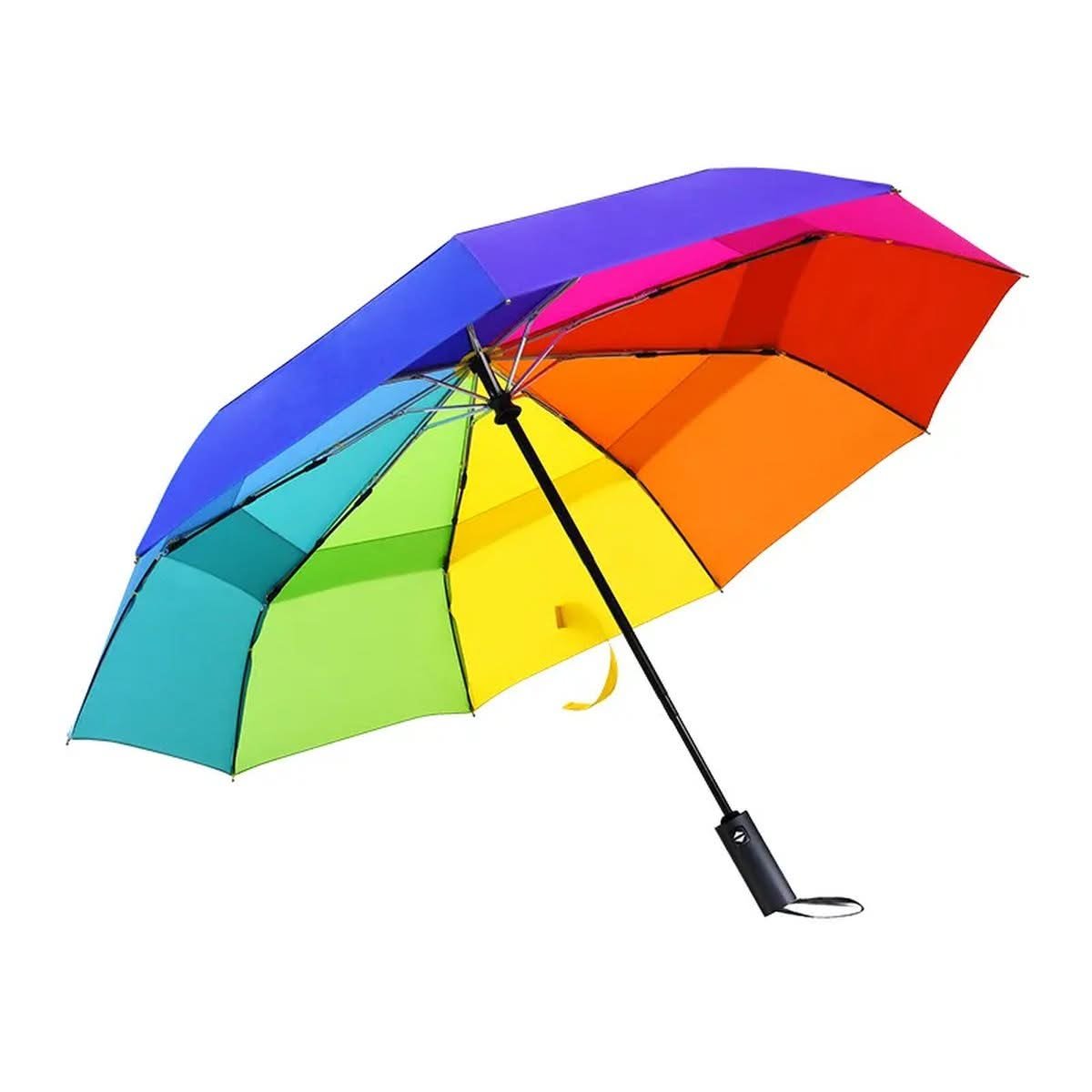
Compact Travel Windproof Umbrella
Folds small enough for a work bag and opens with one button when the rain starts without warning.
CHECK CURRENT PRICE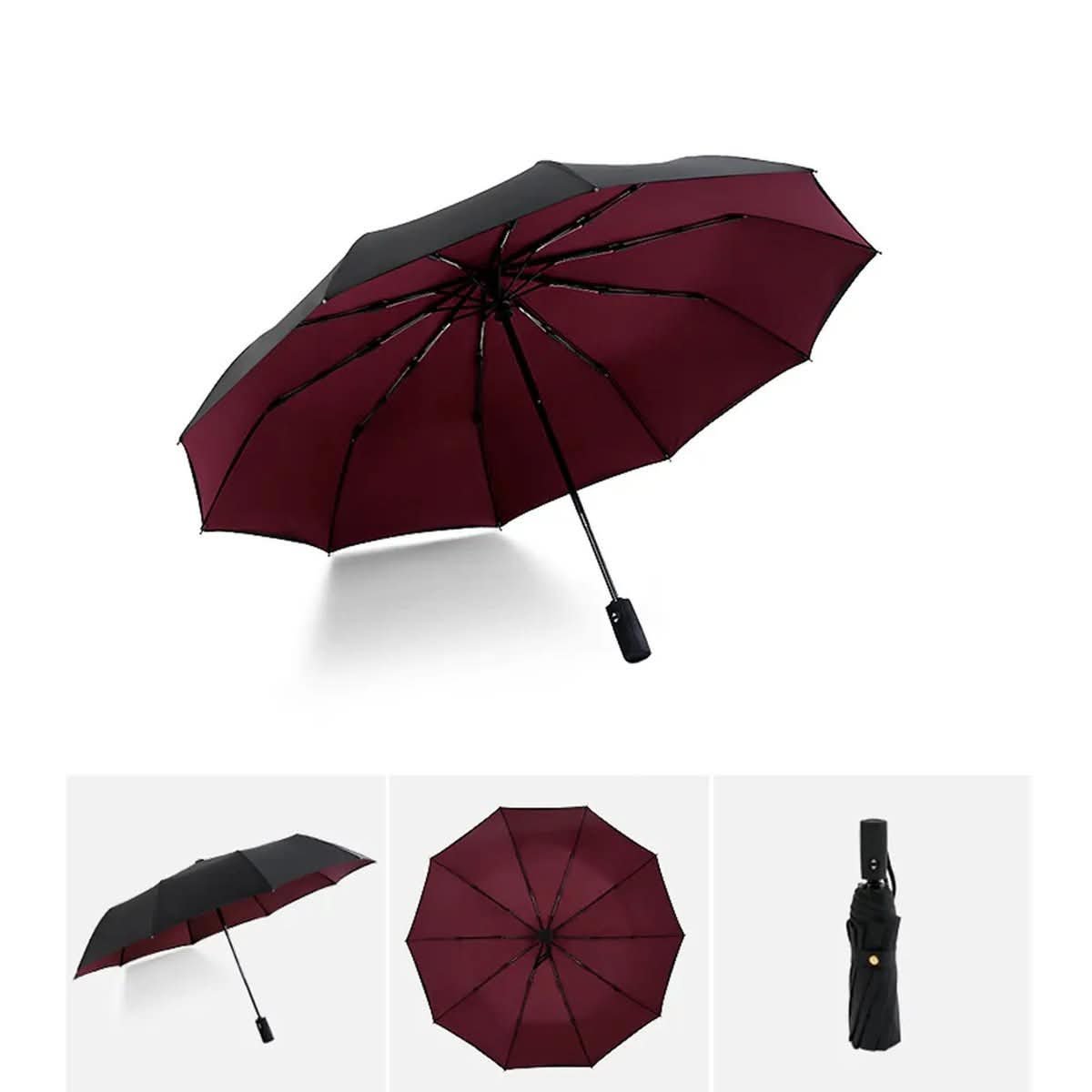
Large Golf-Style Windproof Umbrella
Nine fiberglass ribs and a Teflon-coated canopy built for a golf buggy, a ute cab, or anyone who hates ducking under a small canopy.
CHECK CURRENT PRICEBest Umbrella Australia Compared
| Product | Link | Type | Best For | Key Spec |
|---|---|---|---|---|
| Double Layer Windproof Umbrella | Check price | Double-canopy stick | Sheltering two people | 42-inch canopy, vented double layer |
| Compact Travel Windproof Umbrella | Check price | Compact folding | Everyday carry | Auto open/close, purse-sized |
| Large Golf-Style Windproof Umbrella | Check price | Golf / stick umbrella | Large coverage | 9 fiberglass ribs, Teflon coating |
| ZOMAKE UPF50+ UV Protection Umbrella | Check price | Compact folding | UV and sun protection | Blocks 99% UVA/UVB, 9 ribs |
| Blunt Metro Travel Umbrella | Check price | Premium compact | Durability and daily use | Wind-rated 115 km/h, modular repair |
| Duck Handle Umbrella | Check price | Compact folding | School runs and gifting | Auto open/close, 46-inch canopy |
How We Picked
We swept general Australian retailers listed with Commission Factory for umbrellas actually built for carrying, not the large cantilever and market designs that dominate most outdoor sections – those get their own dedicated guide. Three windproof designs, all in stock this year, came from the same general retailer’s rain and travel accessories range.
For UV protection and premium durability – two areas local retailers didn’t stock in any real depth – we added well-reviewed Amazon AU picks and checked the brand history against ProductReview.com.au listings and Cancer Council Australia’s sun-safety guidance. We don’t physically stress-test every umbrella ourselves. Selections are informed by affiliate partnerships, but commission never overrides the ranking – a lower-commission pick beats a higher one whenever the reviews or the stock situation say it’s the better umbrella.
1. Double Layer Windproof Umbrella – Best for Sheltering Two People
This one’s built around a double canopy – an inner layer and a vented outer layer that let wind pass through the gap between them instead of ballooning the whole umbrella inside out. At 42 inches across when open, it’s properly sized for two people walking close together, not just one person and their bag.
Folded, it drops to about 11 inches and 0.9lbs, light enough to live in a car door pocket instead of committing to a permanent spot in a bag – useful if you’re renting a weatherboard with no carport and the walk from the car is the wettest part of the trip. The auto-open button matters more than it sounds like when you’re stepping out of a car in the rain with your hands full of shopping and a toddler.
It sits in the mid-range for this category in Australia, and the trade-off for the double-canopy design is a slightly bulkier folded profile than the compact pick below – not something you’d want to carry daily in a small handbag, but a reasonable size for a car or an office drawer. The carrying case is a nice touch that a lot of umbrellas at this price skip entirely.
Pros
- Double canopy actually resists flipping inside out in gusty conditions
- 42-inch spread comfortably covers two people
- Comes with a carrying case, unlike most umbrellas at this price
Cons
- Bulkier folded than a true pocket umbrella, so it suits a car or bag instead of a jacket pocket
- The auto-open button needs a firm push – a couple of light presses won’t trigger it
Key specs: 42-inch canopy, double-layer vented design, auto open, folds to approx. 11 inches, 0.9lbs, carrying case included.
CHECK CURRENT PRICE2. Compact Travel Windproof Umbrella – Best Everyday Compact Pick
This is the one to actually keep in your bag instead of promise yourself you’ll bring next time. It’s a straightforward auto open-close compact, sized to disappear into a work bag or a car glovebox, and it comes in a handful of colours instead of just black.
At this price, it’s the most affordable umbrella in this list, and the honest trade-off is that it doesn’t come with a published wind rating the way the premium pick further down does – it’ll handle a normal blustery day on the way to the train station, but treat “windproof” on the box as a general claim instead of a lab-tested number. For most people’s actual use case (a five-minute dash between a car park and a building) that’s more than enough.
Pros
- Cheapest umbrella in this list that still auto-opens and closes
- Compact enough to actually carry daily
- Available in several colours
Cons
- No published wind-speed rating, so treat “windproof” as a general claim instead of a tested figure
- Canopy is on the smaller side if you’re sharing with someone else
Key specs: Compact auto open/close, multiple colourways, folds to handbag size.
CHECK CURRENT PRICE3. Large Golf-Style Windproof Umbrella – Best Large Umbrella
Nine fiberglass ribs and a Teflon-coated canopy put this in a different weight class to the compact picks above – it’s built to be left in a car boot or a golf bag instead of carried daily, and the extra rib count is a real structural advantage in wind instead of just a spec-sheet number.
The double-vented canopy is built to resist inversion, and the Teflon coating means water beads and rolls off instead of soaking into the fabric, so it dries faster leaning against a wall than a standard nylon canopy does. It’s roughly what you’d pay for a golf umbrella at Bunnings, and it’s the cheapest umbrella in this list despite being the largest, which is an unusually welcome piece of pricing.
The trade-off for the size is that it’s a two-hand umbrella in practice – awkward to hold and check your phone with at the same time – and it won’t fit in most bags, so it lives in a car or by the front door instead of in a backpack. Fine for a golf round or a walk to the footy; less fine for a daily commute on public transport.
Pros
- 9 fiberglass ribs for real structural strength in wind
- Teflon coating sheds water and dries faster
- Cheapest umbrella in this list despite the largest canopy
Cons
- Too large for most bags, so it needs a car boot or a spot by the door instead of a daily-carry bag
- Awkward to use one-handed while carrying anything else
Key specs: 9 fiberglass ribs, Teflon-coated canopy, double-vented windproof design, full-size golf/stick handle.
CHECK CURRENT PRICE4. ZOMAKE UPF50+ UV Protection Umbrella – Best UV Protection
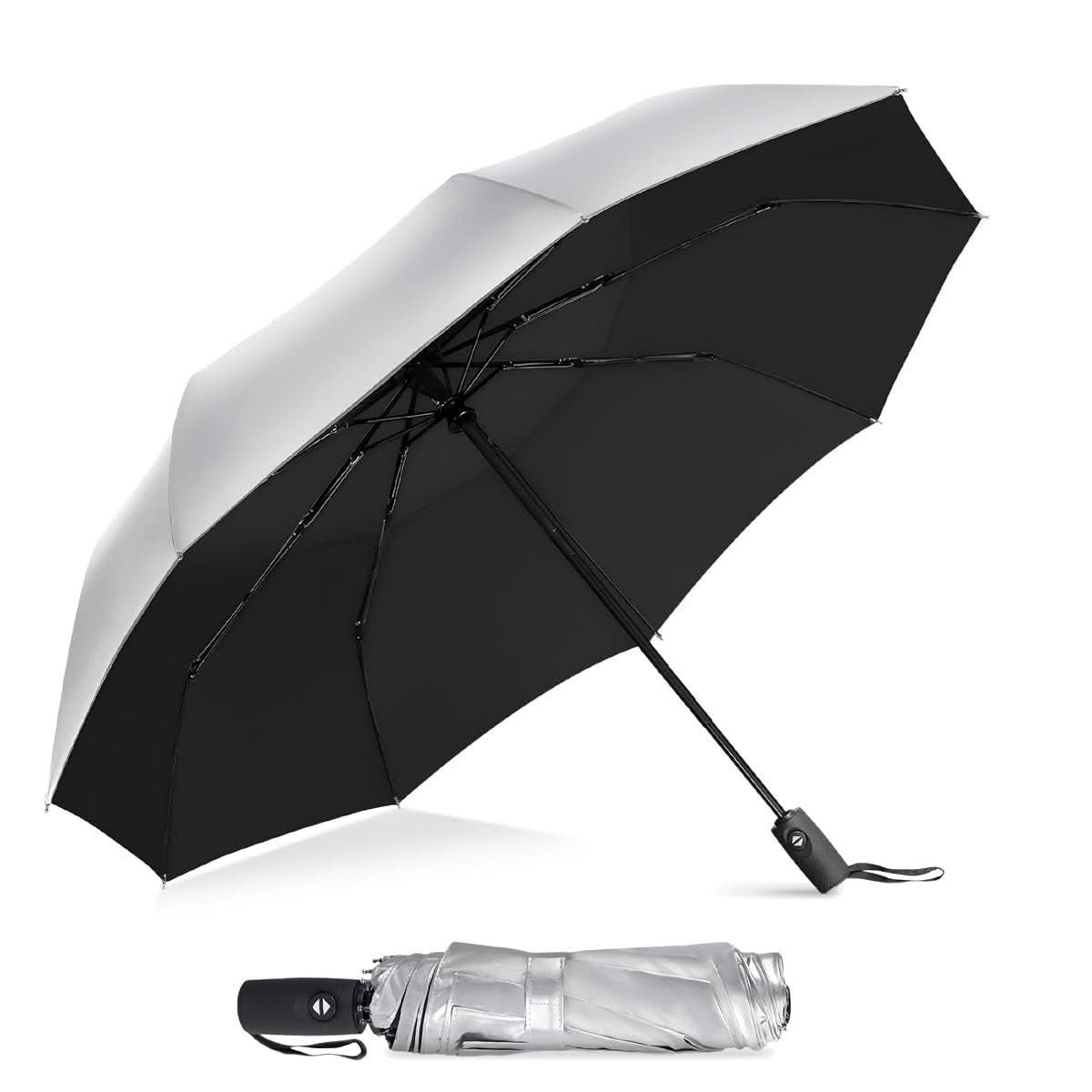
This is the pick for the months of the Australian calendar when the umbrella in your bag is there for the sun, not the rain. The canopy has a titanium-silver coating on the underside that reflects heat and blocks 99% of UVA and UVB rays, rated UPF50+ – the same benchmark Cancer Council Australia uses for sun-protective clothing.
Cancer Council Australia’s own guidance rates shade as one of the most effective forms of sun protection, capable of cutting UV exposure by up to 75% when it’s proper shade instead of dappled light through thin fabric – exactly the gap a UPF50+ canopy is built to close over a standard umbrella’s much lower rating. It’s rated 4.4 stars from more than 700 Amazon reviewers, with the wind resistance (rated to 50 km/h) very much a secondary feature to the UV coating.
It won’t do anything a standard umbrella doesn’t already do in the rain – the silver coating is about heat and UV, not extra waterproofing, though the canopy is still water-repellent. Skip this one if you only ever use an umbrella after dark or in the depths of winter; it earns its keep specifically on the walk from a car park to an office in January.
Pros
- Blocks 99% of UVA and UVB rays, rated UPF50+
- Reflective coating noticeably cooler underneath than a standard dark canopy
- Backed by a large, consistently positive review base
Cons
- The silver coating is about heat and UV, not extra waterproofing, so don’t expect better rain performance than a standard umbrella
- Reflective coating shows scuff marks more visibly than a plain black canopy over time
Key specs: UPF50+, titanium-silver coating, blocks 99% UVA/UVB, 9 ribs, wind-resistant to 50 km/h, folds to approx. 12 inches.
CHECK CURRENT PRICE5. Blunt Metro Travel Umbrella – Best Premium Pick
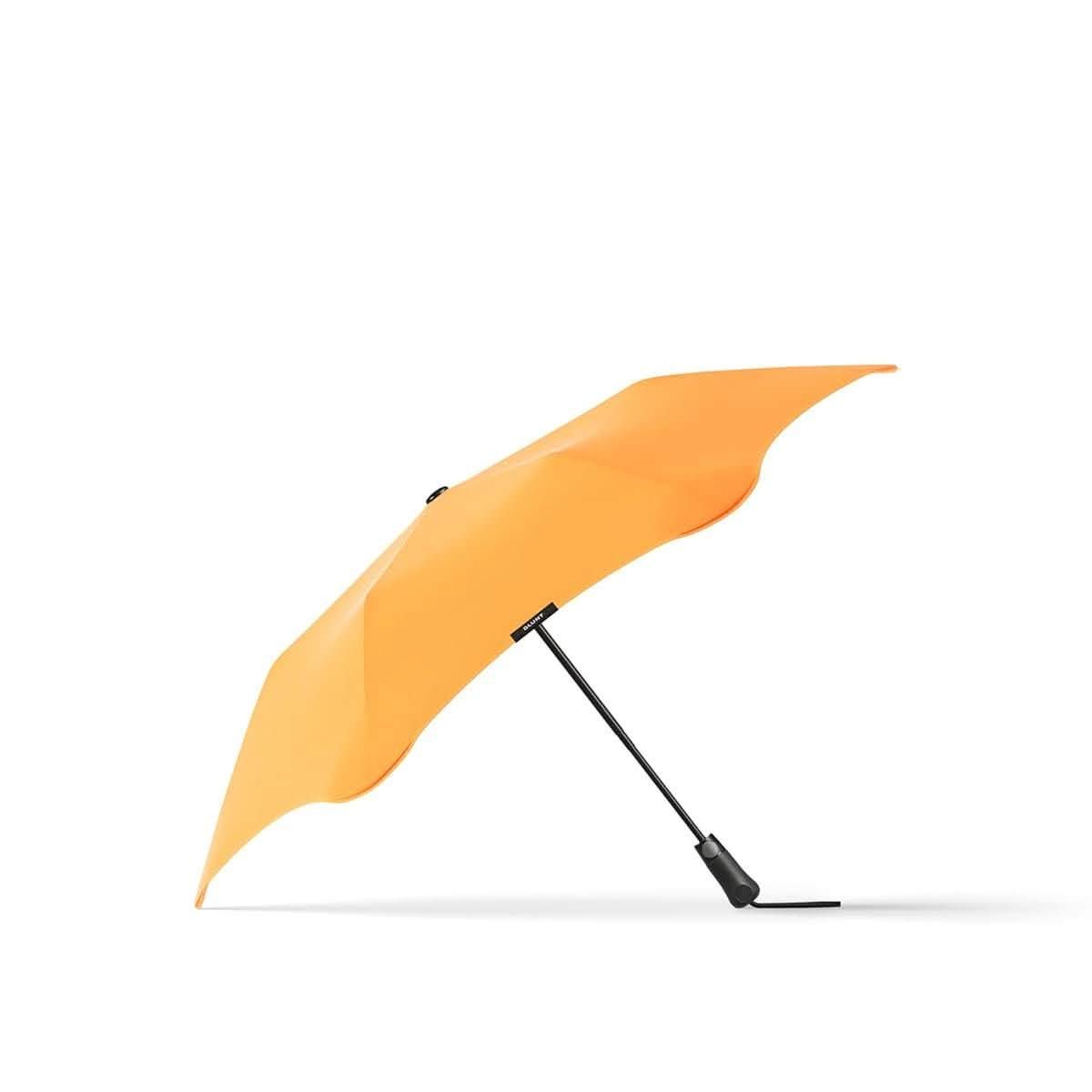
Blunt is the one brand in this list most people will actually recognise, and the Metro is the compact version of the design the company built its name on: a rounded, tensioned canopy shape with no sharp spokes poking out, held by a radial system rated to withstand gusts up to 115 km/h – just under the wind speed the Bureau of Meteorology classifies as “destructive” in a severe weather warning.
Every part – canopy, frame, shaft and handle – is a separate, individually replaceable component, which is a different approach to an umbrella than break it, bin it, buy another one. ProductReview.com.au’s listing for the entry-level Blunt Classic sits low, at 1.7 out of 5 from a small pool of reviewers, with complaints about the curved canopy shape letting in more rain at the edges than a standard dome and disappointing packaging on delivery – worth reading before you commit at this price, even though the Metro reviewed here is a different model in the range.
At well over four times the price of the compact pick above, it’s the most expensive umbrella in this list by a wide margin, and for a lot of people that’s simply too much to spend on something you can leave in a rideshare by accident. But the repairable design and the wind rating are real engineering, not marketing language, and if you’ve bought three flimsy umbrellas this year already, the maths starts looking different.
Pros
- Wind-rated to 115 km/h, with a modular design that can be repaired instead of replaced
- Rounded canopy tips are noticeably safer in a crowd than a standard pointed umbrella
- 38-point quality check before it ships
Cons
- ProductReview’s listing for the entry-level Blunt Classic flags the curved canopy letting in more rain at the edges than a standard dome shape
- By far the most expensive pick here, and a lost or forgotten umbrella stings a lot more at this price
Key specs: 100cm/39-inch canopy, wind-rated to 115 km/h, modular repairable parts, patented rounded tips, folds to 37.5cm, 385g.
CHECK CURRENT PRICE6. Duck Handle Umbrella – Best for School Runs
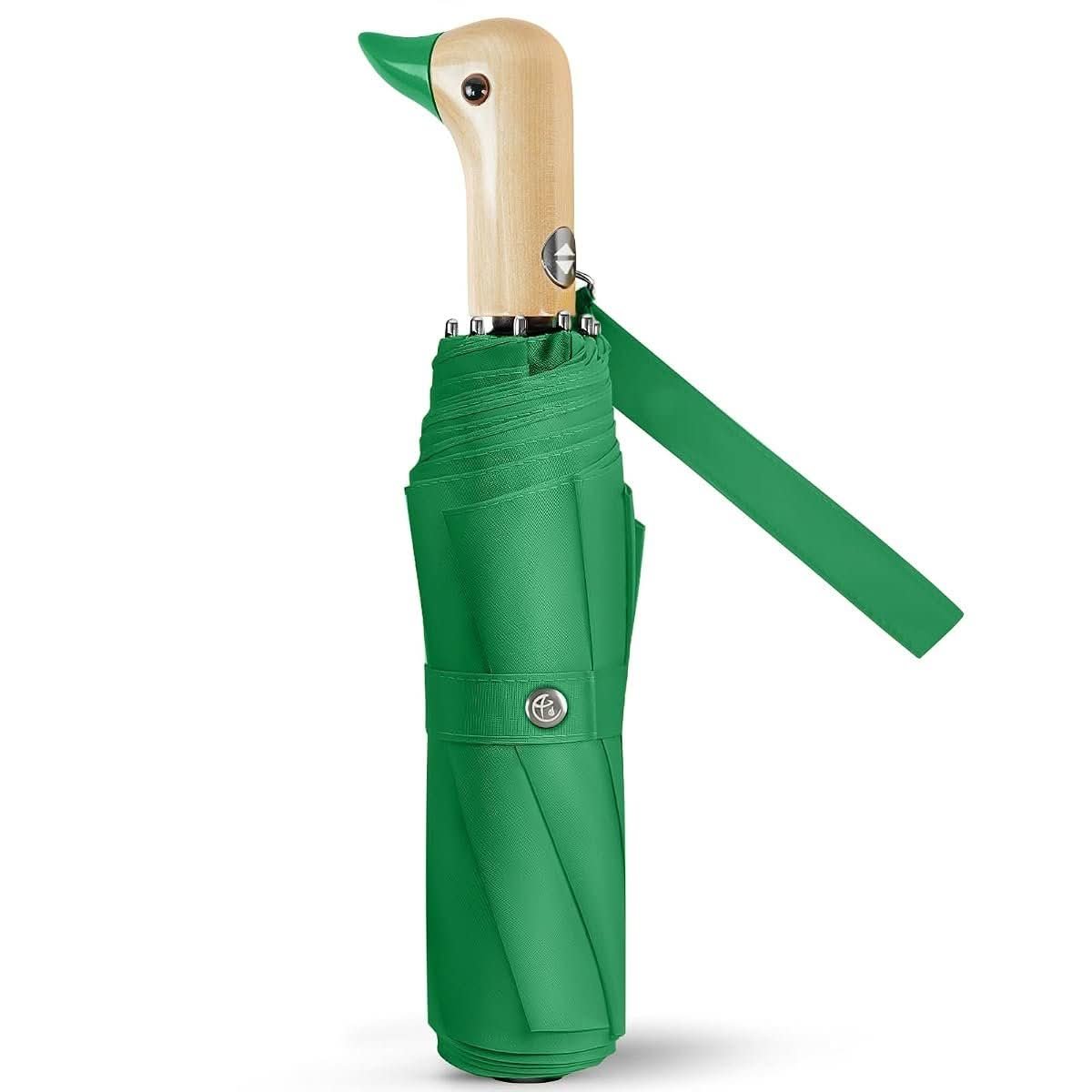
This is the umbrella that gets left in the car and doesn’t get lost, mostly because a wooden duck-head handle is a lot easier for a kid to spot and hang onto than a plain black hook. It’s not sized for a small child, though – the 46-inch canopy is adult-sized, so treat the duck handle as the reason a school-age kid will actually hold onto their own umbrella instead of proof it’s built for their height.
The auto open-close button matters here specifically because a manual umbrella at school pickup, in the rain, with a kid and a bag and a coffee, is a real three-hand problem. At 388g and folding to about 13 inches, it fits a school bag pocket without the bulk of the golf-style pick above.
It’s rated 4.6 stars from a modest but consistent review base, mostly people buying it as a gift for a child or a quirky-umbrella fan instead of for heavy-duty wind resistance, which isn’t really the point of this one. Buy it for the novelty and the auto-open convenience, not because it’ll outlast a proper windproof design in a storm.
Pros
- Wooden duck handle makes it properly easy for a kid to hold onto and identify as theirs
- Auto open-close is one less thing to manage at school pickup
- Compact enough for a school bag side pocket
Cons
- Adult-sized 46-inch canopy, so it’s not actually scaled down for a small child
- Novelty handle design means less focus on wind rating than the dedicated windproof picks in this list
Key specs: 46-inch canopy, wooden duck-head handle, auto open-close, 8-rib frame, folds to approx. 13 inches, 388g.
CHECK CURRENT PRICEHow to Choose an Umbrella
Check for an actual wind rating, not just the word “windproof.” Most budget umbrellas print “windproof” on the packaging without a tested number behind it; a specific km/h rating, even a modest one, means someone actually tested it instead of just adding extra vents and hoping.
Match the size to how you’ll actually carry it. A 46-inch canopy is generous coverage but won’t fit in most bags. If you’re relying on an umbrella you’ll actually have with you when it rains, a real pocket-compact size beats a bigger canopy left at home.
UV protection and rain protection are different specs. A UPF50+ rating tells you about sun exposure, not waterproofing, so check both if you want one umbrella that earns its keep across an Australian summer and winter alike.
Rib count is a rough proxy for structural strength. Eight ribs is standard; nine or ten in fiberglass instead of plain steel generally holds up better in a gust, though a well engineered 8-rib design like the premium pick in this list can still outperform a cheap 10-rib one.
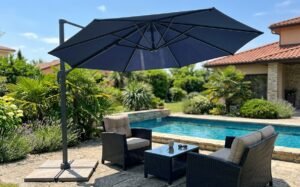
If you actually need shade, not something to carry, you want a different product entirely. Got a backyard or a balcony that needs permanent shade instead of a bag umbrella? Our guide to cantilever umbrellas covers the freestanding, offset designs built for that job – a golf umbrella is not a patio umbrella, no matter how big it opens.
Buy two: one cheap, one that actually works. A compact umbrella left in a car or work bag for the days you forget to check the forecast doesn’t need to be expensive; the umbrella you actually rely on daily is worth spending more on, because replacing a flimsy umbrella every few months adds up faster than one solid buy.
You’ll Also Want
A wet canopy left folded in a bag stays damp and starts smelling long before it dries – a microfibre wet umbrella sleeve keeps everything else in your bag dry on the walk from the car without needing the umbrella to dry first.
At home, an entryway umbrella stand with a drip tray stops a wet canopy soaking a hallway rug or growing mildew folded up damp, which matters more than it sounds like through a wet Melbourne winter.
If what you actually need is permanent shade for a deck or a backyard table instead of something to carry, a cantilever design is the better product entirely – see our full guide to the best cantilever umbrellas in Australia for the offset, freestanding options built for that job.
Frequently Asked Questions
What actually makes an umbrella windproof?
A properly windproof umbrella uses a vented or double-layer canopy that lets wind pass through small gaps instead of catching it like a sail, combined with a flexible frame that bends with a gust instead of snapping. Fiberglass ribs add real strength over plain steel. A specific tested wind rating in km/h is a far more reliable signal than the word “windproof” printed alone on the packaging.
Do I need a separate umbrella for sun protection?
If you spend real time outdoors in the middle of the day, yes – a standard umbrella canopy usually rates around UPF15-20, while a dedicated UV umbrella is rated UPF50+ and can block over 99% of UVA and UVB rays. Cancer Council Australia rates shade as one of the most effective sun-protection measures available, cutting exposure by up to 75% when it’s proper shade instead of thin fabric.
How many ribs should a good umbrella have?
Eight ribs is the standard for most compact umbrellas and is fine for everyday conditions. Nine or ten ribs, especially in fiberglass, adds real structural strength for seriously windy conditions, though rib count alone doesn’t guarantee quality – a well-engineered 8-rib design can still outperform a cheaply made 10-rib one in a real gust.
Why does my umbrella keep turning inside out?
This usually happens when a gust hits a solid, unvented canopy side-on with nowhere for the air to escape, so the fabric flips over the frame. Look for a double-layer or vented canopy, which gives wind a small gap to escape through, and check the rib joints – cheap umbrellas use brittle plastic hinges that crack under load, where a better design uses springy metal ones that give a little and pop back into shape.
Is an expensive umbrella actually worth it?
For most people, an expensive umbrella earns its price back by not needing replacing every season – a modular, repairable design with an actual tested wind rating can outlast several cheap umbrellas bought over the same period. It’s a harder case to make if you regularly lose or forget umbrellas, since the cost of losing one scales with the price you paid.
What’s the best way to dry a wet umbrella?
Open it fully in a well-ventilated spot instead of leaving it folded and damp inside a bag, which is the fastest way to grow mildew on the canopy and rust on the frame joints. An entryway stand or hook keeps it upright while it drains, and a quick wipe of the ribs prevents the small amount of rust that eventually seizes a folding mechanism.
Verdict
For most Australian conditions, the Compact Travel Windproof Umbrella is the easiest starting point – cheap enough to keep a spare in the car, small enough to actually carry, and honest about not claiming a wind rating it hasn’t earned. Anyone who spends real time outdoors in the middle of the day should treat the ZOMAKE UPF50+ Umbrella as the more useful daily pick over summer, since sun exposure is the bigger risk most days it isn’t actually raining. For someone who’s honestly sick of replacing a flimsy umbrella every winter, the Blunt Metro Travel Umbrella is the one pick here built to actually last, warranty gap aside.