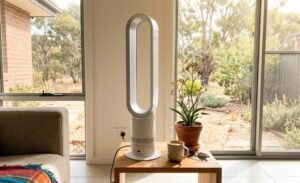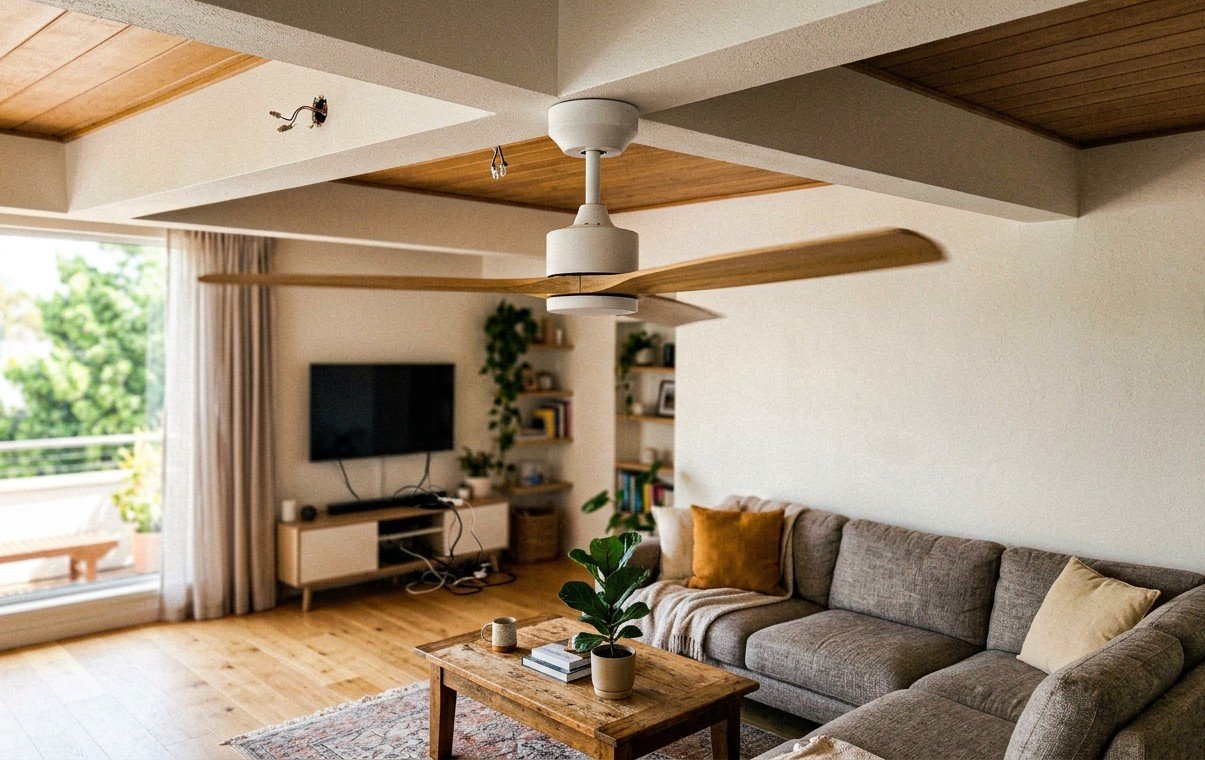
A ceiling fan is a fixed overhead fan that cools by moving air across skin rather than by lowering room temperature, which is why it costs a fraction of an air conditioner to run. Modern units use DC motors, which draw less power than the older AC type and offer more speed settings. Choosing the best ceiling fan in Australia comes down to blade span, how many speeds sit at the quiet end, and whether the room can take a hanging fixture at all.
Before finish or colour comes into it, three physical decisions shape the choice. Blade span sets how far the moved air reaches. Blade count trades air volume against low-speed steadiness. Mounting style splits hanging downrod fans from flush mount units for low ceilings. Everything else is a preference.
Blade spans here run from 48 inches, about 122 centimetres, up to 64 inches, close to 163 centimetres, and that single measurement does more to determine performance than any other figure on the box. After span, the things worth checking are the number of speeds, whether the motor reverses for winter circulation, and whether the light is integrated or absent. A fan is also not the only way to cool a room cheaply, and bladeless fans offer a portable alternative where a ceiling fixture is not an option.
What follows is ordered by span and feature set rather than by price, and every unit is held in Australian stock.
Quick Picks
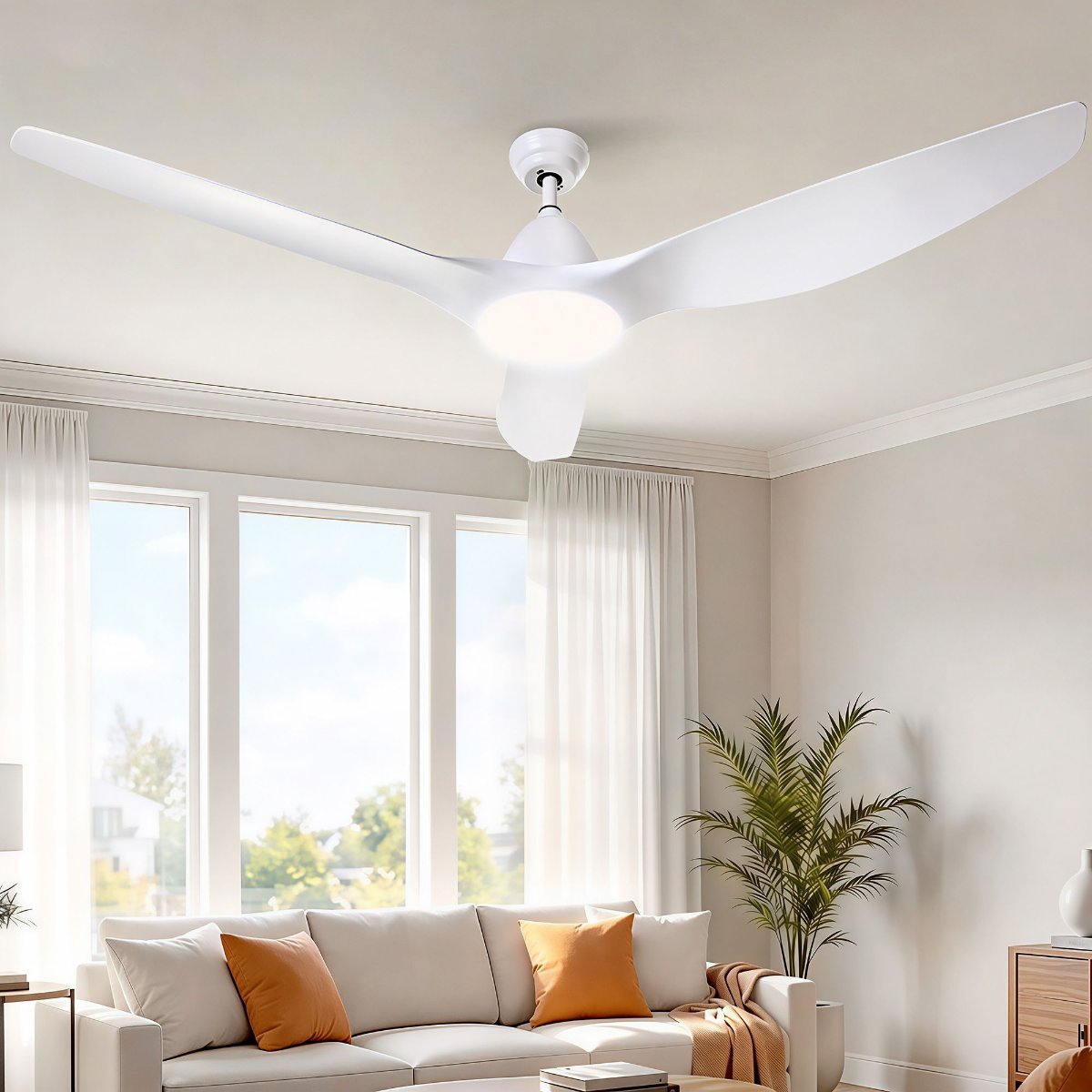
Devanti 64 Inch Ceiling Fan with LED Light
A 64 inch span that reaches the far corners of an open-plan living and dining area.
CHECK CURRENT PRICE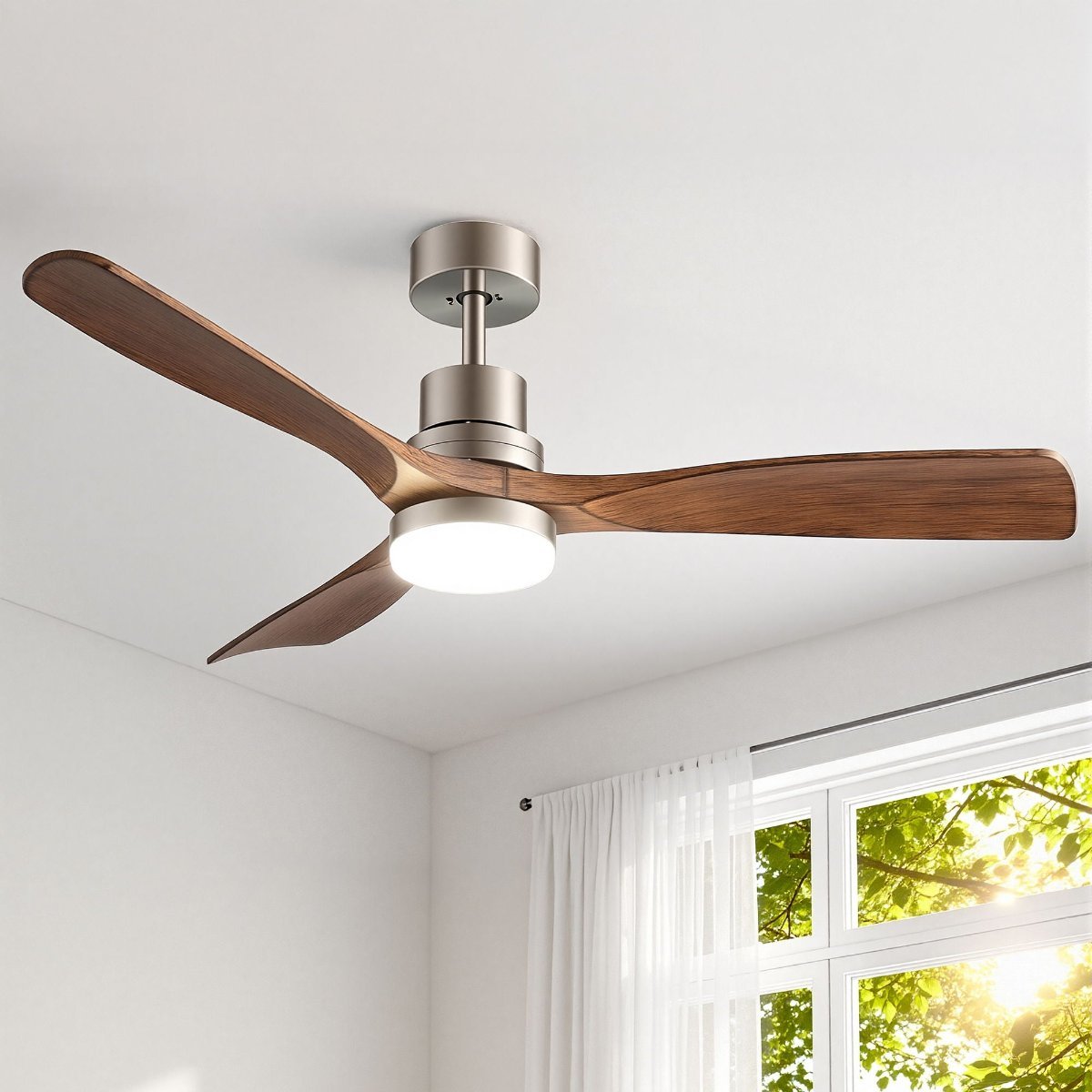
Devanti 52 Inch Smart App Ceiling Fan
The only fan here that answers to a phone app as well as a remote.
CHECK CURRENT PRICE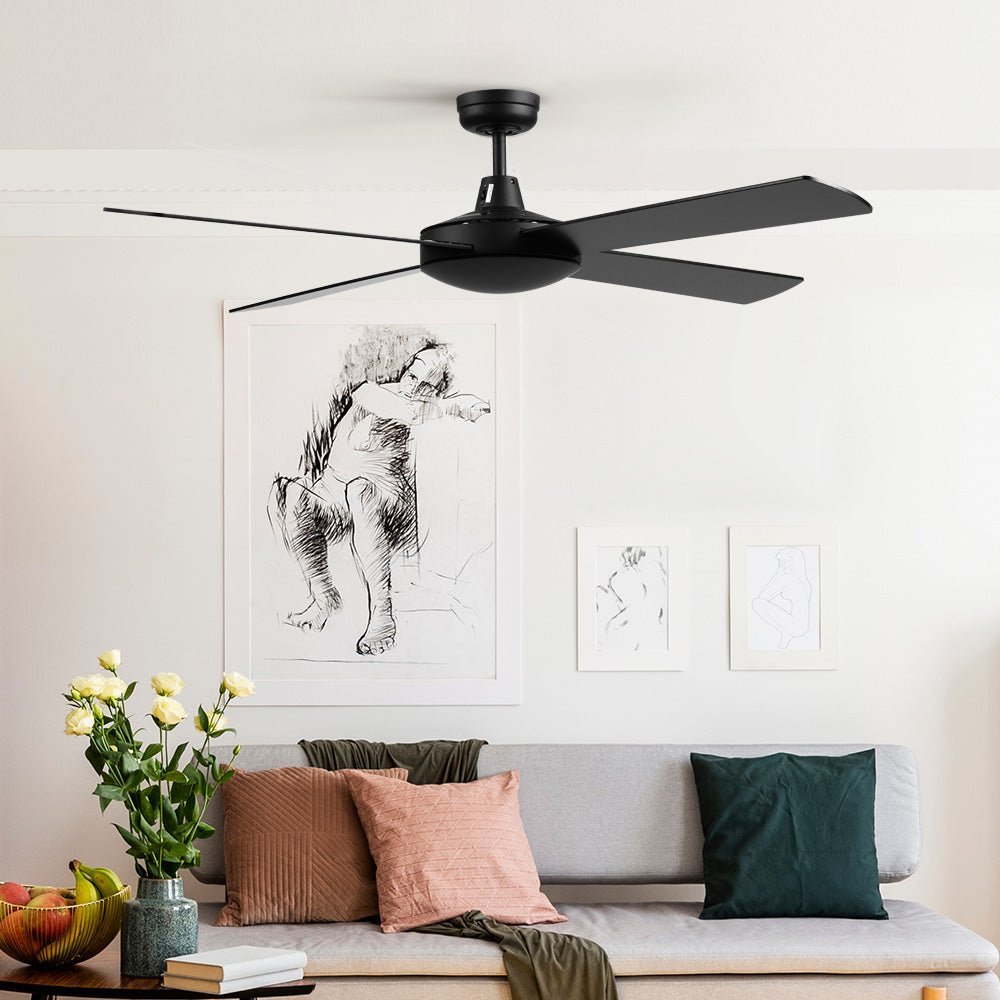
Devanti 52 Inch 4 Blade Ceiling Fan in Black
Four blades and a shallow housing, for rooms that already have ceiling lighting.
CHECK CURRENT PRICECeiling Fans Compared
| Product | Link | Type | Best For | Key Spec |
|---|---|---|---|---|
| Devanti 64 Inch Ceiling Fan with LED Light | Check price | 64 inch DC | Large rooms | 5 speeds |
| Devanti 52 Inch Smart App Ceiling Fan | Check price | 52 inch smart | App control | 6 speeds, app |
| Devanti 52 Inch Ceiling Fan with Double-Sided Blades | Check price | 52 inch reversible | Changing decor | Double-sided blades |
| Devanti 52 Inch 3 Blade Ceiling Fan in Dark Wood | Check price | 52 inch 3 blade | Bedrooms | LED light |
| Devanti 48 Inch Ceiling Fan with LED Light | Check price | 48 inch DC | Small rooms | 5 speeds |
| Devanti 52 Inch 4 Blade Ceiling Fan in Black | Check price | 52 inch 4 blade | Airflow | 4 blades, no light |
| Devanti 52 Inch 6 Speed Ceiling Fan in Dark Wood | Check price | 52 inch 6 speed | Fine speed control | 6 speeds |
| Devanti 52 Inch Ceiling Fan with LED Light in Black | Check price | 52 inch DC | Modern interiors | LED light |
| 52 Inch Ceiling Fan with LED Lights and Timer | Check price | 52 inch with timer | Timer control | 5 speeds, timer |
| OUTON 50cm Flush Mount Ceiling Fan | Check price | Flush mount | Low ceilings | 50cm, flush mount |
1. Devanti 64 Inch Ceiling Fan with LED Light – Best for Large Rooms
A 64 inch blade span is the widest in this guide, and span is what decides how far moved air actually reaches. The DC motor sits in a low-profile housing with an LED light fitted underneath, so the extra size does not translate into a bulky ceiling fixture.
Five speeds give a usable spread from a slow winter circulation setting up to full summer output. Wider blades move the same volume of air at lower rotational speed, which is why a large fan run at medium is quieter than a small fan working hard to match it.
The catch is ceiling clearance and room proportion: in a standard bedroom a span this wide looks wrong and offers nothing extra. Put it above an open-plan living and dining area where a smaller fan leaves the far corners untouched, and the reasoning becomes obvious.
Pros
- Widest blade span here at 64 inches
- Moves air at lower speed, so it runs quieter
- DC motor with five speed settings
- LED light integrated into a low-profile housing
Cons
- Too wide for a standard bedroom
- Needs adequate ceiling clearance
Key specs: 64 inch span, DC motor, five speeds, LED light, remote control, reversible direction.
CHECK CURRENT PRICE2. Devanti 52 Inch Smart App Ceiling Fan – Best Smart Control
This is the only fan in the guide that answers to a phone as well as a remote. Timber blades in a brown finish sit under a matching housing, and the six-speed DC motor is the same class of unit fitted to the rest of the range.
App control earns its place in rooms where the remote goes missing or where the fan needs to come on before anyone is home. Scheduling matters more than it sounds in an Australian summer, because starting circulation an hour before bedtime costs almost nothing and makes the room usable at ten at night.
Anyone who has no interest in phone-controlled appliances is paying for a feature they will never open. For a household already running lights or heating from an app, this is the one fan here that joins that system instead of sitting outside it.
Pros
- Phone app control alongside the remote
- Scheduling lets the fan start before you get home
- Six speed settings from the DC motor
- Timber blades in a warm brown finish
Cons
- App features are wasted if you only use the remote
- Timber finish will not suit every ceiling
Key specs: 52 inch span, DC motor, six speeds, smart app and remote control, LED light, timber blades.
CHECK CURRENT PRICE3. Devanti 52 Inch Ceiling Fan with Double-Sided Blades – Best for Changing Decor
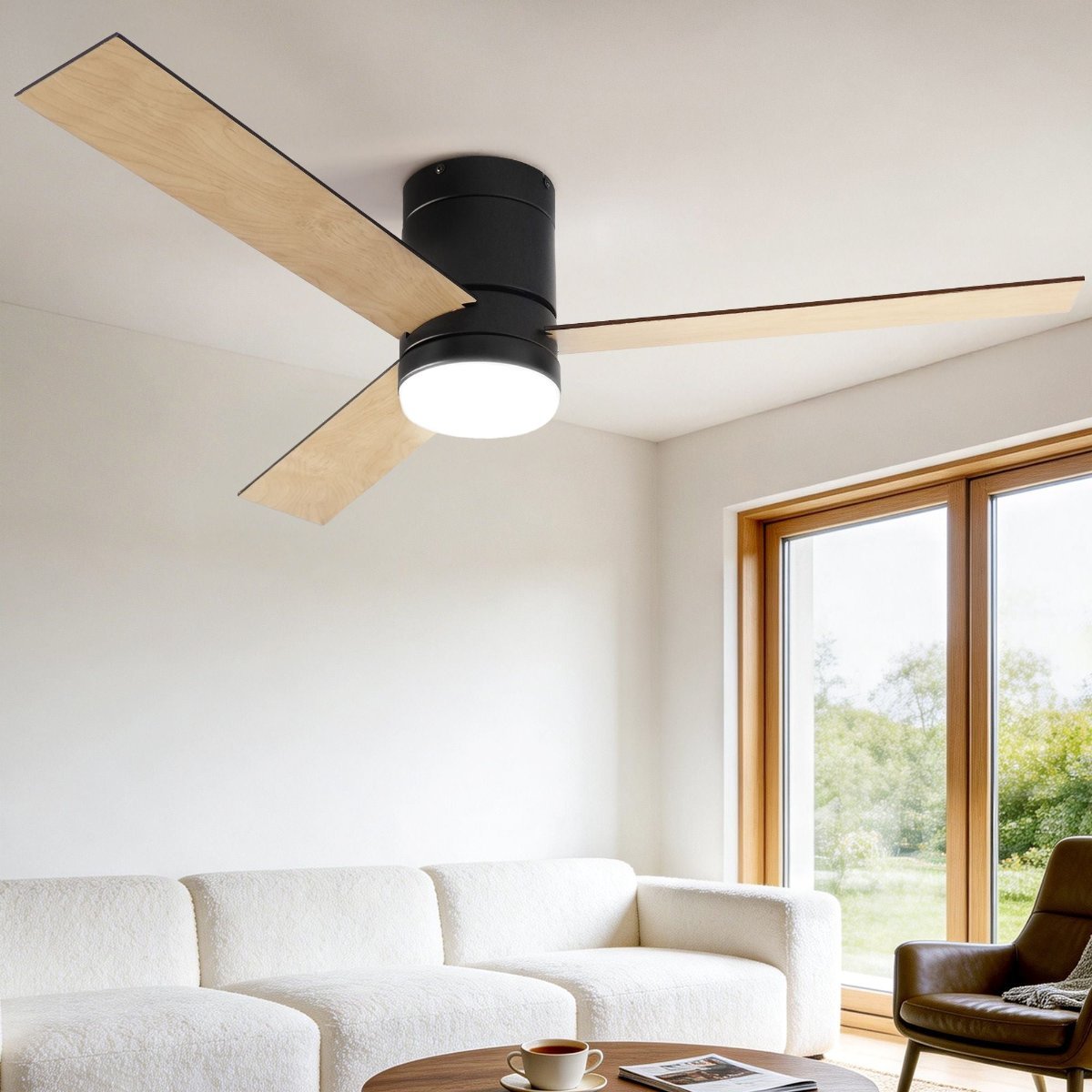
Three blades here carry a different finish on each face, light wood on one side and black on the other. Flipping them changes the look of the fixture without buying a second fan or repainting anything.
Six speeds and an LED light bring it into line with the rest of the 52 inch group on performance, so the blade finish is a genuine addition rather than a substitute for specification. The DC motor holds the same low-noise characteristics at the middle settings.
Reversing the blades is a job with a ladder and a screwdriver, not a switch, so nobody will be doing it seasonally. As a way to make one fixture work across a repaint or a change of flooring, it removes a decision that otherwise costs a whole new fan.
Pros
- Two blade finishes in one fixture
- Six speeds and LED light as standard
- Suits a room likely to be redecorated
- DC motor keeps mid-speed noise low
Cons
- Reversing the blades requires tools and a ladder
- Only two finish options, both fixed at purchase
Key specs: 52 inch span, DC motor, six speeds, three double-sided blades in light wood and black, LED light, remote.
CHECK CURRENT PRICE4. Devanti 52 Inch 3 Blade Ceiling Fan in Dark Wood – Best for Bedrooms
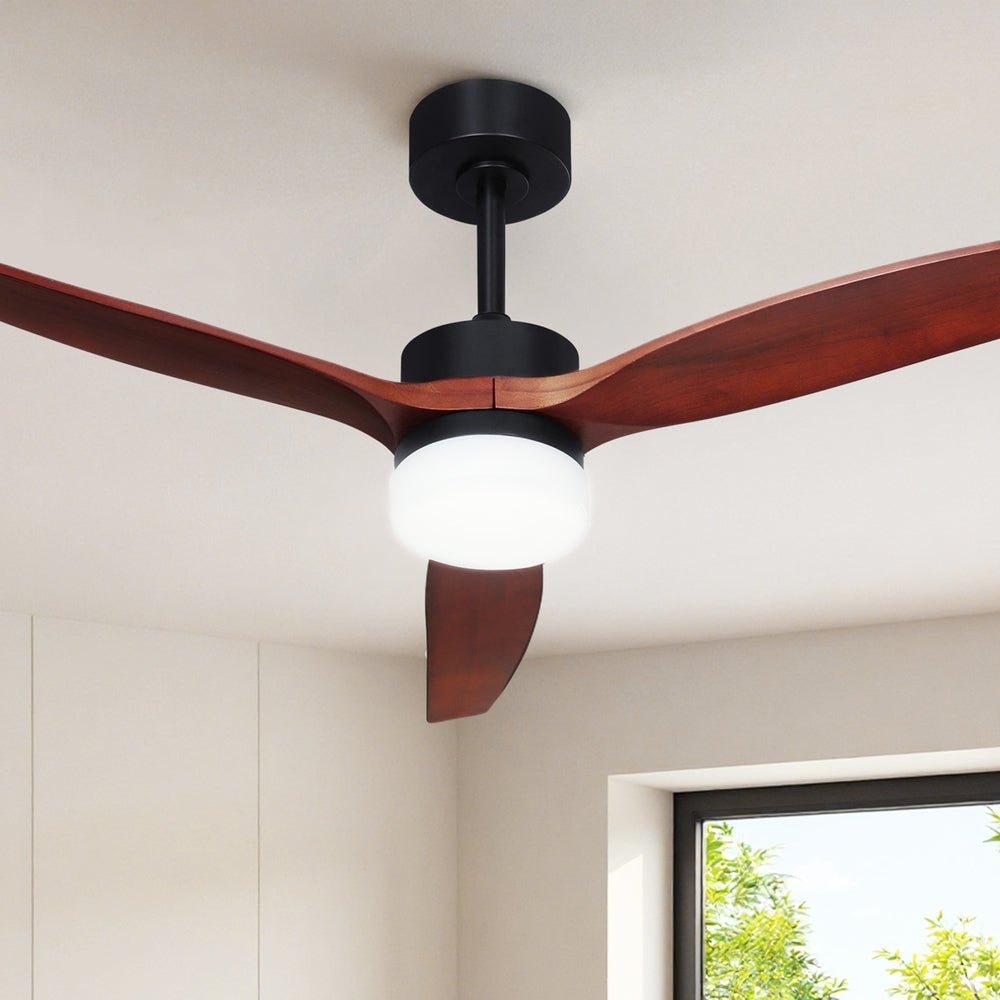
Three blades in a dark wood finish sit under a compact housing with an integrated LED light. The 52 inch span is the standard size for Australian bedrooms and most secondary living rooms.
Fewer blades means less drag on the motor, which lets a DC unit hold a low speed steadily instead of hunting between settings. In a bedroom that matters more than peak output, because the fan spends most of its life on the two lowest speeds.
Someone cooling a large open space will find three blades at 52 inches leaves the far side of the room untouched. Directly over a bed, running slowly through the night, it is doing precisely the job it was designed for.
Pros
- Holds low speeds steadily for overnight running
- Dark wood finish suits most bedroom ceilings
- Integrated LED light
- Standard 52 inch span fits typical rooms
Cons
- Three blades move less air than four at the same speed
- Not enough reach for a large open-plan area
Key specs: 52 inch span, DC motor, three blades, LED light, remote control, dark wood finish.
CHECK CURRENT PRICE5. Devanti 48 Inch Ceiling Fan with LED Light – Best for Small Rooms
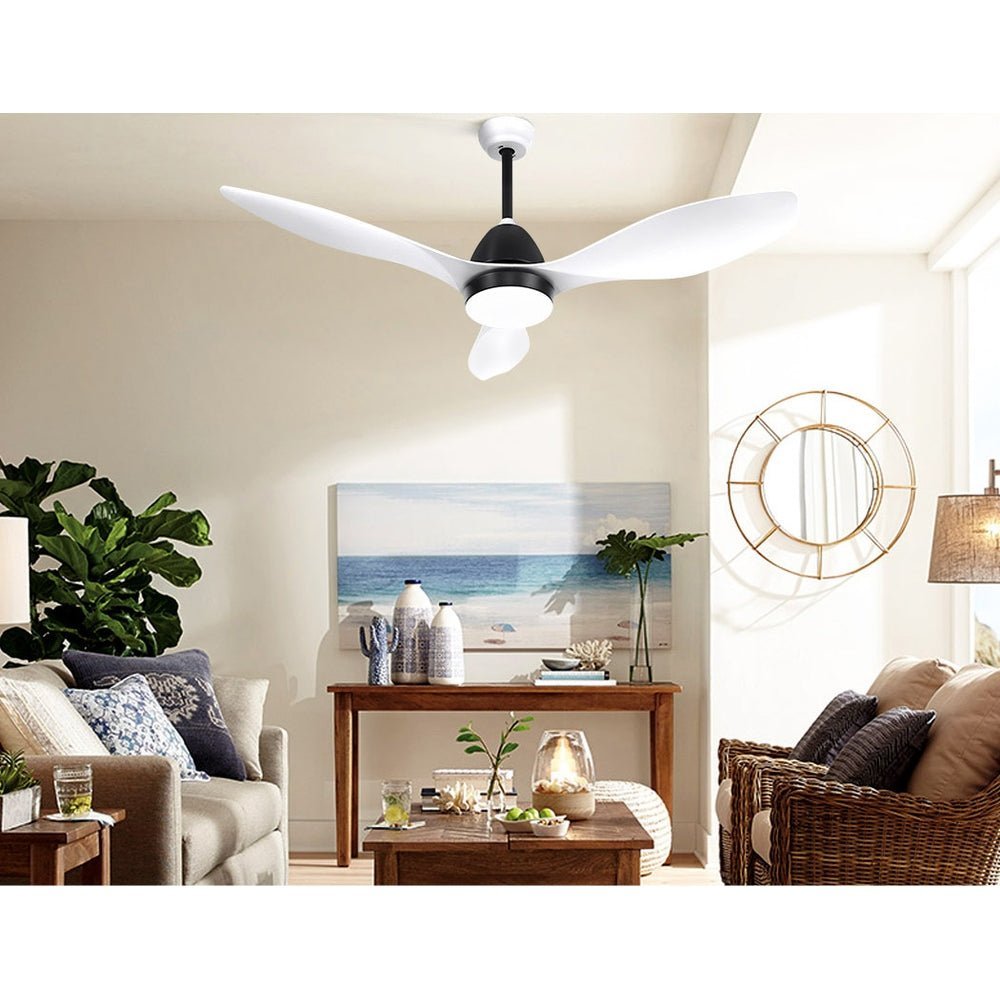
At 48 inches this is the narrowest span in the guide, in a white housing with an LED light underneath. It is the size to fit where a 52 inch fan would sit too close to a wall or a wardrobe door.
Blade tip clearance is a real constraint in small rooms, and a fan that clears the walls properly circulates better than a larger one crowded into the same space. Five speeds cover the range a room this size needs.
Put it in a lounge room and it will be working at the top of its range constantly. In a study, a nursery or a small bedroom it reaches the corners at a middle setting and stays quiet doing it.
Pros
- Narrowest span suits small or awkward rooms
- Clears walls and wardrobe doors where 52 inches will not
- Five speeds from a DC motor
- White housing blends into most ceilings
Cons
- Runs near its limit in a full-sized lounge room
- Shorter reach than every other fan here
Key specs: 48 inch span, DC motor, five speeds, LED light, remote control, white finish.
CHECK CURRENT PRICE6. Devanti 52 Inch 4 Blade Ceiling Fan in Black – Best Airflow
Four blades rather than three, in a plain black finish, and no light fitting at all. Leaving the light out keeps the housing shallow and drops this to the lowest position on the price ladder in the guide.
A fourth blade adds surface area, so more air moves per rotation at the same speed. Where a room already has good ceiling lighting, a fan without an integrated LED avoids the common problem of a fan light that is either too dim to use or too harsh to sit under.
Anyone relying on the fan for room lighting should skip it outright. In a room with existing downlights, it is the most air per rotation on offer here and the shallowest housing to go with it.
Pros
- Four blades move more air per rotation
- Shallow housing without a light fitting
- Lowest entry point in this guide
- Plain black finish suits modern ceilings
Cons
- No integrated light
- Needs existing ceiling lighting in the room
Key specs: 52 inch span, DC motor, four blades, no light fitting, remote control, black finish.
CHECK CURRENT PRICE7. Devanti 52 Inch 6 Speed Ceiling Fan in Dark Wood – Best Speed Range
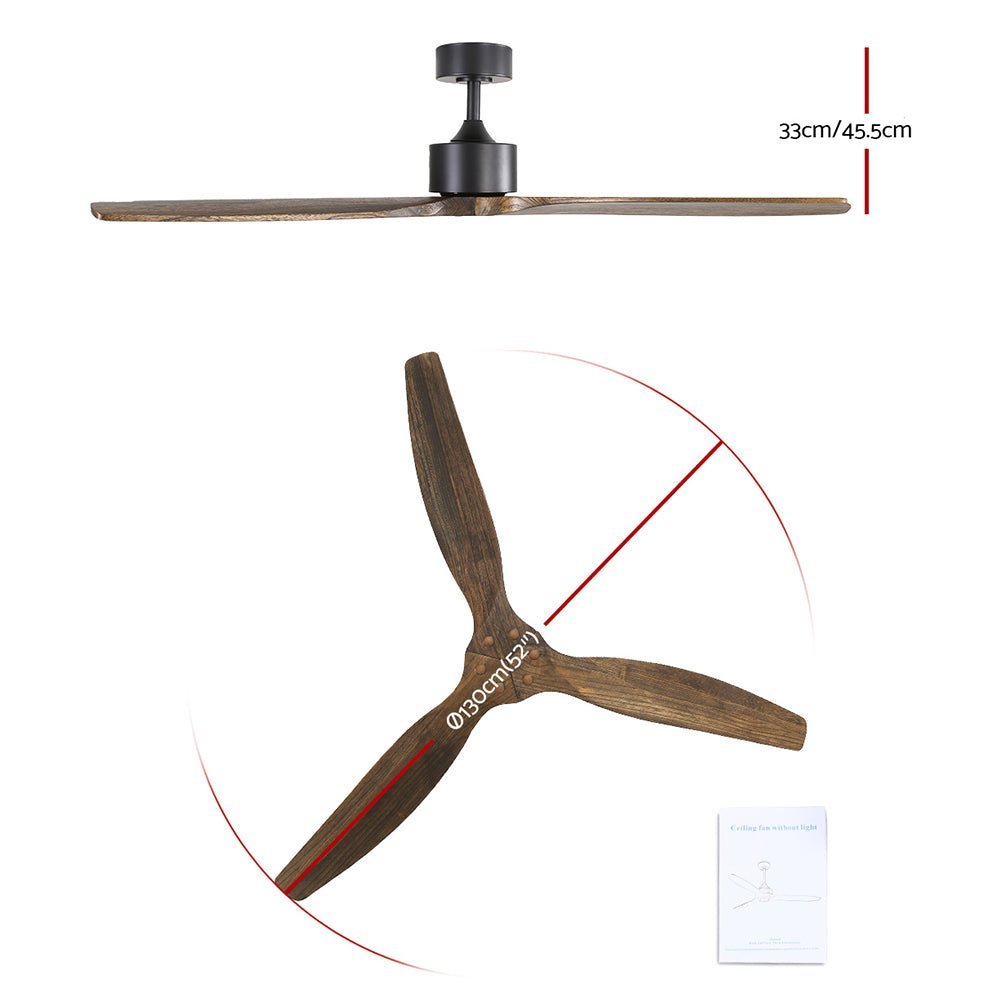
Six speeds across a 52 inch span give the finest control in the guide, in a dark wood finish with a remote. The extra settings sit at the bottom of the range rather than the top, which is where they are useful.
Most fans jump too far between their lowest two settings, leaving a gap between barely moving and clearly draughty. Six steps close that gap, so a room can be held at gentle circulation on a mild night without cycling the fan on and off.
On a scorching afternoon the top setting matches the five-speed units and no more. The value is entirely at the quiet end, which makes this the pick for anyone who runs a fan overnight year round rather than only in February.
Pros
- Six speeds give fine control at the low end
- Closes the gap between off and draughty
- Dark wood finish with remote control
- Standard 52 inch span
Cons
- Top speed is no stronger than the five-speed models
- Extra settings are wasted if you only run it on high
Key specs: 52 inch span, DC motor, six speeds, three blades, remote control, dark wood finish.
CHECK CURRENT PRICE8. Devanti 52 Inch Ceiling Fan with LED Light in Black – Best Modern Finish
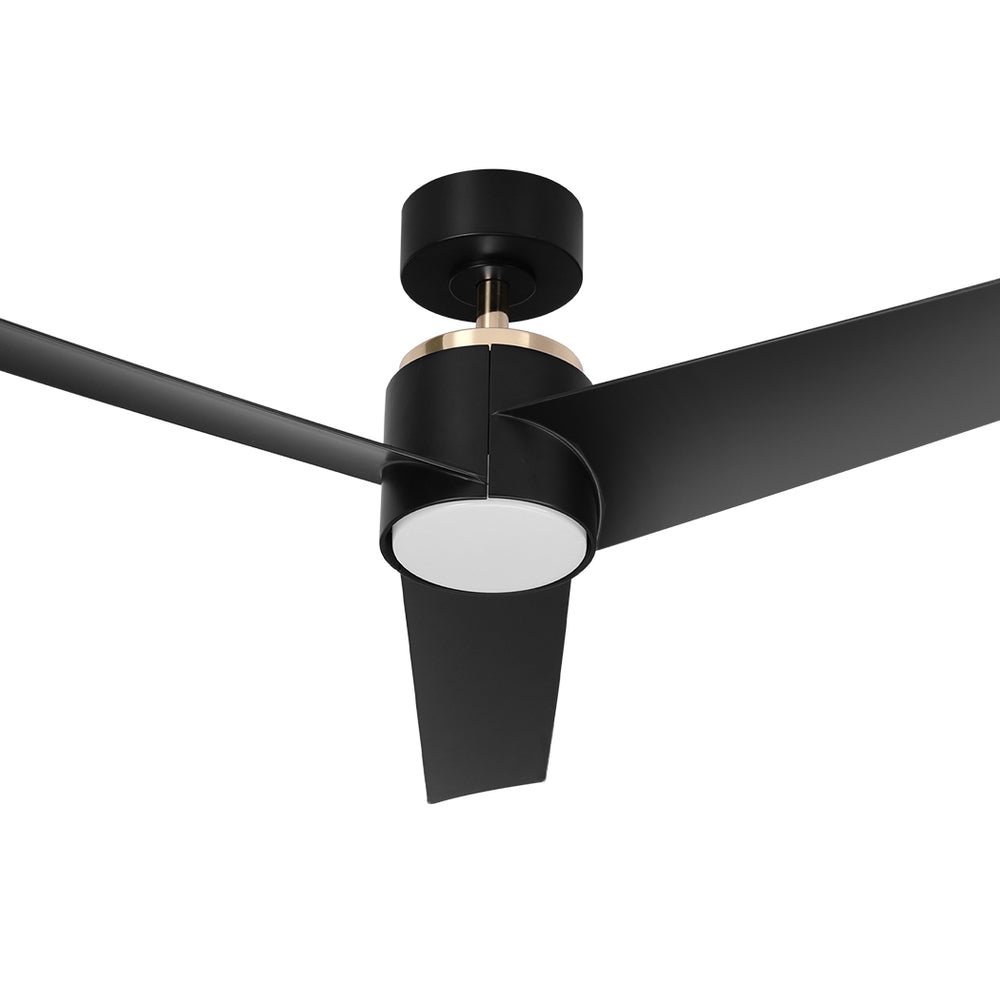
Matte black across the housing and blades, with the LED light recessed into the underside rather than hanging below it. The 52 inch span and DC motor match the rest of the mid-range group.
A recessed light changes how the fixture reads from below, because there is no glass bowl breaking the line of the housing. In a room with black tapware or dark window frames it disappears into the ceiling in a way a white fan with a drop light never will.
On a low or dark ceiling the same finish can make the fixture hard to see, which is a genuine safety point in a room where people carry things overhead. Given a white or light ceiling and a modern fit-out, it is the cleanest looking fan in the lineup.
Pros
- Matte black finish suits modern interiors
- LED recessed into the housing, not hanging below
- DC motor with reversible direction
- Standard 52 inch span
Cons
- Hard to see against a dark ceiling
- Recessed light spreads less than a drop fitting
Key specs: 52 inch span, DC motor, recessed LED light, remote control, matte black finish.
CHECK CURRENT PRICE9. 52 Inch Ceiling Fan with LED Lights and Timer – Best Budget Pick
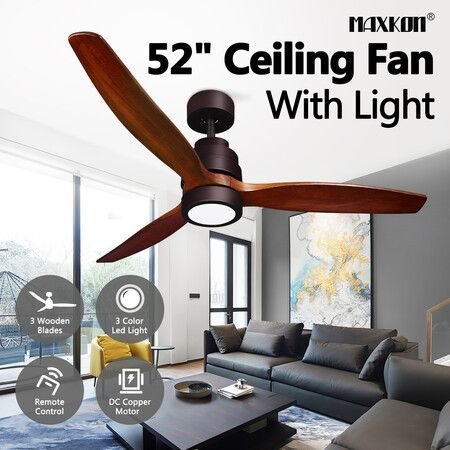
Three blades in a brown finish, five speeds and an LED light, with a countdown timer built into the remote. The timer is the feature that separates it from the rest of the 52 inch field.
A timer solves the problem of a fan running all night in a room that only needed cooling for the first two hours. Set it before bed and the fan shuts itself off after the room has settled, which saves both the power and the three in the morning wake-up from a cold draught.
Build quality sits a step below the branded units above it and the finish options are limited to the one colour. For a spare room or a rental where the fan needs to work rather than impress, the timer alone justifies the position.
Pros
- Countdown timer built into the remote
- Five speeds and an LED light
- Shuts off after the room settles overnight
- Straightforward remote operation
Cons
- Build quality below the branded models above
- Single finish option
Key specs: 52 inch span, three blades, five speeds, LED light, countdown timer, remote control.
CHECK CURRENT PRICE10. OUTON 50cm Flush Mount Ceiling Fan – Best for Low Ceilings
Every other fan in this guide hangs from a downrod. This one mounts flush against the ceiling in a 50cm span, which is the only arrangement that works where headroom is genuinely tight.
Flush mounting costs some efficiency, because a fan sitting close to the ceiling has less room to draw air from above the blades. What it buys is a fan that can be fitted in a room with a low ceiling, a sloped roofline or an attic conversion where a hanging fixture would be unsafe.
In a room with normal ceiling height a downrod fan will outperform it for the same money. Where the ceiling sits under about two and a half metres, this is the practical option rather than the compromise.
Pros
- Flush mount suits low ceilings and attic rooms
- App and remote control included
- Compact 50cm span
- Dimmable light with adjustable colour temperature
Cons
- Less efficient than a downrod fan
- Small span limits the area it covers
Key specs: 50cm span, flush mount, remote and app control, dimmable LED with adjustable colour temperature.
CHECK ON AMAZONHow to Choose the Best Ceiling Fan in Australia
Size the span to the room, not the budget. A 48 inch fan suits a study or a small bedroom, 52 inches covers most standard bedrooms and secondary living rooms, and 64 inches is for open-plan areas where a smaller fan leaves the far corners still. Oversizing a small room does not help, because the blades end up too close to the walls to circulate properly.
Prefer a DC motor if the fan runs often. DC units draw noticeably less power than the older AC type, run quieter at matched speeds, and typically offer five or six settings instead of three. For a fan that only comes on a dozen times a summer the difference is academic; for one that runs nightly from November to March it is not.
Count the speeds at the bottom of the range. The gap most fans get wrong is between off and clearly draughty. A six-speed fan places extra steps at the quiet end, which is what lets a bedroom sit at gentle circulation through a mild night instead of being cycled on and off.
Measure your ceiling before anything else. Australian standards require blade clearance above floor level, and a downrod fan in a room under about two and a half metres will feel oppressive even where it fits. That is the situation a flush mount fan exists for, and the one case where giving up some efficiency is the right call.
Decide whether you want the light at all. An integrated LED saves a separate fixture but is often either too dim to read under or too harsh to sit beneath. In a room with existing downlights, a fan without a light gives a shallower housing and puts the saving into the motor instead.
Check the reverse function for winter. Running the blades in reverse at low speed pushes warm air down from the ceiling instead of blowing air at people, which cuts heating costs in a room with high ceilings. Installation must be done by a licensed electrician, and every fan sold here carries Australian Consumer Law guarantees separate from the manufacturer warranty.
Frequently Asked Questions
What size ceiling fan do I need?
Match the span to the room. A 48 inch fan suits a study or small bedroom, 52 inches covers most standard bedrooms and living rooms, and 64 inches is for large open-plan areas. Blades should clear surrounding walls and furniture by a comfortable margin.
Is a DC ceiling fan better than an AC one?
For regular use, yes. DC motors draw less power, run quieter at the same speed, and generally offer five or six speed settings rather than three. AC fans remain cheaper to buy but cost more to run over a full summer.
Can I install a ceiling fan myself?
No. Ceiling fan installation involves fixed electrical wiring and must be carried out by a licensed electrician in Australia. Doing it yourself risks both safety and the validity of any insurance claim arising from the work.
Do ceiling fans actually lower the temperature?
They do not change the air temperature at all. A ceiling fan cools people by moving air across skin, which speeds evaporation and makes a room feel several degrees cooler than the thermometer reads.
Should a ceiling fan run in reverse in winter?
Yes, at low speed. Reversing the blades pushes warm air that has collected near the ceiling back down the walls without creating a draught, which makes a noticeable difference in rooms with high ceilings.
How much does a ceiling fan cost to run?
Far less than air conditioning. A DC ceiling fan typically draws a small fraction of the power a refrigerated air conditioner needs for the same period, which is why running a fan alongside a higher thermostat setting is a common way to cut summer bills.
Verdict
For most Australian rooms the 52 inch group is the right size, and within it the Devanti 52 Inch Smart App Ceiling Fan is the one worth paying for, because scheduling turns a fan into something that has already cooled the room before anyone walks in. Where the space is genuinely open plan, the Devanti 64 Inch Ceiling Fan with LED Light is the only span here that reaches the far corners, and in an attic conversion or any room with a ceiling under about two and a half metres the OUTON 50cm Flush Mount Ceiling Fan is the sole practical option.