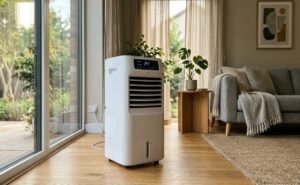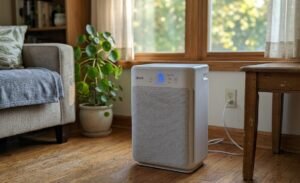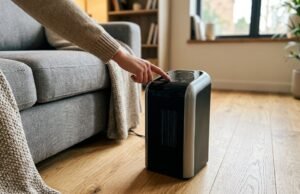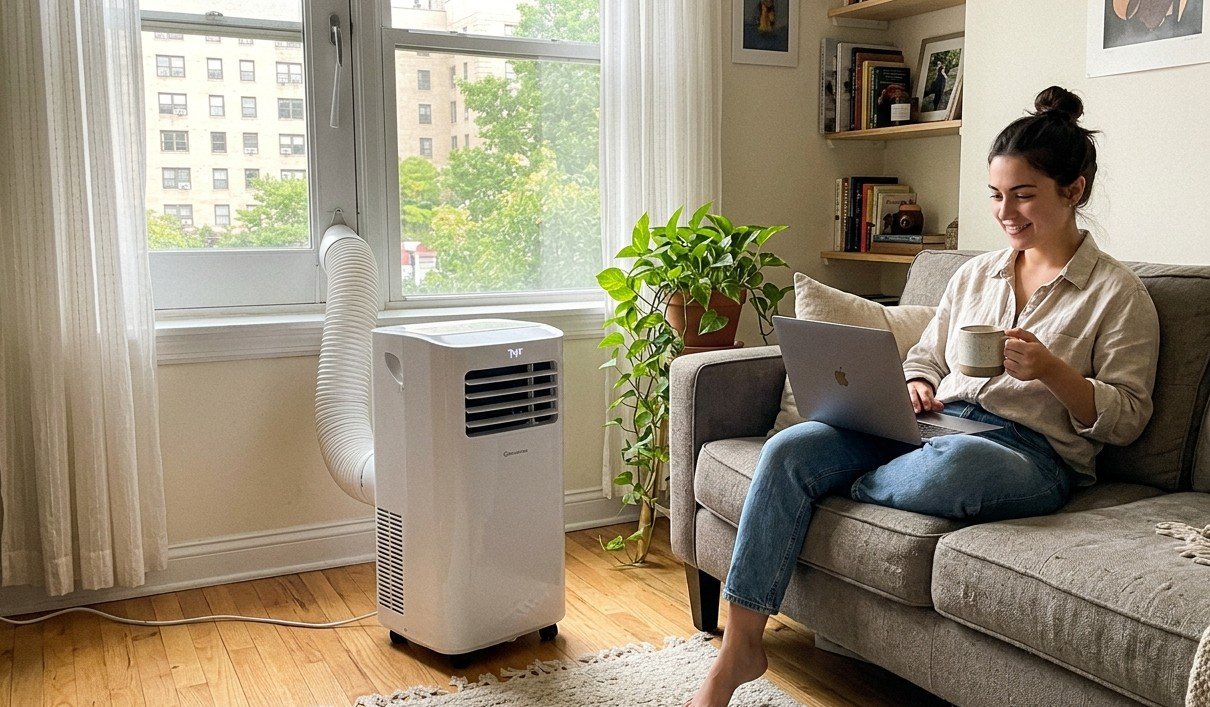
A portable air conditioner is a self-contained refrigerated cooling unit on castors that vents hot air outside through a hose fitted to a window, so it cools a room the way a split system does without any permanent installation. Unlike an evaporative cooler it lowers humidity rather than raising it, which is what makes it work in coastal conditions. Choosing the best portable air conditioner in Australia comes down to matching cooling output to room size, deciding whether heating matters, and accepting the exhaust hose as part of the deal.
Output measured in BTU is the number that sorts this market, and three bands cover almost every room. 7000 BTU units handle a bedroom, study or nursery. 9000 to 10000 BTU units cover a large bedroom or medium living room. 12000 to 14000 BTU units reach open-plan areas and converted garages. Reverse cycle models cut across all three by adding a heating mode.
Cooling output across this guide runs from 7000 BTU, about 2.0 kilowatts, up to 14000 BTU, roughly 4.1 kilowatts, and undersizing is the single most common mistake buyers make. Beyond output, the things worth checking are whether a dehumidifier mode runs independently, whether the unit reverses for winter heating, and how well the supplied window kit fits the windows you actually have. Where venting a hose is impossible, an bladeless fan moves air without needing a window at all, though it will not lower the temperature.
Three units below are held in Australian affiliate stock and seven were verified for Australian delivery before inclusion.
Quick Picks
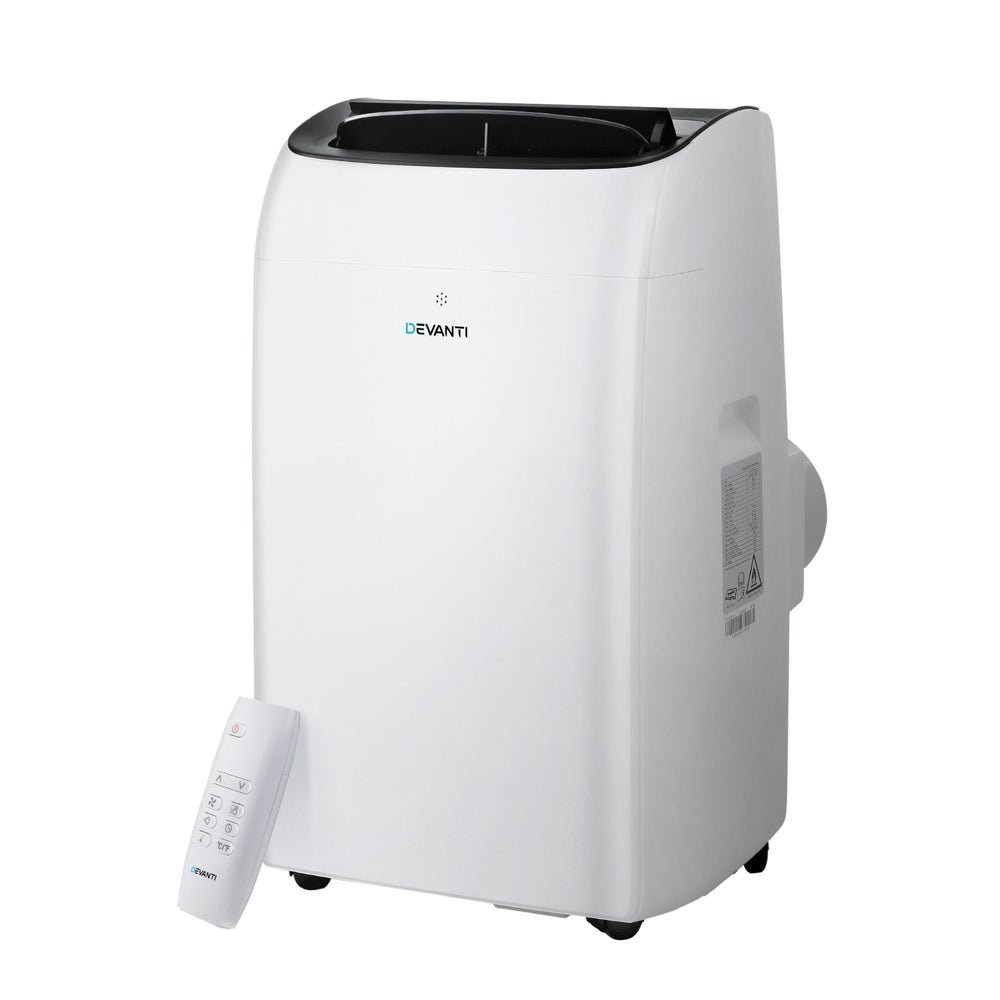
Devanti 12000BTU Portable Air Conditioner
12000 BTU with a dehumidifier mode, sized for a large bedroom or small living area.
CHECK CURRENT PRICE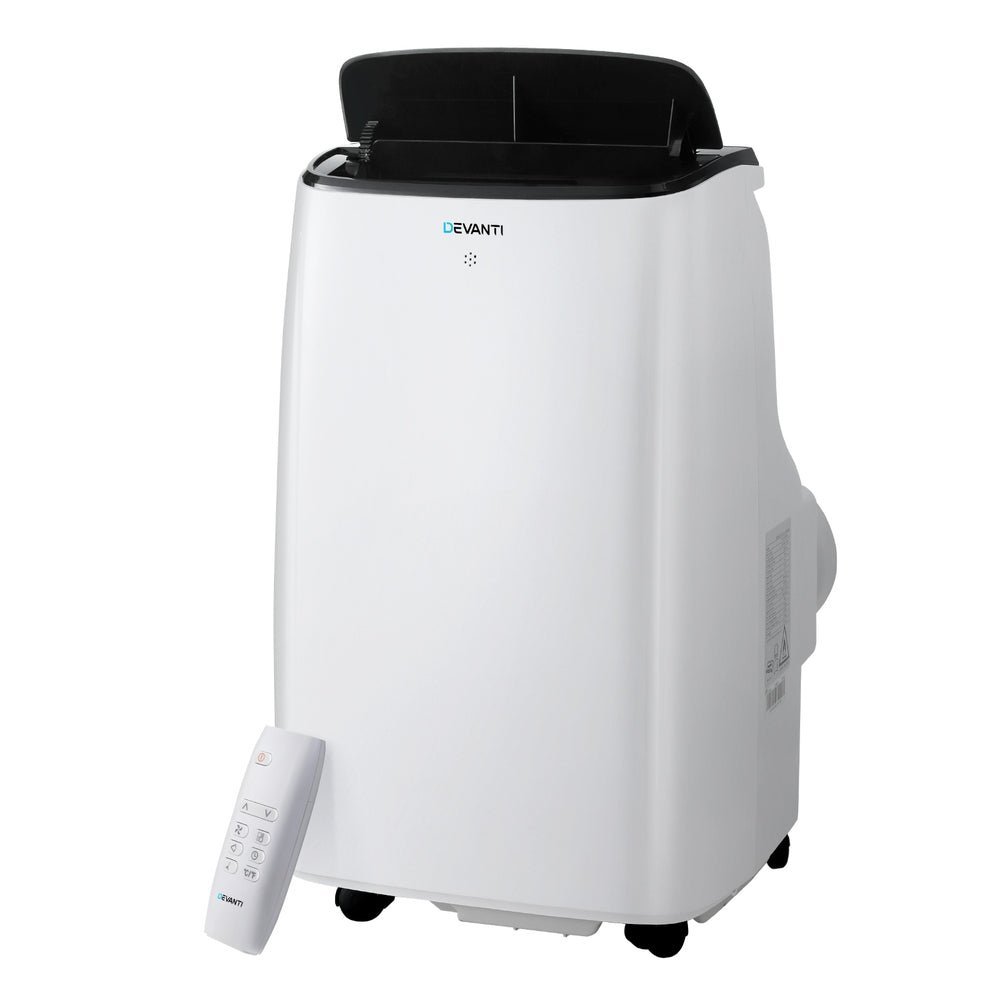
Devanti WiFi 7000BTU Portable Air Conditioner
WiFi scheduling that starts the compressor before you get home.
CHECK CURRENT PRICE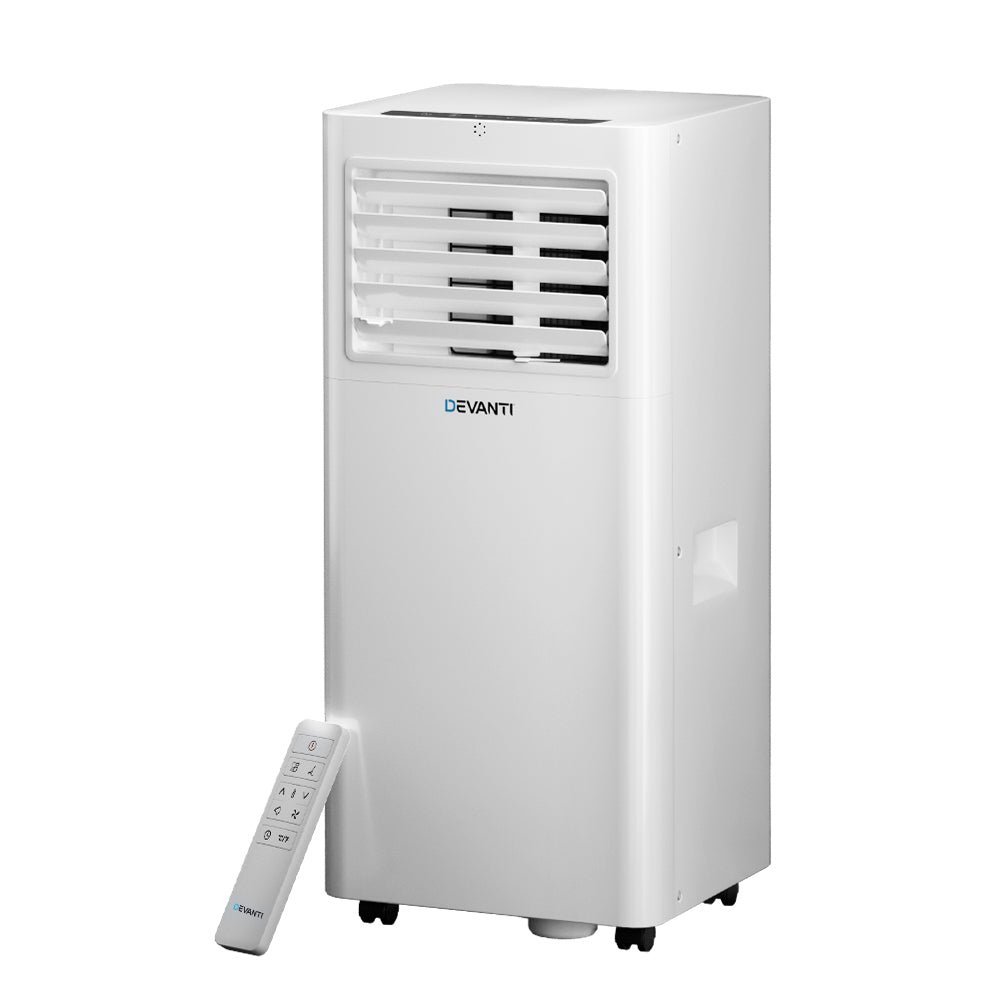
Devanti 7000BTU Portable Air Conditioner and Dehumidifier
A standalone dehumidifier mode for wet-season damp rather than heat.
CHECK CURRENT PRICEPortable Air Conditioners Compared
| Product | Link | Type | Best For | Key Spec |
|---|---|---|---|---|
| Devanti 12000BTU Portable Air Conditioner | Check price | Refrigerant | Large rooms | 12000 BTU |
| Devanti WiFi 7000BTU Portable Air Conditioner | Check price | Refrigerant, WiFi | Remote starting | 7000 BTU, WiFi |
| Devanti 7000BTU Portable Air Conditioner and Dehumidifier | Check price | Refrigerant | Humid climates | 7000 BTU, 3 modes |
| Bonaire 3.5kW Portable Air Conditioner with Heating | Check price | Reverse cycle | Year-round use | 12000 BTU, heating |
| Kogan SmarterHome 3.5kW Portable Air Conditioner | Check price | Refrigerant, smart | Smart homes | 12000 BTU |
| 14000 BTU Portable Air Conditioner with Heating | Check price | Reverse cycle | Maximum output | 14000 BTU |
| 10000 BTU Portable Air Conditioner with Dehumidifier | Check price | Refrigerant | Efficiency | 10000 BTU |
| Shinco 12000BTU Portable Air Conditioner | Check price | Refrigerant | Value at high output | 12000 BTU, 3-in-1 |
| Hyundai 2.0kW Smart Portable Air Conditioner | Check price | Refrigerant, smart | Small rooms | 7000 BTU |
| Shinco 9000BTU Portable Air Conditioner | Check price | Refrigerant | Budget buyers | 9000 BTU |
1. Devanti 12000BTU Portable Air Conditioner – Best for Large Rooms
Twelve thousand BTU is the highest cooling output among the units held in Australian affiliate stock, delivered from a cabinet on castors with a window exhaust kit in the box. The hose vents hot air outside, and that mechanism is what separates this class from every evaporative cooler.
Output at this level covers a large bedroom or a small open-plan living area rather than a whole house. Because a refrigerant unit removes moisture as a by-product of cooling, it also drops humidity in a way an evaporative cooler cannot, which is what makes it usable on the coast.
The exhaust hose is the permanent compromise: it needs a window, it radiates some heat back into the room, and the unit cannot be moved without re-fitting the kit. In a rental where a split system is not permitted, that trade is usually worth making.
Pros
- Highest cooling output among the local-stock units at 12000 BTU
- Removes humidity as well as heat
- Window exhaust kit supplied
- Castors for repositioning within a room
Cons
- Requires a suitable window for the exhaust hose
- Heavier and louder than an evaporative cooler
Key specs: 12000 BTU cooling, refrigerant compressor, dehumidifier and fan modes, window exhaust kit, castor wheels, remote control.
CHECK CURRENT PRICE2. Devanti WiFi 7000BTU Portable Air Conditioner – Best Smart Control
Seven thousand BTU in a cabinet that adds WiFi to the usual remote. The app handles mode, temperature and scheduling, so the unit can be started from outside the house.
Pre-cooling is what the connectivity is actually for. A bedroom that has sat closed through a forty-degree afternoon takes a long time to become sleepable, and starting the compressor half an hour before arriving home removes that wait entirely.
At 7000 BTU it is sized for a bedroom or a study rather than a living area, so anyone cooling a larger space should look at the unit above. For a room that needs to be cold by a predictable time each day, the scheduling is worth more than the extra output.
Pros
- WiFi app control with scheduling
- Pre-cools a room before you arrive
- Dehumidifier and fan modes included
- Compact enough for a bedroom
Cons
- 7000 BTU limits it to one room
- App setup adds a step over a plain remote
Key specs: 7000 BTU cooling, WiFi app and remote control, dehumidifier and fan modes, window exhaust kit, castor wheels.
CHECK CURRENT PRICE3. Devanti 7000BTU Portable Air Conditioner and Dehumidifier – Best for Humid Climates
Cooling, dehumidifying and fan-only run from one 7000 BTU cabinet, with the dehumidifier given equal billing rather than treated as an afterthought. It is the plainest of the three local-stock units and the least expensive of them.
Standalone dehumidifying matters through a Queensland or northern New South Wales wet season, when the temperature is bearable but the humidity is not. Running the unit in that mode pulls moisture without over-cooling the room, which a cooling-only appliance cannot do.
There is no app and no premium finish, and at 7000 BTU it will not cool an open-plan area. Where the real complaint about summer is damp rather than heat, it addresses the actual problem more directly than a larger cooling-only unit would.
Pros
- Dedicated dehumidifier mode for humid regions
- Three modes from one cabinet
- Least expensive of the local-stock refrigerant units
- Window exhaust kit included
Cons
- No app control
- 7000 BTU is not enough for open-plan spaces
Key specs: 7000 BTU cooling, dehumidifier and fan modes, window exhaust kit, castor wheels, remote control.
CHECK CURRENT PRICE4. Bonaire 3.5kW Portable Air Conditioner with Heating – Best All-Season Unit
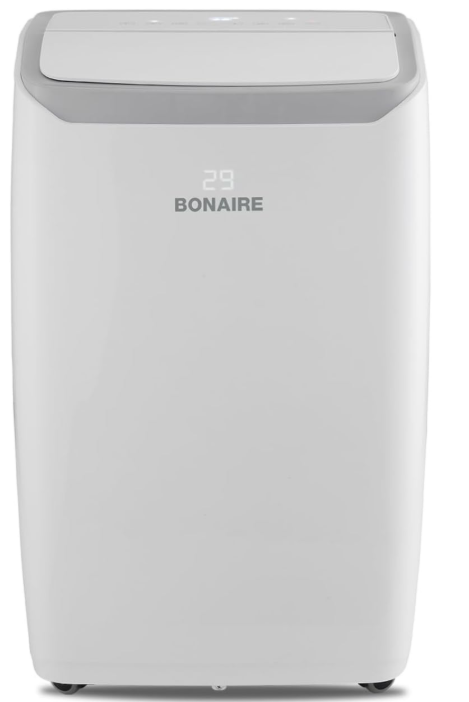
Three and a half kilowatts of cooling paired with a heating mode makes this the only reverse-cycle unit in the guide. WiFi and remote control are both fitted, and the cabinet carries a dehumidifier function alongside the two main modes.
Reverse cycle changes the economics of a portable unit. Instead of storing an air conditioner for eight months and a heater for four, one cabinet covers both seasons, which matters in Melbourne or Canberra where the swing between them is wide.
It sits at the top of the range here, and the heating mode still needs the exhaust hose fitted correctly to work efficiently. For a household that would otherwise buy two appliances, that stops being a premium and starts being a saving.
Pros
- Heating and cooling from one cabinet
- WiFi and remote control
- Dehumidifier mode included
- Established Australian brand
Cons
- Sits at the top of the range in this guide
- Still requires window venting in both modes
Key specs: 3.5kW cooling, 12000 BTU, reverse cycle heating, WiFi app and remote, dehumidifier mode, window kit.
CHECK ON AMAZON5. Kogan SmarterHome Portable Air Conditioner – Best Smart Home Integration
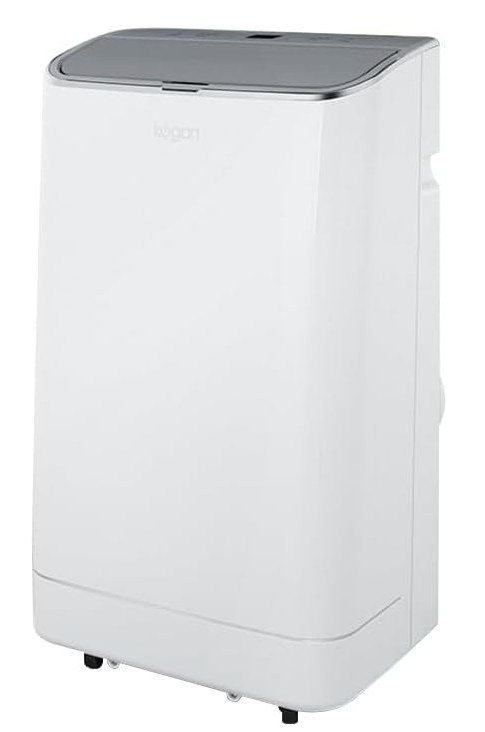
Twelve thousand BTU with app control built around a wider smart home platform rather than a standalone application. The cabinet follows the standard portable format with castors and a window exhaust kit.
Where a household already runs lights, plugs or sensors through one app, adding the air conditioner to the same system lets it react to conditions rather than to a fixed schedule. That is a meaningfully different proposition from an app that only exists to replace a remote.
For anyone with no existing smart home setup the platform is an unnecessary layer over what a remote already does. Inside such a system it is the unit that fits without a second app to manage.
Pros
- Integrates with a broader smart home platform
- 12000 BTU covers a large bedroom or small living area
- App and remote control
- Window exhaust kit supplied
Cons
- Platform is redundant without other smart devices
- Requires a stable WiFi connection to use fully
Key specs: 3.5kW cooling, 12000 BTU, smart app and remote control, dehumidifier and fan modes, window exhaust kit.
CHECK ON AMAZON6. Portable Air Conditioner with Heating – Best Maximum Output
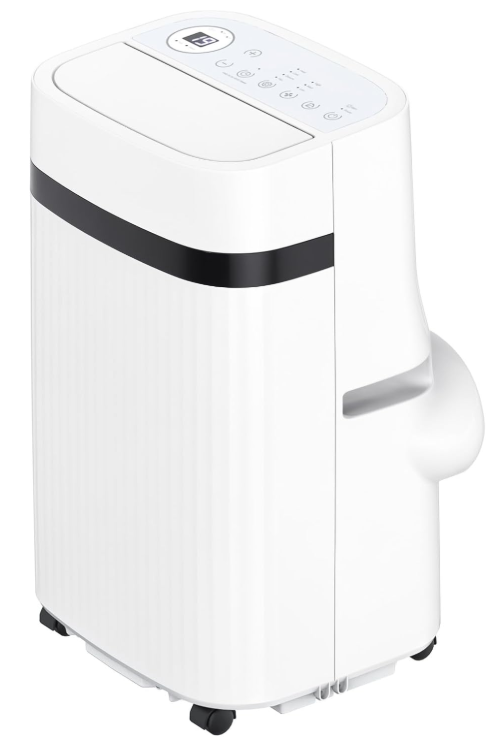
Fourteen thousand BTU is the largest output in this guide by a clear margin, in a four-in-one cabinet covering cooling, heating, dehumidifying and fan-only running. The physical unit is correspondingly larger than the 7000 BTU models.
Output at this level reaches into territory a split system usually occupies, which makes it the option for a large living area or a converted garage where nothing smaller keeps up. The heating mode gives it the same all-season argument as the reverse-cycle unit above.
Size and noise both scale with output, and in a bedroom this would be excessive on both counts. For the largest space a portable unit can realistically serve, nothing else here has the capacity.
Pros
- Largest cooling output in this guide at 14000 BTU
- Heating, dehumidifying and fan modes as well
- Suits large living areas and converted garages
- Reaches spaces smaller units cannot
Cons
- Physically large and louder than smaller units
- Excessive for a standard bedroom
Key specs: 14000 BTU cooling, four-in-one cooling, heating, dehumidifying and fan modes, window exhaust kit, remote control.
CHECK ON AMAZON7. KYUKRI Portable Air Conditioner with Dehumidifier – Best Energy Efficiency
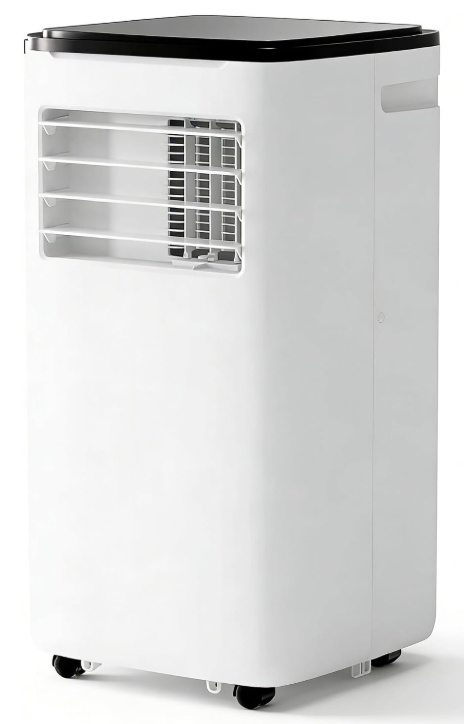
Ten thousand BTU sits between the bedroom units and the large-room models, with energy efficiency stated as the design priority. A dehumidifier and cooling fan run from the same cabinet.
Efficiency is where the running cost of a portable unit is decided, because a compressor cycling constantly through a hot week adds up quickly. A unit that reaches the set temperature and holds it with less compressor time costs noticeably less across a summer than raw output figures suggest.
Ten thousand BTU will not match the 14000 BTU model in a large open space, and it carries no heating mode. In a standard main bedroom or a medium living room run daily through summer, the lower running cost is the more relevant number.
Pros
- Efficiency focus lowers summer running costs
- 10000 BTU suits medium rooms well
- Dehumidifier and cooling fan modes
- Standard window exhaust kit
Cons
- No heating mode
- Outmatched in large open-plan areas
Key specs: 10000 BTU cooling, energy efficient compressor, dehumidifier and fan modes, window exhaust kit, remote control.
CHECK ON AMAZON8. Shinco 12000BTU Portable Air Conditioner – Best Value at Full Output
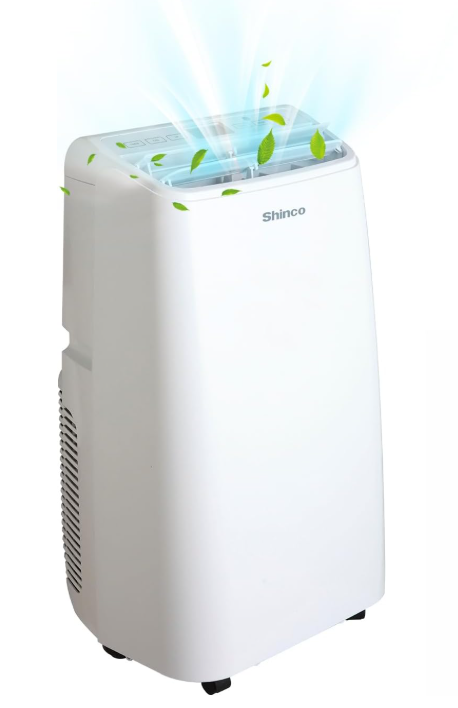
A three-in-one cabinet delivering 12000 BTU of cooling alongside dehumidifier and fan modes. It reaches the same output as the connected units above without the app connectivity.
Dropping the smart features while holding the output is a reasonable trade for anyone who operates an air conditioner with a remote from the same room anyway. The cooling capacity is what determines whether a room becomes comfortable, and that is unchanged.
There is no scheduling, so the room will not be cold before anyone gets home. Judged purely on output for outlay, it is the strongest position in this guide.
Pros
- 12000 BTU at a lower outlay than the connected units
- Cooling, dehumidifying and fan modes
- Straightforward remote operation
- Window exhaust kit supplied
Cons
- No app control or scheduling
- Cannot pre-cool before you arrive
Key specs: 12000 BTU cooling, 3.5kW, three-in-one cooling, dehumidifying and fan modes, window exhaust kit, remote control.
CHECK ON AMAZON9. Hyundai 2.0kW Smart Portable Air Conditioner – Best Compact Unit
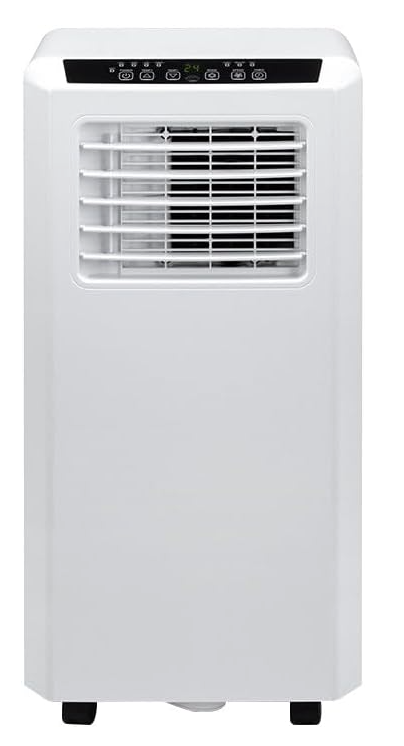
Two kilowatts, or 7000 BTU, in a cabinet from an established appliance brand with smart control fitted. It is sized for a single closed room rather than an open area.
Smaller units reach their set temperature faster in a small room because there is less air to cool, and they draw less power doing it. In a study or a nursery that combination matters more than a headline output figure the room will never need.
Ask it to cool a lounge room and it will run continuously without getting there. Kept to the room size it was built for, it is the most economical unit in the guide to run.
Pros
- Compact cabinet suits studies and small bedrooms
- Smart control from an established brand
- Lower power draw than the large units
- Reaches temperature quickly in a small room
Cons
- Not enough output for a living area
- Shares the smallest cooling capacity here
Key specs: 2.0kW cooling, 7000 BTU, smart control, dehumidifier and fan modes, window exhaust kit.
CHECK ON AMAZON10. Shinco 9000BTU Portable Air Conditioner – Best Budget Pick
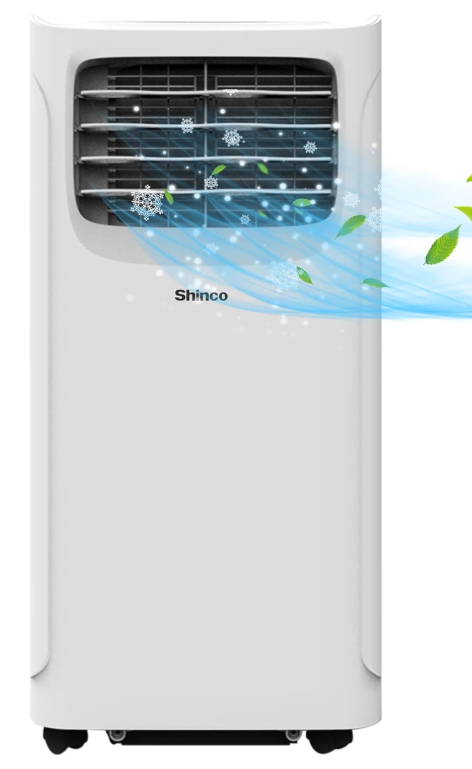
Nine thousand BTU, or 2.6 kilowatts, with cooling, ventilating and dehumidifying modes and an exhaust hose in the box. It occupies the lowest position on the range in this guide.
Nine thousand BTU is an awkward but useful size, covering a large bedroom that a 7000 BTU unit struggles with while costing less than the 12000 BTU models. For a room that falls between the two standard sizes, it avoids paying for output that will not be used.
The finish and the controls are basic, and there is no app. As a first portable air conditioner for a room a smaller unit cannot handle, it is the least expensive way to get adequate output.
Pros
- Fills the gap between 7000 and 12000 BTU units
- Lowest position on the range in this guide
- Cooling, ventilating and dehumidifying modes
- Exhaust hose supplied
Cons
- Basic controls and finish
- No app or scheduling
Key specs: 9000 BTU cooling, 2.6kW, cooling, ventilating and dehumidifying modes, window exhaust hose, remote control.
CHECK ON AMAZONHow to Choose the Best Portable Air Conditioner in Australia
Size the output to the room before anything else. As a rough guide, 7000 BTU suits a bedroom or study, 9000 to 10000 BTU covers a large bedroom or medium living room, and 12000 BTU and above is needed for open-plan spaces. An undersized unit runs constantly without reaching temperature, which costs more in electricity than buying the correct size would have.
Check your windows before you buy the unit. Every portable air conditioner needs to vent, and the supplied kits are built for sliding or double-hung windows. Casement windows, louvres and awning windows all need a custom panel, and finding that out after delivery is the most common reason these units end up returned.
Weigh a reverse cycle model against storing two appliances. A unit that heats as well as cools earns its cupboard space all year, which matters most in Melbourne, Canberra and Tasmania where both seasons bite. In Darwin or Cairns the heating mode will never be used and the money is better spent on cooling output.
Look for a dehumidifier mode that runs on its own. Through a humid wet season the temperature is often tolerable while the humidity is not. A unit that can pull moisture without also over-cooling the room handles that far better than one where dehumidifying is only a by-product of the cooling cycle.
Expect noise, and place the unit accordingly. A compressor sits inside the room rather than outside it, so a portable unit is audibly louder than a split system at the same output. Positioning it away from the head of a bed matters more than any decibel figure printed on the box.
Factor in the running cost across a full summer. These draw considerably more power than a fan or an evaporative cooler, so an efficient compressor pays for itself over a hot season rather than in the first week. Australian Consumer Law guarantees apply to every unit sold here, separate from and in addition to the manufacturer warranty.
Frequently Asked Questions
What size portable air conditioner do I need?
Match BTU output to room size. Around 7000 BTU suits a bedroom or study, 9000 to 10000 BTU covers a large bedroom or medium living room, and 12000 BTU or more is needed for open-plan areas. Undersizing means the unit runs constantly without reaching temperature.
Do portable air conditioners need a window?
Yes. All refrigerated portable units produce hot exhaust air that must be vented outside through a hose. Units advertised as windowless are evaporative coolers, which add humidity rather than removing it and work on a completely different principle.
Are portable air conditioners expensive to run?
They cost more to run than a fan or evaporative cooler but less than cooling a whole house with ducted air conditioning. Running one in a single occupied room rather than cooling the entire home is where the saving comes from.
Can a portable air conditioner cool a whole house?
No. Even a 14000 BTU unit is designed for one room or a single open-plan area. Cooling multiple rooms requires either several units or a fixed split or ducted system.
Do I need to drain a portable air conditioner?
It depends on the model. Many units evaporate condensate through the exhaust hose and need no manual draining in normal cooling use, but most require the tank to be emptied when running in dedicated dehumidifier mode through humid weather.
Is a portable air conditioner better than an evaporative cooler?
They suit different climates. A refrigerated portable unit lowers both temperature and humidity, so it works anywhere including the humid coast. An evaporative cooler costs far less to run but loses effectiveness as humidity rises.
Verdict
Room size settles this before any feature list does. A bedroom or study is well served by the Devanti WiFi 7000BTU Portable Air Conditioner, whose scheduling means the room is already cold at bedtime rather than an hour after it. For a large bedroom or a small living area the Devanti 12000BTU Portable Air Conditioner has the output and the dehumidifier mode to handle a humid coastal summer, and anyone cooling a converted garage or a genuinely open-plan space needs the 14000 BTU Portable Air Conditioner with Heating, which is the only unit here with capacity to spare.