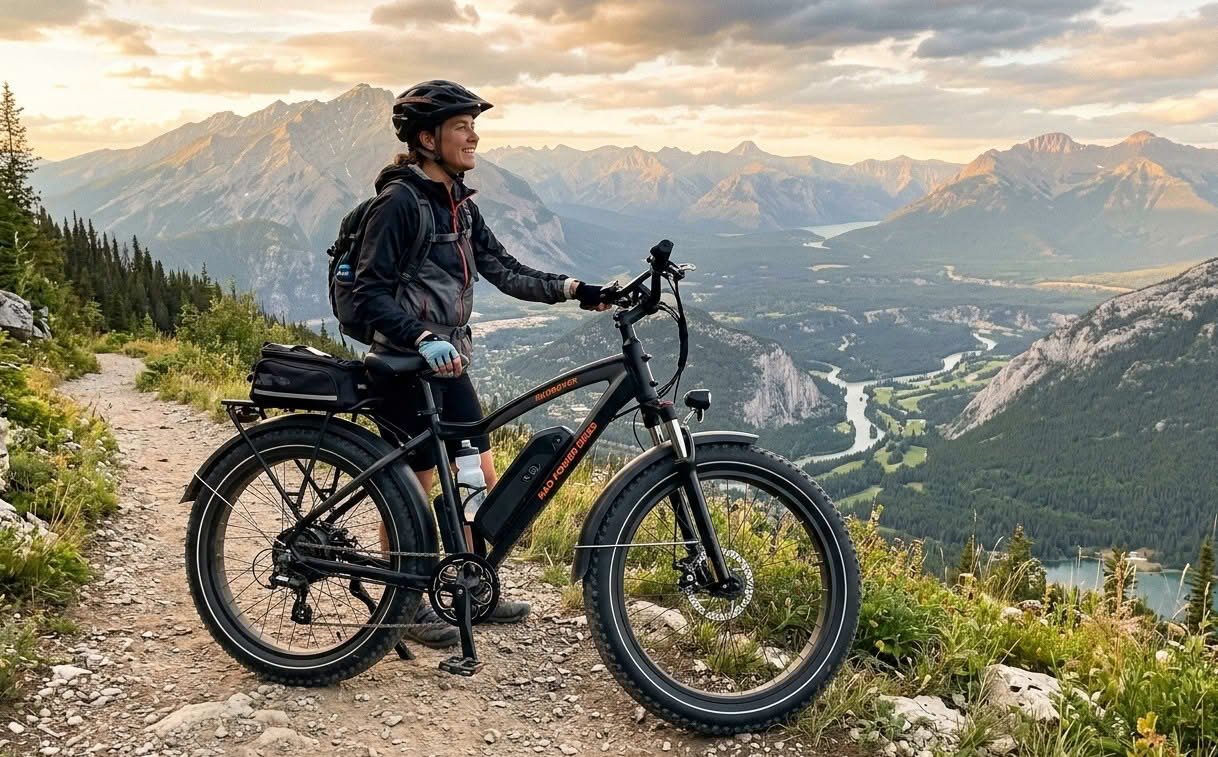
A fat tyre electric bike is an e-bike built around tyres roughly 4 inches or wider, rather than the 2 to 2.4-inch tyres on a standard mountain or commuter e-bike, trading some pedalling efficiency for extra traction and stability on sand, snow, gravel and other loose surfaces a narrow tyre struggles with.
The category splits by frame and use case rather than tyre width alone: step-through fat tyre e-bikes, built with a lower frame for easier mounting and dismounting, dual-motor fat tyre e-bikes, which add a second motor for extra torque and payload capacity on steep or loaded rides, folding fat tyre e-bikes, which trade some ride stiffness for compact storage and transport, and standard fat tyre mountain e-bikes, built around dual suspension for off-road trail riding.
The single most important number before buying is not range or top speed but motor power: Australian road rules generally cap a pedal-assisted bicycle usable without registration at 250 watts of continuous power and 25 kilometres per hour of motor-assisted speed, while every fat tyre e-bike in this guide is rated well above that, from 750 watts up to 2,000 watts peak. That does not make these bikes unusable, but it does mean checking state-specific rules before riding one on a public footpath or bike path without registration.
This guide compares five fat tyre electric bikes available to Australian buyers, sourced entirely through one international retailer since none of this site’s approved local retail partners currently stock a genuine fat tyre model, and pairs well with an electric scooter for shorter trips where a full-size e-bike is more than is needed.
Fat Tyre Electric Bikes Compared
| Product | Link | Type | Best For | Key Spec |
|---|---|---|---|---|
| Aventon Aventure.2 Step-Through | Check price | Step-through | Established brand | 750W, 4in tyres, 96km range |
| QIKAITU Dual Motor Electric Bike | Check price | Dual motor | Payload capacity | 160Nm torque, ~200kg load |
| SAMEBIKE XD26-II | Check price | Mountain e-bike | Budget pick | 1500W peak, dual suspension |
| SAMEBIKE RS-A02 Plus | Check price | Folding | Compact storage | 20x4in tyres, 150kg load |
| JESRIDER Electric Bike | Check price | Standard frame | Simple commuting | 26x4in tyres, 4 riding modes |
1. Aventon Aventure.2 Step-Through – Best from an Established Brand
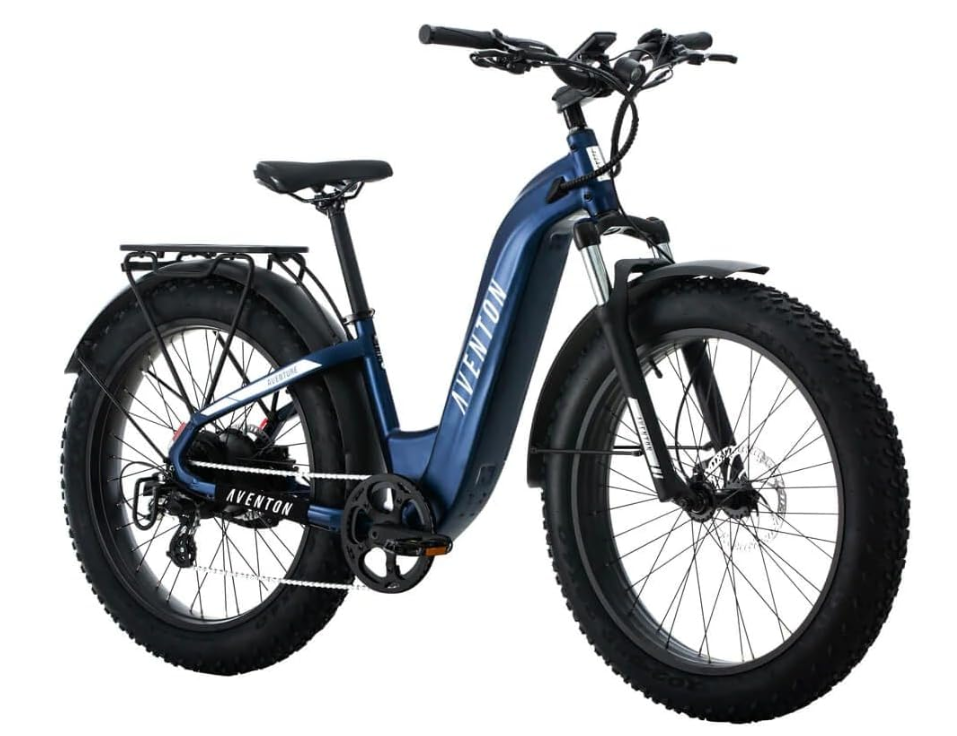
Aventon is a dedicated e-bike brand rather than a generic dropship listing, and the Aventure.2 reflects that with a proper step-through frame that lowers the mounting height considerably compared with the standard-frame bikes later in this guide, useful for shorter riders or anyone who finds swinging a leg over a high crossbar awkward.
A 750-watt motor draws from a 48V, 15Ah battery rated for up to 96 kilometres of range, with an 8-speed drivetrain and genuine 4-inch tyres front and rear. Stock and delivery on this listing are the most reliable of the five bikes in this guide, with a specific delivery window confirmed rather than a vague estimate.
It is also the most expensive bike in this guide, and like every other bike here the motor output sits well above the 250-watt limit that applies to registration-free footpath and bike-path use in most Australian states. For buyers who want a dedicated e-bike brand behind the build rather than a generic listing, and are prepared to pay for it, this is the safer bet of the five.
Pros
- Dedicated e-bike brand, not a generic dropship listing
- Step-through frame lowers mounting height
- Most reliable stock and delivery window of the five bikes here
Cons
- Highest price in this guide
- Motor output exceeds the 250W registration-free limit in most states, like every bike here
Key specs: 750W motor, 48V 15Ah battery, 96km range, 4in tyres, 26in wheels, 8-speed, step-through frame
CHECK ON AMAZON2. QIKAITU Dual Motor Electric Bike – Best for Payload Capacity
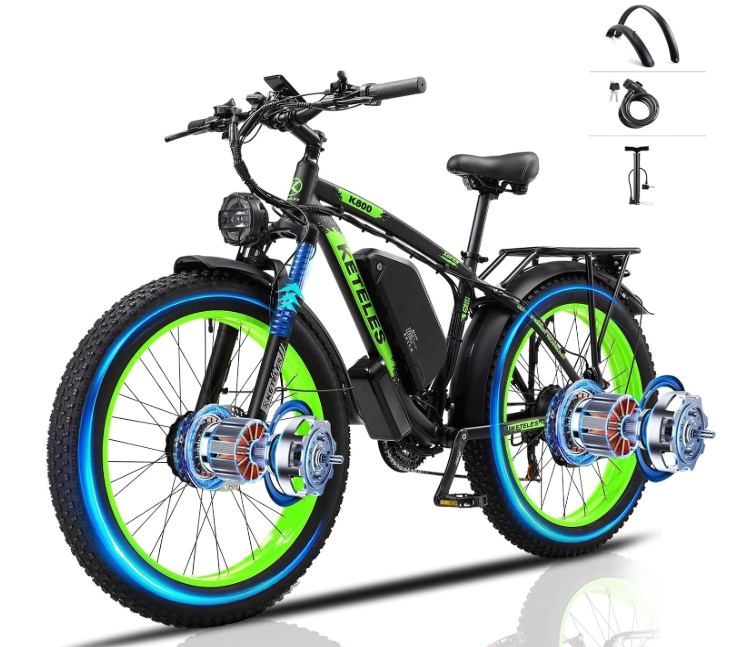
Two motors combine for 160Nm of torque here, well ahead of any single-motor bike in this guide, with a stated load capacity around 200 kilograms that suits a heavier rider or one carrying gear rather than just their own body weight.
Hydraulic disc brakes, a removable 48V 23Ah battery rated to 120 kilometres and genuine 26×4-inch tyres round out a spec sheet built for load and terrain rather than outright speed, and the listing confirms AU warehouse stock with a free-delivery window rather than an overseas shipping estimate.
The listing markets itself as road legal, but the dual-motor output and adjustable top speed settings run well past the 250-watt, 25km/h threshold that keeps a bike registration-free in most Australian states, so that claim should not be taken at face value without checking local rules first. Heavier riders or anyone regularly carrying loaded panniers, and who has confirmed their local registration requirements, will get more usable payload out of this than any other bike here.
Pros
- Highest torque and payload capacity in this guide, around 200kg
- Hydraulic disc brakes and a removable battery
- Confirmed AU warehouse stock with a specific delivery window
Cons
- Its own “road legal” marketing claim does not hold up against standard state power and speed limits
- Only a handful of reviews on the listing so far
Key specs: Dual motor, 160Nm torque, 48V 23Ah battery, 120km range, 26x4in tyres, 21-speed, ~200kg load capacity
CHECK ON AMAZON3. SAMEBIKE XD26-II – Best Budget Pick
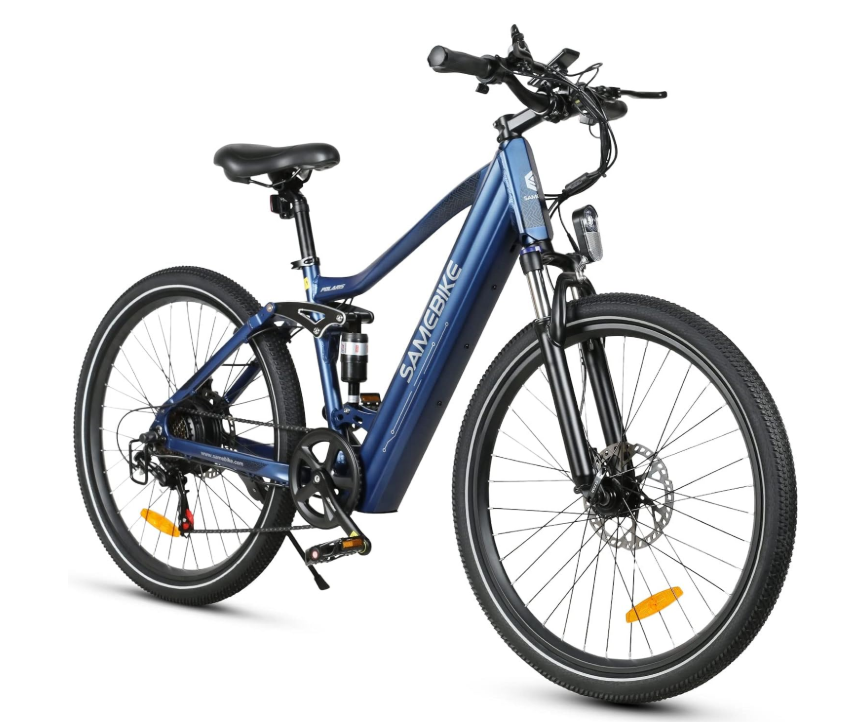
This is the cheapest bike in this guide by a meaningful margin, built around a 1,500-watt peak motor and dual front-and-rear suspension more commonly found on pricier mountain e-bikes, with hydraulic disc brakes on both wheels.
A 48V 14Ah removable battery is rated for 90 to 120 kilometres of range, and the listing’s title describes it as a fat tyre electric mountain bike, though the page copy does not separately restate the exact tyre width the way the other listings in this guide do, so that figure carries slightly less confidence than the rest of this list.
At 25.5 kilograms it is also one of the lighter bikes here despite the dual suspension, and delivery is the fastest confirmed window of the five. Budget-conscious buyers wanting an off-road-capable e-bike without a dedicated brand name pay the least here, with the tyre-width caveat above worth confirming first.
Pros
- Cheapest bike in this guide
- Dual front-and-rear suspension, unusual at this price
- Fastest confirmed delivery window of the five
Cons
- Exact tyre width is stated in the listing title but not separately confirmed in the page specs
- 1,500W peak motor sits furthest above the standard footpath power limit
Key specs: 1500W peak motor, 48V 14Ah battery, 90-120km range, dual suspension, dual hydraulic disc brakes, 25.5kg
CHECK ON AMAZON4. SAMEBIKE RS-A02 Plus – Best Folding Design
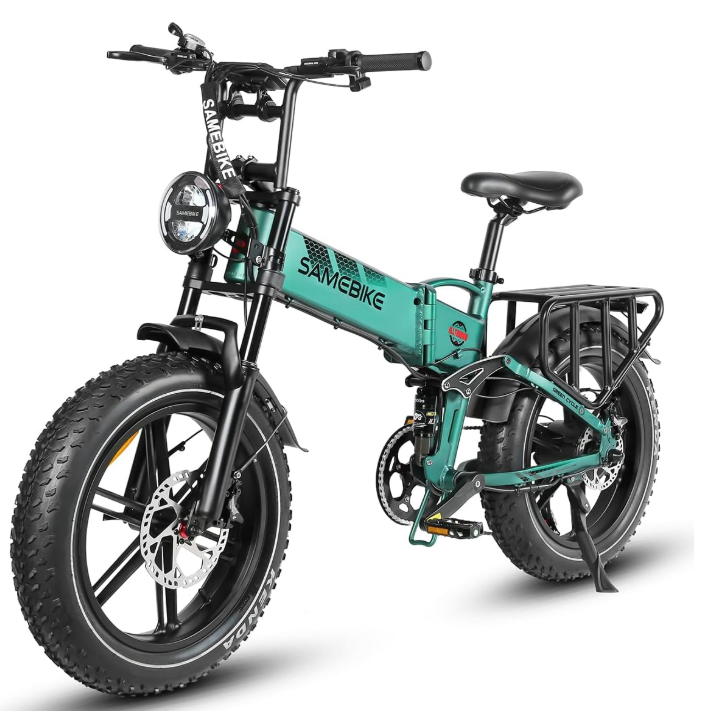
The only folding bike in this guide, the RS-A02 Plus trades the larger 26-inch wheels used elsewhere in this list for 20-inch wheels and genuine 4-inch tyres, which keeps the fat-tyre stability while folding down small enough for a boat, caravan or apartment storage.
A 750-watt motor and 100-plus Nm of torque draw from a removable 48V 17Ah battery rated for 65 to 130 kilometres, and a stated 150-kilogram load capacity is the highest in this guide despite the smaller wheel size. Dual suspension and hydraulic disc brakes carry over from the larger bikes on this list.
Smaller 20-inch wheels handle rough or rutted terrain less smoothly than the 26-inch options earlier in this guide, even with the same tyre width, which is the trade-off for the folding frame. Compact storage or transport, or a higher load rating than anywhere else on this list, is the trade a folding frame buys here.
Pros
- Only folding bike in this guide
- Highest stated load capacity, around 150kg
- Genuine 4-inch tyres despite the smaller 20-inch wheel size
Cons
- Smaller wheels handle rough terrain less smoothly than the 26-inch bikes on this list
- 750W motor still exceeds the standard footpath power limit
Key specs: 750W motor, 100+Nm torque, 48V 17Ah battery, 65-130km range, 20x4in tyres, folding frame, 150kg load capacity
CHECK ON AMAZON5. JESRIDER Electric Bike – Best for Simple Commuting
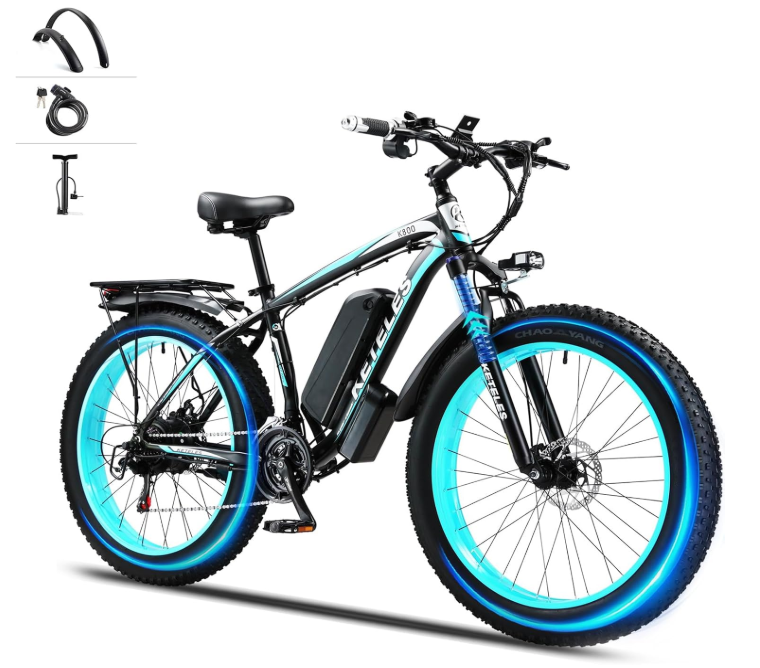
A rear hub motor and 75Nm of torque make this the most modestly specced bike in this guide on paper, but four riding modes, electric-only, pedal-assist, classic pedalling and cruise, cover the range of everyday commuting use without the complexity of a dual-motor or full-suspension setup.
The 48V 15Ah removable battery is rated for a shorter roughly 40-kilometre pedal-assist range than most of the other bikes here, and genuine 26×4-inch tyres and hydraulic disc brakes carry over from the rest of this list. A phone holder is included, a small but genuinely useful inclusion none of the other listings mention.
The underlying bike shares design similarities with a couple of other generic listings excluded from this guide as likely duplicates, so it reads as a straightforward rather than distinctive build. This suits a commuter after a no-frills all-terrain bike without dual motors or full suspension, more than anyone chasing the longest spec sheet.
Pros
- Four riding modes cover everyday commuting needs
- Phone holder included
- Fastest confirmed dispatch of the five bikes here
Cons
- Shorter pedal-assist range than most other bikes in this guide
- Only a single review on the listing so far
Key specs: Rear hub motor, 75Nm torque, 48V 15Ah battery, ~40km pedal-assist range, 26x4in tyres, 21-speed, 4 riding modes
CHECK ON AMAZONHow to Choose a Fat Tyre Electric Bike
Motor power decides where you can legally ride without registration. Most Australian states cap unregistered footpath and bike-path use at 250 watts of continuous power and 25km/h of motor-assisted speed, and every bike in this guide sits above that on paper, so check your specific state’s e-bike rules before assuming any of these can be ridden anywhere a normal bicycle can.
Wheel size trades off against portability and ride smoothness. Larger 26-inch wheels roll over rough or rutted terrain more smoothly, while the smaller 20-inch wheels on a folding bike prioritise compact storage over outright ride comfort. Neither is wrong, but the choice should match where the bike is actually going to be ridden and stored.
Payload capacity matters more than most buyers check. A stated load rating covers the rider’s own weight plus anything carried, and a heavier rider or one planning to carry gear regularly should check this figure specifically rather than assuming any e-bike will handle it, since the bikes in this guide range from roughly 120kg to 200kg rated capacity.
A removable battery is worth the extra convenience. Charging a battery off the bike, rather than needing the whole bike near a power point, matters for anyone storing the bike somewhere without easy charger access, such as a shed, garage or apartment storage room.
Dual motor and dual suspension both add weight for a specific benefit. A second motor adds torque and payload capacity at the cost of extra weight and complexity, and front-and-rear suspension smooths rough terrain at the same cost, so it is worth matching these features to actual planned use rather than defaulting to the highest spec sheet.
Genuine reviews matter more on a newer or less established listing. A handful of reviews on an otherwise well-specced bike is not necessarily a red flag for a newer model, but it does mean there is less real-world evidence to rely on than for an established brand, and it is worth weighing that against the price difference.
Frequently Asked Questions
Are fat tyre electric bikes road legal in Australia?
It depends on the specific state and the bike’s motor output. Most states allow an e-bike to be ridden without registration only if continuous motor power stays at or under 250 watts and motor assistance cuts out at 25km/h, and several fat tyre e-bikes, including every one in this guide, are rated above that limit. Checking the relevant state transport authority’s e-bike rules before riding on a public footpath or bike path is worth doing regardless of what a listing claims.
What makes a tyre a fat tyre on an electric bike?
A fat tyre is generally considered to be around 4 inches wide or wider, compared with the 2 to 2.4-inch tyres on a standard mountain or commuter e-bike. The extra width spreads weight over a larger contact patch, which improves traction and stability on sand, snow, gravel and other loose or uneven surfaces.
Do fat tyre electric bikes need more maintenance than standard e-bikes?
Not significantly more, though the wider tyres and often heavier frames mean tyre replacements can cost more and be less widely stocked than standard bike tyre sizes. Otherwise, maintenance follows the same battery care, brake and drivetrain checks as any other e-bike.
How much weight can a fat tyre electric bike carry?
It varies by model. The bikes in this guide range from roughly 120 to 200 kilograms of combined rider and cargo weight, with dual-motor and folding designs generally rated higher than single-motor standard-frame bikes. Checking the specific load rating against rider weight plus any gear is worth doing before buying, rather than assuming a higher-powered bike automatically means a higher weight limit.
Can a fat tyre electric bike be folded for storage?
Some can, though it is not universal across the category. A folding fat tyre e-bike trades some ride stiffness and typically uses smaller wheels in exchange for storing in a car boot, boat, caravan or small apartment, while a standard-frame fat tyre e-bike offers a smoother ride at the cost of needing more storage space.
What is the difference between a single motor and dual motor fat tyre e-bike?
A dual-motor bike adds a second motor, usually to the front wheel alongside a rear motor, for meaningfully more combined torque and payload capacity, at the cost of extra weight and typically a higher price. A single motor is lighter and usually cheaper, and is adequate for most riders who are not regularly carrying heavy loads or riding steep, loaded terrain.
Verdict
None of these five bikes is registration-free under standard state rules, so the real choice is which trade-off suits the ride: the Aventon Aventure.2 for a dedicated brand and the most reliable delivery, the QIKAITU or the folding SAMEBIKE RS-A02 Plus for genuine payload capacity, and the SAMEBIKE XD26-II for the lowest price once the tyre-width detail is confirmed.