Most people shopping for a microwave check the litre capacity, glance at the price, and stop there – but two microwaves with an almost identical cavity size and price can defrost a chicken breast unevenly enough that one side starts cooking before the other side has thawed, a difference CHOICE has flagged directly in its own kitchen testing. A microwave oven is a countertop or built-in appliance that uses electromagnetic radiation at a fixed 2450MHz frequency to agitate water molecules inside food, generating heat from the inside out instead of browning the surface the way a conventional oven does.
Three broad types cover almost everything sold in Australia. Solo microwaves just heat, defrost and reheat, with mechanical dial or digital button controls. Grill and convection microwaves add a browning element or a fan-forced oven mode, letting one appliance crisp a chicken skin or bake a small cake as well as reheat leftovers. Combi ovens push further again, folding in true air-fry function alongside the microwave and convection modes. Cavity design splits further into turntable models, where a rotating glass plate spins food under the emitter, and flatbed models, which use a stationary ceramic or glass base and a different emitter layout to fit larger or oddly shaped dishes without the turntable clipping the door.
The spec worth checking before wattage is whether the unit uses inverter technology. A standard microwave hits 100% power then cuts out entirely to average out a lower setting, which is why defrosted meat often ends up part-cooked at the edges; an inverter model holds a properly lower, steady power level the whole time, which is the difference CHOICE’s defrost tests are built to expose. Wattage still matters for raw reheating speed – the ten microwaves on this list run from 700W compact units up to a 1200W family-size model – but an inverter unit at 900W will often out-perform a non-inverter unit rated higher.
This guide runs from a compact 20L solo unit through a 30L air-fry combi and a proper built-in wall model, then across inverter and flatbed picks from LG, Panasonic and Sharp, a family-size Russell Hobbs, a premium Breville combi, a retro-styled countertop pick and a budget compact option. Anyone weighing a combi microwave against a dedicated appliance instead should also check our best air fryers guide before deciding which one actually earns its bench space.
Quick Picks
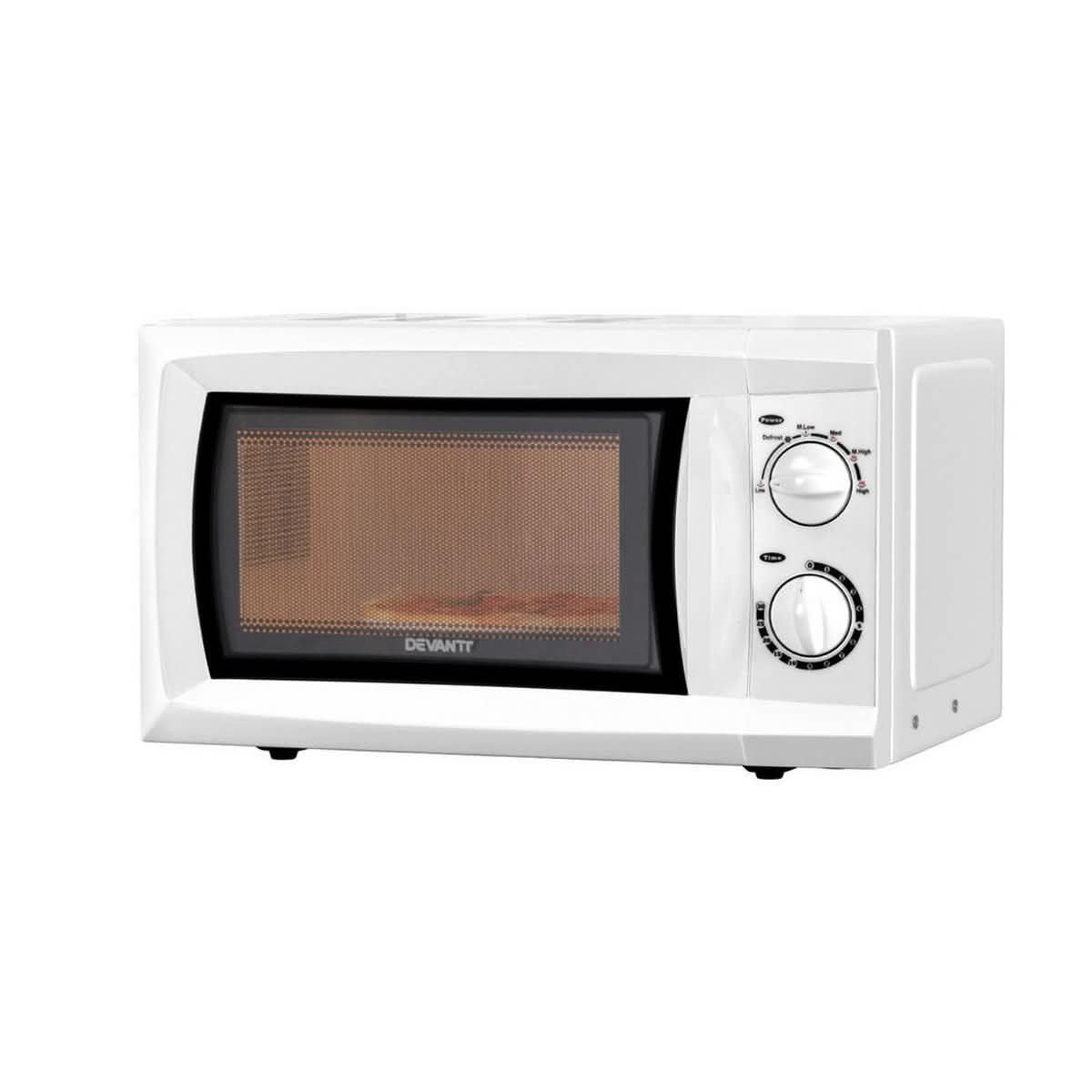
Devanti 20L Microwave Oven
The compact, no-fuss default for everyday reheating and defrosting.
CHECK CURRENT PRICE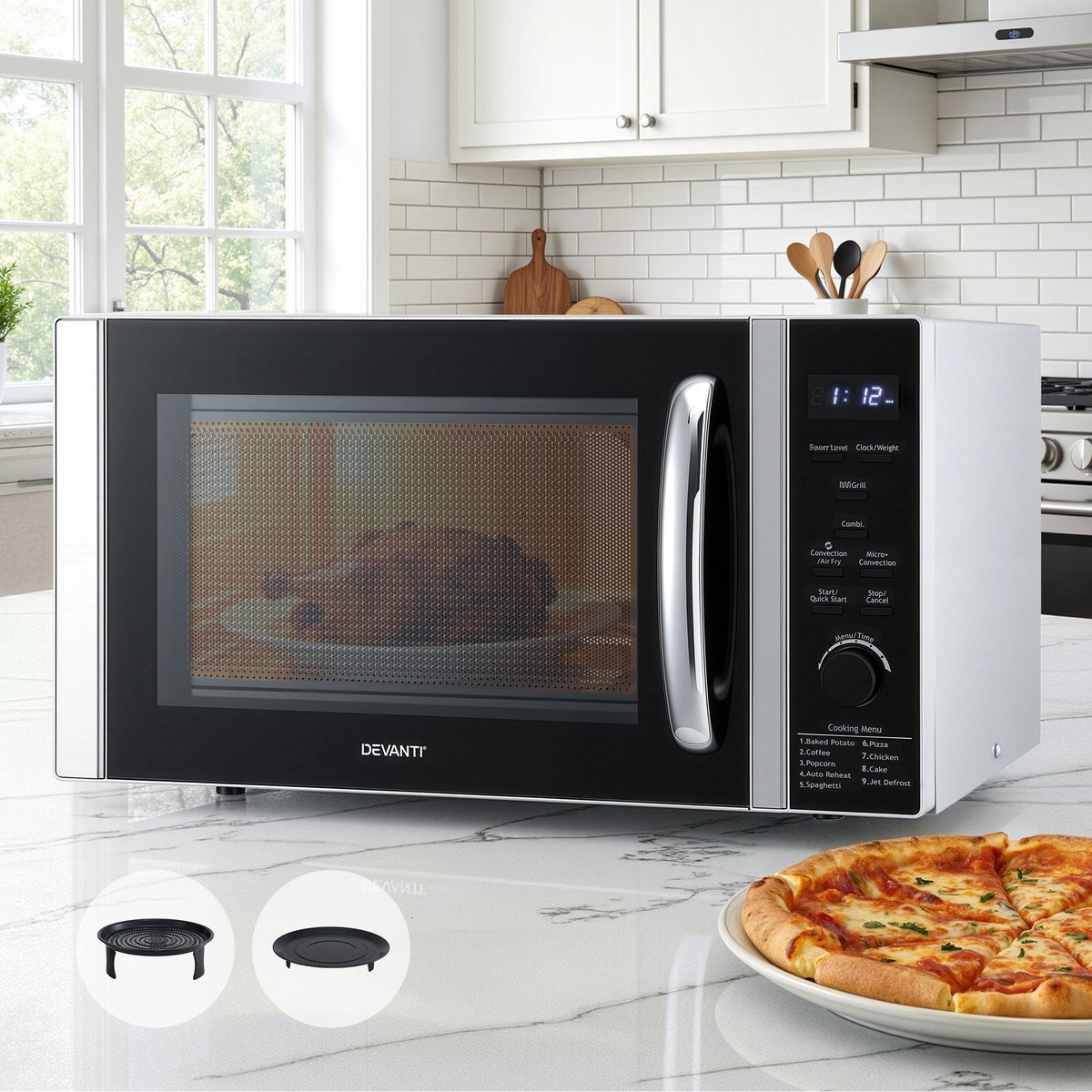
Devanti 30L 4-in-1 Air Fryer Convection Grill Microwave
Microwave, grill, air fry and convection in one cavity with real, separate power ratings.
CHECK CURRENT PRICE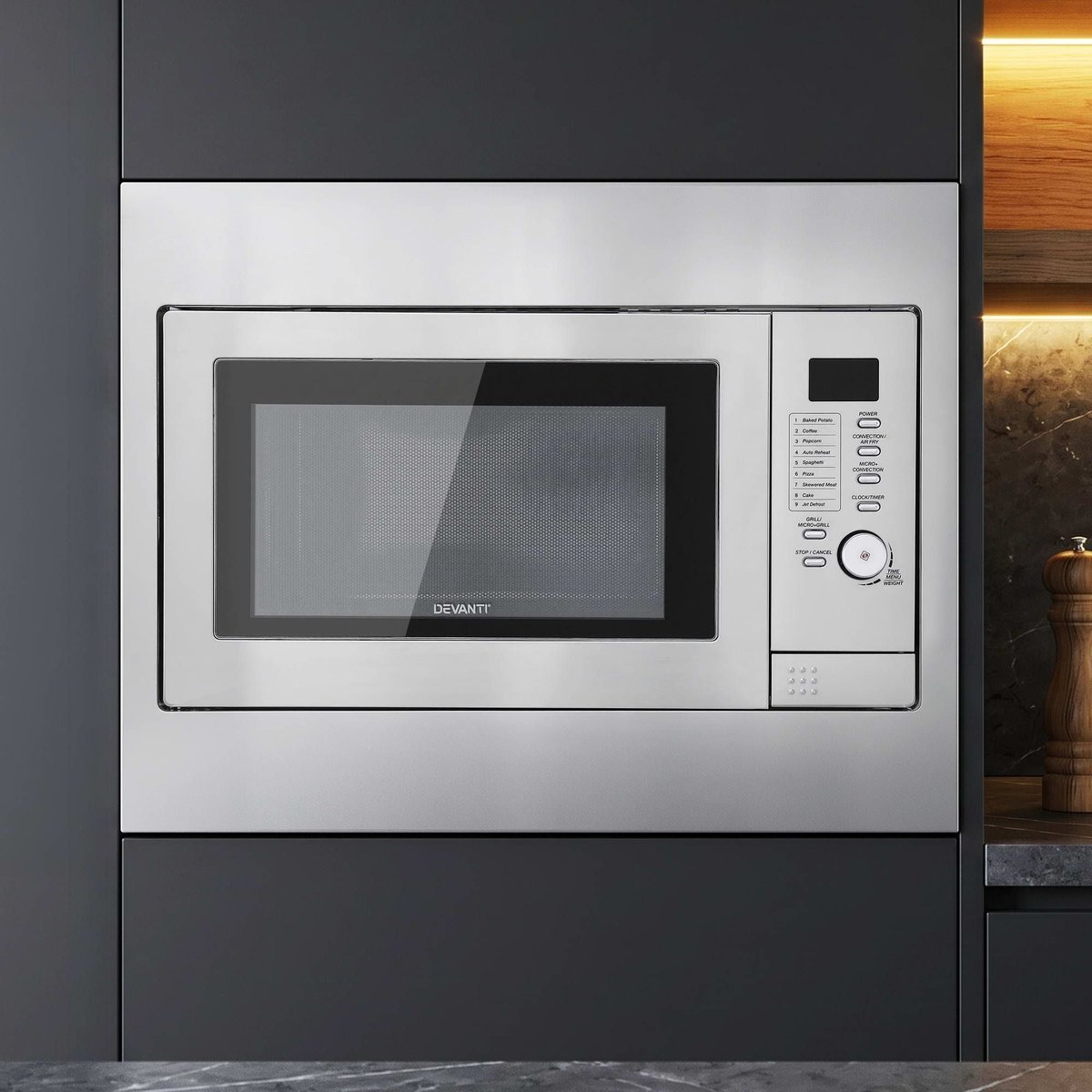
Devanti Built-In 30L Microwave Oven
The only genuine built-in option, designed to sit flush in cabinetry.
CHECK CURRENT PRICEBest Microwaves Australia Compared
| Product | Link | Type | Best For | Key Spec |
|---|---|---|---|---|
| Devanti 20L Microwave Oven | Check price | Solo, turntable | Compact everyday use | 700W, 20L |
| Devanti 30L 4-in-1 Air Fryer Convection Grill Microwave | Check price | Combi, turntable | All-in-one combo cooking | 900W microwave output, 30L |
| Devanti Built-In 30L Microwave Oven | Check price | Combi, built-in | Cabinetry-integrated kitchens | 900W microwave output, 30L |
| LG NeoChef 25L Smart Inverter Microwave | Check price | Solo, inverter, turntable | Everyday inverter reheating | 1200W, 25L |
| Panasonic 27L Flatbed Inverter Microwave | Check price | Solo, inverter, flatbed | Larger or odd-shaped dishes | 1000W, 27L |
| Sharp R350EW 34L Inverter Microwave | Check price | Solo, inverter, turntable | Family-size everyday use | 1200W sensor, 34L |
| Russell Hobbs Family Size 34L Microwave | Check price | Solo, turntable | Value family-size pick | 1100W, 34L |
| Breville Combi Wave 3-in-1 | Check price | Combi, air fry, inverter | Premium all-in-one cooking | Air fry + convection + inverter microwave |
| Total Chef Retro 25L Microwave | Check price | Solo, turntable | Retro kitchen styling | 900W, 25L |
| Midea 20L Microwave Oven | Check price | Solo, turntable | Budget compact pick | 700W, 20L |
How We Picked
We researched this category online across a range of Australian and international retailers, compared verified buyer reviews and current stock, and cross-checked standout picks against CHOICE’s microwave testing and ProductReview’s microwaves category to see whether the popular opinion held up. About twenty-five listings were surveyed before narrowing to these ten, filtered for AU delivery, in-stock status, a real review base instead of a handful of seeded ratings, and a mix of solo, grill and combi types instead of ten variations on the same basic reheater.
1. Devanti 20L Microwave Oven – Best Compact Pick
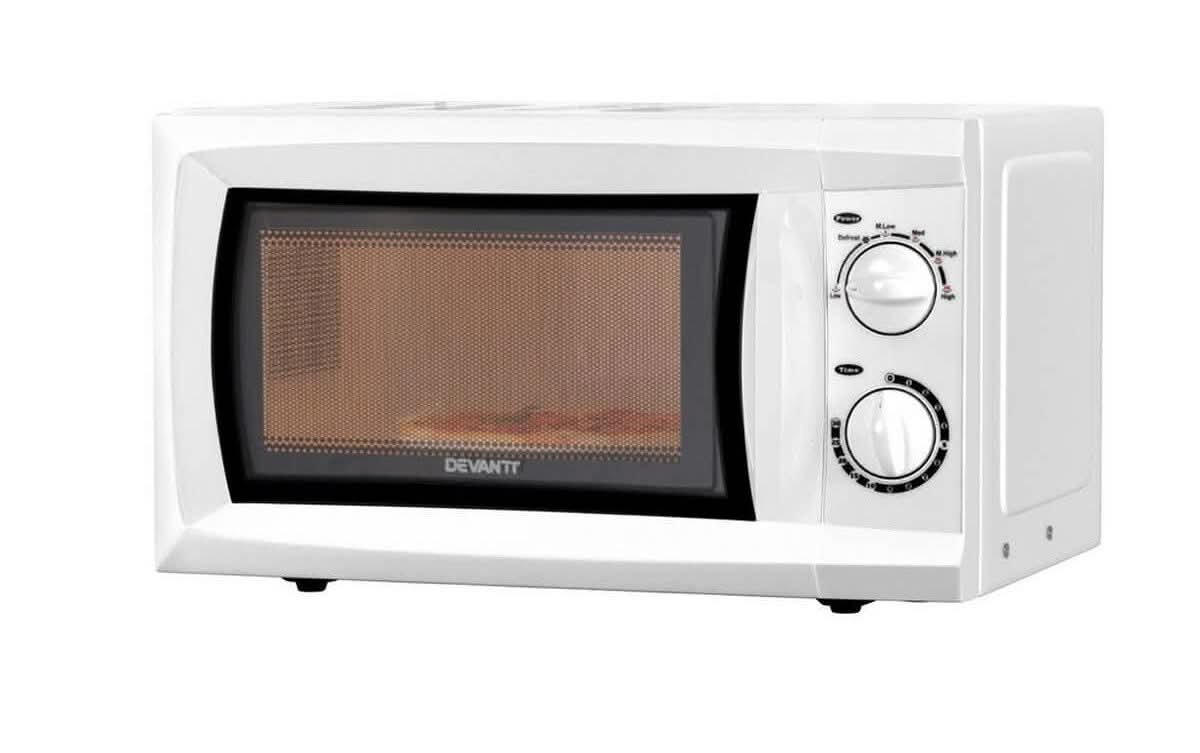
A 20-litre cavity is the smallest size that still fits a standard dinner plate flat, which makes this the sensible default for a share house, a granny flat, or a kitchen where bench space already goes to a kettle and a toaster. Six power levels and a speed-defrost setting cover the basics without a single extra button to learn, and the mechanical dial control means there’s no digital interface to fail years down the track – a real trade-off against the touch panels on the pricier picks further down this list, but one plenty of buyers actively prefer.
The 700W rated power is on the lower end of this lineup, so a full dinner plate takes noticeably longer to reheat than on the 1100W-1200W units below. That’s the honest cost of the compact format: less power draw, less heat output, more patience required for a large serve.
Child-lock function and a glass turntable round out the basics, and the white-painted cavity wipes clean without the streaking a bare metal interior can show. It comes with the standard one-year Australian warranty most appliances in this price bracket carry.
Pros
- Fits a standard dinner plate in a properly compact footprint
- Mechanical dial, nothing digital to fail
- Straightforward one-year warranty
Cons
- 700W is slow for a full dinner plate compared to the higher-wattage picks below
- No grill or convection function at all – purely a reheat-and-defrost unit
Key specs: 20L capacity | 700W rated power | 6 power levels | Mechanical control, glass turntable
CHECK CURRENT PRICE2. Devanti 30L 4-in-1 Air Fryer Convection Grill Microwave – Best All-in-One Combo
One appliance doing four jobs sounds like a compromise on all of them, and sometimes it is – but this unit’s separate power ratings tell a more honest story: 1400W for the microwave function, 1250W for the grill, 2200W for air fry, each running its own element instead of one weak heater stretched across every mode. That matters because a real air-fry result needs actual hot-air circulation, not just a microwave with a fan bolted on and a marketing sticker.
Nine auto menus and ten power levels cover the daily reheating and defrosting work, while the included high grill rack and low baking tray turn the same cavity into something that can finish a roast chicken’s skin or bake a small tray of vegetables. The pull door and green LED screen are a step up in build feel from the basic 20L model above, and the child safety lock carries over.
At 65cm wide it needs real bench space, not a narrow gap between the kettle and the wall – measure before ordering. Anyone who actually cooks instead of just reheating gets the most functional use from the four-in-one format; anyone who mostly reheats leftovers is paying for grill and air-fry hardware that will sit idle most weeks.
Pros
- Separate, real power ratings for microwave, grill and air fry instead of one shared element
- Includes a grill rack and baking tray in the box
- Nine auto menus cover common meals without guesswork
Cons
- 65cm width needs real bench space, not a narrow gap
- Grill and air-fry hardware goes unused in a household that only reheats
Key specs: 30L capacity | 900W microwave output, 1250W grill, 2200W air fry | 10 power levels, 9 auto menus | Digital control, pull door
CHECK CURRENT PRICE3. Devanti Built-In 30L Microwave Oven – Best Built-In
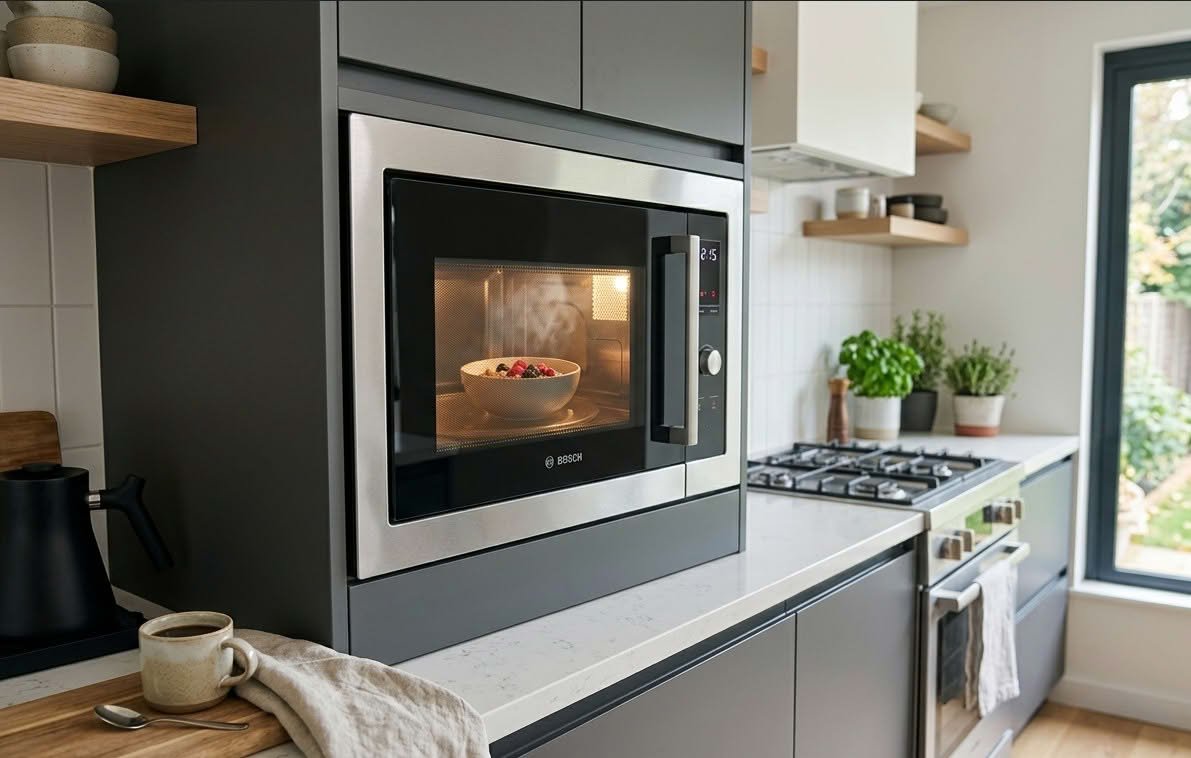
Renovating a kitchen and want the microwave to disappear into the cabinetry instead of sitting on the bench? This is the one gap in this list every other pick can’t fill – a true built-in unit with a 60 x 40 x 46cm overall size and a 56cm-plus cabinet opening requirement, designed to sit flush in a wall cavity or under-bench housing the way a wall oven does.
Cooking-wise it mirrors the 30L freestanding combo above: microwave, grill, air fry and convection in the same four-in-one spread, ten power levels, nine auto presets including baked potato, pizza and jet defrost. The difference is entirely about installation, not performance – and installation is the part to get right. Cabinet opening tolerances are tight enough that a carpenter or kitchen installer should confirm the exact cavity dimensions before the unit is ordered, not after.
Silver finish matches most integrated appliance runs, and the same child lock and end-cooking-signal features carry over from the freestanding model. This is a renovation-stage purchase, not an impulse add to an existing kitchen.
Pros
- True built-in design, not a freestanding unit with a trim kit bolted on
- Same four-in-one cooking spread as the 30L combo above
- Matches integrated appliance finishes
Cons
- Cabinet opening tolerances are tight – confirm exact dimensions with an installer before ordering
- Not a same-day swap for an existing bench microwave
Key specs: 30L capacity | 900W microwave output, 1250W grill, 2200W air fry | Built-in, 60x40x46cm | Digital control, glass turntable
CHECK CURRENT PRICE4. LG NeoChef 25L Smart Inverter Microwave – Best Everyday Inverter Pick
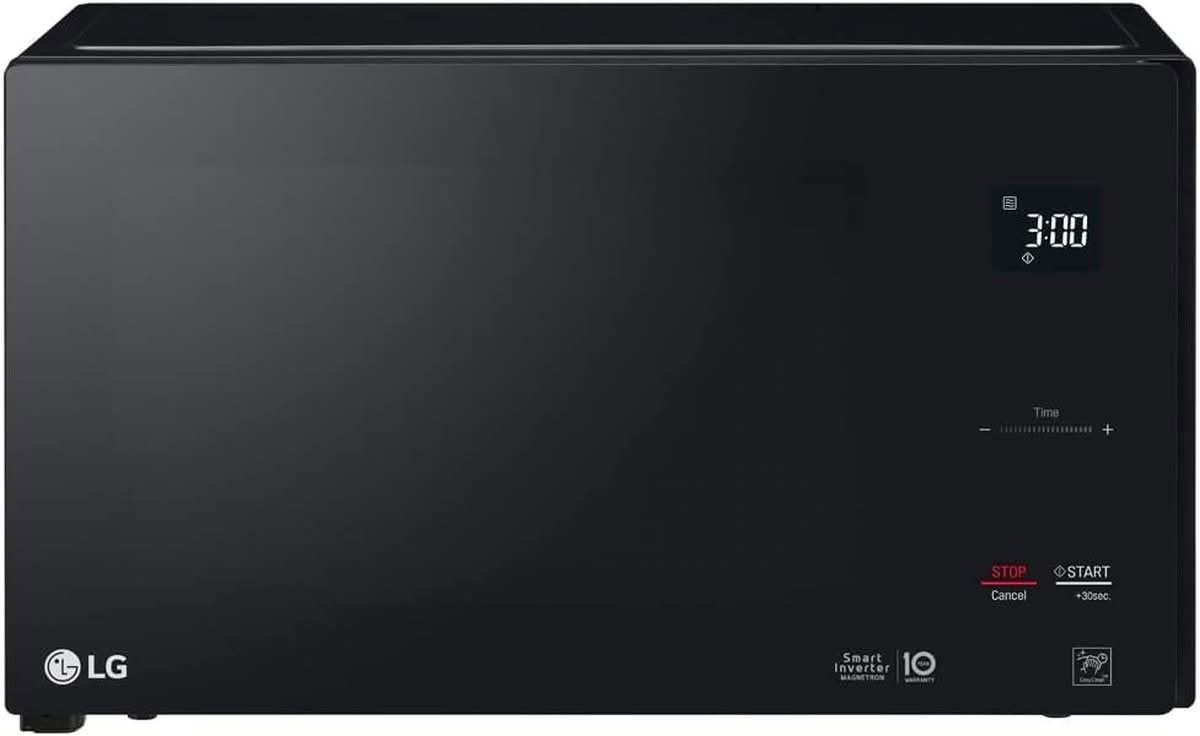
LG’s Smart Inverter is the technology this guide’s intro talks about in practice: instead of cycling full power on and off, it holds a properly lower wattage steady, which is why a bowl of soup comes out evenly warm instead of scalding in the middle and lukewarm at the edges. Seventy-five reviews isn’t a huge base, but the pattern across them is consistent, not scattered.
At 1200W it’s one of the more powerful units in this lineup despite the mid-size 25L cavity, so full meals reheat faster than the compact picks above without needing the bulk of the family-size units further down. The anti-bacterial EasyClean interior coating is a real point of difference – it’s a coating baked into the cavity finish, not a spray-on add-on, and it wipes down noticeably easier than a bare enamel interior after a spill.
Tempered glass door and touch controls give it a cleaner look on the bench than the mechanical-dial picks in this guide, though that’s a straightforward do-you-prefer-touch-or-dial call instead of a functional advantage either way.
Pros
- True inverter technology for even heating, not just a marketing label
- 1200W output punches above its 25L size class
- EasyClean coating baked into the cavity, not sprayed on
Cons
- Review base is smaller than the established brands elsewhere on this list
- Touch controls cost more to repair than a mechanical dial if they ever fail
Key specs: 25L capacity | 1200W | LG Smart Inverter | Touch controls, tempered glass door
CHECK ON AMAZON5. Panasonic 27L Flatbed Inverter Microwave – Best Flatbed Design
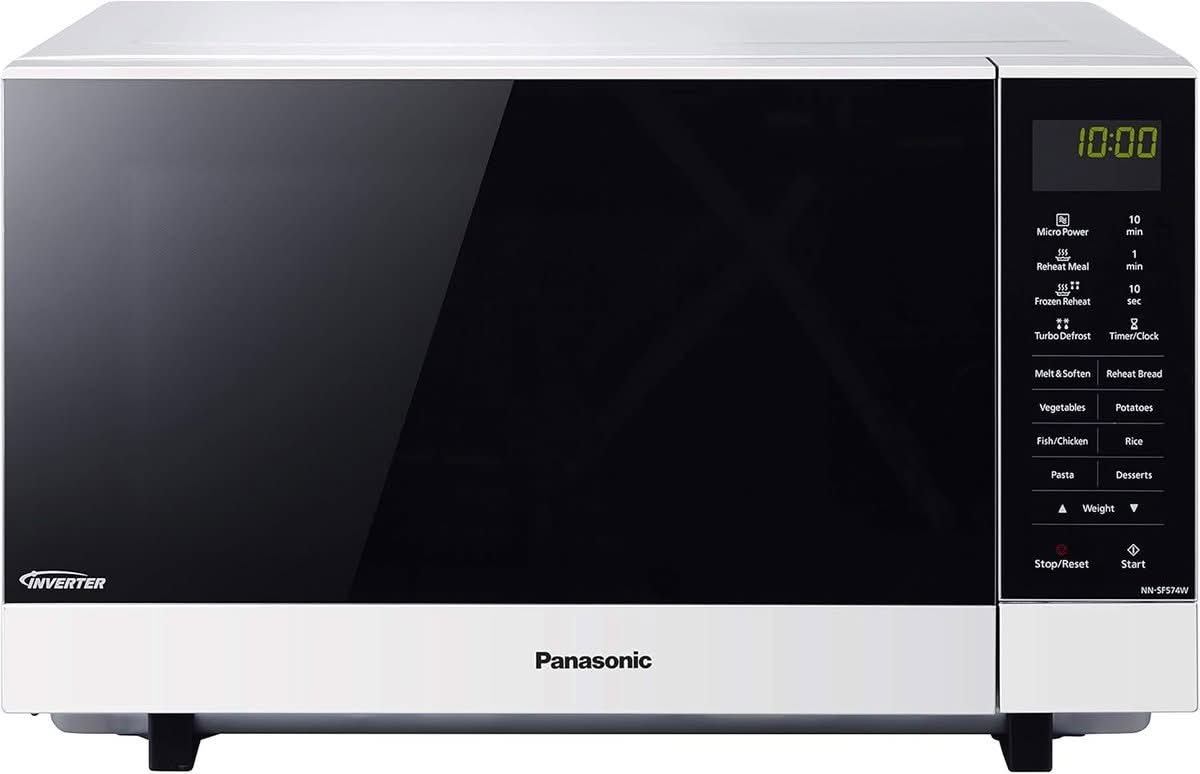
Every other microwave in this guide spins food on a turntable. This one doesn’t – a flatbed design replaces the rotating glass plate with a stationary base and a different emitter arrangement, which Panasonic states gives roughly 31 percent more usable cooking area than a turntable model of the same external footprint. In practice that means a long oval casserole dish or two mugs side by side fit properly instead of clipping the door or a turntable’s edge.
Real Inverter technology carries over from the LG above, and Panasonic backs it with an Australian plug and an Australian manufacturer’s warranty instead of a grey-import unit reflashed for the local market – worth checking on any imported appliance brand, since a warranty claim on an actual grey import can mean shipping the unit overseas. Seventeen auto menus include auto reheat, and a separate trim kit is sold if it ever needs a built-in surround down the track.
The frameless, linear design reads as more premium than most of the picks here, and the integrated door-open button is a small detail that avoids a protruding handle catching a sleeve on a narrow bench.
Pros
- Flatbed design fits larger or awkward-shaped dishes without a turntable clipping the door
- Proper Australian-market unit with local plug and warranty
- 31 percent more usable cooking area than a comparable turntable model
Cons
- No turntable means round dishes can sit slightly off-centre under the emitter
- Among the pricier solo (non-combi) picks in this guide
Key specs: 27L capacity | 1000W | Panasonic Inverter, flatbed | 17 auto menus, Australian warranty
CHECK ON AMAZON6. Sharp R350EW 34L Inverter Microwave – Best Family-Size Pick
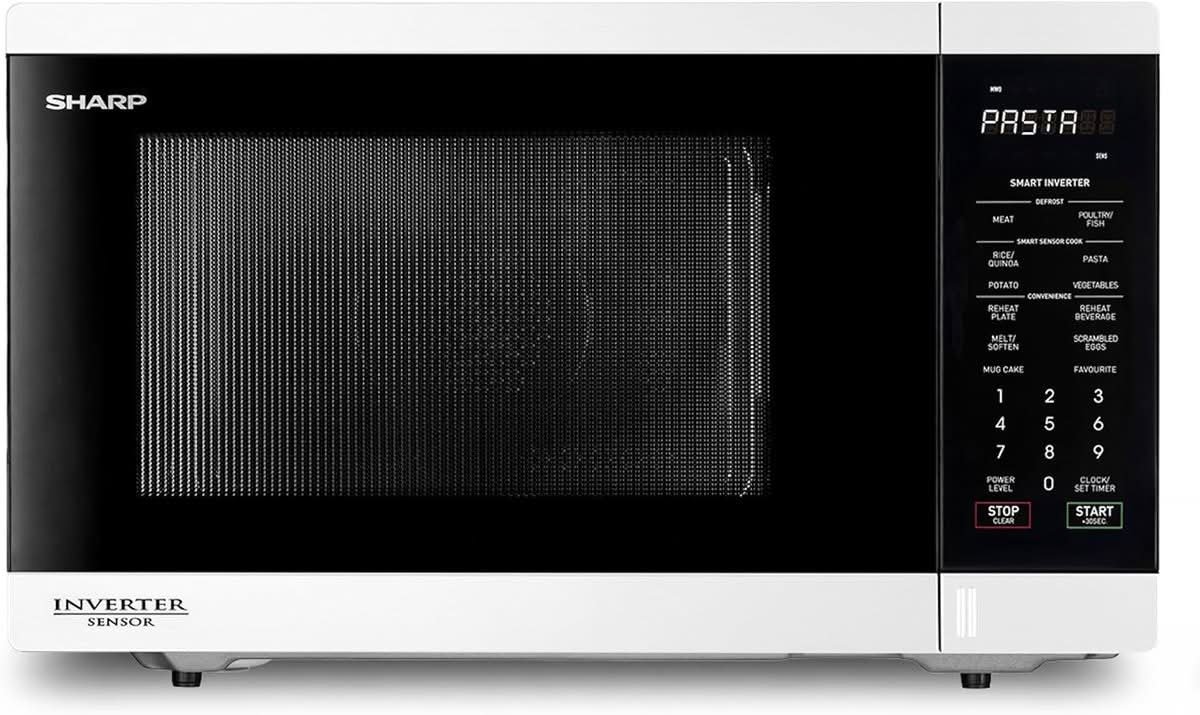
Four hundred and seventy reviews sit behind this one, the deepest review base of any single listing in this guide, and 34L is enough cavity to fit a full casserole dish or a large dinner plate without wedging it in at an angle. Smart Sensor Technology reads steam and humidity inside the cavity to adjust cooking time automatically, so a bowl of leftovers doesn’t need a guessed time punched in by hand.
Sharp’s own Smart Inverter technology is the same even-heating approach as the LG and Panasonic above, applied here to the biggest cavity of the three. Twenty-three auto menus and a Favourite Key that stores up to three go-to presets suit a household that reheats the same handful of meals on repeat instead of something different every night.
A family of four or five running the microwave several times a day is the household that gets the most from the extra capacity here; a single person or couple is better served by the smaller, cheaper LG above instead of paying for cavity space that mostly sits empty.
Pros
- Deepest review base in this guide by a wide margin
- Smart Sensor adjusts cooking time automatically, no guessed timings
- 34L cavity fits a full casserole dish
Cons
- Larger footprint takes up more bench space than the compact picks above
- Sensor-based auto cooking can misjudge an unusually shaped or covered dish
Key specs: 34L capacity | 1200W sensor | Sharp Smart Inverter | 23 auto menus, child lock
CHECK ON AMAZON7. Russell Hobbs Family Size 34L Microwave – Best Value Family-Size Pick
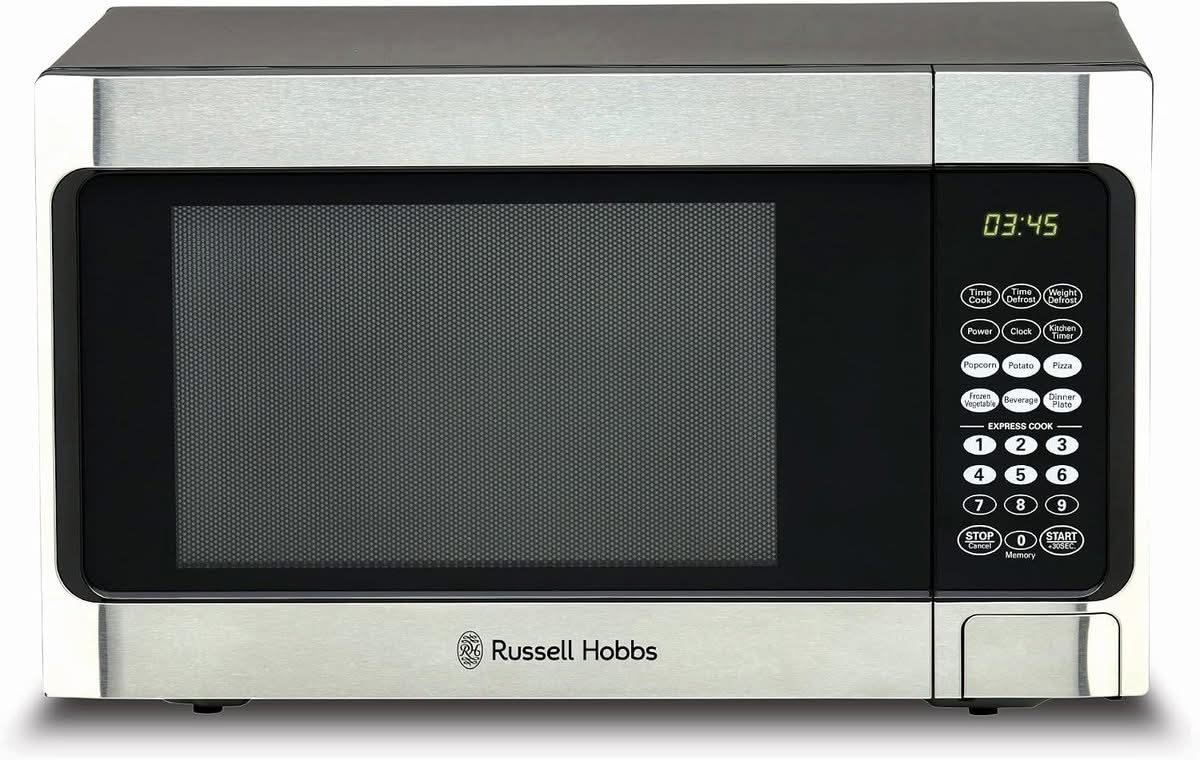
Same 34L class as the Sharp above, at a noticeably lower price – the trade-off is that this one runs on straightforward power-level cycling instead of true inverter technology, so defrosting a large or unevenly shaped cut of meat needs more manual checking partway through than the Sharp or LG do automatically.
Ten power levels and six auto-cook functions cover popcorn, potato, frozen veg, beverages and a full dinner plate, and the stainless steel finish with an LED display that doubles as a kitchen clock gives it a properly premium look for the price point. It fits a 30cm dinner plate, the benchmark most family-size buyers actually care about.
Three hundred and seventy-eight reviews back it up, a solid track record for a mid-range family unit. The honest pitch here: near-identical usable capacity to the Sharp above for less money, with slower, less even reheating as the real cost of that saving.
Pros
- 34L cavity fits a full 30cm dinner plate
- Stainless finish and clock-display LED look more premium than the price suggests
- Strong, established review base
Cons
- No inverter technology, so defrosting needs more manual checking than the Sharp or LG above
- 1100W draws more power than the wattage-for-wattage inverter units for a comparable reheating result
Key specs: 34L capacity | 1100W | 10 power levels, 6 auto cook menus | LED display, stainless steel finish
CHECK ON AMAZON8. Breville Combi Wave 3-in-1 – Best Premium Combi
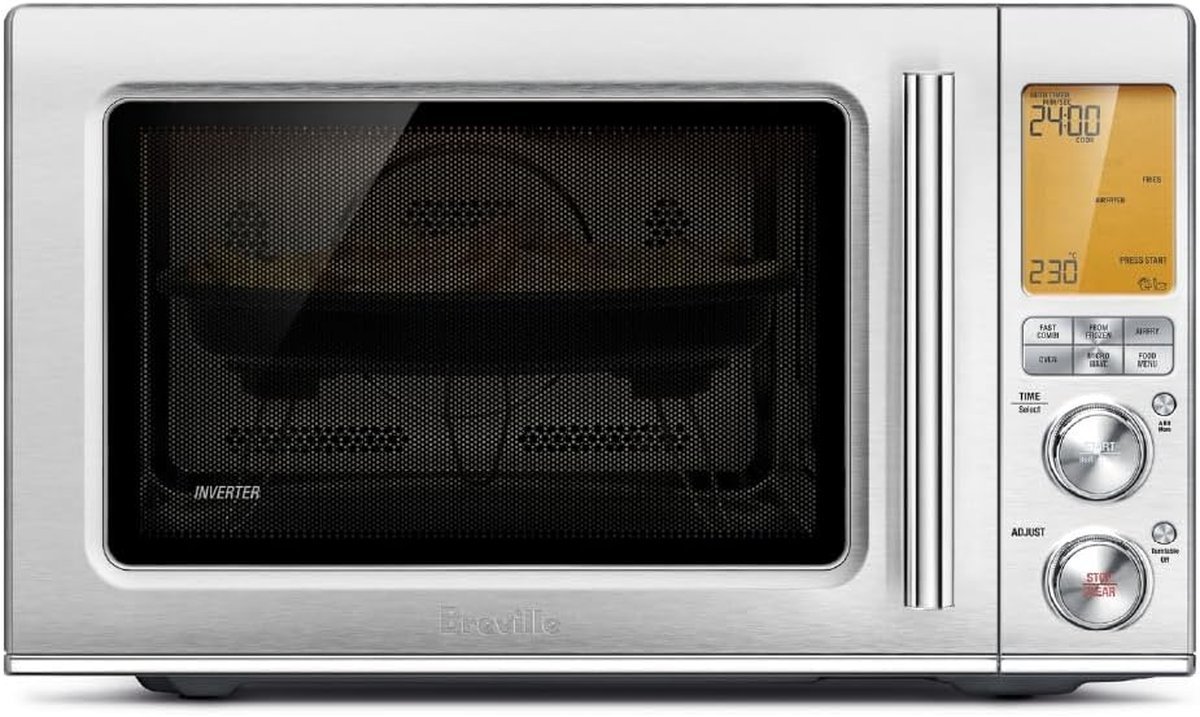
Triple the price of most of this list, and the specs justify it more than most premium appliances manage. Air fryer, convection oven and inverter microwave run as three properly separate cooking modes in one cavity, with Breville’s Element IQ system steering power to wherever the current mode needs it instead of running one generic heat profile for everything.
The Power Smoothing inverter drops the old on-off cycling entirely, and Fast Combi mode blends convection, grill and microwave together to cut a normal oven’s cooking time meaningfully – actually useful on a weeknight instead of a gimmick reserved for weekend cooking. Nineteen smart presets handle the routine stuff, and a soft-close door plus a mute button take the beeping-and-clanging edge off that cheaper combi units are known for.
This is the pick for a household that would otherwise own a separate air fryer, a small convection oven and a microwave and is trying to reclaim three appliances’ worth of bench space back into one. A household that just reheats leftovers most nights is better served by any of the solo inverter picks above for a fraction of the cost.
Pros
- Three properly separate cooking modes (air fry, convection, microwave), not one mode with different names
- Element IQ steers power to where each mode actually needs it
- Soft-close door and mute button cut everyday noise
Cons
- Roughly triple the price of the solo picks on this list
- Overkill for a household that only reheats and rarely cooks from scratch
Key specs: Air fry, convection oven, inverter microwave | Element IQ power system | 19 smart presets | Soft-close door, child lock
CHECK ON AMAZON9. Total Chef Retro 25L Microwave – Best Retro Style
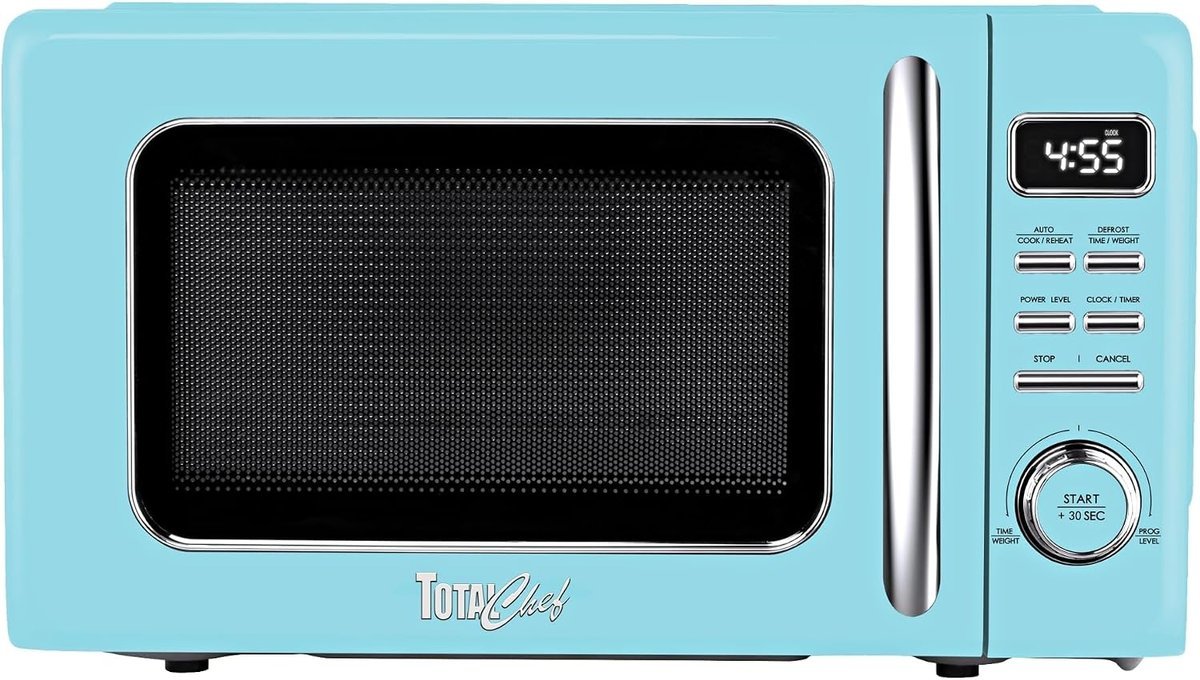
Every other microwave on this list disappears into a kitchen; this one is designed to be looked at. The rounded retro body and chrome-accented details suit a kitchen that’s already leaning into a mid-century or diner aesthetic, somewhere none of the flatbed or stainless-steel picks above would look at home.
Seven auto-cook programs and ten reheat presets cover the daily basics competently, and a dishwasher-safe glass turntable and roller ring keep cleanup simple despite the more elaborate exterior styling. At 900W it sits in the middle of this lineup’s power range – enough for real everyday use without pretending to compete with the 1200W family-size units.
Reviews are thin so far, just a handful, which is the honest trade-off for a newer, more style-led listing instead of an established mainstream model. Worth checking current buyer photos before ordering to confirm the exact finish matches expectations, since retro-style appliances can vary noticeably between what a listing photo implies and what actually turns up.
Pros
- Real styling difference from every other pick on this list
- Dishwasher-safe turntable and roller ring
- 900W covers everyday reheating and defrosting competently
Cons
- Thin review history so far – worth checking current buyer photos before ordering
- No grill or convection function despite the premium-feeling styling
Key specs: 25L capacity | 900W | 7 auto cook, 10 reheat presets | Retro-styled body, glass turntable
CHECK ON AMAZON10. Midea 20L Microwave Oven – Best Budget Pick
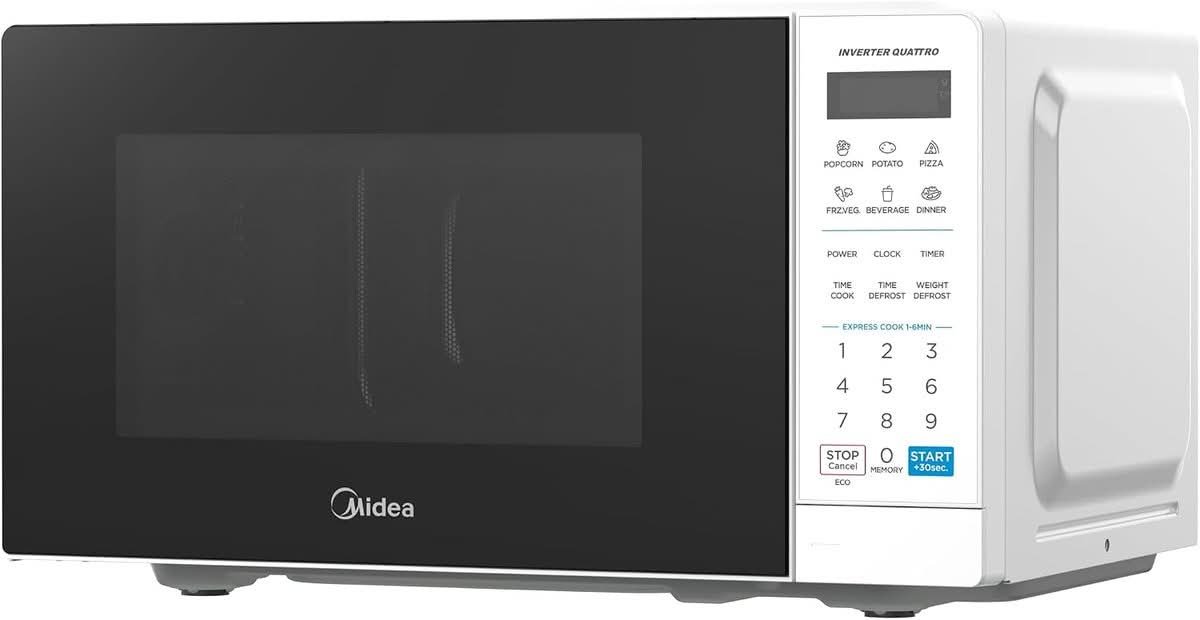
The cheapest microwave in this guide, and mechanically it does the same core job as the Devanti compact pick at the top of this list: 20L cavity, 700W, digital instead of mechanical control. Eleven power levels and seven auto menus are honestly more preset options than the pricier compact pick offers, which is a rare case of the budget option out-featuring something twice its price on paper.
The listing is new enough that a real review base hasn’t built up yet, so treat this as the value option to keep an eye on instead of the first choice if reliability history matters more than price – newer listings deserve a bit more caution than an established one with hundreds of reviews behind it. Quiet operation and a black easy-clean interior are worth having regardless of price point.
At 6.4kg it’s light and easy to relocate between a main kitchen and a granny flat or a share house room without needing help, and the compact footprint suits a share kitchen where bench space is properly contested.
Pros
- More auto menu presets than the pricier compact pick at the top of this list
- Light and easy to relocate at 6.4kg
- Quiet operation, easy-clean interior
Cons
- Thin review history so far, worth checking current feedback before ordering
- Digital control panel has more that can fail long-term than a mechanical dial
Key specs: 20L capacity | 700W | 11 power levels, 7 auto menus | Digital control, easy-clean interior
CHECK ON AMAZONHow to Choose the Right Microwave
Inverter technology is worth the extra spend if you defrost meat regularly. A standard microwave simulates a lower power setting by switching full power on and off in bursts, which leaves the edges of a defrosting cut overcooked while the centre is still frozen. An inverter unit like the LG, Panasonic or Sharp above holds a real, steady lower wattage instead, and CHOICE’s own defrost testing is largely built around catching exactly this difference. Skip it if the microwave’s main job is reheating a cup of coffee and the occasional bowl of soup.
Turntable or flatbed comes down to what shape of dish actually goes in. A turntable needs clearance to spin, so a long casserole dish or a rectangular lasagne tray can catch the door on the way round. A flatbed design like the Panasonic above trades that rotation for a stationary base and a wider real cooking footprint – better for odd-shaped dishes, marginally worse for a dish that needs to be perfectly centred under the emitter.
Match the type to how much cooking actually happens, not how much you’d like to think happens. A solo unit does one job well and costs the least to buy and run. A grill or combi unit like the Devanti picks or the Breville above actually replaces a second or third appliance, but only pays off if it gets used for more than reheating – an air-fry function that never gets switched on is an expensive way to warm up leftovers.
Bench space is the real constraint in most Australian kitchens, not the price tag. A rental in a Melbourne apartment block or an older Queenslander kitchen with a narrow original benchtop often can’t fit the 34L family-size units in this guide next to a kettle and a toaster – measure the actual gap before assuming a bigger cavity is automatically the better buy. A built-in unit like the Devanti above solves the bench-space problem entirely, at the cost of a proper installation.
Running cost is small but not zero. At roughly 30-35 cents per kilowatt hour on most Australian electricity plans, even a 1200W microwave running for five minutes a day comes to a properly small annual cost – microwaves are efficient by nature, converting most of their power draw directly into heating food instead of losing it to the room the way a conventional oven does. The real cost difference between the picks in this guide is upfront price and features, not ongoing power use.
Check the plug and warranty are properly set up for the Australian market. Panasonic’s flatbed pick above states an Australian plug and an Australian manufacturer’s warranty specifically, which matters more than it sounds – a grey-import unit bought through an unofficial channel can mean shipping a faulty unit overseas for warranty service, or no warranty support at all. ACCC has recalled at least one Australian-market microwave for a fire-related fault, which is the kind of issue a real local warranty and recall register actually guards against.
You’ll Also Want
A microwave rarely sits alone on the bench for long – a microwave storage shelf with power outlets built in gives it (and a kettle or toaster) somewhere off the main benchtop entirely, useful in a kitchen where counter space runs out fast. Microwave-safe glass storage containers save the plastic-container-melting problem that comes with reheating in the wrong container, and a splatter cover keeps the cavity interior from turning into a weekly scrubbing job. If the new pick is a combi or grill unit, a set of silicone oven mitts rated for the higher grill and air-fry temperatures is worth having on hand instead of reaching for a tea towel. And if the kitchen refresh extends further, our best kettles in Australia guide covers the other countertop appliance most benches end up making room for.
Frequently Asked Questions
What wattage should I look for in a microwave?
Most household microwaves in Australia run between 700W and 1200W. 700W-800W suits a single person or couple reheating small portions; 900W-1100W handles a family’s everyday reheating and defrosting at a reasonable speed; 1200W with true inverter technology reheats fastest while still heating evenly instead of just blasting more raw power at the food.
What’s the actual difference between an inverter and a standard microwave?
A standard microwave can only run at full power, so it simulates lower settings by cycling on and off, which often leaves food unevenly heated or partly cooked at the edges while defrosting. An inverter microwave holds a properly lower, steady power level instead of cycling, giving more even results, particularly for defrosting meat or melting delicate ingredients like chocolate.
Is a turntable or flatbed microwave better?
Neither is objectively better – it depends on what’s being cooked. A turntable spins food for even exposure but needs clearance to rotate, so oblong or oversized dishes can catch the door. A flatbed microwave uses a stationary base and a different emitter layout for a properly larger usable cooking area, better suited to bigger or irregularly shaped dishes, at the cost of the automatic spinning motion.
How big a microwave do I actually need?
A 20L-25L microwave suits one or two people and fits a standard dinner plate. A 30L-34L microwave is the family-size range, comfortably fitting a large casserole dish or a 30cm dinner plate without wedging it in. Measure the actual bench gap before buying a larger unit – a 34L microwave takes up noticeably more space than a 20L one, and that space has to come from somewhere on an Australian kitchen bench.
Are combi microwaves (with air fry or grill) worth the extra cost?
A combi microwave is worth it for a household that would otherwise own a separate air fryer and small oven, since it actually replaces both while saving bench space. It’s not worth it for a household that mostly reheats leftovers, since the grill and air-fry hardware will largely sit unused while still adding to the purchase price.
Does a more expensive microwave mean it’s safer?
Not directly, but price does often track real safety and quality signals: an Australian-market unit with a local plug and manufacturer’s warranty, instead of an unofficial grey import, generally has clearer recall and repair support if a fault does turn up. ACCC has recalled at least one Australian-market microwave for a fire-related component fault, which is exactly the kind of issue proper local warranty and recall registration is meant to catch early.
Verdict
For most Australian kitchens, the Devanti 20L at the top of this list or the LG NeoChef a few picks down cover everyday reheating and defrosting without asking for much bench space or budget – the LG’s true inverter technology is worth the jump in price if defrosting meat evenly actually matters in that household. Anyone renovating or fitting out a kitchen from scratch should look straight to the Devanti built-in, since nothing else on this list solves the same cabinetry problem. And a household that would otherwise own a separate air fryer and a small oven gets real value from the Breville Combi Wave, at a price that only makes sense once those other two appliances are factored into the comparison.