A sandwich press is a benchtop appliance with two hinged, heated plates that clamp a filled sandwich from both sides at once, sealing the edges shut and browning the bread while the filling melts. In Australia the same basic idea is sold under half a dozen names: jaffle maker, jaffle iron, toastie maker, contact grill, panini press, depending on whether the plates are flat, ridged or triangle-sealing. Prices for what is fundamentally the same clamp-and-heat mechanism swing from pocket-money territory at the cheap end to a genuine kitchen investment at the top.
Three plate styles cover most of what’s sold here. Triangle jaffle irons seal a filled sandwich into two sealed pockets and cut it in one press, the traditional Aussie jaffle shape, mess-proof for kids’ lunches. Flat contact and panini presses grill an open sandwich without sealing the edge, which suits thicker fillings and toasted wraps. Multi-plate combo units swap the sandwich plates out for waffle or ribbed steak-grill plates on the same base, trading a bit of bench space for one appliance doing three jobs instead of one.
Wattage across this lineup runs from a compact single-serve unit’s 520W up to 2000W in the biggest family press, and a higher figure mostly buys a faster preheat, not a hotter final plate. The spec that actually decides day-to-day satisfaction is plate count. Choice’s own buying guide draws the line at two-slice versus four-slice models, noting the smaller ones are easier to clean and store, and flags that a lockable top plate is what lets a press double as a flat grill for eggs, bacon or pancakes instead of just sandwiches.
Seven sandwich presses make the cut here: two dedicated jaffle irons, three combo grills, and two recognised-brand picks for buyers who’d rather pay for a name they trust than a house brand. Between them they cover the appliance that does the job a plain toaster can’t once cheese and filling get involved, and which end of the lineup you land on should come down to how often the thing actually gets used, not how many functions are printed on the box.
Quick Picks
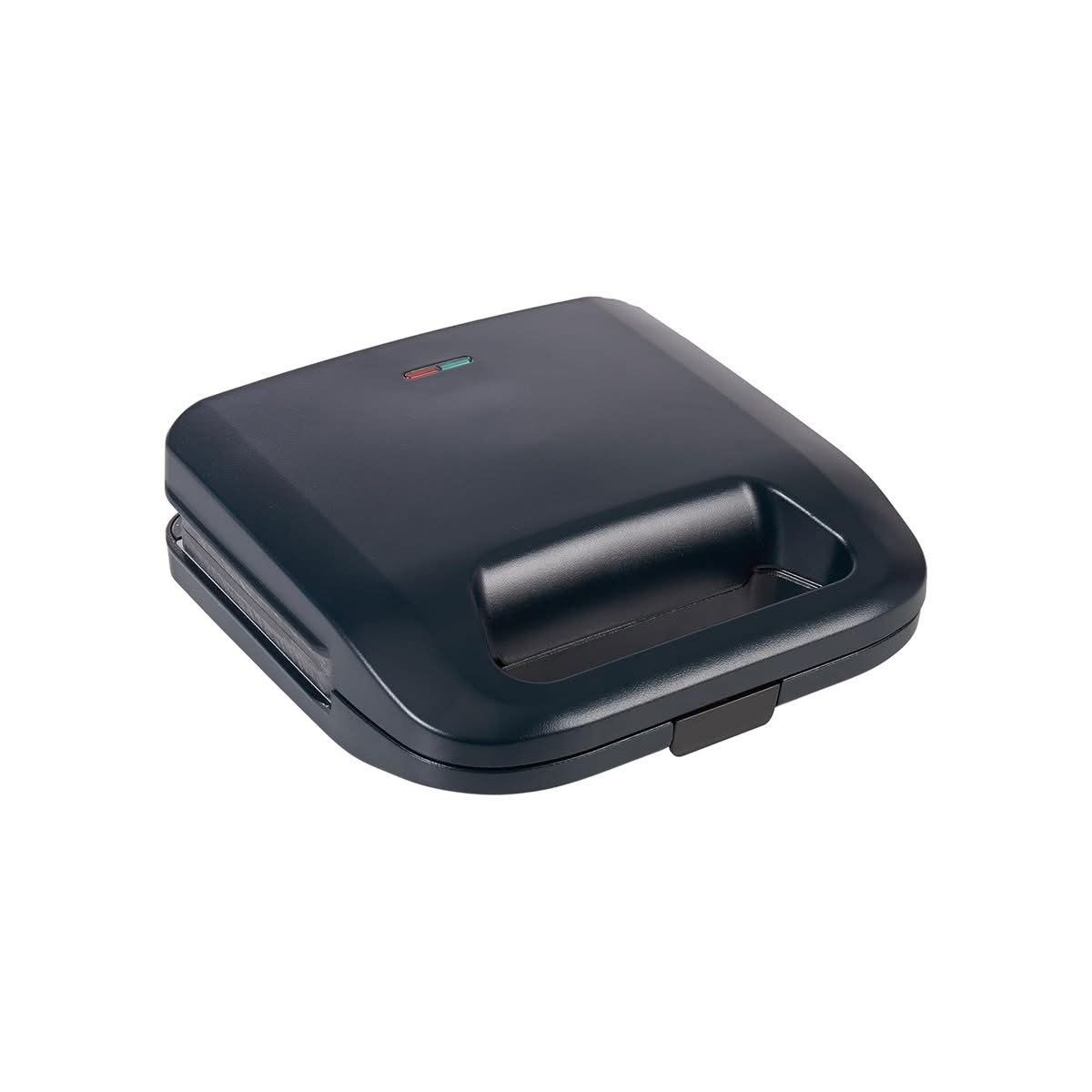
Davis & Waddell 2-in-1 Electric Jaffle Maker & Grill
Swap between diagonal-ridge jaffle plates and flat grill plates on the one base, the safest all-rounder pick if you only want one sandwich press in the cupboard.
CHECK CURRENT PRICE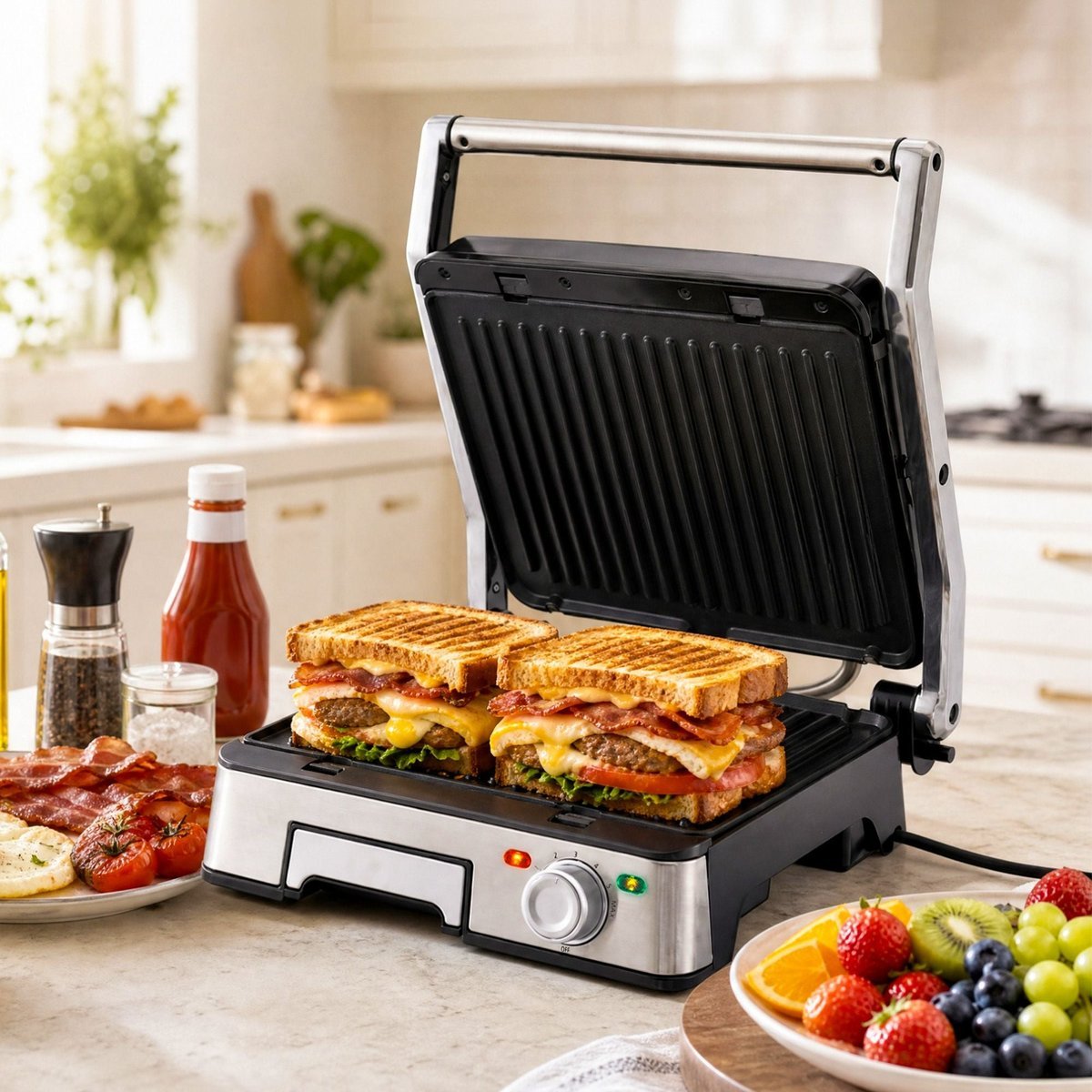
Devanti 2000W 4-Slice Panini Press
A 23 x 29cm ribbed plate fits four slices at once and opens flat to 180 degrees, so it works as a full-size grill when several people want lunch at the same time.
CHECK CURRENT PRICE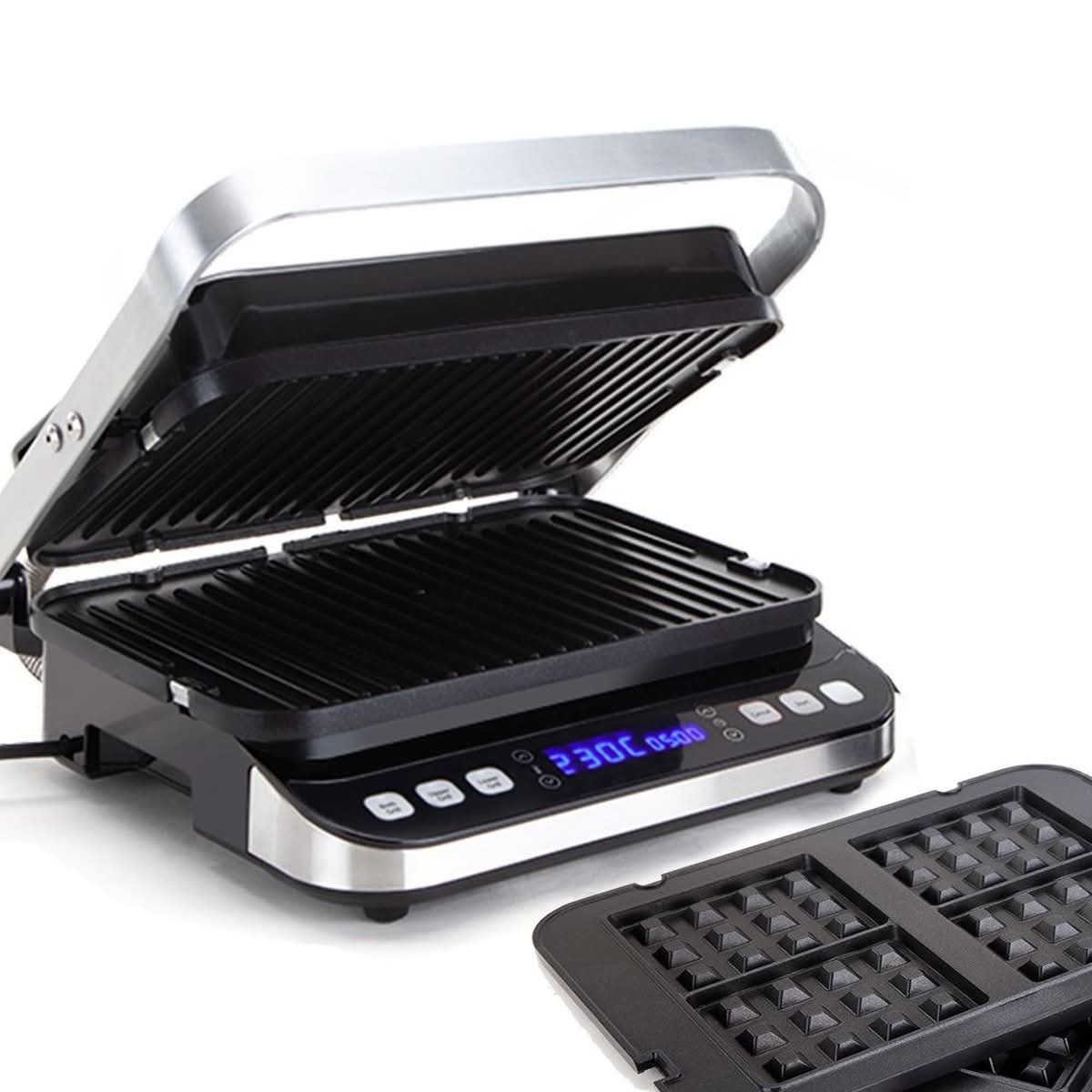
EUROCHEF EUC-CG7 Smart Multi Contact Grill
The closest thing on this list to what a cafe kitchen actually runs, with a heavier build and a temperature dial instead of a single on/off switch.
CHECK CURRENT PRICEBest Sandwich Press Australia Compared
| Product | Link | Type | Best For | Key Spec |
|---|---|---|---|---|
| Davis & Waddell 2-in-1 Electric Jaffle Maker & Grill | Check price | Triangle jaffle iron | Classic jaffle iron | Swappable jaffle/grill plates |
| Devanti 2000W 4-Slice Panini Press | Check price | Combo grill | Big families | 2000W, 4-slice, opens flat to 180 degrees |
| Devanti 3-in-1 Sandwich Press 850W | Check price | Combo grill | 3-in-1 versatility | 850W, sandwich/waffle/panini plates |
| Davis & Waddell Electric Mini Jaffle Maker | Check price | Triangle jaffle iron | Ultra-budget pick | 520W, single-serve |
| EUROCHEF EUC-CG7 Smart Multi Contact Grill | Check price | Combo grill | Cafe-style grill | Reversible plates, flat 180-degree opening |
| Breville the Perfect Press BSG600BSS | Check price | Flat contact press | Premium pick | Counterweight crush-control hinge, 2-slice |
| Baccarat The Toastie Pro | Check price | Combo grill | 4-slice on a budget | 4-slice ceramic non-stick, floating hinge |
How We Picked
We researched this category online across a range of Australian retailers and marketplaces, comparing what’s actually in stock right now rather than settling on the first listing that came up, and checked verified buyer reviews against current stock status before shortlisting anything. Standout picks were cross-checked against Choice’s sandwich press buying guide and against ProductReview’s sandwich maker category, where satisfaction splits sharply by brand instead of by price alone: established names cluster well above budget home-brand units on repeat complaints.
Sandwich Presses Compared in Detail
Every entry below breaks down design, real-world performance and who each one actually suits, based on the specs above plus a look at how each brand holds up in verified buyer reviews.
1. Davis & Waddell 2-in-1 Electric Jaffle Maker & Grill – Best Classic Jaffle Iron
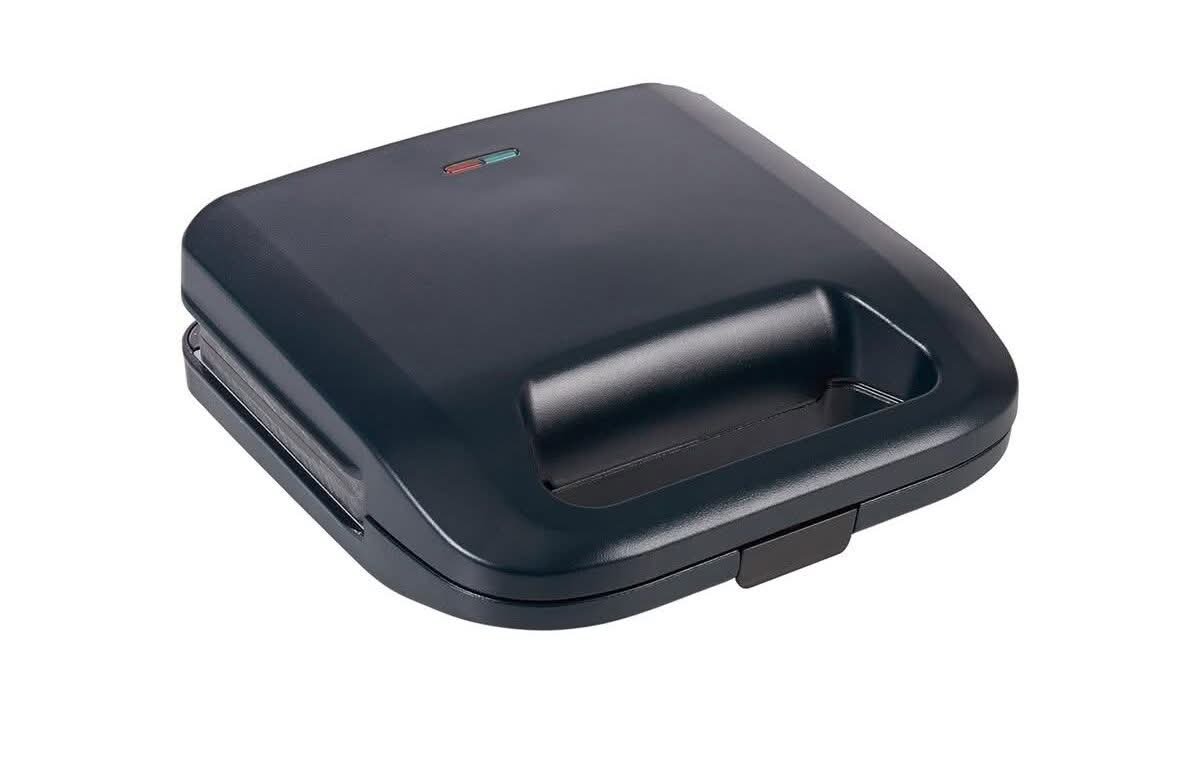
Davis & Waddell has sold kitchenware in Australia for more than twenty years, and this one doesn’t try to reinvent the jaffle iron. Diagonal-ridge plates seal a filled sandwich into two triangles in about four minutes, and a second set of flat grill plates swaps in with two clips for bacon, eggs or vegetables. Both plate sets are non-stick and dishwasher-safe once unclipped, which matters more than the wattage figure most listings lead with.
The seal is properly tight. Verified buyer reviews consistently mention the diagonal ridge cutting clean through the bread instead of just pinching it, which is the actual failure point on cheaper triangle irons: a soggy, half-sealed edge that leaks filling onto the bench. It runs hot enough that a thick slice of tasty cheese is fully melted before the outside plate marks go past golden, not black.
There’s no timer and no light beyond a basic power indicator, so the first jaffle is a bit of trial and error on your own stove’s idea of “medium.” Once that’s dialled in, it’s set-and-forget. This suits a family that wants one appliance handling jaffles most weeks plus the occasional bacon-and-egg breakfast, not someone chasing cafe-grade panini marks.
Pros
- 20+ year Australian kitchenware brand
- Swaps to flat grill plates in seconds
- Non-stick plates come off for the dishwasher
Cons
- No temperature dial or timer, so the first jaffle is guesswork
- Grill plates are a separate accessory, not bundled on every listing
- The matte black finish shows fingerprints more than a stainless one would
Key specs: 22.2 x 22.1 x 9.5cm, swappable jaffle and grill plate sets, non-stick dishwasher-safe plates, matte black finish
CHECK CURRENT PRICE2. Devanti 2000W 3-in-1 Panini Press Grill Sandwich Maker – Best for Big Families
Feeding several kids school lunches on the same Saturday morning is the exact situation this one is built for. The 23 x 29cm ribbed plate fits four standard slices side by side, and the top plate opens flat to 180 degrees instead of stopping at a fixed clamp angle, so it doubles as an actual flat grill wide enough for a full breakfast fry-up, not one sandwich at a time.
At 2000W it’s the fastest-heating unit in this lineup, which matters here more than on the smaller units simply because there’s four times the plate to bring up to temperature. Ribbed plates leave proper grill marks instead of the flat sear a panini plate gives, and a family getting through a loaf of bread a week will feel the difference between this and a 2-slice unit within the first fortnight.
It’s a big appliance on the bench. Think roughly the footprint of a stand mixer, not a toaster, and storage is the real trade-off for the extra capacity. Buyers on review sites flag that the hinge sits stiff out of the box before it loosens up after a few uses. Worth the extra bench space if several people actually eat breakfast at the same time; overkill for a share house of two.
Pros
- 4-slice capacity feeds a family in one pass
- Opens flat to 180 degrees for grilling, not just sandwiches
- 2000W heats up fast despite the larger plate
Cons
- Hinge feels stiff for the first few uses before it loosens
- Takes up real bench space, not a compact unit
- Two-person households will rarely need the full plate
Key specs: 2000W, 23 x 29cm ribbed plate, 4-slice capacity, opens flat to 180 degrees, non-stick coating
CHECK CURRENT PRICE3. Devanti 3-in-1 Sandwich Press Waffle Maker Panini Press Grill 850W – Best 3-in-1 Versatility
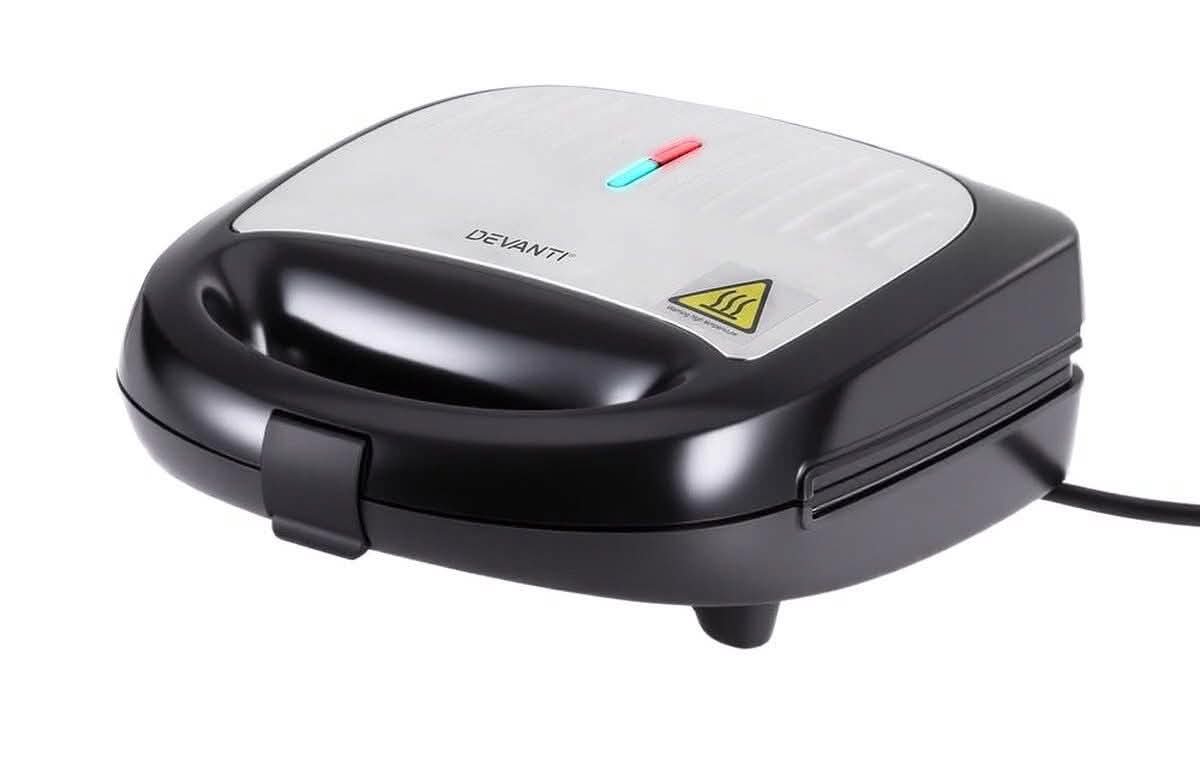
The pitch here is one base, three interchangeable plate sets (sandwich, waffle and panini), which settles the “do we really need a separate waffle iron taking up a cupboard shelf” argument most kitchens eventually have. At 850W it sits comfortably mid-pack for heat-up time: not fast, not sluggish.
Swapping plates takes under a minute once you’ve done it twice, and each set locks in securely instead of just resting on clips, a common failure point on cheaper multi-plate units where a loose plate rocks under pressure and cooks unevenly. The panini plate specifically gives proper ridge marks instead of the flat press a jaffle iron produces, so a toasted Turkish roll comes out looking closer to a cafe order than a school canteen one.
A unit doing three jobs is, unavoidably, a step down at each one from a dedicated single-purpose appliance; the waffle plate makes a decent waffle, not a Belgian-waffle-shop waffle. That’s a fair trade for a renter or a small kitchen short on storage, less so for anyone who already owns a good stand-alone waffle iron and just wants a sandwich press.
Pros
- Three plate sets on one base saves cupboard space
- Plates lock in instead of just resting on clips
- Panini plate gives real ridge marks, not a flat press
Cons
- Each function is a step down from a dedicated single-purpose appliance
- Storing three sets of plates still needs a drawer somewhere
- 850W means a full plate takes a little longer to come up to heat than the 2000W unit above
Key specs: 850W, three interchangeable plate sets (sandwich, waffle, panini), non-stick coating, plates lock in place
CHECK CURRENT PRICE4. Davis & Waddell Electric Mini Jaffle Maker – Best Ultra-Budget Pick
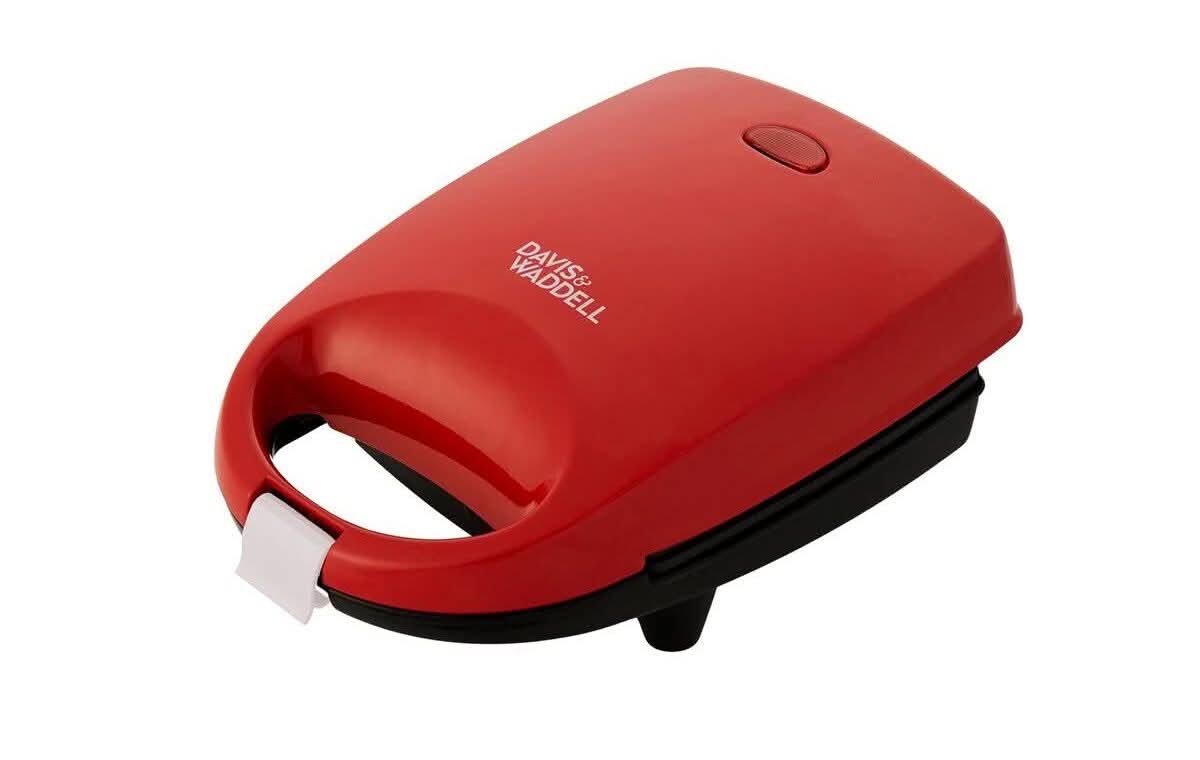
This one sits at the most affordable end of the entire lineup, roughly what you’d pay for a large coffee and a muffin, and it does exactly one thing: a single jaffle, cooked evenly, with an LED light that tells you when the plates have actually reached temperature instead of making you guess. The double-plate design and cool-touch handle are the same basic engineering as the bigger units on this list, just scaled down to something that fits a share-house cupboard without an argument.
This is the pick for a dorm room, a desk at work, or a second unit that lives at a fibro beach house instead of getting packed and unpacked every summer. Don’t expect it to feed more than one person per press. That’s the whole trade for the price. A student in a share house with three flatmates and one spare powerpoint on the bench gets more real use out of this than a full-size 4-slice unit nobody wants to lug home at the end of the lease.
Pros
- Cheap without feeling like a toy
- LED temperature indicator, not just a power light
- Compact enough for a share house, dorm or desk
Cons
- One jaffle at a time, so it’s slow for more than one person
- 520W means a longer wait than the bigger units if you’re in a hurry
- The plastic housing feels lighter-duty than the full-size Davis & Waddell unit above
Key specs: 520W, 22.3 x 15.5 x 9.3cm, automatic temperature control with LED indicator, cool-touch handle
CHECK CURRENT PRICE5. EUROCHEF EUC-CG7 Smart Multi Contact Grill – Best Cafe-Style Grill
This is the one pick on this list that costs more than some of the appliances it could replace, and the reason it survived the cut is build quality, not features on paper. It sits at the premium end of this guide, comparable to what you’d pay at Harvey Norman for a mid-range benchtop grill, not what you’d grab off the shelf at Kmart.
The reversible plates and flat 180-degree opening mean it does double duty as an actual flat-top grill, not just a sandwich press with a marketing name attached, and the heavier housing feels built to survive a cafe kitchen instead of an occasional Sunday brunch. That weight is also the trade-off: this isn’t something you pull out and put away daily without a dedicated spot on the bench.
Buyers weighing this against the Breville pick further on should know the real difference isn’t performance so much as name recognition and after-sales support (Breville has the wider AU service network if something goes wrong down the track). For someone who wants cafe-grade results without paying for the badge, this earns its price.
Pros
- Heavier, more commercial-feeling build than anything else on this list
- Reversible plates double as an actual flat grill
- Handles cafe-style volume better than a compact jaffle iron
Cons
- The premium price puts it ahead of some properly capable cheaper options here
- The sizeable footprint needs a permanent spot on the bench, not cupboard storage
- Fewer independent long-term reviews than the established brand names on this list
Key specs: Smart multi contact grill, reversible plates, opens flat to 180 degrees, cafe-style commercial-look build
CHECK CURRENT PRICE6. Breville the Perfect Press Sandwich Press BSG600BSS – Best Premium Pick
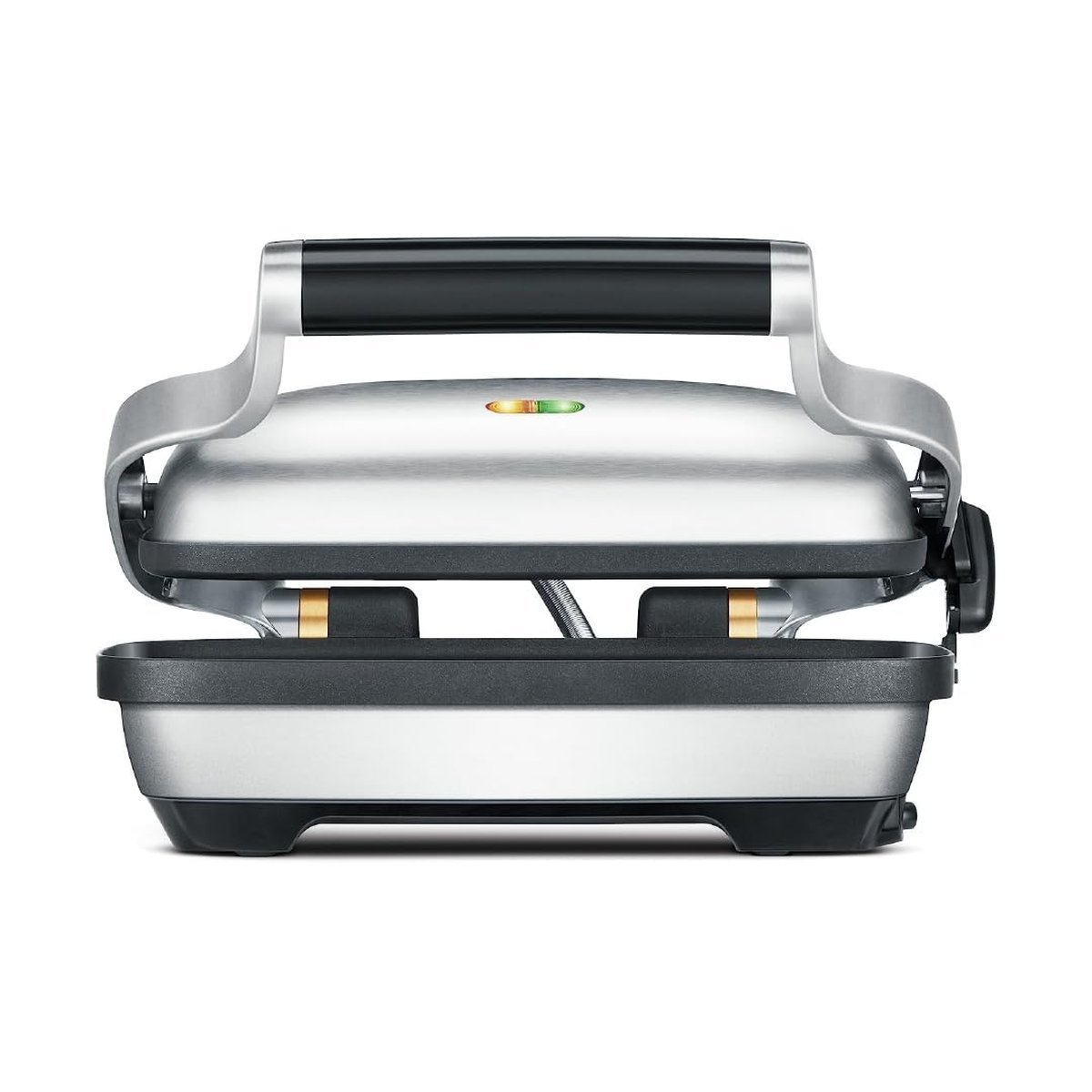
Breville’s name recognition alone gets it a look-in here, but the counterweight hinge with crush control is the actual reason it’s worth the step up from a cheaper house-brand unit: it applies even pressure across the sandwich without a heavy hand mashing the filling flat, the single most common complaint about cheaper presses.
Cast-aluminium plates with a premium non-stick finish heat evenly edge to edge instead of running hot in the middle and lukewarm at the corners, a pattern that turns up repeatedly in verified buyer reviews of cheaper units. The adjustable height control means a thick Turkish roll and a thin white-bread toastie both come out properly sealed instead of one or the other getting crushed or left half open.
This sits well into premium territory for a single-function sandwich press, and it’s honestly still just a 2-slice unit: the Devanti 4-slice above beats it flat-out on capacity for less outlay. Worth it for someone who’s burned through two cheap presses already and wants the last one they buy; a hard sell for a first-ever sandwich press.
Pros
- Counterweight crush-control hinge is a real engineering step up, not marketing
- Even heat across cast-aluminium plates, corner to corner
- Breville’s established AU service and warranty network
Cons
- Two-slice capacity only, at a price that buys 4-slice capacity elsewhere on this list
- No lockable flat-open function like the combo units above
- A premium price for what is, mechanically, still just a sandwich press
Key specs: 2-slice, counterweight hinge with crush control, adjustable height control, cast-aluminium non-stick plates
CHECK ON AMAZON7. Baccarat The Toastie Pro Sandwich Press – Best 4-Slice on a Budget
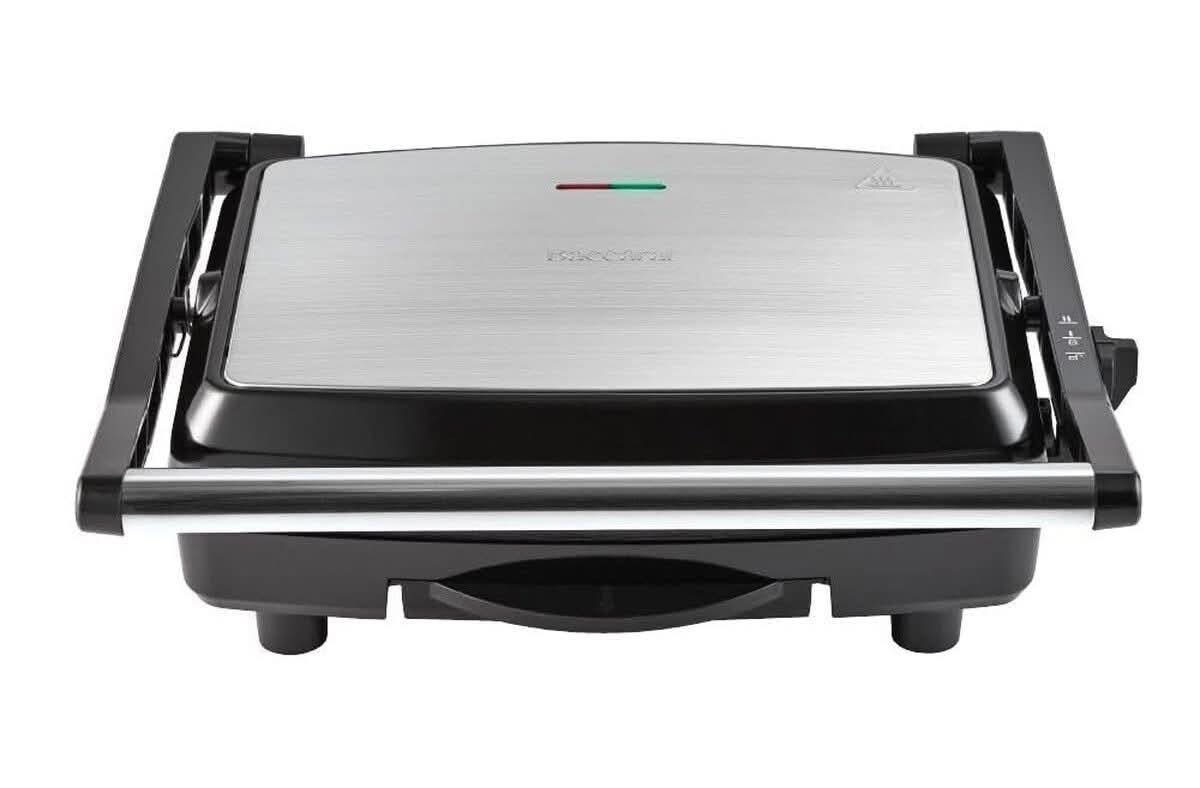
Baccarat is a name most Australian kitchens already know from cookware sets at David Jones or Myer, and the Toastie Pro brings that same finish to a 4-slice press with a ceramic non-stick coating free of PFAS, PTFE, PFOA, lead and cadmium: a different plate material to the standard non-stick coating on every other unit in this lineup.
The floating hinge browns both sides evenly no matter how thick the filling is, and it locks flat for storage instead of sitting open on the bench between uses, a small detail that matters more than it sounds in a kitchen without much spare counter. A recipe book comes in the box, a nice touch even if most buyers skim it once and never open it again.
It sits below the Devanti 4-slice above on price for the same slice count, trading that unit’s flat 180-degree grill mode for the ceramic coating and the lockable storage hinge instead. Not a bad swap if what you actually want is sandwiches, not a secondary flat grill.
Pros
- 4-slice capacity for less outlay than most 2-slice premium units cost
- Ceramic non-stick coating skips PFAS, PTFE and PFOA entirely
- Locks flat for compact storage, not left open on the bench
Cons
- No flat 180 degree grill mode, so it’s sandwiches only, not a secondary grill
- Ceramic coatings can be less forgiving of metal utensils than standard non-stick
- Fewer verified long-term reviews than the Breville above
Key specs: 4-slice, ceramic non-stick coating (PFAS/PTFE/PFOA/lead/cadmium-free), floating hinge, lockable for storage, recipe book included
CHECK ON AMAZONHow to Choose a Sandwich Press
Plate count decides more than wattage does. A 2-slice unit suits one or two people and stores easily in a cupboard; a 4-slice unit is the difference between feeding a family in one pass or standing at the bench doing three rounds before everyone’s fed. Choice’s buying guide draws exactly this line, and it holds up against every product in this lineup: the wattage figure printed on the box matters far less day to day than whether the plate actually fits what you’re cooking.
Check whether the top plate locks flat before assuming it’s just a sandwich press. A lockable, flat-opening top plate turns the appliance into a proper grill for bacon, eggs or vegetables, a genuinely different use case to a sealed triangle jaffle iron. If breakfast duty matters as much as lunch, that single spec should decide the shortlist before brand or price does.
Non-stick coating type is worth reading past the marketing photo. Standard PTFE-based non-stick works fine for most households and is easiest on the wallet, but a ceramic coating, like the Baccarat pick above, skips PFAS and PTFE entirely for households actively avoiding them, at the cost of being less forgiving if you ever reach for a metal utensil out of habit.
Think about where it actually lives, not just where it cooks. A 4-slice combo grill takes up roughly the footprint of a stand mixer and really does want a permanent spot on the bench. Renting a Melbourne share house with a galley kitchen and one power point near the bench? A compact 2-slice unit or the mini jaffle iron avoids the daily dance of dragging a heavy appliance out of a cupboard.
Run the numbers on how often it’ll actually get used. At roughly 30-35 cents per kilowatt hour on most AU electricity plans, even the 2000W unit run for five minutes costs a couple of cents a slice; power draw was never going to be the deciding factor here. What decides it is whether a premium cafe-style grill earns its keep three mornings a week, or ends up sitting unused the way a spare toaster does once a household already owns one appliance that does a similar job.
Buy for the sandwiches you actually make, not the ones in the marketing photos. A jaffle iron that seals the edges shut suits a filling that would otherwise spill everywhere: baked beans, a soft egg, melted cheese running loose. A flat contact press suits anything you’d rather see and flip, like a proper panini or a toasted wrap. Picking the wrong shape for what you actually eat is the single most common regret in verified buyer reviews across this category, more than any spec on the box.
You’ll Also Want
A loaf that’s actually fresh makes more difference to a decent jaffle than any spec on the press itself. The Best Bread Makers guide covers the Breville Custom Loaf Pro, the pick that turns up most often paired with a sandwich press in the same kitchen.
A sharp, sturdy board makes prepping fillings faster than fighting with a warped plastic one. The Classica acacia end-grain board covered in Best Chopping Board is the right size for slicing a loaf without it skating across the bench.
Metal utensils scratch a non-stick or ceramic plate the first time you forget and reach for one out of habit, so a pack of heat-resistant nylon turners earns its keep sitting in the drawer nearest the press instead of the good cutlery drawer where it’ll never get used.
Frequently Asked Questions
What’s the difference between a sandwich press and a jaffle maker?
A jaffle maker uses triangle-shaped plates that seal a filled sandwich into two sealed pockets and cut it in one press, the traditional Australian jaffle. A sandwich press more broadly covers flat or ribbed plates that grill an open sandwich without sealing the edge. Some combo units do both by swapping plates, so check plate shape rather than the name on the box before buying.
How many watts does a good sandwich press need?
Wattage mostly affects preheat speed, not final plate temperature. This lineup runs from 520W in a single-serve jaffle iron to 2000W in a 4-slice family unit. A higher-wattage unit heats a larger plate faster, which matters more on 4-slice models than on a compact 2-slice press. Don’t choose on wattage alone; plate count and coating matter more for everyday results.
Can you cook anything other than sandwiches on a sandwich press?
Yes, if the top plate locks flat instead of staying fixed at a clamp angle. A press that opens to 180 degrees works as an actual flat grill for bacon, eggs or vegetables, effectively doubling as a second cooktop. A sealed triangle jaffle iron generally can’t do this, so check for a lockable, flat-opening hinge if breakfast duty matters as much as lunch.
Is a 4-slice sandwich press worth it over a 2-slice model?
For a household of three or more eating lunch around the same time, yes. A 4-slice plate avoids standing at the bench doing multiple rounds. For one or two people, a 2-slice unit is easier to clean and store, and heats up with less wasted plate space. Choice’s own buying guide draws this same line between the two sizes.
How do you clean a sandwich press without damaging the plates?
Unplug it and let the plates cool before wiping with a damp cloth; never submerge the base in water. Removable plates can usually go in the dishwasher, worth checking before buying if easy cleanup matters. Avoid metal scourers or utensils on non-stick or ceramic coatings, since scratches let food stick permanently in the damaged spot.
Do sandwich presses use much electricity to run?
Not really. At roughly 30-35 cents per kilowatt hour on most Australian electricity plans, even a 2000W unit run for five minutes to make a batch of toasties costs only a few cents. Running cost was never the deciding factor across this category; plate count, coating type and how often the appliance actually gets used matter far more to overall value.
Verdict
Most Australian kitchens don’t need the cafe-grade EUROCHEF or the premium Breville: the Davis & Waddell 2-in-1 covers jaffles and a flat grill at the most affordable end of the mid-range and is the sensible default for anyone replacing a dead press or buying their first one. Households feeding more than two people at once should look straight to the Devanti 4-slice for the plate capacity, while the mini jaffle iron earns its spot for a dorm, desk or share house where a full-size unit would just take up cupboard space nobody has spare.