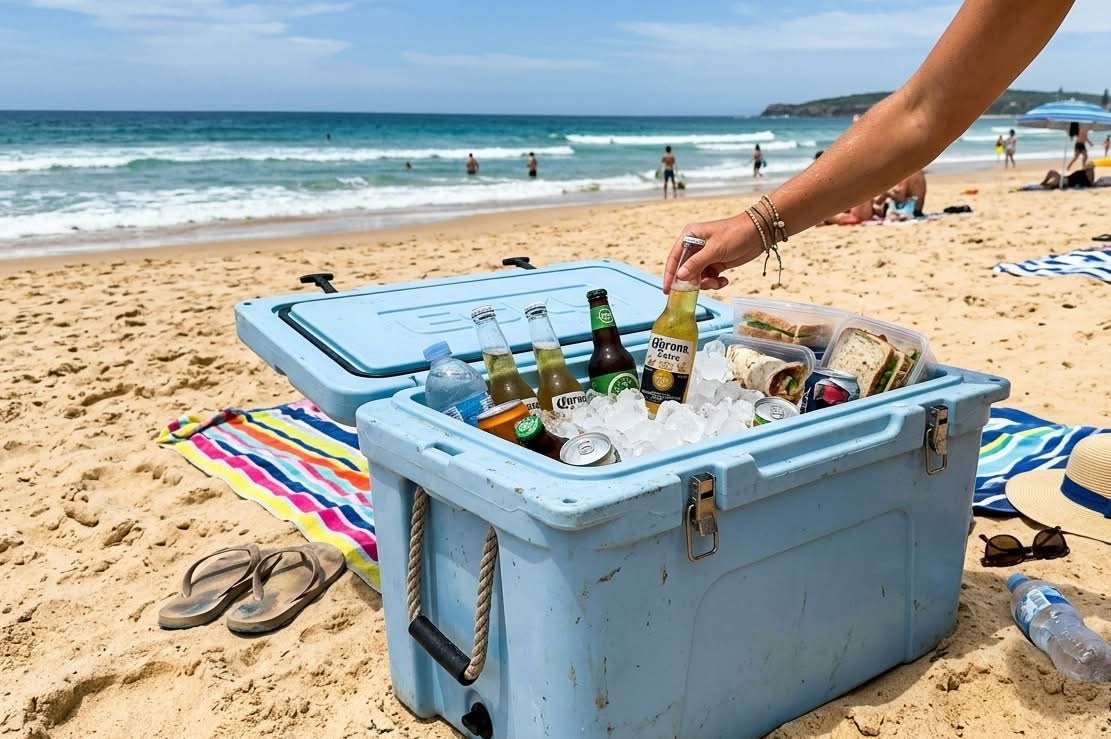
An esky is a portable insulated box or bag that keeps food and drink cold using ice or frozen bricks, with no power and no moving parts. The name started as a trademark and became the word every Australian uses for the thing in the boot. Choosing the best esky Australia sells comes down to one question that has almost nothing to do with the badge on the lid: how many hours will it actually hold ice in the heat you are going to use it in?
Four types are sold here. Hard eskies are moulded plastic boxes with thick insulated walls, and they hold cold longest. Wheeled hard eskies add a trolley base so a full 70L box does not have to be lifted. Soft coolers are insulated bags that collapse flat and suit a day at the beach. Rotomoulded eskies are the premium end, built in one continuous piece with very thick walls and a gasket-sealed lid. Ignore the wall-thickness marketing and squeeze the lid: Choice advises looking for walls and lids that do not compress easily, because the ones that give under pressure are more likely to be filled with air.
The number that matters is the temperature inside, not the litres printed on the box. Choice puts the safe food zone at below 4C, and says any food that sits outside that zone for more than four hours should be binned. That is the figure your esky has to beat, and it is why advertised ice-retention claims deserve suspicion. Capacity across the ten here runs from 15L to 80L. The spec most buyers overlook is the drain: Choice notes a drain plug lets you tip melted water out without upending the whole box, and flush-mounted drains do not trap dirt.
This lineup compares ten eskies in stock in Australia, from a 15L box that holds a day of lunches to an 80L wheeled unit built for a group trip, plus two soft coolers for days when a hard box is overkill. It covers seven brands, hard and soft builds, and four wheeled models. One honest boundary: these are all passive eskies, so 12V compressor fridges are out of scope, and so is the camping gear that usually goes in the boot beside them.
Quick Picks
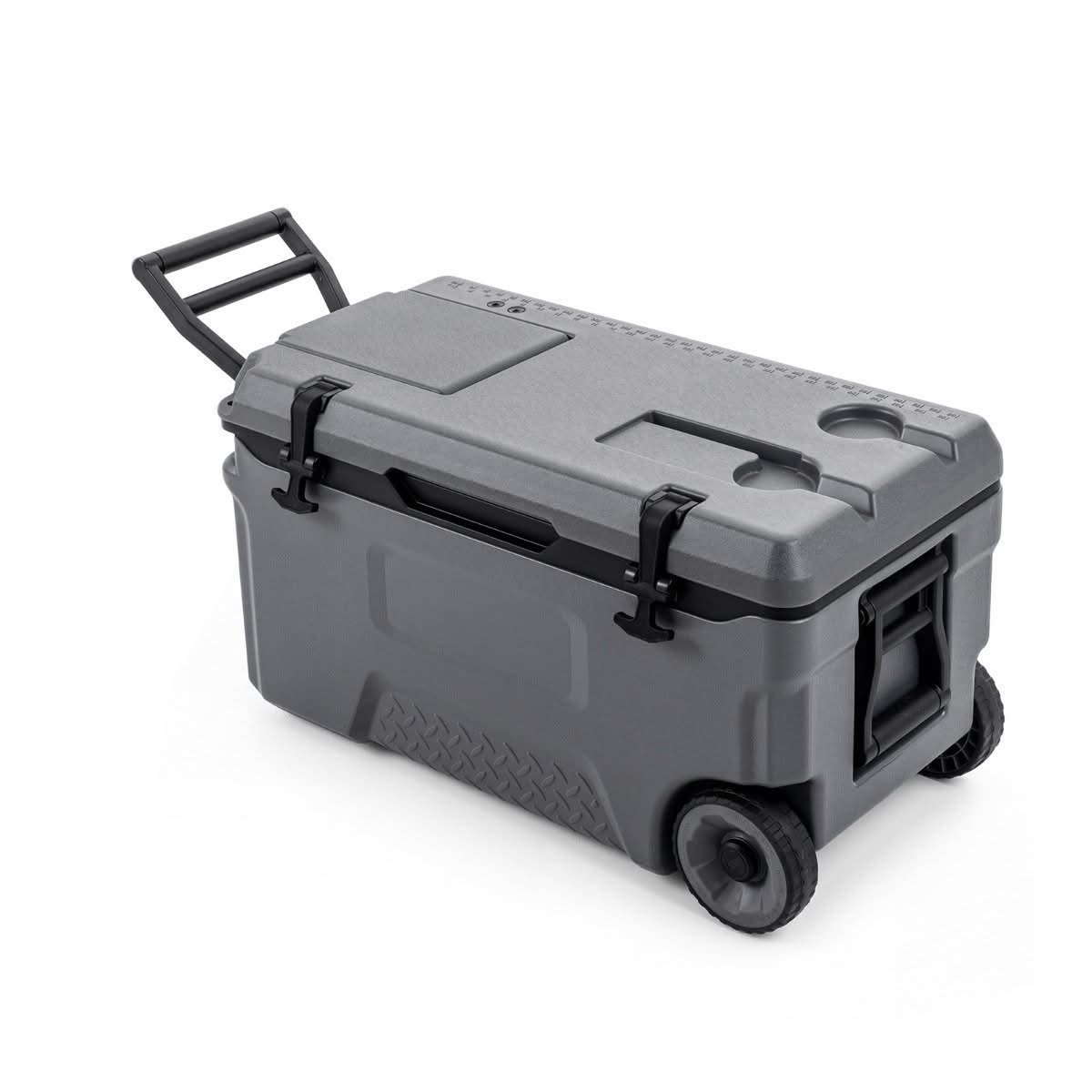
50L Insulated Hard Cooler with Wheels
Fifty litres is the size a family actually fills, and it rolls instead of needing a lift.
CHECK CURRENT PRICE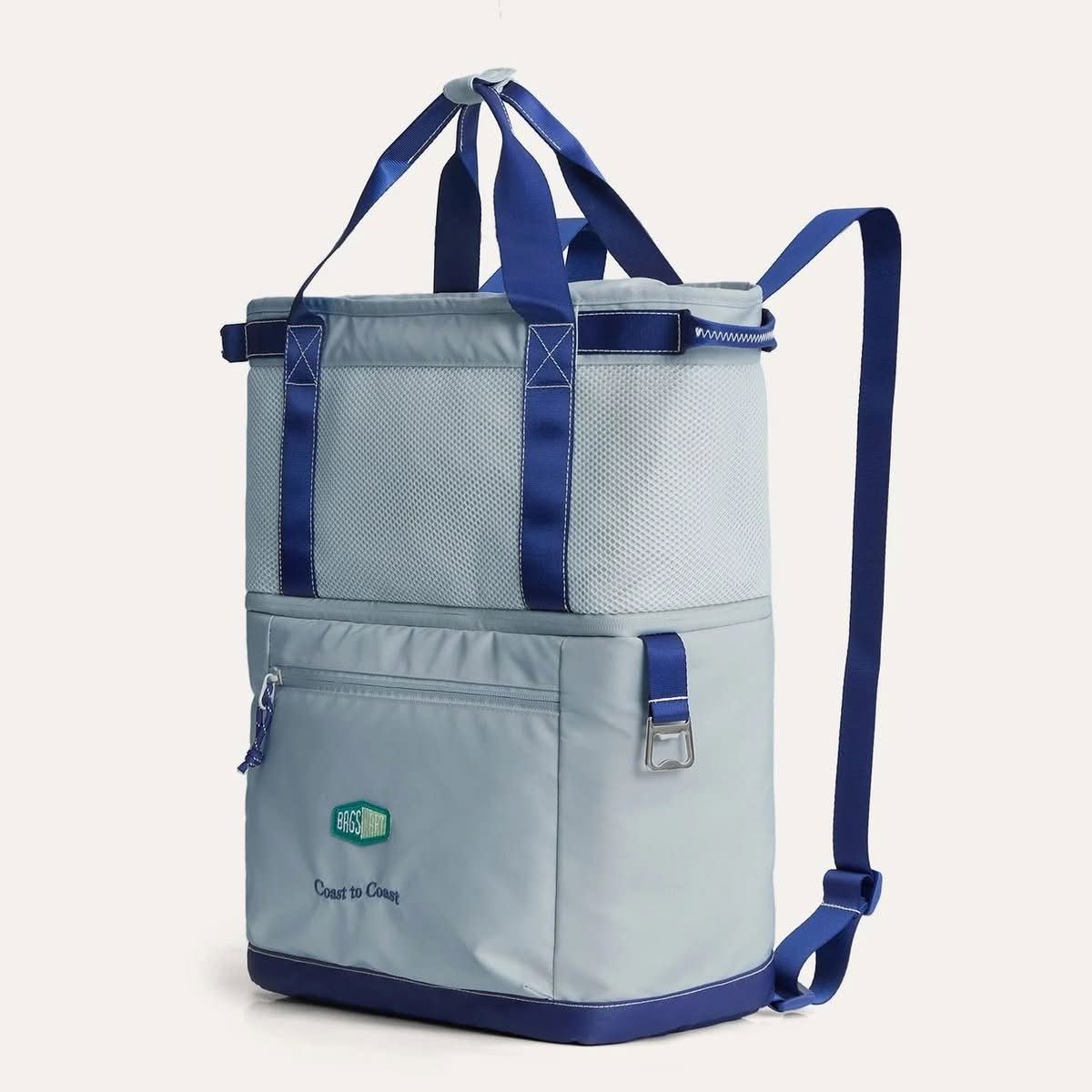
Coast 20-Can Soft Cooler
Folds flat when empty, splits wet from dry, and carries as a backpack to the beach.
CHECK CURRENT PRICE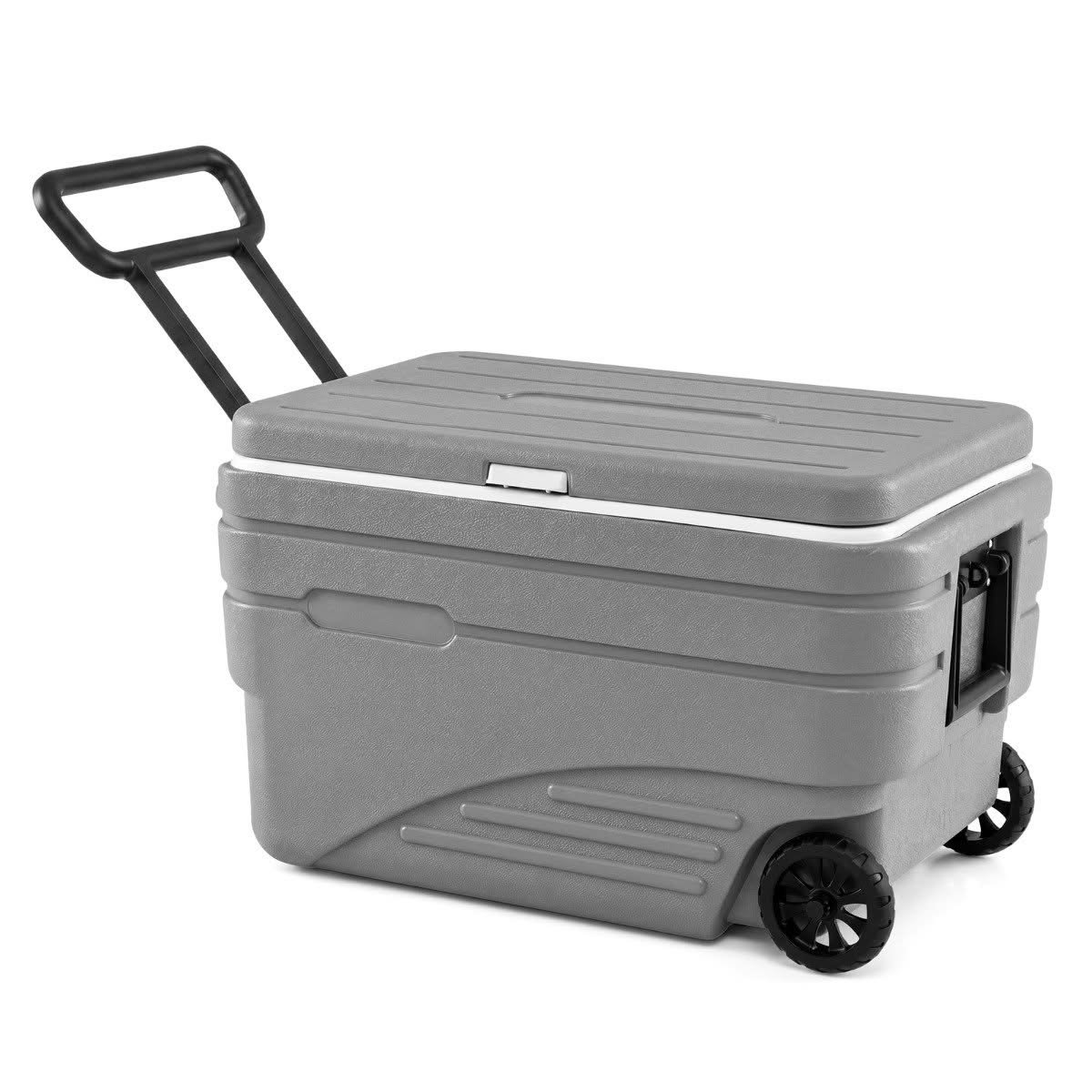
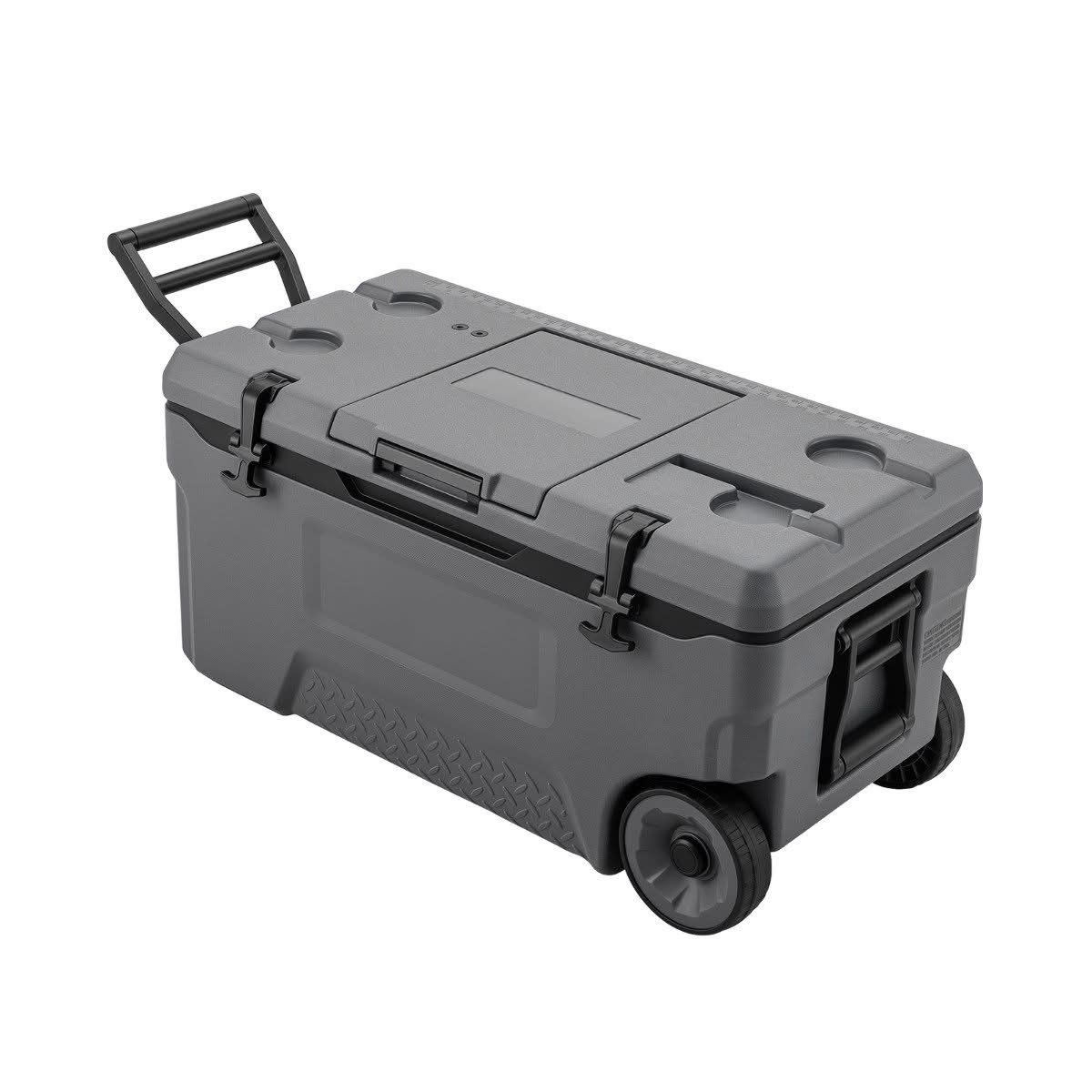
80L Hard Cooler on Wheels
Eighty litres on wheels for a group weekend, and squat enough to load into a wagon boot.
CHECK CURRENT PRICEBest Esky Australia Compared
| Product | Link | Type | Best For | Key Spec |
|---|---|---|---|---|
| Coast 20-Can Soft Cooler | Check price | Soft, insulated | Beach and day trips | 20 cans, dual compartment, backpack or tote |
| 80L Hard Cooler on Wheels | Check price | Hard, wheeled | Big group trips | 80L, wheels, side handles |
| 70L Rolling Cooler | Check price | Hard, wheeled | Camping and fishing | 70L, moulded body, wheels |
| 50L Insulated Hard Cooler with Wheels | Check price | Hard, wheeled | Boot-sized loads | 50L, wheels, carry handles |
| 41L Hard Cooler with Cup Holders | Check price | Hard, carry | Picnics and short trips | 41L, moulded cup holders in lid |
| Klein Tools Tradesman Pro Work Cooler | Check price | Hard, seat-rated | Job sites | 17 quart, seats 136kg, 30-hour cool claim |
| Coleman Pro Hard Cooler | Check price | Hard, heavy duty | Multi-day trips | 74 cans, extra-thick insulation |
| Willow Journey 55L Wheelie Cooler | Check price | Hard, upright wheeled | Wheeling over grass | 55L, fold-out pull handle, fits 2 medium ice bricks |
| Igloo Latitude 16 Ice Box | Check price | Hard, carry | Lunch and solo days | 15L, moulded handle |
| Arctic Zone Titan Deep Freeze Zipperless Cooler | Check price | Soft, hardbody hybrid | No-zip access | 9 to 48 can sizes, zipperless lid |
How We Picked
We swept every Australian retailer with, plus the major marketplaces and the brands’ own Australian stores, reading full catalogues instead of skimming each outdoor category. Several thousand listings came back. Only a few dozen were actual passive eskies once we stripped out bar fridges, ice-bucket furniture, drink bottles, picnic baskets with a cooler pocket sewn in, and 12V compressor fridges filed under the same heading.
From there the filters were: in stock in Australia, not an overseas import on a multi-week delivery estimate, and a distinct product instead of the same moulding wearing a second label. Where two listings turned out to be one box we kept one. We then cross-checked against Choice, whose cooler ratings are based on how long a box actually holds cold, and against verified owner reports on ProductReview.
1. Coast 20-Can Soft Cooler – Best Soft Cooler for Day Trips
A soft cooler is the answer to a question the hard boxes cannot solve: where does it live the rest of the year? This one folds flat when it is empty, carries as a backpack or a tote, and splits into a wet lower compartment and a mesh upper section so the sandwiches are not swimming with the cans. Twenty cans is the working capacity, which covers an afternoon for four people.
The trade-off is honest and worth stating plainly: no soft bag holds cold like a moulded box with 40mm walls. Expect most of a day, not a weekend, and expect to tip melt water out over the grass because there is no drain plug on a bag. It is the priciest soft cooler in this lineup, and what you are paying for is the carry system and the dry-wet split, not insulation that competes with the hard boxes below.
Pros
- Folds flat for storage, which no hard esky here does
- Separate wet and dry compartments keep food out of the melt water
- Carries as a backpack, a tote or over one shoulder
- Light enough to take to the beach without a second thought
Cons
- Holds cold for most of a day, nowhere near the multi-day figures the hard boxes manage
- Emptying it means upending the whole bag over the grass, since melt water has nowhere to drain
- Worn as a backpack with 20 cans in it, the weight sits high and pulls on the shoulders
- The pale fabric marks up quickly with sand, sunscreen and grass stains
Key specs: 20-can capacity, soft insulated body, dual wet and dry compartments, backpack and tote straps.
CHECK CURRENT PRICE2. 80L Hard Cooler on Wheels – Best Large Esky on Wheels
Eighty litres is group territory. This is the box for a long weekend where four adults are sharing catering, or a boat day where the drinks and the fish both need somewhere cold to sit. It rides on wheels with side handles, which is not a luxury at this size, because eighty litres of ice, cans and meat is well past a comfortable one-person lift.
It gains over the 70L below it in one specific way, which is squat proportions instead of tall ones, so it slides into a station wagon boot without eating all the height. Wall thickness is the usual moulded plastic, not a rotomoulded shell, so treat the ice figures as optimistic and pack it full.
The catch with the biggest box is counterintuitive. Choice notes that air gaps are what kill cold retention, so an 80L esky carrying a weekend’s worth of food for two people will lose its ice faster than a packed 41L one. Buy this only if you fill it. On a 40-degree Boxing Day in western Sydney, a half-loaded box of this size is the worst of both worlds.
Pros
- Largest capacity here, enough for a group weekend or a boat day
- Wheels and side handles, which matter at a size that is past a one-person lift
- Squat shape loads into a wagon boot more easily than a tall box of similar volume
- Cheaper than the 70L box directly below it despite holding more
Cons
- Loses cold faster than a smaller box if you only half fill it, which is how most people use 80L
- Still heavy to lift into a boot even with wheels, because the wheels only help on the ground
- Moulded construction, not a rotomoulded shell, so the ice claims are optimistic
- Too big for a sedan boot once the rest of the camping gear is in
Key specs: 80L capacity, hard moulded body, wheeled base, side carry handles, drain plug.
CHECK CURRENT PRICE3. 70L Rolling Cooler – Best for Long Weekends Away
Seventy litres in a taller, narrower moulded body, and the most expensive of the four hard boxes here. The proportions are the point: it takes upright two-litre bottles and long packs of meat without laying them flat, which the squat 80L above cannot do as neatly.
For a long weekend of camping or a fishing trip it is the sweet spot in this lineup. Big enough that you are not rationing space on day two, small enough that one person can drag it across a campsite. The moulded body has no separate gasket, so the lid seal is only as good as the fit, and that is where the cheaper end of the market usually gives up first.
Running cost is where hard eskies quietly beat soft ones. There is nothing to replace and nothing to power, so the only ongoing spend is ice, and a couple of reusable bricks cut even that. Drain it properly after each trip and leave the lid propped open, because the smell that develops in a sealed damp esky is the reason plenty of them end up on the kerb.
Pros
- Tall enough for upright bottles, which the squatter 80L box handles less neatly
- One person can still move it across grass or gravel
- No consumables and no power draw, so ice is the only ongoing cost
- Wheels plus a moulded body that takes knocks in a ute tray
Cons
- Dearest hard box in this lineup while holding less than the 80L above it
- The lid seals by fit alone, so a warped or knocked lid quietly bleeds cold all day
- A full 70L box is realistically a two-person lift into a high boot
- Develops a smell fast if it gets packed away damp with the lid shut
Key specs: 70L capacity, hard moulded body, wheeled, drain plug, upright bottle clearance.
CHECK CURRENT PRICE4. 50L Insulated Hard Cooler with Wheels – Best Mid-Size Wheeled Esky
Fifty litres is the size most Australian families actually need, and this is the box we would point most people at first. It holds a weekend of food and drink for four without the dead air that costs the bigger boxes their ice, and it rolls, so nobody has to lift it full.
Against the 70L and 80L boxes above, the case is simple. It costs less than the 70L, it is the size that gets filled on a normal trip instead of a once-a-year one, and a packed 50L will hold cold longer than either of them carrying the same load with room to spare. The wheels and carry handles are the same arrangement, just on a body that fits a normal boot alongside a tent and a couple of camp chairs.
Where it gives ground is heat. A moulded 50L box in a car boot on a 38-degree day in Perth is working hard, and the base is the part that fails first on cheaper eskies, which reviewers on ProductReview mention repeatedly across the category. Keep it off hot concrete and out of direct sun and it holds up.
Pros
- The size a family actually fills, which is what keeps ice alive
- Cheaper than the 70L box above while covering the same weekend use case
- Wheels and handles on a footprint that still fits a normal car boot
- Packed full, it will out-hold a half-empty 80L box
Cons
- Moulded walls, not a rotomoulded shell, so it is not a multi-day box in real heat
- The base is the weak point on boxes built this way, and it sits on hot ground
- Wheels are small, so sand and soft gravel bog it down
- A hard knock leaves the lid sitting slightly proud, and there is nothing to take up the gap
Key specs: 50L capacity, hard moulded body, wheeled base, carry handles, drain plug.
CHECK CURRENT PRICE5. 41L Hard Cooler with Cup Holders – Best Budget Hard Esky
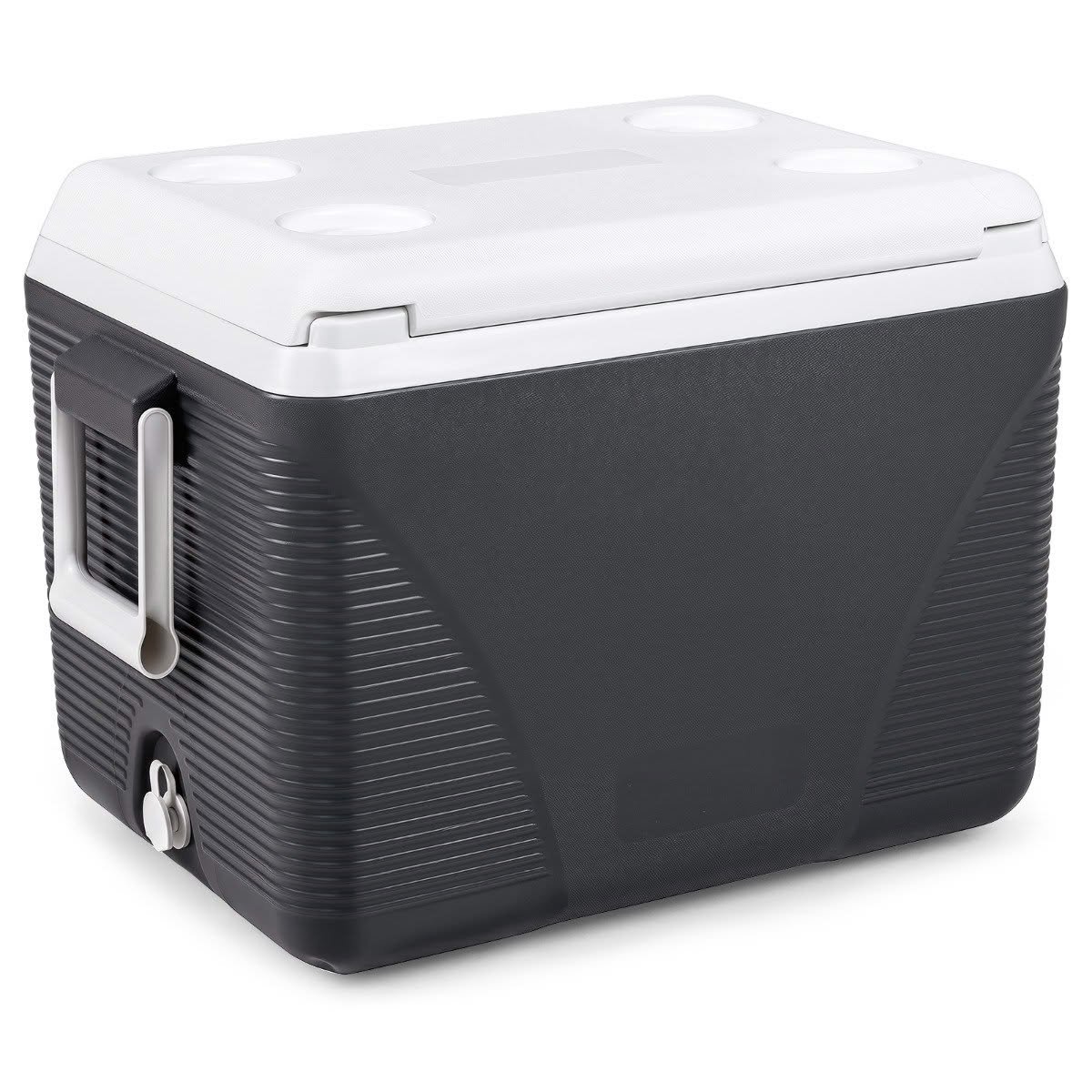
Same insulated moulded construction as the three wheeled boxes above, minus the wheels, at the lowest price of any hard esky here. Forty-one litres (about the footprint of a milk crate) is a weekend for two or a big day out for a family, and without a trolley base it is light enough to carry by the side handles when it is loaded. Cup holders are moulded into the lid, which sounds like a gimmick and turns out to be the thing you use every single trip.
Two practical notes. The lid recesses collect rain, sand and spilled drink, so they want a rinse, not a wipe. And because there are no wheels, this is the box you carry rather than drag, which caps how far from the car you want to be: fine for a picnic at the beach car park, less fine for a 300-metre walk in to a campsite.
Pros
- Cheapest hard esky in this lineup
- Light enough to carry loaded, which the wheeled boxes above are not
- Moulded lid cup holders get used on every trip
- 41L packed full holds cold better than any of the bigger boxes half empty
Cons
- You carry this one, which quietly caps how far from the car you are prepared to park
- Lid cup holders trap sand, rain and spilled drink and need rinsing out
- Smallest of the four hard boxes, so a group weekend will overflow it
- Side handles dig into your fingers once it is loaded with ice
Key specs: 41L capacity, hard moulded body, moulded lid cup holders, side carry handles, drain plug.
CHECK CURRENT PRICE6. Klein Tools Tradesman Pro Work Cooler – Best Work Esky
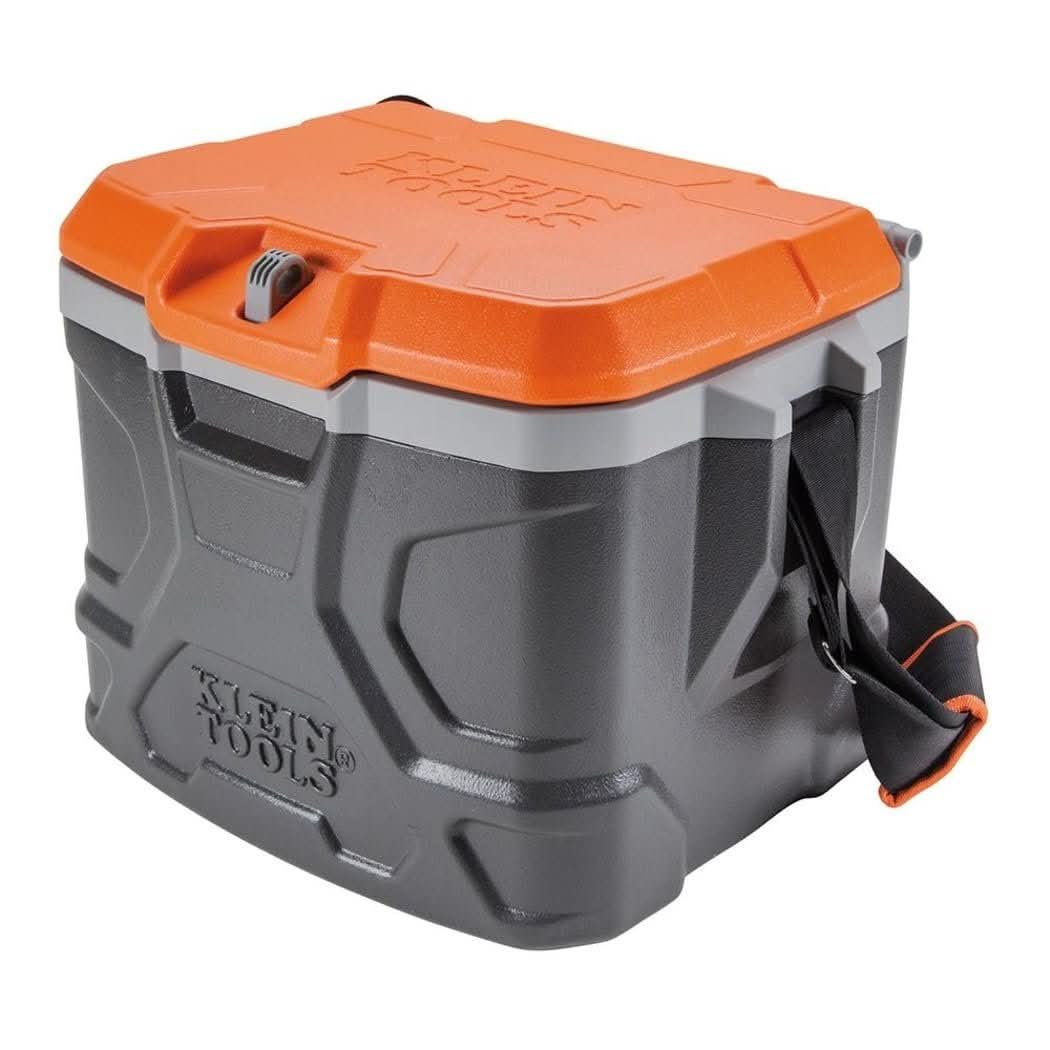
This is a tool-brand esky and it shows in every decision. The shell is rated to be sat on at 136kg, the hinge is stainless so it does not rust out in a wet ute tray, and there is a lock hasp on the lid because a work esky lives in the back of a vehicle on a job site.
The review base is the strongest of anything in this lineup by a wide margin. It carries a 4.7 rating across roughly 11,000 ratings, which is two orders of magnitude more feedback than the boutique boxes here, and the pattern in that feedback is durability rather than ice performance. Klein quotes 30 hours of cool, which for a 17-quart box opened at smoko and lunch is a fair claim.
It is not a camping esky. Seventeen quarts is roughly 16 litres, so it holds a day of food and drink for one or two people and nothing more, and it costs more than the 41L box four places up that holds two and a half times as much. You are paying for the build, the seat rating and the lock, which is exactly right if it rides in a ute in 40-degree sun five days a week and wrong if it comes out twice a summer.
Pros
- Rated to be sat on at 136kg, which is how work eskies actually get used
- Stainless hinge and a lock hasp, both aimed at a ute tray
- 4.7 rating across roughly 11,000 ratings, far more feedback than anything else here
- Recessed lid takes taller bottles and there is a small dry store for keys and a wallet
Cons
- Roughly 16 litres, so it is a one-person day box and not a camping esky
- Dearer than the 41L hard box above it despite holding far less
- Heavy for its capacity because the shell is built to be stood and sat on
- The pale grey and orange shell shows every mark a job site puts on it
Key specs: 17 quart (roughly 16L), hard shell rated to 136kg seated, stainless hinge, lock hasp, 30-hour cool claim.
CHECK ON AMAZON7. Coleman Pro Hard Cooler – Best Ice Retention
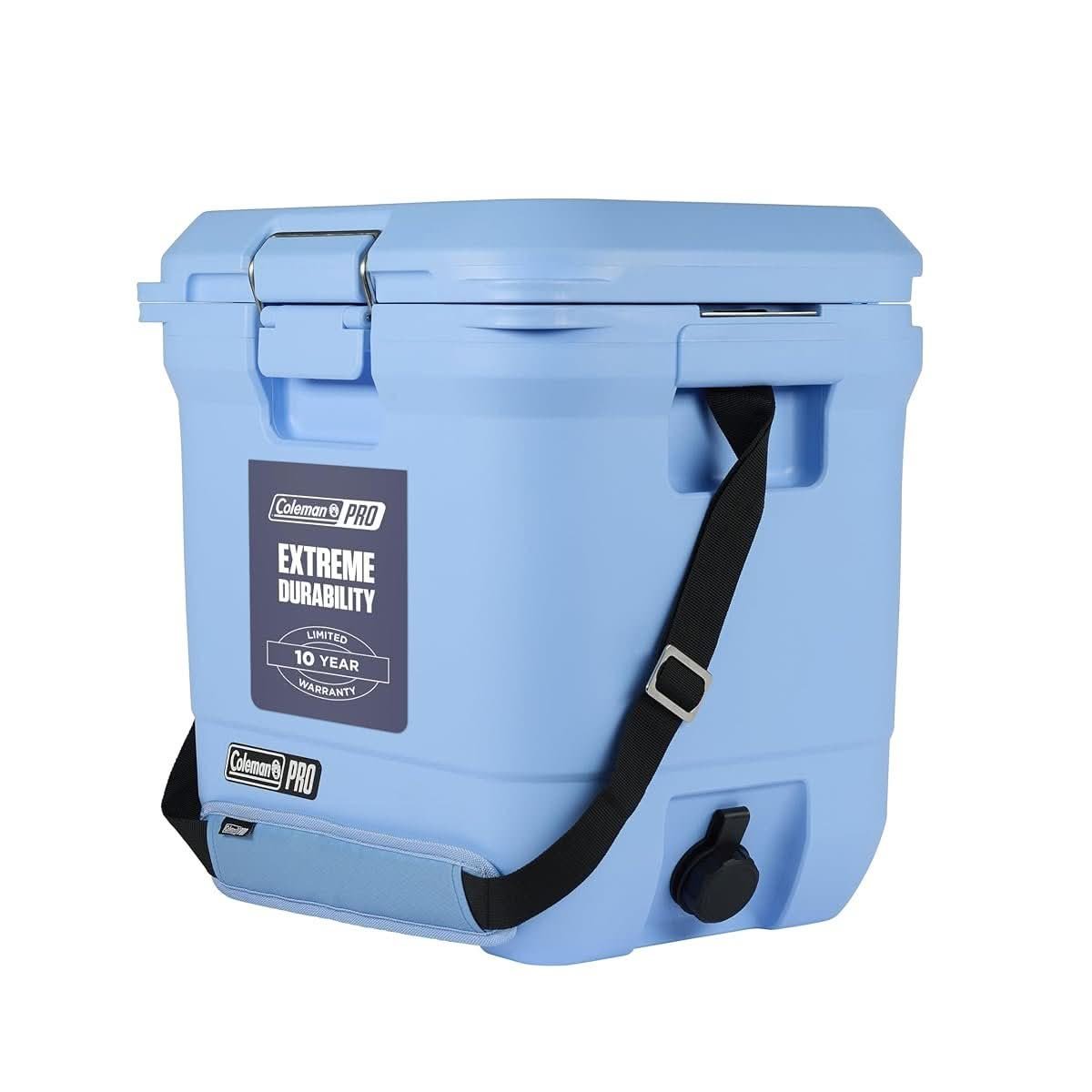
Start with the caveat, because it is the useful part. Coleman also sells the Esky Ice King line, and owners on ProductReview report that a box promoted as holding ice for three days at 32 degrees could not manage a day and a half in cooler conditions, with the insulation in the base singled out as the weak point. Whatever this box claims, treat it as a ceiling reached in ideal conditions.
With that said, the Pro is a different and better-built product. The lid drops shut with a dull thud instead of a rattle, which is the sound of thick walls. It is the extra-thick walled model in Coleman’s hard range, holds 74 cans, and is the only box here that is explicitly built around insulation performance instead of capacity or wheels. If you want the longest realistic hold in this lineup, this is where to look.
It suits a specific trip: two or three days away, driving in, where you can load it cold and then largely leave it shut. Every lid opening costs you hours, and a box like this rewards discipline more than a cheaper one does, because there is more thermal mass to protect.
The omissions are deliberate and worth knowing. No wheels, so a full 74-can box is a two-person carry. And it is the most expensive hard cooler in this lineup by a clear margin, which only makes sense if multi-day cold is the thing you are actually buying.
Pros
- Extra-thick walls, the one box here designed around insulation instead of size
- 74-can capacity in a body built for multi-day trips
- The most realistic candidate here for holding cold beyond a single night
- Rated 4.6 by Australian buyers
Cons
- Coleman’s Ice King stablemate drew ice-retention complaints on ProductReview, with base insulation the named weak point
- Loaded with 74 cans it wants two people and a clear path, with no trolley base to help
- The dearest hard cooler in this lineup by a clear margin
- Thick walls mean the outside dimensions are large for the litres you get inside
Key specs: 74-can capacity, hard body, extra-thick insulation, no wheels.
CHECK ON AMAZON8. Willow Journey 55L Wheelie Cooler – Best Upright Wheelie Design
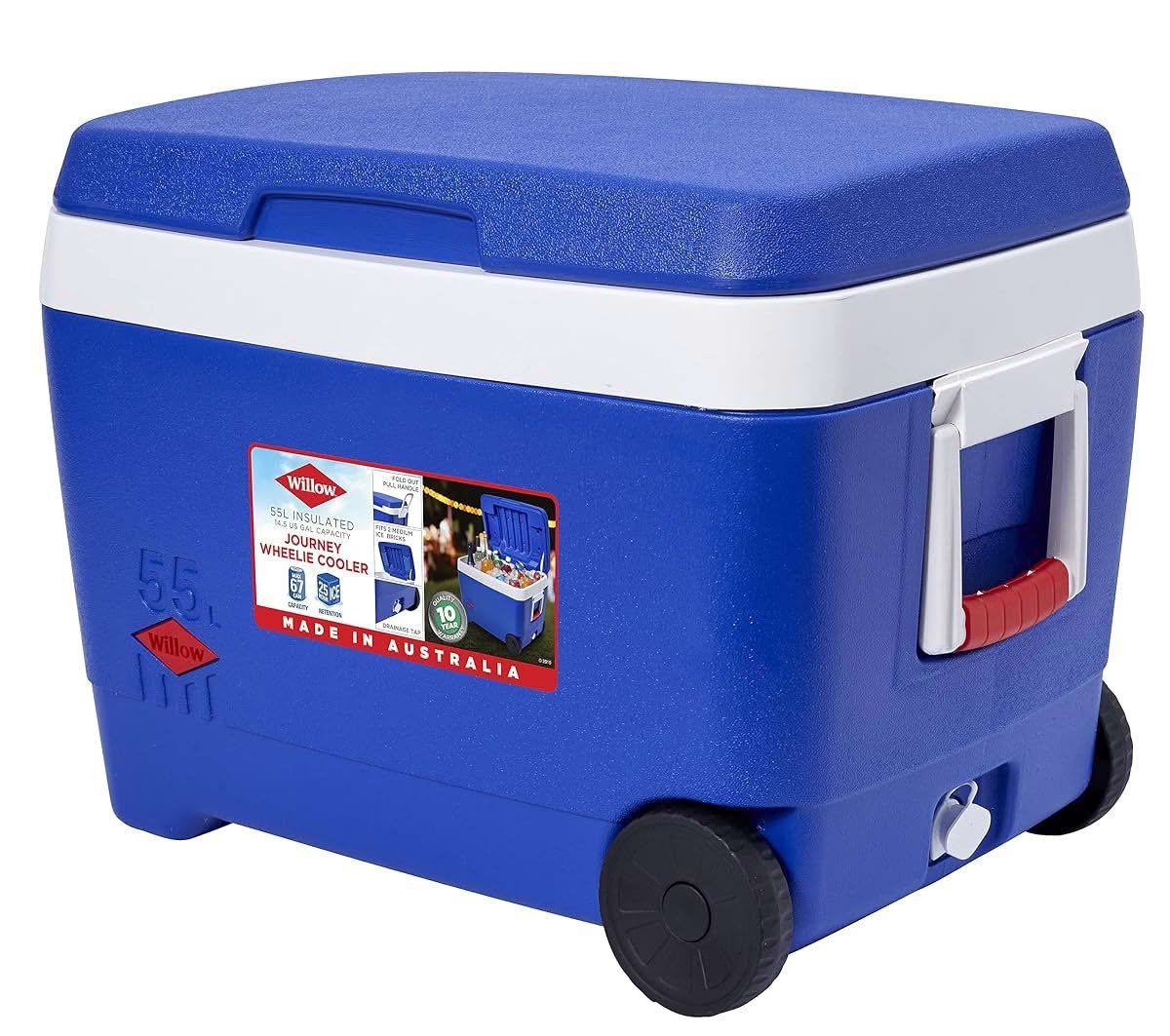
An upright wheelie box is a different shape of solution. Instead of a long low chest you drag flat, this stands tall on two wheels with a fold-out pull handle, so it tows behind you like a suitcase and takes up a narrow footprint in a boot or a garage corner.
Fifty-five litres, and it takes two medium ice bricks, which is the detail that tells you how it is meant to be loaded: bricks down the sides, contents in the middle. Towed upright over grass it is easier than the low 70L box three places up, and it parks in a corner instead of hogging floor space.
The upright format costs you something real, though. Contents stack rather than lying side by side, so whatever went in first is at the bottom under everything else, and soft items get crushed. Opening the lid on a tall box also dumps more cold air than lifting the lid on a low chest, because cold air falls. It also has the thinnest review base of any pick here, at fifteen ratings, so there is less owner evidence behind it than the numbers suggest.
Pros
- Tows upright on a fold-out handle, so it moves like a suitcase
- Narrow footprint parks in a boot corner or against a garage wall
- 55L capacity with space designed around two medium ice bricks
- Easier to pull across grass than a low chest of similar volume
Cons
- Contents stack vertically, so the first thing in ends up crushed at the bottom
- A tall lid dumps more cold air every time you open it than a low chest does
- Only fifteen ratings behind it, the thinnest evidence base of any pick here
- Two wheels and a handle mean it tips if you load it unevenly
Key specs: 55L capacity, upright hard body, two wheels, fold-out pull handle, fits two medium ice bricks.
CHECK ON AMAZON9. Igloo Latitude 16 Ice Box – Best Small Esky
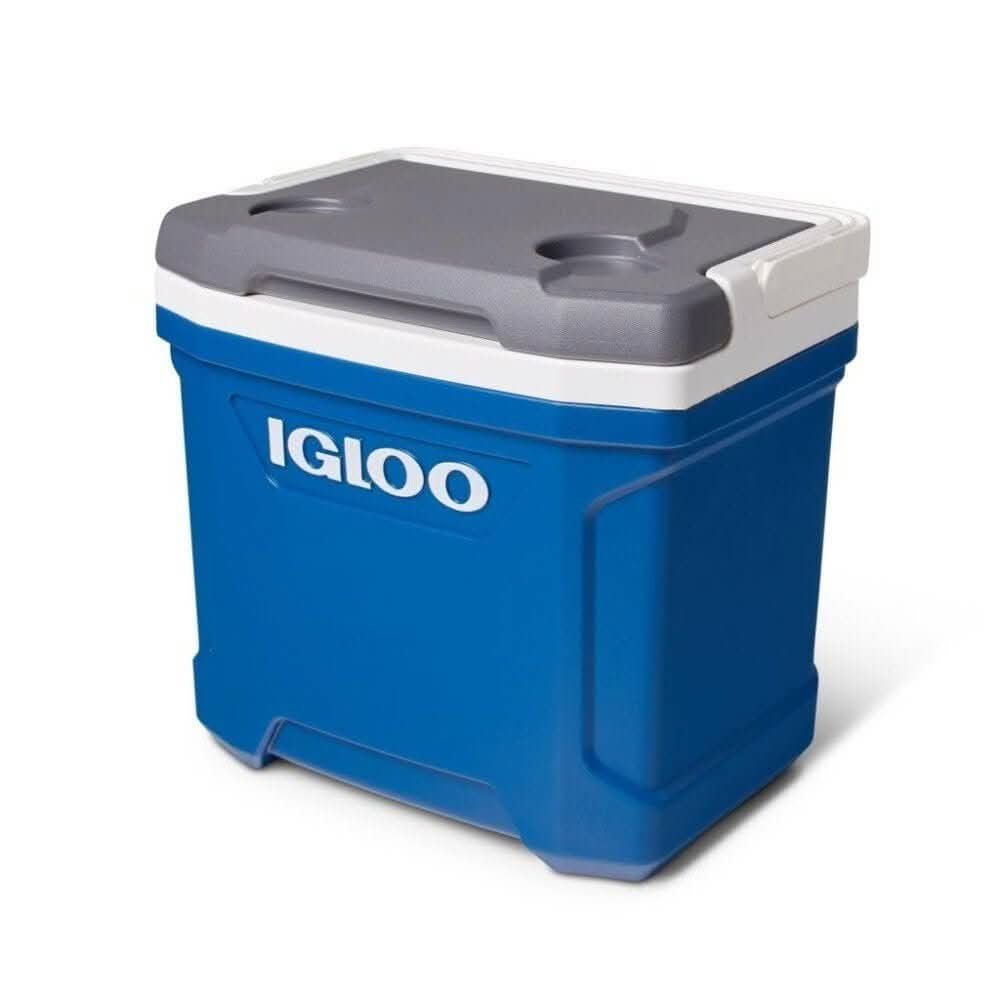
Fifteen litres (roughly a six-pack with room for a sandwich) is a lunch box with ambitions, and that is exactly the job. One person’s food and drink for a day, a couple of cans and a sandwich for the beach, or the thing that goes in the car for a long drive so you are not buying servo food. It is the cheapest esky in this lineup.
The moulded handle folds down flat on the lid, which matters more than it sounds because it means the box stacks under a seat or in a boot without a handle sticking up. At this size there is no drain plug and no need for one, since tipping 15L out over the grass takes a second.
Do not expect insulation miracles from a box this small. Choice makes the point that larger coolers fit more ice and so tend to hold cold longer, and a 15L box is at the wrong end of that. In a hot car in Brisbane it is a few hours, not a day. For its actual job, which is getting lunch through to lunchtime, it is enough.
Pros
- Cheapest esky here and the right size for one person’s day
- Fold-flat moulded handle lets it stack under a car seat
- Light enough to carry in one hand with a full load
- Rated 4.7 by Australian buyers
Cons
- Small volume means the least ice and so the shortest hold of anything here
- Melt water comes out by tipping the box over, which is fine at 15L and messy in a car park
- Thin walls compared with the wheeled boxes, and it shows in a hot car
- Not enough capacity for two people for a full day out
Key specs: 15L capacity, hard moulded body, fold-flat lid handle, no drain plug.
CHECK ON AMAZON10. Arctic Zone Titan Deep Freeze Zipperless Cooler – Best Zipperless Cooler

The zipperless lid is the whole idea here. Soft coolers usually fail at the zip: it grinds with sand, it snags, and eventually it splits and the bag is finished. This one uses a lift-open insulated lid instead, so there is no zip to wear out and you can get in with one hand while the other is holding a plate.
It comes as a hardbody soft cooler with a removable liner, which is the practical detail. The liner lifts out for cleaning, so spilled milk or a leaking bag of prawns does not become a permanent feature, and it separates food from the ice water underneath. Sizes run from a 9-can up to a 48-can, so check which one you are ordering.
Set against the hard boxes above, it is a day-trip proposition. A soft build with a lift lid will not hold cold like a moulded box, and the lid that makes one-handed access easy is the same lid that does not clamp down with a gasket. It is the pick for a picnic, a boot shopping run or a work esky, and the wrong pick for two nights at a campsite.
Pros
- No zip to grind out with sand, the usual failure point on soft coolers
- Removable hard liner lifts out for cleaning and keeps food out of the ice water
- One-handed lift lid, useful when your other hand is full
- Multiple sizes from 9 up to 48 cans
Cons
- Soft build holds cold for a day, not the multi-day figures the hard boxes claim
- The lift lid has no gasket clamp, so it seals less tightly than a latched hard lid
- Sold across several sizes under one listing, which makes it easy to order the wrong one
- The hard liner adds weight and takes up interior space you paid for
Key specs: 9 to 48 can sizes, soft hardbody build, zipperless lift lid, removable hard liner.
CHECK ON AMAZONHow to Choose an Esky
Treat advertised ice days as marketing, not spec. This is the single most useful thing to know before you spend. Owners of the Esky 50L Arctic Pro, a box labelled as holding ice up to seven days, report on ProductReview that bags of ice barely last 24 hours in moderate weather. Dometic Cool-Ice owners split the same way: some get three or four days, others find contents floating in water after one. Halve whatever the box claims, then judge.
Ice is the insulation, so buy for how full it will be. Choice puts it plainly: fill as much empty space as possible with ice, because the fewer air gaps the better. A half-empty 80L box will lose its cold faster than a packed 41L one. That flips the usual logic. Buy the size you will actually fill on a normal trip, not the size that covers your biggest Christmas once a year.
Pre-chill, or waste the first day. Choice advises chilling or freezing food and non-fizzy drinks overnight before packing, and making the esky the last job before you leave. A warm box straight off the garage shelf spends its first several hours cooling its own plastic instead of your food. Throw a sacrificial bag of ice in the night before, tip the water out in the morning, then load it.
Wheels matter more than litres past about 50L. A 70L esky packed with ice and drinks is heavy enough that two people should shift it, and most of us will be dragging it across grass, sand or a gravel campsite on our own. Wheel diameter matters more than whether wheels are fitted at all: small hard wheels dig into sand where larger ones roll. Driving from Sydney up to Byron with the esky in the boot and a 200-metre carry at the other end? Get the wheels.
Check the lid, the latches and the drain before the badge. Choice says latches and lids should be easy to open and close, and that one-handed types are easier, which you appreciate the first time you are holding a plate. A flush-mounted drain plug lets you empty melted water without upending the box over your feet. Thin lids that flex under a palm are the tell for cheap insulation.
Match the build to the abuse. A tradie’s esky rides in a ute tray in 40-degree sun and gets sat on; a beach esky gets sand in the hinges and salt on the latches; a caravan esky mostly just needs to fit the space. Reviewers on ProductReview repeatedly flag glued joints, weak lid ropes and insulation failing in the base of a box as the things that end an esky’s life. The cheap foam boxes stacked on the end-cap at Bunnings or Kmart are fine for a single Sunday at the beach and will crack inside a season if they live in a ute tray. None of that shows up in a spec table.
You’ll Also Want
Reusable ice bricks beat bagged ice for anything under two days. They do not flood the bottom of the box as they thaw, which is what ruins bread and labels, and you can refreeze them between trips. Two medium bricks plus a bag of ice is the usual combination for a weekend.
A block of ice lasts far longer than the same weight of cubes, because there is less surface area for the heat to work on. Freeze water in an old ice cream container the night before. Cubes chill faster, blocks last longer, so most people want some of each.
An esky-sized bin liner or dry bag keeps meat and anything with a paper label out of the melt water at the bottom. Cheap, and it saves the annoying job of fishing sodden labels off the drain.
A thermometer is the only way to know whether you are actually under the 4C mark Choice sets for safe food, instead of guessing from how cold the cans feel. A cheap fridge thermometer sitting in the box answers the question in a second.
If the esky is going camping, a decent barbecue is the other half of the kit, and it is worth getting that right before you spend up on the cool box. Cold food you cannot cook is only half a meal.
Frequently Asked Questions
How long does an esky keep ice?
Far less time than the label claims. Owners of boxes advertised at up to seven days report on ProductReview that ice can be gone inside 24 hours in moderate Australian weather, and Choice rates coolers on how long they actually hold cold instead of on the manufacturer’s figure. As a working rule, halve the advertised number, then halve it again if the box will sit in direct sun or be opened often through the day.
What size esky do I need?
Buy the size you will fill on a normal trip, because ice is the insulation and air gaps are the enemy. A packed 41L box outperforms a half-empty 80L one. For a couple on a day trip, 15L to 25L is enough; a weekend for a family suits 40L to 55L; group camping or a boat trip justifies 70L or more, at which point wheels stop being a luxury because a full box of that size is a two-person lift.
Should I pre-chill an esky before packing it?
Yes, and it makes more difference than most upgrades. Choice advises chilling or freezing food and non-fizzy drinks overnight, and making the esky the last thing you pack before leaving. A box stored in a warm garage spends its first hours cooling its own walls instead of your food. Put a sacrificial bag of ice in overnight, drain the water in the morning, then load it.
Is a hard esky or a soft cooler better?
They solve different problems. Hard eskies have thicker insulated walls and hold cold substantially longer, so they win for camping, fishing and anything overnight. Soft coolers collapse flat, weigh far less and carry easily on a shoulder or back, which suits a beach day, a picnic or a work lunch. Plenty of Australian households run one of each instead of compromising on a single box.
What temperature does food need to stay at in an esky?
Choice puts the safe food temperature zone at below 4C, or above 60C for hot food, and advises binning anything that sits outside that zone for longer than four hours. That matters most for meat, dairy and anything with mayonnaise in it. A cheap fridge thermometer left in the box tells you whether you are actually under the mark instead of guessing from how cold the drinks feel.
Do wheels on an esky actually help?
Past roughly 50 litres, yes. A 70L esky loaded with ice and drinks is heavy enough that lifting it alone is awkward and often a two-person job, so a trolley base saves your back across a car park or campsite. Check wheel diameter as well as their presence, because small hard wheels bog down in sand and gravel where larger ones keep rolling. On smooth ground under 40L, wheels mostly add weight.
Verdict
For most Australian buyers the 50L wheeled hard cooler is the one to get: it is the size a family actually fills on a weekend, it rolls instead of needing a lift, and it sits below the 70L and 80L boxes on price without giving up the insulated build. Step up to the 80L wheeled unit only if you genuinely pack for a group, because a half-empty big box loses cold faster than a full smaller one. If the esky is really for beach afternoons and work lunches, skip the hard boxes entirely and take the Coast 20-Can Soft Cooler, which collapses flat and carries as a backpack when it is empty.