Get caught fossicking with a metal detector in the wrong spot in Victoria without the right paperwork, and the penalty written into state law is no slap on the wrist, which is exactly why picking one of the best metal detectors in Australia is only half the job, and knowing where you are actually allowed to swing it is the other half. A metal detector is a handheld or two-piece electronic device that sends a signal through a search coil into the ground, sand or shallow water, then reads what comes back for a change consistent with buried metal, alerting the user with an audio tone, a vibration or a number on a small screen before anyone starts digging.
Detectors sold to Australian hobbyists split into a few real mechanism types, not just price tiers. VLF (Very Low Frequency) detectors run a single frequency, or several blended together on multi-frequency models, and are good at telling trash from treasure on dry, low-mineral soil. Pulse Induction (PI) detectors fire strong, short pulses and read the decay time, which shrugs off mineralised beach sand and salt water far better than VLF but usually cannot separate a bottle cap from a coin. Pinpointers are a separate second tool, a small handheld wand used after the main detector has narrowed a target down, to find the exact spot once a hole is already dug. Budget and toy-grade units aimed at children typically run a simplified single-frequency circuit with fewer discrimination settings and a shorter usable coil life than an adult machine.
The spec that actually separates these nine is detection depth on a coin-sized target, which runs from roughly 13cm on the shallowest budget unit up to 25cm or more on the multi-frequency machines built for serious prospecting. The secondary spec most first-time buyers skip past is search coil size and shape: a smaller coil trades maximum depth for cleaner separation in trashy ground such as an old picnic spot or school oval, while a bigger coil covers open beach sand faster but muddies the target reading once two or three signals overlap underneath it.
What follows runs nine deep, and the honest split matters more than the count: the two most decorated names in the hobby, Minelab and Garrett, barely show up in Australia’s general marketplaces, so this list moves from toy-grade beach finds and supermarket-brand full-size units up to one true gold-prospecting machine that costs as much as the other eight combined.
Quick Picks

10-Inch Waterproof Coil Metal Detector
A 10-inch waterproof coil, five detection modes and a full accessory bundle, shovel, headphones and carry bag included, for a fraction of the premium price tier below.
CHECK CURRENT PRICE
IP54 Waterproof Handheld Metal Detector
A pocket-sized, one-handed wand for a quick check at the park or beach without lugging a full-length machine out of the car.
CHECK CURRENT PRICE
LCD Waterproof Coil Metal Detector
The lightest full-size detector here at just 1kg, with an IP68 waterproof coil built for shallow creeks and beach edges.
CHECK CURRENT PRICEBest Metal Detectors Australia Compared
| Product | Link | Type | Best For | Key Spec |
|---|---|---|---|---|
| 10-Inch Waterproof Coil Metal Detector | Check price | Full-size VLF | Best for Waterproof Coil Detecting | 10in coil, 5 modes, 20cm+ depth |
| IP54 Waterproof Handheld Metal Detector | Check price | Handheld / compact | Best Compact Handheld | 360-degree sensing, one 9V battery |
| Explorer Kids Metal Detector Set | Check price | Kids toy-grade | Best for Kids | Adjustable 60-80cm, ages 3-12, includes trowel |
| LCD Waterproof Coil Metal Detector | Check price | Full-size VLF | Best Budget Full-Size Detector | 1kg, 13cm max depth, IP68 coil |
| Garrett AT Gold | Check price | Full-size PI/VLF hybrid, pro | Best for Serious Gold Prospecting | Waterproof to ~3m, Fast Track ground balance |
| SUNPOW OTMD15 Beach and Saltwater Metal Detector | Check price | Full-size VLF, rechargeable | Best for Beach and Saltwater | 10in Double-D coil, 35-hour battery |
| SUNPOW OT-MD07 All-Rounder Metal Detector | Check price | Full-size VLF | Best High-Sensitivity All-Rounder | 10in IP68 coil, 5 modes, 9 metal types |
| VEVOR 250mm Metal Detector | Check price | Full-size VLF | Best Value for Advanced Features | 250mm coil, 7 modes, IP68 |
| National Geographic Metal Detector for Kids and Adults | Check price | Full-size VLF, entry-level | Best for Beginners and Families | 18.8cm coil, pinpoint function, LCD |
How We Picked
We started with a sweep of Australia’s approved reatilers and marketplace, checking stock, real product depth and image quality across a dozen-plus storefronts, before turning to Amazon AU for the categories they did not cover, which turned out to be most of the premium end, since neither of the hobby’s two most respected manufacturers sells through general Australian marketplaces at all.
Every listing was checked for real availability and a reasonable delivery window, not just a live product page, and a couple of Amazon listings that turned out to be slow-moving US imports were dropped before the list was finalised.
1. 10-Inch Waterproof Coil Metal Detector – Best for Waterproof Coil Detecting
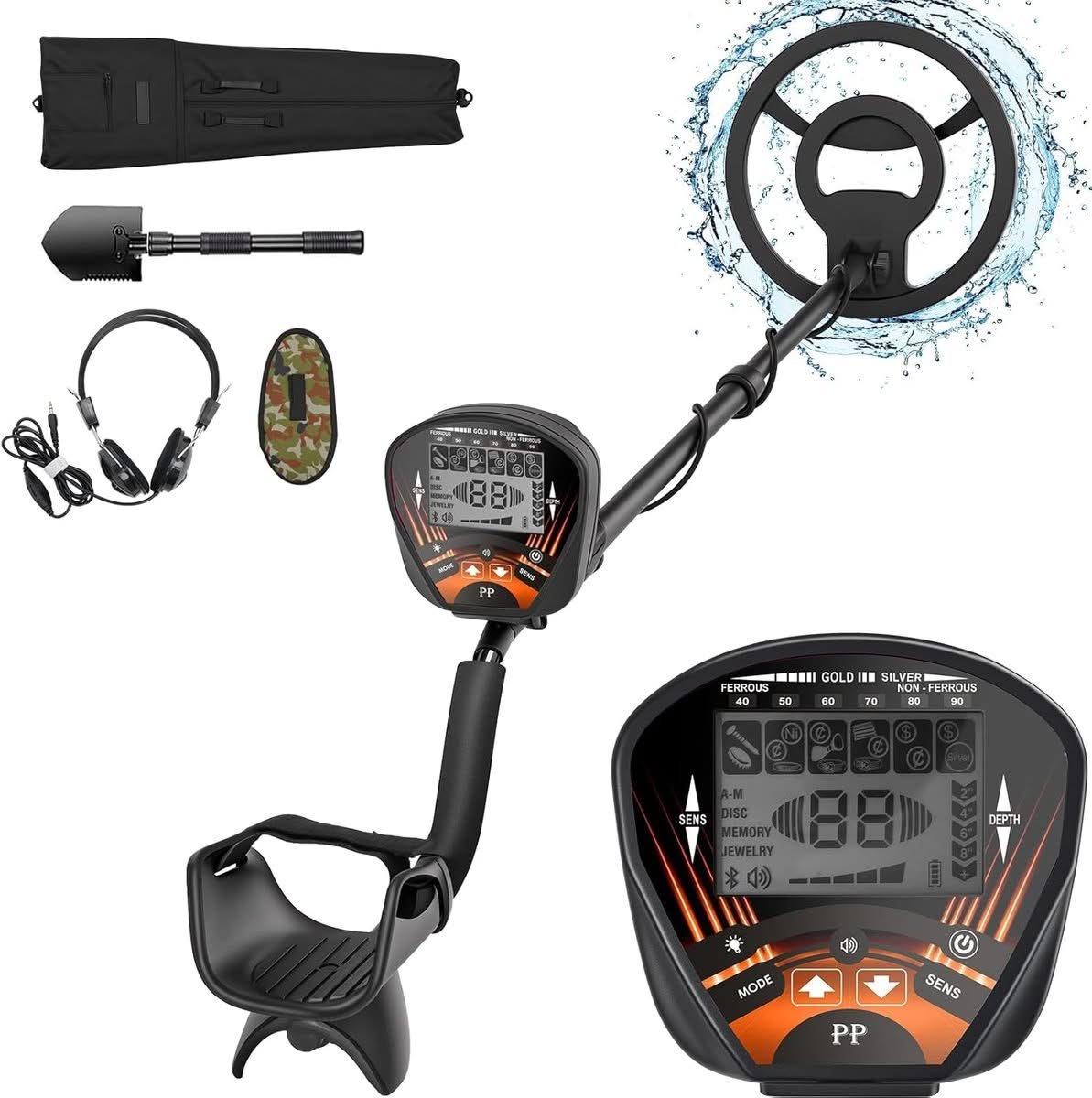
This is the deepest-specced detector in the budget half of this list: a 10-inch waterproof search coil, five operating modes (All Metal, Discrimination, Memory, Jewellery and Pinpoint) and depth indication reading out to 8 inches and beyond on the LCD panel. The coil copes fine in shallow creeks and the swash zone on a beach (the kind of spot a jetty piling casts shade over at low tide), though the control box itself is not waterproof, so a sudden downpour on the goldfields means packing up rather than pushing on.
Five detection modes is more than most beginners will touch in the first few months, but Memory mode is a real time-saver once you have learned which target IDs in your local ground mean junk versus jewellery, useful in an old paddock in regional Victoria where a century of fencing wire and horseshoes turns up before anything valuable does. Two 9V batteries run the unit instead of a rechargeable pack, so a spare set in the glovebox matters more than a charger cable on a full day away from power.
At 2.05kg it is heavier than the SUNPOW units further down this page, and the depth bar takes a session or two to read at a glance next to their sharper LCD. Still, for a first full-size detector with a properly waterproof coil and shovel, headphones and carry bag already in the box, this comes in well below what the mid-range Amazon picks ask for similar depth.
Pros
- 10-inch coil rated for shallow water use
- Five modes including a working Memory setting for repeat locations
- Full accessory kit included: shovel, headphones, carry bag
Cons
- The control box is not sealed against water, so a sudden change in weather means stopping instead of pushing through it
- Two 9V batteries add ongoing cost and extra pack weight that a rechargeable unit would avoid
Key specs: 10in waterproof coil, 5 modes, depth indication to 20cm+, 2.05kg, two 9V batteries
CHECK CURRENT PRICE2. IP54 Waterproof Handheld Metal Detector – Best Compact Handheld
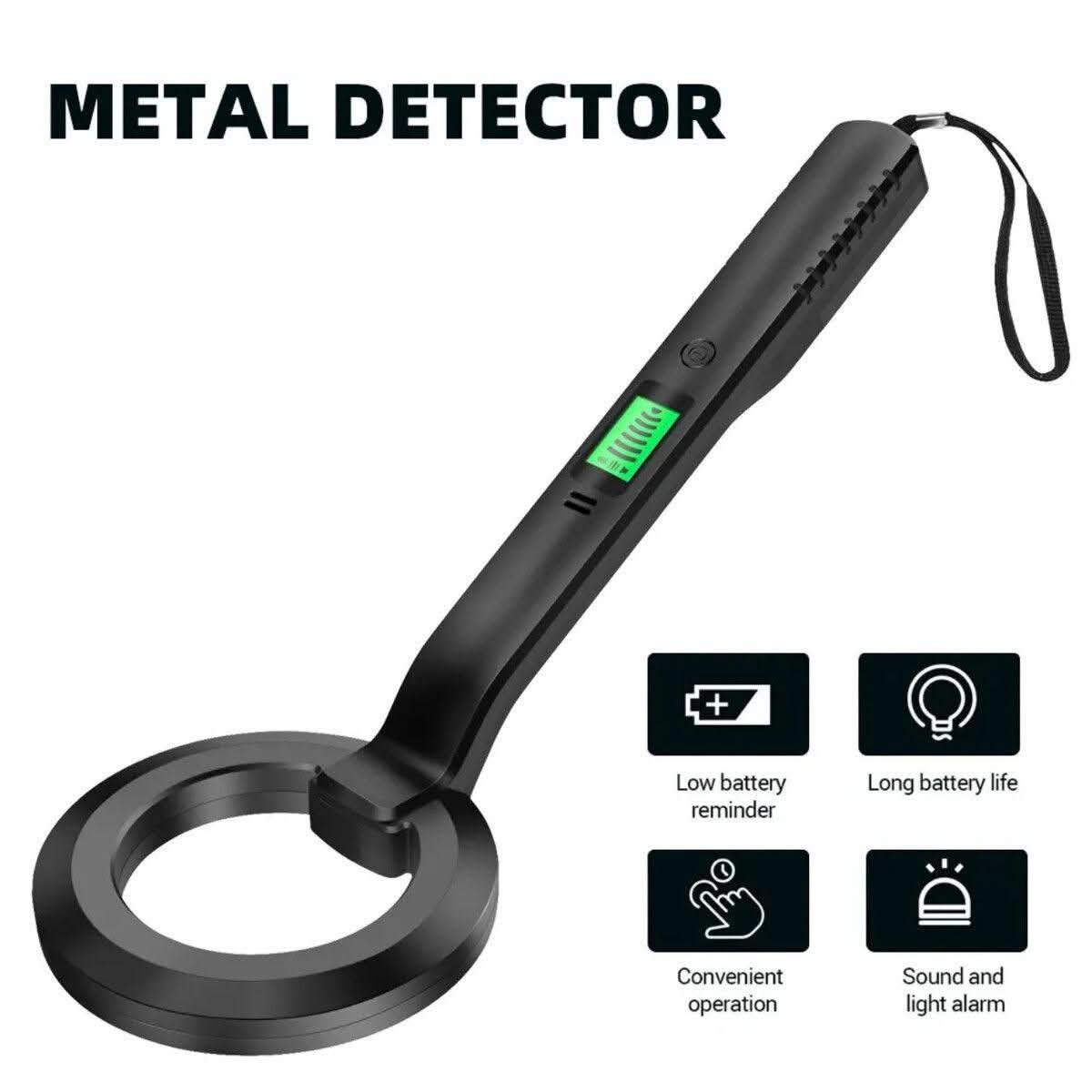
This is the one to grab when a full-size detector is overkill: checking a picnic spot before the kids run onto the grass, scanning a rental backyard before digging a garden bed, or a quick pass over a campsite before packing up the tent. It is a single-handed wand with 360-degree sensing, a sound-and-vibration alert and a small LCD readout, running off one 9V battery, with no shaft to assemble and nothing heavier than a torch in your hand.
Sensitivity trades against size here. It will find a coin or a ring within a few centimetres, but it does not have the coil area or depth of the two-piece detectors elsewhere on this list, so it works better as a follow-up pinpointing tool or a properly casual, five-minute-a-day unit than as a serious beach-sweeping machine. Delivery runs a standard courier timeframe instead of same-day pickup, so order it a week or two out from a planned trip, not the night before.
Pros
- Pocket-sized and one-handed
- Sound and vibration alert works even with headphones off
- Among the most affordable picks here
Cons
- Detection depth is shallow enough that it will miss anything more than a few centimetres down, fine for a quick check, not for a serious ground search
- Runs on a single non-rechargeable 9V battery, so a flat battery mid-session means a trip back to the car, not a five-minute recharge
Key specs: 360-degree wand, single 9V battery, sound + vibration + LCD alert, one-handed
CHECK CURRENT PRICE3. Explorer Kids Metal Detector Set – Best for Kids
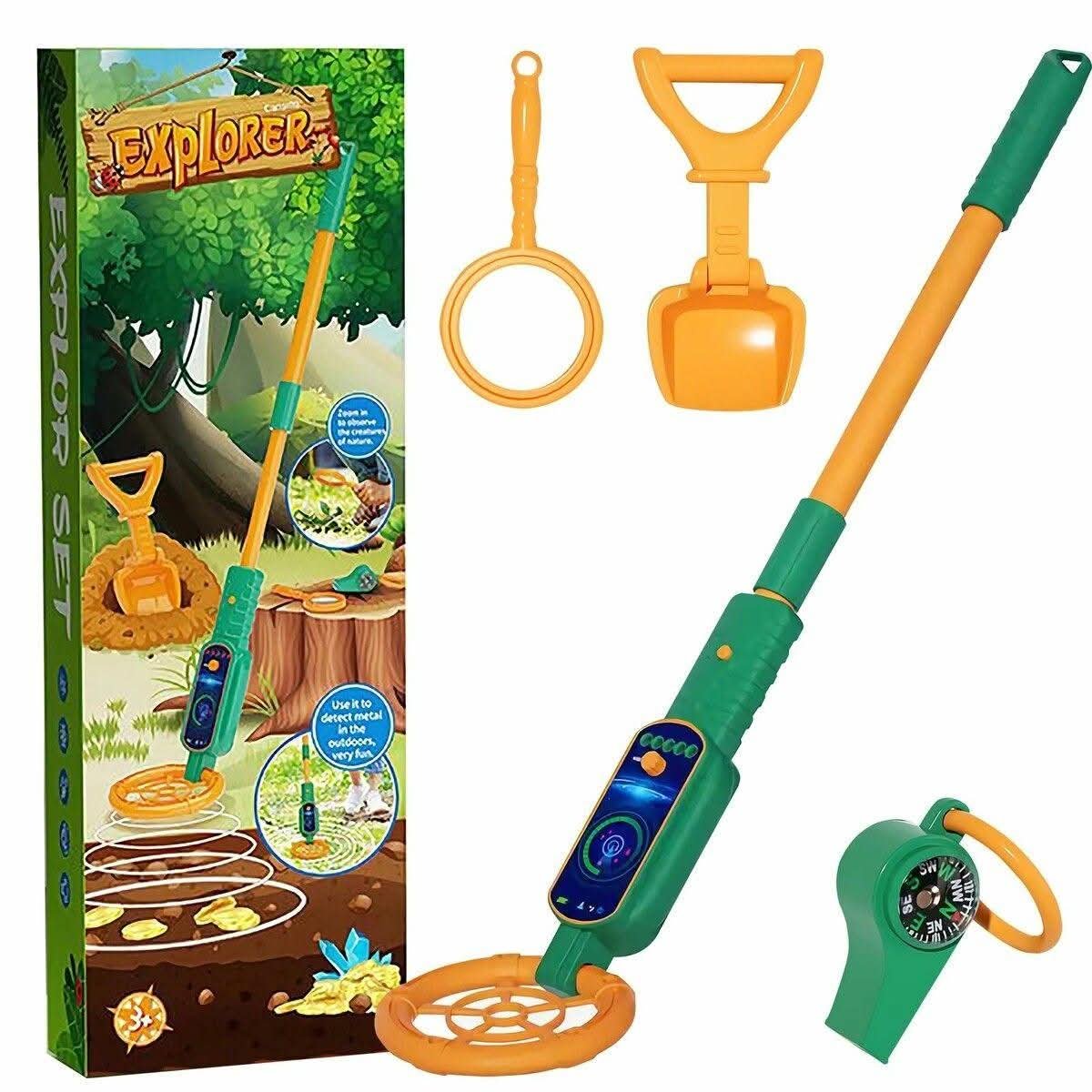
Ages 3 to 12 is the stated range, and the adjustable shaft (60cm to 80cm) backs that up, long enough for an eight-year-old to swing properly without stooping, short enough that a toddler being minded at a family barbecue can hold it without overbalancing. It looks and sounds the part: a sweep tone, a simple beeping alert when it passes over something metallic, and a bundled trowel for the digging that follows.
Set expectations before handing it over. This will find a bottle cap or a tent peg in the backyard reliably, but the sensing depth and discrimination are built for a game, not a hobby, so do not expect it to compete with any of the adult detectors on this list at an actual beach or goldfield. A ten-year-old outgrowing it in a season is the realistic outcome, and for the price that is a fair trade, not a disappointment. This is the most affordable pick in the whole guide.
Pros
- Adjustable to grow with a child from about three to twelve
- Includes a trowel for the digging that follows
- Properly lightweight for small arms
Cons
- Sensing depth is shallow enough that this is really a backyard toy, not a beach or goldfield tool
- The plastic shaft and coil will not survive being dropped repeatedly onto pavement, which is exactly what happens with a young child holding it
Key specs: Adjustable 60-80cm shaft, ages 3-12, includes trowel, simple beep alert
CHECK CURRENT PRICE4. LCD Waterproof Coil Metal Detector – Best Budget Full-Size Detector
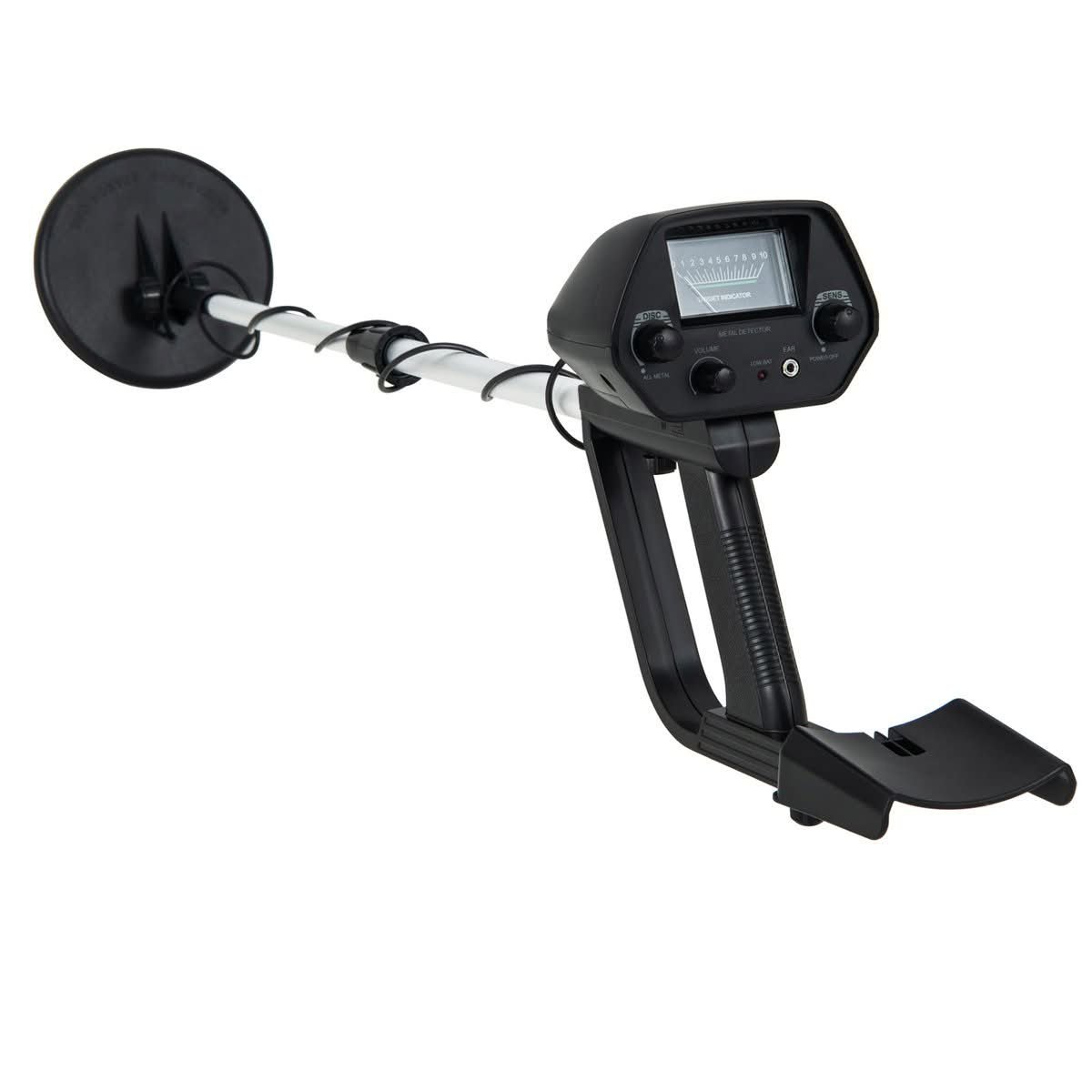
At exactly 1kg this is the lightest full-size detector in this guide by a wide margin, built around an aluminium shaft that telescopes from 84cm to 109cm and an IP68-rated coil that tilts 180 degrees for awkward angles under a jetty rail or along a steep creek bank. The control box keeps things simple: an all-metal/discriminate switch, a volume knob, a sensitivity dial and a headphone jack, with a small screen showing target depth and battery level instead of a full graphic display.
Maximum quoted detection depth is 13cm, noticeably shallower than every other full-size unit on this list, so treat it as a starter machine for shallow coin and jewellery finds in sand or soft garden soil, not something that will pull a ring up from 20cm down in compacted clay. That is a real limitation, not a spec-sheet technicality. Anyone expecting the same depth as the pricier picks above or below it will be disappointed within the first outing.
Where it earns its keep is portability. At 1kg it is light enough to carry one-handed for a full afternoon along a Gold Coast or WA beach without the forearm fatigue heavier units cause by the second hour, and the budget tier for full-size detectors in Australia starts right here. Pair it with realistic expectations, a shallow-water, sandy-soil companion, not a goldfields workhorse, and it does the job it is built for.
Pros
- Lightest full-size detector here at 1kg
- IP68 coil tilts 180 degrees
- Telescopes to fit almost any height
Cons
- 13cm maximum depth is shallow enough that a coin sitting just below typical garden mulch can still be missed
- The single-dial analog-style controls feel dated next to the LCD panels on the pricier picks, though almost anyone can figure the control box out in under a minute
Key specs: 1kg, 84-109cm adjustable, IP68 coil, 13cm max depth, all-metal/disc modes
CHECK CURRENT PRICE5. Garrett AT Gold – Best for Serious Gold Prospecting
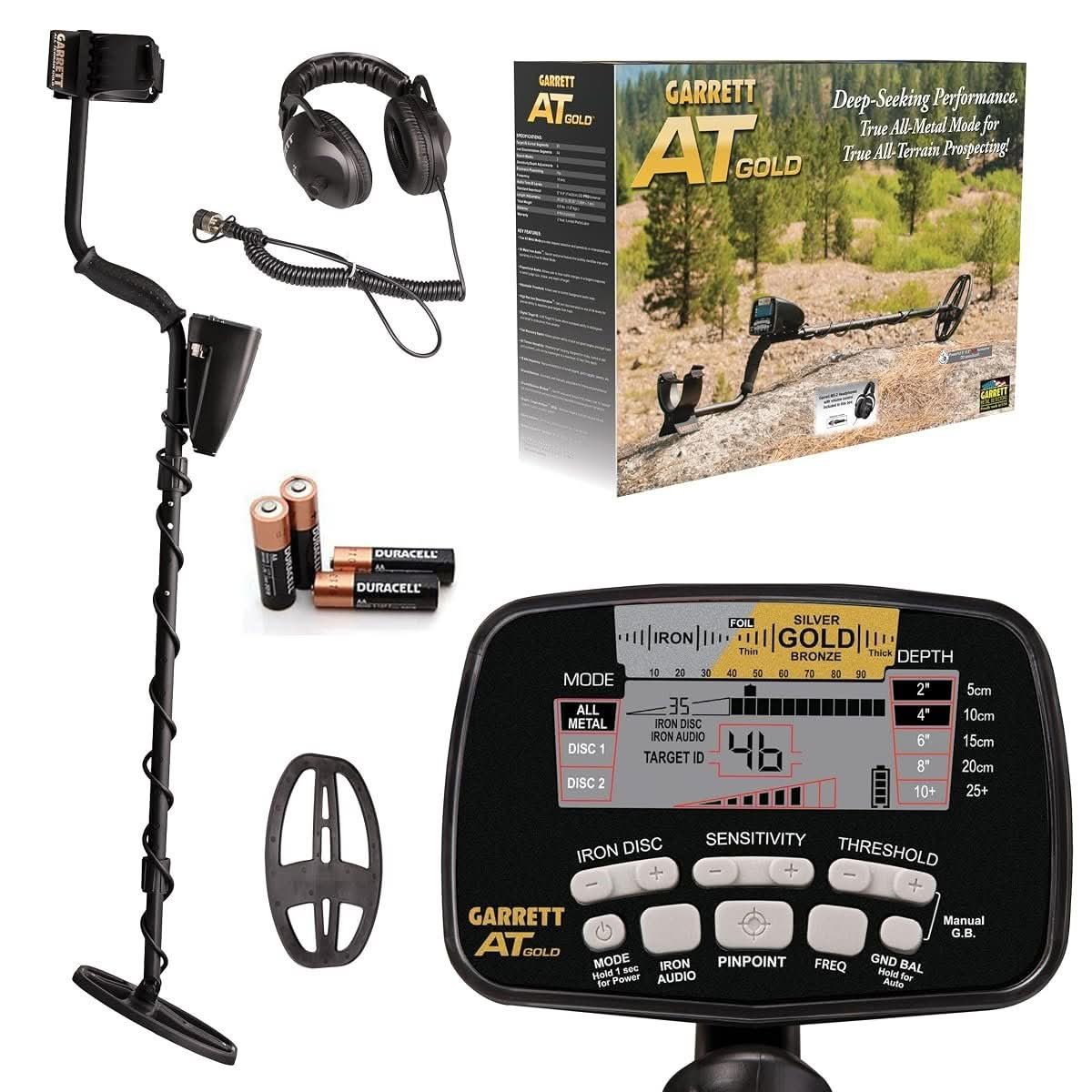
This is the only pick on this list that costs more than the other eight put together, and it deserves a moment of honest scrutiny before anyone reaches for the buy button: is a professional-grade prospecting machine actually the right call for a first detecting kit? For most readers of this guide, no. For someone who already knows they want to chase actual gold in Victorian or WA goldfields rather than lost coins at the local park, it is close to the industry standard.
The All-Metal mode is purpose-built for depth and sensitivity on small nuggets over broad discrimination, the housing is weatherproof enough to submerge to roughly 3 metres, and Fast Track ground balance automatically compensates for the mineralised, iron-rich soil that makes most of the budget VLF detectors on this list next to useless on an actual goldfield.
Buying the machine is the easy part. In Victoria, prospecting on Crown land legally requires a Miner’s Right, a permit that costs a small one-off fee and lasts a decade, and the rules explicitly list electronic detectors among the tools it covers, leave it in the car and detecting is illegal regardless of how good the machine is. National parks are off the table in every state, permit or not, and NSW state forests need their own separate authorisation on top of whatever permit covers the state a buyer is actually standing in.
At this price, buyer’s remorse is a real risk if the only use case is an occasional weekend at the beach. The waterproof housing and All-Metal depth are wasted on wet sand hunting for loose change. It is noticeably heavier over a full day of swinging than the budget full-size units on this list too. Big difference over an eight-hour goldfields walk versus a one-hour beach session. It earns its price tag on dry, mineralised ground looking for actual gold, and nowhere else on this list comes close to matching it there.
Pros
- All-Metal mode purpose-built for gold nugget detection
- Weatherproof housing, submersible to roughly 3 metres
- Fast Track ground balance handles mineralised soil automatically
Cons
- The price alone rules this out for casual weekend use, it only makes sense if gold prospecting is the actual goal, not an occasional beach walk
- Noticeably heavier over a full day of swinging than every budget unit on this list
Key specs: All-Metal + 2 disc modes, waterproof to ~3m, Fast Track ground balance, Miner’s Right required on Crown land in VIC
CHECK ON AMAZON6. SUNPOW OTMD15 Beach and Saltwater Metal Detector – Best for Beach and Saltwater
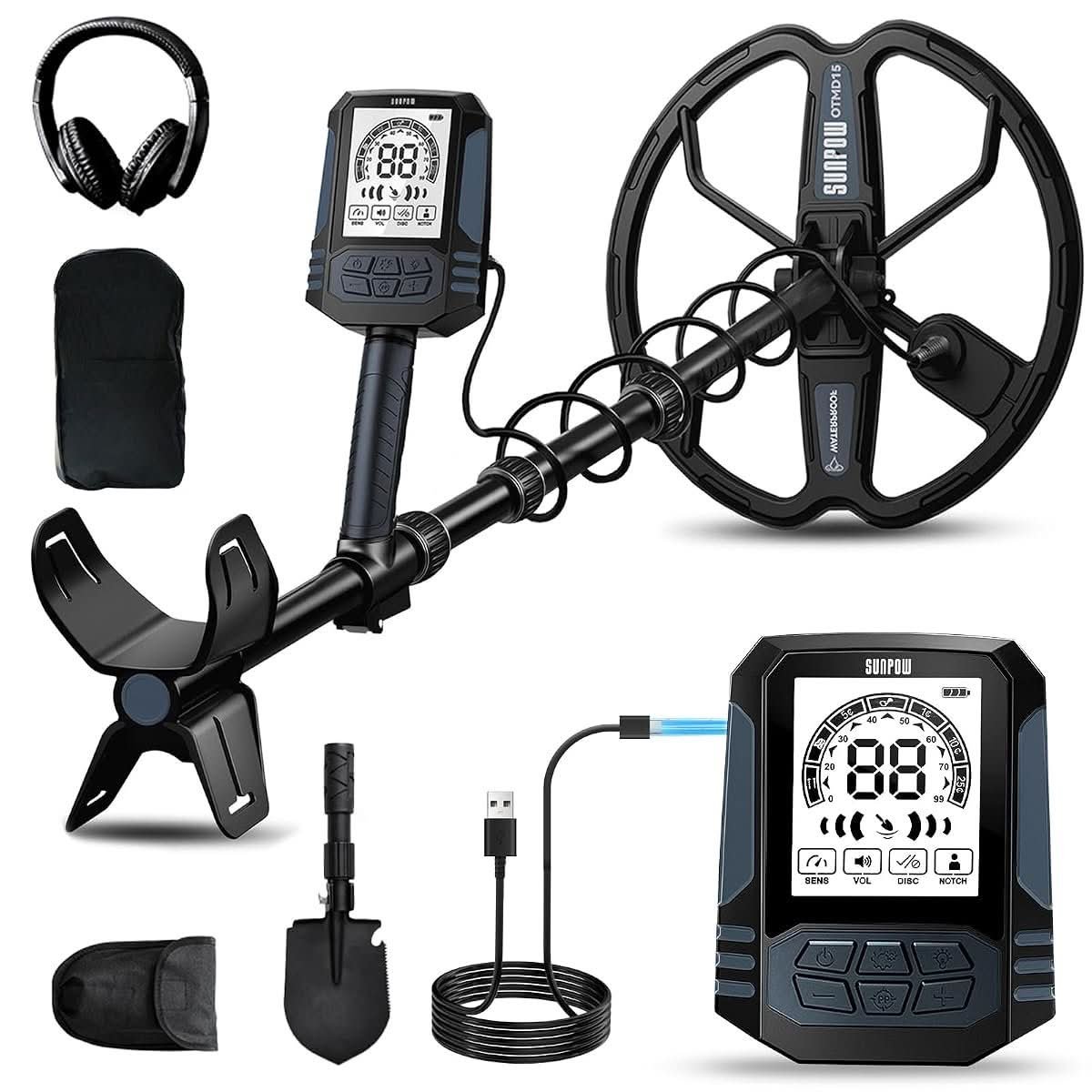
A 35-hour rechargeable battery and a Double-D search coil are the two specs that matter here, and they solve two different problems: the battery means a full weekend at the beach without hunting for a charger, and the Double-D coil pattern handles mineralisation in wet saltwater sand far better than the simpler coils on the cheaper picks earlier in this list.
It comes bundled with its own pinpointer, which most of the other full-size detectors here do not include, so factor that into the price comparison instead of reading the sticker price alone. Buying a separate pinpointer to match the cheaper units earlier in this list would close most of the gap.
Ten inches of coil and a rechargeable pack add real weight over a long low-tide session on a Queensland or WA beach, so this suits someone doing full days, not a quick after-work sweep. It sits at the premium end of the mid-range here, priced above the SUNPOW all-rounder below it for the saltwater-specific coil design and the extra battery runtime.
Pros
- 35-hour rechargeable battery
- Double-D coil built for saltwater sand
- Includes a bundled pinpointer
Cons
- Ten inches of coil plus a full rechargeable pack means noticeably more arm fatigue on a long session than the lighter budget units earlier in this list
- The bundled pinpointer runs on its own separate battery, one more thing to remember to charge before a trip
Key specs: 10in Double-D coil, 35-hour rechargeable battery, includes pinpointer
CHECK ON AMAZON7. SUNPOW OT-MD07 All-Rounder Metal Detector – Best High-Sensitivity All-Rounder
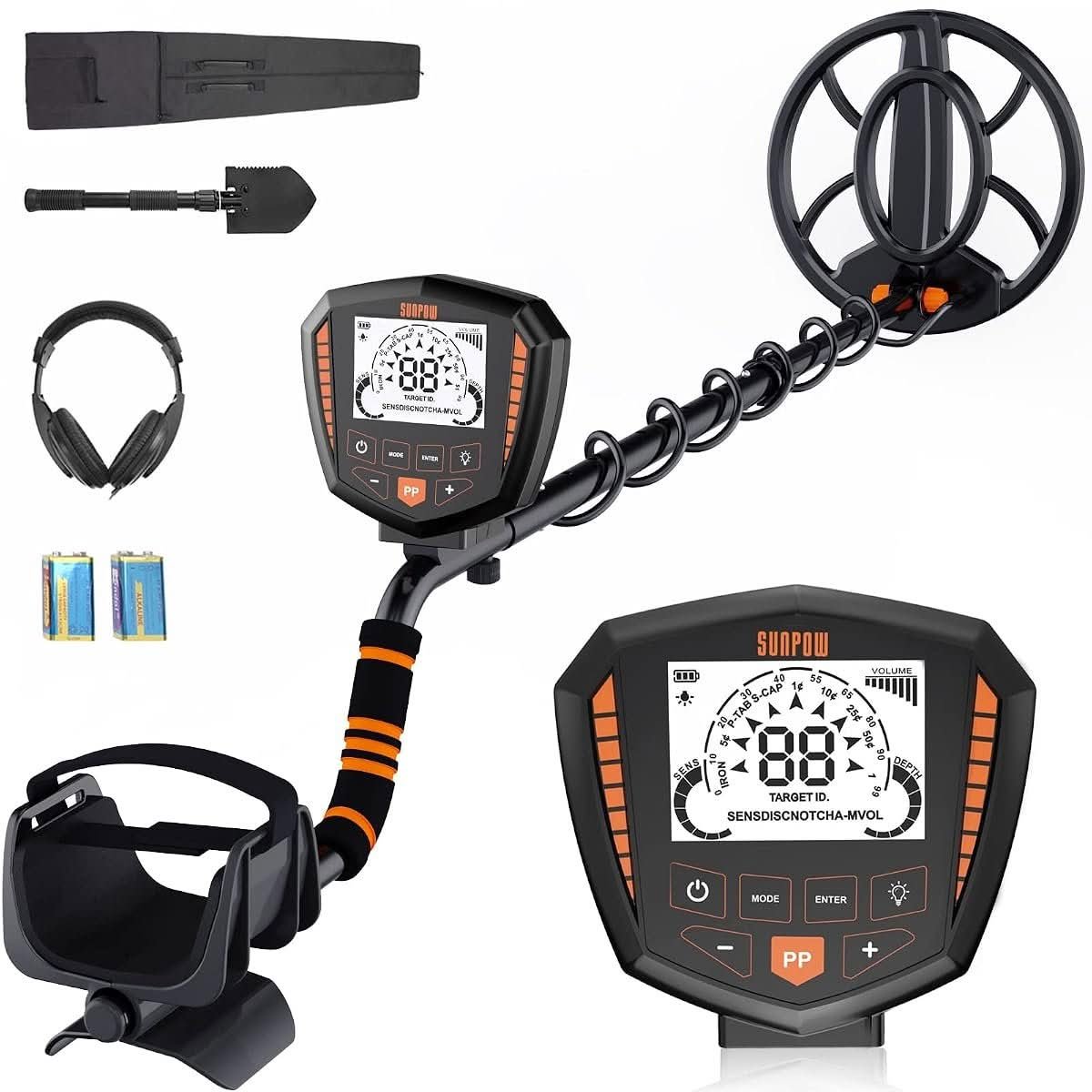
With reviews numbering in the thousands, this is the best-established detector in this guide outside the Garrett, and the spec sheet explains why: nine metal-type identification icons, five modes including a dedicated Pinpoint setting, and a backlit LCD that stays readable in bright beach sun or at dusk.
One detail buried in the listing’s own fine print matters more than the marketing photos suggest: the 10-inch coil is IP68-rated, but the control box itself is explicitly not waterproof, so a sudden change in the weather on a coastal walk means packing up instead of working through it. That is the same limitation as the budget full-size pick earlier in this list, just at a higher price point.
It comes bundled with a shovel, headphones, a carry bag and two batteries in the box, worth factoring in against the raw price. By the time a buyer of the cheaper units adds a shovel and headphones separately, the actual gap narrows considerably.
Pros
- Nine metal-type identification with three ways to read it: digital, image, sound
- Backlit LCD readable in bright sun
- Full accessory bundle included
Cons
- The control box is not waterproof despite the coil rating, so this is a fair-weather detector at heart
- Nine metal-type icons is more information than a first-time user needs, and the learning curve is real for the first few outings
Key specs: 10in IP68 coil, 5 modes, 9 metal types, backlit LCD, bundled accessories
CHECK ON AMAZON8. VEVOR 250mm Metal Detector – Best Value for Advanced Features
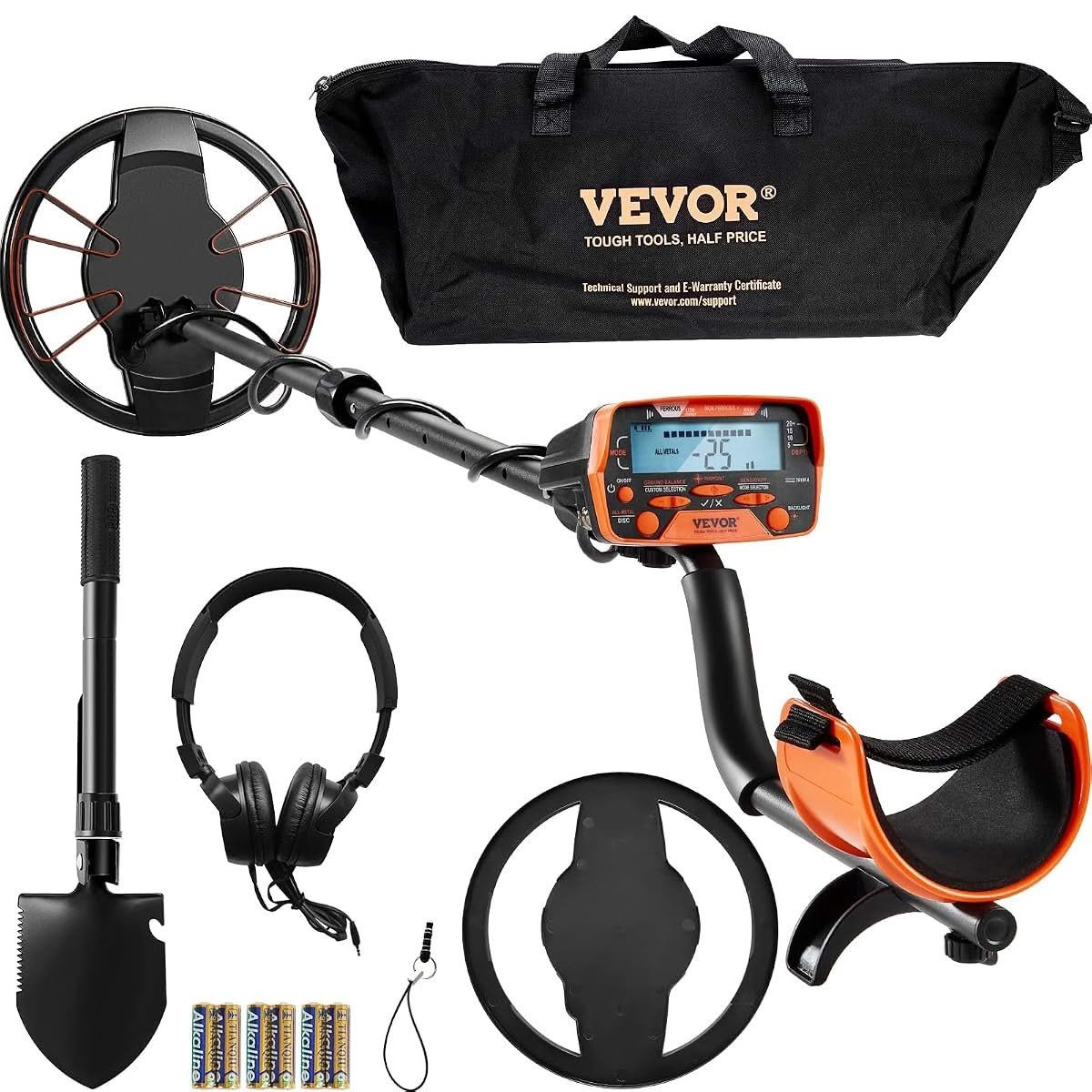
Seven detection modes and a 250mm coil put this closer in spec to the premium end of this guide than its price suggests, and VEVOR backs it with a technical support line and an e-warranty certificate instead of the bare minimum most budget brands offer.
At 140 ratings it has a smaller track record than the SUNPOW picks above, and the average sits a touch lower too, enough to suggest checking the coil alignment and battery contacts on arrival instead of assuming a flawless unit straight out of the box. That is a sensible habit with any detector in this price bracket, regardless of brand.
Coming in below both SUNPOW units above it while matching their mode count on paper, this is the value pick for someone who wants advanced features without paying the premium-brand price. Just budget a little more patience for setup than the pricier picks demand.
Pros
- Seven detection modes, more than most units at this price
- IP68 coil
- Technical support and e-warranty certificate included
Cons
- Smaller review base than the established SUNPOW models above, so there is less track record to lean on
- The included carry bag is noticeably thinner material than the premium bundles further up this list
Key specs: 250mm coil, 7 modes, IP68, includes bag, headphones, shovel
CHECK ON AMAZON9. National Geographic Metal Detector for Kids and Adults – Best for Beginners and Families
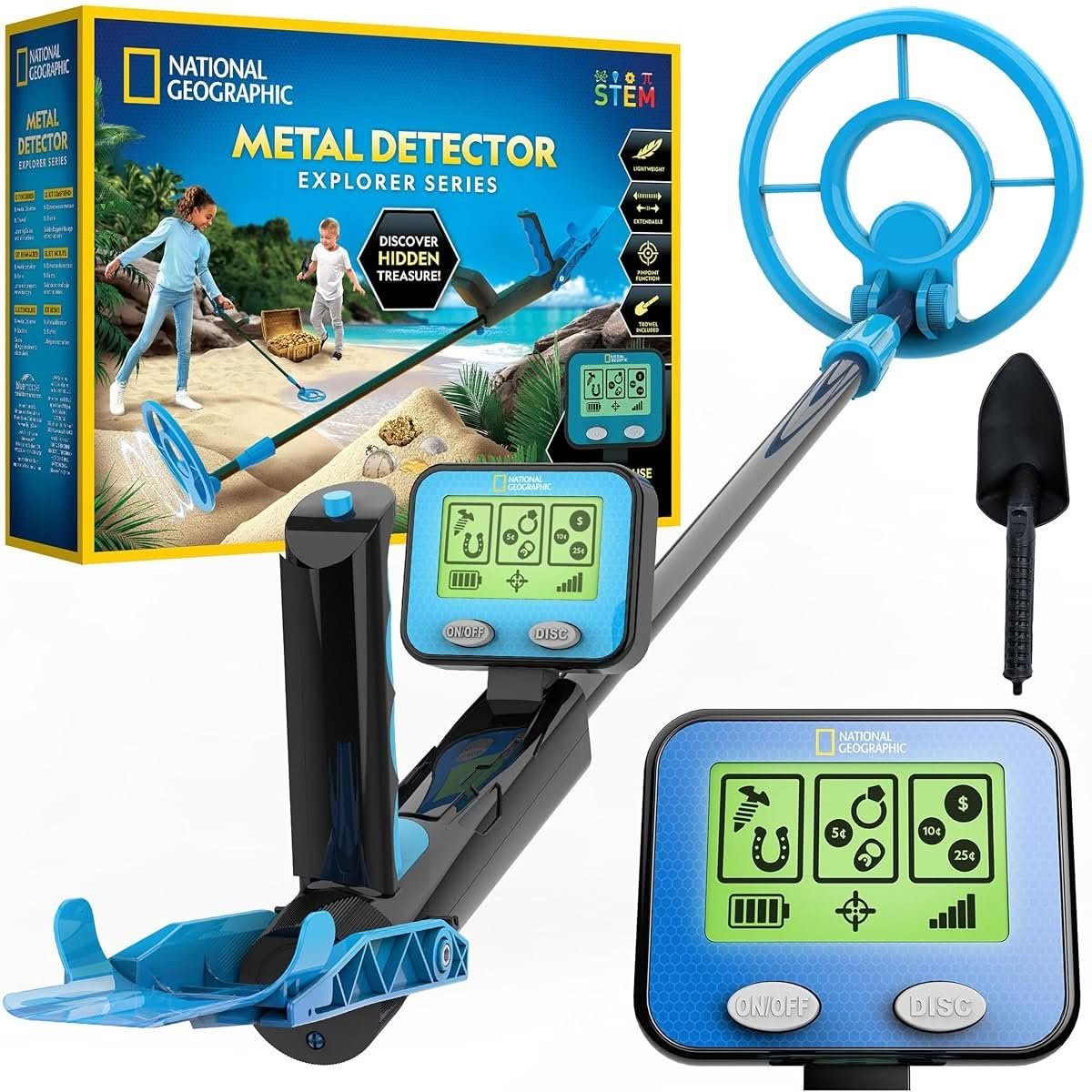
Despite the name, this is a real step up from the toy-grade kids’ pick earlier in this list: an 18.8cm waterproof coil, a working pinpoint function and an LCD display, aimed at a family that wants one detector the whole household can actually use, not a plastic toy for the youngest member alone.
It suits a family planning a school holiday trip to a patrolled beach more than a serious prospecting expedition, light enough for a ten-year-old to carry for an hour, capable enough that a supervising adult will not feel like they are holding a toy themselves. The National Geographic branding carries an educational angle too, with materials pitched at explaining how the detector actually works, not just how to turn it on.
Depth and discrimination fall short of the full-size units earlier in this list, so treat this as a shared family entry point rather than a second detector for a parent who already owns one of the pricier picks above. For that specific role, though, it is one of the better-reviewed options here relative to its size.
Pros
- Working pinpoint function, not just a toy beep
- LCD display with a proper target readout
- Recognisable, trusted brand for a first family detector
Cons
- Coil size (18.8cm) is smaller than every adult-focused detector on this list, so depth is the trade-off for the lighter build
- Marketed for kids and adults both, but an adult using it solo may find the shaft a little short for a full day without stooping
Key specs: 18.8cm coil, pinpoint function, LCD display, lightweight
CHECK ON AMAZONHow to Choose a Metal Detector in Australia
Match the coil and frequency to your ground, not the brand name on the box. Dry, low-mineral soil (most suburban parks and school ovals) suits a standard VLF detector fine. Perth’s dry heat and sandy soil read clean on a basic machine, while Cairns’ wet season air and the iron-rich red dirt further inland send a cheap VLF into constant false signals, which is exactly the problem multi-frequency and pulse induction machines like the Garrett AT Gold above are built to solve. Buying the wrong mechanism type for the ground you actually detect on causes more disappointment than any spec on a box.
Waterproof coil and waterproof detector are not the same claim. Three separate entries on this list, from a budget CF pick through to the best-reviewed SUNPOW unit, share exactly this limitation: the search coil handles shallow water fine, but the control box housing the electronics does not, so a sudden squall means packing up instead of pushing through. Read the fine print before assuming a ‘waterproof’ detector can be dunked whole.
Work out which permit applies before you buy, not after. Planning to detect somewhere because it looked promising on a map? Every Australian state bans detecting in national parks outright, permit or not, so that plan needs a rethink before the purchase, not after. Victoria requires a Miner’s Right for Crown land prospecting, NSW state forests need their own separate fossicking authorisation, and the rules differ again in every other state. None of this is optional small print. Check it first.
Weight matters more after four hours than after ten minutes. A detector that feels fine in a shop for thirty seconds can feel like a bag of sugar strapped to a forearm by the third hour of a real session. That’s not a dealbreaker for an occasional weekend hobbyist, but it decides whether a serious prospecting trip ends at lunchtime or runs a full day.
Battery type changes how a full day actually goes. A detector running on disposable 9V batteries needs spares in the bag; a rechargeable pack needs a charge cycle planned the night before. On a multi-day trip away from mains power, a long weekend camped near the Victorian goldfields, say, a portable power station keeps rechargeable detector packs and phones topped up when the nearest powerpoint is a two-hour drive away.
Budget for the accessories, not just the detector. A pinpointer, a proper sand scoop and a decent finds pouch turn a frustrating first outing into a productive one, and none of them are optional extras once the novelty of the beep wears off. Well, mostly, the exception is the Garrett above, which is built to handle exactly that kind of serious use straight out of the box.
You’ll Also Want
A pinpointer narrows down the exact spot inside a dug hole once the main detector has done its job, saving a lot of blind digging in loose sand or soil.
A long-handled stainless steel sand scoop sifts sand away from a target without the bend-and-dig routine a hand trowel forces on a beach.
A serrated digging tool cuts through root-bound turf far more cleanly than the basic trowel from the Bunnings garden aisle, which matters once the ground is anything tougher than loose sand.
A waist-mounted finds pouch keeps recovered targets, trash and tools separated instead of jammed into a jacket pocket for the rest of the walk.
Frequently Asked Questions
Do I need a permit to use a metal detector in Australia?
It depends on the state and the land. Victoria requires a Miner’s Right for prospecting on Crown land, a permit that costs a small one-off fee and lasts a decade, and it explicitly covers electronic detectors. NSW state forests need a separate fossicking authorisation. National parks ban detecting outright in every state, and private land always needs the owner’s permission first, permit or not.
What is the difference between a VLF and a pulse induction metal detector?
A VLF (Very Low Frequency) detector reads a single frequency, or several blended together, and is generally better at discriminating trash from treasure on dry, low-mineral soil. A pulse induction detector fires strong short pulses and reads the decay time, which handles mineralised beach sand and salt water far better but usually cannot separate a bottle cap from a coin. Most budget and mid-range detectors sold in Australia are VLF; pulse induction and hybrid machines sit at the premium end.
Can I use a metal detector on the beach in Australia?
Yes, on most public beaches, and it is one of the more popular uses for a detector in Australia given the coastline. Stick to areas above the low-tide mark unless a detector is specifically rated and built for saltwater immersion, avoid patrolled swimming zones during busy periods, and check with the local council if a beach sits inside a marine park or protected reserve, since some do carry extra restrictions.
How deep can a metal detector actually find things?
Detection depth on a coin-sized target runs from around 13cm on the shallowest budget units up to 25cm or more on multi-frequency and pulse induction machines built for serious prospecting. Ground mineralisation, target size and target orientation all affect real-world depth, so the number on a box is a best-case figure, not a guarantee. A bigger, older target such as a belt buckle will typically show up deeper than a thin coin of the same metal.
Is a waterproof metal detector fully submersible?
Usually not the whole unit. On most detectors, including several on this list, only the search coil is rated waterproof for shallow water and wet sand use, while the control box housing the electronics and display is not sealed against submersion. Check the specific rating on the coil versus the control box before assuming a detector marketed as waterproof can go fully underwater.
What is the best metal detector for a beginner in Australia?
A mid-range full-size VLF detector with a handful of preset modes, instead of the cheapest handheld wand or the most expensive prospecting machine, is the easiest starting point. It gives a genuine sense of how detecting actually works without the shallow depth of a toy-grade unit or the steep learning curve of a professional gold machine, and most beginners outgrow a starter unit’s limits well before they outgrow the hobby itself.
Verdict
The 10-Inch Waterproof Coil Metal Detector covers a typical weekend of park and beach detecting without much financial risk if the hobby does not stick, the SUNPOW OT-MD07 is the safer step up for someone who already knows they are staying with it, and the Garrett AT Gold only earns its price tag once actual gold prospecting, not beach walking, is the real goal.