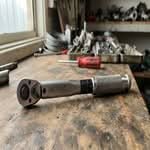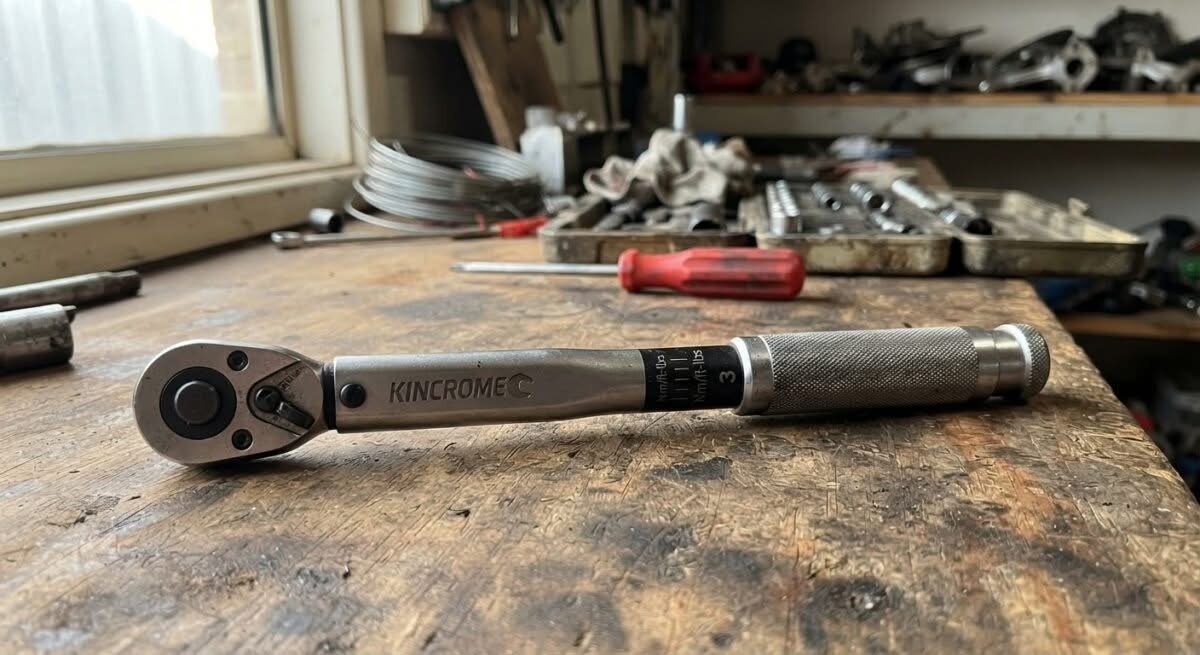
A torque wrench does one job that no ordinary wrench or socket set can: it applies a fastener-specific, measured amount of rotational force and then stops, either with a click, a beep or a needle reaching a mark, instead of tightening by feel. That distinction matters more than it sounds. Undertighten a wheel nut, cylinder head bolt or brake caliper and it can vibrate loose on the road. Overtighten the same fastener and you risk a stripped thread, a warped brake rotor or a snapped bolt buried in an engine block.
The tools sold under this name split into five real types. Click or mechanical torque wrenches are the default: set a value on a graduated handle and the wrench clicks once that torque is reached. Digital or electronic wrenches replace the click with a numeric readout, an audible alarm and often a memory function for repeat jobs. Torque screwdrivers apply the same idea at much lower torque, for electrical and electronics work where a standard wrench is complete overkill. Torque multipliers use internal gearing to turn a modest hand input into several thousand newton metres, for truck wheel nuts and heavy plant equipment no hand wrench alone can move.
Torque range in newton metres is the number that actually separates these tools, and across the six here it runs from 2.3Nm at the low end of a small precision wrench to 4,800Nm through the multiplier. Drive size is the second spec worth checking before torque range: a 1/4 inch drive suits small fasteners, 3/8 inch covers most motorcycle and small engine work, and 1/2 inch is the standard for car wheel nuts and suspension bolts. The spec buyers skip and shouldn’t is accuracy class. Most hand torque wrenches sold in Australia are built to roughly plus or minus 4 percent of the set value under the current calibration standard, tight enough for everyday servicing but not something to trust indefinitely without an occasional check.
Six tools make the list here, all from one Australian supplier with real depth in this category, running from a fine precision screwdriver through to a wheel-nut multiplier built for towing setups and heavier vehicles. None of them has been independently lab tested for this guide; the picks are built from published torque range, drive size and accuracy specifications, cross checked against general torque-wrench owner feedback.
Quick Picks
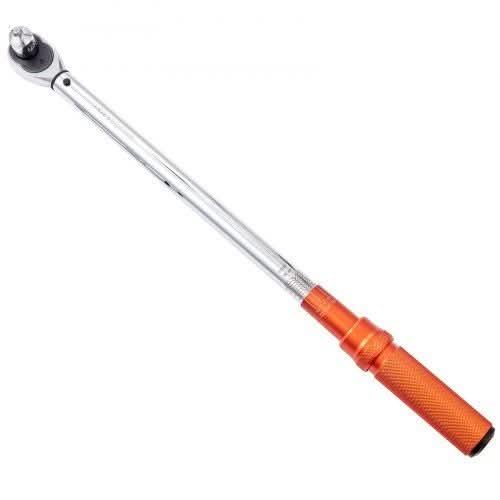
Adjustable Torque Wrench 1/2 Inch Drive
A mechanical click wrench covering the full wheel-nut and suspension-bolt range most home garages need.
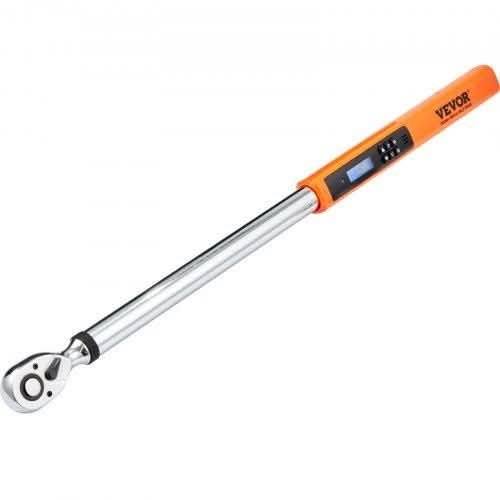
Digital Torque Wrench 1/2 Inch Drive
A numeric display and audible alarm remove the guesswork of counting an audible click under a car.
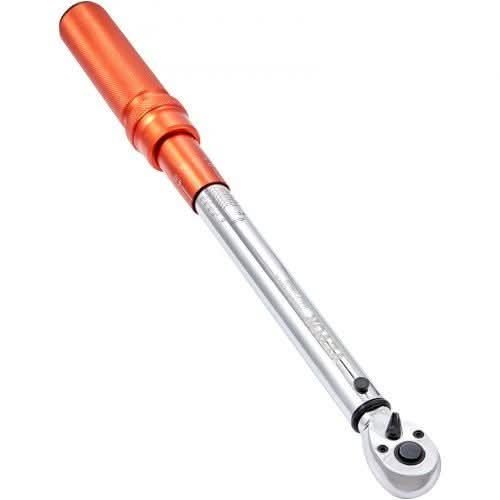
Dual-Range Torque Wrench 3/8 Inch Drive
A dual-range 3/8 inch drive with adapters that covers everything from a motorbike axle nut to a mower head bolt.
Best Torque Wrenches Australia Compared
| Product | Link | Type | Best For | Key Spec |
|---|---|---|---|---|
| Adjustable Torque Wrench 1/2 Inch Drive | Check price | Click/mechanical | General car servicing | 1/2in, 20-250ft.lb |
| Digital Torque Wrench 1/2 Inch Drive | Check price | Digital/electronic | Precision and repeat jobs | 1/2in, 25-250ft.lb, LED |
| Dual-Range Torque Wrench 3/8 Inch Drive | Check price | Click/mechanical, dual scale | Motorcycles and small engines | 3/8in, 10-80ft.lb |
| Torque Screwdriver 1/4 Inch Drive | Check price | Torque screwdriver | Electronics and electrical | 10-70 in.lb, bits included |
| Adjustable Torque Wrench 1/4 Inch Drive | Check price | Click/mechanical | Small fasteners and precision jobs | 1/4in, 20-200in.lb |
| Torque Multiplier 1 Inch Drive | Check price | Torque multiplier | Trucks, trailers and towing setups | 1in, up to 4800Nm |
1. Adjustable Torque Wrench 1/2 Inch Drive – Best for Everyday Car Servicing
The 1/2 inch drive and 20 to 250 ft.lb range (roughly 34 to 340 Nm) covers the fastener most home garages actually reach for a torque wrench to tighten: wheel nuts. Every Australian passenger car ships with a manufacturer torque spec for its wheel nuts, usually somewhere between 100 and 140 Nm, and this wrench sits comfortably either side of that whole range with room to spare for suspension bolts and sump plugs.
It works the way torque wrenches have worked for decades: dial the value on the graduated handle, apply steady pressure, and stop the instant it clicks. No battery to charge, no screen to read in bad light under a car on a driveway at dusk. That simplicity is also the limit. There is no confirmation beyond the click itself, and it is easy enough to miss on a noisy driveway with a compressor running nearby.
Against the digital wrench below, this one gives up the numeric memory and the alarm, and costs noticeably less for a similar torque range. For anyone doing routine brake, wheel and suspension work at home, that is the sensible default rather than the compromise.
Pros
- Covers the full manufacturer wheel-nut torque range for almost every Australian passenger car
- No battery, no screen, nothing to charge before a Saturday job
- Simplest tool here to learn and use correctly first time
- Well below the price of the digital wrench for a similar torque range
Cons
- The click is the only feedback, and it is easy to miss with power tools running nearby
- No memory function, so repeat jobs mean resetting the dial by eye each time
- Mechanical click wrenches drift out of calibration with heavy use and need periodic checking
Key specs: 1/2 inch drive, 20-250 ft.lb / 34-340 Nm range, mechanical click mechanism, carry case included
CHECK CURRENT PRICE2. Digital Torque Wrench 1/2 Inch Drive – Best Digital Readout
A numeric display and an LED buzzer replace the single mechanical click, and the wrench holds three working modes: torque only, angle-and-torque, and a track mode for jobs with a specified tightening sequence. For anyone who has ever second-guessed whether they actually felt a click through a thick glove in a cold shed, the screen and the buzzer together remove that doubt.
Rated accuracy is plus or minus 2 percent under the manufacturer’s own figure, tighter than the roughly 4 percent that Australia’s current calibration standard treats as typical for hand tools. Well, tighter on paper – treat that number as a starting claim, not a lab-verified one; digital torque wrenches on the Australian market have a mixed track record on ProductReview, with more than one owner reporting a unit that stopped clicking accurately well inside its expected service life. Budget for an occasional calibration check regardless of what the box promises.
Running cost is the one thing a mechanical wrench never asks for and this one does: a battery, replaced every so often, and a screen that can fog in a cold Tasmanian or Canberra shed through winter. Weigh that against the confidence of a number on a screen instead of a feel through the handle.
Pros
- Numeric readout and buzzer remove any doubt about whether target torque was reached
- Three working modes including angle tracking for sequence-specific jobs
- Rated accuracy tighter than the general standard for hand torque wrenches
- Genuinely useful for anyone working in gloves or low light
Cons
- Needs a battery, which will eventually go flat mid-job with no warning
- Digital torque wrenches have a mixed reliability track record industry-wide, based on general owner reports
- Costs close to double the mechanical wrench above for the same core torque range
Key specs: 1/2 inch drive, 25-250 ft.lb / 34-340 Nm range, digital display, LED buzzer, 3 working modes, claimed accuracy plus or minus 2 percent
CHECK CURRENT PRICE3. Dual-Range Torque Wrench 3/8 Inch Drive – Best for Motorcycles and Small Engines
The 3/8 inch drive and 10 to 80 ft.lb range (about 14 to 110 Nm) sits below the 1/2 inch wrenches above, which is exactly the band most motorcycle, ride-on mower and small-engine fasteners actually call for. Push a 1/2 inch wrench rated from 34 Nm upward down to a 20 Nm motorcycle axle spec and you are reading the bottom sliver of its scale, where accuracy is at its worst. This wrench keeps that same job in the middle of its range instead.
It ships with a set of adapters and an extension rod, so a single wrench reaches both 1/4 inch and 3/8 inch fasteners without a second tool. The dual-direction mechanism works tightening or loosening, useful on the odd fastener that needs breaking free at a controlled torque instead of full force.
This is a specialist’s second wrench more than a first buy. Anyone whose only torque work is car wheel nuts should start with the 1/2 inch wrench above; this one earns its spot in a garage that also sees a motorbike, a ride-on mower or a jet ski.
Pros
- Torque range matches motorcycle and small-engine specs far better than a 1/2 inch wrench
- Adapters and extension rod cover both 1/4 and 3/8 inch fasteners with one tool
- Works in both tightening and loosening directions
- Dual-scale readout gives both ft.lb and Nm on the same handle
Cons
- Too light in range for car wheel nuts, so it cannot replace a 1/2 inch wrench for that job
- The bundled adapters are the first accessory to go missing in a busy toolbox
- A second tool to buy and store rather than a single do-everything wrench
Key specs: 3/8 inch drive, 10-80 ft.lb / 14-110 Nm range, mechanical dual-scale, adapters and extension rod included
CHECK CURRENT PRICE4. Torque Screwdriver 1/4 Inch Drive – Best for Electronics and Electrical Work
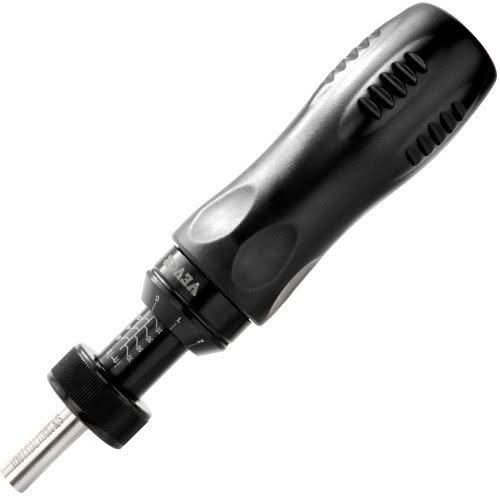
At 10 to 70 in.lb (roughly 1 to 8 Nm), this is a different order of magnitude to every other tool on this list, built for fasteners a socket-drive torque wrench would strip before the click ever registered. Switchboard terminals, appliance housings, laptop and electronics chassis screws: all of them carry a torque spec too, just a much smaller one, and overtightening a plastic-threaded screw with a full-size wrench is how you crack the housing instead of seating the fastener.
A graduated scale sets the torque directly on the handle, in 1 in.lb increments, with a bit set and case included so it doubles as a general precision screwdriver when torque control is not the point. An electrician working to a terminal torque spec, or anyone assembling flat-pack electronics gear, gets more real use from this than from scaling a wheel-nut wrench down to a job it was never built for.
Pros
- Torque range suited to electronics and switchboard work no full-size wrench can safely reach
- 1 in.lb increments give finer control than a socket-drive wrench’s coarser scale
- Bit set and case included, doubling as a general precision screwdriver
- Compact enough for a small toolkit instead of a full mechanic’s box
Cons
- Useless for anything automotive; the torque ceiling is a fraction of a single wheel nut’s spec
- The narrow shaft feels less substantial in hand than the larger wrenches on this list
- Almost sold out at the time of writing, so stock availability is worth checking before ordering
Key specs: 1/4 inch drive, 10-70 in.lb / 1.1-7.9 Nm range, graduated scale, bit set and case included
CHECK CURRENT PRICE5. Adjustable Torque Wrench 1/4 Inch Drive – Best for Small Fasteners
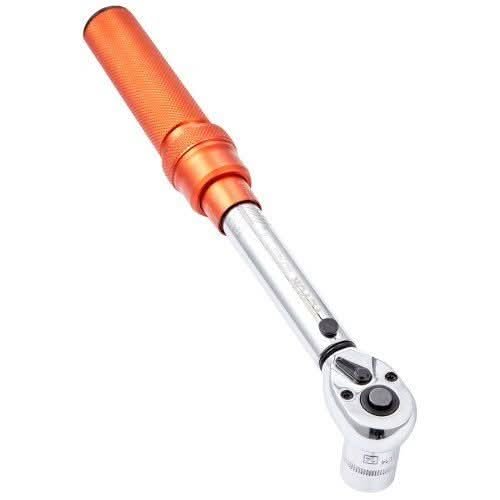
Between the torque screwdriver above and the full-size 3/8 and 1/2 inch wrenches sits this 1/4 inch drive, rated 20 to 200 in.lb (about 2.3 to 23 Nm). That band covers small engine covers, bicycle components, instrument panel fasteners and the kind of plastic-clip-adjacent screw that a bigger wrench will crack before it clicks.
Bicycle maintenance is the use case worth calling out specifically. Modern carbon components, in particular, carry low torque specs printed directly on the part, often under 10 Nm, and a wrench built for wheel nuts has no business anywhere near them. This one sits in the right range without needing an adapter or a compromise on accuracy at the low end of a bigger wrench’s scale.
Pros
- Torque range matches small engine, instrument and bicycle component specs directly
- Compact 1/4 inch drive fits tight spaces a 3/8 or 1/2 inch head cannot reach
- Well suited to carbon bicycle components with low, specific torque ratings
- Simple mechanical click with no battery to manage
Cons
- Too light for anything automotive beyond the smallest trim fasteners
- Overlaps in range with the torque screwdriver above, so most buyers only need one of the two
- Smaller handle gives less leverage feedback than the full-size wrenches on this list
Key specs: 1/4 inch drive, 20-200 in.lb / 2.3-23 Nm range, mechanical click, dual scale readout
CHECK CURRENT PRICE6. Torque Multiplier 1 Inch Drive – Best for Heavy Duty Wheel Nuts
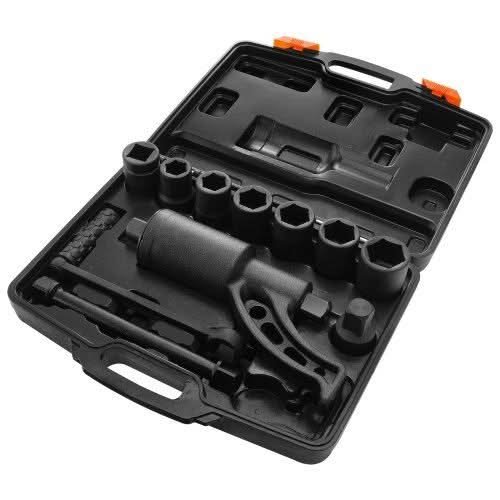
This is not a torque wrench in the usual sense; it is a gearbox that turns a modest hand input into up to 4,800 Nm at the socket, at a 1:58 reduction ratio. That is the territory of heavy vehicle wheel nuts, caravan and box trailer hubs, and stuck lug nuts that have not moved since a tyre shop over-torqued them with an impact gun. A standard hand wrench, even the largest one on this list, cannot get near that figure through human effort alone.
The 1 inch drive and gearbox construction make this a specialist item, not a general workshop tool. Anyone towing a heavy caravan or box trailer regularly, or running a truck or 4WD on aftermarket wheels, is the real buyer here. A weekend car owner checking wheel nuts on a hatchback has no actual use for four figures of torque.
Almost sold out at the time of writing, in keeping with this being a lower-volume, specialist item instead of a high-turnover general product. Confirm stock before planning a job around it.
Pros
- Reaches torque figures no hand wrench on this list can produce
- The 1:58 gear reduction means real heavy-vehicle and trailer hub work without an impact gun
- Purpose built for freeing over-torqued nuts a standard wrench cannot shift
- 1 inch drive matches heavy vehicle and truck wheel fastener sizes
Cons
- Complete overkill, and an actual safety risk, on a standard passenger car wheel nut
- Bulkier and heavier than every other tool on this list, awkward to store in a small toolbox
- Low stock at the time of writing reflects how niche this specific tool is
Key specs: 1 inch drive, 1:58 gear ratio, up to 4,800 Nm output, lug nut remover attachment included
CHECK CURRENT PRICEHow to Choose a Torque Wrench
Match drive size to the fastener, not the other way around. A 1/2 inch drive suits car wheel nuts and suspension bolts, 3/8 inch covers motorcycles and small engines, and 1/4 inch or a torque screwdriver handles anything from bicycle components to switchboard terminals. Forcing one wrench to cover every job usually means using the bottom or top sliver of its range, exactly where accuracy is weakest.
Decide whether you actually need the digital features. Working under a car in a dim carport at 6pm with cold hands and a glove on, could you actually tell one click from the next? A numeric readout and audible alarm remove that ambiguity. For most weekend servicing though, a mechanical click wrench does the same job for less money and never needs a battery.
Check the torque spec for the actual job before you buy. Passenger car wheel nuts typically sit between 100 and 140 Nm depending on the manufacturer, always printed in the owner’s manual rather than guessed. A wrench rated 34 to 340 Nm covers that with room either side; a wrench rated only to 23 Nm will not get near it.
Never use an impact wrench for the final tightening pass. An impact driver is fast but imprecise, and using one to set final wheel-nut torque is an actual safety risk, not a shortcut. Use an impact wrench to snug fasteners, then finish every safety-critical bolt with a manual torque wrench.
Budget for calibration, not just the buy. Under the current calibration standard, a 12-month or 5,000-cycle recheck interval is the general baseline for hand torque wrenches, whichever comes first, and that applies just as much to a wrench in a suburban Perth garage on weekends as one in a busy Sydney workshop. A wrench that has been dropped, overloaded or stored for years should be treated as suspect until checked.
Think about where the tool actually gets used. A cold shed in regional Victoria or Tasmania in winter is harder on a digital wrench’s screen and battery than a covered Queensland carport. A purely mechanical click wrench has less to go wrong in those conditions, worth weighing against the convenience of a digital readout. It is also worth checking whether your local Bunnings or Supercheap carries the calibration service, or a specialist test-and-cal lab does, before assuming a warranty return covers it.
You’ll Also Want
A torque wrench only measures what a decent socket set actually turns. A 1/2 inch drive metric socket set covers the same wheel-nut and suspension work most buyers reach for the adjustable wrench above to do, and a proper tool box or trolley keeps the whole set organised instead of rattling loose in the boot. 1/2 inch drive impact socket set.
A jack stand rated to the vehicle’s weight is not optional when working under a car to torque suspension or brake fasteners. Never rely on a jack alone. rated jack stand.
Anyone using a torque wrench regularly on wheel nuts should also own a wheel chock, so the vehicle cannot roll while it is up on a jack and the final torque pass is being done. wheel chock.
Frequently Asked Questions
What is the actual difference between a torque wrench and a normal wrench or socket set?
A normal wrench or socket applies whatever force the user puts into it, with no way to know the exact torque delivered. A torque wrench is calibrated to apply a specific, measured amount of rotational force and then signal, by clicking, beeping or a needle reaching a mark, once that value is reached. For safety-critical fasteners like wheel nuts, cylinder head bolts and suspension components, that measured stop is the entire point of owning one.
What torque should I use for wheel nuts on my car?
There is no single correct figure. Every manufacturer sets its own wheel nut torque spec, typically somewhere between 100 and 140 Nm for a passenger car, and it is printed in the owner’s manual, not a general chart. Using a figure from a different vehicle risks a wheel working loose if it is too low, or a stretched stud and warped brake rotor if it is too high. Always check the actual manual figure before setting the wrench.
How often does a torque wrench need to be recalibrated?
Under the calibration standard current Australian labs work to, the general baseline is a check every 12 months or every 5,000 uses, whichever comes first, more often for constant workshop use and less critical for a wrench used occasionally at home. Any wrench that has been dropped, overloaded past its rated range, or stored for a long time should be treated as out of calibration until checked, no matter how long it has actually been.
Can I use an impact wrench instead of a torque wrench?
Not for the final tightening pass on a safety-critical fastener. An impact wrench delivers rapid, high-force hits with no way to measure the actual torque applied, which makes it fast for snugging fasteners but unsafe for setting a final wheel-nut or suspension-bolt figure. The correct sequence is to snug with an impact wrench if one is available, then finish every safety-critical fastener with a manual torque wrench set to the correct spec.
Do I need a digital torque wrench or is a mechanical one enough?
For most home servicing, a mechanical click wrench is entirely enough and has less to go wrong: no battery, no screen, one moving mechanism. A digital wrench earns its higher price for anyone who works in gloves, in poor light, or on jobs with a specified tightening sequence where an angle-and-torque mode matters. Neither type is inherently more accurate; both need the same periodic calibration check.
What drive size torque wrench do I actually need?
Match the drive to the fastener, not the vehicle. A 1/2 inch drive suits car wheel nuts and suspension bolts, a 3/8 inch drive covers most motorcycle and small-engine work, and a 1/4 inch drive or a dedicated torque screwdriver handles small fasteners like bicycle components or switchboard terminals. An oversized wrench on a small fastener means working at the bottom of its scale, exactly where accuracy is weakest.
Verdict
Six tools, split cleanly by job instead of by brand. The mechanical 1/2 inch wrench covers the wheel-nut and suspension work most home garages actually need, and it is the sensible first buy for anyone who does not already own one. The digital wrench earns its extra cost for anyone working in gloves or bad light, the 3/8 inch and torque screwdriver cover motorcycles and electronics respectively, and the multiplier belongs only in a shed that regularly deals with heavy trailers or truck wheels. Buy for the fastener in front of you, not the biggest number on the box.