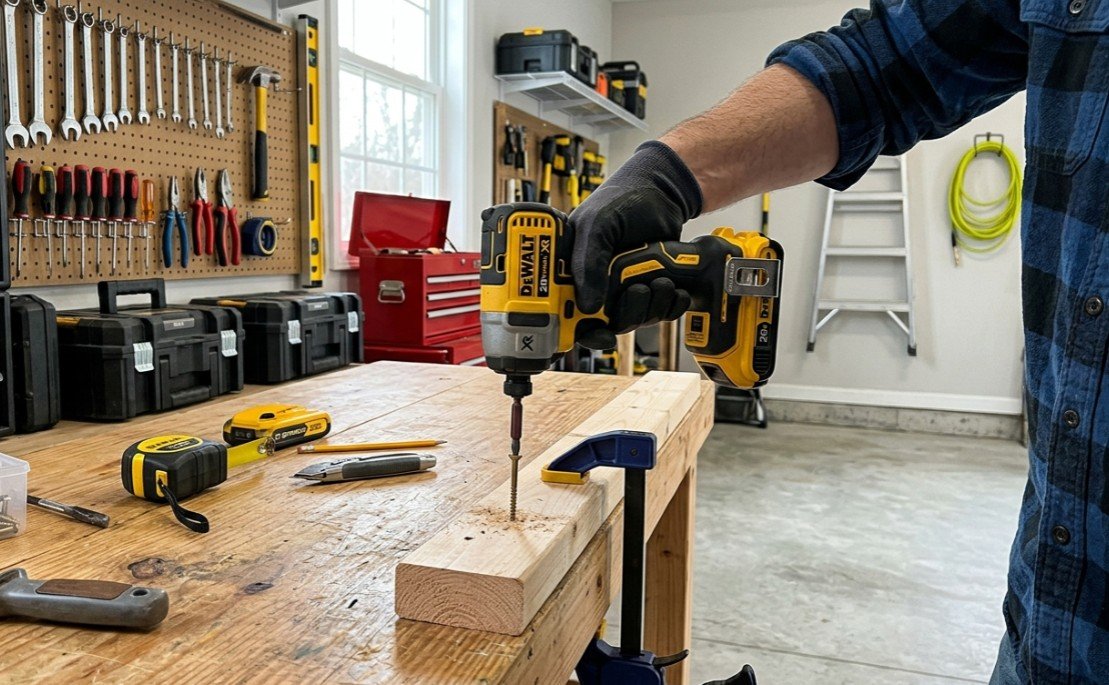
An impact driver is a cordless fastening tool that combines rotation with rapid concussive blows along the drive axis, letting it sink long screws and bolts that would stall a drill or twist it out of your hands. The best impact drivers in Australia deliver between 100Nm and 205Nm of torque through a 1/4 inch quick-change hex chuck, and most of the serious ones now run brushless motors.
Three distinctions matter when comparing them. Brushed motors cost less and suit occasional use but wear and overheat under sustained load. Brushless motors run cooler, last longer and hold output through a full day. Hydraulic drivers replace the hammer mechanism with fluid, cutting noise sharply while keeping the torque.
Torque is the number to compare and the spread here is wide: roughly 105Nm at the compact 12V end against 205Nm from the strongest 18V unit, which is close to double. Length matters nearly as much, because a 100mm body reaches between studs and inside cabinets where a 165mm one has to come at the screw on an angle.
This guide compares ten drivers on torque, motor type, body length, battery platform and whether the tool arrives as a bare skin or a complete kit.
Best Impact Drivers in Australia Compared
| Product | Link | Type | Best For | Key Spec |
|---|---|---|---|---|
| Makita 18V LXT Impact Driver | Check price | Brushed 18V | Existing LXT kits | 137mm long, 18V LXT |
| Milwaukee M18 Hex Impact Driver | Check price | Brushed 18V | M18 tool users | 1,500 in-lbs, LED array |
| Ryobi 18V One Plus Impact Driver | Check price | Brushed 18V | Occasional home use | ONE+ battery system |
| Makita LXT Brushless 3-Stage Impact Driver | Check price | Brushless 18V | Delicate fastenings | 3-stage impact, T-mode |
| DeWalt 18V XR Brushless Compact Impact Driver | Check price | Brushless 18V | Tight access work | 205Nm, 100mm body |
| Bosch Professional 12V Impact Driver | Check price | Brushless 12V | Overhead and confined work | Shortest in class, 12V |
| DeWalt 20V MAX XR Quiet Hydraulic Impact Driver | Check price | Hydraulic brushless | Indoor and occupied sites | Up to 57% quieter |
| Black and Decker 18V Cordless Impact Driver | Check price | Brushed 18V | Light household use | Metal gear casing |
| Makita 18V Brushless Impact Driver | Check price | Brushless 18V | All-day fastening | Compact brushless body |
| Bosch 12V Max Impact Driver Kit | Check price | Brushless 12V | Buying a first driver | 2 batteries, charger, case |
1. Makita 18V LXT Impact Driver – Best for Makita Battery Owners
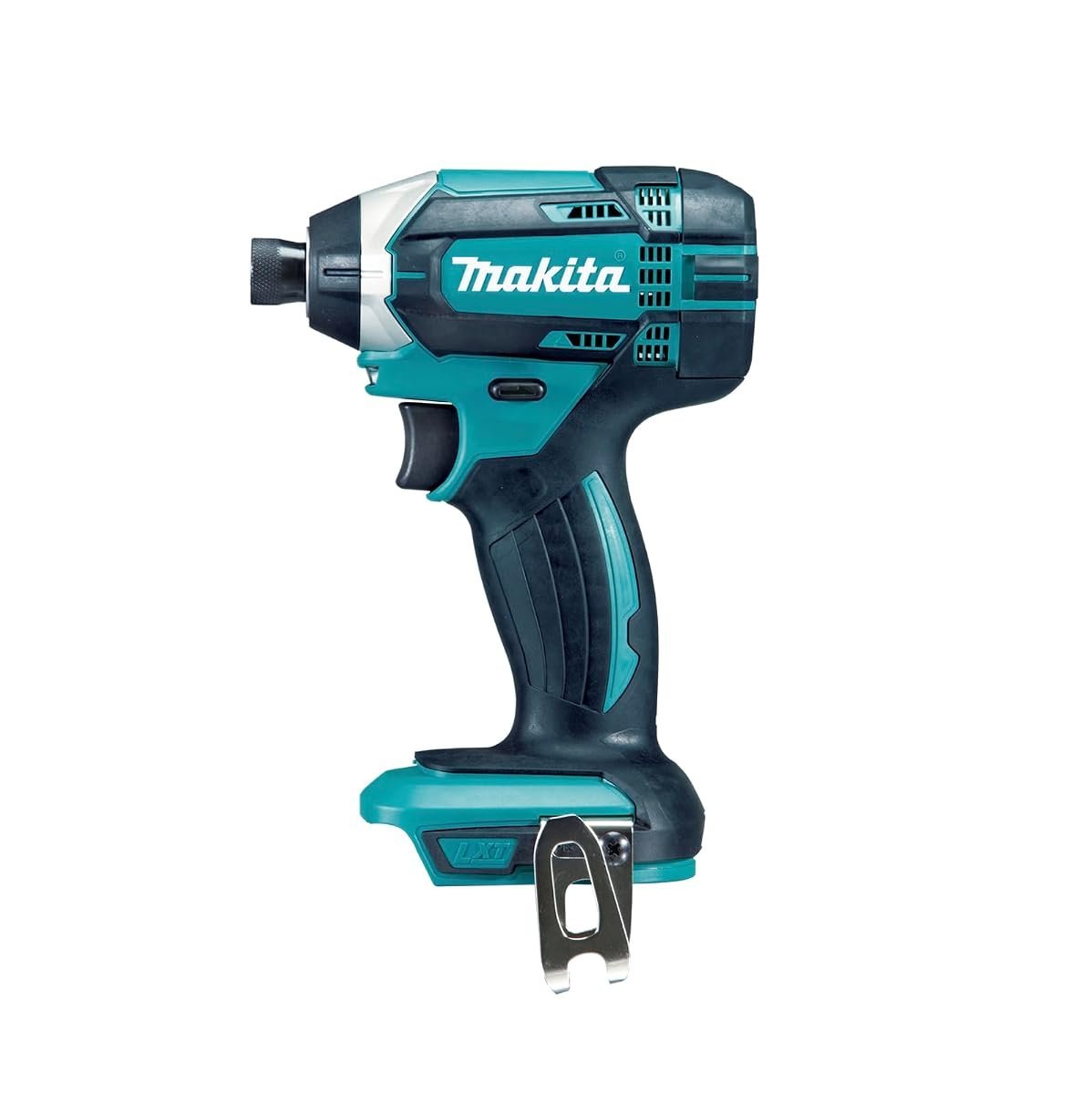
Compact is the headline here: 137mm from chuck to tail, which is short enough to get between studs where a drill body would not fit. It ships as a bare skin with no battery or charger, in plain packaging.
A brushed motor keeps the price down and the weight low, and for the fastening most people actually do, driving decks, framing screws and cabinetry, it has never been the limiting factor. The variable-speed trigger gives enough control to start a screw without cam-out. It runs on the same LXT batteries as the rest of the Makita 18V range, so anyone already invested adds a tool rather than a platform.
Brushed motors run hotter and wear faster under sustained heavy use than the brushless units below. For a DIY user or a tradesperson wanting a second driver so they stop swapping bits, it is the cheapest way onto the LXT platform.
Pros
- Very compact 137mm body
- Runs on existing 18V LXT batteries
- Light in the hand for overhead work
- Lowest cost route onto the Makita platform
Cons
- Brushed motor wears faster than brushless
- Bare skin, no battery or charger included
Key specs: 18V LXT, brushed motor, 137mm overall length, 1/4 inch hex chuck, skin only
CHECK ON AMAZON2. Milwaukee M18 Hex Impact Driver – Best for M18 Platforms
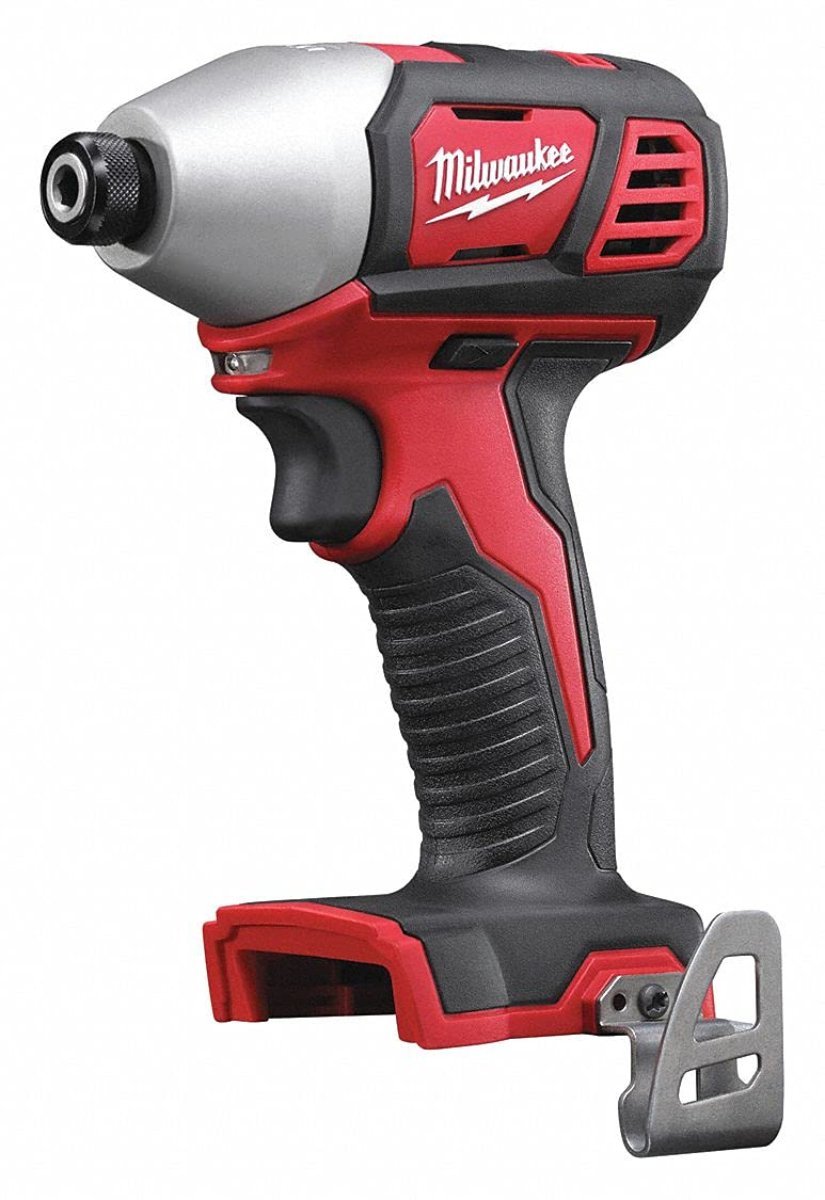
Milwaukee rates this at 1,500 inch-pounds through a 1/4 inch quick-connect chuck, with an LED array sitting just below the chuck rather than down on the foot.
Light placement matters more than light brightness. Mounted below the chuck, the LEDs throw onto the fastener instead of casting the tool shadow across it, which is the flaw in foot-mounted lights on nearly every competitor. Textured rubber over the grip holds on when hands are wet or gloved, and the torque figure is enough for structural fixings rather than just cabinetry.
It is a brushed tool at a price where brushless options now exist, so the argument is the M18 battery platform rather than the motor. Anyone already running M18 gets the ecosystem benefit; anyone starting fresh should compare the brushless units below first.
Pros
- 1,500 inch-pounds of torque
- LED array below the chuck, not the foot
- Textured rubber grip for wet or gloved hands
- Quick-connect 1/4 inch chuck
- Shares M18 batteries across the range
Cons
- Brushed rather than brushless
- Bare tool with no battery included
Key specs: 18V M18, 1,500 in-lbs torque, 1/4 inch quick-connect hex chuck, LED lighting array, brushed motor
CHECK ON AMAZON3. Ryobi 18V One Plus Impact Driver – Best for Home DIY
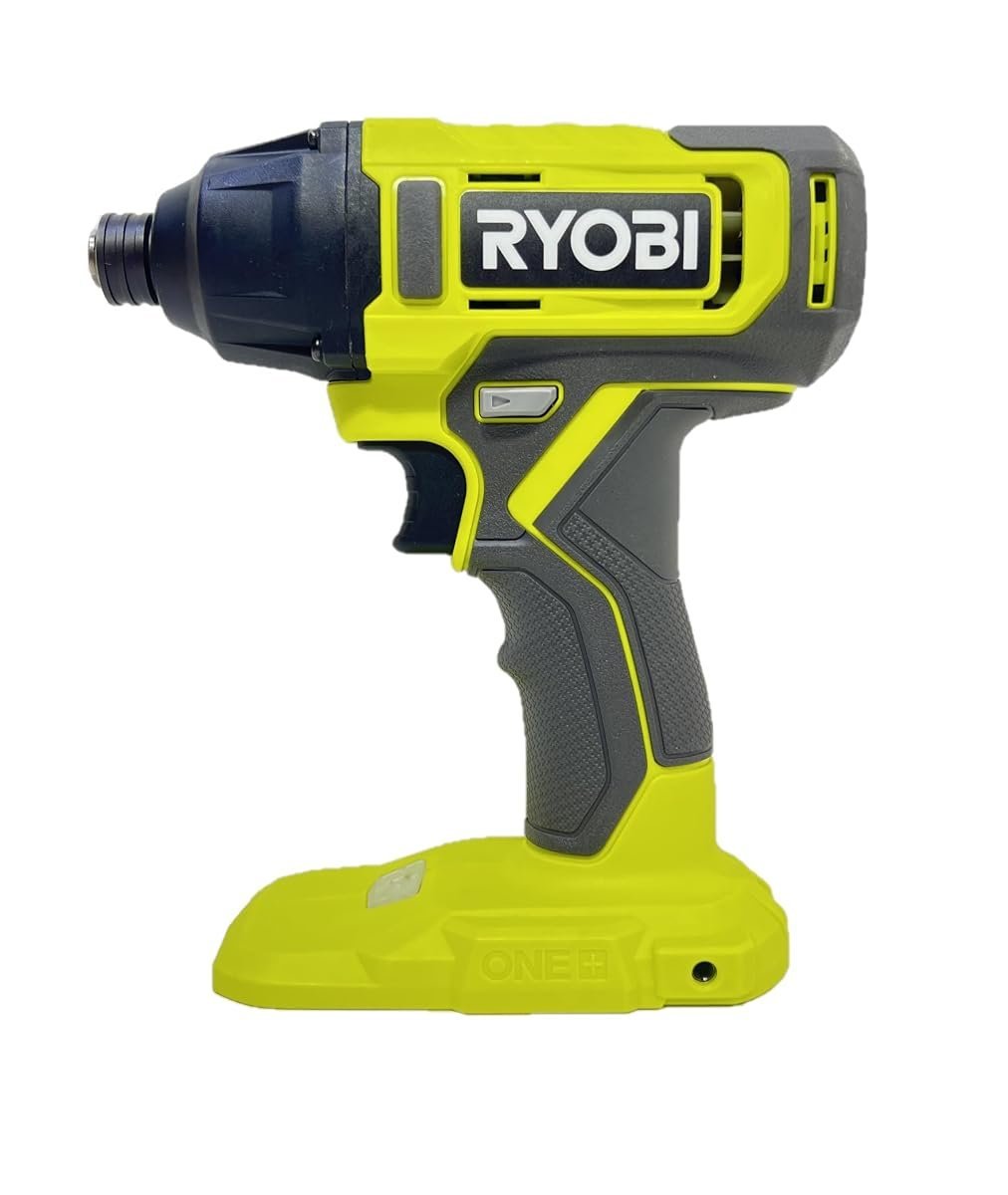
Ryobi sells this as a nude tool in no retail packaging, with neither charger nor battery, which is exactly what someone already holding ONE+ gear wants.
The ONE+ system is the reason to look at it. More than a hundred tools share the one battery, and the range spans lawn care and cleaning as well as drilling, so a household tends to accumulate batteries anyway. Performance sits below the professional units here, but for flat-pack assembly, deck screws and general household fastening the ceiling rarely gets reached.
A tradesperson driving fixings all day will outrun it and should look at the brushless options. For a home shed where the driver comes out most weekends rather than every day, it does the job on batteries you already own.
Pros
- Shares the large ONE+ battery ecosystem
- Inexpensive as a bare tool
- Adequate for household fastening
- Light and easy to handle
Cons
- Below professional units on sustained output
- No retail packaging, battery or charger
Key specs: 18V ONE+, brushed motor, 1/4 inch hex chuck, bare tool
CHECK ON AMAZON4. Makita LXT Brushless 3-Stage Impact Driver – Best for Fine Control
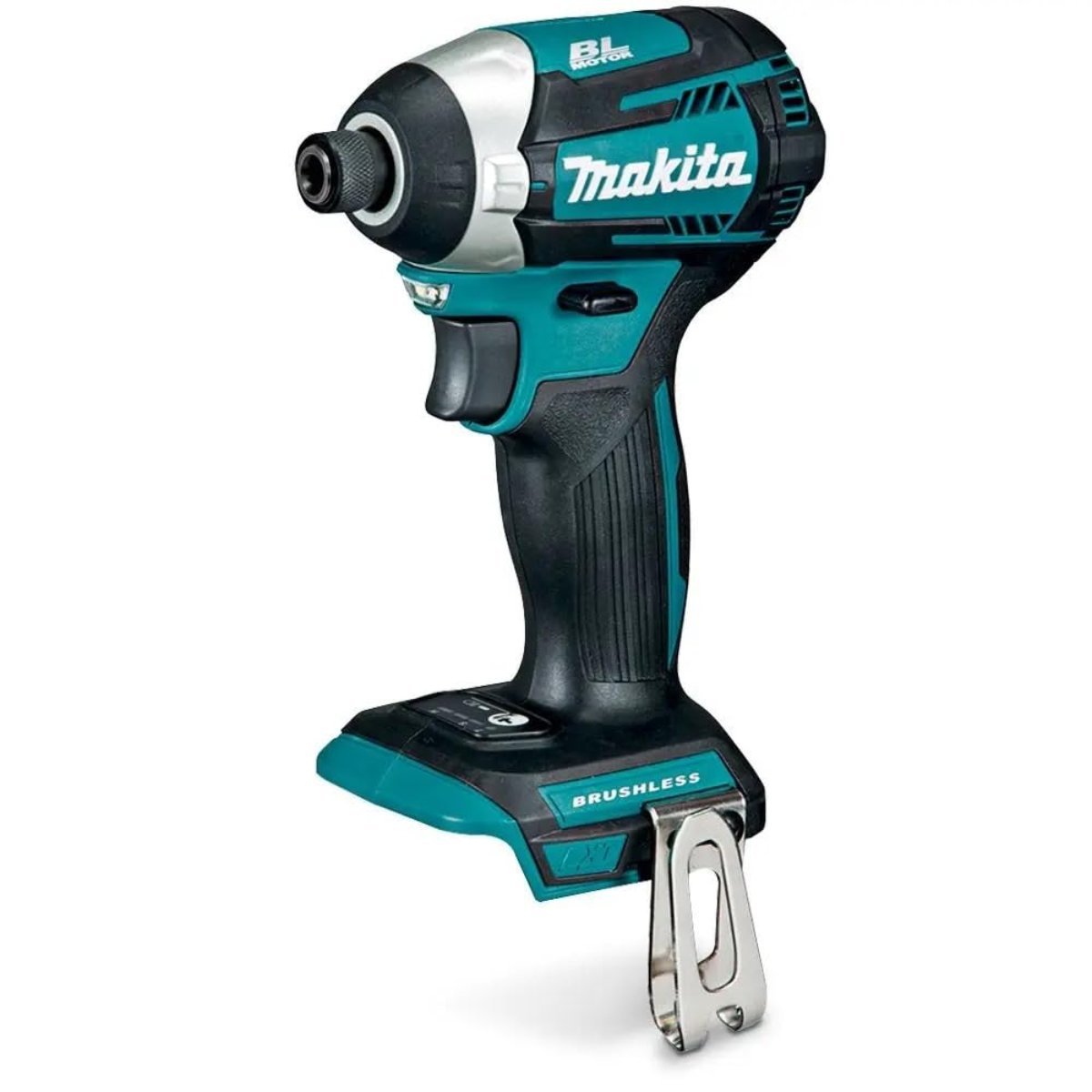
Three selectable impact strengths sit behind the trigger here, plus a dedicated T-mode for self-tapping screws that eases off once the thread bites.
Impact drivers destroy small fasteners because they deliver full hammer force from the first rotation. Selectable stages solve that: soft mode drives a cabinet hinge or a plasterboard fixing without stripping it, hard mode still sinks a structural screw. The T-mode setting handles self-tappers, which normally require feathering the trigger by feel and are the fastener most often wrecked by an impact driver.
The extra modes mean a switch to think about rather than pulling the trigger and going. Anyone whose work spans framing timber one hour and cabinetry the next will use those stages daily; anyone driving the same fixing all day will leave it on one setting.
Pros
- Three selectable impact strengths
- Dedicated T-mode for self-tapping screws
- Brushless motor runs cooler and lasts longer
- Protects small fasteners from stripping
- Shares 18V LXT batteries
Cons
- More controls to learn than a single-speed driver
- Skin only, no battery or charger
Key specs: 18V LXT brushless, 3-stage impact adjustment, T-tightening mode for self-tappers, 1/4 inch hex chuck
CHECK ON AMAZON5. DeWalt 18V XR Brushless Compact Impact Driver – Best Compact Brushless
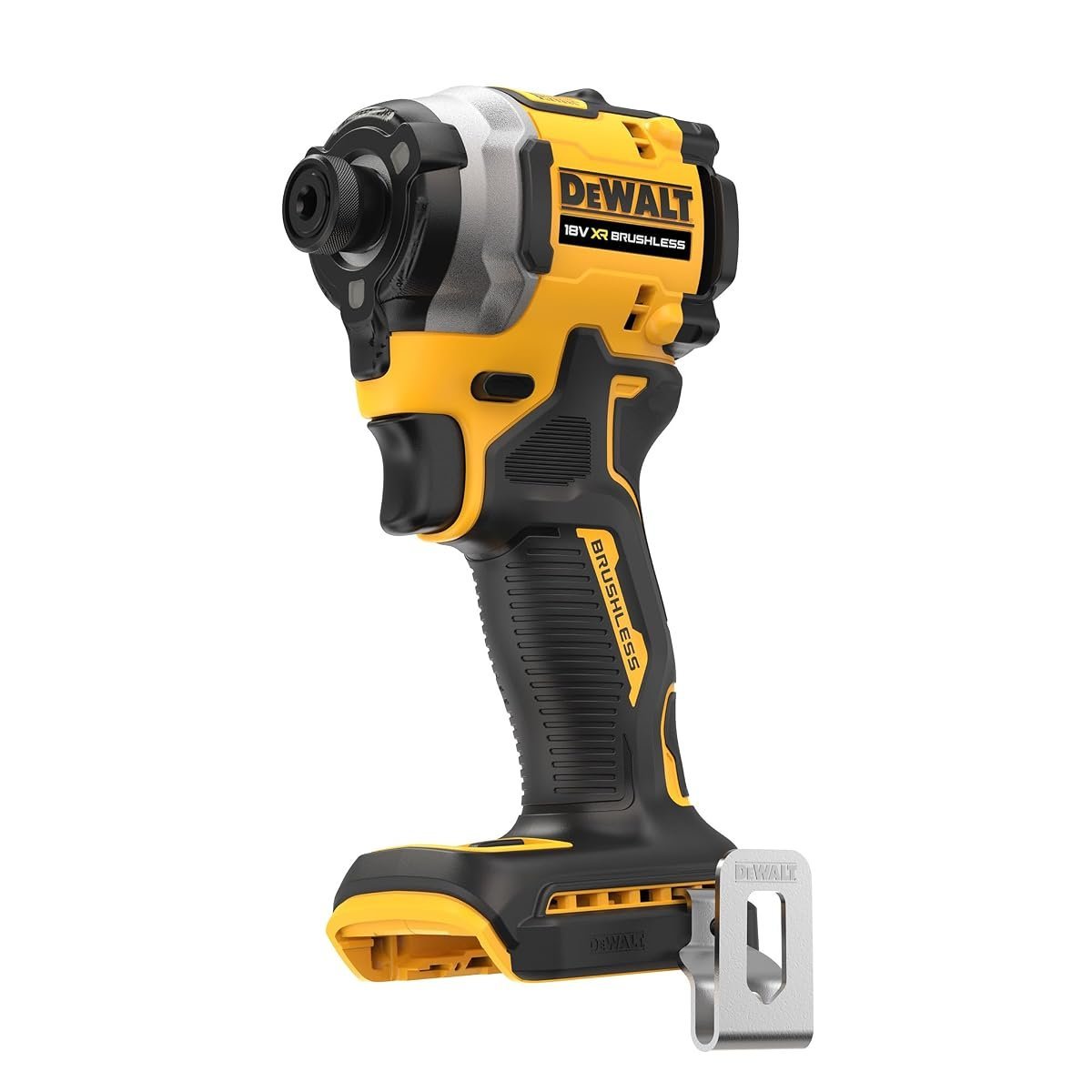
Two hundred and five newton metres out of a body 100mm long is the specification that defines this one. That is full-size torque in a housing shorter than most brushed drivers.
Length is what stops a driver reaching between joists, inside a cabinet carcass or under a sink. Shrinking the body while keeping the torque means fewer jobs need a right-angle attachment or a hand driver as backup. Three settings adjust output to the fastening, and the brushless motor keeps heat down through repeated heavy driving.
It sits at the upper end of this guide on price for a bare skin. Where access is the recurring problem rather than raw power, the 100mm body earns that back on the first job you do not have to improvise around.
Pros
- 205Nm from a 100mm body
- Three application settings
- Brushless motor for sustained use
- Reaches into confined spaces
- Shares DeWalt 18V XR batteries
Cons
- Premium price for a bare skin
- No battery or charger supplied
Key specs: 18V XR brushless, 205Nm maximum torque, 100mm compact body, 3 speed settings, 1/4 inch hex
CHECK ON AMAZON6. Bosch Professional 12V Impact Driver – Best for Tight Spaces
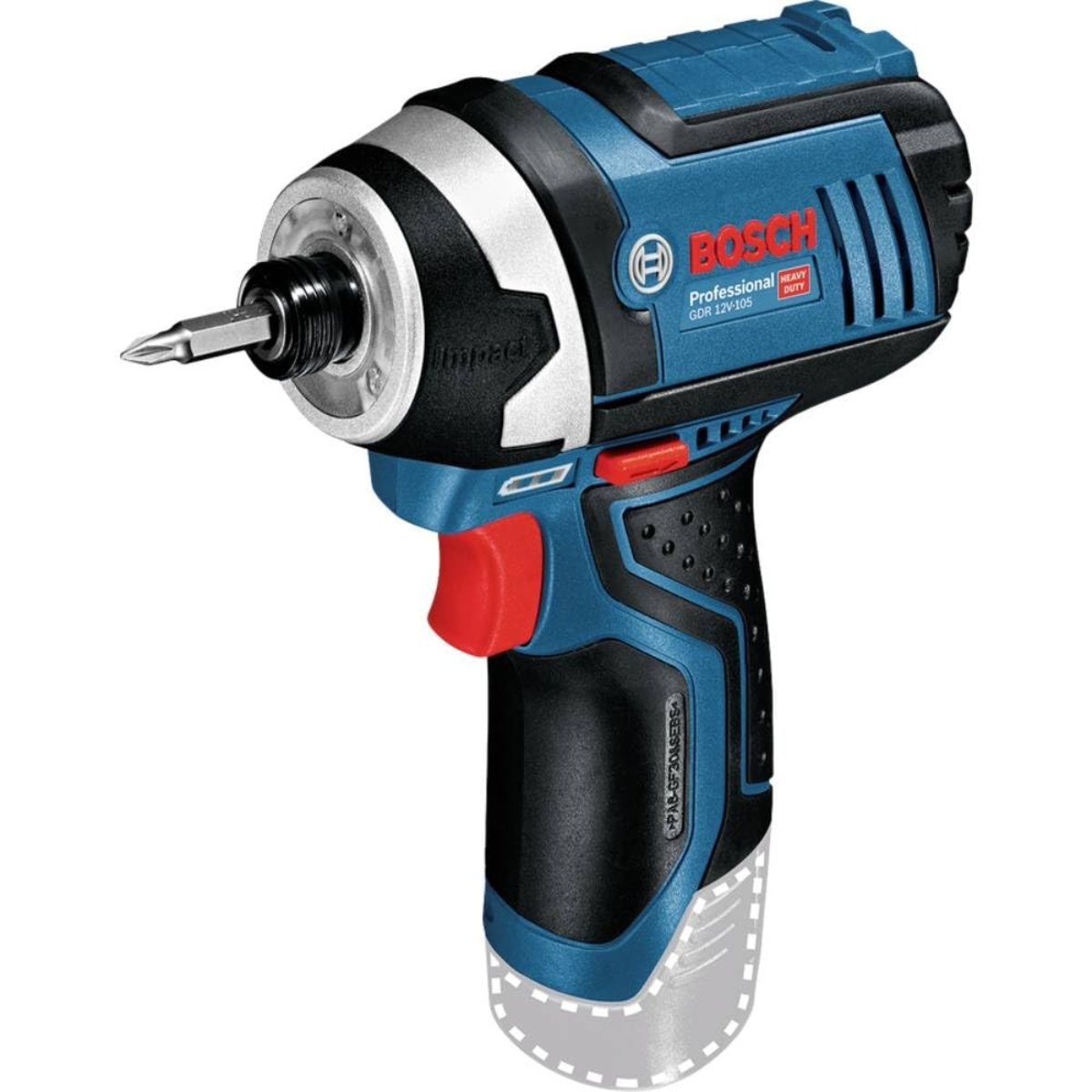
Bosch calls this the shortest cordless impact driver in its class, and the 12V platform keeps both the body and the battery small.
Twelve volts is the right answer more often than the specification sheets suggest. Overhead work, cabinetry and anything done at arm length is limited by tool weight and wrist fatigue long before torque runs out, and a 12V driver weighs roughly half what an 18V one does. The short head gets into corners where a full-size tool has to come at the screw on an angle.
It will not drive long structural screws into hardwood the way the 18V units will, and it is not meant to. Kitchen installers, electricians and anyone working above shoulder height will reach for it far more often than the specification suggests.
Pros
- Shortest body in its class
- Light enough for extended overhead work
- Excellent in corners and cabinets
- Bosch Professional 12V battery platform
Cons
- Less torque than the 18V units
- Not suited to long structural fixings
Key specs: Bosch Professional 12V System, compact head design, 1/4 inch hex chuck, excludes batteries and charger
CHECK ON AMAZON7. DeWalt 20V MAX XR Quiet Hydraulic Impact Driver – Best for Quiet Operation
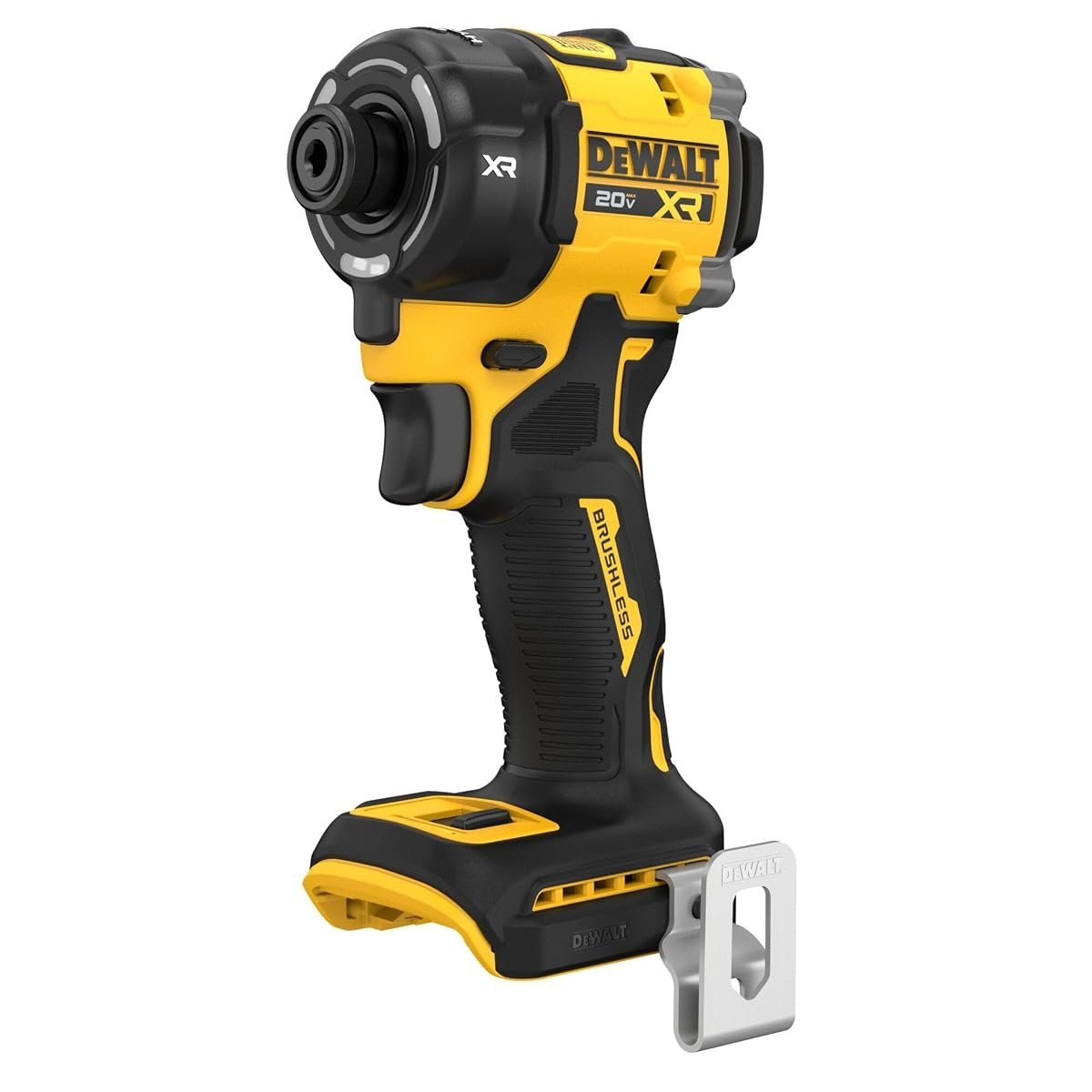
Hydraulic drive replaces the hammer-and-anvil mechanism in this one, and DeWalt claims up to 57 percent quieter operation as a result.
A conventional impact driver runs around 100 decibels, which is hearing-protection territory and genuinely antisocial indoors. Hydraulic units transmit torque through fluid instead of steel striking steel, so the noise drops to something closer to a drill while the torque stays high. On an occupied fitout, a renovation in a shared building, or a Sunday job at home, that changes when the work can happen.
Hydraulic mechanisms cost more and shed a little raw speed against a hammer mechanism at the same torque. For anyone working in occupied buildings, the noise reduction is worth more than the seconds lost per fastener.
Pros
- Up to 57 percent quieter than a standard impact driver
- High rated hydraulic torque
- Brushless motor
- Suits occupied and indoor work sites
- Shares DeWalt 20V MAX batteries
Cons
- Costs more than a conventional mechanism
- Marginally slower per fastener at equal torque
Key specs: 20V MAX XR brushless hydraulic drive, 1/4 inch hex chuck, up to 57 percent noise reduction, bare tool
CHECK ON AMAZON8. Black and Decker 18V Cordless Impact Driver – Best Budget Pick
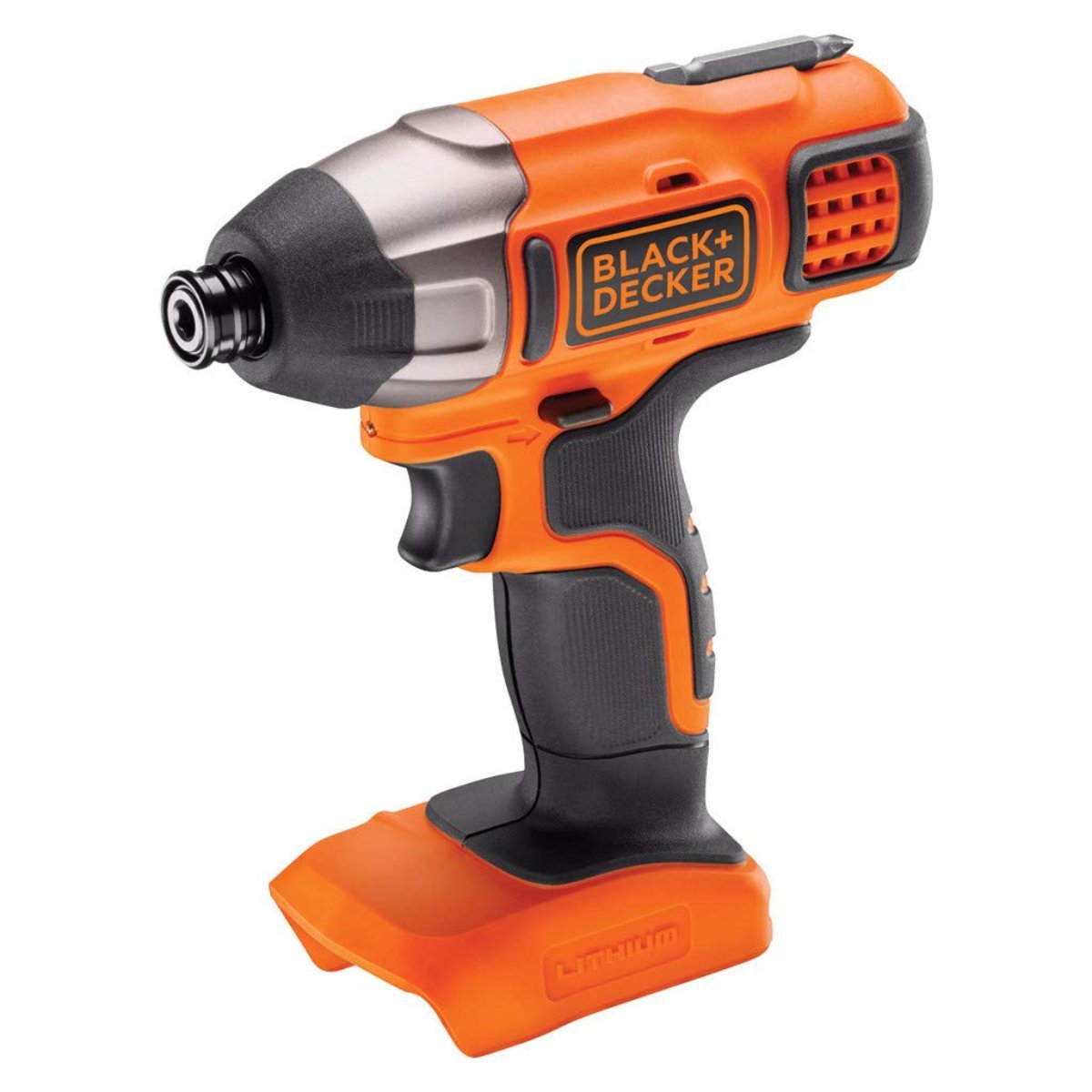
A metal gear casing rather than a plastic one is the notable inclusion at this price, along with a quick-release hex chuck for one-handed bit changes.
Gear casings are where budget drivers usually cut corners, and a plastic housing flexes under load until the gears wear unevenly. Metal here means the tool survives being dropped off a step ladder, which is the most common death of a cheap driver. One-handed bit changes matter more than they sound when the other hand is holding a workpiece steady.
Output sits below everything else here and the brushed motor limits sustained work. As the entry point for a household that needs a driver a few times a year rather than a few times a week, it is honest about what it is.
Pros
- Metal gear casing at a budget price
- Quick-release hex chuck for one-handed changes
- Lightest duty option here
- Shares Black and Decker 18V batteries
Cons
- Lowest output in this guide
- Brushed motor limits sustained use
Key specs: 18V cordless, brushed motor, metal gear casing, quick-release 1/4 inch hex chuck, bare unit
CHECK ON AMAZON9. Makita 18V Brushless Impact Driver – Best Lightweight Option
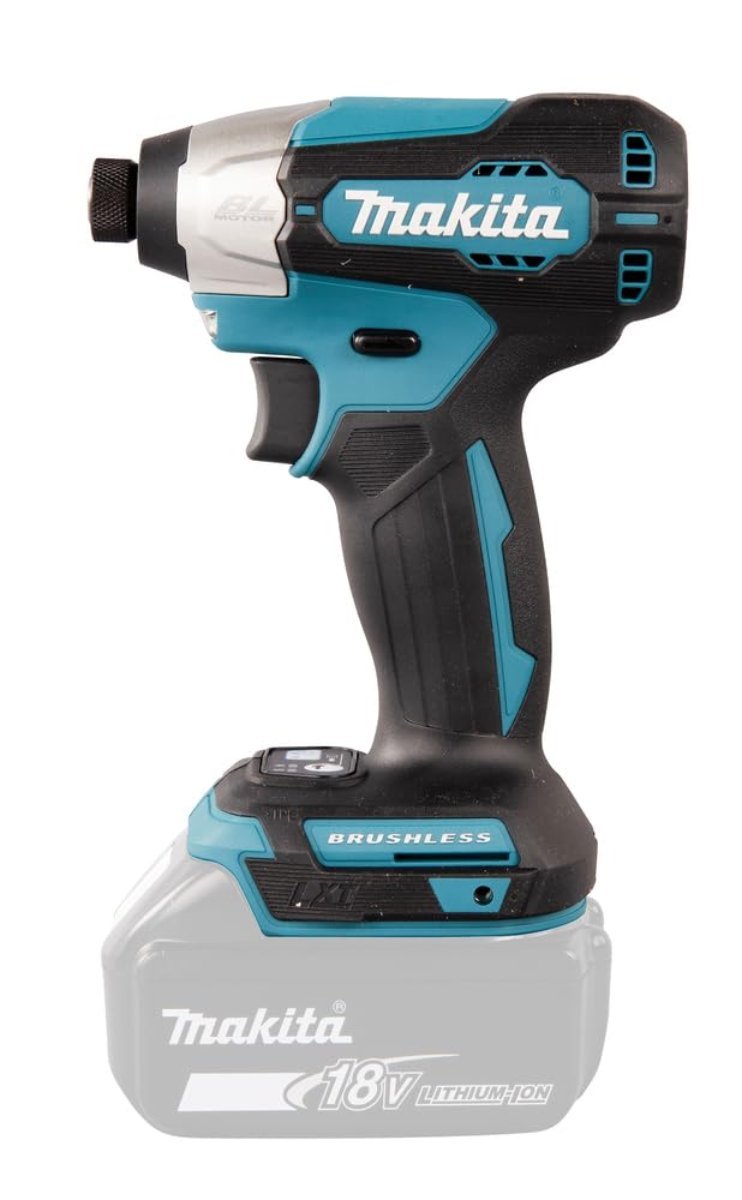
This sits above the brushed Makita at the top of the guide and below the three-stage model, offering a brushless motor in a compact body without the extra mode switching.
Removing the brushes removes the main wear part and the main heat source, so it holds output through a long session where a brushed tool fades. The body stays short enough for confined driving, and with no stage selector there is nothing to set before pulling the trigger. For repetitive fastening where every unit is the same, that simplicity is the feature.
Buyers wanting soft-start control for delicate fixings should take the three-stage model instead. Where the job is the same screw a few hundred times, this is the one that will still be going at the end of the day.
Pros
- Brushless motor holds output through long sessions
- Compact body for confined driving
- No mode switching to slow you down
- Shares 18V LXT batteries
Cons
- No selectable impact stages
- Skin only, no battery or charger
Key specs: 18V brushless, compact body, 1/4 inch hex chuck, suited to a wide range of fastening, skin only
CHECK ON AMAZON10. Bosch 12V Max Impact Driver Kit – Best Complete Starter Kit
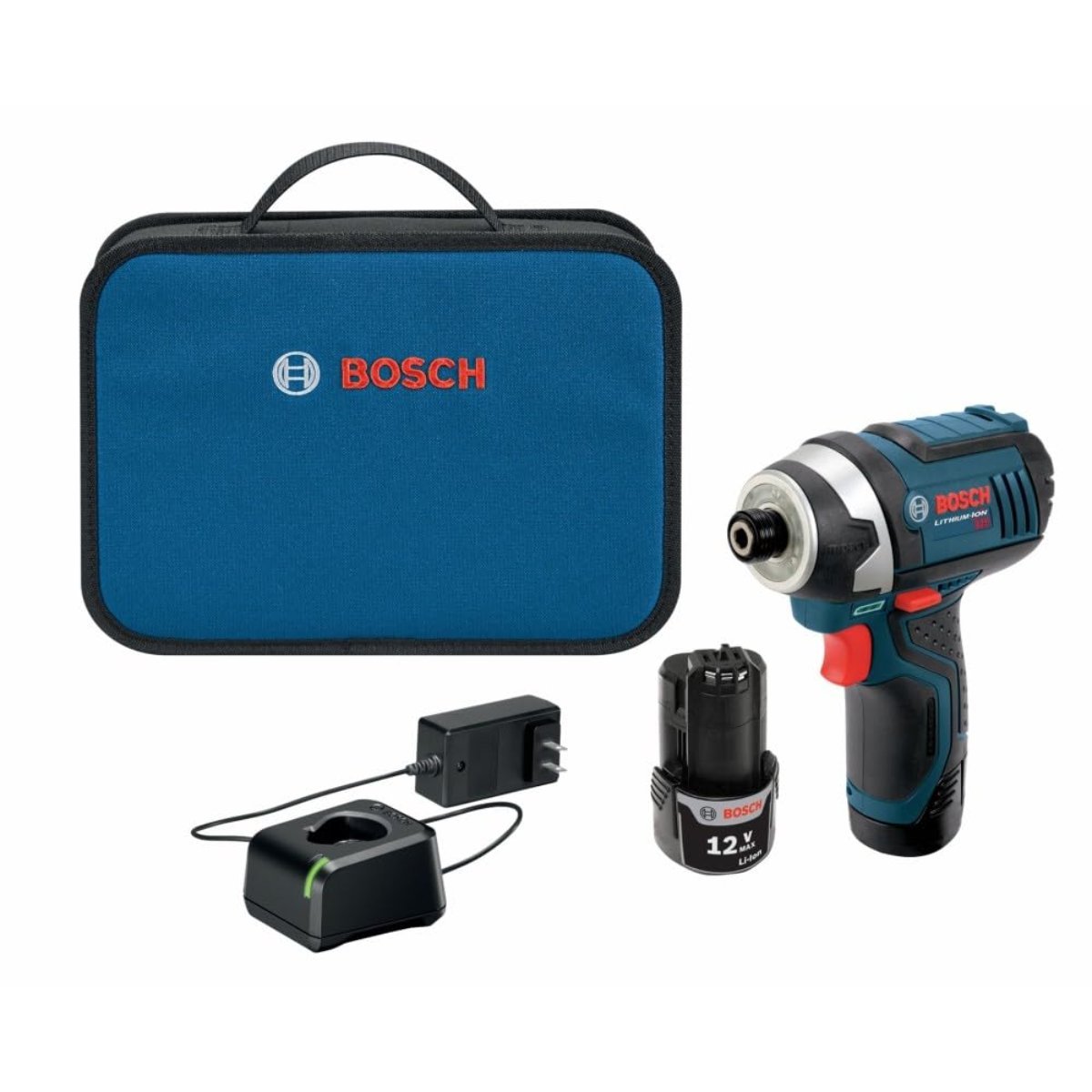
Alone among the ten, this arrives as a working kit: driver, two batteries, charger and a carry case, so nothing else is needed to start.
Every other entry here is a bare skin, which is fine if batteries are already in the shed and useless if they are not. Two batteries mean one charges while the other works, and the short head length that the 12V format allows makes it genuinely usable in corners and overhead. Bosch rates it among the lightest in its class, which shows on continuous overhead work.
A 12V kit will not match the 18V tools on long fixings into hardwood. Someone buying their first cordless driver, with no battery platform to protect, gets a complete usable setup here rather than a tool that needs another purchase before it works.
Pros
- Includes two batteries, charger and case
- Shortest head length in its class
- Very light for overhead work
- No further purchase needed to start
- Bosch 12V Max platform
Cons
- 12V output below the 18V tools here
- Less headroom for heavy structural work
Key specs: 12V Max lithium-ion, 1/4 inch hex chuck, includes 2 batteries, charger and carry case
CHECK ON AMAZONHow to Choose an Impact Driver
Pick the battery platform before you pick the tool. Batteries and chargers cost more than the driver itself over time, and they do not cross between brands. If there is already an 18V system in the shed, buying the matching bare skin is almost always the right answer even when a rival tool tests better on paper.
Brushless is worth it if you use the tool weekly. A brushless motor has no brushes to wear, generates less heat and holds output through sustained driving. For a few jobs a year the extra outlay never pays back, but anyone fastening regularly will notice a brushed tool fading through a long session.
Compare torque in newton metres, not impacts per minute. Impacts per minute describes how fast the hammer strikes, not how hard. Torque is what sinks a batten screw into hardwood. Around 100Nm handles household work, 140Nm upward covers decking and framing, and 200Nm is genuinely structural.
Measure the space you actually work in. Body length decides whether the tool fits between studs, inside a cabinet or under a sink. The difference between a 100mm and a 165mm driver is the difference between reaching a fixing and improvising around it, and no amount of torque compensates for not fitting.
Do not use an impact driver where a drill belongs. The hammer action that drives screws so well will snap drill bits and destroy small fasteners. Keep a drill for boring holes, use the impact driver for fastening, and choose a model with selectable impact stages if the work spans both delicate and structural fixings.
Set the workshop up around it. A driver generates offcuts and dust like nothing else, so it pairs naturally with one of the industrial vacuum cleaners from our guide, and the bits, sockets and spare batteries need somewhere to live, which is what the tool boxes guide covers.
Frequently Asked Questions
What is the difference between an impact driver and a drill?
A drill applies steady rotation and is made for boring holes. An impact driver adds rapid concussive blows along the drive axis, which sinks long screws without stalling or twisting your wrist. Impact drivers snap drill bits, so most workshops keep both.
Do I need a brushless impact driver?
If you use it weekly, yes. Brushless motors run cooler, last considerably longer and hold output through sustained driving. For a handful of jobs a year, a brushed tool costs less and will not be the limiting factor.
How much torque do I need in an impact driver?
Around 100Nm covers flat-pack assembly and general household fastening. Between 140Nm and 180Nm handles decking, fencing and framing. Above 200Nm is structural territory. Compare newton metres rather than impacts per minute, which measures speed rather than force.
Can an impact driver be used to drill holes?
Only with hex-shanked impact-rated drill bits, and even then it is a compromise. The hammer action shatters standard round-shank bits and gives poor control for accurate holes. Use a drill for boring and keep the impact driver for fasteners.
Is a 12V impact driver powerful enough?
For cabinetry, electrical work, overhead fastening and general household jobs, yes, and it will be roughly half the weight of an 18V tool. Long structural screws into hardwood are where 12V runs out and an 18V driver becomes necessary.
Should I buy a bare tool or a kit?
Buy the bare skin if you already own batteries on that platform, since it is far cheaper. Buy a kit for a first cordless tool, because a bare tool with no battery or charger cannot be used at all until you spend again.
Verdict
Most buyers should let the battery platform decide, which makes the compact Makita LXT skin the default pick for the largest installed base in Australia. Where the work spans delicate fixings and structural screws in the same day, the three-stage Makita is the one that will not strip a hinge screw on the way through. Anyone buying their first cordless driver should take the Bosch 12V kit instead, since it is the only entry here that arrives with batteries, charger and case and needs nothing else.