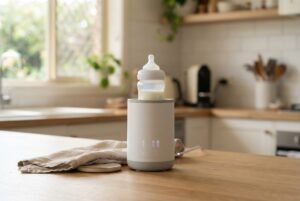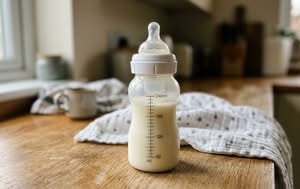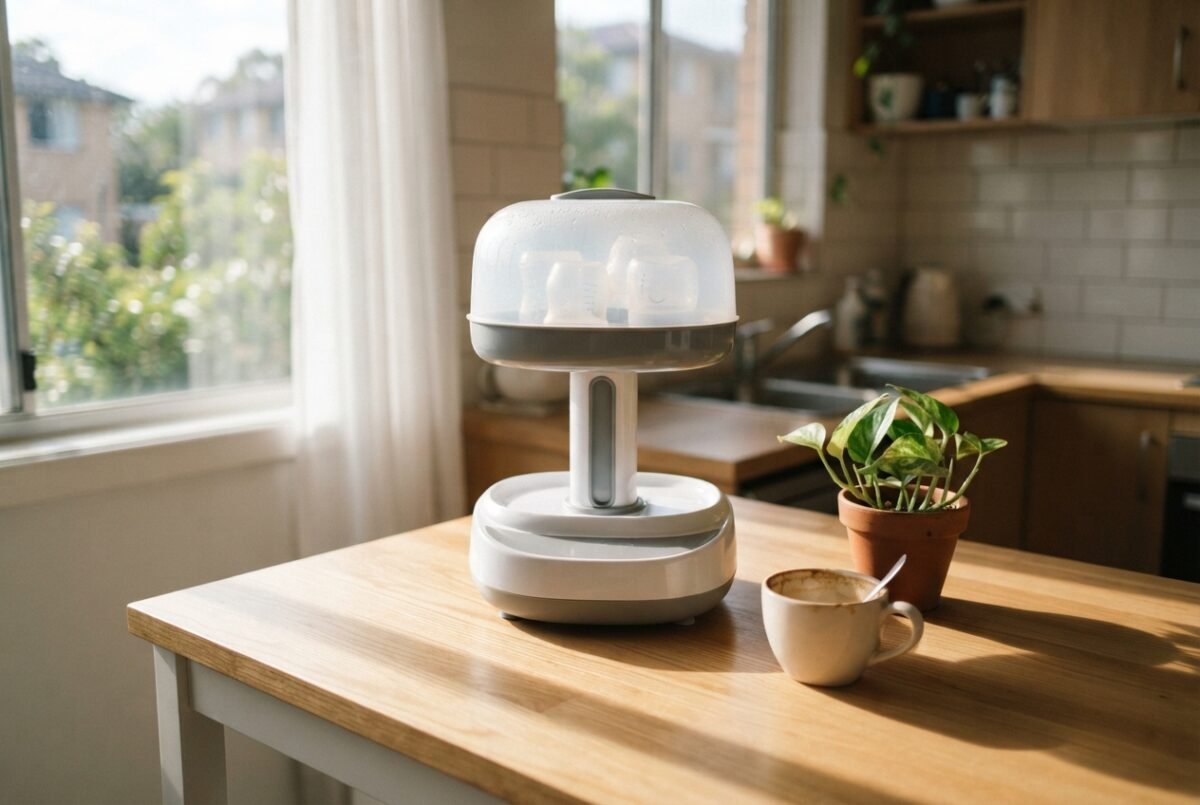
A bottle steriliser is a dedicated appliance that kills the bacteria and viruses ordinary dishwashing misses on bottles, teats and pump parts, using steam, UV-C light or microwave heat instead of soap and hot water alone. Raising Children Network’s own bottle-feeding guidance is specific on why this matters: equipment needs sterilising until a baby turns 12 months old, and once a cycle finishes, sterilised gear should be used within 24 hours instead of sitting open on a bench. Matching cycle time and capacity to a real feeding routine, not the flashiest unit on a shelf, decides the best bottle steriliser australia has to offer for most households.
Three distinct mechanisms cover every steriliser in this comparison: steam sterilisers that boil a small water reservoir into vapour and hold it against every surface for five to twelve minutes; UV-C sterilisers that use ultraviolet light instead of water, skipping the descaling routine a steam unit eventually needs in a hard-water area; and microwave sterilisers, an unpowered vessel that sits inside a household microwave and borrows its heat instead of running its own element. Two picks here fold in a fourth job as well – warming bottles, or steaming and blending homemade puree – on top of the core sterilising cycle.
Cycle time is the spec that actually separates these ten, running from two minutes in the smallest microwave unit up to twenty-six minutes in a steam-and-dry combo that leaves bottles fully dry rather than sterile but wet. Capacity is worth checking twice: it ranges from two bottles in the most travel-friendly pick to six in the larger steam units, and a household getting through more bottles between washes than a unit holds ends up running two cycles instead of one. The detail most buyers skip past is how long sterilised gear stays usable afterwards – Raising Children Network specifies a 24-hour window with the lid closed, which a couple of the electric units here are built to match exactly.
Ten sterilisers make this comparison, spanning steam, UV-C and microwave designs plus two units that fold in bottle-warming or homemade puree as well, chosen after a full sweep of Australia’s approved retail partners for real stock rather than a padded list. Still choosing the bottles themselves? Our best baby bottles australia guide covers that half of the setup separately.
Quick Picks
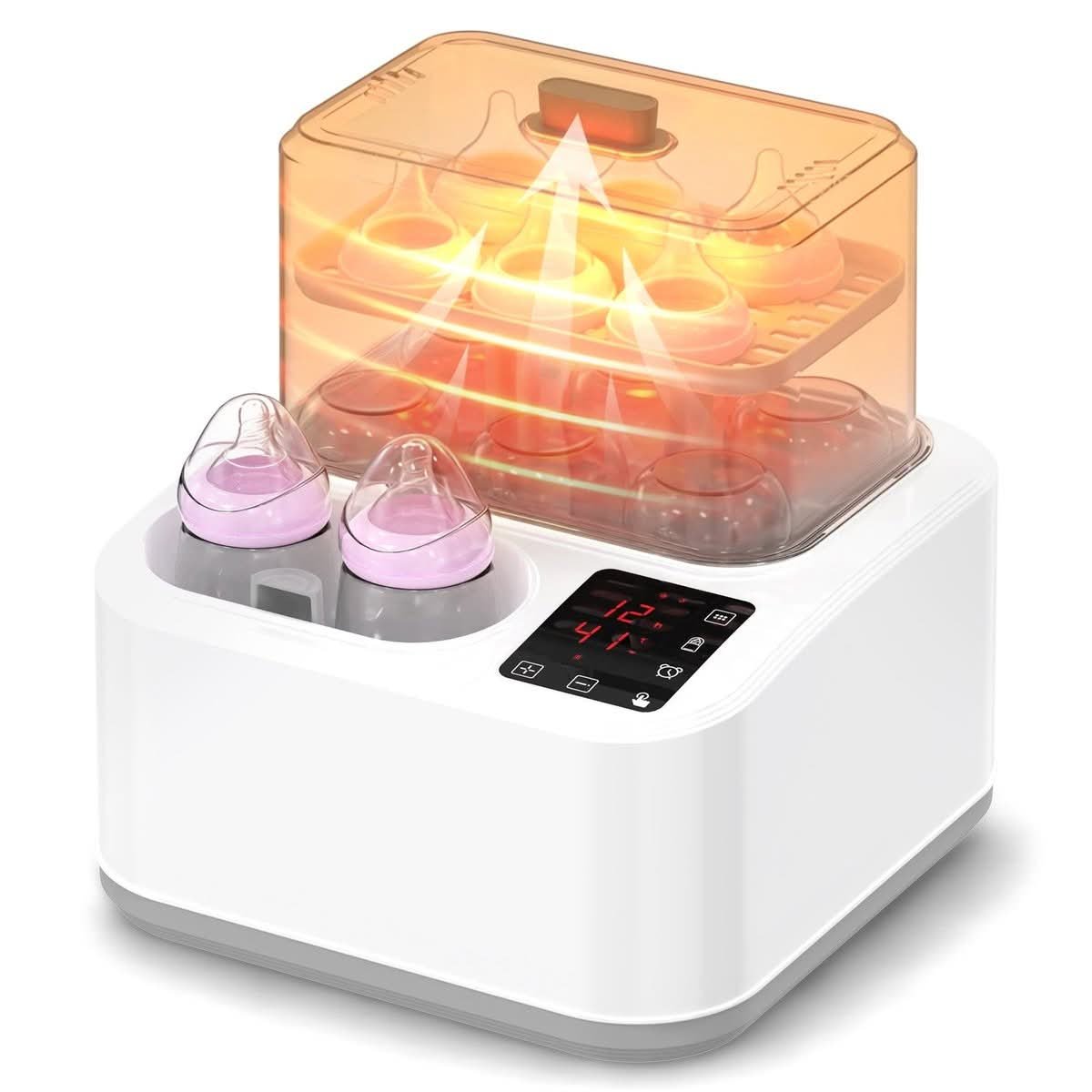
Bottle Sterilizer & Warmer with LCD Timer
A user-set drying time and a 24h keep-ready mode on top of a 6-bottle steam cycle.
CHECK CURRENT PRICE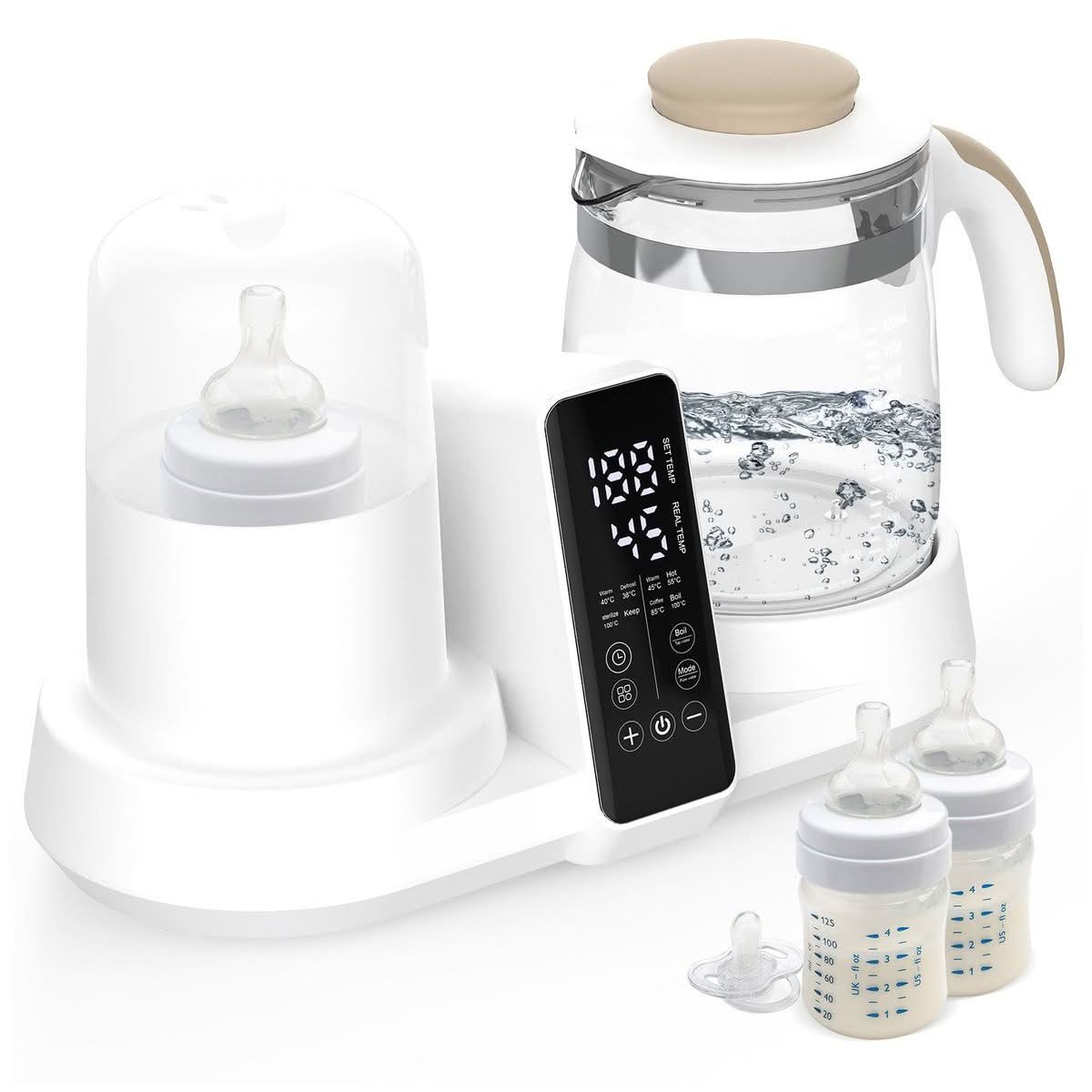
Multifunctional Bottle Warmer & Sterilizer
Two zones run independently – a bottle warms on one side while formula water boils on the other.
CHECK CURRENT PRICE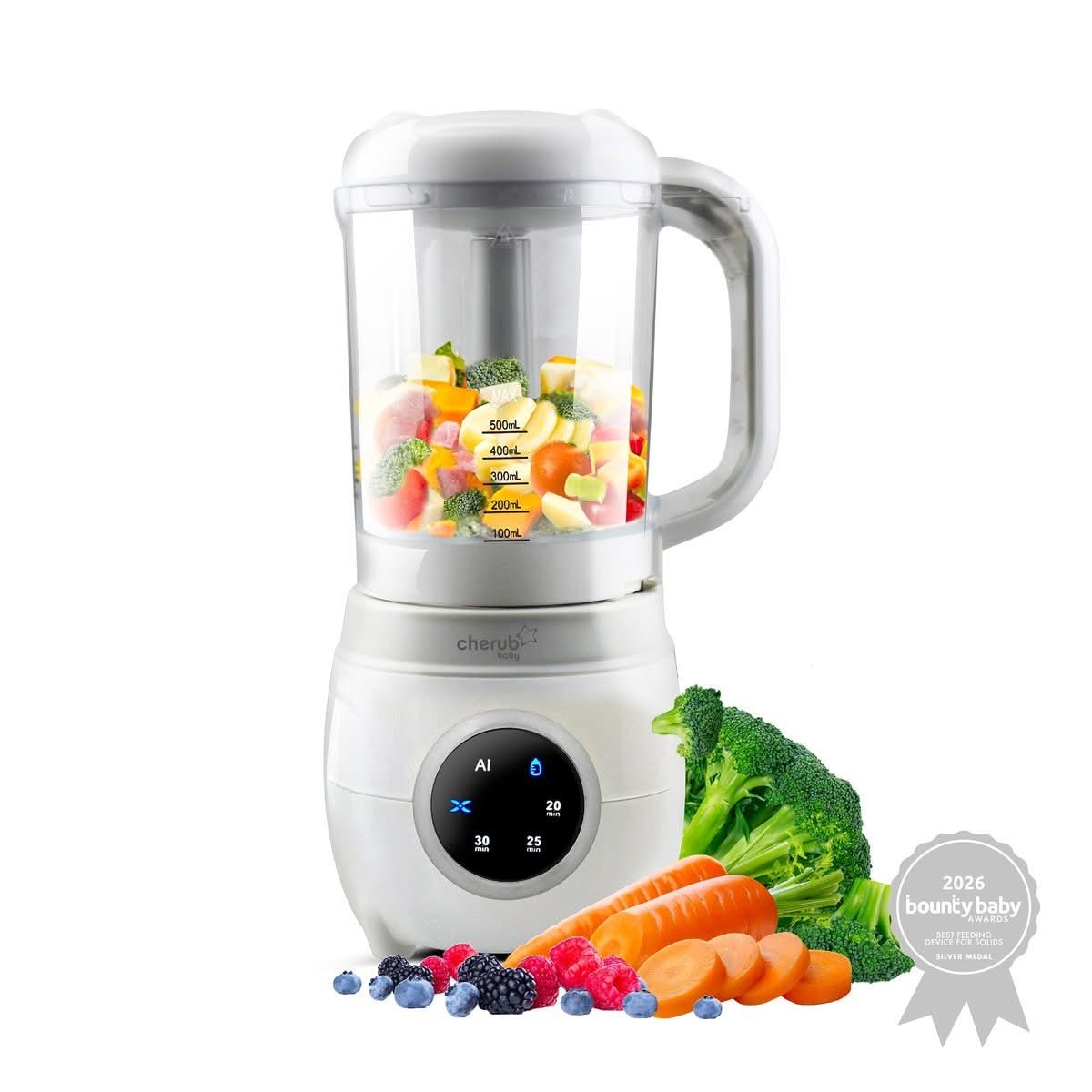
Automatic Baby Food Maker, Steriliser & Warmer
Steams and blends purees as well as sterilising bottles, one appliance instead of three.
CHECK CURRENT PRICEBest Bottle Steriliser Australia Compared
| Product | Link | Type | Best For | Key Spec |
|---|---|---|---|---|
| Bottle Sterilizer & Warmer with LCD Timer | Check price | Steam Steriliser + Warmer | Set-and-forget timed cycles | 6-bottle capacity, 12-minute steam cycle, 10-60 minute dryer, 24h keep-ready mode |
| Multifunctional Bottle Warmer & Sterilizer | Check price | Steam Steriliser + Warmer + Kettle | Running a warm feed and a sterile bottle side by side | Dual independent zones, 1.2L kettle boils in 5-6 min, 24h keep-warm, boil-dry protection |
| Automatic Baby Food Maker, Steriliser & Warmer | Check price | Food Maker + Steam Steriliser + Warmer | Households already making purees at home | Steam + blend puree function, bottle/accessory steriliser and warmer, LCD program panel |
| Philips Avent Microwave Steriliser, SCF281/02 | Check price | Microwave Steriliser | Small kitchens and travel | 2-bottle capacity, 2-minute microwave cycle, no electricity needed at home |
| Tommee Tippee UV Baby Bottle Steriliser | Check price | UV Steriliser | No water or descaling routine | UV-C light sterilisation, no water fill required, holds up to 5 bottles |
| Tommee Tippee Quickdry Steriliser, 6 Bottle | Check price | Steam Steriliser + Dryer | Batch-sterilising a full day’s bottles | 6-bottle capacity, 4 modes, 26-minute full cycle including dry |
| Philips Avent Electric Steam Steriliser and Dryer, SCF293/00 | Check price | Steam Steriliser + Dryer | A straightforward daily steam-and-dry routine | 6-bottle capacity, 6-minute steam cycle, integrated dryer |
| Tommee Tippee Supersteam Electric Steam Steriliser | Check price | Steam Steriliser | The fastest cycle in this comparison | 5-minute steam cycle, kills 99.9% of bacteria, no dryer |
| Philips Avent Electric Steam Steriliser, SCF291/00 | Check price | Steam Steriliser | Budget steam sterilising without extra features | 4-bottle capacity, 6-minute steam cycle, stays sterile 24h with the lid closed |
| Baby Bottle Sterilizer and Dryer with LED Touch Screen | Check price | Steam Steriliser + Dryer | A budget steam-and-dry unit with digital controls | 4-in-1 steam sterilise and dry, LED touch screen, universal bottle fit |
How We Picked
Six approved Commission Factory partners were checked for real bottle steriliser stock: two dedicated baby-gear retailers and four general dropship catalogues. Only two of the six carried any real stock at all, between them stocking three distinct units – a timed steam-and-warmer combo, a dual-zone warmer with a steriliser function, and a 4-in-1 food maker that also sterilises. The remaining seven slots came from the open marketplace, where Philips Avent and Tommee Tippee cover most of the established steam, UV and microwave designs sold in Australia.
Every pick had to be genuinely in stock with normal domestic delivery, not a multi-week overseas dispatch. Review evidence cited below comes from each product’s own verified buyer ratings and from ProductReview.com.au’s aggregate category feedback, never invented. We don’t physically test every unit ourselves – selections are informed by affiliate partnerships, but commission never bumps a weaker product ahead of a better one.
1. Bottle Sterilizer & Warmer with LCD Timer – Best for Precise Timed Cycles
This one runs a proper 12-minute steam cycle across two layers holding up to six bottles at once, then switches into a timed drying mode you set anywhere from 10 to 60 minutes on the LCD panel. That’s the detail worth noticing: most sterilisers here give you a fixed cycle length, this one lets you dial drying time to match how damp the load actually is.
A 24-hour auto-cycle keep-ready mode holds everything sterile between top-ups, which matters more than it sounds on a night with three feeds back to back – no re-running a full cycle at 2am because the last one finished six hours ago. The same basket doubles as a gentle bottle and food-jar warmer, and there’s a steaming rack for cooking soft veggies straight into puree.
It’s priced in the middle of this comparison, a step up from the plainer combo unit below but well short of the dedicated food-maker further down this list. Worth the extra over a basic single-function steriliser if the LCD timer and the keep-ready mode actually get used – not if the bottles just get boiled twice a day on a fixed routine.
Pros
- 12-minute steam cycle covers 6 bottles across two layers in one run
- Drying time is user-set (10-60 min) instead of a fixed cycle length
- 24h keep-ready mode avoids re-running a full cycle for a single late feed
Cons
- 680W total draw across sterilising, drying and warming is worth checking against an older power board’s rating
- The steaming rack for homemade puree is a real bonus feature, not a reason to buy this over a dedicated food maker
Key specs: 6-bottle capacity, 12-minute steam cycle, 10-60 minute dryer, 24h keep-ready mode
CHECK CURRENT PRICE2. Multifunctional Bottle Warmer & Sterilizer – Best Dual-Zone Combo Unit
Two zones that actually run independently: the left side handles warming, steam sterilising, drying and thawing, while the right side is a proper 1.2L water kettle that boils in five to six minutes and holds that water warm for 24 hours. Run both at once – a bottle drying on the left while formula water heats on the right – and neither side waits on the other.
The tap-water boiling mode is the detail most competing units skip. Boiling tap water for five minutes specifically removes chlorine, which matters if the household’s usual drinking water comes straight from the mains instead of a filter jug. Auto shut-off and boil-dry protection cover the obvious failure mode of forgetting a kettle running dry.
Sits at the more affordable end of the three CF-stocked combo units here, missing the steaming-rack puree function the pricier LCD model above includes. A sensible trade if formula water and sterilising are the two jobs that actually matter, less so if homemade puree is on the agenda from the start.
Pros
- Two zones run fully independently, not from a single shared heating element
- Tap-water boil mode specifically removes chlorine, useful without a filter jug
- Auto shut-off and boil-dry protection built in as standard
Cons
- No steaming rack or puree function, unlike the LCD timer unit above
- Touchscreen controls with no physical buttons can be fiddly with wet hands
Key specs: Dual independent zones, 1.2L kettle boils in 5-6 min, 24h keep-warm, boil-dry protection
CHECK CURRENT PRICE3. Automatic Baby Food Maker, Steriliser & Warmer – Best 4-in-1 for Purees Too
Pop vegetables into the steaming bowl, hit auto on the LCD panel, and come back in about 20 minutes to a blended puree cooked by steam rather than boiled in water that carries half the nutrients down the sink. The same unit switches to steriliser mode for bottles and accessories, so it’s doing three separate jobs a household otherwise buys three separate appliances for.
It’s the priciest pick in this comparison at close to the premium end of the whole guide, and that’s the honest trade-off: buying it purely to sterilise bottles is overkill when the two combo units above do that job for a fair bit less. The extra cost only pays for itself if the household is actually planning to make its own baby food instead of relying on jars.
An Australian-designed brand with a long track record in portable feeding gear stands behind it, which shows up in the fit and finish compared with the generic steam-only units later in this comparison – proper program presets instead of a single fixed cycle for every load.
Pros
- Replaces three appliances outright – steamer/blender, steriliser and warmer
- Steam-cooking preserves more nutrients than boiling for homemade purees
- LCD program panel with presets, not one fixed cycle
Cons
- Priced well above every other steriliser in this comparison for the added food-maker function
- Overkill if the household isn’t making its own purees at home
- The blending jug is another part to wash after every use, on top of the steriliser basket
Key specs: Steam + blend puree function, bottle/accessory steriliser and warmer, LCD program panel
CHECK CURRENT PRICE4. Philips Avent Microwave Steriliser, SCF281/02 – Top Pick
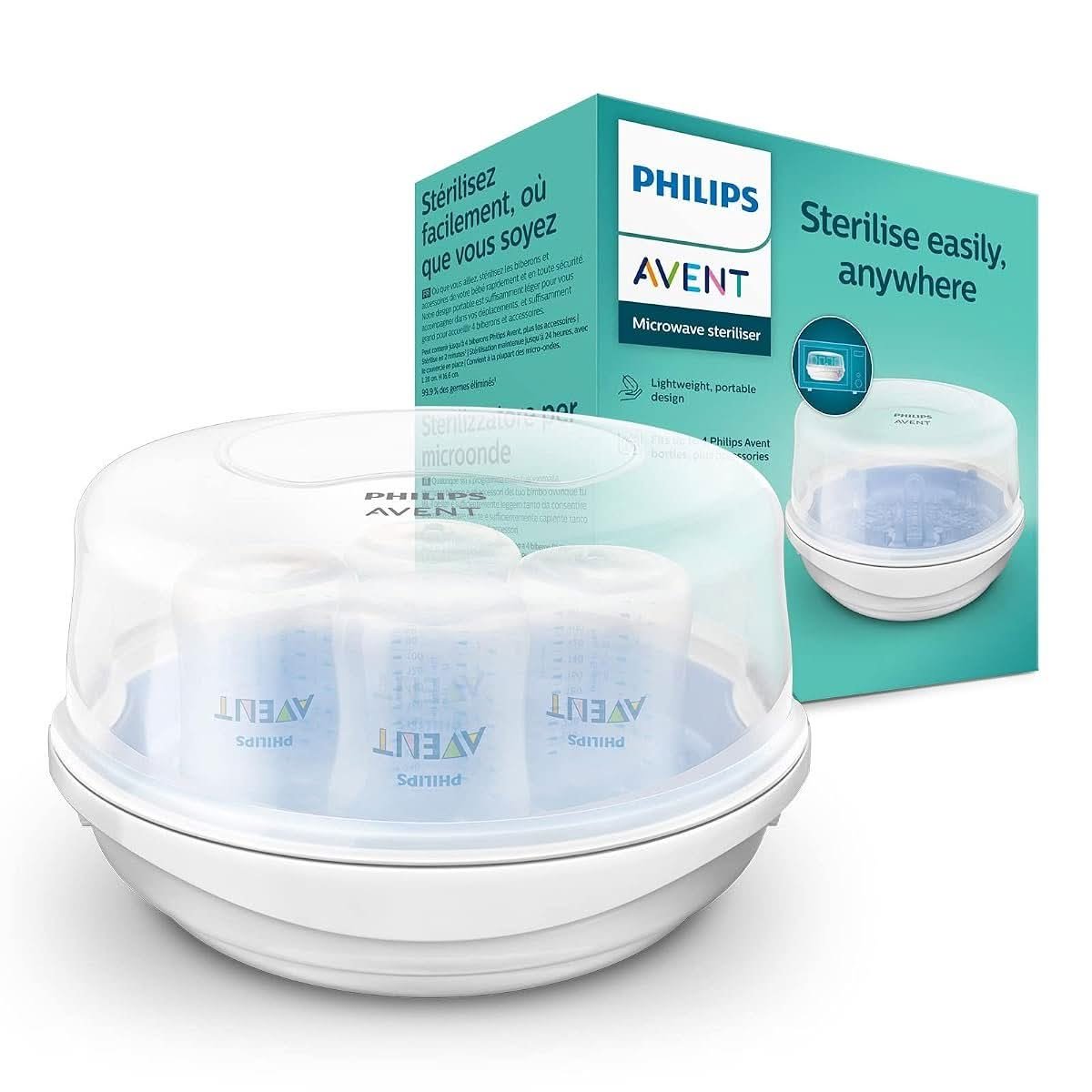
It works by sitting in the household microwave for two minutes instead of plugging into its own power point, which is either a real convenience or a dealbreaker depending on whether the kitchen microwave is free at feed time.
It only fits two bottles per cycle, the smallest capacity here by a wide margin, so it suits a single-bottle-at-a-time routine instead of batch-sterilising a full day’s feeds in one go. That’s also what makes it the easiest one in this guide to pack for a weekend away – no separate power lead, no unit taking up bench space.
It’s the cheapest steriliser in this whole comparison, and the trade-off is capacity and speed, not build quality – the actual sterilising result at two minutes is on par with the electric units here, it just does a fraction of the load per run.
Pros
- No dedicated power point needed – works in any household microwave
- Cheapest steriliser in this comparison and the easiest to pack for travel
Cons
- Only 2 bottles per cycle, the smallest capacity of any pick here
- No drying function, so bottles come out wet and need a rack or towel
- Ties up the kitchen microwave at feed time in a shared household
Key specs: 2-bottle capacity, 2-minute microwave cycle, no electricity needed at home
CHECK ON AMAZON5. Tommee Tippee UV Baby Bottle Steriliser – Best UV Sterilisation
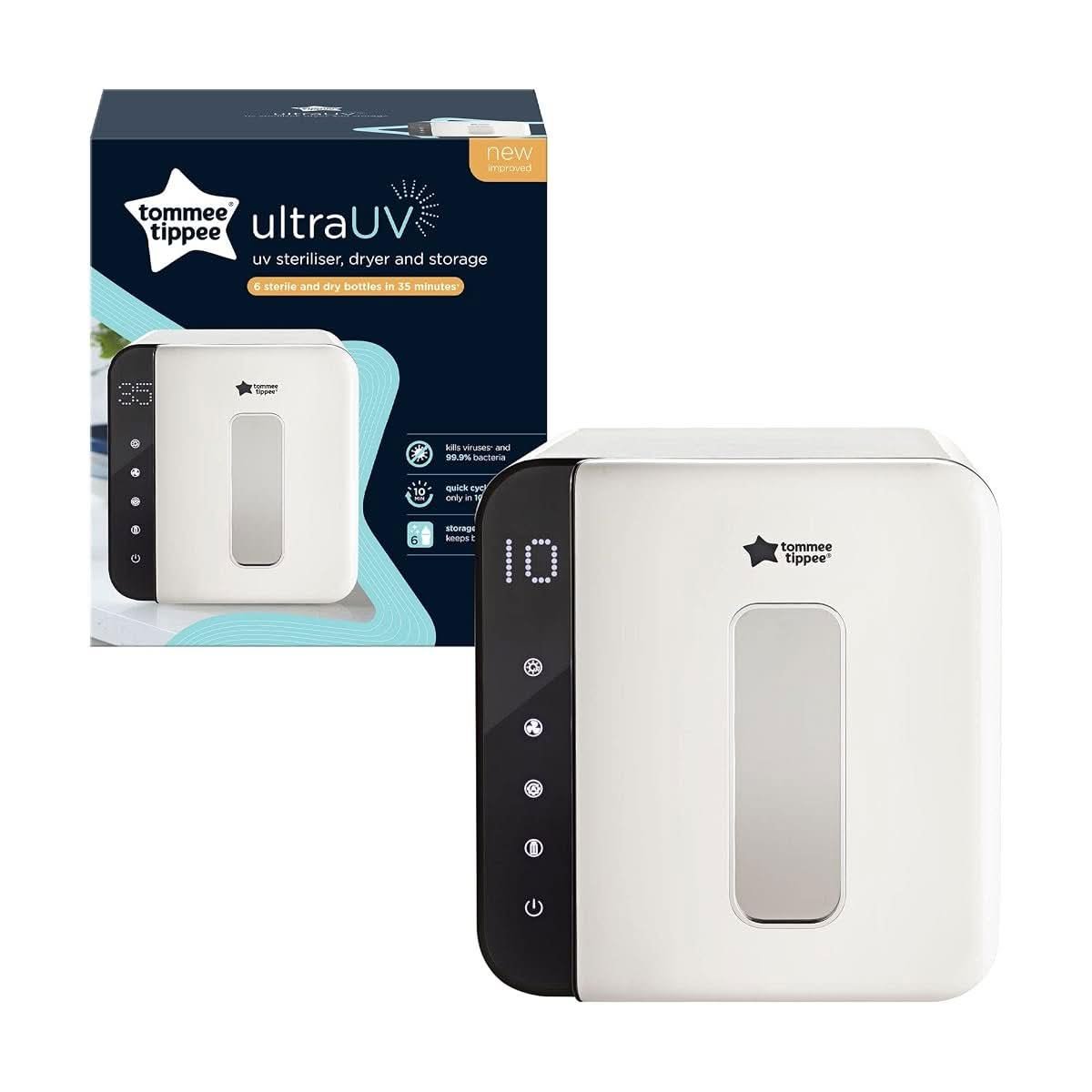
Every other steriliser here runs on steam, which means a water reservoir that eventually scales up with mineral deposits depending on the local water hardness. This one skips water entirely and uses UV-C light instead, so there’s no descaling routine at all to stay on top of – a real point of difference, not a marketing spin on the same steam mechanism everything else here uses.
Buyers often mention how little maintenance it asks for week to week compared with a steam unit that needs regular limescale removal in hard-water areas.
It holds up to five bottles, a reasonable middle-of-the-road capacity, and skips the drying step altogether since there’s no water cycle to dry off in the first place – bottles come out dry from the UV chamber, not damp the way a steam-only unit leaves them.
Pros
- No water reservoir means no ongoing descaling routine
- Bottles come out dry – no separate drying cycle needed
Cons
- UV bulbs are a wear item that eventually needs replacing, unlike a steam element
- 5-bottle capacity is mid-pack, not the largest batch size here
- Costs more upfront than the cheapest steam units here for a different sterilising mechanism
Key specs: UV-C light sterilisation, no water fill required, holds up to 5 bottles
CHECK ON AMAZON6. Tommee Tippee Quickdry Steriliser, 6 Bottle – Best for Drying After Sterilising
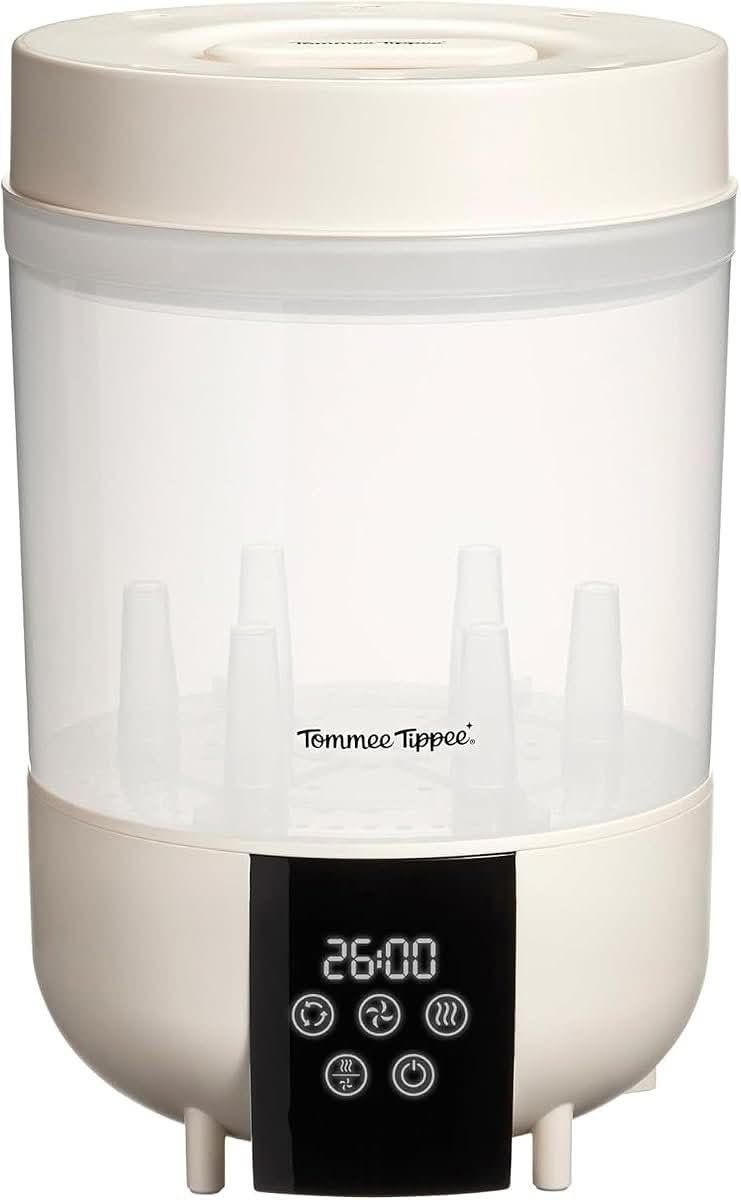
Skip it. That’s the wrong reaction to a 26-minute cycle time – it looks slow next to a 5-minute steam-only unit until the drying step is factored in, because the 26 minutes here already includes fully dry bottles at the end, not just sterile-but-wet ones sitting in the chamber waiting for air drying.
Four separate modes let the cycle match the actual load – a quick steam-only run for a top-up bottle mid-afternoon, the full steam-plus-dry cycle for an overnight batch. Six-bottle capacity across the run covers most full-day routines in one go without needing a second cycle before dinner.
Pros
- 26-minute cycle includes fully dry bottles, not just sterile-and-wet
- 4 selectable modes match the cycle to the actual load size
Cons
- 26 minutes is the longest total cycle time here once drying is included
- 6-bottle capacity means a particularly large household may still need a second run
Key specs: 6-bottle capacity, 4 modes, 26-minute full cycle including dry
CHECK ON AMAZON7. Philips Avent Electric Steam Steriliser and Dryer, SCF293/00 – Best Steam + Dry Combo
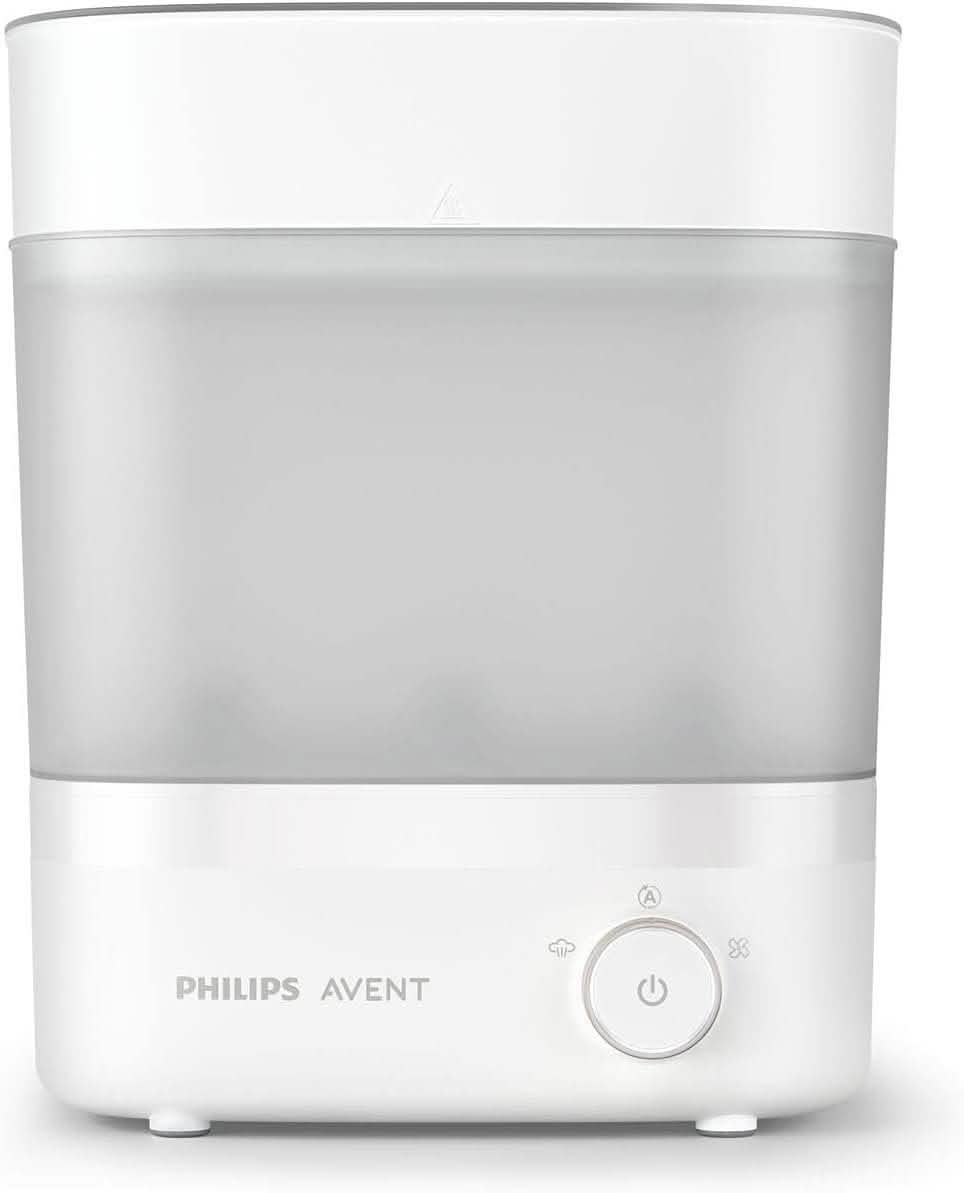
A 6-minute steam cycle across 6 bottles, then straight into an integrated dryer without moving anything to a second unit or a drying rack. It’s the more affordable of the two Philips Avent steam units here, sitting below the steam-only model further down this list once the dryer function is priced in.
Some buyers mention a mild plastic smell from a new unit in the first few cycles, which fades after normal use instead of persisting.
The dryer function is the real reason to pick this over the plain steam-only Avent below – bottles come out ready to use immediately instead of sitting wet on a rack for twenty minutes, worth the small price step up for anyone sterilising on a tight morning schedule.
Pros
- 6-minute steam cycle for a full 6-bottle batch
- Integrated dryer skips the wet-rack wait after sterilising
Cons
- A mild plastic smell from a new unit is a recurring note in early cycles
- Costs more than the plain steam-only Avent model later in this comparison
- Bulkier on the bench than the microwave or UV units above once the dryer chamber is added
Key specs: 6-bottle capacity, 6-minute steam cycle, integrated dryer
CHECK ON AMAZON8. Tommee Tippee Supersteam Electric Steam Steriliser – Best 5-Minute Cycle
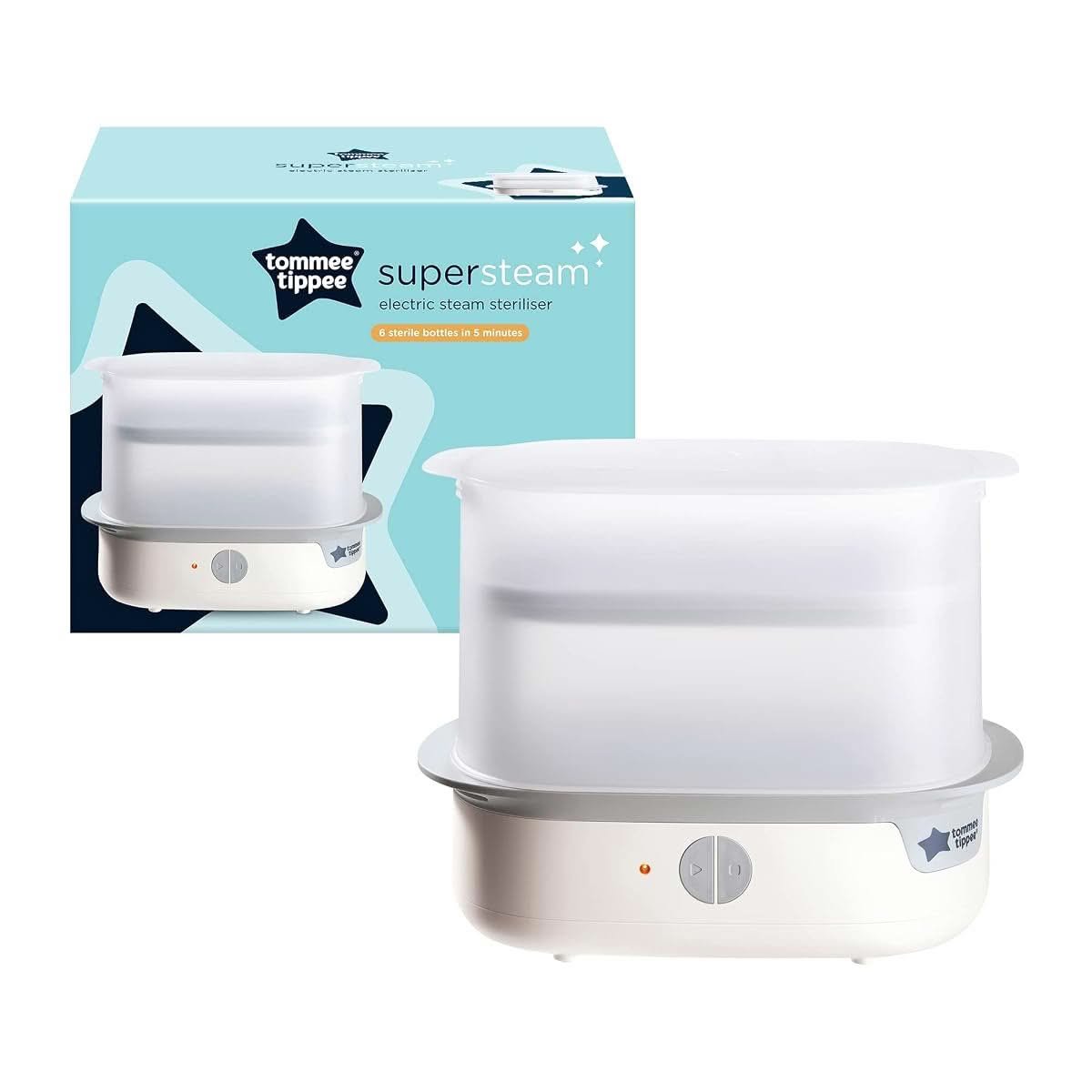
Five minutes is the fastest cycle time of any steriliser in this guide, steam-only or otherwise – a real difference at 6am with a hungry baby and one clean bottle left in the cupboard.
No dryer here, so a bottle comes out sterile but wet, needing an air-dry rack or a clean tea towel before the next feed goes in it. That’s the one real gap against the Quickdry model further up this list, which trades speed for a fully dry result at the end.
Pros
- Fastest cycle time in this entire comparison at 5 minutes
- Kills 99.9% of bacteria per the manufacturer’s stated cycle rating
- Compact footprint compared with the combo units and food-maker above
Cons
- No drying function – bottles come out sterile but wet
- Capacity tops out lower than the 6-bottle steam-and-dry units here
Key specs: 5-minute steam cycle, kills 99.9% of bacteria, no dryer
CHECK ON AMAZON9. Philips Avent Electric Steam Steriliser, SCF291/00 – Best Compact Steam-Only Unit
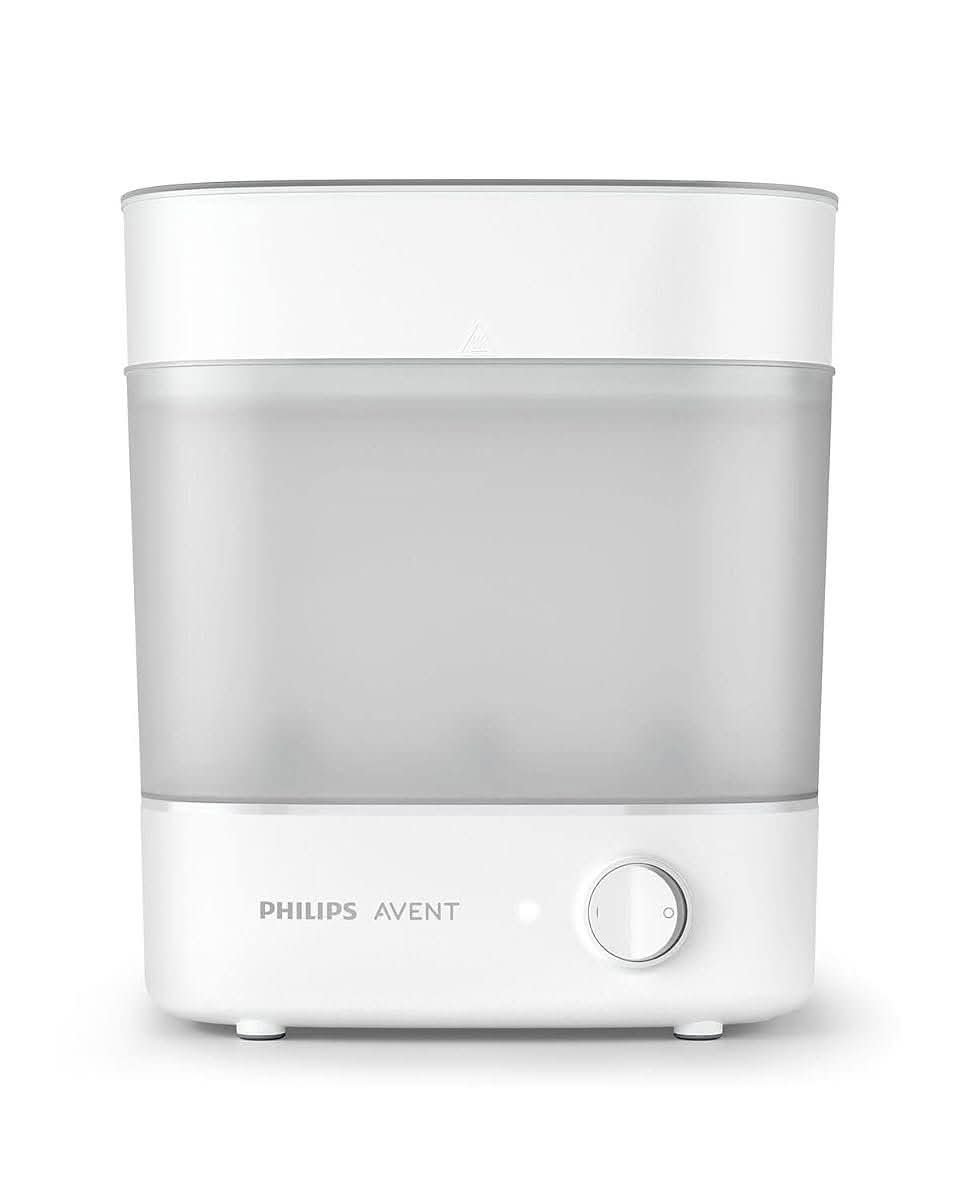
This is the plain version of the steam-and-dry Avent higher up this list, missing the integrated dryer and holding a slightly smaller 4-bottle load – the honest reason it sits at a lower price point than its sibling, not from any drop in build quality.
Leave the lid closed after the cycle finishes and the contents stay sterile for up to 24 hours, which softens the no-dryer trade-off somewhat: there’s no need to use the bottles the moment the cycle ends, just before the lid gets opened for the first time.
Sensible for a household that already has a bottle rack and doesn’t mind a short air-dry wait, and a step down in price from every other Philips Avent pick above it.
Pros
- Cheaper than the Avent steam-and-dry model above for near-identical steam performance
- Stays sterile up to 24 hours if the lid isn’t opened
Cons
- No dryer – bottles need a rack or towel before the next use
- Smaller 4-bottle capacity than the steam-and-dry Avent or either combo unit above
- Basic single-cycle control, no mode selection like the Quickdry unit further up this list
Key specs: 4-bottle capacity, 6-minute steam cycle, stays sterile 24h with the lid closed
CHECK ON AMAZON10. Baby Bottle Sterilizer and Dryer with LED Touch Screen – Best Budget LED Touch Model
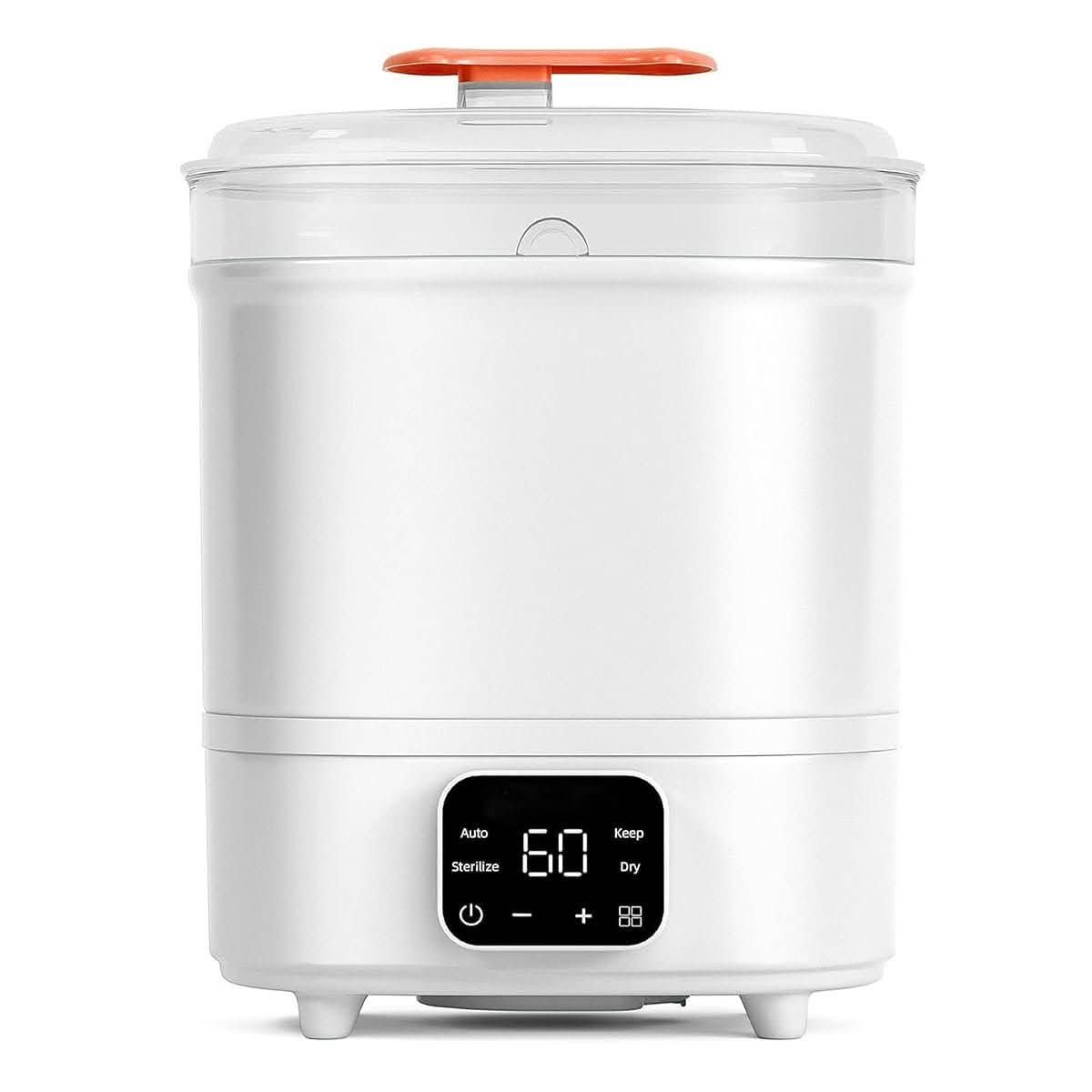
A newer listing than the established Avent and Tommee Tippee names on this list. What it does offer for the price is a full steam-and-dry cycle with LED touch controls, a feature set that costs meaningfully more on the Philips Avent equivalent above.
“Universal fit” claims are worth checking against the actual bottle brands in rotation at home before buying – wide-neck and narrow-neck bottles don’t always sit the same way in a generic basket built to fit everything reasonably well, not any one shape perfectly.
Pros
- Cheapest steam-and-dry unit in this comparison with digital touch controls
- Full 4-in-1 sterilise-and-dry cycle at a budget price point
- Straightforward LED display for cycle status
Cons
- “Universal fit” baskets can sit awkwardly with wide-neck bottle brands
- No established brand history to fall back on if a part needs replacing down the track
Key specs: 4-in-1 steam sterilise and dry, LED touch screen, universal bottle fit
CHECK ON AMAZONHow to Choose a Bottle Steriliser in Australia
Match cycle time to your actual routine, not the fastest number on the box. A 2-minute microwave cycle sounds like the obvious win until you factor in that it only fits two bottles at once. A household getting through six bottles a day is better served running one 6-minute batch than four separate 2-minute ones back to back.
Steam versus UV-C is a real trade-off, not just a price difference. Steam units need occasional descaling once mineral deposits build up from the water reservoir, more often in a hard-water area than a soft one. UV-C skips that maintenance step entirely but the bulb itself is a wear part that eventually needs replacing – neither mechanism is maintenance-free forever.
Check whether drying is included, or budget for a rack. A steam-only unit leaves bottles sterile but wet, needing an air-dry rack or a clean tea towel before the next feed. A steam-and-dry combo costs more upfront and takes longer per cycle, but the bottle comes out ready to use immediately – worth it on a tight morning schedule, less so if there’s already a drying rack sitting on the bench doing nothing.
Auto shut-off and boil-dry protection aren’t optional extras. Portable, battery-powered bottle warmers specifically have a documented recall history in Australia for overheating – the ACCC’s product recall register lists more than one bottle-warming device pulled from sale for exactly this fault. It’s a genuine reason to favour a plug-in steriliser with stated auto shut-off over an unbranded portable unit with no safety certification listed anywhere on the page.
A steriliser that also warms or blends is worth it only if you’ll use the extra function. The 4-in-1 food maker sits at the top of the price range here for a reason – it replaces three separate appliances outright, but only pays off if homemade puree is actually on the household’s to-do list instead of jarred food from the supermarket.
Capacity should match your bottle count, not the number printed on the box. A 6-bottle steriliser is wasted on a two-bottle rotation, and a 2-bottle unit is a real bottleneck for a household running through a dozen bottles a day between two kids. Count what’s actually in the cupboard before matching it to a capacity figure.
You’ll Also Want
A Munchkin Sponge 2-in-1 Bottle Cleaning Brush gets into the narrow teat and valve gaps a steriliser cleans but can’t scrub, the step that actually removes dried milk residue before sterilising even starts.
A Philips Avent Baby Bottle Drying Rack keeps just-sterilised bottles upright and draining instead of tipped over on a tea towel, useful for every steam-only pick here that skips the drying step.
Steam units in hard-water areas need an occasional descale – a Skyis Universal Descaling Tablets clears mineral buildup before it slows the cycle down or leaves a chalky residue on the heating element.
Frequently Asked Questions
How long do you actually need to sterilise baby bottles for?
Raising Children Network’s bottle-feeding guidance is clear that equipment needs sterilising until a baby turns 12 months old, not just the first few weeks. After that age, a normal hot wash in soapy water plus a thorough rinse is considered sufficient for most healthy babies. Check with a maternal health nurse if a baby was premature or has a compromised immune system, since the 12-month guide is a general default, not a fixed rule for every situation.
Is a UV-C steriliser as effective as a steam one?
Both mechanisms are designed to eliminate the bacteria and viruses that survive ordinary dishwashing, just by different means – steam uses high heat and moisture, UV-C uses ultraviolet light exposure. The real practical difference is upkeep: a steam unit needs occasional descaling as mineral deposits build up, where a UV-C unit instead has a bulb that eventually needs replacing after enough cycles. Neither is maintenance-free over several years of daily use.
Do sterilised bottles need to be used straight away?
Not immediately, but there is a real window. Raising Children Network specifies sterilised equipment should be used within 24 hours, and several electric sterilisers in this comparison are built with a keep-sterile or keep-ready mode that matches that exact window if the lid stays closed. Once a bottle has been opened and handled, the 24-hour clock effectively resets and it should go back through a fresh cycle before its next use.
Can you sterilise bottles in the microwave without a special unit?
A purpose-built microwave steriliser is a sealed vessel engineered to hold steam against every surface for a set time, which a bottle placed loose in a microwave with a splash of water can’t reliably replicate. Uneven heating and inconsistent steam contact mean some surfaces may not reach a properly sterilising temperature. A dedicated unit costs relatively little compared with the risk of an incomplete cycle on a newborn’s feeding equipment.
How many bottles should a steriliser hold for a newborn?
Choice’s general infant feeding guidance suggests six to eight bottles is typical for a baby exclusively bottle fed, fewer if breastfeeding is the main method and bottles are occasional. A 6-bottle steriliser covers a full day’s rotation in a single cycle for most households, where a 2 to 4 bottle unit suits occasional use, travel, or a household relying mainly on breastfeeding with the odd bottle top-up.
Are portable, battery-powered bottle warmers safe to leave unattended?
Check the specific model’s safety record before assuming yes. Australia’s ACCC product recall register has listed more than one portable, battery-powered bottle warmer for an overheating and fire risk, including at least one confirmed incident. A plug-in unit with stated auto shut-off and boil-dry protection, checked against the current ACCC recalls list before buying, is the safer default for anything left running near a sleeping baby overnight.
Verdict
For most households running a full day’s bottles through one cycle, the timed steam-and-warmer combo at the top of this list covers sterilising, drying and gentle warming without needing a second appliance on the bench. Anyone already making homemade puree should look straight to the 4-in-1 food maker instead, since it earns its higher price by replacing three separate gadgets outright. For a tight budget or a travel bag, the Philips Avent microwave steriliser remains the simplest option with the deepest verified track record of anything in this comparison.