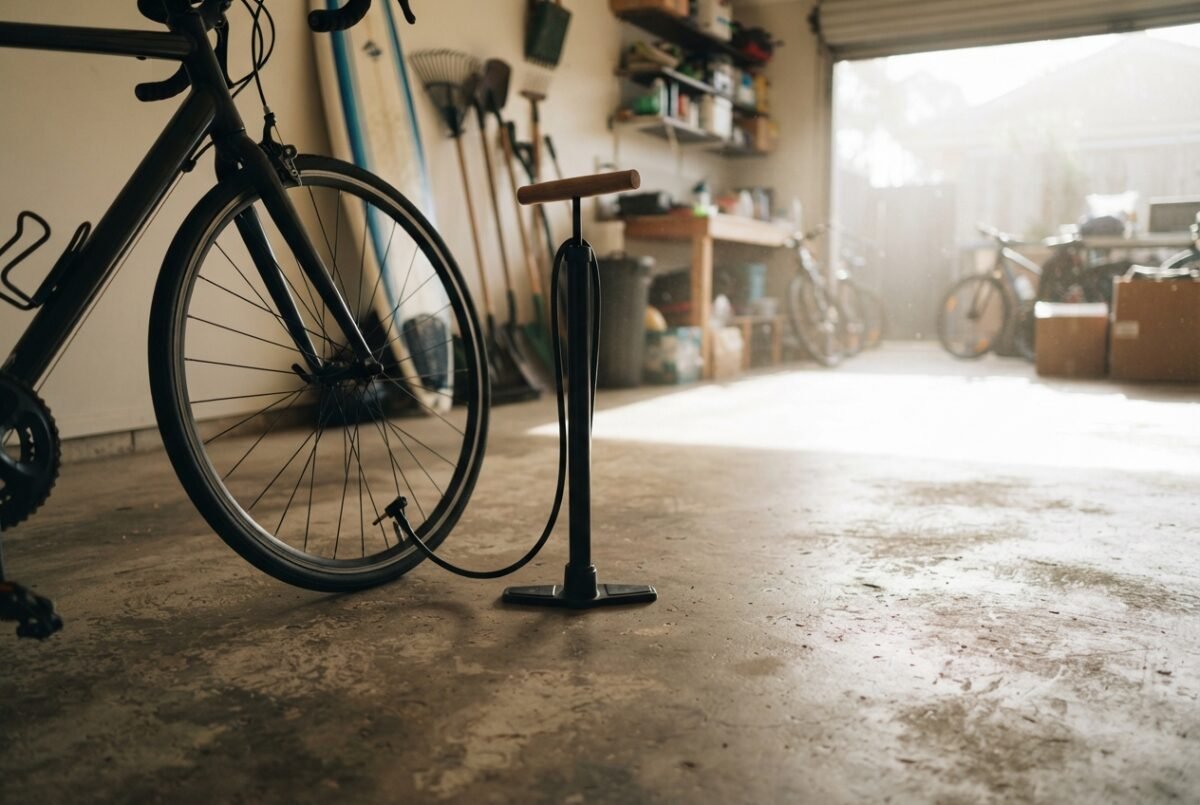
Ask most petrol stations in Australia to top up a road bike tyre and you will hit a wall well short of where a road tyre actually needs to sit: servo air compressors are deliberately capped low so a driver cannot over-inflate a car tyre, which leaves a 100 PSI road tyre badly under-filled, and most servo hoses do not even fit a Presta valve without an adaptor. A bike pump is a dedicated tool built to move air into a bicycle tyre through either a Presta or Schrader valve, at the specific pressure and volume a bike tyre actually needs, which nothing else in a typical Australian garage reliably does.
Shoppers land in one of five categories here: track or floor pumps for the garage, built for high volume and a big gauge; mini and frame pumps small enough to carry on the bike itself; CO2 inflators that use a disposable gas cartridge for a near-instant top-up mid-ride; **electric or digital pumps** that run off a battery and stop automatically at a set PSI; and foot pumps, a smaller niche pick for anyone who would rather not crouch down at the valve.
The number that actually separates a good pump from a frustrating one is its usable PSI ceiling matched against the tyre it needs to fill. Road tyres commonly run 80-130 PSI, hybrid tyres 50-70 PSI, and mountain bike tyres as low as 25-50 PSI, so a pump rated to only 60 or 80 PSI will leave a road cyclist permanently under-inflated no matter how long they pump. The second spec worth checking is valve compatibility: a genuine dual-head Presta and Schrader pump covers every bike in an Australian household, while a Schrader-only unit will not even seal against a Presta valve.
This comparison runs from a cordless digital inflator sourced through an Australian retail partner through to specialist track pumps, frame-mount hand pumps, CO2 kits and a foot-operated pick sourced on the open marketplace, covering budget garage pumps through to ride-along essentials.
Quick Picks
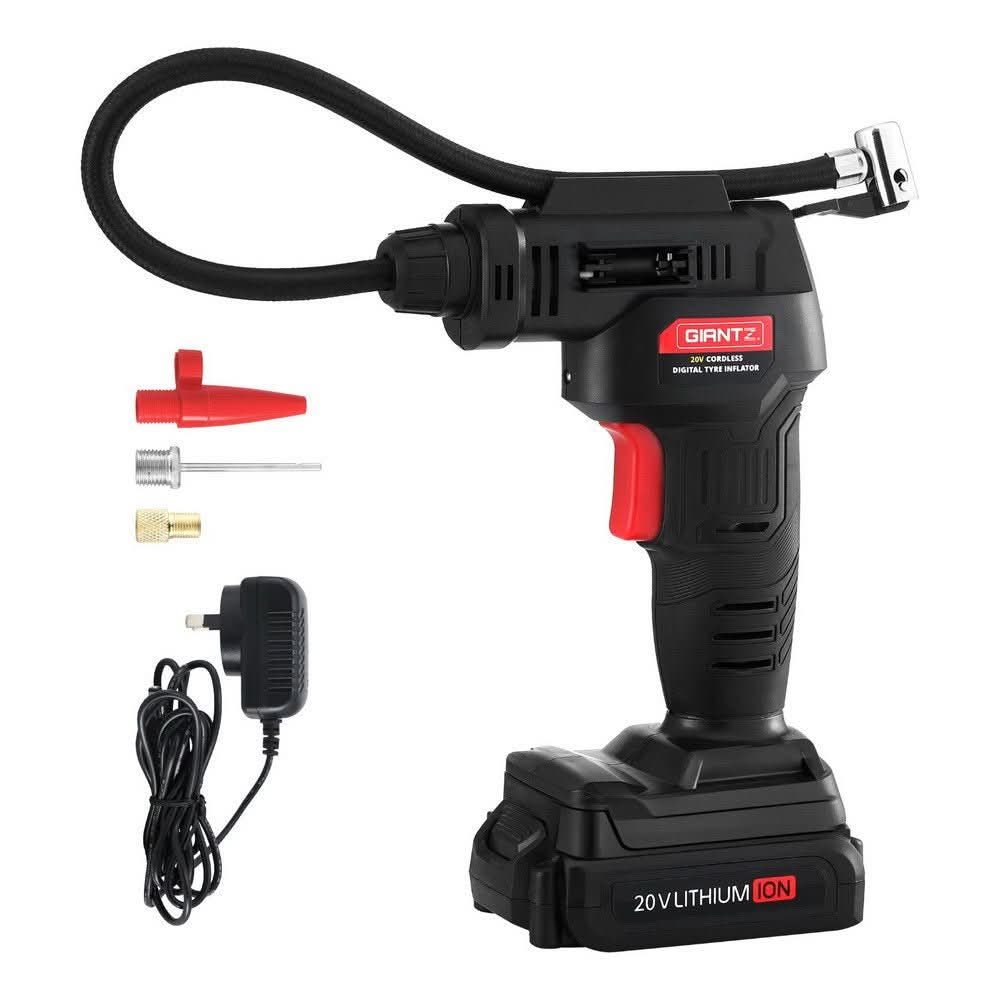
Giantz Cordless Tyre Inflator
A rechargeable 20V compressor that also handles pool floats and sports balls.
CHECK CURRENT PRICE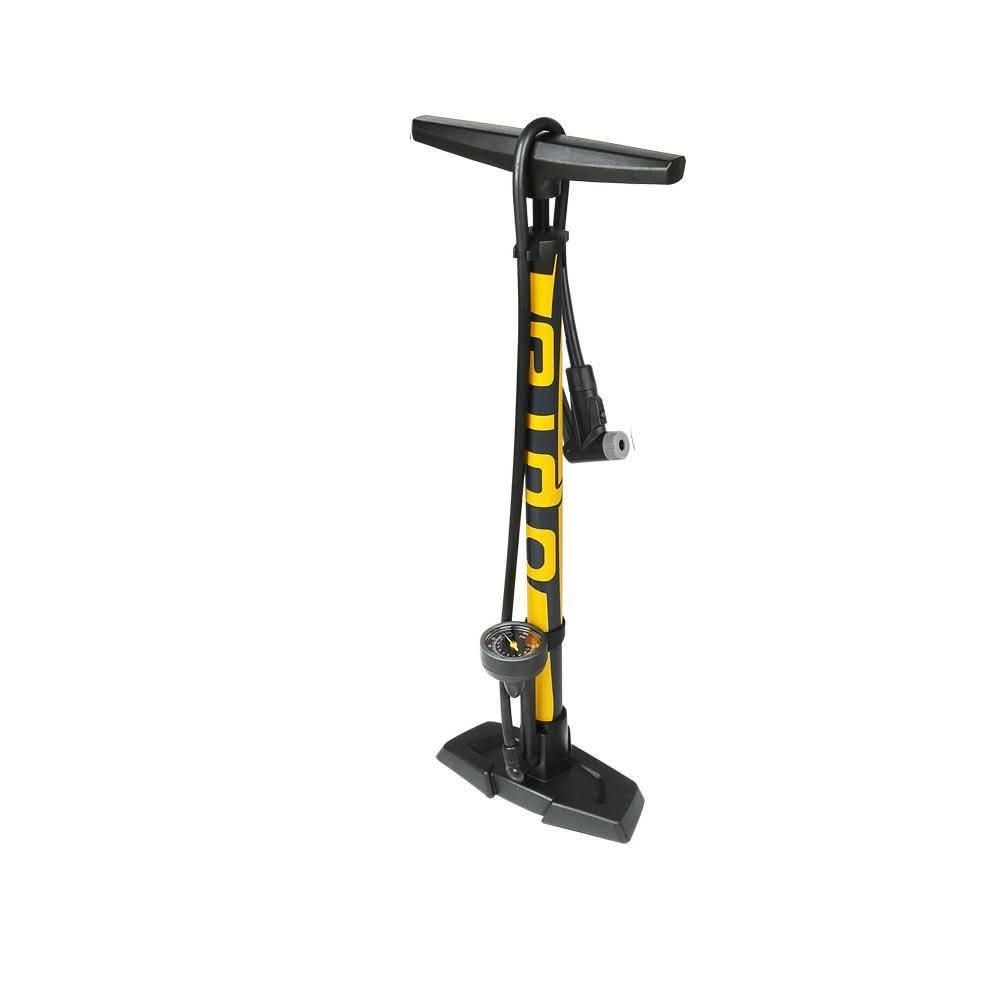
Ergonomic Bicycle Floor Pump with Gauge
A 160 PSI ceiling and a smart valve head that reads both Presta and Schrader.
CHECK CURRENT PRICEThe Best Bike Pumps in Australia Compared
| Product | Link | Type | Best For | Key Spec |
|---|---|---|---|---|
| Giantz Cordless Tyre Inflator | Check price | Giantz | Best Cordless Multi-Use Inflator | 20V rechargeable motor |
| Ergonomic Bicycle Floor Pump with Gauge | Check price | Unbranded | Best Floor Pump with Pressure Gauge | Up to 160 PSI |
| Mini Bike Pump with Repair Kit | Check price | Unbranded | Best Budget Mini Pump | Presta and Schrader compatible |
| Topeak Joe Blow Sport III | Check price | Topeak | Best Premium Floor Pump | Steel barrel and base |
| Lezyne Pocket Drive HP | Check price | Lezyne | Best Compact Hand Pump for the Road | CNC machined aluminium |
| Blackburn Telescoping Frame Pump | Check price | Blackburn | Best Frame-Mount Pump for Touring | Telescoping 2-stage barrel |
| ASMAX T30 Electric Bike Pump | Check price | ASMAX | Best Digital Auto-Stop Electric Pump | Digital pressure gauge |
| BriskMore CO2 Inflator Kit | Check price | BriskMore | Best CO2 Inflator for Race Day | CO2 cartridge inflator |
| Blackburn Mammoth 2-Stage Mini-Pump | Check price | Blackburn | Best High-Pressure Mini Pump | 2-stage high-volume/high-pressure switch |
| Foot Pump with Pressure Gauge | Check price | Unbranded | Best for No-Bend Inflating | Foot-pedal operation |
1. Giantz Cordless Tyre Inflator – Best Cordless Multi-Use Inflator
This is the one pump in this list that earns its keep well outside bike season. The 20V rechargeable motor tops out at 120 PSI, comfortably enough for a hybrid or mountain bike tyre and most of the way to a road tyre’s lower range, and the digital display lets you dial in an exact PSI target and walk away, since it shuts off automatically once it hits the number.
Where it really pulls double duty is everything else sitting in an Australian garage: pool inflatables in January, a flat soccer ball, even a car or trailer tyre in a pinch, the kind of job a cheap cordless inflator from Bunnings or Kmart handles just as well. Buyers on the open marketplace note the battery runs down faster on repeated back-to-back inflations than the spec sheet implies. Well, more precisely, it is fine on the first tyre or two, and the drop-off shows up from the third or fourth fill in a row, so a full pool float on a 40 degree Adelaide summer day might need a mid-session recharge.
Pros
- Digital auto-stop means no standing over the gauge watching the needle
- 120 PSI ceiling covers hybrid and mountain bike tyres with room to spare
- Doubles as a pool float, sports ball and light car-tyre inflator
Cons
- Battery life drops noticeably on several back-to-back inflations in a row
- 120 PSI falls short of a proper road tyre’s top end, so road riders need a dedicated track pump too
Key specs: 20V rechargeable motor, digital display, auto-stop PSI setting, 120 PSI max
CHECK CURRENT PRICE2. Ergonomic Bicycle Floor Pump with Gauge – Best Floor Pump with Pressure Gauge
A 160 PSI rating puts this well clear of every road tyre’s stated maximum, so there is no scenario where this pump runs out of puff before the tyre does. The smart valve head reads whichever valve type you push it onto rather than needing a manual switch, which matters more than it sounds once you are juggling a kid’s Schrader-valve bike and an adult’s Presta-valve road bike in the same shed.
The precision gauge sits at eye level instead of down near the base, so you can actually read the PSI number without crouching, a small design choice that a lot of cheaper floor pumps skip. Reviewers on the open marketplace flag the base as a little light for properly aggressive pumping, so bracing it with your foot beats relying on weight alone.
Pros
- 160 PSI ceiling comfortably covers every tyre type, including a fully pumped road tyre
- Smart valve head reads Presta or Schrader without manually switching
- Gauge sits at eye level instead of down near the base
Cons
- The base is a little light for hard, fast pumping, so brace it with a foot instead of relying on weight
- No storage bag or wall mount included, so it needs its own spot in the shed
Key specs: Up to 160 PSI, dual smart valve head, precision gauge, alloy barrel
CHECK CURRENT PRICE3. Mini Bike Pump with Repair Kit – Best Budget Mini Pump
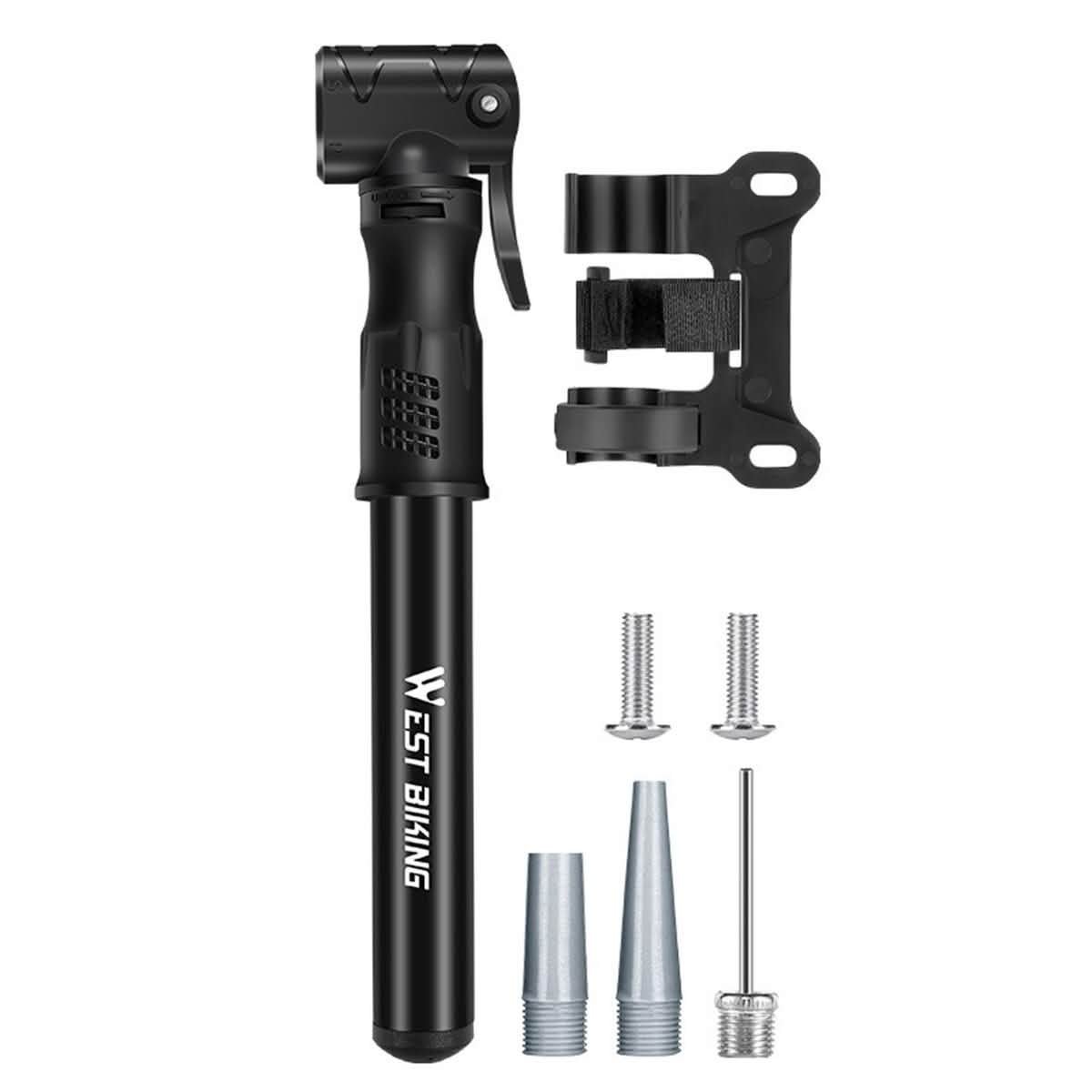
This is the cheapest way onto this whole list, and it is built to live in a saddle bag, not a garage. Both Presta and Schrader valves are covered, and the bundled repair kit turns a roadside puncture into a fix rather than a phone call, provided you have actually practised patching a tube before you need to do it on the side of a road.
It will not touch 160 PSI, and nobody buying a pump this size expects it to. Small. Light. Does one job on the side of the road. What it buys is real peace of mind on a longer ride away from home (about the size of a large tube of toothpaste in a jersey pocket), even if the main garage pump does the heavy lifting every other day.
Pros
- The cheapest pump in this whole comparison
- Covers both Presta and Schrader valves in one small unit
- Bundled repair kit turns a roadside puncture into a five-minute fix
Cons
- Slow going to fill a road tyre from flat, this is an emergency top-up tool, not a garage pump
- The included repair kit is basic, worth a practice run before you actually need it on the road
Key specs: Presta and Schrader compatible, includes puncture repair kit, hand-operated
CHECK CURRENT PRICE4. Topeak Joe Blow Sport III – Best Premium Floor Pump
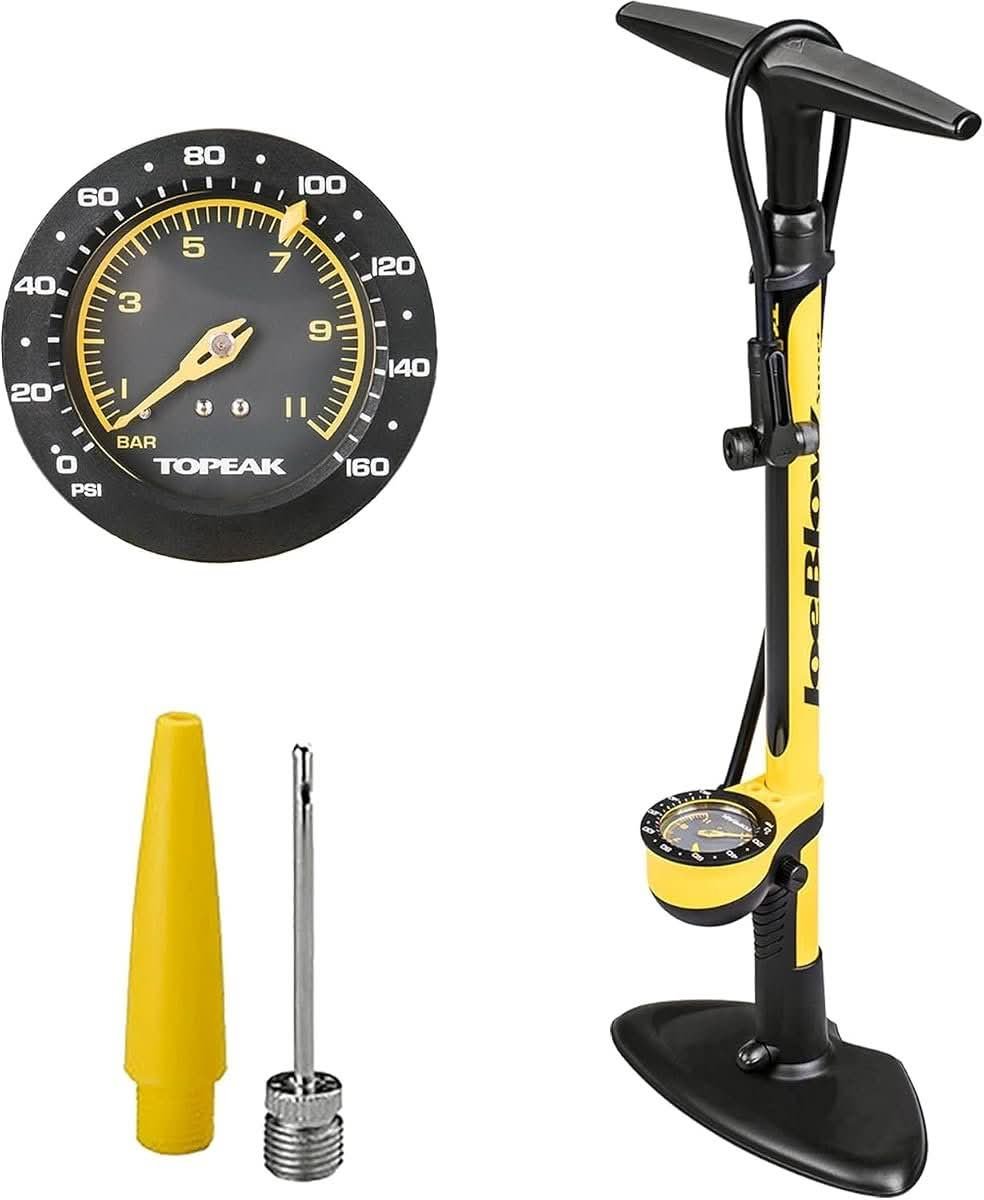
Topeak has been making dedicated bike pumps for decades, and the Joe Blow Sport III shows in the details other pumps in this comparison skip: a 3-inch mid-mount gauge that reads clearly without bending down, a padded oversized handle that does not dig into your palm on the fortieth stroke, and a 360-degree pivoting hose so the pump barrel never ends up at an awkward angle to the valve.
The TwinHead DX fitting covers Presta, Schrader and Dunlop valves without swapping a part, and a full set of ball and bladder heads comes in the box for sports gear too.
Pros
- Enlarged 3-inch gauge reads clearly without crouching down
- TwinHead DX fitting covers Presta, Schrader and Dunlop valves with no part swap
Cons
- Sits at the premium end of this comparison for what is, mechanically, still a manual floor pump
- The steel barrel adds noticeable weight, this stays in the garage instead of travelling with you
Key specs: Steel barrel and base, 160 PSI, TwinHead DX Presta/Schrader/Dunlop, 3 inch gauge
CHECK ON AMAZON5. Lezyne Pocket Drive HP – Best Compact Hand Pump for the Road
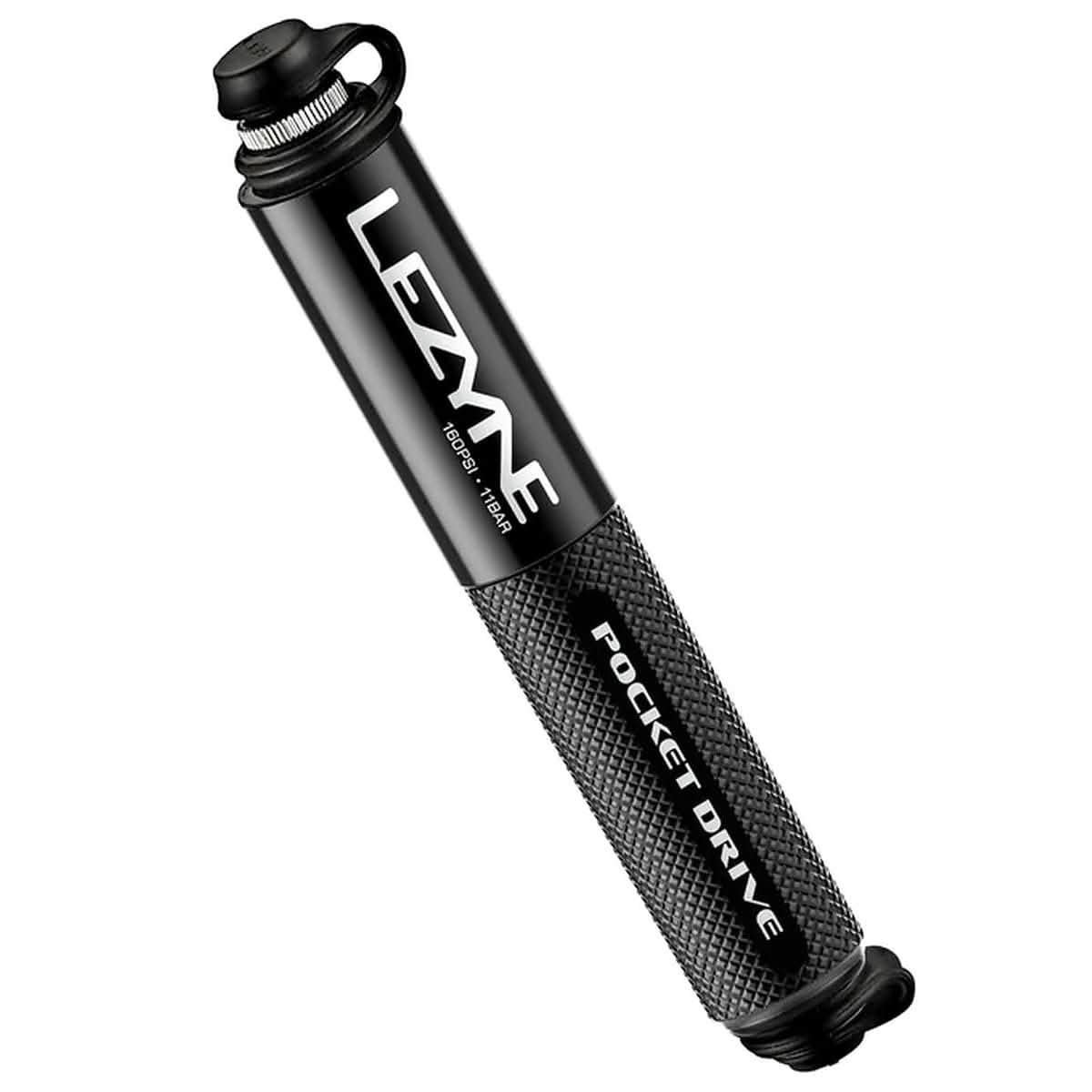
Lezyne builds this out of CNC-machined aluminium rather than stamped plastic, and the knurled handle grip stays secure even with sweaty hands on a hot ride. A 160 PSI rating is unusual for something this compact, matching the ceiling of the full-size Topeak pump above at a fraction of the size and weight, and the integrated ABS flex hose keeps the pump body from levering against the valve stem while you push.
It is fully rebuildable, not disposable, so a worn seal or gasket down the track is a spare part, not a replacement pump.
Pros
- 160 PSI ceiling in a pocket-sized aluminium body, unusual for something this compact
- Fully rebuildable, so a worn seal is a spare part, not a whole new pump
Cons
- Small barrel means more strokes per PSI than a full floor pump, expect a proper arm workout to a road tyre from flat
- No integrated gauge, so you are pumping by feel instead of reading an exact number
Key specs: CNC machined aluminium, 160 PSI, Presta and Schrader, rebuildable construction
CHECK ON AMAZON6. Blackburn Telescoping Frame Pump – Best Frame-Mount Pump for Touring
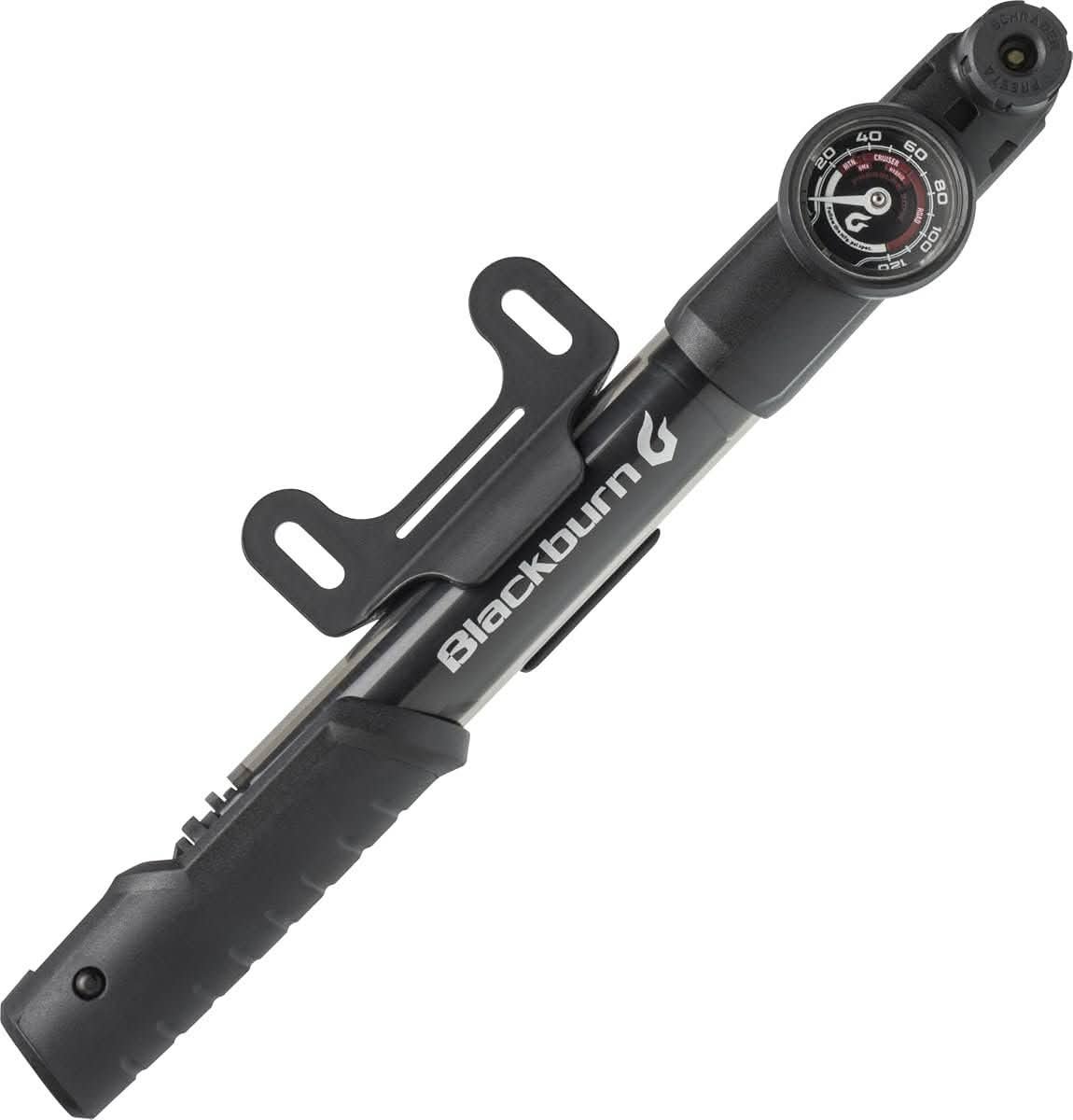
Blackburn’s telescoping design extends out to sit along a bike’s top tube or seat tube on a supplied mounting bracket, so it travels with the bike instead of living in a saddle bag or jersey pocket. The AnyValve head presses straight onto either a Presta or Schrader valve with no separate adaptor to lose on the side of the road, and a built-in Pressure Zone gauge shows target ranges by bike type, not just a bare PSI number.
The two-stage barrel switches from high volume to high pressure partway through the stroke, useful for getting a flat mountain bike tyre most of the way up quickly before finishing at full road-tyre pressure if needed. It is a longer, less pocketable tool than the Lezyne above, which is the trade-off for mounting permanently on the bike instead of carrying it loose.
Pros
- Mounts permanently to the frame, so it travels with the bike, not a bag
- AnyValve head fits Presta or Schrader with no separate adaptor
- Built-in Pressure Zone gauge shows a target range by bike type, not just a raw number
Cons
- Longer and less pocketable than a true mini pump once mounted
- The mounting bracket adds a small amount of visible hardware to an otherwise clean frame
Key specs: Telescoping 2-stage barrel, AnyValve head, Pressure Zone gauge, up to 120 PSI, includes mount
CHECK ON AMAZON7. ASMAX T30 Electric Bike Pump – Best Digital Auto-Stop Electric Pump
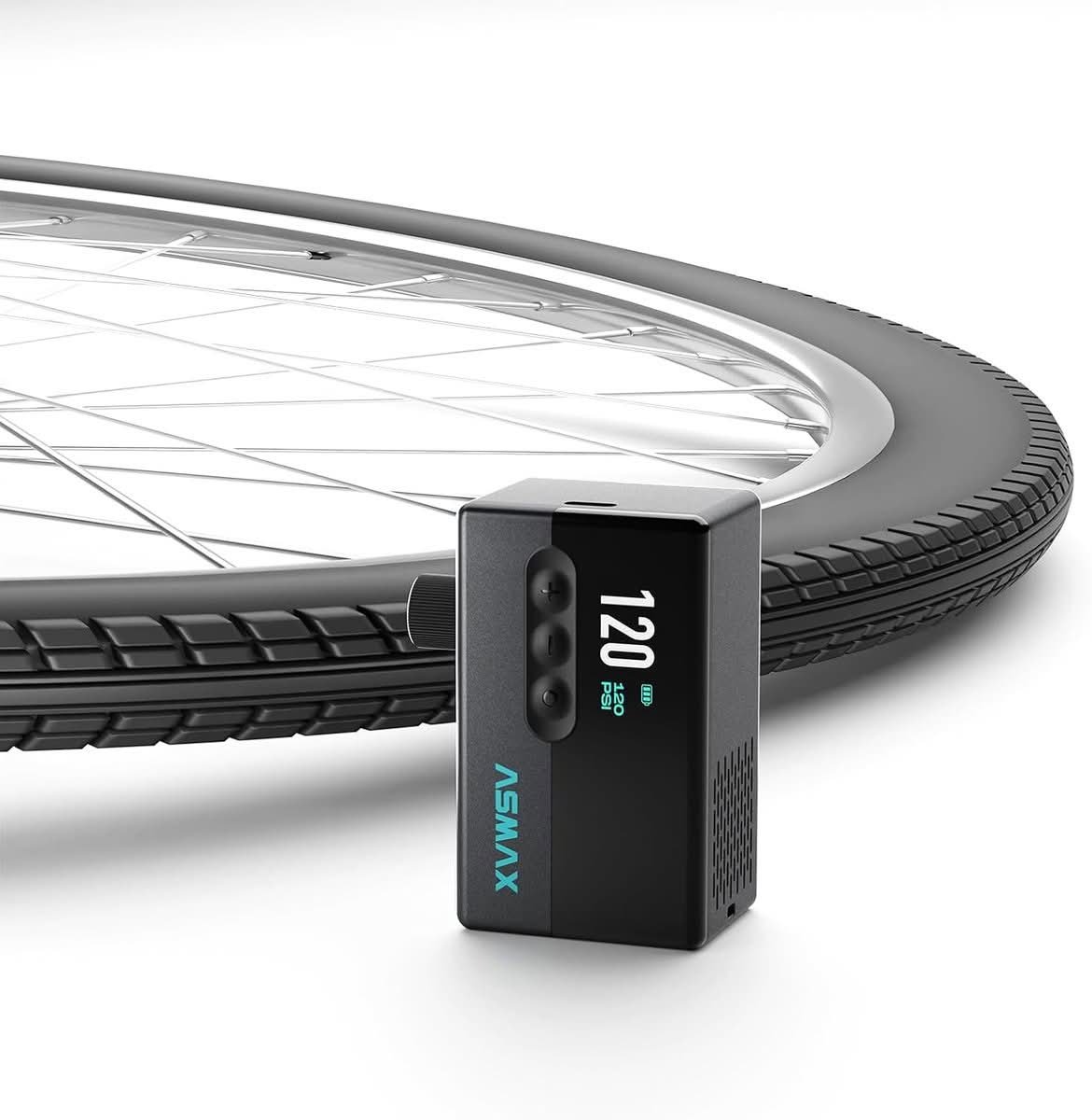
Instead of a barrel and handle, this runs entirely off its own battery: set a target PSI on the digital display, hold it against the valve, and it stops on its own once it hits the number instead of relying on you to watch a needle. That matters most for anyone who has ever overshot a tyre by eye and had to bleed a little air back out.
It suits a driveway top-up before work far more than a workshop’s daily grind, since a rechargeable battery still has a finite number of full inflations before it needs a recharge.
Pros
- Digital preset PSI with auto-stop removes the guesswork of watching a gauge by eye
- Fully portable, no barrel or handle to store
Cons
- Battery capacity limits how many full inflations you get before a recharge
- Slower per-tyre than a manual floor pump if you are doing several bikes back to back
Key specs: Digital pressure gauge, auto-stop PSI preset, rechargeable battery, 120 PSI
CHECK ON AMAZON8. BriskMore CO2 Inflator Kit – Best CO2 Inflator for Race Day
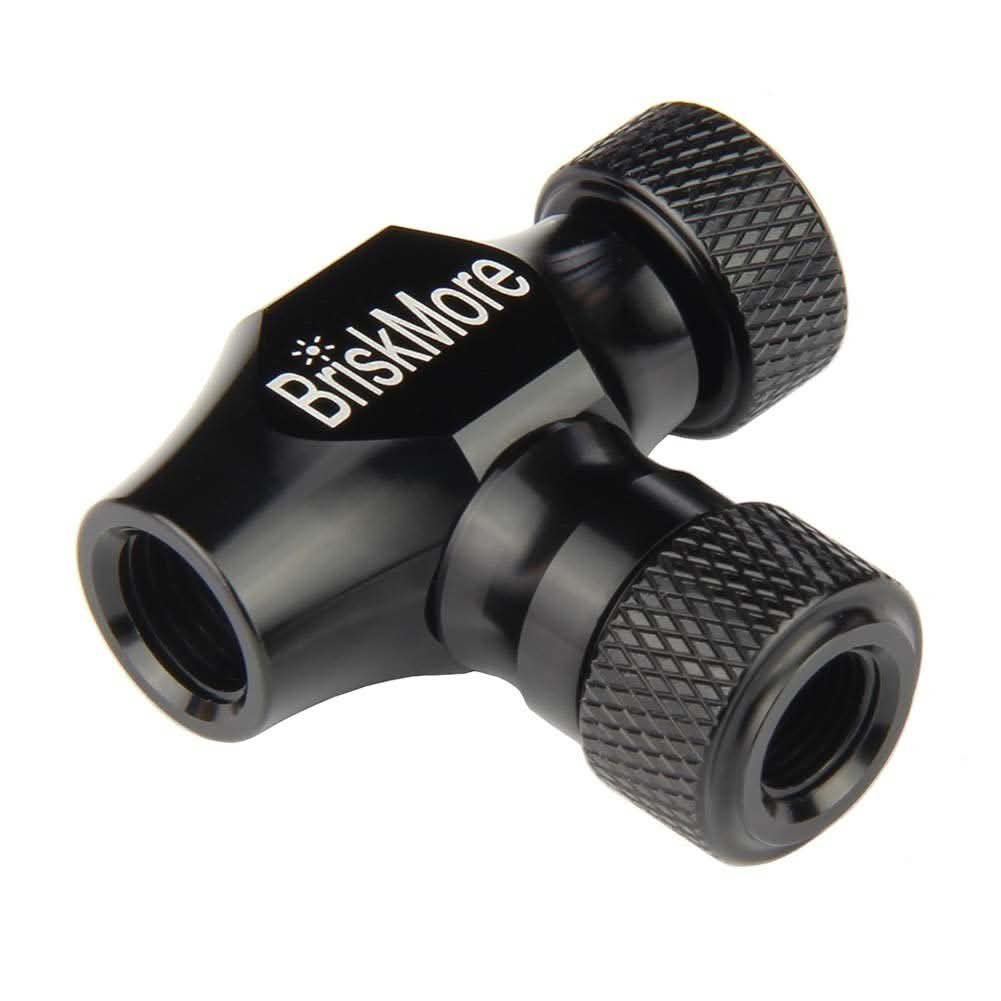
Nothing on this list fills a flat tyre faster: press the cartridge home and a road tyre is back to riding pressure in a few seconds, not the several dozen strokes a hand pump needs. An insulated foam sleeve around the cartridge stops the sudden pressure drop from turning cold enough to sting your fingers, and the angled valve head threads onto the full range of common cartridge sizes.
Bicycle Network reported a real CO2 cartridge recall in 2018 after a different brand’s cartridges were found to risk exploding under extreme heat, which matters directly here: never leave spare cartridges sitting in a hot car or garage through an Australian summer. Cartridges are single-use and sold separately, so factor a small ongoing cost into owning one of these instead of treating the kit price as the whole story.
Pros
- Fills a flat tyre in seconds, not several dozen pump strokes
- Insulated sleeve stops the cold cartridge discharge from stinging your fingers
- Threads onto the common range of cartridge sizes, not one fixed size
Cons
- Cartridges are single-use and sold separately, an ongoing cost a one-off pump does not have
- Store spare cartridges out of a hot car or garage, following the same heat warning behind a real 2018 industry recall
Key specs: CO2 cartridge inflator, Presta and Schrader compatible, insulated sleeve, cartridges sold separately
CHECK ON AMAZON9. Blackburn Mammoth 2-Stage Mini-Pump – Best High-Pressure Mini Pump
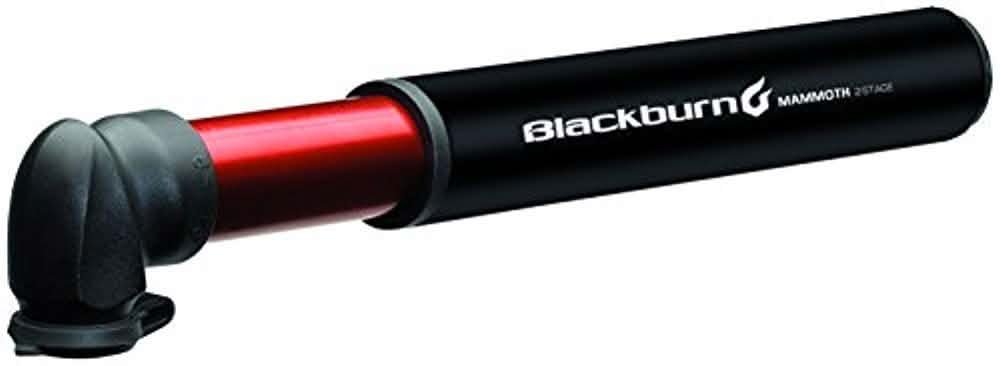
The twist-grip lock clamps onto the valve so it cannot slip mid-stroke, and a switch between high-volume and high-pressure modes lets you get a mountain bike tyre most of the way full quickly before flipping over to finish a road tyre at full pressure. A cage-style bottle mount bolts it straight to a bidon cage instead of needing its own bracket.
Buyer feedback here is more mixed than the other picks in this comparison, with some riders finding the twist-grip head fiddly to seat cleanly on a Presta valve under pressure. Worth it for the real 2-stage mechanism if you ride both a mountain bike and a road bike and only want to carry one pump for both.
Pros
- Switchable high-volume and high-pressure modes suit both mountain and road tyres from one pump
- Twist-grip lock clamps onto the valve so it cannot slip mid-stroke
- Mounts to a standard bottle cage, no extra bracket needed
Cons
- Buyer feedback on the twist-grip head is more mixed than the other picks here, some find it fiddly on a Presta valve
- Smaller reviewer base than the other Blackburn pick in this comparison, so weigh that when deciding
Key specs: 2-stage high-volume/high-pressure switch, twist-grip lock head, 120 PSI, bottle-cage mount
CHECK ON AMAZON10. Foot Pump with Pressure Gauge – Best for No-Bend Inflating
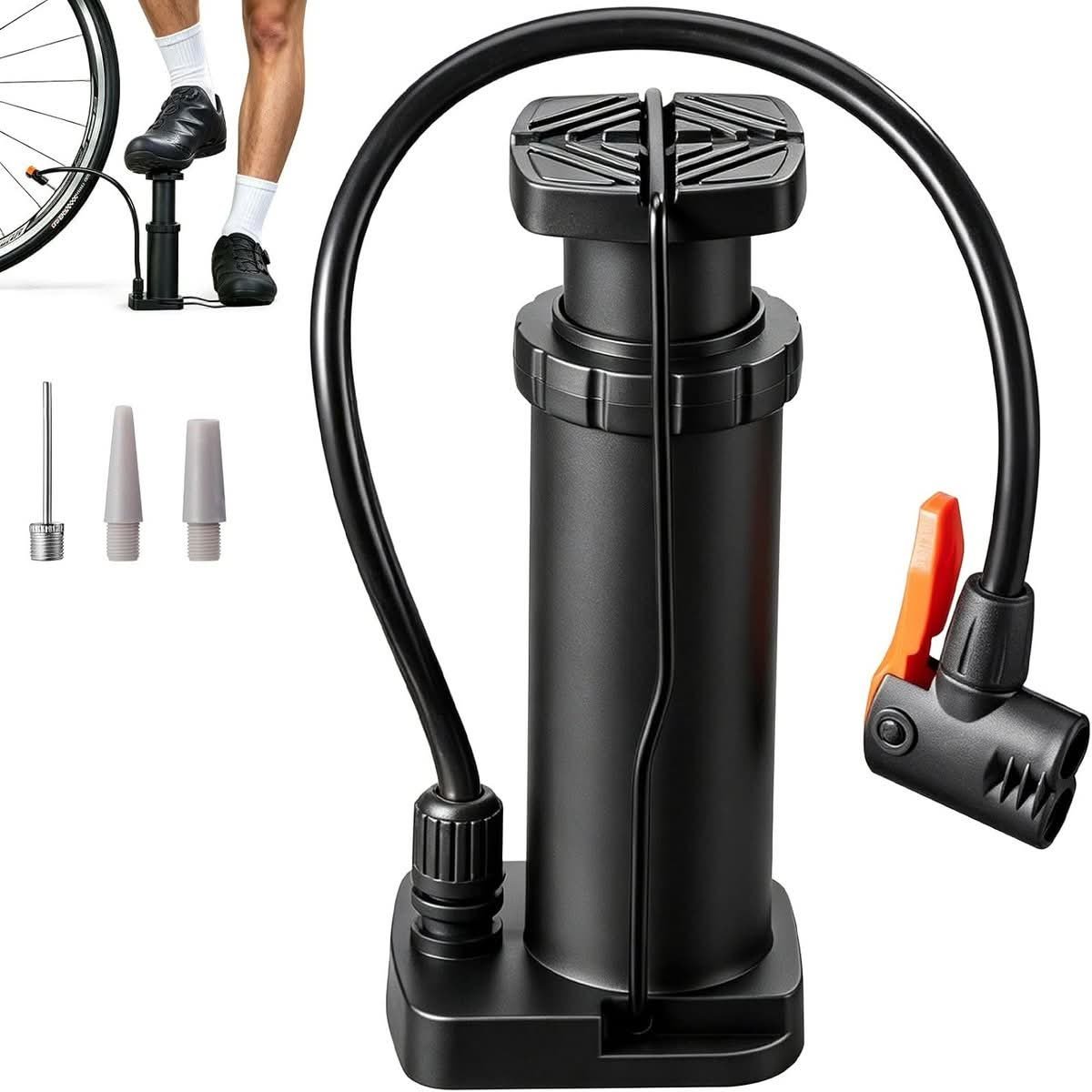
Every other pump on this list needs you bent over a valve for a minute or two, and for anyone with a bad back or knees, that alone is worth ruling a garage pump in or out over. This one works with a simple foot-pedal action instead, and doubles as a general household inflator for balls and inflatables between bike duty.
It is a properly small niche pick, so treat it as a specific answer to a specific problem, not a default recommendation. If crouching over a valve is not an issue for you, one of the hand or floor pumps above will get a tyre to full pressure faster.
Pros
- No crouching or bending required, a real accessibility advantage over every other pump here
- Doubles as a general household inflator for balls and pool toys
- Cheapest pump in this comparison after the mini pump
Cons
- Foot-pedal action is slower per stroke than a full-size hand-operated floor pump
Key specs: Foot-pedal operation, built-in pressure gauge, Presta and Schrader compatible
CHECK ON AMAZONHow to Choose a Bike Pump in Australia
Match the PSI ceiling to your actual tyre, not the pump aisle’s cheapest option. A road tyre commonly wants 80-130 PSI printed right on its sidewall, and a pump rated to only 100 or 120 PSI will leave you short every single time. Check your tyre’s sidewall figure before checking a pump’s spec sheet, not after.
Confirm the valve head covers every bike in the house. Most Australian households mix a Presta-valve road bike with a Schrader-valve hybrid, kids’ bike or mountain bike, and a Schrader-only pump simply will not seal against a Presta stem. A dual-head or smart auto-sensing pump avoids buying twice.
Decide whether you actually need a portable option, or just a garage pump. Ever been thirty kilometres from home with a flat and only a floor pump sitting in the shed? A track pump does the job faster at home, but a mini pump or CO2 kit is the difference between riding home and calling for a lift.
Weigh a CO2 inflator’s speed against its running cost. It is properly the fastest fix on the road (a few seconds versus a couple of minutes of pumping), but cartridges are single-use, sold separately, and need restocking after every flat, unlike a hand pump that never runs out.
Consider the climate you are storing gear in. Perth’s dry heat and a Brisbane wet season both do the same thing to gear left in a hot car boot: leaving spare CO2 cartridges there is not just a performance issue, it is a real safety one, following the same reasoning behind an actual cartridge recall in this category. A rubber or foam-lined seat pack keeps cartridges out of direct sun on the bike itself.
A digital or electric pump is a convenience upgrade, not a necessity. Auto-stop at a preset PSI is properly handy for anyone who has overshot a tyre by eye, but it adds a battery to charge and a limited number of inflations per charge, worth weighing against a manual pump that never needs plugging in. Riders who also own a fat tyre electric bike should check that model’s specific tyre pressure range too, since wider tyres often run noticeably lower PSI than a standard road or hybrid tyre.
You’ll Also Want
A pump only fixes a flat once it is already inflated; a proper spare inner tube in the right size means you are not stuck patching on the roadside every single time.
Anyone using a CO2 kit regularly will burn through cartridges fast, so a multi-pack of CO2 cartridges in the matching thread size is worth having on hand before the current one runs out.
A basic bike multi-tool covers the other roadside jobs a pump cannot: a loose bolt, a dropped chain, a seat that has slipped.
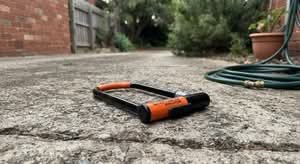
For anyone commuting, not just weekend riding, a combination cable lock is worth pairing with any pump on this list, since a fully inflated tyre does nothing if the bike itself is gone.
Frequently Asked Questions
Can I use a servo air pump to inflate my bike tyre in Australia?
Technically for a Schrader valve yes, but most Australian petrol station compressors are deliberately capped at a lower PSI than a road bike tyre actually needs, since they are calibrated for car tyres. A Presta valve often will not seal against a servo hose at all without carrying your own adaptor. A dedicated bike pump remains the more reliable option for getting a road tyre to its printed sidewall pressure.
What is the difference between a Presta and a Schrader valve?
A Presta valve is the narrower, screw-top valve common on road and higher-end bikes, while a Schrader valve is the wider valve also used on cars, most kids’ bikes and many hybrids. The two are not interchangeable without an adaptor, so check which valve your bike actually uses before buying a pump, or buy one with a genuine dual-head or auto-sensing fitting that covers both.
How often should I actually pump up my bike tyres?
Tyres lose air gradually even with no puncture, and a road tyre at 100+ PSI can drop noticeably within a week. Check pressure before any ride longer than a quick trip to the shops, and top up at least weekly if you ride regularly. A soft-feeling tyre by eye is usually already well under its ideal pressure, since a tyre can look only slightly soft while running 20-30 PSI low.
Is a CO2 inflator worth carrying instead of a hand pump?
For a race or a long ride away from home, yes: a CO2 cartridge fills a tyre in seconds against a couple of minutes of hand pumping. The trade-off is an ongoing cost, since cartridges are single-use and sold separately, and a hand pump never runs out mid-ride the way a spent cartridge does. Many riders carry both, a hand pump as the reliable backup once the cartridges are gone.
Why does my bike pump gauge read differently to the bike shop’s pump?
Cheaper analogue gauges can drift several PSI out of true over time, and a gauge mounted low near the pump base is also harder to read accurately than one raised closer to eye level. If a persistent, large gap shows up against a shop’s pump or a separate digital tyre gauge, treat the shop’s reading as the more trustworthy one and consider replacing an inaccurate pump gauge instead of trusting it blindly.
Can an electric bike pump damage my tyre if I set the wrong PSI?
Yes, an auto-stop electric pump only protects you from over-inflation if you actually set the correct target PSI first, reading it from your tyre’s own sidewall, not guessing. Setting a mountain bike tyre’s low-pressure target on a road tyre, or vice versa, will not trigger any warning, since the pump has no way of knowing which tyre it is filling. Always check the sidewall figure before setting the target number.
A commuter mixing a Presta road bike with a Schrader kids’ bike wants different things from a pump than a racer chasing the fastest roadside fix, so this list runs ten deep instead of crowning one overall winner. Anyone wanting a real dual-purpose garage-and-emergency solution should start with the Giantz cordless inflator at the top of this list. Riders wanting the most reliable everyday garage pump get more from the Topeak Joe Blow Sport III’s gauge and build quality, and anyone racing or riding long solo routes away from home should carry the BriskMore CO2 kit alongside whichever floor pump lives in the shed.