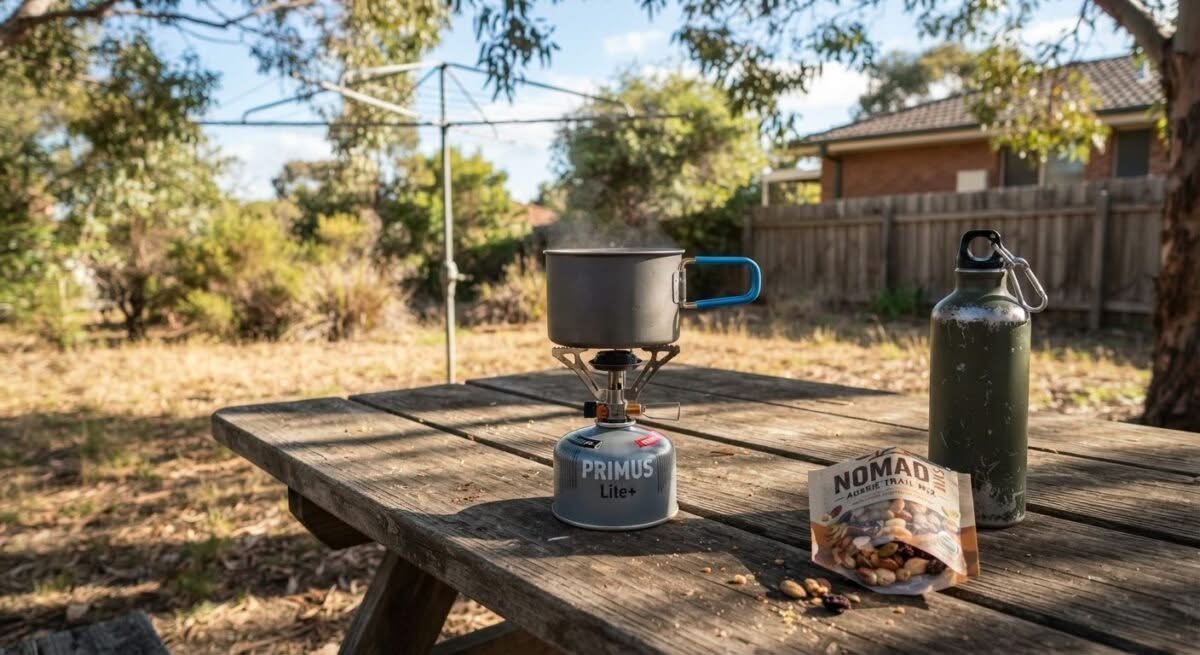
Most Australian states shut down open campfires within hours of declaring a Total Fire Ban, yet a gas cooking appliance with a proper shut-off valve, used on a cleared, non-combustible surface, is still allowed in nearly every one of them. That single exemption is a big part of why anyone who camps more than a couple of weekends a year eventually buys one. A camping stove is a self-contained, portable cooking appliance, fuelled by butane, propane, metho or in a few cases burning wood, built to boil water and cook a real meal away from mains power or an open flame. The best camping stove Australia campers can actually rely on has to survive a stiff breeze, cook fast enough for a hungry campsite, and pack down small enough to earn its place in an already-full boot.
Australian retailers split camping stoves into a handful of genuinely different types, not just different price points. Twin-burner gas stoves run off a bulk 9kg LPG bottle or a smaller disposable cylinder and suit a car-camping setup where two pots need to go at once. Single high-output burners trade the second ring for raw heat, the kind a wok or a big stockpot of crays actually needs. Backpacking canister stoves screw straight onto a small butane or isobutane canister and are built to save grams, not cook a roast. Alcohol-fuelled spirit stoves burn metho instead of gas and have almost no moving parts to fail. Wood-burning tent stoves burn found timber and double as a heater on a proper cold-weather trip.
Burner output is the number that actually separates these nine stoves: an alcohol-fuelled burner puts out roughly 1,000 watts, while a full twin-burner-and-oven combo further up the price scale claims a combined 10,600 BTU across its cooktop alone, a distinctly different class of heat. The spec most buyers skip past is fuel compatibility: a stove built for a screw-on butane canister cannot run off a bulk LPG bottle, and vice versa, so check what fuel a stove actually takes before it turns up with no way to light it.
This lineup runs from a pocket-sized backpacking burner light enough to balance on two fingers through to a full oven-and-cooktop combo built for a caravan annexe, covering gas, butane and wood-fuelled options at every price point, budget to premium.
Quick Picks
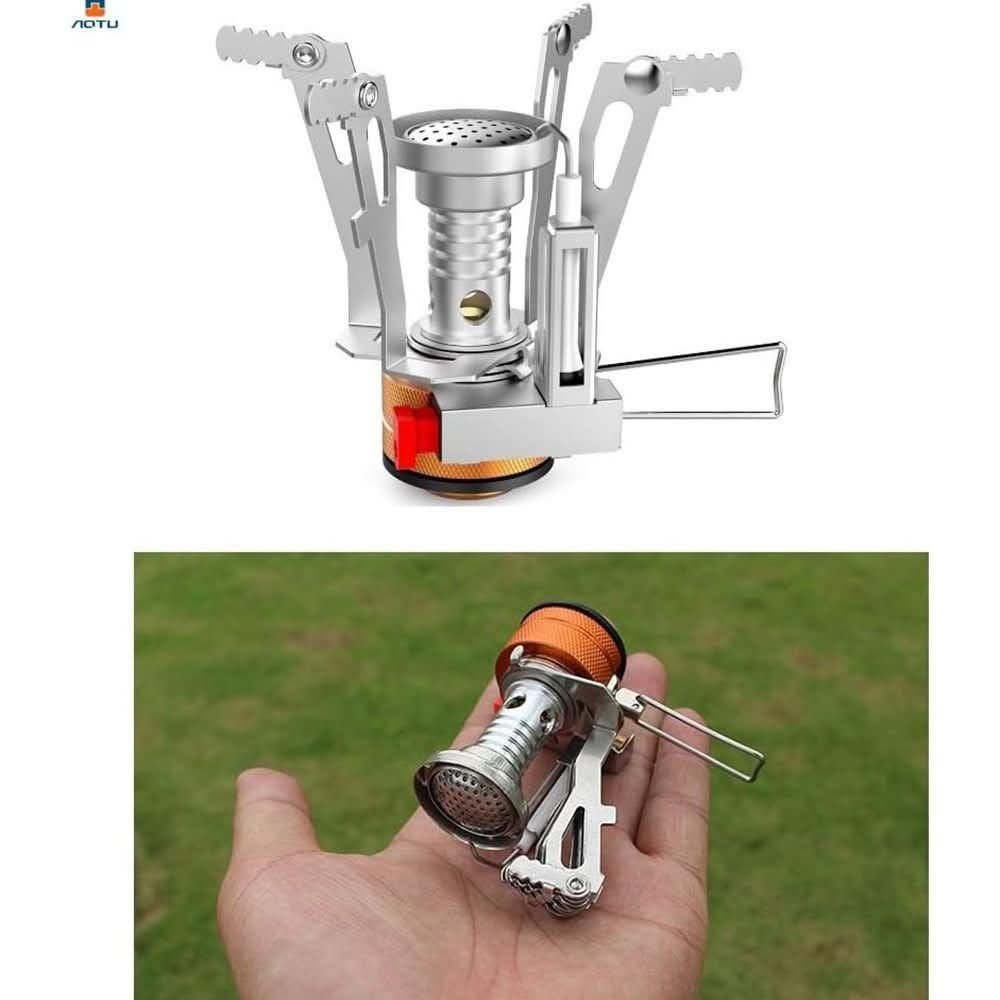
Folding Piezo-Ignition Backpacking Stove
Folds to pocket size and screws straight onto a butane canister, the lightest stove in this whole lineup.
CHECK CURRENT PRICE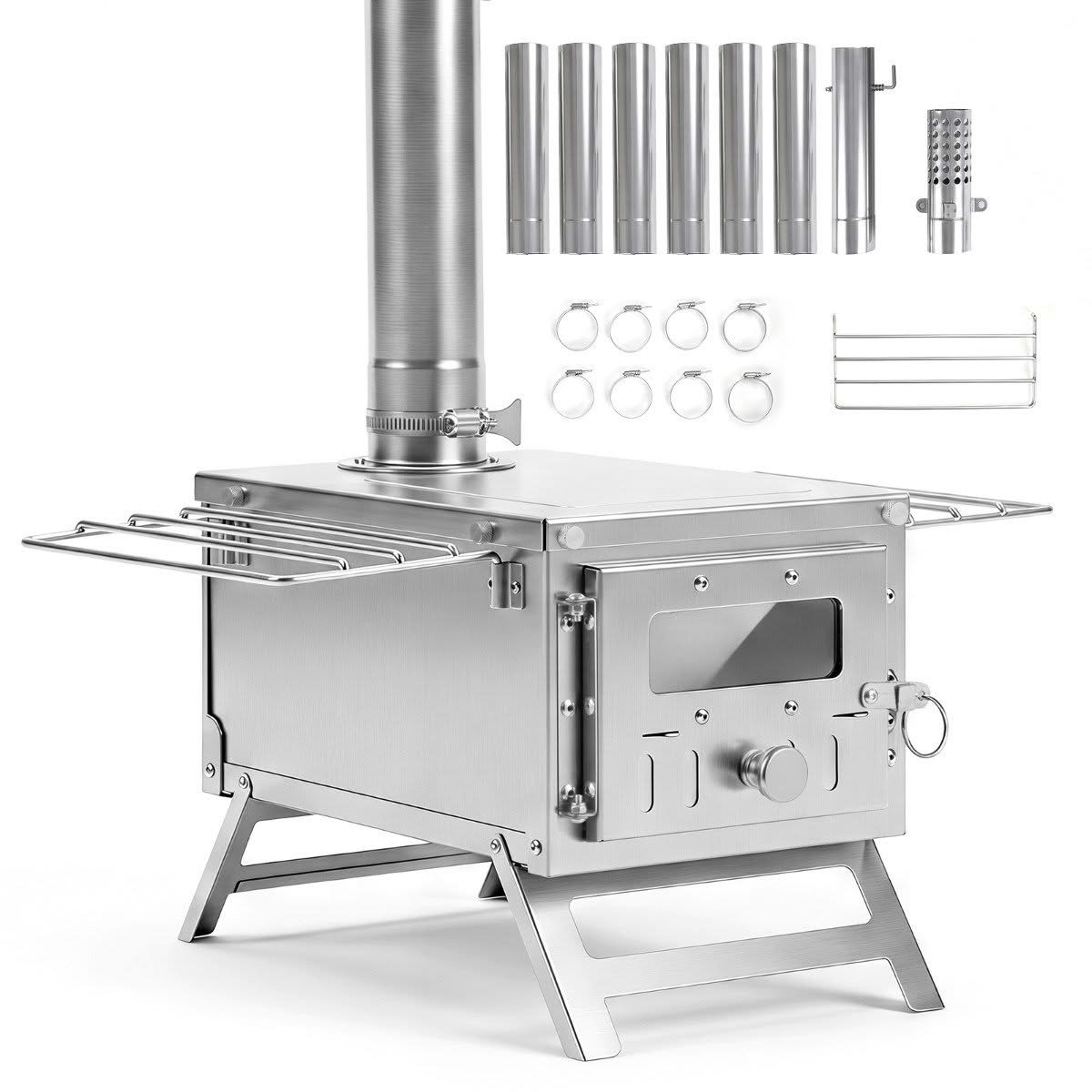
Wood-Burning Tent Stove with Spark Arrestor
Burns found firewood instead of gas and doubles as a tent heater on a properly cold night.
CHECK CURRENT PRICEBest Camping Stove Australia Compared
| Product | Link | Type | Best For | Key Spec |
|---|---|---|---|---|
| Folding Piezo-Ignition Backpacking Stove | Check price | Backpacking canister stove | Ultralight hiking | Piezo ignition, folds to fit in one hand |
| Wood-Burning Tent Stove with Spark Arrestor | Check price | Wood-burning tent stove | Winter and snow camping | 17.7L firebox, 13kg, heats approx 22-28 sq m |
| Coleman Cascade 222 Two-Burner Stove | Check price | Twin-burner gas stove | Car camping all-rounder | 2 burners, cast iron, 3-year warranty |
| Companion Ranger 2 Burner Stove | Check price | Twin-burner gas stove | Budget bulk-bottle setup | 2 burners, bulk LPG hose fitting, 1-year warranty |
| Naturehike Folding Two-Burner Propane Stove | Check price | Twin-burner gas stove | Certified safety and compact fold | IAPMO Gasmark certified, compact fold |
| Companion Mega Jet Cast Iron Cooker | Check price | Single high-output burner | Big groups, wok and seafood cooking | Cast iron high-output single burner |
| Campfire 2 Burner Gas Cooker Plate | Check price | Twin-burner gas stove | Occasional campers on a tight budget | Reversible grill/flat plate, 3.9kg |
| Trangia Spirit Burner | Check price | Alcohol-fuelled spirit stove | Simplicity and reliability | Brass burner, no moving parts, approx 1000W |
| Companion Two-Burner Gas Oven and Cooktop | Check price | Oven and cooktop combo | Caravan and glamping stays | 20L oven plus 2-burner cooktop, 10,600 BTU combined |
How We Picked
We started with Australia’s biggest camping and outdoor equipment catalogues, cross-checked against the open marketplace, and searched specifically for cooking appliances built for a campsite rather than a benchtop. The camping-stove search term throws up plenty of noise: indoor induction cooktops, benchtop gas hobs and full outdoor kitchen units that never leave a powered caravan-park site, and every one of those got filtered out. Only two of the specialist retailers we checked stocked a genuine, in-stock, camping-specific stove; the rest of this lineup came from open-marketplace listings with confirmed Australian stock and a realistic delivery window, not an overseas warehouse.
Every product’s real-world reputation was checked against verified-buyer review data and aggregate brand ratings before it made the list, favouring stoves with an established track record over a plausible-looking new listing with zero reviews. Where a listing had no review history of its own, we cross-checked the same manufacturer’s other products and matched the build quality actual photo evidence shows.
1. Folding Piezo-Ignition Backpacking Stove – Best Ultralight Backpacking Stove
This is the stove that disappears into a jacket pocket. Three folding legs and a burner head no bigger than an egg cup (about the size of a golf ball, folded) pack down flat, and the whole thing is light enough to balance on two fingers, the kind of spec a hiker actually cares about over a twin burner’s cooking area. A built-in piezo igniter means no lighter, no matches, just a click and a flame. Simple, and it shows. Assuming the wind isn’t doing its best to blow it out, that is.
There’s no windshield built in, so an exposed ridge line or a beach camp will fight this stove hard; pair it with a cheap foil screen and it settles down fast. It only runs off a small screw-on butane or isobutane canister, never a bulk 9kg bottle, so it suits a weekend hike far more than a week-long car-camping trip where you’d be burning through canisters daily.
Pros
- Light enough to disappear into a pocket or the top of a pack.
- Piezo ignition lights it in one click, no lighter needed.
Cons
- No windshield included, so it struggles in any real wind without a cheap foil screen bought separately.
- Runs on small canisters only, so a week-long trip means packing several, not one bulk bottle.
Key specs: Fuel: screw-on butane/isobutane canister (sold separately). Ignition: piezo. Burner: single folding head. Pack size: fits in one hand.
CHECK CURRENT PRICE2. Wood-Burning Tent Stove with Spark Arrestor – Best for Winter and Snow Camping
Every other stove on this list runs on bottled fuel; this one burns whatever dry timber you can gather instead, deliberately the odd one out in this whole lineup. That means never running short of fuel on a week-long trip and never needing to pack a canister at all. The steel firebox holds 17.7 litres of wood, enough for a solid few hours before it needs feeding again, and a flue runs the smoke straight up and out through the tent roof instead of into your eyes.
A spark arrestor cap sits on top of the 6cm chimney, catching embers before they can drift onto dry grass or a tent wall, worth checking on any wood stove sold without one. At 13kg it’s not a backpacking stove; this is one you drive to the campsite with, set up once, and leave running for the whole trip.
Compared to the mini butane stove above, boiling a billy takes longer and needs more attention, but it’s the only stove here that also heats the tent through a proper cold night, the kind of trip where an alpine or Tassie camper wakes up to ice on the fly. It sits in the mid-range for this category in Australia, well under half the price of the caravan-ready combo near the bottom of this list.
Pros
- Never runs out of fuel as long as there’s timber around.
- Doubles as a real heater on a properly cold-weather trip.
Cons
- At 13kg plus assembly, this is a two-person carry, not something you sling in alongside the tent poles.
- Needs dry firewood to run well, so it’s a poor pick if you’re camping somewhere collecting wood on-site isn’t allowed.
Key specs: Firebox capacity: 17.7L. Net weight: 13kg. Chimney diameter: 6cm with spark arrestor. Heating coverage: approx 22-28 sq m.
CHECK CURRENT PRICE3. Coleman Cascade 222 Two-Burner Stove – Best All-Round Twin Burner
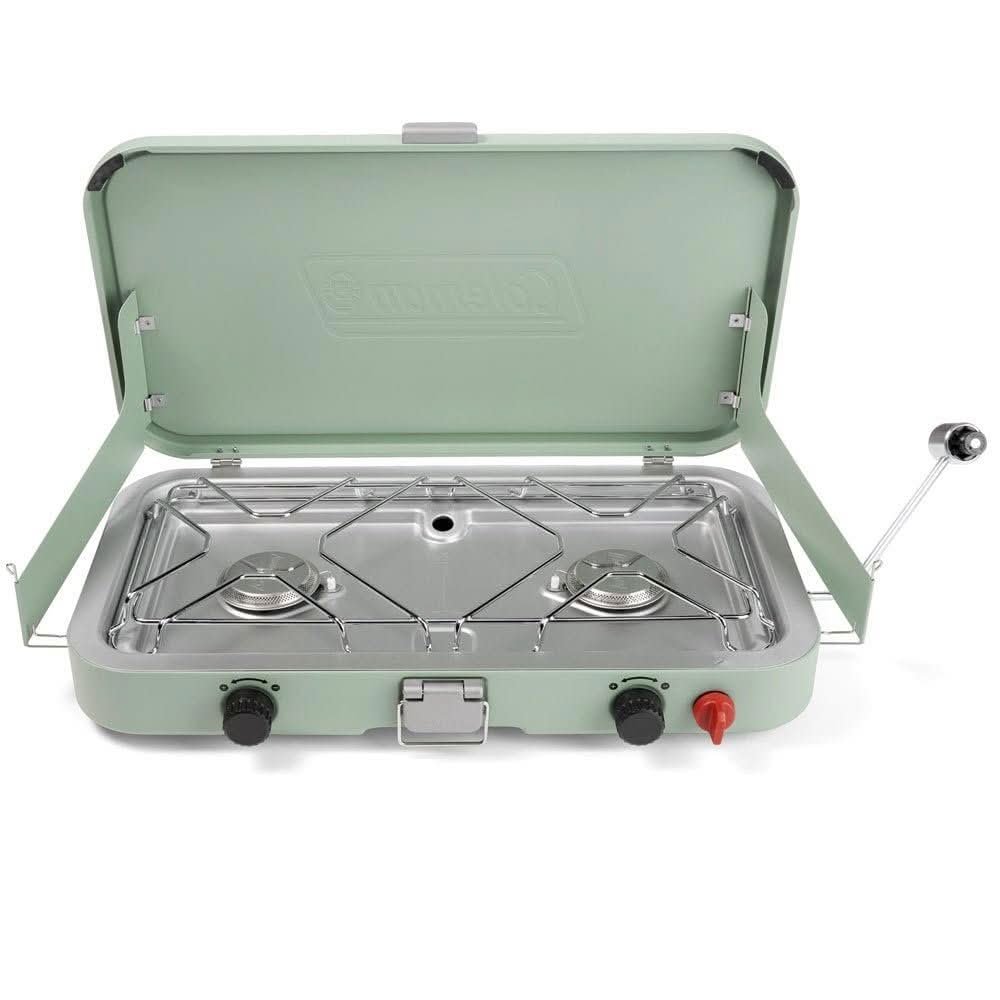
Coleman’s name alone sells a chunk of the twin-burner stoves in this country, and the Cascade 222 is the current version of the classic two-pot camp stove most people picture when they hear the words camping stove. Two independently controlled burners sit under a pair of fold-up wind guards, cast iron grates hold a pan steady, and the whole thing packs down into a briefcase-shaped box with a carry handle.
It carries the number-one bestseller badge in its marketplace category, backed by a three-year warranty most stoves at this price don’t offer. Next to the Companion twin burner below, it leans on cast-iron burner heads for a steadier flame in a crosswind, at a similar price point.
Propane cylinders cost more per meal than a bulk LPG bottle over a season of camping, so if you’re out most weekends, factor that running cost in instead of comparing the sticker price alone. It’s also a two-hand carry at 37 x 17 x 63cm folded, not a stove you’d take hiking.
Pros
- Three-year warranty is the longest of any stove in this comparison.
- Cast iron burner heads hold a flame steady even with wind hitting the guards.
Cons
- Uses small propane cylinders by default, which cost more per cook than a bulk gas bottle over a season.
- Folded size is closer to a briefcase than a lunchbox, so it wants boot space, not backpack space.
Key specs: Burners: 2, independently controlled. Fuel: propane. Warranty: 3 years. Folded size: 37 x 17 x 63cm.
CHECK ON AMAZON4. Companion Ranger 2 Burner Stove – Best Budget Twin Burner
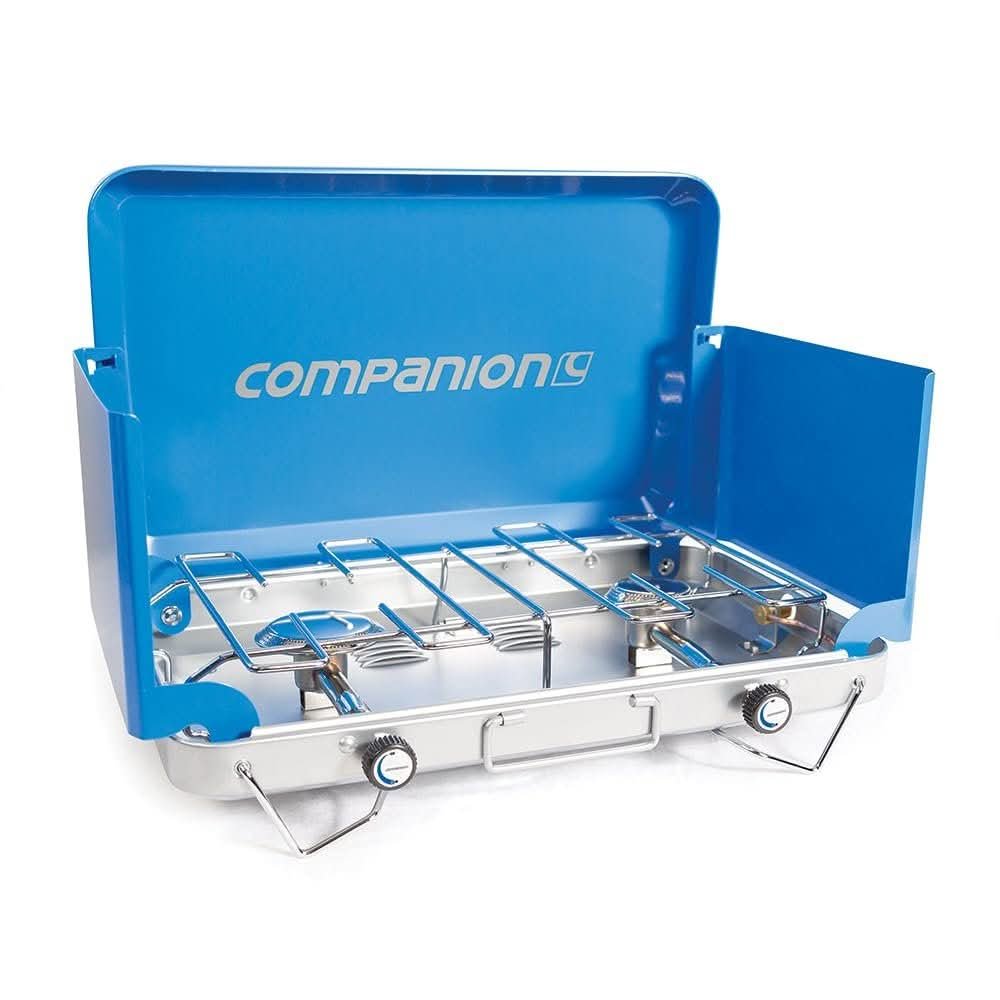
Companion is a brand most Australian campers already own something from, and the Ranger is its standard two-burner workhorse. Each burner adjusts independently, chrome-plated trivets hold pots without scratching, and built-in wind shields cut down on flame-out on a gusty afternoon.
Unlike the Coleman above, this one comes with a 1000mm hose built for a 3/8 inch LH BSP fitting, meaning it connects straight to a standard bulk LPG bottle instead of disposable cylinders, a real saving if you’re already running gas to a caravan or camp fridge. That’s the detail worth checking before assuming any twin burner takes the same gas connection.
At 3.6 stars from a small review pool on this specific listing, it’s not the most reviewed stove here, but the fittings and build match what Companion’s caravan-focused gas gear generally delivers. ProductReview.com.au’s aggregate brand page shows a mixed but broadly positive spread across the brand’s wider camping range, and a 1-year warranty backs this particular stove. It’s also the most affordable twin burner here that still runs off a bulk bottle instead of disposable cylinders.
Pros
- Independent burner controls actually hold a low simmer, not just high or off.
- Built-in wind shields cut down on flame-out without needing a separate screen.
Cons
- Comes with a fixed 3/8 inch LH BSP hose fitting, so it won’t suit a disposable-cylinder setup without an adapter.
- Review count is thin next to the more established picks in this comparison, so buyer feedback is still limited.
Key specs: Burners: 2, independent control. Fuel connection: 3/8 inch LH BSP hose (bulk LPG bottle). Warranty: 1 year. Folded size: 46.4 x 28.9 x 8.2cm.
CHECK ON AMAZON5. Naturehike Folding Two-Burner Propane Stove – Best Certified Safety Twin Burner
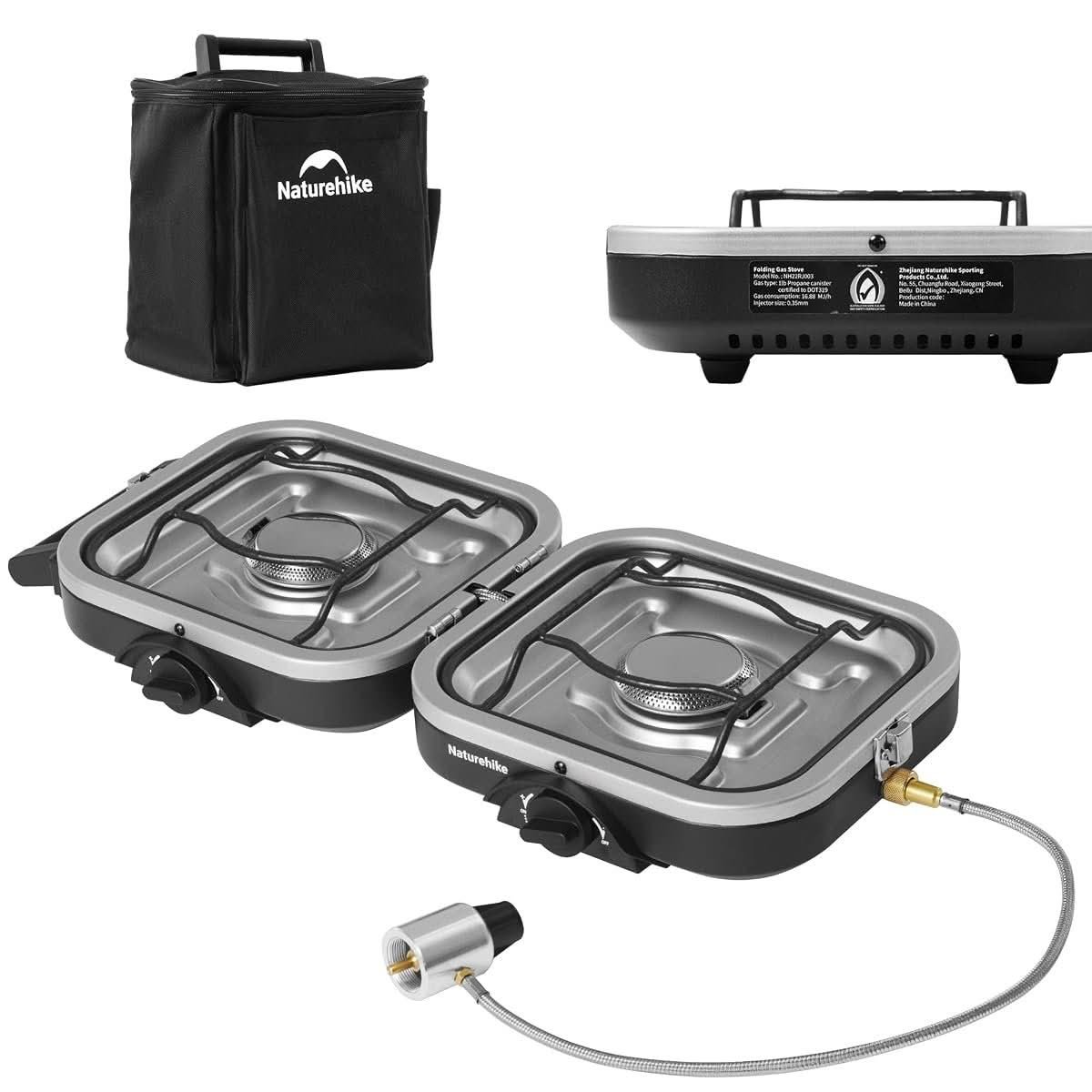
Naturehike built a following well outside Australia doing hiking gear, and this twin burner carries an IAPMO Gasmark certification, an actual Australian and New Zealand gas-safety compliance mark, not just a manufacturer’s own claim. That’s worth checking on any gas appliance before it goes anywhere near a tent.
It folds down more compactly than the Coleman or Companion units above, closer to a laptop bag than a briefcase, so it suits someone counting litres in the boot as much as counting cost. Steady stock and fast dispatch back it up, unlike some newer generic listings on the same marketplace that can vanish overnight.
It’s a mid-pack performer on raw output next to the Companion Mega Jet single burner below, so if you regularly cook for six or wok-fry, that high-output single burner still wins on raw heat over this one’s two smaller rings.
Pros
- IAPMO Gasmark certified, an actual third-party gas-safety tick, not just marketing copy.
- Folds smaller than most twin burners in this comparison.
Cons
- Only 14 reviews on this listing so far, thin next to Coleman’s track record.
- Iron construction adds a bit of weight over an aluminium twin burner, noticeable if you’re packing light.
Key specs: Burners: 2. Fuel: propane. Certification: IAPMO Gasmark (AU/NZ gas safety). Folded size: 27 x 21.5 x 13cm.
CHECK ON AMAZON6. Companion Mega Jet Cast Iron Cooker – Best High-Output Single Burner
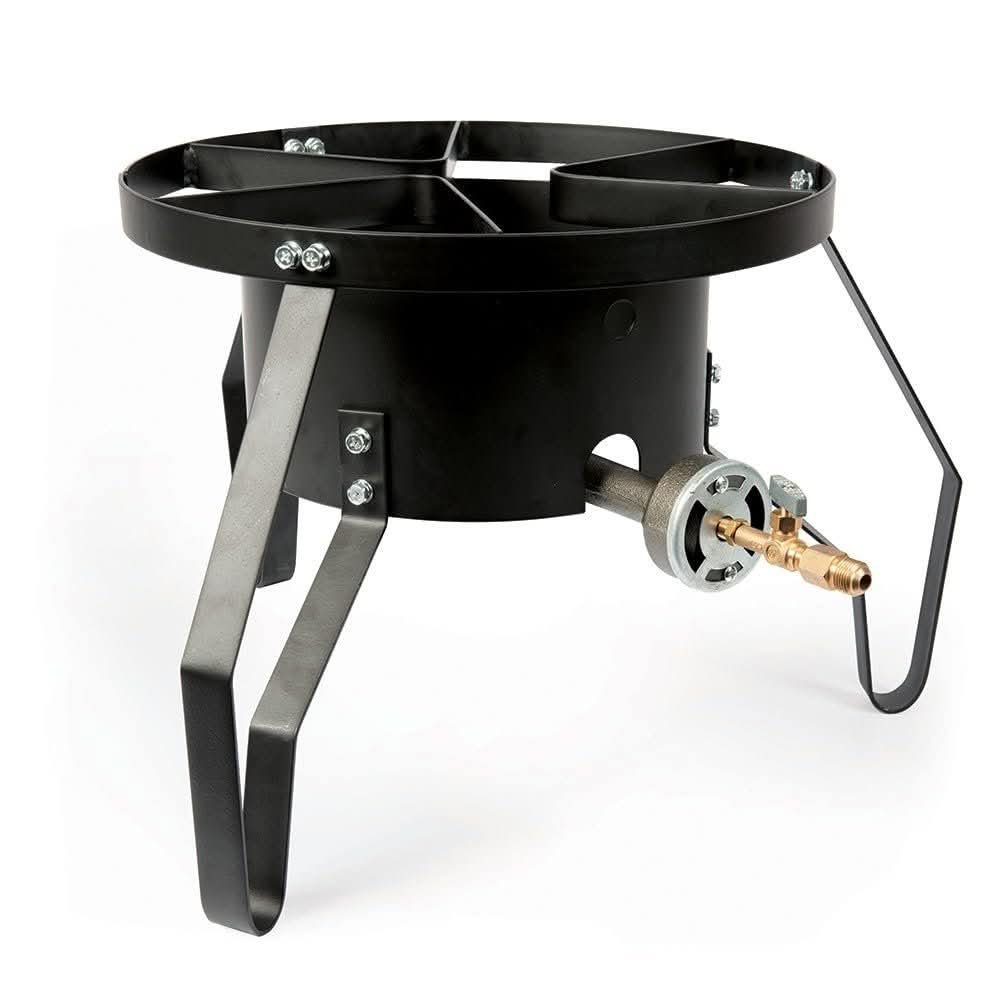
Anyone who’s tried to fry a whole flathead or boil a stockpot of mud crabs on a standard twin burner knows the problem: not enough heat, not fast enough. The Mega Jet exists to fix exactly that, a single cast-iron burner built for serious output, sitting inside a steel frame stand at proper wok-cooking height.
It sits at 5.0 stars from a small pool of reviewers, and Companion backs it with the same 1-year warranty as its twin burners. It’s not built for boiling a single billy quietly at a family campsite; it’s built for a big group, a big pot, and a proper feed.
Pros
- High-output single burner cooks a wok or big stockpot properly, not just warms it.
- Steel frame stand puts the burner at a properly usable height for a big pot, no crouching required.
Cons
- Only 2 left in stock at the time of checking, so availability is tighter than the twin-burner options.
- Overkill for anyone just boiling water or cooking for one or two, the output is wasted at that scale.
Key specs: Burner: 1, high output. Material: cast iron burner, steel frame. Fuel: LPG/propane. Warranty: 1 year.
CHECK ON AMAZON7. Campfire 2 Burner Gas Cooker Plate – Best Ultra-Budget Twin Burner
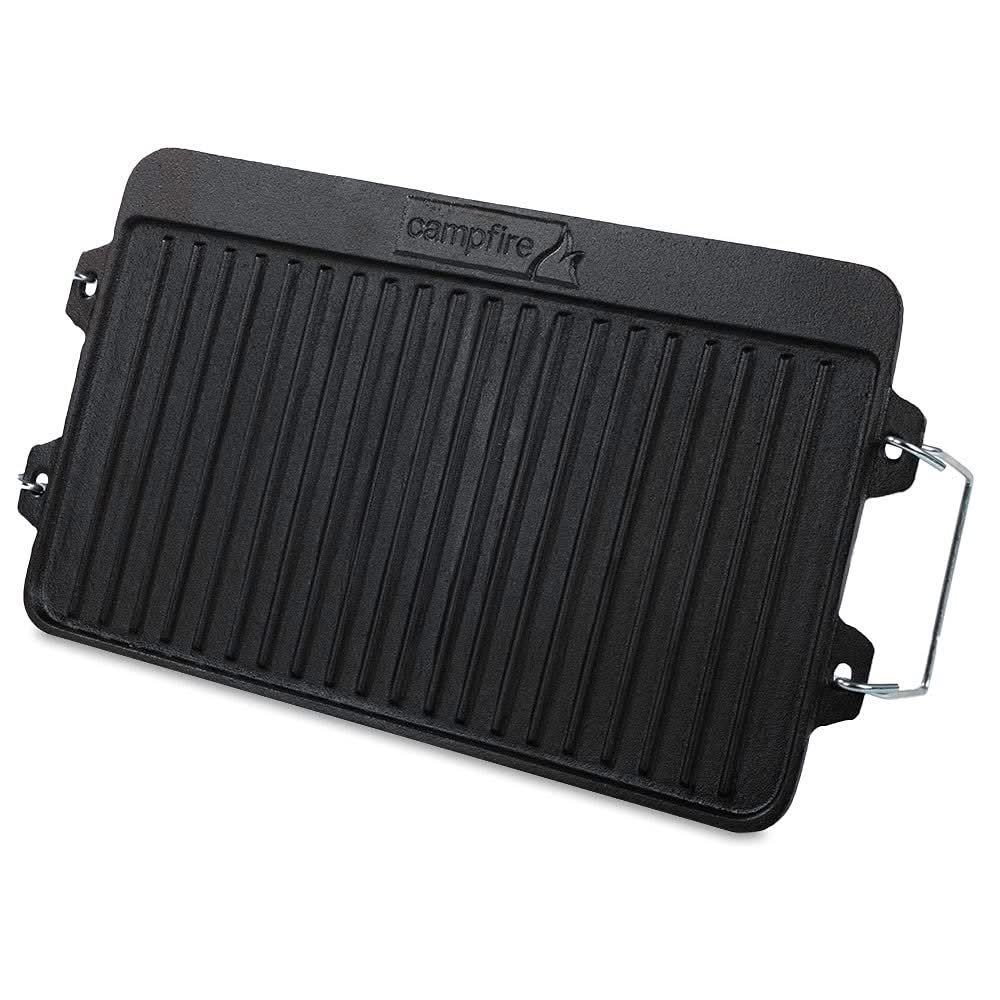
This is the budget option, and it looks it: a basic reversible grill-and-flat-plate combo instead of a stove with a proper pot-holding trivet. What it does have is two burners for less than most single burners in this comparison cost alone, which makes it a fair pick for an occasional camper who doesn’t want to spend big on gear used twice a year.
Campfire is a house brand carried by the big camping chains, so it’s built to a budget instead of a specification. Reversible grill and flat plate means bacon and eggs on one side, a pot on the other, without buying a separate hot plate.
Pros
- Two burners for less than most single-burner stoves in this comparison cost on their own.
- Reversible grill and flat plate covers breakfast and dinner without extra gear.
Cons
- Plate-style cooking surface means no dedicated pot trivet, so a tall pot wobbles more than on a proper burner stove.
- No published review data yet on this specific listing, so go in expecting basic build quality at this price.
Key specs: Burners: 2. Surface: reversible grill/flat plate. Weight: 3.9kg. Warranty: 1 year.
CHECK ON AMAZON8. Trangia Spirit Burner – Best Alcohol-Fuelled Stove
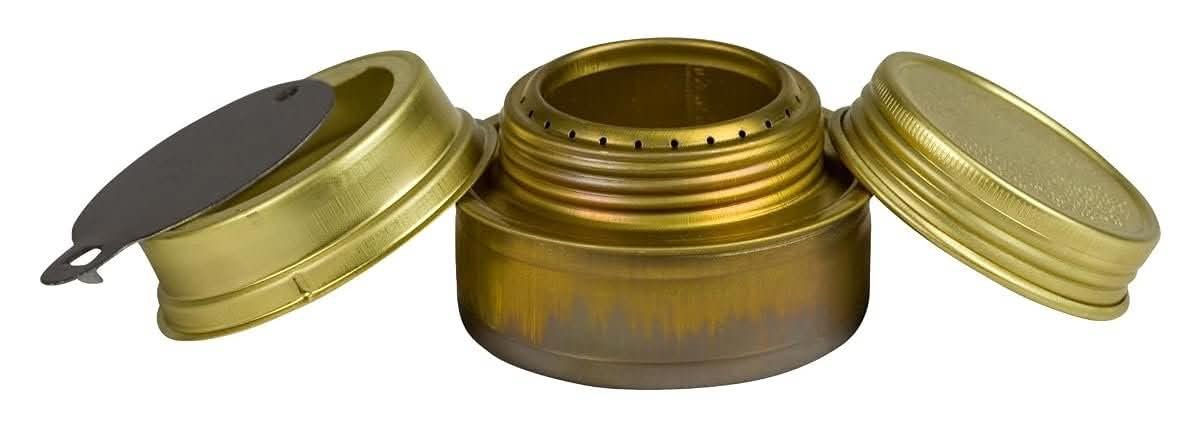
No pump, no piezo igniter, no moving parts at all to break, just a brass cup that burns metho. That simplicity is the entire appeal, and it shows in the review count: 4,842 ratings at 4.8 stars, the deepest track record of any product in this comparison.
It fits any Trangia stormcooker frame and the standalone open spirit stove, and metho is sold at every servo and hardware store in the country, so resupply is never the problem a butane canister can be in a small country town. The trade-off is speed: it takes noticeably longer to boil a litre than any gas burner here. Well, slower than that if there’s any wind at all, and there’s no simmer control beyond a sliding damper.
Pros
- Zero moving parts means almost nothing to break or wear out over years of use.
- Metho is sold at any servo, so you’re never stuck without fuel in a small town.
Cons
- Boils water slower than every gas stove in this comparison, frustrating if you’re hungry and impatient.
- No off switch as such, just a damper that smothers the flame, which takes a moment to get used to.
Key specs: Fuel: methylated spirits. Material: brass. Output: approx 1000W. Weight: 0.24 lbs (109g).
CHECK ON AMAZON9. Companion Two-Burner Gas Oven and Cooktop – Best for Caravan and Glamping
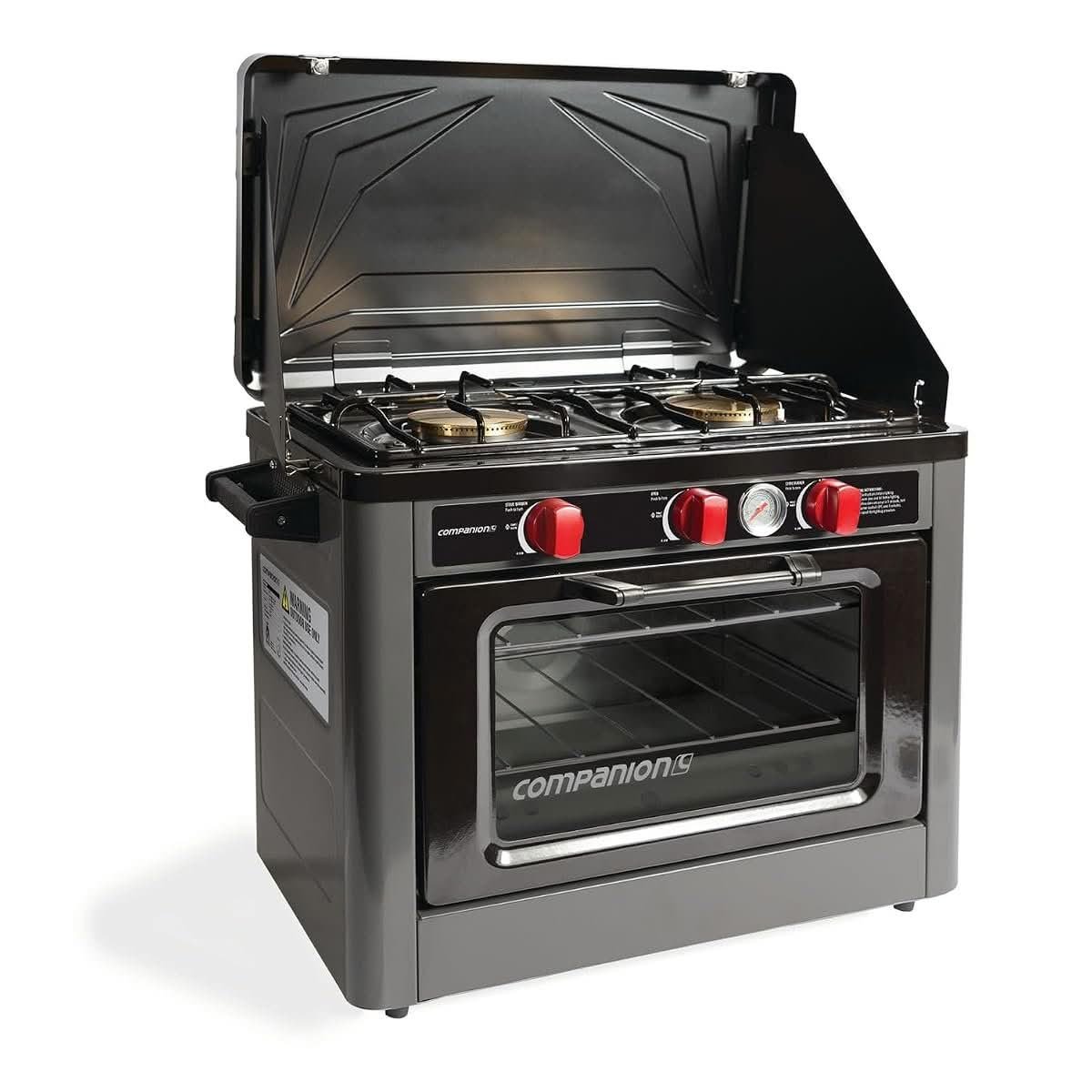
Calling this a stove undersells it. It’s a full 20-litre oven with a two-burner cooktop bolted on top, built for a caravan annexe or a week-long stay instead of a weekend at the beach. At 17kg and well over ten times the price of the Campfire plate above, it’s a real step up in ambition, not just spec.
Combined stovetop output runs to 10,600 BTU across both burners, with the oven adding its own 3,600 BTU, enough for scones or a roast chook while dinner cooks on top at the same time. Propane/ULPG only, and gas consumption on the stove side alone runs over 100 grams an hour at full output, so budget for gas use if you’re running it daily.
Next to every other product in this comparison, this is the one built for staying put, not moving on, the kind of unit that lives bolted into a camp trailer or set up for a whole week instead of packed away each morning. A weekend car camper has little use for the extra weight and oven capacity the single-burner Mega Jet above doesn’t carry; a caravan or camp trailer owner doing extended stays gets real value from it.
Pros
- Combined oven and cooktop means a full roast dinner is actually possible at a campsite.
- 1-year warranty matches Companion’s other stoves in this range.
Cons
- At 17kg, this isn’t something you set up and pack away daily, it wants a semi-permanent spot.
- Propane/ULPG only, so it won’t run off the small butane canisters some of the lighter stoves here use.
Key specs: Oven capacity: 20L. Stove output: 10,600 BTU combined. Oven output: 3,600 BTU. Weight: 17kg. Fuel: propane/ULPG.
CHECK ON AMAZONHow to Choose a Camping Stove in Australia
Fuel type decides how you cook, not just where you can buy fuel. Butane and propane both burn clean and light instantly, but propane keeps performing well below freezing while butane struggles to vaporise properly once the temperature drops toward zero. Metho burns steady but slow, with no simmer control beyond a sliding damper. Wood costs nothing to buy as fuel at all, provided you’re camping somewhere collecting timber is actually allowed.
Burner output matters more than burner count. Two weak burners boil water slower than one properly powerful one. If you’re cooking for a crowd, frying in a wok, or boiling a big stockpot, a single high-output burner like the Mega Jet further down this list earns its keep over a standard twin burner running at half the heat per ring.
Check what a stove actually connects to before you buy it. A stove built with a BSP hose fitting wants a bulk LPG bottle; a stove built for disposable cartridges won’t take one without an adapter, and sometimes not even then. Wrong fitting, no dinner. This one detail causes more first-trip disappointment than any spec on the box.
Never run a gas or butane stove inside a tent or a fully zipped annexe. Ever noticed how stuffy a tent gets on a still night with the flaps down? That’s poor ventilation doing exactly what it shouldn’t. Burning gas in an enclosed space risks carbon monoxide poisoning, an odourless, colourless gas that can be fatal, according to Victoria’s own energy safety regulator. Cook outside, or at minimum under an open-sided awning.
Weight and pack size only matter as much as how you’re actually travelling. A hiker counts grams; a caravan owner has a whole annexe kitchen to fill. Buying the wrong end of that spectrum is the single most common camping-stove regret. If the rest of your kit needs sorting for the same trip, our guide to the best camping mattress in Australia covers the sleep side of the same setup.
A Total Fire Ban doesn’t automatically mean no cooking at all. Most states still allow a gas or butane appliance with a proper off switch, used on a cleared surface and never left unattended, right through a standard fire ban. A Catastrophic or Code Red rating is a different story and can shut down all open-flame cooking outright, so check your state fire authority before every trip, not just the ones during summer.
You’ll Also Want
A spare butane gas cartridge is worth throwing in the car regardless of which stove you buy, running out mid-cook on a Sunday when the servo’s shut is a rite of passage for new campers. The Companion Pro 230g butane cartridge is a straightforward, well-reviewed option that fits most cartridge-style burners.
If your stove takes a screw-on isobutane canister instead of a disposable cartridge, a gas refill adapter lets you top up a spent canister from a larger tank instead of binning it half-full, a handy bit of kit worth packing for a longer trip.
None of the stoves in this lineup ship with a windshield strong enough for an exposed beach or ridge-line camp, so a dedicated twin-burner windshield earns its keep on any trip where the wind is doing its best to blow the flame sideways.
A padded carry bag built for portable butane stoves stops a folding stove rattling around loose in the boot with everything else, cheap insurance for a stove with exposed folding legs.
Frequently Asked Questions
What type of camping stove should I buy in Australia?
It depends on how you’re travelling more than budget. A twin-burner gas stove suits car camping and caravan trips where boot space isn’t tight, a backpacking canister stove suits anyone carrying gear on their back, and a single high-output burner earns its keep if you regularly cook for a crowd or fry in a wok. Match the stove to the trip, not the trip to whatever stove you already own.
Are gas camping stoves allowed on Total Fire Ban days in Australia?
In most states, a gas or butane cooking appliance with an off switch is still permitted on a Total Fire Ban day, provided it’s used on a cleared, non-combustible surface and never left unattended. Rules shift by state and by fire danger rating, and a Catastrophic or Code Red rating can ban all open-flame cooking outright, so always check the relevant state fire authority before heading out.
Can I use a gas camping stove inside my tent?
No. Burning gas or butane inside a tent or a sealed annexe risks carbon monoxide poisoning, an odourless, colourless gas that can be fatal, according to Victoria’s own energy safety regulator. Always cook in a well-ventilated space, ideally outside or under an open-sided awning, and never zip a stove into a fully enclosed tent, even in bad weather.
What’s the real difference between a butane and a propane camping stove?
Butane struggles to vaporise properly below around zero degrees Celsius, which leaves a stove barely simmering on a cold high-country morning. Propane keeps performing well below freezing, which is why bulk LPG-bottle twin burners handle an alpine or Tasmanian winter trip better than a small disposable butane canister does. For three-season camping across most of the country, either fuel works fine.
How much does it cost to run a camping stove over a season?
A disposable butane or propane canister runs a small stove for roughly an hour or two of cooking, cheap per canister but pricier per meal than bulk gas over a season. A bulk 9kg LPG bottle refill covers dozens of meals at a lower per-meal cost once you own the bottle and hose fitting. Metho is the cheapest per litre but burns faster, so real running cost depends more on trip frequency than fuel type.
Do I need a regulator or hose to run a twin-burner camping stove?
Most twin-burner stoves either come with a hose and regulator already fitted for a bulk LPG bottle, or run on disposable cylinders that click straight into the burner with no extra fitting needed. Check the fuel connection before buying: a stove built for a 3/8 inch BSP bulk-bottle hose won’t take a disposable cylinder without an adapter, and vice versa, so match it to the gas bottle or cylinder you already own.
Verdict
A twin-burner gas stove and a backpacker’s folding burner solve two completely different problems, and treating them as interchangeable is how most first-time buyers end up with the wrong one sitting in the shed. For most car camping and caravan trips, the Coleman Cascade 222 is the safest all-round buy, backed by the longest warranty here and an actual number-one bestseller badge; for a pack-light hiking trip, the folding butane stove above costs less than a full tank of fuel and disappears into a jacket pocket. Anyone facing a properly cold night, alpine, high country, or a real Tasmanian winter, is better served by the wood-burning tent stove, the only pick on this list that cooks dinner and keeps the tent warm at the same time.