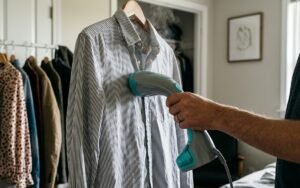
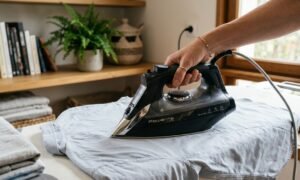
A clothes airer is a freestanding, wall-mounted or ceiling-hung frame of rails that dries washing indoors or under cover without a powered dryer. The rotary hoist is close to a national symbol here, and a growing share of Australian housing has nowhere at all to put one: apartments with one narrow balcony, terraces with a courtyard the size of a doormat, and body corporate rules that ban anything visible from the street. The best clothes airer in Australia is the one that fits the space you are actually allowed to dry in, which is why this list runs from a caravan line to a four-arm rotary.
Six patterns cover almost every situation. Floor-standing folding airers are the default, sold as flat wing racks or stacked tiers. Heated electric airers run warm bars at low wattage to move damp air through the load. Wall-mounted folding racks fold flat against a laundry or balcony wall when empty. Tension-pole and ceiling airers use vertical space nobody is competing for. Rotary clotheslines are the traditional backyard answer. And retractable or pull-out lines disappear entirely between loads, which is what makes them workable in a caravan or a rental.
The number to compare is total drying length: add up every rail and you get the metres of washing the airer will actually take. The picks here run from a couple of metres on a compact folding rack to 40 metres on a four-arm rotary, and a single load from a 7kg washer needs roughly 10 to 12 metres to dry without overlapping. The spec most buyers skip is load capacity in kilograms, which matters more than it sounds: wet cotton sheets and denim weigh two to three times their dry weight, and a 10kg-rated rack sags under one full wash of towels.
This guide compares ten airers, all stocked and dispatched within Australia, across heated, wall-mounted, tension-pole, rotary and portable designs, with load ratings from 10kg to 30kg. One honest boundary: no airer dries clothes as fast as a machine, and in a wet Melbourne week an unheated rack indoors will take two days. If a machine is still part of the plan, our guide to the best heat pump dryers in Australia covers the efficient end of that option.
Quick Picks

Devanti Heated Electric Clothes Airer, 8 Bars
Eight heated aluminium bars at 120W, holding a constant 40 to 55 degrees, which is what gets washing dry indoors through a wet week without running a dryer.
CHECK CURRENT PRICE
Artiss Foldable Clothes Airer, 11 Extendable Rods
Eleven extendable rods, non-slip feet, and it comes out of the box ready to use, folding to 8cm deep when the washing comes off.
CHECK CURRENT PRICE
Artiss Wall-Mounted Foldable Clothes Airer
Five stainless rods rated to 15kg that fold to 3cm against the laundry wall, for homes where a floor rack is not an option.
CHECK CURRENT PRICEBest Clothes Airer Australia Compared
| Product | Link | Type | Best For | Key Spec |
|---|---|---|---|---|
| Devanti Heated Electric Clothes Airer, 8 Bars | Check price | Heated electric, 8 bars | Wet-week indoor drying | 120W, 40-55 degrees C |
| Artiss Foldable Clothes Airer, 11 Extendable Rods | Check price | Folding floor rack, 11 rods | Everyday indoor loads | 10kg capacity, folds to 8cm |
| Artiss Wall-Mounted Foldable Clothes Airer | Check price | Wall-mounted, 5 rods | Small laundries | 15kg capacity, folds to 3cm |
| Tri-Fold Wall-Mount Aluminium Drying Rack, 130cm | Check price | Wall-mounted tri-fold | Balconies and outdoor walls | 130cm extended, drill-free option |
| Floor-to-Ceiling Tension Pole Airer, 5 Rotating Arms | Check price | Tension pole, 5 arms | Rentals and corners | No fixings, floor-to-ceiling |
| 4-Tier Stainless Steel Rolling Clothes Airer | Check price | 4-tier rolling rack | Large household loads | Stainless steel, 4 tiers on wheels |
| 4-Arm Rotary Clothesline, 10 Lines, 40m | Check price | Rotary clothesline, 40m | Backyard drying | 40 metres of line |
| Pull-Out Expanding Clothes Airer for Caravans | Check price | Pull-out expanding line | Caravans, RVs and rentals | Retracts flush when not in use |
| 3-Tier Clothes Drying Rack with Rotatable Side Wings | Check price | 3-tier folding rack | Full family loads | 30kg capacity, 171cm tall |
| 4-Leg Bamboo Clothes Airer, 8 Rods and 40 Hanger Slots | Check price | Indoor bamboo rotary stand | Hanging on hangers | 40 hanger slots, 12kg |
How We Picked
The sweep ran across five Australian supplier storefronts, one 85,000-line product sitemap and two on-site retailer searches, which returned well over a hundred products matching airer, drying rack or clothesline. Filtering was the hard part, because dozens of listings sold as clothes airers are actually garment racks: a single hanging rail for storing clothes on hangers, with no drying rails at all. Anything that could not dry a flat-laid towel was cut. Each survivor then had to be in stock and dispatched from an Australian warehouse.
Specifications came from each manufacturer’s own published sheet, so the load ratings and dimensions in this comparison are the numbers the maker will stand behind, not estimates. Where a product family appears under several storefronts at different prices, which happens constantly in this category, we compared every listing and linked the cheapest real one. Running-cost context came from Australian government energy guidance.
1. Devanti Heated Electric Clothes Airer, 8 Bars – Best Heated Airer
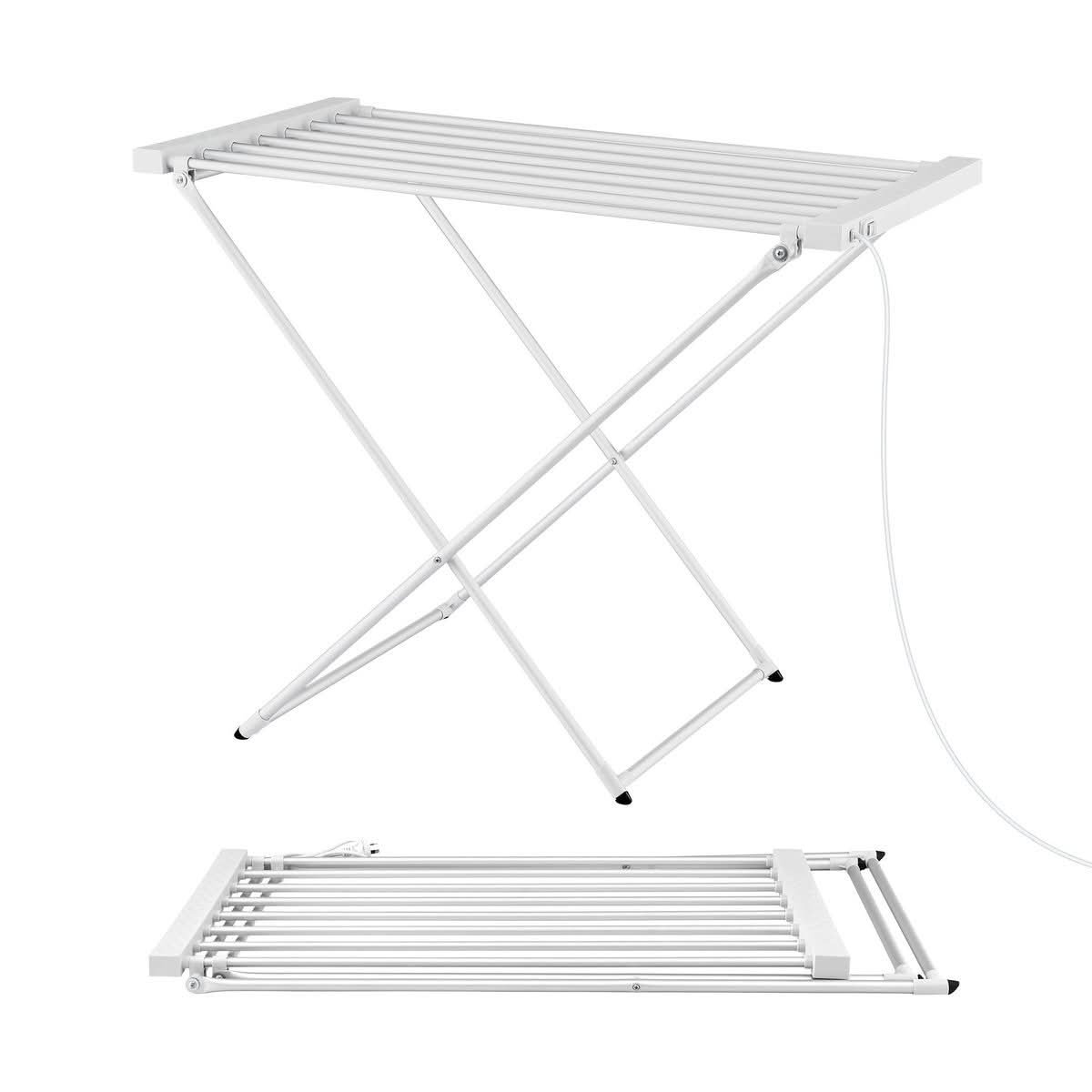
One hundred and twenty watts. That is the number that makes this whole category make sense, because it is roughly what two old-style light bulbs draw and a fraction of what a vented dryer pulls for the same load. The eight aluminium bars hold a constant 40 to 55 degrees, which is warm to the touch and nowhere near hot enough to scorch anything.
It plugs into a standard socket with a metre of cable, folds flat, and needs no installation at all. The frame is aluminium, so it will not rust in a bathroom, and at 93 by 72 by 48cm open it takes about the footprint of a bedside table. That is small, and it is also the honest limit: eight bars is roughly enough for a half load, so a family wash still needs a second rack beside it.
The running-cost case is properly strong in a wet climate. Sustainability Victoria puts the cost of drying an average load in a machine at around 44 cents, and a 120W airer left on for several hours costs a fraction of that. Where it earns its place is a Melbourne or Hobart winter fortnight when nothing dries indoors at all and the alternative is damp washing draped over furniture, growing mould.
It sits at the premium end of this comparison, and it is the only pick here with a running cost at all. Weigh that against a dryer, not against the unheated racks below.
Pros
- 120W draw is a small fraction of a vented dryer for the same job
- Aluminium frame will not rust in a bathroom or laundry
- Plug and play, no installation, folds flat for storage
- Constant 40 to 55 degrees is gentle enough for delicates
Cons
- Eight bars is about a half load, so a family wash needs a second rack beside it
- The only pick here that adds anything to a power bill
- A one metre cable limits where it can sit relative to a power point
Key specs: 8 heated bars, 120W at 220-240V, constant 40-55 degrees C, aluminium frame, 93 x 72 x 48cm open, 100cm cable, foldable, 1 year warranty.
CHECK CURRENT PRICE2. Artiss Foldable Clothes Airer, 11 Extendable Rods – Best No-Assembly Folding Airer
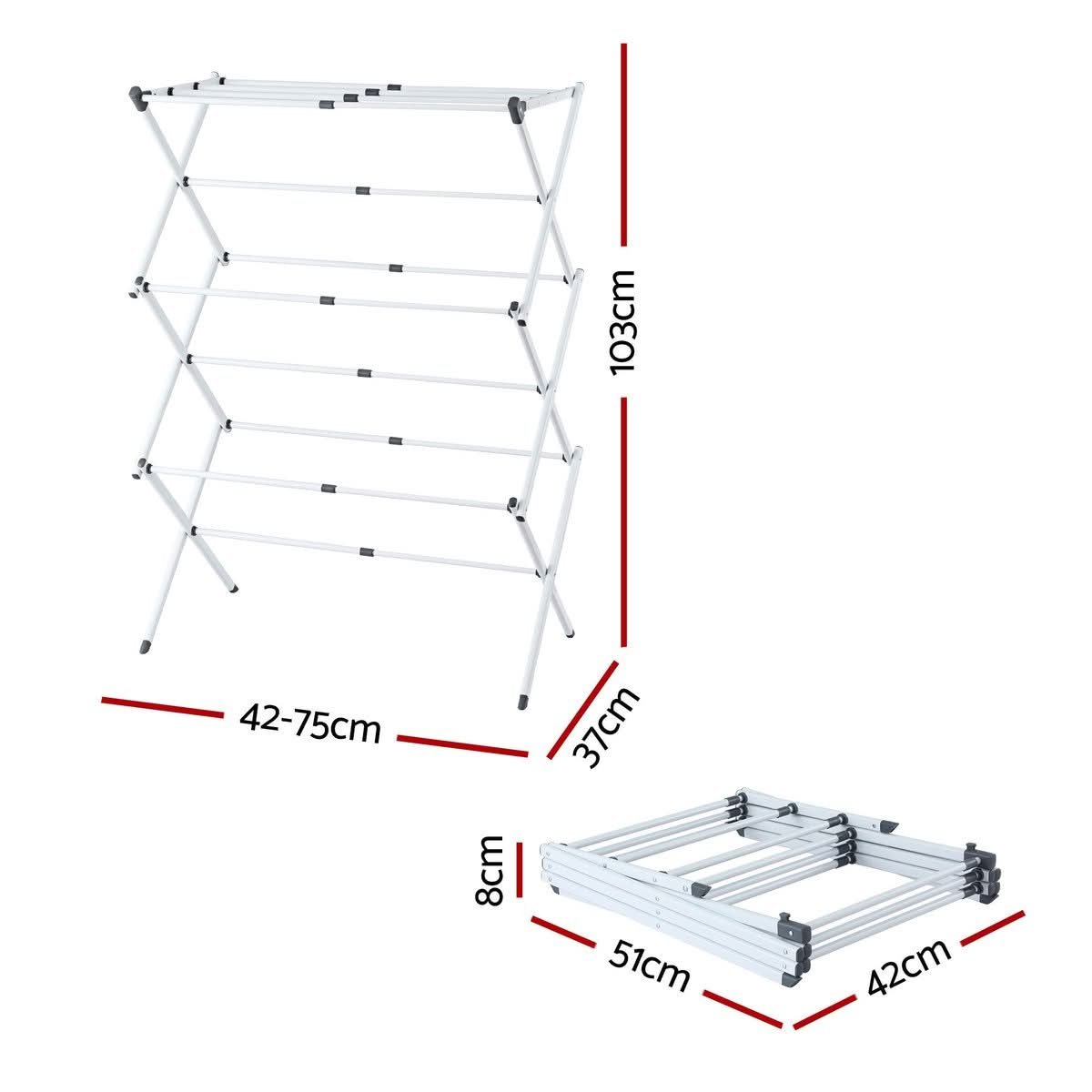
No assembly required is the line on the listing, and for once it is the most useful thing about the product. Flat-pack airers arrive as a bag of tubes and a diagram, and the joints you push together are the joints that work loose eighteen months later. This one comes out of the box as one piece and opens like a deck chair.
Eleven rods extend from 42cm to 75cm wide, so it grows for a big wash and narrows for a hallway. Open it stands 103cm tall on a 37cm footprint; folded it is 8cm deep and slides behind a door. Non-slip feet stop it skating on tiles, which matters more than it sounds in a laundry with a wet floor.
Ten kilograms is the load rating, and that is the honest constraint. A full wash of bath towels comes in heavier than that once wet, so this handles shirts, kids’ clothes and everyday mixed loads and will bow under a load of soaked cotton. Set against the tiered racks further down, it trades capacity for the ability to actually put it away.
Pros
- Truly no assembly, so there are no push-fit joints to work loose
- Rods extend 42cm to 75cm, so the footprint adapts to the load
- Folds to 8cm deep, thin enough to store behind a door
Cons
- 10kg capacity is under one full wash of wet towels
- 103cm tall means long items like sheets touch the floor
- Painted metal tubes will mark if the rack lives on a wet laundry floor
Key specs: 11 extendable hanging rods, metal tube frame, 10kg load capacity, 42-75cm (W) x 37cm (D) x 103cm (H) open, 51 x 8 x 42cm folded, non-slip feet, no assembly required, 1 year warranty.
CHECK CURRENT PRICE3. Artiss Wall-Mounted Foldable Clothes Airer – Best Wall-Mounted Airer
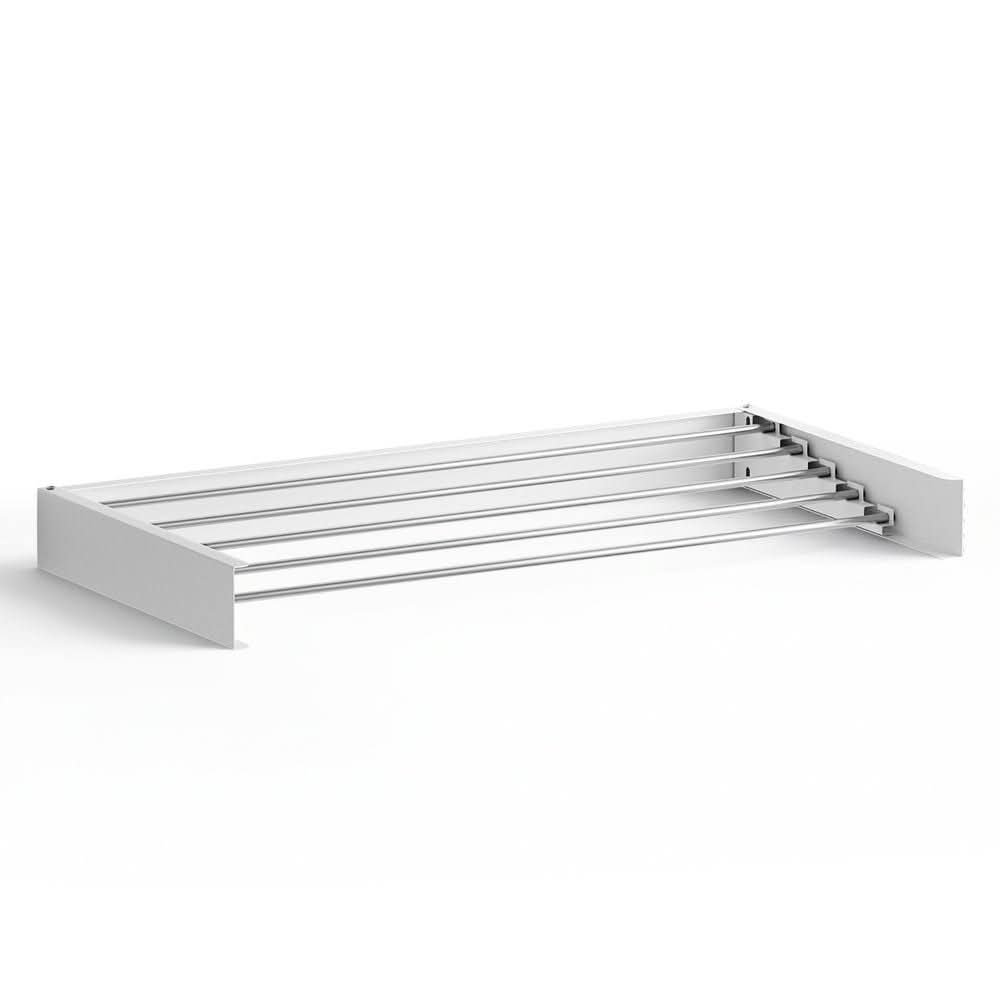
Three centimetres. That is how far this sticks out from the wall folded, and in a laundry the size of a cupboard it is the whole argument. A floor rack in a small laundry means shuffling sideways past wet washing for two days; a wall rack means the room is a room again the moment the load comes off.
Five stainless steel rods across a metre of wall, rated to 15kg, which is half again what the folding rack above carries and enough for a genuine towel load. Stainless is the right call for a rack that will sit under wet washing indefinitely. It does need drilling and mounting, so renters should check the lease before ordering, and the fixings need to land in studs or proper anchors because 15kg of wet cotton hanging off plasterboard will pull out.
It is the most affordable pick in this guide, which is a slightly odd result for the one with the highest load rating of the indoor racks. The catch is that a wall airer only dries what fits along one line of rails, so it complements a floor rack instead of replacing it.
Pros
- Folds to 3cm from the wall, so a small laundry stays usable
- 15kg capacity is the highest of the indoor racks here
- Stainless steel rods will not rust under permanently damp washing
Cons
- Needs drilling and proper wall anchors, which rules it out in some rentals
- Five rods along one wall is less total length than a tiered floor rack
- Assembly and mounting is required, unlike the folding racks here
Key specs: 5 stainless steel rods, 15kg total load capacity, 100 x 50 x 10cm open, 100 x 3 x 10cm folded, white and silver, wall mounting required, 1 year warranty.
CHECK CURRENT PRICE4. Tri-Fold Wall-Mount Aluminium Drying Rack, 130cm – Best for Balconies
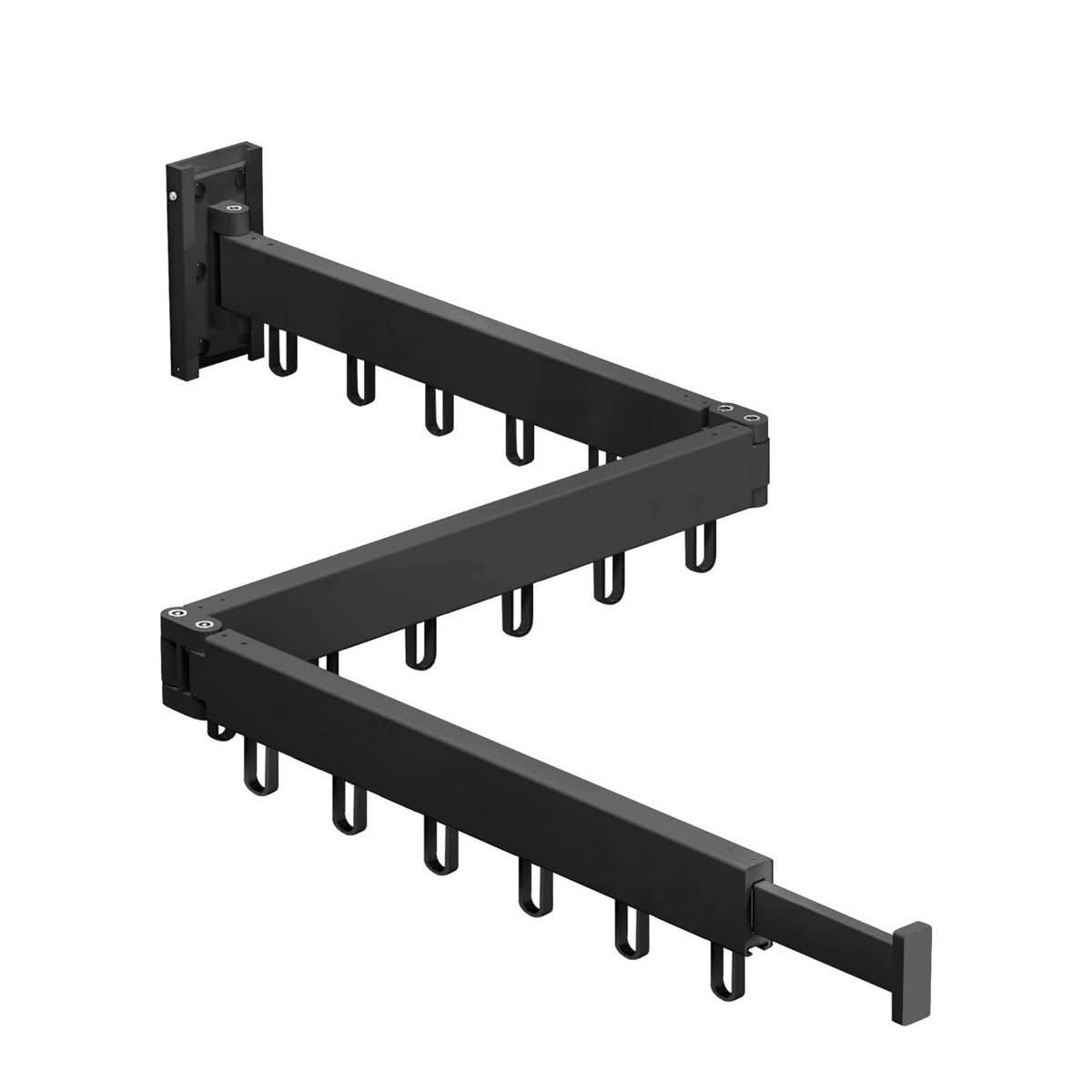
Three hinged sections that swing out to 130cm and fold back flat, running on 360-degree rotating bearings so each arm moves independently. Deploy one section for a couple of shirts, all three for a wash. That granularity is the difference between a wall rack you use daily and one you deploy once a week.
Aluminium alloy, anodised against oxidation and rated as waterproof, which is what makes it the outdoor pick of the wall-mounted options. It handles a balcony in coastal salt air where a painted steel rack would be streaking rust inside a summer. A drill-free mounting option is included, and that matters more in this category than in almost any other, because balcony walls in apartments are frequently off limits under a body corporate agreement.
The listing publishes no load rating, only a heavy-duty claim, which is the honest gap here. Compared to the five-rod wall rack above, this one wins outdoors and on flexibility, and gives up a published capacity figure you can plan around. It sits in the middle of this guide on price.
Pros
- Three sections deploy independently, so you open only what the load needs
- Anodised aluminium handles coastal salt air and rain without rusting
- Drill-free mounting option matters where a body corporate bans fixings
Cons
- No published load rating, only a general heavy-duty claim
- 130cm fully extended is modest for a full family wash
- Rotating bearings are moving parts, and moving parts outdoors eventually seize
Key specs: Tri-fold wall-mounted, aluminium alloy, 130cm total extended length in three 30.5cm sections, 360 degree rotating bearings, waterproof and oxidation resistant, drill-free mounting option, black.
CHECK CURRENT PRICE5. Floor-to-Ceiling Tension Pole Airer, 5 Rotating Arms – Best for Renters
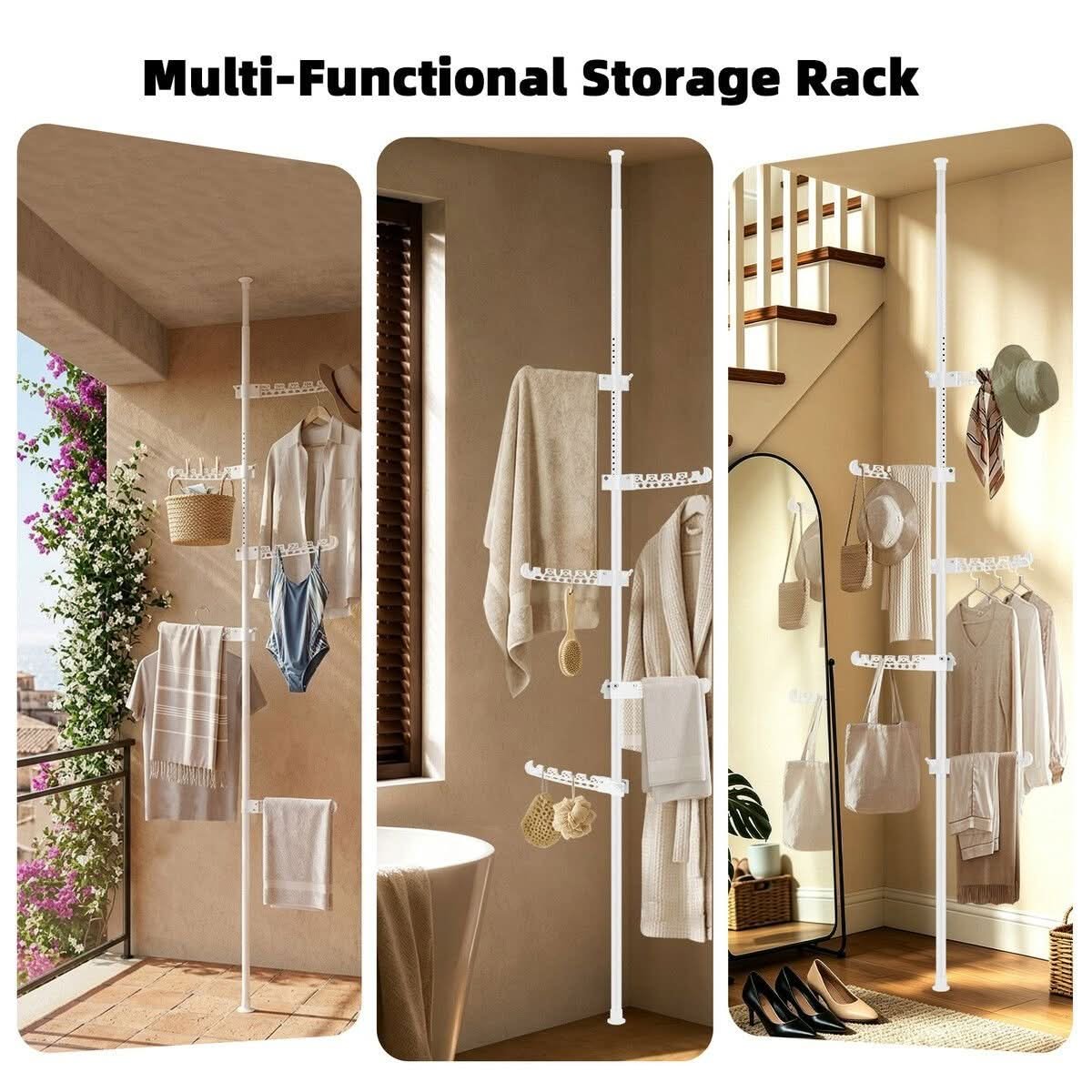
Every square metre of floor in a small apartment is contested and the vertical space between waist height and the ceiling is contested by nobody. A tension pole jacks between floor and ceiling on a screw foot, with five arms that fold out at whatever heights suit, and it leaves no mark on either surface when it comes down.
That last part is why it belongs in a rental. There is no drilling, no adhesive and no wall damage to argue about at the end of a lease, which the wall-mounted racks above cannot claim. The arms rotate as well as fold, so you can swing a loaded arm out of a walkway instead of squeezing past it.
It is the most affordable pick in this comparison, and there are two real catches. A tension pole only works with a solid ceiling and a level floor, so a sagging plasterboard ceiling or a rendered concrete soffit each cause problems in different ways. And the arms hang washing vertically off a single column, so long items still need floor clearance the pole does not give them.
Pros
- Leaves no fixings, holes or marks, which suits a rental lease
- Five arms fold and rotate independently to clear a walkway
- The most affordable pick in this comparison
Cons
- Needs a solid ceiling and a level floor, so it fails in some rooms outright
- Arms hang from a single column, so long items reach the floor
- Tension feet loosen over time and need periodic re-tightening
Key specs: Floor-to-ceiling tension pole, 5 foldable rotating hanging arms, height adjustable, no wall or ceiling fixings required.
CHECK CURRENT PRICE6. 4-Tier Stainless Steel Rolling Clothes Airer – Best High-Capacity Indoor Airer
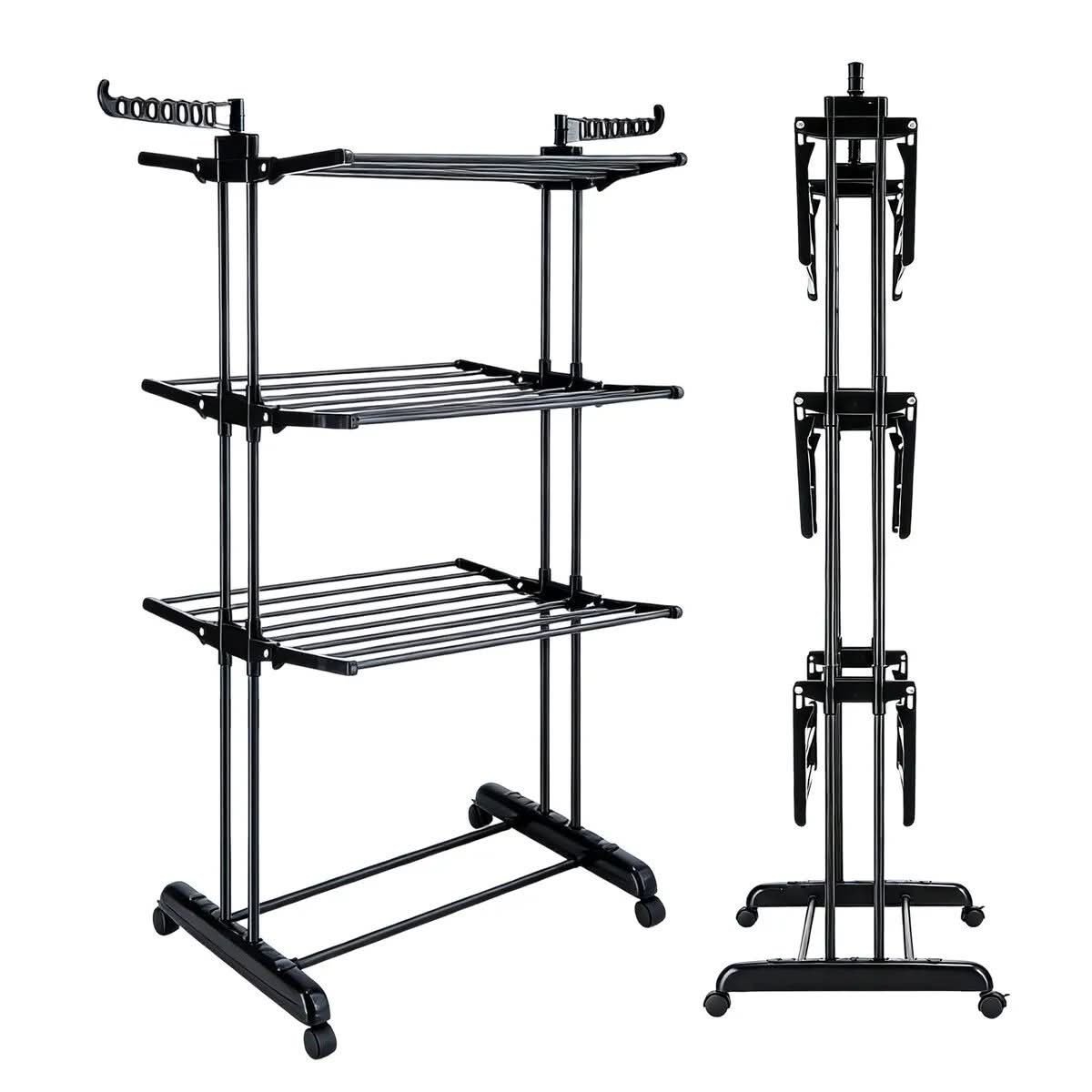
Four tiers of stainless rails on castors, which solves the two problems every big indoor drying job runs into. Stacking tiers multiplies drying length without spreading further across the floor, and wheels mean you can roll a fully loaded rack from the laundry into the sun on the back deck and back again when the weather turns.
Stainless steel throughout is the specification that matters for a rack carrying a heavy wet load day after day. Painted steel chips where the rails flex, and the chip is where the rust starts. It folds down when the washing is off, though a four-tier frame folds bulkier than the single-layer racks above and needs a real storage spot.
Wheels are the trade-off. They are what makes it useful and they are also the first thing to fail on any rolling rack, because a castor carrying a wet load over a door threshold takes a shock load its bearing was not designed around. Lift it over sills instead of forcing it.
Pros
- Four tiers multiply drying length without taking more floor space
- Castors let a loaded rack move indoors to outdoors as weather changes
- Stainless steel throughout, so flexing rails do not start rusting
Cons
- Castors are the weak point and take a beating over door thresholds
- Folds bulkier than a single-layer rack and needs a real storage spot
- Upper tiers are awkward to reach for anyone short
Key specs: 4 tiers, stainless steel rails, foldable freestanding frame on castors, black finish, indoor use.
CHECK CURRENT PRICE7. 4-Arm Rotary Clothesline, 10 Lines, 40m – Best Outdoor Rotary Line
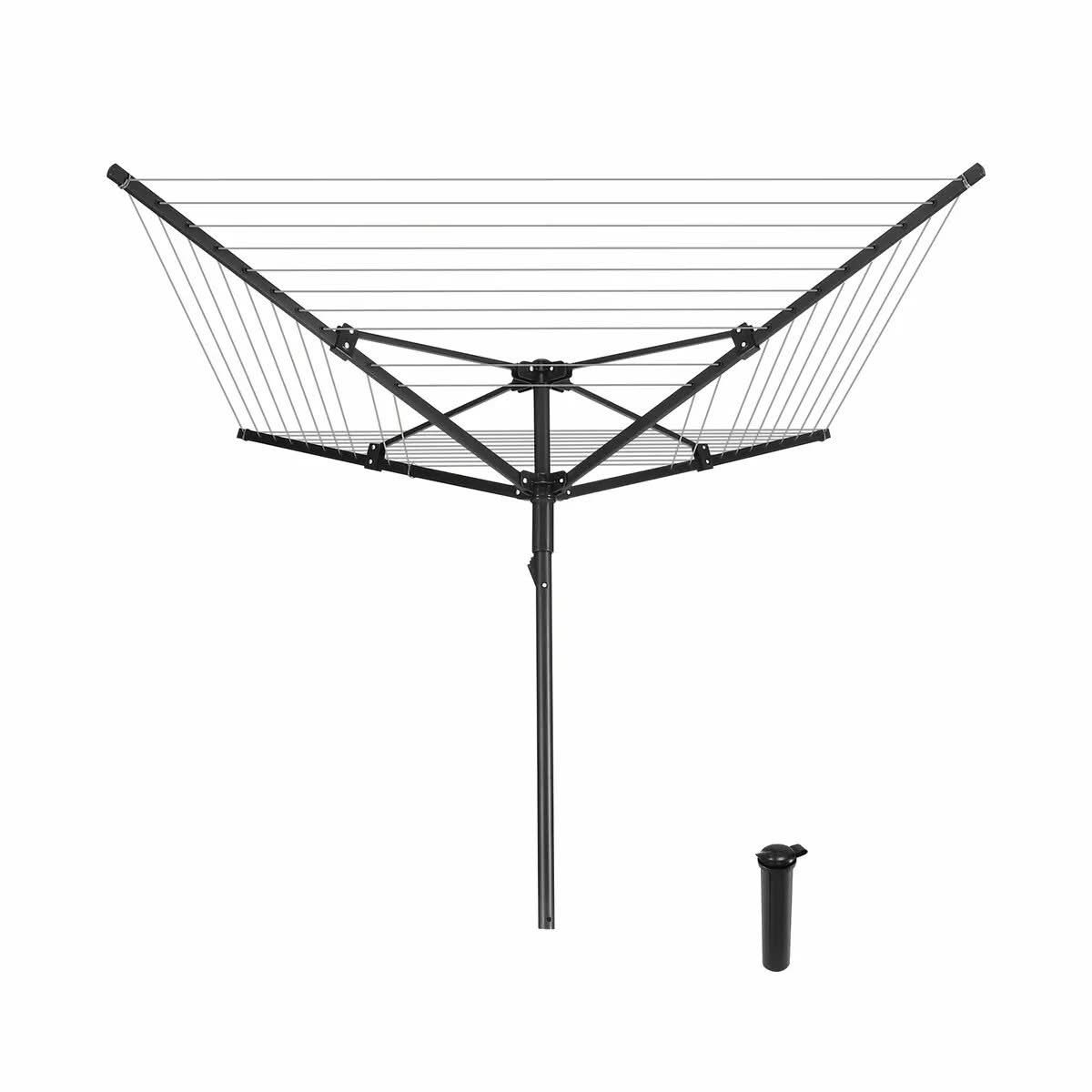
Forty metres of line across ten strands on four arms. That is roughly four times the total drying length of anything else here, and it is the reason a rotary hoist has stayed the default in Australian backyards for seventy years. A full 8kg wash fits with room left over.
The frame is galvanised aluminium and steel, and the umbrella action folds the arms down when the line is empty so the yard is not permanently occupied by a metal spider. Australian sun does most of the work: energy.gov.au is blunt about it, noting that in dry areas of the country a clothes dryer may not be needed at all and that drying on the line or an indoor rack is free.
The obvious limits are the ones a rotary always had. It needs a patch of yard and a ground socket or concrete footing, so apartments and courtyard terraces are out. Direct summer sun fades dark cotton fast, which is why the old habit of hanging shirts inside out is a real technique and not superstition. And washing on a line in a Brisbane afternoon storm is washing you are rewashing.
Pros
- 40 metres of line takes a full 8kg wash with room to spare
- Umbrella action folds the arms down so the yard is not permanently occupied
- Galvanised frame handles year-round outdoor exposure
Cons
- Needs a yard and a ground socket or concrete footing, ruling out apartments
- Direct summer sun fades dark cotton unless you hang things inside out
- Useless the moment the weather turns, with no indoor fallback
Key specs: 4 arms, 10 lines, 40 metres total line length, galvanised aluminium and steel frame, umbrella folding action, outdoor ground mounting.
CHECK CURRENT PRICE8. Pull-Out Expanding Clothes Airer for Caravans – Best for Travel
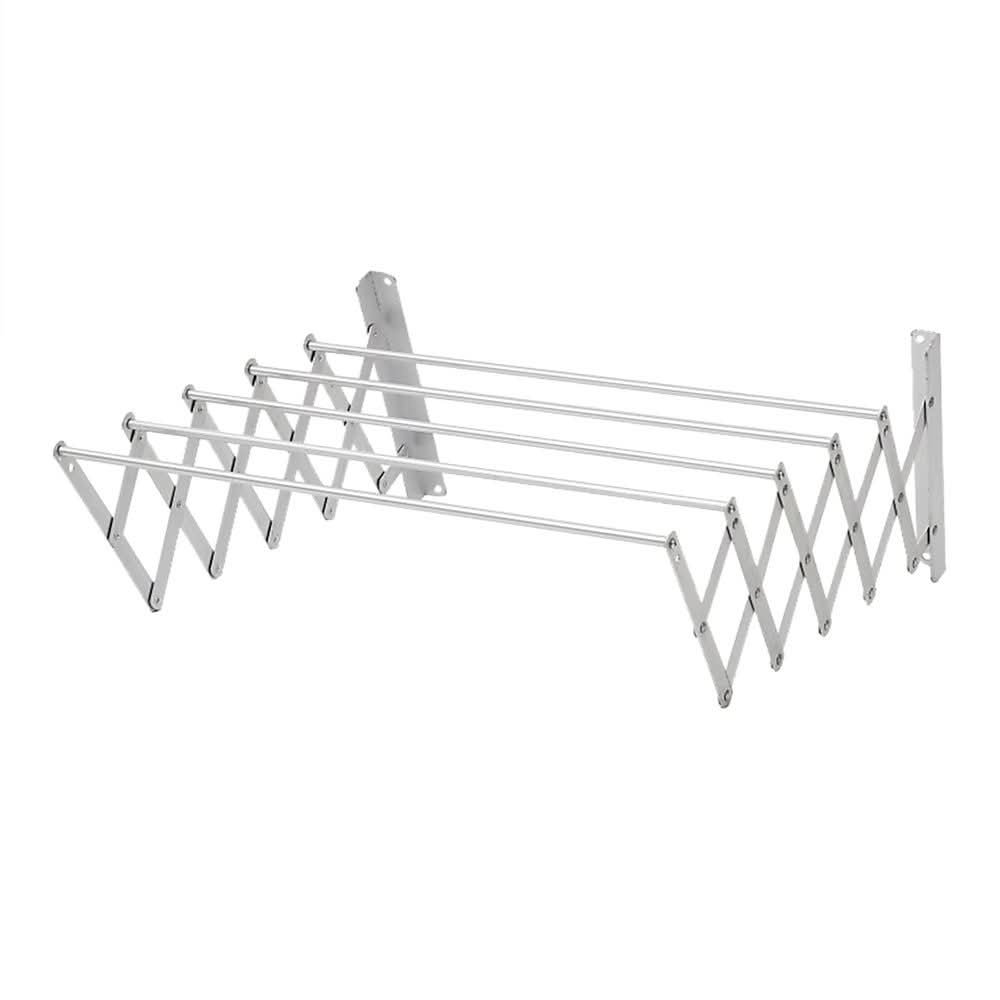
A caravan has no spare floor, no spare wall and no tolerance for anything that rattles. A pull-out expanding line solves all three: it mounts flat, extends only when you pull it out, and collapses back flush the moment the washing comes off.
The same logic applies well beyond caravans. A shared laundry, a student room, a bathroom that doubles as the only drying space, anywhere a permanent rack is either banned or simply in the way. Capacity is properly small, so this is a two or three items at a time proposition and not a wash load, which is the honest limit against every other pick here.
Stock on this one runs to single figures and it is a low-volume line, so it comes and goes. It sits mid-range on price, which is more than a basic folding rack costs for far less drying length. You are paying for the footprint, not the capacity.
Pros
- Collapses flush, so it takes no space at all between loads
- Works in caravans, shared laundries and bathrooms where a rack cannot go
- No floor space required at any point
Cons
- Holds a few items at a time, nothing close to a wash load
- Costs more than a basic folding rack with far less drying length
- Stock runs to single figures and the line comes and goes
Key specs: Pull-out expanding drying line, wall or cabinet mounted, retracts flush when not in use, for caravans, RVs and small homes.
CHECK CURRENT PRICE9. 3-Tier Clothes Drying Rack with Rotatable Side Wings – Best 3-Tier Airer
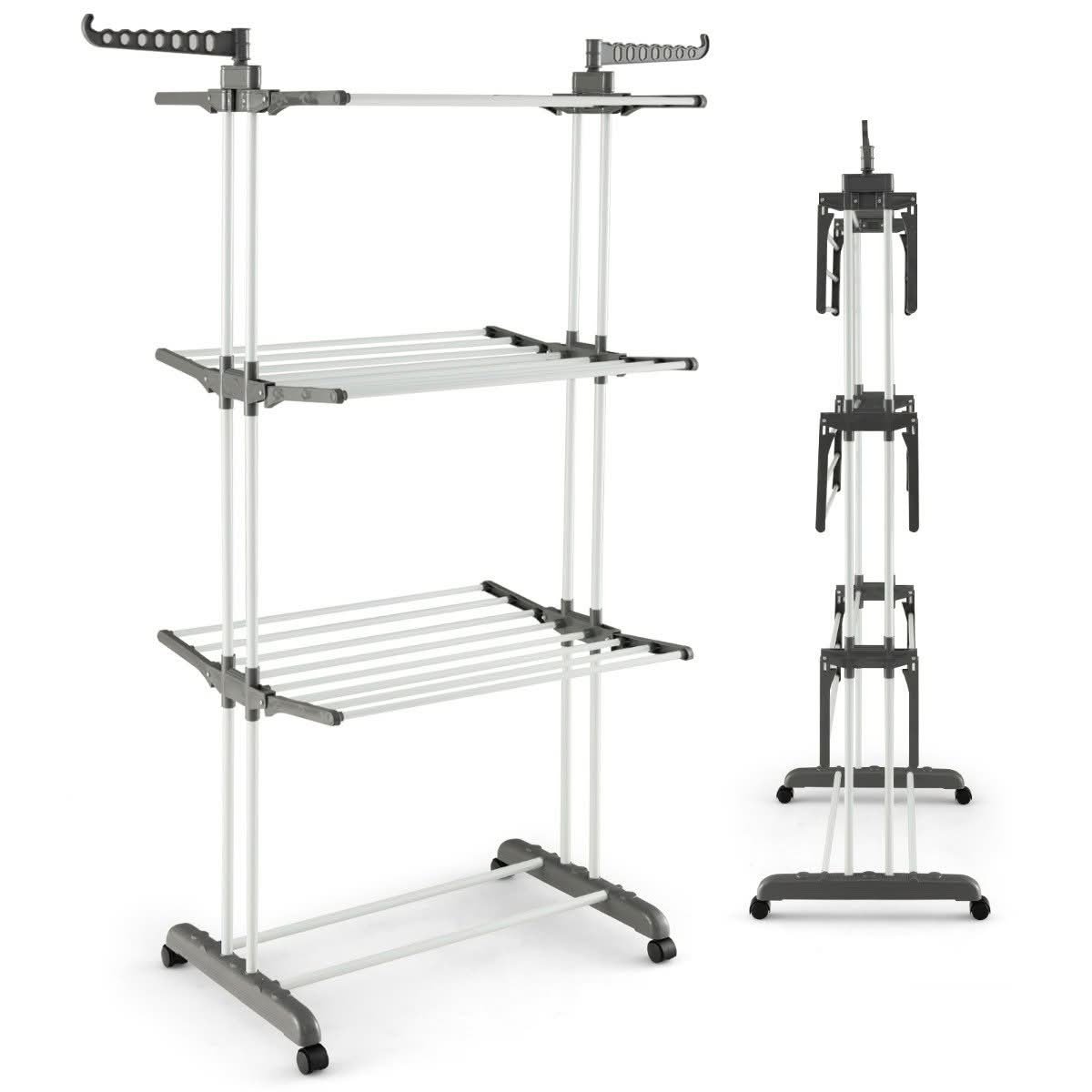
Thirty kilograms. That is three times the rating of the folding rack near the top of this list and the highest capacity of any indoor airer here, and it is what makes this the pick for a household that washes towels and bedding, not shirts.
Three tiers plus rotatable side wings, standing 171cm tall on a 127 by 63cm footprint when open. The wings are the useful part: swing them out for a big load, fold them in and it fits a hallway. Metal frame with ABS and PP fittings, so the joints are plastic and the structure is not, which is the right way around.
The height is worth thinking about before ordering. At 171cm it is close to eye level, so the top tier is a real reach for anyone under about 165cm, and hanging a wet doona cover up there is a two-person job. It rolls on castors like the four-tier rack above, so what separates them is capacity against tier count, not mobility.
Pros
- 30kg capacity is the highest indoor rating in this comparison
- Rotatable side wings expand for a big wash and fold in for a hallway
- Metal frame with plastic fittings, not the reverse
Cons
- 171cm tall puts the top tier out of comfortable reach for many people
- 127cm wide fully open dominates a small room
- Plastic wing hinges take the whole load of an outstretched wing and are the part most likely to crack
Key specs: 3 tiers with rotatable side wings, 30kg load capacity, 127 x 63 x 171cm unfolded, metal frame with ABS and PP fittings, foldable.
CHECK CURRENT PRICE10. 4-Leg Bamboo Clothes Airer, 8 Rods and 40 Hanger Slots – Best Bamboo Airer
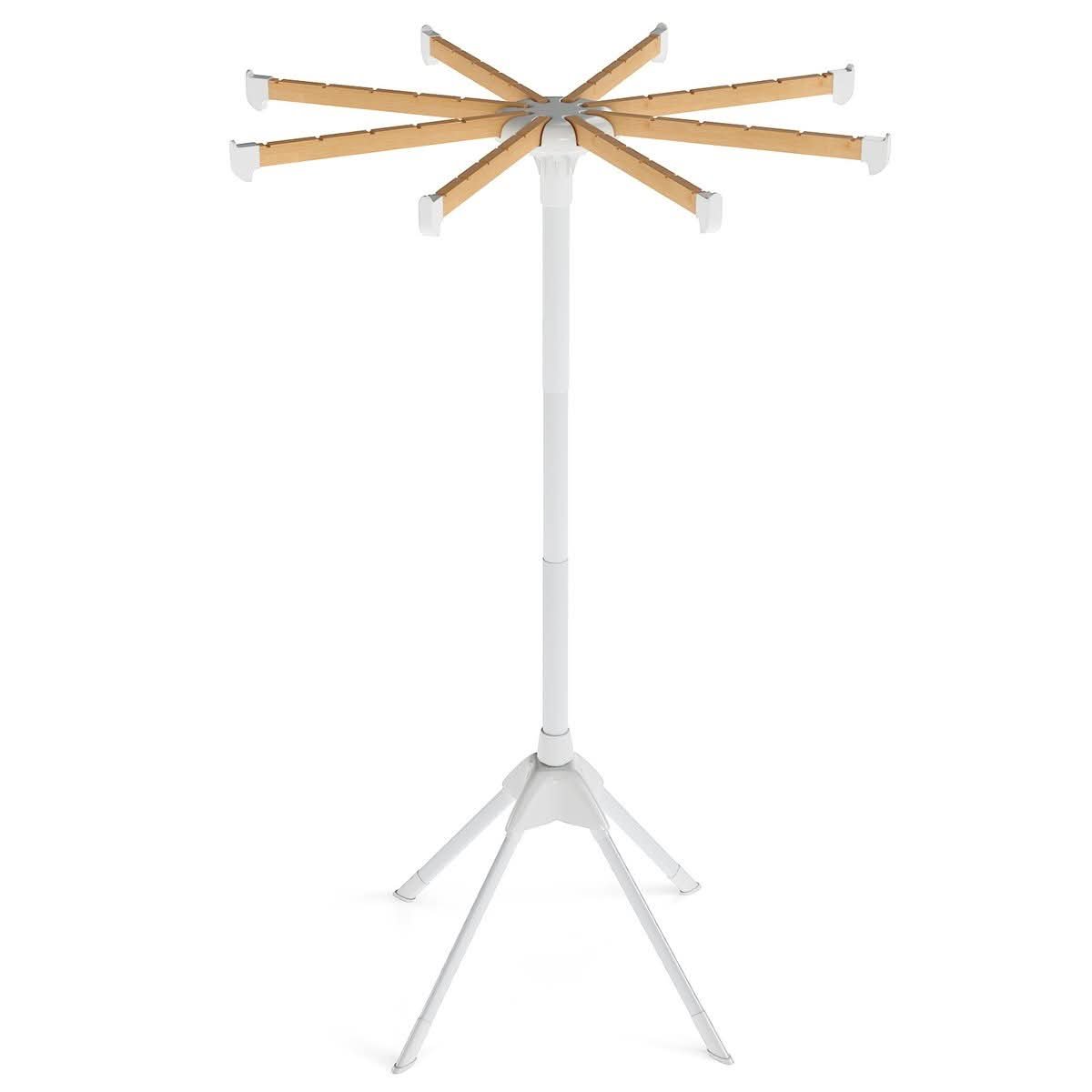
This is a rotary hoist shrunk to indoor size: eight bamboo arms radiating from a central pole on a tripod base, each arm notched with hanger slots, forty of them in total. Most airers assume you drape washing over a rail. This one assumes you hang it on a coat hanger and drop the hanger into a notch, which is how shirts and dresses dry without shoulder bumps and go straight to the wardrobe afterwards.
Eight bamboo arms on a metal pole, rated to 12kg, with the arms folding down against the column when the washing comes off. Bamboo is a functional choice here and not a styling one: it does not sweat condensation onto fabric the way cold metal can in a humid room, and it will not leave a rust mark on a white shirt left hanging over a wet weekend. The arms spin, so you load it standing in one spot.
Twelve kilograms is modest and an 83.5cm arm span is compact, so this is not the rack for towels and sheets. It is the most affordable pick in this guide, and the case for it is narrow and real: if your washing is mostly clothes that belong on hangers, it saves you the ironing that every drape-over-rail rack creates.
Pros
- 40 notched hanger slots dry shirts on their own hangers without shoulder bumps
- Bamboo rods will not leave rust marks or sweat condensation onto fabric
- The most affordable pick in this comparison
Cons
- 12kg capacity rules out towels and bedding
- An 83.5cm arm span holds far less than any flat rack in this comparison
- Bamboo needs to stay out of permanently damp air or it eventually discolours
Key specs: 8 bamboo arms with 40 notched hanger slots, 12kg load capacity, 83.5cm arm span unfolded, bamboo with metal, PP and ABS fittings, folding arms on a 4-leg base.
CHECK CURRENT PRICEHow to Choose a Clothes Airer in Australia
Measure the drying length you actually need, not the one on the listing. Add up every rail on the rack and compare it to your washer. A 7kg load needs roughly 10 to 12 metres of rail to hang without items overlapping, and overlapping is the single biggest reason indoor washing takes two days and comes out smelling stale. A rack advertised as large may hold four metres.
Check the load rating against wet weight, not dry. Cotton towels and denim absorb two to three times their dry weight in water, so a 5kg dry load of towels comes off the spin cycle at 10kg or more. Racks in this comparison run from 10kg to 30kg. A 10kg rack is fine for shirts and kids’ clothes and will bow under one full towel wash.
Decide whether it needs to disappear. This is the question most people skip and it decides whether the airer gets used. A rack that lives permanently in the middle of a small lounge room becomes a resented object within a month. Wall-mounted racks fold to a few centimetres, tension poles come down entirely, and pull-out lines vanish. Floor racks do not, however well they fold.
Work out what your ceiling, walls and lease will allow. A wall rack needs studs or proper anchors and a landlord who does not mind. A tension pole needs a solid ceiling and a level floor. A rotary needs a yard and a footing. Body corporate rules in apartments commonly ban both fixings on balcony walls and washing visible from the street, and that is worth checking before ordering anything mounted.
Weigh a heated airer against the dryer you would otherwise run. Sustainability Victoria puts an average machine-dried load at around 44 cents. A 120W heated airer running for hours costs a fraction of that and takes far longer, so the comparison is not heated airer versus plain rack, it is heated airer versus dryer. In Brisbane or Perth it is hard to justify. Through a Melbourne winter it pays.
Think about where the moisture goes. A full wash load carries one to two litres of water, and drying it indoors puts all of that into the room air. In a sealed new estate build or a tight modern apartment with no ventilation, that shows up as condensation on windows and eventually mould on the cold wall behind the wardrobe. Crack a window, run the exhaust fan, or dry under cover outside where you can. If you are ironing everything afterwards anyway, our guide to the best ironing boards in Australia covers the next step.
You’ll Also Want
Pegs that survive a summer. Cheap plastic pegs go brittle in Australian UV and shatter in your hand by the second season. A 40-pack of stainless steel pegs costs slightly more and lasts years, and stainless will not leave the rust mark on a white sheet that a plated steel spring eventually does.
A dehumidifier if you dry indoors through winter. Pulling moisture out of the room is what turns a two-day indoor dry into an overnight one, and it deals with the condensation problem at the same time. A 1400ml portable dehumidifier with a sleep mode and timer is the single biggest upgrade to an unheated rack in a cold, damp climate.
Hangers that hold shape while things dry. Hanging shirts to dry on hangers removes most of the ironing, provided the hanger is wide enough not to leave a bump in the shoulder. Slim non-slip velvet hangers also stop wet items sliding off onto the floor, which wire and smooth plastic will not.
Somewhere for the washing that comes off. An airer solves drying and creates a pile. If ironing is part of the routine, our guide to the best steam irons in Australia covers what to do with it, and a heavier steam output makes shorter work of anything that dried creased.
Frequently Asked Questions
How long does washing take to dry on an indoor airer?
In a warm, ventilated Australian room, a normal load spread out without overlapping dries in roughly eight to twelve hours. In a cold, sealed room through a Melbourne or Hobart winter it can take two days, and clothes packed tightly onto too few rails may not dry at all before they start to smell. Spread the load, open a window, and run an exhaust fan where you have one.
Is a heated clothes airer expensive to run?
No. A typical heated airer draws around 100 to 300 watts, which is comparable to a couple of old incandescent light bulbs and a small fraction of a vented clothes dryer. Australian energy guidance puts an average machine-dried load at around 44 cents, and a heated airer running for several hours costs well under that. The trade-off is time, since a heated airer takes hours rather than minutes.
Does drying clothes indoors cause mould?
It can. A full wash load holds one to two litres of water, and drying it indoors releases all of that into the room. In a well-ventilated house that disperses harmlessly. In a sealed apartment with the windows shut it raises humidity enough for condensation to form on cold surfaces, and persistent condensation grows mould. Ventilate the room, use an exhaust fan, or run a dehumidifier alongside the airer.
How much drying length does one wash load need?
Roughly 10 to 12 metres of rail for a standard 7kg load, if nothing overlaps. Add up every rail on an airer to get its real figure, because a rack described as large can offer as little as four metres. Bulky items skew this: one doona cover can occupy three metres on its own, which is why big loads often need two racks or a rotary line.
Can you use a clothes airer on a balcony?
Often, but check first. Many Australian apartment body corporate agreements ban washing that is visible from the street or common property, and some ban drilling fixings into balcony walls entirely. Where fixings are not allowed, a drill-free wall mount, a tension pole inside, or a freestanding folding rack that comes in at night are the usual workarounds. Aluminium resists coastal salt air far better than painted steel.
Wall-mounted or freestanding clothes airer?
Wall-mounted racks fold to a few centimetres and keep floor space clear, which suits small laundries and bathrooms, but they need drilling, proper wall anchors and a landlord’s permission. Freestanding racks need no installation and can follow the sun around the house, but they occupy floor space even folded. Homes with room for both usually end up using both, with the wall rack taking the daily small loads.
Verdict
For a household drying a full wash indoors through winter, the 8-bar heated airer is the pick that changes the outcome instead of just holding the washing, and its running cost sits well below a dryer for the same load. Anyone tight on floor space should look at the wall-mounted five-rod rack first, since 15kg of capacity folding to 3cm is the best space-to-load ratio in this comparison. And if there is a yard at all, the four-arm rotary line still beats every indoor option on drying length by a factor of four, for nothing but sunshine.