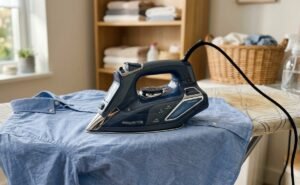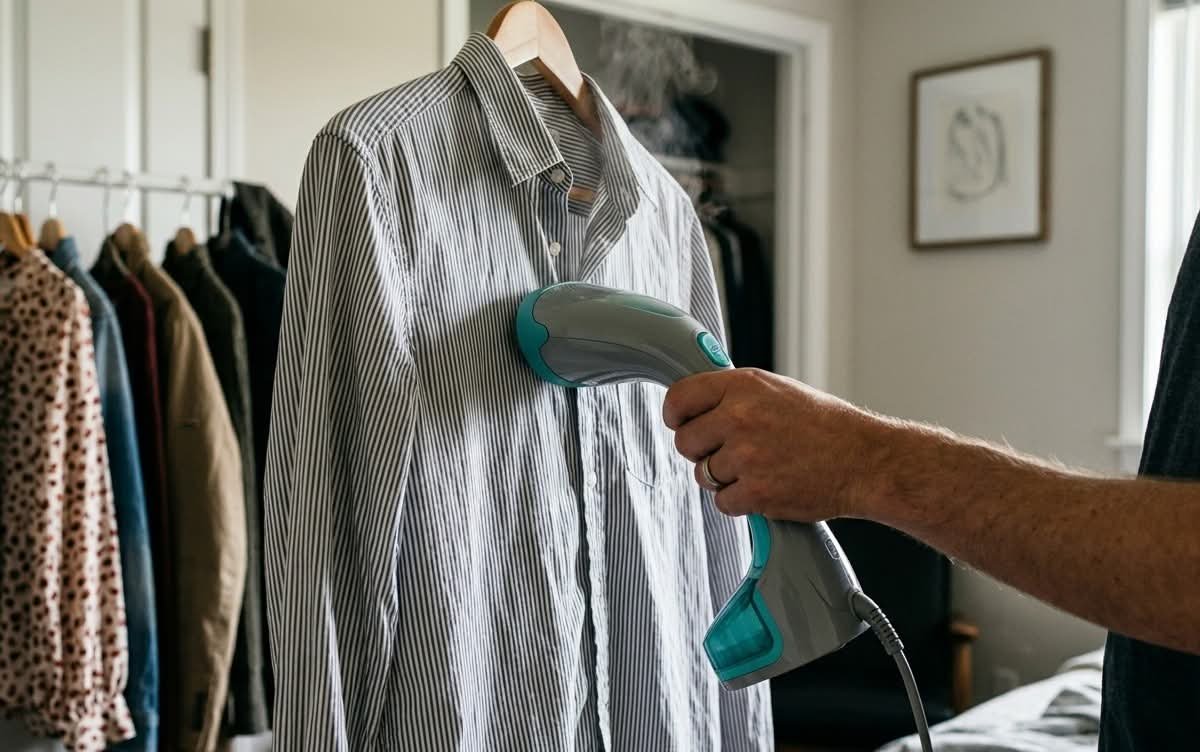
Many Australians shopping for a garment steamer assume it works the same way as a travel iron, since both use heat and both claim to remove wrinkles. A travel iron presses a garment with direct heat and pressure against a hard board, which is why it can flatten a sharp crease or push through a heavy denim seam that a steamer simply cannot manage. A garment steamer instead pushes hot vapour through the fabric weave to relax the fibres, so it works on a garment while it is still on a hanger and needs no ironing board at all. Anyone comparing the two before buying the best garment steamer australia has to offer should know this distinction up front, because the two tools solve different problems rather than one replacing the other.
Garment steamers on the Australian market generally fall into three groups. Handheld steamers are compact units held directly against the fabric and are the most common style for quick touch-ups, standing or upright steamers mount the steam head on a pole with the tank at the base for steaming multiple garments without holding the unit, and travel steamers are scaled-down handheld models built to fit in a suitcase or overnight bag.
Heat-up time across the category typically ranges from about 30 seconds for the fastest handheld units to around 90 seconds for larger standing models, while water tanks span roughly 150 millilitres in compact handhelds up to 2.7 litres in upright designs, giving anywhere from a few minutes to over 15 minutes of continuous steam before a refill is needed. Choosing between models comes down to four practical factors: how long it takes to start steaming, how much water the tank holds against how long that lasts, whether the steam output suits delicate fabrics without scorching them, and how much bench or floor space the unit needs during use.
This guide compares seven steamers available to Australian buyers, moving from compact handheld units through to full standing models so shoppers can match the format to their laundry routine. For anyone who does their own clothing alterations, our guide to the best sewing machine covers the other essential tool for garment care.
Quick Picks
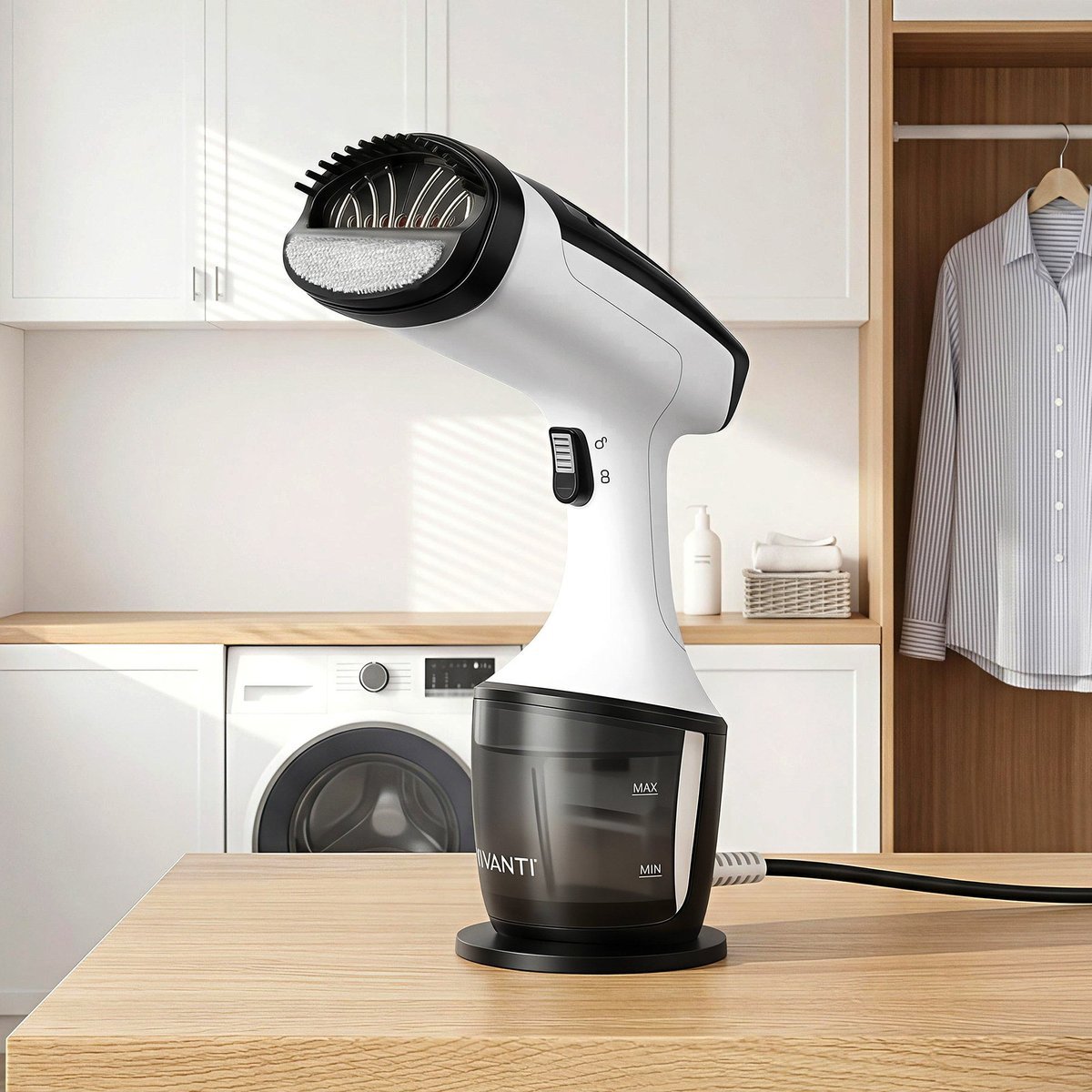
Devanti Clothes Steamer
1500W handheld steamer with a 30-second heat-up and a fabric brush attachment.
CHECK CURRENT PRICE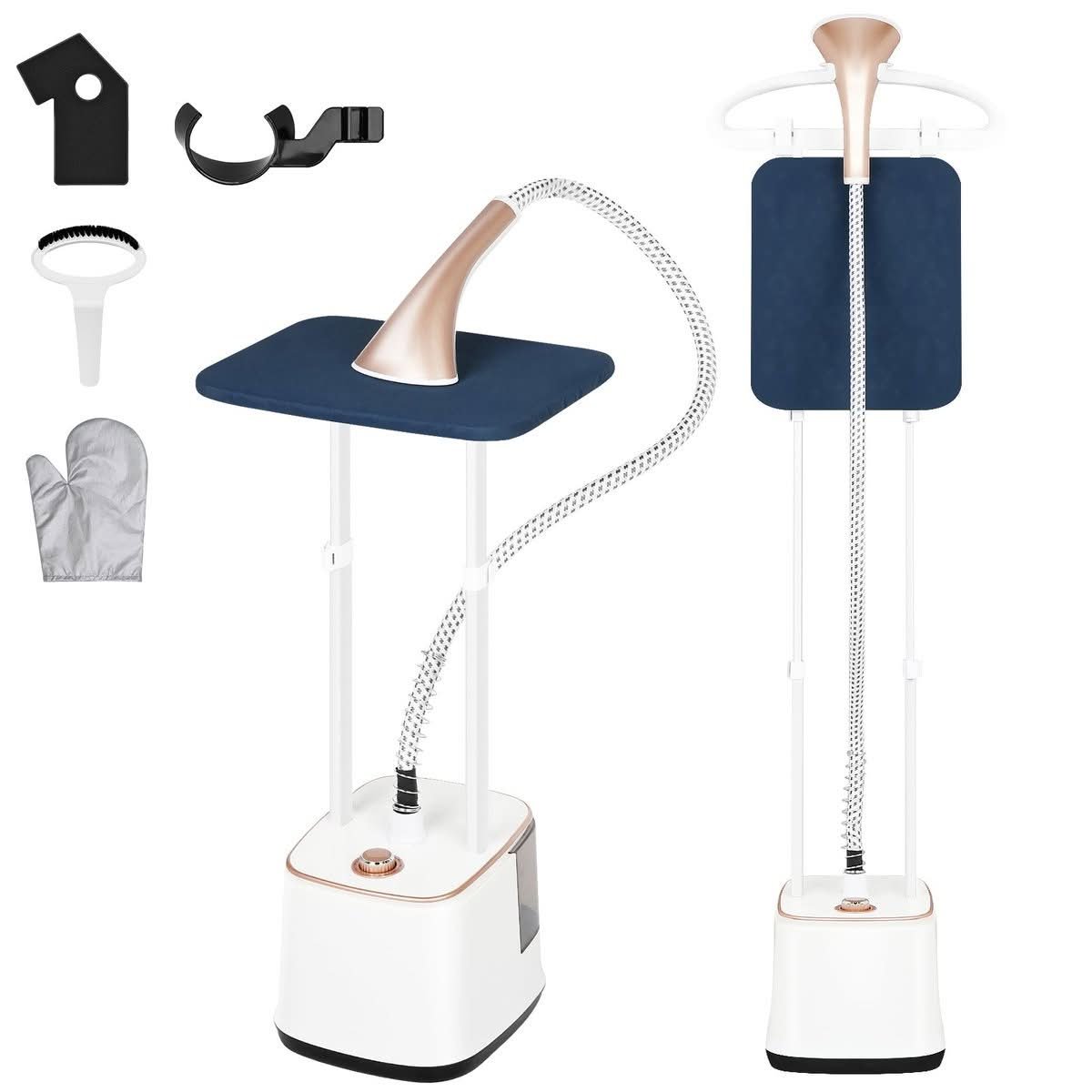
Advwin Standing Garment Steamer
Standing steamer with a 2.7L tank, the largest capacity in this guide.
CHECK CURRENT PRICEBest Garment Steamer Australia Compared
| Product | Link | Type | Best For | Key Spec |
|---|---|---|---|---|
| Devanti Clothes Steamer | Check price | Handheld | Best Fast Heat-Up | 1500W, 160ml tank, 30s heat-up |
| Advwin Standing Garment Steamer | Check price | Standing | Best Standing Design | 2.7L tank, continuous steam |
| Annmiir Upright Steamer | Check price | Standing | Best High-Power Standing Steamer | 1800W, highest wattage |
| Philips Handheld Steamer 5000 Series | Check price | Handheld | Best for Delicate Fabrics | Gentle steam, delicate fabric care |
| Russell Hobbs Handheld Supreme Garment Steamer | Check price | Handheld | Best All-Rounder Handheld | General-purpose, model RHC410 |
| Sunbeam Power Steam Handheld Garment Steamer | Check price | Handheld | Best Recognisable Brand | Model SG1000, established brand |
| Tefal Pure Pop Handheld Garment Steamer | Check price | Handheld | Best Value Pick | 1300W, reversible lint pad, travel bag |
1. Devanti Clothes Steamer – Best Fast Heat-Up
The Devanti Clothes Steamer keeps everything in a single handheld body, pairing a 1500W element with a 160 millilitre tank that sits inside the grip rather than as a separate base unit. A fabric brush clips onto the head for lifting lint and pet hair while steaming, so the two tasks happen in one pass. Its compact shape is built to be picked up and put away quickly rather than left assembled on a stand.
Heat-up takes about 30 seconds from a cold start, which is the fastest in this guide and matters most for anyone steaming a shirt minutes before leaving the house. A continuous steam lock button keeps vapour flowing without holding the trigger down the entire time, reducing hand fatigue over longer sessions. Recovery between bursts stays quick because the tank and heating element are both small.
The 160 millilitre tank is the trade-off for that speed, since it needs refilling more often than the standing models further down this list when steaming several garments in one sitting. Someone pressing a single outfit before work will rarely notice, but a household working through a full ironing basket will be topping up water more than once. It suits buyers who want one fast tool for last-minute touch-ups rather than a bulk steaming session.
Pros
- 30-second heat-up is the fastest in this guide
- continuous steam lock reduces hand fatigue
- fabric brush attachment doubles as a lint remover
Cons
- 160ml tank needs frequent refills for larger loads
- handheld design means holding the full weight throughout
Key specs: 1500W, 160ml tank, handheld, 30-second heat-up, fabric brush included
CHECK CURRENT PRICE2. Advwin Standing Garment Steamer – Best Standing Design
Standing on its own pole rather than sitting in the hand, the Advwin Standing Garment Steamer holds a 2.7 litre tank in its base unit while the steam head clips to a hanger bar at garment height. That tank size is the largest of any model in this guide, built around steaming several items without stopping to refill. The pole height means garments hang naturally rather than being pressed flat against a board.
Continuous steam runs for as long as the tank holds water, which suits working through a rack of shirts, jackets or curtains in one session rather than a single piece. Because the garment hangs freely, wrinkles in longer items like dresses and coats get even coverage down their full length. There is no trigger to hold, so both hands stay free to smooth fabric as steam passes through it.
The unit needs a clear patch of floor and takes longer to pack away than anything handheld in this list, so it fits a laundry room or spare corner better than a share house with limited storage. Anyone steaming for one person a few times a month will likely find it more machine than they need. Larger households or anyone steaming curtains and bedding regularly will get more use out of the tank size than a handheld model could offer.
Pros
- 2.7L tank is the largest capacity in this guide
- hands-free steaming for hanging garments
- continuous steam suits multiple items per session
Cons
- needs floor space and is slower to pack away
- more than most people need for steaming a single garment occasionally
Key specs: standing/vertical design, 2.7L tank, continuous steam output
CHECK CURRENT PRICE3. Annmiir Upright Steamer – Best High-Power Standing Steamer
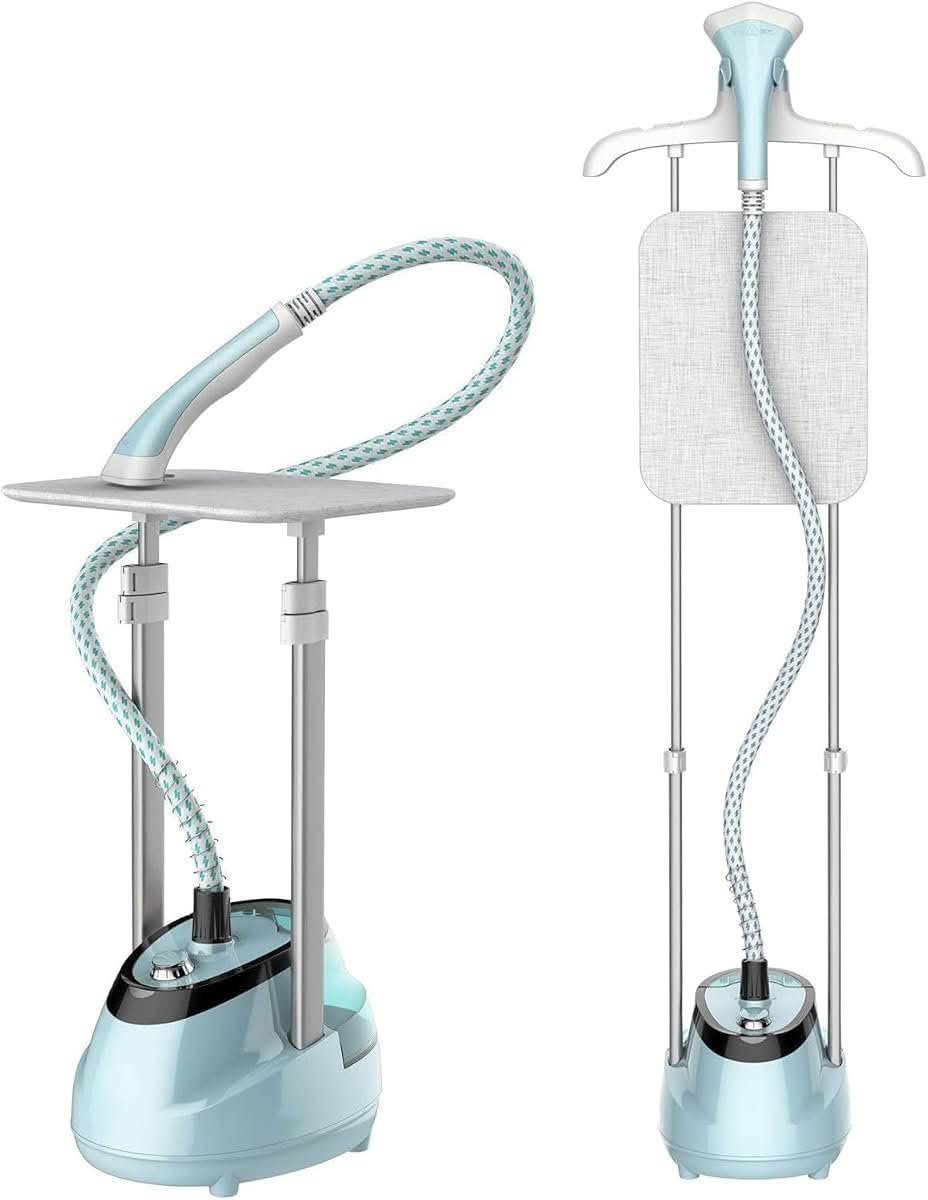
Where the Advwin above puts its emphasis on tank size, the Annmiir Upright Steamer puts it on power, running an 1800W element that is the highest wattage of any steamer in this guide. It shares the same standing, vertical layout, with the steam head mounted on a pole above a base unit. The extra wattage sits inside a similar frame rather than a bulkier one.
That higher wattage produces stronger, denser steam, which works through thicker fabrics like denim jackets or wool coats more effectively than a lower-powered unit managing the same task. Recovery time between steam bursts is also shorter, since the element has more power available to reheat the water passing through it. Between the two standing steamers in this guide, this is the one built for volume of power rather than volume of water.
Running at 1800W draws more power than any other model here, which is worth factoring in if a household is steaming on a shared circuit with other appliances running. Anyone whose wardrobe leans toward heavier fabrics that a lighter steamer struggles to fully relax will get more out of this than the alternatives. Buyers steaming mostly light shirts and blouses will not need the extra power this unit is built around.
Pros
- 1800W is the highest wattage in this guide
- stronger steam output suits heavier fabrics
- standing design keeps hands free while steaming
Cons
- higher power draw than every other model here
- standing footprint needs dedicated floor space
Key specs: standing/vertical design, 1800W, highest wattage in this guide
CHECK ON AMAZON4. Philips Handheld Steamer 5000 Series – Best for Delicate Fabrics
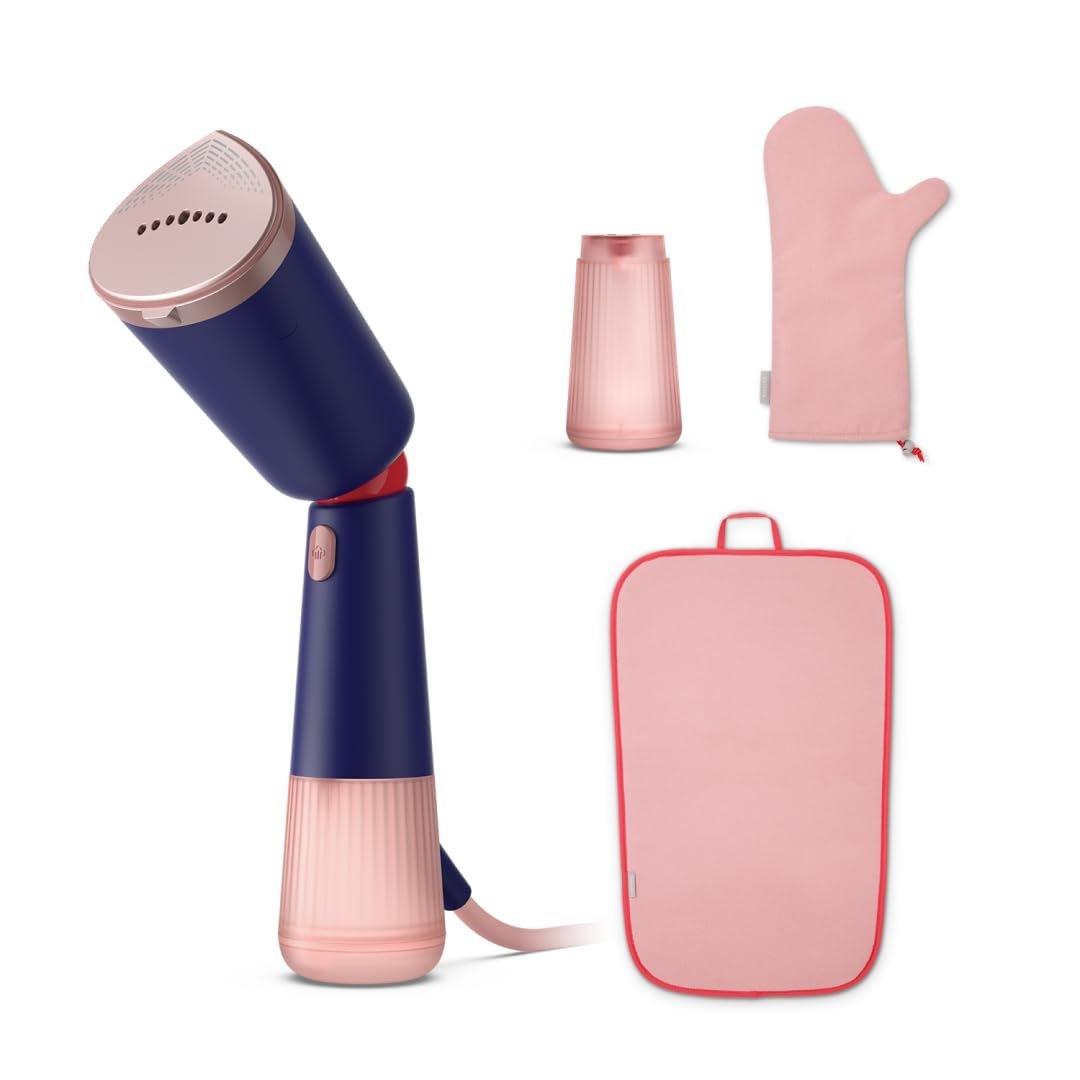
Philips brings its 5000 series to this guide as a handheld steamer built around gentle fabric care rather than raw power or tank size. The body is designed for control at close range, holding the steam head against delicate fabric without the bulk of a standing unit behind it. It returns this guide to a handheld design after two standing models, though it is aimed at a narrower job than either of them.
Steam output is tuned to be gentle enough for fabrics that scorch or water-mark easily, such as silk blouses or fine synthetic blends, rather than pushing maximum vapour through every pass. That restraint means it takes a steadier hand and a slower pass over the fabric compared with a higher-powered unit, but the fabric itself is less likely to be damaged. It is built for precision work on single items rather than working through a full basket quickly.
Buyers with a wardrobe heavy in delicate fabrics will get more consistent results from this than from a higher-wattage steamer that risks water-marking silk. It is less suited to anyone mainly steaming heavy cotton or denim, where the Annmiir above would clear wrinkles faster. It suits shoppers who prioritise fabric safety over speed.
Pros
- gentle steam output reduces risk to delicate fabrics
- handheld design allows precise control at close range
- Philips build quality backs a well-known appliance line
Cons
- gentler steam takes longer on heavier fabrics
- smaller effective coverage per pass than a standing unit
Key specs: handheld, Philips 5000 series, gentle fabric care
CHECK ON AMAZON5. Russell Hobbs Handheld Supreme Garment Steamer – Best All-Rounder Handheld
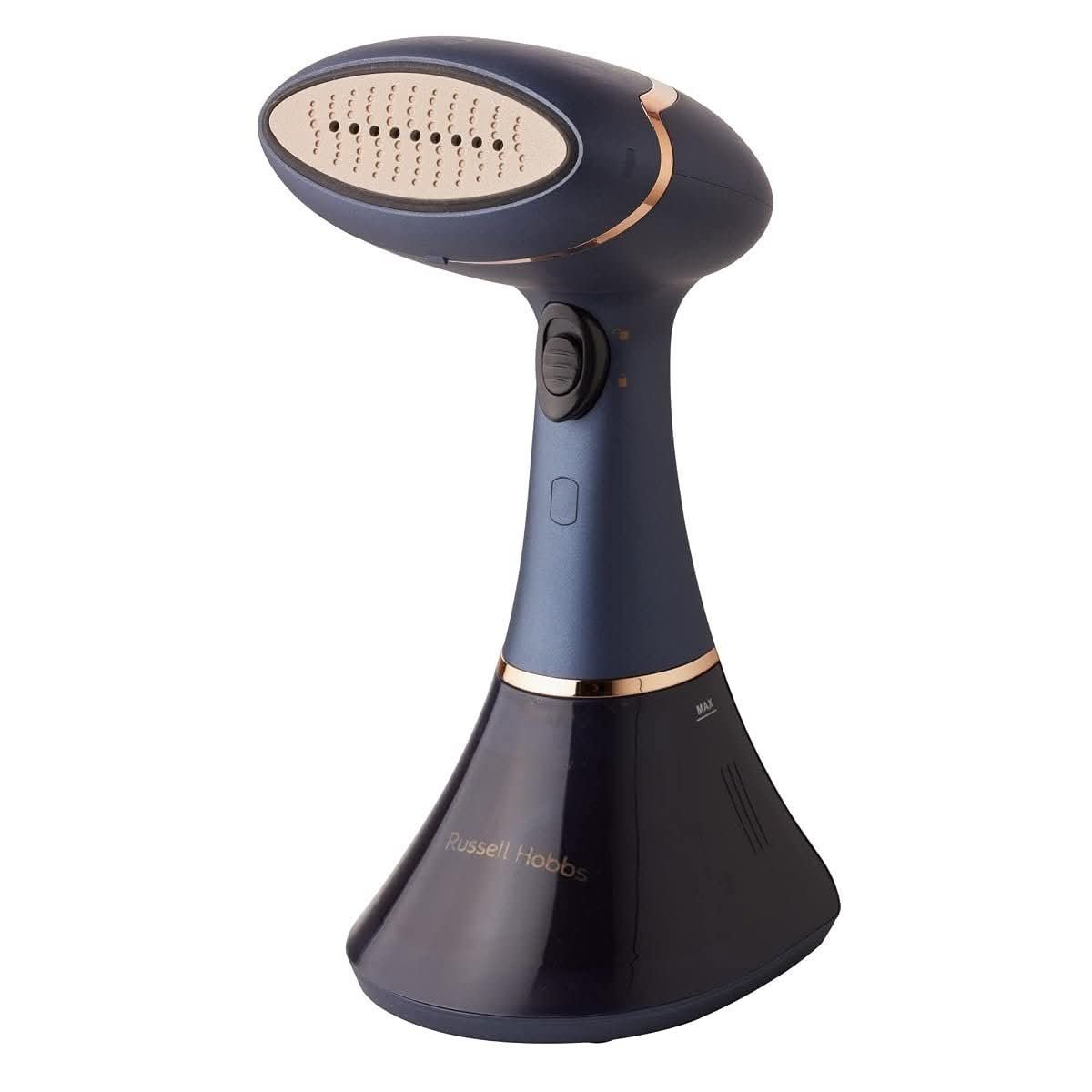
Model RHC410 from Russell Hobbs takes the handheld format the Philips above also uses, but aims it at general-purpose steaming rather than delicate fabrics specifically. The head and grip follow a familiar handheld shape, sized for everyday shirts, trousers and jackets rather than one narrow fabric type. It sits in the middle of this guide’s handheld options rather than at either extreme of gentle or powerful.
In use it handles the kind of mixed laundry basket most households actually have, moving between cotton shirts and synthetic jackets without needing to switch settings or attachments. It does not specialise the way the Philips or Annmiir do, which makes it a reasonable single steamer for a household that does not want to think about fabric type before switching it on. Performance sits squarely in the middle of the handheld models in this guide rather than leading on any one metric.
Because it does not lead on speed, power or gentleness, it is easy to overlook next to models with a sharper single selling point. A household steaming a genuine mix of fabrics week to week will likely get more consistent use from this than from a steamer built around one narrow strength. Anyone chasing the fastest heat-up or the largest tank in this guide should look elsewhere on this list.
Pros
- handles mixed fabric types without switching attachments
- RHC410 build suits everyday, general-purpose steaming
- comfortable handheld shape for regular use
Cons
- does not lead the guide on speed, power or tank size
- less specialised than the Philips for delicate fabrics
Key specs: handheld, model RHC410, general-purpose fabric steaming
CHECK ON AMAZON6. Sunbeam Power Steam Handheld Garment Steamer – Best Recognisable Brand
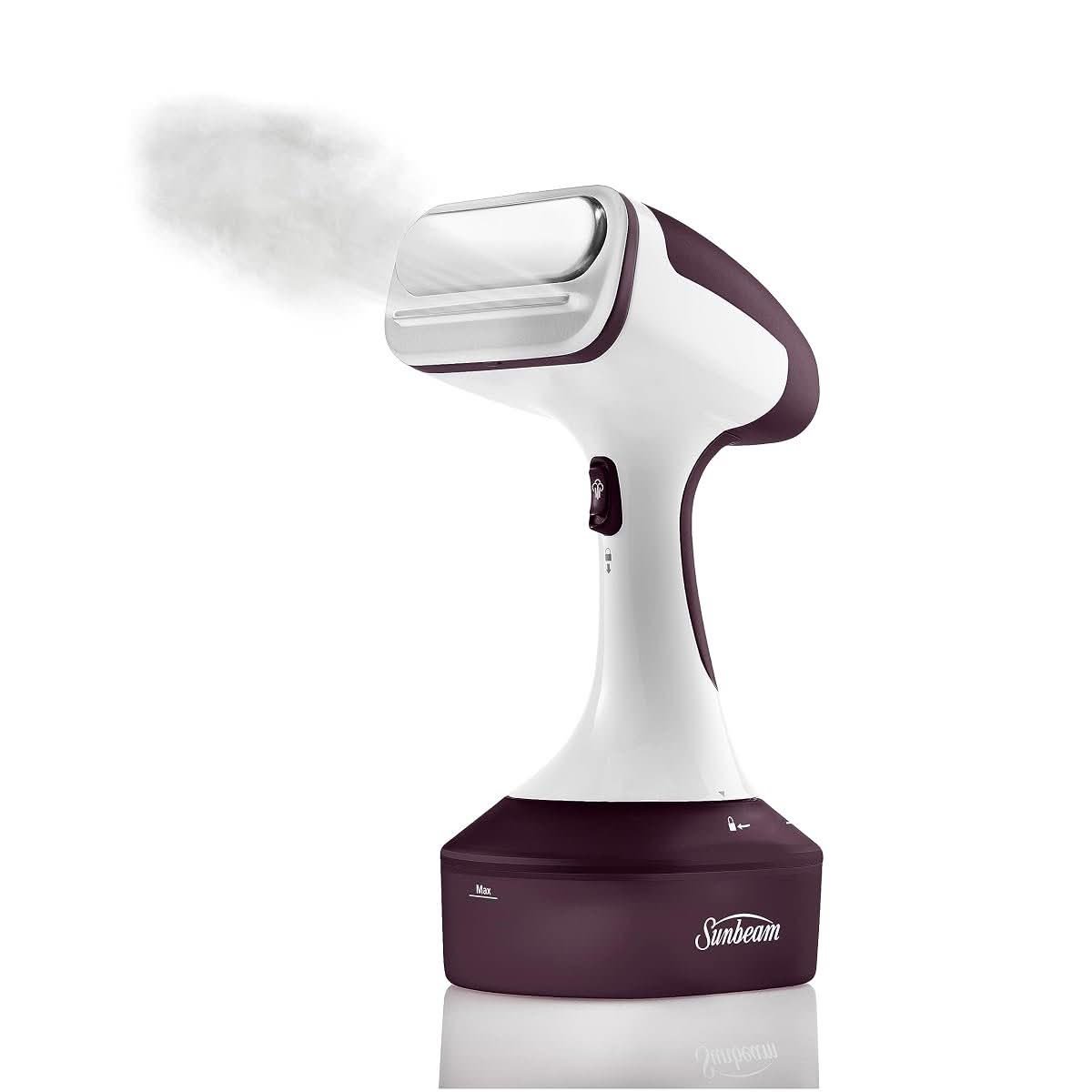
Sunbeam’s entry, model SG1000, is another handheld unit, and the name recognition of an established Australian small-appliance brand is the main thing separating it from the Russell Hobbs above rather than a change in form factor. Both are handheld, general-use steamers, but the Sunbeam trades on the backing of a brand most Australian households already own other appliances from. The physical design follows the same handheld shape as the other units in this half of the guide.
Day to day, the SG1000 performs the same core job as the other handheld steamers in this guide, heating water and pushing steam through fabric to loosen wrinkles on shirts, dresses and jackets. Its main practical advantage is the wider service and parts network that comes with a long-established brand, which matters if a part ever needs replacing. Steaming performance itself does not distinguish it sharply from the Russell Hobbs sitting above it in this guide.
Anyone who already owns other Sunbeam kitchen or laundry appliances and wants replacement parts or support to be straightforward may lean toward this one over a lesser-known brand. Buyers who do not care about brand recognition and just want the strongest specs on paper may prefer the Devanti or Annmiir elsewhere in this guide. Recognisable branding, not a standout spec, is what sets the SG1000 apart here.
Pros
- backed by an established Australian appliance brand
- wide parts and service network
- handles everyday fabrics as reliably as the other handhelds here
Cons
- does not outperform the other handheld models on raw specs
- brand recognition is the main differentiator, not steam output
Key specs: handheld, model SG1000, recognisable Australian brand
CHECK ON AMAZON7. Tefal Pure Pop Handheld Garment Steamer – Best Value Pick
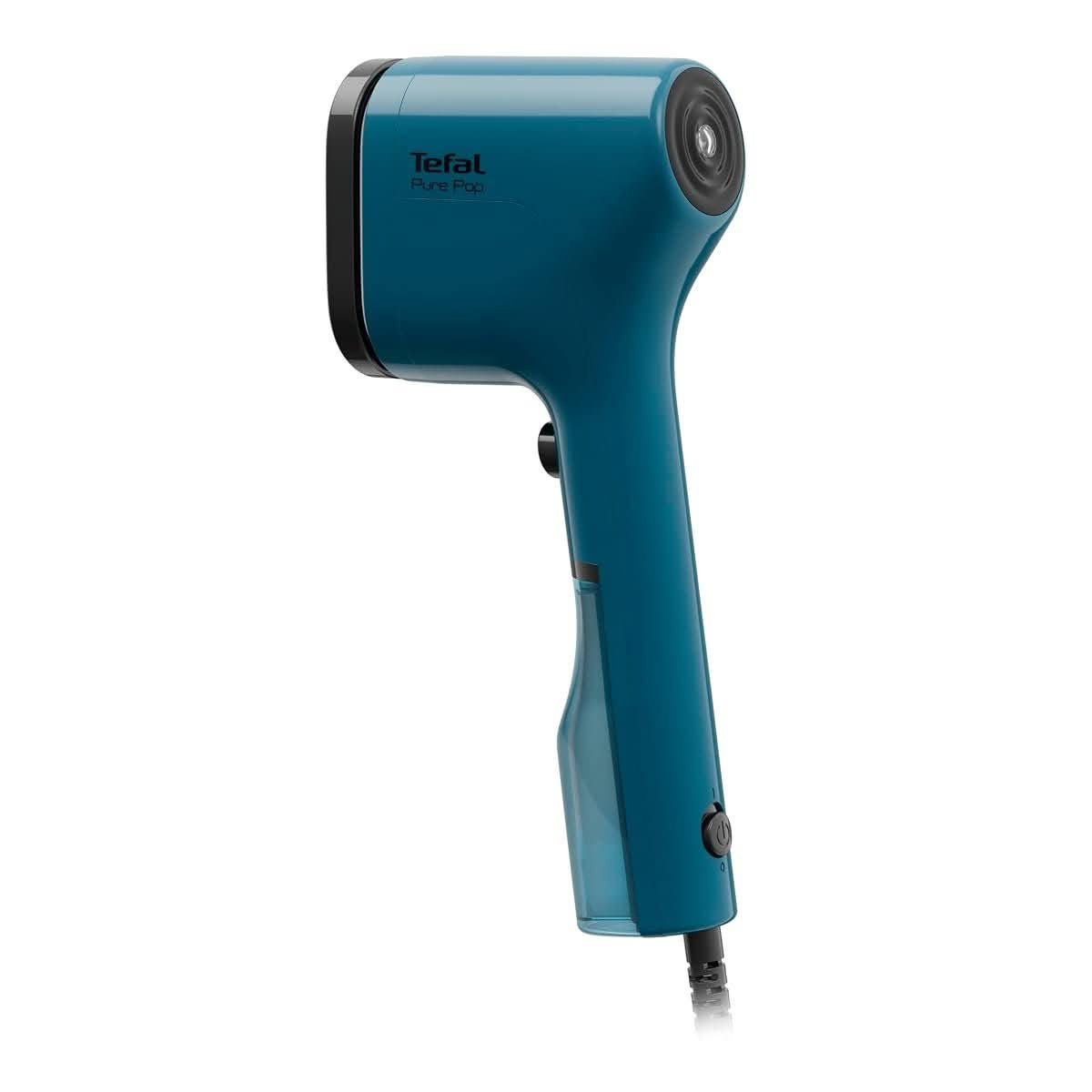
Rounding out this guide, the Tefal Pure Pop Handheld Garment Steamer packs a reversible lint pad and a travel bag into the most affordable handheld here, with the pad flipping between a fabric-safe side and a more aggressive hair-and-lint side depending on the job. It comes in four colour options, a small touch none of the other steamers in this guide bother with. The bundled travel bag doubles as protection for the unit when it is not clipped to a hanger at home.
Heat-up lands at 55 seconds from cold, slower than the Devanti’s 30 seconds but still fast enough for a same-morning touch-up, and steam output runs at 20 grams per minute once it gets going. That output sits below the higher-wattage Annmiir above but is enough to work through the everyday cottons and synthetics most wardrobes are made of. The reversible lint pad adds a genuine second function that the Sunbeam and Russell Hobbs above do not include.
Budget is where this one wins, coming in below every other steamer covered here while still including a lint pad and travel bag that some pricier models skip entirely. Anyone chasing the fastest heat-up or the strongest steam output on paper should look further up this list instead. For a first steamer, or a spare for a share house, the lower cost of entry matters more than shaving 25 seconds off heat-up time.
Pros
- includes a reversible lint pad for hair and fibre removal
- travel bag included at the lowest price point in this guide
- available in four colour options
Cons
- 55-second heat-up is slower than the Devanti
- 20g/min steam output trails the higher-wattage standing models
Key specs: 1300W, 20g/min steam output, 55-second heat-up, reversible lint pad, travel bag included
CHECK ON AMAZONHow to Choose Garment Steamer
Heat-up time determines how long a wait stands between switching a steamer on and pressing the first garment. The fastest handheld units in this guide reach steaming temperature in about 30 seconds, while larger standing models with bigger tanks can take closer to 90 seconds. Anyone steaming minutes before leaving the house should weigh heat-up time more heavily than tank size.
Water tank capacity and continuous run-time decide how many garments get steamed before a refill interrupts the process. Compact handheld tanks around 150 to 300 millilitres suit one or two garments at a time, while standing models holding over 2 litres can run continuously for 15 minutes or more. A larger household doing a full laundry basket in one sitting will notice tank size far more than someone steaming a single shirt.
Handheld versus standing form factor changes how the steaming itself is done rather than just how it looks. Handheld units are held against the fabric and packed away quickly, while standing steamers clip the garment to a hanger bar and free up both hands during use. Standing designs also need a clear patch of floor, which matters in a smaller apartment or share house.
Fabric compatibility and safety on delicate materials is worth checking before switching a steamer to full output. Lower, gentler steam settings suit silk, fine synthetics and other fabrics prone to water marking, while higher-powered units are built for thicker fabrics like denim and wool. Running a high-output steamer too close to delicate fabric risks the same kind of damage the steamer is meant to avoid.
Steam output and pressure is largely set by the wattage of the heating element, with higher wattage producing denser, more forceful steam. An 1800W element pushes through thick fabric faster than a 1500W one doing the same job, but it also draws more power from the circuit it is plugged into. Matching output to the fabrics actually being steamed avoids paying for power that never gets used.
Portability for travel comes down to size, weight and whether the unit is a genuine handheld or a scaled-down travel-specific design. A steamer built for home use can be too bulky to justify packing in a suitcase, even if it performs well on the ironing board at home. Anyone travelling regularly for work should weigh a compact handheld model against how often they will actually pack it before buying one.
Frequently Asked Questions
What is the difference between a garment steamer and an iron?
A garment steamer uses hot vapour to relax fabric fibres on a hanging garment, while an iron presses the fabric flat with direct heat and pressure on a board. A steamer cannot produce a sharp crease down trousers or push through very heavy fabric the way an iron can, so the two tools solve different jobs rather than replacing each other.
Can a garment steamer remove wrinkles as well as an iron?
It removes general wrinkling from everyday fabrics like cotton shirts and dresses, but it will not flatten a crease line or work through heavyweight fabric as effectively as an iron. For most day-to-day garments hung straight after steaming, the result looks equivalent to ironing.
How long does a garment steamer take to heat up?
Handheld models in this guide heat up in as little as 30 seconds, while larger standing steamers with bigger tanks can take up to about 90 seconds. Heat-up time is usually listed in the product specifications and is worth checking against how often a steamer will be used for last-minute touch-ups.
Is a handheld or standing garment steamer better?
A handheld steamer suits quick single-garment touch-ups and travel because it is compact and needs no assembly, while a standing steamer suits steaming several garments, curtains or bedding in one session because it holds a larger tank and frees up both hands. Neither format is better outright, the choice depends on how much steaming gets done in a typical week.
Can a garment steamer be used on all fabrics?
Most fabrics handle steaming well, but delicate materials like silk or fine synthetics need a gentler steam setting to avoid water marking, and very heavy fabrics like thick wool coats may need a higher-wattage unit to see results. Checking the garment’s care label before steaming is still worth doing, the same as before ironing.
How much water does a garment steamer tank usually hold?
Handheld steamers in this guide hold between 160 and 300 millilitres, while standing models hold significantly more, up to 2.7 litres in the largest unit covered here. Larger tanks mean longer continuous steaming before a refill, which matters most when working through several garments in one sitting.
Verdict
For most Australian households, the Devanti Clothes Steamer and the Advwin Standing Garment Steamer cover the two ends of what buyers actually need, one for fast single-garment touch-ups and one for steaming multiple hanging garments in a single session. Anyone steaming heavier fabrics regularly should also weigh up the Annmiir Upright Steamer, since its 1800W element is the highest wattage of any steamer in this guide.