The best coffee machines in Australia are benchtop or portable appliances that force or drip hot water through ground coffee to make espresso, filter coffee or milk based drinks at home. They differ from a kettle and a plunger in that they control water temperature and pressure, which is what separates a repeatable cup from a variable one.
Four types cover almost every kitchen. Manual espresso machines use a portafilter and give the user control over grind, dose and tamp. Bean to cup machines add an integrated grinder so whole beans go straight in. Capsule machines trade cost per cup for speed and zero cleanup. Filter and drip machines brew a carafe for several people rather than a single cup.
Espresso extracts at about 9 bar, or roughly 130 psi, whatever the 15 or 20 bar figure printed on the box says, because that number describes the pump maximum rather than the brewing pressure. The specifications that actually decide value are whether a grinder is built in, boiler count, water tank size, how milk is textured and how much bench space the machine claims.
This guide compares ten coffee machines and portable brewers held in Australian stock, from compact manual espresso machines to fully automatic bean to cup units, capsule machines and filter brewers. Anyone pairing a grinderless machine with a separate burr unit should read the best coffee grinders in Australia alongside this guide.
Quick Picks
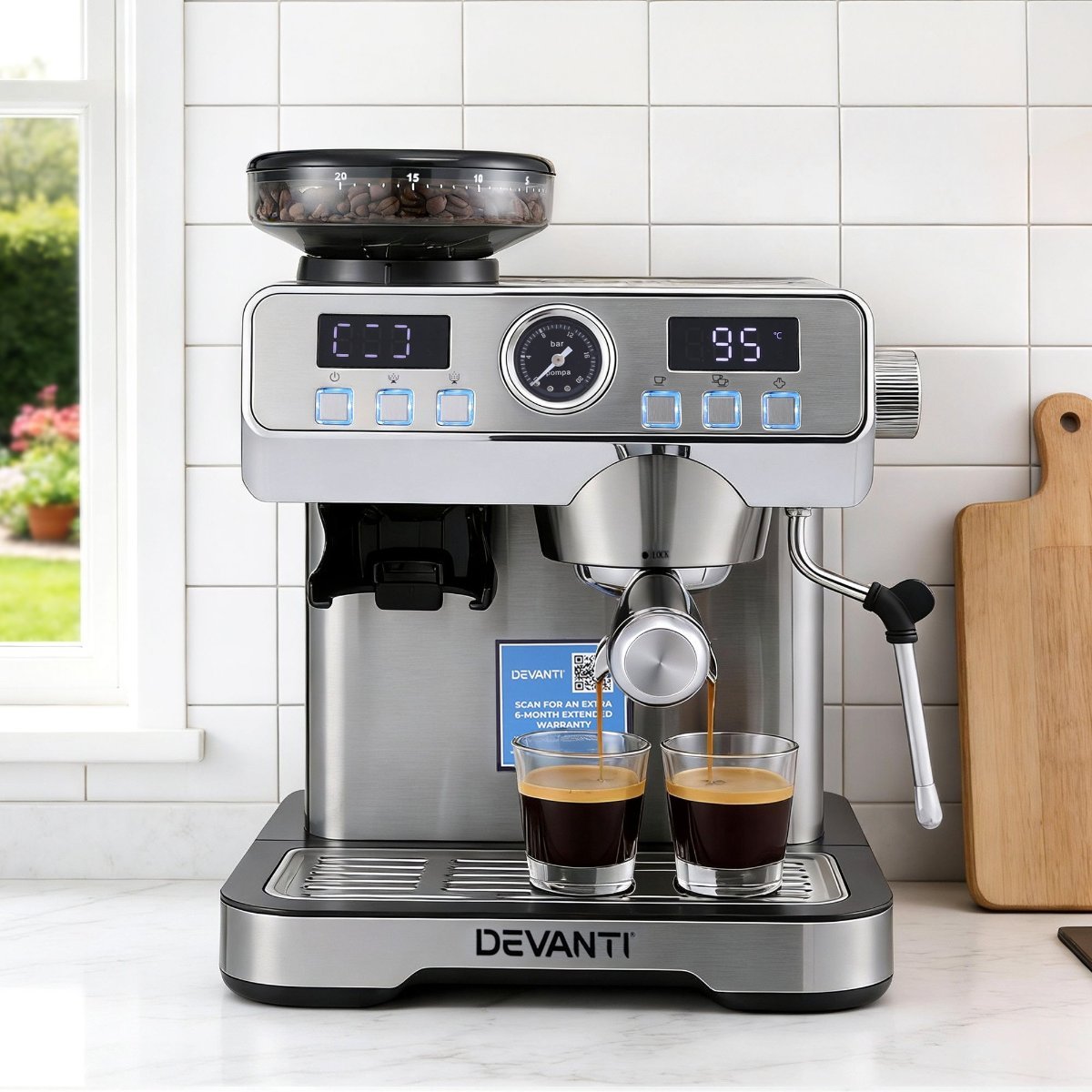
Devanti Espresso Latte Maker with Grinder
A 120g bean box grinds straight into the portafilter, so whole beans go in without a second appliance on the bench.
CHECK CURRENT PRICE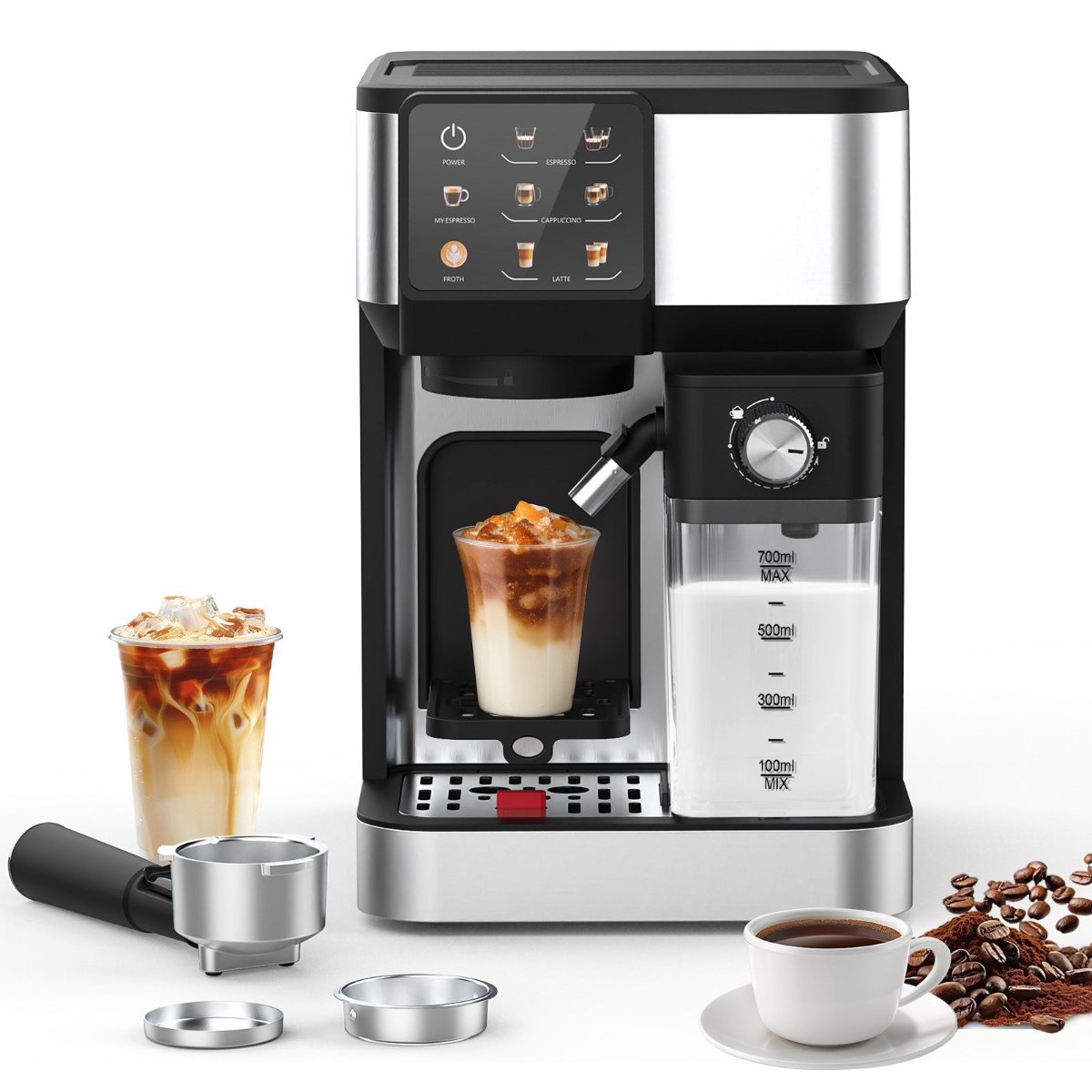
Advwin Espresso Coffee Machine with Milk Frother
Two 1300W boilers pull a shot and froth milk at the same time instead of switching between the two.
CHECK CURRENT PRICE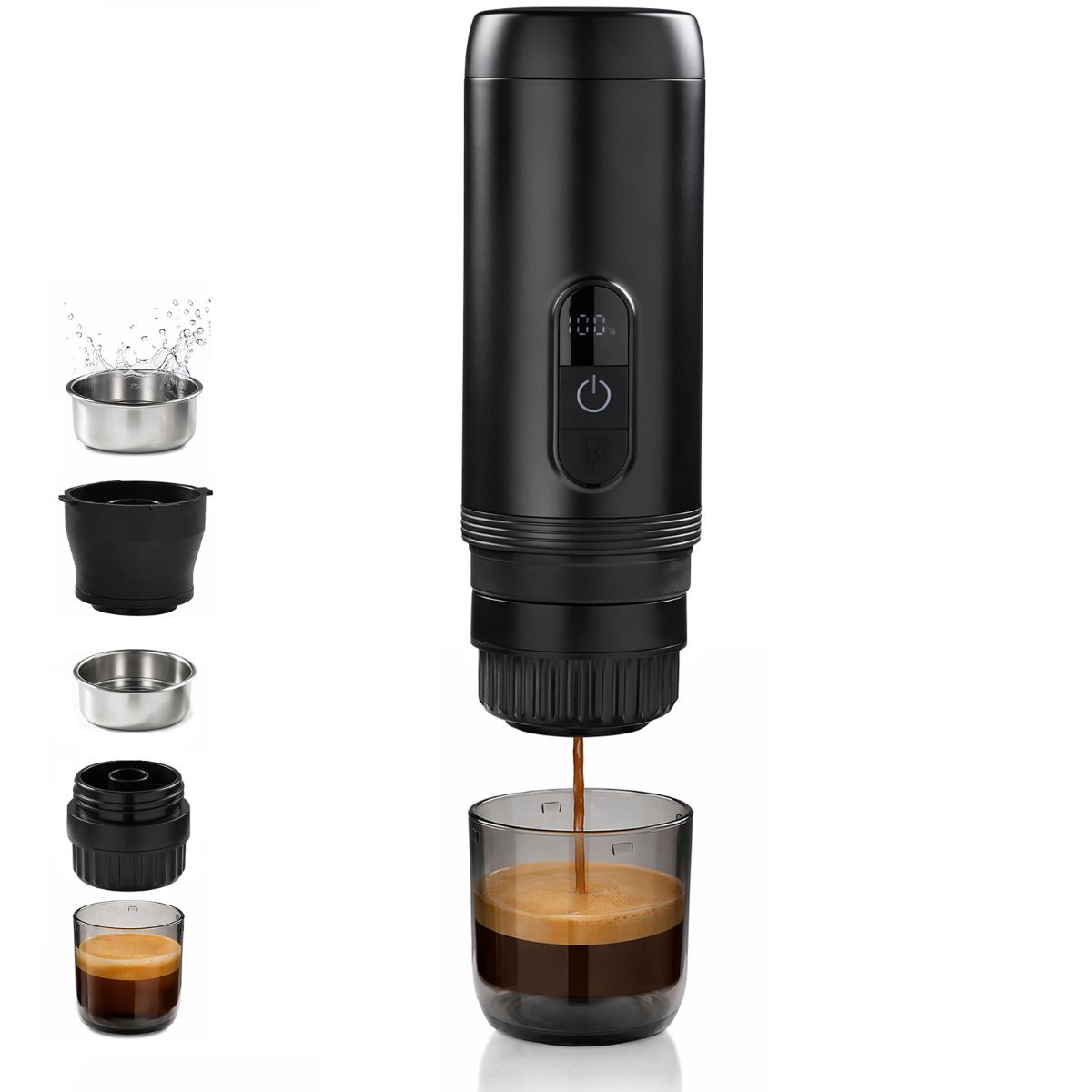
Advwin Portable Espresso Machine
Heats its own water from a 7800mAh battery, so espresso happens with no kettle and no power point.
CHECK CURRENT PRICEThe 10 Best Coffee Machines in Australia Compared
| Product | Link | Type | Best For | Key Spec |
|---|---|---|---|---|
| Devanti Espresso Latte Maker with Grinder | Check price | Bean to cup espresso | Grinding without a second appliance | 20 bar, 2L tank, 120g bean box |
| Devanti 20 Bar Espresso Cafe Maker | Check price | Manual espresso | Small benchtops | 20 bar, 1360W, 1.2L tank |
| Advwin Espresso Coffee Machine with Milk Frother | Check price | Dual boiler espresso | Brewing and frothing at once | 2 x 1300W, 20 bar, 2L tank |
| Advwin Portable Espresso Machine | Check price | Portable espresso | Travel and camping | 20 bar, 7800mAh, 100W heater |
| Advwin Portable Coffee Grinder and Drip Maker | Check price | Portable grind and brew | Fresh grinding away from home | 7 grind settings, 300ml mug |
| Breville Barista Express | Check price | Bean to cup espresso | Learning manual espresso | 54mm portafilter, 250g hopper, 2L |
| Breville Barista Touch | Check price | Touchscreen espresso | One touch milk drinks | ThermoJet 3 second heat up |
| DeLonghi Eletta Explore Perfetto | Check price | Fully automatic | Hot and cold milk drinks | LatteCrema, 3.5 inch TFT |
| Nespresso Vertuo Next | Check price | Capsule machine | Zero routine and zero cleanup | Centrifusion, 5 cup sizes |
| AUSPURE Programmable Drip Filter Machine | Check price | Filter coffee | Brewing for a table | 12 cup, 1.8L, mesh filter |
1. Devanti Espresso Latte Maker with Grinder – Best Budget Bean to Cup
An integrated grinder is the reason this one leads the guide. A 120g bean box sits on top and grinds straight into the portafilter, so whole beans go in and espresso comes out without a second appliance competing for bench space. The body is metal rather than moulded plastic, and the footprint is 27 x 27 x 37cm.
A 20 bar pump and an instant heat system mean it is ready in seconds rather than minutes, and an LCD shows brew temperature rather than leaving it to guesswork. The 2L tank lifts out for filling, the drip tray pulls out for rinsing, and a mug warmer on top holds cups at temperature while milk is frothing. Single and double cup buttons cover the two shots most households actually pull.
Grinding power is 120W against 1158W to 1258W for the boiler, so the grinder is adequate rather than exceptional and coarse adjustment is limited compared with a dedicated burr unit. Aluminium filters rather than stainless are the other compromise at this level. For anyone who wants to grind fresh without buying two appliances, this is the cheapest honest route to it.
Pros
- Integrated grinder with a 120g bean box
- 20 bar pump with instant heat
- 2L removable tank
- LCD temperature display
- Mug warmer on top
Cons
- Grinder adjustment is limited
- Aluminium filter rather than stainless
- Tallest machine in this guide at 37cm
Key specs: 20 bar pump, 1158W to 1258W, 120W grinder, 2L water tank, 120g bean house, aluminium filter, metal body, 27 x 27 x 37cm, 75cm cord, single and double cup, mug warmer
CHECK CURRENT PRICE2. Devanti 20 Bar Espresso Cafe Maker – Best Compact Espresso
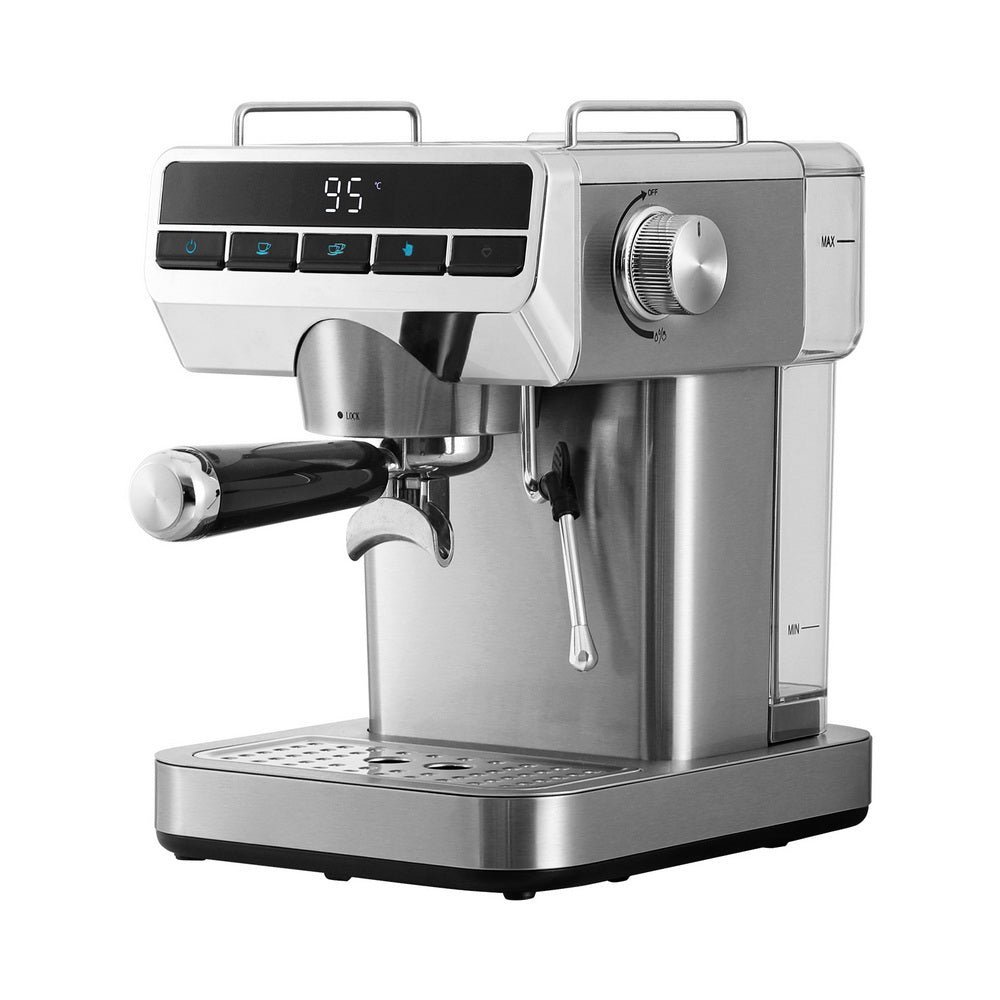
Stripped of the grinder, the same 20 bar platform gets smaller and simpler. The footprint drops to 21 x 27 x 32.5cm, which is the difference between fitting under an overhead cupboard and not. Housing is full metal, and a 1360W element brings it up to temperature from cold in seconds.
It ships with single and double shot filters, a die cast aluminium portafilter and a combined tamper and spoon, so nothing else needs buying to pull a first shot. A steam wand handles milk, an LED reads out temperature, and the mug warmer carries over from the machine above. The tank is 1.2L and lifts out.
Pre ground coffee or a separate grinder is the trade, and grind freshness is the single biggest lever on espresso quality, so this asks more of the beans than the model above does. The 1.2L tank also means more frequent refilling in a household pulling several drinks. Where bench space decides the purchase, that is a reasonable price to pay.
Pros
- Smallest espresso footprint here at 21cm wide
- Full metal housing
- Die cast aluminium portafilter included
- 1360W instant heat
- Tamper and both filter baskets supplied
Cons
- No grinder, so beans need grinding separately
- 1.2L tank refills often
- Aluminium rather than stainless filters
Key specs: 20 bar pump, 1360W, 1.2L removable tank, aluminium filter, metal body, 21 x 27 x 32.5cm, LED temperature display, single and double cup, steam wand, mug warmer
CHECK CURRENT PRICE3. Advwin Espresso Coffee Machine with Milk Frother – Best for Simultaneous Brewing
Two 1300W boilers run at once here, which is the specification that separates this from everything above it. One heats brew water while the other drives steam, so a shot pulls while milk froths instead of waiting for a single boiler to switch duties. That is the bottleneck on every single boiler machine in this guide.
A 20 bar piston pump feeds a stainless steel filter, and NTC temperature control holds the brew rather than letting it drift between shots. The touch panel carries nine illuminated buttons mapped to one touch recipes, the water tank is 2L and the separate milk tank holds 700ml, both detachable. An adjustable cup stand clears 125mm, so a travel mug fits under it rather than only an espresso glass.
An automatic milk system is more parts to clean than a bare steam wand, and the 700ml tank needs emptying and rinsing rather than simply wiping a wand. It is also the largest machine here. Households making two milk drinks at once will notice the difference every single morning.
Pros
- Dual boilers brew and froth at the same time
- Automatic milk frother with a 700ml tank
- Stainless steel filters
- Nine button touch panel with one touch recipes
- Cup clearance to 125mm
Cons
- Milk system is more to clean than a plain wand
- Largest footprint in this guide
- Milk tank needs emptying between uses
Key specs: Dual boiler, 2 x 1300W, 20 bar piston pump, 2L water tank, 700ml milk tank, stainless steel filters, NTC temperature control, 9 button touch panel, adjustable cup stand to 125mm
CHECK CURRENT PRICE4. Advwin Portable Espresso Machine – Best for Travel
Nothing about this one assumes a kitchen. A 7800mAh battery and a 100W heating element mean it takes cold water and produces hot espresso with no kettle, no power point and no bench, which is the whole reason it exists. A digital display reads temperature, battery and brewing progress.
It accepts Nespresso Original capsules, Dolce Gusto capsules and ground coffee, so it is not locked to one format the way a benchtop capsule machine is. The pump is rated at 20 bar, which is the same headline figure as the full sized machines above. One touch starts extraction once the water is up to temperature.
Heating water from cold on battery is slow next to any mains machine, and the battery is the limit on how many cups come out before it needs a USB charge. Capacity is one cup at a time. For a caravan, a campsite or a desk far from a kitchen, nothing else in this guide competes.
Pros
- Heats water from cold with no kettle
- Takes Nespresso Original, Dolce Gusto and ground coffee
- 7800mAh battery
- Digital temperature and battery display
- Genuinely pocketable
Cons
- Slow to heat compared with mains machines
- One cup per cycle
- Battery limits cups between charges
Key specs: 20 bar pump, 100W heating system, 7800mAh rechargeable battery, Nespresso Original and Dolce Gusto capsule and ground coffee compatible, digital display, one touch extraction, USB rechargeable
CHECK CURRENT PRICE5. Advwin Portable Coffee Grinder and Drip Maker – Best Grind and Brew
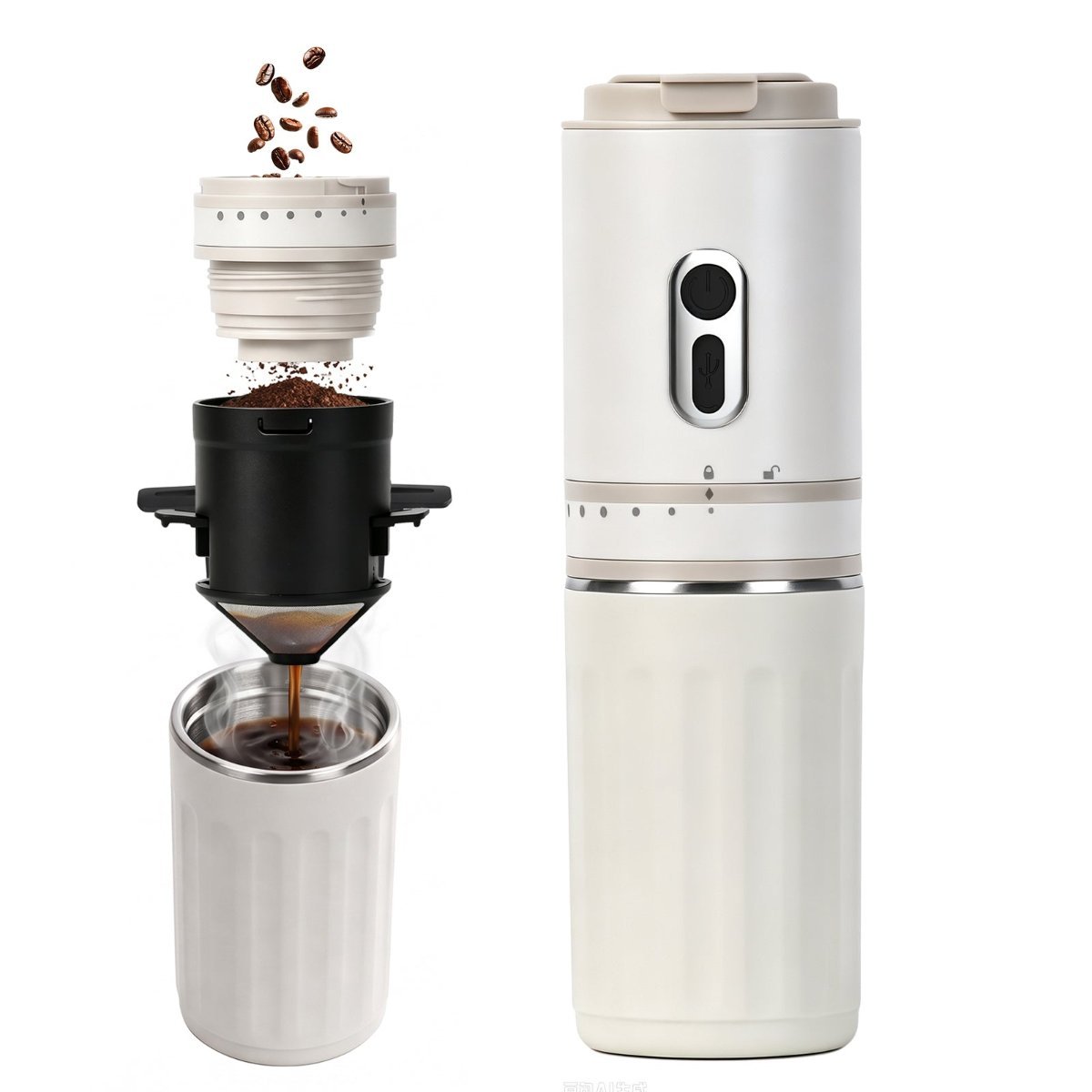
Grinding and drip brewing collapse into a single travel mug here. Beans go in the top, seven grind settings cover coarse through fine, and hot water poured over a reusable stainless filter drips straight into a 300ml insulated mug. There is no paper, no separate grinder and no carafe.
The battery manages roughly 60 grinding cycles per charge and refills over USB-C, so a week away needs no adapter beyond a phone cable. The stainless filter also takes loose leaf tea, which widens what the mug is good for on a long trip. Everything packs into the mug itself.
Hot water still has to come from somewhere, unlike the espresso unit above which heats its own, so this pairs with a kettle or a camp stove rather than replacing one. Drip is also a weaker, longer drink than espresso by design. Worth carrying only where fresh grinding matters more than speed.
Pros
- Grinder and drip brewer in one body
- Seven adjustable grind settings
- Around 60 grinds per charge
- Reusable stainless filter, no paper
- Filter also takes loose leaf tea
Cons
- Needs hot water from elsewhere
- Makes drip rather than espresso
- 300ml is one large cup
Key specs: 7 adjustable grind settings, 300ml insulated stainless steel travel mug, reusable stainless steel filter, rechargeable battery around 60 grind cycles, USB-C charging, loose leaf tea compatible
CHECK CURRENT PRICE6. Breville Barista Express – Best for Home Baristas
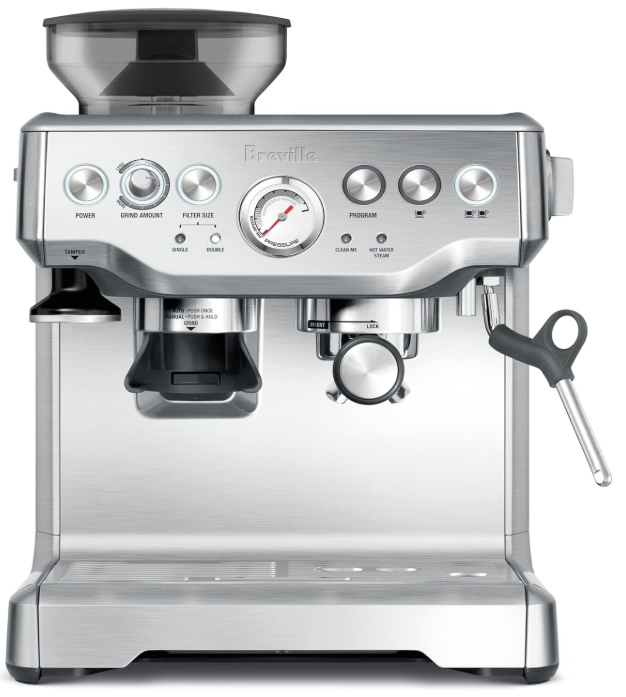
Beans go in one end and espresso comes out the other in under a minute, with every variable still under the user’s hand. A 250g hopper feeds a conical burr grinder with dose control, and the ground coffee lands directly in a 54mm stainless portafilter rather than a plastic chute. The tank is 2L.
Where it differs from the budget bean to cup machines above is the level of manual control. Grind size, dose and tamp are all adjusted by the person making the coffee, and the machine supplies low pressure pre infusion and a steam wand rather than automating the drink. Single and double baskets and an integrated tamper are included.
That control is also the cost, because it takes practice, and a first week of shots will be worse than a capsule machine’s. It is the largest investment in this guide by a wide margin. This is the machine home baristas end up recommending to each other, which is a different recommendation from the easiest machine to live with.
Pros
- Conical burr grinder with dose control
- 54mm stainless steel portafilter
- Low pressure pre infusion
- Manual control over grind, dose and tamp
- 250g bean hopper and 2L tank
Cons
- Real learning curve before good shots
- Highest cost here
- Takes significant bench space
Key specs: Breville BES870BSS, integrated conical burr grinder, 250g bean hopper, 54mm stainless steel portafilter, 2L water tank, low pressure pre infusion, steam wand, single and double wall baskets, integrated tamper
CHECK ON AMAZON7. Breville Barista Touch – Best Touchscreen Control
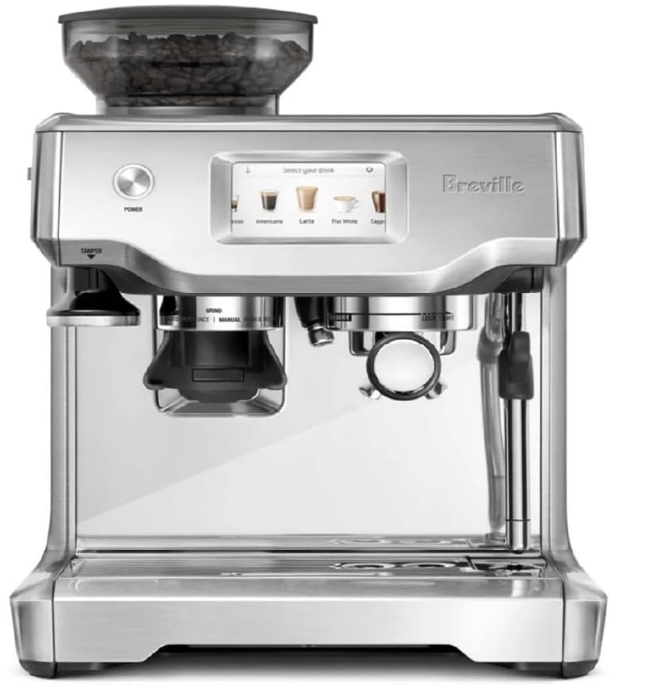
The touchscreen is the whole difference between this and the machine above it. Drinks are selected on screen and the machine sets grind, dose and milk texture to match, which removes most of the guesswork that makes the manual version hard to learn. The grinder and portafilter underneath are the same idea.
A ThermoJet heating system reaches extraction temperature in about three seconds rather than the warm up a boiler needs, so the first coffee of the day is not a wait. Dose control grinding happens at a single touch, and the milk wand textures automatically to a set temperature instead of by ear. Custom drinks can be saved.
Automation narrows the ceiling as well as the floor, so an experienced hand will extract more from the manual model at lower cost. The screen is also another component that can fail. Pay the premium only where the screen genuinely replaces the learning curve rather than sitting on top of it.
Pros
- Guided touchscreen removes most guesswork
- ThermoJet heats in around three seconds
- Automatic milk texturing to a set temperature
- Saves custom drinks
- Same grinder and portafilter approach as the manual model
Cons
- Costs more than the manual version
- Automation caps what an experienced user can adjust
- Screen is another failure point
Key specs: Breville BES880BSS, touchscreen interface, ThermoJet heating system, dose control grinding, automatic milk texturing, low pressure pre infusion, digital temperature control, customisable saved drinks
CHECK ON AMAZON8. DeLonghi Eletta Explore Perfetto – Best Fully Automatic
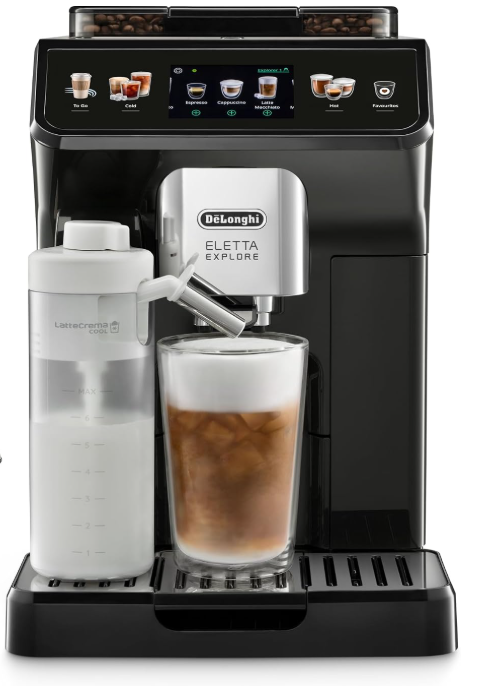
Cold milk foam is the trick this one has and nothing else in the guide does. The LatteCrema system froths hot or cold, which is what makes a genuine iced latte at home rather than hot coffee poured over ice that melts into a weak drink. Recipes run from a 3.5 inch colour display.
It is bean to cup end to end, so beans are ground, dosed, tamped, extracted and the milk textured with no hand on any stage. Both hot and iced recipes are built in, and the milk carafe handles the switch between them. The display steps through the menu rather than relying on symbols.
Fully automatic means the drink is the machine’s decision rather than the user’s, and no adjustment recovers a shot the machine has decided is finished. The milk carafe is more cleaning than a wand. Iced coffee made properly at home is the feature that justifies it, and for a household that does not want that, the cheaper automatics do the hot drinks equally well.
Pros
- Hot and cold automatic milk frothing
- Genuine iced coffee recipes
- Bean to cup with no manual stage
- 3.5 inch colour display menu
- Milk carafe handles hot and cold
Cons
- No manual control over extraction
- Milk carafe needs regular cleaning
- Premium price for the cold milk feature
Key specs: DeLonghi ECAM450.55.G, fully automatic bean to cup, LatteCrema hot and cold milk frothing, hot and iced coffee recipes, 3.5 inch TFT display, integrated grinder, removable milk carafe
CHECK ON AMAZON9. Nespresso Vertuo Next – Best Capsule Machine
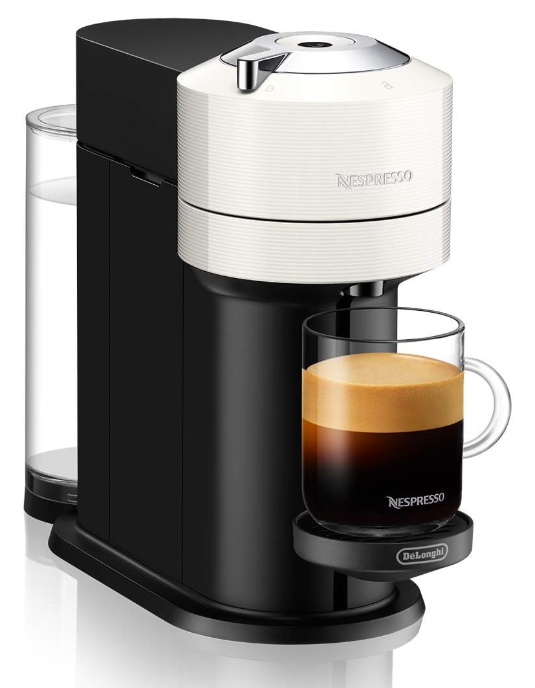
Capsules remove the variables. There is no grind to dial in, no dose to weigh and no tamp to get level, because a barcode on each capsule tells the machine the volume, temperature and spin speed to use. Centrifusion spins the capsule rather than forcing water through it under pressure.
Five cup sizes run from a 40ml espresso to a 545ml carafe, which is a wider range than any other capsule format manages, and heat up takes about 30 seconds. The 1500W element and one touch operation mean the gap between deciding on coffee and holding it is under a minute. The machine is built from 54 per cent recycled plastic.
The format is the catch, because Vertuo capsules are proprietary and cost far more per cup than beans, and the machine is worthless without them. Crema comes from the spin rather than from pressure, which tastes different from espresso rather than the same. Capsule lock in is the price of never thinking about coffee again.
Pros
- No grind, dose or tamp to learn
- Five cup sizes to 545ml
- Around 30 second heat up
- Barcode sets every parameter automatically
- Made from 54 per cent recycled plastic
Cons
- Proprietary capsules cost far more per cup
- Locked to one capsule ecosystem
- Not espresso in the traditional sense
Key specs: DeLonghi ENV120.W, Centrifusion extraction, barcode capsule recognition, 5 cup sizes from 40ml to 545ml, around 30 second heat up, 1500W, one touch operation, welcome capsule set included
CHECK ON AMAZON10. AUSPURE Programmable Drip Filter Coffee Machine – Best Filter Coffee
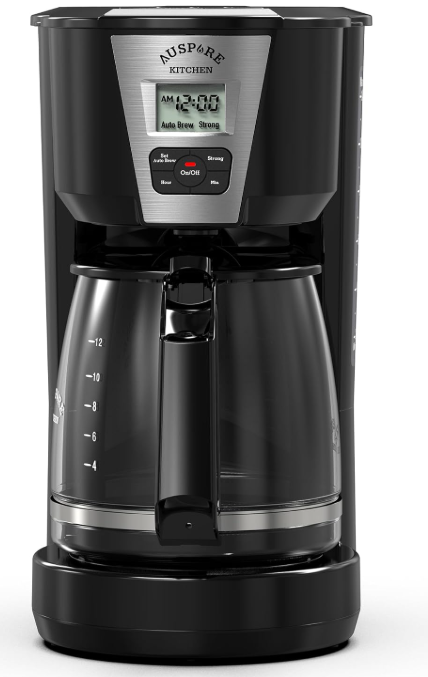
Filter coffee is a different drink from espresso and this is the only machine here that makes it properly. A 1.8L reservoir brews twelve cups into a glass carafe, which is a jug for a table rather than a cup for a person. Strength control adjusts how long the water sits in the grounds.
It is programmable, so the timer can have coffee waiting before anyone is awake, and a keep hot plate holds the carafe at temperature afterwards. The permanent mesh filter removes paper from the running cost entirely. A water window with measurement marks means the volume is set by eye rather than by counting cups.
Drip is weaker and longer than espresso by design, and no setting on this machine produces a short intense shot or textures milk. It is a single purpose appliance. Brewing for a table rather than a cup is where it wins, and that is a narrower job than most of this guide covers.
Pros
- Twelve cups from one brew
- Programmable timer for a set wake up time
- Permanent mesh filter, no paper cost
- Strength control
- Keep hot plate and water level window
Cons
- Cannot make espresso or texture milk
- Glass carafe rather than insulated
- Single purpose machine
Key specs: AUSPURE AusBrew-1812, 12 cup capacity, 1.8L reservoir, programmable timer, brew strength control, permanent mesh filter, LCD display, keep hot plate, glass carafe, water level window
CHECK ON AMAZONHow to Choose a Coffee Machine
Decide whether you want control or a drink. A manual espresso machine hands over grind, dose and tamp, and rewards practice with a better cup than any automatic makes. A fully automatic or capsule machine removes those decisions and delivers a consistent drink from the first day. Neither is better in the abstract, and the wrong choice is the expensive one.
Ignore the bar rating on the box. Espresso extracts at around 9 bar. A 20 bar pump is a maximum figure, not a brewing figure, and every machine in this guide over 9 bar regulates down before the water reaches the coffee. Grinder quality and temperature stability change the cup far more than the headline pressure does.
Count the boilers if more than one person drinks milk coffee. A single boiler must finish brewing before it can make steam, which adds a wait to every second drink. Dual boiler machines do both at once. In a one coffee household this is irrelevant, and in a four coffee household it decides how the morning goes.
Measure the bench before anything else. Height is the constraint people forget, because a machine with a bean hopper on top needs clearance under the overhead cupboards, not just floor space. The machines here run from 21cm wide to a footprint that claims a corner permanently. A machine that does not fit gets used until it annoys someone and then stops being used.
Budget for water, not just the machine. Scale is the most common cause of early failure, and Adelaide and Perth water is harder than Melbourne or Hobart, so descaling intervals in the manual are a starting point rather than a rule. A filter jug for the tank costs little and extends the machine’s life. Households already running several appliances on one bench should also weigh the best ice maker machines in Australia before committing the last of the counter to coffee.
Work out the cost per cup before the cost of the machine. A capsule machine is cheapest to buy and dearest to run, and the crossover against whole beans arrives faster than most buyers expect at two or three cups a day. Every machine sold here carries consumer guarantees under Australian Consumer Law regardless of the manufacturer’s own warranty period.
Frequently Asked Questions
Do you need a separate grinder for a coffee machine?
Only if the machine has no grinder built in. Machines with an integrated grinder take whole beans directly, while a manual espresso machine without one needs pre ground coffee or a separate grinder to reach the same freshness.
What pump pressure does a home espresso machine need?
Nine bar is what espresso actually extracts at. Machines advertised at 15 or 20 bar describe the pump maximum rather than the brewing pressure, so a higher number on the box does not mean a better shot.
How long does a home coffee machine last?
Five to ten years is typical with regular descaling. Machines in hard water areas fail sooner, and scale build up in the boiler is the single most common cause of a machine dying early.
Are capsule machines cheaper to run than bean to cup?
No. Capsules cost far more per cup than whole beans, and the gap widens with daily use. Capsule machines win on speed, consistency and cleanup rather than on running cost.
Do coffee machines need descaling in Australia?
Yes, and the interval depends on local water hardness. Adelaide and Perth water is harder than Melbourne or Hobart, so machines in those cities need descaling more often than the manual suggests.
Can a portable espresso machine replace a benchtop one?
For one or two cups away from a kitchen, yes. Battery powered units heat a small volume of water and pull a single shot, so they do not keep up with a household making several milk drinks each morning.
Verdict
For a household that wants fresh ground espresso without buying a separate grinder, the Devanti Espresso Latte Maker with Grinder does the whole job at the lowest cost in this guide, provided the beans are reasonable. Where two milk drinks are made at once every morning, the dual boilers on the Advwin Espresso Coffee Machine remove the wait that every single boiler machine here builds into the second cup. Anyone willing to learn the craft rather than automate it should start with the Breville Barista Express, which gives up convenience for a ceiling none of the automatics reach.