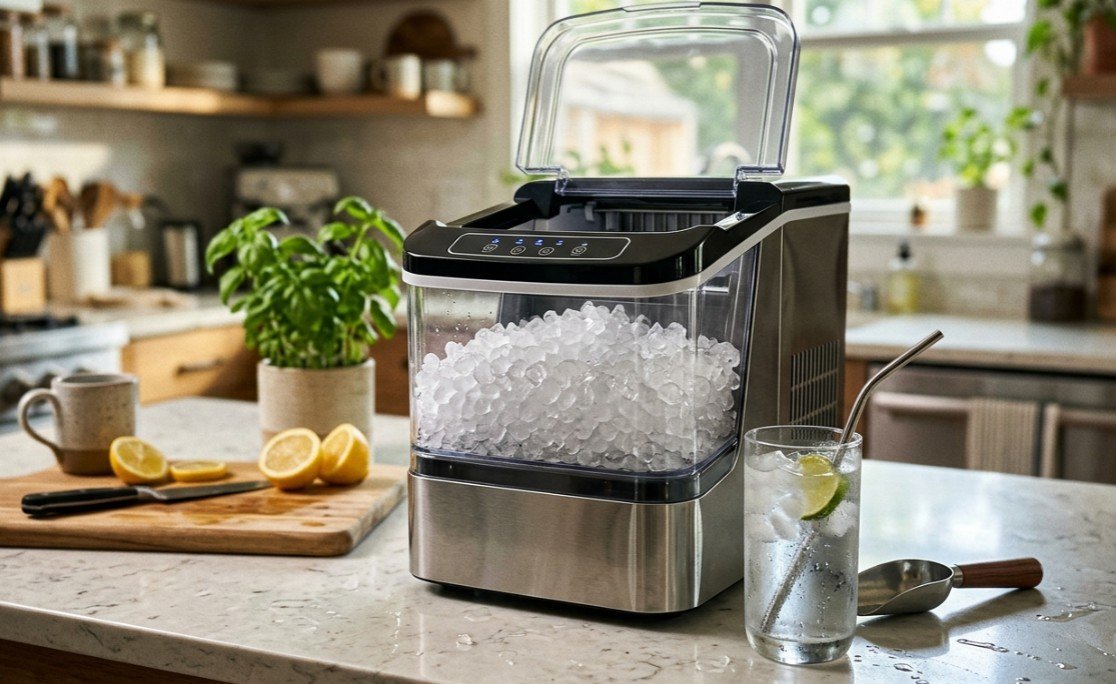
The best ice maker machines in Australia are countertop appliances that freeze water into finished ice in minutes rather than hours, holding it in an insulated bin instead of a freezer tray. They differ from a fridge ice dispenser in being portable, needing no plumbing, and being filled by hand from a jug or a bottled water container.
Four types are sold here. Bullet ice makers are the standard countertop unit, producing hollow cylinders in six to thirteen minutes. Nugget ice makers compact flakes into the soft chewable pellets served in hospitals and fast food outlets. Sphere ice makers form single large balls that melt slowly in spirits. Combination units add crushed ice or a chilled water dispenser to the same cabinet.
Daily output across this guide runs from 12kg to 20kg per 24 hours, or roughly 26 to 44 pounds, with the first ice arriving in five to fifteen minutes depending on the ice shape. The figures that matter alongside output are water tank capacity, ice bin capacity, whether the unit self cleans, cabinet height against wall cabinets, and power draw. A machine like this competes for the same bench as a coffee setup, so anyone planning a benchtop should also weigh up the best coffee machines in Australia.
This guide compares eight ice maker machines held in Australian stock, spanning bullet cube units, a nugget ice machine, a sphere maker for spirits, a crescent ice unit with adjustable thickness and a combination unit with a chilled water dispenser.
Quick Picks
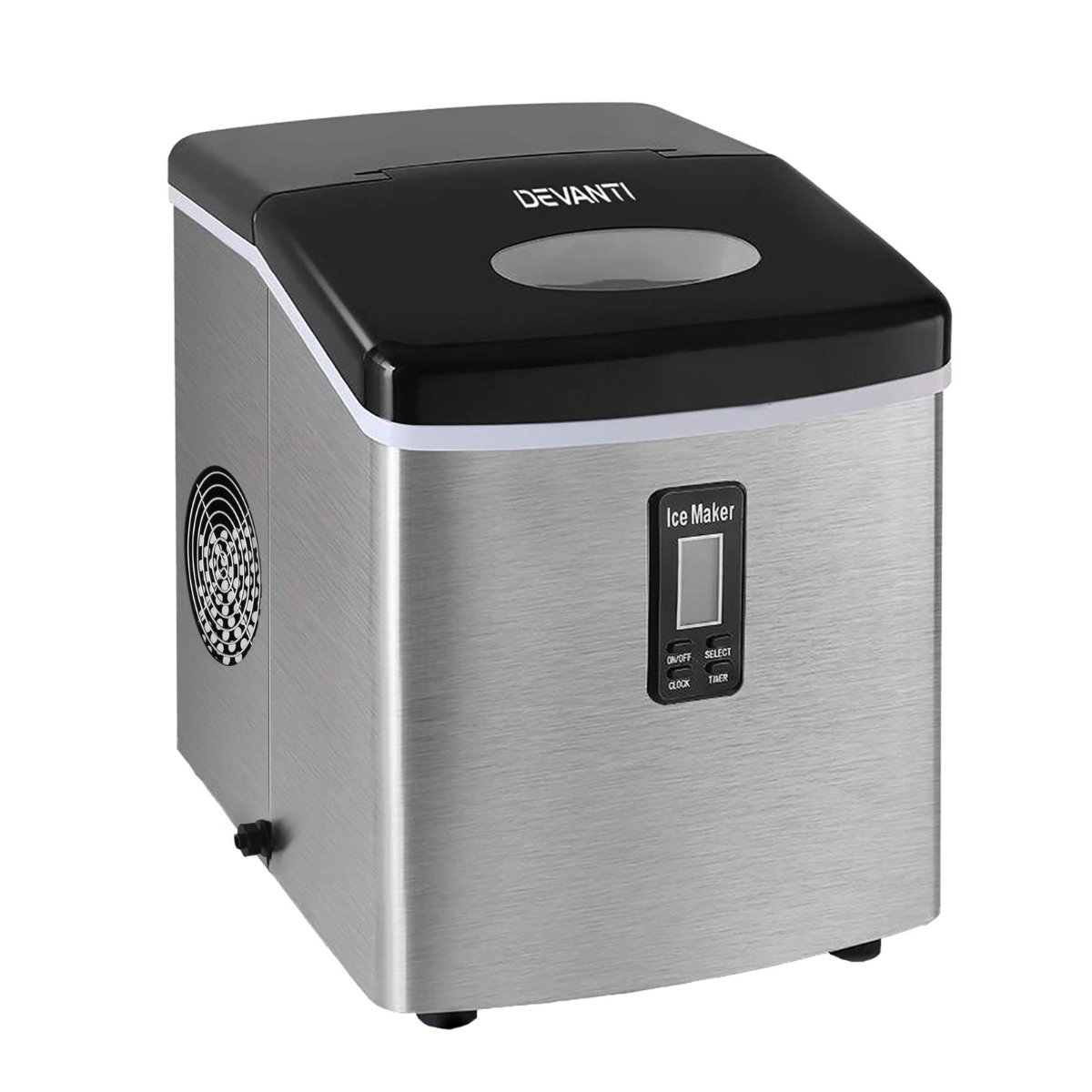
Devanti 15kg Ice Maker Machine
The largest tank here at 3 litres and 15kg a day, so it runs through a hot weekend without constant refilling.
CHECK CURRENT PRICE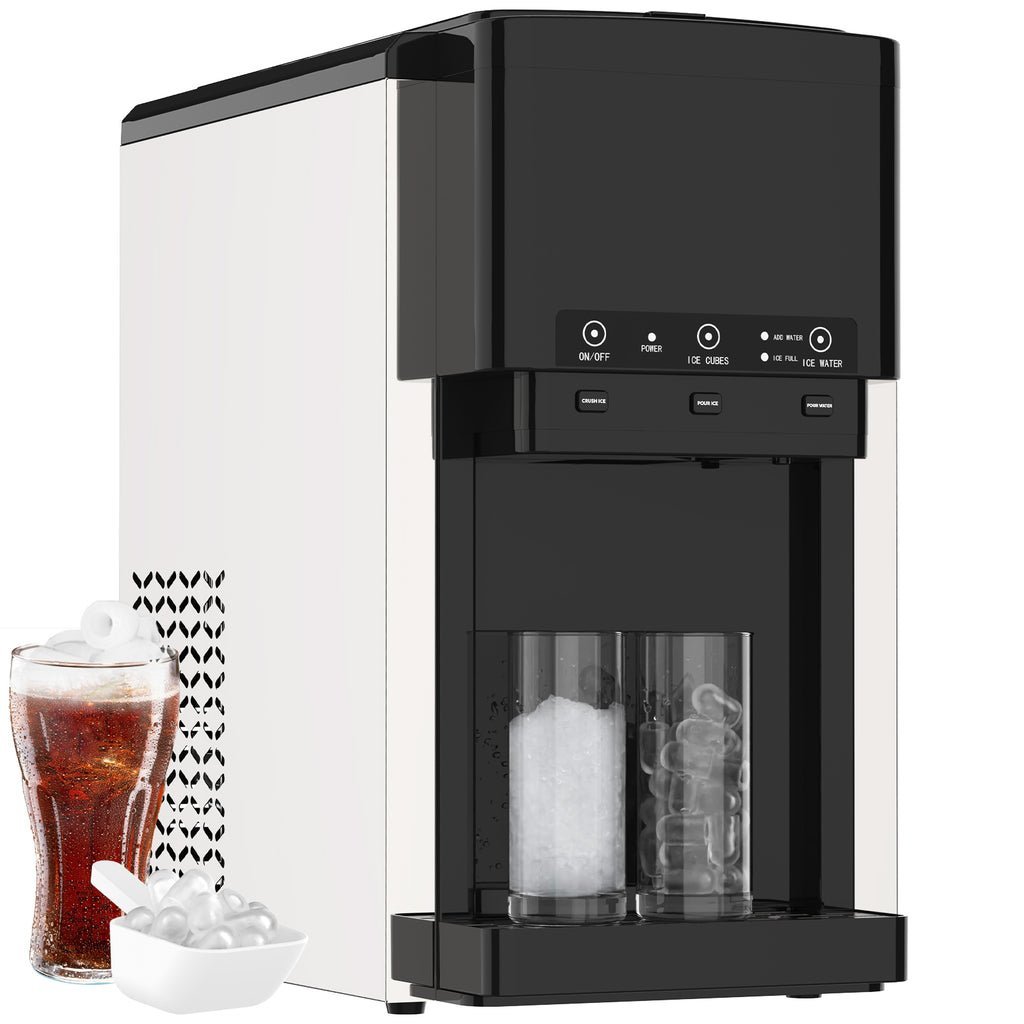
Advwin 3 in 1 Ice Maker with Cold Water Dispenser
Cubes, crushed ice and chilled water from one cabinet, with the highest daily output in this guide.
CHECK CURRENT PRICE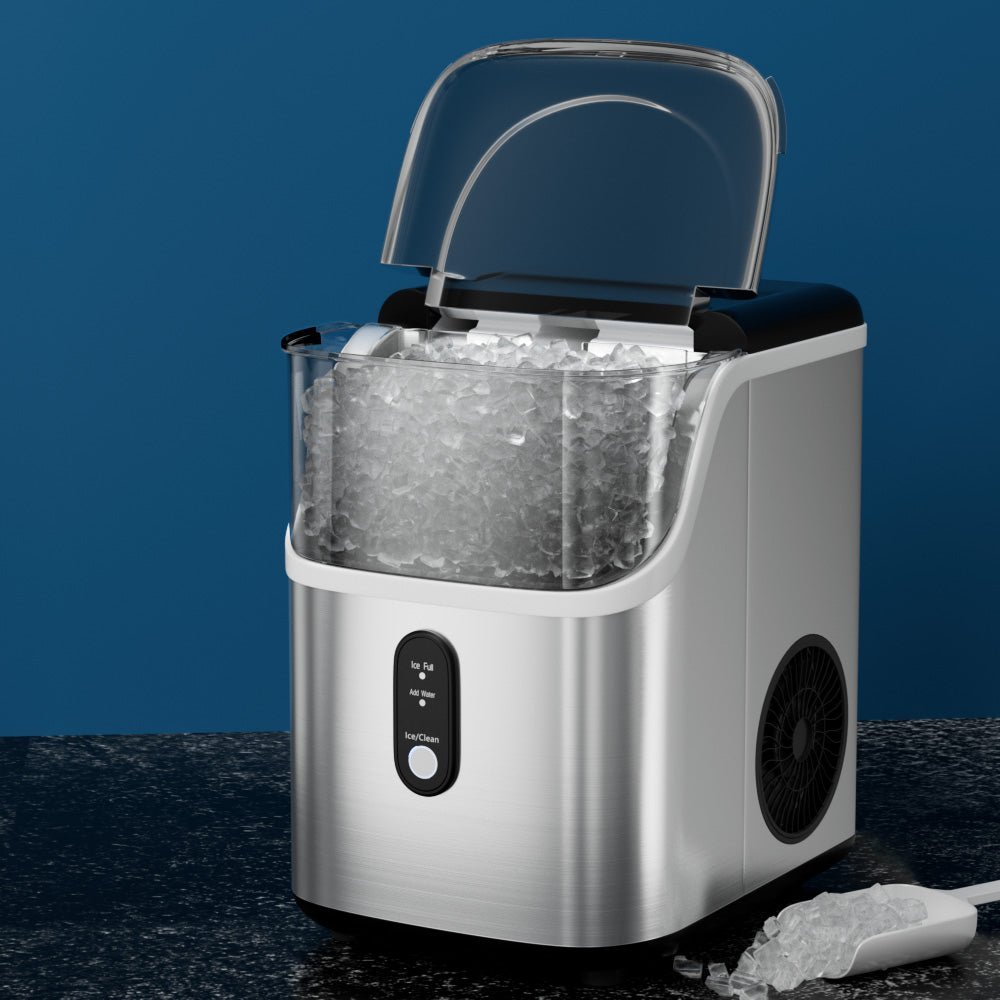
Devanti 15kg Nugget Ice Maker
The only machine here making soft chewable pellets, and the quickest to deliver its first ice.
CHECK CURRENT PRICEThe 8 Best Ice Maker Machines in Australia Compared
| Product | Link | Type | Best For | Key Spec |
|---|---|---|---|---|
| Devanti 15kg Ice Maker Machine | Check price | Bullet ice maker | Daily family use | 15kg per day, 3L tank, 3 cube sizes |
| Devanti Portable 12kg Self Cleaning Ice Maker | Check price | Bullet ice maker | Low maintenance | 12kg per day, self cleaning, 6 to 7 min |
| Devanti 15kg Nugget Ice Maker | Check price | Nugget ice maker | Soft chewable ice | 15kg per day, nugget ice, 5 to 10 min |
| Devanti 12kg Ice Maker with Scoop Holder | Check price | Bullet ice maker | Occasional use | 12kg per day, 90W, 1.3L tank |
| Advwin 3 in 1 Ice Maker with Cold Water Dispenser | Check price | Combination unit | Whole household duty | 20kg per day, 6L tank, crushed ice |
| Advwin Sphere Ice Maker with Self Cleaning | Check price | Sphere ice maker | Whisky and cocktails | 50mm ice balls, 40 per day |
| Advwin 12kg Crescent Ice Machine | Check price | Crescent ice maker | Adjustable ice thickness | 12kg per day, crescent ice, 5 thickness levels |
| Advwin 1.4L Portable Ice Maker | Check price | Bullet ice maker | Taking away from home | 12kg per day, 6kg unit, 6 min cycle |
1. Devanti 15kg Ice Maker Machine – Best for Daily Family Use
Three litres of tank capacity is the headline here, and it is the specification that decides how often someone has to walk back to the sink. The cabinet measures 29.5cm wide, 35.5cm deep and 37cm tall in a stainless steel and plastic housing, and the ice bin holds 1kg. A transparent window shows the tray filling without opening the lid.
Output reaches 15kg per 24 hours, and a cycle delivers nine bullet shaped cubes in six to thirteen minutes depending on room temperature. Three cube sizes are selectable, and a timer runs up to 19.5 hours so a batch can be ready for a specific time. Water shortage and ice full alarms shut the unit off automatically, and the refrigerant is freon free.
The trade off is footprint, because at 35.5cm deep it is the deepest unit here and will not sit under a low wall cabinet. Self cleaning is not listed for this model, so descaling is a manual job. A household running ice daily through summer will prefer refilling a large tank occasionally to a small one constantly, and that is the whole case for it.
Pros
- 3 litre tank, the largest in this guide
- 15kg daily output
- Three selectable cube sizes
- Timer runs up to 19.5 hours
- Water shortage and ice full alarms with auto shut off
Cons
- 35.5cm deep, the largest footprint here
- No self cleaning function listed
- 1kg ice bin is modest against 15kg daily output
Key specs: Up to 15kg per 24 hours, 3 litre water tank, 1kg ice bin, bullet shaped crystalline ice in 3 sizes, 6 to 13 minutes for 9 cubes, 29.5 x 35.5 x 37cm, 120W at AC 220 to 240V, timer up to 19.5 hours, scoop and removable basket, one year warranty
CHECK CURRENT PRICE2. Devanti Portable 12kg Self Cleaning Ice Maker – Best Self-Cleaning
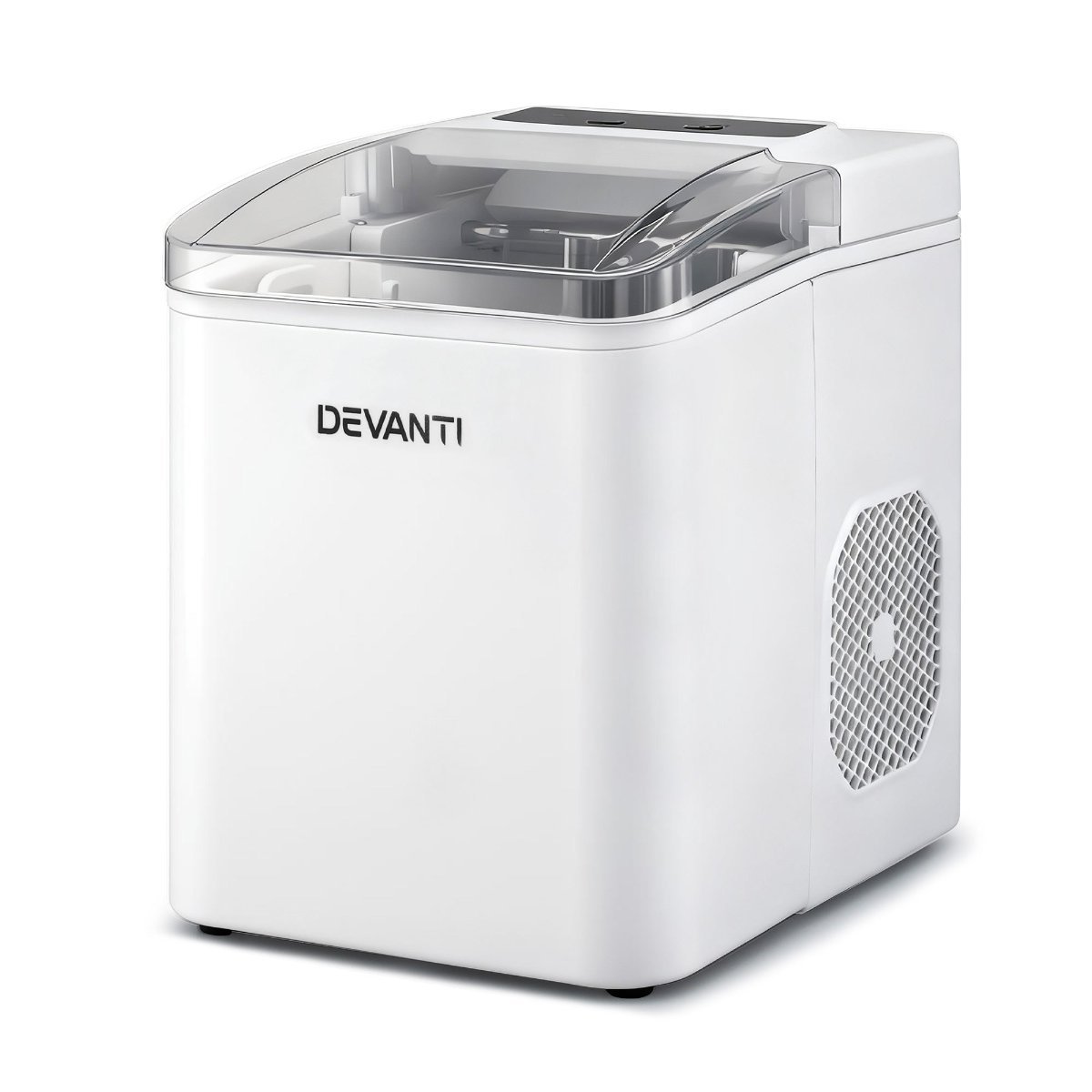
Tank size is traded here for a self cleaning cycle, which is the single feature that most changes how one of these machines feels to own. The tank holds 1.2 litres and the cabinet is compact at 30cm wide, 22cm deep and 29.5cm tall. An LED control panel replaces the simpler indicator lights used on the cheaper units.
Twelve kilograms a day comes out as nine bullet cubes every six to seven minutes, the fastest sustained cycle among the bullet machines here. Scale builds up in any ice maker fed Australian tap water, and the self cleaning function flushes the water path rather than leaving it to a vinegar soak. Water shortage and ice full alarms are included alongside a viewing window.
The 1.2 litre tank is the compromise and it will need refilling roughly twice as often as the 3 litre unit above at the same output. There is no crushed ice or sphere option. Where bench space is shallow and nobody wants to run a vinegar cycle every few weeks, the self cleaning earns the smaller tank.
Pros
- Self cleaning function flushes the water path
- Fastest bullet cycle here at 6 to 7 minutes
- Compact 22cm depth
- LED control panel
- Water shortage and ice full alarms
Cons
- 1.2 litre tank needs frequent refilling
- 12kg daily output rather than 15kg
- Bullet cubes only, no crushed or sphere option
Key specs: Up to 12kg per 24 hours, 1.2 litre water tank, bullet shaped cubes, 9 cubes in 6 to 7 minutes, self cleaning function, 30 x 22 x 29.5cm, 120W at AC 220 to 240V, LED panel, water shortage and ice full alarms, scoop and basket included
CHECK CURRENT PRICE3. Devanti 15kg Nugget Ice Maker – Best for Nugget Ice
Nugget ice is the whole reason this one is in the guide, and no other machine here makes it. These are the soft chewable pellets served in hospitals and fast food outlets rather than the hollow cylinders every other unit produces, compacted from ice flakes so they absorb the flavour of a drink and can be chewed without cracking a tooth. The cabinet is 28.5cm wide, 22cm deep and 32cm tall.
Up to 15kg per 24 hours comes from a 1.1 litre tank, with the first ice arriving in five to ten minutes, the quickest start in this guide. Self cleaning is included along with a low water alarm, and the ice bin holds 1.1kg. Power draw is 130W and the refrigerant is freon free.
The 1.1 litre tank is the smallest of the 15kg machines, so sustained output means frequent refilling. Nugget ice also melts faster than a solid cube, which is the point for chewing and a drawback for a slow drink. Households that specifically want soft ice should take it, and anyone who wants ice to last in a glass should not.
Pros
- Only nugget ice machine in this guide
- Fastest first ice at 5 to 10 minutes
- Self cleaning function included
- 15kg daily output from a compact 22cm depth
- Low water alarm and freon free refrigerant
Cons
- 1.1 litre tank is the smallest of the 15kg units
- Nugget ice melts faster than solid cubes
- No cube size selection
Key specs: Up to 15kg per 24 hours, 1.1 litre water tank, 1.1kg ice bin, nugget ice, 5 to 10 minute cycle, self cleaning function, low water alarm, 28.5 x 22 x 32cm, 130W at AC 220 to 240V, transparent viewing window
CHECK CURRENT PRICE4. Devanti 12kg Ice Maker with Scoop Holder – Best Low Power Draw
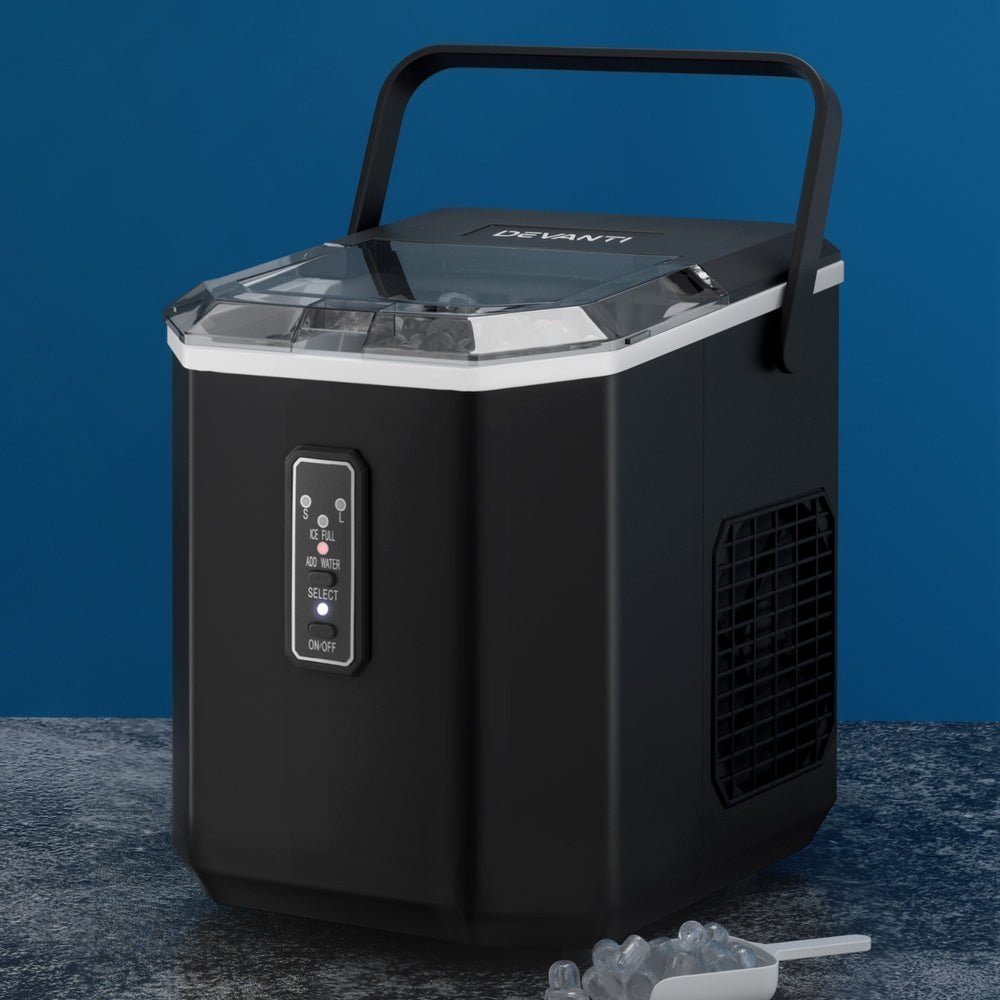
Running cost is where this one wins, drawing 90W against the 120W to 200W of everything else in the guide. The tank holds 1.3 litres, slightly more than the self cleaning model, and the cabinet measures 29.5cm wide, 22cm deep and 29cm tall. An integrated scoop holder keeps the scoop with the machine rather than loose in a drawer.
The daily figure is 12kg, produced as nine bullet cubes per cycle in six to thirteen minutes, with a choice of small or large. Water shortage and ice full alarms handle unattended running, and a transparent window shows progress. The refrigerant is energy efficient and the unit runs quietly.
There is no self cleaning function, so descaling is manual, and only two cube sizes are offered rather than three. The lower power draw also means slower recovery in a hot kitchen. Occasional entertaining rather than daily summer duty is where it makes sense, and where running cost matters more than speed.
Pros
- 90W draw, the lowest in this guide
- 1.3 litre tank in a compact 22cm depth
- Integrated scoop holder
- Water shortage and ice full alarms
- Quiet operation
Cons
- No self cleaning function
- Only two cube sizes
- Slower recovery in a hot kitchen
Key specs: Up to 12kg per 24 hours, 1.3 litre water tank, bullet shaped cubes in small or large, 9 cubes per cycle in 6 to 13 minutes, 29.5 x 22 x 29cm, 90W at AC 220 to 240V 50Hz, water shortage and ice full alarms, scoop and removable basket
CHECK CURRENT PRICE5. Advwin 3 in 1 Ice Maker with Cold Water Dispenser – Best Multi-Function
Three jobs come out of one cabinet here, making cubes, crushing ice and dispensing chilled water. The 6 litre tank is double the largest dedicated ice maker in this guide, and it can be fed from a bottled water container between 7.5 and 19 litres instead of by hand. At 43.4cm wide, 27.7cm deep and 48cm tall it weighs 13.7kg.
At 20kg per 24 hours it has the highest output here, with twelve bullet cubes arriving in about eight minutes. The crushed ice function matters more than it sounds, because crushed ice chills a drink faster than cubes and is otherwise a job for a blender. The ice bin holds 1.6kg, a removable drip tray catches spills, and the unit stops automatically when the bin fills.
The height is the catch, because 48cm will not fit under most wall cabinets and this needs an open bench or an island. Power draw peaks at 200W, and self cleaning is not listed. Three appliances collapse into one here, provided the bench has the vertical clearance to take it.
Pros
- Three functions from one cabinet: cubes, crushed ice and chilled water
- 20kg daily output, the highest in this guide
- 6 litre tank, or feed from a bottled water container
- 1.6kg ice bin with automatic stop when full
- Removable drip tray
Cons
- 48cm tall, will not fit under most wall cabinets
- 200W peak draw is the highest here
- No self cleaning function listed
Key specs: 20kg per 24 hours, 6 litre tank or bottled water from 7.5 to 19 litres, 1.6kg ice bin, bullet cubes plus crushed ice, 12 cubes in 8 minutes, ice making plus crushing plus cold water dispensing, 43.4 x 27.7 x 48cm, 13.7kg, 200W total and 85W for ice making, removable drip tray
CHECK CURRENT PRICE6. Advwin Sphere Ice Maker with Self Cleaning – Best for Spirits and Cocktails
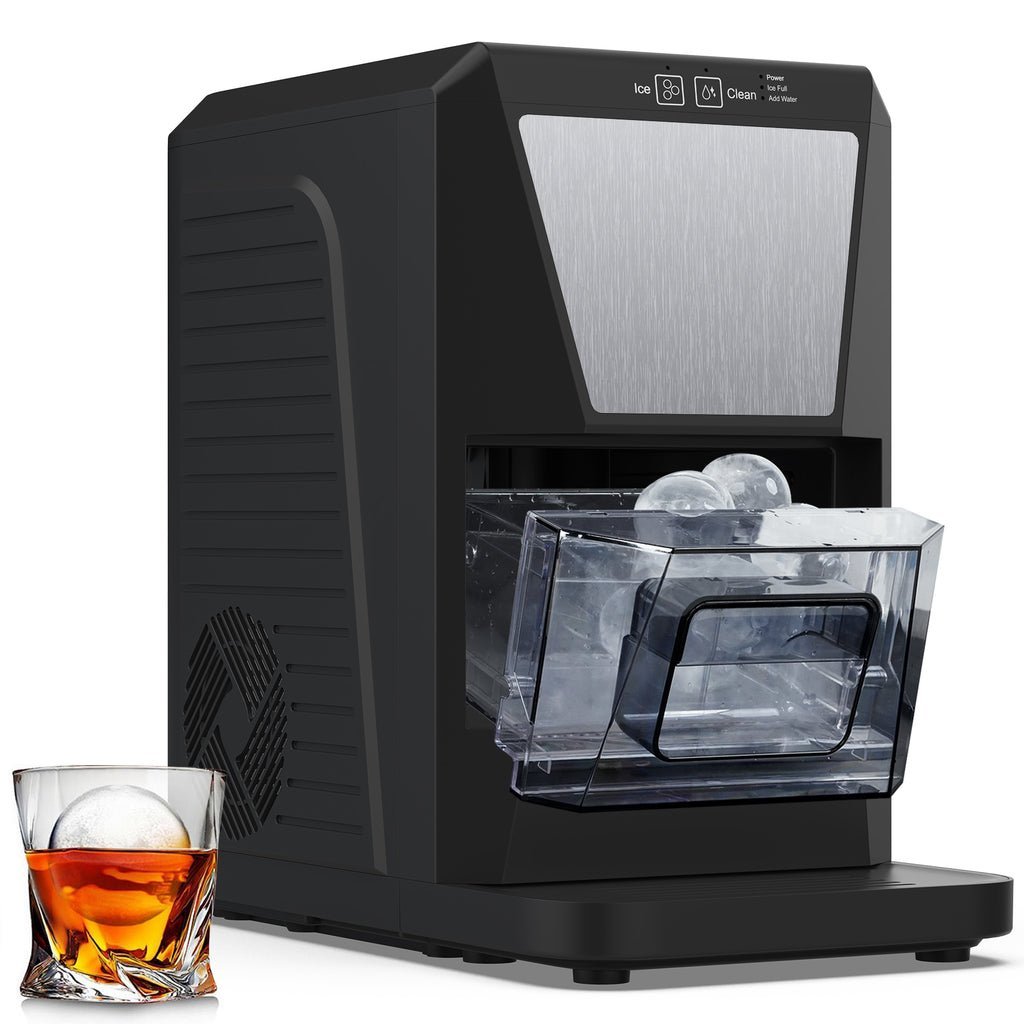
Clear 50mm spheres are something no other machine here can form. A sphere has the lowest surface area for its volume of any ice shape, which is why it melts slowly and dilutes a spirit far less than the equivalent mass of bullet cubes. The cabinet measures 42.5cm wide, 41cm deep and 24.5cm tall, and it ships with tongs and a funnel.
Production is quoted as up to 40 ice balls per day, working at roughly 55 minutes per pair, so this is a machine that runs ahead of an evening rather than on demand. Storage holds eight to ten balls. One touch self cleaning is included, along with indicator lights and alerts for low water and a full basket, drawing 120W from a 1.2 litre tank.
The 55 minute cycle is the obvious limitation and makes this useless for filling an esky. It is also the widest and deepest cabinet here. Anyone who drinks spirits or builds cocktails at home will understand it immediately, though it belongs alongside a cube machine rather than instead of one.
Pros
- Clear 50mm spheres melt far slower than cubes
- One touch self cleaning
- Tongs and funnel included
- Indicator lights with low water and full basket alerts
- Only 24.5cm tall
Cons
- 55 minutes per two balls, the slowest cycle here
- Holds only 8 to 10 balls
- Widest and deepest cabinet in this guide
Key specs: Up to 40 ice balls per day, 50mm diameter spheres, 55 minutes per 2 balls, 1.2 litre water tank, storage for 8 to 10 balls, one touch self cleaning, 42.5 x 41 x 24.5cm, 120W, smart indicator lights, ice tong and funnel included
CHECK CURRENT PRICE7. Advwin 12kg Crescent Ice Machine – Best for Soft Crescent Ice
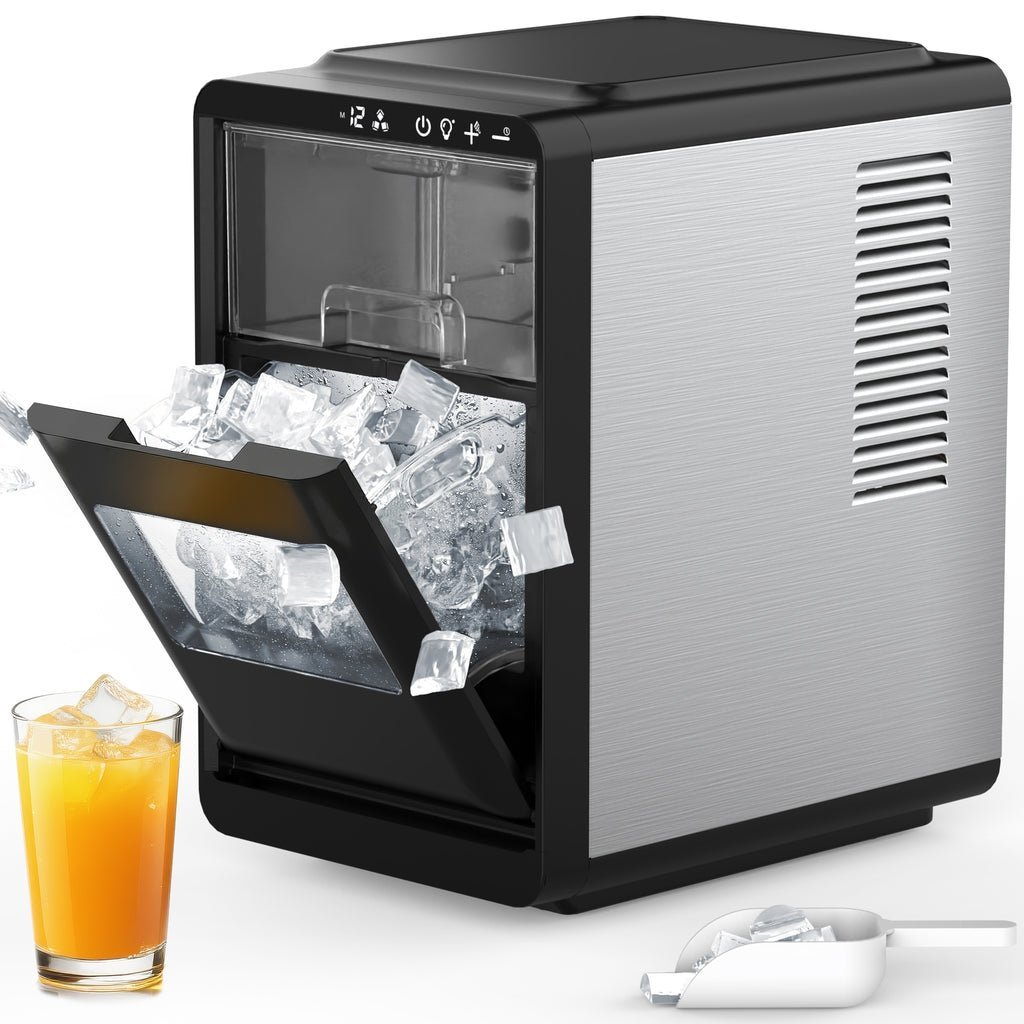
Crescent ice is a half moon form that stacks more densely in a glass than a bullet cube and slides rather than jams when poured. Five adjustable thickness levels are the standout control here, letting the same machine produce thin ice for chilling quickly or thick ice for slower melting. The cabinet is 43.8cm wide, 37.5cm deep and 28.3cm tall.
The tank holds 1.8 litres, second only to the two large units in this guide, and the machine delivers 12kg per 24 hours on an approximately 15 minute cycle. The ice bin holds 0.9kg. That longer cycle is a consequence of the crescent form, which is frozen on a plate rather than around a probe.
Power rating is not published for this listing, and self cleaning is not listed either. The 15 minute cycle is the slowest of the cube style machines here. Control over ice thickness, and a shape that pours cleanly out of a bin, are what it offers in place of speed.
Pros
- Five adjustable ice thickness levels
- Crescent ice pours without jamming
- 1.8 litre tank
- 28.3cm height fits under most cabinets
- 12kg daily output
Cons
- Approximately 15 minute cycle, slowest of the cube machines
- Power rating not published for this listing
- No self cleaning function listed
Key specs: 12kg per 24 hours, 1.8 litre water tank, 0.9kg ice basket, crescent shaped ice, 5 adjustable ice thickness levels, approximately 15 minute cycle, 43.8 x 37.5 x 28.3cm. Power rating is not published for this listing.
CHECK CURRENT PRICE8. Advwin 1.4L Portable Ice Maker – Best Portable Pick
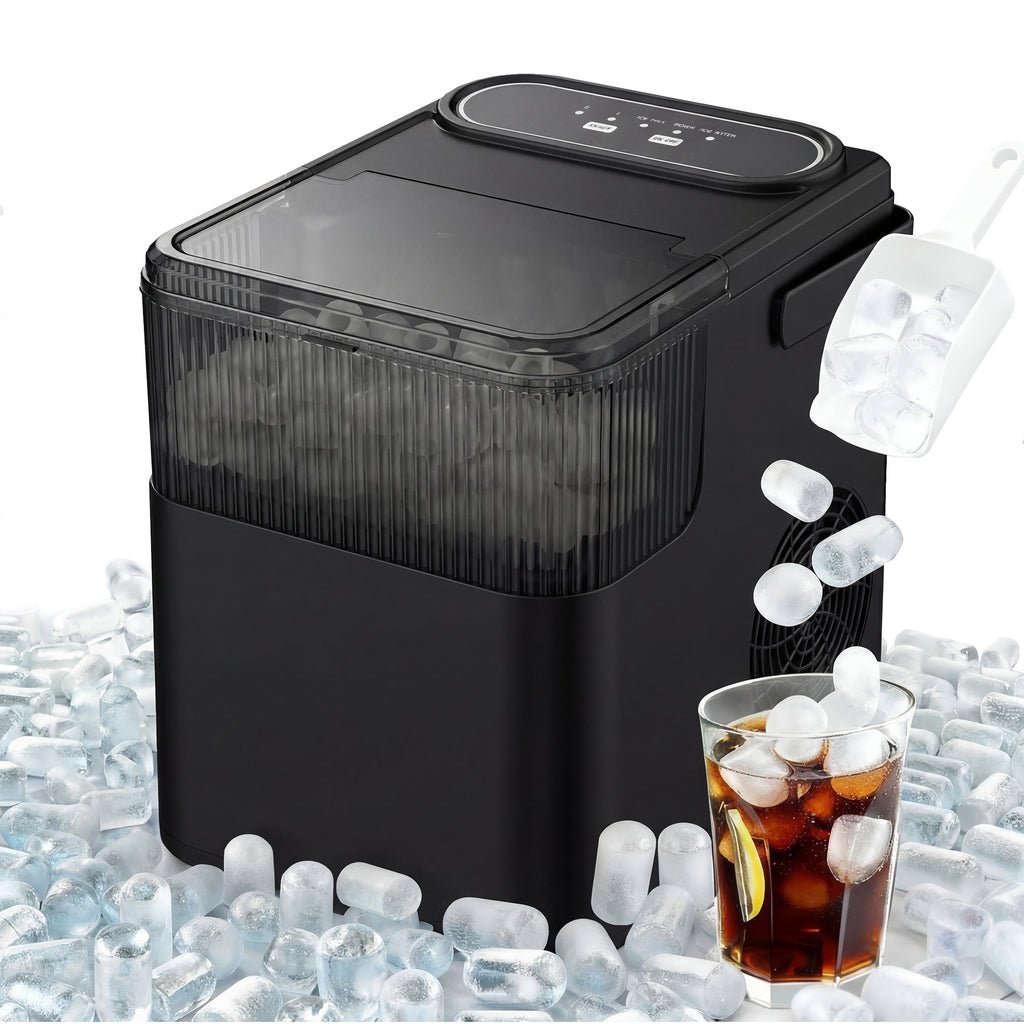
At 6kg net this is the lightest machine in the guide and the only one that can reasonably be carried to a holiday house or a campsite with power. The detachable ice basket has its own carry handle, and the cabinet is 232mm wide, 300mm deep and 301mm tall. Six LED indicators cover power, full ice, low water, small and large cube selection and cleaning.
Nine bullet cubes every six minutes matches the fastest cycle here, giving 12kg per 24 hours from a 1.4 litre tank. Self cleaning technology is included, and the machine shuts off automatically when the basket fills or the water runs low. Two cube sizes are selectable and a serving scoop is supplied.
The 500g ice bin is the smallest here by a wide margin, so it fills quickly and needs emptying rather than storing a batch. Peak draw is 165W. Needing ice in more than one place is the case for it, as is a small kitchen where the machine lives in a cupboard between uses.
Pros
- 6kg net weight, the lightest here
- Six minute cycle matches the fastest in this guide
- Self cleaning technology included
- Detachable basket with carry handle
- Six LED status indicators
Cons
- 500g ice bin is the smallest here
- 1.4 litre tank limits unattended running
- 165W peak draw for a small unit
Key specs: 12kg per 24 hours, 1.4 litre water tank, 500g ice bin, bullet cubes in small or large, up to 9 pieces per 6 minute cycle, 232 x 300 x 301mm, 6kg net and 7kg gross, 165W maximum at 220 to 240V 50Hz, self cleaning, 6 LED indicators, detachable basket with carry handle, scoop included
CHECK CURRENT PRICEHow to Choose an Ice Maker Machine
Bin capacity matters more than daily output. A machine rated at 15kg a day does not store 15kg, because the bins here hold between 500g and 1.6kg and ice melts back into the tank once the bin fills. Daily output describes how fast the unit recovers after a rush, not how much ice is waiting when guests arrive, so anyone serving a crowd should plan to decant into an esky.
Match the ice shape to the drink. Bullet cubes are hollow and chill fast but dilute quickly. Nugget ice is for chewing and melts faster still. Crescent ice pours without jamming. Spheres melt slowest and suit spirits. This is the specification most buyers ignore and the one they notice every single day.
Check cabinet height, not just width. Standard Australian bench to cupboard clearance is often tighter than these machines assume, and the tallest unit here stands 48cm. Measure the vertical gap before the bench footprint, because a machine that fits the bench but not the clearance has to live somewhere else.
Self cleaning is worth paying for on hard water. Much of Australia runs moderately hard tap water, and scale builds in the water path of any ice maker fed from the tap. Three machines here self clean and the rest need a manual descale, which in practice means a vinegar cycle every few weeks rather than never.
Ambient temperature changes the numbers. Every cycle time quoted here is measured in a cool room, and a Queensland kitchen in February will push a six minute cycle out noticeably while the compressor works harder. Buyers in warmer states should read output figures as a best case and favour the larger tanks.
Noise is the specification nobody publishes. A compressor cycling and finished ice dropping into a plastic basket are both audible, and none of these listings quote a decibel figure. In an open plan kitchen that runs into a living area, a machine cycling through an evening is more intrusive than the same machine in a garage or a butler’s pantry, which is worth deciding before the bench space is committed. Every machine sold here carries consumer guarantees under Australian Consumer Law regardless of the manufacturer’s own warranty.
Frequently Asked Questions
How much ice can an ice maker machine actually store?
Far less than its daily rating suggests. The machines in this guide hold between 500g and 1.6kg in the bin, while daily output runs from 12kg to 20kg. Once the bin fills the unit stops and the ice slowly melts back into the tank, so ice for a party needs decanting into an esky as it is made.
Do ice maker machines need plumbing?
No. Every machine in this guide is filled by hand from a jug, and one can also draw from a bottled water container between 7.5 and 19 litres. That is what makes them portable and why they can sit on a bench, in a garage or at a holiday house.
What is nugget ice and is it worth it?
Nugget ice is compacted from ice flakes into soft chewable pellets, the kind served in hospitals and fast food outlets. It absorbs drink flavour and can be chewed safely, but it melts faster than a solid cube, so it works best in soft drinks and iced coffee rather than a slow spirit.
How long does an ice maker take to make its first ice?
Between five and fifteen minutes depending on the ice shape. Bullet and nugget machines here start producing in five to ten minutes, crescent ice takes around fifteen, and sphere ice takes about 55 minutes for a pair because of how slowly a solid ball has to freeze.
Do ice makers need descaling in Australia?
Yes. Much of the country has moderately hard tap water and scale builds up in the water path over time. Three machines in this guide have a self cleaning cycle that flushes the path automatically, while the rest need a periodic manual descale with a vinegar solution.
How much power does an ice maker machine use?
The units here draw between 90W and 200W, which is less than a kettle and comparable to a small fridge while running. The lowest draw in this guide is 90W and the highest is a combination unit at 200W that also crushes ice and dispenses chilled water.
Verdict
For a household making ice every day through summer, the Devanti 15kg machine is the strongest pick here on the strength of its 3 litre tank, which is double what most competitors hold and the difference between refilling occasionally and refilling constantly. Where the machine has to earn its bench space, the Advwin 3 in 1 unit delivers cubes, crushed ice and chilled water at the highest output in this guide, provided there is 48cm of vertical clearance. For anyone who drinks spirits at home, the Advwin sphere maker is the only unit here producing ice that does not water the drink down.