A curtain rod is the pole or track a curtain hangs from, running the width of a window, or a room in the case of a divider, and mounted on brackets fixed to the wall, ceiling or window frame itself. Most of the best curtain rods australia renters and homeowners buy fall into two broad mechanisms: a rigid extendable pole held by screwed-in brackets, and a spring-loaded tension rod that wedges between two surfaces with no drilling at all.
Extendable pole rods use telescoping sections and end finials, the traditional look for a living room window. Tension rods skip the bracket entirely and grip through spring pressure, the standard choice for a rental. Double rod sets layer two rods on one bracket so a sheer and a blackout curtain can hang together. Bay and corner rods bend or hinge to follow a window that is not one flat wall. Room-divider rods run floor-to-ceiling instead of window-to-window, closer to a spring-loaded partition than a window treatment.
Adjustable length range is the spec that actually determines fit: it spans as little as 71cm up to 3.55 metres across the products compared here, and weight rating is the number most listings understate, running from roughly 7kg on a basic tension rod up to 20kg on a heavy-duty room-divider rod. A rod rated under a curtain’s actual weight will bow in the middle within a season, curtain and all.
This guide compares seven curtain rods available to Australian buyers this week, from tension rods that need no drilling to a floor-to-ceiling room-divider rod built for a completely different job, covering rentals, bay windows and blackout-plus-sheer double-rod setups in between.
Best Curtain Rods Australia Compared
| Product | Link | Type | Best For | Key Spec |
|---|---|---|---|---|
| Artiss Room Divider Curtain Rod Extendable Black | Check price | Room divider | Dividing a large room | Width 74-355cm, 15kg per rod |
| Artiss Room Divider Curtain Ceiling Mounted Track Set | Check price | Room divider track | Curtain included | 254cm x 213cm, blackout fabric |
| No-Drill L-Shaped Room Divider Curtain Rod | Check price | Room divider, L-shaped | Corner room dividing | 20kg per rod, L-shaped |
| Zenna Home Adjustable Curtain Tension Rod | Check price | Tension rod | Renters, no drilling | 71-168cm adjustable |
| Room Darkening Wrap Around Double Curtain Rod Set | Check price | Double rod | Blackout plus sheer | 71-122cm, 1in and 5/8in rods |
| TONIAL Bay Window Curtain Rods | Check price | Bay window rod | Bay windows | Centre 81-218cm, sides 81-147cm |
| Bendable Curtain Rail for Bay Window | Check price | Flexible track | Curved windows | 3m bendable, ceiling mounted |
How We Picked
We worked through the curtain hardware ranges carried by Australian retailers and marketplaces, checking listed length ranges, weight capacity and mounting type (tension, wall-mounted or ceiling-mounted) against the maker’s own specification sheet. Both window curtain rods and room-divider rods made the list since they solve related but distinct problems, and each is labelled clearly as one or the other rather than blurred together.
From there we weighed real buyer feedback on sturdiness at full extension and how well a rod holds a curtain’s actual weight over time, cross-referenced against verified-purchaser patterns on Amazon AU and against the kind of installation feedback that turns up in ProductReview’s blind and shutter shop reviews, where measuring and mounting mistakes are a recurring complaint theme regardless of brand.
1. Artiss Room Divider Curtain Rod Extendable Black – Best for Room Dividing
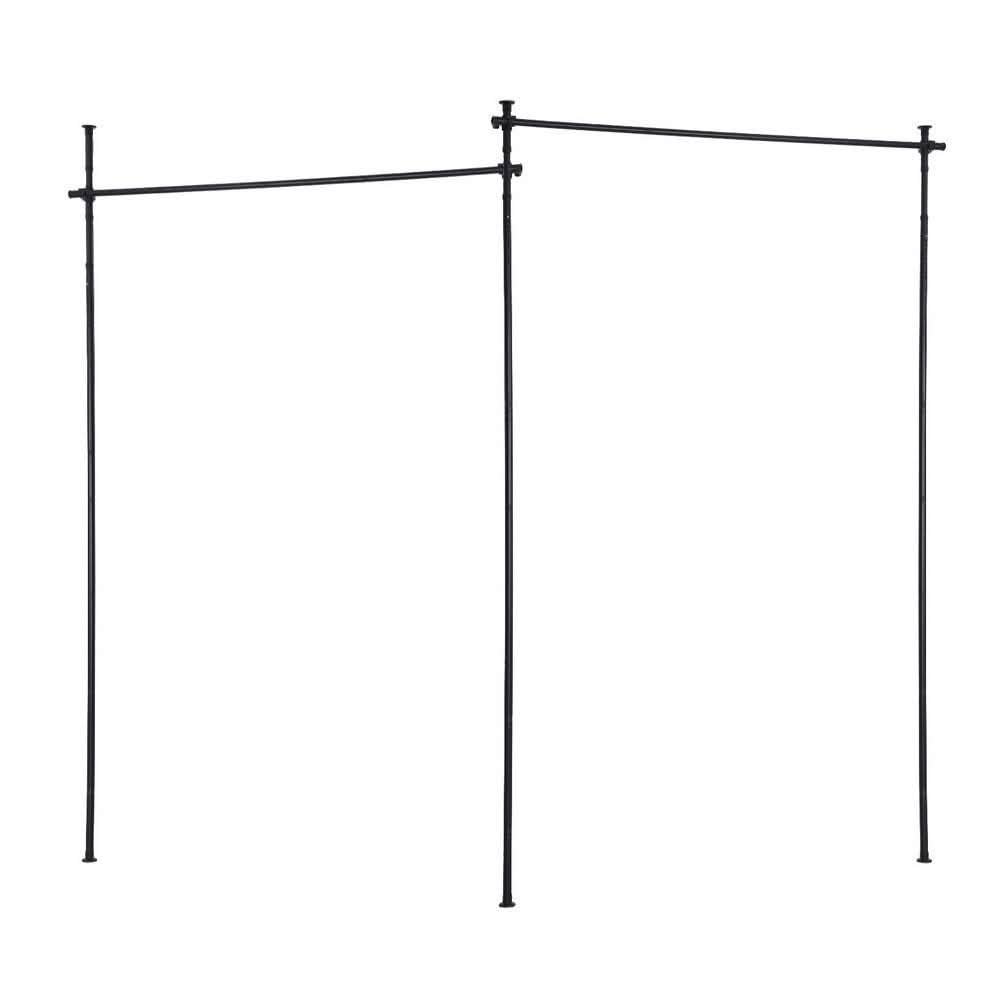
Artiss builds this one for dividing a room, not dressing a window, and it shows in the scale: width extends from 74cm to a full 3.55 metres, and height adjusts from 82cm up to 3.14 metres, covering everything from a narrow hallway partition to a full open-plan ceiling. Fifteen kilograms of support per rod is enough for a proper curtain panel, not just a lightweight sheer.
An anti-slip base and screw-in adjustment mean it wedges into place through tension instead of needing a hole drilled, which matters in a rental or a share house where the landlord will not sign off on brackets in the ceiling. Curtains are sold separately, so budget for a panel wide and long enough to actually block the space instead of just decorating it.
This is a properly different product to the other six picks here, built for splitting a studio apartment or a home office instead of covering a window, and buyers after a traditional window rod should skip to the Zenna Home or TONIAL entries below. A Melbourne apartment with one big open-plan room is the obvious use case. A straightforward window in a standard house gets nothing from this over a normal rod.
Pros
- Extends wide enough to divide a properly large open-plan room
- 15kg support handles a real curtain panel, not just a sheer
- No drilling needed thanks to the anti-slip tension base
- Adjustable in both width and height for non-standard spaces
Cons
- Curtains are sold separately, an extra cost on top of the rod
- Not a fit for a standard window, so check you actually need a divider before buying
- Anti-slip base still needs a level, hard floor to grip properly
Key specs: Width 74-355cm, height 82-314cm, 15kg per rod, metal, 12-month warranty
CHECK CURRENT PRICE2. Artiss Room Divider Curtain Ceiling Mounted Track Set – Best Track-Style Divider
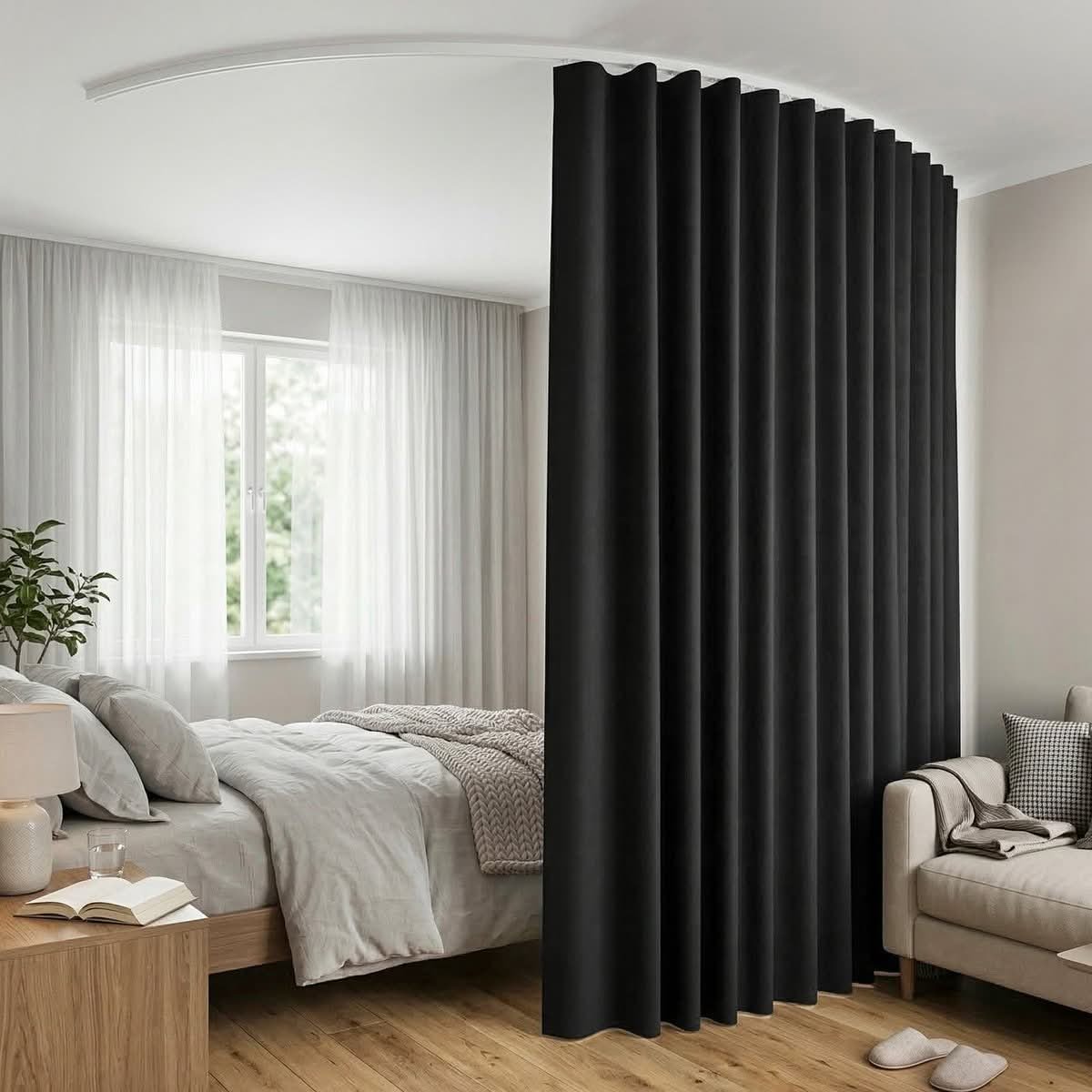
Where the extendable rod above wedges between floor and ceiling, this one mounts flush to the ceiling on a flexible track and comes with the curtain already included: a 3-layer blackout fabric panel rated for 99 percent light reduction, at a fixed 254cm by 213cm.
Fourteen adjustable hooks let the fabric slide along the bendable track, which curves around a corner if the room calls for it instead of running in one straight line only. Because the panel is bundled in, there is no separate curtain to source or measure, unlike the bare rod above.
The trade-off for that convenience is a fixed size: there is no adjusting the 254cm by 213cm dimensions the way the extendable rod above stretches to fit almost any room. It suits someone who wants a done-and-dusted divider solution over one more piece of DIY measuring, particularly in a Brisbane granny flat or studio where blocking light matters as much as blocking the view.
Pros
- Curtain fabric included, no separate panel to source
- 99 percent light reduction from the 3-layer blackout construction
- Flexible track curves around corners, not just straight runs
- Ceiling-mounted, so no floor-level base to trip over
Cons
- Fixed 254cm by 213cm size, no adjusting to a different room shape
- Ceiling mounting means some drilling is required, unlike the tension-based rod above
- 14 hooks is fewer than a full-width window track would carry
Key specs: 254cm x 213cm, ceiling track, 3-layer blackout fabric included, 14 hooks, 12-month warranty
CHECK CURRENT PRICE3. No-Drill L-Shaped Room Divider Curtain Rod – Best for Corner Room Dividing
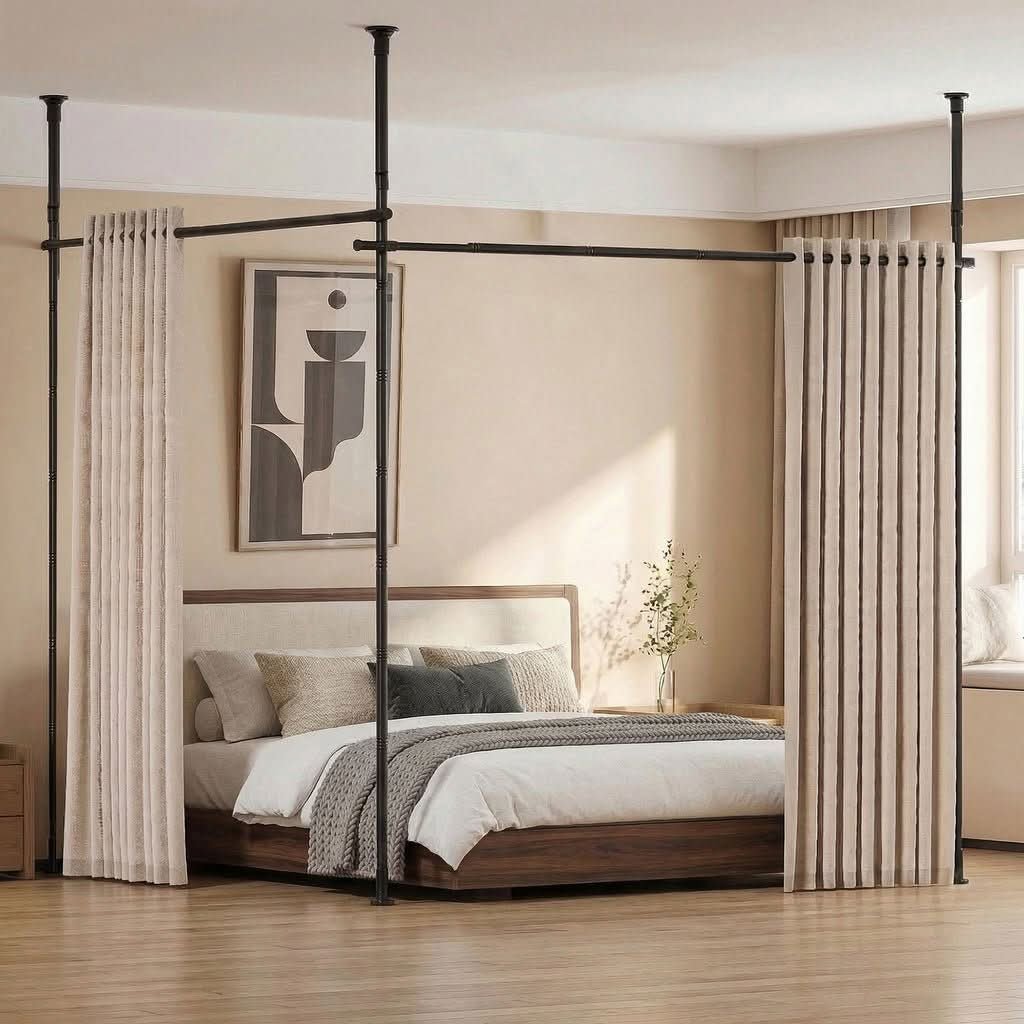
Both Artiss picks above run in a straight line. This one turns a corner. The L-shaped design uses three vertical poles and two horizontal rods to wrap around an actual corner, useful for a room that is not a simple rectangle.
Height adjusts from 275cm to 306cm and width from 190cm to 223cm, with anti-slip rubber end caps doing the same no-drill job as the Artiss rod above. Each horizontal rod supports up to 20kg, five kilograms more than the Artiss extendable, enough for a heavier blockout-style curtain instead of a light sheer.
Seven connecting sections per vertical pole and five per horizontal rod mean more assembly steps than a simple two-piece tension rod, closer to a flat-pack job than a five-minute install. It is the pick for an L-shaped studio or a corner nook in a Sydney apartment that a straight rod simply cannot reach around.
Pros
- L-shaped design wraps around an actual corner, not just a straight run
- 20kg support per rod, the highest weight rating of the three room-divider picks here
- No-drill installation with anti-slip rubber end caps
- Carbon steel construction with a rust-resistant coating
Cons
- More assembly steps than a simple straight tension rod
- Height and width ranges are narrower than the Artiss extendable above
- Still a room-divider product, not a fit for an actual window
Key specs: Height 275-306cm, width 190-223cm, 20kg per rod, L-shaped, carbon steel, 12-month warranty
CHECK CURRENT PRICE4. Zenna Home Adjustable Curtain Tension Rod – Best No-Drill Pick for Renters
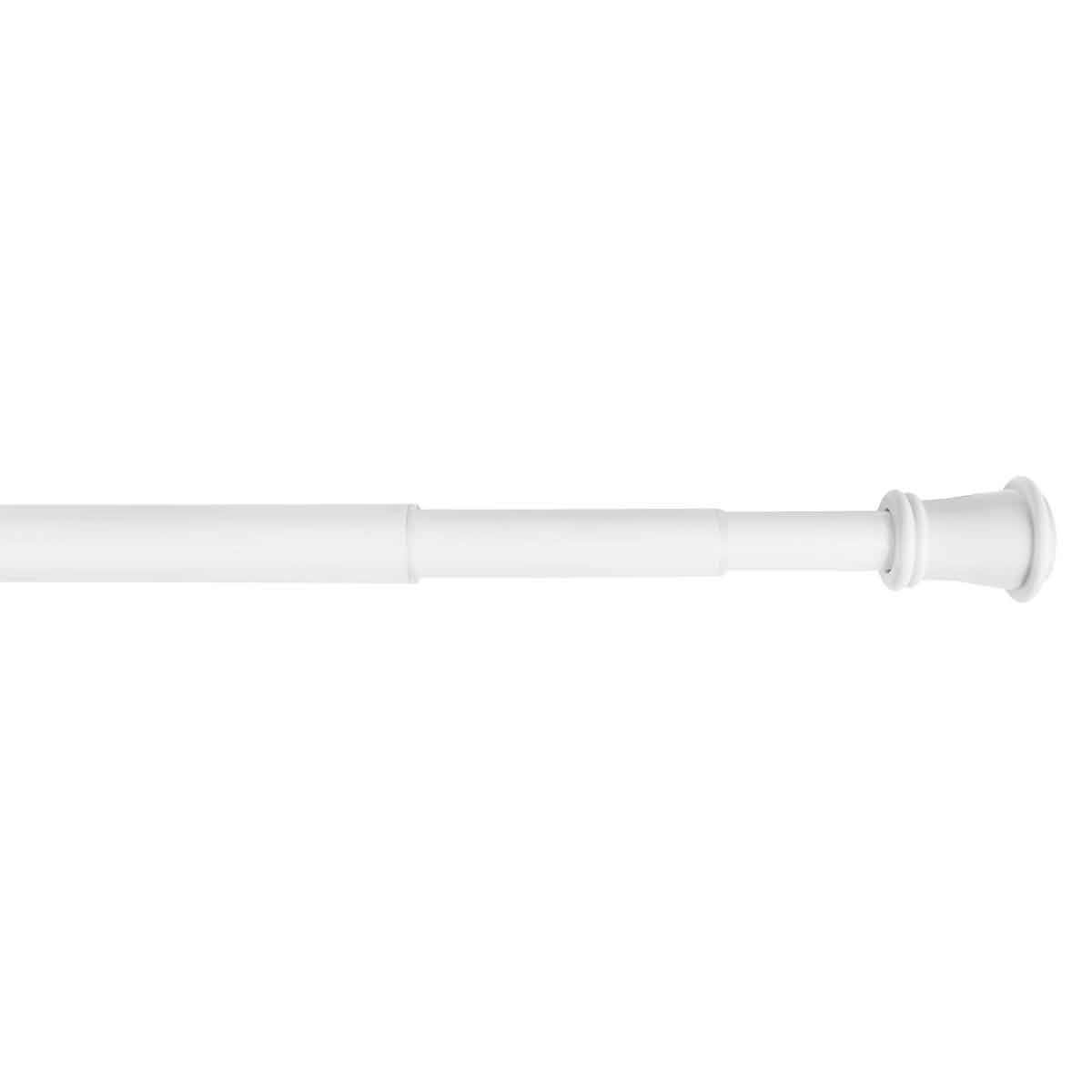
This is the first proper window curtain rod on this list, and it is built entirely around not touching the wall: a telescoping tension mechanism grips between two window reveals from 71cm to 168cm wide, with an optional centre bracket for anything over 127cm to stop it sagging in the middle.
Amazon AU buyer feedback is mixed on sturdiness at full extension: some reviewers report it holding heavy drapes with no issues, while others say it turns wobbly once stretched close to its maximum width. Rubber end caps protect paintwork, which matters more in a rental where a scuffed wall can come out of a bond.
At 1.125 inches in diameter it is noticeably slimmer than the Artiss and L-shaped room-divider rods above, since it only ever needs to hold one window’s worth of curtain instead of dividing a room. This is one of the more affordable picks in the whole lineup, and it suits a renter who wants a curtain up by the weekend without calling a landlord first.
Pros
- No drilling at all, ideal for a rental inspection-proof install
- Optional centre bracket stops sagging past 127cm wide
- Rubber end caps protect paint and window trim
- One of the cheaper picks in this guide
Cons
- Buyer feedback is mixed on sturdiness once extended near its maximum width
- 1.125 inch diameter is slim next to the heavier room-divider rods above
- Best suited to a lighter curtain, not a heavy blockout panel
Key specs: 71-168cm adjustable, 1.125in diameter, carbon steel, tension mounted, optional centre bracket
CHECK ON AMAZON5. Room Darkening Wrap Around Double Curtain Rod Set – Best for Blackout and Sheer Together
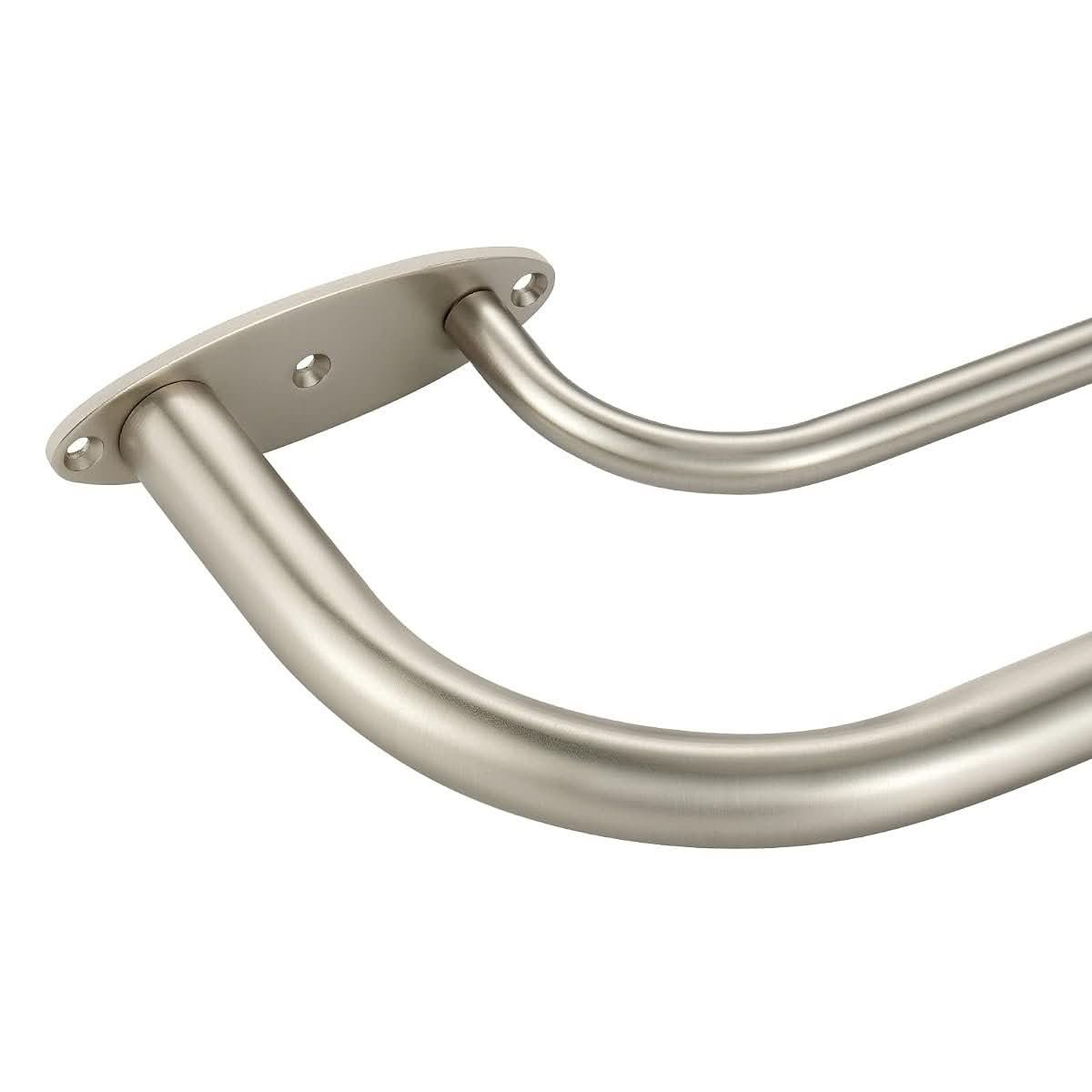
This one solves a specific problem: hanging a blackout panel and a sheer on the same window without buying two separate rods. A 1-inch front rod carries the heavier blackout curtain, and a 5/8-inch back rod carries the sheer, both wrapping around at each end so light cannot sneak in down the sides the way it does on a single flat rod.
Adjustable from 71cm to 122cm, it suits a standard bedroom or living room window instead of anything oversized, and the wraparound ends do double duty insulating against draughts as well as light, worth something come a Melbourne winter when a single-glazed window is losing heat around the edges of the curtain.
Installation needs actual wall brackets instead of tension alone, a step up in commitment from the Zenna Home tension rod above, and the trade-off is a size range capped at 122cm rather than stretching to a wide living room window. It suits a bedroom wanting proper blackout without sacrificing the softer look a sheer curtain gives during the day.
Pros
- Blackout and sheer curtains hang on the same bracket set
- Wraparound ends block light and draughts down the sides
- Satin nickel finish suits most modern curtain hardware
- Purpose-built for a real light-blocking problem, not just decoration
Cons
- Needs wall brackets, not a tension-only install like the Zenna Home above
- Maximum 122cm width rules out a wide picture window
- Two rods to align during installation instead of one
Key specs: 71-122cm adjustable, 1in front rod + 5/8in back rod, satin nickel, wall-mounted
CHECK ON AMAZON6. TONIAL Bay Window Curtain Rods – Best for Bay Windows
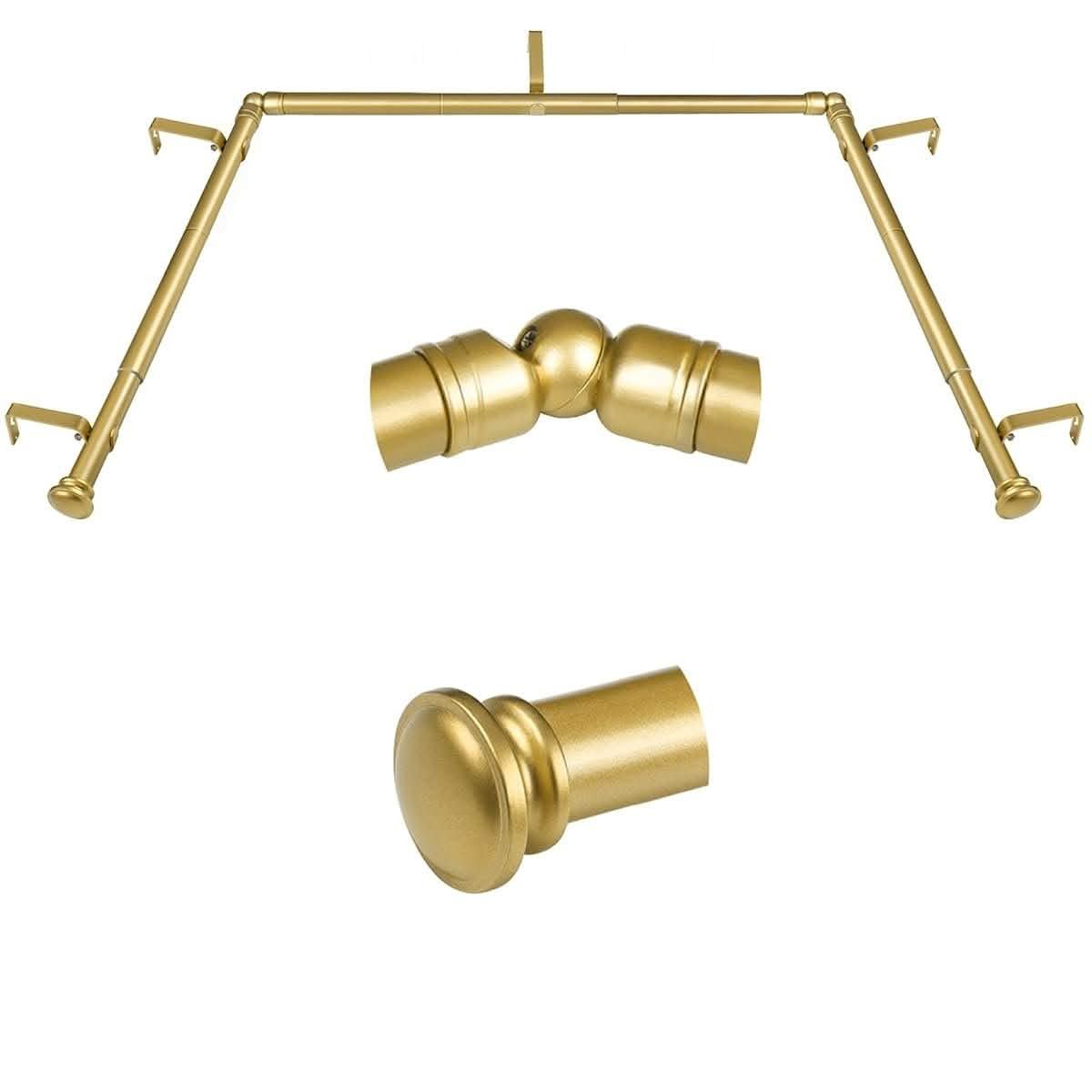
A bay window is exactly where a straight rod fails, and this one is built around a 360-degree ball corner connector that lets the centre rod and two side rods sit at whatever angle the window actually is, not the 90-degree corner most fixed corner rods assume.
The centre section telescopes from 81cm to 218cm and each side rod runs 81cm to 147cm, covering a properly wide bay instead of a token corner nook. Small cap finials keep the look closer to a traditional decorative rod than a purely functional bracket-and-pole setup.
Three separate sections need aligning and levelling during installation, more fiddly than a single straight rod, and a Queenslander with an actual bay window and high ceilings will get real use out of the adjustable angle where a fixed-angle corner rod would leave a gap. Budget extra time for this install over any other pick on this list.
Pros
- 360-degree ball connectors fit any bay window angle, not just 90 degrees
- Covers a properly wide bay window at up to roughly 5 metres combined
- Small cap finials keep a decorative, traditional look
- Each side rod adjusts independently for an uneven bay
Cons
- Three sections to align and level, more fiddly than a single rod
- Needs proper wall brackets on each of the three sections
- Overkill for a standard flat window, unlike the other six picks here
Key specs: Centre 81-218cm, sides 81-147cm each, gold finish, cap finials, wall-mounted
CHECK ON AMAZON7. Bendable Curtain Rail for Bay Window – Best Flexible Track Option
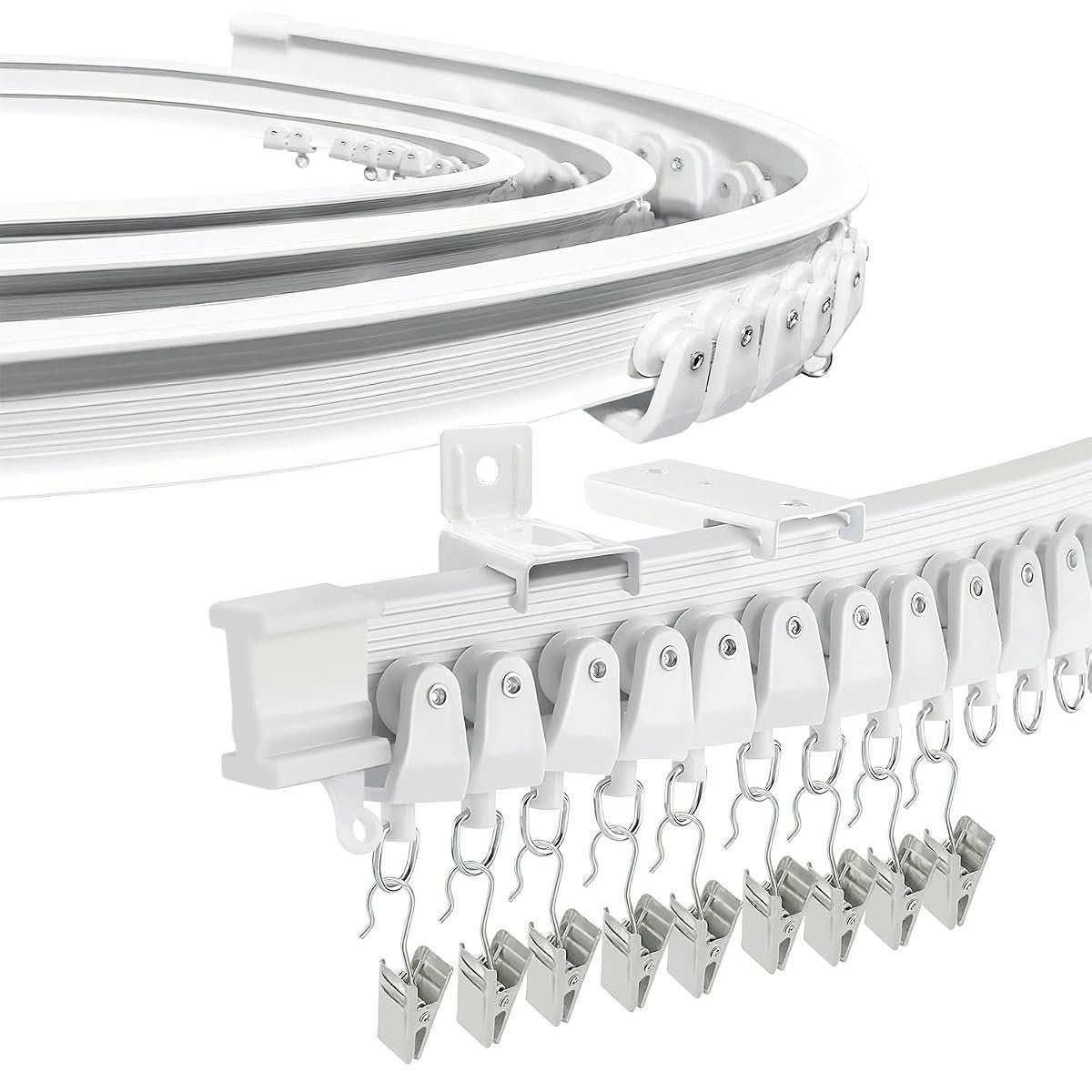
Where the TONIAL above uses rigid sections at fixed angles, this one bends continuously along its full 3-metre length, following a properly curved bay window or an irregular ceiling line a straight or angled rod cannot match.
Ceiling-mounted rather than wall-mounted, it suits a window recess with no clear wall space for brackets, or a room-divider curve where a straight room-divider rod like the Artiss or L-shaped picks above would need an actual corner instead of a smooth curve.
This is the most affordable of the four Amazon picks here, and the trade-off is a track, not a decorative pole: no finials, no traditional look, purely functional. It suits a curved bay window or an oddly shaped nook over a standard rectangular window, where a straight rod from the Zenna Home or double-rod entries above does the job just as well for less fuss.
Pros
- Bends continuously to match a properly curved window or ceiling line
- Ceiling-mounted, useful where there is no wall space for brackets
- Cheapest of the four Amazon picks in this guide
- Flexible enough to double as a curved room-divider track
Cons
- No decorative finials, purely a functional track
- Ceiling mounting still needs drilling into the ceiling itself
- Not the right pick for a standard flat window, where a straight rod is simpler
Key specs: 3m/9.8ft length, bendable, ceiling-mounted, flexible track
CHECK ON AMAZONHow to Choose a Curtain Rod
Work out whether you actually need a window rod or a room divider first. Three of the seven picks in this guide are built for splitting a space floor-to-ceiling, not dressing a window, and using one for the other wastes both money and weight capacity you do not need.
Check the weight rating against your actual curtain, not just the window width. A heavy blockout curtain needs a rod rated well above its own weight, since Australian Consumer Law guarantees cover a rod that fails to do the job it was sold for, but a warranty claim is a hassle next to just buying the right rated rod the first time.
Decide on tension versus wall-mounted before you fall for a finish you like. A tension rod suits a rental where drilling is off the table; a wall-mounted rod holds more weight and sits more securely once installed, worth it in a home you own or plan to stay in for years.
Measure the actual window reveal or wall space, not the curtain panel width. A rod needs roughly 15 to 20cm of clearance on each side of the window for the curtain to stack back and let full light through when open, more on a wide bay window setup like the TONIAL above.
Match the rod to your ceiling height and window style. A high-ceilinged Queenslander or an older weatherboard with tall windows often needs a longer ladder and a second pair of hands for a proper wall-mounted install than a standard project-home window does.
Budget realistically against what a hardware chain charges for a comparable rod. A basic tension rod here sits close to what Kmart or Bunnings charges for their own entry-level range, while the room-divider and bay window picks cost more because they are solving a bigger or more specific problem.
You’ll Also Want
A stud finder takes the guesswork out of a wall-mounted rod install, and the best stud finders australia guide runs through the options if this one is not the right fit.
For a plasterboard wall with nothing solid behind it, heavy-duty plasterboard anchors hold a bracket properly instead of the screw slowly working loose over a few months of curtains being opened and closed.
If a rod alone will not do, curtain rings with clips let a flat panel without built-in tabs or eyelets hang and glide smoothly on any of the pole-style picks here.
Frequently Asked Questions
What size curtain rod do I need for my window?
As a rule of thumb, a curtain rod should extend 15 to 20cm past each side of the window frame so the curtain can stack back fully and let in light when open. Measure the window reveal itself, not the curtain panel, and round up to the next adjustable size on the rod, not down, since most extendable rods overlap safely at the low end of their range but cannot stretch past the maximum.
Do curtain rods need to be drilled into the wall?
Only wall-mounted and ceiling-mounted rods need drilling. A tension rod grips through spring pressure between two surfaces and needs no holes at all, which is why it is the standard pick for a rental where the lease does not allow permanent fixtures. Tension rods generally hold less weight than a properly bracketed wall-mounted rod, so check the rated capacity against the curtain you plan to hang.
What is the difference between a curtain rod and a room-divider rod?
A curtain rod runs horizontally across a window and is rated to hold a curtain’s weight side-on. A room-divider rod runs vertically floor-to-ceiling instead, dividing a room into two spaces, and is rated for a heavier load spread differently across the frame. The two are not interchangeable despite sharing similar tension or bracket mechanisms.
How do I hang curtains on a bay window?
A bay window generally needs either a set of angled or ball-jointed rod sections that follow the actual angle of the window, or a continuous bendable track that curves smoothly around the whole bay. A single straight rod cannot follow the angle, and a fixed 90-degree corner rod only works if the bay happens to meet at that exact angle, which many older Australian homes do not.
Can a curtain rod hold a heavy blockout curtain?
Only if it is rated for the weight. A basic tension rod typically holds up to around 7 to 10kg, while a heavier wall-mounted or double-rod set can carry 15 to 20kg or more. Blockout and thermal curtains are noticeably heavier than a sheer panel, so check the rod’s stated weight capacity against the curtain’s weight before assuming any rod will do.
How long do curtain rods typically last?
A well-installed wall-mounted rod with a metal bracket typically lasts well over a decade with no issues, since there is little to wear beyond the finish. A tension rod’s spring mechanism is the part most likely to weaken first, usually after several years of a curtain being opened and closed daily, so a wobblier feel over time is normal wear, not a fault.
Verdict
For a standard window in a rental, the Zenna Home tension rod is the easiest way to get a curtain up properly without touching the wall. Anyone dealing with a bay window should look at the TONIAL for its adjustable angled sections, while a household wanting to divide a room instead of dress a window is better matched to the Artiss extendable rod above the ceiling-mounted track set.