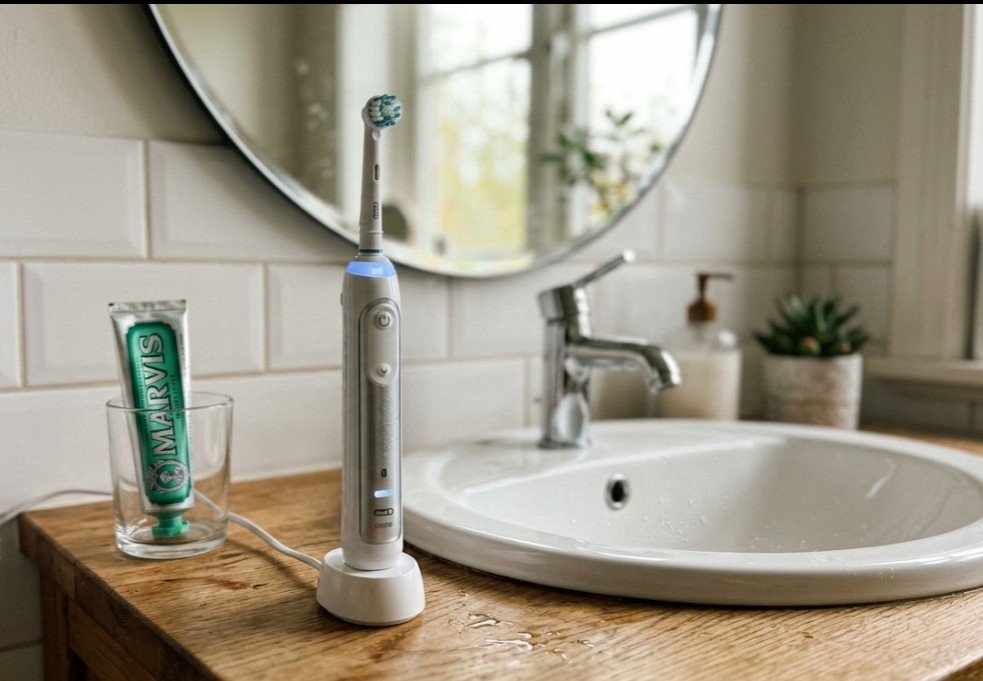
An electric toothbrush is a battery-powered or rechargeable brush that moves its head thousands of times a minute using a sonic, oscillating-rotating or rotating motor, cleaning plaque from teeth and along the gumline more consistently than a manual brush. The best electric toothbrushes in Australia pair that motor with a pressure sensor and a built-in two-minute timer, so brushing time and pressure stay consistent every day rather than depending on how awake you are at 7am.
Electric toothbrushes fall into a handful of distinct types. Sonic toothbrushes vibrate the bristles at high frequency to drive fluid between teeth; oscillating-rotating toothbrushes such as Oral-B’s iO range spin a small round head back and forth; rotary kids’ toothbrushes use a simpler spinning action sized for smaller mouths; and hands-free U-shaped brushes clean the whole arch in one bite rather than tooth by tooth.
A mid-range electric toothbrush typically runs its motor at somewhere between 20,000 and 40,000 movements per minute, roughly 333 to 666 Hz, well beyond the 300 to 400 strokes per minute a hand achieves with a manual brush. What separates a good pick from a forgettable one is battery life, the presence of a pressure sensor to protect gums, and whether replacement brush heads are easy to find in Australia.
This guide compares six electric toothbrushes available to Australian buyers, from a dedicated kids’ pick through to a long-battery sonic brush for everyday use, plus a hands-free option for anyone who finds a standard brush handle awkward.
Quick Picks
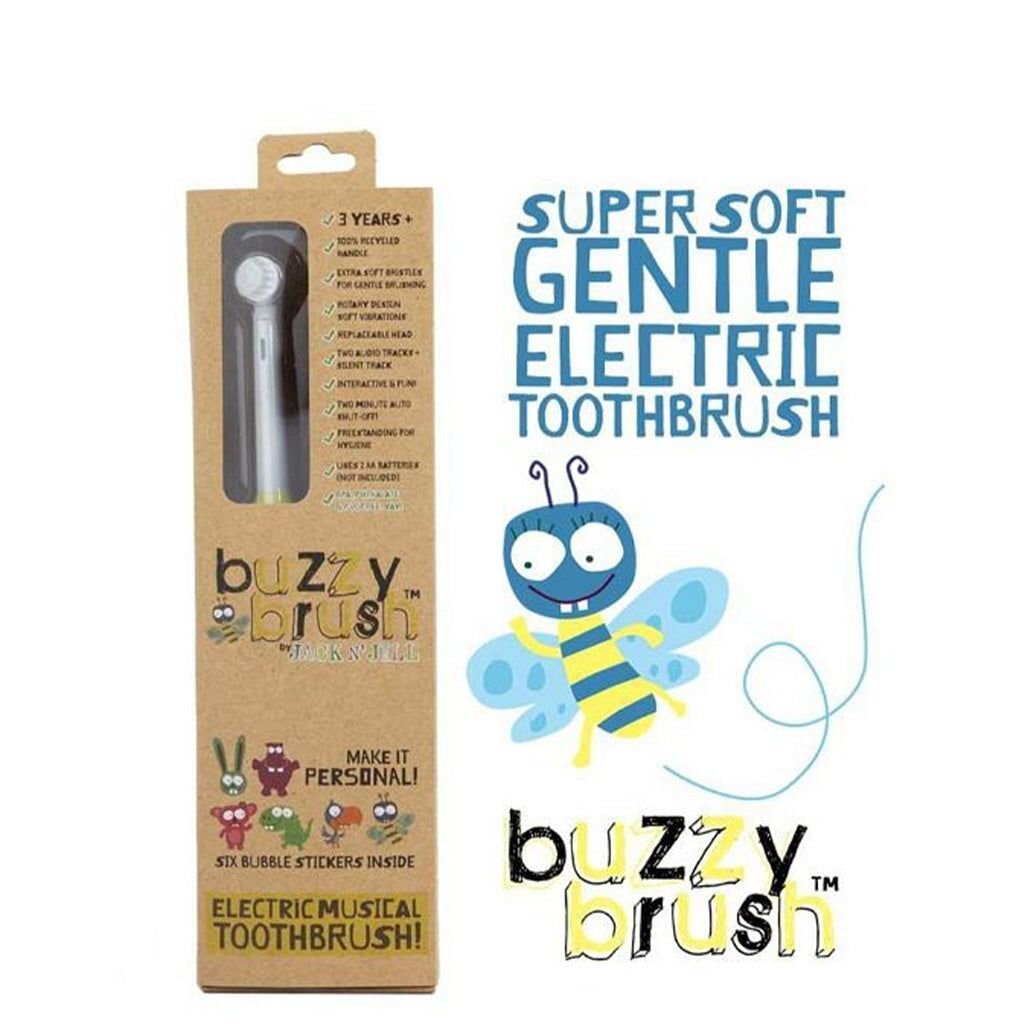
Jack N’ Jill Buzzy Brush
A musical rotary toothbrush built for ages three and up, with a silent mode for kids who find the tune distracting.
CHECK ON AMAZON
U-Shaped Hands-Free Sonic Toothbrush
A one-bite U-shaped mouthpiece that cleans the whole arch at once, ideal for anyone with limited hand mobility.
CHECK ON AMAZONBest Electric Toothbrushes in Australia Compared
| Product | Link | Type | Best For | Key Spec |
|---|---|---|---|---|
| Jack N’ Jill Buzzy Brush | Check price | Rotary, kids | Ages three and up | Two audio tracks plus silent mode |
| U-Shaped Hands-Free Sonic Toothbrush | Check price | Hands-free U-shape | Fast, simple full-mouth clean | Wireless charging, sonic vibration |
| Oral-B iO Series 3 Clean & Whiten | Check price | Round oscillating-vibrating | Teeth whitening | 3 smart modes with pressure sensor |
| Oral-B iO Series 2 Gentle Clean | Check price | Round oscillating-vibrating | First-time electric brush users | Automatic gum pressure sensor |
| Philips Sonicare 2100 Series | Check price | Sonic | Gentle daily sonic clean | 14-day battery, EasyStart ramp-up |
| Ordo Sonic Lite | Check price | Sonic | Long battery life between charges | 35,000 pulses a minute, 5+ week battery |
1. Jack N’ Jill Buzzy Brush – Best for Kids
Jack N’ Jill designed the Buzzy Brush specifically for children aged three and up, wrapping a simple rotary mechanism in a chunky handle that is easier for small hands to hold than an adult-sized brush. Two AAA batteries power the motor, so there is no charging cable to lose or a dock taking up bathroom counter space.
The brush has two audio tracks and a silent mode, with tri-colour LED lights showing which one is selected, and it remembers whichever setting was used last. Soft nylon bristles keep the cleaning gentle enough for young gums while still giving the two-minute brushing habit a playful nudge.
It suits families more than solo adult buyers, and parents who prefer a quieter bathroom in the morning will want the silent mode from day one. The brush is designed to pair with a natural, low-foam toothpaste, since thicker foaming pastes can clog the rotary mechanism over time.
Pros
- Battery powered, no charging dock required
- Two audio tracks and a silent mode, with memory function
- Chunky handle sized for small hands
Cons
- Runs on two AAA batteries, so there are cells to buy and swap
- Rotary mechanism can clog with thicker foaming toothpaste
Key specs: Battery-operated rotary action, ages three and up, three modes (two audio tracks and silent) with memory function, tri-colour LED indicator, soft nylon bristles, replaceable head, two-minute auto shut-off, requires two AAA batteries.
CHECK ON AMAZON2. U-Shaped Hands-Free Sonic Toothbrush – Best Hands-Free Design
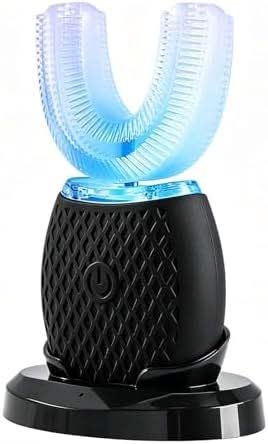
This U-shaped brush swaps the usual handle-and-head layout for a single mouthpiece with bristles shaped to match the bite, built to clean the whole arch in one go rather than tooth by tooth. The mouthpiece is food-grade silicone, and the unit sits on a wireless charging base.
High-frequency sonic vibration does the cleaning once the mouthpiece is in place, and the listing describes several modes, from a powerful setting to a medium one. It quotes about a week of use from a three-hour charge, with a low-battery reminder. It will not replace targeted brushing along the gumline the way a standard head does, but for a quick daily pass it is faster than any other brush in this guide.
Anyone with limited hand or wrist mobility, or a household member who rushes their brushing, is the obvious audience here. A one-size mouthpiece is built for a natural adult bite, so it is a poor match for anyone with braces or bridgework.
Pros
- Cleans the whole arch in one go
- No brushing technique required
- Wireless charging base, about a week per charge
- Food-grade silicone mouthpiece
Cons
- One-size mouthpiece, not suitable for braces or bridgework
- Less targeted along the gumline than a standard head
Key specs: U-shaped food-grade silicone mouthpiece, sonic vibration, multiple modes, wireless charging, hands-free operation.
CHECK ON AMAZON3. Oral-B iO Series 3 Clean & Whiten – Best for Whitening
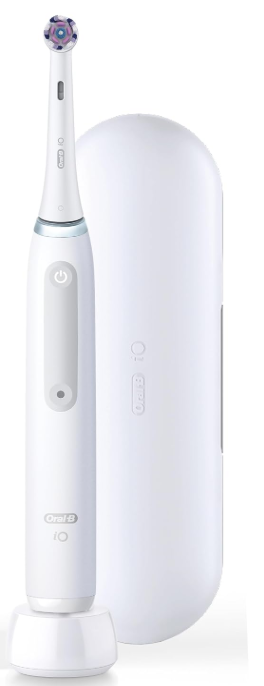
Oral-B’s iO Series 3 keeps the brand’s round, dentist-inspired head but adds a ring of micro-vibrating bristles around the outside, a design carried across the whole iO range. The handle comes in white with a hard travel case, and setup is a single-button pairing with no app required to use the core functions.
A visible pressure sensor glows red when brushing pressure gets too high and turns green at the right level, which is a genuinely useful habit-correction tool for anyone who has been told they brush too hard. The whitening mode adds a slightly longer, more focused pass over the front teeth without needing a separate whitening toothpaste.
Someone upgrading from a basic rotating brush who wants a visible, real-time pressure warning rather than an app-based one will get the most from the Series 3. Replacement iO heads are a different format from standard Oral-B heads, which is worth weighing against the Series 2 below.
Pros
- Visible red-to-green pressure sensor
- Dedicated whitening mode
- Comes with a hard travel case
Cons
- iO replacement heads are a different format from standard Oral-B heads
- Battery life is shorter than the sonic brushes above
Key specs: Round oscillating-vibrating head, three smart modes including whitening, visible pressure sensor, two-minute in-handle timer, travel case included.
CHECK ON AMAZON4. Oral-B iO Series 2 Gentle Clean – Best for First-Time Electric Brush Users
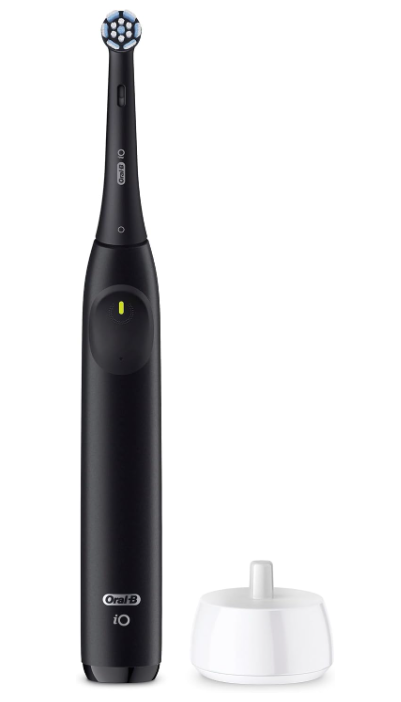
The Series 2 strips the iO range back to a single button and three modes, aimed squarely at someone switching from a manual toothbrush for the first time. The handle is lighter than the Series 3 above it, and the motor runs noticeably quieter than older Oral-B rotating brushes.
An automatic gum pressure sensor slows the motor down the moment it detects too much force, rather than just flashing a warning light, which makes it harder to brush too hard even if the visual cue goes unnoticed. Extra-sensitive and sensitive modes sit alongside the daily clean setting for anyone easing into electric brushing gradually.
This is the pick for a household member who has resisted switching from a manual brush, since the learning curve is close to zero. Battery life runs shorter than the sonic picks above, so it suits daily home use more than extended travel without a charger.
Pros
- Automatic gum pressure sensor slows the motor itself
- Quiet motor, single-button operation
- Consistently the best-selling model in its range
Cons
- Shorter battery life than the sonic brushes above
- No visible pressure light, only motor slowdown
Key specs: Round oscillating-vibrating head, three modes, automatic gum pressure sensor, lightweight handle, rechargeable battery.
CHECK ON AMAZON5. Philips Sonicare 2100 Series – Best Sonic Technology
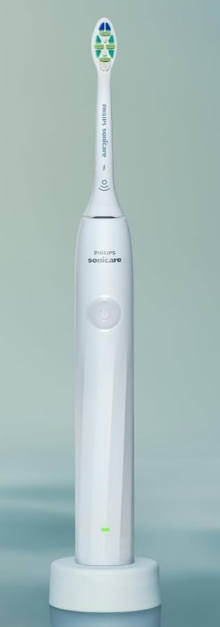
Philips takes a different mechanical approach to Oral-B’s rotating heads, driving a slim brush head at high frequency to create a sonic vibration that pushes fluid between teeth rather than physically scrubbing them. The 2100 Series handle is slim and light, closer in feel to a manual brush than the bulkier Oral-B iO handles.
An EasyStart feature ramps the intensity up gradually over the first fortnight of use, which softens the adjustment for anyone moving from a manual brush straight onto a sonic model. The SmarTimer and QuadPacer combination pulses every 30 seconds to mark out the four quadrants of the mouth across the full two-minute brush.
Fourteen days of battery life between charges makes this a reasonable travel option as well as a daily driver, and the two-intensity-level design keeps it simple for anyone who does not want to think about brushing modes. Sonicare-compatible heads are a separate format from Oral-B’s round heads.
Pros
- 14-day battery life, good for travel
- EasyStart eases new users into sonic vibration
- Slim, lightweight handle
Cons
- Only two intensity levels, no pressure sensor
- Sonicare-specific heads are a separate format to Oral-B’s
Key specs: Sonic motor, two intensity levels, EasyStart and SmarTimer with QuadPacer, 14-day battery life, rechargeable.
CHECK ON AMAZON6. Ordo Sonic Lite – Best for Long Battery Life
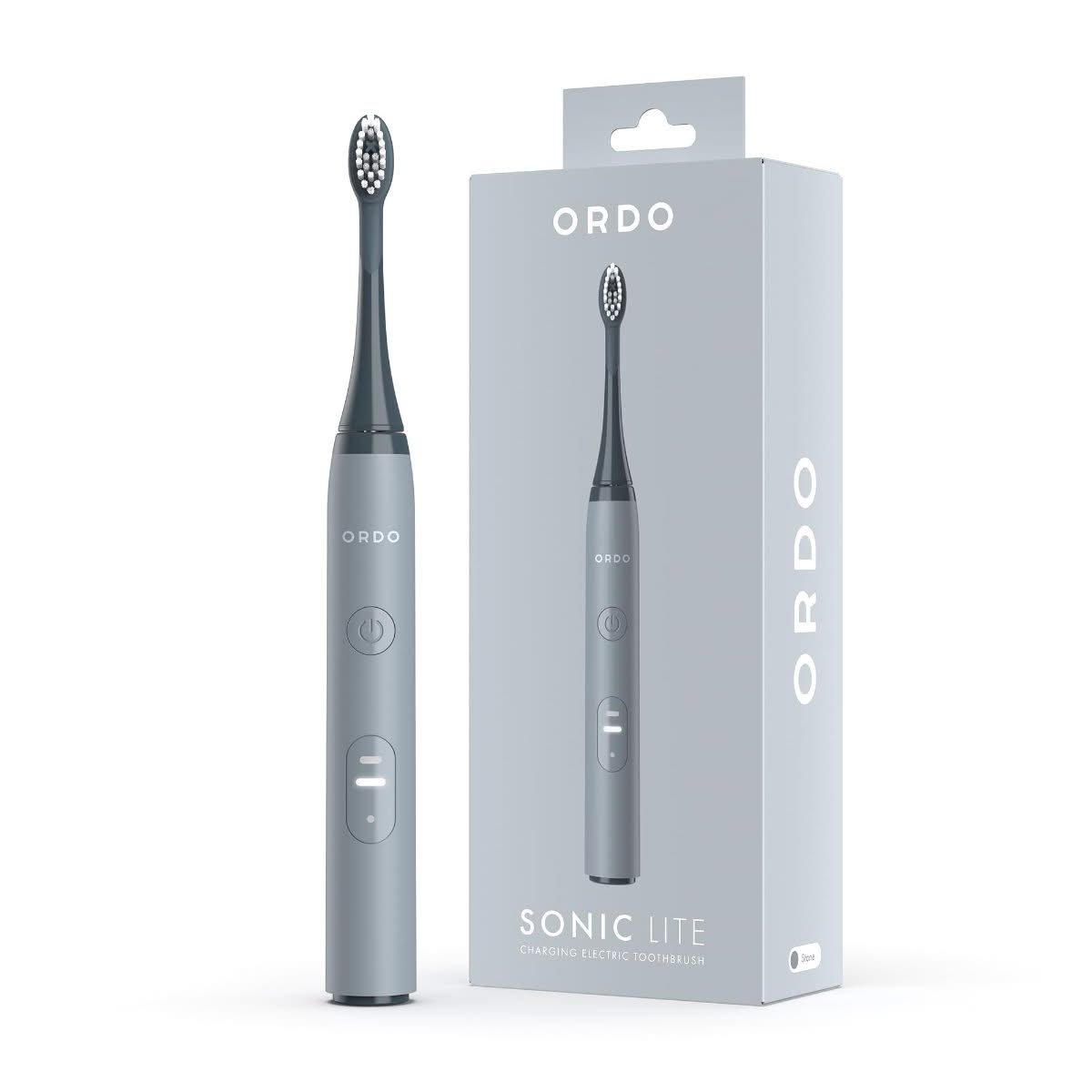
Sleek handle, USB-C socket, and a battery the listing quotes at more than five weeks per charge. That is over double the 14 days claimed for the Sonicare 2100 above, and it means the charger can live in a drawer (or the glovebox, on a caravan lap of the country) instead of beside the basin. The sonic motor runs at 35,000 pulses a minute.
Two modes, Clean and Sensitive, plus a two-minute timer that pulses at each quadrant. That is the whole menu. There is no pressure sensor, so anyone who scrubs too hard is better off with the iO Series 2 above, which slows the motor itself. Simple beats clever at 7am, though.
It suits a share house, a second bathroom, or anyone who wants a sonic brush without a nightly charging dock. Replacement heads are Ordo’s own format, so check head availability on Amazon AU before committing, the same homework as for the Sonicare.
Pros
- Battery quoted at more than five weeks per charge
- USB-C charging, so no dock to pack
- Clean and Sensitive modes with a two-minute quadrant timer
Cons
- No pressure sensor, so heavy brushing goes unnoticed
- Only two modes, with no whitening or massage setting to grow into
Key specs: Sonic motor, 35,000 pulses per minute, Clean and Sensitive modes, two-minute timer with quad-pacer, 5+ weeks per charge (listing figure), USB-C charging, waterproof handle.
CHECK ON AMAZONHow to Choose the Best Electric Toothbrushes in Australia
Brush type matters more than brand. Sonic brushes like the Philips and Ordo models vibrate a slim head at high frequency, while Oral-B’s iO range spins a small round head back and forth. Neither mechanism is clearly better for plaque removal, so the deciding factor usually comes down to feel: some people find sonic vibration too buzzy against the teeth, others find a rotating head fiddly around the back molars. A water flosser cleans between teeth where an electric toothbrush does not reach.
A pressure sensor protects gums more than any brushing mode does. Brushing too hard recedes gums over years, not weeks, which makes it an easy habit to miss without a warning light or a motor that slows itself down. If gum sensitivity is already a concern, prioritise a model with a pressure sensor over one with extra brushing modes.
Battery life decides how often charging becomes a chore. A brush that needs daily charging will eventually sit dead in a drawer while the manual brush from the cupboard gets used instead. Anything from ten days upward is enough to forget about the charger for a week at a time, and it matters even more for anyone who travels regularly.
Replacement heads need to be restocked regularly. A toothbrush handle is a one-off purchase, but heads need replacing every three months, and Oral-B’s round heads and Philips’ Sonicare-compatible heads are not interchangeable. Checking that a brand’s heads are easy to find locally before buying saves a scramble later.
A built-in timer keeps brushing time honest. Two minutes feels longer than it is, and most people who switch back to a manual brush after using an electric one with a timer are surprised by how short their old routine actually was. Quadrant pacing, where the brush pulses every 30 seconds, adds a second layer of consistency by nudging attention around all four sections of the mouth.
Special circumstances change the calculation entirely. A child under twelve needs a smaller head and a gentler motor than an adult model provides, and anyone with arthritis or limited grip strength may get more use out of a hands-free, U-shaped design than a standard handle. Matching the brush to the person using it, rather than to the highest-rated model overall, is what actually improves brushing habits long term.
Frequently Asked Questions
What is the difference between a sonic and an oscillating-rotating electric toothbrush?
A sonic toothbrush vibrates a slim brush head at high frequency to drive fluid and toothpaste between teeth, while an oscillating-rotating brush spins a small round head back and forth against each tooth in turn. Both remove more plaque than a manual brush when used correctly, and the choice mostly comes down to personal feel rather than one being clinically superior.
How often should I replace an electric toothbrush head?
Most manufacturers recommend replacing the brush head every three months, or sooner if the bristles look splayed or faded. A worn head cleans less effectively even if the motor and timer are still working normally.
Do electric toothbrushes protect gums better than manual brushing?
A pressure sensor, where fitted, helps by slowing the motor or lighting up when brushing force gets too high, which is something a manual brush cannot do on its own. Gum health still depends on brushing technique and flossing habits alongside the toothbrush itself.
What age can a child start using an electric toothbrush?
Most kids’ electric toothbrushes, including rotary models like the Buzzy Brush, are designed for children aged three and up, once a child can reliably spit rather than swallow toothpaste. Younger children are generally better suited to a manual brush supervised by a parent.
How long does an electric toothbrush battery last between charges?
Battery life ranges from around one week on entry-level models to more than five weeks on the longest-lasting sonic brushes. Frequent travellers are usually better served by a model at the longer end of that range.
Are all electric toothbrush replacement heads interchangeable between brands?
No. Oral-B’s round heads and Philips Sonicare’s snap-fit heads are each brand-specific and do not fit across manufacturers. Checking head availability and format before buying avoids being stuck with a handle that is hard to keep supplied with heads.
Verdict
For most Australian households, the Oral-B iO Series 2 is the easiest electric toothbrush to live with day to day, pairing a genuine pressure sensor with a gentle learning curve for anyone switching from a manual brush. A household with young children is better served by the Jack N’ Jill Buzzy Brush than by adapting an adult model, and anyone who wants the fastest possible daily routine should look at the U-Shaped hands-free brush instead. Every pick here includes a built-in two-minute timer, the one feature that consistently changes how long people actually brush.