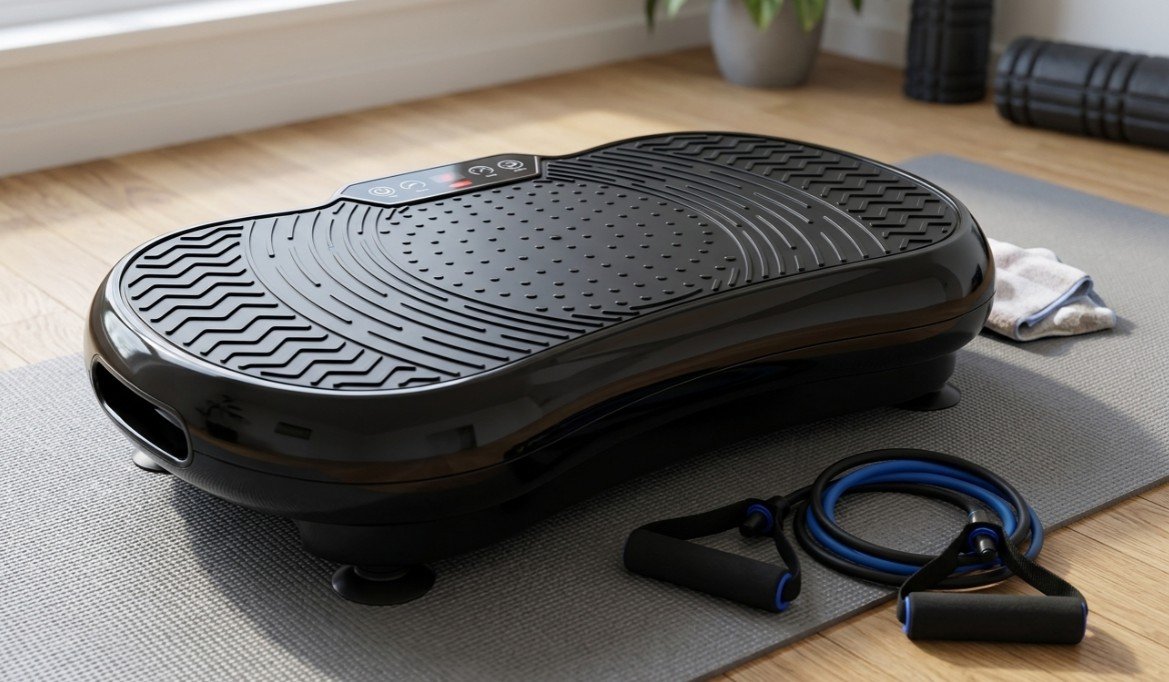
A vibration machine is a powered platform that transmits rapid oscillations through the body, forcing muscles to contract reflexively many times per second while you stand, sit or hold a position on it. The best vibration machines in Australia pair a platform of 55cm to 80cm with a motor of 200W or more, adjustable speed across at least 99 levels, and a load rating between 120kg and 200kg.
Three formats cover the home market. Oscillating plates pivot around a central axis like a seesaw and suit beginners and balance work. Vertical plates move straight up and down at higher frequencies for strength and bone density training. Handlebar models add a fixed or adjustable upright for anyone who needs something to hold while they find their footing.
Frequency separates these machines more than any other figure. Home units generally run between 5 Hz and 15 Hz, meaning 5 to 15 vibrations per second, against the 20 Hz to 50 Hz of commercial platforms. Platform width carries similar weight: a 55cm plate (roughly 22 inches) is enough for standing work, while an 80cm surface (about 31 inches) leaves room for lunges and press-ups.
This guide compares ten machines on platform size, speed range, preset programmes, load rating and the extras that decide how often the machine actually gets used.
Quick Picks
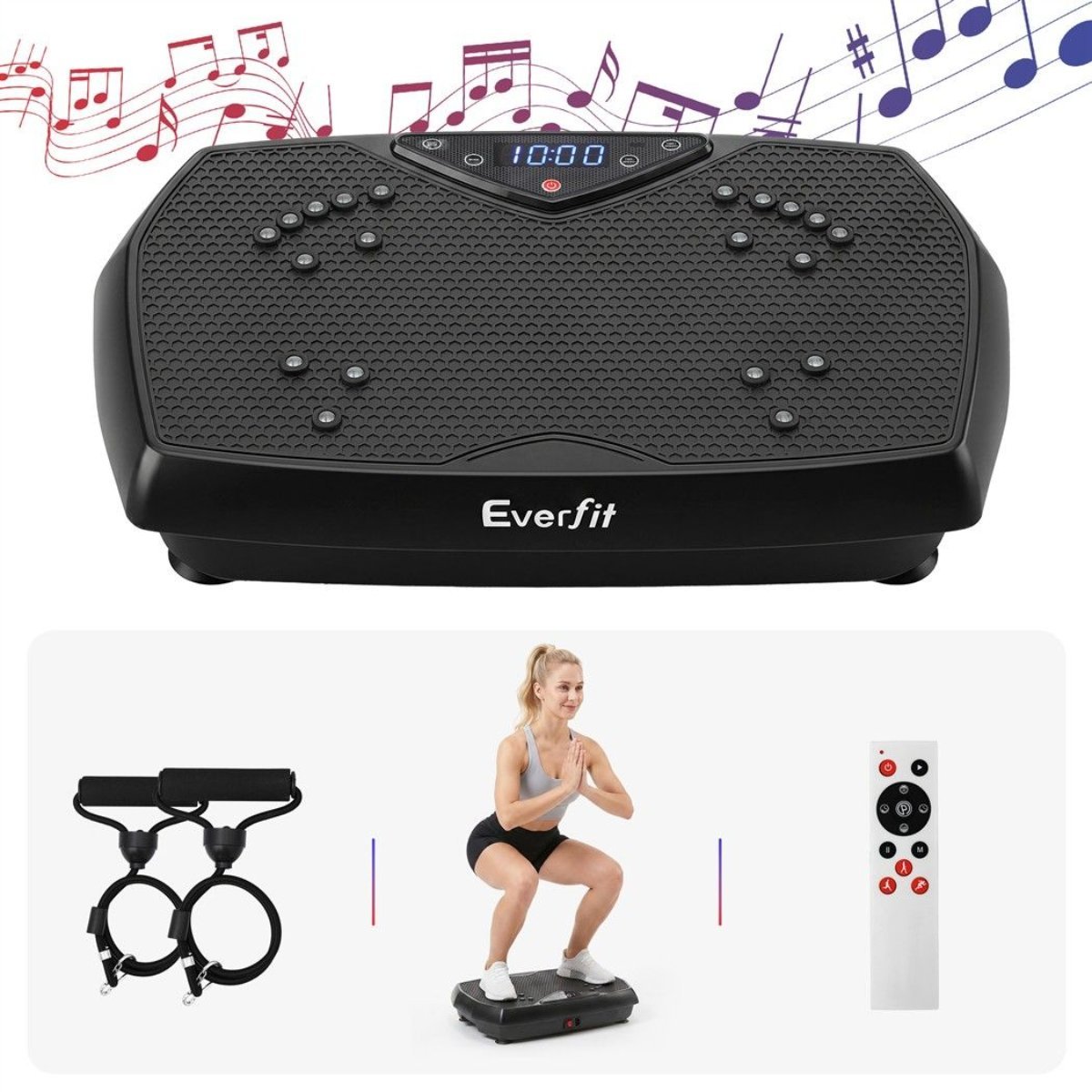
Everfit Vibration Plate with Bluetooth
A compact plate with 150 speed levels, three workout modes and a Bluetooth speaker built in.
CHECK CURRENT PRICE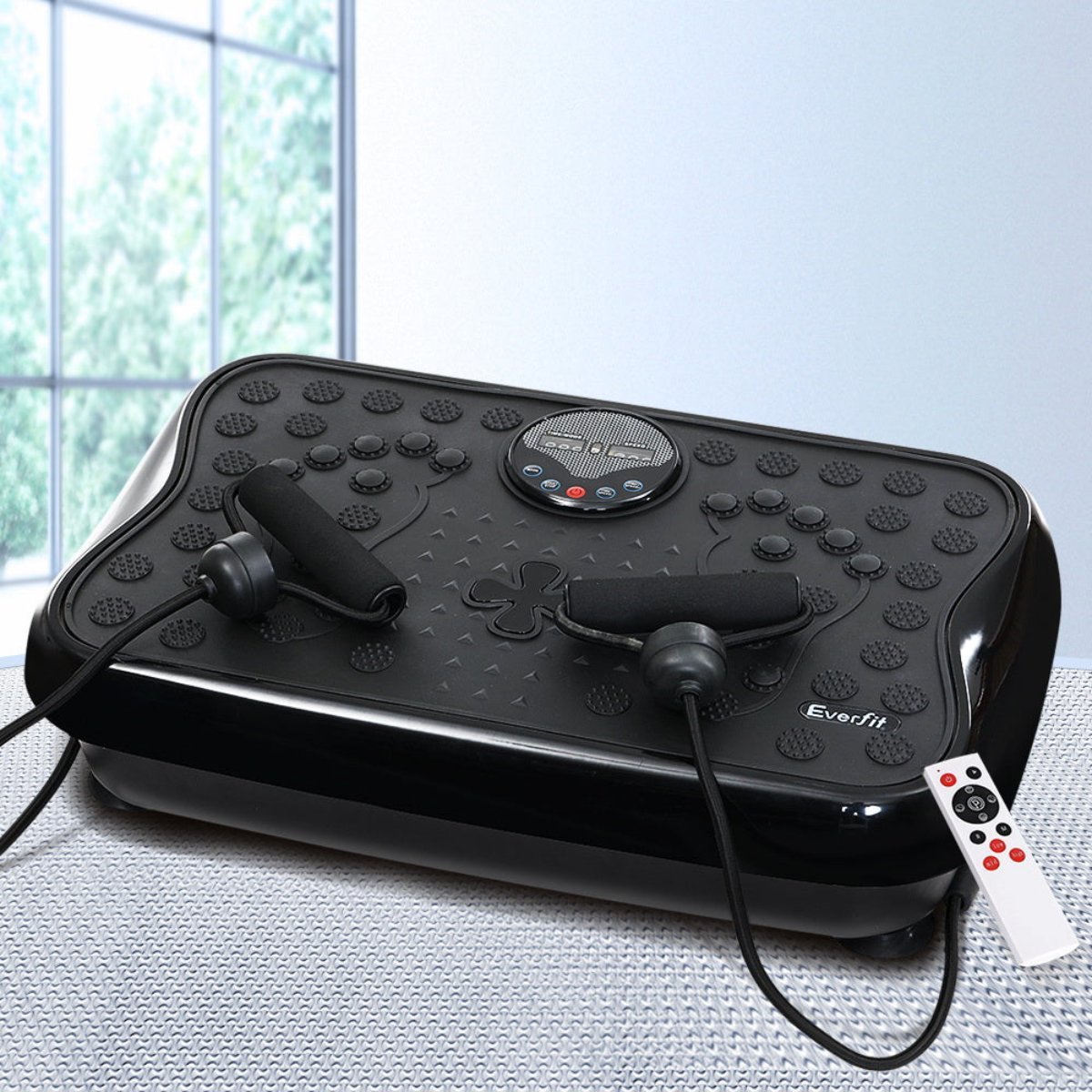
Everfit Vibration Machine with Remote
The least expensive way into whole-body vibration, with a remote and resistance ropes included.
CHECK CURRENT PRICE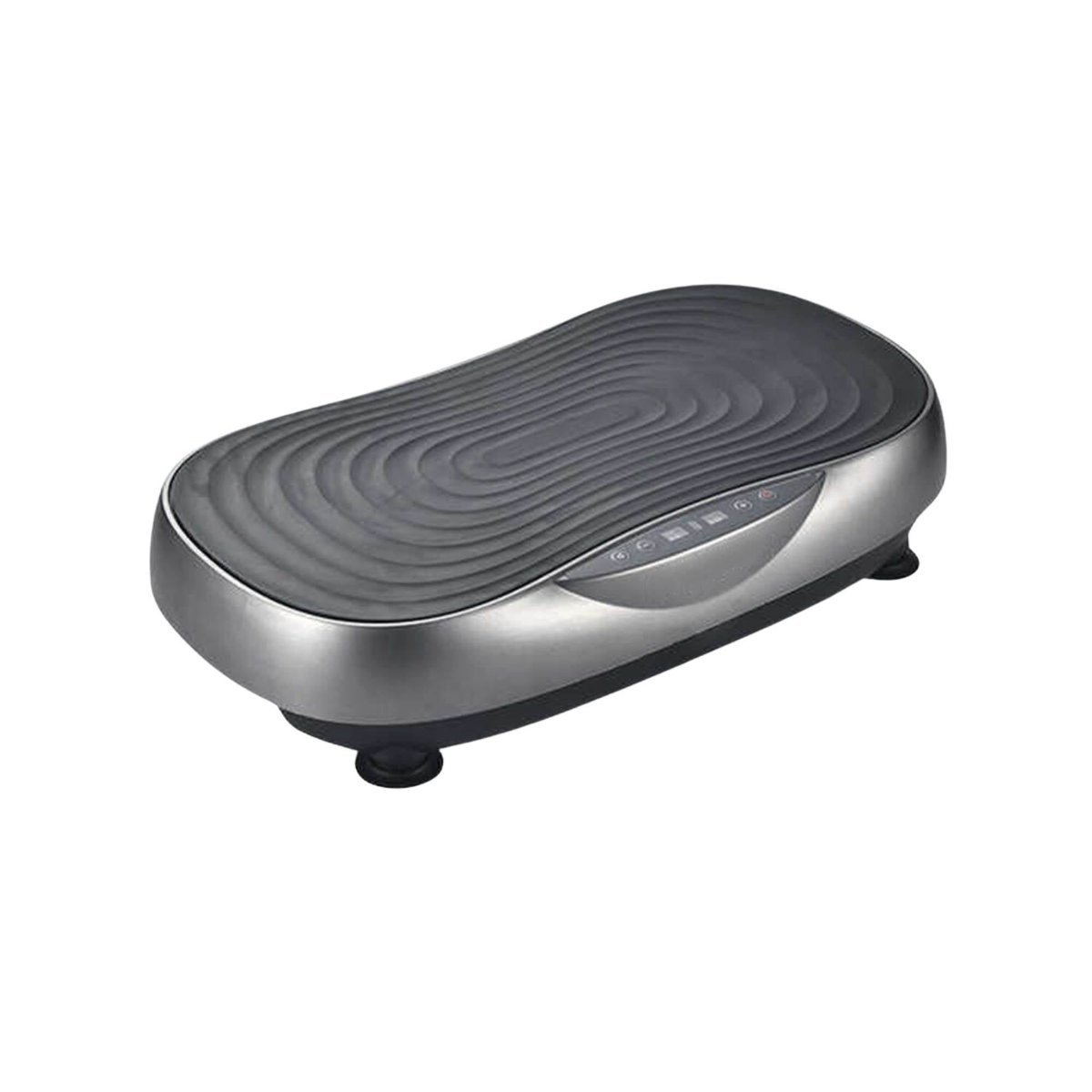
Social Hike Vibration Plate Machine
Ten automatic programmes and 99 speed levels on a 200W, 55cm platform.
CHECK CURRENT PRICEBest Vibration Machines in Australia Compared
| Product | Link | Type | Best For | Key Spec |
|---|---|---|---|---|
| Everfit Vibration Plate with Bluetooth | Check price | Oscillating plate | Everyday home use | 150 speeds, 150kg, Bluetooth |
| Everfit Round Vibration Platform | Check price | Oscillating plate | Full body toning | Resistance ropes, digital controls |
| Everfit Vibration Machine with Remote | Check price | Oscillating plate | First-time buyers | Remote control, resistance rope |
| Social Hike Vibration Plate Machine | Check price | Oscillating plate | Programme variety | 55cm, 200W, 99 speeds |
| Advwin Extra-Wide Vibration Plate | Check price | Wide oscillating plate | Stability and floor work | 80cm wide, 200kg, 200 speeds |
| Advwin Vibration Plate with Push-Up Handles | Check price | Oscillating plate | Upper body work | 200 speeds, 150kg, push-up handles |
| Advwin Vibration Plate with Handlebar | Check price | Handlebar plate | Balance support | Adjustable handlebar, 120 speeds |
| Advwin Vibration Plate with Heat Therapy | Check price | Heated plate | Muscle recovery | 45C to 60C heating, 120 speeds |
| Advwin Vibration Plate with Light Strip | Check price | Oscillating plate | Evening sessions | Light strip, 120 speeds, P1 to P5 |
| Advwin Vibration Platform with Acupressure | Check price | Oscillating plate | Circulation | Acupressure magnets, resistance ropes |
1. Everfit Vibration Plate with Bluetooth – Best for Everyday Home Use
One hundred and fifty speed levels give this far finer control than the ten or twenty steps on a basic plate, and three preset workout modes cover the common routines without any setup. The platform carries up to 150kg and the footprint is small enough to slide under a bed between sessions.
A Bluetooth speaker sits in the housing, which sounds like a gimmick until you have stood on a vibrating platform in silence for fifteen minutes. Music is the difference between a machine used three times a week and one used twice a month. The speed range means you can start at a gentle setting and work up over a few weeks rather than jumping straight to an uncomfortable intensity.
The trade-off for the compact body is a platform too narrow for lunges or press-ups, so this stays a standing and seated machine. Anyone setting up in a bedroom or a small apartment will get more from it than from a wider plate they have to move every time.
Pros
- 150 adjustable speed levels
- Three preset workout modes
- Built-in Bluetooth speaker
- 150kg load rating
- Compact enough to store under furniture
Cons
- Platform too narrow for floor exercises
- No handlebar for balance support
Key specs: 150 speed levels, 3 workout modes, Bluetooth speaker, 150kg capacity
CHECK CURRENT PRICE2. Everfit Round Vibration Platform – Best for Full Body Toning
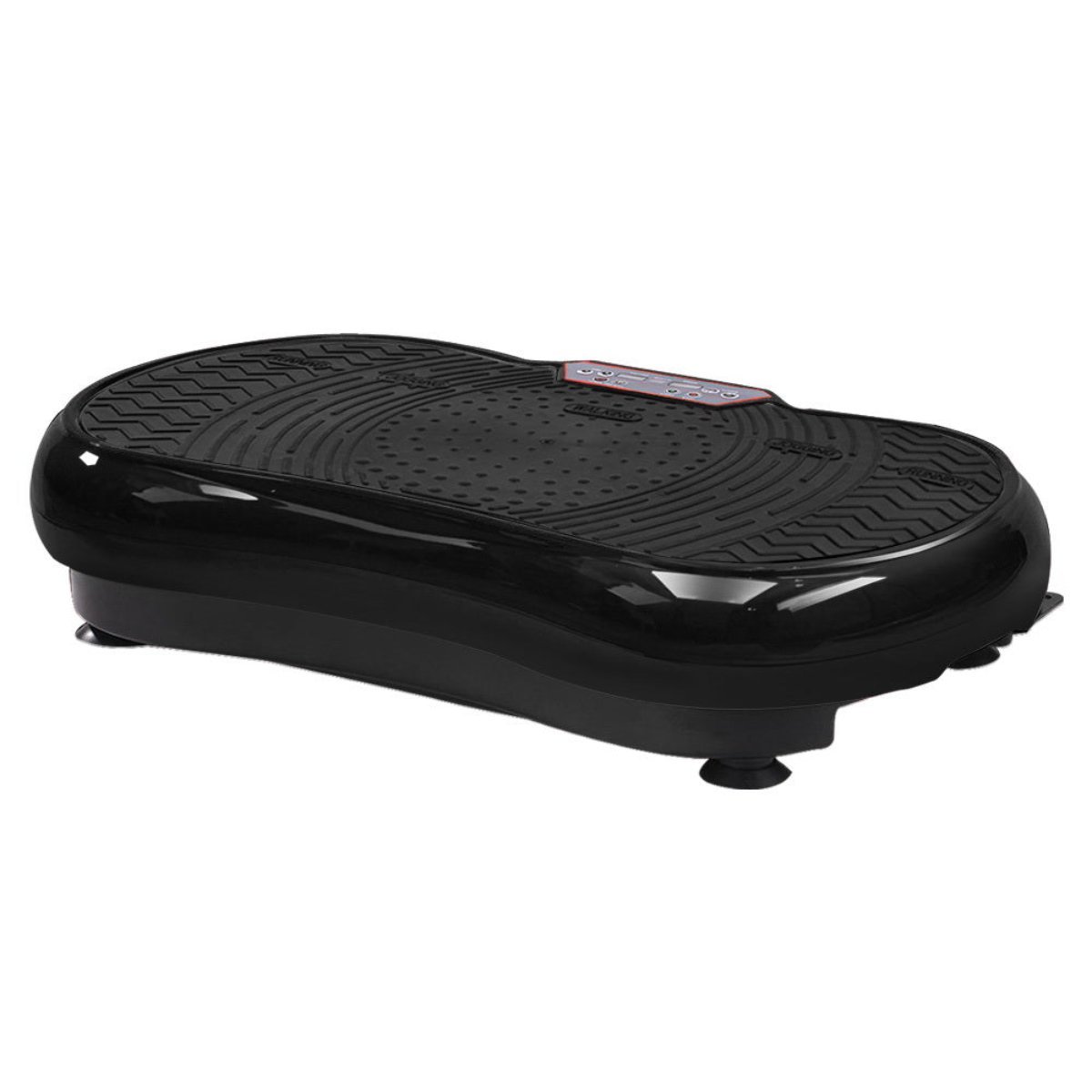
The platform is round rather than rectangular, which puts your feet closer to the centre of the oscillation and makes the intensity more even across both legs. Digital controls on the housing set time, speed and intensity in three presses.
Resistance ropes clip to the base so the arms, shoulders and back get worked while the plate drives the legs and core. That turns a passive stand into something closer to a circuit, and it is the feature that keeps a vibration plate relevant after the first month. Waist, thighs, arms and back all come into a single session.
Round platforms give less room for wide stances than a rectangular plate of the same area, so tall users may find their footing cramped. Against the Bluetooth model above it trades speaker and speed granularity for the resistance ropes, which is the better swap if toning rather than convenience is the point.
Pros
- Resistance ropes work the upper body
- Even intensity from the round platform
- Simple digital controls
- Targets waist, thighs, arms and back
Cons
- Narrow stance for taller users
- Fewer speed steps than the Bluetooth model
Key specs: Round oscillating platform, resistance ropes, digital time, speed and intensity controls
CHECK CURRENT PRICE3. Everfit Vibration Machine with Remote – Best Budget Pick
Everything here is stripped back to what a first machine actually needs: a stable plate, a resistance rope, digital controls and a remote so you are not bending down mid-session to change the speed. It is the lowest entry point in this guide.
The remote matters more than it sounds. Reaching down to a control panel while the platform is moving is awkward, and on cheaper machines it is the reason people leave the speed on one setting forever. Set the time, speed and intensity from standing and the session runs itself.
Build quality sits below the wider Advwin plates further down, and the motor is quieter about its limits when loaded near capacity. As a way to find out whether vibration training suits you before committing to a larger machine, it does the job without wasting money.
Pros
- Lowest entry point in this guide
- Remote control for mid-session changes
- Resistance rope included
- Simple to set up and store
Cons
- Lighter build than the wider plates
- Less powerful under heavier loads
Key specs: Oscillating platform, digital and remote controls, resistance rope, adjustable time, speed and intensity
CHECK CURRENT PRICE4. Social Hike Vibration Plate Machine – Best for Programme Variety
Fifty-five centimetres of platform and 200 watts put this in the middle of the field on size and power, but the control set is the widest of any machine here: ten automatic programmes on top of 99 manual speed levels.
Automatic programmes cycle the intensity through a session rather than holding one speed, which stops the body settling into the vibration and tuning it out. Ten of them is enough to run a different session every weekday for a fortnight. Manual mode is still there when a programme does not suit.
It is rated for home use, and the manufacturer says as much: sustained daily use at maximum intensity is beyond what it was built for. Someone who gets bored of a fixed routine within a fortnight will keep using this longer than they would a two-button machine.
Pros
- Ten automatic programmes
- 99 manual speed levels
- 200W motor
- 55cm platform suits most standing work
Cons
- Rated for home rather than commercial use
- No handlebar or resistance ropes included
Key specs: 55cm platform, 200W motor, 10 auto programmes, 99 speed levels
CHECK CURRENT PRICE5. Advwin Extra-Wide Vibration Plate – Best for Stability
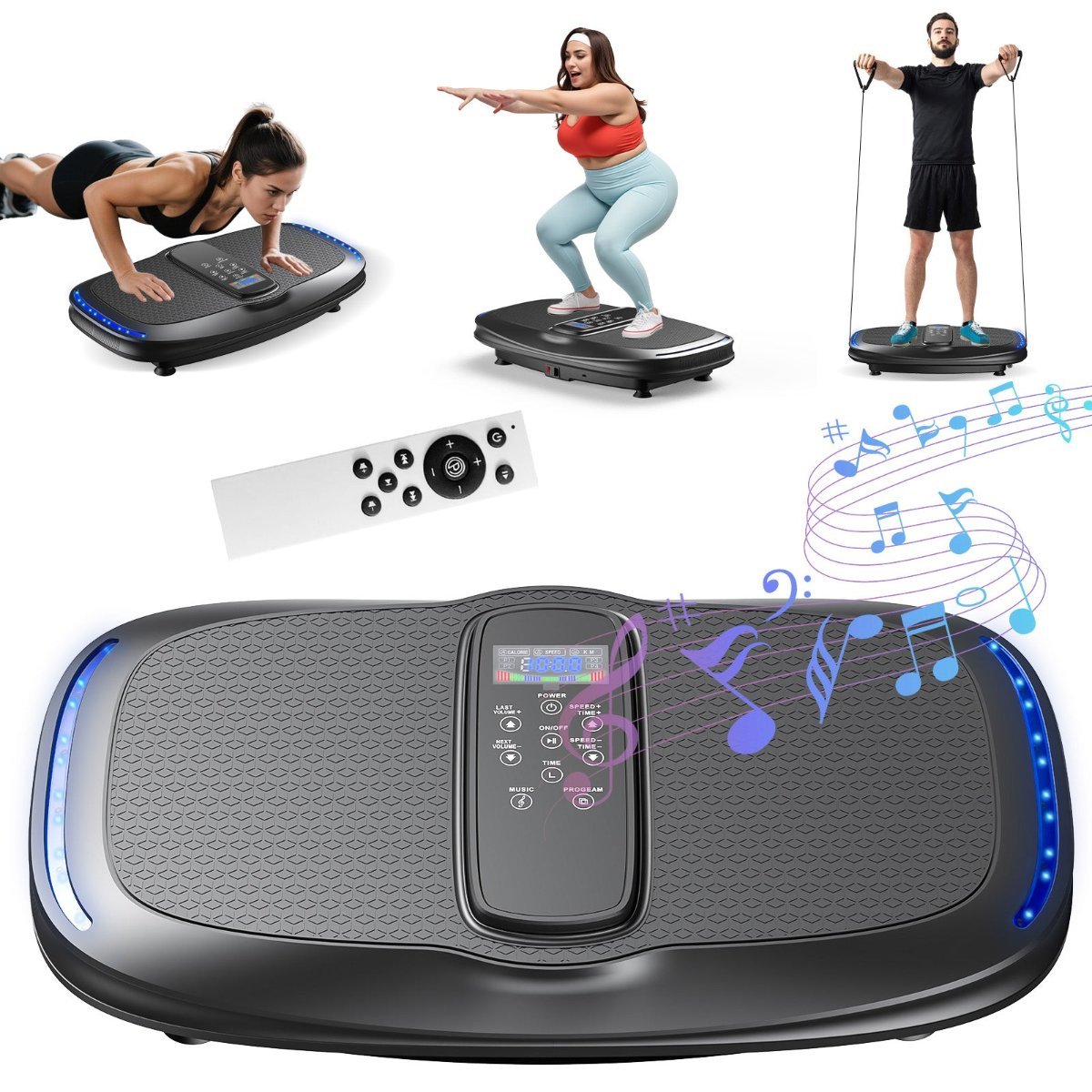
Eighty centimetres across, this is the widest platform in the guide by a clear margin, and the extra surface is what lets you do more than stand on it. Press-ups, planks and wide-stance squats all fit. The ABS body is rated to 200kg, the highest load ceiling here.
Width changes the feel of the vibration as much as the exercise options. A wide base resists the rocking that narrow plates develop when weight shifts to one side, so the intensity stays even through a lunge or a single-leg hold. Four preset modes and 200 speed steps cover everything from a warm-up to a hard session.
The footprint is the cost: at 80cm it does not tuck away, and it wants a permanent spot in a room. For anyone above 100kg, or planning to use the plate for floor work rather than standing alone, the stability is worth losing the storage space.
Pros
- 80cm platform, the widest here
- 200kg load rating
- Room for press-ups and planks
- 200 adjustable speed steps
- Four preset modes
Cons
- Large footprint that will not store away
- Heaviest machine in this guide to move
Key specs: 80cm extra-wide platform, P1 to P4 preset modes, 1 to 200 speed range, ABS body, 200kg capacity
CHECK CURRENT PRICE6. Advwin Vibration Plate with Push-Up Handles – Best for Upper Body Work
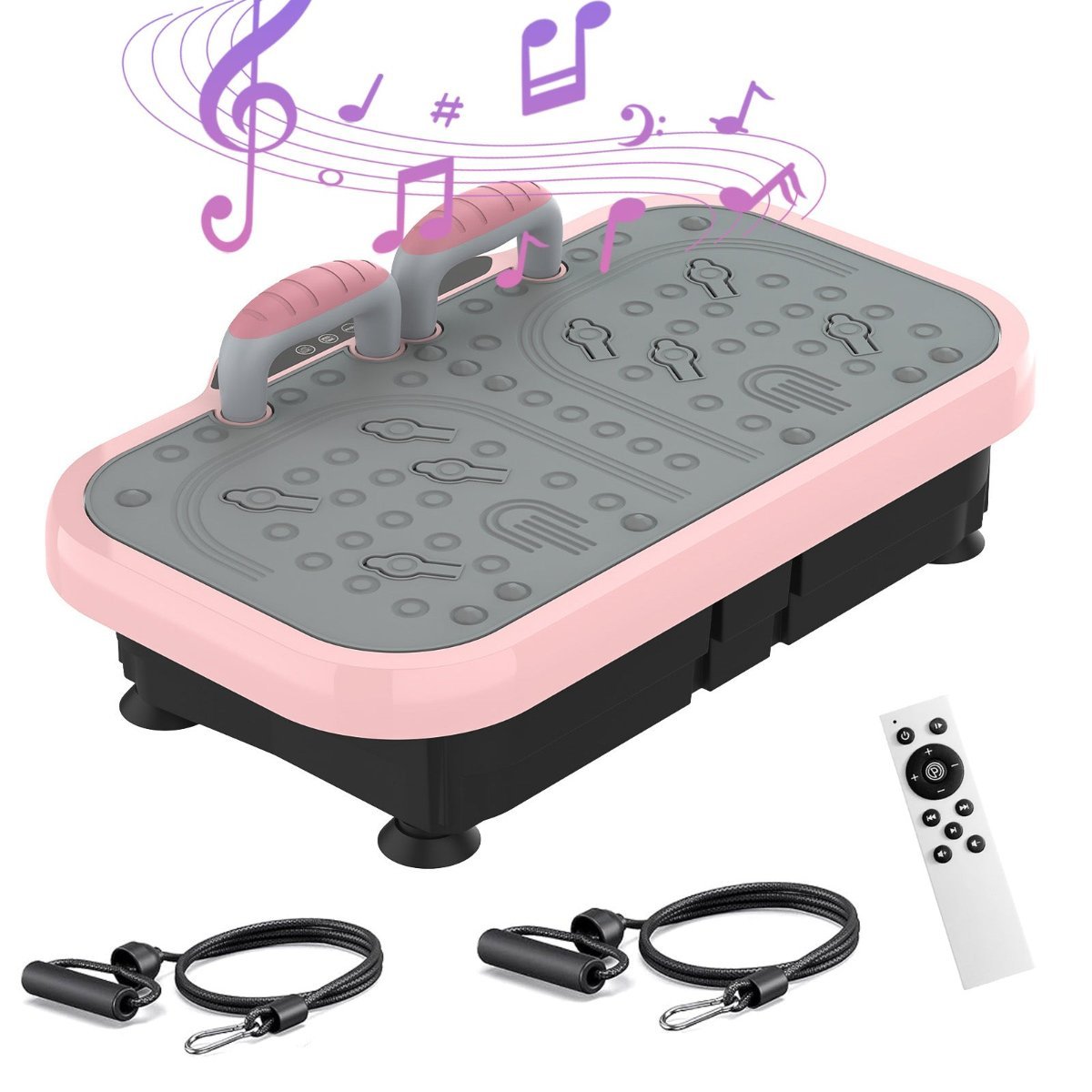
Two detachable push-up handles change what this machine is for. Mounted on the platform they let you press through vibration, which loads the chest, shoulders and triceps in a way that standing on a plate never will. Handle position adjusts to suit shoulder width.
Six preset modes run from P0 to P5 with 200 speed steps underneath, so the same machine covers a gentle circulation session and a hard upper-body set. Taking the handles off returns it to a standard standing plate in a few seconds, which matters if more than one person in the house uses it.
At 150kg the load rating sits below the extra-wide model above, and the platform is correspondingly narrower. Where the wide plate is the choice for floor work, this one earns its place if pressing and holding are the exercises you actually intend to do.
Pros
- Two detachable push-up handles
- Adjustable handle position
- 200 speed steps across six preset modes
- Converts back to a plain plate in seconds
Cons
- 150kg rating, below the extra-wide model
- Narrower platform than the 80cm plate
Key specs: P0 to P5 preset modes, 200 speed settings, 2 detachable push-up handles, ABS body, 150kg capacity
CHECK CURRENT PRICE7. Advwin Vibration Plate with Handlebar – Best for Balance Support
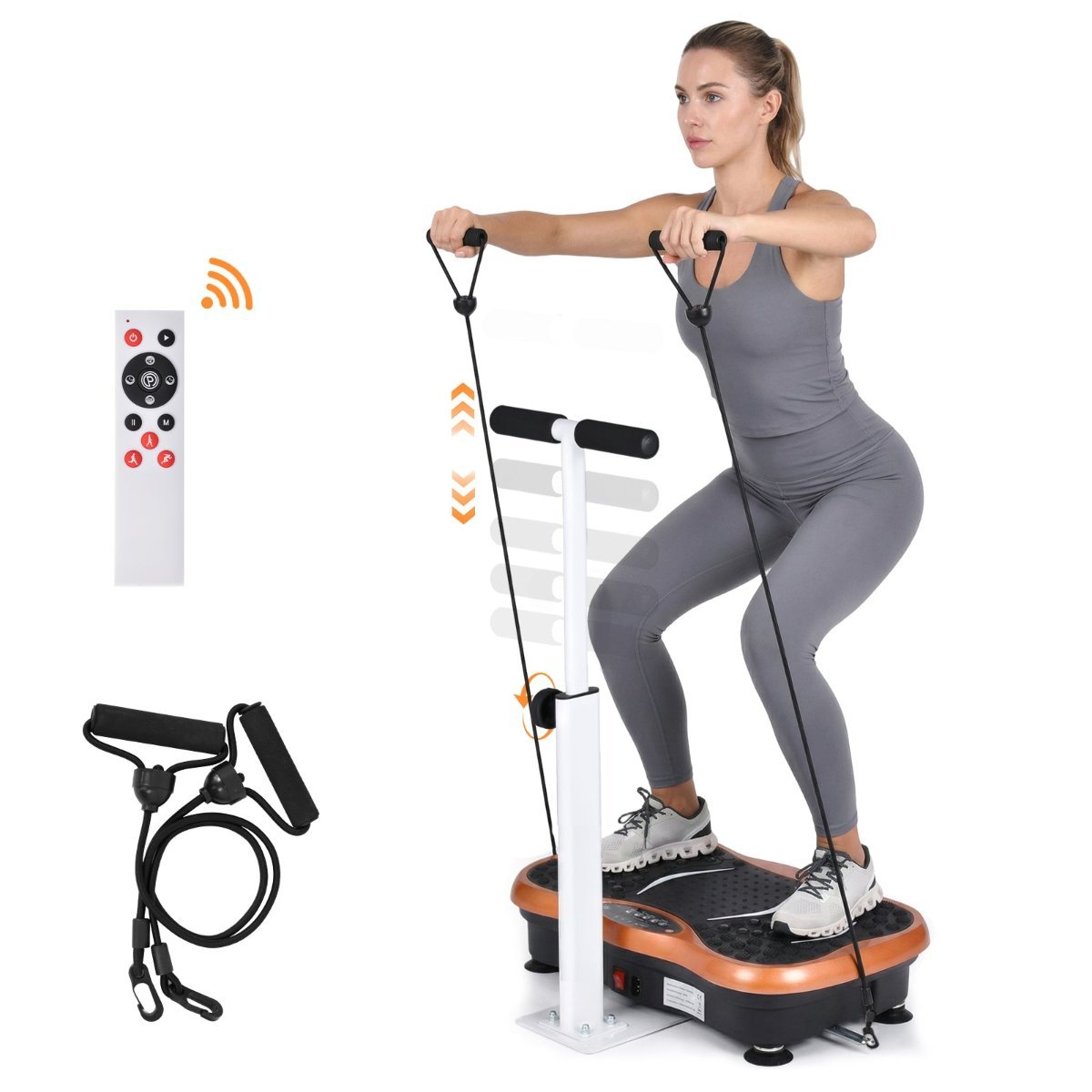
An upright handlebar runs the full height of this machine, adjustable to suit the user, and it is the only model here with something fixed to hold. That single addition puts whole-body vibration within reach of anyone unsteady on their feet.
Holding a bar removes the balance demand entirely, which means the legs do the work rather than the stabilisers fighting to keep you upright. Older users and anyone recovering from a lower-limb injury get a usable session out of it where a bare plate would be unsafe. Ten preset modes and 120 speeds sit behind the bar, plus two resistance bands for seated arm work.
The upright adds height and bulk, so this is not a machine that slides under a bed. In a household where balance is the reason someone has not tried vibration training, the handlebar is the whole argument.
Pros
- Full-height adjustable handlebar
- Ten preset modes from P0 to P9
- 120 speed settings
- Two resistance bands included
- Usable by unsteady or recovering users
Cons
- Tall frame takes permanent floor space
- Handlebar restricts floor exercises
Key specs: Adjustable upright handlebar, P0 to P9 preset modes, 1 to 120 speed range, 2 resistance bands
CHECK CURRENT PRICE8. Advwin Vibration Plate with Heat Therapy – Best for Muscle Recovery
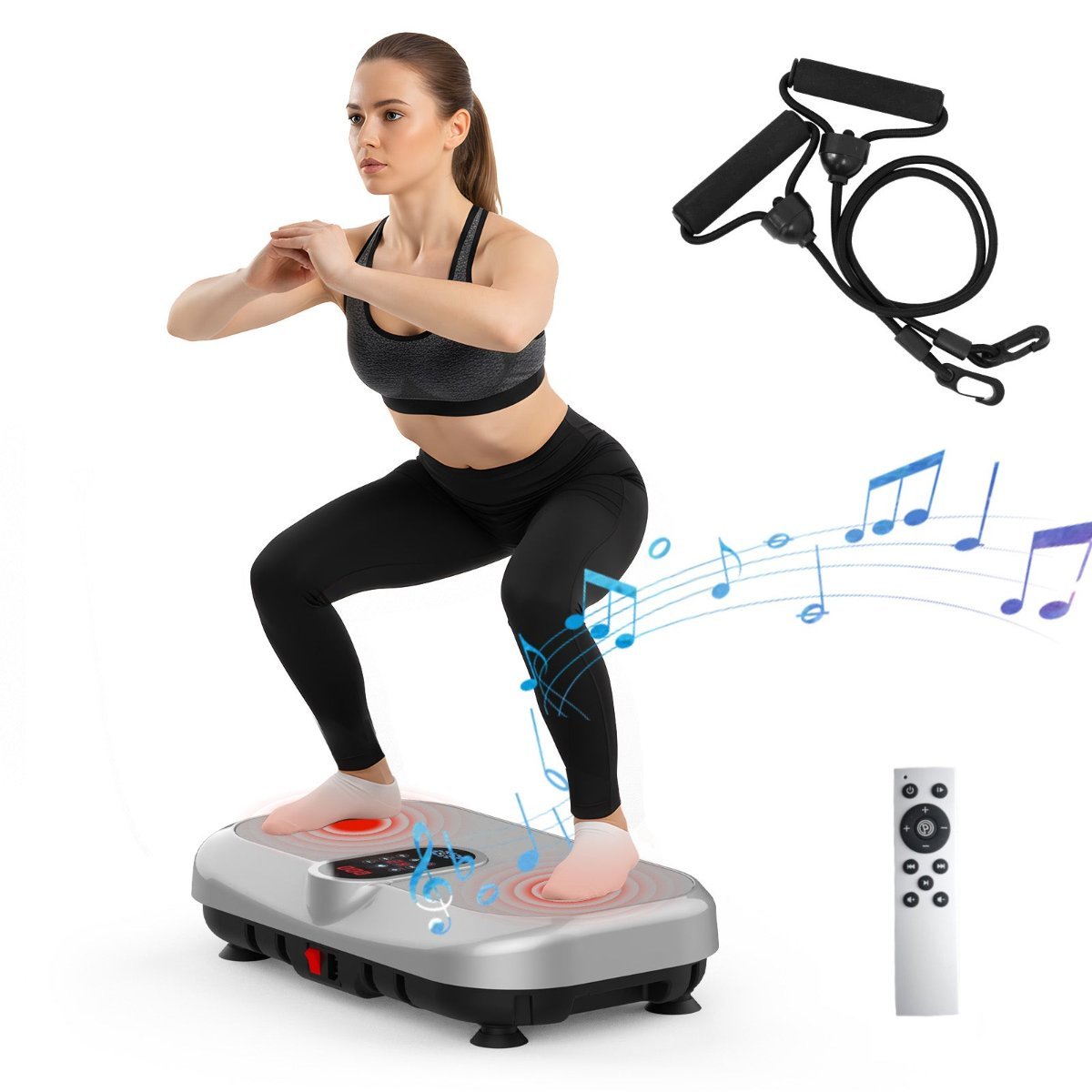
Heating elements sit under the standing surface with two temperature settings between 45 and 60 degrees. It is the only machine in this guide that warms the feet and calves while it vibrates.
Heat and vibration together do more for tight calves and plantar tissue than either alone, because warmth raises tissue temperature while the oscillation drives circulation. Ten preset modes and 120 speed steps mean it still functions as a normal exercise plate when recovery is not the goal. A short session after a run is where it makes the clearest difference.
Heating draws extra current and adds warm-up time before a session properly starts, so it is slower to use than a plain plate. Buy it for the recovery function; as a pure exercise machine the wider models here do more.
Pros
- Two-level heating from 45C to 60C
- Ten preset modes and 120 speeds
- Warms calves and feet during use
- Doubles as a standard exercise plate
Cons
- Needs warm-up time before a session
- Higher power draw than an unheated plate
Key specs: 2-level heat therapy 45C to 60C, P1 to P9 preset modes, 120 adjustable speeds
CHECK CURRENT PRICE9. Advwin Vibration Plate with Light Strip – Best for Evening Sessions
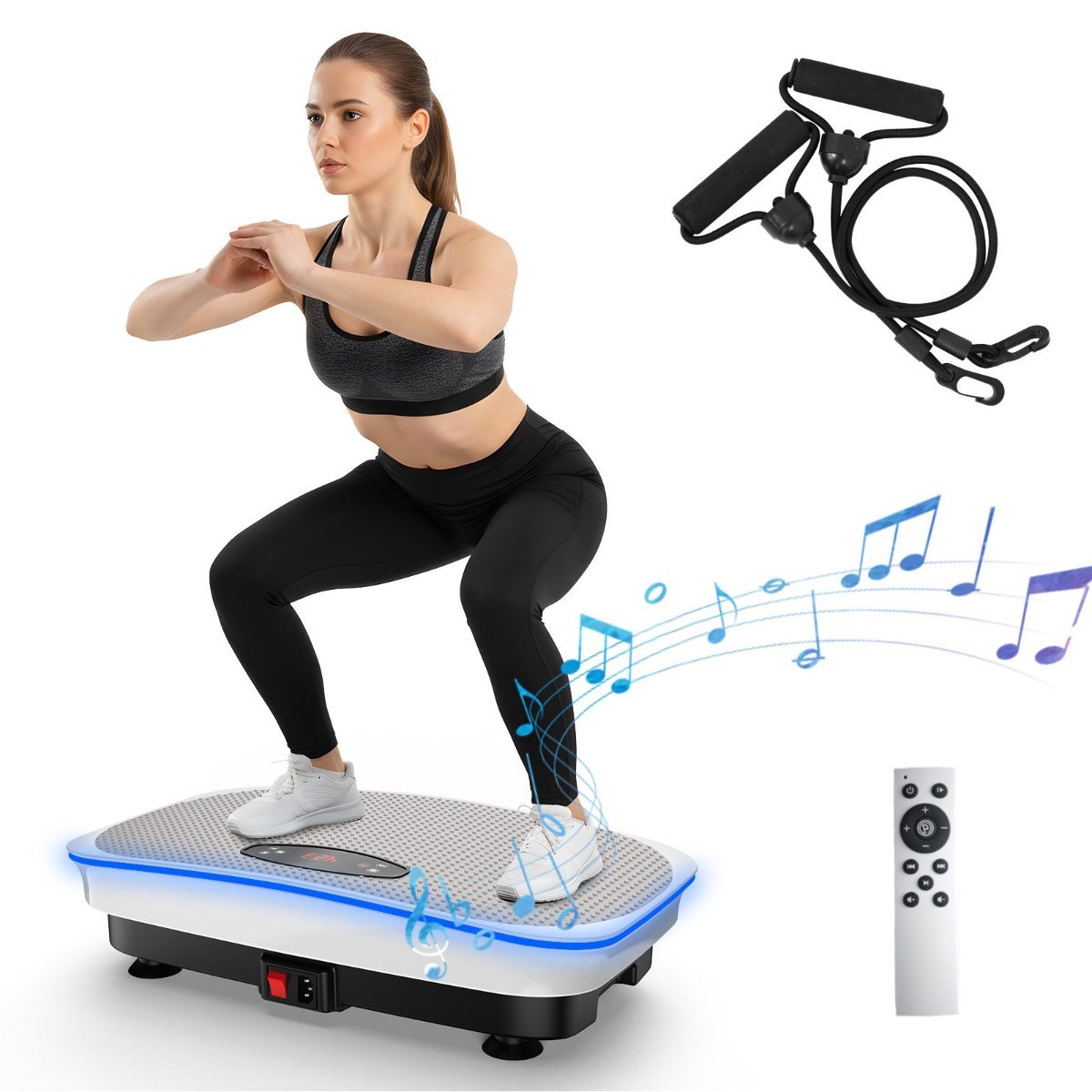
A colour-changing light strip wraps the base of this plate, shifting through colours as the machine runs. Underneath it is a straightforward five-mode platform with 120 speed settings.
Lighting is not a performance feature and nobody should pretend otherwise, but a machine used in a dim lounge room after work is easier to find and easier to stay interested in than an unlit black slab. The five preset modes handle the standard progression from warm-up through to a working intensity without any programming.
Strip away the light and the specification sits below the handlebar and extra-wide models on both speed range and capacity. It suits a household where the plate lives in a living area and gets used in the evening rather than a dedicated gym corner.
Pros
- Colour-changing light strip
- Five preset modes, P1 to P5
- 120 adjustable speeds
- Slim body for a living area
Cons
- Lower speed range than the 200-step models
- Lighting adds nothing to the workout itself
Key specs: Colour-changing light strip, P1 to P5 preset modes, 120 adjustable speeds
CHECK CURRENT PRICE10. Advwin Vibration Platform with Acupressure – Best for Circulation
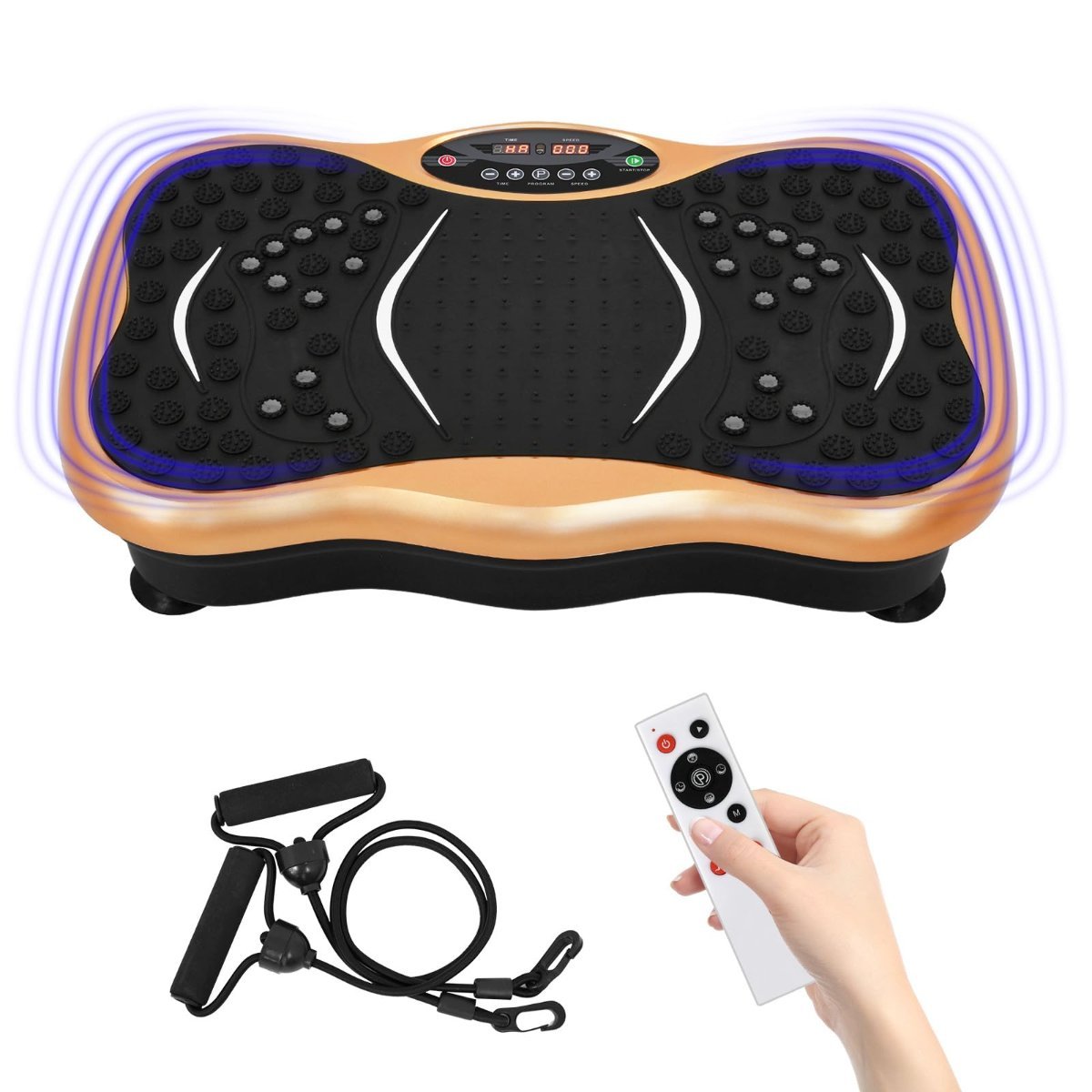
Magnets set into the footplate add acupressure contact under the soles while the platform oscillates. The rest is a conventional plate with resistance ropes for the upper body.
Standing barefoot on the magnet points concentrates pressure through the arches and heels, which people who spend long days upright tend to notice within a session or two. Whether the magnetic element does anything beyond that pressure is not established, and it should not be the reason to buy. The resistance ropes bring the arms and back into the same session.
Specification aside, this is the plainest machine of the six Advwin models here, without the width, the handlebar or the heat. Anyone drawn to the foot-pressure element will get it; anyone shopping on exercise capability should look further up this list.
Pros
- Acupressure magnet points in the footplate
- Resistance ropes included
- Simple controls
- Compact standing platform
Cons
- Fewest features of the Advwin range here
- Magnetic therapy claims are not established
Key specs: Oscillating platform with acupressure magnet points, resistance ropes, adjustable speed and intensity
CHECK CURRENT PRICEHow to Choose a Vibration Machine
Platform width decides what exercises are possible. A 55cm plate handles standing, squatting and seated work. Going to 80cm opens up press-ups, planks and wide lunges, because both hands or both feet fit on the surface at a natural spread. If the plan is only ever to stand on it, the extra width is floor space spent for nothing.
Check the load rating against your weight plus movement. Ratings here run from 120kg to 200kg, and the figure assumes static loading. Dynamic movement on the platform generates forces above body weight, so leaving 30kg of headroom above what you weigh is sensible rather than cautious.
Speed steps matter more than the top speed. A machine with 200 gradations lets you creep up week by week; one with ten jumps forces a choice between too easy and too much. Beginners in particular need the fine end of the range, since the first fortnight on a vibration plate can leave the calves sore in a way that puts people off entirely.
Decide whether you need something to hold. Balance on a moving platform is genuinely harder than it looks, and an upright handlebar is the difference between a usable machine and an unused one for older users or anyone recovering from a lower-limb injury. Everyone else is better served by the extra platform space a bar would occupy.
Be realistic about what vibration training does. The research supports improvements in balance, circulation and lower-limb muscle activation. It does not support the fat-loss figures that get quoted around this category, and Australian Consumer Law expects claims made at the point of sale to be substantiated. Treat it as a supplement to walking and resistance work rather than a replacement.
Match it to the rest of your setup. A vibration plate covers activation, circulation and balance, none of which build cardiovascular fitness on their own. Most homes end up pairing one with a walking pad for daily steps, or with one of the exercise bikes if the joints will not take the impact of walking.
Frequently Asked Questions
Do vibration machines actually work?
The evidence supports improved balance, circulation and lower-limb muscle activation, and some benefit to bone density in older adults. Claims that a 15-minute session replaces an hour of jogging are marketing rather than research. Treat a plate as a supplement to walking and resistance training.
How long should a vibration machine session be?
Ten to fifteen minutes is the standard session, and most machines default to a ten-minute timer. Starting at five minutes on a low speed for the first week gives the calves time to adapt, which is the difference between continuing and giving up.
Who should not use a vibration machine?
Anyone pregnant, fitted with a pacemaker, or with a history of retinal problems, blood clots, recent fractures or spinal implants should get medical advice first. Vibration transmits through the whole body, so conditions affected by mechanical stress are the ones to check.
What is the difference between oscillating and vertical vibration plates?
Oscillating plates pivot around a central axis, tipping one foot up as the other goes down, which suits balance work and beginners. Vertical plates move the whole surface straight up and down at higher frequency, which loads muscle harder and is the format used for bone density work.
What weight can a vibration machine hold?
Home machines in this guide are rated between 120kg and 200kg. That figure describes static load, so allow headroom above your body weight, because moving on the platform generates forces greater than standing still on it.
Do I need a mat under a vibration machine?
On a hard floor a mat is worth having. It cuts the noise transmitted into the room below, stops the plate creeping across tiles or floorboards during a session, and protects the surface underneath. On carpet it makes little difference.
Verdict
The Everfit plate with Bluetooth is the one most people should start with, because 150 speed steps and a speaker solve the two things that stop a vibration machine getting used. Anyone above 100kg, or intending to do press-ups and planks rather than stand, should go straight to the Advwin extra-wide platform for its 80cm surface and 200kg rating. Where balance is the reason someone has held off, the Advwin handlebar model is the only machine here that makes the category usable at all.