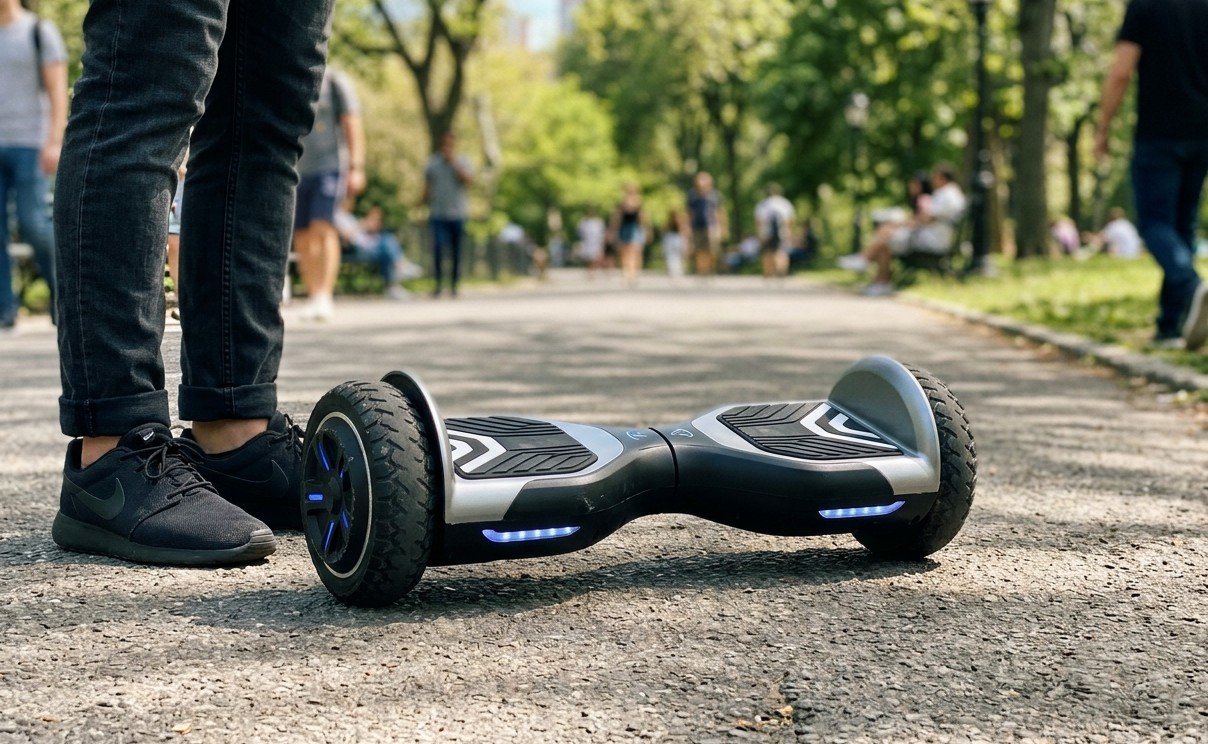
Lean forward to go, lean back to stop, twist your feet to turn: a hoverboard does all of this through two independently motorised wheels and an internal gyroscope, with no handlebars, throttle or brake lever anywhere on the deck. This guide to the best hoverboards Australia can buy ranks ten models against wheel size, motor power, certified battery safety and the rider weight bracket each is built for.
Four broad types cover almost everything sold under the hoverboard name in Australia: 6.5 inch entry boards built for smooth footpaths and driveways, 8.5 inch all-terrain boards with knobbly or air-filled tyres for grass and gravel, 10 to 11 inch commuter boards sized for taller or heavier adults, and junior boards built around lighter frames and capped top speeds for younger riders.
Most certified hoverboards top out around 12 to 15 km/h (7.5 to 9.3 mph), a limit set less by motor power than by how quickly the onboard gyroscope can correct a rider’s balance at speed. Battery certification, tyre size, rider weight capacity and whether the board carries a genuine UL2272 safety rating matter more to a buying decision than top speed alone.
Ten models make the shortlist below, spanning entry-level footpath boards through to all-terrain and adult-commuter builds, each checked against stock availability and safety certification rather than marketing copy alone.
Quick Picks
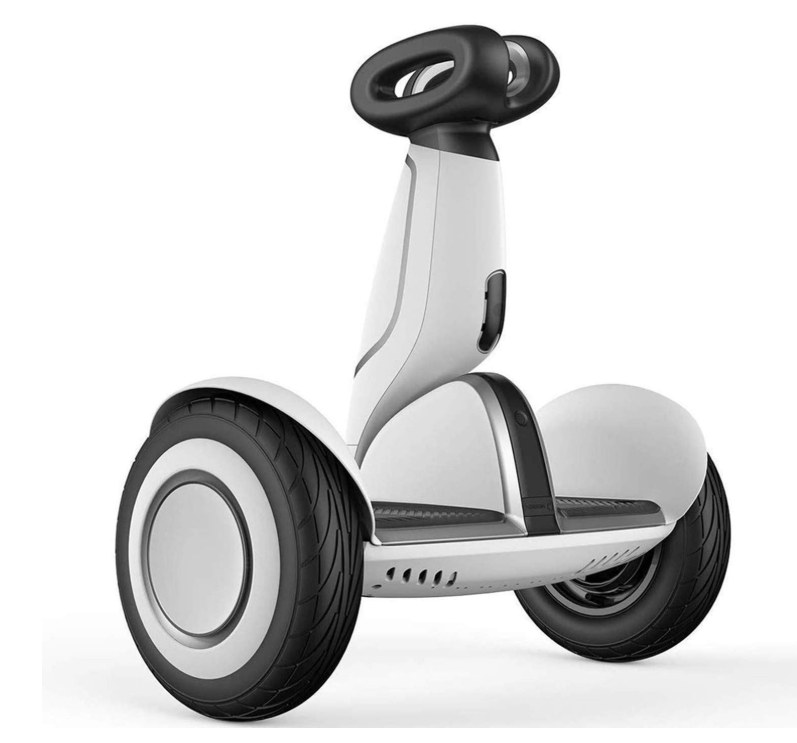
Segway Ninebot S-Plus
A wide, stable commuter board with app cruise control and a follow-me mode for daily footpath riding.
CHECK ON AMAZON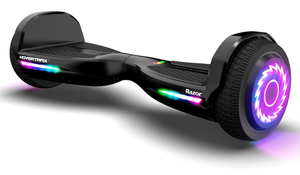
Razor Hovertrax Prizma
EverBalance software keeps early rides steady, with a capped top speed built for a first-time teen rider.
CHECK ON AMAZON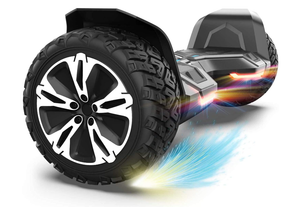
AhaTech Warrior 8.5 Inch Hoverboard
The lowest outlay in this guide, with multi-colour LED wheel lighting and a straightforward ride for a first board.
CHECK ON AMAZONBest Hoverboards Australia Compared
| Product | Link | Type | Best For | Key Spec |
|---|---|---|---|---|
| Segway Ninebot S-Plus | Check price | 10 in commuter | Daily Commuting | App follow-me mode |
| Razor Hovertrax Prizma | Check price | 6.5 in entry | First-Time Teen Riders | UL2272, up to 176 lb riders |
| Swagtron Swagboard Outlaw T6 | Check price | 10 in off-road | Off-Road Trails | Air-filled tyres |
| AhaTech Warrior 8.5 Inch Hoverboard | Check price | 8.5 in off-road | All-Terrain Alternative | 700W combined motor |
| RIDEO V3 All-Terrain Hoverboard | Check price | 8.5 in off-road | Budget All-Terrain Pick | Solid off-road tyres |
| Elektra Hoverboard for Kids and Teens | Check price | 6.5 in kids/teen | Younger Riders | UL2272, auto power cut-off |
1. Segway Ninebot S-Plus – Best for Daily Commuting
The S-Plus has a wider, longer deck than most boards on this list, with reinforced foot pads spaced further apart for a more planted stance at speed. A telescoping handlebar can be fitted for a kick-scooter-style riding position, though the board balances and steers fine without it. Build quality leans toward a moulded plastic shell over the aluminium chassis used on the off-road entries further down this guide.
Two hub motors and a wider wheelbase make this the most stable board here on smooth pavement, and a companion app adds cruise control plus a follow-me mode that tracks a paired phone at walking pace. Braking is progressive rather than abrupt, which matters more than top speed once a rider is carrying a bag or riding two-up on the wider deck version.
It costs more than every other board in this guide, and its smooth, non-treaded tyres are not built for grass or gravel the way the dedicated off-road entries further down this guide are. The follow-me mode and app cruise control are the reason to choose it anyway, and they matter most to someone riding the same footpath or shared path every day rather than exploring new terrain each weekend.
Pros
- App-controlled cruise control and follow-me mode
- Wide, stable deck built for daily footpath use
- Progressive, predictable braking feel
Cons
- Highest price in this guide
- Smooth tyres are not suited to grass or gravel
Key specs: Wheel size: 10 in; Motor: 2 x 400W; Top speed: 16 km/h (10 mph); Range: up to 22 km (13.7 miles); Certification: UL2272; Max rider weight: 100 kg (220 lb)
CHECK ON AMAZON2. Razor Hovertrax Prizma – Best for First-Time Teen Riders
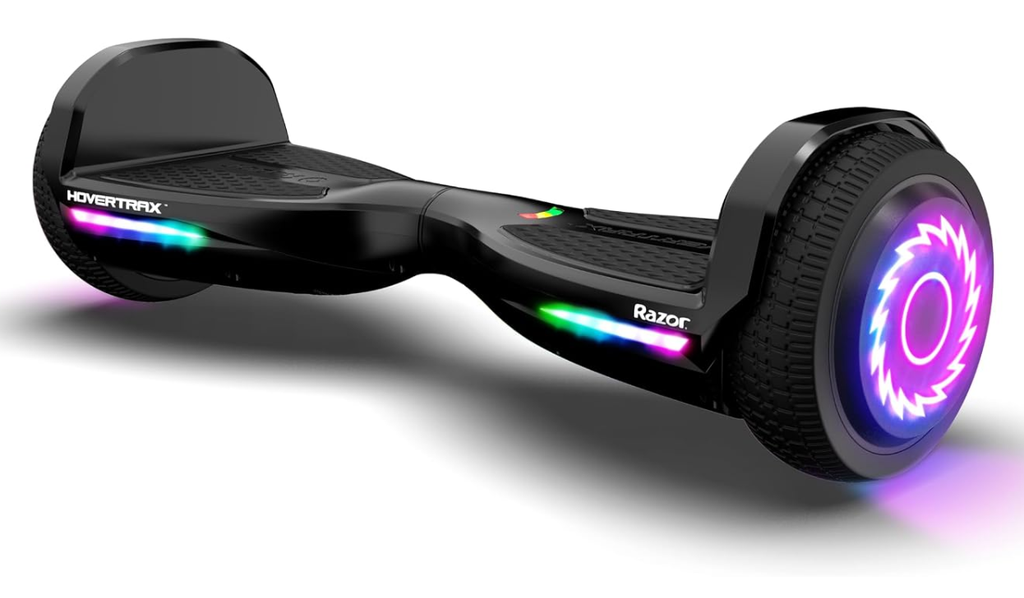
Razor built the Prizma around a single moulded shell rather than the two-piece hinge most budget boards use, which removes the pinch point that catches loose shoelaces or trouser cuffs on cheaper designs. LED accent lighting runs along the underside rim rather than in the wheel wells, a small detail that makes the board visible from the side in low light.
EverBalance software keeps the ride noticeably twitch-free at low speed, which is where most first-time falls happen, and the board self-levels the moment a rider steps off rather than continuing to roll. Top speed sits toward the lower end of this guide, a deliberate trade for a board pitched at riders aged eight and up.
The lower top speed and the 176 lb rider limit rule it out for a full-grown adult wanting a commuter board, but that same ceiling is exactly why it suits a first hoverboard for a pre-teen or young teenager better than the faster, heavier boards elsewhere in this guide.
Pros
- EverBalance software is noticeably steadier at low speed
- Single moulded shell removes the pinch-point hinge
- Side-mounted LED lighting improves low-light visibility
Cons
- Lower top speed than the adult-focused boards in this guide
- 176 lb rider limit rules out larger adults
Key specs: Wheel size: 6.5 in; Motor: 2 x 200W; Top speed: 10 km/h (6.2 mph); Range: up to 10 km (6.2 miles); Certification: UL2272; Max rider weight: 80 kg (176 lb)
CHECK ON AMAZON3. Swagtron Swagboard Outlaw T6 – Best for Off-Road Trails
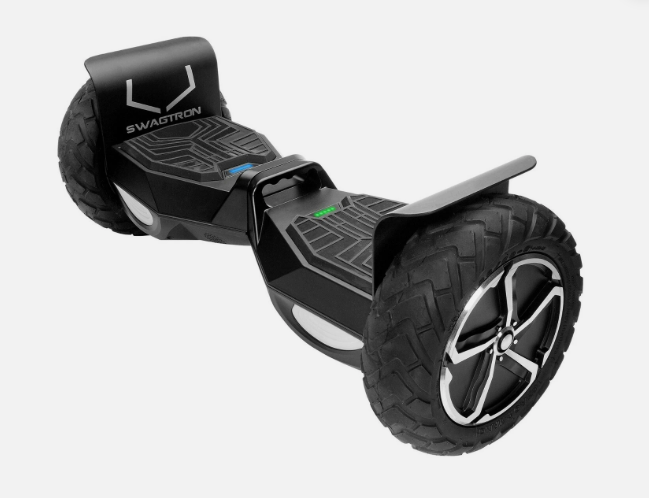
Ten-inch, air-filled off-road tyres replace the solid rubber used on nearly every other board here, giving genuine suspension travel over roots and rocks rather than just a knobbly tread pattern. The chassis sits noticeably higher off the ground, which helps ground clearance but raises the centre of gravity.
Dual motors rated well above the entry-level boards in this guide handle an incline that would stall a 6.5 inch board outright, and the pneumatic tyres soak up impact that would otherwise transfer straight into a rider’s ankles on a hard-wheeled board. The trade-off is a wider turning circle that takes some adjustment on tight paths.
This is the heaviest board in the lineup, awkward to carry any real distance once you step off the trail. Buy it for the tyres and the ground clearance, not for a slim profile you can tuck under one arm on the way home.
Pros
- Air-filled off-road tyres absorb impact
- Handles inclines that stall smaller boards
- Genuine ground clearance for rough terrain
Cons
- Heaviest board in this guide
- Wider turning circle on tight paths
Key specs: Wheel size: 10 in air-filled; Motor: 2 x 300W; Top speed: 12 km/h (7.5 mph); Range: up to 19 km (12 miles); Certification: UL2272; Max rider weight: 120 kg (265 lb)
CHECK ON AMAZON4. AhaTech Warrior 8.5 Inch Hoverboard – Best All-Terrain Alternative
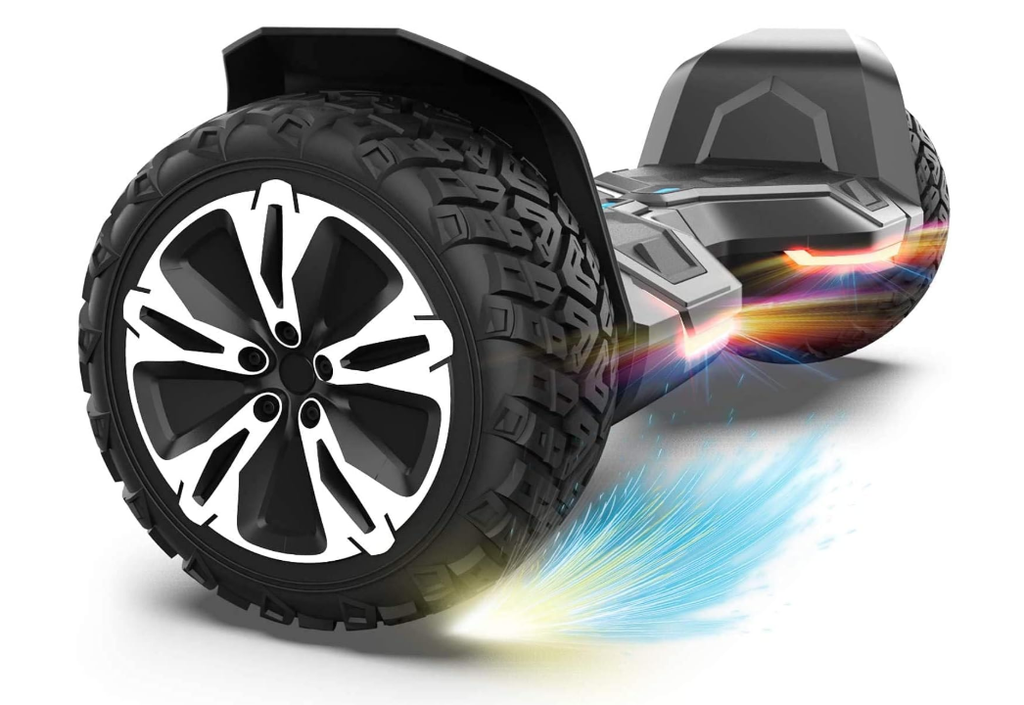
The Warrior pairs 8.5 inch solid rubber tyres with an aluminium alloy frame rather than the plastic shell used on entry-level boards, adding weight but also rigidity when the board flexes over uneven ground. A built-in Bluetooth speaker sits low in the deck rather than up near the foot pads, which keeps it away from splashed water on wet grass.
Combined motor output around 700W handles moderate inclines and rougher surfaces than a 6.5 inch board can manage without stalling, and the solid tyres avoid the puncture risk that comes with the pneumatic option earlier in this guide. Ride feel firms up noticeably over gravel compared with the smoother pavement-only boards.
Solid tyres transmit more vibration than the air-filled Swagboard, so a rider doing serious trail distance may prefer that board instead. For weekend park and backyard use where a plastic-shelled board would flex or crack, the Warrior’s frame is the more durable middle ground.
Pros
- Aluminium alloy frame adds rigidity over rough ground
- Built-in Bluetooth speaker sits clear of splash
- Handles moderate inclines and rougher surfaces
Cons
- Solid tyres transmit more vibration than air-filled options
- Heavier than the entry-level boards in this guide
Key specs: Wheel size: 8.5 in; Motor: 700W combined; Top speed: 12 km/h (7.5 mph); Range: up to 10 km (6.2 miles); Certification: UL2272; Max rider weight: 100 kg (220 lb)
CHECK ON AMAZON5. RIDEO V3 All-Terrain Hoverboard – Best Budget All-Terrain Pick
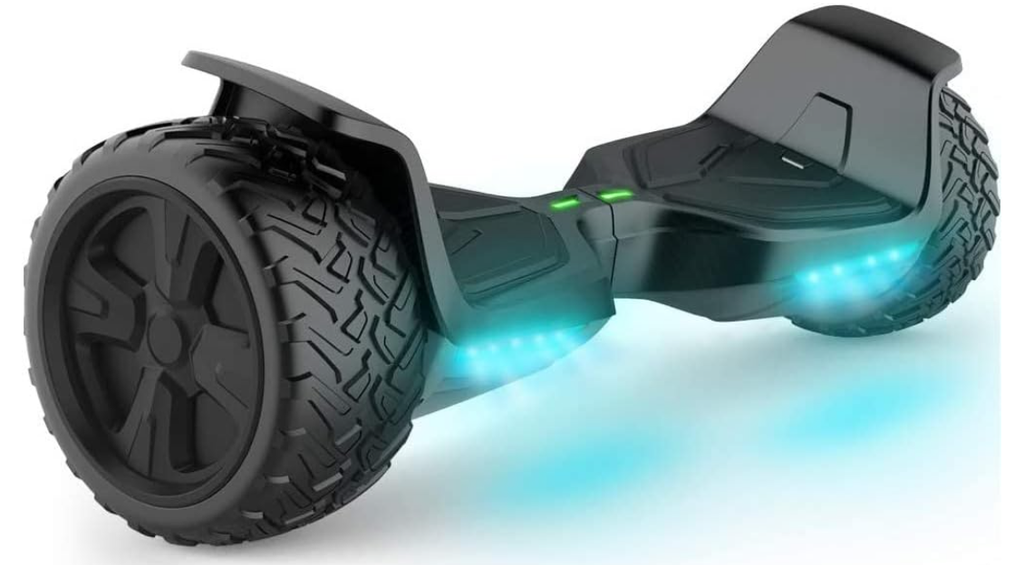
RIDEO uses the same 8.5 inch wheel format as the Warrior above it, but with a simpler plastic deck shell instead of an aluminium frame, which keeps the price down at the cost of some flex under a heavier rider.
Motor output is comparable to other 8.5 inch boards in this guide, enough for grass, dirt and light gravel, though the lighter build means it does not feel as planted at the top of its speed range as the aluminium-framed alternative above.
It will not out-last the Warrior on rough terrain used daily, but for a family wanting one off-road-capable board for occasional park trips, the lower price is the more sensible spend than paying extra for a frame that mostly matters under heavy or frequent use.
Pros
- Off-road capable at a lower price than the aluminium-framed alternative
- Same 8.5 inch wheel format as pricier boards
Cons
- Plastic deck flexes more under a heavier rider
- Feels less planted at the top of its speed range
Key specs: Wheel size: 8.5 in; Motor: 2 x 350W; Top speed: 12 km/h (7.5 mph); Range: up to 10 km (6.2 miles); Certification: UL2272; Max rider weight: 100 kg (220 lb)
6. Elektra Hoverboard for Kids and Teens – Best for Younger Riders
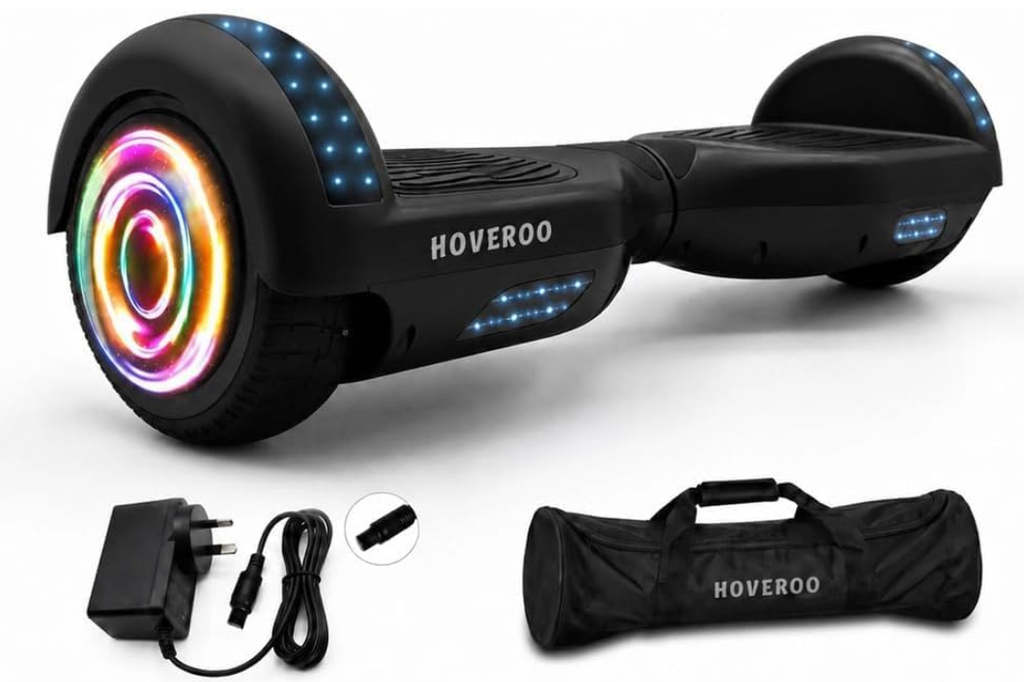
Elektra’s kids and teens board uses a moulded shell similar to the Razor above, built to the same general size class as the HOVERFLY but pitched at a wider age range of roughly four to sixteen years old. A built-in Bluetooth speaker and LED deck lighting are standard rather than optional extras.
Top speed is listed at up to 12 km/h (7.5 mph) with a realistic range of roughly 5 to 8 km (3.1 to 5 miles) per charge, enough for a driveway or local park loop rather than a genuine commute. Startup self-check and an automatic power cut-off when a foot lifts off the pad are built into the control board rather than added as an afterthought.
The wide advertised age range means it will feel basic to an older teenager who has outgrown a first board, but the safety cut-off and self-check make it a defensible choice for a household buying a first hoverboard for a genuinely young rider.
Pros
- Automatic power cut-off when a foot lifts the pad
- Startup self-check built into the control board
- Bluetooth speaker and deck lighting standard
Cons
- Wide age range can feel basic to an older teenager
- Lower top speed than the adult boards in this guide
Key specs: Wheel size: 6.5 in; Motor: 2 x 200W; Top speed: 12 km/h (7.5 mph); Range: 5 to 8 km (3.1 to 5 miles); Certification: UL2272; Max rider weight: 65 kg (143 lb)
CHECK ON AMAZONHow to Choose a Hoverboard
Wheel size and terrain. Wheel size decides where a board is actually usable. A 6.5 inch board suits a sealed driveway or a smooth garage floor but struggles the moment it meets a pebble, a garden hose or an uneven footpath seam. An 8.5 inch or larger board with knobbly or air-filled tyres handles grass, dirt and light gravel without stalling, a similar terrain trade-off to the one covered in our guide to the best electric scooters, at the cost of extra weight and a wider turning circle.
Motor power and rider weight limit. Every board lists a maximum rider weight, and it is not a marketing formality. Exceed it and the gyroscope struggles to hold balance, particularly on an incline. Combined motor wattage roughly tracks with how steep a slope a board can climb and how quickly it recovers from a sudden lean, so a heavier rider or a driveway with any real grade benefits from a higher-output board rather than the cheapest option on the shelf.
Battery certification. UL2272 certification is the actual safety line to check, not a nice-to-have. It tests the battery pack, charging circuit and internal wiring against the exact fire-risk failures that led several international airlines and freight carriers to restrict uncertified boards outright. A listing that does not mention it plainly is one to skip, regardless of how the rest of the spec sheet reads.
Speed and range. Most certified boards top out around 12 to 15 km/h (7.5 to 9.3 mph) and cover roughly 5 to 15 km (3.1 to 9.3 miles) on a full charge, though both figures drop on rough or sloped ground. A higher top speed matters less than consistent balance control at low speed, which is where nearly every fall actually happens.
Extra features. Bluetooth speakers, LED deck and wheel lighting, and companion apps with cruise control or a follow-me mode are common above the entry-level price point, and a go-kart seat attachment can convert several boards in this guide into a sit-down ride for a younger sibling. None of these change how the board performs on rough ground, so treat them as a tie-breaker between otherwise similar boards, not a substitute for the right wheel size or certification.
Buying for a younger rider. A junior board bought as a birthday or Christmas present is worth checking carefully against age and weight limits before you commit, since those rule out more entry-level boards than most buyers expect. Matching the rider’s actual weight and skill level to the board, rather than the flashiest LED colours or the highest advertised top speed, is what determines whether it gets ridden past the first week.
Frequently Asked Questions
Are hoverboards legal to ride in Australia?
Rules differ by state and territory and change periodically, so check your local road authority before riding one anywhere other than private property. In most jurisdictions a hoverboard is not a registered vehicle, which typically rules out public roads and restricts many footpaths and shared paths as well.
What age is a hoverboard suitable for?
Most boards list a minimum age of around eight years old, tied to the rider weight and balance skill needed to control the gyroscope safely. Boards built for younger riders, such as the kids and teens models in this guide, cap top speed lower and add extra safety cut-offs rather than simply shrinking an adult board.
How long does a hoverboard battery last on a charge?
Realistic range sits around 5 to 15 km (3.1 to 9.3 miles) depending on wheel size, rider weight and terrain, with a full charge typically taking two to three hours. Range drops noticeably on grass, gravel or an incline compared with the flat pavement figure most listings quote.
What does UL2272 certification actually mean?
UL2272 is a safety standard covering the battery pack, charging circuit and internal wiring, developed after a string of overseas fires traced to uncertified boards. It is the single most important line on a listing to check, ahead of top speed, colour or added features like Bluetooth speakers.
Can a hoverboard be ridden on grass or gravel?
Only boards built for it. An 8.5 inch board with knobbly or air-filled tyres, like the off-road entries in this guide, copes with grass, dirt and light gravel, while a 6.5 inch entry board is built for smooth pavement and will stall or lose grip on rougher ground.
How much weight can a hoverboard carry?
Rider weight limits in this guide range from around 45 kg (100 lb) on the lighter kids’ boards up to roughly 120 kg (265 lb) on the larger commuter models. Exceeding the stated limit affects balance control, not just comfort, so it is worth checking against the heaviest regular rider rather than an average adult.
Verdict
The Segway Ninebot S-Plus earns its higher price for anyone riding the same footpath or shared path daily, mainly through its follow-me mode and steadier wide-wheelbase stance. Buyers choosing a first board for a young teenager are better served by the Razor Hovertrax Prizma, where the lower top speed and rider weight ceiling are matched to that rider rather than borrowed from an adult board. Anyone still deciding whether hoverboarding will stick can start with the 6.5 Inch Hoverboard with LED Lights, which covers the basics at the lowest outlay in this guide without demanding a long-term commitment.