A balance bike is a pedal-less two-wheeler that a toddler pushes along with their feet, using it to learn steering and balance before ever touching a pedal. There’s no chain, no gears and no training wheels – just a low seat, two wheels and a frame small enough for a two or three-year-old to swing a leg over. For anyone looking for the best balance bike for toddlers in Australia, the appeal over a tricycle is straightforward: a balance bike teaches the actual skill a pedal bike needs, while a trike teaches a child to pedal something that steers nothing like a real bike.
Three builds cover most of what’s sold here. Steel-frame balance bikes are the standard: an adjustable seat and handlebar on a welded steel frame, usually with puncture-free foam tyres. Wooden and bamboo balance bikes trade a little weight and adjustability for a lighter build and a seat low enough for a child just past their first birthday. Convertible trike-to-balance-bike combos start as a three or four-wheeled push trike for a wobblier toddler and convert down to two wheels once they’re ready, stretching one buy across a couple of years instead of two.
The spec that actually matters here is seat height range in centimetres, because a bike sized wrong is either unrideable or outgrown within months – a toddler needs to plant both feet flat on the ground with a slight bend in the knee, not tiptoe or hunch. Across the six balance bikes in this list, minimum seat heights run from about 25cm for the youngest starter models up to 43cm on the steel-frame options built to last into early primary school. The spec most parents overlook is bike weight against child weight: a bike that’s a third of a toddler’s own bodyweight is a real struggle to manoeuvre, which is exactly where wood and alloy models earn their higher price.
This list runs to six balance bikes: two steel-frame options at very different price points, a wooden 2-in-1 convertible, a 4-in-1 trike that grows from an infant pram attachment into a balance bike, a light-up model built for the youngest riders, and a bamboo pick from an award-winning specialist brand. Budget to premium, with real differences in build quality between the cheapest and the most expensive, not just a paint job.
Quick Picks

Progear DuraLite 12″ Balance Bike
Alloy rim, sealed steel bearings and a lifetime frame warranty on a bike built like an actual bicycle, not a toy.
CHECK CURRENT PRICE
Globber Explorer Trike 4in1
Four stages from infant pram trike to balance bike mean one bike covers ages 10 months to 5 years.
CHECK CURRENT PRICE
Lifespan Kids Scout 2-in-1 Balance Bike
Switches from a three-wheel trike to a two-wheel balance bike in minutes as confidence grows.
CHECK CURRENT PRICEBest Balance Bike for Toddlers Australia Compared
| Product | Link | Type | Best For | Key Spec |
|---|---|---|---|---|
| Progear DuraLite 12″ Balance Bike | Check price | Steel-frame | Bike-shop build quality | Alloy rim, steel bearings, lifetime frame warranty |
| Globber Explorer Trike 4in1 | Check price | Convertible trike | Ages 10 months to 5 years | 4 stages, 5-point harness, UPF50+ canopy |
| Lifespan Kids Scout 2-in-1 | Check price | Wooden convertible | Trike-to-balance-bike transition | Birch plywood, 18 months to 6 years |
| Light-Up Toddler Balance Bike | Check price | Mini steel-frame | Very young toddlers | 135° steering limit, light-up wheels, 1-3 years |
| Steel Frame Balance Bike | Check price | Steel-frame budget | Budget pick | EN71 certified, adjustable seat/handlebar, 50kg capacity |
| Kinderfeets Tiny Tot Plus | Check price | Bamboo convertible | Youngest riders | Bamboo frame, airless tyres, award-winning brand |
How We Picked
We swept general Australian retailers for standalone balance bikes actually in stock this year, checking real specs – frame material, seat height range, weight capacity – not relying on marketing copy alone. Three bikes, spanning a budget steel frame through to a bike-shop-grade model, came from the same general retailer’s sports and bikes range, and a light-up mini model came from a separate general appliance importer.
For a well-reviewed bamboo option in a style local retailers didn’t stock at this quality, we added an Amazon AU pick and checked it against ProductReview.com.au listings and safety guidance from Raising Children Network and Kidsafe. We don’t physically ride-test every bike ourselves. Selections are informed by affiliate partnerships, but commission never overrides the ranking – a lower-commission pick beats a higher one whenever the specs or the reviews say it’s the better bike for a toddler.
1. Progear DuraLite 12″ Balance Bike – Best Bike-Shop Quality
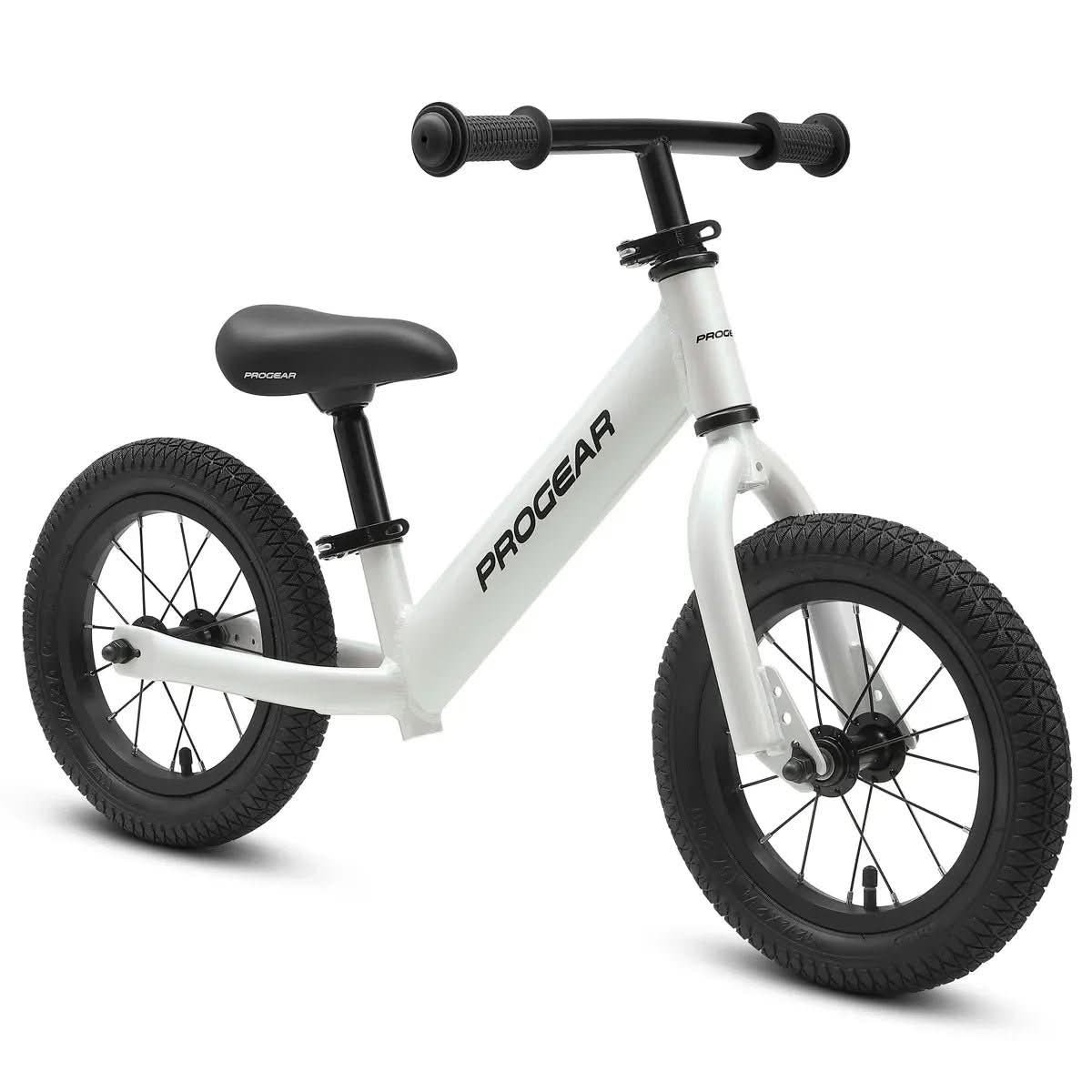
This is the one built like an actual bicycle scaled down, not a toy with two wheels bolted on. It runs an alloy rim, a steel ball-bearing headset and steel hubs front and rear – the kind of componentry you’d find at an actual bike shop, not a big-box toy aisle.
Progear backs the frame and fork with a lifetime warranty, with 12 months on the rest of the componentry, a longer commitment than almost anything else in this list. The seat height adjusts via a quick-release clamp instead of tools, so it’s actually quick to bump up as a toddler grows, not something you put off for a weekend project.
It costs more than both the budget steel-frame pick and the light-up mini model further down this list, and the trade-off for anyone on a tight budget is real – but the alloy rim and sealed bearings mean it’ll still spin smoothly after a year of driveway laps, where a cheaper stamped-steel wheel can start developing a wobble.
Pros
- Alloy rim and sealed steel bearings spin smoother and last longer than stamped steel
- Lifetime warranty on frame and fork
- Tool-free quick-release seat clamp for fast height adjustments
Cons
- Costs more than the budget steel-frame and light-up picks in this list
- 12-inch wheels mean it’s outgrown sooner than a bike with more seat-height range at the top end
Key specs: 12-inch wheel, alloy rim, steel headset and hubs, EVA tyres, lifetime warranty on frame/fork, 12-month warranty on componentry.
CHECK CURRENT PRICE2. Globber Explorer Trike 4in1 – Best Multi-Stage Pick
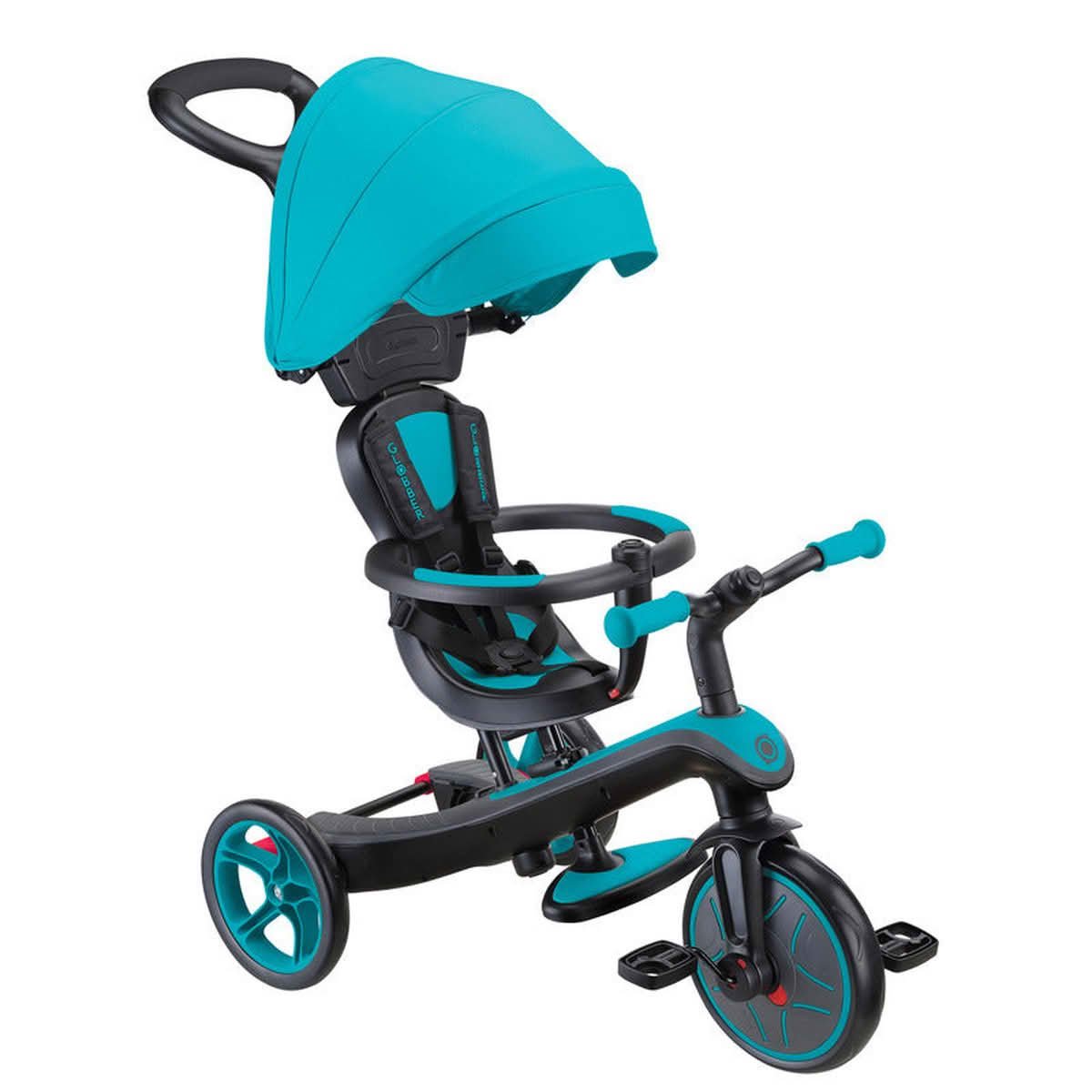
This is the one bike that covers the longest stretch of a child’s early years: an infant trike with a parent push handle and 5-point harness from around 10 months, through a guided trike stage, into an independent training trike, and finally a two-wheel balance bike once the rear wheels lock together into one, from about age 2.
Globber is an award-winning brand in this category, and the tool-less conversion between stages is the actual selling point – no screwdriver, no lost bolts, just a mechanism built into the wheel hub. It comes with a UPF50+ canopy and a padded, adjustable harness, which matters on a long pram-replacement walk through a Brisbane summer or a Perth heatwave.
ProductReview.com.au’s listing flags a real limitation worth knowing before you buy: several parents report the seat doesn’t adjust far enough forward for a child’s legs to comfortably reach the pedals once they’re ready for the pedal-trike stage, even though the balance-bike conversion itself works as described. It’s the most expensive bike in this list by a wide margin, and for a family that just wants a balance bike, not a 10-month-old’s first trike, it’s more bike than necessary.
Pros
- Covers roughly 10 months to 5 years in one bike across four stages
- Tool-less conversion between every stage
- UPF50+ canopy and 5-point harness for the trike stages
Cons
- ProductReview lists a recurring complaint that the seat doesn’t adjust far enough forward for pedalling once a child’s ready for that stage
- By far the most expensive pick here if all you actually need is the balance-bike stage
Key specs: 4 stages (10 months to 5 years), 5-point harness, UPF50+ canopy, tool-less conversion, 2-height parent push handle.
CHECK CURRENT PRICE3. Lifespan Kids Scout 2-in-1 – Best 2-in-1 Convertible
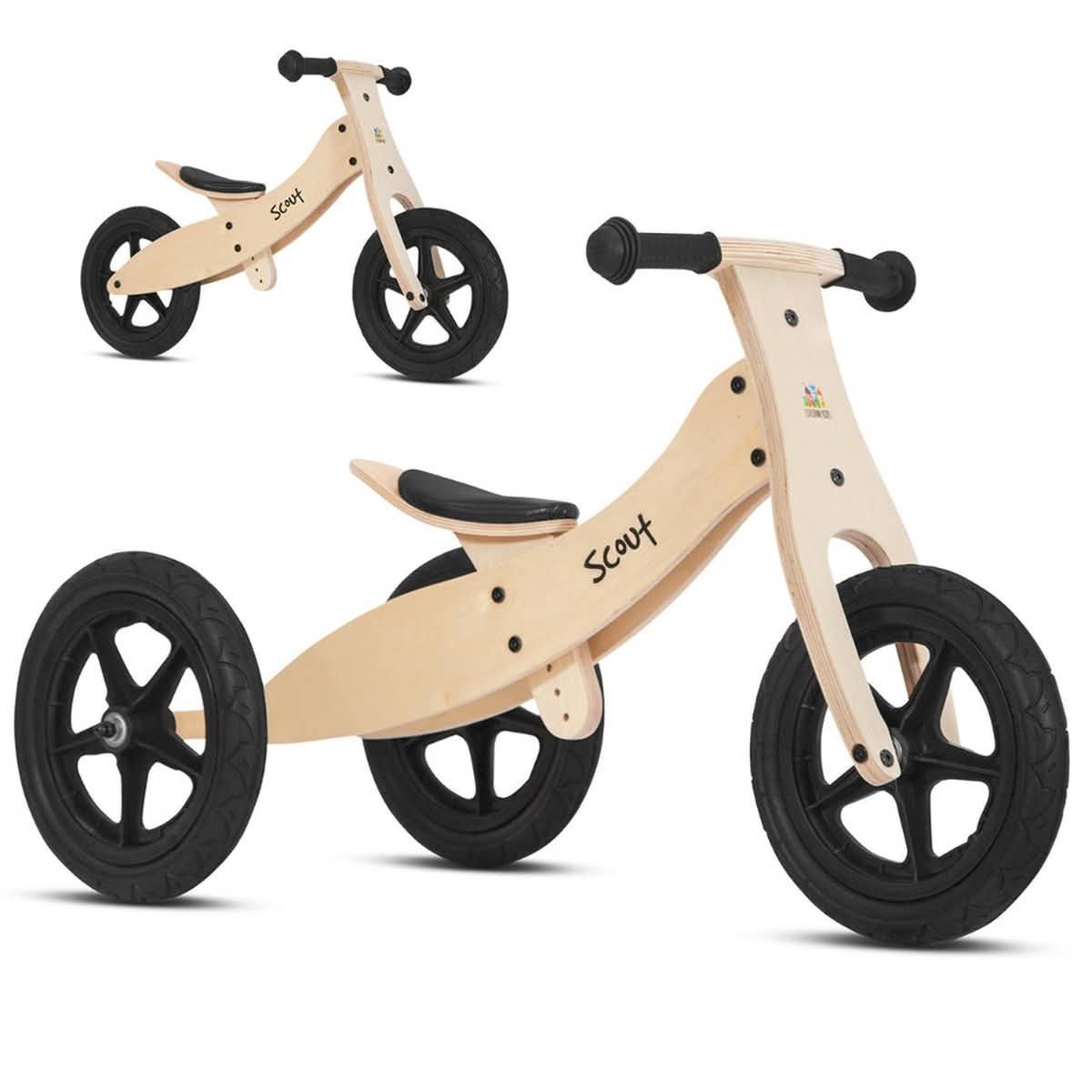
Birch plywood instead of steel or bamboo puts this one in its own category: light, simple, and built around one conversion instead of four. It starts as a three-wheel trike for a toddler still finding their feet and switches to a two-wheel balance bike by removing the rear axle assembly, no tools beyond what’s in the box.
At 30kg less capacity than the steel-frame picks in this list – a 30kg max rider weight against 50kg – it’s built for the actual toddler years instead of stretching into primary school, which tracks with the 18 months to 6 years range on the box. The plywood construction makes it noticeably lighter to carry than a steel-frame equivalent, worth something when you’re also carrying a toddler, a nappy bag and the bike itself back to the car.
It’s priced the same as the Progear steel-frame pick above despite the lighter build, so the choice between them comes down to whether you want the trike-to-bike transition (Scout) or a bike that’ll take a rowdier 5-year-old without flexing (Progear). Plywood dents and scratches show up more visibly than a powder-coated steel frame, which matters if handing it down to a friend’s kid is part of the plan.
Pros
- Converts from 3-wheel trike to 2-wheel balance bike as confidence grows
- Noticeably lighter to carry than a steel-frame equivalent
- Sized specifically for the toddler years, not stretched into primary school
Cons
- 30kg max rider weight is the lowest capacity in this list, so it’s outgrown sooner by a heavier or older child
- Plywood shows dents and scratches more visibly than a powder-coated steel frame
Key specs: Birch plywood frame, 12-inch rubber tyres, 30kg max weight, 18 months to 6 years, converts trike to balance bike.
CHECK CURRENT PRICE4. Light-Up Toddler Balance Bike – Best for Very Young Toddlers
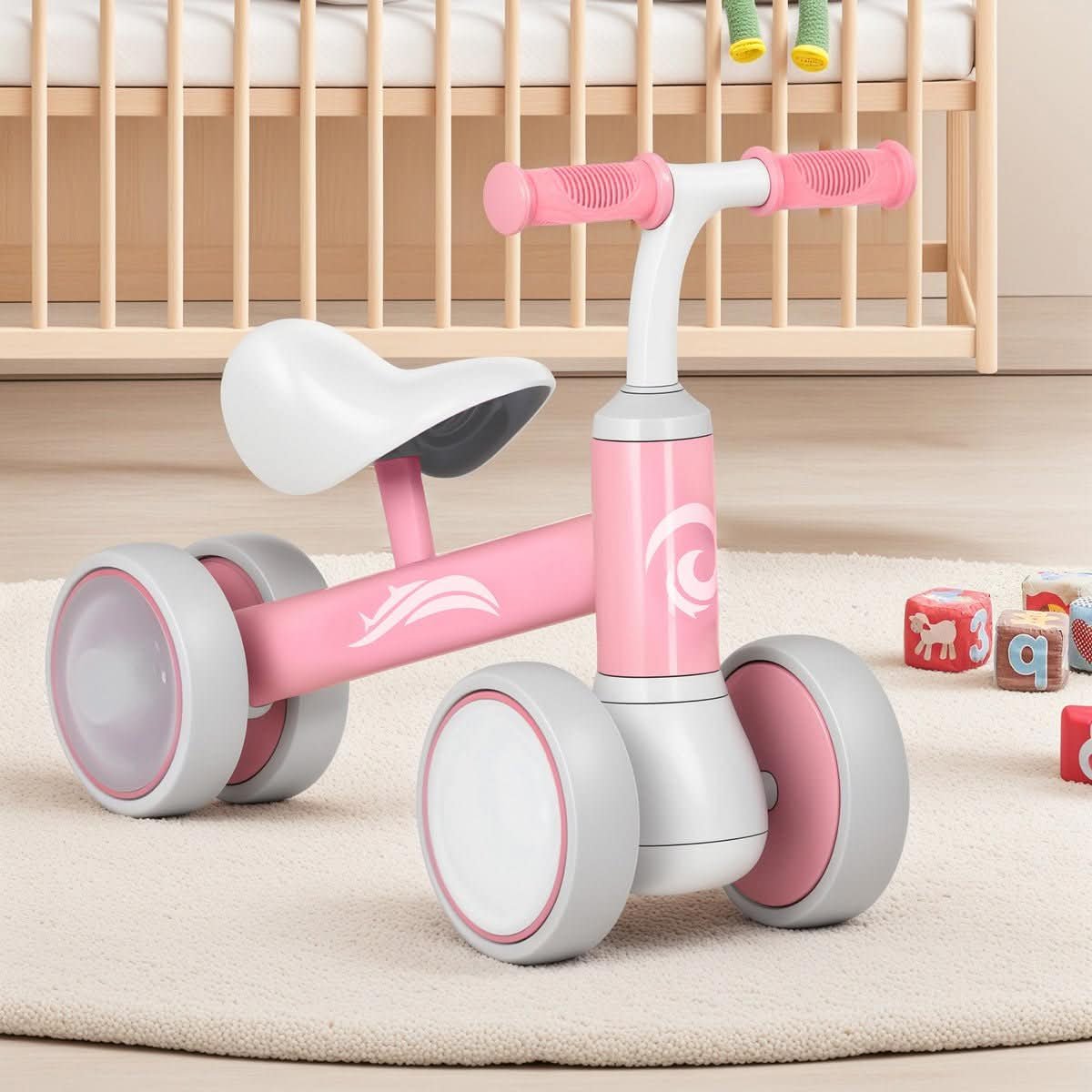
This is the smallest and cheapest bike in this list, built specifically for the 1-3 year age bracket instead of stretched to cover older kids too. A 135-degree steering limit stops the front wheel turning far enough to tip the bike sideways, which is the actual failure mode with a lot of first bikes at this age – not falling off, but the whole thing toppling from an over-steered turn.
The rear wheels light up as they spin, a real motivator for a toddler who needs a reason to keep pushing instead of sitting on a stationary bike making truck noises. At 1.95kg it’s light enough for a toddler to actually move themselves, and the 25kg weight capacity is honest about what it’s for.
It won’t last as long as the steel-frame picks in this list – the plastic and lightweight steel construction is built for a year or two of use before a toddler outgrows the 25kg capacity, not a bike that gets handed down repeatedly. Treat it as the first bike before the first real bike, not a single long-term buy.
Pros
- 135-degree steering limit specifically prevents toppling sideways, the main first-bike failure mode
- Light-up rear wheels genuinely motivate a reluctant toddler
- Cheapest bike in this list, sized honestly for 1-3 years instead of stretched
Cons
- Plastic and lightweight steel construction won’t survive being handed down repeatedly like the steel-frame picks
- 25kg capacity means it’s outgrown faster than every other bike in this list
Key specs: Steel/PP/EVA construction, 135-degree steering limit, light-up rear wheels, 25kg capacity, suitable 1-3 years.
CHECK CURRENT PRICE5. Steel Frame Balance Bike – Best Budget Pick
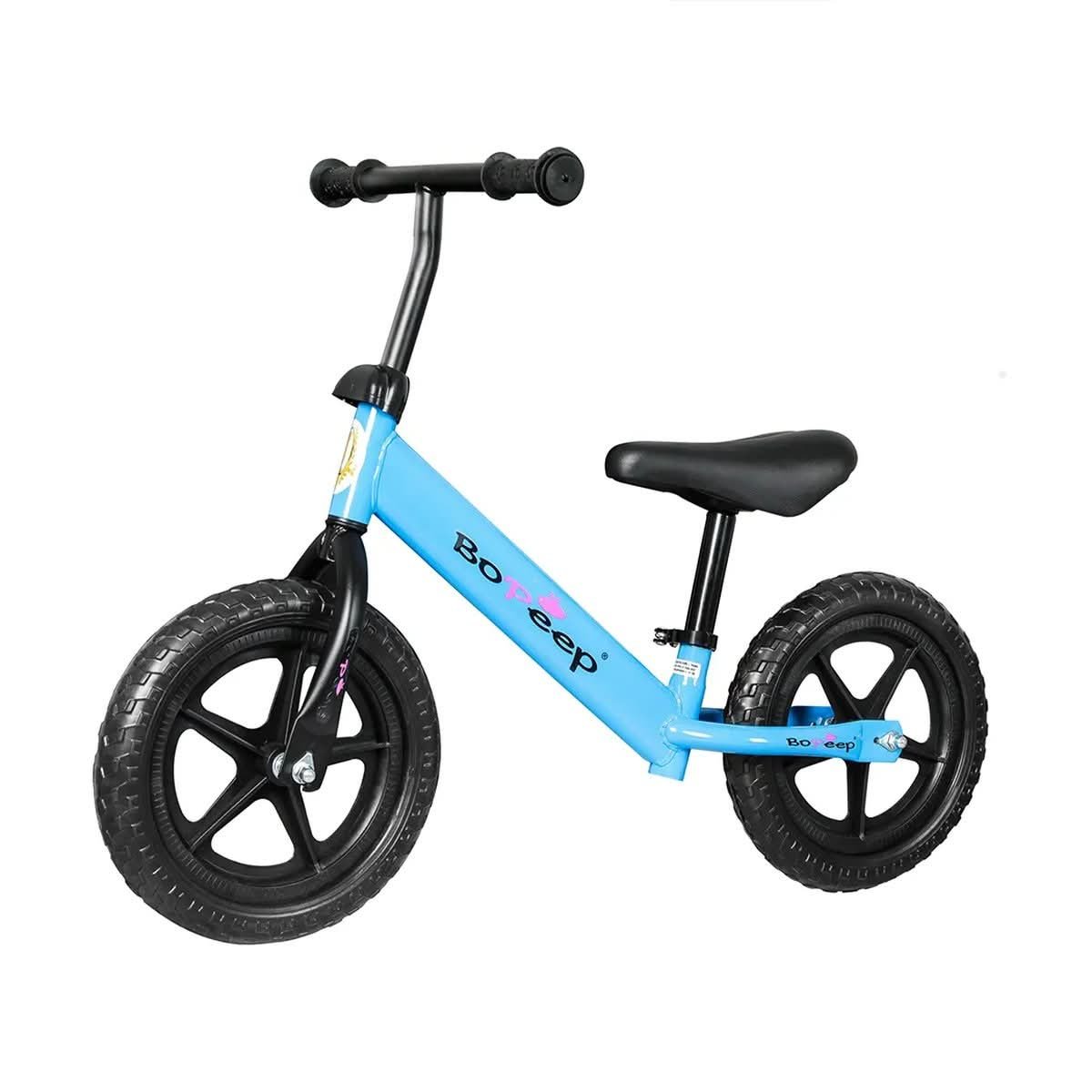
Powder-coated steel frame, EVA foam tyres that never need pumping, and a seat and handlebar that both adjust via quick-release clamp – this covers the basics of a balance bike without paying for the componentry upgrades the Progear pick above offers. EN71 certified and rated to 50kg, it’s built to last from about age 3 well past the point most kids move on to a pedal bike.
It’s roughly what you’d pay for a basic kids’ bike at Big W or Kmart, and it’s the cheapest bike in this list that still uses a steel frame instead of plastic, which matters more than the price gap suggests – a steel frame handles a toddler’s habit of dropping the bike, running it into a fence and dragging it up a gutter far better than a plastic one ever will. The trade-off is componentry: plain steel bearings instead of Progear’s sealed alloy setup, so expect it to feel a little less smooth after a year of driveway use, not that most toddlers will notice.
Pros
- Steel frame handles rough toddler use better than a plastic equivalent
- EVA tyres never need pumping or patching
- Cheapest steel-frame bike in this list
Cons
- Plain steel bearings feel less smooth over time than the sealed alloy setup on the Progear pick above
- Handlebar and seat foam padding is thinner than the pricier picks in this list
Key specs: Powder-coated steel frame, EVA tyres, 50kg capacity, EN71 certified, adjustable seat 34-43cm, handlebar 56-66cm.
CHECK CURRENT PRICE6. Kinderfeets Tiny Tot Plus – Best for the Youngest Riders
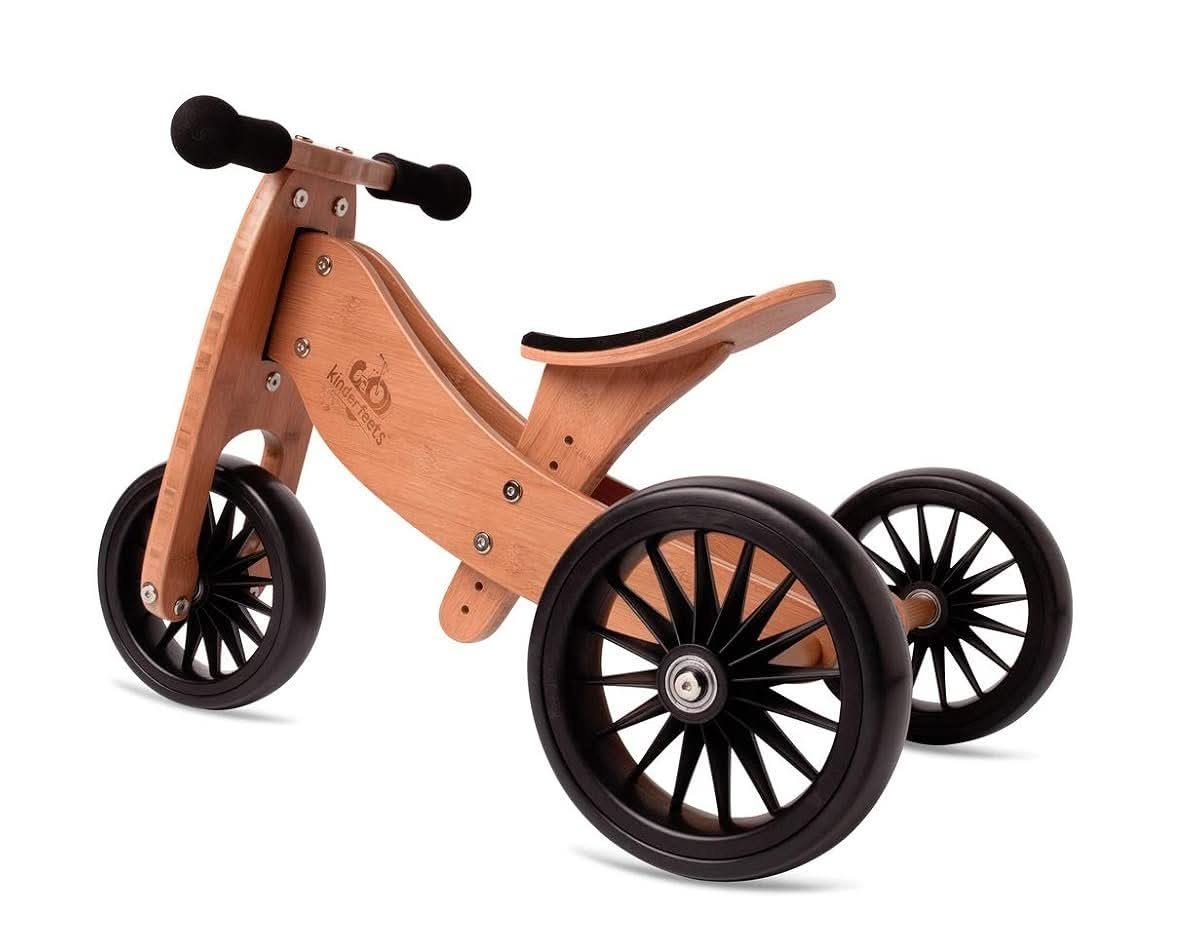
Like the Lifespan Scout above, this converts from a trike to a two-wheel balance bike, but bamboo instead of plywood and a lower seat height – 25cm at the lowest setting against the Scout’s higher minimum – put it in reach of a toddler who’s only just started walking confidently.
Kinderfeets is an award-winning, purpose-built brand in this category instead of a general kids’ bike maker branching out, and it shows in the small details: airless 18.4cm tyres that won’t ever go flat, an extra-wide base for a toddler still working on balance, and padded handlebar grips sized for small hands instead of scaled-down adult grips. It’s rated 4.7 stars from over 500 Amazon reviewers, a large and consistent sample for this category.
It’s priced close to the Lifespan Scout above despite the bamboo build, so the deciding factor is really the seat height: if your toddler is closer to walking age than to primary school, the lower starting height here matters more than the material. Bamboo needs a specific kind of care – it shouldn’t live outside permanently the way a steel frame can – but indoors or under cover, it’ll outlast the toddler years easily.
Pros
- Lower minimum seat height than the Scout above, suited to a toddler just past walking age
- Airless tyres never go flat
- Backed by a large, consistently positive review base from an award-winning specialist brand
Cons
- Priced close to the Lifespan Scout above despite being the smaller of the two convertibles
- Bamboo needs to be kept undercover instead of left outside permanently like a steel frame
Key specs: Bamboo frame, airless 18.4cm tyres, adjustable seat 25-34cm, converts trike to balance bike, padded handlebar grips.
CHECK CURRENT PRICEHow to Choose a Balance Bike for a Toddler
Get the seat height right before anything else. A toddler needs to plant both feet flat on the ground with a slight knee bend while seated – not tiptoe, not hunch. Measure your toddler’s inseam rather than guessing from their age, since two three-year-olds can differ by several centimetres.
A helmet isn’t optional in Australia. Every state and territory requires an approved helmet whenever a child rides a bike, scooter or balance bike on a public road or path, and a properly fitted helmet meeting the AS/NZS 2063 standard cuts the risk of serious head injury by close to 70%. Buy the helmet at the same time as the bike, not after the first fall makes the point for you.
Weight matters as much as size. A bike that’s too heavy for a toddler to lift or manoeuvre gets abandoned fast, no matter how good the specs look on paper. Wood and bamboo frames are lighter than steel at the cost of some durability, which is a fair trade for the youngest riders.
Decide whether you want one bike or one system. A dedicated balance bike does one job well and usually costs less; a convertible trike-to-balance-bike system costs more upfront but stretches across a wider age range, which can work out cheaper than buying two separate items over a couple of years.
Check the surface before the bike. A balance bike needs a reasonably flat, hard surface to actually work – grass and thick carpet make the pushing motion pointless. A weatherboard rental with a concrete driveway or a new-estate footpath both work better than a backyard for the early sessions. Once your toddler ages out of balance bikes, our guide to the best trampolines in Australia covers the next stage of backyard energy-burning.
Buy for the current age, not the aspirational one. A bike sized for a child to grow into over two years usually means an unrideable bike for the first six months, which defeats the purpose. Size for now, and plan on a second bike or an adjustable model as they grow.
You’ll Also Want
A balance bike is only as safe as the helmet on top of it – an AS/NZS 2063-approved toddler helmet is a legal requirement on any public path in Australia, not just a good idea, so budget for one at the same time as the bike rather than as an afterthought.
Knee and elbow pads matter more for a toddler still learning to fall than they do for an older, steadier rider – the first few weeks on a balance bike involve more sideways tumbles than forward falls, and soft pads take the sting out of a driveway graze.
Once the balance-bike stage is behind you, keep the momentum going – our guide to the best trampolines in Australia covers the next big backyard buy for a kid who has already shown they like moving.
Frequently Asked Questions
What age should a toddler start on a balance bike?
Most toddlers can start around 18 months to 2 years, once they’re walking confidently and can follow simple instructions, though some purpose-built models are sized for children as young as 12 months. The real test isn’t age but whether they can sit on the seat with both feet flat on the ground – if their toes barely reach, the bike is still too big.
Is a balance bike better than training wheels for learning to ride?
Most bike educators now recommend balance bikes over training wheels, because training wheels teach a child to pedal while leaning on support, which doesn’t transfer to balancing upright. A balance bike teaches the actual skill of steering and balancing at speed, so most kids move straight to a pedal bike without ever needing stabilisers.
Do I need a helmet for a balance bike in Australia?
Yes. Every Australian state and territory legally requires an approved helmet whenever a child rides a bike, scooter or balance bike on a public road or footpath, with no age exemption for toddlers. Look for a helmet carrying the AS/NZS 2063 compliance sticker, and replace it after any significant fall even if it looks undamaged.
What’s the difference between a steel, wood and bamboo balance bike?
Steel frames are heavier and more durable, better suited to rough outdoor use and handing down between children. Wood and bamboo frames are lighter and often have a lower minimum seat height, which suits younger or smaller toddlers, but need more careful storage and don’t tolerate being left outside permanently the way steel does.
How do I know if a balance bike is the right size?
With your toddler seated and both feet flat on the ground, there should be a slight bend at the knee, not a straight leg or a hunched-forward posture. Check the manufacturer’s minimum seat height against your toddler’s inseam measurement rather than relying on the age range printed on the box, since sizing varies a lot between brands.
Are convertible trike-to-balance-bike combos worth the extra cost?
They can be, if you want one bike to last from around 12 months through to 5 or 6 years instead of buying a trike and a separate balance bike. The trade-off is that a dedicated balance bike is usually lighter and simpler, and some convertible seats don’t adjust as far as parents expect once a child’s ready to move on to pedals.
For most Australian toddlers starting out, the Progear DuraLite 12″ Balance Bike is the easiest recommendation – real bike-shop componentry, a lifetime frame warranty, and a price that doesn’t assume you want four different modes of transport in one box. A family wanting one bike to last from an early crawler to a confident five-year-old should look at the Globber Explorer Trike 4in1 instead, seat-adjustment complaints aside. For a toddler who’s only just found their feet, the Kinderfeets Tiny Tot Plus is the one pick here actually sized low enough to make the first few sessions less of a stretch, literally.