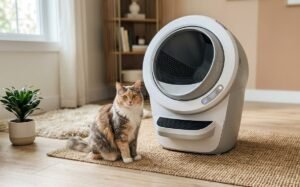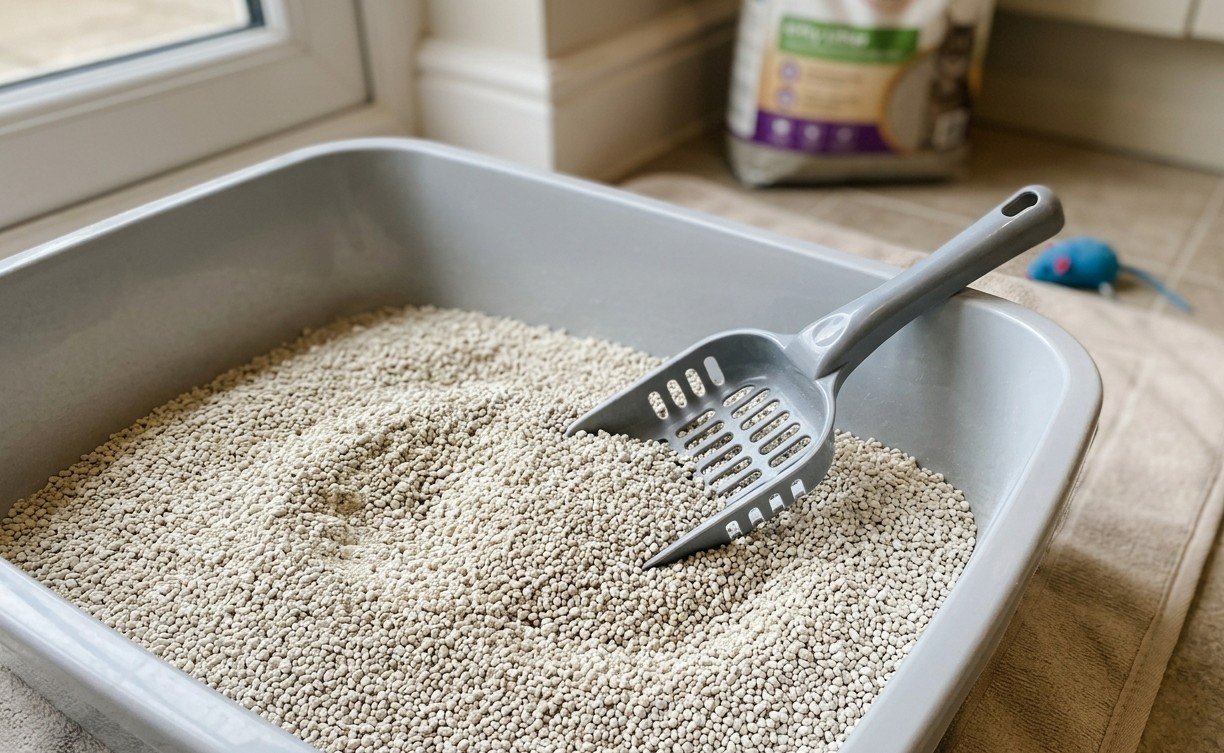
Every cat litter sold in Australia claims to control odour and clump for easy scooping, but the material doing that work, clay, silica crystal, or a plant-based fibre like corn, tofu or bamboo, changes how it actually performs, how much dust it kicks up, and whether it can go down a toilet or compost bin. The best kitty litter in Australia is matched to litter box habits and household sensitivities first, since a cat that rejects a scented or dusty litter simply stops using the tray, which is a bigger practical problem than any odour-control claim on the bag.
Cat litter sold in Australia splits into four main material types: clumping clay litters that form hard scoopable clumps from bentonite, crystal or silica gel litters that absorb moisture without clumping, plant-based clumping litters made from corn, tofu or bamboo, and non-clumping natural litters typically made from recycled paper.
A single adult cat typically needs 3 to 4kg of clumping litter per week with regular scooping and a full change, and price per kilogram varies enormously between litter types, with a bulk plant-based bag typically running at a fraction of the per-kilogram cost of a small premium pack of the same material. Dust level, clumping strength, and whether the litter is genuinely flushable matter more day-to-day than the marketing on the front of the bag.
This guide compares seven cat litters available to Australian buyers, spanning clay, crystal and plant-based types at different price points. Anyone setting up a full care routine for a new cat should also see this site’s guide to the best automatic pet feeders in Australia for the other side of hands-off cat care.
Quick Picks
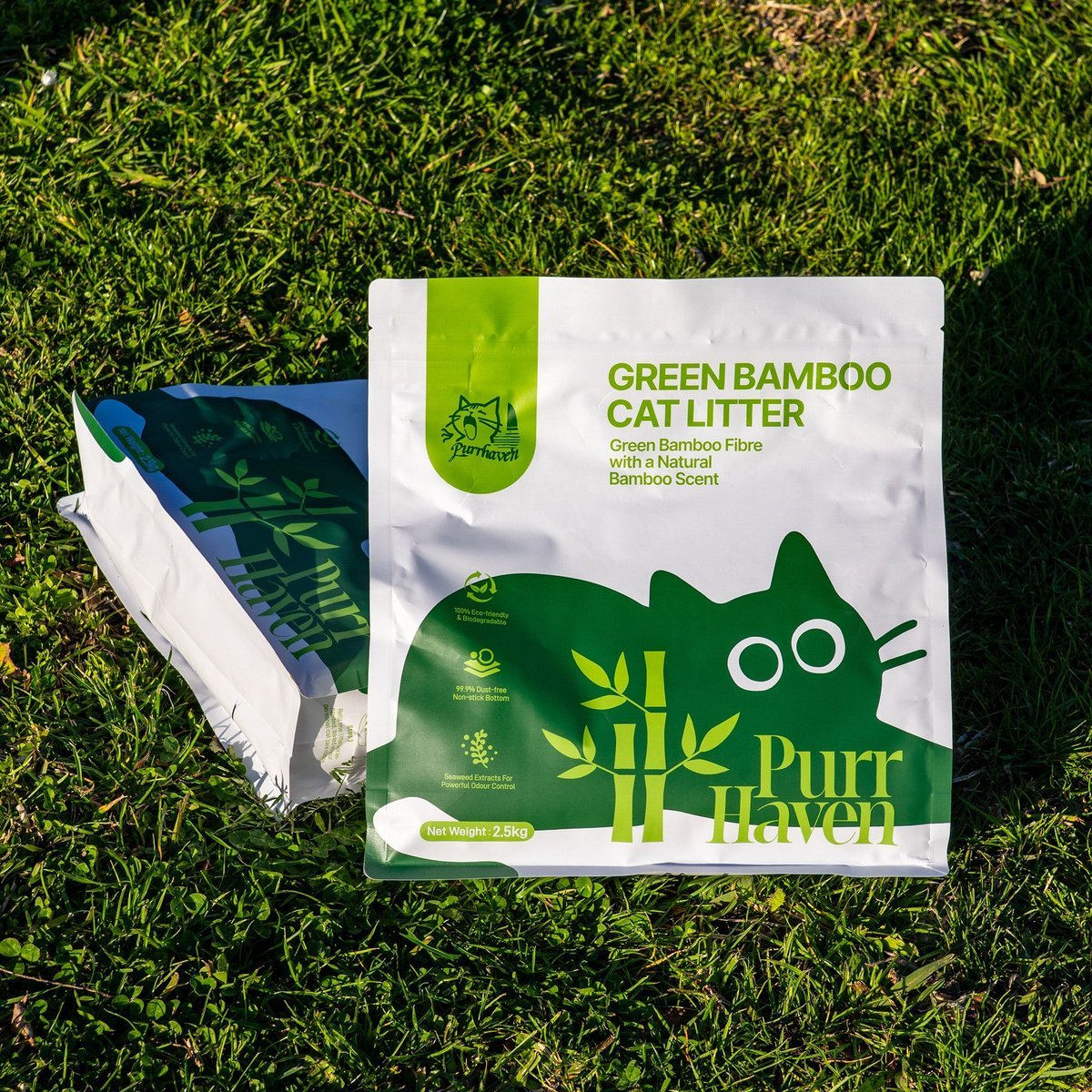
PurrHaven Bamboo Clumping Cat Litter
PurrHaven’s bamboo litter clumps around a plant-fibre base rather than clay, sold in a 15kg case made up of six 2.5kg bags.
CHECK CURRENT PRICE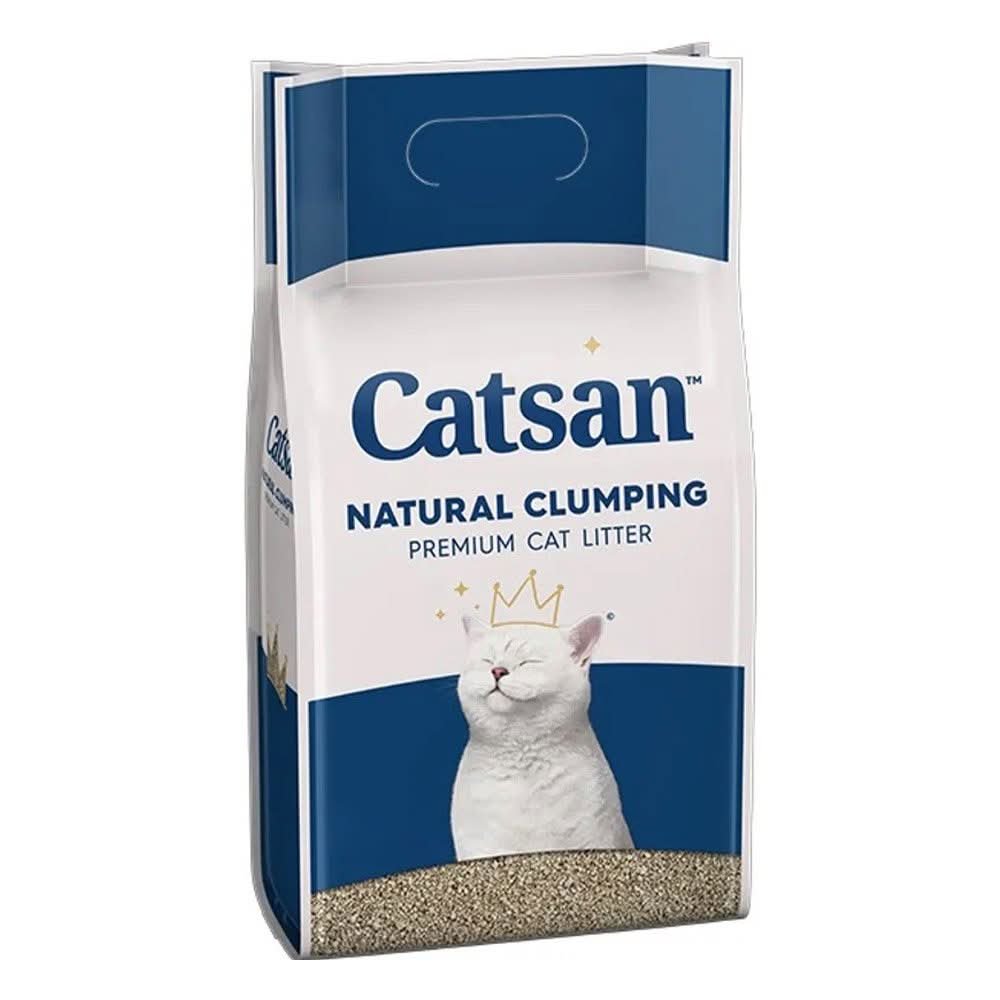
Catsan Natural Clumping Premium Cat Litter
Catsan’s Natural Clumping is a traditional bentonite clay litter, sold in 3.5kg, 7kg and 15kg packs with the price per kilogram dropping noticeably at the largest size.
CHECK CURRENT PRICE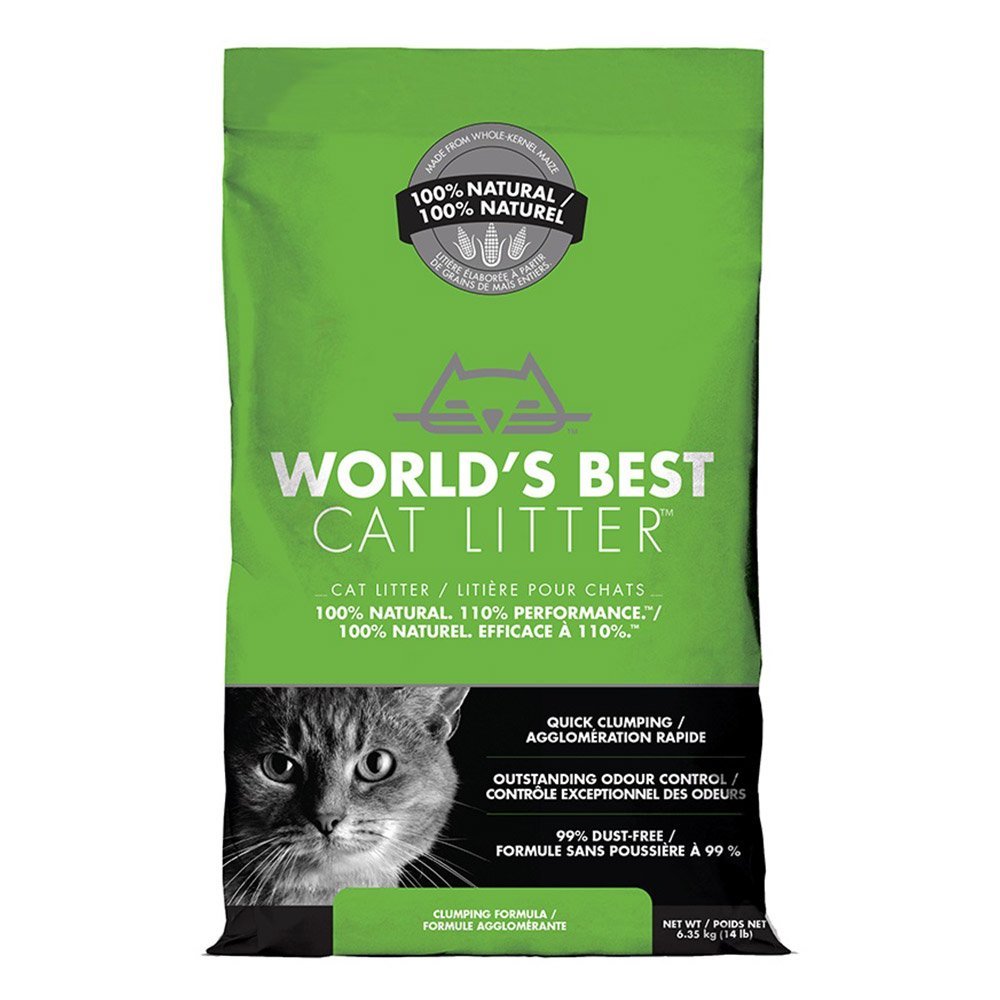
World’s Best Original Natural Corn Cat Litter
World’s Best is a corn-based clumping litter sold in 6.35kg and 12.7kg packs, positioned around being genuinely flushable rather than just claiming it, since corn breaks down in a septic or sewage system the way clay cannot..
CHECK CURRENT PRICEBest Kitty Litter Australia Compared
| Product | Link | Type | Best For | Key Spec |
|---|---|---|---|---|
| PurrHaven Bamboo Clumping Cat Litter | Check price | Bamboo clumping | Low tracking, plant-based material | 15kg (6×2.5kg), dust-free claim |
| Catsan Natural Clumping Premium Cat Litter | Check price | Bentonite clay clumping | Familiar, reliable clumping performance | 3.5kg / 7kg / 15kg packs, unscented |
| World’s Best Original Natural Corn Cat Litter | Check price | Corn clumping | Genuinely flushable, low-dust litter | 6.35kg / 12.7kg packs, 99% dust-free |
| Breeder’s Choice Plus Cat Litter | Check price | Recycled paper, non-clumping | Biodegradable, kitten and post-surgery use | 10L / 24L packs, compostable |
| PaWz Tofu Cat Litter | Check price | Tofu clumping, bulk | Multi-cat households buying in bulk | 30kg (12×2.5kg), lowest per-kg cost |
| Kungfu Cat Original Tofu Cat Litter | Check price | Tofu clumping, single bag | Trying tofu litter before buying bulk | 6.5kg single bag, flushable |
| POOWEE Fresh Crystal Cat Litter | Check price | Silica gel crystal | Fewer full tray changes, less daily scooping | 6kg bag, non-clumping absorption |
1. PurrHaven Bamboo Clumping Cat Litter – Best Bamboo Clumping
PurrHaven’s bamboo litter clumps around a plant-fibre base rather than clay, sold in a 15kg case made up of six 2.5kg bags. The brand markets it as dust-free and flushable, and the clumps form quickly enough to scoop within minutes of use rather than needing to sit and firm up first.
Bamboo litter tends to track less through the house than clay because the granules are lighter and less powdery, and the rapid liquid absorption claim matters most in a multi-cat household where the tray gets used often between full changes. The trade-off is a noticeably higher price per kilogram than a clay or paper litter of similar performance.
This suits a household wanting a plant-based litter with strong clumping performance and is willing to pay a premium for the lighter, lower-tracking granules. A household prioritising the lowest possible cost per kilogram is better served by the bulk tofu option later in this comparison.
Pros
- Dust-free and flushable claim from a plant-based bamboo base
- Rapid clumping within minutes of use
- Lower tracking through the house than clay litter
Cons
- Highest price per kilogram in this comparison
- Sold as a 15kg case rather than smaller trial-size bags
Key specs: Bamboo clumping; 15kg (6 x 2.5kg bags); dust-free and flushable claim.
CHECK CURRENT PRICE2. Catsan Natural Clumping Premium Cat Litter – Best Clay Clumping
Catsan’s Natural Clumping is a traditional bentonite clay litter, sold in 3.5kg, 7kg and 15kg packs with the price per kilogram dropping noticeably at the largest size. Clay litter has been the standard cat litter material for decades, and its clumping behaviour is well understood by most cat owners already.
The listing states it locks in ammonia odour before it escapes, rather than just masking it once it is already noticeable, and the granules stay unscented, which suits cats sensitive to strong perfumes some competing litters use to control odour. Clay clumps firmly enough for reliable one-piece scooping.
This suits a household wanting a familiar, reliable clumping litter without switching a cat to an unfamiliar material, particularly useful for a cat already used to clay. Clay litter is heavier to carry and dispose of than the plant-based options in this comparison, and it is not flushable.
Pros
- Familiar bentonite clay clumping most cats already accept
- Locks in ammonia odour before it becomes noticeable
- Unscented formula suits odour-sensitive cats
Cons
- Heavier to carry and cannot be flushed, unlike the plant-based options here
- Best per-kilogram price only available at the largest 15kg size
Key specs: Bentonite clay clumping; available in 3.5kg, 7kg and 15kg packs; unscented.
CHECK CURRENT PRICE3. World’s Best Original Natural Corn Cat Litter – Best Corn-Based
World’s Best is a corn-based clumping litter sold in 6.35kg and 12.7kg packs, positioned around being genuinely flushable rather than just claiming it, since corn breaks down in a septic or sewage system the way clay cannot.
The listing states it is 99% dust-free, which matters for both the cat’s respiratory comfort and anyone with a dust sensitivity scooping the tray daily, and the unscented formula avoids the added-fragrance approach some competing natural litters take.
This suits a household wanting a genuinely flushable, low-dust litter without paying the premium some bamboo litters carry for similar performance. A household without plumbing suited to flushing litter gets no real benefit from that specific feature and could choose a cheaper corn or paper alternative instead.
Pros
- Genuinely flushable, unlike clay-based litters
- 99% dust-free formula
- Unscented, avoiding added fragrance
Cons
- No benefit from the flushable claim if the household bins litter rather than flushing it
- Corn litter can attract insects if stored somewhere warm and humid
Key specs: Corn-based clumping; 6.35kg or 12.7kg packs; 99% dust-free; flushable.
CHECK CURRENT PRICE4. Breeder’s Choice Plus Cat Litter – Best Non-Clumping
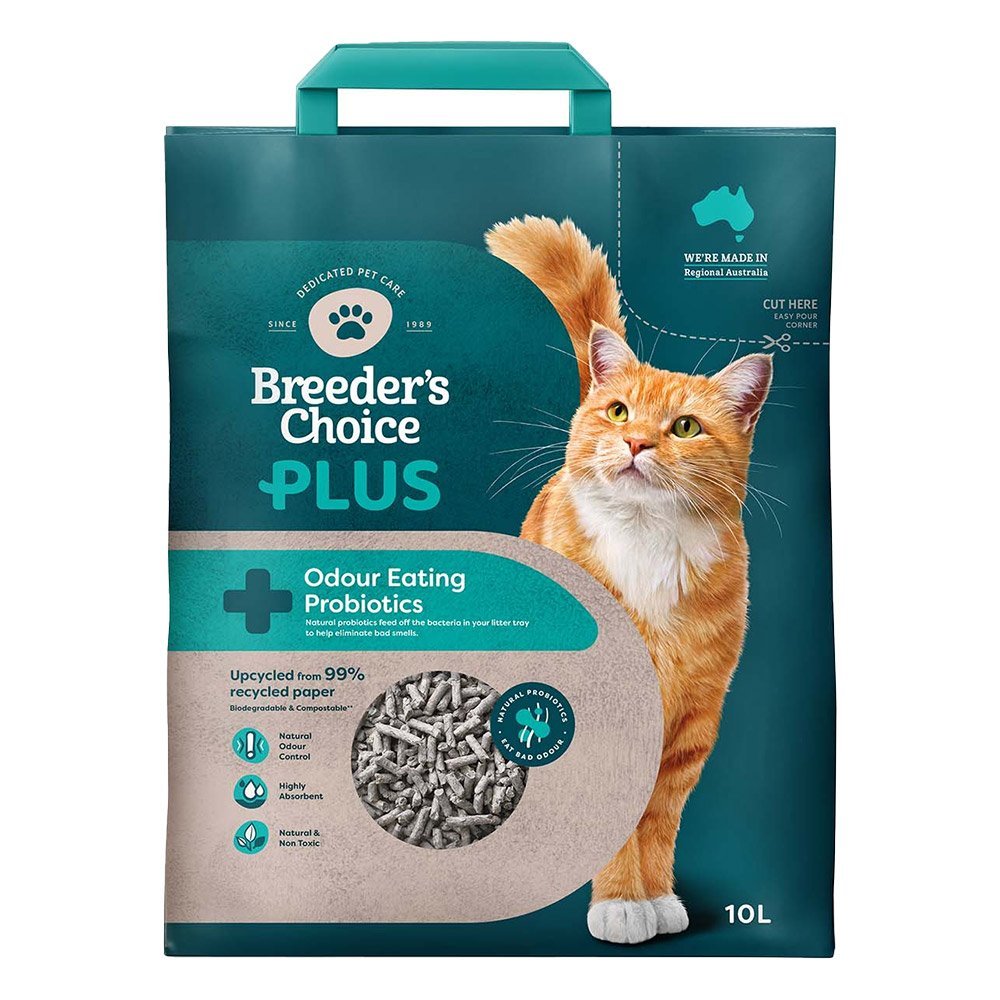
Breeder’s Choice Plus is a non-clumping litter made from 99% recycled paper, sold in 10L and 24L packs, aimed at composting and biodegradability rather than the scoop-and-clump routine the other litters in this comparison use.
Because it does not clump, the whole tray needs a full change on a schedule rather than daily spot-scooping of clumps, and the listing states it uses natural prebiotics for odour control instead of scent or absorption alone. It is made in regional Australia, which some buyers weight alongside the environmental angle.
This suits a household prioritising biodegradability and compostability over the clump-and-scoop convenience of the other litters here, and it particularly suits kittens or cats recovering from surgery where a soft, low-dust litter is often recommended over clay or crystal. Anyone wanting to spot-scoop daily rather than fully change the tray should choose one of the clumping litters in this comparison instead.
Pros
- 99% recycled paper, biodegradable and compostable
- Soft, low-dust texture suited to kittens or post-surgery cats
- Made in regional Australia
Cons
- Non-clumping, so the whole tray needs regular full changes rather than daily scooping
- Less familiar to cats already used to a clumping litter
Key specs: Recycled paper, non-clumping; 10L or 24L packs; biodegradable.
CHECK CURRENT PRICE5. PaWz Tofu Cat Litter – Best Bulk Value
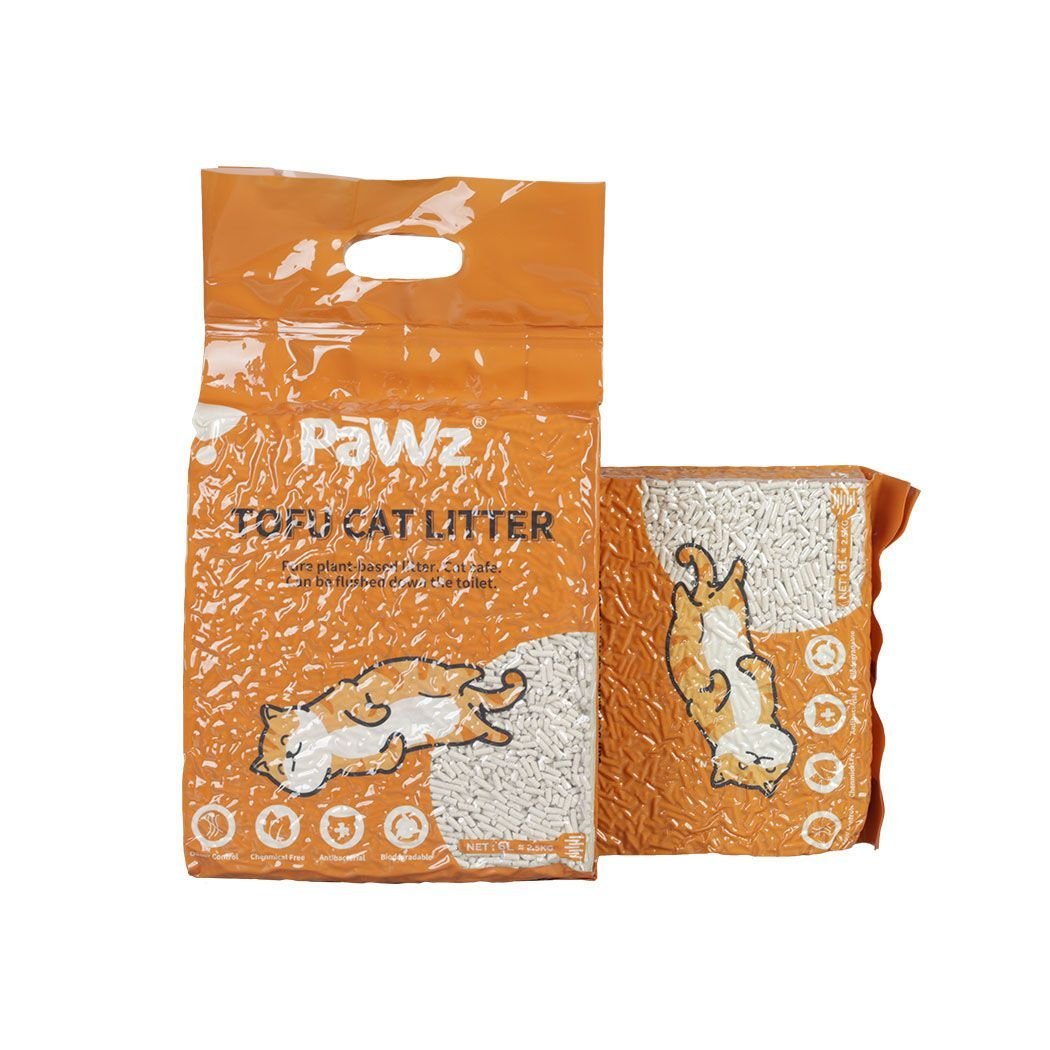
PaWz’s tofu litter is sold as a 30kg case of twelve 2.5kg bags, the largest single purchase in this comparison and the lowest price per kilogram by a clear margin. Tofu litter clumps in a similar way to bamboo, from a plant-fibre base rather than clay.
Buying in this volume suits a multi-cat household going through litter quickly, where the bulk price break outweighs the convenience of a smaller bag, and the case format means fewer separate deliveries or store trips over a few months of use.
This suits a household wanting the lowest ongoing cost from a plant-based litter and has the storage space for a 30kg case. A single-cat household or anyone wanting to trial tofu litter before committing to bulk should start with the smaller bag later in this comparison instead.
Pros
- Lowest price per kilogram in this comparison
- Plant-based tofu clumping, similar low-tracking benefit to bamboo
- Bulk case reduces how often litter needs restocking
Cons
- 30kg case needs real storage space
- Too large a first purchase for anyone who has not tried tofu litter with their cat yet
Key specs: Tofu clumping; 30kg (12 x 2.5kg bags); bulk multi-cat pack.
CHECK CURRENT PRICE6. Kungfu Cat Original Tofu Cat Litter – Best Small-Bag Trial Size
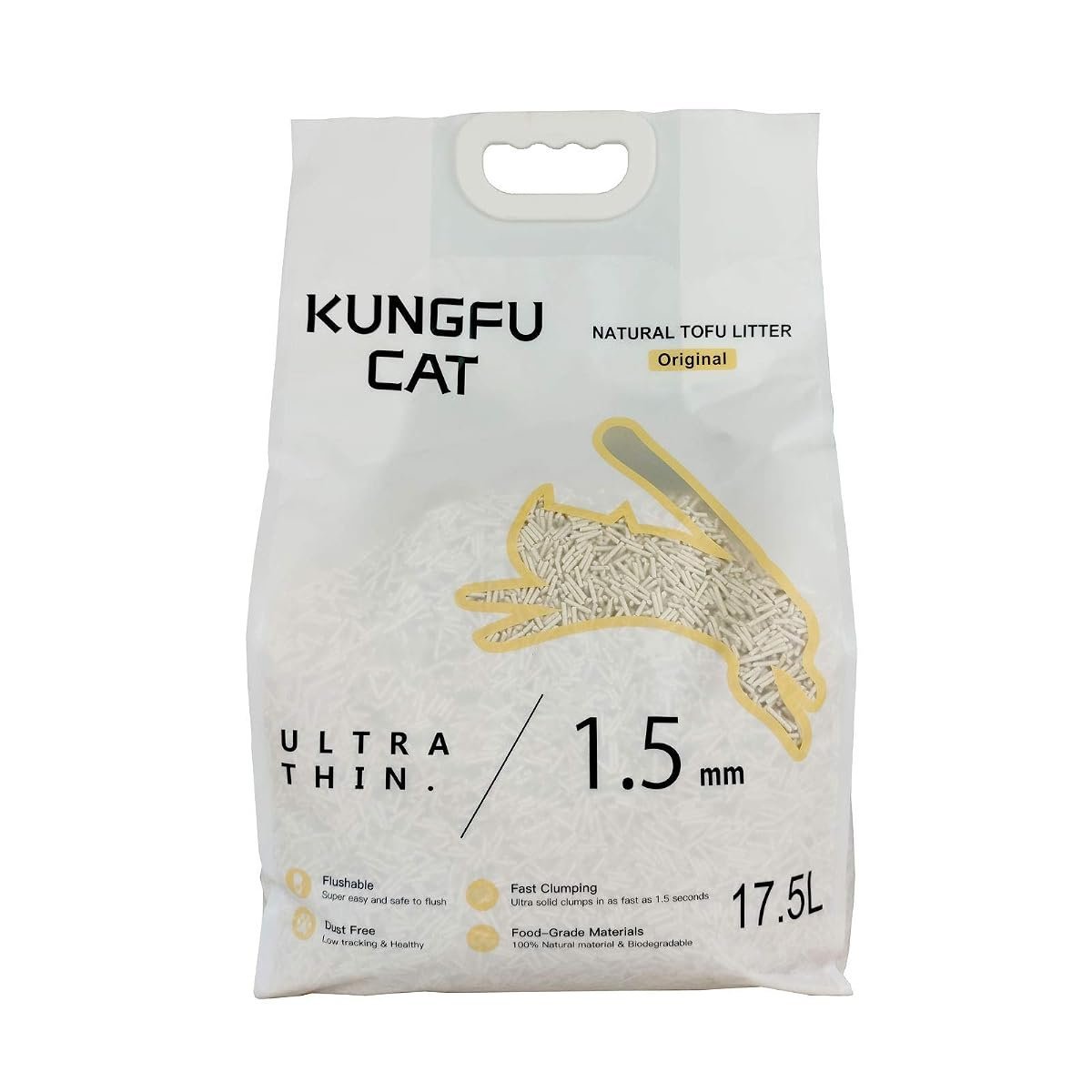
Kungfu Cat’s tofu litter is the small-bag equivalent of the bulk case above, sold as a single 6.5kg bag rather than a multi-pack, aimed at a household trying tofu litter for the first time or simply not wanting to store 30kg at once.
The listing claims superior odour control, quick clumping and low dust, the same core promises tofu litter generally makes, and being flushable is listed as a feature alongside the biodegradable base material.
This suits a single-cat household or anyone wanting to test whether their cat accepts a tofu-based litter before committing to a bulk case. A household that already knows tofu litter works for their cat is better served by the bulk case above on a straight per-kilogram basis.
Pros
- Single 6.5kg bag suits a trial purchase or a single-cat household
- Same tofu clumping benefits as the bulk case in this comparison
- Flushable, biodegradable base material
Cons
- Higher price per kilogram than buying the bulk case
- Same core material as the bulk pick, so there is little reason to buy both
Key specs: Tofu clumping; 6.5kg single bag; flushable.
CHECK ON AMAZON7. POOWEE Fresh Crystal Cat Litter – Best Crystal Litter
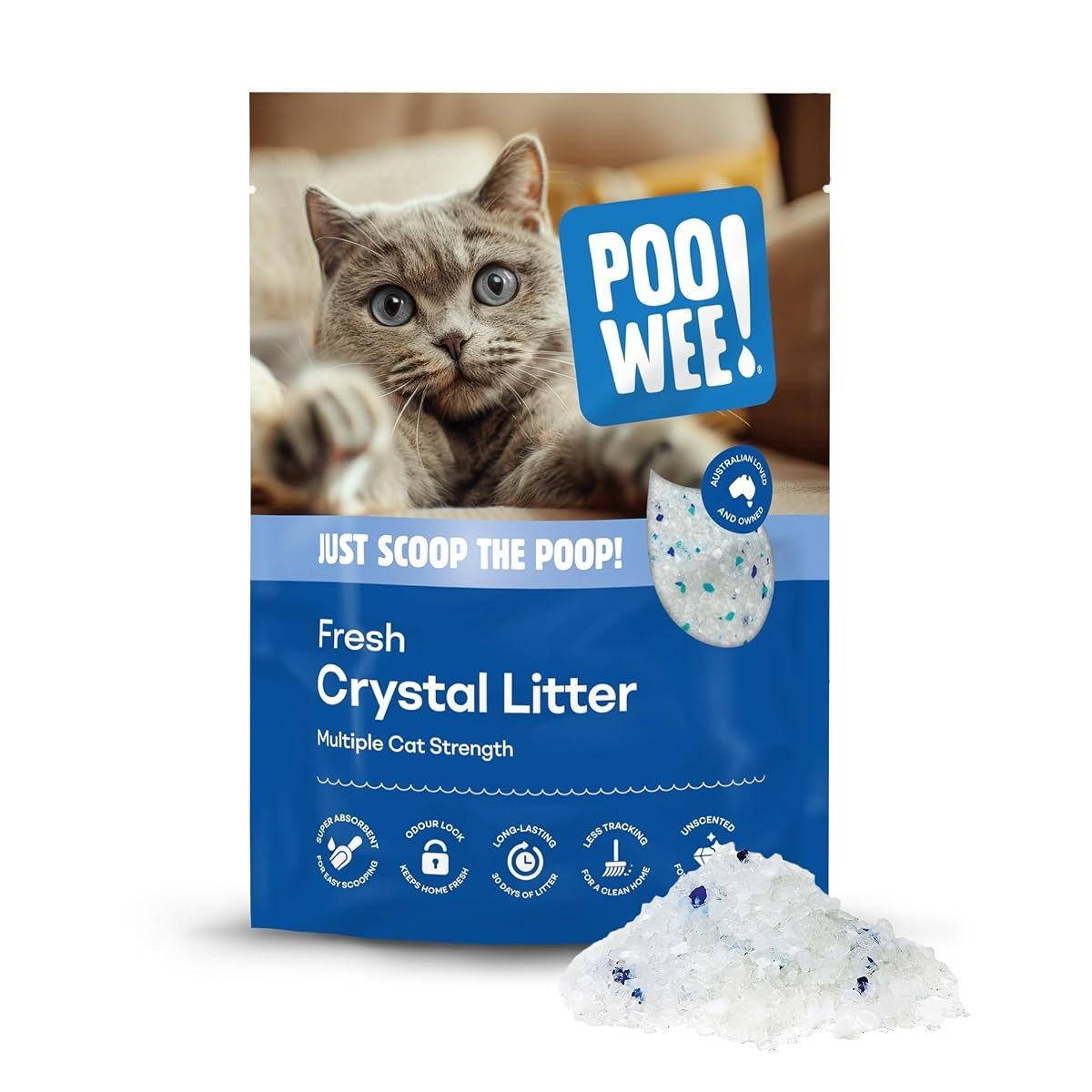
POOWEE is a silica gel crystal litter, sold as a 6kg bag from an Australian-owned brand, working on absorption rather than clumping the way every other litter in this comparison does. Crystals absorb liquid and lock in odour without forming a solid clump to scoop out.
Because there is no clump to remove daily, a crystal litter tray typically gets a full change every two to four weeks depending on how many cats use it, with just solid waste removed in between, which is a genuinely different maintenance routine from the clumping litters above.
This suits a household wanting to change the tray less often rather than scoop it daily, and it produces less mess and tracking than most clumping litters. A household or cat that prefers the familiar routine of daily scooping is better served by one of the clumping litters elsewhere in this comparison.
Pros
- Absorbs and locks in odour without needing daily clump removal
- Less mess and tracking than clumping litters
- Australian owned brand
Cons
- Full tray change still needed every two to four weeks
- Not compostable or flushable the way some plant-based litters are
Key specs: Silica gel crystal; 6kg bag; non-clumping, absorption-based.
CHECK ON AMAZONHow to Choose a Kitty Litter
Match the material to your cat’s habits before price. A cat that stops using a scented or dusty litter causes a bigger problem than any cost saving, so if switching litter types, do it gradually by mixing the new litter into the old rather than a sudden full swap.
Check whether “flushable” actually applies to your plumbing. Corn and tofu litters marketed as flushable are genuinely biodegradable, but older plumbing, septic systems, or local water authority rules can still make binning a better choice than flushing even a genuinely flushable litter.
Clumping strength affects how clean the tray actually stays. A litter that clumps loosely leaves crumbs behind when scooped, spreading odour-causing residue through the rest of the tray rather than removing it cleanly. Reviews mentioning crumbly clumps are worth weighing against a lower price.
Dust matters for both the cat and whoever scoops the tray. A visibly dusty litter, clay especially, can aggravate a cat’s respiratory system and settle on nearby surfaces; a litter marketed as low-dust or dust-free is a genuine health consideration, not just a cleanliness one.
Price per kilogram, not per bag, is the real comparison. A large bulk bag at a lower headline price can still cost more per kilogram than a smaller premium bag depending on the brand, so check the unit price rather than the sticker price when comparing across this guide’s picks.
A litter tray upgrade can matter as much as the litter itself. An open tray, covered hood, or self-cleaning box all change how well any litter performs day to day; anyone building a full cat care routine from scratch should also see this site’s guide to the best automatic pet feeders for the feeding side of the same setup.
Frequently Asked Questions
What is the healthiest cat litter for my cat?
A low-dust or dust-free litter, whether clay, crystal or plant-based, is generally considered healthier than a dusty clumping clay, since airborne dust can affect a cat’s respiratory system with repeated exposure. Unscented formulas also avoid irritating cats sensitive to added fragrance.
Is clumping or crystal litter better?
Neither is universally better; they suit different maintenance routines. Clumping litter needs daily scooping but stays fresh with less litter wasted, while crystal litter absorbs without clumping and typically needs a full tray change every two to four weeks instead of daily scooping.
Can I flush cat litter down the toilet in Australia?
Only litters specifically marketed as flushable, typically corn or plant-based types, and even then, local plumbing, septic systems and water authority guidance should be checked first. Clay and crystal litters should never be flushed.
How often should I change cat litter completely?
For clumping litter, a full change every two to four weeks alongside daily scooping is typical, while non-clumping litter usually needs a full change every one to two weeks since there is no clump removal to extend its life. Multi-cat households need more frequent full changes.
Why does my cat refuse to use a new litter?
Cats are sensitive to texture, scent and dust, and a sudden full switch is the most common reason for tray avoidance. Introducing a new litter gradually, mixed into the old litter over one to two weeks, avoids most rejection issues.
Is bamboo or tofu litter better than clay?
Both are lighter, lower-tracking and often flushable compared with clay, and neither is inherently better than the other. The main practical difference in this guide is price per kilogram, where tofu tends to be cheaper in bulk than bamboo at a similar level of performance.
Verdict
Material type decides more of this comparison than brand does. The Catsan Natural Clumping is the safest starting point for a household not yet committed to switching away from familiar clay, the World’s Best Cat Litter is the better pick for anyone wanting a genuinely flushable, low-dust option, and the PaWz bulk case is worth the storage space only for a multi-cat household going through litter quickly.