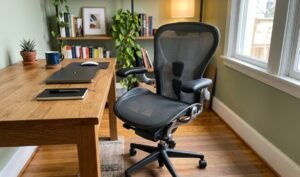
Lower back pain from sitting doesn’t come from the chair being cheap; it comes from a backrest that holds a fixed curve while the sitter’s spine changes shape throughout the day. The office chairs for back pain Australia workers actually keep past the first month share one feature the rest skip: lumbar support that moves, either sliding up and down or flexing with recline, rather than a foam pad glued in one spot.
Three lumbar designs cover this category. A fixed lumbar bump is moulded into the backrest at one height, cheap to build and only correct for one body. A height-adjustable lumbar pad slides up or down a track so the support lines up with the actual small of the back. A mesh-back chair with a separated lumbar zone uses a denser weave low on the backrest instead of a pad at all, flexing to the sitter’s shape on its own.
Weight capacity matters here too: every chair in this guide holds between 120kg and 150kg (265lb to 330lb), and gas-lift height range, recline angle and whether the armrests adjust matter almost as much as the lumbar mechanism itself.
This guide compares ten ergonomic office chairs sold in Australia on lumbar adjustment, recline range, seat material and the extras, headrests, footrests, 3D armrests, that separate a basic mesh chair from a fully adjustable one. Anyone whose pain traces back to what they’re sleeping on rather than sitting in should also check our guide to the best mattress toppers for back pain in Australia, since a chair fixes daytime posture and a mattress topper fixes the other eight hours.
Quick Picks
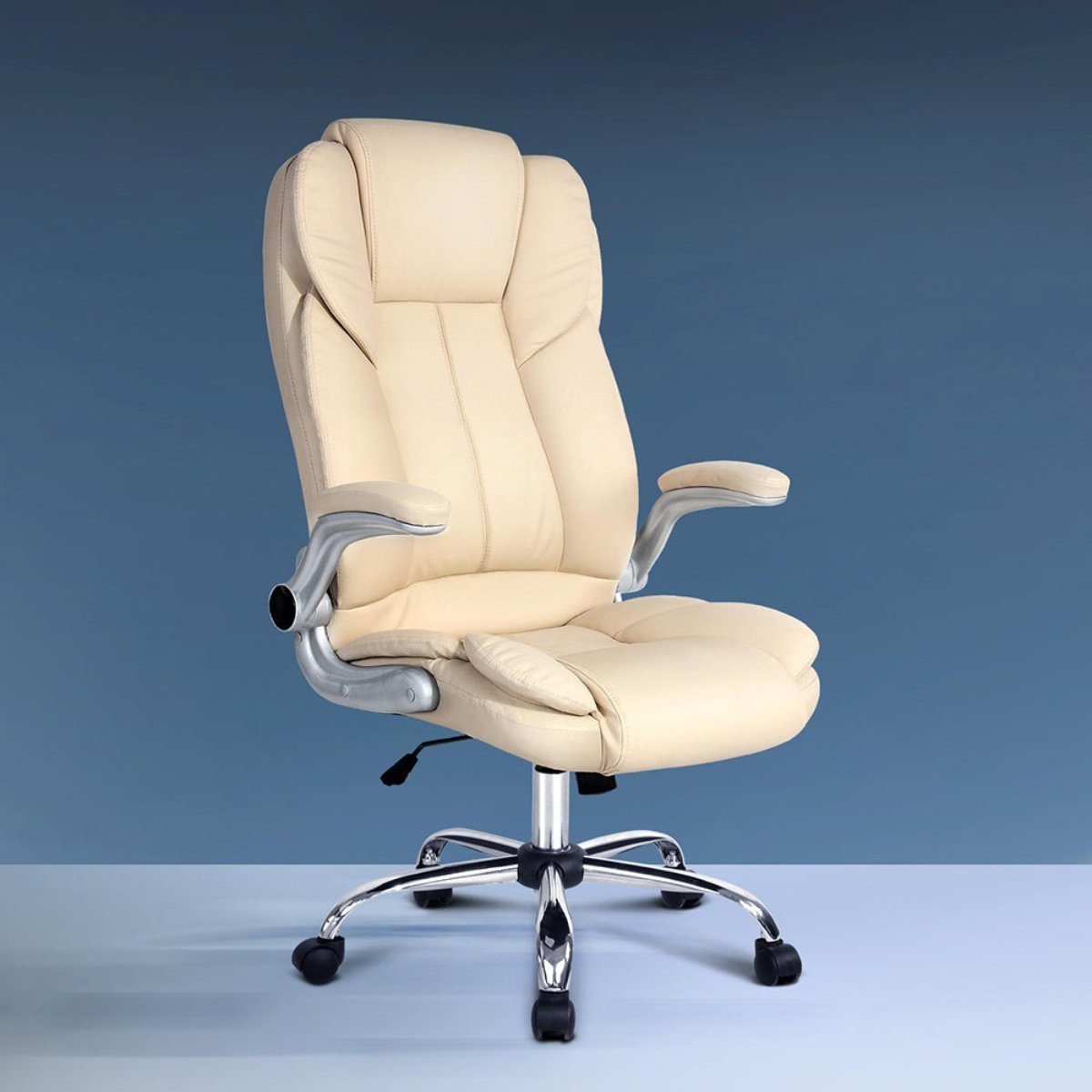
PU Leather Executive Office Chair Beige
Built-in lumbar backing and a 150kg rating in a colourway most ergonomic chairs skip.
CHECK CURRENT PRICE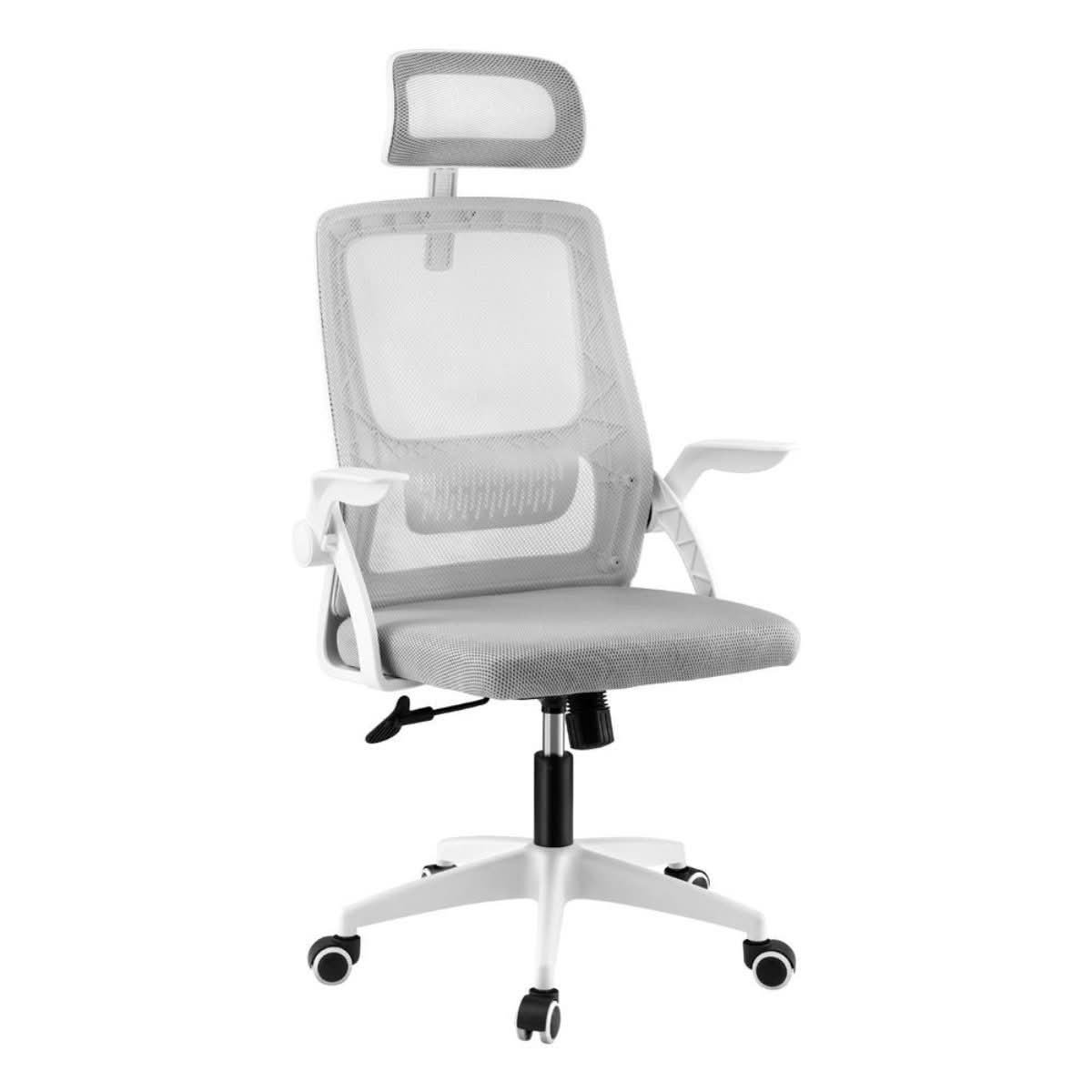
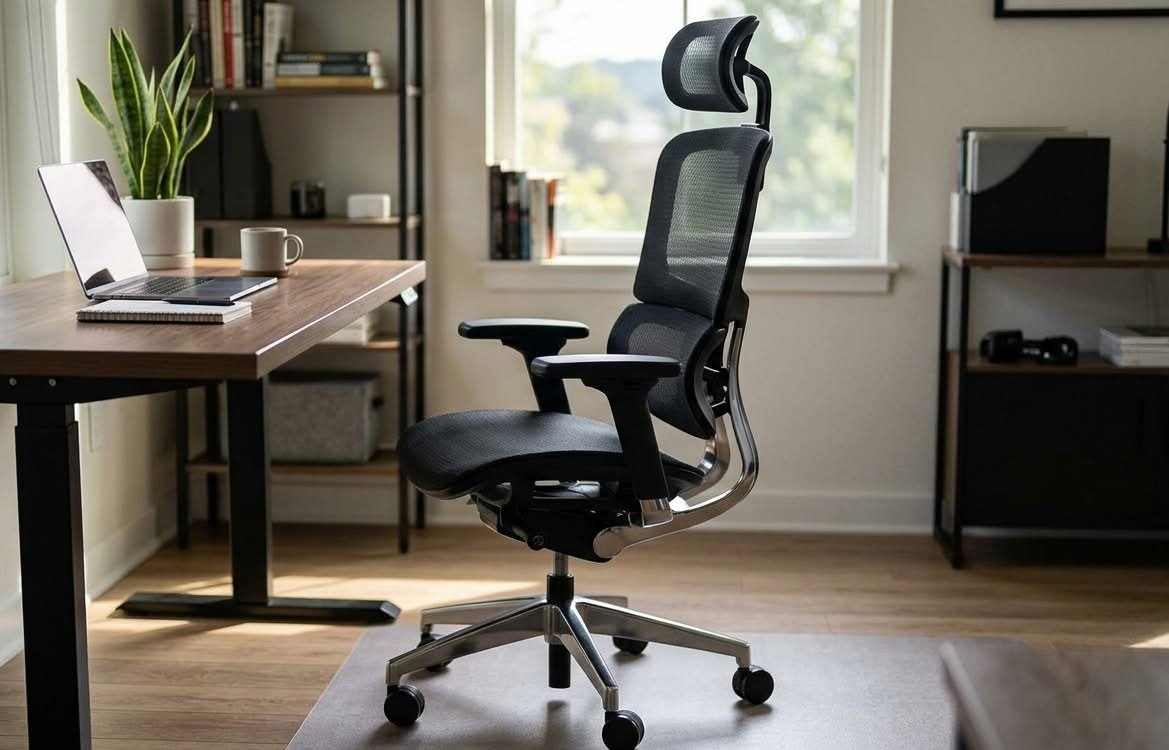
Ergonomic Office Chair with Adjustable Headrest
A headrest that adjusts for angle and height, plus built-in lumbar support on a mesh back.
CHECK CURRENT PRICE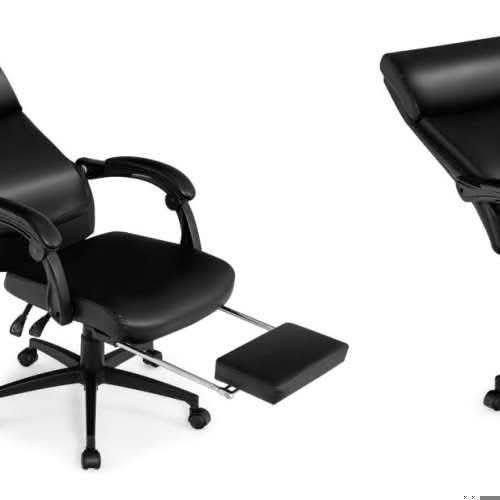
Ergonomic Executive Office Chair with Retractable Footrest
Reclines to 145 degrees on a Class-3 SGS-certified gas lift with a retractable footrest.
CHECK CURRENT PRICEBest Office Chairs for Back Pain in Australia Compared
| Product | Link | Type | Best For | Key Spec |
|---|---|---|---|---|
| Mesh Ergonomic Office Chair Grey | Check price | Mesh | Best Budget Pick | Adjustable lumbar, 120kg cap. |
| Executive Ergonomic Chair with Footrest | Check price | Executive | Best for Short Recovery Breaks | 90 to 135-degree recline, footrest |
| PU Leather Executive Office Chair Beige | Check price | Leather Executive | Best Leather Finish | Built-in lumbar, 150kg cap. |
| Ergonomic Office Chair with Adjustable Headrest | Check price | Mesh / Headrest | Best Adjustable Headrest | 90 to 105-degree recline, 150kg cap. |
| High-Back Mesh Ergonomic Office Chair Black | Check price | High-Back Mesh | Best for All-Day High-Back Support | Separated lumbar, 150kg cap. |
| Mesh High-Back Desk Chair | Check price | Mesh | Best Breathable Mesh Design | Adjustable lumbar, 120kg cap. |
| Reclining Chair with Footrest and Headrest | Check price | Reclining | Best Headrest and Footrest Combo | 90 to 135-degree recline, 150kg cap. |
| Ergonomic Chair with Rotating Headrest | Check price | Ergonomic | Best 3D Armrest Adjustment | 3D armrests, 150kg cap. |
| Executive Chair with Retractable Footrest | Check price | Executive | Best for Deep Recline | 105 to 145-degree recline |
| Drafting Chair with Flip-Up Armrest | Check price | Drafting | Best for Standing Desk Height | 57 to 77cm gas lift |
1. Mesh Ergonomic Office Chair Grey – Best Budget Pick
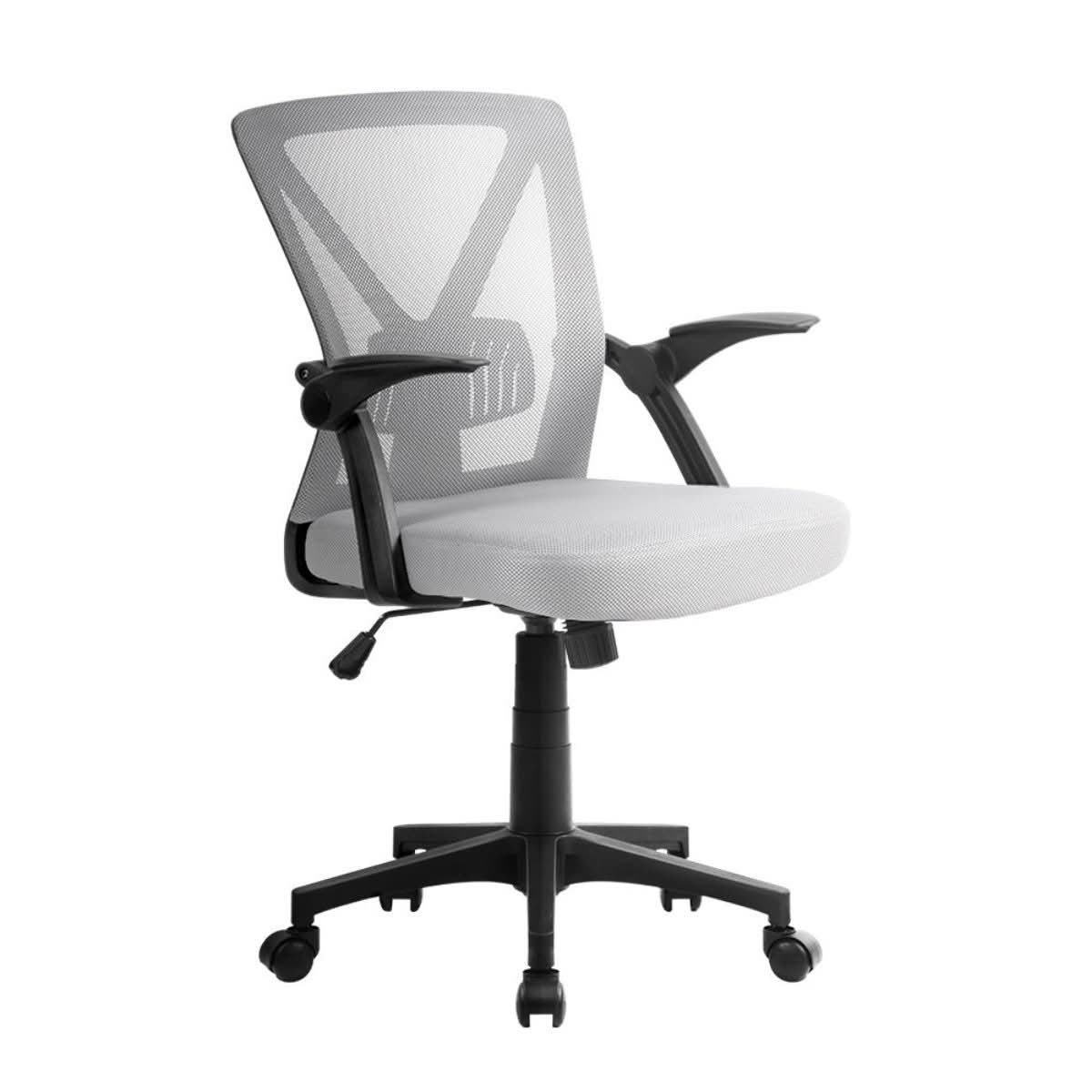
This chair strips back to the two things that actually reduce back pain at this price: a mesh backrest and a lumbar pad that adjusts rather than a foam block moulded into one position. The seat pairs high-density foam with a nylon base rather than the steel frames used further up this list.
Flip-up armrests drop out of the way at a desk that doesn’t need them, and the gas lift covers a 61 to 71cm armrest height range alongside the usual seat-height adjustment. A 120kg weight rating and 360-degree swivel round out a genuinely basic but functional build.
Someone testing whether an adjustable-lumbar chair actually helps their back, before spending three times as much, has the least to lose here; the trade-off is a nylon base and a weight rating on the low end of this guide.
Pros
- Adjustable lumbar support
- Mesh back breathes better than foam
- Lowest price point in this guide
Cons
- 120kg weight rating, lowest in this guide
- Nylon base rather than steel
Key specs: Mesh and foam construction, adjustable lumbar support, 90-degree flip-up armrests, 120kg weight capacity.
CHECK CURRENT PRICE2. Executive Ergonomic Chair with Footrest – Best for Short Recovery Breaks
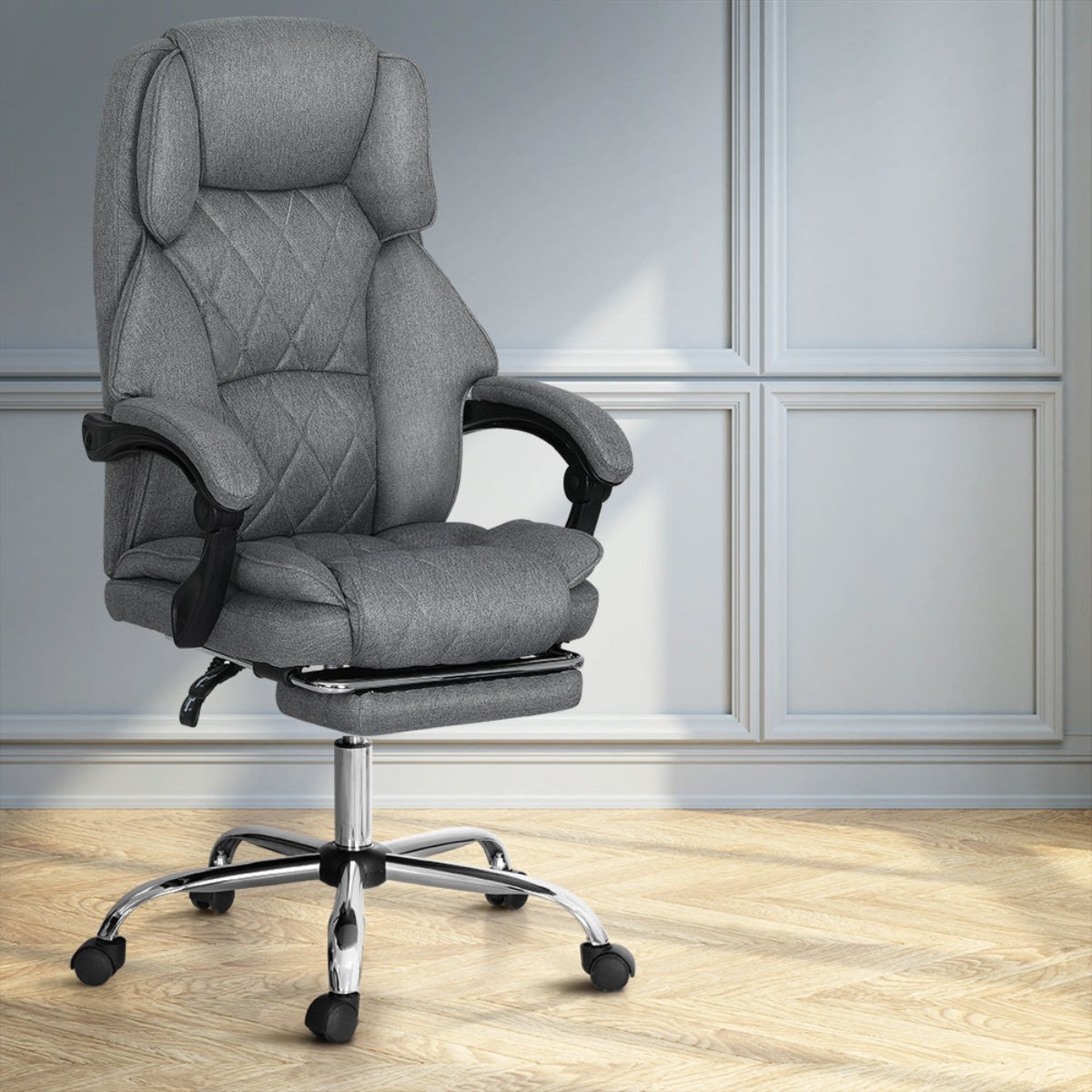
A retractable footrest tucks under the seat of this chair, built in rather than sold separately, on a contoured high-back shell finished in PU and foam over a plywood base.
Recline runs 90 to 135 degrees and locks at any point in that range, with a chrome five-star base and a 10cm gas-lift adjustment. The footrest is the detail that matters most for back pain specifically: propping the legs up for ten minutes shifts weight off the lower spine in a way a stationary desk chair can’t.
This suits anyone who takes short breaks between long sitting stretches rather than one continuous eight-hour sit; the fixed high-back shell doesn’t offer the lumbar adjustment the mesh options further down this list do.
Pros
- Built-in retractable footrest
- 90 to 135-degree locking recline
- Chrome five-star base
Cons
- No adjustable lumbar mechanism, fixed contoured shape
- PU upholstery can crease over time
Key specs: PU leather, foam and plywood construction, 90 to 135-degree recline, retractable footrest, 120kg weight capacity.
CHECK CURRENT PRICE3. PU Leather Executive Office Chair Beige – Best Leather Finish
Beige is a genuinely rare colourway in this category, most ergonomic chairs default to black or grey, and this one pairs it with a built-in lumbar backing rather than a separate cushion.
Retractable padded armrests and an SGS-tested gas lift back up the leather finish with real adjustment, and the 150kg weight rating matches the highest-capacity chairs in this guide despite the lighter colour usually associated with less durable builds.
The lighter upholstery is the reason to pick this over the grey or black options elsewhere in this list; anyone in a shared or high-traffic office should weigh how a pale seat handles daily wear before committing to it.
Pros
- 150kg weight rating
- Built-in lumbar backing
- Retractable padded armrests
Cons
- Light colourway shows wear and marks more visibly
- No mesh ventilation
Key specs: PU leather upholstery, built-in lumbar support, SGS-tested gas lift, 150kg weight capacity.
CHECK CURRENT PRICE4. Ergonomic Office Chair with Adjustable Headrest – Best Adjustable Headrest
The headrest on this one adjusts for both angle and height, a combination most chairs in this guide only offer as one or the other, sitting on a mesh-and-foam backrest with built-in lumbar support underneath it.
Recline covers 90 to 105 degrees, a narrower range than the deep-recline options later in this list, and flip-up armrests let it slide under a desk that doesn’t have room to spare. The 150kg weight rating holds up against the heavier-duty chairs in this guide despite the mesh build.
Anyone who spends part of the day on video calls looking slightly down at a screen benefits from the two-axis headrest more than from extra recline; the 90 to 105-degree range won’t suit someone who wants to lean back past a working posture.
Pros
- Headrest adjusts for both angle and height
- 150kg weight rating
- Flip-up armrests
Cons
- Recline capped at 105 degrees, narrower than most of this guide
- No seat-depth adjustment
Key specs: Mesh and foam construction, built-in lumbar support, adjustable headrest, 90 to 105-degree recline, 150kg weight capacity.
CHECK CURRENT PRICE5. High-Back Mesh Ergonomic Office Chair Black – Best for All-Day High-Back Support
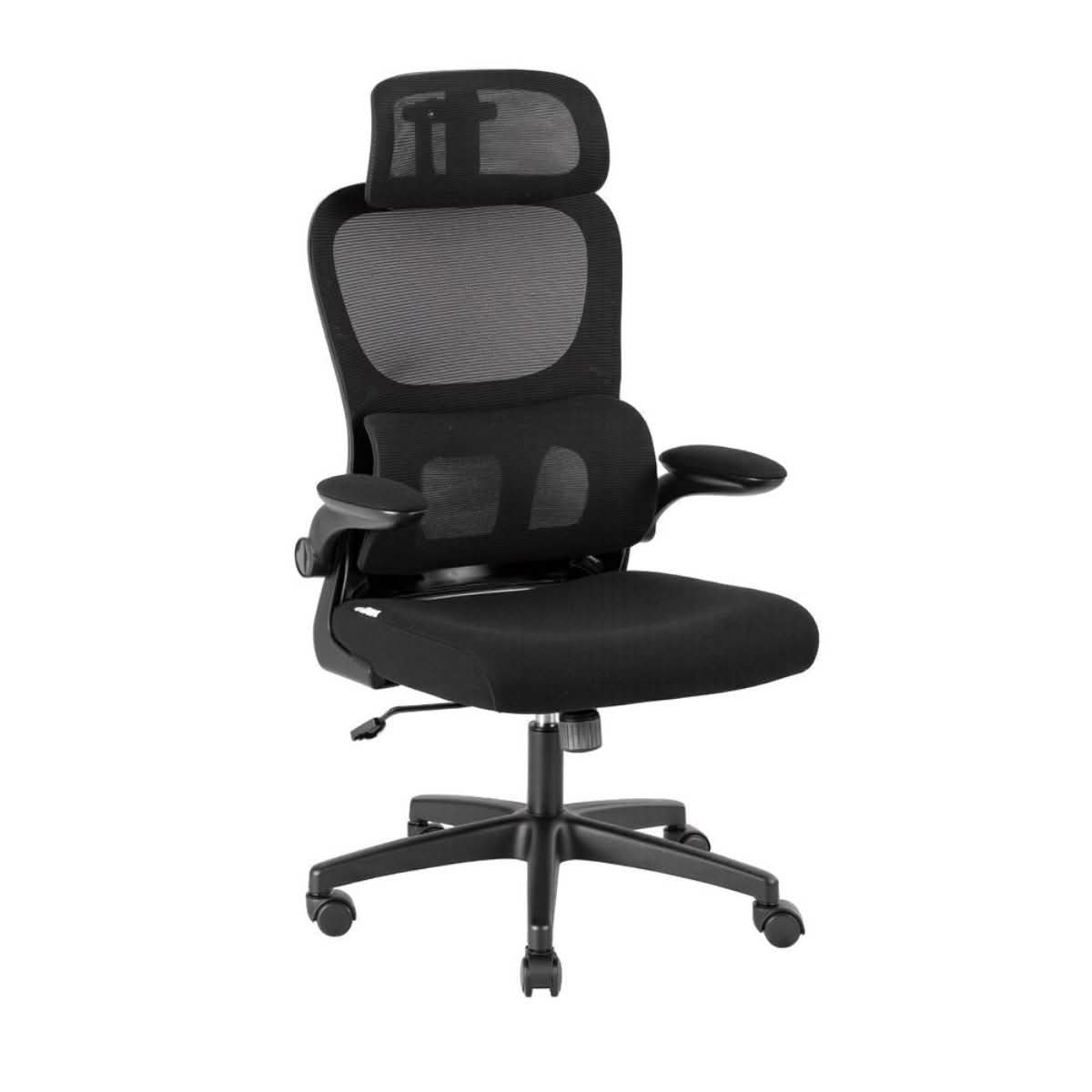
A separated lumbar zone sits low on this chair’s backrest, woven denser than the mesh around it rather than added as a pad, and the high-back shell extends support up past the shoulder blades.
Multi-dimensional headrest adjustment and flip-up armrests round out a build aimed squarely at long, uninterrupted sitting rather than short bursts. An 8cm height-adjustment range and chrome steel base handle the day-to-day mechanics.
This is the pick for a genuine eight-hour desk day rather than a hybrid or part-time setup; the separated lumbar zone needs a few days to feel normal for anyone used to a padded cushion instead.
Pros
- Separated lumbar zone woven into the mesh itself
- High-back shell supports up past the shoulder blades
- Multi-dimensional headrest adjustment
Cons
- Firmer initial feel than a padded lumbar cushion
- Highest price point in this guide
Key specs: Breathable mesh upholstery, chrome steel base, separated lumbar support, multi-dimensional headrest, 150kg weight capacity.
CHECK CURRENT PRICE6. Mesh High-Back Desk Chair – Best Breathable Mesh Design
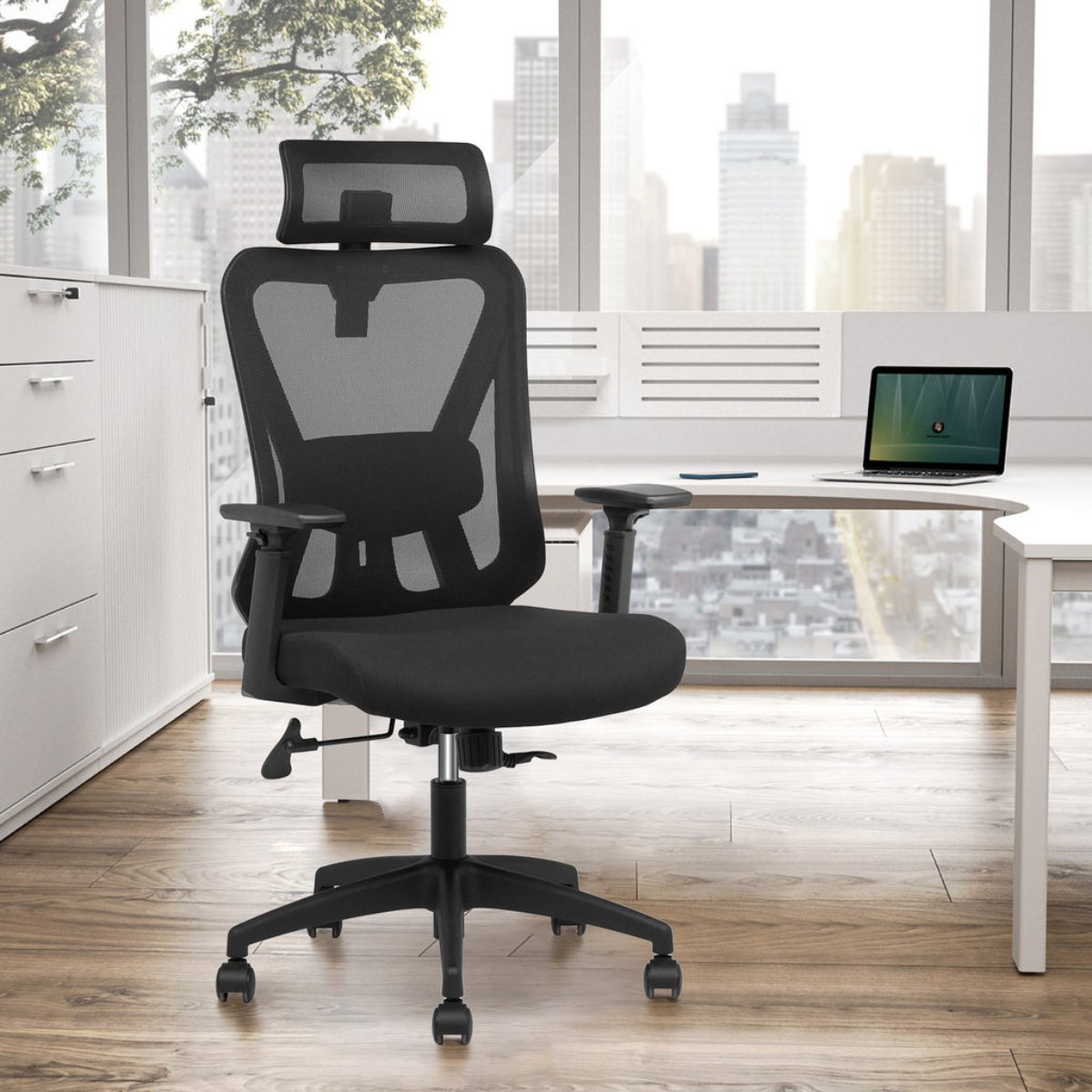
Sponge padding sits under a mesh cover on this chair’s seat and back, with the adjustable lumbar support built into the backrest rather than resting on top of it.
Armrests move up and down across a 5cm range, and the gas lift adjusts seat height from 44 to 54cm, a shorter span than some of this guide’s other entries but enough for most desk heights. A 120kg rating and 15.2kg chair weight keep it towards the lighter end of the field.
The mesh build suits a warmer room or a sitter who runs hot more than it suits someone chasing maximum plushness; anyone wanting a softer seat should look at the leather or PU options higher up this list instead.
Pros
- Fully mesh construction for airflow
- Adjustable lumbar support built into the backrest
- Lighter chair weight than most in this guide
Cons
- 120kg weight rating
- Armrest height range is shorter than some rivals
Key specs: Sponge, metal and plastic construction, adjustable lumbar support, 44 to 54cm gas-lift range, 120kg weight capacity.
CHECK CURRENT PRICE7. Reclining Chair with Footrest and Headrest – Best Headrest and Footrest Combo
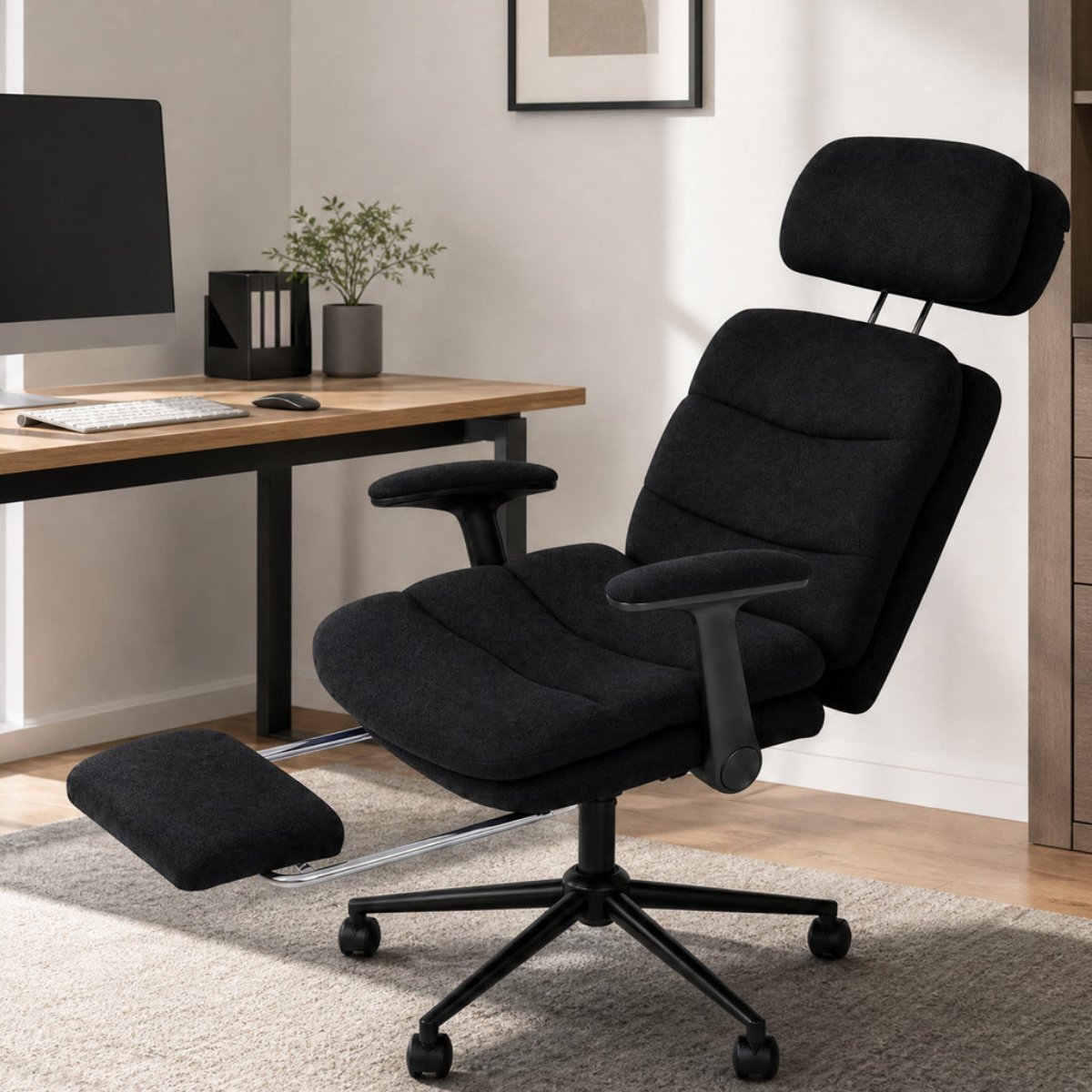
This chair pairs a five-level adjustable headrest with a built-in retractable footrest, the same combination split across two separate entries elsewhere in this guide, on a teddy-fabric shell over high-resilience sponge.
Recline runs 90 to 135 degrees with a seat height range of 52 to 62cm, and flip-up armrests keep the footprint desk-friendly when the footrest isn’t extended. The 150kg weight rating matches the higher-capacity chairs on this list.
Getting both features on one chair instead of choosing between them is the appeal here; the teddy-fabric upholstery runs warmer than the mesh options and won’t suit every climate.
Pros
- Five-level adjustable headrest and built-in footrest together
- 90 to 135-degree recline
- 150kg weight rating
Cons
- Teddy-fabric upholstery traps more heat than mesh
- Bulkier footprint with the footrest extended
Key specs: Teddy fabric upholstery, high-resilience sponge, 90 to 135-degree recline, 52 to 62cm seat height range, 150kg weight capacity.
CHECK CURRENT PRICE8. Ergonomic Chair with Rotating Headrest – Best 3D Armrest Adjustment
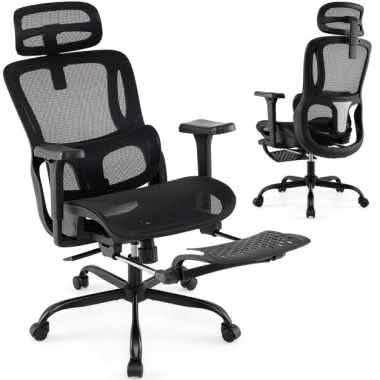
The armrests on this chair move on three axes, 360-degree rotation plus 7cm of vertical and 6.5cm of horizontal travel, well past the simple flip-up hinges used on most of the rest of this guide.
Lumbar support adjusts 4cm vertically, recline locks at 90, 115 or 135 degrees rather than floating freely, and the headrest adds 9cm of height travel with 45-degree rotation. A 150kg seat rating and separate 50kg footrest rating cover the whole build.
Anyone whose desk setup varies through the day, different keyboard height, different monitor angle, gets more out of the 3D armrests here than from any other single feature in this guide; the locked recline positions won’t suit someone who prefers to recline freely.
Pros
- 3D armrests with rotation plus vertical and horizontal travel
- Adjustable headrest and 4cm lumbar adjustment
- Locking recline at three fixed angles
Cons
- Recline locks at set positions rather than floating
- Footrest rated lower than the main seat
Key specs: Mesh fabric, nylon and metal construction, 3D armrests, 4cm lumbar adjustment, 150kg seat capacity.
CHECK CURRENT PRICE9. Executive Chair with Retractable Footrest – Best for Deep Recline
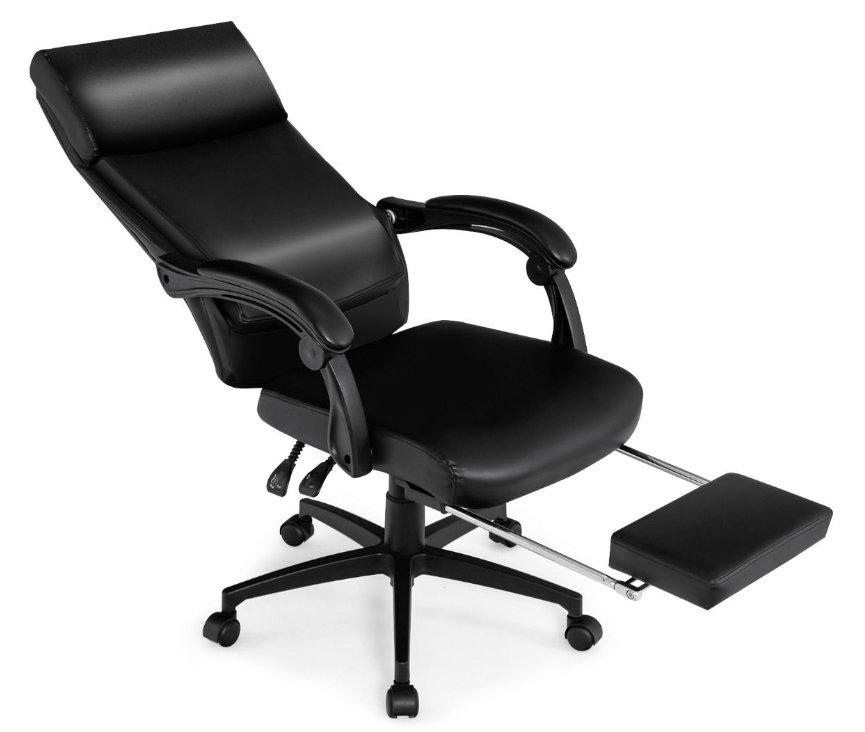
Recline on this chair reaches 145 degrees, the deepest range in this guide, on an S-shaped backrest finished in PVC and spliced leather rather than mesh.
A retractable footrest extends 37cm and a Class-3 SGS-certified gas lift backs up the recline range with a genuine safety rating rather than a generic mechanism. The additional headrest and 150kg weight capacity round out a build aimed at maximum recline over ventilation.
This is the pick for someone who wants to tip back close to horizontal during a break without leaving the desk chair; the leather-look upholstery runs warmer than the mesh chairs earlier in this list, a real consideration in northern Australia’s humidity.
Pros
- 145-degree recline, deepest in this guide
- Class-3 SGS-certified gas lift
- Retractable footrest extends 37cm
Cons
- PVC and spliced leather runs warmer than mesh
- No adjustable lumbar mechanism beyond the S-shaped backrest
Key specs: PVC and spliced leather upholstery, 105 to 145-degree recline, Class-3 SGS gas lift, 150kg weight capacity.
CHECK CURRENT PRICE10. Drafting Chair with Flip-Up Armrest – Best for Standing Desk Height
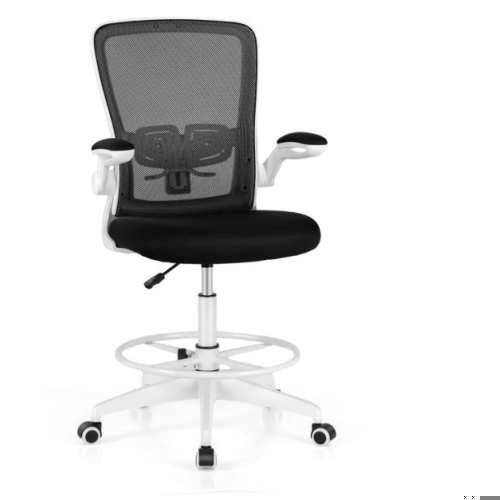
This chair’s gas lift reaches 77cm, well above the seat height of every other entry in this guide, built for a standing desk lowered to sitting height rather than a standard fixed desk.
The curved backrest carries adjustable lumbar support in mesh fabric over a polypropylene frame, and a five-claw base with smooth-rolling casters handles the taller stance without feeling unstable. A 120kg weight rating and flip-up padded armrests round out the build.
This is the only chair in this guide worth checking against a standing desk’s lowest height setting before buying; anyone on a fixed-height desk gets no benefit from the extended gas lift and should pick from the standard-height options instead.
Pros
- 57 to 77cm gas-lift range suits standing desks
- Adjustable lumbar support
- Five-claw base with smooth-rolling casters
Cons
- 120kg weight rating
- Tall stance needs checking against a specific desk height before buying
Key specs: Mesh fabric, sponge and polypropylene construction, 57 to 77cm gas-lift range, adjustable lumbar support, 120kg weight capacity.
CHECK CURRENT PRICEHow to Choose an Office Chair for Back Pain
Lumbar mechanism matters more than price point. A fixed lumbar bump only helps if it happens to sit at the right height for a particular back; height-adjustable pads and separated mesh zones both flex to fit the sitter instead of the other way around.
Recline range should match how the chair actually gets used. A 90 to 105-degree range covers upright desk work and a shallow lean-back; anything reaching towards 145 degrees, like the deepest-reclining pick in this guide, works better as an occasional break position than a constant sit.
Weight capacity affects the gas lift and recline mechanism long before it affects the frame itself. Every chair here holds between 120kg and 150kg, and sitting consistently near that ceiling shortens the working life of both parts faster than the upholstery wears out.
Material comes down to mesh versus leather or PVC. Mesh breathes better through an Australian summer and suits anyone prone to overheating at a desk; leather and PVC finishes look sharper and wipe clean faster but hold body heat longer during a long sitting stretch. Persistent neck tension alongside lower back pain is worth checking separately, our guide to the best pillows for neck pain in Australia covers the pillow side of that combination, since a chair only fixes the daytime half of it.
Headrest and armrest adjustment matter most for anyone on video calls or working from a laptop at an awkward height. A headrest that adjusts for both angle and height, or armrests that move on more than one axis, correct posture problems a basic mesh back can’t fix on its own.
Assembly and warranty are worth checking before buying rather than after. Every chair in this guide ships flat-packed, and warranty terms range from a standard return window up to a full year of cover on some of the reclining and headrest models further up this list; a longer warranty is worth more on a chair with a gas lift and recline mechanism than on furniture with nothing to fail.
Frequently Asked Questions
What type of office chair is best for back pain?
A chair with an adjustable lumbar mechanism, either a height-adjustable pad or a separated mesh zone, that lines up support with the actual curve of the lower back rather than a fixed pad moulded into one position.
What weight capacity should an ergonomic office chair have?
Most ergonomic office chairs sold in Australia are rated between 120kg and 150kg. Sitting consistently near the upper limit of that rating shortens the working life of the gas lift and recline mechanism faster than the upholstery wears out.
Is a mesh or leather office chair better for back pain?
Mesh chairs with a separated lumbar zone flex to the sitter’s shape and breathe better through summer. Leather and PVC chairs usually pair a fixed or built-in lumbar shape with a sharper look, and hold body heat longer during a long sitting stretch.
What recline angle is best for back pain?
A 90 to 105-degree range covers upright desk work without straining the lower back. Deeper recline, up to 145 degrees on some chairs, suits an occasional break position rather than a constant working posture.
Do office chairs for back pain need a headrest?
Not for lower back pain specifically, but a headrest that adjusts for angle and height helps with the neck and upper back tension that often accompanies long sitting, particularly for video calls or laptop use at an awkward angle.
How long should an ergonomic office chair last?
A chair rated within its recommended weight capacity and assembled correctly typically holds up for several years before the gas lift or recline mechanism wears out. Warranty length, from a basic return window up to a full year on some models, is a reasonable guide to expected durability.
Verdict
The Ergonomic Office Chair with Adjustable Headrest earns its place at the top of this guide by combining a genuinely adjustable lumbar mechanism with a 150kg rating that outlasts most of the field. Anyone chasing a sharper look without losing support should look at the PU Leather Executive Chair’s built-in lumbar backing instead, and a taller desk setup is better served by the Drafting Chair’s 57 to 77cm gas-lift range than by squeezing a standard-height chair under a standing desk.