Whether a yoga mat is made from foam, natural rubber or cork decides how it feels underfoot and how it grips once a hand or foot starts to sweat, and that material choice matters more than thickness for whether a mat actually stays put during a class. Yoga mats in Australia are cushioned surfaces designed to provide grip, comfort and a consistent boundary for a practice, ranging from thin foldable travel mats to thick cushioned mats built for daily home use.
Yoga mats fall into three broad material categories. Foam mats, made from TPE or NBR, are the most common and generally the most affordable, offering reliable cushioning at a range of thicknesses. Natural rubber mats grip more consistently as they warm up and are worked, and often carry a premium price alongside that performance. Cork mats pair a natural cork surface with a foam or rubber backing, becoming grippier rather than slicker as sweat builds up, which suits hot or dynamic practice.
Mat thickness typically ranges from around 1.5 millimetres, or roughly a sixteenth of an inch, for an ultra-packable travel mat up to 12.7 millimetres, or about half an inch, for maximum cushioning on a hard floor. Beyond thickness, the criteria that matter are grip when dry versus wet, mat width for taller or broader users, and whether alignment lines are printed on the surface.
This guide compares foam, rubber and cork yoga mats from Australian retailers and Amazon, weighing grip and material against thickness and portability rather than judging on brand name alone. Anyone building out a broader home workout setup at the same time may also want to check our guide to the best adjustable dumbbells for strength work that pairs naturally with a regular yoga practice.
Quick Picks
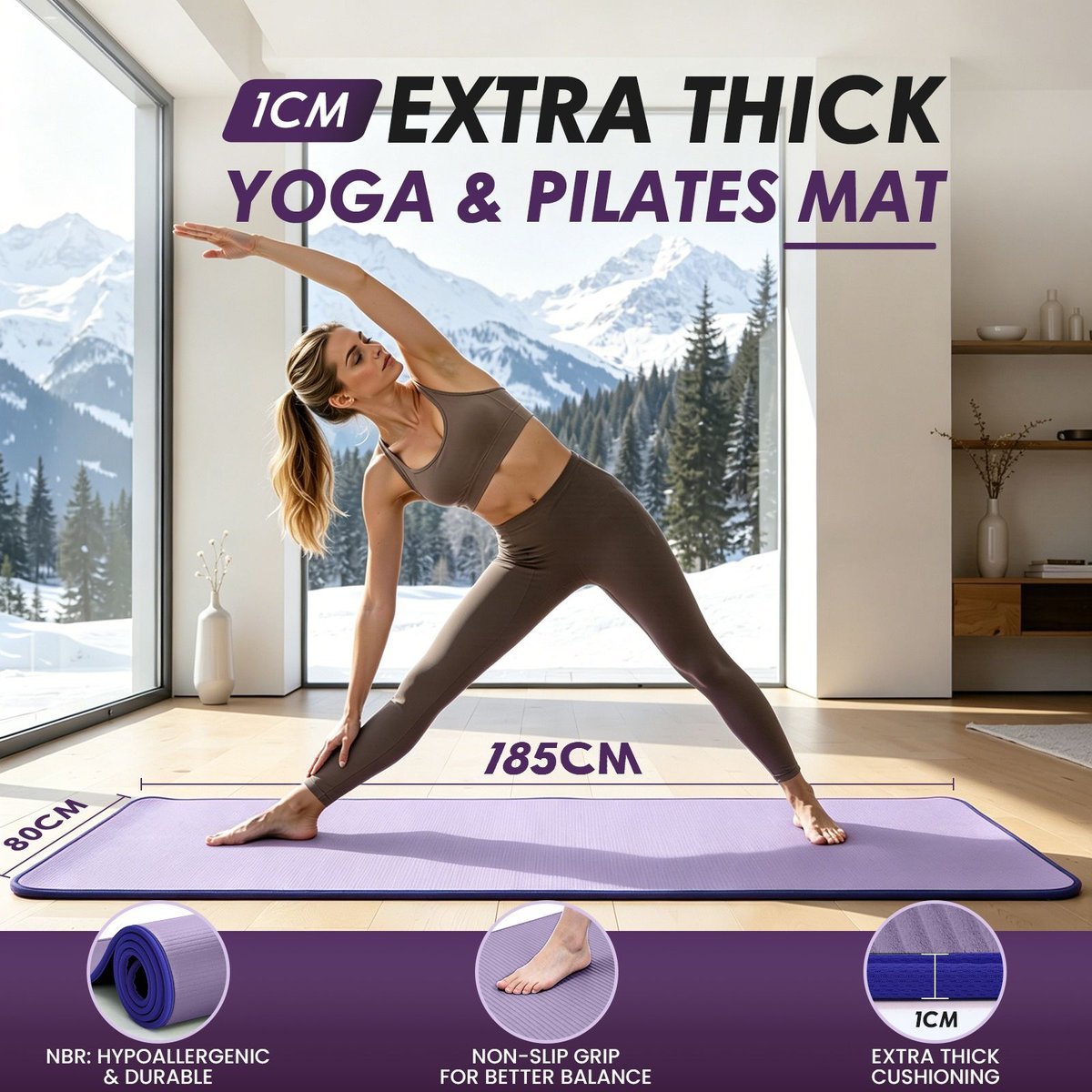
10mm Thick NBR Yoga Mat XL
An extra-wide 80cm mat with generous 10mm NBR cushioning at a budget price.
CHECK CURRENT PRICEBest Yoga Mats Australia Compared
| Product | Link | Type | Best For | Key Spec |
|---|---|---|---|---|
| 10mm Thick NBR Yoga Mat XL | Check price | Extra-Wide NBR Mat | Budget Full-Body Coverage | 10mm Thick, NBR, 185x80cm XL |
| Amazon Basics Extra Thick Yoga Mat | Check price | Extra Thick Foam Mat | First-Time Buyers | 12.7mm Thick Foam, Carrying Strap |
| HERUI Yoga Mat with Alignment Lines | Check price | TPE Mat with Alignment Lines | Learning Correct Positioning | 6mm TPE, Alignment Lines, Reversible |
| METEOR 6mm TPE Yoga Mat | Check price | TPE Mat with Textured Grip | Durability and Grip | 6mm TPE, 3-Layer Tear-Proof Construction |
| PROIRON NBR 10mm Yoga Mat | Check price | Extra-Thick NBR Mat | Joint Support on Hard Floors | 10mm NBR, High-Density Anti-Tear |
| Gaiam Cork Yoga Mat | Check price | Natural Cork Mat | Hot Yoga and Sweaty Practice | 5mm, Natural Cork Top, TPE Backing |
| Manduka eKO Superlite Travel Yoga Mat | Check price | Ultra-Thin Travel Mat | Studio Classes and Travel | 1.5mm, Natural Tree Rubber |
| Liforme Classic Yoga Mat | Check price | Premium Alignment Mat | Serious Alignment-Focused Practice | 4.2mm, Natural Rubber, Patented Alignment Markers |
1. 10mm Thick NBR Yoga Mat XL – Best Budget Extra-Wide Mat
The 80cm width is the standout spec here, noticeably wider than the 60 to 66cm most mats on this list settle for. That extra room either side matters more than it sounds during any pose that spreads the arms or legs beyond a standard mat’s edge, which otherwise means a hand or foot landing on bare floor.
NBR foam at 10mm gives genuine cushioning for knees and hips during floor work, closer in feel to a padded exercise mat than a thin travel mat. The trade-off for that thickness and width is bulk: rolled up, it is noticeably larger and heavier than the slimmer mats further down this list.
It is a straightforward budget mat without alignment lines or a premium surface texture, built for comfort and coverage rather than precision cueing. For home practice where floor space isn’t tight and comfort matters more than portability, the extra width earns its place over a standard-size budget mat.
Pros
- 80cm width gives noticeably more room than a standard mat
- 10mm NBR foam cushions knees and hips well
- Genuinely budget-priced for the size
Cons
- Bulkier to roll and store than a standard-width mat
- No alignment lines or textured grip surface
Key specs: 10mm thick NBR foam, 185 x 80cm XL size, non-slip surface, eco-friendly material
CHECK CURRENT PRICE2. Amazon Basics Extra Thick Yoga Mat – Best-Selling Budget Pick
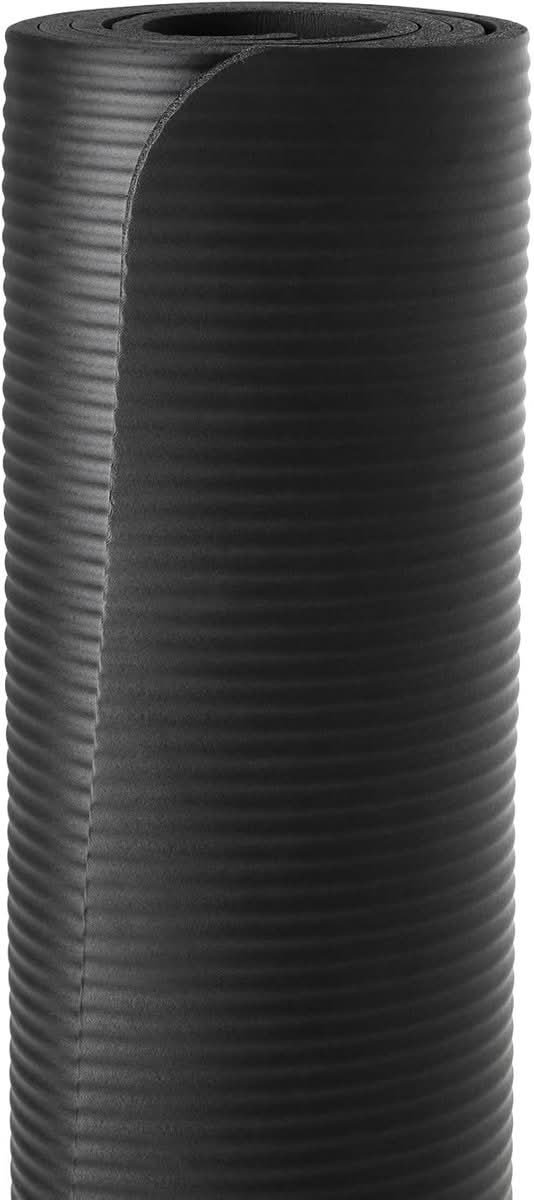
This is the mat most likely to already be sitting in a spare room somewhere, and the review count behind it reflects that: a genuinely enormous number of buyers have put it through daily use rather than a single-session review. At 12.7mm it is one of the thicker foam mats in this guide, prioritising comfort over the firmer, more stable feel a thinner mat gives standing poses.
The included carrying strap is a simple addition but a genuinely useful one, turning a rolled mat into something that can be slung over a shoulder rather than carried awkwardly under an arm. Standard 61cm width suits most body types without the bulk of the extra-wide option above.
The extra thickness that helps knees and hips on the floor works against stability in standing balance poses, where a foot can sink slightly into a thicker foam rather than pressing against a firmer surface. For a beginner prioritising comfort while learning, that trade-off matters less than it would for an established balance-focused practice.
Pros
- Extensive real-world review history from a huge buyer base
- 12.7mm thickness gives generous cushioning for floor poses
- Includes a carrying strap
Cons
- Extra thickness can reduce stability in standing balance poses
- Basic foam surface without alignment guides
Key specs: 12.7mm thick foam, 188 x 61cm, includes carrying strap, standard width
CHECK ON AMAZON3. HERUI Yoga Mat with Alignment Lines – Best Budget Alignment Lines
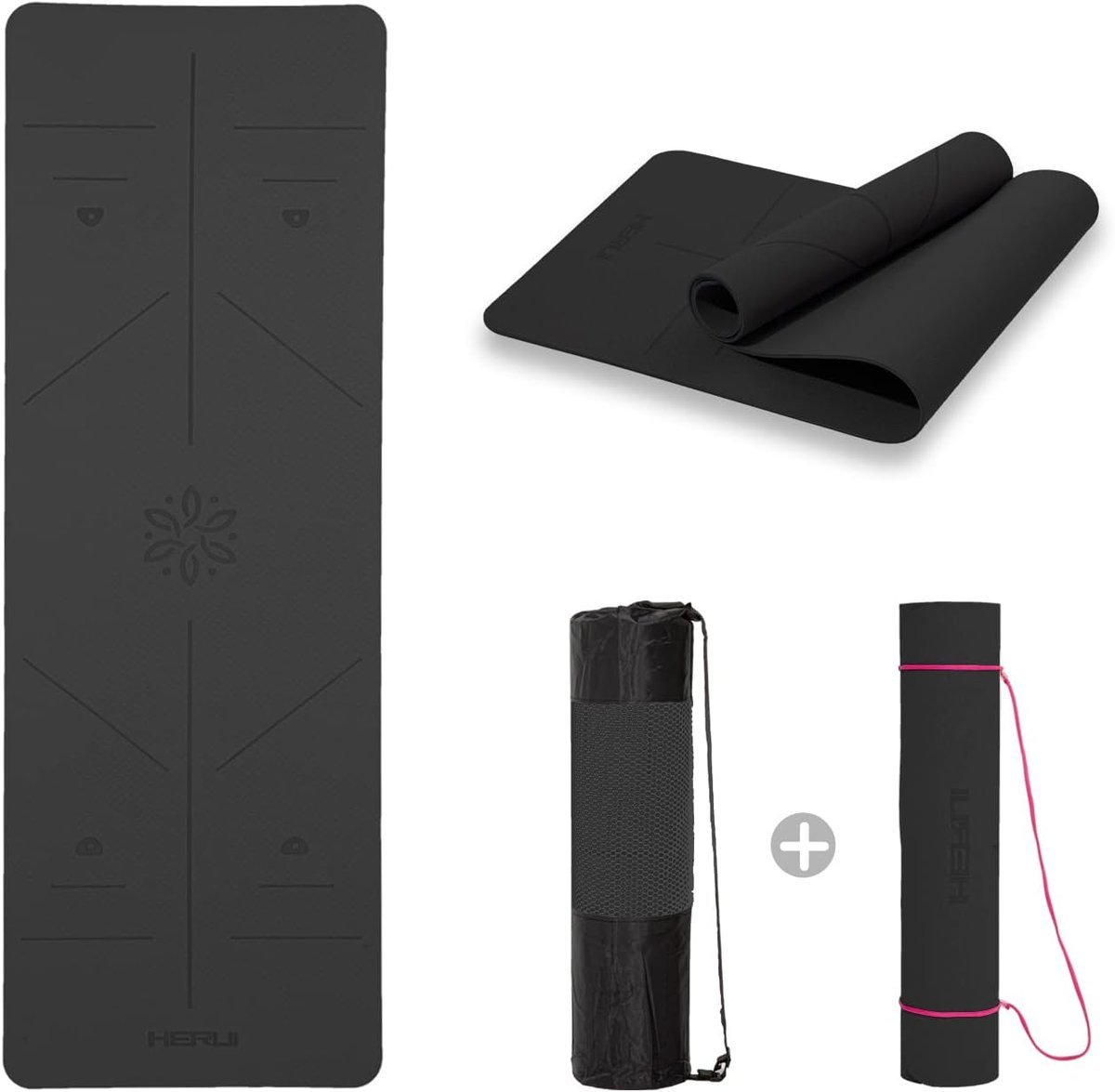
Alignment lines printed across the surface give a visual reference for hand and foot placement, useful for a beginner still building the body awareness that comes naturally with more experience. Rather than guessing whether feet are hip-width apart in a standing pose, the lines offer an actual answer to check against.
The dual-texture reversible design means the mat can be flipped for a different surface feel depending on preference or the type of practice, a small but genuinely practical touch at this price point. TPE foam keeps the mat lighter than the NBR options in this guide, without giving up meaningful cushioning at 6mm.
It sits toward the thinner end of the mats here, which suits a more dynamic or standing-focused practice better than extended floor work on hard flooring. For anyone specifically trying to correct positioning habits while learning, the printed guides are worth the modest step up from a plain budget mat.
Pros
- Printed alignment lines help with hand and foot placement
- Reversible dual-texture surface
- Lighter than NBR mats at a similar price
Cons
- 6mm thickness gives less cushioning than the thicker mats in this guide
- TPE surface texture is less grippy than natural rubber when sweaty
Key specs: 6mm TPE foam, printed alignment lines, dual-texture reversible sides, includes carry bag
CHECK ON AMAZON4. METEOR 6mm TPE Yoga Mat – Best Tear-Resistant Grip
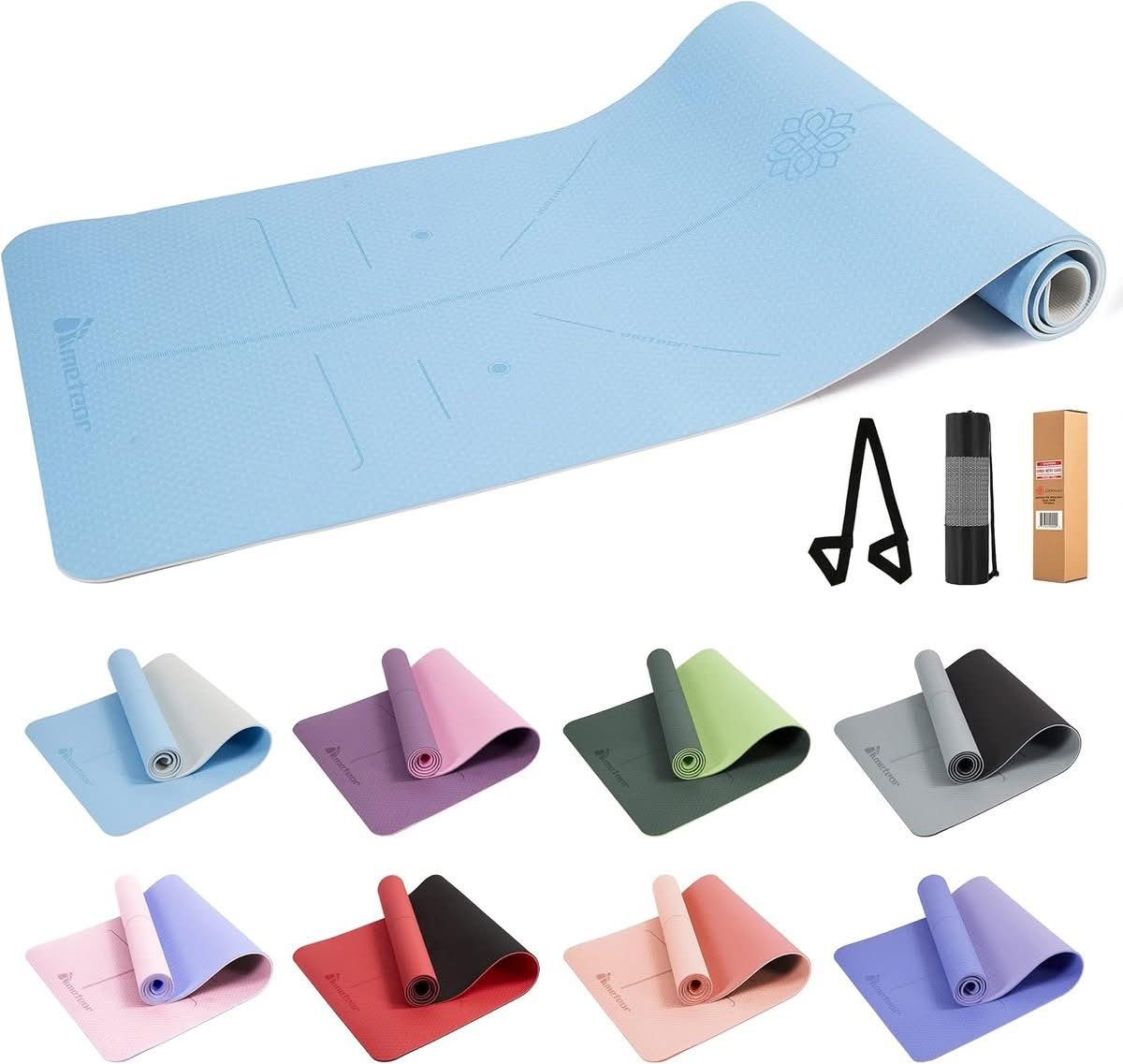
A 3-layer construction is a genuine structural difference from a single-density foam mat, aimed specifically at resisting the tears and punctures that can develop at the edges or fold points of a cheaper mat over time. The textured surface, described as a rock-pattern grip, gives a more tactile hold than a smooth TPE finish.
Alignment lines carry over from the same idea as the HERUI mat above, offering positioning reference without needing a coach or mirror to check against. The combined carry bag and strap covers transport without needing to buy an accessory separately.
It shares the 6mm thickness ceiling most TPE mats in this guide settle at, so anyone specifically wanting maximum floor cushioning should look at the NBR options instead. For a mat built to hold up to regular use without degrading at the edges, the layered construction is the genuine point of difference here.
Pros
- 3-layer construction resists tearing better than single-density foam
- Textured grip surface aids stability
- Includes both carry bag and strap
Cons
- 6mm thickness offers less cushioning than the NBR mats in this guide
- TPE material needs regular cleaning to keep grip effective
Key specs: 6mm TPE foam, 3-layer tear-proof grid construction, textured grip surface, alignment lines, carry bag and strap included
CHECK ON AMAZON5. PROIRON NBR 10mm Yoga Mat – Best Extra-Thick Cushioning
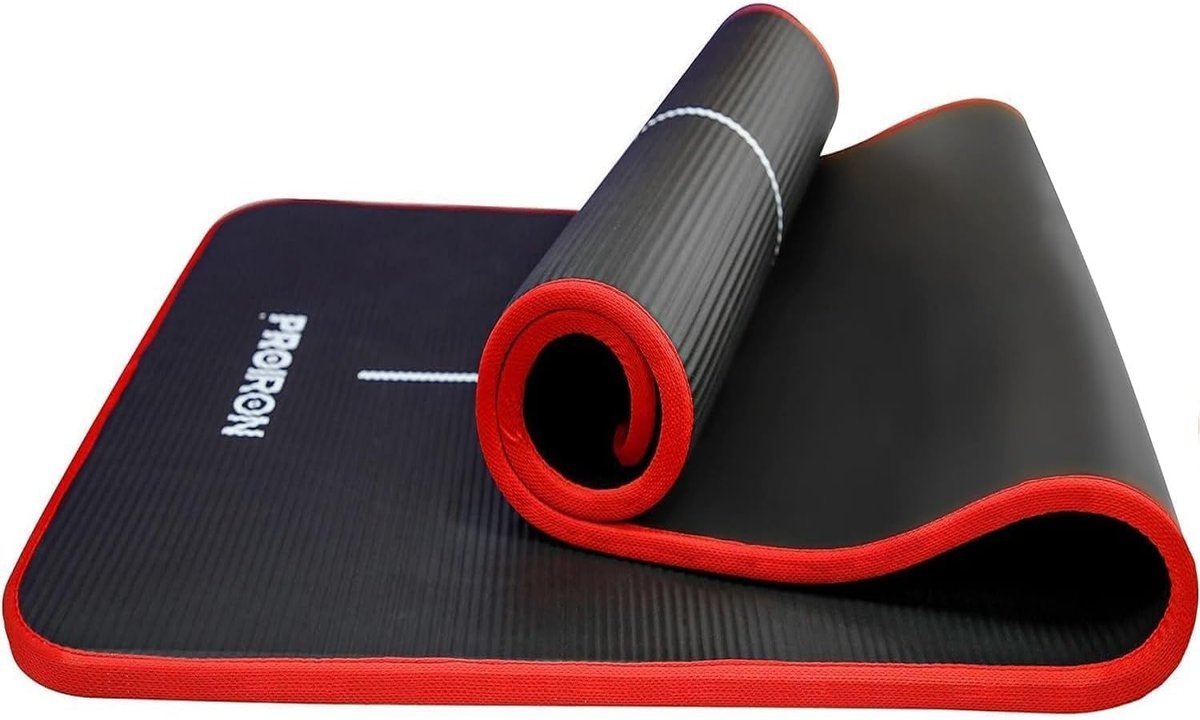
At 10mm and a genuinely noticeable 1.1 kilograms, this is one of the denser mats in this guide, and that extra weight is doing real work underfoot: it stays put on a hard floor better than a lighter foam mat that can shift or bunch during a dynamic sequence. High-density NBR keeps the cushioning from compressing flat the way a cheaper foam can after repeated use.
Reinforced edges specifically target the tear-and-fray point that develops first on a mat that gets rolled and unrolled daily, extending the practical lifespan beyond what the foam density alone would suggest. The included strap makes the extra weight easier to carry rolled rather than left as dead weight under an arm.
That density and weight is the clear trade-off against the lighter TPE mats above, and this is not the pick for anyone prioritising portability for studio classes or travel. For home practice on tile, floorboards or concrete where knee and hip comfort matters most, the extra thickness and density earns its keep.
Pros
- High-density NBR resists compressing flat over time
- Reinforced edges extend practical lifespan
- Stays stable on hard flooring thanks to the extra weight
Cons
- Noticeably heavier than the TPE mats in this guide
- Less practical for carrying to a studio class or travelling
Key specs: 10mm high-density NBR foam, tear-resistant edge reinforcement, carrying strap included, standard 66cm width
CHECK ON AMAZON6. Gaiam Cork Yoga Mat – Best Natural Cork for Hot Yoga
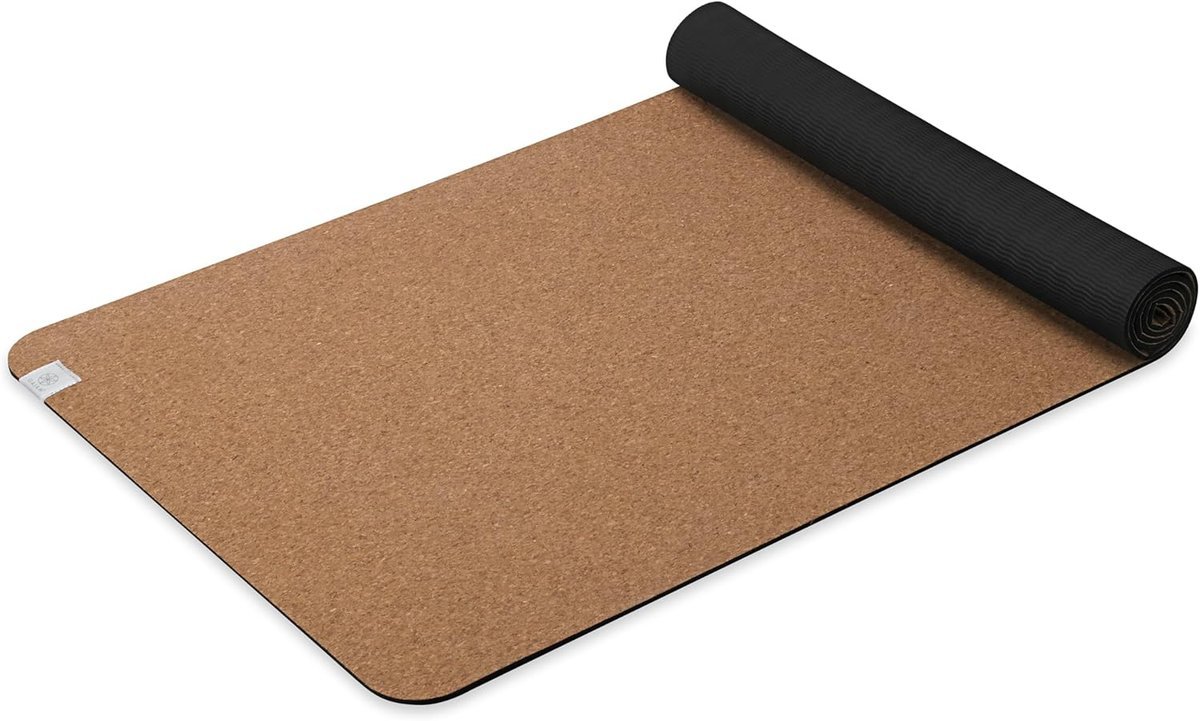
Cork behaves differently underfoot to any foam surface in this guide, and specifically differently when wet: rather than becoming slicker with sweat, a cork surface tends to grip more as moisture increases, which is the exact opposite of how most synthetic mats behave. That makes it a genuinely well-suited surface for hot yoga or any sweaty, dynamic practice.
Natural cork also resists odour build-up better than foam over repeated sweaty sessions, since it does not absorb and hold moisture the way some synthetic surfaces do over time. The TPE backing underneath provides the cushioning and floor grip that cork alone would not offer.
At 5mm it is thinner than the NBR mats in this guide, prioritising surface feel and grip over deep cushioning, which suits a standing and flow-based practice better than extended time on knees. For anyone whose main complaint about a regular mat is losing grip partway through a sweaty class, this solves that specific problem directly.
Pros
- Cork surface grips better, not worse, when wet with sweat
- Natural material resists odour build-up over time
- TPE backing adds cushioning and floor grip
Cons
- Thinner profile than the NBR mats in this guide
- Natural cork surface costs more than a basic foam mat
Key specs: 5mm thick, natural cork surface, TPE backing layer, resists sweat and odour
CHECK ON AMAZON7. Manduka eKO Superlite Travel Yoga Mat – Best Lightweight Travel Mat
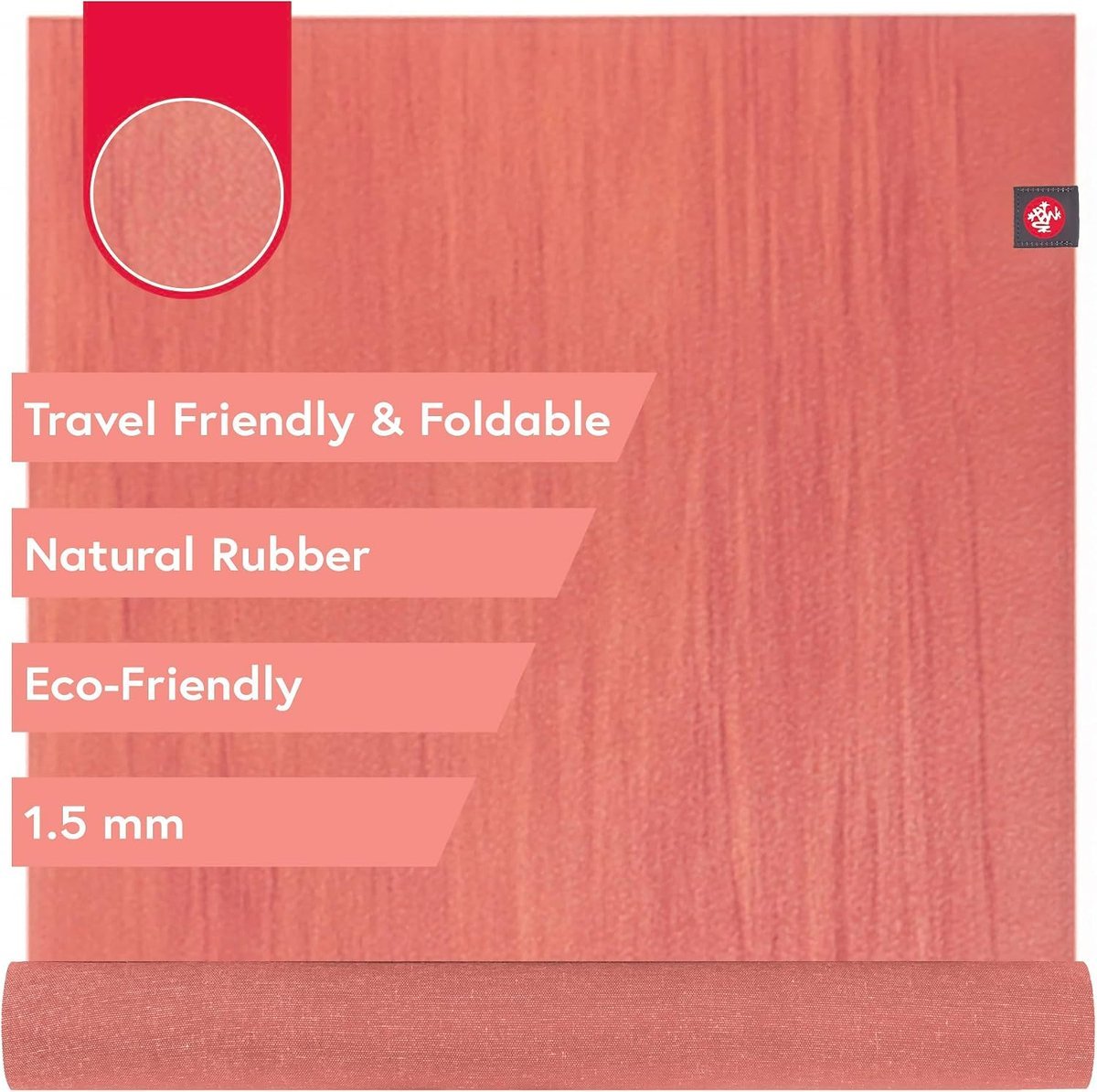
Manduka carries genuine standing among studio-going yogis, and this travel version strips the brand’s usual mat down to 1.5mm specifically to fold small and pack light rather than compete on cushioning. It folds rather than only rolling, which matters for fitting into a suitcase or day bag in a way a rolled 10mm mat simply cannot.
Natural tree rubber gives a genuinely different grip character to the synthetic mats in this guide, developing a tackier hold the more it is used rather than staying static from day one. Being 99% latex-free addresses a real concern for anyone with a latex sensitivity who still wants a natural rubber surface.
At 1.5mm there is essentially no cushioning to speak of, so this is built specifically as a layer over a studio’s own mat or a soft surface, not a standalone floor mat for home practice on hard tile. For frequent studio-goers or travellers who already have a proper mat at home, this solves the packing problem rather than replacing the main mat.
Pros
- Folds small and packs light for travel or studio classes
- Natural rubber grip improves with use
- Reputable studio brand with genuine track record
Cons
- Essentially no cushioning at 1.5mm, not a standalone home mat
- Premium price for what is a thin travel layer, not a full mat
Key specs: 1.5mm thick, natural tree rubber, 99% latex-free, textured grip surface
CHECK ON AMAZON8. Liforme Classic Yoga Mat – Best Premium Alignment Mat
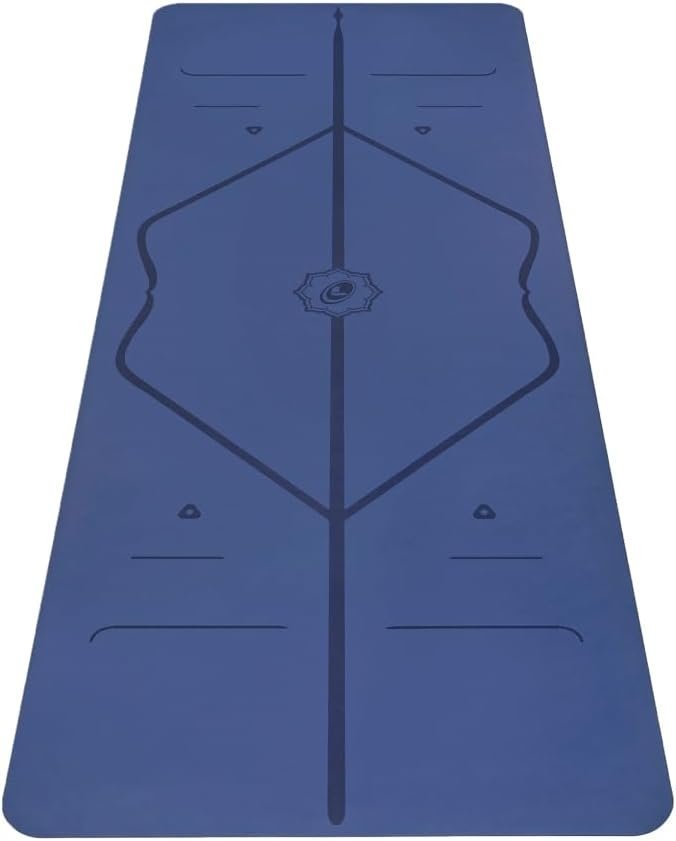
Where the HERUI and METEOR mats above print basic straight alignment lines, this one’s patented marking system maps out a full grid referencing hand, foot and body positioning across a much wider range of poses, developed specifically with alignment-focused teaching in mind rather than added as an afterthought. For anyone working seriously on precision in their practice, that depth of reference is a genuine step beyond a few printed lines.
The grip surface is engineered to hold in both wet and dry conditions, addressing the exact trade-off that usually forces a choice between a grippier dry-only surface and a cork mat’s wet-specific advantage. Natural rubber gives it real heft and floor presence without the mat feeling as dense as the NBR options in this guide.
The price sets it apart from everything else on this list by a wide margin, and a beginner still learning basic poses will get proportionally less value from the advanced alignment system than an experienced practitioner refining their form. For that experienced, alignment-focused buyer, this is the mat built specifically for that use case rather than a general-purpose option stretched to fit it.
Pros
- Patented alignment markings cover a wide range of poses in detail
- Grip surface engineered to hold in both wet and dry conditions
- Genuine premium build quality and natural rubber feel
Cons
- Significantly more expensive than every other mat in this guide
- Advanced alignment system offers less value to complete beginners
Key specs: 4.2mm thick, natural rubber, patented alignment guide markings, wet-and-dry grip surface, includes carry bag
CHECK ON AMAZONHow to Choose a Yoga Mat
Thickness trades cushioning against stability in roughly equal measure. A thicker mat around 10 to 12mm cushions knees and hips well on a hard floor but can make standing balance poses feel less stable, while a thinner mat under 6mm gives a firmer, more grounded feel at the cost of comfort during extended floor work.
Material and grip decide how a mat performs once a session gets sweaty rather than how it feels dry in a shop. Foam mats grip reliably when dry but can become slippery with sweat, natural rubber tends to grip more as it warms up, and cork actively grips better the wetter it gets, which makes it a genuine standout for hot yoga specifically.
Width and length matter more for a taller or broader body than most mats’ marketing suggests. A standard 61cm width and around 173cm length suits an average frame, but anyone over roughly 175cm or built more broadly through the shoulders should look specifically for an extra-wide or extra-long mat rather than assuming a standard size will fit.
Alignment lines printed on the mat surface genuinely help a beginner build body awareness around hand and foot placement, functioning as a visual check against habits that are hard to self-correct without a mirror or instructor. An experienced practitioner generally gets less value from them, since that positioning sense becomes automatic with time.
Portability versus cushioning is close to a direct trade-off across this whole category. An ultra-thin travel mat folds small enough for a suitcase but offers little floor comfort, while a thick home mat cushions properly but is impractical to carry to a studio class regularly. Many practitioners end up owning one of each rather than expecting a single mat to do both jobs well.
Who is using it and where it happens should guide the final call as much as any spec. A shared household mat used by multiple people benefits from an easy-clean surface and a size generous enough for the tallest user, while a personal mat can be sized and chosen around one person’s specific practice. Anyone building recovery into the same routine may also want to check our guide to the best massage guns in Australia for working out tension after a session on the mat.
Frequently Asked Questions
What thickness yoga mat is best for beginners?
A mid-range 6mm mat is a reasonable starting point, balancing enough cushioning for floor poses against enough stability for standing balance work. A complete beginner prioritising comfort over precision can go thicker toward 10mm, while anyone focused on balance-heavy styles benefits from staying closer to 4 to 6mm.
Do yoga mats get more or less slippery with sweat?
It depends on the material. Standard foam mats generally become more slippery as sweat builds up, natural rubber tends to grip more consistently once warmed up, and cork surfaces actively grip better the wetter they get, which is why cork is often recommended specifically for hot yoga.
What size yoga mat do I need if I’m tall?
A standard mat is usually around 173cm long and 61cm wide, which can feel short for anyone over roughly 175cm. Several mats in this guide, including extra-wide and extra-long options, are sized specifically for a taller or broader frame.
Is a natural rubber or cork mat worth the extra cost over foam?
For a regular, sweaty or hot yoga practice, the improved wet grip of natural rubber or cork genuinely changes the experience and is worth the extra cost. For occasional, lower-intensity use, a good foam mat performs perfectly well without the premium.
How do I clean a yoga mat?
A damp cloth with a mild soap solution after sweaty sessions keeps most mat materials in good condition, and full submersion should be avoided unless the manufacturer specifically says the mat can handle it. Letting a mat air dry fully before rolling it up prevents odour and mildew building up inside the roll.
Can one yoga mat work for both yoga and general floor exercises?
Yes, most mats in this guide work equally well for Pilates, stretching or general floor-based strength work, since the core requirements of grip and cushioning overlap closely. A thicker mat suits general floor exercises slightly better, while a thinner mat with alignment lines is more specifically built around yoga poses.
Verdict
For most Australian households, the Amazon Basics Extra Thick Yoga Mat covers reliable everyday practice at low risk, backed by an enormous track record of genuine reviews. Anyone practising hot or sweaty styles regularly should look at the Gaiam Cork Yoga Mat instead, since its grip genuinely improves rather than degrades as a session heats up. For a dedicated, alignment-focused practice where budget isn’t the deciding factor, the Liforme Classic remains the standout choice in this guide.