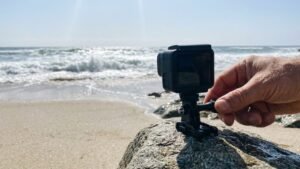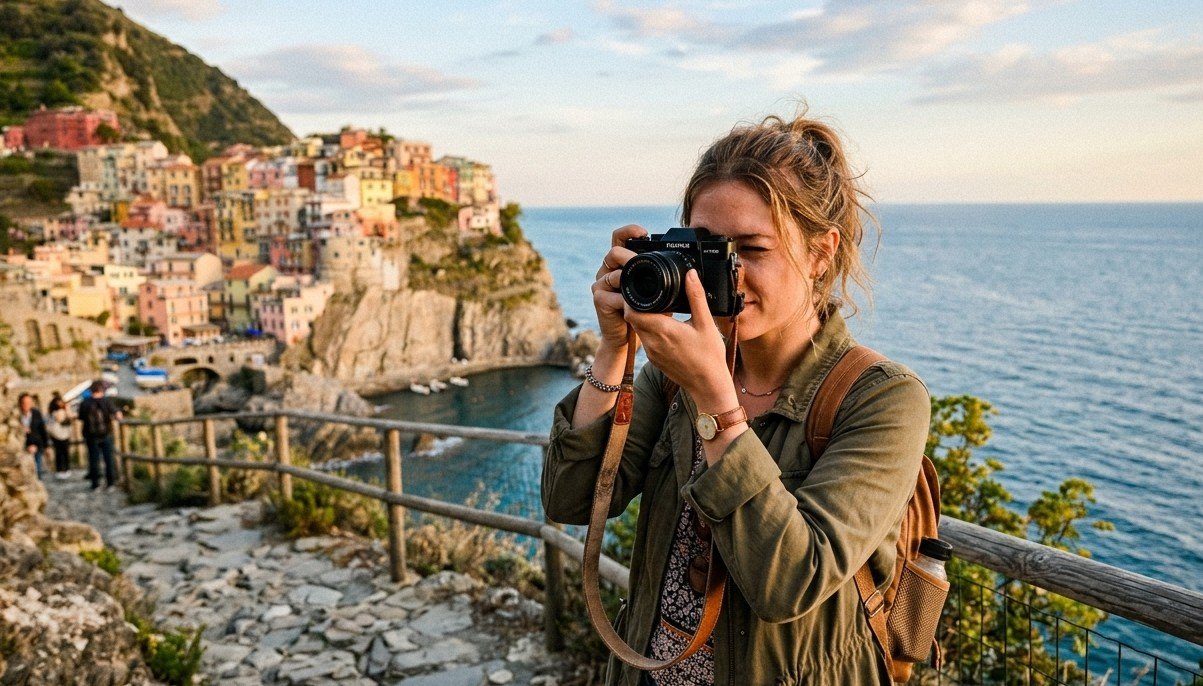
A travel camera is any camera chosen specifically for portability, durability and ease of use away from home, rather than for the absolute best image quality a larger setup could produce. The best travel cameras in Australia balance weight, battery life and physical toughness against the image and video quality a traveller actually needs for the trip they are taking.
Cameras suited to travel generally fall into four categories: action cameras, built to survive drops, water and constant handling for adventure and activity footage, compact cameras, small point-and-shoot bodies that fit in a pocket or day bag, mirrorless cameras, interchangeable-lens bodies that trade some bulk for significantly better image quality, and instant cameras, which print a physical photo on the spot rather than storing a digital file.
Weight is the number worth checking first: a mirrorless body under 400g, like the lightest option in this comparison, disappears into a day bag in a way a 600g-plus body does not, while battery life matters more on a trip than at home, since a flat battery on day three of a hike cannot simply be topped up overnight. Waterproofing and shock resistance matter specifically for action and compact-adventure cameras, less so for mirrorless bodies typically kept in a bag between shots.
This guide compares ten travel cameras across action, compact, mirrorless and instant categories, chosen for genuine current Australian stock. None of them shoot aerial footage, so anyone wanting to add drone shots to a travel edit should also compare the best drones separately.
Quick Picks
GoPro HERO13 5.3K Action Camera
The most capable action camera in this comparison, built for genuinely rough handling on hikes, dives and everything in between.
CHECK ON AMAZONFujifilm X-T30 III + XC 13-33mm Lens
A 378g body light enough to carry all day, with interchangeable lenses for real image quality gains over a compact.
CHECK ON AMAZONKodak PIXPRO FZ45 Friendly Zoom
A straightforward point-and-shoot for anyone who just wants a real camera in their pocket without paying for features they will not use.
CHECK ON AMAZONBest Travel Cameras in Australia Compared
| Product | Link | Type | Best For | Key Spec |
|---|---|---|---|---|
| Zero-X ZXM-AC5 4K UHD Waterproof Action Camera | Check price | Action camera | Waterproof adventure use | 4K, waterproof to 10m, 12MP Sony sensor |
| Zero-X 4K WiFi Action Camera | Check price | Action camera | Budget action footage | 4K, WiFi, 8MP sensor |
| GoPro HERO13 5.3K Action Camera | Check price | Action camera | Premium action footage | 5.3K60, HyperSmooth 6.0, 27MP |
| Kodak PIXPRO FZ45 Friendly Zoom | Check price | Compact | Budget point-and-shoot | 16MP, 4x optical zoom |
| Kodak PIXPRO WPZ2 | Check price | Compact | Waterproof adventure compact | 16MP, waterproof to 15m |
| Panasonic Lumix DC-TZ99GN-K | Check price | Compact | Premium travel zoom | 20.3MP, 30x zoom, Leica lens |
| Canon EOS R50 + RF-S 18-45mm Kit | Check price | Mirrorless | Beginners | 24.2MP APS-C, 4K 30p, eye AF |
| Sony ZV-E10 + 16-50mm Kit | Check price | Mirrorless | Vlogging | 24.2MP APS-C, directional mic |
| Fujifilm X-T30 III + XC 13-33mm Lens | Check price | Mirrorless | Lightest body | 378g body, Film Simulation dial |
| Fujifilm Instax Mini 13 | Check price | Instant | Fun, social travel photos | Prints in ~5 sec, selfie mirror |
1. Zero-X ZXM-AC5 4K UHD Waterproof Action Camera – Best Waterproof Action Camera
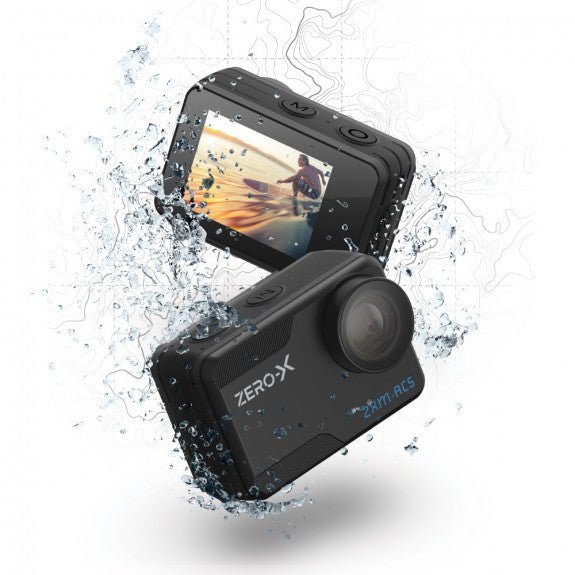
The ZXM-AC5 shoots 4K video through a 12MP Sony sensor, and is waterproof to 10 metres without needing its included protective case, which is deeper than most action cameras manage without one.
A 2.0-inch touchscreen makes framing and reviewing footage straightforward without a companion app, though WiFi is included for phone transfer when needed. Fourteen accessories are bundled in the box, including mounts and straps that would otherwise be a separate purchase with some competing brands.
This suits genuinely wet activities like snorkelling or kayaking where the case-free waterproofing matters, more than dry hiking or cycling where a cheaper action camera would do the same job. Battery life sits at 90 minutes per charge, so a spare battery is worth budgeting for on a full day out.
Pros
- Waterproof to 10m without needing the included case
- 14 bundled accessories including mounts and straps
- Touchscreen for framing without a companion app
Cons
- 90-minute battery life needs a spare for a full day out
- Lesser-known brand than GoPro or DJI
Key specs: 4K UHD video; 12MP Sony sensor; waterproof to 10m case-free; 2.0-inch touchscreen; 900mAh battery, up to 90 minutes recording.
CHECK ON AMAZON2. Zero-X 4K WiFi Action Camera – Best Budget Action Camera
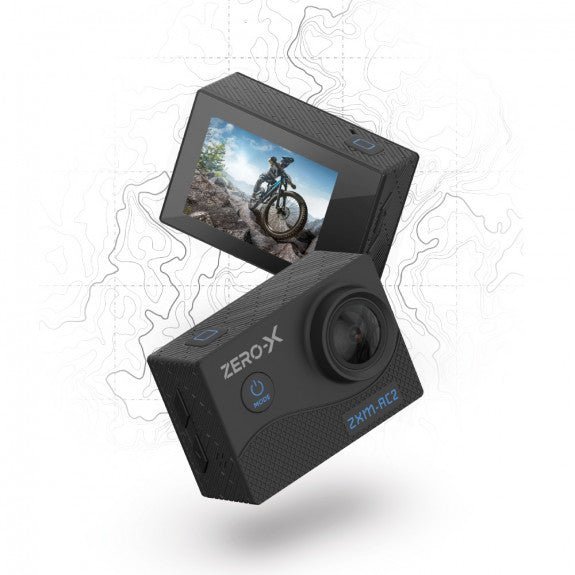
This is the more affordable entry in the Zero-X range, dropping to an 8MP sensor and a 650mAh battery while keeping 4K recording and WiFi connectivity.
Recording time drops to around 60 minutes per charge, and the waterproof rating relies on the included case rather than a case-free design like the pricier ZXM-AC5. Timelapse, slow motion and burst modes are all still included despite the lower price.
This suits an occasional user who wants 4K action footage for a single trip or activity without committing to a premium action camera. Anyone filming multiple activities across a full travel day should budget for a spare battery given the shorter runtime.
Pros
- 4K recording at a budget price point
- WiFi connectivity for phone transfer
- Timelapse, slow motion and burst modes included
Cons
- Shorter 60-minute battery life than the pricier model in this range
- Waterproofing requires the included case rather than a case-free design
Key specs: 4K video; 8MP sensor; WiFi; 2.0-inch screen; 650mAh battery, up to 60 minutes recording; waterproof case included.
CHECK ON AMAZON3. GoPro HERO13 5.3K Action Camera – Best Premium Action Camera
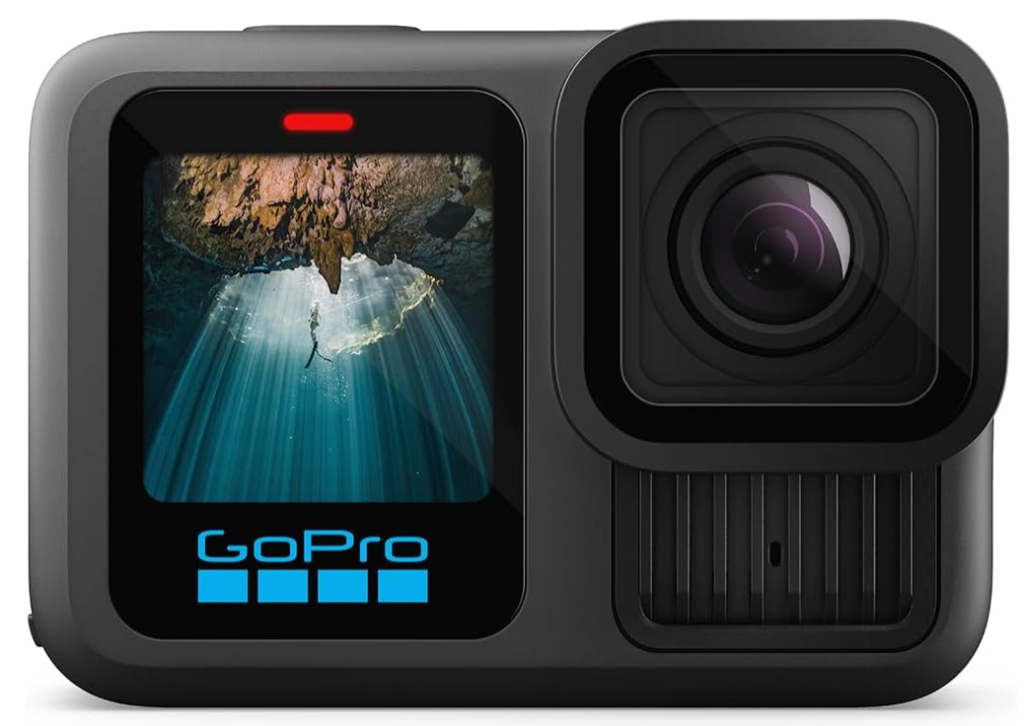
The HERO13 is GoPro’s current flagship, recording 5.3K at 60 frames per second and 27MP still photos through a sensor built specifically for the brand’s HyperSmooth 6.0 stabilisation.
HyperSmooth is the standout feature here, smoothing handheld and helmet-mounted footage to a degree the Zero-X cameras in this comparison do not attempt to match. A 2.27-inch touchscreen and a large third-party accessory and mounting ecosystem round out the package, built up over more GoPro generations than any competing brand.
This suits a traveller who wants the most capable action footage in this comparison and is willing to pay accordingly, particularly anyone mounting the camera on fast-moving activities like mountain biking or skiing where stabilisation matters most. Casual users who just want the occasional clip may not need this level of capability.
Pros
- HyperSmooth 6.0 stabilisation, the most advanced in this comparison
- 5.3K60 video and 27MP stills
- Large accessory and mounting ecosystem
Cons
- Highest price among the action cameras in this comparison
- More capability than a casual, occasional user needs
Key specs: 5.3K60 video; 27MP photos; HyperSmooth 6.0 stabilisation; 2.27-inch touchscreen; USB and WiFi connectivity.
CHECK ON AMAZON4. Kodak PIXPRO FZ45 Friendly Zoom – Best Budget Compact Camera
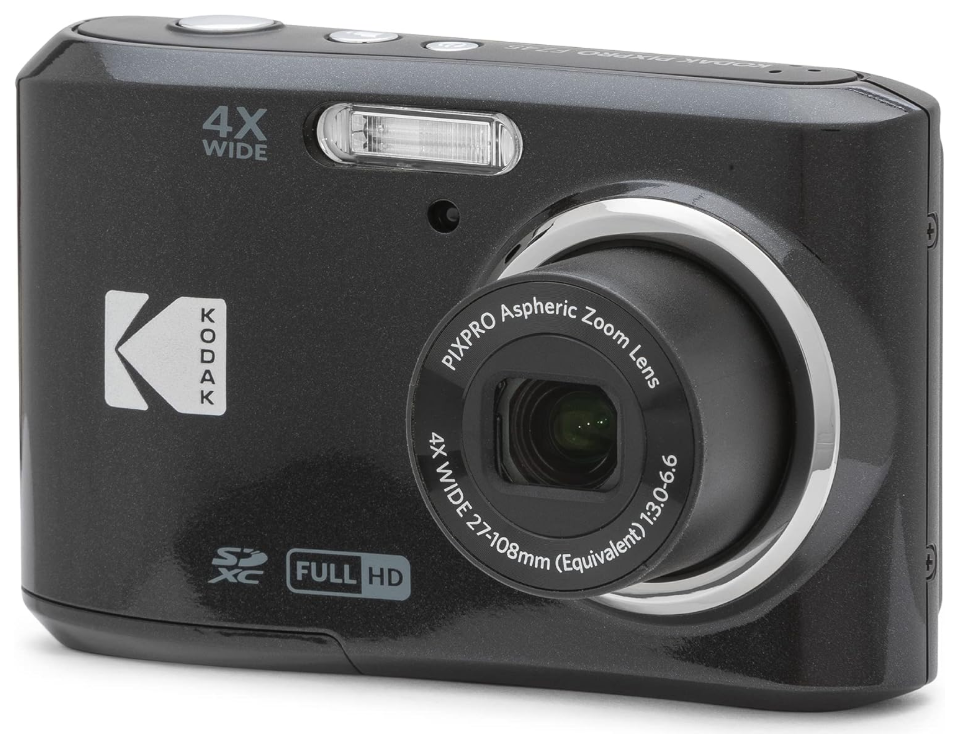
The FZ45 is a straightforward 16MP point-and-shoot with a 4x optical zoom covering a 27 to 108mm equivalent range, built around a BSI CMOS sensor.
Optical image stabilisation helps handheld shots stay sharp at the longer end of the zoom, and the control layout stays simple rather than burying settings in menus. Video tops out at 720p, which is noticeably behind the mirrorless and action cameras in this comparison.
This suits someone who wants a real dedicated camera instead of a phone for still photos on a trip, without paying for 4K video or interchangeable lenses they will not use. Anyone prioritising video quality should look toward the action or mirrorless options in this comparison instead.
Pros
- Simple point-and-shoot control layout
- 4x optical zoom with image stabilisation
- Lowest price among the compact cameras in this comparison
Cons
- 720p video is well behind the other cameras in this comparison
- No waterproofing or ruggedised body
Key specs: 16MP BSI CMOS sensor; 4x optical zoom (27-108mm equivalent); 720p HD video; optical image stabilisation.
CHECK ON AMAZON5. Kodak PIXPRO WPZ2 – Best Waterproof Compact Camera
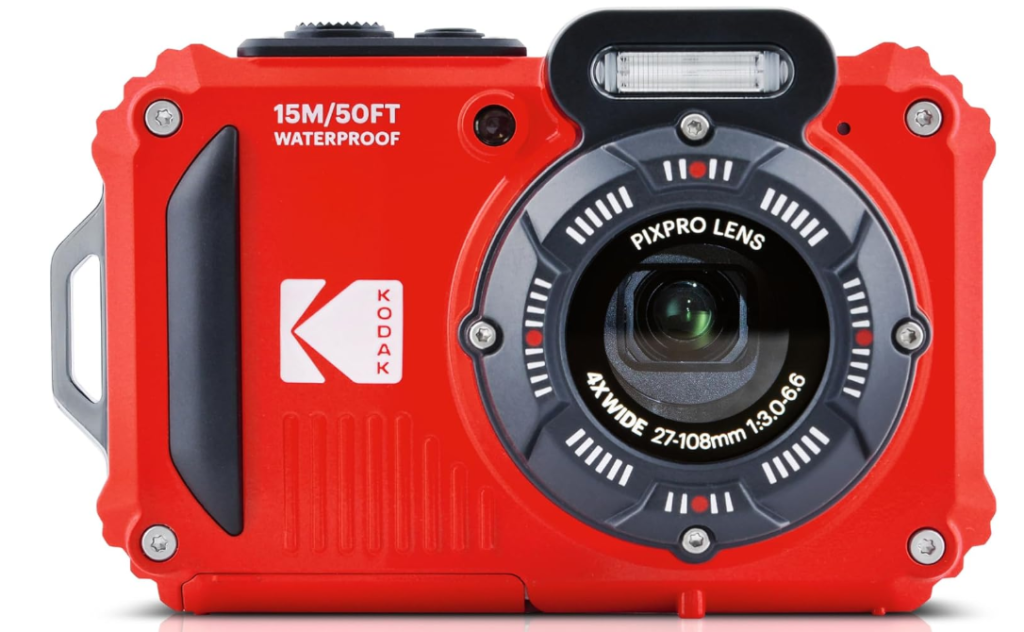
The WPZ2 shares the FZ45’s 16MP sensor and 4x optical zoom, but adds a waterproof rating to 15 metres along with shockproof and dustproof construction.
This makes it a genuine option for snorkelling, beach days or damp hiking conditions where the FZ45 would need a separate waterproof housing. The trade-off for the tougher body is a bulkier shape than a standard compact camera.
This suits a traveller who wants point-and-shoot simplicity specifically in wet or rugged conditions, rather than the video-first focus of an action camera. Anyone wanting 4K video in a rugged body should look at the action cameras in this comparison instead, since the WPZ2 tops out at standard HD.
Pros
- Waterproof to 15m without a separate housing
- Shockproof and dustproof construction
- Same 4x optical zoom as the FZ45 in a tougher body
Cons
- Bulkier than a standard compact camera
- Video quality below the action cameras in this comparison
Key specs: 16MP CMOS sensor; 4x optical zoom; waterproof to 15m; shockproof and dustproof.
CHECK ON AMAZON6. Panasonic Lumix DC-TZ99GN-K – Best Premium Compact Zoom
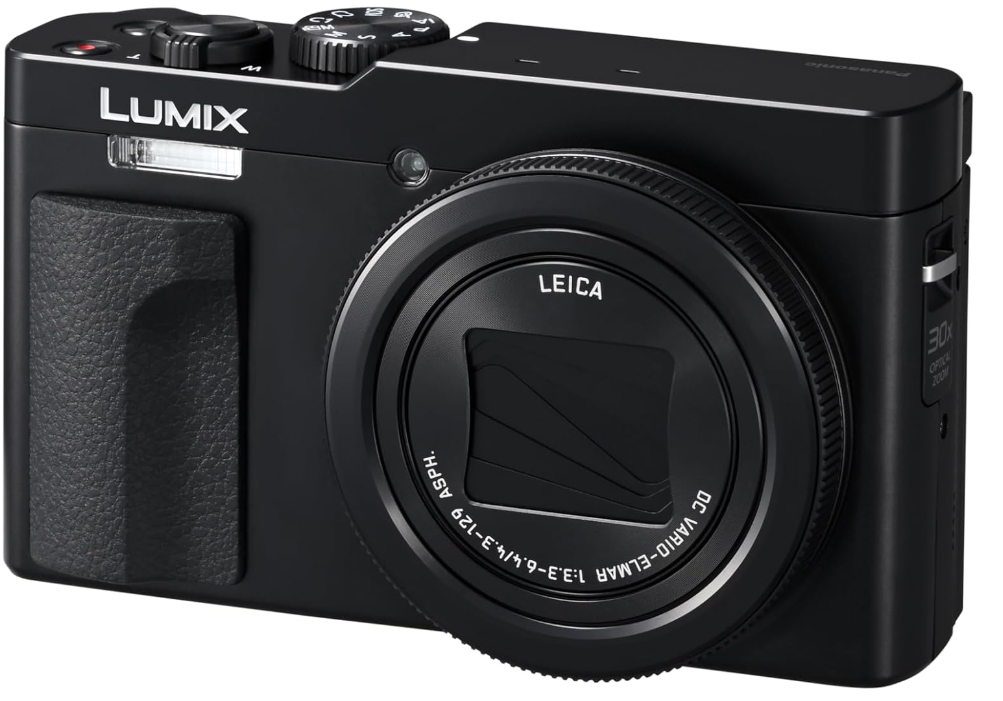
The TZ99 pairs a 20.3MP sensor with a Leica-branded 30x optical zoom, covering a 24 to 720mm equivalent range in a body still small enough to fit in a jacket pocket.
That zoom range is well beyond anything else in this comparison, reaching genuinely long telephoto shots a phone or a standard compact cannot approach, backed by optical image stabilisation to keep handheld shots at full zoom usable. A 4K Photo mode pulls high-resolution stills from video footage, useful for fast-moving subjects like wildlife or sport.
This suits a traveller who wants reach, for wildlife, landscapes from a distance, or street photography without getting close, more than someone prioritising wide-angle or low-light shooting. The compact body still cannot match a mirrorless camera’s sensor size or low-light performance.
Pros
- 30x optical zoom, by far the longest reach in this comparison
- Leica-branded lens with optical image stabilisation
- Pocketable body despite the zoom range
Cons
- Highest price among the compact cameras in this comparison
- Smaller sensor than the mirrorless options here, so weaker low-light performance
Key specs: 20.3MP MOS sensor; 30x optical zoom (24-720mm equivalent); Leica DC lens; optical image stabilisation; 4K Photo mode.
CHECK ON AMAZON7. Canon EOS R50 + RF-S 18-45mm Kit – Best Mirrorless for Beginners
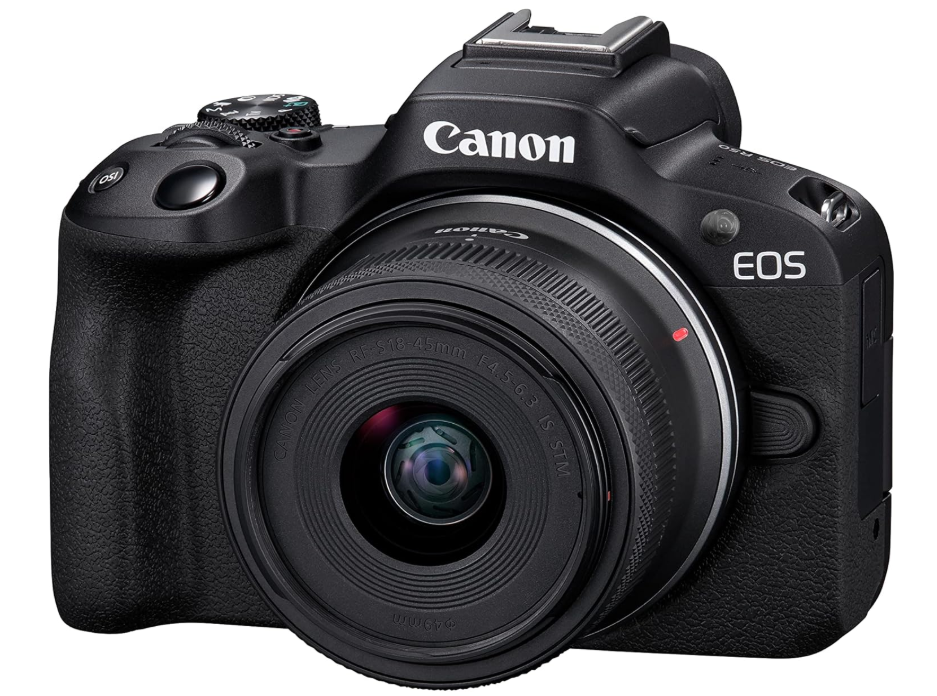
The R50 pairs a 24.2MP APS-C sensor with Canon’s RF-S 18-45mm kit lens, aimed squarely at someone moving up from a phone or compact camera for the first time.
Eye, face and animal autofocus tracking does most of the technical work automatically, and 4K video is oversampled from 6K for sharper detail than a straight 4K capture. Optical image stabilisation in the kit lens helps handheld shooting in lower light than a compact camera typically manages.
This suits a traveller wanting genuine image quality gains over a compact camera without a steep learning curve, given how much the autofocus system automates. Anyone wanting a longer zoom range than the 18-45mm kit lens covers will need a second lens, adding to the overall kit weight and cost.
Pros
- Eye, face and animal autofocus tracking
- 6K-oversampled 4K video for sharper detail
- Approachable for a first interchangeable-lens camera
Cons
- Kit lens covers a shorter zoom range than the Panasonic compact in this comparison
- A second lens adds weight and cost beyond the kit
Key specs: 24.2MP APS-C CMOS sensor; 4K 30p video (6K oversampled); eye, face and animal autofocus; optical image stabilisation in kit lens.
CHECK ON AMAZON8. Sony ZV-E10 + 16-50mm Kit – Best Mirrorless for Vlogging
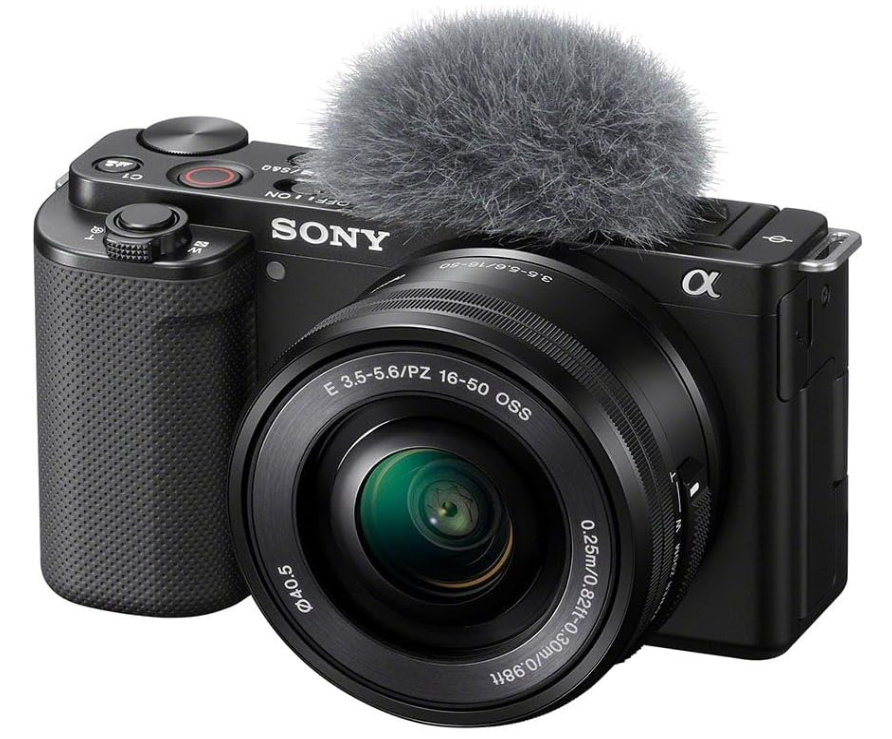
The ZV-E10 shares Canon’s 24.2MP APS-C sensor class but is built specifically around video and vlogging, with a three-capsule directional microphone built into the body itself.
A dedicated product-showcase mode shifts focus instantly from a person’s face to an object held up to the lens, aimed squarely at review-style travel content. Eye autofocus carries over from Sony’s stills-focused cameras, keeping faces sharp even with the camera held at arm’s length.
This suits a traveller creating video content specifically, more than someone prioritising still photography, given how much of the design is built around the microphone and showcase mode. Anyone shooting mostly stills would get similar image quality from the Canon in this comparison at a lower relative cost.
Pros
- Three-capsule directional microphone built into the body
- Product-showcase mode for review-style content
- Eye autofocus for handheld, arm’s-length shooting
Cons
- Video-first design offers less benefit to stills-only shooters
- Similar sensor to the Canon in this comparison at a higher relative cost for stills use
Key specs: 24.2MP APS-C Exmor CMOS sensor; built-in 3-capsule directional microphone; eye autofocus; product-showcase mode.
CHECK ON AMAZON9. Fujifilm X-T30 III + XC 13-33mm Lens – Best Lightweight Mirrorless
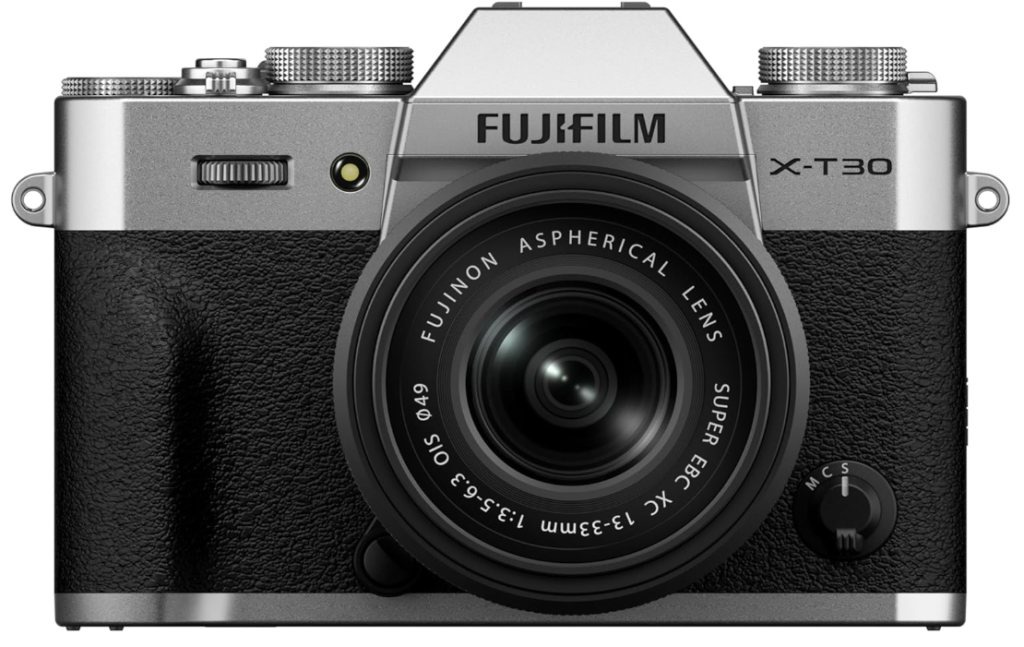
At 378 grams body-only, the X-T30 III is the lightest interchangeable-lens camera in this comparison, built around Fujifilm’s dial-based control layout rather than a menu-driven interface.
A Film Simulation dial gives direct access to Fujifilm’s colour profiles without digging through on-screen menus, aimed at getting a finished-looking image straight out of the camera. Optical image stabilisation and a CMOS sensor round out a spec sheet built to keep weight down without dropping core image quality.
This suits a traveller for whom carried weight matters as much as image quality, someone who wants a real camera in a day bag every day of a trip rather than a heavier body left in a hotel room. Anyone wanting the longest possible zoom range should look at the Panasonic compact in this comparison instead, since Fujifilm’s lens range prioritises image quality over reach.
Pros
- Lightest interchangeable-lens body in this comparison at 378g
- Dial-based Film Simulation controls
- Interchangeable lenses for future upgrades
Cons
- Lens range prioritises image quality over zoom reach
- Fewer video-specific features than the Sony in this comparison
Key specs: 378g body weight; APS-C CMOS sensor; Film Simulation dial; optical image stabilisation; interchangeable lens mount.
CHECK ON AMAZON10. Fujifilm Instax Mini 13 – Best Instant Camera
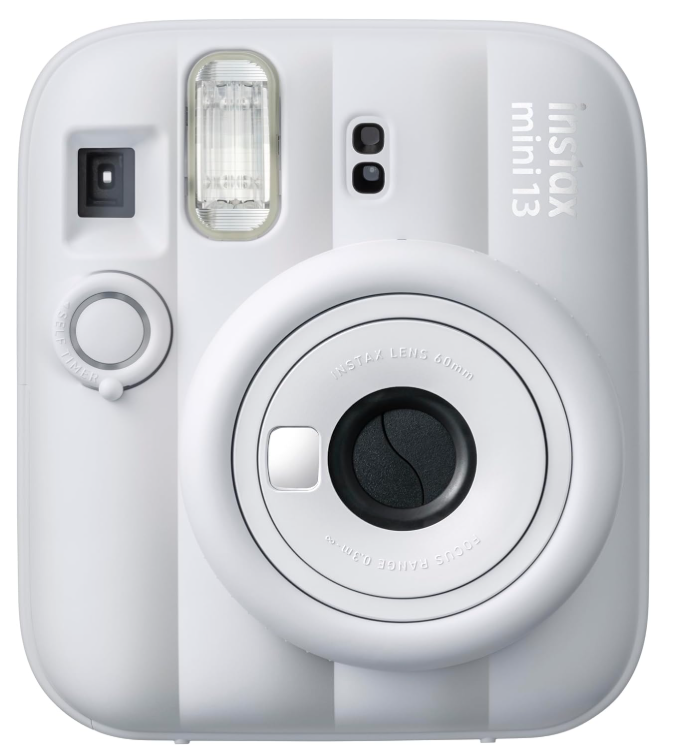
The Instax Mini 13 prints a physical 2 by 3 inch photo around five seconds after the shutter fires, at 327 grams including film.
A built-in selfie mirror and a close-up mode with parallax correction are aimed specifically at getting a usable framing without a digital screen to check the shot first, since instant film cannot be reviewed and reshot the way a digital photo can. There is no video, zoom or digital storage of any kind, by design rather than as a limitation.
This suits travel photos meant to be shared or kept as physical souvenirs on the trip itself, more than anyone wanting their travel photography stored digitally. Film costs add up over a long trip in a way none of the digital cameras in this comparison do, since every shot uses a physical print regardless of whether it turns out well.
Pros
- Prints a physical photo in around five seconds
- Built-in selfie mirror and parallax-corrected close-up mode
- Lightweight at 327g including film
Cons
- No digital storage, zoom or video, by design
- Ongoing film costs add up over a longer trip
Key specs: Prints 2×3 inch instant photos in about 5 seconds; 327g including film; built-in selfie mirror; close-up mode with parallax correction.
CHECK ON AMAZONHow to Choose a Travel Camera
Match the camera type to the trip, not the trip to the camera. An action camera suits water sports, cycling or anything involving drops and knocks, a compact camera suits casual sightseeing photography, a mirrorless camera suits anyone prioritising image quality above convenience, and an instant camera suits trips where physical keepsakes matter more than digital files.
Weight compounds over a full day of carrying, not just in the packing list. A 378g mirrorless body disappears into a day bag in a way a 600g body with a second lens does not, and that difference is felt by the third or fourth hour of a walking day, not just when weighing the bag before departure.
Waterproofing only matters for the activities that actually need it. A camera waterproof to 10 or 15 metres solves a genuine problem for snorkelling or kayaking, but adds bulk and cost that a dry hiking or city trip does not need. Matching the rating to the actual itinerary avoids paying for protection that never gets used.
Battery life on the road is different from battery life at home. A camera charged only via USB from a power bank behaves very differently on a multi-day hike than in a hotel room with power outlets every night, and a spare battery is often cheaper insurance than a heavier camera with marginally longer runtime.
Zoom range and sensor size trade off against each other, not just against price. A long-zoom compact camera reaches further than a mirrorless kit lens, but a mirrorless camera’s larger sensor performs better in low light and produces a shallower depth of field, regardless of price point.
An instant camera is a deliberate trade, not a downgrade. Choosing an instant camera means accepting no zoom, no video and an ongoing film cost, in exchange for a physical print with no digital step required at all. It suits a specific kind of trip rather than replacing a digital camera outright.
For rougher conditions, a budget action camera puts toughness and stabilisation ahead of headline resolution.
Frequently Asked Questions
What is the best type of camera for travel?
The best camera for travel depends on the trip: an action camera suits water sports and physical activity, a compact camera suits casual sightseeing, a mirrorless camera suits anyone prioritising image quality, and an instant camera suits trips where a physical print matters more than a digital file.
How much should a travel camera weigh?
A mirrorless body under 400g, or a compact or action camera under 150g, generally disappears into a day bag without becoming a burden by the end of a full day of walking or activity. Weight differences that seem minor when packing become noticeable after several hours of carrying.
Do I need a waterproof camera for travel?
Only if the trip genuinely includes water activities like snorkelling, kayaking or beach days where a standard camera would be at risk. A waterproof rating adds bulk and cost that is wasted on a trip without water exposure.
Is a mirrorless camera better than a compact camera for travel?
A mirrorless camera produces better image quality, particularly in low light, thanks to its larger sensor, but a compact camera is smaller, simpler and often includes a longer zoom range in the same body. Neither is universally better; the right choice depends on how much image quality matters against how much extra size and cost is acceptable.
How long does an action camera battery last?
Most action cameras in this comparison run 60 to 90 minutes of continuous recording per charge, which is short compared with a full day of activity. A spare battery or a portable power bank is worth carrying on any day involving more than an hour or two of filming.
Are instant cameras worth it for travel?
An instant camera is worth it specifically for trips where a physical, shareable print matters more than a digital file, since it has no zoom, no video and an ongoing cost per photo through film. It is a deliberate trade rather than a smaller or cheaper version of a digital camera.
Verdict
For most travellers, the GoPro HERO13 is the strongest all-round pick for anyone prioritising action and adventure footage, given its HyperSmooth 6.0 stabilisation and 5.3K video quality. Anyone wanting genuine image quality gains over a phone without the bulk of a full kit should look at the Fujifilm X-T30 III instead, since its 378g body is the lightest interchangeable-lens option in this comparison. Travellers on a tighter budget can start with the Kodak PIXPRO FZ45, which covers casual point-and-shoot photography at the lowest price point here.