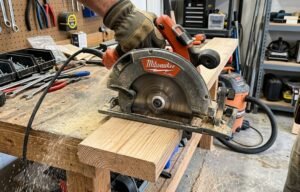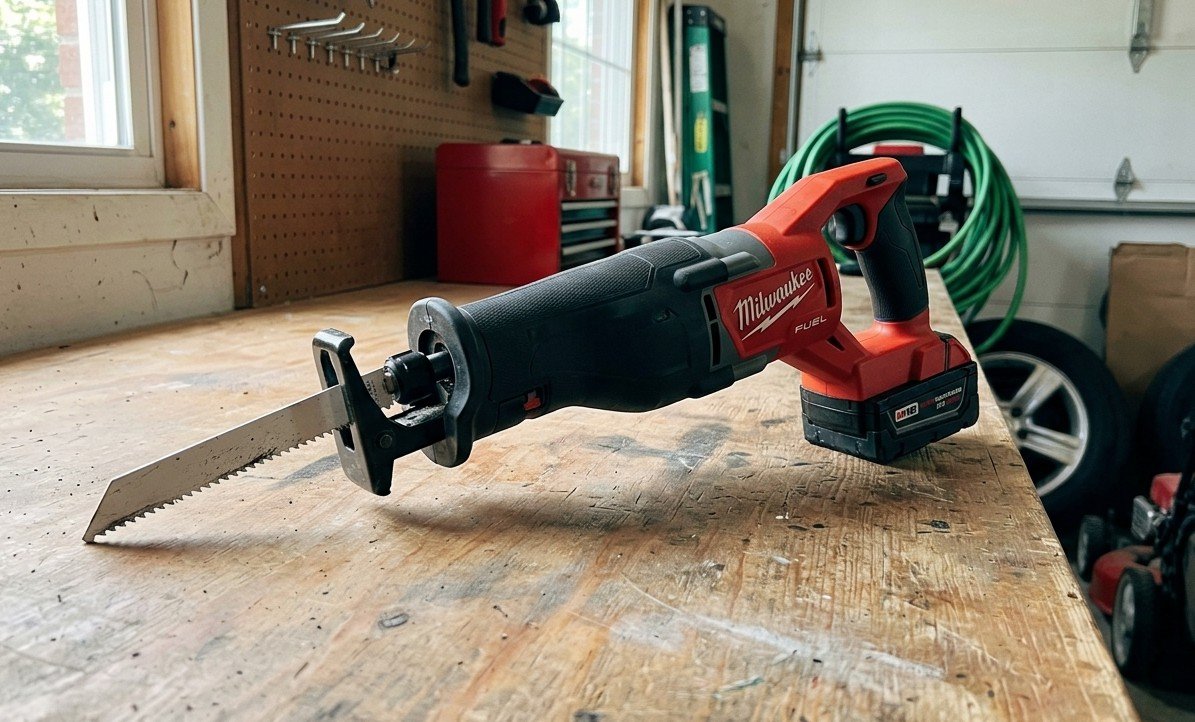
A reciprocating saw is a handheld demolition saw that drives a straight blade back and forth to cut timber, metal, plastic and plaster, usually without needing a clean edge or a guide. The best reciprocating saws in Australia combine a stroke length matched to the material, a brushless motor that holds speed under load, and a tool-free blade clamp that survives repeated changes on site.
Three formats cover nearly every job. Full-size cordless saws take two hands and deliver the longest strokes for framing and demolition. One-handed compact saws reach into cavities and suit plumbing and electrical rough-in. Corded mains saws trade mobility for unlimited run time at a lower cost.
Stroke length is the specification that separates these tools, and it is the one most buyers overlook. The saws here run from 14mm to 32mm, roughly half an inch to one and a quarter inches, and that difference more than doubles how much material each pass removes. Strokes per minute matter far less, because a fast saw with a short stroke still cuts slowly through a hardwood beam.
This guide compares ten reciprocating saws sold in Australia across those three formats, from a budget cordless kit that includes its own batteries to brushless trade tools on the 18V, 36V and 12V platforms.
Best Reciprocating Saws in Australia Compared
| Product | Link | Type | Best For | Key Spec |
|---|---|---|---|---|
| Advwin Cordless Reciprocating Saw 3500RPM | Check price | Cordless kit | Occasional DIY use | 21V, 14mm stroke, kit |
| Makita DJR189Z 18V Brushless Reciprocating Saw | Check price | 18V brushless | Existing LXT owners | 18V, 3,100 SPM |
| DeWalt DCS386N-XE FlexVolt Advantage Recip Saw | Check price | 18V brushless | Demolition and strip-outs | 18V/54V, 3.5kg |
| Milwaukee M18 FUEL Hackzall Reciprocating Saw | Check price | One-handed 18V | Plumbing and electrical work | 18V, 22mm stroke |
| Makita DJR187Z 18V LXT Brushless Reciprocating Saw | Check price | 18V brushless | Sleepers, posts and beams | 32mm stroke, 255mm cut |
| DeWalt 18V XR Brushless Compact Reciprocating Saw | Check price | Compact 18V | Confined framing work | 18V, 2.3kg |
| Stanley FatMax V20 Brushless Reciprocating Saw | Check price | 18V brushless | Mixed material cutting | 3,200 SPM, 2-speed |
| HiKOKI CR36DA MultiVolt Brushless Reciprocating Saw | Check price | 36V brushless | Sustained heavy cutting | 36V MultiVolt |
| Bosch Professional GSA 12V-14 Reciprocating Saw | Check price | 12V compact | Electrical and plumbing trades | 12V, 1.33kg |
| Black and Decker 750W Reciprocating Saw | Check price | Corded | Garden and bench work | 750W corded |
1. Advwin Cordless Reciprocating Saw 3500RPM – Best Budget Cordless Kit
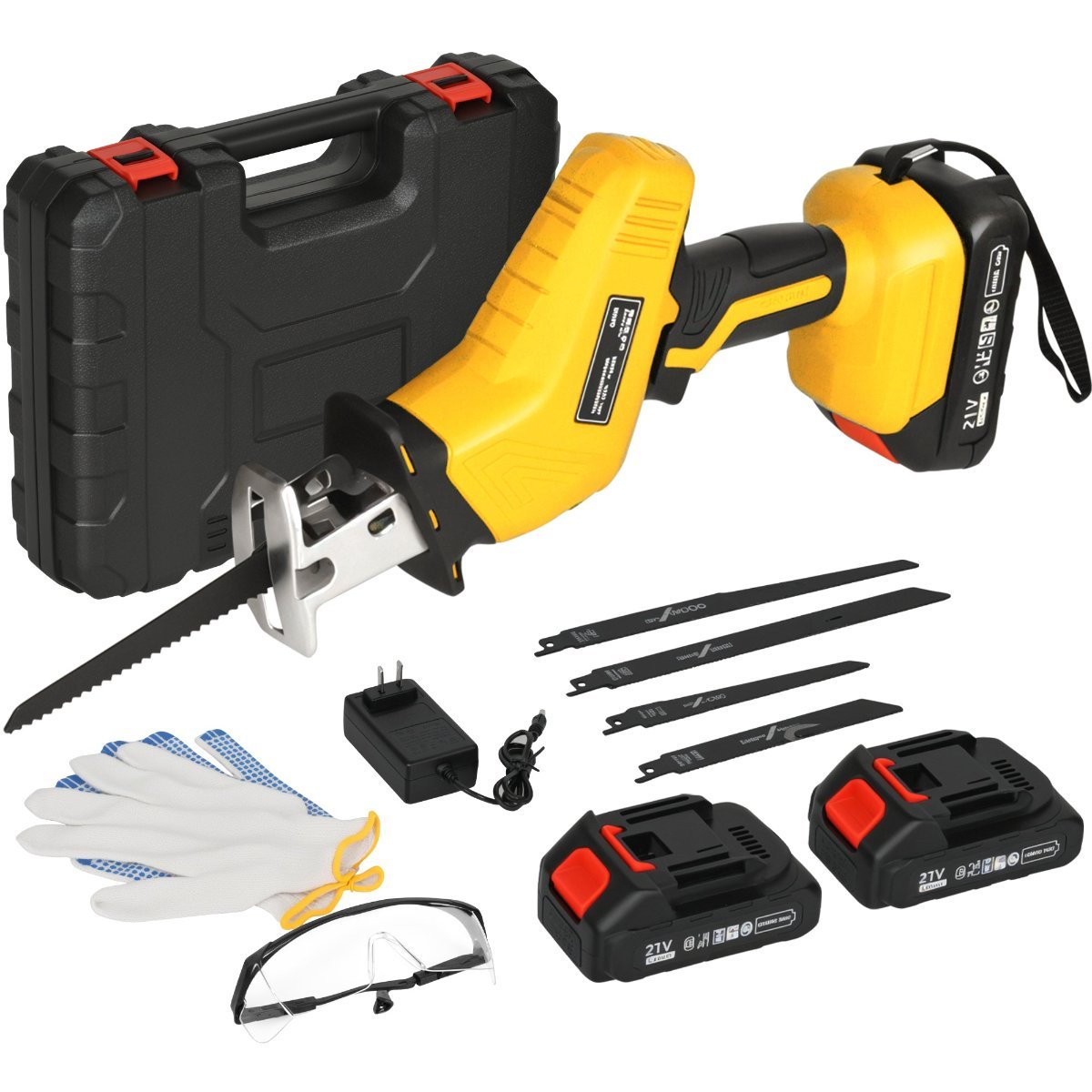
Two batteries, a charger, four blades and a storage box all arrive together, which is rare at this price and removes the hidden cost that catches out first-time buyers of skin-only tools.
The saw turns over 3,500 strokes a minute through a 14mm stroke, and a self-locking collet swaps blades without a key. That short stroke suits pruning, PVC and light demolition rather than structural timber.
A 14mm stroke is roughly half what the trade-grade saws below deliver, so anything substantial takes noticeably longer to cut. As an occasional-use kit for a garage where the tool sits idle most months, the bundled batteries make it the cheapest honest way in.
Pros
- Two batteries, charger, four blades and case included
- Tool-free self-locking blade collet
- No extra battery purchase needed to start
Cons
- 14mm stroke is short for demolition work
- No published stock indicator on the listing
Key specs: 21V cordless, 650W rated, 14mm stroke length, 3,500 SPM, tool-free collet, two 21V 1500mAh batteries, charger, four blades and storage box
CHECK CURRENT PRICE2. Makita DJR189Z 18V Brushless Reciprocating Saw – Best Compact Brushless
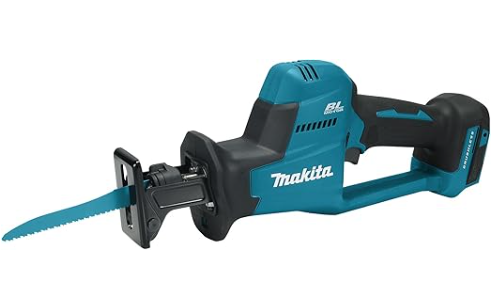
Constant speed control is what separates this from the budget end, because the motor holds its rate as the blade loads up instead of bogging down partway through a cut.
It runs at 3,100 strokes a minute on a brushless motor and takes the same 18V LXT packs as the rest of that range. The compact body can be driven one-handed in a cavity where a full-size saw simply will not fit.
It ships as a skin only, so the price assumes batteries already sitting in the shed. Anyone on 18V LXT gets the cheapest route into a brushless saw, while anyone starting from nothing needs to add a battery and charger.
Pros
- Constant speed control holds the rate under load
- Compact enough for one-handed work
- Shares the 18V LXT battery platform
Cons
- Supplied as a skin only, no battery or charger
- Stock has been running low on this listing
Key specs: 18V brushless, 3,100 SPM, constant speed control, 90 degree cutting angle, skin only
CHECK ON AMAZON3. DeWalt DCS386N-XE FlexVolt Advantage Recip Saw – Best for Demolition
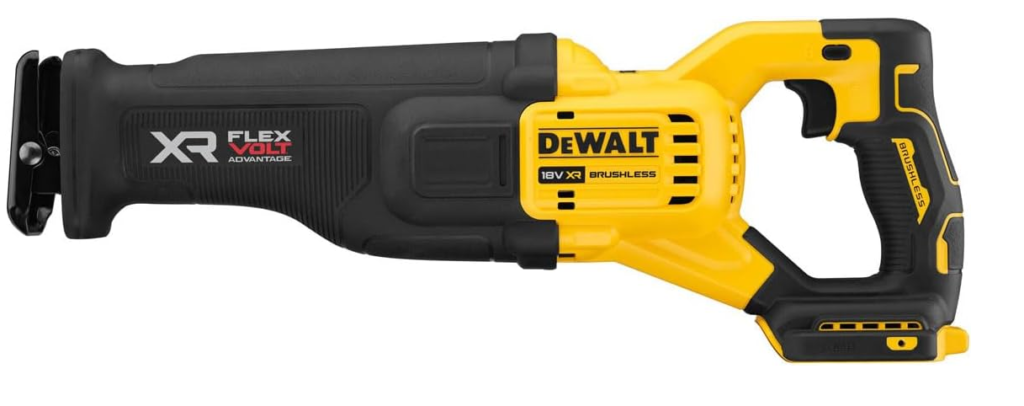
FlexVolt Advantage is the reason to pick this one: fit a 54V FlexVolt pack and the tool draws more current than a standard 18V battery permits, lifting output without changing tools.
Three thousand strokes a minute through a brushless motor gets through nail-embedded timber and light steel section without stalling, and the 3.5kg body carries enough mass to stay planted in a heavy cut.
That same 3.5kg turns tiring overhead, which is the price of stability at floor level. Supplied as a skin only, it makes sense for someone already holding DeWalt 18V or FlexVolt packs rather than as a standalone buy.
Pros
- Draws extra output from 54V FlexVolt batteries
- 3,000 SPM brushless motor handles nail-embedded timber
- Mass keeps the shoe planted through heavy cuts
Cons
- 3.5kg is tiring for overhead work
- Skin only, no battery or charger included
Key specs: 18V XR FlexVolt Advantage brushless, 3,000 SPM, 3.5kg, 90 degree cutting angle, skin only
CHECK ON AMAZON4. Milwaukee M18 FUEL Hackzall Reciprocating Saw – Best One-Handed
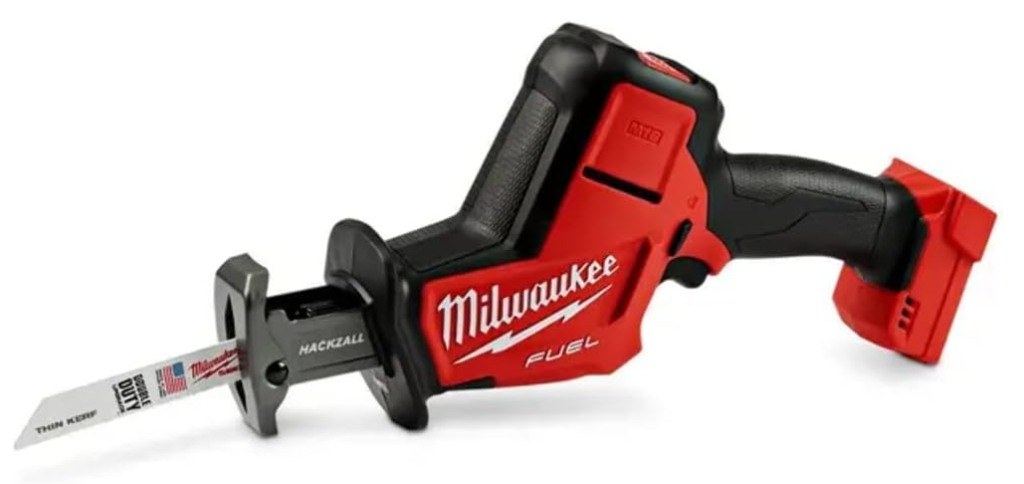
The Hackzall format packs a full brushless motor into a body designed to be driven one-handed, which changes what is reachable in a ceiling cavity or under a sink.
A 22mm stroke is long for a one-handed saw and covers most of what a two-handed tool would do in plumbing and electrical rough-in. The brushless motor keeps the rate steady through steel conduit.
Set against the full-size saws here it gives up cutting depth and outright speed in heavy timber, and it arrives as a bare tool. A tradesperson working overhead all day will take that deal; someone pulling apart a deck should not.
Pros
- True one-handed operation with a brushless motor
- 22mm stroke is long for the format
- Reaches into cavities full-size saws cannot
Cons
- Less cutting depth than a two-handed saw
- Bare tool, no battery or charger
Key specs: 18V FUEL brushless, 22mm stroke length, one-handed Hackzall body, bare tool
CHECK ON AMAZON5. Makita DJR187Z 18V LXT Brushless Reciprocating Saw – Best for Deep Cuts
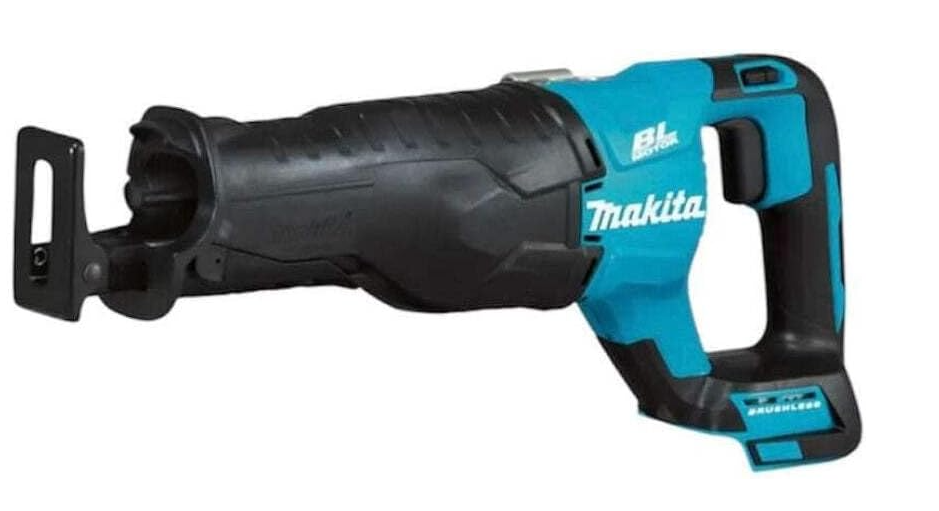
A 32mm stroke is the longest in this guide, and it converts directly into a 255mm cutting capacity in timber.
The saw pushes 3,000 strokes a minute and weighs 3.13kg, heavy in the hand but useful for holding the shoe against the work through a long cut. Sleeper, post and beam work is where that stroke length earns back the weight.
Everything about it is built for two hands, so it will not follow you into a tight cavity the way the Hackzall does. Stock on this listing has been sitting low, and it is supplied bare.
Pros
- 32mm stroke and 255mm timber capacity, the deepest here
- 3,000 SPM brushless motor
- Weight helps keep the shoe steady in long cuts
Cons
- 3.13kg and two-handed only
- Bare tool with limited stock
Key specs: 18V LXT brushless, 32mm stroke length, 3,000 SPM, 255mm cutting capacity in wood, 3.13kg, bare tool
CHECK ON AMAZON6. DeWalt 18V XR Brushless Compact Reciprocating Saw – Best for Tight Spaces
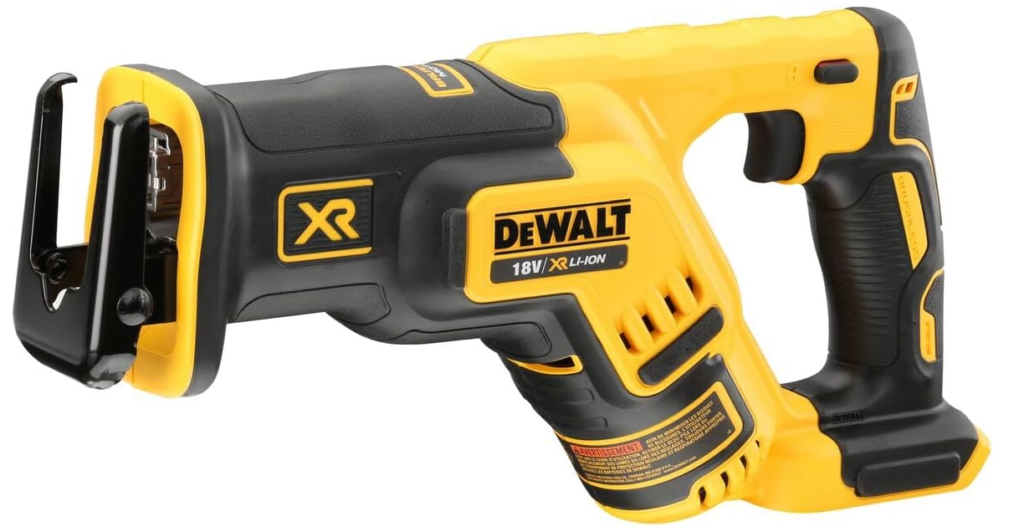
Compact here means a 2.3kg body short enough to work between studs, without dropping down to a one-handed motor.
A lever-action keyless clamp swaps blades in seconds, which saves real time when alternating between timber and metal blades on one job. The brushless motor stretches a single charge further than a brushed equivalent.
It lands between the Hackzall and the full-size saws on both reach and power, and that middle ground is the entire point of it. Renovators cutting out old framing in confined roof space get the most from the format.
Pros
- 2.3kg body fits between studs
- Lever-action keyless blade clamp
- Brushless motor extends run time per charge
Cons
- Less cutting depth than the full-size saws
- Skin only, battery not included
Key specs: 18V XR brushless compact, 2.3kg, 180 degree cutting angle, lever-action keyless blade clamp, skin only
CHECK ON AMAZON7. Stanley FatMax V20 Brushless Reciprocating Saw – Best Two-Speed Control
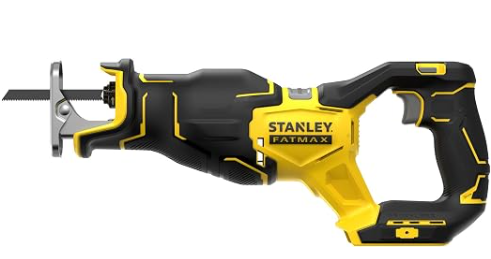
Two selectable speeds deliver control the single-speed saws here cannot, running the blade slow through metal and fast through timber.
The brushless motor tops out at 3,200 strokes a minute, the highest figure in this guide, and blade changes need no tools. An LED work light throws onto the cut line in a dark cavity.
V20 is a smaller battery ecosystem than the Makita and DeWalt platforms, which narrows future tool choice. Supplied as a saw only, it suits someone buying into V20 rather than topping up an existing kit.
Pros
- Two-speed selection for metal and timber
- 3,200 SPM, the fastest here
- Tool-free blade change and LED work light
Cons
- Smaller battery platform than Makita or DeWalt
- Saw only, no battery or charger
Key specs: 18V brushless, two-speed, up to 3,200 SPM, 29mm stroke length, tool-free blade change, LED work light, saw only
CHECK ON AMAZON8. HiKOKI CR36DA MultiVolt Brushless Reciprocating Saw – Best High-Voltage Platform
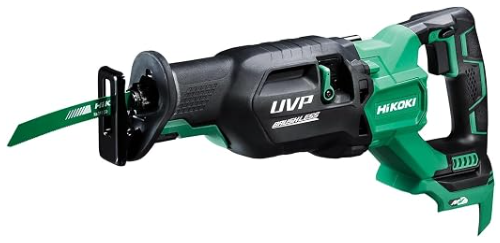
MultiVolt runs this saw at 36V while the same battery steps down to 18V across the rest of the range, a genuinely different approach to platform design.
The extra voltage shows up in sustained heavy cutting, where the brushless motor holds output through steel and dense hardwood instead of tapering off. It is supplied as a skin only.
Dealer and accessory coverage for this brand is thinner in Australia than Makita or DeWalt, which matters for blades and parts later on. Committing to the platform makes it worthwhile; buying it as a one-off does not.
Pros
- 36V output for sustained heavy cutting
- MultiVolt packs also run 18V tools in the range
- Brushless motor holds output in dense material
Cons
- Thinner dealer and accessory network in Australia
- Skin only, no battery included
Key specs: 36V MultiVolt brushless, high speed steel blade compatible, skin only
CHECK ON AMAZON9. Bosch Professional GSA 12V-14 Reciprocating Saw – Best 12V Compact
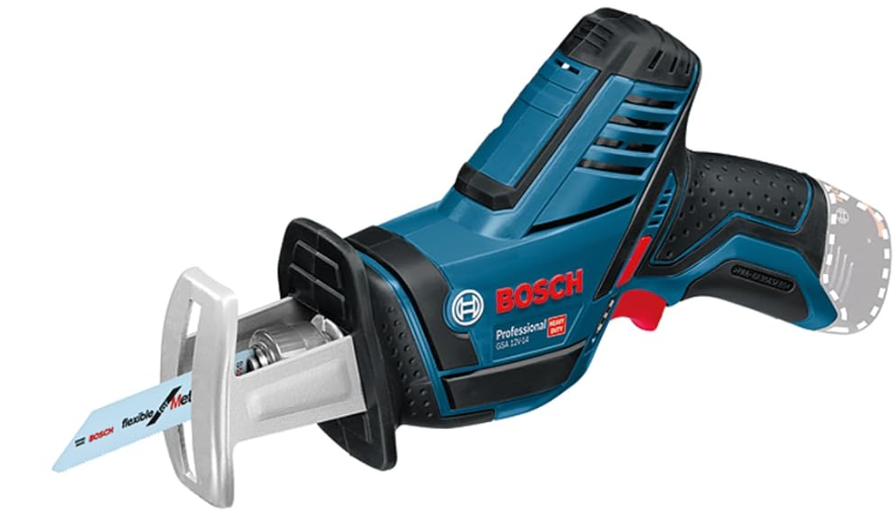
At 1.33kg this is the lightest saw in the guide by a wide margin, and the only 12V tool among them.
Cutting depth is quoted at 65mm in timber and 50mm in metal profile, which covers conduit, pipe and light framing without pretending to be a demolition tool. Two blades are supplied.
Nobody should buy it to strip out a deck, because the 12V platform runs out of capability well before the 18V saws do. For an electrician or plumber carrying tools up a ladder all day, the weight saving is the entire argument.
Pros
- 1.33kg, the lightest saw here
- 65mm timber and 50mm metal cutting depth
- Two blades and a battery included
Cons
- 12V platform is limited for demolition
- Small cutting capacity next to 18V saws
Key specs: 12V, 1.33kg, 65mm cutting depth in wood and 50mm in metal profile, two saw blades included
CHECK ON AMAZON10. Black and Decker 750W Reciprocating Saw – Best Corded
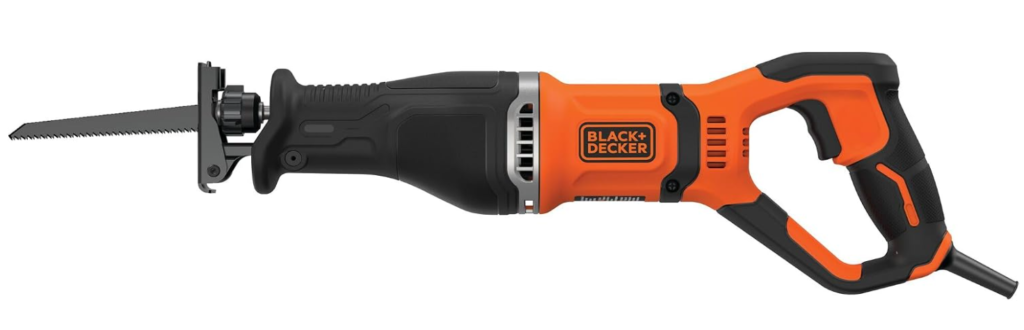
Mains power takes the battery question off the table, and 750W runs at full output for as long as the job lasts.
Blade changes are tool-free, and two blades plus a branch holder come in the box, the latter aimed squarely at pruning. There is no run-time ceiling, which suits a long afternoon cutting up green waste.
The cord is the obvious constraint, ruling it out anywhere without a power point or a generator. For occasional garden and workshop jobs where the saw stays near the bench, it costs a fraction of the cordless kits above.
Pros
- No battery to charge or replace
- Tool-free blade change
- Two blades and a branch holder included
Cons
- Corded, so it needs a power point nearby
- Stock on this listing has been running low
Key specs: 750W corded, tool-free blade change, two blades and branch holder included
CHECK ON AMAZONHow to Choose a Reciprocating Saw
Start with stroke length, not strokes per minute. A 32mm stroke shifts more than twice the material per pass that a 14mm stroke does, which is why a cheap saw claiming 3,500 SPM still crawls through a hardwood beam. For demolition and structural timber look for 28mm or more; for pruning, conduit and PVC, a short stroke is perfectly adequate.
Decide whether you are buying a tool or a platform. Most saws here are sold as a skin or bare tool, so the advertised price assumes batteries already on hand. Adding a battery and charger can cost as much again, which makes a saw on a platform you already own far cheaper in practice than the headline suggests.
Brushless earns its premium under sustained load. A brushed motor slows as the blade bites and generates more heat over a long session, while a brushless motor holds speed and draws less from the battery. For a saw used a few times a year, brushed is fine; for anything close to daily work, brushless pays for itself in run time alone.
Weight decides where the saw can actually work. A 3.5kg full-size saw is stable on a floor-level cut and punishing above shoulder height, where a 1.33kg 12V tool or a one-handed model stays controllable. Renovation work usually calls for two saws over time, and it is worth knowing which one you are buying first. A circular saw remains the better choice wherever the cut has to be straight and clean.
Match the blade to the material, then to the tool. Blade choice affects cutting speed more than any specification on the box: coarse teeth for green timber, fine bimetal for steel, and a demolition blade for anything with nails in it. Tool-free clamps matter here, because a job that alternates materials means changing blades repeatedly.
Do not ask this saw to be a finish tool. A reciprocating saw is built for rough, fast cuts where the edge will be hidden or removed later, and it will wander on any line that needs to look clean. For sheet material and cabinetry work, reach for one of the jigsaws instead, which track a line properly and leave an edge worth keeping.
Frequently Asked Questions
What is a reciprocating saw used for?
Demolition and rough cutting. It removes old framing, cuts nail-embedded timber, trims pipe and conduit, prunes branches and cuts openings in plaster. It is not a finish tool and will not produce a clean, straight edge.
What stroke length do I need?
For demolition and structural timber, look for 28mm or more. For pruning, PVC and conduit, 14mm to 22mm is enough. Stroke length affects cutting speed more than the advertised strokes per minute, because a short stroke moves very little material per pass.
Is a corded or cordless reciprocating saw better?
Cordless suits site work, roof cavities and anywhere without a power point, and is now the default for trade use. Corded costs less, never runs flat and holds full output indefinitely, which suits garden and bench work where a power point is close by.
Does brushless make a real difference?
Under sustained load, yes. A brushless motor holds blade speed as the cut loads up, runs cooler and draws less current, so a single battery lasts noticeably longer. For a few cuts a year the difference is hard to justify.
What does skin only or bare tool mean?
It means the saw ships without a battery or charger, on the assumption you already own compatible ones. Most cordless saws in this guide are sold this way, so budget for a battery and charger separately if you are starting a new platform.
Can a reciprocating saw cut metal?
Yes, with the correct blade. A fine-tooth bimetal blade cuts steel conduit, pipe, nails and light section. Run the saw at a lower speed for metal, keep the shoe pressed firmly against the work, and expect blades to wear faster than in timber.
Verdict
Anyone pulling apart framing regularly should take the Makita DJR187Z, where a 32mm stroke and a 255mm timber capacity clear material no other saw here matches in a single pass. For plumbing and electrical work above shoulder height, the Milwaukee M18 FUEL Hackzall is the one that stays controllable one-handed while still driving a 22mm stroke. And for a garage where the saw runs a few weekends a year, the Advwin cordless kit arrives with two batteries and a charger, so nothing else needs buying to make it work.