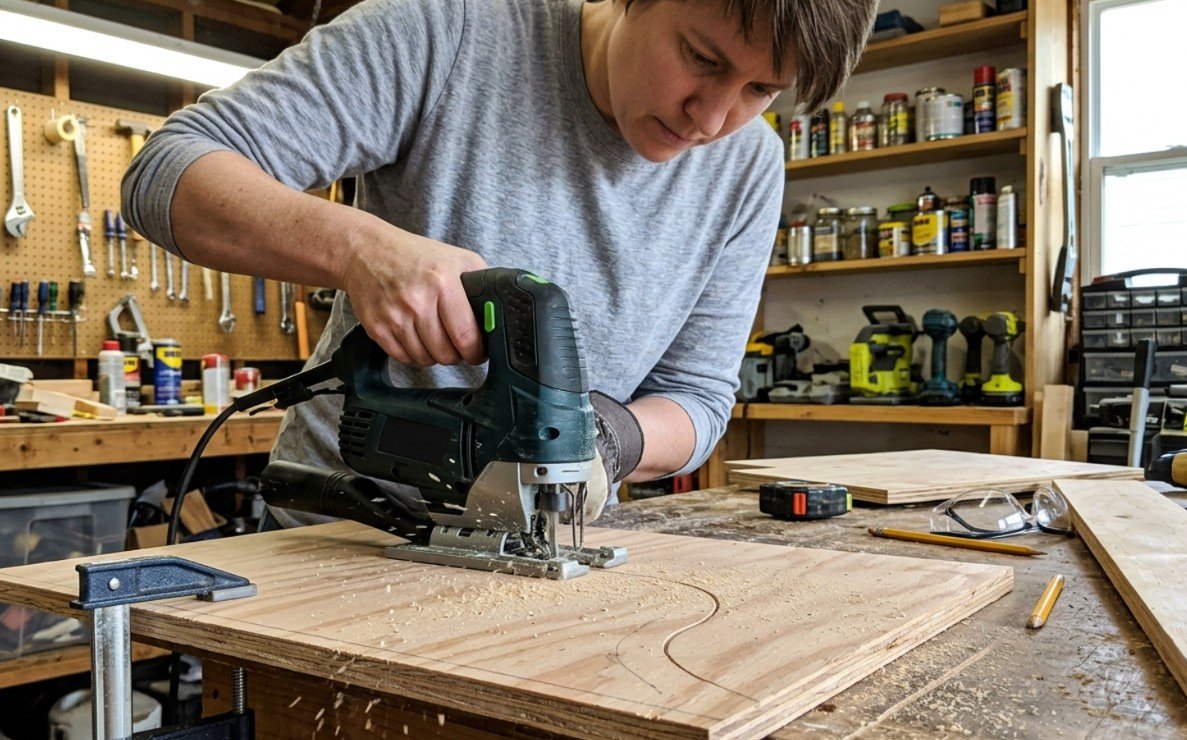
A jigsaw is a handheld saw with a short reciprocating blade that cuts curves, internal cut-outs and irregular shapes that a circular saw cannot follow. The best jigsaws in Australia cut between 65mm and 150mm deep in timber, offer three or four positions of pendulum action, and change blades without a key or an allen bolt.
Three distinctions separate them. Corded jigsaws deliver constant power with no battery to flatten and dominate the deep-cutting end. Cordless jigsaws trade some depth for going anywhere, and the brushless versions now hold pace with mains tools. Barrel grip and D-handle bodies change how the saw is steered, with barrel grips sitting lower for curved work and D-handles suiting long straight pushes.
Cutting depth is the specification that decides whether a job is possible at all, and the range here is wide: 65mm at the DIY end against 150mm from the strongest corded unit, which is more than double. Pendulum action matters nearly as much, because swinging the blade forward on the up-stroke roughly doubles speed in timber while ruining the edge on metal and laminate.
This guide compares ten jigsaws on cutting depth, corded or cordless power, pendulum settings, grip style and battery platform.
Best Jigsaws in Australia Compared
| Product | Link | Type | Best For | Key Spec |
|---|---|---|---|---|
| Bosch PST 650 Corded Jigsaw | Check price | Corded 500W | Home DIY | 65mm wood, 4mm steel |
| Makita 18V Cordless D-Handle Jigsaw | Check price | Cordless 18V | LXT battery owners | D-handle, blower |
| Einhell Power X-Change Cordless Jigsaw | Check price | Cordless 18V | Occasional DIY | Angle adjustment, PXC |
| Makita LXT Brushless Barrel Grip Jigsaw | Check price | Cordless brushless | Curved and fine work | Barrel grip, brushless |
| Milwaukee M18 Fuel D-Handle Jigsaw | Check price | Cordless brushless | Daily trade work | POWERSTATE brushless |
| Bosch Professional GST 150 Jigsaw | Check price | Corded 780W | Thick stock | 780W, 150mm wood |
| Craftsman V20 Cordless Jigsaw | Check price | Cordless 20V | Mixed materials | 3 orbital settings, 2500 SPM |
| Worx Nitro Cordless Pendulum Jigsaw | Check price | Cordless brushless | Value brushless | 20V brushless, pendulum |
| Black and Decker Cordless Pendulum Jigsaw | Check price | Cordless 18V | Light household use | 3-position pendulum, 2500 RPM |
| DeWalt 18V XR Brushless Top Handle Jigsaw | Check price | Cordless brushless | Controlled cutting | 4-position pendulum, brushless |
1. Bosch PST 650 Corded Jigsaw – Best Corded for DIY
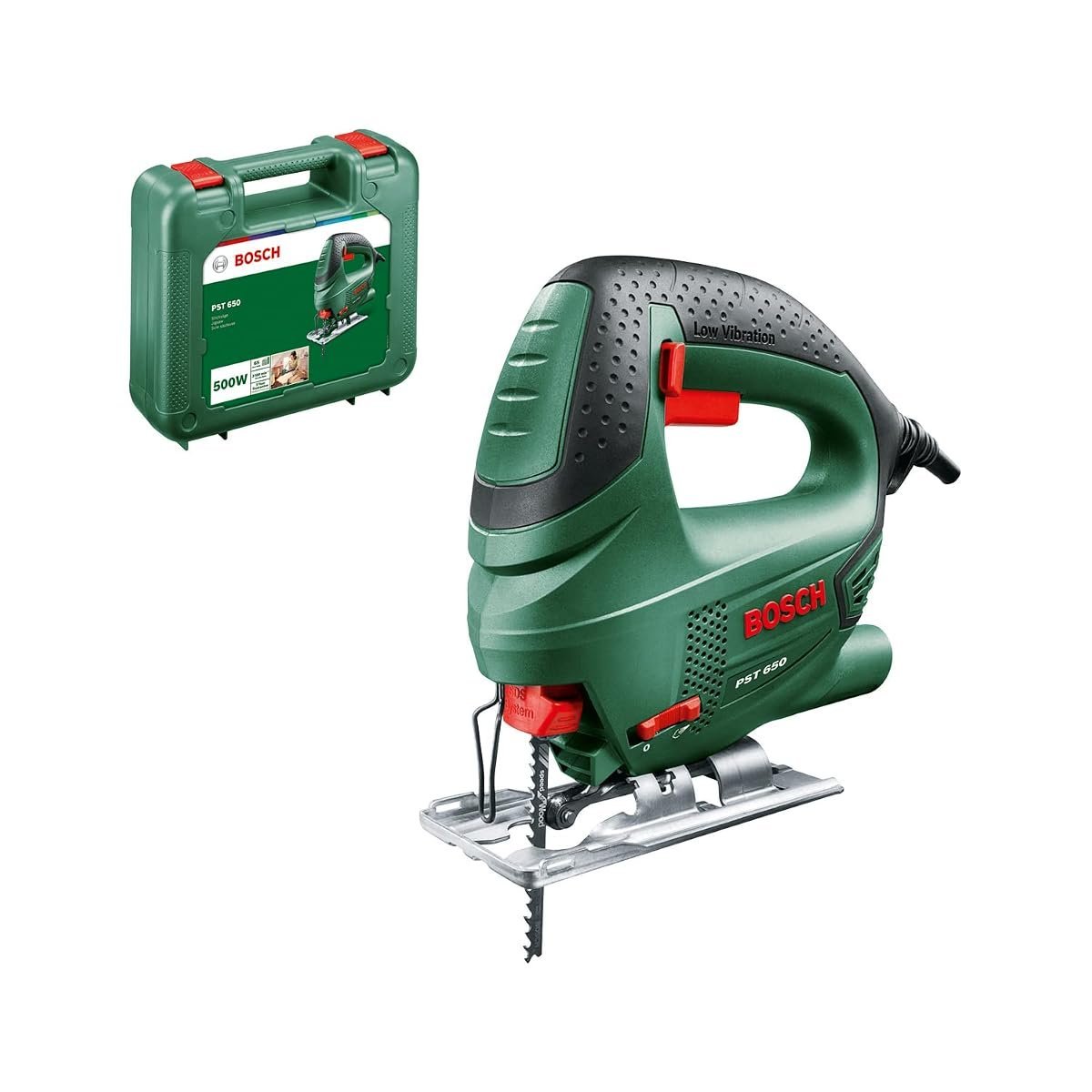
Five hundred watts from the wall cuts 65mm of timber and 4mm of steel, and it arrives in a case with a steel base plate underneath. Tool-free blade changes, a dust blower and an extraction port round it out.
Corded is the right answer more often than the cordless marketing suggests. There is no battery to be flat when you finally get to the job, no platform to buy into, and the power never sags mid-cut. The dust blower clearing the pencil line is the feature people notice most, because a jigsaw that buries its own cut line makes accurate work guesswork.
A lead limits you to where an extension reaches, which rules it out for site work away from power. For a home shed where the jigsaw comes out a few times a year and lives in its case between jobs, it is the most sensible thing here.
Pros
- 65mm cutting depth in wood, 4mm in steel
- Dust blower keeps the cut line visible
- Tool-free blade changes
- Steel base plate and extraction port
- Supplied in a carry case
Cons
- Tethered to a power outlet
- Less capable than the 780W corded units here
Key specs: 500W corded, 65mm wood and 4mm steel cutting depth, tool-less blade change, dust blower, extraction port, case
CHECK ON AMAZON2. Makita 18V Cordless D-Handle Jigsaw – Best D-Handle Grip
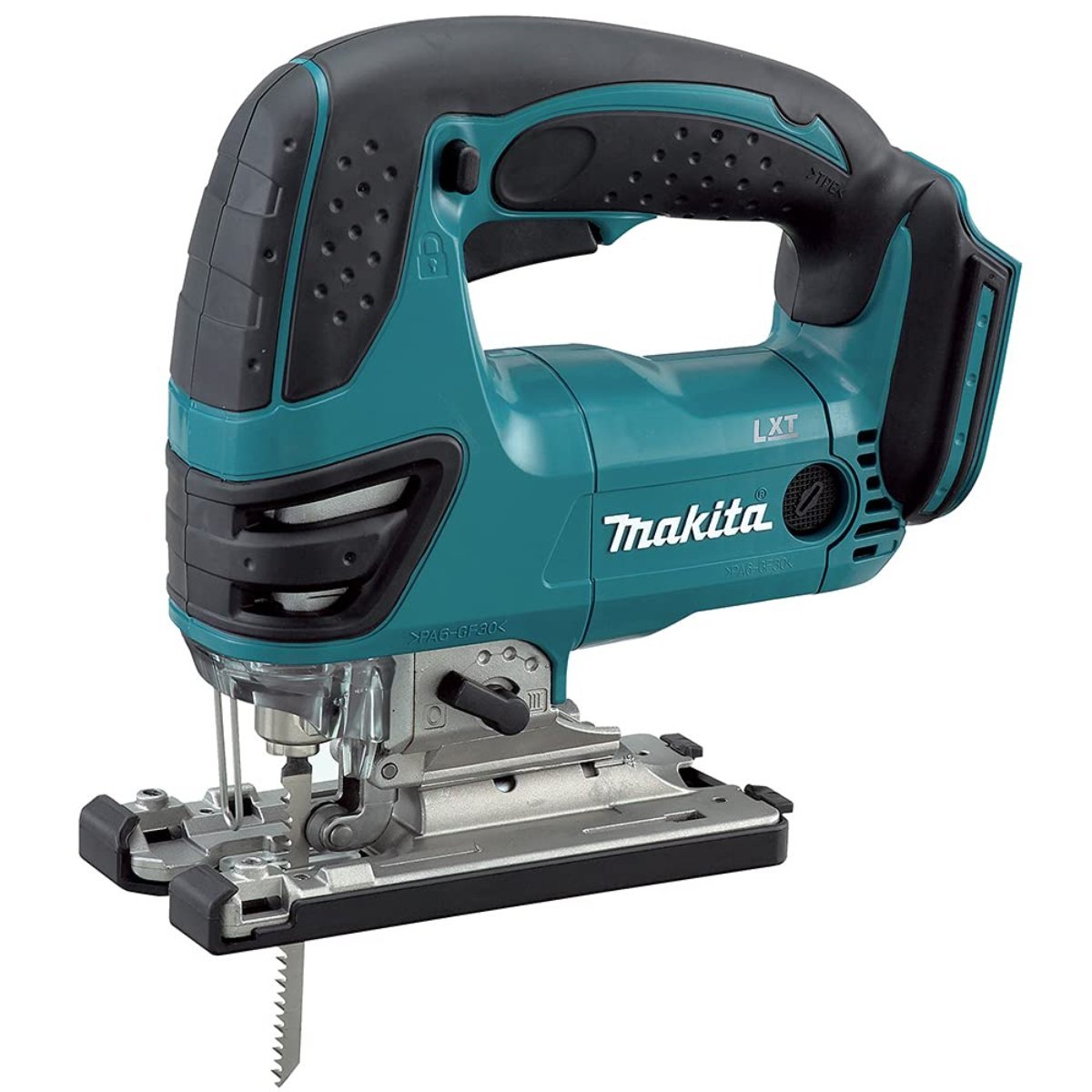
A D-handle sits over the body on this one rather than a barrel grip, giving a full-hand hold above the blade line. It ships as a bare skin on the Makita LXT platform.
Handle style is largely preference, but the D-handle suits anyone who pushes the saw along a line with their whole arm rather than steering it with fingertips. The shape spreads pressure across the palm, which is what reduces fatigue on long cuts, and the built-in blower keeps dust off the pencil line. The 18V LXT batteries are shared across the widest cordless range in Australia.
A D-handle sits higher than a barrel grip, so it is marginally less stable for fine curved work. Anyone already holding LXT batteries who cuts sheet material regularly will find the grip more comfortable across a day than the alternative.
Pros
- Comfortable D-handle for long cuts
- Blower clears dust from the cut line
- Runs on the widely shared 18V LXT platform
- Reduces hand fatigue on sheet work
Cons
- Sits higher than a barrel grip for fine curves
- Skin only, no battery or charger
Key specs: 18V LXT cordless, D-handle grip, dust blower, tool skin only
CHECK ON AMAZON3. Einhell Power X-Change Cordless Jigsaw – Best for Occasional Use
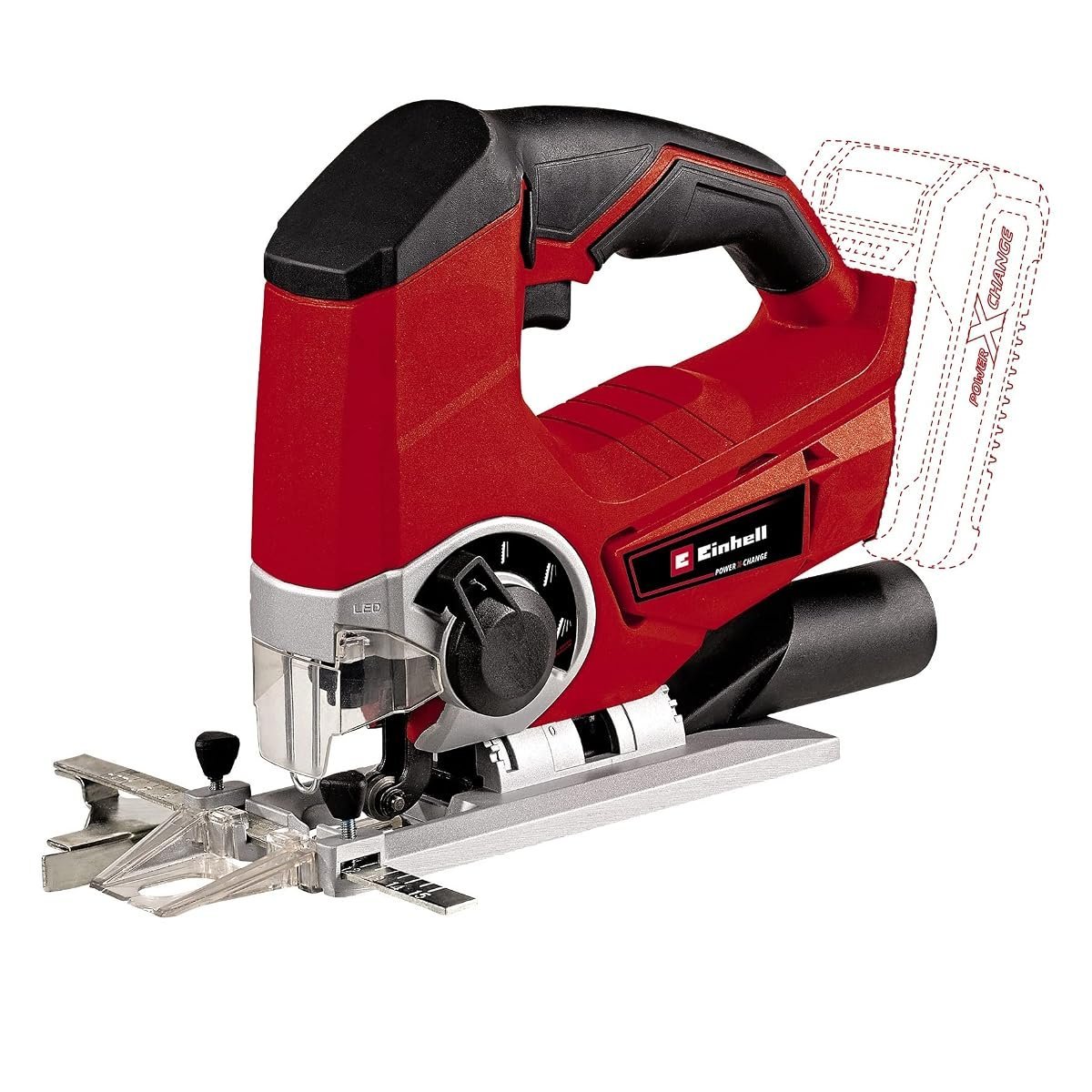
Einhell builds this around its Power X-Change battery system, with an adjustable base plate for angled cuts. It comes without battery or charger, like most of the cordless units here.
Power X-Change spans lawn mowers, drills, blowers and pressure washers on one battery, so households tend to already own a pack before they buy the saw. That changes the economics of an occasional-use tool completely, because the expensive part is already in the shed. Angle adjustment on the base plate handles bevels without needing a second tool.
It sits below the professional units on cutting speed and sustained accuracy in dense timber. As the jigsaw for someone who owns Einhell garden gear and needs to cut a shelf twice a year, that gap never shows up.
Pros
- Shares the broad Power X-Change battery system
- Adjustable base plate for bevel cuts
- Inexpensive as a bare tool
- Simple to operate
Cons
- Slower through dense timber than pro units
- No battery or charger supplied
Key specs: 18V Power X-Change cordless, adjustable base plate for angled cuts, supplied without battery or charger
CHECK ON AMAZON4. Makita LXT Brushless Barrel Grip Jigsaw – Best for Precise Cuts
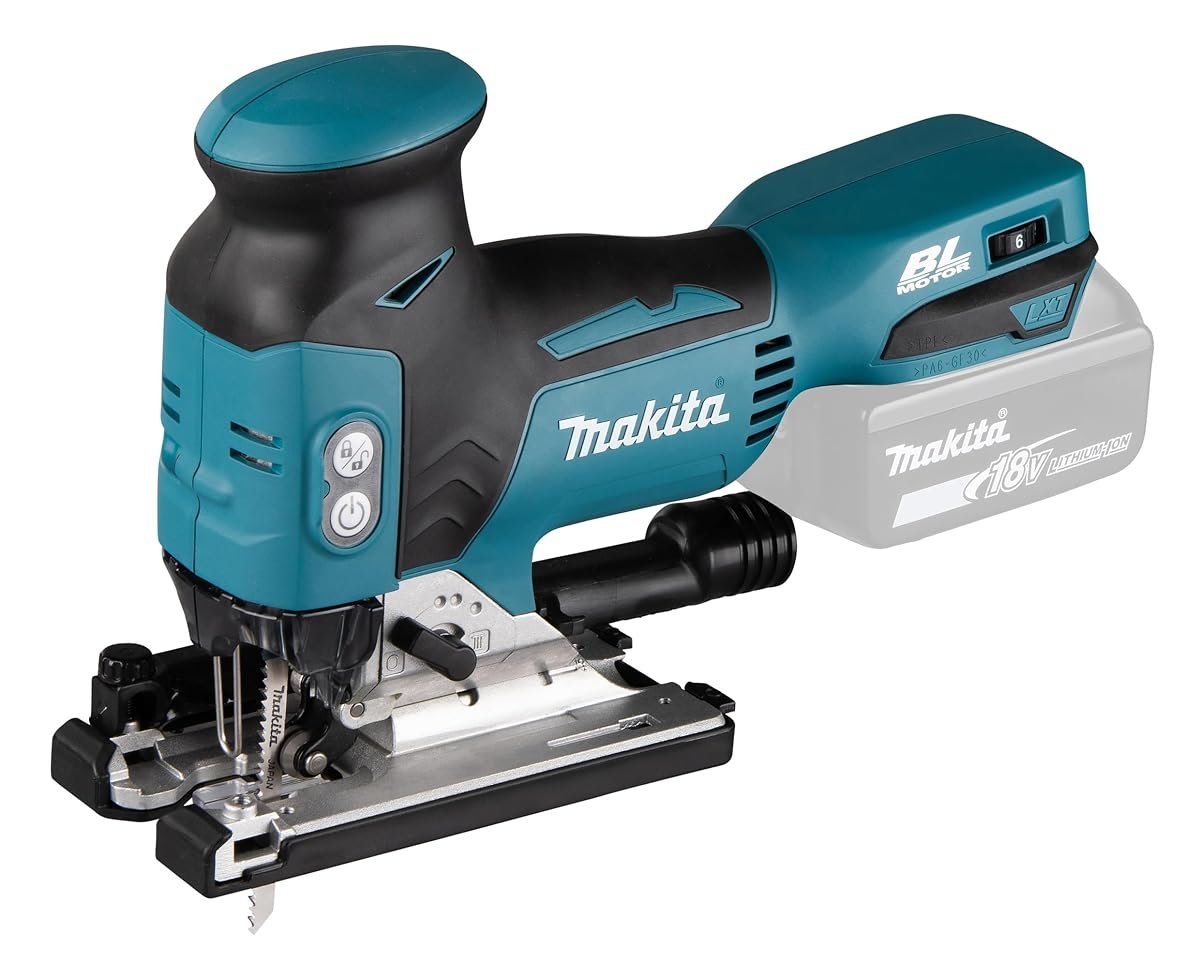
The barrel grip on this model puts your hand around the body itself, low and close to the base plate, with a brushless motor driving it.
Holding the saw low is what makes curved cutting accurate. Your hand sits nearly in line with the blade rather than above it, so steering happens through small wrist movements instead of the whole arm, and the tool follows a scribed curve rather than fighting it. Tool-less blade changes and the brushless motor mean it holds pace through long sessions of detailed work.
Barrel grips are less comfortable than a D-handle for long straight rips, and it costs more than the non-brushless model above it. Cabinetmakers and anyone cutting curves in sheet goods will not go back once they have used one.
Pros
- Barrel grip gives close-to-work control
- Brushless motor holds output through long sessions
- Tool-less blade change
- Best of these for curved and detailed cuts
- Shares 18V LXT batteries
Cons
- Less comfortable than a D-handle on long rips
- Costs more than the brushed Makita
Key specs: 18V LXT brushless, barrel grip body, tool-less blade change, batteries and charger not included
CHECK ON AMAZON5. Milwaukee M18 Fuel D-Handle Jigsaw – Best for Trade Use
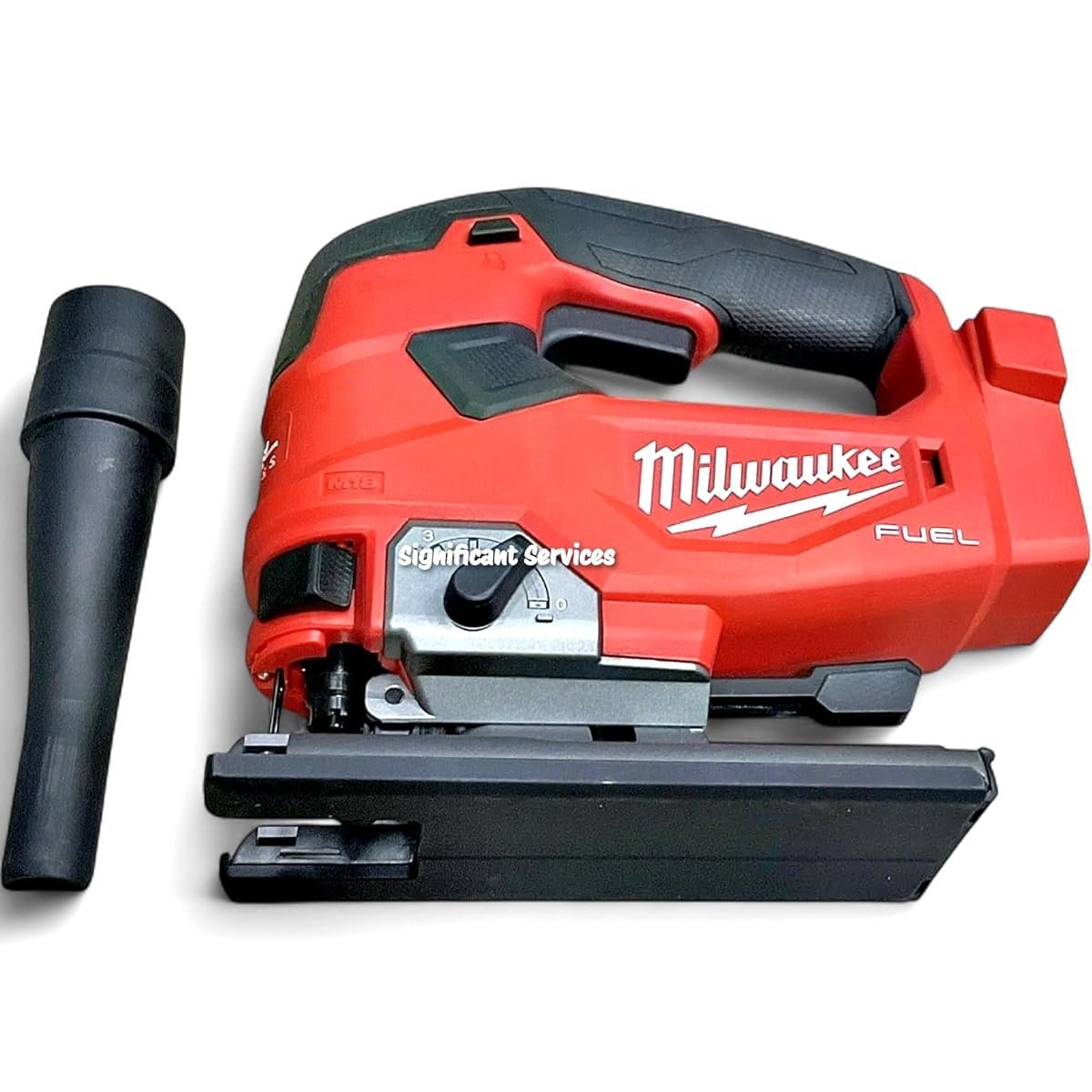
Milwaukee puts its POWERSTATE brushless motor in this one, aimed squarely at people cutting hard material every day rather than every other weekend.
Strokes per minute is where the extra motor shows. Higher SPM under load means the blade keeps cutting rather than rubbing when it hits dense hardwood or steel, and rubbing is what burns blades and wanders off the line. The M18 platform behind it is the other half of the argument, since a trade user is likely running M18 batteries across a van already.
It carries the highest price in this guide and delivers value that only a daily user recovers. Someone cutting a few sheets a year is paying for headroom that will never be reached.
Pros
- POWERSTATE brushless motor for hard materials
- High strokes per minute under load
- D-handle for controlled pushing
- Shares the M18 trade battery platform
- Ships with relevant accessories
Cons
- Highest price in this guide
- Overspecified for occasional DIY
Key specs: M18 Fuel cordless, POWERSTATE brushless motor, D-handle, bare tool
CHECK ON AMAZON6. Bosch Professional GST 150 Jigsaw – Best for Thick Timber
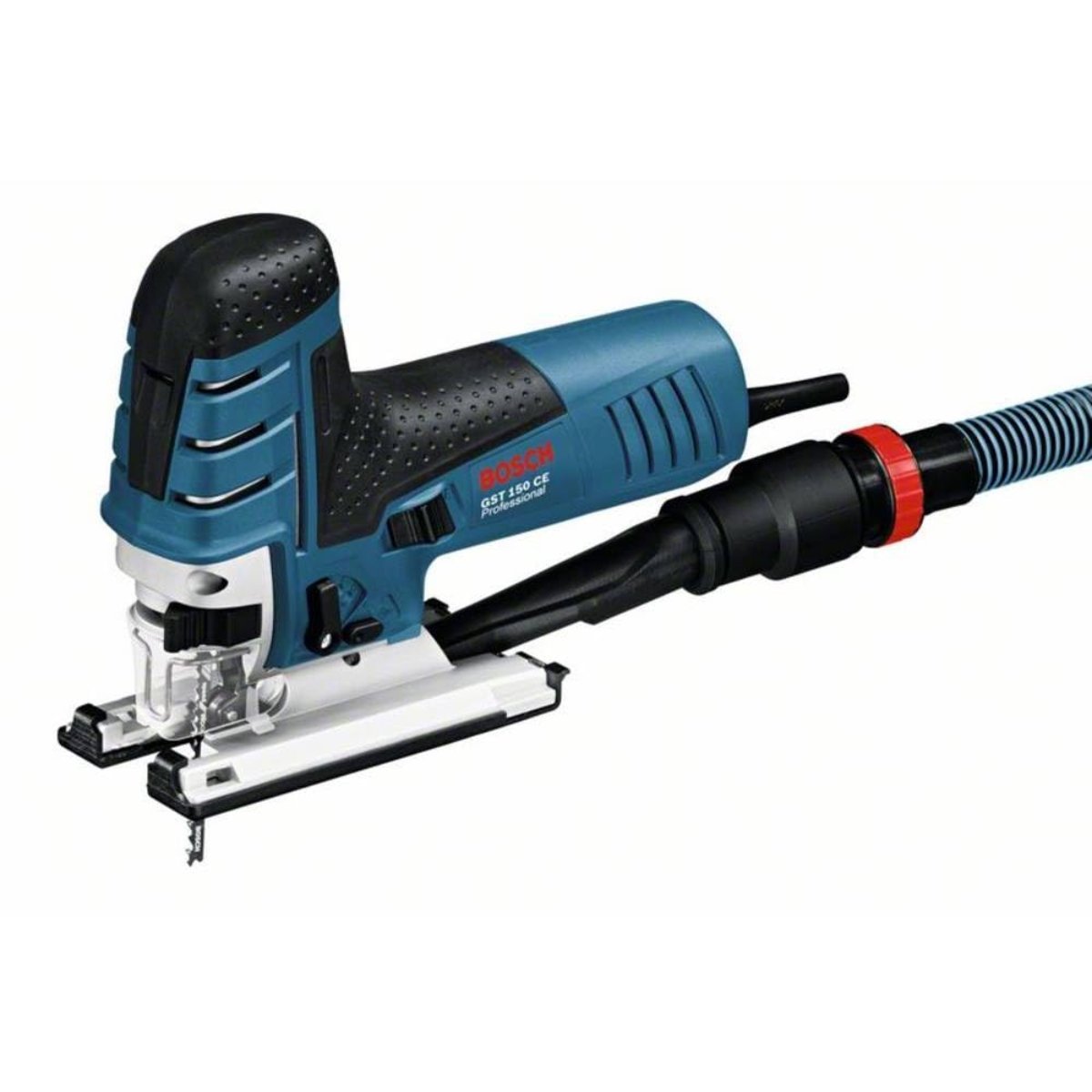
One hundred and fifty millimetres of cutting depth in timber is more than double what most jigsaws manage, driven by a 780 watt corded motor through a bending-resistant foot plate.
Depth is the specification that decides whether a jigsaw can do a job at all. At 150mm it will cut through a fence post, a stair stringer or laminated stock that would stop every cordless unit here dead. The stiffened foot plate matters at that depth too, because a flexing base lets the blade wander and the cut comes out out of square through the thickness.
It is heavy, corded and more saw than anyone needs for plywood. Where the work involves genuinely thick stock, nothing else in this guide will make the cut at all.
Pros
- 150mm cutting depth in wood, the deepest here
- 780W corded motor with power in reserve
- Bending-resistant foot plate keeps cuts square
- Handles heavy applications
- Supplied in a case
Cons
- Heavy and corded
- More capability than plywood work needs
Key specs: 780W corded, 150mm maximum cutting depth in wood, bending-resistant foot plate, carry case
CHECK ON AMAZON7. Craftsman V20 Cordless Jigsaw – Best Orbital Control
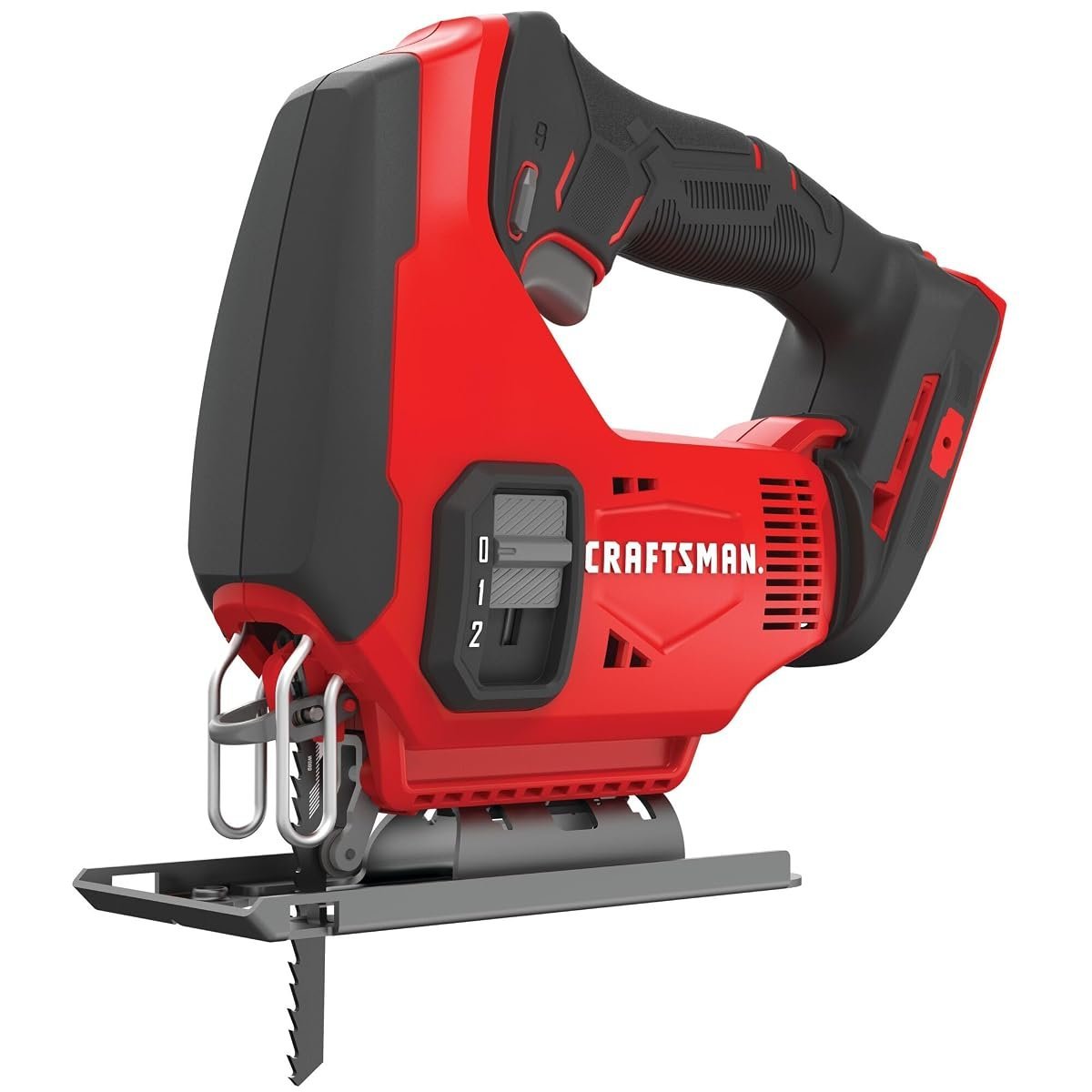
Three orbital settings and a variable trigger running to 2,500 strokes per minute give this one more adjustment than most at its price. It runs on the Craftsman V20 system as a bare tool.
Orbital action swings the blade forward on the up-stroke, which cuts timber far faster but tears the edge and is wrong for metal or laminate. Having three settings plus off means one saw handles rough framing cuts and clean finish cuts without changing tools. Most budget jigsaws give you one orbital setting or none.
The V20 platform is smaller in Australia than Makita or Milwaukee, so batteries are a narrower investment. For someone building on Craftsman gear who cuts varied materials, the orbital range is the feature that earns it a place.
Pros
- Three orbital settings plus off
- Variable speed to 2,500 SPM
- Handles both rough and finish cuts
- Good adjustment range for the price
Cons
- V20 battery platform is smaller in Australia
- Bare tool only
Key specs: V20 cordless, 3 orbital settings, variable speed up to 2,500 SPM, bare tool
CHECK ON AMAZON8. Worx Nitro Cordless Pendulum Jigsaw – Best Value Brushless
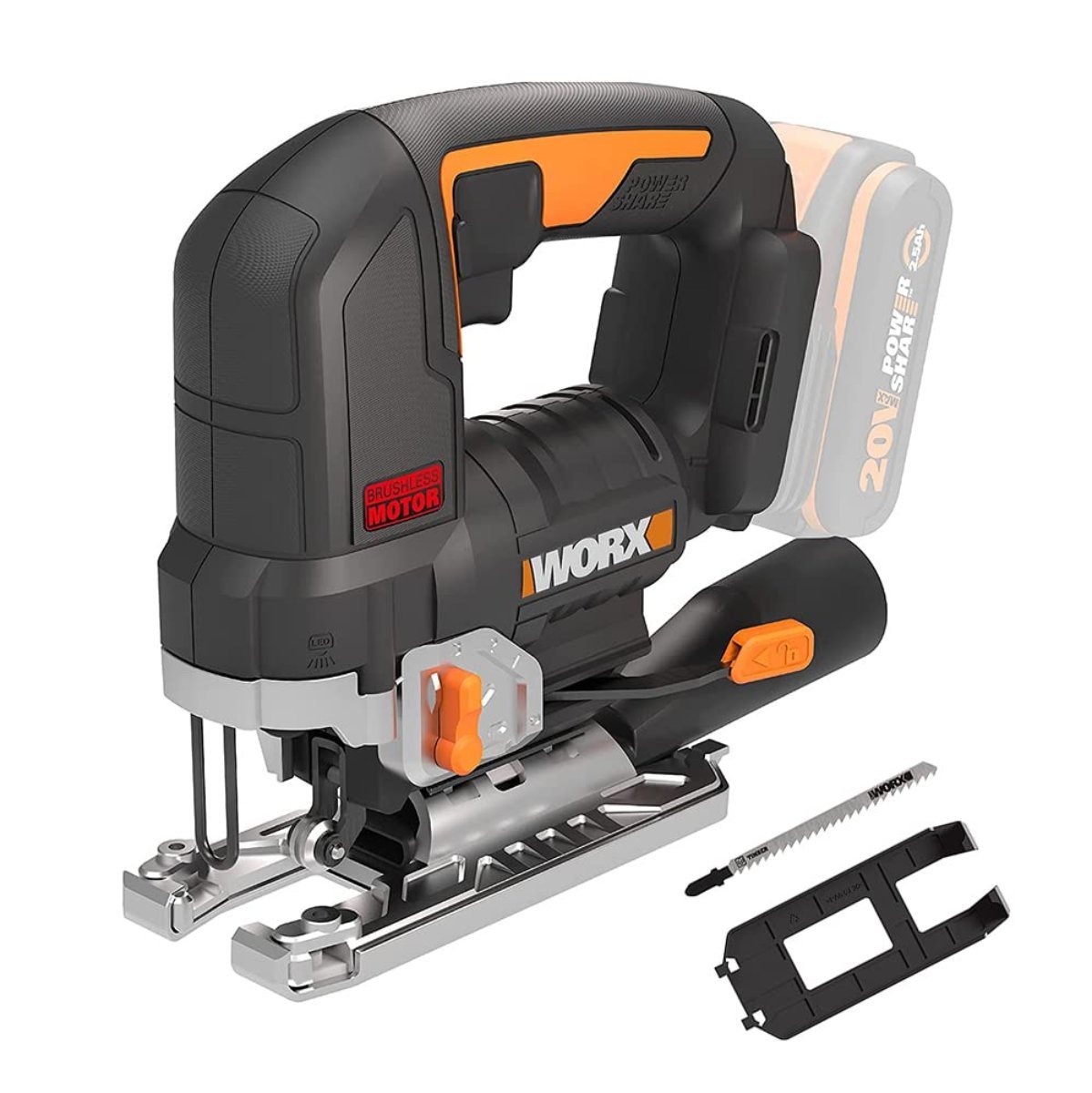
Worx claims 50 percent more runtime, 25 percent more power and ten times the motor life from the brushless motor in this 20V pendulum jigsaw, against its own brushed equivalent.
Brushless technology has been trickling down from professional tools for years and this is roughly where it lands in the mid-market. The practical effect is a saw that keeps cutting at the same rate as the battery drains, rather than slowing through the second half of a charge, and one that will not need brushes replaced. Pendulum action is adjustable for material type.
Worx sits outside the trade battery ecosystems, so this suits someone starting fresh rather than adding to a kit. Among cordless jigsaws with a brushless motor it is the least expensive route in.
Pros
- Brushless motor at a mid-market price
- Longer runtime per charge than brushed equivalents
- Adjustable pendulum action
- Variable speed trigger
Cons
- Worx battery platform is less widely shared
- Not aimed at daily trade use
Key specs: 20V Nitro brushless, pendulum stroke action, variable speed trigger, bare tool
CHECK ON AMAZON9. Black and Decker Cordless Pendulum Jigsaw – Best Budget Pick
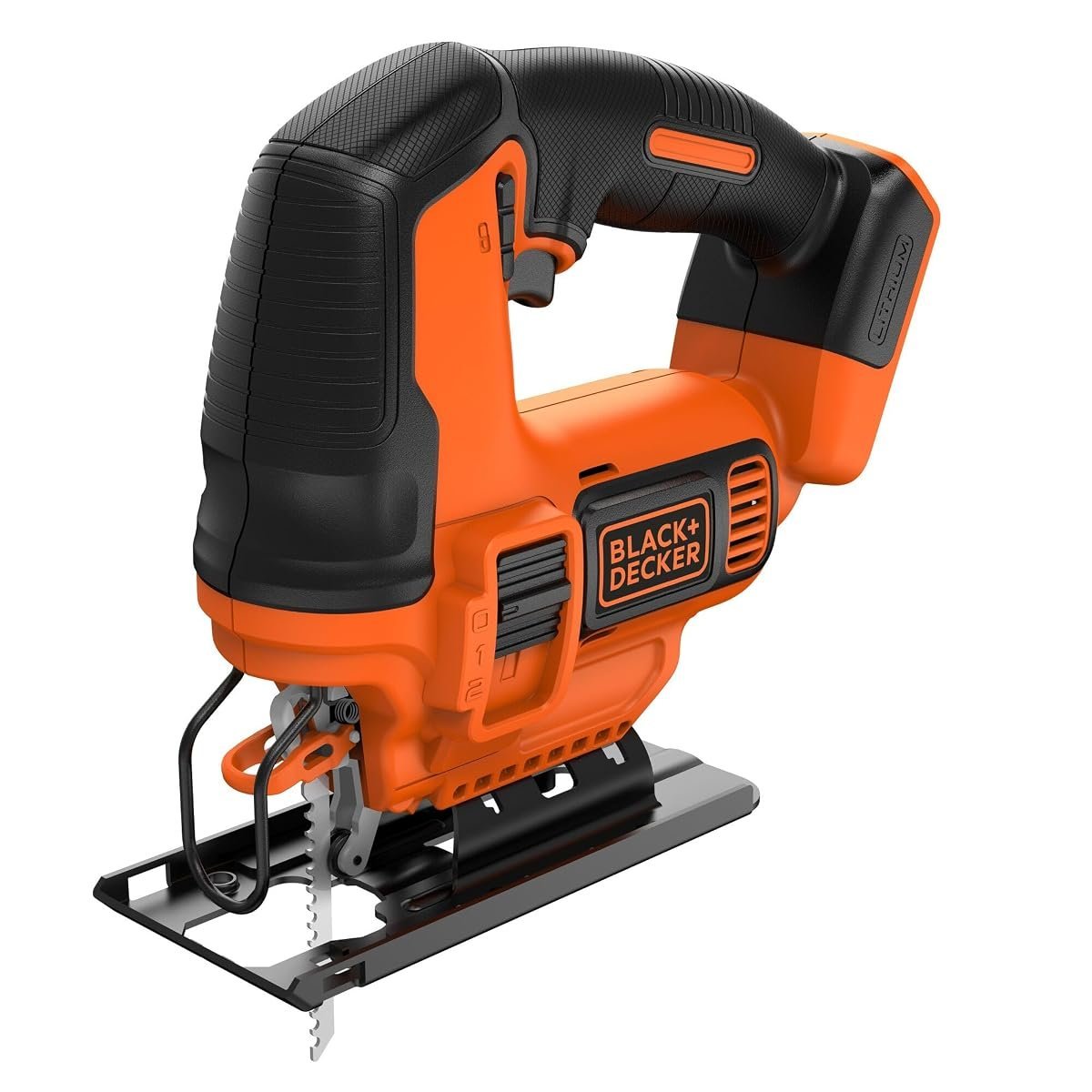
Three pendulum positions and variable speed to 2,500 RPM at the lowest price in this guide, supplied as a bare unit on the Black and Decker 18V system.
Getting a three-position pendulum at this price is the notable part, since budget jigsaws usually fix the orbital action or leave it out. It means the saw can be set aggressive for rough timber and smooth for a finish edge rather than compromising on one setting. Cutting speed and blade grip sit below everything above it, but the adjustment is there.
Build quality and sustained accuracy are the compromise, and a long straight cut needs a guide to stay true. For occasional household jobs where the alternative is borrowing one, it does what is asked.
Pros
- Three-position pendulum at a budget price
- Variable speed to 2,500 RPM
- Lightest duty option here
- Shares Black and Decker 18V batteries
Cons
- Least accurate over long cuts
- Bare unit, battery not included
Key specs: 18V cordless, 3-position pendulum action, 0 to 2,500 RPM variable speed, bare unit
CHECK ON AMAZON10. DeWalt 18V XR Brushless Top Handle Jigsaw – Best Top Handle
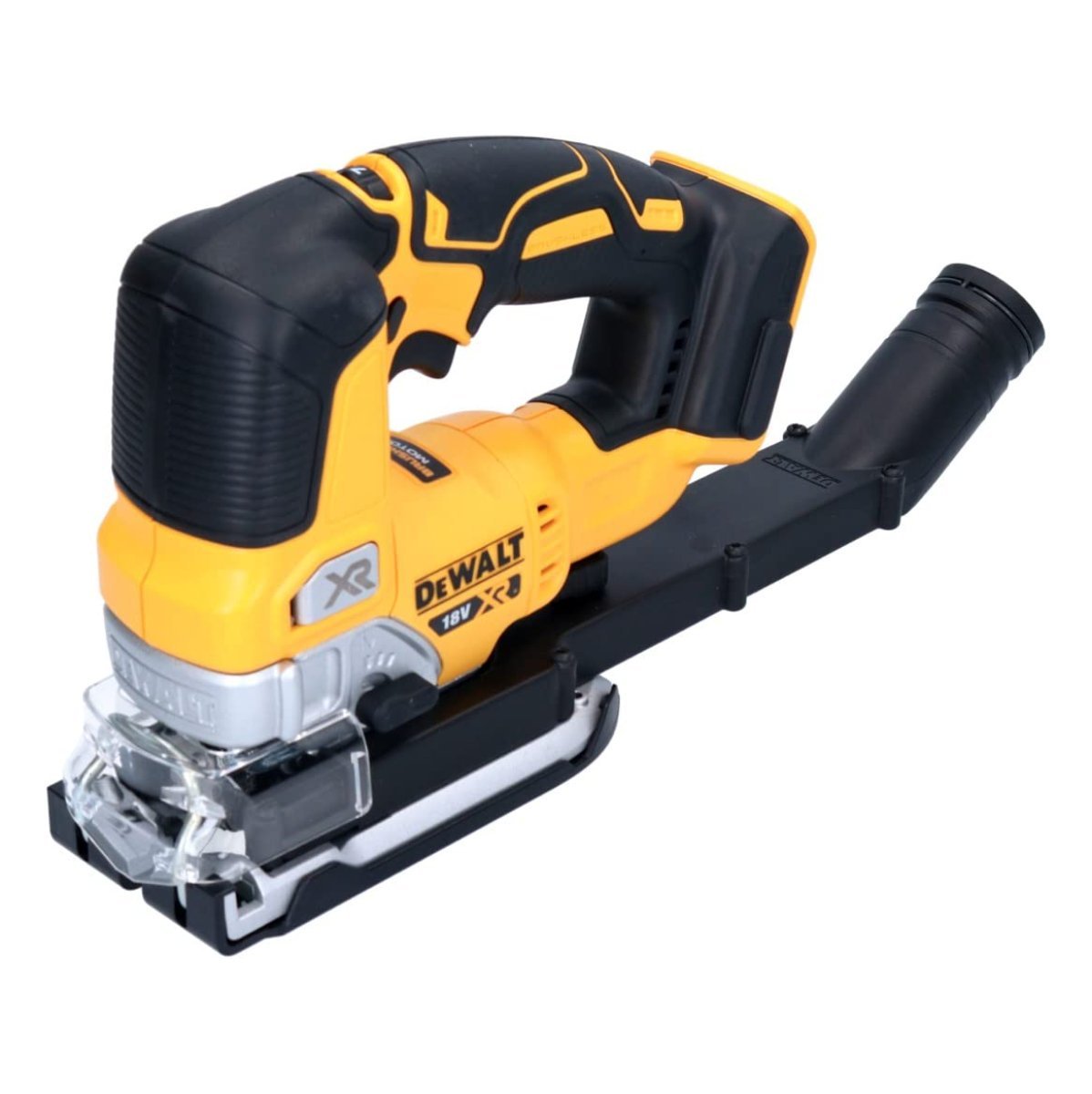
Four pendulum positions rather than the usual three, a brushless motor and a lock-off switch on the variable trigger define this top-handle DeWalt.
The fourth pendulum setting sounds like a detail and behaves like one until you cut acrylic or thin steel, where the difference between the lowest orbital setting and none at all decides whether the edge melts or shears cleanly. A lock-off switch prevents the trigger being pulled in transit, which matters on a saw carried in a tool bag with the blade fitted.
It is a skin only and DeWalt 18V XR batteries are not cheap bought separately. Anyone already running XR gear who wants precise control across mixed materials will get the most from the extra pendulum stage.
Pros
- Four-position pendulum action
- Brushless motor
- Lock-off switch on the trigger
- Precise control across mixed materials
- Shares DeWalt 18V XR batteries
Cons
- Skin only, no battery or charger
- XR batteries cost more bought separately
Key specs: 18V XR brushless, top handle, 4-position pendulum action, variable speed trigger with lock-off, skin only
CHECK ON AMAZONHow to Choose a Jigsaw
Check the cutting depth against your thickest stock. Most jigsaws manage 65mm to 80mm in timber, which covers plywood, MDF and standard framing. Fence posts, stair stringers and laminated beams need 150mm, and only a high-wattage corded saw reaches that. Buying short here means the job simply cannot be done.
Pendulum action is the feature that separates fast from clean. Swinging the blade forward on the up-stroke cuts timber roughly twice as fast but tears the edge. Switching it off gives a clean cut in laminate, acrylic and metal. Three settings plus off is enough for most work; four gives finer control on thin sheet material.
Barrel grip or D-handle changes how the saw steers. A barrel grip puts your hand low and nearly in line with the blade, which makes curved cutting far more accurate. A D-handle sits above the body and suits pushing along a straight line with your whole arm. Cabinetmakers tend to prefer barrel, carpenters D-handle.
Let the battery platform decide between cordless options. Batteries and chargers cost more than the tool over time and never cross brands. If there is already an 18V system in the shed, the matching bare skin is almost always the right buy. If there is not, a corded saw avoids the whole question for less money.
Buy the right blades and expect to replace them. Blade choice affects cut quality more than the saw does. Coarse teeth with high tooth pitch for fast timber cuts, fine teeth for laminate and metal, and down-cutting blades where the visible face is on top. A blunt blade wanders, burns and makes a good saw look bad.
Plan for the dust. A jigsaw throws fine dust straight at the cut line and across the bench. Most units here have an extraction port worth connecting to one of the industrial vacuum cleaners in our guide, and the blades, allen keys and spare bases need a home, which is what the tool boxes guide covers.
Frequently Asked Questions
What is a jigsaw used for?
Cutting curves, circles and internal cut-outs in timber, plywood, laminate, plastic and thin metal. It is the tool for anything a circular saw cannot follow, such as a sink cut-out in a benchtop or a shaped shelf. It is not the tool for long accurate straight rips.
What does pendulum or orbital action do on a jigsaw?
It swings the blade forward on the up-stroke so it bites into the material rather than only moving up and down. That roughly doubles cutting speed in timber but tears the cut edge, so it should be switched off for laminate, acrylic and metal where edge quality matters.
Is a corded or cordless jigsaw better?
Corded delivers constant power, never goes flat and reaches the deepest cuts, which suits a fixed workshop. Cordless goes anywhere and modern brushless models are close in performance. If there is no battery platform in the shed already, corded gives more saw for the money.
What is the difference between a barrel grip and a D-handle jigsaw?
A barrel grip is held around the body, low and close to the base, giving better control on curves. A D-handle sits above the tool and suits pushing along straight lines with the whole arm. Performance is identical; the choice is about how you work.
How thick can a jigsaw cut?
Common DIY jigsaws manage around 65mm in timber and 4mm in steel. Professional corded units reach 150mm in timber. Cutting near the maximum slows the saw and increases blade deflection, so allow headroom rather than working at the limit.
Why does my jigsaw cut on an angle?
Usually a blunt or bent blade deflecting under load, or pushing the saw faster than it can cut. Thicker stock makes it worse. Fit a fresh blade, let the saw set the pace, and check the base plate is locked at 90 degrees rather than sitting slightly bevelled.
Verdict
For a home shed the corded Bosch PST 650 is the sensible buy, because there is no battery platform to commit to and no flat pack when the job finally starts. Anyone cutting curves in sheet goods should take the barrel-grip Makita instead, where holding the tool low is what keeps the blade on a scribed line. Where the stock is genuinely thick, the 780W Bosch is the only saw here that will cut 150mm at all.