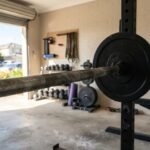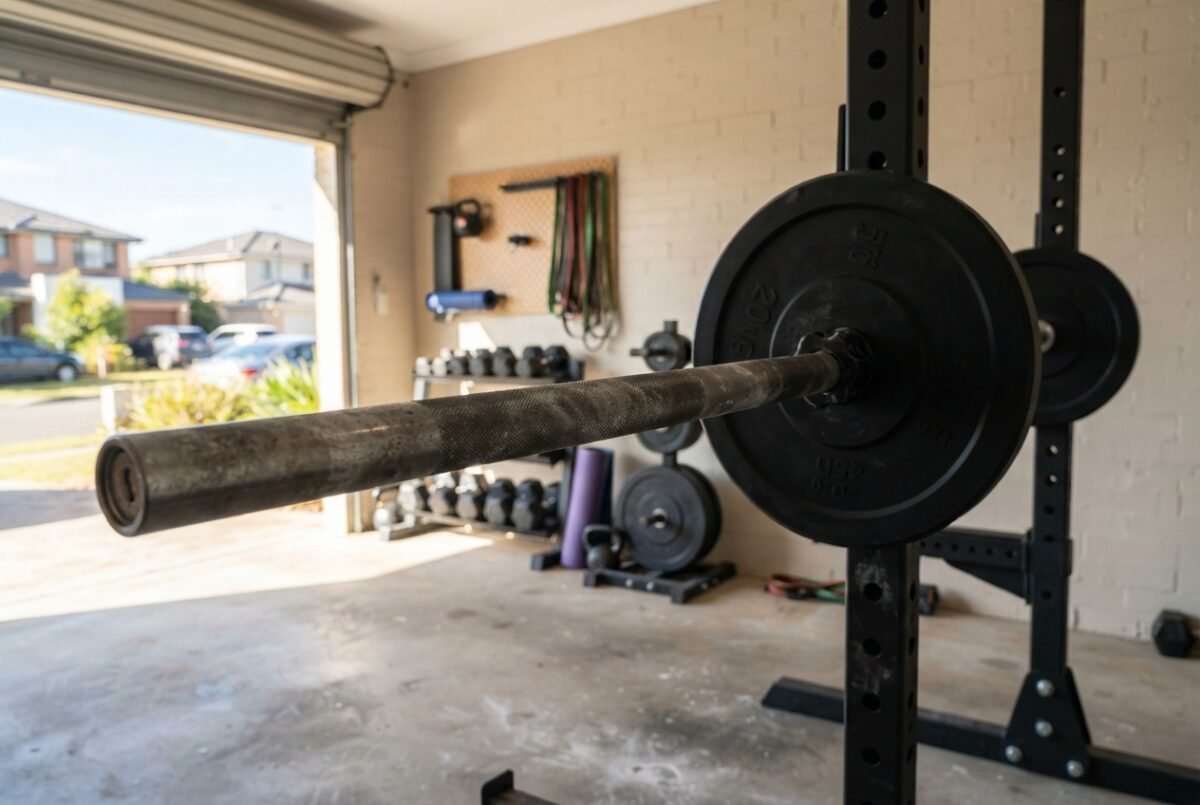
Not every long steel bar sold as a barbell in Australia is actually built to Olympic specification, and the gap only becomes obvious the first time a 20kg bumper plate refuses to slide onto a 28mm sleeve built for a cheaper 25mm standard bar. An Olympic barbell is a specific, standardised piece of equipment: a 2.2m steel bar with 50mm rotating sleeves sized for Olympic weight plates, weighing 20kg for the men’s version and 15kg for the women’s, built to handle repeated loading, dropping and spinning through squats, deadlifts, presses, cleans and snatches. The best Olympic barbell in Australia for a first home gym looks nothing like the specialty bar a physiotherapist might steer a sore shoulder toward, and mixing the two up wastes money on a bar built for the wrong job.
Standard Olympic barbells are the 20kg or 15kg all-purpose bars most home gyms actually need, built for squats, bench, deadlifts and Olympic lifts alike. Safety squat bars move the load in front of the shoulders onto padded yoke handles, taking pressure off a sore shoulder or wrist during a heavy squat. Multi-grip and hex trap bars change the hand or body position entirely – a hex bar surrounds the lifter for a more upright deadlift, while a multi-grip bar offers several hand widths on one straight bar. Technique bars drop the weight down to 6-7kg specifically so a beginner or a young athlete can learn the movement before loading real plates onto it.
The number that actually separates a budget bar from a premium one is tensile strength, not the sticker weight rating alone – the bars in this guide range from 204kg up to 700kg in stated maximum load, but the steel’s tensile strength, measured in PSI, is what decides whether a bar keeps its spring and doesn’t bend permanently under repeated max-effort lifts. A women’s bar built to 204kg covers most lifters starting out; a 700kg bar rated to 190,000-205,000 PSI tensile steel is built for someone loading well past their own bodyweight for years without ever needing a replacement.
Ten Olympic and Olympic-adjacent bars sit in this line-up, from a 6.8kg technique bar built purely for learning form through to a 700kg-rated competition-grade bar, plus a hex trap bar for anyone chasing a more upright, lower-back-friendly deadlift.
Quick Picks
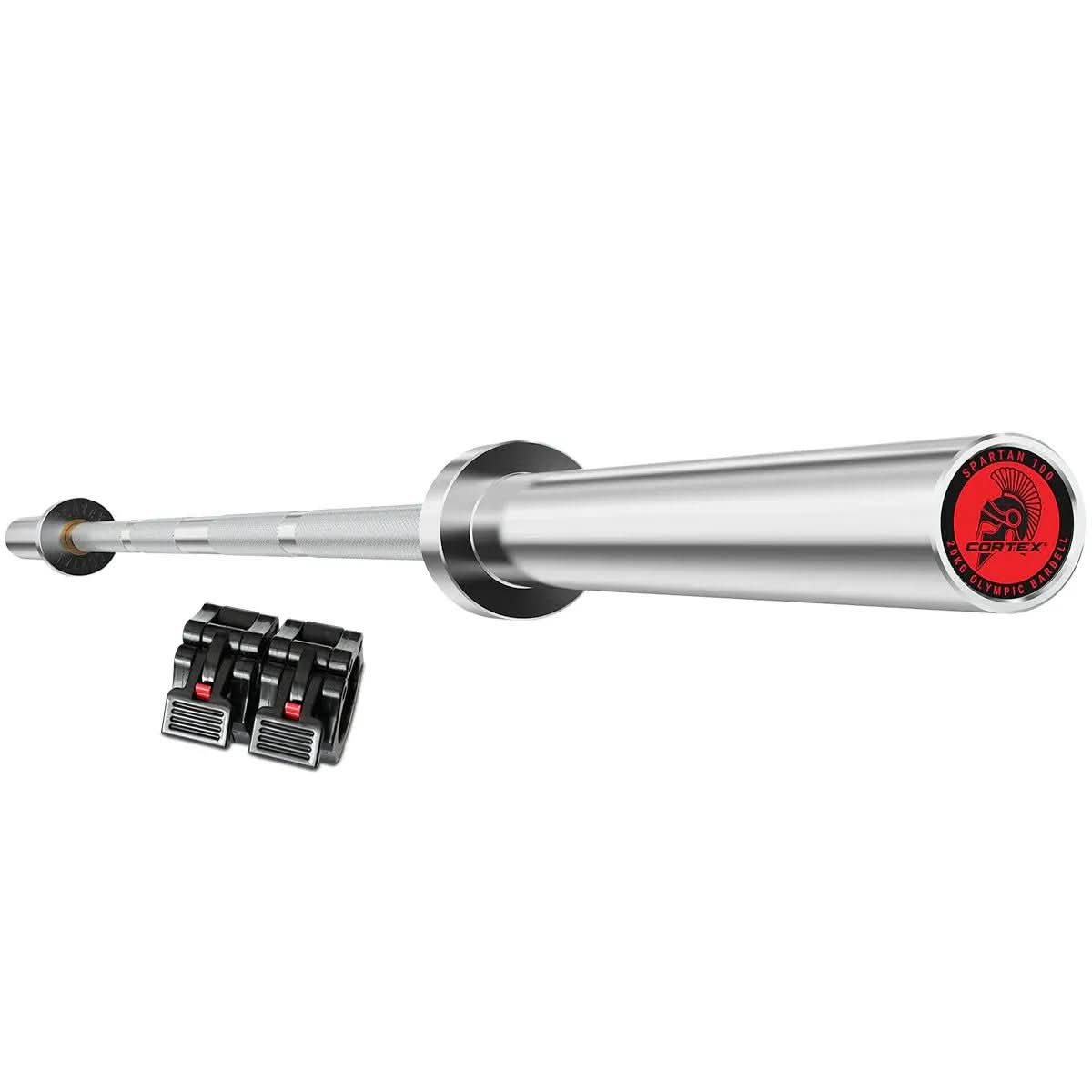
SPARTAN100 20kg Olympic Barbell
A 700lb-rated 20kg competition-length bar with precise knurling and needle bearings, at the most accessible price point of the four Cortex bars here.
CHECK CURRENT PRICE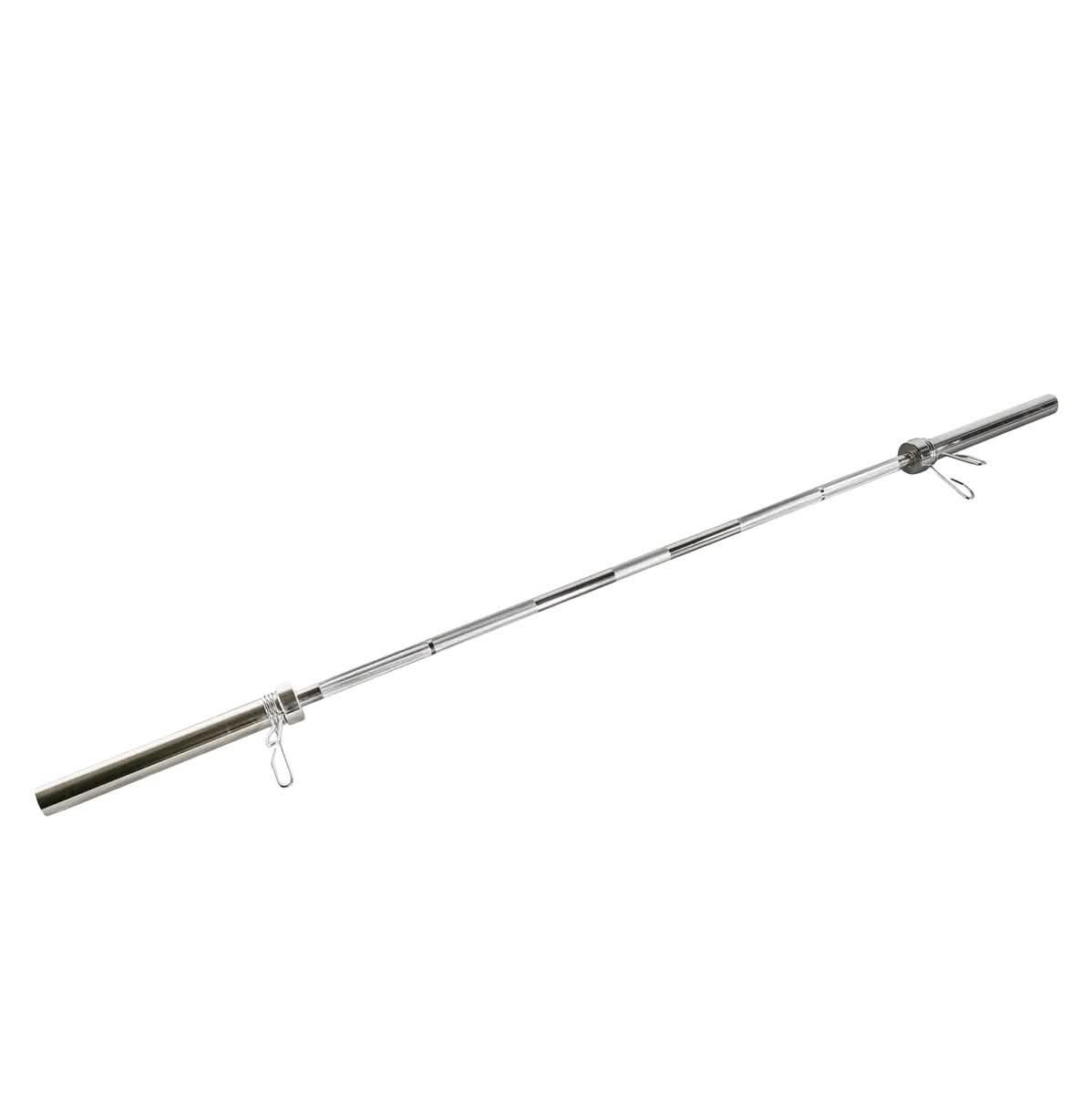
Hakuba 20kg Olympic Barbell
Bronze bushings, a 300kg rating and a chrome finish for less outlay than any other full-length bar in this line-up.
CHECK CURRENT PRICE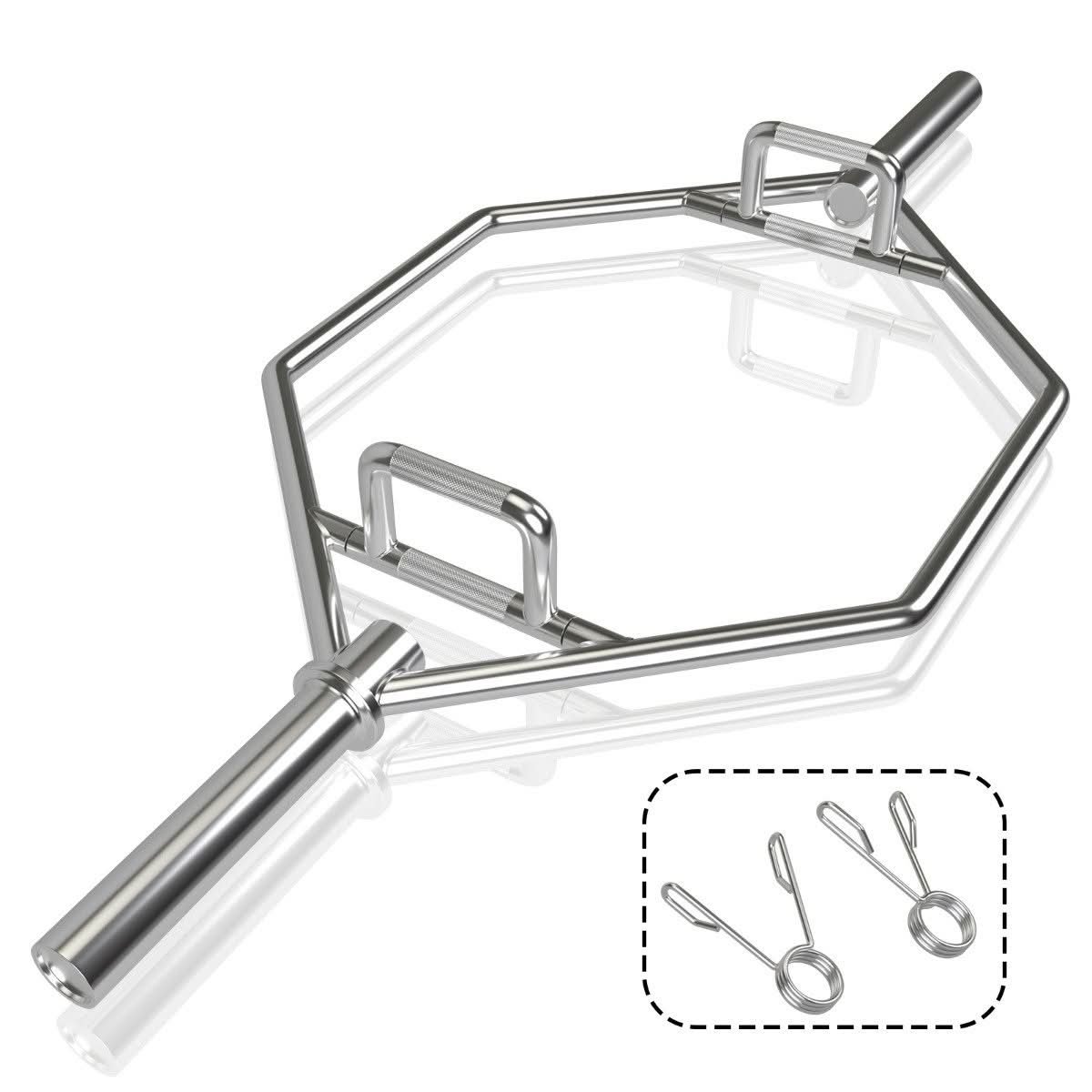
142cm Olympic Hex Trap Bar
Foldable handles and a 365kg rating built for a more upright pull that keeps the load closer to the body than a straight bar.
CHECK CURRENT PRICEBest Olympic Barbell Australia Compared
| Product | Link | Type | Best For | Key Spec |
|---|---|---|---|---|
| SPARTAN100 20kg Olympic Barbell | Check price | Standard | First home gym bar | 20kg, 700lb rating, 2 needle bearings/sleeve |
| SPARTAN205 20kg Hard Chrome Olympic Barbell | Check price | Standard | Humid garages | 20kg, 700lb rating, hard chrome, 4 bearings/sleeve |
| ATHENA100 15kg Women’s Olympic Barbell | Check price | Standard | Smaller hands | 15kg, 450lb rating, 25mm grip, 200cm |
| Safety Squat Olympic Barbell | Check price | Specialty | Shoulder or wrist issues | 21kg, 700lb rating, padded yoke |
| 142cm Olympic Hex Trap Bar | Check price | Specialty | Deadlifts | 18kg, 365kg rating, foldable handles |
| Hakuba 20kg Olympic Barbell | Check price | Standard | Tight budgets | 17kg, 300kg rating, bronze bushings |
| Cerakote Utility Barbell 20kg | Check price | Standard | All-purpose lifting | 20kg, 450kg rating, Cerakote finish |
| Remarkables 20kg Black Zinc Barbell | Check price | Standard | Aggressive knurl | 20kg, 700kg rating, dual IWF/IPF knurl |
| Evolve 20kg Teflon Barbell | Check price | Standard | Corrosion resistance | 20kg, 700kg rating, Teflon coating |
| 6.8kg Technique Training Bar | Check price | Technique | Beginners and juniors | 6.8kg, 120kg rating, 183cm |
How We Picked
This comparison came from checking Olympic barbell stock across Australia’s approved dropship, marketplace and specialty gym-equipment partners, at a time when IBISWorld’s own industry research shows demand for traditional gym memberships declining even as home training equipment keeps finding buyers, filtering out anything under Olympic’s 50mm sleeve spec and anything without current Australian stock. One product family showed up on more than one storefront under a different listing name; where that happened, we treated the underlying product’s own specification sheet, not the storefront’s branding, as the source of truth.
Selections span five brands across three merchants and four distinct bar types (standard, safety squat, hex trap and technique), cross-checked where possible against manufacturer specification sheets rather than marketing copy alone.
1. SPARTAN100 20kg Olympic Barbell – Best Value Men’s Bar
Full 7ft (220cm) Olympic length, 20kg bar weight, a 700lb (317kg) maximum load rating and two needle bearings per sleeve for a smooth, controlled spin during Olympic lifts. Precise knurling and a 2.87cm grip diameter put it squarely in standard competition-bar territory rather than the thinner, softer bars sold as budget starter kits.
Two needle bearings per sleeve is a genuine step up from the plain bushings most budget bars use lower down this list – bearings spin more freely and with less friction, which matters for cleans and snatches where the bar needs to rotate independently of the plates as it travels. For pure squat-and-bench use without any Olympic lifting, that spin quality matters far less.
A garage gym starting from scratch, wanting one bar that handles squats, deadlifts, presses and the odd clean session without stepping up to a specialty bar yet. Chrome finish needs a light wipe-down after a sweaty session in a poorly ventilated shed; it isn’t the corrosion resistance the hard chrome pick below offers.
Pros:
- 700lb (317kg) rated, full Olympic 220cm length
- Two needle bearings per sleeve for a smoother spin than bushing-only bars
- The most accessible price point of the four Cortex bars in this guide
Cons:
- Plain chrome finish needs wiping down after use in a humid or poorly ventilated space
- No specialty grip options – a straight bar only, unlike the multi-grip and hex picks here
Key specs: Weight: 20kg | Length: 220cm (7ft) | Max load: 700lb / 317kg | Grip diameter: 2.87cm | Spin: 2 needle bearings per sleeve | Warranty: 12 months
CHECK CURRENT PRICE2. SPARTAN205 20kg Hard Chrome Olympic Barbell – Best Corrosion-Resistant Finish
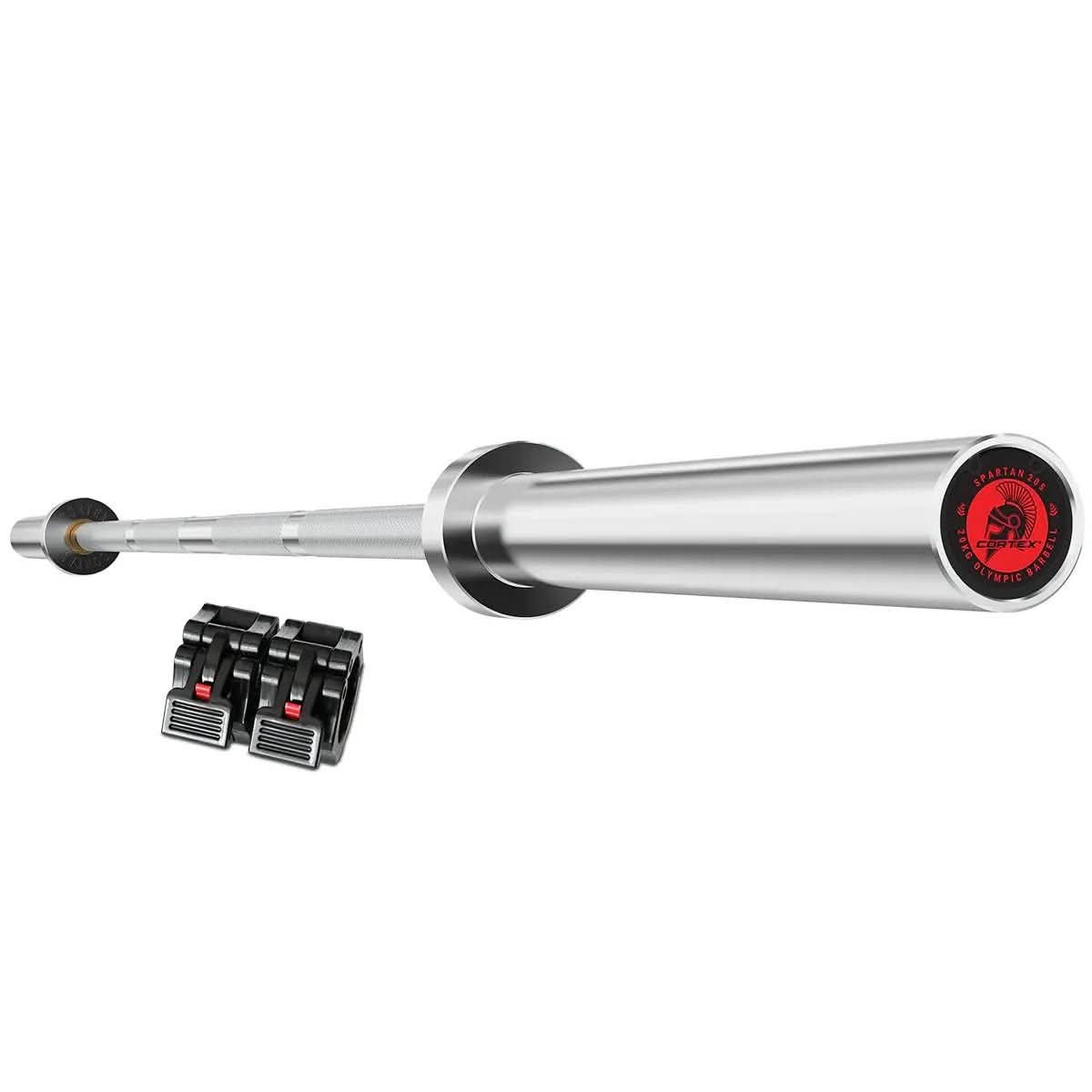
Same 700lb rating and 220cm length as the bar above, stepped up to a hard chrome finish and four needle bearings per sleeve instead of two. Hard chrome plating resists corrosion and pitting more effectively than standard chrome, which matters most in a coastal home gym or an unheated shed that swings through condensation over a Melbourne winter.
Four bearings per sleeve spins noticeably freer than the two-bearing Spartan100 above. Worth paying for if Olympic lifting – cleans, snatches, jerks – is a real part of the training plan rather than an occasional accessory movement. Pure powerlifting-style training (squat, bench, deadlift) won’t notice the extra bearings nearly as much.
A step up in price from the Spartan100 above, justified specifically by the finish and the bearing count instead of the load rating, which is identical between the two. Skip this one if the bar is going in a climate-controlled spare room where corrosion was never going to be a real risk.
Pros:
- Hard chrome finish resists corrosion better than standard chrome
- Four needle bearings per sleeve for really fast spin under Olympic lifts
- Same 700lb load rating as the standard Spartan100
Cons:
- A step up in price over the Spartan100 for a load rating that doesn’t actually change
- Overkill for someone who only ever squats, benches and deadlifts with no Olympic lifting
Key specs: Weight: 20kg | Length: 220cm (7ft) | Max load: 700lb / 317kg | Finish: hard chrome | Spin: 4 needle bearings per sleeve | Warranty: 12 months
CHECK CURRENT PRICE3. ATHENA100 15kg Women’s Olympic Barbell – Best Women’s Bar
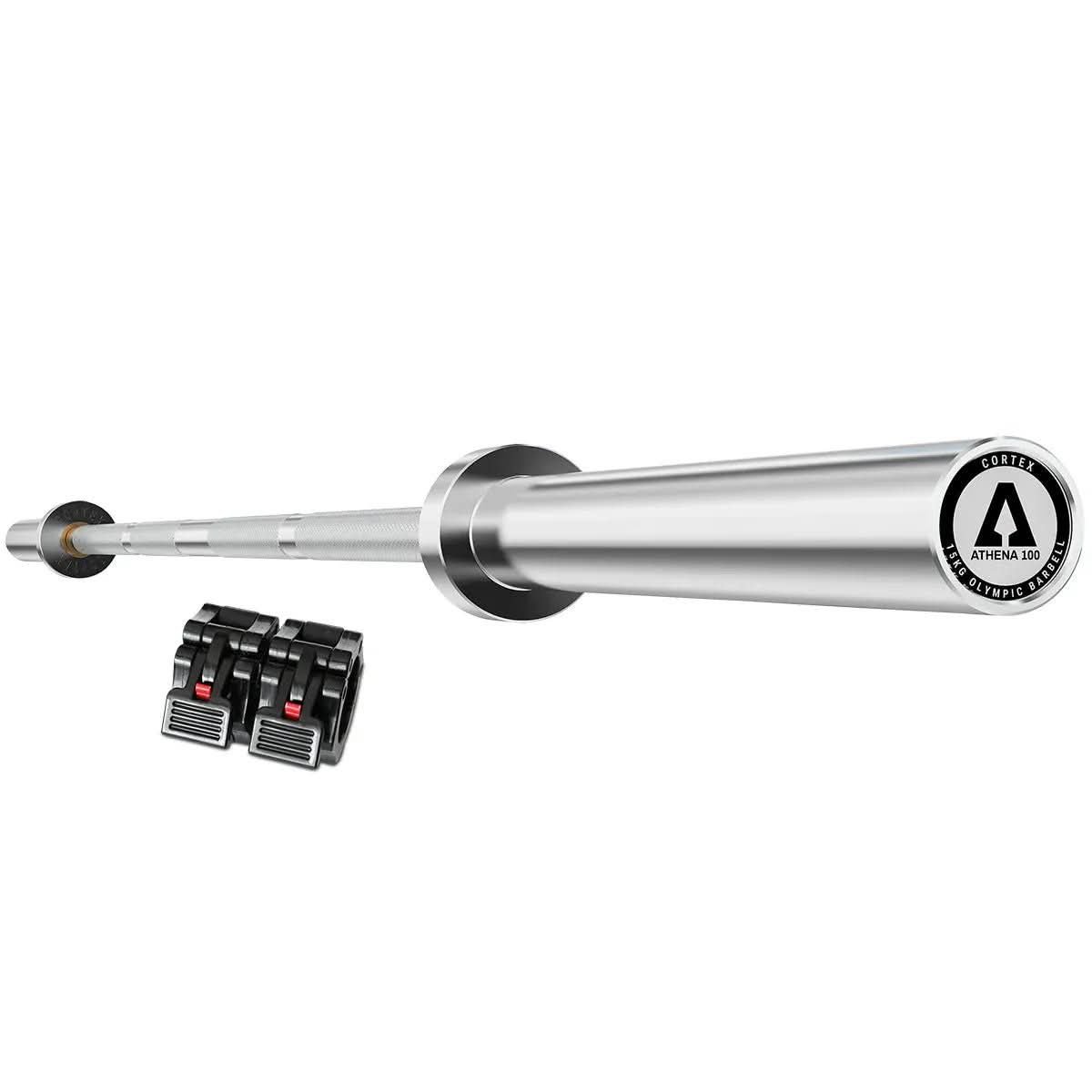
Built to the women’s Olympic spec: 15kg bar weight, a shorter 200cm (6ft 6in) length and a slimmer 25mm grip diameter instead of the men’s 28-28.7mm. That thinner shaft is the actual point, not just a lighter number on the bar – a smaller hand closes around 25mm far more securely than around a men’s bar, which changes grip confidence on a heavy deadlift more than the 5kg weight difference does.
Rated to 450lb (204kg), noticeably lower than the men’s bars above. For most lifters building strength from scratch that ceiling is a long way off, and it will be years before anyone truly outgrows it on the big compound lifts.
The right default for most women starting barbell training, and also a sensible pick for a smaller-framed man or a junior athlete who finds a full men’s 28mm shaft awkward to close a hand around. Anyone already loading well past 150kg on deadlifts should look at a men’s-spec bar instead.
Pros:
- 25mm grip diameter, truly easier for a smaller hand to close around securely
- Shorter 200cm length is easier to store and manoeuvre in a small home gym
- Same 12-month parts warranty as the men’s bars in this range
Cons:
- 450lb (204kg) rating is well short of the men’s bars above – a real ceiling for anyone training toward a heavy deadlift
- The shorter length means less clearance for a very tall lifter’s stance
Key specs: Weight: 15kg | Length: 200cm (6ft 6in) | Max load: 450lb / 204kg | Grip diameter: 25mm | Warranty: 12 months
CHECK CURRENT PRICE4. Safety Squat Olympic Barbell – Best for Squatting with a Sore Shoulder
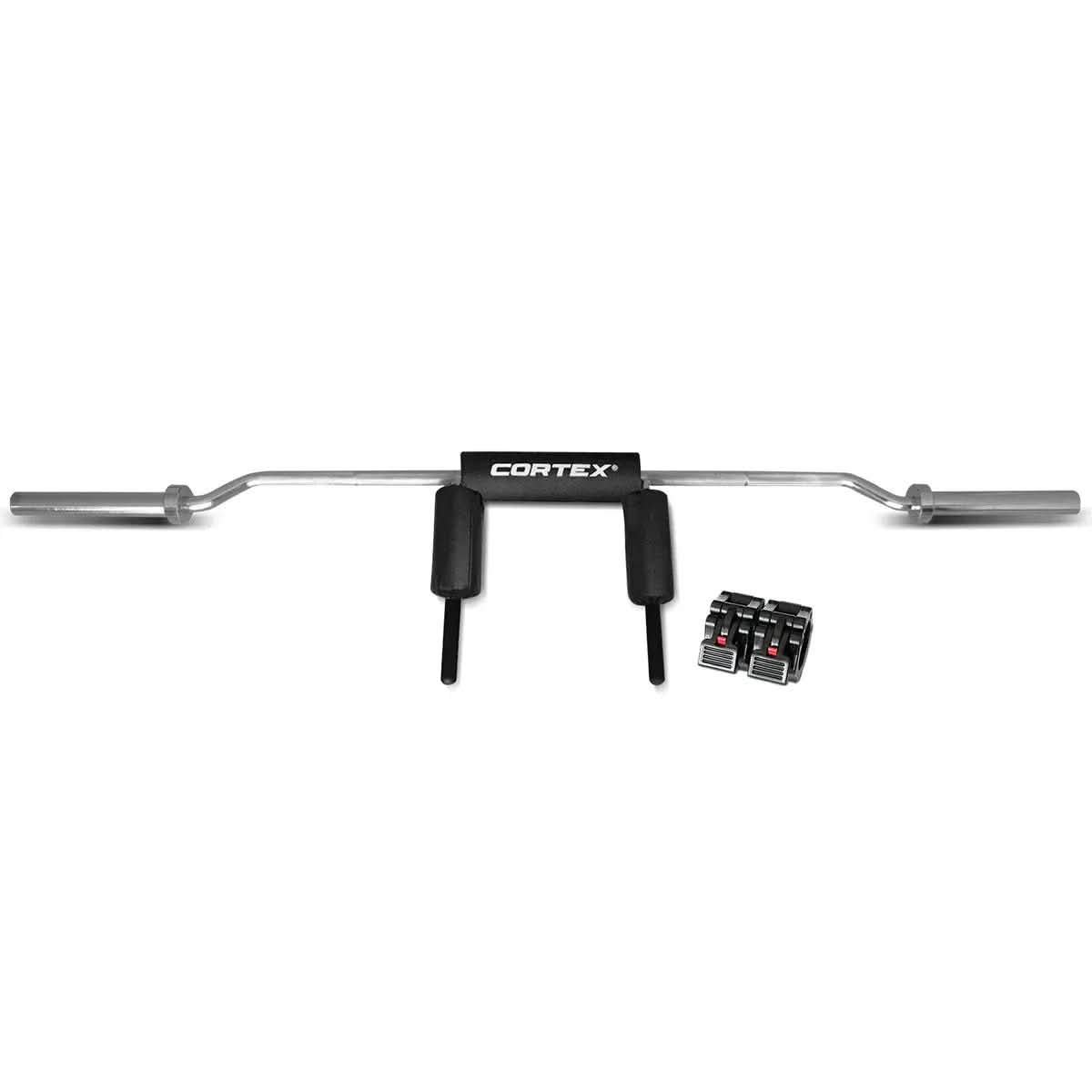
A cambered bar that sits across the upper back with padded yoke handles gripped out in front, instead of hands wrapped around a straight bar behind the neck. That change in hand and shoulder position is the entire reason this bar exists: it takes real pressure off a sore shoulder, wrist or a limited overhead range of motion during a squat, while still loading the legs and hips the same way a back squat does.
21kg bar weight (heavier than a standard 20kg bar, thanks to the cambered steel and thick padding), 700lb rated, 50mm sleeves that take the same plates as every other bar in this guide. The padding itself is a wear item – expect it to compress and need eventual replacement faster than any metal component on this list, more so under daily heavy use than a squat once or twice a week.
Not a replacement for a standard bar – this is a second, specialty bar for a lifter already dealing with a shoulder or wrist limitation, or a gym coach wanting a solid option for clients who can’t get into a normal back-squat position. Buy a standard bar first if this is the only barbell going into the gym.
Pros:
- Takes real pressure off a sore shoulder or wrist during heavy squats
- 700lb (318kg) rated, on par with the strongest standard bars here
- Same 50mm sleeve diameter, so it takes the same weight plates as every other bar on this list
Cons:
- The padding is a wear item and will eventually need replacing under regular heavy use
- Heavier and bulkier to store than a straight bar, and it only really does one job
Key specs: Weight: 21kg | Overall length: 220cm | Max load: 700lb / 318kg | Sleeve diameter: 50mm | Warranty: 12 months
CHECK CURRENT PRICE5. 142cm Olympic Hex Trap Bar – Best for Deadlifts
Hexagonal frame instead of a straight bar – step inside it, and the load sits directly beside the hips instead of out in front of the shins the way a straight-bar deadlift does. That changes the whole lift: a more upright torso, less strain on a lower back that doesn’t love bending forward under load, and raised or flat handle options depending on how deep the squat portion of the pull needs to go.
Foldable handles are the standout practical feature here – the whole bar folds down small enough to slide under a bed or a sofa when it’s not being used, which matters far more in an apartment or a share house than it would in a dedicated garage gym with wall space to spare. Rated to 365kg, comfortably past what most home lifters will ever load onto a deadlift variation.
Suits anyone whose lower back doesn’t love a conventional straight-bar deadlift. Or, more accurately, anyone who’s tried a straight-bar pull and felt it the next morning – or anyone training in a share house without space to lean a full-length bar against a wall permanently. It only does deadlift-pattern movements well – it isn’t a squat or bench bar, and shouldn’t be bought as someone’s only barbell.
Pros:
- Foldable design stores under furniture, properly useful outside a dedicated garage gym
- 365kg rated, well past what most home lifters will load
- A more upright pulling position that’s easier on a sensitive lower back than a straight bar
Cons:
- Fixed handle heights mean less range-of-motion adjustment than a straight bar with variable grip width
- Only suits deadlift-pattern lifts – it can’t do a barbell squat or bench press
Key specs: Weight: 18kg | Overall length: 142cm | Max load: 365kg | Feature: foldable handles | Sleeve diameter: 50mm (standard Olympic plates)
CHECK CURRENT PRICE6. Hakuba 20kg Olympic Barbell – Best Budget Overall
Full 218cm length, a 28mm shaft and smooth bronze bushings for spin, rated to 300kg – specs that sit closer to the Cortex bars above than to an actual budget bar, at a lower outlay than any of them. Moderate knurling and a chrome-coated shaft and sleeves round out a spec sheet built for everyday squats, deadlifts and bench sessions not competition Olympic lifting specifically.
Bushings instead of needle bearings means the spin is noticeably less free than the Spartan bars above, worth knowing if snatches and cleans are a real part of the training plan over an occasional movement. For squats, deadlifts and bench press, where the bar barely needs to spin at all, that difference is close to irrelevant.
Spring collars aren’t included and the bar isn’t rated for overhead drops, both worth checking before assuming it covers Olympic weightlifting the way the name implies – it’s built as an all-purpose strength bar first.
Pros:
- 300kg rating and a 28mm shaft at the cheapest price point in this line-up
- Smooth bronze bushings and moderate knurling suit everyday lifting comfortably
- Full 218cm Olympic-length bar, not a shortened version
Cons:
- Bushings spin less freely than the needle-bearing Cortex bars above – noticeable specifically during Olympic lifts
- Not rated for overhead drops, and spring collars aren’t included in the box
Key specs: Weight: 17kg | Length: 218cm | Max load: 300kg | Shaft diameter: 28mm | Spin: bronze bushings | Finish: chrome
CHECK CURRENT PRICE7. Cerakote Utility Barbell 20kg – Best All-Rounder
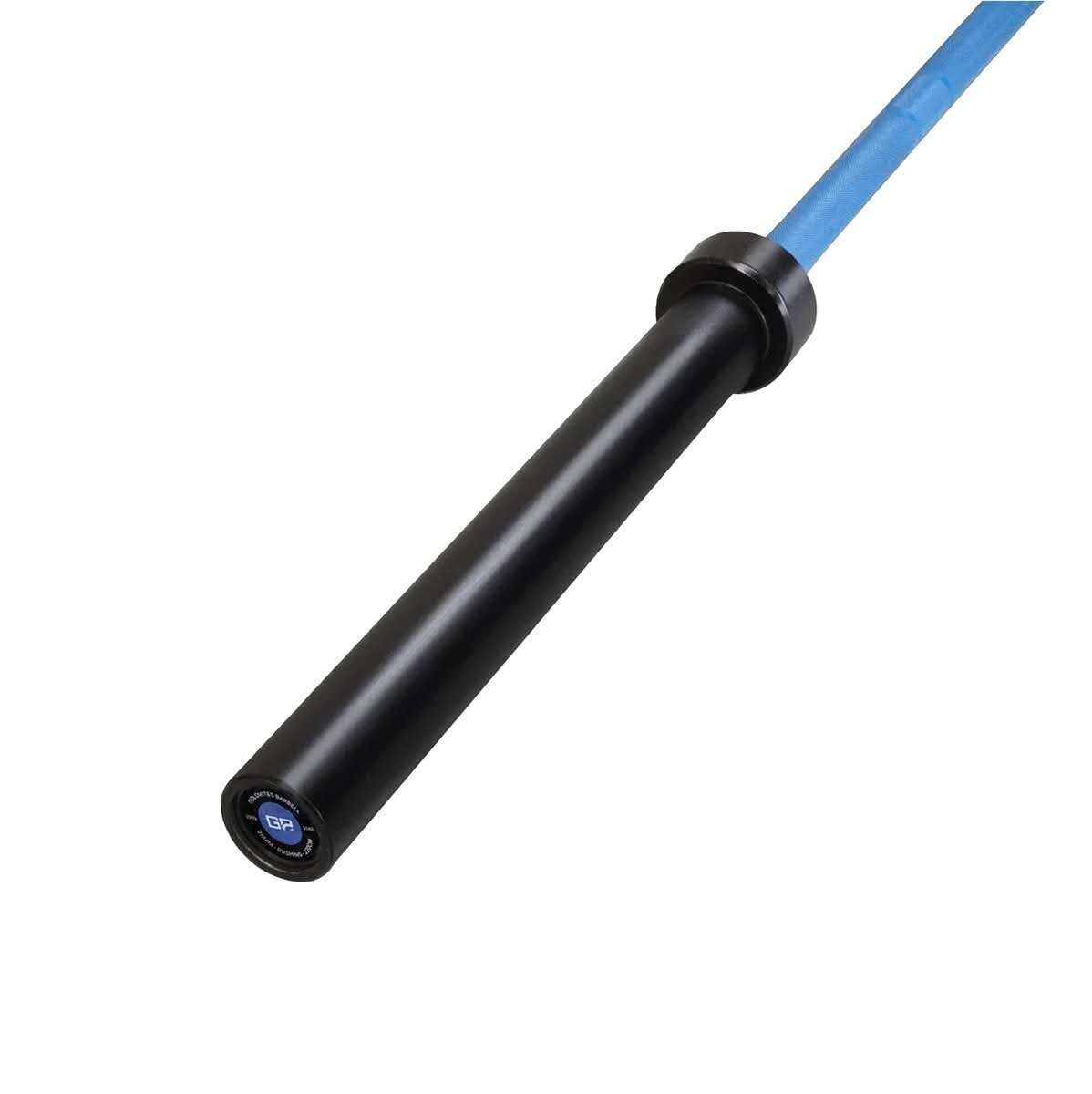
Marketed as an all-rounder built for powerlifting, Olympic lifts and everything between, and the spec sheet backs that up: 450kg rated, brass bushings, medium-light dual-marked knurling and a properly durable Cerakote coating across the shaft and sleeves. Cerakote is a ceramic-based coating originally developed for firearms, adopted widely across gym equipment for the same reason – real resistance to rust, sweat and general wear.
Medium knurl depth sits deliberately between the aggressive knurl on the Remarkables bar below and the smoother finish on the Hakuba above – a middle ground that suits mixed training without shredding the hands on high-rep sessions.
The sensible default for someone who wants one bar for squats, bench, deadlifts and the occasional clean or snatch, without picking a specialty bar for any one of them. Anyone chasing maximum knurl bite for heavy deadlifts specifically should look at the Remarkables bar instead.
Pros:
- 450kg rated, comfortably ahead of the Hakuba above
- Cerakote finish resists rust and sweat better than plain chrome over years of use
- Medium knurl suits mixed training without shredding the hands
Cons:
- Brass bushings, not the needle bearings the Cortex bars use, so Olympic-lift spin is more moderate
- The medium knurl won’t bite as hard as the Remarkables bar below on a maximal deadlift
Key specs: Weight: 20kg | Length: 220cm | Max load: 450kg | Shaft diameter: 28.5mm | Finish: Cerakote (blue shaft, black sleeves) | Tensile strength: 190,000 PSI
CHECK CURRENT PRICE8. Remarkables 20kg Black Zinc Barbell – Best Knurl for Serious Lifters
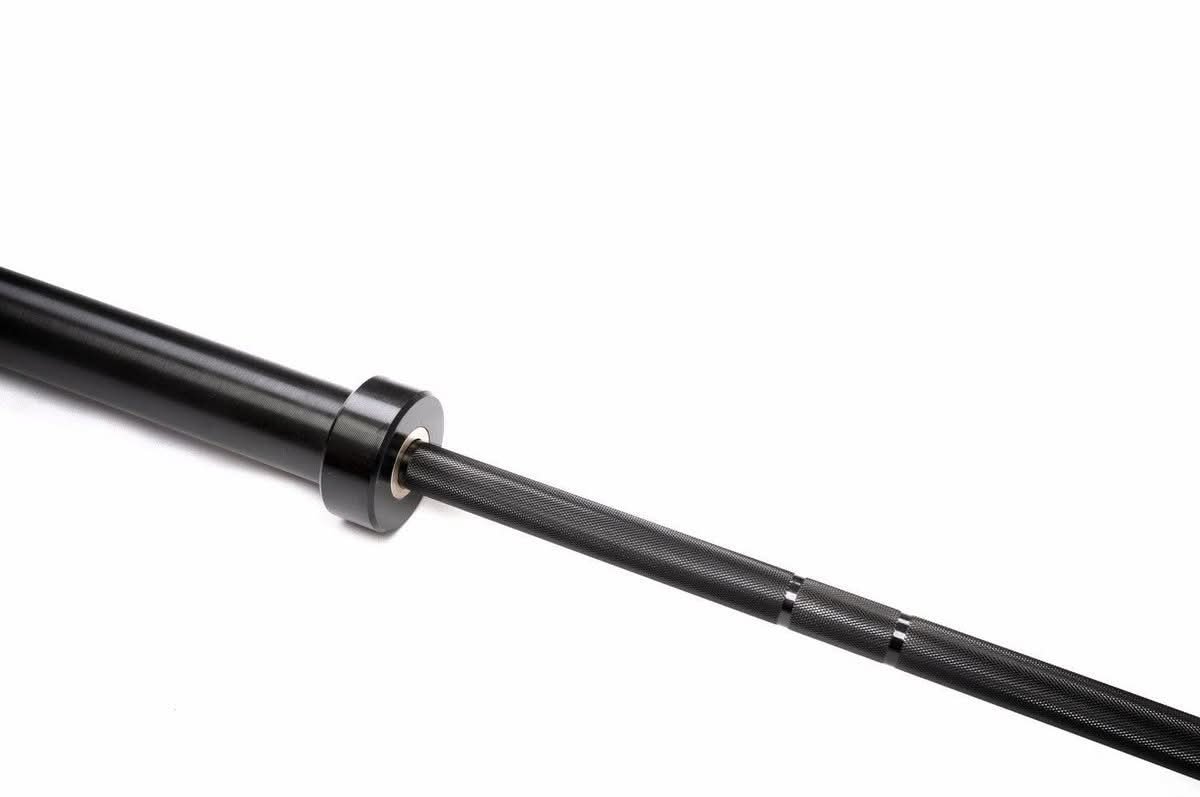
700kg rated with 205,000 PSI tensile steel and dual IWF and IPF knurl marks, aimed squarely at a lifter who has outgrown a beginner bar and wants real competition-grade knurl aggression for a maximal deadlift. Black zinc coating protects the steel without the higher cost of a full Cerakote finish.
That aggressive dual knurl is a real trade-off, not a pure upgrade: it bites hard enough on a heavy deadlift that some lifters find it uncomfortable for high-rep work or for resting the bar across the front of the shoulders during front squats. Worth testing on a lighter warm-up set before loading it heavy for the first time.
Built for someone already training seriously and chasing every real edge on a competition lift, not a first barbell for a beginner still learning the movement patterns – the technique bar further down this list is the far better starting point for that.
Pros:
- 700kg rated, the highest load rating in this line-up alongside the Evolve bar below
- Dual IWF/IPF knurl marks for solid competition-standard grip
- Black zinc coating protects the steel at a lower cost than a full ceramic finish
Cons:
- The aggressive knurl can be uncomfortable for high-rep work or resting across the shoulders on front squats
- Overkill in load rating for anyone still building toward their first serious lifts
Key specs: Weight: 20kg | Length: 220cm | Max load: 700kg | Shaft diameter: 28mm | Knurl: dual IWF/IPF marks | Tensile strength: 205,000 PSI
CHECK CURRENT PRICE9. Evolve 20kg Teflon Barbell – Best Teflon Coating
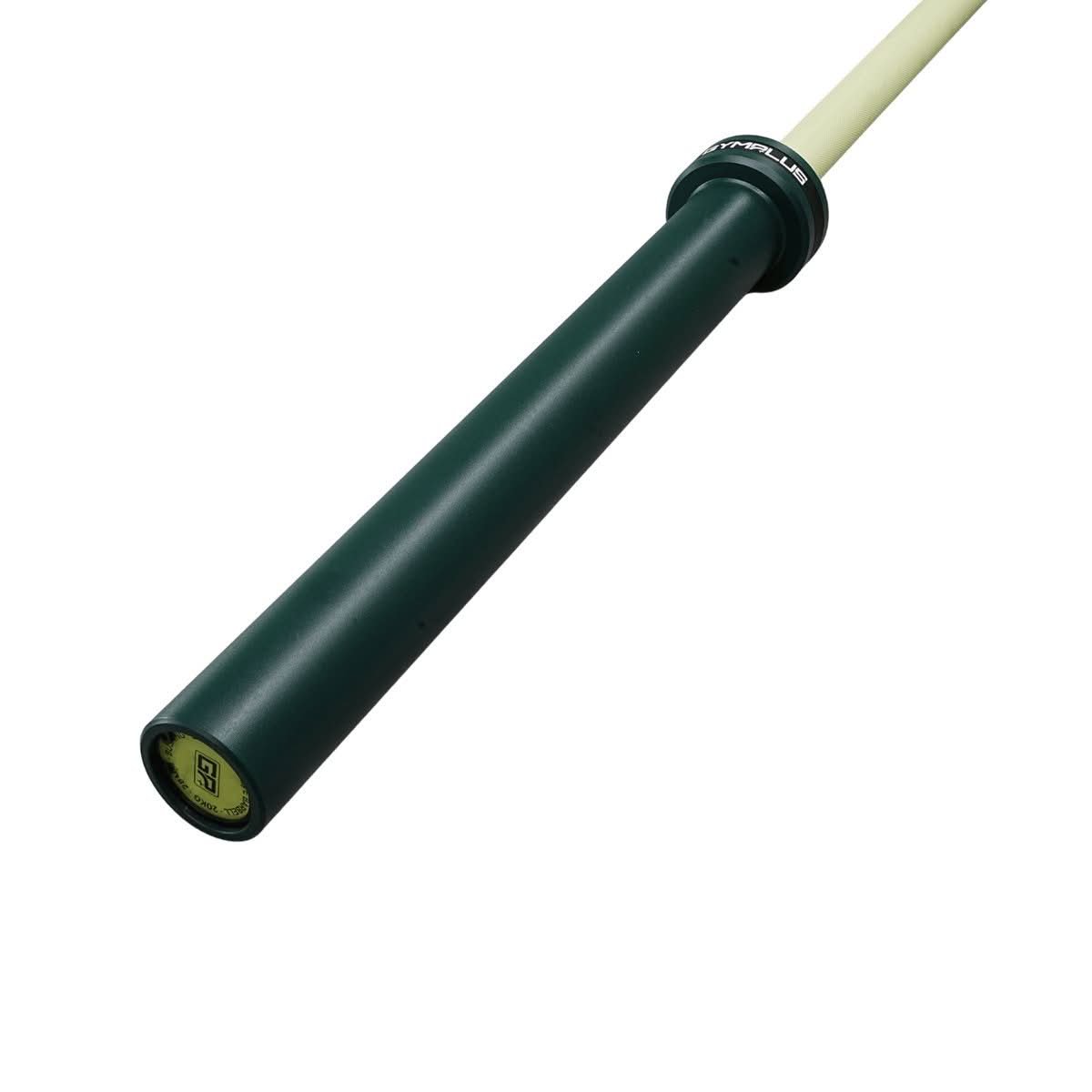
Nearly identical underlying specification to the Remarkables bar above – same 700kg rating, same 205,000 PSI tensile steel, same dual IWF/IPF knurl marks and moderate bushing spin – built around the Gold Coast by an Australian equipment brand, with the main difference being a Teflon coating in place of black zinc.
Teflon resists corrosion at least as well as the zinc finish above and has a slightly different, often described as smoother, feel under the hands. Which finish someone prefers here comes down largely to personal grip preference instead of one being objectively better than the other – both protect the steel adequately for a home or commercial setup.
A near-equivalent alternative to the Remarkables bar above for anyone who prefers a Teflon feel over black zinc, or simply wants the locally designed option between two otherwise very closely matched competition-grade bars.
Pros:
- 700kg rated with the same competition-grade knurl as the Remarkables bar above
- Teflon coating resists corrosion and has a distinct feel some lifters prefer
- Designed in Australia, on the Gold Coast
Cons:
- Close enough in spec to the Remarkables bar above that choosing between them mostly comes down to finish preference
- Same aggressive knurl trade-off as the Remarkables bar for high-rep or front-rack work
Key specs: Weight: 20kg | Length: 220cm | Max load: 700kg | Shaft diameter: 28mm | Finish: Teflon coating | Tensile strength: 205,000 PSI
CHECK CURRENT PRICE10. 6.8kg Technique Training Bar – Best for Learning Form
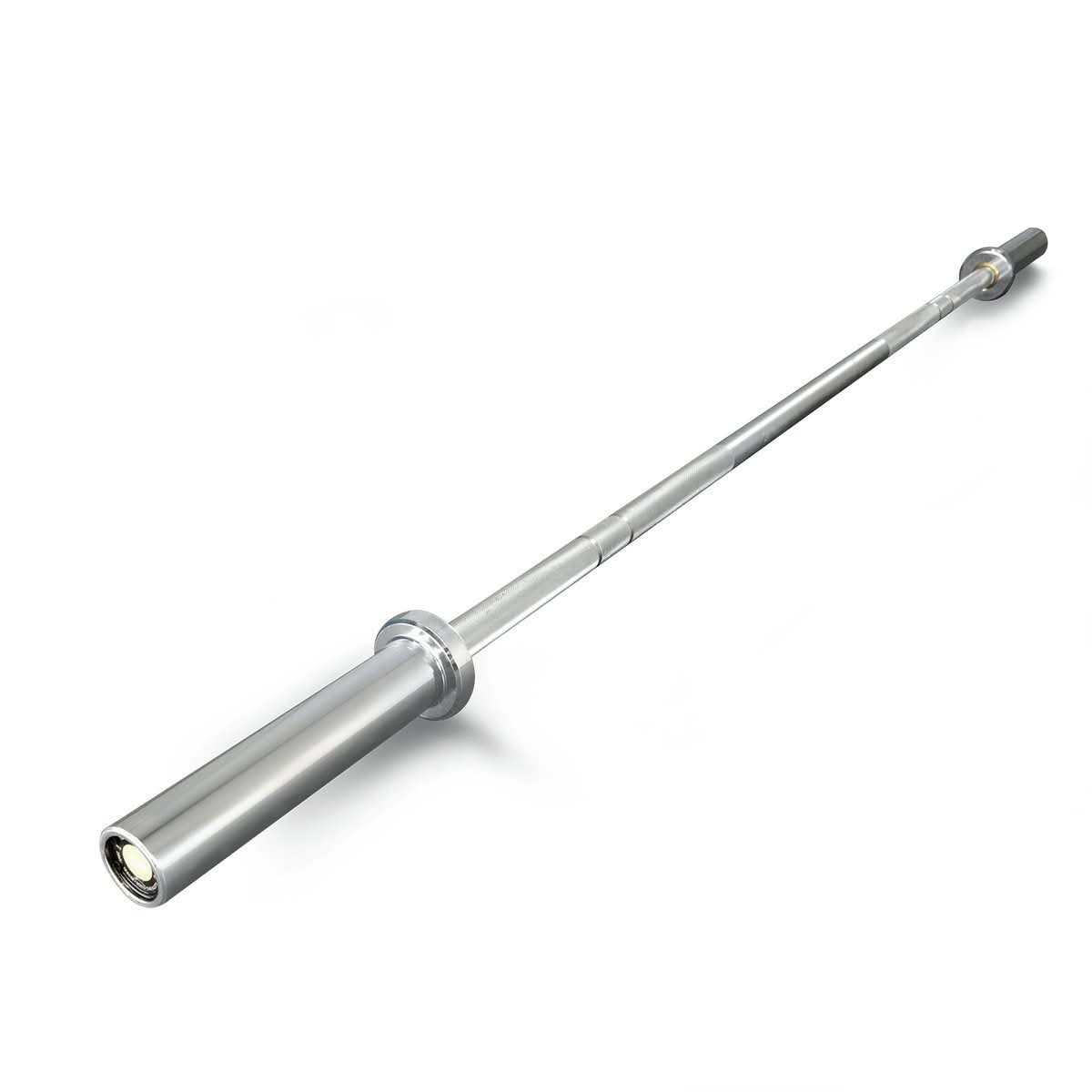
Just 6.8kg, a shorter 183cm bar length and a 120kg maximum load – purpose-built so a beginner or a junior athlete can learn a squat, deadlift or Olympic lift pattern without the intimidation of a full 20kg bar, let alone loaded plates. Moderate bushing spin and a 28mm shaft mimic the feel of a full-size bar closely enough that the technique actually carries over once someone graduates to a standard one.
120kg is a real ceiling. A strength-focused adult training seriously will outgrow it within months, not years – this is a coaching and learning tool first, not a long-term main barbell for anyone already lifting real weight.
The right pick for a junior athlete, a complete beginner nervous about a full-size bar, or a coach running group technique sessions where several lighter bars matter more than one heavy one. Skip it entirely if the household already has an adult training past a beginner level.
Pros:
- Noticeably lighter and shorter than every other bar here, built specifically for learning form
- Same 50mm sleeve diameter, so it still takes standard Olympic weight plates once the lifter is ready to add a little load
- Durable enough for repeated drops during practice, unlike a wooden or PVC training bar
Cons:
- 120kg maximum load is a real ceiling most adults training seriously will outgrow within months
- Not a long-term main barbell for anyone past a real beginner stage
Key specs: Weight: 6.8kg | Bar length: 183cm | Max load: 120kg | Shaft diameter: 28mm | Sleeve: 50mm (Olympic plates)
CHECK CURRENT PRICEHow to Choose an Olympic Barbell in Australia
Match sleeve diameter to the plates already owned, or about to be bought. Every bar here takes standard 50mm Olympic plates, but a cheaper 25-28mm-sleeve ‘standard’ bar sold at Kmart or Big W does not – the two systems aren’t interchangeable, and mixing them means the plates simply won’t fit.
Load rating matters less than most buyers assume, once it clears about 300kg. A beginner or intermediate lifter is realistically years away from loading 300kg onto any single lift. Paying extra for a 700kg-rated bar makes sense for someone chasing competition numbers, but for most home gyms the deciding factor should be spin quality, knurl and finish, not the sticker weight rating alone.
Bushings are fine for squats, bench and deadlifts; bearings matter for Olympic lifts. A clean or a snatch needs the bar to keep spinning independently of the plates as it travels, and needle bearings do that with far less friction than a bushing. Anyone not doing Olympic lifts can save money on a bushing bar without giving anything up in practice.
Check the floor and the neighbours before buying bumper plates to go with it. A loaded barbell dropped from overhead hits a timber floor in a Queenslander or an upstairs apartment far harder than most renters expect, and repeated dropping can crack floorboards or annoy whoever lives below. Rubber bumper plates and a proper drop mat or lifting platform matter more in a home gym above ground level than in a besser-block garage on a concrete slab.
Knurl aggression is an actual personal preference, not just a spec to maximise. An aggressive competition knurl bites hard enough on a heavy pull that it can tear up soft hands during high-rep training, while a smoother, moderate knurl feels safer for daily use but can start to slip during a maximal deadlift attempt with sweaty hands. Test a friend’s bar before committing if at all possible.
Training in a rental with thin walls and a landlord who’ll notice a dropped bar? A recall history exists for gym equipment in Australia, even if barbells themselves rarely feature in it. The ACCC has previously recalled an adjustable dumbbell set over a locking mechanism that let weight plates fall off the rod mid-lift – a reminder that a locking or clamping mechanism failing under load is a real, checkable risk category for any strength equipment, collars included, not just a theoretical one.
You’ll Also Want
None of these bars ship with weight plates – a set of Olympic rubber bumper plates is the next purchase for anyone starting from an empty bar, and rubber protects both the floor and the bar itself on a missed rep.
Several bars in this line-up don’t include collars in the box – a pair of 50mm lock jaw collars stops plates sliding around mid-set, which matters more than it sounds the first time a plate shifts during a heavy set.
Anyone training in a share house, a rental, or above ground level should budget for weight plate drop pads alongside the bar – they absorb the impact of a dropped loaded bar and protect both the floor and the downstairs neighbours’ ceiling.
A barbell is only half a home gym – our guide to the best adjustable dumbbells in Australia covers the other half for accessory and single-arm work a barbell can’t do on its own.
Frequently Asked Questions
What is the actual difference between an Olympic barbell and a standard barbell?
An Olympic barbell has 50mm rotating sleeves built specifically for Olympic weight plates, along with a 2.2m length and a 20kg (men’s) or 15kg (women’s) standardised bar weight. A standard barbell typically has a thinner 25-28mm sleeve, does not spin as freely, and takes a completely different, incompatible set of weight plates. The two systems cannot be mixed, so check sleeve diameter before buying any plates.
Do I need a 700kg-rated barbell for a home gym in Australia?
Almost certainly not straight away. A beginner or intermediate lifter is realistically years away from loading anywhere near 300kg onto a single lift, so a bar rated to 300-450kg covers most home gyms comfortably. A 700kg rating mainly matters for someone specifically chasing competition-level numbers on the big lifts, or wanting a bar that will never need replacing regardless of how strong they eventually get.
Can I use a women’s 15kg Olympic barbell if I am a smaller-framed man?
Yes. The main practical difference is a slimmer 25mm grip diameter against 28-28.7mm on a men’s bar, which suits a smaller hand more securely regardless of gender, along with a shorter 200cm length and a lower load rating around 204kg. Anyone already training toward a heavy deadlift or squat well past 150kg should choose a men’s-spec bar instead for the higher load ceiling.
Will a barbell damage my floor if I drop it during a lift?
A barbell loaded with steel plates dropped from overhead can crack timber floorboards or rattle an apartment below, especially in an older Queenslander or a weatherboard home without a concrete slab. Rubber Olympic bumper plates absorb far more impact than steel plates, and a proper drop mat or lifting platform underneath reduces both floor damage and noise transmitted to neighbours or the room below.
Do all Olympic barbells spin the same way?
No. Cheaper bars generally use bushings, which are simple sleeves that create noticeable friction, while premium bars use needle bearings that spin far more freely with less resistance. That difference barely matters for squats, bench press or deadlifts, where the bar doesn’t need to rotate independently of the plates, but it matters a great deal for Olympic lifts like cleans and snatches, where a freely spinning bar protects the wrists as it travels.
What does a barbell’s knurling actually do?
Knurling is the crosshatched texture cut into the steel shaft that gives hands grip under load, and it ranges from a smooth, moderate pattern comfortable for daily training to an aggressive competition-style dual knurl that bites hard on a maximal lift. A smoother knurl feels safer for high-rep training and beginners, while an aggressive knurl matters most for a serious lifter chasing a heavy one-rep deadlift with sweaty hands.
Verdict
For most people setting up a first home gym, the Cortex SPARTAN100 at the top of this guide covers squats, bench, deadlifts and the occasional Olympic lift on one all-purpose 20kg bar without asking for a premium price. Anyone training seriously toward competition numbers should look at the Remarkables or Evolve bar instead for the 700kg rating and aggressive competition knurl. For a smaller home gym short on wall space, or a lower back that doesn’t love a conventional deadlift, the folding hex trap bar is worth choosing over a second straight bar entirely.