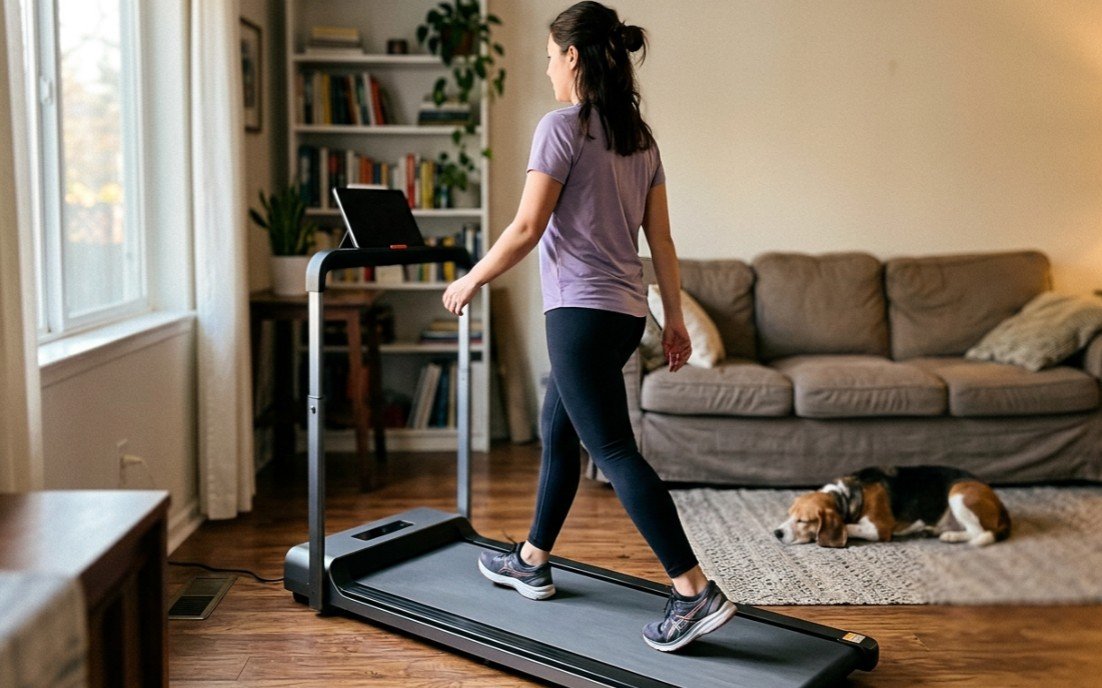
The best walking pad in Australia is a low profile motorised belt, typically no more than 15cm deep, made to be walked on at desk height or stored upright when it is not in use. Removing the fixed upright console is what defines the category, because that console is the part of a treadmill that stops it fitting under furniture.
The Australian market splits into four shapes. Flat under desk pads have no handrail and hold to roughly 10 km/h. Handrail pads raise a folding upright to make faster work steady. Incline pads angle the deck so effort rises while pace stays low. Three in one convertibles combine those functions in one chassis and ask for treadmill sized floor space in return.
Belt width is the specification that determines whether a pad stays in use, and the published walking surfaces compared here run 38cm to 42cm (15 to 17 inches) across. Motor ratings sit between 2.0 and 3.0 HP and published capacity between 110kg and 150kg, and reading those two figures together tells more than any feature list.
Each entry below is measured on belt width, motor rating, incline range, speed ceiling and folded size. Where a room can take a permanent upright frame, the best treadmills in Australia guide covers machines that keep the console and the running speed a pad gives up.
Quick Picks
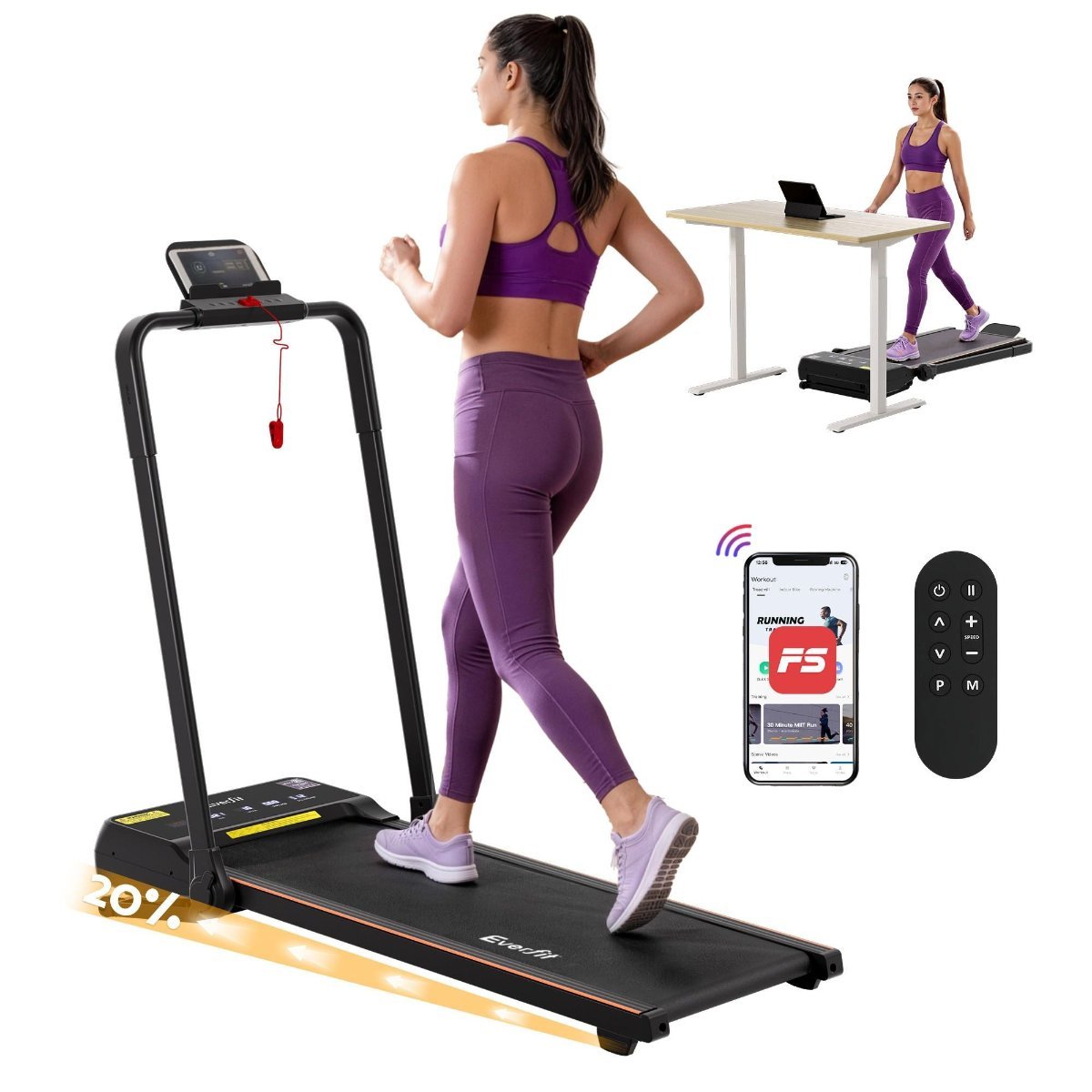
Everfit 3 in 1 Walking Pad with 20% Auto Incline
One chassis covering both jobs: a 40cm belt, powered incline to 20 percent and 16 km/h with the handrail raised.
CHECK CURRENT PRICE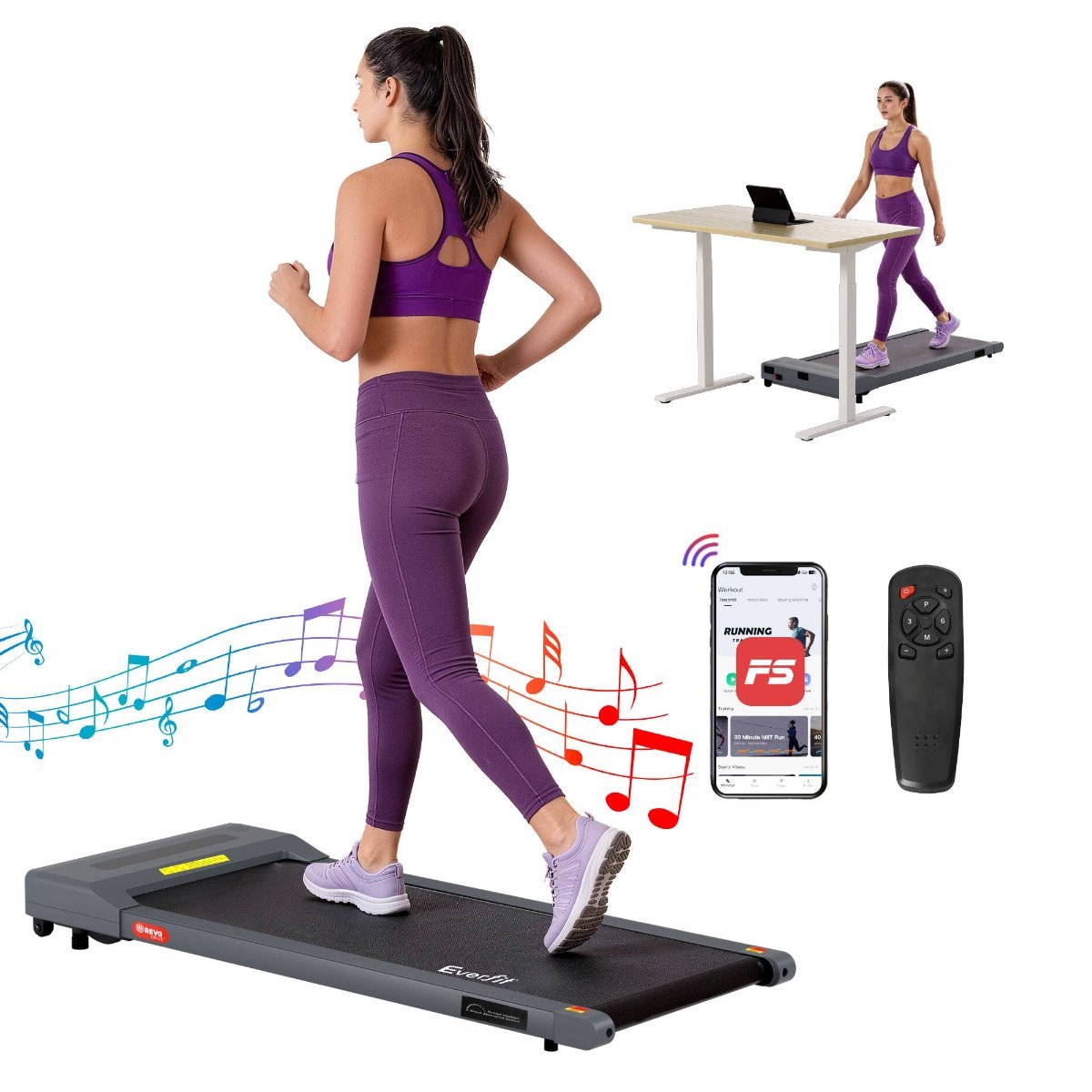
Everfit 2 in 1 Under Desk Walking Pad
A full 400mm belt and no handrail at all, so it stays under a desk permanently and gets used every working day.
CHECK CURRENT PRICE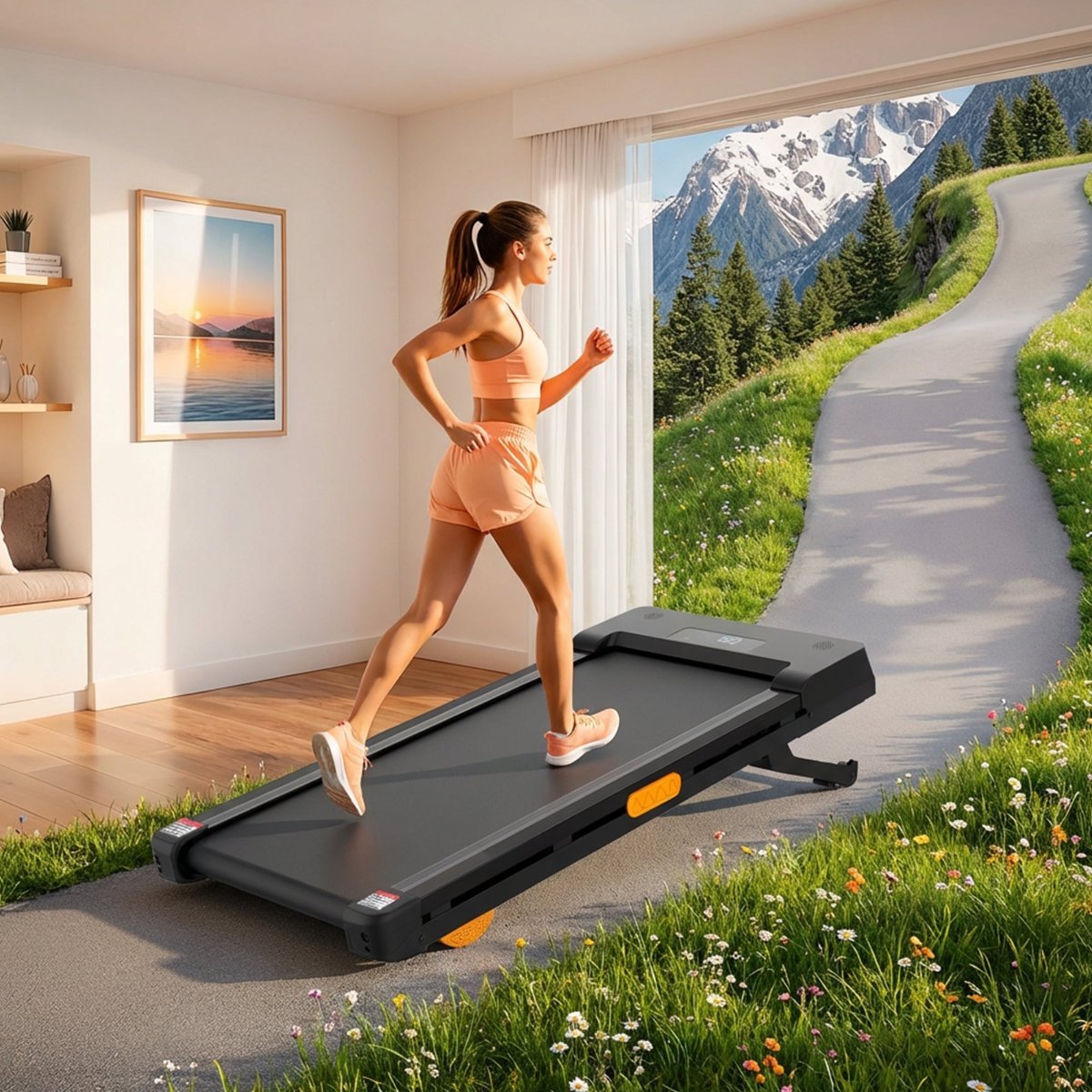
Advwin 7 Degree Auto Incline Walking Pad
Powered incline through nine steps to 7 degrees, with a 130kg rating and only 20kg to shift between rooms.
CHECK CURRENT PRICEThe Best Walking Pad in Australia Compared
| Product | Link | Type | Best For | Key Spec |
|---|---|---|---|---|
| Everfit 3 in 1 Walking Pad with 20% Auto Incline | Check price | Three in one convertible | Incline cardio and desk walking | 100 x 40cm belt, 3.0 HP, 20 percent auto incline |
| Everfit 4 in 1 Vibration Walking Pad | Check price | Multi mode pad | Walking plus muscle recovery | 100 x 38cm belt, 2.5 HP, vibration over 4 levels |
| Everfit 2 in 1 Dual Sided Walking Pad | Check price | Flat under desk pad | Desk walking and foot recovery | 400 x 1000mm belt, 14cm deck height, dual sided |
| Everfit 2 in 1 Under Desk Walking Pad | Check price | Flat under desk pad | Standing desks | 400mm belt, 2 HP, 1 to 10 km/h |
| Advwin 7 Degree Auto Incline Walking Pad | Check price | Incline pad | Powered incline without a handrail | 400 x 970mm belt, 2.5 HP, 7 degree auto incline |
| Advwin Foldable Walking Pad with Handle | Check price | Handrail pad | Support at jogging speed | 380 x 1020mm belt, 1 to 12 km/h, folds to 11cm |
| Centra 2 in 1 Walking Pad with Incline | Check price | Incline pad | A longer stride | 102 x 42cm belt, 2.5 HP, two position manual incline |
| Centra Auto Incline Walking Pad | Check price | Incline pad | App led training | 2.5 HP, six incline levels from 4 to 13 percent, 120kg |
| FOUSAE Walking Pad with 9% Incline | Check price | Incline pad | Higher user weights | 100 x 40cm belt, 2.5 HP brushless, 150kg capacity |
| TOPUTURE 4 in 1 Foldable Walking Pad | Check price | Three in one convertible | Reading data at any angle | Roughly 102 x 41cm belt, 2.5 HP, dual display |
1. Everfit 3 in 1 Walking Pad with 20% Auto Incline – Best for Incline Training
Two machines are folded into one frame here. Raised, the handrail turns the deck into a compact treadmill; dropped flat, the same deck slides under a desk. The belt measures 100 by 40cm, matching the widest walking surfaces in this guide.
The incline motor is what earns its place at the top. Twelve powered steps climb to a 20 percent grade, the steepest of the ten, and the speed ceiling shifts with the setup: 1 to 16 km/h with the handrail up, 1 to 10 km/h folded. A 3.0 HP motor and six stored programs cover the rest.
Deployed it occupies 126 by 60cm, so the space saving argument weakens once the handrail goes up, and 110kg is a mid range capacity. For a household that wants hill training and desk walking without buying two machines, that footprint is the cost of admission.
Pros
- Steepest grade in this guide at 20 percent
- Twelve powered incline steps from the remote
- Highest motor rating here at 3.0 HP
- Reaches 16 km/h with the handrail raised
Cons
- Occupies 126 by 60cm once deployed
- 110kg capacity is only mid range here
Key specs: Belt 100 x 40cm, motor 3.0 HP, speed 1 to 16 km/h with handrail and 1 to 10 km/h folded, auto incline to 20 percent over 12 levels, six programs, max user weight 110kg, dimensions 126 x 60 x 116cm, transport wheels, 1 year warranty.
CHECK CURRENT PRICE2. Everfit 4 in 1 Vibration Walking Pad – Best for Recovery Sessions
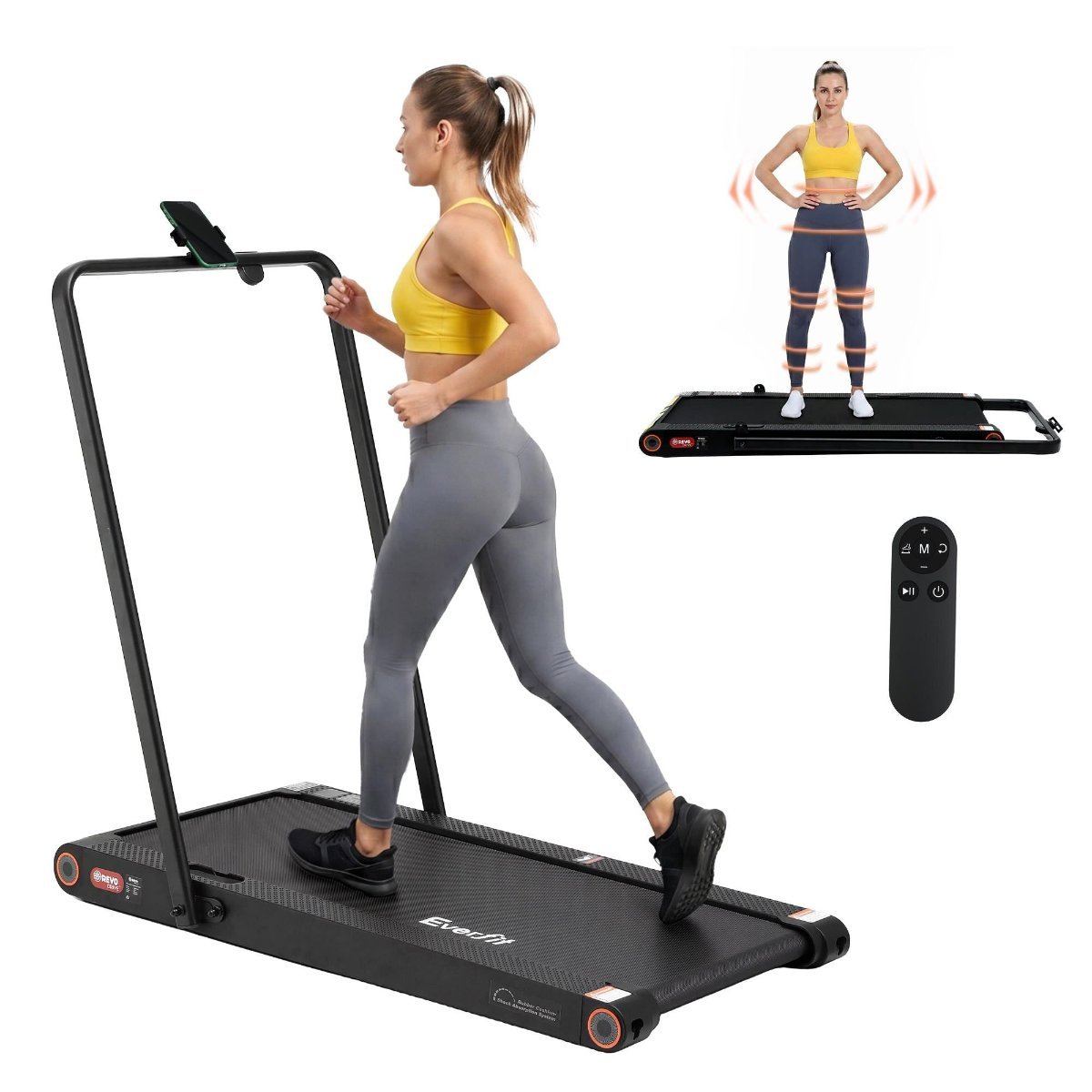
Vibration is the fourth mode alongside walking, jogging and running, and it works whether the handle is up or folded away. Switching modes means loosening the handle, lowering it and tightening again with the spanner supplied.
Four vibration intensities run from F01 to F04, aimed at loosening tight muscles rather than raising heart rate. Walking and running span 0.8 to 10 km/h on a 2.5 HP motor, across a 100 by 38cm belt rated to 120kg.
Its 14kg carcass is the lightest here by a clear margin, light enough to stand on edge in a cupboard without help. The belt gives up 4cm of width against the widest deck in this guide, and that is the trade being made for the recovery mode.
Pros
- Lightest deck in the guide at 14kg
- Four vibration intensities for recovery
- 120kg rating despite the small frame
- Slowest start here at 0.8 km/h for desk work
Cons
- 38cm belt is the narrowest reviewed
- Mode changes need the supplied spanner
Key specs: Belt 1000 x 380mm, motor 2.5 HP, speed 0.8 to 10 km/h, vibration mode with four levels, max user weight 120kg, dimensions 108 x 55 x 105cm, net weight 14kg, no assembly required, 1 year warranty.
CHECK CURRENT PRICE3. Everfit 2 in 1 Dual Sided Walking Pad – Best Dual Sided Deck
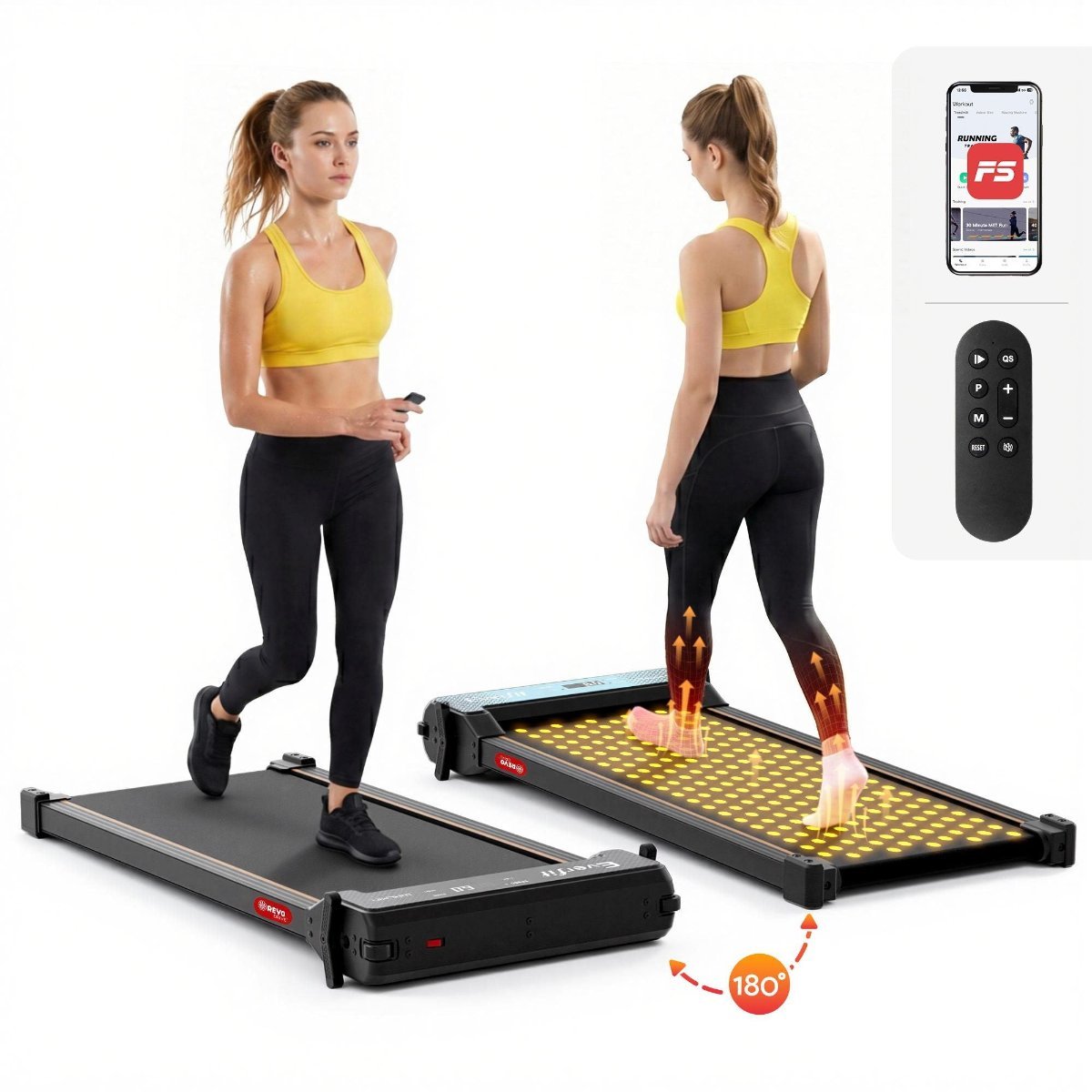
One deck, two surfaces. Turn it one way for a 400 by 1000mm walking belt; turn it over and a textured reflexology face works pressure points underfoot at low speed.
Each side runs at its own pace. Walking covers 1.0 to 8.0 km/h and the massage face is capped at 1.0 to 6.0 km/h, both from a 2.5 HP motor, with six programs and a built in dock that stops the remote going missing.
Its ceiling of 8 km/h keeps running off the table, and 110kg is unremarkable for capacity. The case for it is specific rather than broad: someone who sits all day and finishes with aching feet gets two uses from one 14cm slab.
Pros
- Slimmest non folding deck here at 14cm tall
- Reflexology surface on the reverse face
- Six preset programs
- Remote dock built into the frame
Cons
- Running is out at an 8 km/h ceiling
- Massage side runs slower again at 6 km/h
Key specs: Belt 400 x 1000mm, motor 2.5 HP, walking speed 1.0 to 8.0 km/h, massage mode 1.0 to 6.0 km/h, six preset programs, max user weight 110kg, product size 119 x 55.5 x 14cm, net weight 20.4kg, 1 year warranty.
CHECK CURRENT PRICE4. Everfit 2 in 1 Under Desk Walking Pad – Best Wide Belt Under Desk
Leaving out the handrail is the whole design idea, and it is why this deck can live under a desk full time. The 400mm belt runs over a shock control layer, with a phone holder moulded into the front edge.
Control comes from either the remote or the companion app, with pace held between 1 and 10 km/h by a 2 HP motor while the display counts speed, time, distance and calories. Bluetooth speakers are fitted to this configuration, and the frame folds down onto wheels.
There is no incline and no route past a brisk walk. Judged as an everyday desk companion rather than a cardio machine, a full width belt paired with a 2 HP motor is the sensible baseline, and certification to SAA, CE and EMC backs it up.
Pros
- Full 400mm belt with no handrail in the way
- App and remote control
- Bluetooth speakers built in
- Carries SAA, CE and EMC certification
Cons
- Walking only at a 10 km/h ceiling
- Lowest motor rating in this guide at 2 HP
Key specs: Belt width 400mm, motor 2 HP, speed 1 to 10 km/h, app and remote control, Bluetooth speaker, phone holder, max user weight 110kg, net weight 20kg, no assembly required, 1 year warranty.
CHECK CURRENT PRICE5. Advwin 7 Degree Auto Incline Walking Pad – Best Auto Incline Value
Powered incline is the draw, climbing through nine remote controlled steps to 7 degrees without stepping off the belt. The running surface is 400 by 970mm, textured against slipping and layered for shock absorption, and the unit weighs 20kg.
Speed spans 1 to 8 km/h from a motor rated 2.5 HP and built to run quietly. An unusually wide LED panel reports speed, calories, incline, time, steps and distance, while Bluetooth adds app logging and music playback.
Nothing here goes past 8 km/h and no handrail is fitted, so this walks and climbs rather than runs. At 20kg it is among the easier decks to reposition, and its 130kg rating leaves most households real margin rather than a figure they sit just under.
Pros
- Powered incline to 7 degrees over nine levels
- 130kg rating with genuine headroom
- Wide LED panel including step count
- App logging with music playback
Cons
- Tops out at 8 km/h
- No handrail for support at pace
Key specs: Belt 400 x 970mm, motor 2.5 HP, speed 1 to 8 km/h, auto incline to 7 degrees over nine levels, Bluetooth app with music function, max user weight 130kg, product weight 20kg, transport wheels, no assembly required.
CHECK CURRENT PRICE6. Advwin Foldable Walking Pad with Handle – Best with Support Handle
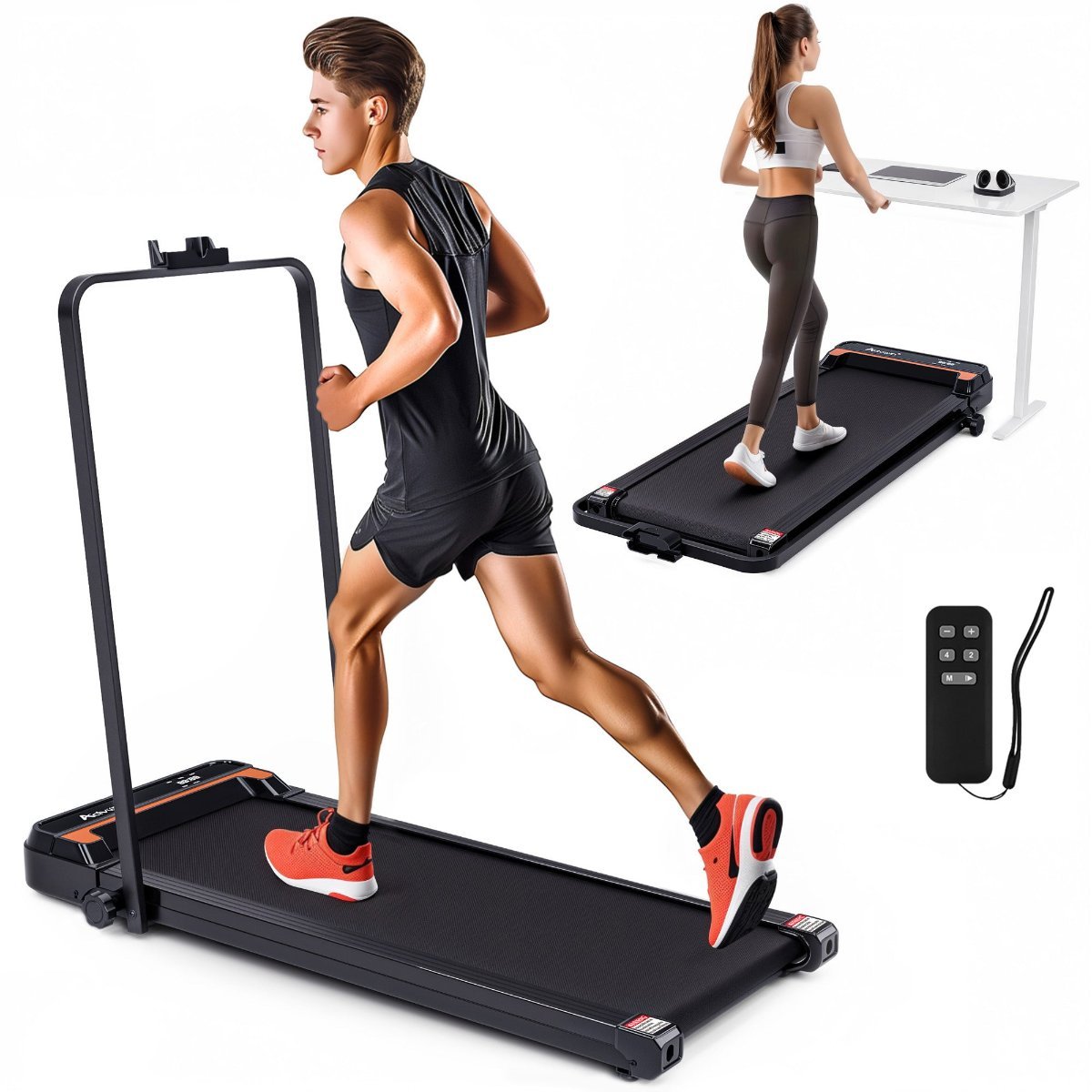
The folding upright is what separates this from a flat pad, offering something to grip once pace rises without the bulk of a full treadmill. Its running area is 380 by 1020mm and the assembly weighs 20.8kg.
Top speed of 12 km/h beats every handrail free deck in this guide, and the LED panel logs time, speed, distance, calories and steps, each with its own countdown mode. The frame is rated to 120kg.
Collapsed it measures 11cm thick, thin enough to slide under a bed, though the 128 by 53cm outline still needs planning. Against the convertible at the head of this list it surrenders incline altogether, and that single difference decides between them.
Pros
- Folds to just 11cm thick
- Reaches 12 km/h with handle support
- Countdown modes for time, distance and calories
- 120kg rating at 20.8kg carry weight
Cons
- No incline function at all
- Folded outline is still 128 by 53cm
Key specs: Running area 380 x 1020mm, speed 1 to 12 km/h, unfolded 119 x 53 x 102.5cm, folded 128 x 53 x 11cm, product weight 20.8kg, max user weight 120kg, LED display with countdown modes, no assembly required.
CHECK CURRENT PRICE7. Centra 2 in 1 Walking Pad with Incline – Best Widest Belt
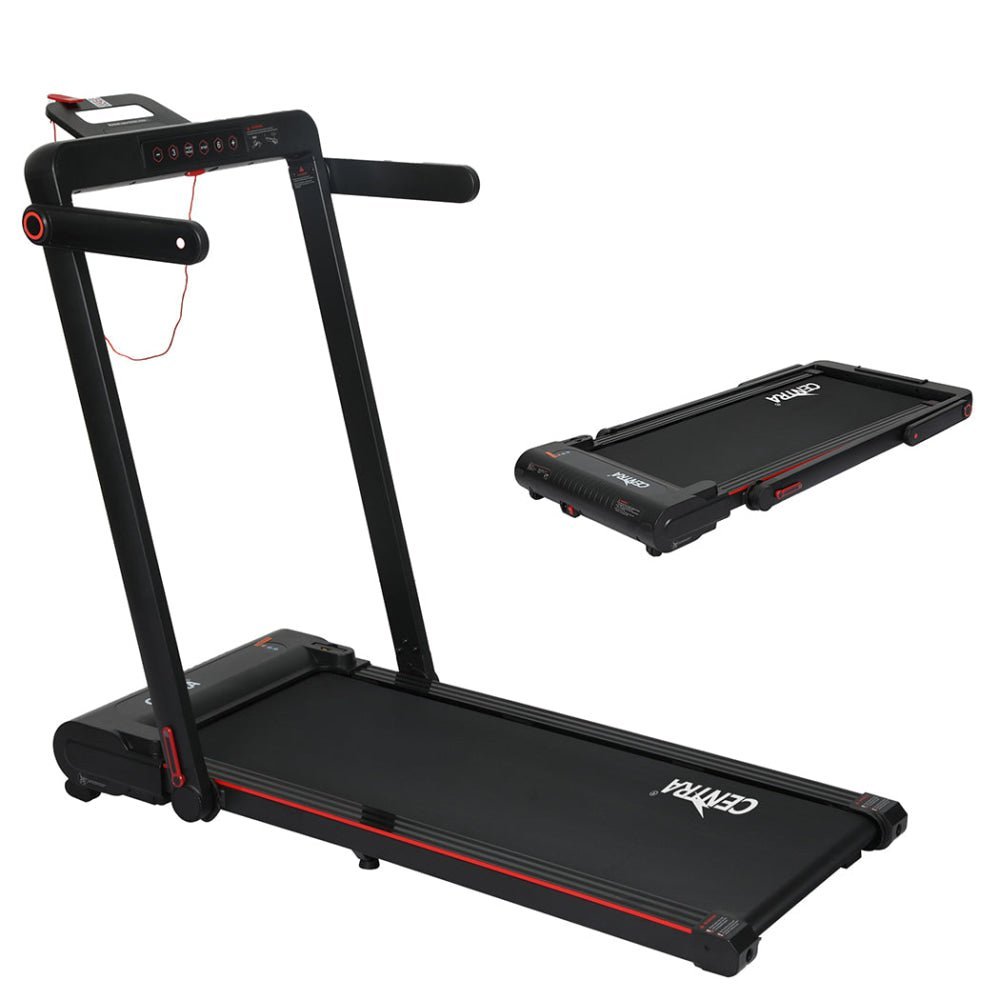
The running area here measures 102 by 42cm, wider than any other deck in this guide by a full 2cm. Under the belt sits a dual layer board with silicone shock blocks between the layers.
Two speed modes are offered: 1 to 6 km/h for walking and light jogging, and 1 to 12 km/h for running, driven by a 2.5 HP motor. Incline is manual with two settings, flat or 4 degrees, and Bluetooth connects it to training apps including Kinomap and FITSHOW.
No maximum user weight is published for this deck, which is a real gap given capacity is one of the two figures that decide how long a pad lasts. Walkers with a long stride get more belt here than anywhere else, provided they ask the seller for that missing number first.
Pros
- Widest belt in this guide at 102 by 42cm
- Dual layer board with silicone shock blocks
- Two speed modes reaching 12 km/h
- Dedicated storage slot for the remote
Cons
- No published maximum user weight
- Incline is manual and limited to two positions
Key specs: Running area 102 x 42cm, motor 2.5 HP, walking speed 1 to 6 km/h, running speed 1 to 12 km/h, two position manual incline at 0 and 4 degrees, dual layer board with silicone shock blocks, LED display, Bluetooth app support, built in remote slot.
CHECK CURRENT PRICE8. Centra Auto Incline Walking Pad – Best for Guided Sessions
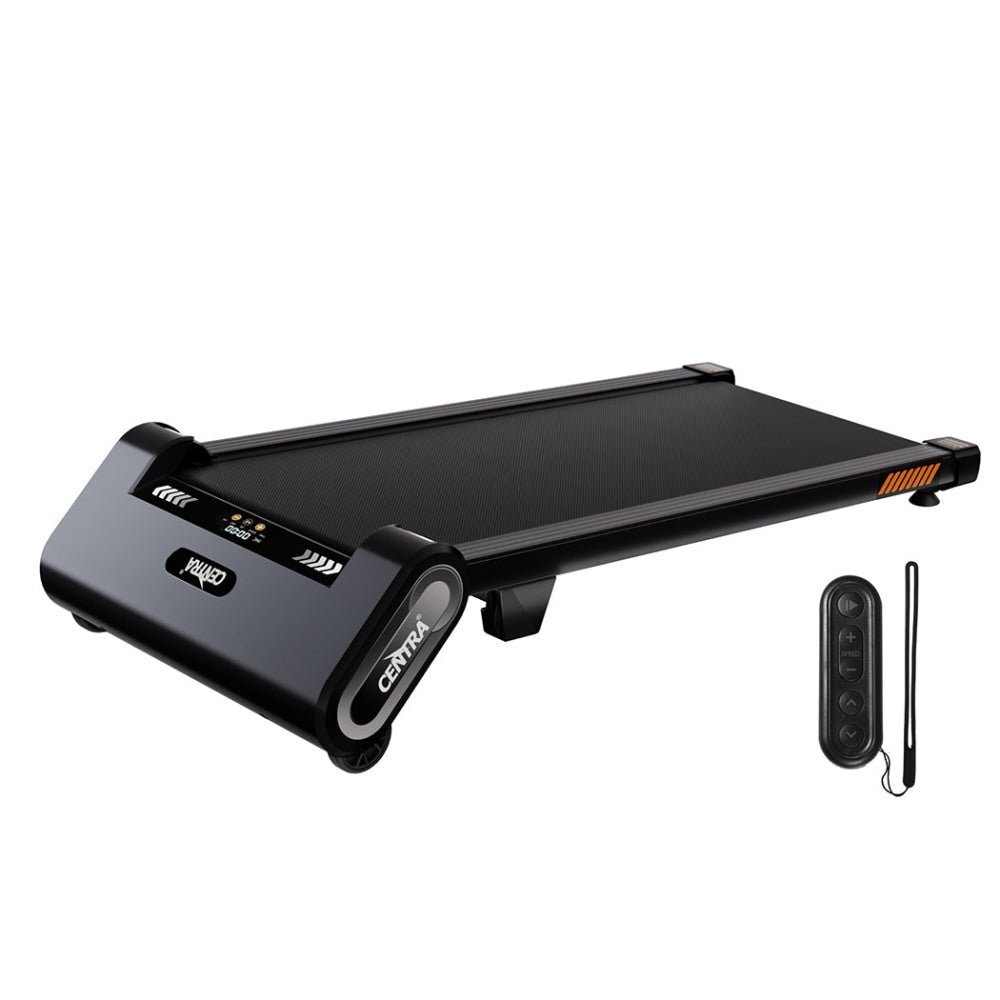
Six powered incline levels span 4 to 13 percent, all adjustable without stepping off the belt. An electric cover lift raises the deck, and a six layer belt sits over four shock absorbers and ten cushioning pads.
App support is the reason to choose it. The deck pairs over Bluetooth with FITSHOW, Kinomap and Zwift, which turns a 1 to 6 km/h walking range into structured sessions and virtual routes rather than a bare step count. A 2.5 HP motor drives it and the frame is rated to 120kg.
That 6 km/h ceiling is the lowest in this guide, so it walks and climbs and does nothing else. Where it lands is with anyone already training inside one of those apps who wants their walking hours logged in the same place as everything else.
Pros
- Powered incline across six levels from 4 to 13 percent
- Pairs with FITSHOW, Kinomap and Zwift
- Six layer belt over four shock absorbers
- Electric cover lift on the deck
Cons
- Lowest speed ceiling here at 6 km/h
- Belt width is not published
Key specs: Motor 2.5 HP, speed 1 to 6 km/h, six powered incline levels from 4 to 13 percent, max user weight 120kg, six layer shock absorbing belt, four shock absorbers and ten cushioning pads, LED display, wireless remote, Bluetooth support for FITSHOW, Kinomap and Zwift.
CHECK CURRENT PRICE9. FOUSAE Walking Pad with 9% Incline – Best for Heavier Users
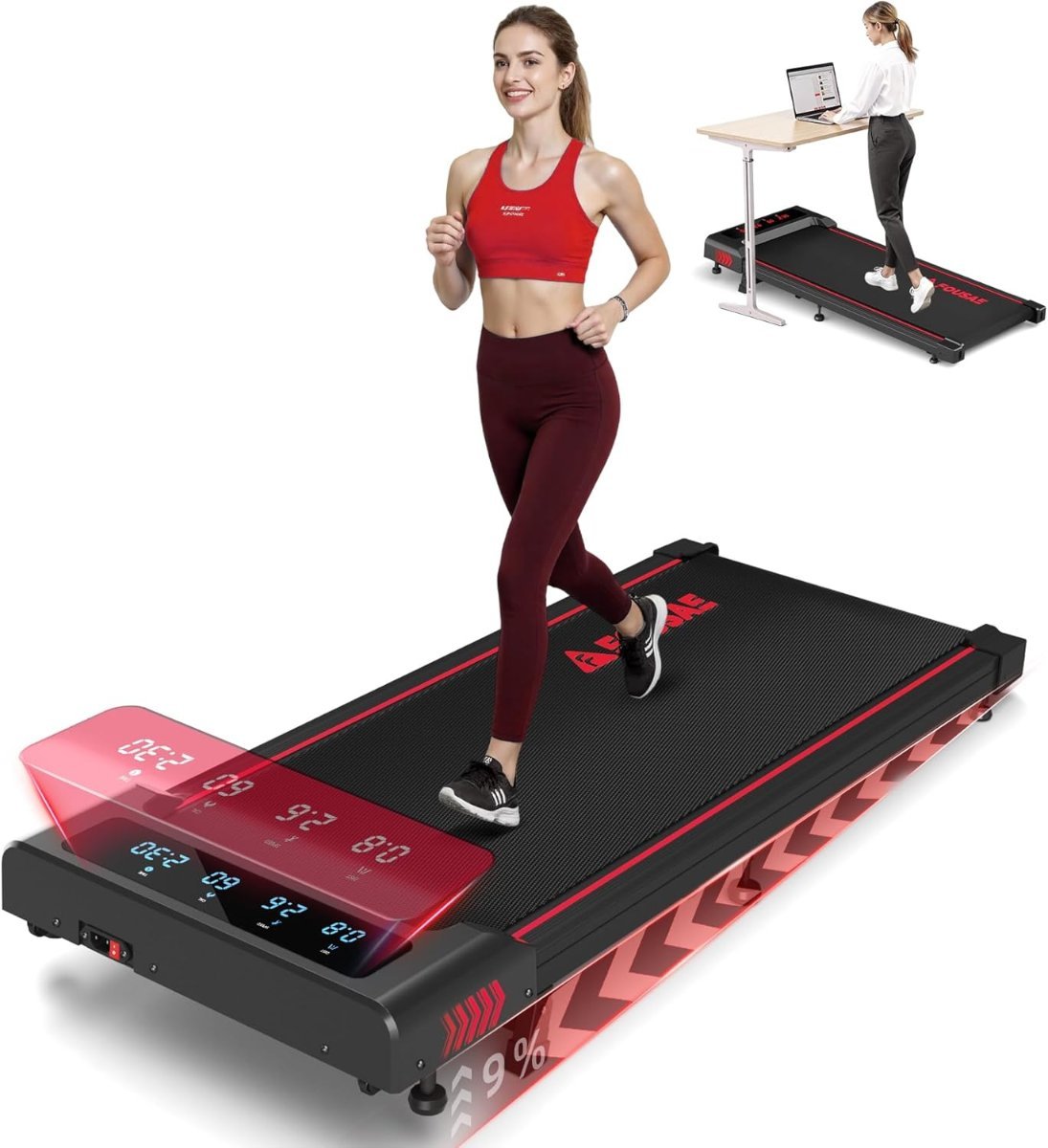
A 150kg capacity is the highest published figure in this guide, and it rests on a thickened frame rather than an optimistic number on the box. The belt is 100 by 40cm built up in seven layers, over eight shock absorbing columns and two 20cm cushioning strips.
The motor is brushless, rated 2.5 HP and quoted under 40 dB. That construction matters more for service life than for the noise figure alone, since a brushless unit has no brushes to wear down. Speed is set by hand across 1 to 10 km/h, with twelve HIIT programs stored on board, a full screen LED display and a magnetic mute remote.
Incline is fixed by hand at 9 percent rather than powered, and the deck stands 12cm tall against the 11cm of the thinnest folding models. For a heavier walker it is the only deck here clearing 130kg, which makes a manual incline bracket an easy concession.
Pros
- Highest published capacity here at 150kg
- Brushless motor quoted under 40 dB
- Seven layer belt at the full 40cm width
- Twelve HIIT programs stored on board
Cons
- Incline is manual and fixed at 9 percent
- No handrail despite a 10 km/h top speed
Key specs: Belt 100 x 40cm in seven layers, motor 2.5 HP brushless quoted under 40 dB, speed 1 to 10 km/h set manually, manual incline at 9 percent, twelve HIIT programs, three countdown modes, full screen LED display, magnetic mute remote, max user weight 150kg, dimensions 116 x 49 x 12cm, pre assembled.
CHECK ON AMAZON10. TOPUTURE 4 in 1 Foldable Walking Pad – Best Dual Display
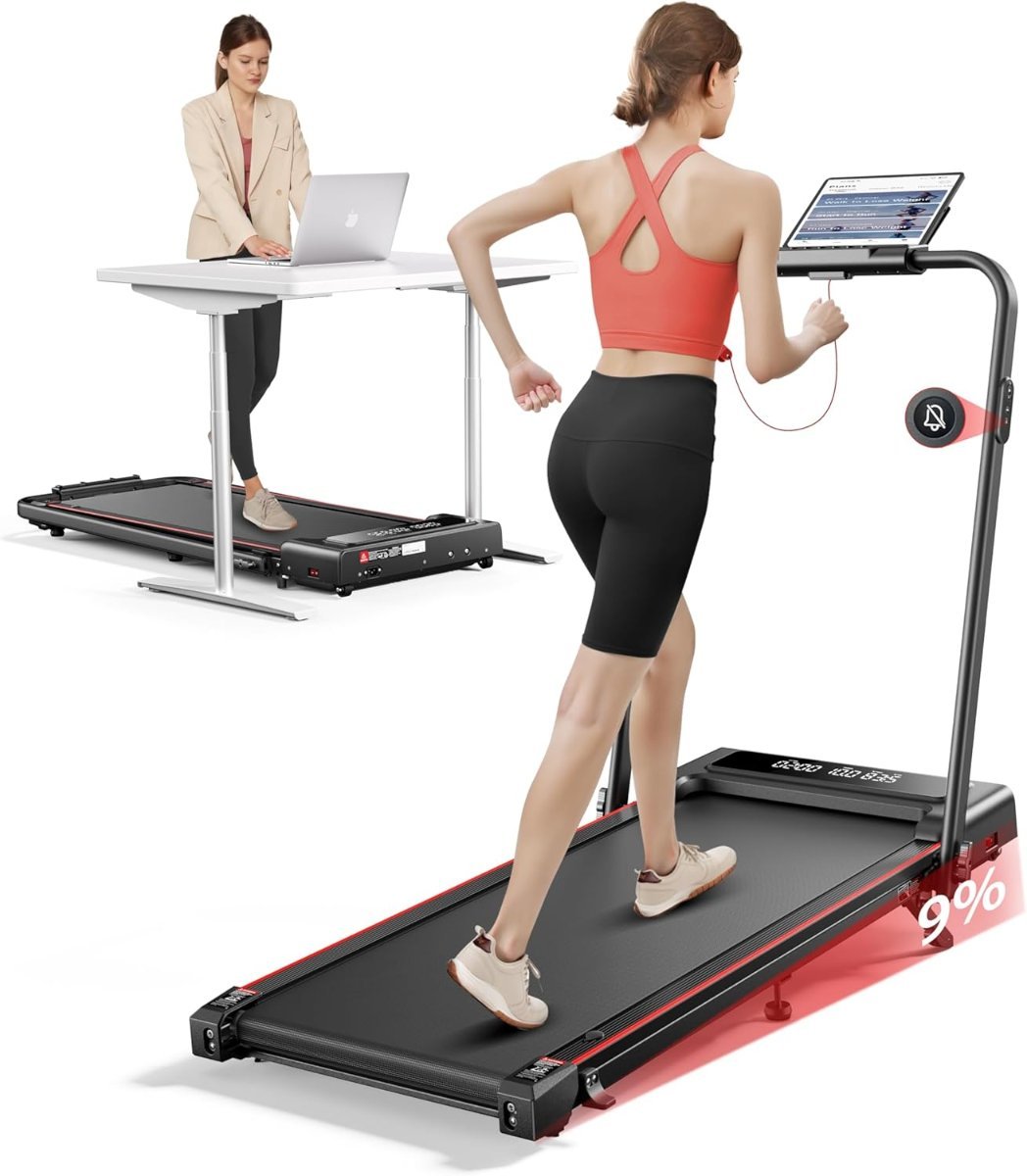
Two displays is the distinguishing feature, one on the deck and a second on the handlebar, so pace and distance stay readable whether the upright is raised or folded flat. The running area is quoted as 40 by 16 inches, roughly 102 by 41cm.
A 9 percent grade simulates a climb and the 2.5 HP motor covers 0.6 to 7.6 mph, close to 1 to 12 km/h. The controller carries a mute button, a holder on the upright takes a phone or tablet, and sessions log over Bluetooth to the Fitshow app. Five belt layers sit above six silicone absorbers and two rubber pads.
Folded it comes down to roughly 11cm thick, matching the slimmest deck here, though at 21.6kg it is also the heaviest to shift. No maximum user weight is published, and that is the one figure worth chasing down before committing at this end of the range.
Pros
- Dual display on both deck and handlebar
- Folds to roughly 11cm thick
- Mute button on the controller
- Holder for a phone or tablet on the upright
Cons
- Heaviest deck in this guide at 21.6kg
- No published maximum user weight
Key specs: Running area quoted at 40 x 16 inches, roughly 102 x 41cm, motor 2.5 HP, speed 0.6 to 7.6 mph or roughly 1 to 12 km/h, 9 percent incline, dual LED display on deck and handlebar, mute control, Fitshow app over Bluetooth, five layer belt with six silicone absorbers, folded roughly 127 x 58 x 11cm, product weight 21.6kg, no assembly required.
CHECK ON AMAZONHow to Choose a Walking Pad
Belt width is the first filter, not the last. A 40cm surface lets most adults walk without thinking about their feet, while 38cm fits tighter rooms and asks taller users to stay aware of the edges. Measure the gap under the desk first, then take the widest belt that clears it.
Speed ceiling divides the category in half. Flat and incline decks here stop between 6 and 10 km/h, enough for walking and an easy jog. Only the convertibles with a handrail raised reach 12 or 16 km/h, and they need treadmill sized clearance to be used that way safely.
Minimum speed deserves as much attention as the maximum, because desk work happens at the bottom of the range. Every deck here starts at 1 km/h or lower and the slowest begins at 0.8 km/h, which is the difference between walking while typing and walking instead of typing.
Incline adds load without adding pace, which is what makes a deck capped at 8 km/h worth using. Powered systems adjust mid session from a remote or an app, the widest reaching a 20 percent grade over twelve levels, while a manual bracket holds one fixed angle up to 9 percent and has to be set with both feet off the belt.
Capacity and folded size decide how long the machine lasts and whether it gets stored. Published ratings here run from 110kg to 150kg, and working a deck near its ceiling wears the belt and motor early, so headroom is worth more than a top speed nobody uses. Two decks publish no capacity figure at all, which is worth asking about before buying. Weights range from 14kg to 21.6kg and the thinnest folds to 11cm. For cardio gear that stores in a smaller footprint than any pad, the best exercise bikes in Australia are the closer comparison.
Noise comes from footfall more than from the motor, so a cushioned deck matters in an apartment or on suspended timber. Every deck in this guide has a shock absorbing belt and transport wheels, and the quietest is a brushless unit quoted under 40 dB, which leaves belt width, incline and capacity as the real points of difference.
Frequently Asked Questions
What speed do walking pads actually run at for desk work?
Desk work happens near the bottom of each deck’s range rather than the top. Every deck here starts at 1 km/h or lower and the slowest begins at 0.8 km/h, which is slow enough to keep typing. The 6 to 16 km/h ceilings only matter if the same machine is also doing cardio.
Is powered incline worth paying for over a manual bracket?
It depends on whether the gradient changes during a session. Powered systems here adjust from a remote or a phone, the widest running to a 20 percent grade over twelve levels, so the angle can shift while walking. A manual bracket costs less and holds a fixed position up to 9 percent, but changing it means stepping off the belt.
How thin do walking pads fold for storage?
The thinnest decks in this guide collapse to 11cm, and the slimmest non folding deck stands 12cm tall. Folded thickness is only half the question though, because the folded outline still measures roughly 120 to 128cm long, so the storage space has to take the length as well.
Does a higher user weight rating matter if I am well under it?
Yes, because the rating describes the load the belt and motor are built to carry continuously. Published ratings here run from 110kg to 150kg, and running one close to its ceiling shortens component life. Two decks in this guide publish no figure at all, which is worth resolving with the seller before buying.
What comes in the box with a walking pad?
Most arrive pre assembled and ready to use straight out of the box. Several ship with a remote control, a user manual and a bottle of belt lubricant, and the vibration model adds an L spanner for raising and lowering its handle. Several remotes need AAA batteries that are not supplied, and one maker specifies alkaline cells rather than rechargeables.
What does a 3 in 1 walking pad do that a flat pad cannot?
A convertible adds a folding handrail and an incline function, which gives it two separate speed ceilings. The model at the top of this guide runs 1 to 16 km/h with the handrail raised and 1 to 10 km/h once folded flat for desk use, where a flat pad only ever offers the lower range.
Verdict
The Everfit 3 in 1 Walking Pad with 20% Auto Incline is still the one to buy for a single machine that has to do everything, pairing a 40cm belt with a 20 percent powered gradient and 16 km/h once the handrail is up. A desk that only needs a belt beneath it is better served by the Everfit 2 in 1 Under Desk Walking Pad, which keeps the full 400mm width and drops the upright entirely. Heavier walkers should look instead at the FOUSAE Walking Pad with 9% Incline, whose 150kg rating is the highest published figure here and clears the next deck down by 20kg.